Exposing the Big Game

Forget Hunters' Feeble Rationalizations and Trust Your Gut Feelings: Making Sport of Killing Is Not Healthy Human Behavior

Exposing the Big Game

5 Reasons We Can’t Afford to Ignore the Issue of Animal Rights Any Longer

by Robin Raven

http://www.huffingtonpost.com/robin-raven/5-reasons-we-cant-afford_b_10509714.html
10917819_10205697179298480_7313359493599094694_n

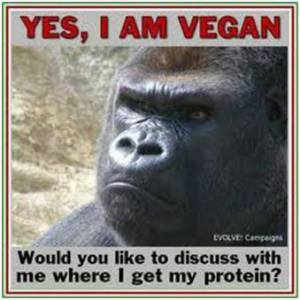
The fate of Harambe, the 17-year-old gorilla who was shot dead in a Cincinnati zoo on May 28, has inspired much debate. Some adamantly defend the zoo workers’ actions, while others point to the hypocrisy of outrage when many sentient animals are killed each day without drawing any attention whatsoever. Seeing Harambe’s face as an innocent animal who was so quickly sacrificed has undeniably struck a chord with many. So, despite some claims that animal rights is the least important issue, the attention that the gorilla’s life received indicates that people are ready to hear the truth: Non-human animals are sentient beings with lives that do, in fact, matter.

All this is another indication of how interest in the issue of animal rights has grown significantly in the past half-century. According to a 2015 Gallup poll, nearly a third of Americans now believe that non-human animals should be given the same rights as people. That’s a considerable increase since 2008, when only a fourth of Americans shared this view.

Taking full consideration of this is pretty awe-inspiring. I chose to be vegetarian as a kid because I felt motivated to protect animals, and so much has changed since I felt like I was the only vegetarian in the world as I grew up in the 1990’s in small town Alabama. We’re quickly making progress, yet animals are literally being tortured to deliver meat, poultry, dairy, eggs, and fish to dinner plates. Even worse is happening to some for fur and other animal byproducts that humans can easily and comfortably live without. It’s clear that people are concerned, and the following reasons show why animal rights should be a central topic of debate.

Established Sentience in Non-Human Animals

Imagine desperately needing to move, yet you were confined to a cage where you had to live in your own urine and feces, never experiencing simple pleasures beyond fear and pain. Many farm animals experience that and worse tortures. Being sentient beings, they are aware of their needs and wants; they fight for their lives to the end.

This isn’t simply imagining what it would be like. Animal sentience is an established fact. Psychology Today reported in 2013 that we’ve had plenty of data for a while to declare that non-human animals are sentient beings. The prominent scientists at the Cambridge Declaration on Consciousness declared that many non-human animals are conscious. It’s been shown that animals can worry and lose sleep. Like people, non-human animals will fight to live, and many species have problem-solving capabilities.

A Staggering Number of Beings Who Suffer

If you’re like me, you get upset and even outraged when you see just one person suffer, and you do what you can to help them. Now imagine that happening a billion times over. Given that the sentience of many non-human animals is widely accepted, people should care deeply about preventing the massive amounts of suffering that are currently being inflicted on animals. In the U.S. alone, each year more than 78 billion sea animals and over eight billion land animals are killed for food. That’s not millions, but billions. That ends up to a tragic, extreme amount of suffering among sentient beings every single day in the country.

Interconnected Issues

No one issue facing the world is entirely independent of the others. The case for animal rights also stands alongside other forms of prejudice as an issue that needs to be addressed. Having prejudice against others for their citizenship, race, sexual orientation, gender, or species can have far-reaching effects on society.

An intersectional approach to animal rights is key. Social justice advocate and writer Christopher-Sebastian McJetters recently stated, “Intersectional justice isn’t some ‘sect’ of veganism. Framing it as such is reductive and overly simplistic. Intersectionality is an analytical approach that challenges the root causes of oppression through the lens of people who live daily with multiple intersecting oppressions…people who often lack the social, sexual, economic, and academic mobility of those who needlessly antagonize and harass them.”

Public Health

It’s not just animals’ lives that are at stake when we disregard animal rights as a core issue. Life on earth as we know it is at stake. Livestock production is posing a rather big risk to human health through the overuse of antibiotics. When bacteria become resistant to the antibiotics because of their overuse, the effectiveness of the medicine is compromised. Also, the high amount of pollution of both water and land caused by livestock production threatens human health.

The Environment

The damage that’s being done to the planet by animal agriculture is extreme. Environmental advocates like Al Gore and James Cameron decided to go vegan because of this staggering harm. Approximately 30 percent of the world’s ice-free land surface is used to farm chickens, pigs, and cows for slaughter and human consumption. Furthermore, this livestock production, which includes eggs and dairy, takes up more than a third of the fresh water in the world. Time reports that livestock production has a bigger impact on Planet Earth than any other activity humans do.

At least 18 percent of the world’s greenhouse gas emissions come from livestock, according to a report that was released by the United Nations. That’s more than the combined emissions from all forms of human transportation, including cars, planes, and trains. Since it’s widely believed that we need to act soon before there’s no turning back on global warming, this is a solid reason all need to be concerned about the harm caused by a disregard for animal rights.

Where We’re at Now

Some leading politicians seem to be getting the message about the importance of animal rights, but we have a long way to go. No current Republican Presidential frontrunners seem to have addressed the issue of animal rights in a serious way, although Donald Trump did seem to mock the cause in a Tweet, stating, “Ringling Brothers is phasing out their elephants. I, for one, will never go again. They probably used the animal rights stuff to reduce costs.” Hillary Clinton’s campaign website claims that the way our society treats animals is a reflection of our humanity, even going on to state, “Hillary has a strong record of standing up for animal rights.” Meanwhile, the website of Bernie Sanders doesn’t address the issue, but Zach Groff, a protester who interrupted Bernie’s May 2016 rally in California said, “He claims to be a progressive, but you cannot be a progressive if you oppose animal rights.” Sanders did receive a recent 100 percent rating for his voting on animals in a Humane Society report.

It’s clear that animal rights should be a core national moral issue, not a side topic that’s viewed as less important than the current topics of debate. Activists, animal rights organizations, and others will need to continue raising awareness and bringing these facts to the forefront of debates in order to ensure that it becomes a core issue.


Your Next Hamburger May Come With a Side of Endangered Wolf

http://www.takepart.com/article/2016/05/29/food-production-impacts-wildlife-extinction-labels?cmpid=tpdaily-eml-2016-05-30

A group argues for adding wildlife conservation facts to nutrition labels.


<!–

The remnants of uneaten hamburgers at a 2014 burger-eating contest in Washington. (Photo: Gary Cameron/Reuters)

May 29, 2016
Emily J. Gertz is an associate editor for environment and wildlife

When it comes to valuable real estate, the square inches that comprise the official food nutrition label may be a hotter commodity than the most impressive street address in Manhattan. How consumers react to the label’s black-and-white facts about calories, fats, sugars, and vitamins is worth billions of dollars to the food industry.

An environmental group would like to factor in one more thing: how food production affects wildlife. Piggybacking on the government’s overhauled nutrition label—which, despite industry opposition, now distinguishes added from naturally occurring sugars—the Center for Biological Diversity has released “extinction labels” that suggest how much impact a hamburger, a chicken breast, or a serving of bacon has on water supplies, forests, the climate, and the survival of endangered species.

“People probably don’t think that when they’re eating a hamburger they’re harming a wolf, but there’s a direct correlation,” said Jennifer Molidor, senior food campaigner at the Center for Biological Diversity. “A wolf, for example, will be targeted by predator control programs in their natural environment, at the behest of the livestock industry, to protect the cattle.”


<!–

The “extinction facts” label. (Image: Center for Biological Diversity)

The Center for Biological Diversity and other animal welfare groups have charged that the U.S. Department of Agriculture’s Wildlife Services program, which kills millions of wild coyotes, bobcats, mountain lions, bears, and other animals annually, lacks transparency as well as scientific justification for its practices. States also run such programs.

RELATED:  This State’s Population of Wolves Is Recovering, So Now Ranchers Can Shoot Them

There are other impacts as well. Increasing amounts of livestock manure are the leading driver of growing methane emissions from agriculture. Methane is a potent greenhouse gas and can also degrade air quality. Raising alfalfa for cow feed uses up 2.7 trillion gallons of water a year in California alone.

The Center for Biological Diversity would like the government to advise the public on how to make eating choices that have less impact on wildlife and natural resources. “We’re in the sixth major extinction crisis, the first human-caused extinction crisis, and it’s highly related to our diet,” said Molidor. “Americans eat about three times the global average of meat consumption. If the rest of the world ate like Americans ate in terms of meat and dairy, we would need four more Earths.”

Author and futurist Jamais Cascio has experience using the nutrition label format to make an environmental point. His “cheeseburger footprint” graphic, which was based on his research into the carbon emissions created by a quarter-pound cheeseburger, went viral in the mid-2000s, landing him an appearance in a National Geographic documentary about climate change.

(Full disclosure: Casio and I were colleagues on a blog-and-book project called Worldchanging during the mid-2000s.)

Ten years later, Cascio said, he continues to get requests to use the image, and he features it in his consulting on sustainability and future planning.


<!–

The “cheeseburger footprint” label. (Image: Courtesy of Jamais Cascio)

“I can say from my experience that adding that carbon facts image dramatically increased the amount of conversation around carbon footprints,” he said. “I started to see, in some places, the cheeseburger as the symbol of unintended climate consequences.”

Cascio called the extinction label “a good first draft,” but noted that “it doesn’t pretend to be objective.”

“This looks like they’re combining the nutrition label with a cigarette warning,” he said. “If you want to blame the elimination of sage grouse and wolves on beef production, I can understand that. I’m not sure how it factors into polar bears.”

But images can evoke interest and reactions in ways that pages full of text can’t match, he added.

“Greenhouse gases, water, manure, all have links to beef production,” Cascio said. “If they can draw a more direct link to the consequences, I could see this being applied across a wide array of products—or even a political candidate.”

Radioactive boars running wild around Fukushima nuclear reactors are being shot

An Animal Rights Article from All-Creatures.org

FROM

CLG News
April 2016

wild boars

Communities in northern Japan are being overwhelmed by radioactive wild boars which are rampaging across the countryside after being contaminated by the Fukushima nuclear disaster.

The animals’ numbers are increasing as the boar breed unhindered in the exclusion zone around the stricken Fukushima Daiichi plant, and they are causing damage to farms well beyond the area poisoned by radiation.

Hunters are shooting the boars as fast as they can, but local cities are running out of burial space and incinerator capacity to dispose of their corpses.

Empathy and Anger

The following are quotes regarding animal rights advocates, from the late John A.Livingston’s 1994 book, Rogue Primate “…their motives are simple enough: empathy for living beings of sentience and sensibility, wrath at their maltreatment. There is nothing in the least puzzling about that; the activities of animal rights advocates are fueled in equal measure by two of the most powerful of human emotions–compassion and anger…
“The liberation of animals would be a conscious and unilateral act on the part of humans. It would not require the perception of ‘rights’ inhering in animals; it would arise from the evaluation of human behavior, wherever and however directed.”
In other words, do humans have the right to treat other animals like shit whenever, wherever and however they feel entitled?
Livingston goes on to talk about Peter Singer, author of Animal Liberation, who “…systematically disposes of traditional ‘deviousness’ in such egalitarian philosophic positions as the ‘intrinsic’ dignity and worth of the human individual, which, as every observer of our activity well knows, do not stand up even in intrahuman affairs. Conventional philosophy’s further use in maintaining the human/non-human moral separation he finds ‘outrageous,’ calling our attention to ‘the ease with which not only ordinary people, but also those most skilled in moral reasoning, can fall victim to a prevailing ideology’.”
Such is the case with the romance between today’s Humane Society of the United States and the paleo foodie movement.
1173835_594069293967592_2141908188_n
“…to discriminate against beings solely on account of their species is a form of prejudice, immoral and indefensible in the same way that discrimination on the basis of race is immoral and indefensible.” — Peter Singer

Wayne’s Not So Humane World

An Animal Rights Article from All-Creatures.org

FROM

Captain Paul Watson, Sea Shepherd Conservation Society
April 2016

[Also read SeaWorld’s Three Whoppers.]

Keiko sea pen
Keiko in Icelandic sea pen…

Wayne, what are you doing?

Wayne Pacelle is the President of the Humane Society of the United States.

I have known Wayne since the Eighties when he and I were both working with the Fund for Animals. At the Higgins Pigeon shoot in Pennsylvania I filmed Wayne running in front of hunters armed with shotguns who were blasting defenseless pigeons being released from cages. It was a brave thing to do and Wayne was a dedicated and passionate activist for the Fund for Animals, mentored by Cleveland Amory himself.

I’ve always liked and respected Wayne, even when he decided that Sea Shepherd and I were too controversial to be seen together in public, but that’s okay, we get that from lots of folks. We’re used to being the “ladies of the night” of the movement. Many people agree with what we do but don’t wish to be seen in the light of day with us. I get that. We do things people think are too controversial and we say things people don’t want to hear.

I have heard many criticisms of HSUS over the years about many things, none of which I wish to relate here. Big groups do many things that piss off their supporters. Nothing surprising.

But I have to say I was extremely surprised and even felt personally betrayed by seeing Wayne Pacelle representing HSUS sitting alongside Joel Manby, the CEO of Sea World as Manby announced his “capitulation” to the anti-captivity movement, his pledge to end breeding and to end Orca theatrics. (In 2019).

Wayne was in full support of this and both those things were worth applauding but then I saw him snatch defeat from the jaws of victory.

Sea World was going down thanks to Blackfish and years of campaigning by many groups. Their stock was tanking and the possibility of emptying their slave tanks was within our grasp.

Manby needed salvation and HSUS gave him that P.R. life ring with the lie that Sea World is now a humane corporation despite the fact that HSUS is on the record as saying that captivity of Orcas and other dolphin species can never be humane.

It was a bold faced lie but it was not the biggest lie. Manby with a nod of approval from Pacelle looked into the camera and arrogantly lied when he said there has never been a successful release of an Orca to the wild. And Wayne Pacelle added that sea pens were not an alternative.

Wayne, between 1997 and 2003, you were boasting about how much of a success the freeing of Keiko was. People sent you money to free Keiko and you told them that the campaign was a success.

In the book Death at Sea World by David Kirby, Pacelle said “we are proposing.. a transfer of the whale (Tilikum) to a sea pen that will allow him to live in a more suitable environment.”

Now you say that it was not a success because Keiko died five years after being freed. That was five years of freedom Wayne. Sea World said he died of pneumonia and implied that he would still be alive if he had not been freed. Now you’re saying that sea pens are not an alternative to the tanks.

Bullshit! Nine Orcas have died from pneumonia in Sea World tanks. All their deceased Orcas have died young and now they are lying and saying that Tilikum at 37 years of age is dying from “old age” when Orcas live twice that long in the wild.

To say that Keiko’s release was a failure because Keiko died five years later is like saying that a human released from prison and dies of pneumonia five years later died because he was released from prison despite the fact that inmates in prison also die of pneumonia.

The freeing of Keiko was an astounding success story and demonstrated that Orcas can be rehabilitated into the wild. The documentation of this success is irrefutable.

Keiko was taught to fish and hunt and he did just that for five years. Sea World has claimed that Keiko was aggressively persecuted by wild Orcas. There is not a shred of evidence to back up that fabrication.

Keiko travelled between Iceland and Norway. Keiko communicated with other Orcas in the North Atlantic.

Keiko had what no other captive Orca has ever had and that was freedom. The freedom to be an Orca and the freedom to return to where he came from and where he belonged. The last five years of Keiko’s life were most likely the happiest five years since he was ruthlessly torn from the side of his mother and from his pod off Iceland in 1979.

The ad defends Sea World by saying that, “Sea World has cared for and rehabilitated thousands of wild animals in distress.” Yet only a few years ago Dr. Naomi Rose speaking for HSUS stated in Death at Sea World that “Sea World always used its rescue operations as PR opportunities, rather than doing the right thing by animals. The work that they actually do isn’t as great as they claim. It looks good, but in the end, they can’t offer evidence of success because they don’t monitor most of the animals they release.”

How can Wayne Pacelle who once proudly proclaimed the Keiko story to be a success now claim it to be a failure? What possible motivation does Wayne have?

I’m not saying that Sea World has bought redemption from HSUS, I have no evidence of that, but something must have motivated Wayne Pacelle to embrace Sea World by betraying the Orcas and the humane cause the way he did.

Wayne has baptized a born again Sea World with the anointment of the word “humane.” He has not explained how the tanks that were once vilified as inhumane are now miraculously considered humane.

Who reached out to who? Did Manby make Wayne an offer he could not refuse or did Wayne see an opportunity to look like they had found the answer to the Orca dilemma, an opportunity to take full advantage of the success of Blackfish the movie.

When I saw the ad that HSUS placed in the New York Times today I was disgusted.

“The Humane Society of the United States commends Sea World…”

“We look forward to joining together (with Sea World) in partnership…”

The ad describes Sea World as “inspiring” through “personal, interactive and informative experiences” (like swim with dolphin programs).

“HSUS commends Sea World for scientific research programs.”

What next, will HSUS be commending the Japanese Institute for Cetacean Research for their “research” programs also?

I also had to laugh when I saw this statement in the ad: “HSUS and SeaWorld will actively partner on efforts against the commercial killing of whales, seals and other marine mammals as well as ending shark finning.”

Really? What do they intend to do that? I can tell you right now that Sea World will not be saying or doing anything to offend the whalers in Japan, Iceland and Norway or the sealers in Canada. What they may do is provide funds for HSUS to put out millions of direct mail fund-raising letters asking for money to oppose whaling, sealing and shark finning.

I have been on the front lines of anti-whaling, anti-sealing and anti-shark killing efforts for four decades and I have never seen HSUS actively do anything except to take pictures of sealers.

And I love this last paragraph in the ad: “All seafood served in the parks will be sustainable.”

There is no such thing as sustainable seafood. Our Oceans are being dangerously over-fished with 40% of the fish (it’s fish, Wayne not seafood) being fed to chickens, pigs and domestic salmon. Here we have HSUS saying it’s okay to eat pork if it was not raised in a crate, okay to eat chickens if they are not in a cage but in mass produced factories where millions of male chicks are ground up alive every day. There is no humane meat Wayne, there is only the illusion of humane meat spread by so-called “humane” societies like HSUS.

Has the word “humane” now become a marketing slogan like “sustainable?”

The Ad speaks for itself. HSUS has sold out the dolphins and the other animals being held in the slave tanks at Sea World. They are right now suffering the same miserable conditions that HSUS has been campaigning against for years, miserable, distressing conditions that will continue, except now it is no longer considered abuse because HSUS has magically made the tanks and the cages humane now that Wayne Pacelle and Joel Manby are such good buddies.

I wonder who paid for this ad and why HSUS felt the need to advertise their betrayal to the world.

Swan killers attack animal rights activist

Photo   Jim Robertson

Photo Jim Robertson

http://www.nltimes.nl/2016/03/21/swan-killers-attack-animal-rights-activist/
“Swan protector Saskia van Rooy was attacked by hunters in Stolwijk on
Saturday, she said to Dutch newspaper AD.
“According to Van Rooy, she was filming dead geese when two men were
suddenly behind her. “Dressed in army suits and camouflage nets over
their heads, they yelled at me”, she said to the newspaper. One swung
the butt of a rifle towards here face, but she managed to duck in
time.”

Maybe It’s Time to Take Animal Feelings Seriously

http://nymag.com/scienceofus/2016/02/

By

Dogs can read human emotions. So, it appears, can horses. Whales have regional accents. Ravens have demonstrated that they might be able to guess at the thoughts of other ravens — something scientists call “theory of mind,” which has long been considered a uniquely human ability. All of these findings have been published within the past several weeks, and taken together they suggest that many of the traits and abilities we believe are “uniquely human” are, in fact, not so unique to us.

That statement probably sounds as if it is veering perilously close to anthropomorphism, and if you know anything about research concerning animal behavior, you likely know this: Anthropomorphism is bad. Animals are animals, and people are people; to assume that an elephant, for example, experiences joy in the same way a human does is laughably unscientific. This has been the prevailing mode of thought in this line of scientific inquiry for most of the last century — to staunchly avoid, and even ridicule, any research project that dared to suggest that animals might be thinking or feeling in the same way that humans do.

But new studies like these, along with a slew of recent books by respected biologists and science writers, are seriously considering the inner lives of animals. Now some prominent scientists are arguing that, though the impulse was well-intentioned, decades of knee-jerk avoidance of all things anthropomorphic may have mostly served to hold this field back. “It ruined the field,” biologist and author Carl Safina told Science of Us. “Not just held it back — it’s ruined the field. It prevented people from even asking those questions for about 40 years.”

The theme of Safina’s book Beyond Words: What Animals Think and Feel pairs nicely with a forthcoming title from famed primatologist Frans de Waal called Are We Smart Enough to Know How Smart Animals Are? Both scientists make the case for something the biologist Gordon Burghardt called “critical anthropomorphism” — using your own human intuition and understanding as a starting point for understanding animal cognition. “Thus, saying that animals ‘plan’ for the future or ‘reconcile’ after fights is more than anthropomorphic language: These terms propose testable ideas,” de Waal writes.

More:   http://nymag.com/scienceofus/2016/02/

I’m not a humanist, I’m a nonhumanist

With all the patrician talk about who were the original occupiers of Malheur National Wildlife Refuge, I was planning to write a post about the nonhuman animals being the only inhabitants for millions of years until about 12,000 or 13,000 years ago.

But Marc Bender beat me to it, with the following comment:

“…humans are not indigenous to the Americas. The original inhabitants of the wildlife refuge are, of course, the wildlife.”

Likewise, I was going to inaugurate the word, “nonhumanist” to classify those of us whose ethical values incorporate nonhuman needs and interests. But when I looked it up, I found that “nonhumanistic” is already in use (in reference to those who are Not humanistic).

Meanwhile, that same search produced this related article:

Why I Am Not a Humanist

by Luke Muehlhauser on November 11, 2009 in Ethics,General Atheism

humanismSome people think atheism is synonymous with humanism. If you’re an atheist, you must be a humanist.

Not so. I am an atheist but not a humanist.

Why?

Let’s look at at what humanism is. According to the Oxford English Dictionary, humanism is “a rationalistic system of thought attaching prime importance to human rather than divine or supernatural matters.”

I can already distance myself from this position, but before I say why, let’s get more specific.

The “standard” positions of humanists are summarized in the latest (2003) Humanist Manifesto, which states:

  1. Knowledge of the world is derived by observation, experimentation, and rational analysis.
  2. Humans are an integral part of nature, the result of unguided evolutionary change.
  3. Ethical values are derived from human need and interest as tested by experience.
  4. Life’s fulfillment emerges from individual participation in the service of humane ideals.
  5. Humans are social by nature and find meaning in relationships.
  6. Working to benefit society maximizes individual happiness.

It’s #3 that bothers me. I do not believe that moral values are derived from human desires. I believe moral values are derived from desires, period. To focus on human desires and ignore all other desires in the universe is blatant speciesism.

But can’t I just sign on with humanism, understanding there’s one qualification to be made on point #3?

No, for speciesism is central to humanism. Heck, it’s in the name of the thing. Humanity is the whole point of humanism. Now that is good progress beyond religious ethics, but it’s not progress far enough.

I count humanists as my brothers as sisters. We’re fighting for the same things. Mostly.

But if this post persuades you to cancel membership in a humanist association, please don’t quit activism altogether. Please join another organization that will help you live out your moral values.

That way, we can all work together to make this world a better place, for all of us.

chimpanzee_with_baby

– See more at: http://commonsenseatheism.com/?p=4630#sthash.zfGe8n2A.dpuf