
All Animals Were Wild
Image
6

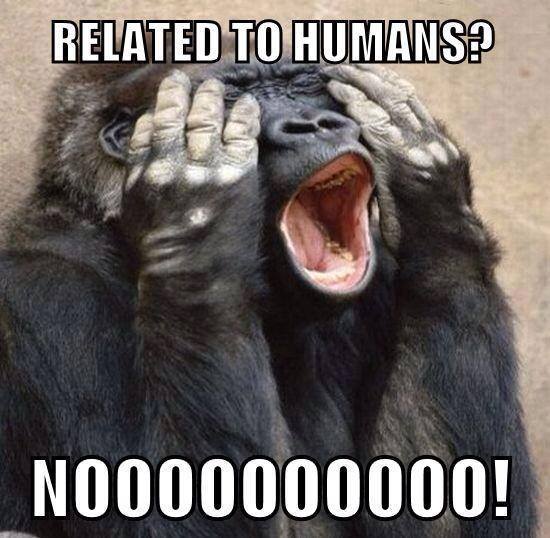
As far as the rights and welfare of all other species of animals are concerned, human arrogance—narcissistic notions of human supremacy over nonhumans—is the root of all evil.
Ever since my youngest days, I’ve always instinctively known that the “us and them” cultural given was wrong-headed, and that having two sets of laws, one for our species and one for all others, is absurd at best.
This has been backed up by much that I have read over the years. In an effort to counter centuries of long-accepted dogma intended to instill anthropocentric attitudes, philosophers like Peter Singer, with his Animal Liberation, and scientists like Jared Diamond and Richard Leaky, in The Third Chimpanzee and The Sixth Extinction respectively, have devoted sections of their books to debunk outdated beliefs of human preeminence and superiority.
To further put humans in their rightful place, the following is something I happened on last night in the late John A. Livingston’s 1994 book, Rogue Primate:
“Few exercises in rationalization have involved quite so much intellectual pretzel-bending as the task of demonstrating absolute human uniqueness. Our obsession with this is revealing. It’s not enough that every individual, and every species, is a unique, one-time-only, event. Fanatical humanism demands more. All species are unique, we may acknowledge, but one species is uniquely unique. Which reveals a good deal more than bizarre English usage.
“Thanks to studies in ethology and behavioral ecology, the religion of human uniqueness has sustained a series of notable setbacks in our lifetime. We have had to abandon a substantial list of ‘unique attributes’: tool using, tool making, language, tradition and culture, abstraction, teaching and learning, cooperating and strategizing, and others, less inflammatory, such as caring and compassion. There’s not a lot left. But the ultimate fallback position, the central jewel in the human imperial crown, had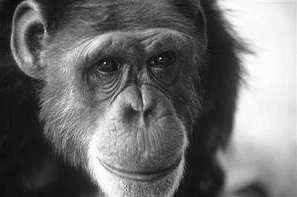 always been self-awareness. Then along came little Washoe.
“Washoe, a chimpanzee, was raised by humans, Allen and Beatrice Gardner. She became famous as the first non-human being to learn the hand-sign language of the deaf and mute, a mode of communication seen by the Gardners as more useful to a chimpanzee (because of its anatomy) than human sounds. While still very young she became extraordinarily adept at signing, which of itself generated concern in some quarters. An ape was not only ‘speaking,’ but also, apparently carrying on conversations with her human mentors. But Washoe’s historic bombshell was kept in abeyance for a time. She had been supplied with various toys and other miscellaneous items, and had also become used to all manner of human household hardware, such as mirrors. One day, while she was looking into a mirror, she was asked ‘Who is that?’ ‘Me, Washoe,’ she signed back.
“Washoe was ‘self-aware.’ This was flabbergasting. And for many people it was deeply unsettling. We seem to be witnessing the collapse of the last bastion of human uniqueness. Something had to done about Washoe. Human brows furrowed in thought. Then came the answer. Of course! How blindingly obvious! Washoe was not aware that she was self-aware. One can almost feel the collective sigh of relief. We could not know this, of course, but it was fundamental to the shoring-up of the collective self-esteem that we asserted. Now if it were somehow demonstrated that a non-human animal was, in fact, aware of its self-awareness, then no doubt, the claim would be made that it was not, like us, aware of its awareness of its self-awareness. This could go on forever, and probably will.
“The problem of self-awareness (or rather, the problem of our unrepentant claim, in spite of Washoe and others, that beings who are not human do not have it) confuses a number of issues pertaining to the human treatment of other animals. It appears consistently in defense of vivisection, for example. ‘Sentience’ is much used as a synonym for self-awareness, or, sometimes, consciousness. Non-human animals are not sentient (consciously self-aware); therefore, it is ethically permissible to do as we please with them. Such reasoning is mystifying. Even if the living, captive individual beings (both wild and domesticated) upon whom the vivisectors visit their incomprehensible acts were not self-aware, how would that justify cruelty? No one denies that they have central nervous systems (that is one of the important reasons they are used) that they feel pain (another reason), that they entertain fear (still another). Fear without self-awareness is gibberish.
“Vivisection has its own strange ethical code, but it is not the only such structure to depend ultimately on the concept of self. Ethics rests on moral philosophy. Moral philosophy rests primarily on the individual. Presumably the concept of the individual rests ultimately on the concept of self. It used to be generally assumed that non-human beings were incapable of thinking or behaving ethically because, among other limitations, they lack the concept of self. That was pre-Washoe.
Many humanists attempt to handle the problem of self-identity in a chimpanzee by asserting that the animal lacks the capacity for reason, and therefore could never conceive of moral or ethical rights and obligations. That the animal lacks reason could be debated (there is ample evidence in many species of problem solving, which could only be conceptual). What animals very probably do lack is the power of rationalization, which would appear to be a uniquely human attribute.”
________________________
It seems, while our technological advancements and mechanical understandings may be growing rapidly, if not hastily, our acceptance of non-human awareness, and in fact, our own moral evolution, is still crawling at a snail’s pace. As it is for global warming, denialism about animal awareness is an agenda-driven form of rationalization.
Earth Balance is a popular, widely used butter alternative that claims to hold sustainability as its number one standard. Sadly, it has chosen to use palm oil in its products, an ingredient responsible for some of the worst wildlife, environmental, and human rights degradations on earth.
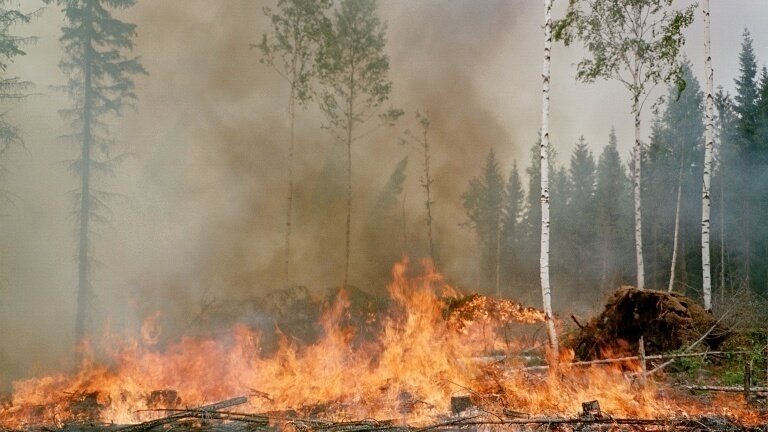
Palm oil is the most widely produced vegetable oil worldwide. The reason: it has a high yield and is the cheapest vegetable oil to produce. But there’s a hitch — oil palms need a rainforest climate and a lot of land to thrive. For this reason, palm oil plantations are currently the leading cause of rainforest destruction in Malaysia and Indonesia, and estimates suggest that 98% of their natural rainforests will be destroyed by 2022.
Horrifying scenes of orangutans buried alive and elephants burned are what greet palm oil workers after a massive clear cut. Those orangutans that do survive are considered pests, and often clubbed to death by plantation workers. According to the World Wildlife Fund, if nothing changes, the orangutan could become extinct in the wild within 5-10 years, and Sumatran tigers in less than 3 years.
Please join me in calling on Earth Balance to uphold its commitment to ethical food production, and cease its use of palm oil immediately. The stakes couldn’t be higher.
Earth Balance claims to source its palm oil sustainably, but Greenpeace considers this label to be “little more than greenwash,” as “sustainable” palm oil producers are still permitted to clearcut. Producers of sustainable palm oil are also currently battling hundreds of charges of human rights violations, so it seems clear that the only ethical solution is to stop using palm oil altogether.
When Earth Balance came on the market, I was a big supporter. I loved the product and was glad that it seemed to be aligned with my values as a conscientious consumer. I’m seriously hoping it’s not just giving lip service to its claims of sustainability, and that it will correct its mistake if enough like-minded people urge it to.
Our consumer choices directly affect communities, wildlife, and the climate. Earth Balance knows this, and claims to strive to be as ethical as possible. So I’m calling on Earth Balance to do what’s right, and cut its ties with the hurtful, gruesome palm oil industry.
From the chapter “Homo sapiens, Pinnacle of Evolution?” of Richard Leakey’s 1995 classic, the Sixth Extinction—Patterns of Life and the Future of Humankind:
…Homo sapiens was soon to represent the ultimate product of evolution and to be separate from the rest of nature in some important sense, with the gradation of increasing superiority through the geographical races, from Australian to European.
For instance, Alfred Russel Wallace, the co-inventor of the theory of natural selection, believed that evolution had been working “for untold millions of years…slowly developing forms of life and beauty to culminate in man.”
 In 1933, Robert Broom stated the following: “Much of evolution looks as though it had been planned to result in man, and in other animals and plants to make the world a suitable place for him to dwell in.” Broom clearly saw humans as special and separate, and the rest of the natural world ours to exploit as we please. Broom’s was not an isolated opinion; it accurately portrayed the contemporary thinking. Anthropologists of the time were in awe of the human brain and saw it as lord of all. Human progress through pre-history, according to the prominent British anthropologist Sir Arthur Keith, had been “a glorious exodus leading to the domination of earth, sea and sky.”
Examples of what by today’s standards we would condemn as blatant racism were legion in scholarly writings of the early decades of the century, which placed in an evolutionary framework what had been seen as the product of creation in earlier times. One citation will suffice by way of illustration. In his Essays on the Evolution of Man, the imminent British anatomist Sir Grafton Elliot Smith wrote the following in 1923:
“The most primitive race now living is undoubtedly the Australian, which represents the survival with comparatively slight modification of perhaps the primitive type of the species. Next in order comes the Negro Race, which is much later and in many respects more highly specialized, but sharing with it the black pigmentation of the skin, which is really and early primitive characteristic of the Human Family of Primitive Man shares with the Gorilla and Chimpanzee. After the Negro separated from the main stem of the family, the amount of pigmentation underwent a sudden and very marked reduction and the next group that became segregated and underwent its own distinctive specialization was the Mongrel Race…”
Overt racism of this kind disappeared from text by mid-century, with curious effect. Viewed as more primitive than white Caucasians, the “inferior races” formed something of a bridge between the ultimate expression of Homo sapiens and the rest of the animal world. When all races were regarded as equal, the bridge disappeared, and a gap opened up, making modern humans even more separate from the world of nature.
______________________
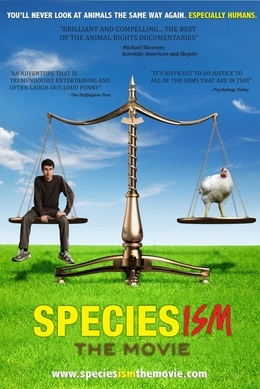
[In other words, speciesism became even more entrenched. The question now is, how many more centuries will the animals have to wait before examples of overt speciesism disappear from the texts and ultimately from people’s minds?]
https://www.thedodo.com/hope-arrives-for-chimpanzees-1348050214.html?xrs=RebelMouse_fb
After decades of being forced to endure pain and suffering in the name of science and entertainment, hope has finally arrived for our closest primate cousins.
As of Monday, September 14, all chimpanzees are now protected as “endangered species” — bringing an end to the most shameful era of normalized exploitation and abuse against these animals.

Under an earlier ruling from the U.S. Fish and Wildlife Service, effective as of today, it is now against the law to harm, harass, kill or cause injury to chimps, both in captivity and in the wild. The significance of this classification is beyond measure for hundreds of chimps used in biomedical research across the United States, who from this moment forward, have been given reprieve from their lives of misery. Research labs were given the opportunity to apply for exceptions, but none chose to do so.
Prior to this ruling, the U.S. was the only developed country where chimps were still used as laboratory test animals, subjected to painful procedures and denied the most basic semblance of a normal life. Now, many, if not all of these animals will be sent into retirement at sanctuaries.
Additionally, chimps held captive as props for entertainment or sold in the exotic wildlife trade finally have relief as well. Under the new distinction, it is now “illegal to sell chimpanzees in the interstate pet trade or to engage in commercial transport of the animals across state lines,” as the Humane Society notes. Permits are now required for anyone wishing to deviate from the new protections, but will only be issued if it will benefit the survival of the species.

The closing of this shameful chapter couldn’t have come soon enough — especially for those who know the true nature of chimpanzees better than most:
“This decision gives me hope that we truly have begun to understand that our attitudes toward treatment of our closest living relatives must change,” said noted primatologist Jane Goodall. “I congratulate the U.S. Fish and Wildlife Service for this very important decision.”

Costa Rica has made hunting illegal. We need to do the same. They will also eventually free all animals from their zoos into safe habitats. While out hiking I came across a mother moose caught in a trap – terrified and yelling with pain. Her baby was right beside her – confused and in shock. All animals have emotions. (just take a look at any pet dog). They have emotions like we have because they have souls just like we do. They want to be treated with love and respect just like us. They want their freedom just like we want ours. They have a nervous system just like we do enabling them to feel pain and sorrow and happiness also. Animals are here to experience life and develop their souls just as we are. We now have the capability to feed ourselves without eating animals. And more and more studies are showing the health benefits of a plant based diet. Ex-President Bill Clinton has switched to a vegan diet. When we look at animals as objects of consumption we lose. Our soul is diminished because we lose the ability to have compassion and love for other life forms. If we are at peace with nature and it’s wildlife we expand our consciousness and awareness and are more at peace with ourselves! I ask President Obama to make this huge step forward and leave this as a memorial to his term in office. Let this be a “Trigger of Conscience” that the President has recently been talking about.




 Exposing the Big Game
