Western Australian feedlot vandalised and truck set alight by anti live export ‘radicals’

10671222_10202527690853624_1897035803926677117_n

http://www.abc.net.au/news/2014-11-12/animal-rights-radicals-attack-feedlot-burn-truck-in-wa/5885244

Open Letter To The Pope by Tom Regan

https://www.thedodo.com/community/TomRegan/an-open-letter-to-pope-francis-797769837.html

Open Letter To The Pope
By Tom Regan

As you move through the second year of your Papacy, all Christians pray fervently and hopefully for your good health and fortitude on behalf of justice, mercy and peace-both in the church and in the world.

As someone who shares your commitment to justice to all of God’s creatures, I was delighted by your choice of name: Francis.

Of all the many virtues your Namesake possessed, none is more synonymous with his name than his love of animals. He called them his “brothers” and “sisters,” and was famous for preaching to the birds – and even to the fish! On one occasion, he persuaded a wolf to stop attacking local farmers if the farmers agreed to feed the wolf. To turn a carnivore into a vegan? Nothing better represents the power of Saint Francis.

How did Saint Francis think his brothers and sisters in fur, feather and fin should be treated? He must have believed that what happens to them matters to them apart from any human interest. Why would he think in those terms? Because what happens to them makes a difference to the quality and duration of their life. Either they live a long and fruitful life, which Saint Francis preferred, or they suffered and died prematurely.

Of course, Pope Francis, like the rest of us, surely believes that ill-treatment to any of God’s creatures surely is against God’s will. Whether animals have rights or not, surely they deserve to be treated with mercy and kindness, gratitude and sympathy, respect and admiration. Who in their right mind can be against humane care and treatment of creatures

Well, evidently it depends.

Consider some examples of what happens to animals in research laboratories.

Cats, dogs, nonhuman primates, and other animals are drowned, suffocated, and starved to death.
They are burned, subjected to radiation, and used as “guinea pigs” in military research.
Their eyes are surgically removed and their hearing is destroyed.
They have their limbs severed and organs crushed.
Invasive means are used to give them heart attacks, ulcers, and seizures.
They are deprived of sleep, subjected to electric shock, and exposed to extremes of heat and cold.

Every one of these procedures and outcomes complies with every federal law everywhere. Each conforms with what federal inspectors count as “humane care and treatment.”

This same ideology applies to how farmed animals are treated.

It is standard procedure to have “veal” calves spend their entire life individually confined to narrow stalls too narrow for them to turn around in.
Laying hens live a year or more in cages the size of a filing drawer, seven or more per cage, after which they routinely are starved for two weeks to encourage another laying cycle.
Female hogs are housed for four or five years in individual barred enclosures (“gestation stalls”), barely wider than their bodies, where they are forced to birth litter after litter.
Until comparatively recently, due to the “Mad Cow” scare, beef and dairy cattle too weak to stand (“downers”) were dragged or pushed to their slaughter.
Geese and ducks are force-fed the human equivalent of thirty pounds of food per day to enlarge their liver, the better to meet the demand for foie gras.

All these conditions and procedures demonstrate the relevant industry’s commitment to mercy and kindness, compassion and sympathy.

And what might “humane” fur farming or trapping permit? Here are some examples.

On fur mills, mink, chinchilla, raccoon, lynx, foxes and other fur bearing animals are confined in wire-mesh cages for the duration of their life.
Waking hours are spent pacing back and forth, or rolling their heads, or jumping up the sides of their cages, or mutilating themselves, or cannibalizing their cage mates.
Death is caused by breaking their necks, or by asphyxiation (using carbon dioxide or carbon monoxide), or by shoving electric rods up their anus to “fry” them from the inside out.
Animals trapped in the wild take fifteen hours on average to die.
Trapped fur-bearers frequently chew themselves apart in their futile attempts to regain their freedom.
Despite it’s obvious cruelty, this is all perfectly legal.

Holy Father, all Christians implore you: Speak out about cruelty to God’s creatures, Billions annually are denied all that God intended for them, and they are treated neither with Christ’s mercy nor with God’s compassion. Among your other troubles and concerns, please honor St. Francis of Assisi and the call of the Catechism by raising your voice on behalf of God’s other animals.

_____________________________________________________________
Tom Regan is Emeritus Professor of Philosophy, North Carolina State University. Among his major works is The Case for Animal Rights. The editors of Utne Reader have described Professor Regan as “the philosophical leader of the of animal rights movement” and named him, along with the Dalai Lama, as “one of fifty people who are changing the world.”

1796519_10154790775330335_5707805084918853541_n

Holly Bites Cesar: When You Hit a Dog There’s a Price to Pay

A video of Holly displaying aggressive behavior is a lesson in canid ethology

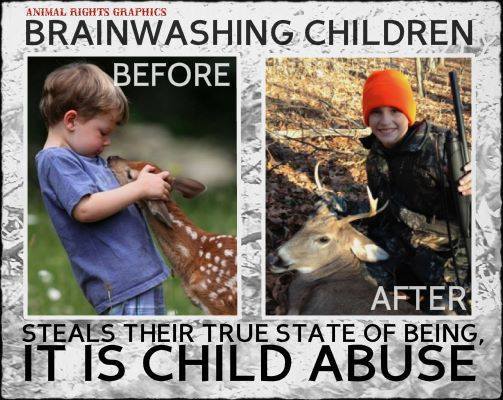
Teach Your Children Well

10649843_1571652913053574_3670545342819385134_n

A PETITION TO TEACH CHILDREN RIGHT—HAVING A CHILD READ ABOUT “BAMBI”, and then teaching them to kill animals, or partake in what others kill, is a destructive to their psyches and their bodies….please, sign and share below, to say we must teach ANIMAL RIGHTS IN SCHOOLS…this is the only way, to ensure a kinder and GENTLER WORLD….thanks, Animal Freedom Fighters…

http://www.petitionbuzz.com/petitions/animalrightsinschool

The Cruelty of Wildlife Services’ Aerial Gunning

1920332_613143138754489_331154733_n

Here’s the text of a friend’s testimony to the WDFW at their wolf “management hearing:

I’m speaking on behalf of wolf protection and recovery. I’m going to cover three points tonight.

 First, perceived “conflicts” with majestic predators like wolves or cougars are just one of the COUNTLESS examples of the negative impact livestock grazing is having our state and planet. You mentioned California’s drought and fires raging in the forests of Washington, which are a direct result of livestock grazing. Climate change aside, livestock grazing continues to decimate wildlife populations at utterly astonishing rates.
My second point is that rural forested USFS land is remote and ideal for predators like wolves. Looking at the pictures of this habitat shown tonight, I was frankly shocked. This is land where I’d expect wolves should be able to live, free from harm. Where in the species recovery process are wolves expected to live and thrive if even THIS habitat is considered unacceptable for them (but appropriate for sheep grazing)?
My final point is that killing is NOT management. The fact that aerial gunning–one of the most traumatic and terrifying and cruel methods of killing–was used speaks to where I fear the department’s values lie. Further, that USDA’s WL Services–which is increasingly under scrutiny for their careless killing practices–was used to do the department’s killing speaks to the same. I call WL Services the “killing squads” because ALL they do is kill; they kill wildlife en mass and usually in exceedingly cruel ways. I’ve seen them kill first-hand, with my own eyes. This is unacceptable.
Thank you for the opportunity to speak this evening.

Stay Tuned…

I’ll be away from the blog for a few days (possibly a week), so stay tuned. In the meantime, here are some links to articles that didn’t end up here, but which I sent to Exposing the Big Game’s Facebook site:

https://www.facebook.com/pages/Exposing-the-Big-Game-Living-Targets-of-a-Dying-Sport/339476192767468?ref=hl

http://grist.org/politics/republicans-flail-about-looking-for-alternative-to-climate-denialism/?utm_source=newsletter&utm_medium=email&utm_term=Weekly%2520Oct%252014&utm_campaign=weekly

https://secure3.convio.net/engage/site/Advocacy?cmd=display&page=UserAction&id=10931

http://www.idahostatesman.com/2014/10/06/3412973_kids-and-guns-a-great-combo-at.html?rh=1

http://www.kxly.com/news/spokane-news/ranchers-express-frustration-over-wolf-management/29004584

http://www.care2.com/causes/how-a-tiny-brain-worm-is-killing-moose-across-north-america.html

These 14 States Have a Plan for Climate Change. The Rest of You Are Screwed.

https://exposingthebiggame.wordpress.com/2014/04/16/paul-ehrlichs-overpopulation-message-even-more-relevant-today/

These 14 States Have a Plan for Climate Change. The Rest of You Are Screwed.

A comprehensive look at the progress states are making in preparingfor climate change. Click to see the interactive map. Georgetown Climate Center

The Horrors of Vietnam’s Meat Trade

http://www.mirror.co.uk/news/uk-news/dogs-kept-cramped-cages-slaughtered-4369456#ixzz3F2Bei22u

Oct 02, 2014 22:30
by Nelufar Hedayat
Reporter Nelufar Hedayat looks at the terrible conditions dogs are forced to live in just to keep the black market in dog meat supplied

A shocking new TV documentary will reveal how hundreds pet dogs are being stolen every day in Vietnam for the lucrative dog meat trade. Unreported World shows disturbing evidence of how dogs are stolen, force-fed, kept in cramped cages and slaughtered for meals. Here, reporter Nelufar Hedayat exclusively reveals the horrors she witnessed.
The smell of dog and filth permeated the whole room along with frantic, high-pitched barking from the hundreds of dogs crammed into the large metal caged room.
Inside, line upon line of smaller crates were already packed with dogs who seemed to be vomiting rice onto the wet floor.
Grabbing one dog by the throat, the four men dragged it to a contraption at the back of the room, where one of them attached a tube to small buckets full of rice. He then pushed the other end of the pipe down the dog’s throat as the fourth man pulled down hard on a pump, forcing rice into the dog’s stomach.
The terrified local Vietnamese mutt screamed in pain, defecting and urinating as it was forced out and caged again, only to vomit the rice he’d just been force fed.
I watched horrified as this then happened again and again and again, presumably something happening to the hundreds of dogs here.
To call it a house of horrors would be no overstatement. But this is the reality of the dog meat industry in Vietnam, where thousands of dogs are force-fed to increase their weight, and therefore their market value when they are sold on.
Chau Doan
Trapped: Dogs
Breathtaking, after what I’d just seen, I asked the owner if the dogs feel pain when they are force-fed like that. His off-hand reply was “no-not at all, no pain”.
On the flight to Vietnam to investigate the dog meat trade in the country, I had prepared myself mentally. I knew what I was about to see would be brutal, difficult and shocking. But what I found was beyond even what I had imagined.
Almost certainly some of the dogs being force-fed in that room will have once been people’s pets.
The insatiable appetite for eating dog in Vietnam has sparked a huge black market in it and has provided a huge payday for thieves who steal thousands of dogs to sell on and meet the demands of the lucrative market.
Traditionally, dogs were trucked over in their hundred of thousands from Thailand where they would go without food and water for days on end till they reached Vietnam.
In the last six months the Soi Dog Foundation has worked hard with the Thai government to stop these criminals and bring an end to the dog meat silk road.
But the lack of dogs coming into the country has meant that criminal gangs have taken hold of the trade and need to find dogs from elsewhere.
In Hanoi, I spoke to two thieves fresh from a night’s work stealing dogs in a local village. They told me business is booming and gangs like his now prey on villages in Vietnam, stealing pets and guard-dogs by the hundreds.
“In the seven years I’ve been working, I’ve stolen round 3,000 dogs, big and small” one of them tells me.
Pets, strays or family guard dogs – they didn’t care because they had no-one to answer to and lots of money to make in the multi-million dollar industry.
But those whose animals have been stolen certainly care.
One man, Dang, who lives in the town of Nghe Ann, keeps his dog in a cage to prevent it being stolen and told me: “Along this road, all the failies living on both sides have lost dogs.”
Chau Doan
Sold: Dog trade
Almost 300 have been stolen over the last few months.
But it is a drop in the ocean of the dog meat trade overall.
It’s eaten in a host of countries including Thailand, South Korea, Philippines and China among others for a variety of reasons, from purging yourself of bad luck to increasing male sexual prowess.
It’s estimated that millions of dogs a year are raised, farmed and stolen to meet the ever-growing demand.
Every day or so I would I would see trucks in Hanoi with cages upon cages of deathly silent dogs all staring at passers by without so much as a bark.
They would be sold to slaughter houses or restaurants, kept for a few days and then killed in front of one and other by the roadside in the markets of Hanoi.
At one of the marketss the street is lined with holding pens, each with up to 500 dogs inside. The will be weighed to assess their value before being packed into incredibly cramped crates.
Chau Doan
For sale: Dogs as food
At busy times, the holding houses on this street process around 2,000 dogs in a single day.
The lust for dog meat grows as the Vietnamese become increasingly better off. The country has been transformed from one on the brink of starvation 30 years ago, to a place on the up and up by rapid economic changes.
People now have more money to spend on food, going out and partying and dog meat fits perfectly into that culture.

Any celebration and especially the end of the lunar month calls for a trip to the many dog meat only restaurants there. But do these people know where the meat they feast on comes from?
“We don’t know but we don’t care” one group of young teenage diners told me. “We only care about how it tastes and we love it” he said as his pals nod in agreement.
But in Vietnam, dog theft is not a crime, all you get charged with, if at all, for stealing dogs is a fine of up to $100 (about one night’s work for thieves).
But that’s rare as dog thieves operate in the dead of night and are notorious for being armed with home-made stun guns, swards and machetes to stop any pet owner from fighting them off. They’ve viciously attacked and even killed people who have fought back.
Video loading
But the tension is getting to much to bear and now some villages across the country are fighting back. Numerous mob killings of dog thieves have made national headlines.
In one such village, N-hi Trung, in the centre of Vietnam, 68 people confessed to the killing of two dog thieves who they say stole over 300 dogs from them that year alone.
“We are not scared of them” one pregnant villager who took part told me. “We won’t beat them to death, just break their arms and legs.”
It felt surreal, just bizarre, to think people were being killed for someone else’s dog meat dinner.
But more than anything, what was the most upsetting was the scale and truly inhumane way the dogs that had been caught were treated.
You don’t have to be an animal rights campaigner to see blatant cruelty at almost every turn and some of the killing and brutality I saw will stay with me for ever.
Chau Doan
Horror: Caged dogs
There are no health and safety or hygiene regulations for the killing of dogs and at a slaughterhouse I watched as a dog was grabbed from a pit and rendered unconcsious with two blows to the head before its throat is slit.
And I cannot forget the terrible scenes of those dogs being force-fed at one of the largest dog-trading market villages in the north of the country Son Dong Village.
In a single day seven tonnes of live dogs would be packed into massive metal crates piled high on top of one and other and shipped to Hanoi City alone for the restaurants and slaughter houses.
From what my team and I saw, the whole situation seems to be coming to a climax in Vietnam.
I’m not against people who eat meat, far from it, and our Unreported World film isn’t about that. What we have uncovered is a world of lawlessness when it comes to dog meat in Vietnam.
A government with a don’t ask don’t tell policy; middle-men and thieves who do unspeakable things to the dogs for better profit margins and the dog meat lovers who rarely question where the meat they were eating came from.
Whether the answer is regulating it, like pork or beef here in the UK, or banning it outright – as it currently stands people and dogs are suffering pointlessly as a result of the dog meat trade in Vietnam.
My hope is that after watching this film, people, campaigners and even the Vietnamese government are moved to end the cruelty in the dog eat trade. It simply isn’t right for things to continue as they are.
* Unreported World: Vietnam’s Dog Snatchers is on Channel 4 tonight(FRI) at
7.30pm.

304224_10150323421256188_1151389461_n

The Way of the Dodo

The past two centuries of U.S. history saw two seemingly cast in stone injustices abolished, setting the stage for the most magnanimous of human advancements—the recognition of rights for non-human animals.

Each of these advancements was met with staunch opposition, ridicule and fears that they would end a way of life as we know it. While that may have been true for some of the most egregious exploiters, most Americans learned to adapt to new forms of fairness.

Plantation owners, steeped in self-pity, bemoaned the potential loss of free labor that would be wrought by acknowledging rights for all humans. Only after their cessation from the Union and a bloody civil war were they forced to accept the concept of human equality.

Two of my great aunts were embroiled in the suffragette movement. Thanks to theirs and other women’s efforts, “superior” males finally resigned themselves to the concept of voting rights for women. The same arguments crop up when such efforts are made for each group of “others.”

The idea of non-human animals being entitled to even the most basic rights is still a long way off from universal acceptance. But, IF the human race continues to survive this century, and if positive advancement continues to trump status quo and beats out the urge to backslide, notions of human superiority over other species will go the way of the dodo.

10418292_778659628825562_4081410081902108848_n


Please Don’t Read this Blog

If you have ever been personally hurt by anything I’ve written here, I’m sorry, but please don’t read this blog.

Even if I’ve invited you or shared a post with you in the past, please don’t read this blog.

Unless you’re seeking information about the injustices of hunting or animal exploitation in general, please don’t read this blog.

If you’re so set in your ways that the things I write about animal rights seem like a personal attack on you, please don’t read this blog. It’ll just make you feel bad.

I have never set out to hurt or attack anyone personally (that’s why I don’t tend to name names). But like people who defend human rights, those who speak in defense of the rights of non-human animals and seek to expose the ongoing atrocities committed against them by human societies, I often have a hard time playing the diplomat.

It’s not that we’re un-American, but once you know what kind of animal suffering is behind the making of an all-meat hot dog, you can’t un-know it.

This blog is not for everyone. Those who are like-minded seem to enjoy it here; those who feel out of place might do better not reading it. (That’s why I don’t spend my time reading hunters’ or cattlemen’s blogs.) I’ve been accused of preaching to the choir. Fair enough, but even a choir of angels needs a pep talk once in a while to remind them that they’re not alone in what they’re going through.

A blog can be likened to a writer’s personal diary made public. Those close to the writer sometimes recognize themselves between the pages. My advice to folks who don’t like what they read here is, simply, stop reading. Speaking for myself, I never start off writing things with the intention of hurting anyone’s feelings. The only intention I ever have is adding my voice to the call to end animal suffering and abuse of the innocents.

Writing can be cathartic and when the words are flowing, I don’t have much control over their direction. They’re often a meditation on an issue that is really important to me. I find it works better than trying to debate with people over these emotional issues, because when things get heated, I tend to get overheated. My circuits fry, and my thoughts don’t flow; they go on overload. Afterward, I end up feeling like “I should have said this,” or “I should have answered to that. “

Unless you really care to know how I think or feel, please don’t read this blog.

598875_10151079569092823_924805190_n