Beaver saves doe from certain death by stealing hunter’s gun

http://now.msn.com/beaver-steals-gun-from-nathan-baron-maine-teen#scpshrjwfbs

Nathan Baron was relaxing over the weekend, sitting in a chair in the woods and tracking a doe with his Remington rifle when, suddenly, nature called. The Maine high school student left the gun resting against the chair, ran back home to do his business, and arrived just in time to see something he didn’t expect to see: a beaver stealing the rifle. “There was a stream … about 100 feet away from me,” he told Bangor Daily News. “I look and there’s a beaver hauling that gun into the water. There was nothing I could do … the beaver went under. That was it.”

Some of the kids at school don’t believe Nathan’s story, but he insists it really happened. “I’m trying to get my gun back,” he said. “If there are beaver marks on it, I’m going to hang it on the wall of my garage.”

Photo Copyright Jim Robertson

Photo Copyright Jim Robertson

Stop the Apocalypse—Now

It all started (or should I say, ended) back in 1998 when the Makah tribe was preparing to hunt a grey whale off the Washington coast. Like many people who grew up during the 1960s and ‘70s, I was taken with the idea of returning to a more primitive lifestyle, in “harmony with Nature” as I believed the American Indians surely were. I even spent a summer in the southeast Oregon desert, studying “Aboriginal life skills” of the Paiute people of the Northern Great Basin. It was the same survival course (taught by the same instructor) that Jean M. Auel later took as research for her “Clan of the Cave Bear” book series.

But I began to think that not all tribal people are cut of the same loincloth as the Makah made preparations to kill their NMFS quota of five whales to use for ceremonial and unspecified “commercial purposes.” You may remember the media frenzy surrounding the issue and the animal activists, including Captain Paul Watson at the helm of a Sea Shepherd ship, as well as devoted land protesters whom my wife and I supported and joined whenever we could. Unfortunately, despite months of protests and pleading, the tribe’s rag-tag whaling crew (aided by the federal government) was successful in killing a young female whale with a bullet from a highly untraditional high-powered 50 caliber rifle.

Sadly, “Yabis” (as a Makah elder and lone whale hunt detractor named the whale) could not be saved. The media, of course, defended the kill to the death, comparing the tribe’s right to shoot a whale with their own right to eat unlimited hamburgers. They did their darnedest to convince readers that the road to political correctness was through backing the tribe’s revival of their cultural tradition of killing whales. And besides, who wants to give up their hamburgers anyway?

Well, I for one. I finally saw the hypocrisy of objecting to hunting while continuing to eat farmed animals. From then on we vowed not to be complicit in the unnecessary taking of lives—150 billion a year, at last count. Up until then I had been a meat eater and an occasional fisherman. But from that moment on, I hung up my rod and reel and swore off meat and dairy, never once looking back.

Yet, I know dyed-in-the-faux-shearling vegans whose solid anti-animal abuse stance melts away like a sno-cone on a hot summer day at the first hint that an animal abuser is of aboriginal decent (not that any human being is really “native” to the America’s—some just arrived sooner than others). I may seem obstinate, but I don’t believe a prayer, a chant or any other song and dance makes an animal suffer less or end up any less dead if they were killed by a Native American.

Yet, some people buy into the notion that the mistreatment of a non-human by a native is some sort of spiritual event. Whether elk or bison, fish or whales, a killing that would normally be frowned upon is a joyous occasion when perpetrated by a tribal member. While anyone who holds to their ideals is somehow considered a “racist,” it’s the animal advocate who looks the other way as certain people do the killing who’s the real discriminator.

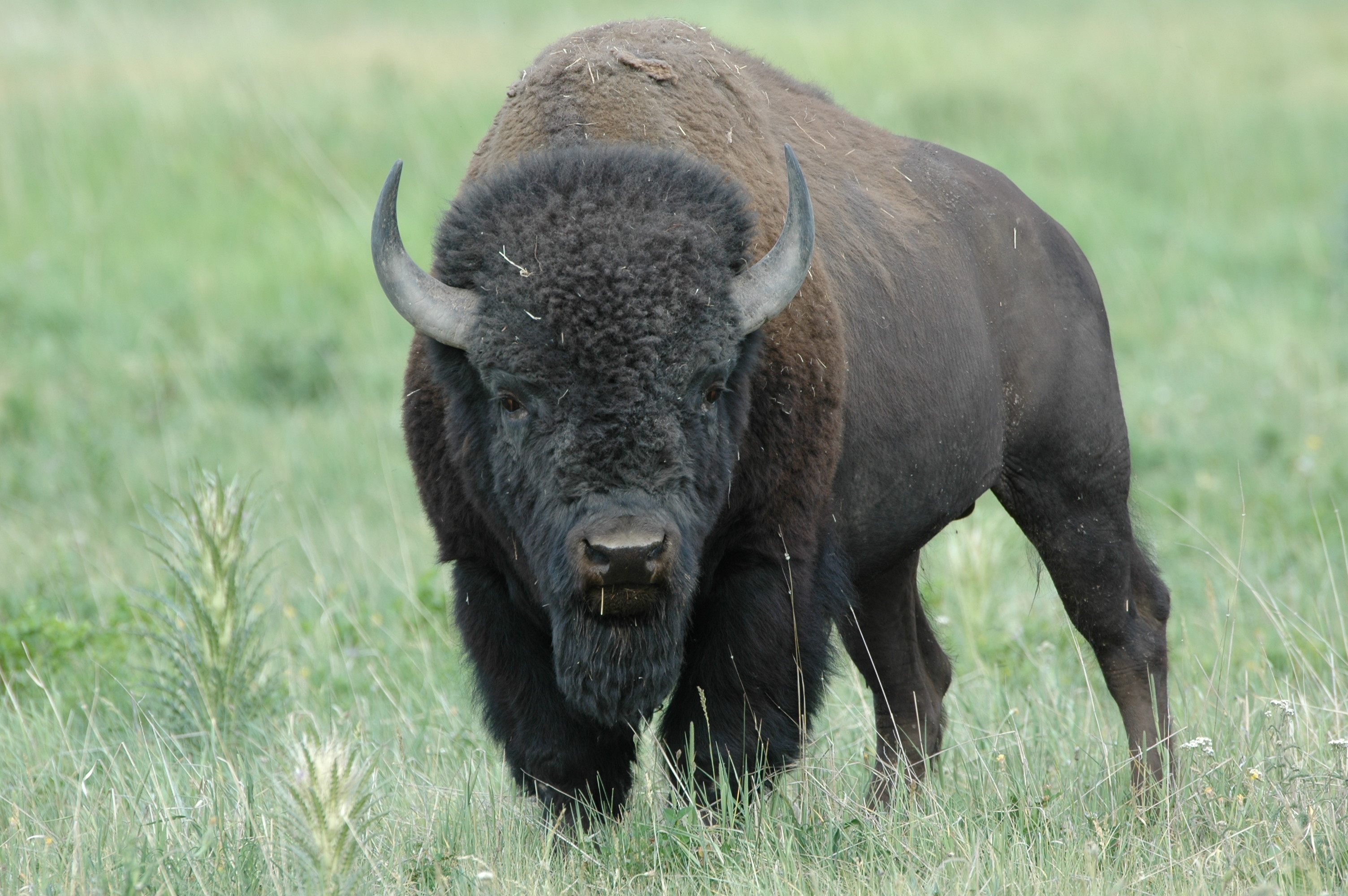
Shocking as it sounds, the Yellowstone bison are equally exploited fenced-in on a ranch on reservation land as they would be anywhere else in Montana; a deer or elk ends up every bit as injured or dead when shot by a tribal hunter as by the average American sport hunter; tribal gill nets do as much damage to a struggling salmon as those set out by non-Indian commercial fishermen, and a 50 caliber bullet rips into a whale with the same destructive force, no matter who pulls the trigger.

Yes, I used to be a meat-eating fisherman. I changed my ways after allowing myself to absorb facts like, “humans slaughter 6 million animals per hour!” and “20,000 more will die in the time it takes you to read these sentences!” That’s a Holocaust of farmed animals every 60 minutes! And that’s not counting fish, lobsters, shrimp, oysters, clams, krill or other sea life.

Call me a zealot, but when you realize there’s an apocalypse of animals happening right now, you want it stopped, once and for all, and by all—no exceptions.

Text and Wildlife Photography ©Jim Robertson, 2013. All Rights Reserved

Text and Wildlife Photography ©Jim Robertson, 2013. All Rights Reserved

Animal Agriculture: The Real Inconvenient Truth

http://www.mfablog.org/2013/11/animal-agriculture-the-real-inconvenient-truth.html

By Ari Solomon
1461780_624520054271903_1498249114_n.jpgLast week, one of the largest storms in recorded history made landfall in the Philippines. Super Typhoon Haiyan spanned 300 miles and had winds that topped 200 miles per hour. With thousands dead and entire towns destroyed, this was an unmitigated tragedy.
Naderev Sano, commissioner for the Philippines climate change commission and head of the Philippines delegation to the UN climate, recently made an appeal in Warsaw urging the world to take action on climate change, which scientists believe is to blame for fueling these super storms.
Since 2006, when the UN released its groundbreaking report Livestock’s Long Shadow, the world has been made aware of the fact that there is no greater contributor to climate change than animal agriculture. In fact, it was discovered that raising animals for food creates more greenhouse gases than all the transportation in the world combined.
Whether you’re looking to improve your health, safeguard animals from unnecessary cruelty or help halt the horrific effects of climate change, there is no better choice than adopting a delicious vegan diet. To get started, visit ChooseVeg.com.

A Bit of Animal Trivia

Everyone likes a bit of trivia. Well, maybe not everyone; you may be the one person who doesn’t. Come to think of it, I don’t really enjoy trivia all that much myself. But anyway, like it or not, here’s some trivia for you…

1) What is the fastest growing bone tissue on Earth?
Answer:  Deer antlers

2) Which wild animal carries a dominant gene affecting their appearance that was acquired from their domesticated cousins?
Answer: Wolves. The wolf got their gene for black fur (found nearly exclusively in North American wolves) from dogs brought over with the earliest people to inhabit this continent.

3) What animal can detect odors up to 5 miles away; can hear both low and high frequency sounds beyond human capabilities and has 360 degree panoramic vision?
Answer: Cows. They also form friendships and are devoted mothers and will walk upwards of five miles in search of their calves.

4) A few centuries ago, this animals’ droppings were considered the best available fertilizer and therefore were protected by armed guards?
Answer: Pigeons

5) Which marine animal can live up to 100 years, uses complicated signals to establish social relationships, and sometimes travels hand in hand, the old leading the young?
Answer: Lobsters

6) When this animal gets injured or sick, his or her mate, and sometimes a comrade or two, will stay by their side until they are able to recover or pass on.
Answer: Canada goose

7) Which animal has the ability to learn the precise details of an area of over 1000 acres?
Answer: The turkey

8) Which dog breed was an American favorite in the early 20th century, featured as a child’s best friend and constant companion on TV and in movies, and can now be found in hospitals and nursing homes as a registered therapy animal?
Answer: The Pit Bull Terrier

9) What creature has some so paranoid that they’ve had protective enclosures—modeled after shark cages—built at school bus stops?
Answer: The Mexican Wolf in Catron County, New Mexico

10) Which animal species secretly communicates with one another through their flatulence?
Answer: Herring. Many species of fish have devised creative forms of communication and recent research has shown fish have a more complex nervous system than was previously accepted.

Bonus Question) While so many others dwindle, which group of animals has been steadily on the increase over  the years, now surpassing 150 billion?
Answer: Those consumed by humans each year.

turkey-factory-farming

The A-Hole Who Ate An Octopus

[Back on October 4th I posted about the New rule banning octopus hunting in Seattle because of the public outcry when a diver killed a 6 foot “specimen” and left it clearly displayed in the back of his truck (like a wolf in Jackson Hole). Then on October 14th, the New York Times ran an absurdly-titled article praising the killer, while disparaging the people who called for an end to octopus hunting in Puget Sound (who were ultimately successful).

I’m not going to include the entire article (hell, I’m not even going to read it all), since it goes on for 4 or 5 pages, but here’s the first page so you can see how feebly the media sucks up to animal killers these days]:


The Octopus that Almost Ate Seattle

October 14th, 2013 NYT

In the months leading up to the hunt, Dylan Mayer trained twice a week in his parents’ swimming pool, asking friends to attack him, splay their arms and grab him, drag him to the surface and shove him below it, pull off his mask, snatch his regulator, time his recovery. By last Halloween, he was ready, and as the light began to fade that afternoon, the broad-shouldered 19-year-old jumped into a red Ford pickup truck with his buddy and drove some 40 minutes from Maple Valley, Wash., to West Seattle. They arrived at Alki Beach around 4 p.m., put on their wet suits and ambled into Cove 2. Then they slipped into Elliott Bay, the Space Needle punctuating the city line in the distance like an inverted exclamation point.

Mark Saiget

Dylan Mayer holding the giant Pacific octopus that he caught in Puget Sound.

Under the dark water, the teenagers looked around with the help of a diving light. At 45 feet, they passed a sunken ship, the Honey Bear, and at 85 feet, beneath the buoy line, they saw further evidence of the former marina — steel beams, pilings and sunken watercraft. Marine life thrived in this haven of junk, and for this reason, Cove 2 was a popular dive site. According to the permit he had just purchased at Walmart, Mayer was allowed to catch this sea life and cook it, which is exactly what he set out to do. He wasn’t much of a chef, but he had experience foraging for his dinner. Mayer had attended a high school known for its Future Farmers of America program; he also knew how to slaughter cows and castrate bulls. Now he was going to community college, where he was asked to draw something from nature. He figured that he might as well eat it too. And as he scanned the bay, he could already imagine searing the marine morsels on high heat and popping them, rare and unctuous, into his mouth. He soon spotted his prey. “That’s a big [expletive] octopus,” he scribbled on his underwater slate.

The giant Pacific octopus was curled inside a rock piling, both its color and texture altered by camouflage. Mayer judged it to be his size, about six feet, and wondered if he could take it on alone. He lunged at the octopus, grabbing one of its eight arms. It slipped slimily between his fingers, its suckers feeling and tasting his hand. He reached for it again, and again it retreated. Able to squeeze its body through a space as small as a lemon, the octopus was unlikely to succumb to his grip. He poked it with his finger and watched it turn brighter shades of red, until finally, it sprang forward and revealed itself to be a nine-foot wheel charging through the water.

The octopus grabbed Mayer where it could, encircling his thigh, spiraling his torso, its some 1,600 suckers — varying in size from a peppercorn to a pepper mill — latching onto his wet suit and face. It pulled Mayer’s regulator out of his mouth. His adrenaline rising, he punched the creature, and began a wrestling match that would last 25 minutes.

Eventually, he managed to pull the animal to the surface, where a number of divers couldn’t help noticing a teenager punching an 80-pound octopus. As they approached, Mayer freaked out. “Let’s get out of here,” he said, sucker marks ringing his face. “Maybe we shouldn’t have done this.” But it was too late. He dragged his kill ashore, where a few bystanders, in disbelief, took his picture and threatened to report him. Lugging the octopus to the red truck, Mayer cited his permit. But the divers kept taking pictures. That night, as Mayer butchered the octopus for dinner, they posted the photos online.

In a city finely attuned to both the ethics of food sourcing and poster-worthy animal causes (the spotted owl, the killer whale and marbled murrelet among them), Mayer’s exploits became an instant cause célèbre. On Nov. 1 and 2, Seattle’s competing news stations reported the octopus hunt. The next day, The Seattle Times ran the story on the front page. On Web forums, Seattleites tracked down the teenager’s name and address through the clues in the photos: the truck’s license plate, the high school named on Mayer’s sweatshirt and the inspection sticker affixed to his tank. “I hope this sick [expletive] gets tangled in a gill net next time he dives and thus removes a potential budding sociopath before it graduates from invertebrates to mammals,” read one typical comment, which received 52 “thumbs-ups.” Around the same time, Scott Lundy, one of the men who had confronted Mayer in Cove 2, issued a “Save the G.P.O.” petition to ban octopus harvesting from the beach and examine the practice statewide. By the next day, he had collected 1,105 signatures.

<img src=”http://meter-svc.nytimes.com/meter.gif”/>          

Just Call Me a Cow Hugger

People often ask if I get a lot of uninvited remarks from anti-wolf or pro-hunting trolls. The answer is, not as many as you might think. It seems the smart hunters (again, not so many as you might suppose) know better than to waste their time writing to this blog, since any pro-kill comments go straight to the cyber-round file never to reach the light of day. I usually know right away which comments are from hunters; they’re the ones that start off with, “You people are all a bunch of tree huggers…” (Guilty as charged.)

But there are others whose comments also deserve being jettisoned off the cyber-map. I’m talking about those single-minded “wolf people” who blame the cows themselves for the persecution of wolves, as though cows enjoy their lot in life and are part of a grand conspiracy against predators, in league with the very ranchers who brand, dehorn and ultimately slaughter them. These one-note wolf folks should know that not only am I a tree-hugger and a wolf-lover, I’m also a bunny, deer and cow hugger.

In an earlier post, entitled “Animal Industry = Animal Abuse,” I wrote of hearing the cows lowing for their calves. Tonight I’m hearing it again. To me, the sounds they make are every bit as mournful as the howling of wolves, and for good reason. Not only are cows raised just to be killed and eaten by humans, theirs is a lifetime of abuse at the hands of man. Forcibly impregnated, many cows see their calves snatched away just as they start to bond with them. Unlike their wild ancestors, they’re never allowed to freely migrate to wherever conditions are more favorable for them. There are always barbed wire fences, or some bully on horseback or four-wheeler bossing them around or telling them where to go.

Taking it out on the cows (as a psychiatrist in Arizona  did when he killed seven cows in his driveway) is like wishing ill on caged elephants because you disagree with zoos or on rabbits because you hate animal experimentation. Slave auctions were repugnant because people were “treated like cattle.” Well, why should any sentient being be bought and sold like chattel? But no abolitionist ever wished harm on the slaves themselves…

The cows didn’t choose to be born in wolf habitat; they’re there because some fourth generation rancher’s forefather killed off the original wolves, claimed the land and stuck cows on it. If you want to blame someone, blame today’s ranchers for continuing the practice.

In other words, pick on someone with your own brain size. Cows know all they need to know to be a cow. A cow will never be born the next Einstein, but by the same token, no cow will ever be the next Hitler, Ted Bundy or Ted Nugent.

1379284_544626882259670_451791472_n

Lead-ing the Way in California

From Wayne Pacelle’s blog, A Humane Nation

October 11, 2013

Bullets should not keep killing long after they’ve left the barrel of a firearm. Soon, in California, they won’t.

In an act that will have major national reverberations for hunting and ammunitions manufacturing in the United States, Gov. Jerry Brown today signed legislation to make California the first state in the nation to halt the use of lead ammunition in hunting. The HSUS led the fight, along with Audubon California and Defenders of Wildlife, besting the National Rifle Association, the National Shooting Sports Foundation, and other hunting-rights lobby groups that called for the status quo and the continued incidental poisoning of countless birds and mammals, including endangered California condors, in the Golden State. Gov. Brown also signed legislation today to forbid the trapping of bobcats around Joshua Tree National Park and other national parks and wildlife refuges – a second major wildlife victory for us.

Thank you, Gov. Brown. We are immensely grateful.

The lead ammo bill, AB 711, was authored by Assemblymembers Anthony Rendon and Dr. Richard Pan, and the bobcat bill, AB 1213, was authored by Assemblymember Richard Bloom. We are also so grateful to these legislative champions for pushing these important policies over the finish line.

Last year, Gov. Brown signed legislation to outlaw the use of dogs in hunting bears and bobcats, and the year before put his signature on a bill to ban the sale and possession of shark fins. He’s also signed more than 25 other animal welfare bills, protecting mountain lions, banning cruel traps and a wide range of other practices. In all, since voters passed Proposition 2 in California in 2008, state lawmakers and two governors have together enacted more than 40 new statutes for animals – including bans on tail docking of dairy cows and forbidding the sale of shell eggs that don’t meet the standards of Prop 2. Hats off to my colleague, California senior state director Jennifer Fearing, and the rest of our team for leading the advocacy efforts and skillfully working with so many lawmakers and with Gov. Brown. This incredible raft of legislation cements California’s place as the nation’s leading state on animal welfare.

When the NRA and other groups fought efforts more than two decades ago to ban the use of lead shot for waterfowl hunting, they said that a legal prohibition on its use would result in the end of duck and goose hunting. Such outlandish claims, which we can now evaluate in a very tangible way, have proven false. In this year’s legislative fight in California, the National Shooting Sports Foundation – the trade association for gun and ammunition makers, based in Newtown, Conn., of all places – spent tens of thousands of dollars running print and radio ads attacking The HSUS, but their expenditures were all for naught.

Lead has been removed from paint, gasoline, and other consumer products because lead kills. A preponderance of scientific evidence demonstrates that there are significant public health, environmental and wildlife health risks associated with lead from ammunition. One estimate says that there are more than 10 million doves a year who die from lead poisoning. When you consider that there are more than 130 species known to suffer from the toxic effects of spent lead ammunition, it’s quite a staggering toll. Scavenging birds like condors, owls, eagles, and hawks, as well as mammals like coyotes, are all at risk and known to be suffering. Death from lead poisoning is painful, and even when lead exposure isn’t high enough to kill an animal, it doesn’t take much to weaken an animal to the point that it succumbs to predation or disease.

With an alternative product available – including steel, copper and bismuth ammunition – why not make the switch?

Editorial support for AB 711 from newspapers across California has poured in – The Los Angeles Times, the Monterey County Herald, the San Jose Mercury News, the Fresno Bee, the Sacramento Bee, the Riverside Press-Enterprise and the Bakersfield Californian, to name a few. The president and the vice president of California’s Fish and Game Commission backed the bill, as did Department of Fish and Wildlife director Chuck Bonham.

This is an enormous win for our movement. Committed conservationists and animal welfare advocates know it is wrong to allow random poisoning of wildlife. It is inimical to any sound principle of wildlife management and other states should follow California’s lead. With the signing of these two bills, today is a great day for condors, bobcats, and more than 130 other species of wildlife in California!

00-intro

Elephant Loses Her Patience, Kills Keeper

Elephant kills keeper at Springfield, Missouri, zoo

From Chuck Johnston, CNN
Fri October 11, 2013

(CNN) — A 41-year-old elephant named Patience charged and killed a Springfield, Missouri, zookeeper who had come to feed her Friday.

John Phillip Bradford, 62, died in the elephant enclosure at Dickerson Park Zoo, according to Springfield Police Department spokeswoman Lisa Cox. He was the manager of elephants, and had worked at the zoo for 30 years, according to a zoo statement.

Bradford was in the enclosure with two other workers when Patience charged him. The other two workers were unharmed, Cox said.

What set off the incident is unclear.

The zoo referred questions to the city.

“This is very sad day for the Zoo family, as well as our community as a whole,” zoo director Mike Crocker said in a written statement.

The elephant has been at the zoo since 1990. The zoo hasn’t had any previous problems with its elephants, Cox said.

The zoo’s elephant matriarch, Connie, died last week, according to the zoo website.

The zoo opened as normal Friday, but the elephant exhibit was closed.

ImageProxy


Early snow–Not Wolves–kills thousands of cattle in S.D.

This sad story backs up what I wrote about the cruel treatment of cows in my recent post, Animal Industry = Animal Abuse.

It also highlights just one of the many ways that ranchers lose livestock which make the occasional wolf depredation pale in comparison. Because they can’t go out and trap or shoot a snowstorm, they shrug it off and accept their losses in stride. But if a wolf wanders through, it’s panic time. Scapegoating and killing a few wolves and coyotes must make them feel better about their powerlessness to stop a snowstorm.

Also, how many times do the deniers have to hear the word “record-breaking” before they take climate change seriously…

http://seattletimes.com/html/nationworld/2021983379_apusautumnstormsouthdakota.html

A record-breaking storm that dumped 4 feet of snow in parts of western South Dakota left ranchers dealing with heavy losses, in some cases perhaps up to half their herds, as they assess how many of their cattle died during the unseasonably early blizzard.

By CHET BROKAW Associated Press

Frozen cattle on Monday line Highway 34 east of Sturgis, S.D.

Enlarge this photoKRISTINA BARKER / AP

Frozen cattle on Monday line Highway 34 east of Sturgis, S.D.

PIERRE, S.D. —

A record-breaking storm that dumped 4 feet of snow in parts of western South Dakota left ranchers dealing with heavy losses, in some cases perhaps up to half their herds, as they assess how many of their cattle died during the unseasonably early blizzard.

Meanwhile, utility companies were working to restore power to tens of thousands of people still without electricity Monday after the weekend storm that was part of a powerful weather system that also buried parts of Wyoming and Colorado with snow and produced destructive tornadoes in Nebraska and Iowa. At least four deaths were attributed to the weather, including a South Dakota man who collapsed while cleaning snow off his roof.

Gary Cammack, who ranches on the prairie near Union Center about 40 miles northeast of the Black Hills, said he lost about 70 cows and some calves, about 15 percent of his herd. A calf would normally sell for $1,000, while a mature cow would bring $1,500 or more, he said.

“It’s bad. It’s really bad. I’m the eternal optimist and this is really bad,” Cammack said. “The livestock loss is just catastrophic. … It’s pretty unbelievable.”

Cammack said cattle were soaked by 12 hours of rain early in the storm, so many were unable to survive an additional 48 hours of snow and winds up to 60 mph.

“It’s the worst early season snowstorm I’ve seen in my lifetime,” said Cammack, 60.

Early estimates suggest western South Dakota lost at least 5 percent of its cattle, said Silvia Christen, executive director of the South Dakota Stockgrowers Association. Some individual ranchers reported losses of 20 percent to 50 percent of their livestock, Christen said. The storm killed calves that were due to be sold soon as well as cows that would produce next year’s calves in an area where livestock production is a big part of the economy, she said.

“This is, from an economic standpoint, something we’re going to feel for a couple of years,” Christen said.

Some ranchers still aren’t sure how many animals they lost, because they haven’t been able to track down all of their cattle. Snowdrifts covered fences, allowing cattle to leave their pastures and drift for miles.

“Some cattle might be flat buried in a snow bank someplace,” said Shane Kolb of Meadow, who lost only one cow.

State officials are tallying livestock losses, but the extent won’t be known for several days until ranchers locate their cattle, Jamie Crew of the state Agriculture Department said.

Ranchers and officials said the losses were aggravated by the fact that a government disaster program to help ranchers recover from livestock losses has expired. Ranchers won’t be able to get federal help until Congress passes a new farm bill, said Perry Plumart, a spokesman for Sen. Tim Johnson, D-S.D.

Meanwhile, more than 22,000 homes and businesses in western South Dakota remained without power Monday afternoon, according to utility companies. National Guard troops were helping utility crews pull equipment through the heavy, wet snow to install new electricity poles.

At least 1,600 poles were toppled in the northwest part of the state alone, and workers expect to find more, Grand River Electric Coop spokeswoman Tally Seim said.

“We’ve got guys flying over our territory, counting as they go. We’re finding more as we are able to access the roads. The roads have been pretty blocked on these rural country roads,” Seim said.

“One of our biggest challenges is getting access to areas that are still snowed in,” added Vance Crocker, vice president of operations for Black Hills Power, whose crews were being hampered by rugged terrain in the Black Hills region.

In Rapid City, where a record-breaking 23 inches of snow fell, travel was slowly getting back to normal.

The city’s airport and all major roadways in the region had reopened by Monday. The city’s streets also were being cleared, but residents were being asked to stay home so crews could clear downed power lines and tree branches, and snow from roadsides. Schools and many public offices were closed.

“It’s a pretty day outside. There’s a lot of debris, but we’re working to clear that debris,” said Calen Maningas, a Rapid City firefighter working in the Pennington County Emergency Operations Center.

Cleanup also continued after nine tornadoes hit northeast Nebraska and northwest Iowa on Friday, injuring at least 15 people and destroying several homes and businesses. Authorities also are blaming the weather for a car accident that killed three people along a slick, snow-covered road in Nebraska.

In South Dakota, the 19 inches of snow that fell in Rapid City on Friday broke the city’s 94-year-old one-day snowfall record for October by about 9 inches, according to the National Weather Service. The city also set a record for snowfall in October, with a total of 23.1 inches during the storm. The previous record was 15.1 inches in October 1919.