How factory farming breeds deadly viruses and epidemics

How factory farming breeds deadly viruses and epidemics

FOOD

Published on 16 APR 2020
by

JOSLYN CHITTILAPALLY
Factory farming conditions and antibiotic-resistant pathogens emerging as a result of them pose an existential threat to humans in the form of zoonotic diseases. Why it’s time to produce and consume food more thoughtfully.

Much has been written about the coronavirus and how people can prevent being exposed to it, including through social distancing and good hygiene. It’s now vital to get to the root cause of this pandemic and focus on primary prevention so as to avoid another, perhaps even harsher, outbreak. While the illegal wild animal trade and wet markets have been singled out, factory farming of animals in general is much less discussed. More attention needs to be paid to its public health risks – before it’s too late.
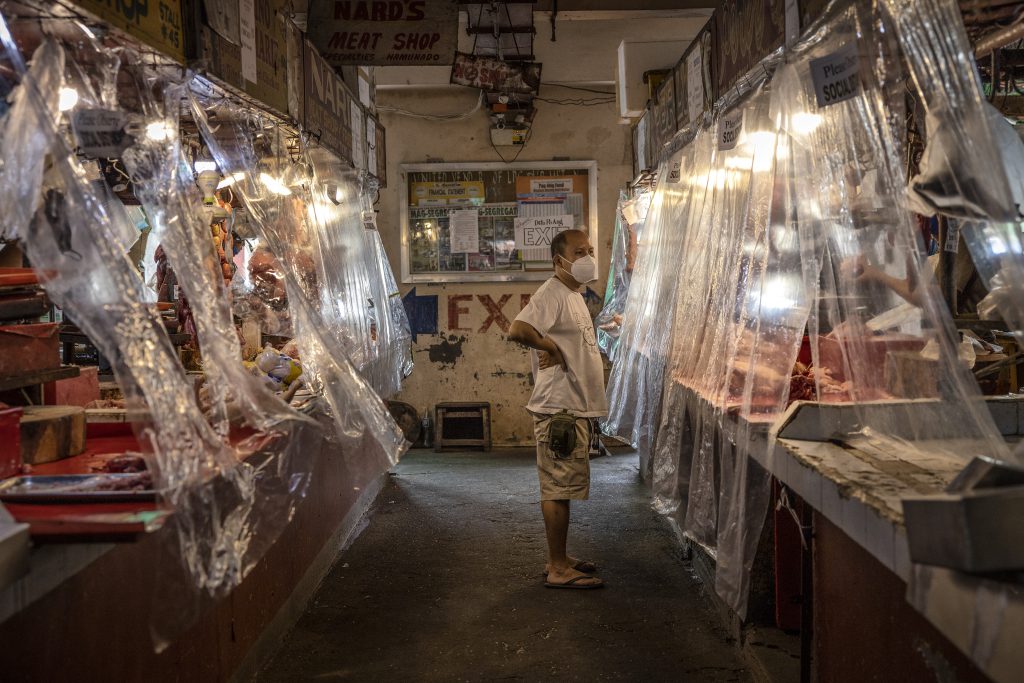
Wet market, Philippines, coronavirus

Stalls inside a wet market in Manila, in the Philippines are covered in plastic to enforce social distancing to prevent the spread of Covid-19 © Ezra Acayan/Getty Images

What are zoonotic diseases

Animals can sometimes carry harmful germs like viruses, bacteria, parasites and fungi that spread to people and cause illnesses which are known as zoonotic diseases or zoonoses. Around 60 per cent of all known infectious diseases in humans are of this type, as are 75 per cent of emerging ones according to a 2016 UN report.

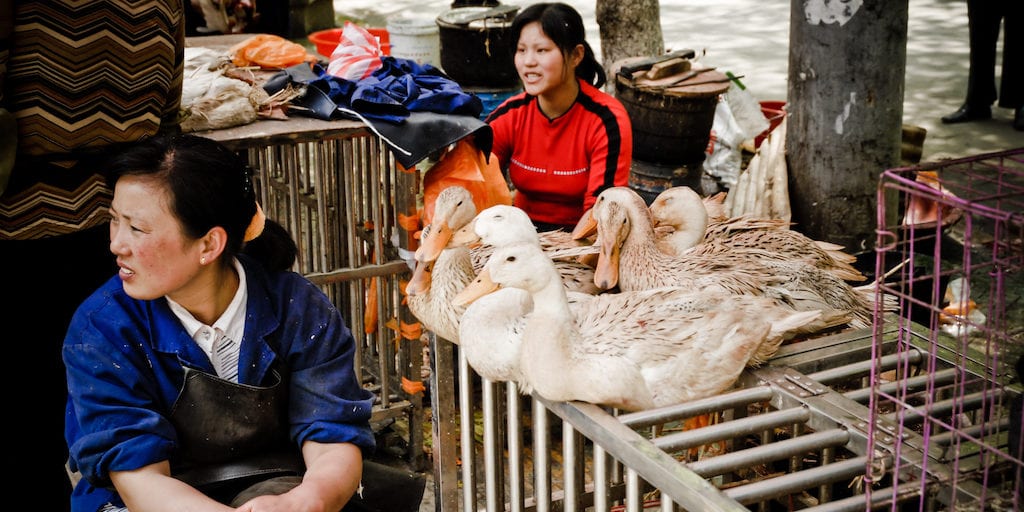
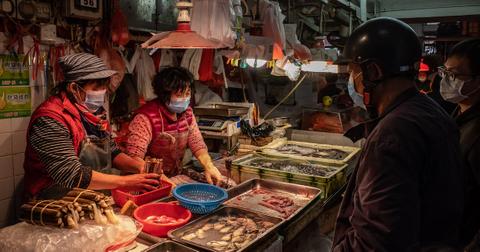
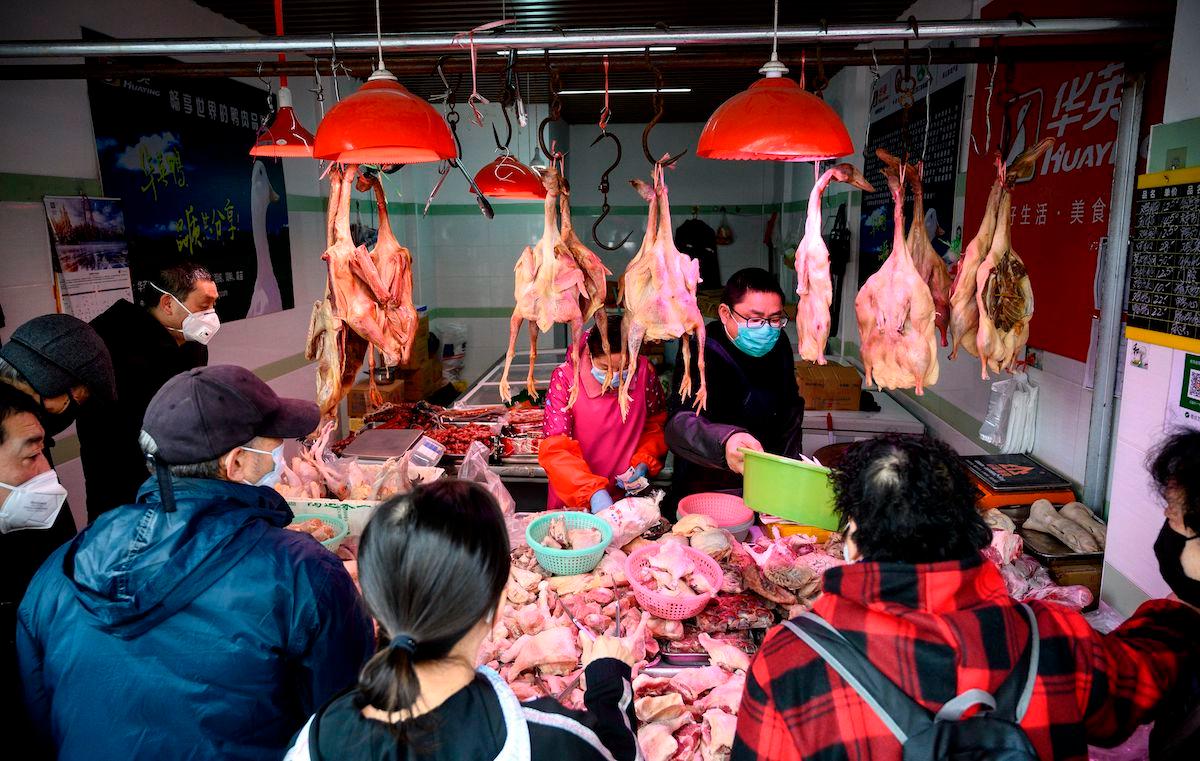
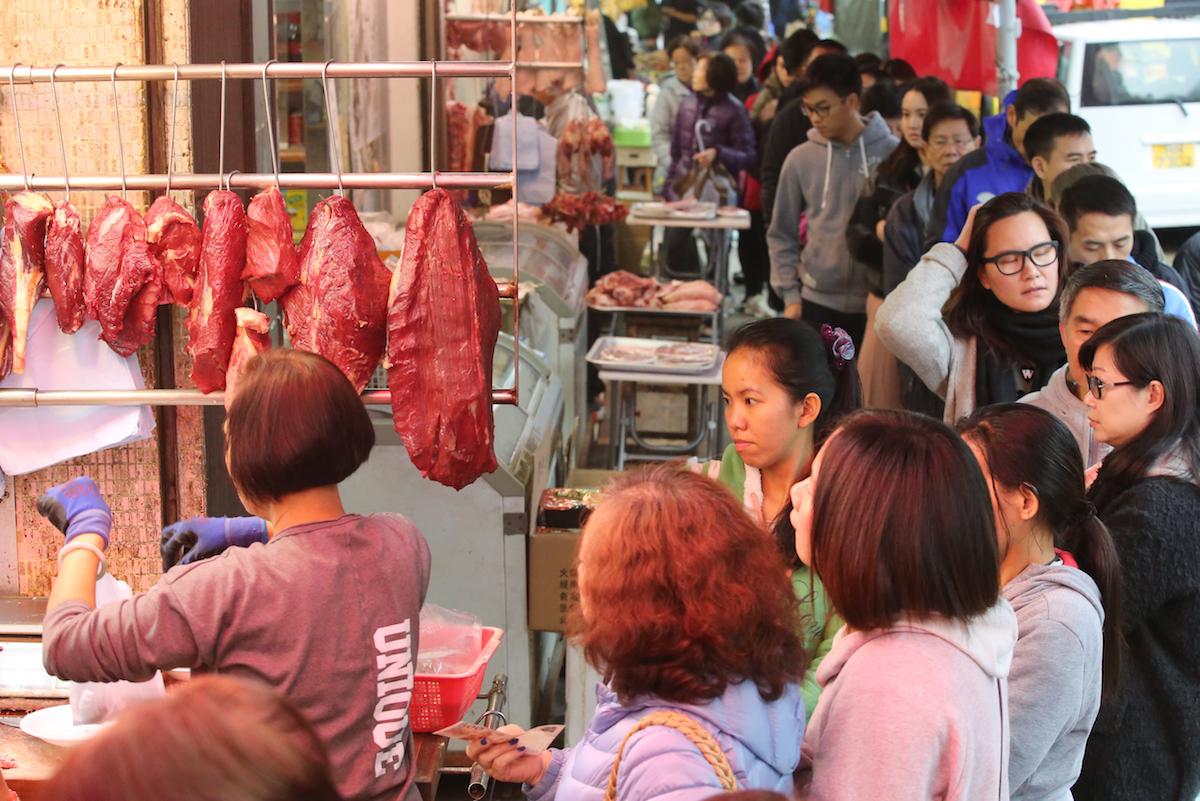
For example, wet markets are commonplace in many countries including China, India, Vietnam and in other parts of Southeast Asia; they sell fresh meat or fish, often (though not always) killed on demand at roadside slaughterhouses, and many, though not all, sell wild animals. This way, domesticated animals not only get viruses from the wild animals that are also sometimes sold in these markets (this is thought to have happened with the novel coronavirus) but can also become carriers and spreaders of diseases originating due to the filthy conditions they’re kept in, as in the cases of bird and swine flu.
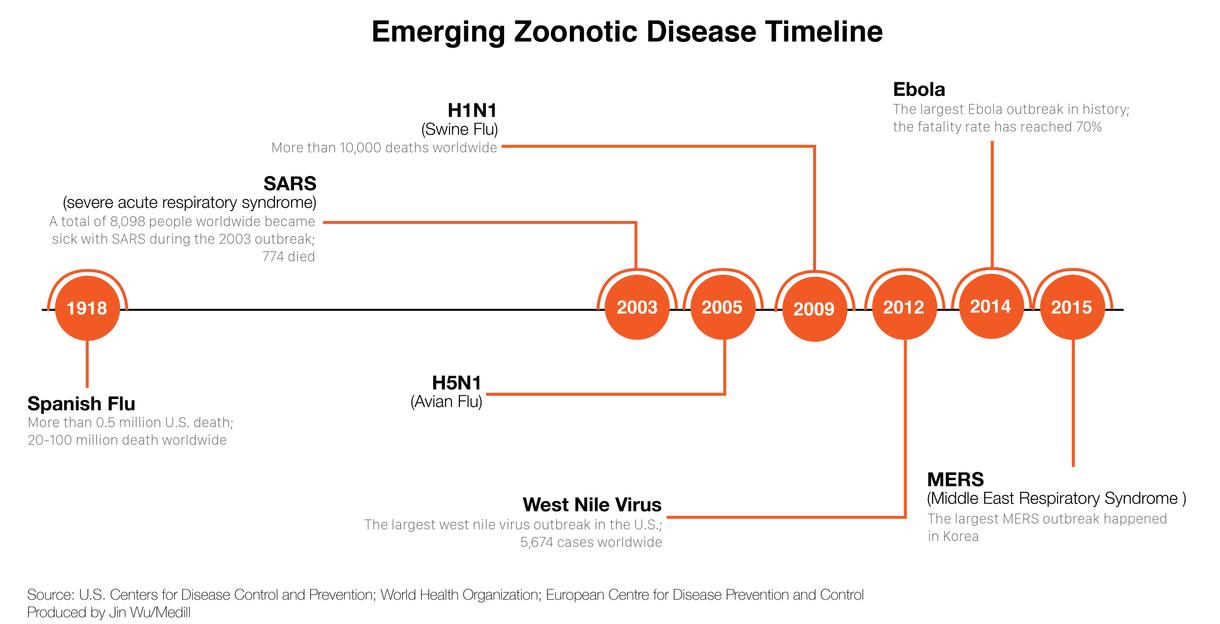
As Covid-19 joins the list of zoonotic diseases, the world has already seen millions of deaths in the past due to the consumption of and contact with animals. Starting with three pandemics that have emerged since 2000, Severe Acute Respiratory Syndrome (SARS) in 2003, swine flu (H1N1) in 2009 and now the disease Covid-19 caused by the virus Sars-CoV-2: evidence suggests the latter has come from animals, as did SARS which spread from civet cats and bats in China, whilst animal to human transmission of swine flu first took place in an intensive pig farm in Mexico.

Other than these, there have also been outbreaks of bird flu (avian influenza) from poultry, the Middle East Respiratory Syndrome (MERS) first transmitted from camels, Ebola from monkeys and pigs, Rift Valley fever from livestock, West Nile fever from birds, Zika from monkeys and Nipah from bats and pigs. The human immunodeficiency virus, or HIV, is widely thought to have originated from the consumption of bush meat. Incidentally, avian influenza continues to mutate and wreak havoc in poultry farms around the world including in Germany, China, India and the UK, and an outbreak of African swine fever (ASF) was reported in Poland recently.

Read more: Ebola exists. A day at the heart of the epidemic in the Democratic Republic of Congo
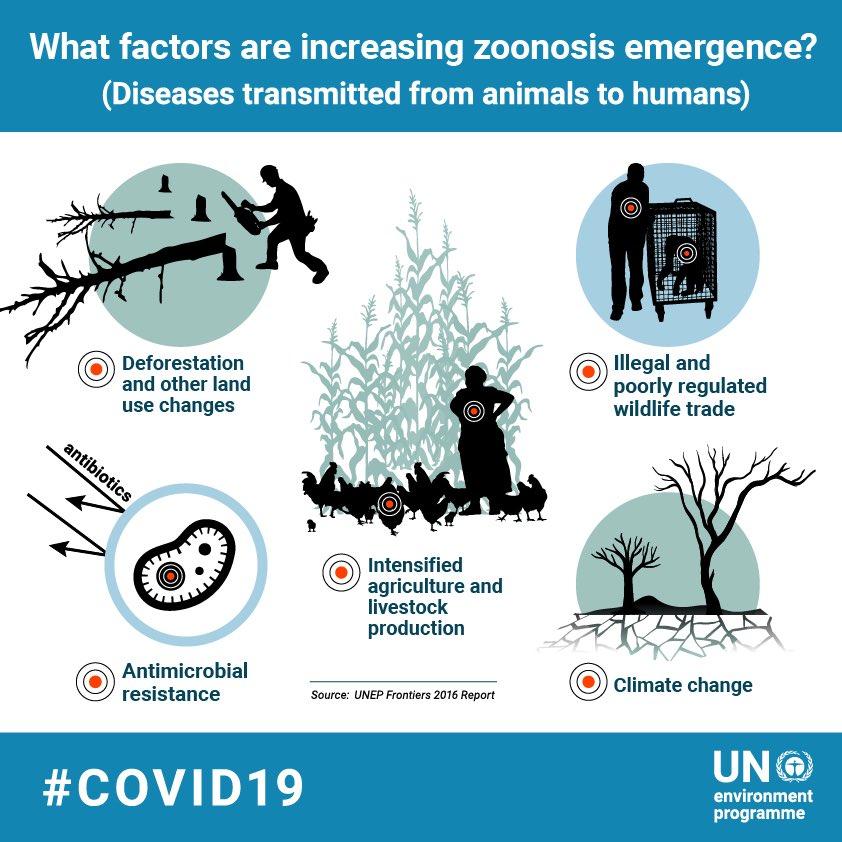
As the human population surges towards eight billion, demand for food is growing, alongside the need for space to produce it, which means encroaching on wild animals’ natural habitats– it’s no secret that animal agriculture is one of leading causes of deforestation and environmental degradation in the world. This has brought humans closer to wild animal species and increased the risk of disease transmission. Additionally, the conditions in which animals are often kept accelerate the emergence of pandemics.

Although some zoonoses are probably unavoidable as these viruses have always been present in wildlife, much human suffering resulting from them could be avoided by changing the way people come into contact with animals. In particular, by establishing a more balanced and respectful relationship with other living beings.

Read more: Ilaria Capua. To the coronavirus we’re just another host animal, so let’s use our intelligence

Factory farming of animals triggers pandemics

There’s clearly a link between the emergence of highly pathogenic avian influenza viruses and intensified poultry production systems.Marius Gilbert, spatial epidemiologist at the Université Libre de Bruxelles, Belgium

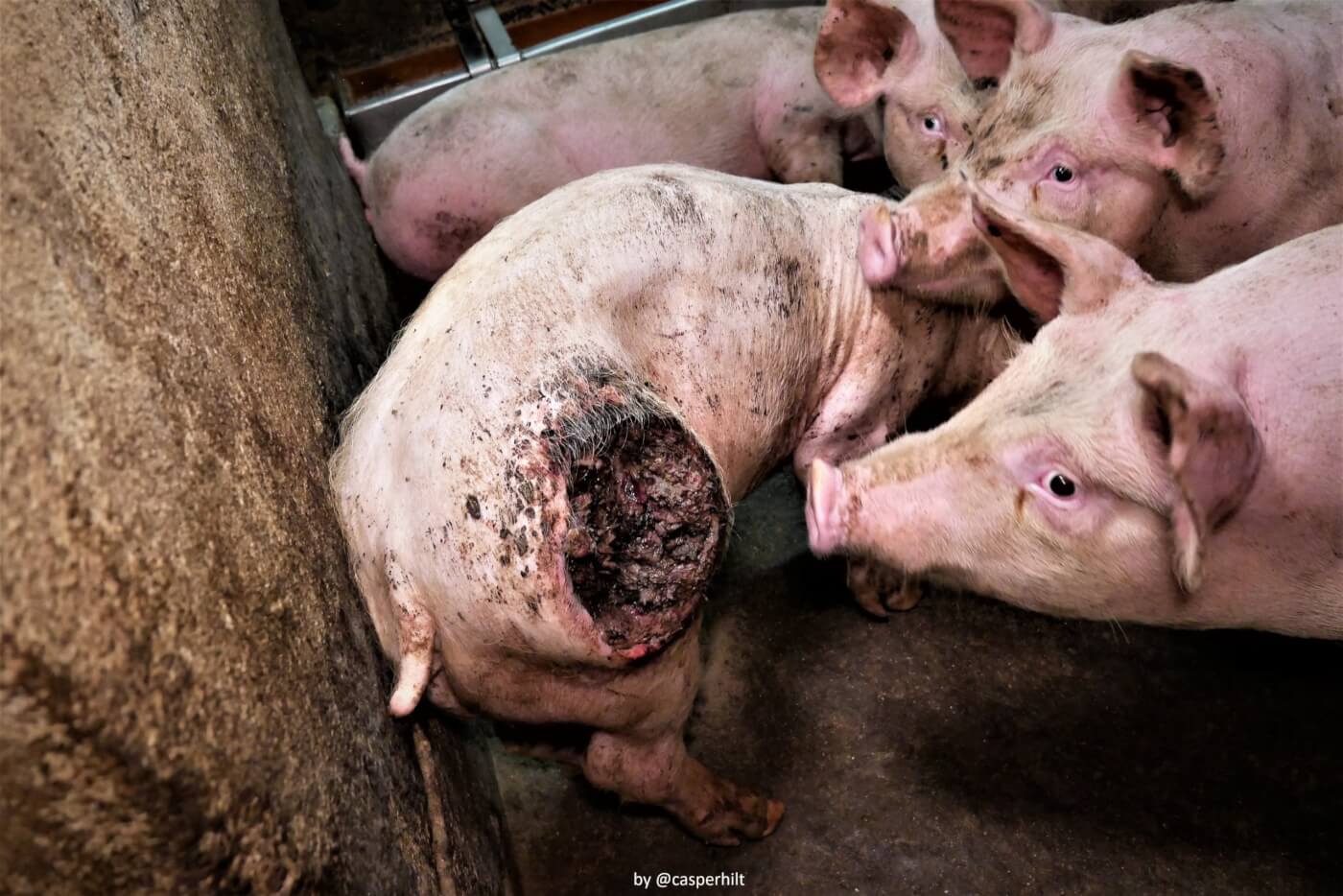
Our demand for meat and other animal products means that huge numbers of animals such as cows, chickens and pigs are crammed together in crowded, faeces-ridden farms, transported in filthy lorries, and slaughtered on killing floors soaked with blood, urine, and other bodily fluids – the perfect breeding grounds for pathogens. Public health experts have been ringing the alarm about zoonotic diseases for years. Among these is Doctor Michael Greger, author of the book Bird Flu: A Virus of Our Own Hatching, who says factory farming is a “perfect storm environment” for infectious diseases.

In a video (above) that first appeared more than a decade ago, Greger states that there have been three eras of human disease: first, that of domestication, when we brought wild animals to barnyards who in turn brought diseases with them; the second started in the 18th and 19th centuries with the Industrial Revolution, leading to epidemics of the so-called diseases of civilisation – diabetes, obesity, heart disease, cancer, etc; and finally, the third era of human diseases started about 30 years ago due to land use and agricultural intensification.

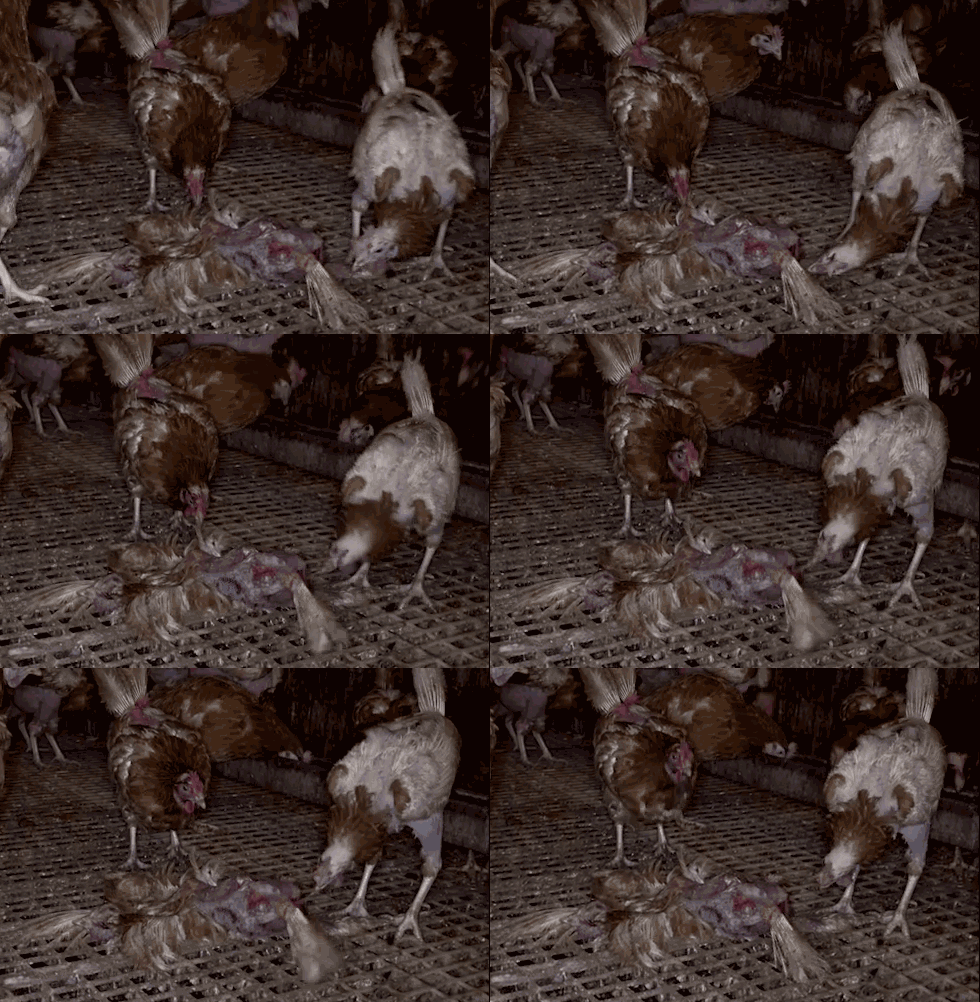
“About half of the egg-laying hens on this planet are now confined in what are called battery cages,” he points out. “In these small barren wire enclosures extending down long rows and windowless sheds there can be up to a million birds on a single farm. About half of the pigs on the planet are crowded into these intensive confinement operations. These intensive systems represent the most profound alteration of the human-animal relationship in 10,000 years”. In words that seem prophetic now, he concludes by saying: “The next pandemic may be more of an unnatural disaster of our own making. A pandemic of even moderate impact may result in the single biggest human disaster ever [and] has the potential to redirect world history”.
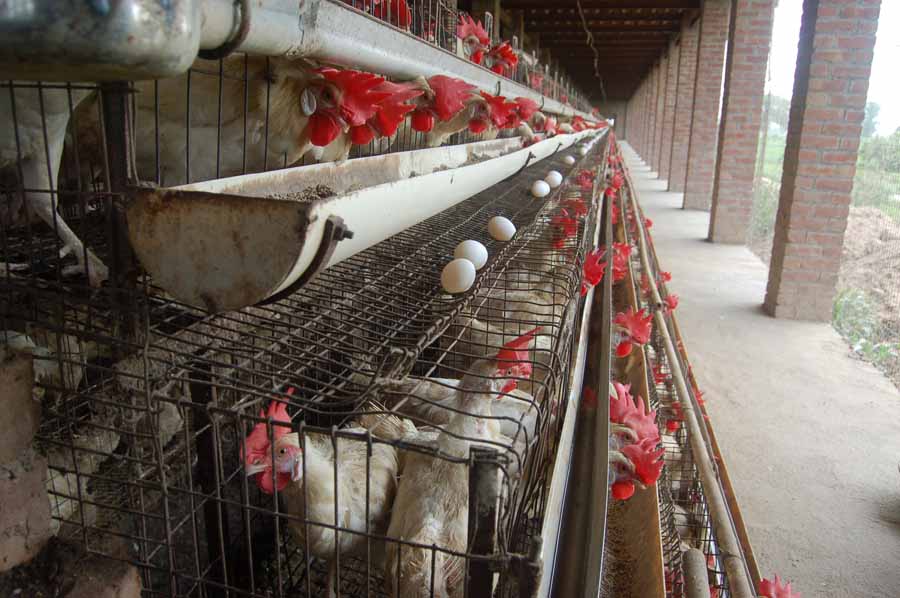
Chickens in battery cages on egg farm.

Chickens in battery cages on an egg farm © Anipixels

2004 joint consultation of the World Health Organisation (WHO), Food and Agriculture Organisation of the United Nations (FAO) and World Organisation for Animal Health (OIE, the world’s leading veterinary authority), concluded that “anthropogenic factors such as agricultural expansion and intensification to meet the increasing demand for animal protein” are one of the major drivers of zoonotic disease emergence.

Given such warnings, it may come as a surprise that policymakers haven’t taken them seriously enough to enforce sufficient preventive measures. In fact, as an editorial in the American Public Health Association journal observes: “It’s curious, therefore, that changing the way humans treat animals – most basically, ceasing to eat them or, at the very least, radically limiting the quantity of them that are eaten – is largely off the radar as a significant preventive measure … Failure to think ahead can’t repeatedly be excused”.
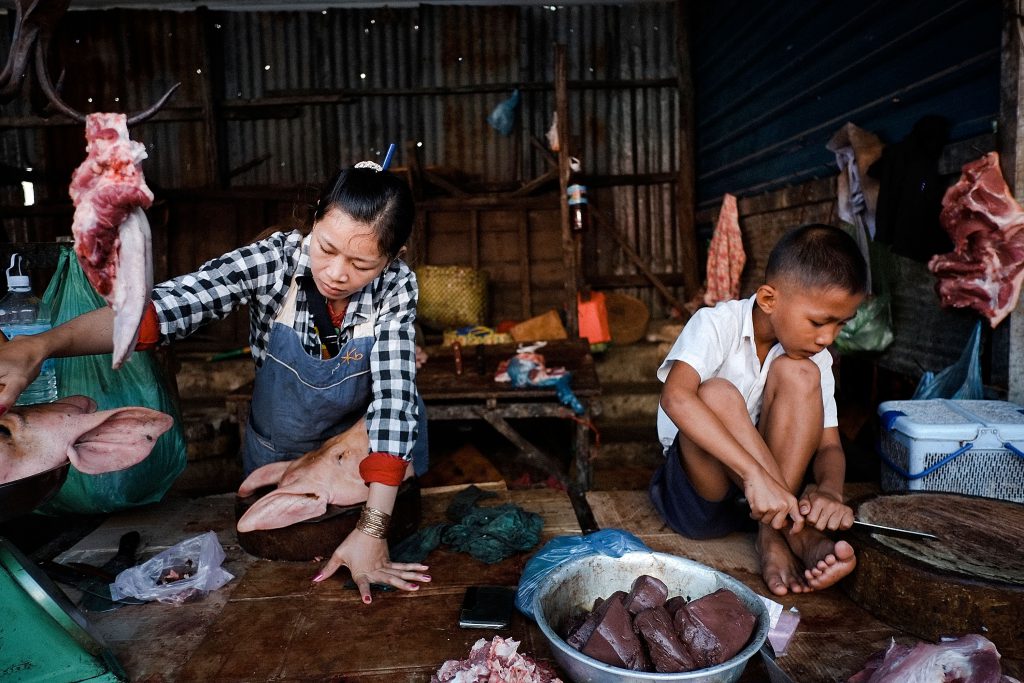
A wet market in Siem Reap, Cambodia.

A wet market in Siem Reap, Cambodia © Rahman Roslan/Getty Images

Antibiotic resistance and infections

In addition, animals on factory farms are routinely fed vast amounts of antibiotics in order to keep them alive in conditions that would otherwise kill them. Because of this, even the most powerful antibiotics aren’t effective against certain bacteria, contributing to the emergence of “superbugs” – new, aggressive, antibiotic-resistant pathogens. According to the US Food and Drug Administration (FDA), an estimated 80 per cent of all antibiotics produced is sold to livestock farms, and a 2019 study documents how the growing demand for animal protein resulted in a tripling of the occurrence of antibiotic resistance in disease-causing bacteria in livestock between 2000 and 2018.

In the US, a person dies every 15 minutes because of an infection that antibiotics can no longer treat effectively, a total of 35,000 deaths per year. According to the Centers for Disease Control and Prevention (CDC), antibiotic resistance is “one of the world’s most pressing public health problems,” and other experts predict that at the current rate, more people will die of diseases caused by antibiotic-resistant bacteria than of cancer by 2050.

Just as humans are more likely to succumb to disease when we’re stressed, weakened or wounded, these same factors also suppress the immune systems in animals, leaving them extremely vulnerable to catching new infections. As a result, the worldwide animal trade creates very sick animals and ideal conditions for pathogens to multiply and jump from animal to animal, and ultimately to humans. To prevent the next pandemic, we need to look beyond the wet markets or illegal trade in China.Aysha Akhtar, neurologist, public health specialist and author, US Public Health Service Commander and Oxford Centre for Animal Ethics Fellow
factory farming, chickens, pandemics, coronavirus

Chickens raised for meat on a large poultry farm in India © Anipixels

Time to rethink our choices

The ultimate culprit are our patterns of animal consumption. Yet the re-opening of Chinese wet markets and bizarre promotion of bear bile as a coronavirus antidote beg the question about how serious the world really is about taking this crisis head-on. However, there are some positive signs.

The consumption of vegan products has increased exponentially and according to a report by Allied Analytics LLP, the global vegan food market, valued at 14.2 billion US dollars in 2018 will reach 31.4 billion in the next five years. China is already beginning to demand safe, reliable and healthy food and companies like US-based Just, which makes plant-based egg products, are fielding a wave of inquiries from Chinese food companies. An online petition urging the WHO to shut down live-animal meat markets has surpassed 100,000 signatures.

Read more: Veganism in India, how the dairy-loving country is embracing a plant-based diet

Also, given the economic fallout of the coronavirus pandemic, through collaborative networks like the FAIRR initiative investors are increasingly assessing their investee companies’ readiness to operational risks through the animal welfare standards set by the Business Benchmark on Farm Animal Welfare.

Read more: Animal welfare, how investors are abandoning factory farming
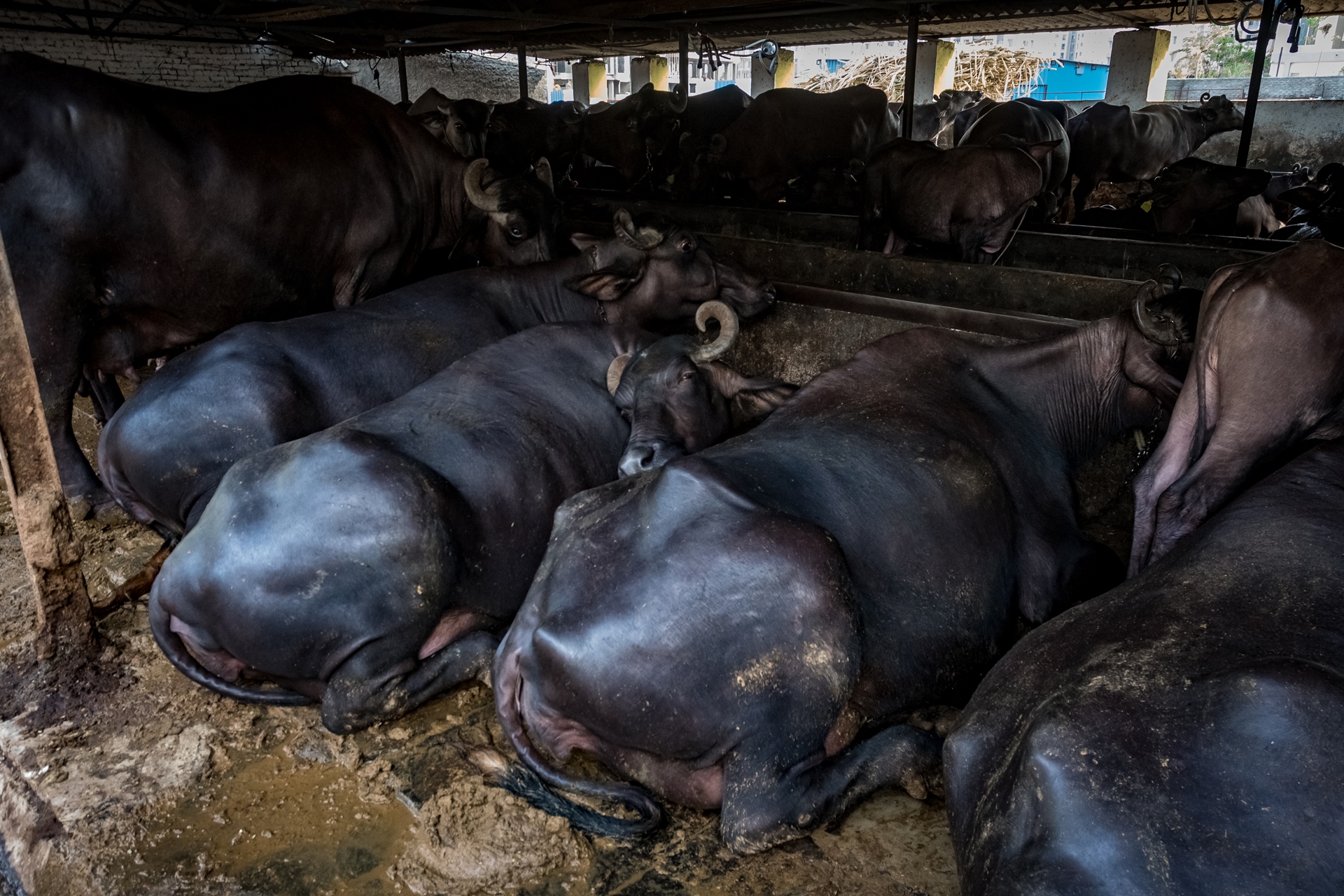
buffalos, india, factory farming

Buffaloes lying down, chained, in a dark and dirty urban dairy farm in India © Anipixels

Could this be au revoir?

As David Benatar writes in the editorial Chickens Come Home to Roost, “it’s time for humans to remove their heads from the sand and recognise the risk to themselves that can arise from their maltreatment of other species”. If all stakeholders in society – be it investors, consumers, governments or food manufacturers – fail to rethink their business-as-usual practices and work towards a new normal, Covid-19 will likely not be the last pandemic that humankind witnesses, and perhaps not even the deadliest. And just like the effects of climate change, the poor and vulnerable will be the worst affected.

Read more: India’s coronavirus lockdown causes deaths among migrant labourers forced to return home

We have the power to decelerate the emergence of new zoonoses. Or even reduce the harshness of the next outbreak. If we have the will to shut down entire societies for weeks on end, something that would previously have been considered extreme and “not an option”, surely we have the will to change our diets and global food system. Until we don’t go all the way in preventing the spread of these viruses by outlawing unsanitary live-animal markets, questioning the factory farming model at its core and creating awareness around food choices – therefore, until all animals aren’t treated better – zoonotic diseases will likely continue to resurface. Ultimately, it’s time to stop wilfully spinning this pandemic roulette.

https://www.lifegate.com/people/lifestyle/factory-farming-epidemics-coronavirus

China continues to exploit wild animals by promoting bear bile for coronavirus cure

China continues to exploit wild animals by promoting bear bile for coronavirus cureImage: FuFioCat / shutterstock.com

China has approved traditional medicines which include bear bile and goat horn as remedies for the COVID-19 infection.

In a bid to control the spread of coronavirus and treat infected patients, China’s National Health Commission published a list of recommended traditional and Western treatments for the virus last month.

And one of the six traditional Chinese treatments included in the guidelines is Tan re Qing- which is made from bear bile, goat horn powder and herbs.

Banner

The medicine prepared by a Shanghai pharmaceutical company following traditional Chinese medicine protocols is claimed to treat patients with respiratory diseases, including pneumonia, acute bronchitis and chronic bronchitis.

Even President Xi Jinping has been actively promoting traditional medicine calling it “treasure of Chinese civilisation” and stressing that it should be given equal importance as other treatments.

This recommendation comes after imposing a ban on sale of wild animals for food amid the coronavirus outbreak, which is thought to have originated in a wet market in Wuhan that sells and harbors live and dead wild animals.

China finally implements a permanent ban on wildlife meat to stop virus spread
Image: mimohe / shutterstock.com

‘Both tragic and ironic’

A number of wildlife campaigners and animal rights activists have condemned the Chinese government and branded the news as ‘both tragic and ironic’ because it defeats the purpose of the ban implemented to stop the illegal animal trade.

“Across Asia, bear bile trade is widespread, although it is illegal in most countries,” said Richard Thomas of animal rights non-governmental organization Traffic.

“The active ingredient in bear bile, ursodeoxycholic acid, is readily synthesized in laboratories — so even if it did prove to be popular, there should be no need for bear bile to be included (in medicines).”

‘Hugely irresponsible’

In a statement, Aron White, EIA Wildlife Campaigner and China Specialist, said: “Restricting the eating of wildlife while promoting medicines containing wildlife parts exemplifies the mixed messages being sent by the Chinese authorities on wildlife trade.

“Aside from the irony of promoting a wildlife product for treatment of a disease which the scientific community has overwhelmingly concluded originated in wildlife, the continued promotion of the use of threatened wildlife in medicine is hugely irresponsible in an era of unprecedented biodiversity loss, including illegal and unsustainable trade.

“At this moment in history, as the world is crippled by the coronavirus pandemic, there could be no better time to end the use of the parts of threatened wildlife in medicine, especially as recent surveys conducted in China showed the vast majority of respondents were opposed to use of wildlife in medicine.”

‘Medicines should heal without harm’

Wildlife advocates also voiced their concerns that approving bear bile would in turn increase bear bile farms and justify animal abuse.

According to The Independent, bear bile farms in China and Vietnam account for nearly 12,000 bears held in captivity for their bile.

Highlighting the cruelty, Animals Asia, a nonprofit dedicated to ending bear bile farming said that  bear bile farms in China and across Southeast Asia keep bears in small cages for decades. The tiny cages restrict bear movements to such an extent that they are not even able to stand on all fours and most of these bears “are starved, dehydrated and suffering from multiple diseases and malignant tumours that not only contaminate their bile but ultimately kill them.”

In a statement on bear bile usage to treat COVID-19, the group said: “Animals Asia believes we shouldn’t be relying on wildlife products like bear bile as the solution to combat a deadly virus that appears to have originated from wildlife. It is accurate to assert the active ingredient in bear bile, UDCA, is effective in treating some conditions.

Banner

“This is the reason it has been produced synthetically (not using bile from bears) for decades and sold by the tonne across the world.

“Additionally, we understand according to the National Health Commission, Tanreqing has been used to successfully treat respiratory conditions like pneumonia and similar illnesses to COVID-19 for several years with success.

“However, traditional Chinese medicine has thousands of years of practical application and knowledge to draw upon, together with a philosophy of balancing harmony and peace with the environment. Such medicines should heal without harm.”

Brian Daly, a spokesman for the Animals Asia Foundation added: “Promotion of bear bile has the propensity to increase the amount used, affecting not only captive bears, but also those in the wild, potentially compromising an already endangered species in Asia and across the world.”

Share this story to reveal the truth behind bear bile farming and traditional medicines using animal ingredients.

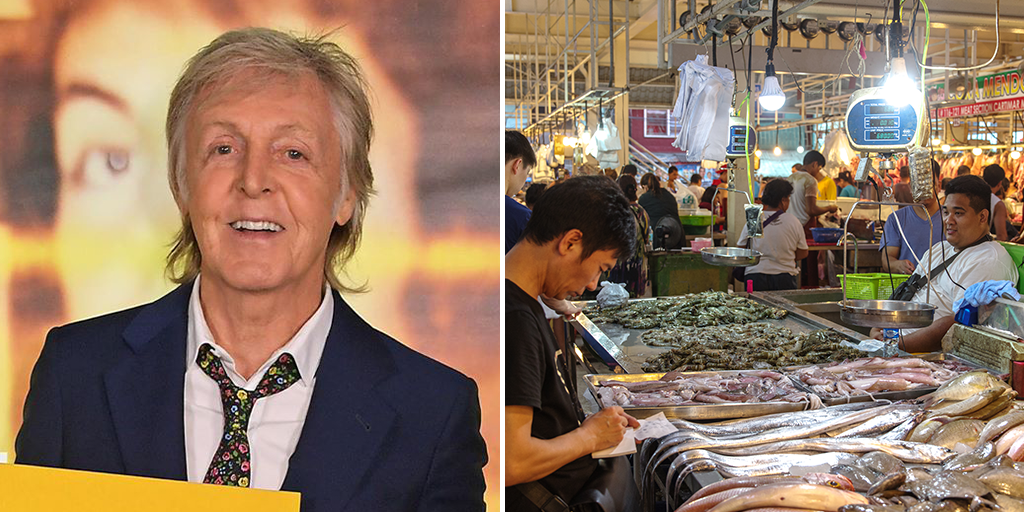
Paul McCartney blames ‘medieval’ Chinese ‘wet markets’ for coronavirus pandemic, demands closure

Paul McCartney wetmarketImage: paulmccartney (Left) and Kim David / shutterstock.com (Right)
‘Let’s face it, it is a little bit medieval eating bats.’

Sir Paul McCartney launched into a passionate rant aimed at the Chinese government’s reluctance to shut down wet markets- the suspected origin of the deadly coronavirus that has already killed tens of thousands, altered the daily lives of hundreds of millions, and put the entire world on edge.

Discussing the current pandemic situation on a call with US radio host Howard Stern on Sirius XM, this Tuesday, McCartney said: “I really hope that this will mean the Chinese government says, ‘OK guys, we have really got to get super hygienic around here.’

Banner

“Let’s face it, it is a little bit medieval eating bats.”

Stern echoing McCartney’s sentiment noted that it was “mind boggling” that China was reluctant to shut down the markets despite the current situation.

In reply, McCartney said: “It wouldn’t be so bad if this is the only thing it seems like you can blame on those wet markets.

“It seems like Sars, avian flu, all sorts of other stuff that has afflicted us … and what’s it for? For these quite medieval practices. They need to clean up their act. This may lead to [change]. If this doesn’t, I don’t know what will.”

‘Letting off atomic bombs’

Self-isolating at his home in Sussex with daughter Mary and her family, the former Beatles frontman and animal rights activist added that “whoever is responsible for this is at war with the world and itself.”

In reply to Stern’s next question on the idea of banning the wet markets, the 77-year-old answered: “I think it makes a lot of sense…when you’ve got the obscenity of some of the stuff that’s going on there and what comes out of it, they might as well be letting off atomic bombs. It’s affecting the whole world.”

McCartney’s views follow news that reports China allowing most wet markets including south-west China’s Guilin and southern China’s Dongguan to reopen and resume selling bats, pangolins and dogs for human consumption.

Even majority of the stalls at Wuhan’s biggest wet market Baishazhou have resumed business after lockdown rules were laxed at the epicentre.

‘Shut them right away’

Comparing China’s resistance to close the markets to the country’s slavery culture in the past, McCartney added: “I understand that part of it is going to be, ‘People have done it forever. This is the way we do things.’ But they did slavery forever, too. You’ve got to change things at some point.”

McCartney joins several other dignitaries that feel wet markets need to go.

Actor and animal rights activist Ricky Gervais called for a global shutdown of wet animal markets and a ban on wildlife trade.

Banner

In an interview with the Mirror, the 58-year-old said: “For the sake of people and animals, wildlife trade and consumption has to end, now.”

Even America’s chief infectious disease expert Dr. Anthony Fauci implied the ongoing public health crisis was a “direct result” of the thriving wet animal markets and demanded that authorities “should shut down those things right away.”

Share this story to reveal the dangers of wet markets on public health.

Six Ways to Take Action for Animals While Staying Safe at Home

*By Hope Bohanec, Projects Manager for United Poultry Concerns*

For many of us, spring is a time of community engagement filled with
VegFests,
MeetUps, potlucks, leafletings, and other activities to spread the message
of
animal suffering in our food system and the joys of living vegan. With all
spring events cancelled, the world seems to have come to a standstill. Yet
the
breeding, confining, and killing of sensitive chickens and other farmed
animals
continues, so our advocacy must continue as well.

As communities move to a virtual reality, so must our message. Here are six
suggested actions to take during our time of social distancing. We can’t be
together physically, so let’s find creative ways to bring the plight of
farmed
animals into the minds and hearts of people in their homes. Please stay
safe and
continue to speak out for chickens and for all animals. They need us now
more
than ever.

*1. Have a Streaming Party and Watch a Vegan Film or Documentary*
There are numerous films and documentaries with pro-animal and vegan
messages
available on Netflix, Amazon Prime, and other streaming services. You can
watch Okja, Cowspiracy, Forks Over Knives, and Game Changers on Netflix,
while Amazon Prime has Food Choices, The End of Meat, The Invisible
Vegan,
and Plant Pure Nation among others. Have a watch-party with the people
who
share your home, or use Netflix Party <https://www.netflixparty.com> to
stream a movie remotely with friends
outside of your household and talk about it after.

*2. Get Hip with Social Media*
There has never been a better time to be an effective “armchair
activist.”
Social media is the way many people, and most young people, are getting
their
news, watching their entertainment, connecting with friends, and more.
Be an
influencer and help broadcast the vegan message across any and all
platforms.
You don’t even have to create your own content; there are lots of memes,
videos, recipes, and articles to share. Start with UPC’s Facebook
<https://www.facebook.com/UnitedPoultryConcerns> and Twitter
pages and share our content on your social media pages.

*3. Write a Letter to the Editor or an Online Article*
Do you like to write? Perhaps now you have some extra time to do it.
Write a
letter to your local paper about any aspect of veganism. A letter in
response
to a recent article is more likely to be published. Remember to praise
journalists or publications for any positive media coverage for animals.
Be
sure to adhere to the guidelines for length and other factors before
sending
your letter. There are also online forums for posting articles like
Medium <https://medium.com>
and Elephant Journal <https://www.elephantjournal.com>. Start with a
vegan or animal rights topic you are
passionate about and write!

*4. Support a Vegan Company with Mail-Order*
To minimize your trips to the grocery store, why not order some staples
or
sweet treats from a small vegan business? Use the VegNews Guide to Vegan
<https://vegnews.com/2020/3/these-companies-will-ship-vegan-staples-directly-to-your-door.>
Delivery Nationwide
<https://vegnews.com/2020/3/these-companies-will-ship-vegan-staples-directly-to-your-door.>
to find online vegan stores and place your order. You
will find everything from pantry essentials, to vegan cookies and
doughnuts,
to meal delivery services.

*5. Read a Good Book*
Staying home means that many of us have more time to read. Now might be
the
best time to curl up with a book and go deeper into your animal
liberation
and vegan education. A book also makes a perfect gift for someone you are
thinking of but can’t be with at this time. Some recommended reads are
*Voices*
<https://www.upc-online.org/bookreviews/200326_book_review-voices_for_animal_liberation.html>
* for Animal Liberation: Inspirational Accounts By Animal Rights
Activists
<https://www.upc-online.org/bookreviews/200326_book_review-voices_for_animal_liberation.html>
*and
* For the Birds: From Exploitation to Liberation
<https://www.upc-online.org/bookreviews/190730_for_the_birds_can_only_be_described_with_superlatives.html>*
by Karen Davis. *The Ultimate*
<https://www.amazon.com/Ultimate-Betrayal-There-Happy-Meat/dp/1475990936>
* Betrayal: Is There Happy Meat?*
<https://www.amazon.com/Ultimate-Betrayal-There-Happy-Meat/dp/1475990936>
by Hope Bohanec is also recommended. Here’s a
list of educational and inspirational books
<https://www.upc-online.org/merchandise/book.html> that UPC recommends.

*6. Donate to United Poultry Concerns*
Even as the world seems to have stopped, chickens, turkeys and other
farmed
animals continue to suffer, and we will continue to fight tirelessly for
them. Your contribution helps us do just that. You can also support us by
shopping on the UPC merchandise page
<https://www.upc-online.org/merchandise>.

Donate <https://www.upc-online.org/donate>


United Poultry Concerns is a nonprofit organization that promotes
the compassionate and respectful treatment of domestic fowl.
Don’t just switch from beef to chicken. Go Vegan.
http://www.UPC-online.org/ http://www.twitter.com/upcnews
http://www.facebook.com/UnitedPoultryConcerns

View this article online
<https://upc-online.org/whatsnew/200416_six_ways_to_take_action_for_animals_while_staying_safe_at_home.html

Jane Goodall says ‘disrespect for animals’ caused pandemic

World-renowned primatologist Jane Goodall pleaded pleaded for humanity to learn from past mistakes
World-renowned primatologist Jane Goodall pleaded pleaded for humanity to learn from past mistakes (AFP Photo/Fabrice COFFRINI)
More

Paris (AFP) – World-renowned British primatologist Jane Goodall says the coronavirus pandemic was caused by humanity’s disregard for nature and disrespect for animals.

Goodall, who is best known for trail-blazing research in Africa that revealed the true nature of chimpanzees, pleaded for the world to learn from past mistakes to prevent future disasters.

During a conference call ahead of the release of the new National Geographic documentary “Jane Goodall: The Hope”, the 86-year-old also said everyone can make a difference.

– How do you view this pandemic? –

Goodall: It is our disregard for nature and our disrespect of the animals we should share the planet with that has caused this pandemic, that was predicted long ago.

Because as we destroy, let’s say the forest, the different species of animals in the forest are forced into a proximity and therefore diseases are being passed from one animal to another, and that second animal is then most likely to infect humans as it is forced into closer contact with humans.

It’s also the animals who are hunted for food, sold in markets in Africa or in the meat market for wild animals in Asia, especially China, and our intensive farms where we cruelly crowd together billions of animals around the world. These are the conditions that create an opportunity for the viruses to jump from animals across the species barrier to humans.

– What can we do about these animal markets? –

It’s really good that China closed down the live wild animal markets, in a temporary ban which we hope will be made permanent, and other Asian countries will follow suit.

But in Africa it will be very difficult to stop the selling of bush meat because so many people rely on that for their livelihoods.

It will need a lot of careful thought on how it should be done, you can’t just stop somebody doing something when they have absolutely no money to support themselves or their families, but at least this pandemic should have taught us the kind of things to do to prevent another one.

– What can we hope for? –

We have to realise we are part of the natural world, we depend on it, and as we destroy it we are actually stealing the future from our children.

Hopefully, because of this unprecedented response, the lockdowns that are going on around the world, more people will wake up and eventually they can start thinking about ways they can live their lives differently.

Everyone can make an impact every single day.

If you think about the consequences of the little choices you make: what you eat, where it came from, did it cause cruelty to animals, is it made from intensive farming — which mostly it is — is it cheap because of child slave labour, did it harm the environment in its production, where did it come from, how many miles did it travel, did you think that perhaps you could walk and not take your car.

(Also consider) ways that you could perhaps help alleviate poverty because when people are poor they can’t make these ethical choices. They just have to do whatever they can to survive — they can’t question what they buy, they must buy the cheapest, and they are going to cut down the last tree because they are desperate to find land on which they can grow more food.

So what we can do in our individual lives does depend a little bit on who we are, but we all can make a difference, everybody can.

Birth of a Baby Chicken: An Easter Story

United Poultry Concerns <http://www.UPC-online.org>
11 April 2020

*By Karen Davis, PhD, President of United Poultry Concerns*

INSIDE THE EGG

If the egg has been fertilized, a tiny being is growing inside, whether
nestled
beneath the mother hen or crammed in an incubator among thousands of other
embryos. During the first 24 hours after the egg is laid, the tiny heart
starts
beating and blood vessels begin to form, joining the embryo and the yoke sac
that will nourish the embryo as it grows.

The nervous system originates during the 21st hour of incubation, followed
by
origination of the head and eyes. Other body parts begin to develop during
this
time, including the alimentary tract and the spinal column. On the third
day,
the embryo begins to rotate to lie on its left side. By the fourth day, all
body
organs are present, with the nose, legs, wings, and tongue taking shape and
the
vascular system in place.

On the fifth day, the reproductive organs differentiate and the face begins
to
assume a lifelike appearance. On the sixth day, the beak and the egg tooth
(a
kind of rough edge that disappears after hatching, which protects the beak
and
also helps crack the shell) can be seen, along with some voluntary
movements of
the embryo.

During the next seven days, the body develops rapidly, including the
formation
of the abdomen and intestines. Feather germs, the origin of feather tracts,
appear, the beak begins to harden, toes and leg scales start to show, the
skeleton begins to calcify, and chick down appears.

On the fourteenth day, the embryo, now covered with down, rotates to arrange
itself parallel to the long axis of the egg, normally with its head toward
the
large end of the egg near the air cell. On the seventeenth day, the chick
turns
its head, placing its beak under its right wing toward the lower part of the
enlarged air cell to prepare for hatching and breathing outside the shell.

HATCHING

On the nineteenth day, the yoke sac begins to enter the chick’s body
through the
umbilicus, and the chick positions itself for pipping the shell, that is,
for
making a hole in the shell to breathe through while struggling to get out.
On
the twentieth day, the yolk sac completes it absorption into the body
cavity and
the umbilicus begins to close. By now, the chick occupies the entire area
within
the shell except the air cell, which it now begins to penetrate with its
beak,
inhaling outside air through its lungs for the first time.

After pipping the shell to reach the air cell, the chick rests for several
hours. It then cuts a circular line counterclockwise around the shell by
striking the shell with its egg tooth near the large end of the egg, aided
by a
special pipping muscle in its neck which helps it to force its beak through
the
membranes lining the shell.

With the egg tooth, the chick saws its way out of the shell, aided by the
mother
hen if she is there and help is needed. Between 10 and 20 hours after the
shell
is first broken, the chick emerges, wet and exhausted, to face the life
ahead.

Nearly two days may pass between the hatching of the first chick and the
appearance of the last member of the brood. Thus, some chicks may be almost
two
days old by the time all of their sisters and brothers have struggled from
their
shells, as many as 16 others. However, hatching is not a haphazard process.

About 24 hours before the chick is ready to hatch, it starts peeping in its
shell to notify its mother and siblings that it is ready to emerge. A
communication network is established among the chicks, and between the
chicks
and their mother, who must stay composed while all the peeping, sawing, and
egg-breaking goes on underneath her. Since some eggs may be infertile or
aborted, the peeps tell the hen how long she needs to continue sitting on
the
nest.

MOTHER HEN AND HER CHICKS

As soon as all the eggs are hatched, the hungry mother and her brood go
forth
eagerly to eat, drink, scratch the soil, and explore. Baby chicks are
precocial,
meaning they are genetically equipped to find food and follow their own
kind, or
whoever is in charge, in the process known as imprinting. By imprinting,
chicks
learn the features of their mother hen and siblings, to insure their
survival.
They practice hygiene by preening their feathers and dustbathing almost
immediately.

The chicks venture fairly far away from their mother, communicating back and
forth all the while with clucks and peeps. The hen keeps track of her little
ones on the basis of color, possibly also by smell, and by counting the
peeps of
each chick and noting the emotional tones of their voices. Periodically she
squats down, and the chicks dash under her outspread feathers where they
stay
until they are thoroughly warmed before dashing out again.

Should a peep be missing or sound frightened, she runs to find the chick and
deliver it – not always successfully – from the hole in the ground, tangled
foliage, or threatening predator.

During the first four to eight weeks or so, the chicks stay close to their
mother, gathering beneath her wings every night at dusk. Eventually, she
flies
up to her perch, indicating her sense that they, and she, are ready for
independence.

Young chicks without their mother huddle together at night for the first
month
or two. Then one evening, you see them practicing sitting in a row, before
huddling. Then comes an evening when they are lined up on their perch,
arranging
and rearranging themselves as before, only this time they stay lined up all
night, henceforth roosting like the adults.

KAREN DAVIS, PhD is the President and Founder of United Poultry Concerns, a
nonprofit organization that promotes the compassionate and respectful
treatment
of domestic fowl including a sanctuary for chickens in Virginia. Inducted
into
the National Animal Rights Hall of Fame for Outstanding Contributions to
Animal
Liberation, Karen is the author of numerous books, essays, articles and
campaigns. Her latest book is *For the Birds: From Exploitation to
Liberation:*
*Essays on Chickens, Turkeys, and Other Domesticated Fowl* (Lantern Books,
2019).

Amazon Reviews Praise FOR THE BIRDS: FROM EXPLOITATION TO LIBERATION
<https://www.upc-online.org/bookreviews/190716_amazon_reviews_praise_for_the_birds.html>
by Karen Davis, PhD.
<https://www.upc-online.org/bookreviews/190716_amazon_reviews_praise_for_the_birds.html>

*Order Now!* <https://www.upc-online.org/merchandise/book.html#ftb>


United Poultry Concerns is a nonprofit organization that promotes
the compassionate and respectful treatment of domestic fowl.
Don’t just switch from beef to chicken. Go Vegan.
http://www.UPC-online.org/ http://www.twitter.com/upcnews
http://www.facebook.com/UnitedPoultryConcerns

View this article online
<https://upc-online.org/education/200411_birth_of_a_baby_chicken-an_easter_story.html>

Surely the link between abusing animals and the world’s health is now clear

The boast that “when the facts change, I change my mind” is a proud one. “When the facts change, I reinforce my prejudices” is truer. If you want proof, look at the coronavirus that has changed everything and consider the undisputed fact that it spread because of humanity’s abuse of animals.

Imagine a world where facts changed minds. The United Nations, governments and everyone with influence would now be saying we should abandon meat or at a minimum cut down on consumption. Perhaps my reading is not as wide as it should be, but I have heard nothing of the sort argued. Making the case would be child’s play and would not be confined to emphasising that Covid-19 probably jumped species in Wuhan’s grotesque wet markets. The Sars epidemic of 2002-04 began in Guangdong, probably in bats, and then spread to civet cats, sold in markets and eaten in restaurants. The H7N9 strain of bird flu began in China, once again, and moved to humans from diseased poultry.

China is a viral petri dish because the Communist party silences voices that warn of danger, as the heroic doctor Li Wenliang found. Centuries of imperial and socialist dictatorship have taught people to respect the adage “The shot hits the bird that pokes its head out”. Repression combines with folk beliefs in the medicinal power of animal carcasses, a deadly quackery that the world’s fastest growing middle class has the money to indulge. Bats, which may be the original source of coronavirus as well as Sars, are meant to restore eyesight. The palm civet is devoured as a sham cure for insomnia.

A health worker administers Ebola vaccine to a woman in the Democratic Republic of the Congo
Pinterest
 A health worker administers Ebola vaccine to a woman in the Democratic Republic of the Congo Photograph: Olivia Acland/Reuters

Yet it is too comfortable to damn the Chinese Communist party, essential though that task is. Mers (Middle East respiratory syndrome) originated in the Middle East, as its name suggests, and came to humans via camels. Ebola began in the Democratic Republic of the Congo and was probably caught from gorillas and chimpanzees. Diseases have always jumped species, but the Covid-19 pandemic may be a sign of an ominous acceleration. A paper this month in the Proceedings of the Royal Society suggests the rate of new infections could be rising as humans cram into every corner of the planet. The loss of habitat and the exploitation of wildlife through hunting and trade increased the risk of infectious “spillover”, it said. Ferocious punishments for the use of “exotic” animals for food and medicines are required. Once again, though, that is too easy a slogan for people in the west to chant and feel virtuous as they chant it. We should be examining our own diets.

If antibiotic resistance continues to grow, we may look back on the deaths of the coronavirus pandemic of 2020, and say: “Really? Was that all?” Resistance could end the age of medical progress, returning humanity to a time when minor injuries and routine operations could be fatal. The over-prescription of antibiotics to humans explains in part why bacteria are evolving to resist it, and why researchers are predicting 10 million deaths a year from antibiotic resistance by 2050. Antibiotic use in the intensive and unfathomably cruel production of meat is as pernicious. Factory farming strains animal health. Breeding sows that are not given enough time to recover before being impregnated again, and chickens in crowded cages suffering from heat stress that brings salmonella and E coli, need repeated doses. In 2012, when the then chief medical officer, Sally Davies, warned that antibiotics were losing their “effectiveness at a rate that is both alarming and irreversible”, she compared the looming health crisis to global warming. To make her comparison complete, we can add that meat eating does indeed contribute disproportionately to the production of greenhouse gasses.

Ban the use of antibiotics in farming, then. Treat meat, cow milk and cheese as we treat tobacco and alcohol and hit them with punitive taxes. Make the illegal trade in wild animals as great a crime as the illegal trade in weapons.

However rational such stirring declarations may be, I feel I am no longer connected to myself or the world around me when I issue them. I am not a vegan. If changing facts changed minds, I should become one – as should you, in all likelihood. Even if individuals change, the dominant culture makes demands for society to change appear ridiculously utopian. Imagine a politician campaigning for stiff restrictions on meat consumption. Critics would accuse him or her of punishing the poor – for people who barely think of the poor always invoke them when their pleasures are threatened. They would be damned for wanting to ban the good old Sunday lunch and the joy a Big Mac brings. Our grandchildren may look back and find our abuse of animals incomprehensible. For the moment, arguments to stop abuse provoke incomprehension.

Rather than change minds, the corona crisis is cementing them. No one knows its political and cultural consequences, only that there will be consequences. Ignorance has not stopped Jeremy Corbyn saying the pandemic proved his socialism was “absolutely right” and Nigel Farage saying that, on the contrary, it showed he was right about free movement being doomed. Trump blames China. China blames America. In other words, they are all saying and doing what they would have said and done if the virus had never jumped the species barrier and no one outside China had heard of Wuhan’s wet markets.

Today’s suffering dominates our thoughts, but beneath it two explanations of human behaviour are competing. Optimists believe that governments and peoples will adapt to new circumstances and recognise new realities. We will soon learn if they are right.

The great physicist Max Planck put the pessimistic case in 1950. A new scientific truth does not triumph by convincing its opponents, he said. Rather, “its opponents eventually die and a new generation grows up that is familiar with it”.

Planck’s admirers condensed his argument into a phrase that is a little too resonant today: “Science advances one funeral at a time.”

 Nick Cohen is an Observer columnist

Conservation Groups and Health Experts Ask WHO to Permanently Close Live Animal Markets

wet-market-1586282627838.jpg
SOURCE: ANTHONY KWAN/GETTY IMAGES

https://www.greenmatters.com/p/wet-markets-coronavirus?fbclid=IwAR2leUmfeu7ZqeFFWi0LOAxNxd7yiH9D1EFJymr_bdk_3WLsh8BLOz5KSgo

BY 

It’s easy to see how the novel coronavirus is spreading — but do you know how the virus began?

Experts believe that the virus originated in a live animal market in Wuhan, China. Because COVID-19 is not the first infectious disease to start in one of these controversial “wet markets,” conservation and health experts are now asking the World Health Organization (WHO) to force governments to permanently close these markets around the world, in hopes of preventing another pandemic.

wet-market-2-1586282683381.jpg
SOURCE: NOEL CELIS/AFP VIA GETTY IMAGES

Like COVID-19, both SARS and the bird flu (avian influenza) originated in Chinese wet markets. And according to the letter, other significant zoonotic diseases associated with wildlife include Ebola, MERS, HIV, bovine tuberculosis, rabies, and leptospirosis; additionally, zoonotic diseases are responsible for more than 2 billion cases of human illness and more than 2 million human deaths annually.

What are wet markets?

wet-market-3-1586282725763.jpg
SOURCE: EDWARD WONG/SOUTH CHINA MORNING POST VIA GETTY IMAGES

Wet markets, aka live animal markets, are marketplaces where customers can select live animals from cages, who workers then slaughter on-site for customers to take home and cook.

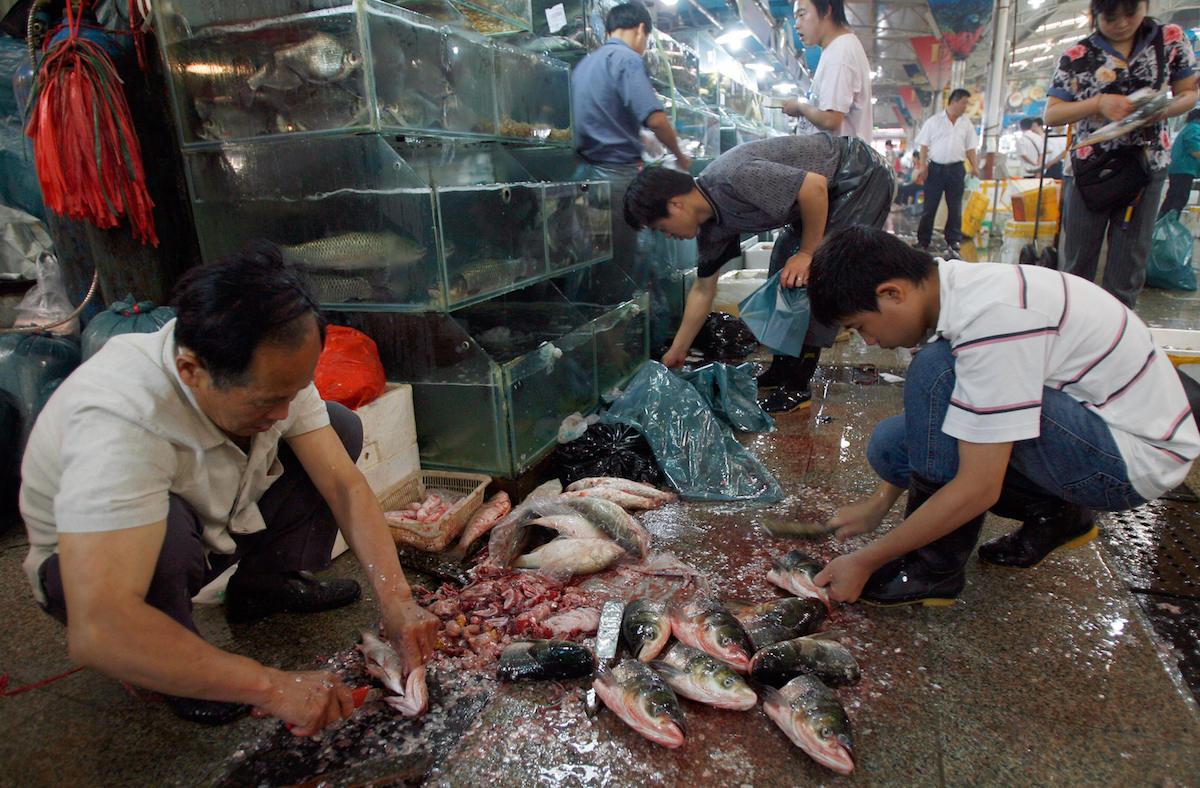
“You’ve got live animals, so there’s feces everywhere,” Peter Daszak, president of EcoHealth Alliance, told the Associated Press. “There’s blood because of people chopping them up.”

How did wet markets cause the coronavirus?

wet-market-4-1586282765264.jpg
SOURCE: TEH ENG KOON/AFP VIA GETTY IMAGES

Many of these markets are unregulated, meaning it’s not uncommon to find illegally-traded animals in Wuhan’s wet market cages. The lack of regulations also means that the markets are often kept in unhygienic conditions — and with wet markets putting people in close proximity with internationally-traded animals, animal waste, and animal slaughter, bacteria and viruses can easily spread.

Who wants to shut down wet markets?

Organizations to sign the letter include Animal Legal Defense Fund, Big Cat Rescue (yes, from Tiger King), Endangered Species Coalition, various chapters of Humane Society International, the Jane Goodall Institute, PETA, Pro Wildlife, Sea Shepherd, various Societies for the Prevention of Cruelty to Animals, WildAid, and more.

Other notable people who have called for a global shutdown of wet markets include Dr. Anthony Fauci, the U.S.’s top expert on infectious diseases and a leader of the White House’s coronavirus task force; Elizabeth Maruma Mrema, head of the U.N. Convention on Biological Diversity; and Jinfeng Zhou, secretary general of the China Biodiversity Conservation and Green Development Foundation.

“I think we should shut down those things right away,” Dr. Fauci recently said of wet markets on Fox & Friends, via Politico. “It boggles my mind how, when we have so many diseases that emanate out of that unusual human-animal interface, that we don’t just shut it down.”