Exposing the Big Game

Forget Hunters' Feeble Rationalizations and Trust Your Gut Feelings: Making Sport of Killing Is Not Healthy Human Behavior

Exposing the Big Game

Amid COVID-19 Outbreak, Activists Rally at City Hall to Shut Down the 85 Live Animal Markets and Slaughterhouses in NYC

MARCH 18, 2020 BY  — LEAVE A COMMENT

Amid COVID-19 Outbreak, Activists Rally at City Hall to Shut Down the 85 Live Animal Markets and Slaughterhouses in NYC


The News

As New York City began to shut down due to the spread of COVID-19, approximately twenty public health and animal rights activists staged a rally at City Hall to demand that city and state health authorities shut down the 85 live animal markets and slaughterhouses in NYC. COVID-19, also known as the corona virus, is believed to have jumped to humans from animals being sold in a live animal market in Wuhan, China.

“Live markets, which are storefront slaughterhouses open to the public, are a petri dish of infectious diseases that jeopardize the health of all New Yorkers,” said Jill Carnegie, an organizer with Slaughter Free NYC.

Amid COVID-19 outbreak, public health and animal rights activists are asking New York City and State health officials, including NYC Health Commissioner Dr. Oxiris Barbot and Assistant Commission Dr. Demetre Daskalakis, to shut down the 85 live animal markets and slaughterhouses in NYC

After the corona virus outbreak was traced back to a “wet market” in Wuhan which sold wild and domesticated animals for meat, the Chinese government is reported to have shuttered live animal markets across the country.

“The pandemic didn’t happen to us; we brought it upon ourselves because we didn’t learn our lesson from bird flu, swine flu, mad cow, SARS and the many other infectious diseases that jumped to humans from the animals who we eat,” said Maureen Medina, an organizer with Slaughter Free NYC. “Mother Nature has sent us so many warnings, and we’ve put bandaids on all of them instead of taking the most obvious measure to prevent them, which is to switch to a plant-base diet.”

An estimated 85 live animal markets in NYC sell cows, chickens, goats, sheep, guinea pigs, rabbits and others animals who they slaughter on site

Slaughter Free NYC and The Save Movement have been staging vigils and conducting educational outreach at live markets in NYC. Organizers hope that the COVID-19 pandemic will be a wake-up call for elected officials and for the New York City Department of Health and NY State Ag & Markets who have, until now, ignored their pleas to shutter the city’s live markets.  Slaughter Free NYC has launched a petition.

Slaughter Free NYC Petition to Shut Down Live Animal Markets and Slaughterhouses in heavily populated five boroughs of New York

Canada’s beleaguered seals are running out of time

March 13, 2020 0 Comments

For decades, Humane Society International and the Humane Society of the United States have worked to stop Canada’s brutal commercial seal hunt, where seal pups are mercilessly clubbed and shot to death for their fur. Leading this fight has been Rebecca Aldworth, executive director of HSI/Canada. For 18 years, Rebecca has traveled to the ice floes to document the slaughter and focus a global spotlight on this important animal protection issue. Those efforts have helped turn the tide for seals—today more than 37 countries ban commercial seal product trade, which has led to a drop in demand and prices for seal fur in Atlantic Canada.

Unfortunately, the killing has continued, and the seals now face more threats than ever before, including climate change. In this guest post today, Rebecca discusses why Canada needs to act fast to stop commercial sealing before it is too late for these iconic animals.

Right now, mother harp seals are nursing their pups on the spectacular ice floes off Canada’s east coast. The scene is breathtakingly beautiful and incredibly peaceful—and it draws people from all over the world to witness it firsthand. I’ve been lucky enough to be on the ice several times this week, documenting the harp seal nursery for Humane Society International.

But it’s a bittersweet experience, because the adorable pups who live in this pristine environment are already facing mortal threats to their survival.

A recent segment on “Good Morning America” exposed the devastating impacts of climate change on the ice breeding harp seals. Over the past five decades, scientists have tracked a significant and constant decline in the sea ice cover in eastern Canada. For the harp seal pups born on that ice, it spells disaster. Warming temperatures are causing the ice to literally melt from under the pups and so many are forced into the water before they are strong enough to survive there. In some recent years we have witnessed up to 100% mortality in seal pups born in key whelping areas because of the vanishing sea ice.

But there is another story—an even greater risk to the seal pups—and it is one that GMA chose not to tell. The very harp seals who are contending with these devastating impacts of climate change are the primary targets of Canada’s commercial seal hunt, the largest and cruelest slaughter of marine mammals on earth. In just a few weeks’ time, Canadian seal hunters will descend on the peaceful harp seal nursery and turn it into an open air slaughterhouse. The pups who survive the destruction of their sea ice habitat will be brutally clubbed and shot to death for their fur, their tiny bodies left on the ice to rot. Our Protect Seals team has exposed the cruelty of this so-called hunt for years; defenseless four-week-old seal pups are routinely shot and left crawling through their own blood, impaled on metal hooks, dragged onto bloody boat decks and clubbed to death. Notably, veterinarians who have studied the killing have labelled all killing methods at the commercial seal hunt “inherently inhumane.”

Our campaign has stopped so much of this cruelty, by closing the most important global markets for products of commercial sealing. In the past decade, our work has saved millions of pups from the slaughter. Yet the killing continues, with tens of thousands of seal pups falling victim to the commercial seal hunt each year.

Tragically, there is no way to reverse the impacts of climate change on the harp seals’ sea ice habitat in the near term. But a responsible government can and should end commercial seal hunting. That is exactly what we are urging Canada’s Prime Minister, Justin Trudeau, to do.

Everyone should have the opportunity to see the stunning harp seal nursery in their lifetime. But if Canada fails to take action soon, that opportunity may be lost forever—for us and for future generations.

Help us end the commercial seal slaughter in Canada

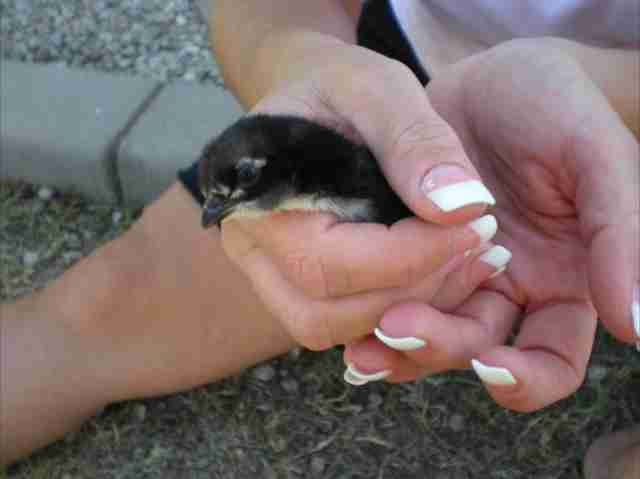
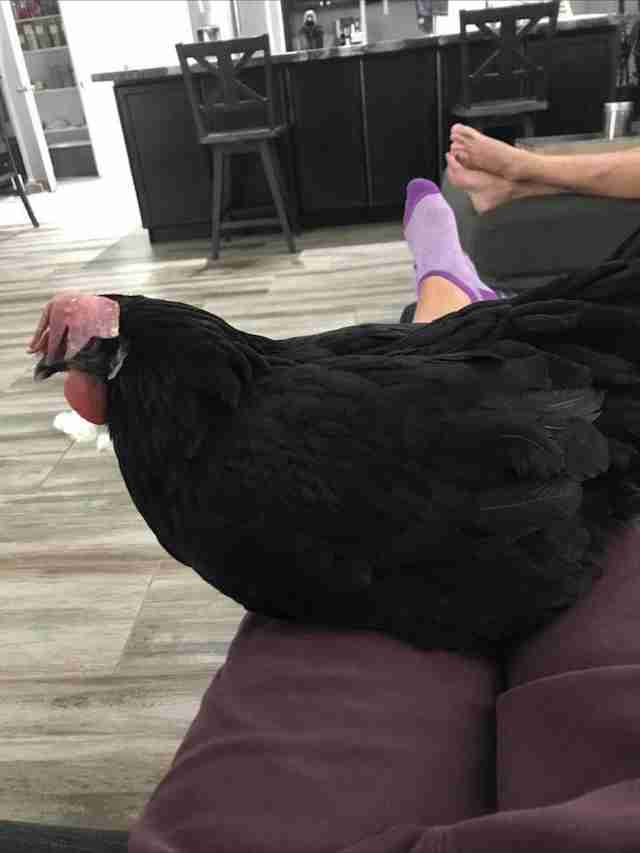
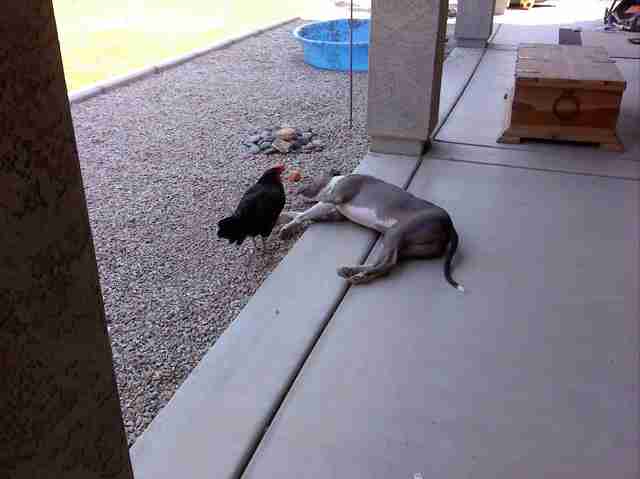
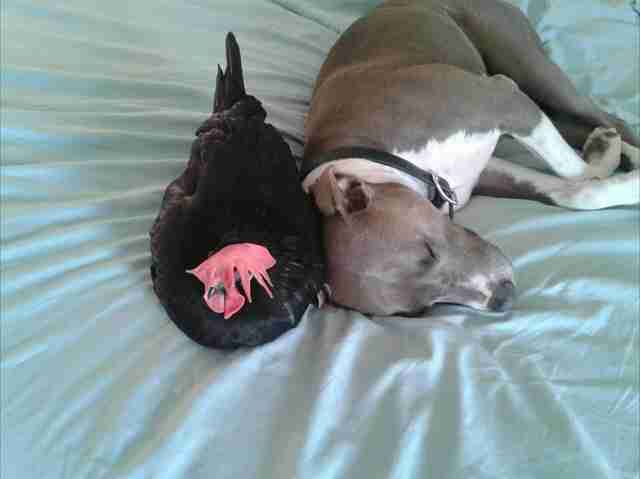
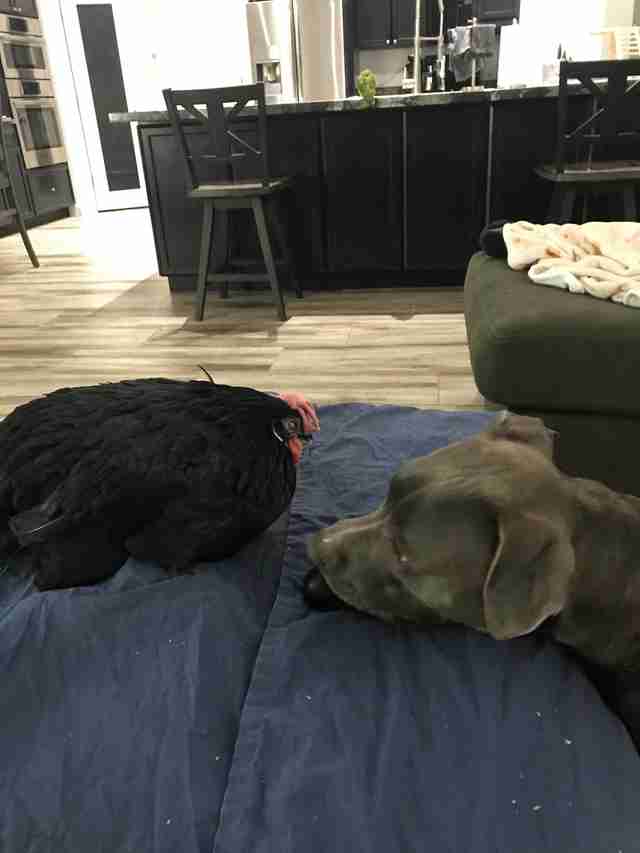
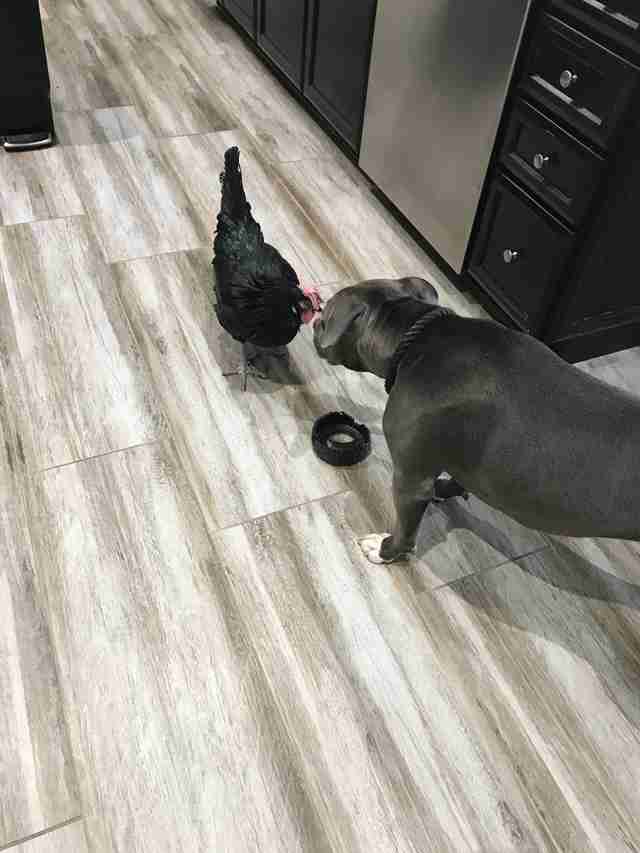
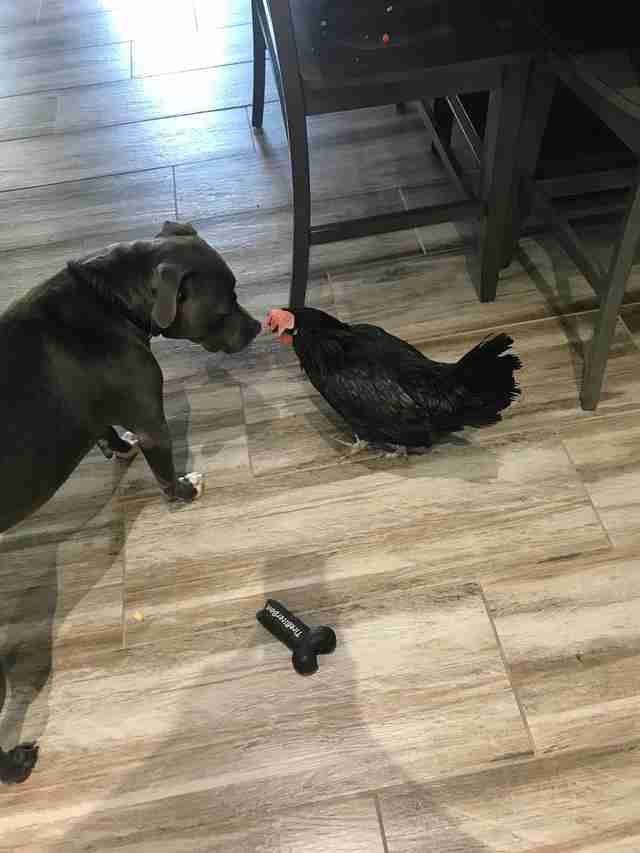
Pit Bull Always Brings Her Blind Chicken Sister Her Favorite Toys

She’s her guide dog ❤️️🐶🐔

pit bull and blind chicken

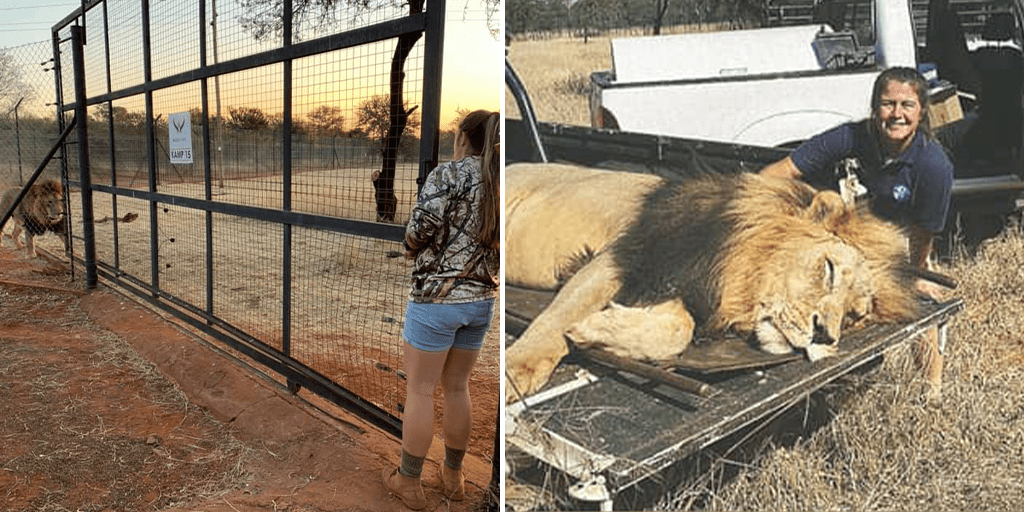
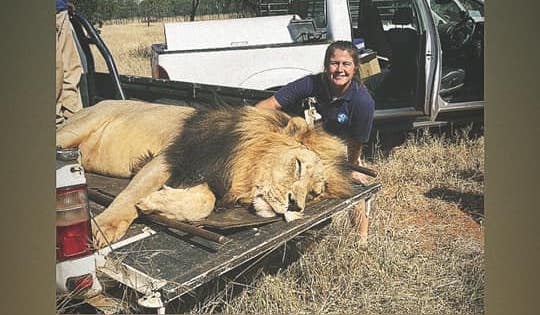
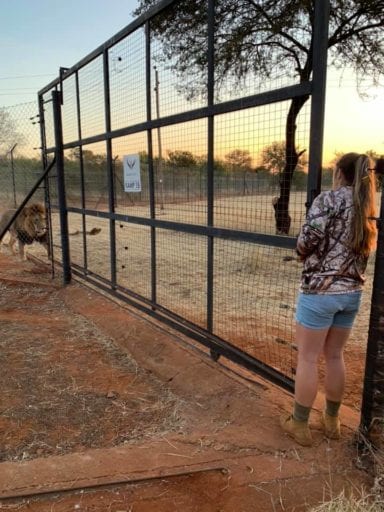
Fury as lions who mauled keeper set to face ‘death sentence’

Fury as lions who mauled keeper set to face 'death sentence'Image: Swane Van Wyk / Facebook

Animal rights activists are campaigning to save a group of lions who look set to be shot after they mauled their keeper to death. 

Swane van Wyke was killed by the animals while going about her routine tasks in their enclosure at Zwartkloof Private Game Reserve in Limpopo, South Africa.

An outpouring of grief from the tragedy has led some to call for the animals to be killed in response to the incident.

Officials from the zoo said in a statement: “We are obtaining advice from the proper authorities and agents in order for us to make an informed decision.”

Swane van Wyke was found collapsed in the enclosure with bite and claw wounds, and was pronounced dead on the scene by paramedics.

Fury as lions who mauled keeper set to face 'death sentence'
Image: Swane Van Wyk / Facebook
Fury as lions who mauled keeper set to face 'death sentence'
Image: Swane Van Wyk / Facebook

Captivity

Activists say the case is further evidence that lions should not be kept in captivity at zoos.

Drew Abrahamson, of animal welfare group Captured in Africa (CIA), told SAPeople: “It’s sad yet again, that an innocent person has been attacked and lost her life, due to the confinement and abuse of lions in South Africa.

“Whilst the world’s conservation, wildlife and tourism professionals have long denounced this diabolical lion breeding industry, it’s further saddening to see that South African authorities continue to allow this unnatural industry to continue.”

Welfare group People for the Ethical Treatment of Animals reinforced calls to save the lions. “It seems as though the appropriate informed decision would be to retire all the animals at Zwartkloof to reputable sanctuaries instead of caging them for human amusement and endangering their lives as well as those of the ranch’s workers,” the group said.

“The facility states on its website that it houses buffaloes, zebras, wildebeests, giraffes, leopards, and others and rents out rooms on site to people seeking a ‘bush experience’.

“No reputable facility would allow dangerous contact like this.”

Police confirmed the lion keeper was performing her regular duties when the lions attacked her.

It is not known the exact circumstances in which she was attacked, or how many lions were involved. Police said it is the responsibility of the zoo to ensure staff safety in animal enclosures.

What does this incident say about lion captivity? What should happen to the lions involved in the death of their keeper? Share this story!

A pigeon that can’t fly befriended a puppy that can’t walk. Yes, it’s as cute as it sounds

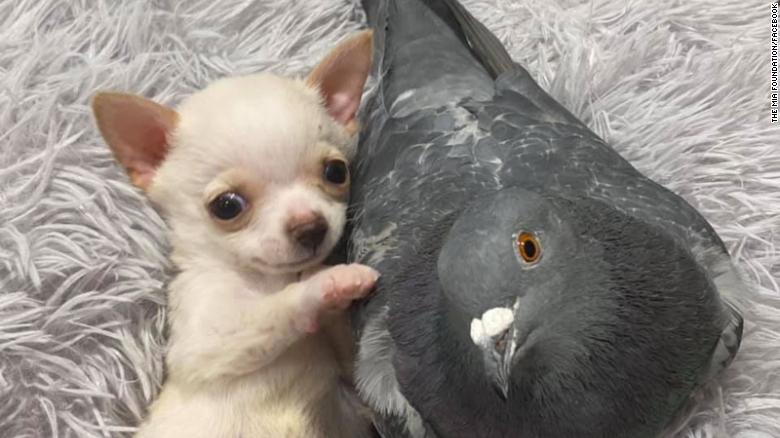
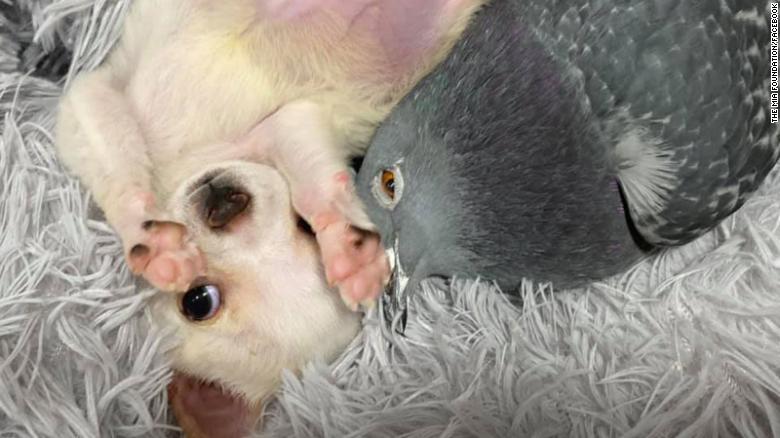
Lundy (left) and Herman (right) are friends. Yes, they're a chihuahua and pigeon, respectively, but the species barrier hasn't stopped them from snuggling up at their Rochester, New York, rescue.

(CNN)Meet Herman and Lundy, recent cuddle buddies and rescue animals.

The two are an unlikely pair: Herman, a pigeon, suffered neurological damage more than a year ago. He can’t fly. Little Lundy, a newborn chihuahua puppy, can’t use his back legs.
But stick them together, and the two will snuggle up as though they were members of the same litter — or nest.
The two met through the Mia Foundation, a rescue organization in Rochester, New York, that rehabilitates animals with birth defects and physical deformities. Sue Rogers, the nonprofit’s founder, sends most of her rescues to foster homes around the US but keeps a few of them for school programs about bullying.
Their interspecies friendship has inspired scores of supporters to donate to the foundation. And the animals, Rogers said, make each other better.

Two rough beginnings

Herman was found over a year ago in a car dealership parking lot, where he sat on the pavement, unmoving, for three whole days. Eventually his rescuers realized the poor pigeon couldn’t fly.
Neighboring wildlife rescues said he couldn’t be rehabilitated and would need to be euthanized, so Rogers took care of him herself.
He now rests in a baby crib for some of the day, but she takes him outside daily to stimulate him.
Little Lundy, an infant chihuahua, is a new arrival. His breeders in South Carolina sent him to Rogers because he had trouble using his hind legs, a condition known as swimmers syndrome.
At just 6 ounces, he was small enough to fit in a shirt pocket. Rogers said she suspects Lundy’s difficulty walking is due to damage to his teeny spinal cord.

When Lundy met Herman

The two were bound to meet eventually. Rogers set them together while attending to Lundy and saw the way the two snuggled up almost immediately — Herman didn’t peck, and Lundy didn’t nibble.
Besties!

Rogers snapped some pictures of their cuddles. The “oohs” and “ahhs” followed soon after.
People from every corner of the world flooded Rogers’ inbox with donations, messages of support and, naturally, pleas to adopt Lundy or the other cute pups in her care.
“I was blown away,” she said.
And the donations keep coming — the foundation raised $6,000 in two days, she said. That’s enough to cover the high-end cost of a veterinary surgery that many of her rescue animals require.

Lundy needs to get stronger to be adoptable

Herman will likely stay in Rogers’ care for the rest of his life. She’s hopeful Lundy stays strong and survives.
“With animals born with defects, there’s a chance we could lose them,” she said. “So we don’t want to make anyone really excited. But now I think we’ve gotten a thousand emails asking, ‘Please, don’t ever separate those two!'”
One of Lundy’s rescuers fell in love with him while traveling with him to Rochester, so he may already have a new home lined up. The question, then, is if Herman will ask to tag along too.

Animal-rights groups picket NH Trappers banquet ahead of hearing on recreational trapping bill

  • Updated 
https://www.unionleader.com/news/animals/animal-rights-groups-picket-nh-trappers-banquet-ahead-of-hearing/article_2fbad506-8e4e-5e82-8db8-b3277398d2c0.html
Trapping protest

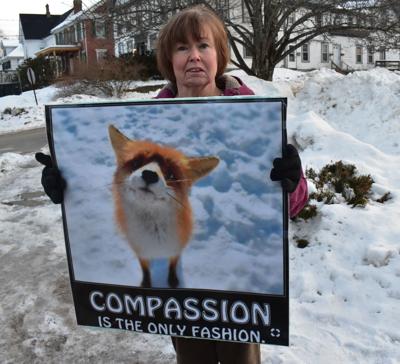
Annie Smith, a member of Twin State Animal Liberation, stands with a photo of a red fox on South Main Street in front of the Franklin Elks Lodge where the New Hampshire Trappers Association’s annual banquet was being held Saturday.

FRANKLIN — Ahead of what is expected to be a contentious, lengthy hearing on a bill that opponents say would lead to the elimination of recreational trapping, three animal-rights groups picketed the New Hampshire Trappers Association’s annual banquet on Saturday.

From about 4:15 to 5:30 p.m., a dozen-plus people and one human-sized red fox representing NH Citizens Against Recreational Trapping, NH Animal Rights League, and Twin State Animal Liberation conducted an informational picket on South Main Street, outside the Franklin Elks Lodge, where the banquet was held.

Kristina Snyder of Chester said the goal of the picket was to raise public awareness about trapping, the NHTA’s relationship with the Miss New Hampshire Scholarship Program, and House Bill 1504.

On Tuesday at 2 p.m. in Rooms 305-307 in the Legislative Office Building, the House of Representative’s Fish and Game and Marine Resources Committee is scheduled to take up HB 1504, which would create a study committee to examine the feasibility of banning recreational trapping and would require that committee to file a report by Nov. 1.

The NHTA, on its website, urged members to attend the HB 1504 hearing, saying that “if there was one day worth taking a day off from work to attend it would be this one.” The NHTA says “trapping is humane and the only way to successfully control furbearer populations.”

Larry Torr, president of the NHTA, was not immediately available for comment.

Holding a large photo of a silver fox with its leg caught in a trap, Snyder said HB 1504 would ban recreational trapping, but not commercial trapping of nuisance wildlife.

She said that in September 2019, California became the first state to make recreational trapping illegal and that the Granite State should follow suit.

Animals feel fear and pain, she said, and trapping is an outdated and unnecessary tradition.

Another tradition that should end, Snyder said, is that of the NHTA annually presenting a coat made of furs collected by members to the winner the Miss New Hampshire competition.

An official with the Miss New Hampshire Scholarship Program, in published reports last year, said the organization, despite the controversy, would continue its relationship with the NHTA, adding that the Miss New Hampshire winner had the option of accepting the fur coat, something Snyder disputes.

Annie Smith, of Westminster, Vt., came to Saturday’s picket because, she said, “we want to let people know that trapping still goes on and there’s no reason for it.”

Smith, who held a picture of a red fox, is confident that recreational trapping will cease. “I just hope it happens in my lifetime,” she said.

Further up the picket line, a much larger, faux red fox, who said his name is Anonymous and that he hails from New Hampshire, said the NHTA and “a few hundred trappers are holding wildlife hostage. It’s time for that to end.”

Happy Valentine’s Cat

No photo description available.

Image may contain: 2 people, text

No photo description available.


Disney parks expand vegan food options and they’re delicious

 (just don’t call them ‘vegan’)

David G. Allan, CNN • Updated 14th February 2020
Editor’s Note — David Allan, editorial director for Features at CNN, has been a vegetarian for more than 25 years and Star Wars fan for 40 years. This is the first time those two priorities have intersected. The views expressed here about Disney’s plant-based options are his own.
Orlando, Florida (CNN) — The self-described “happiest place on Earth” is getting increasingly happier for animals, and for those who are increasingly removing those animals from their diet.
After a big push last fall, the resort development division of Walt Disney World in Florida has identified more than 400 new and proven “plant-based” options on the menus of all its food locations, including park restaurants, food carts and hotel properties. That’s 580 locations in Disney World alone. And a similar effort is underway at the Disneyland park and resort in Anaheim, California.
Just don’t call these non-meat, non-dairy, non-honey options “vegan.”
“Most research shows that the word ‘vegan’ appeals to vegans but the trend is much broader than that,” explained Cheryl Dolven, a manager for food and beverage health and wellness with Walt Disney World Resort Development, Optimization and Standardization.
“‘Plant-based’ is much more broadly appealing,” Dolven added.
“I get it, ‘vegan’ sounds weird,” I said to Dolven, who politely didn’t disagree.
“Plant-based” can be defined more loosely than vegan, says CNN Health contributor and nutritionist Lisa Drayer. But Disney defines their “plant-based” options as “made without animal meal, dairy, eggs and honey,” according to their website, meeting the commonly accepted definition of vegan.
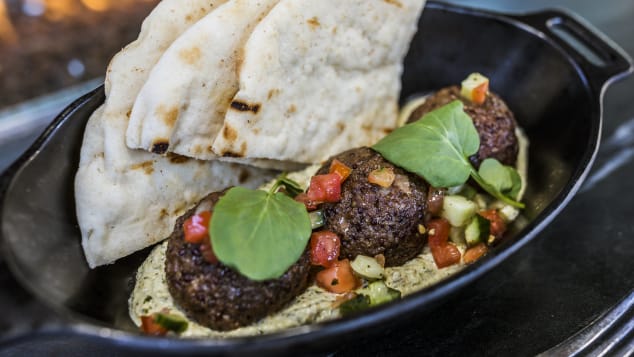
Like many of Disney's food offerings, some of the vegan dishes are themed to match their location. This hummus dish served at Star Wars: Galaxy's Edge is called a "Felucian Garden Spread," a reference to a planet covered in overgrown plants in the Star Wars universe.

Like many of Disney’s food offerings, some of the vegan dishes are themed to match their location. This hummus dish served at Star Wars: Galaxy’s Edge is called a “Felucian Garden Spread,” a reference to a planet covered in overgrown plants in the Star Wars universe.
Disney
Whatever you want to call it, it’s a smart move to capitalize on a trend that’s already impacting the restaurant and hospitality industry across the country. Restaurant sales of alternative meat products jumped 268% last year, according to the Dining Alliance, a US industry group.
Disney was also hearing directly from its own visitors, who were noting dietary restrictions in their reservations, buying more meat-free options, and giving feedback in guest surveys asking for vegan options. It all became a growing chorus asking the resorts to embrace a growing vegetarian and vegan appetite.
The company is also trying to appeal to younger guests, the future of Disney, as well as its own cast members who adhere to plant-based diets, Dolven added.

The proof is in the tasting

It’s one thing to offer more hummus and carrot sticks. It’s another to invest and innovate in alternatives that appeal to the diverse interests of those who are vegan and may still crave the taste of meat, chocolate, pastries and ice cream.
Disney chose the latter. Its in-house Flavor Lab, a research and development facility used to create and test new menu items, tasked its chefs to reeducate themselves. They took trips to vegan (sorry, plant-based) restaurants in New York and Philadelphia. They began hunting for and developing replacements for mayonnaise, butter, yogurt, cheese and eggs.
Generally, “chefs aren’t trained that way,” said Gary Jones, a culinary dietary specialist at Walt Disney World. “A lot of us are going back and relearning how to extract the most flavor from plant-based choices.”
Jones then led me through a sampling of some of that research and development.
The most impressive of the offerings was the seafood platter on the menu at the Toledo restaurant located at Coronado Springs Resort. The creations mimicked a mouth-feel — flavor, texture and other sensations — I’d been craving over the more than 25 years I’ve been a vegetarian.
The royal trumpet mushroom-based “scallop” was tender and buttery. The breaded fungi “calamari” was tangy and chewy. But it was the heart of palm-based “crab cake” that was personally moving.
I was born and raised in Maryland, baptized in Old Bay seasoning. I’ve never found a fake crab that wasn’t fish. And the Toledo’s crab cake was just how I’ve long dreamed non-seafood crab could be, the taste evoking childhood memories.
All over the Disney World parks and hotel restaurants, new menus rolled out in the fall feature a green leaf icon next to items that are plant-based. And while the company’s website has a new page featuring plant-based meal options, Disney’s vegan fans have created their own guides with a lot more detail and reviews.
And when it comes to Disney’s plant-based options, one size doesn’t fit all. Most of the new options are unique to a location’s theme and cuisine type.
The rustic-looking PizzeRizzo in Hollywood Studios serves a thick and juicy spicy Italian “sausage” sub, the same cost as their meatball sub. The African themed Mara restaurant in the Animal Kingdom Lodge has a Marrakesh Falafel Platter served with soy yogurt. Epcot’s Rose & Crown Dining Room, for example, has a vegan version of the traditional UK breakfast of bangers and mash available upon request. Hollywood Studios’ fancy Brown Derby serves a popular vegan chocolate-coconut cake, the same price as the espresso cheesecake and chocolate mousse cake.

And they ate happily ever after

I sampled other options in the Orlando parks, uncovering a not-so-hidden world of vegan, er, plant-based dining.
In Galaxy’s Edge, the Star Wars land, I adored the Felucian Garden Spread, with plant-based spicy “kefta” meatballs and hummus and tomato-cucumber relish with pita bread, served in a skillet and actual metal silverware. The kefta was meaty-chewy and filling, the hummus thick with herbs. Jones said its one of the best sellers among the stellar offerings at the boisterous Docking Bay 7 Food and Cargo. Felucia is a jungle planet that makes a brief appearance in “Star Wars Episode III: Revenge of the Sith.”
On the other end of the culinary spectrum, the ABC Commissary in Orlando’s Hollywood Studios served a thick and delicious vegan California Burger with sautéed peppers, vegan mayo ketchup and a Sriracha mustard, served with a side of perfectly crisp shoestring fries. It cost $2 more than their traditional cheeesburger. I didn’t see any vegan dessert options, so I asked the woman taking orders if there were any. She looked confused and politely answered, “No, I don’t think so,” which the Disney public relations department later confirmed.
And I made a hearty dinner of the Southwest Bowl at the Fairfax Fare stand in Hollywood Studios. The bowl is a well crafted blend of chili, corn and vegan cheese, topped with non-dairy ranch dressing and crunchy tortilla chips. It costs the same as their comparable bowl with chicken.
I also noticed some locations not meeting the claim that all food locations have plant-free options. The Dockside Diner, near the Fairfax Fare didn’t have any plant-based options on its menu of hot dogs and nachos.
But Disney is getting there. Disneyland will get its big plant-based push this spring. And properties in Europe and Asia have many plant-based options but no current plans to overhaul their menus (visitor demand could affect that decision).
Given the planners’ careful eye on sales, it’s clear that the more Disney guests who choose vegetarian and plant-based options, the more options they can expect. After all, this is a hospitality brand famous for its innovation and for perpetually reinventing itself, and that extends to its dining choices.
“It’s been great to see the reception we’ve seen from the guests,” said Jones of the new plant-based options. “They are ordering more than we thought and influencing other guests. And our chefs are a lot more inspired and excited about it.”
As should vegetarian and vegan guests.


In first pilot of its kind, Israeli dairy won’t separate calves from mothers

Yotvata project will allow female calves to stay with mothers until weaning — but male calves will still be separated, sent off for fattening and slaughter

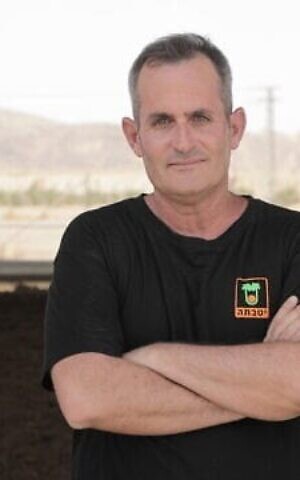
Dr Sivan Lacker and Ashkar Ginossar at the Yotvata Dairy in southern Israel. (Lior Nordman)

Dr Sivan Lacker and Ashkar Ginossar at the Yotvata Dairy in southern Israel. (Lior Nordman)

The Yotvata dairy farm in southern Israel is launching the first pilot project of its kind in an industrial cowshed in Israel — and will not separate female calves from their mothers right after birth.

The project will be run at a relatively new cowshed at Moshav Idan in the southern Israeli Arava desert, Zman Israel, the Times of Israel’s Hebrew language sister site, reported.

When the male calves are several days old they are sent off for fattening prior to slaughter — and that will not change. The project, planned to launch next year, will apply to newborn females, who are currently also separated from their mothers and taken after a few days of isolation to join other calves in a kind of crèche.

Veterinarian Sivan Lacker traveled to Europe to see how leaving calves with their mothers can be done. There, dairies tend to be smaller than they are in Israel, which is why Moshav Idan’s cowshed, with just 360 cows and an average of 150 births per year, was chosen.

Ashkar Genosar, Milk Receiving and Manufacturer Relations Manager, Yotvata Dairy. (Lior Nordman)

“We’re starting it gradually and very much want it to succeed,” said Ashkar Genosar, milk receiving and manufacturer relations manager at Yotvata Dairy. “We think it’s very important and hope that it will work from a health and technical standpoint. There are 23 cowsheds that work with us and when we suggested it to the manager of the Idan cowshed, she was very enthusiastic.”

Health risks facing calves include exposure to disease and entry into the cowshed of predatory animals, Genosar explained.

The idea is that the female calves will stay with their mothers for three to six months until weaning, after which they separate naturally. The youngsters will then join a group of their own age.

Genosar said that while the farm would lose the milk fed by the cow to its calf, studies showed that calves fed by their mothers went on to be healthier and stronger and to give more milk in the long run than those that had been separated from their mothers at birth.

Furthermore, the current practice of keeping and feeding calves in a separate “kindergarten” had substantial costs, which would be saved by allowing mother and calf to stay together.

“To the best of our knowledge, there is no such thing [as keeping cows and calves together] in the world of industrial cowsheds,” Genosar said.

Yotvata Dairy is one of the largest producers of dairy products in Israel and jointly owned by Kibbutz Yotvata and local food giant Strauss.

For as little as $6 a month, you can help support our independent journalism — and enjoy an ADS-FREE experience, as well as special benefits and status as a Times of Israel Community member!

Read more

https://www.timesofisrael.com/in-first-pilot-of-its-kind-israeli-dairy-wont-separate-calves-from-mothers/

Brad Pitt jabs GOP in Oscars acceptance speech, Joaquin Phoenix talks animal rights

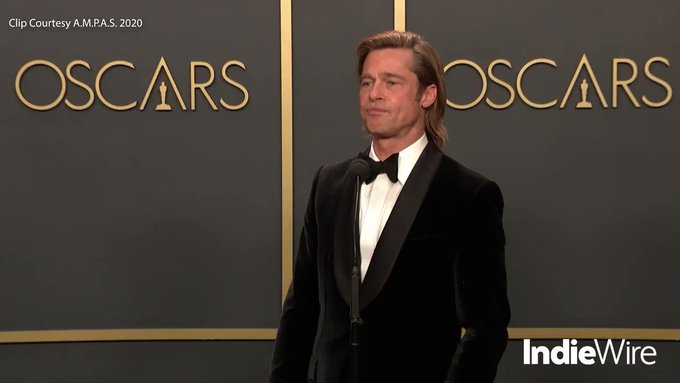
Several Oscar winners took the opportunity to inject politics into Sunday night’s festivities, starting with the telecast’s first famous victor, Brad Pitt, who took a shot at Republican senators who voted against calling witnesses at President Trump’s impeachment trial.

The four-time Academy Award nominee won the best-supporting actor accolade for his role as a stuntman in “Once Upon a Time in Hollywood.” The win marked his first-ever Academy Award win for acting. He immediately took the stage and got political by taking a jab at senators who voted against Democrats’ requests to call new witnesses in the impeachment trial, specifically former National Security Adviser John Bolton, who claimed he was willing to testify.

BRAD PITT’S DATING HISTORY: THE MANY FAMOUS WOMEN HE’S BEEN ROMANTICALLY LINKED WITH OVER THE YEARS

“They told me I only have 45 seconds up here, which is 45 seconds more than the Senate gave John Bolton this week,” Pitt said. “I’m thinking maybe Quentin [Tarantino] does a movie about it. In the end, the adults do the right thing.”

No new witnesses were called in Trump’s impeachment trial, for which he was ultimately acquitted by the Senate in a vote across party lines, with the exception of a lone Republican vote to convict coming from Sen. Mitt Romney.

BRAD PITT HAS ‘NO COMPLAINTS’ ABOUT LIFE: ‘I GOT LOVELY KIDS… I LIKE MY DOGS’

Pitt had been expected to win the category after scooping up a series of honors this year, including at the Golden Globes and Screen Actors Guild Awards.

They told me I only have 45 seconds up here, which is 45 seconds more than the Senate gave John Bolton this week

— Brad Pitt

Speaking backstage, the actor explained why he included a political jab in his Oscars acceptance speech.

“I was really disappointed with this week,” he told reporters. “And I think when gamesmanship trumps doing the right thing, it’s a sad day and I don’t think we should let it slide, and I’m very serious about that.”

Pitt was not the only actor to politicize his comments as Joaquin Phoenix used his lengthy, emotional best actor acceptance speech to discuss, among other things, the state of humanity, and the plight of cows.

"We feel entitled to artificially inseminate a cow, and when she gives birth, we steal her baby," Phoenix said after winning the Oscar for best actor. (Photo by Kevin Winter/Getty Images)

“We feel entitled to artificially inseminate a cow, and when she gives birth, we steal her baby,” Phoenix said after winning the Oscar for best actor. (Photo by Kevin Winter/Getty Images) (Getty)

“I think whether we’re talking about gender inequality or racism or queer rights or indigenous rights or animal rights, we’re talking about the fight against the belief, one nation, one race, one gender, or one species has the right to dominate, control and use and exploit another with impunity,” the animal-rights activist said.

“We feel entitled to artificially inseminate a cow,” Phoenix continued. “And when she gives birth, we steal her baby even though her cries of anguish are unmistakable and then we take her milk that’s intended for her calf and we put it in our coffee and our cereal.”

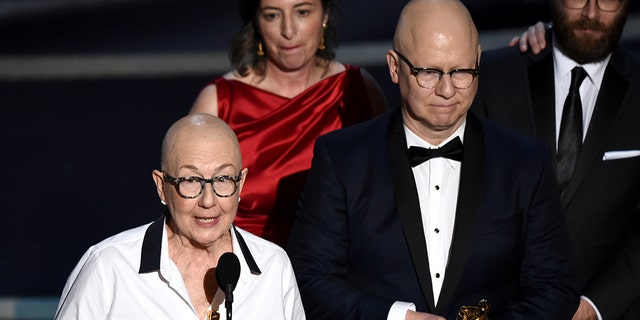
Julia Reichert, left, and Steven Bognar accept the award for best documentary feature for "American Factory." (AP Photo/Chris Pizzello)

Julia Reichert, left, and Steven Bognar accept the award for best documentary feature for “American Factory.” (AP Photo/Chris Pizzello)

Even socialist revolutionary Karl Marx was mentioned in a speech by Julia Reichert, the co-director of the Barack and Michelle Obama-produced Best Documentary winner “American Factory.”

Reichert concluded her speech with a paraphrase of the “Communist Manifesto,” written by Marx and Frederich Engels, stating “[W]e believe that things will get better when workers of the world unite.”

Pitt’s politically driven tone was significantly different than previous wins, where he kept it light with jokes and breezy speeches. Pitt was more somber on Sunday, calling his win “incredible” as his peers cheered.

The actor plays the stunt double of an aging cowboy actor played by Leonardo DiCaprio, a best actor nominee, in Quentin Tarantino’s 1969 Hollywood fable.

CLICK HERE TO GET THE FOX NEWS APP

“‘Once Upon a Time in Hollywood,’ ain’t that the truth,” an emotional Pitt said before he thanked his children, Tarantino and DiCaprio.

“I’ll ride on your coattails any day,” he concluded of his co-star. “The view’s fantastic.”

Brad Pitt accepts the award for best performance by an actor in a supporting role for 'Once Upon a Time in Hollywood' at the Oscars on Sunday, Feb. 9, 2020, at the Dolby Theatre in Los Angeles.

Brad Pitt accepts the award for best performance by an actor in a supporting role for ‘Once Upon a Time in Hollywood’ at the Oscars on Sunday, Feb. 9, 2020, at the Dolby Theatre in Los Angeles. (AP Photo/Chris Pizzello)