Exposing the Big Game

Forget Hunters' Feeble Rationalizations and Trust Your Gut Feelings: Making Sport of Killing Is Not Healthy Human Behavior

Exposing the Big Game

B.C. NDP government stopping contentious grizzly bear trophy hunt

http://globalnews.ca/news/1932442/famous-grizzly-bear-feared-shot-by-hunter
s-in-b-c-s-chilcotin-region/> ‘Famous’ grizzly bear feared shot by hunters
in B.C.’s Chilcotin region

“By bringing trophy hunting of grizzlies to an end, we’re delivering on our
commitment to British Columbians,” Minister of Forests, Lands, Natural
Resource Operations Minister Doug Donaldson said in a release.

“This action is supported by the vast majority of people across our
province. In particular, we owe it to generations past and future to do all
we can to protect the beauty and uniqueness of the Great Bear Rainforest. We
believe the action we’re taking goes beyond the commitment to Coastal First
Nations made as part of the 2016 Great Bear Rainforest agreements.”

WATCH: ‘The Grizzly Truth’ documentary looks at controversial bear hunt in
B.C.

<http://i2.wp.com/media.globalnews.ca/videostatic/794/87/2017-03-31T19-51-14
.067Z–343.766_848x480_911369795582.jpg?w=670&quality=70&strip=all>

Premier John Horgan made the pledge in November 2016 after a recent poll
found 90 per cent of British Columbians were opposed to the hunt, adding the
hunt didn’t make economic or environmental sense.

Another poll conducted by Insights West in late January found
<http://globalnews.ca/news/3349995/rural-british-columbian-voters-oppose-gri
zzly-bear-hunt-poll/> 74 per cent of voters in five rural ridings with
significant hunting traditions said they opposed the trophy hunting of
grizzly bears.

READ MORE:
<http://globalnews.ca/news/2335314/nhl-defenceman-accused-of-illegally-shoot
ing-grizzly-bear-to-enter-plea/> NHL defenceman accused of illegally
shooting grizzly bear to enter plea

The Ministry estimates there are 15,000 grizzly bears in B.C. and each year
about 250 are killed by hunters. While the trophy hunt will end, hunting for
meat will be allowed to continue.

Horgan’s pledge in 2016 was met with criticism by conservationists. Chris
Genovali from the Raincoast Conservation Foundation called it a “pretend to
eat the meat policy.”

Ian MacAllister of the group Pacific Wild, which has been fighting to end
the grizzly bear hunt for years, said at the time, Horgan’s plan is
unenforceable.

“There’s clearly no way to enforce this. The only way they’d be able to do
that is to video-monitor a hunter as they ate their grizzly bear dinner, to
see if they did in fact consume the meat,” McAllister said.

The ministry said in the coming months Donaldson will be consulting with
First Nations and other stakeholders to figure out next steps.

The Commercial Bear Viewing Association (CBVA) said in a written statement
that it applauds the new policy and although they believe all grizzly bear
hunting is trophy hunting, will look forward to consulting with the B.C.
government about next steps.

The ban on grizzly bear trophy hunting will take effect on Nov. 30.

~ with files from Global News

http://globalnews.ca/news/3669625/b-c-ndp-government-stopping-contentious-gr
izzly-bear-trophy-hunt/
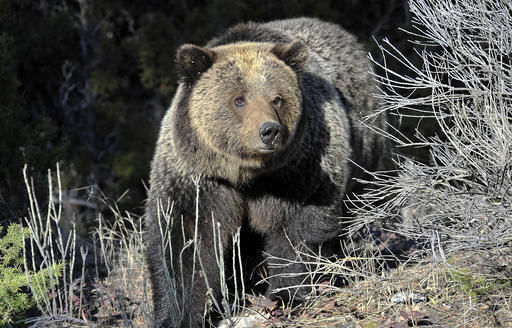
Time to put a stop to B.C.’s grizzly bear hunt

. <http://www.bclocalnews.com/opinion/439898323.html#storyComments>
0
. <http://www.bclocalnews.com/opinion/439898323.html>

.
Aug 11, 2017

Grizzly bears are very important to me and, as the polls show, are very
important to a large majority of British Columbians.

I believe NDP Premier John Horgan and Green leader Andrew Weaver made
statements opposing the grizzly bear trophy hunt and in acknowledgement of
the importance grizzly bear to the ecology and economy of British Columbia.

In 2001, the NDP government implemented a moratorium on grizzly bear
hunting, but it was overturned after the B.C. Liberals took office.

In the 2017 provincial election, NDP and Green candidates pledged support to
ban the B.C. grizzly bear trophy hunt.

I am part of the very large majority of British Columbians who applaud this
position and who did not imagine that we would be waiting with bated breath
to hear an announcement from the NDP government to immediately ban this
hunt.

Grizzly bears continue to be hunted for no good reason, despite the fact
that tourism revenue is far greater than that from grizzly bear trophy
hunting.

I believe, as most British Columbians believe, protecting our wildlife is a
smart investment in the future.

Ronda Murdock

Parksville

http://www.bclocalnews.com/opinion/439898323.html

<http://www.bclocalnews.com/opinion/439898323.html>

<http://www.bclocalnews.com/opinion/439898323.html> BCLocalNews.com – Time
to put a stop to B.C.’s grizzly bear hunt

http://www.bclocalnews.com

Grizzly bears are very important to me and, as the polls show, are very
important to a large majority of British Columbians.

Number of black bears killed by cars and trains concerns national parks officials

First half of 2017 has seen 7 bears killed compared to a total of 8 last year

CBC News

Parks Canada officials say they are doing what they can to prevent wildlife deaths on highways and along train tracks after seven black bears were  killed in the first half of the year, compared to eight throughout 2016.

Four of the bears were killed when they were hit by vehicles on the Trans-Canada Highway running through Banff National Park — the most recent about five weeks ago near the Norquay exit.

“When a bear does get over the fence or crosses one of the cattle guards, which black bears can do fairly readily, it’s a fairly dangerous situation, there’s just so many cars on that roadway,” said Bill Hunt, a resource conservation manager for Parks Canada.

An average of eight black bears are killed annually by motorists and trains travelling through the three national parks — Banff, Yoho and Kootenay — west of Calgary.

Hunt says officials have tried installing different types of fencing along highway corridors, and using electrified mats in places where animals might try to cross roads or railway tracks.

“We’ve spent a lot of effort mitigating the Trans-Canada Highway because of the amount of traffic and the risk to wildlife and to visitors, striking a vehicle at highway speeds,” he said.

“We had problems with wolves and bears getting under the fence and we now have a buried apron. It’s actually about a [one metre] deep section of chain link we bury underneath the fence, then it’s individually stitched all the way along so they can’t dig their way under.”

That’s stopped animals from going under the fences, but bears can easily climb the poles.

Hunt says visitors to the parks can help reduce the deaths by obeying speed limits and reporting wildlife on the roads.

http://www.cbc.ca/news/canada/calgary/alberta-black-bear-death-number-1.4207362

How human stupidity is putting access to Canada’s national parks at risk

BY RICKY LEONGCALGARY SUN

FIRST POSTED: TUESDAY, JULY 04, 2017


It was the closest I’d ever come to a bear.

A buddy and I had just finished a day of paddling on Maligne Lake in Jasper National Park, way back in the summer of 2008.

On the way out of town, we slowed to a crawl to go around a few cars parked haphazardly on the road.

I thought it might have been an accident scene — but it was more like an accident waiting to happen.

The cars were hurriedly abandoned because their occupants were all outside on the pavement, edging toward the shoulder, eager to grab pictures of two bear cubs foraging in the ditch.

In no mood to be around when momma bear would eventually show up, we rolled up the windows and high-tailed it out of there before you could say boo.

You’ve probably read and heard of many more such irresponsible encounters over the years, the latest of which was reported last week in Banff National Park.

According to media reports, a Calgary-based wildlife photographer was left aghast as he witnessed 20 to 30 people standing too close to a grizzly, disregarding a request by a Parks official to disperse.

One particularly fearless visitor was recorded as he walked right up to the bear, within only a few metres of it, in apparent bid to snap a photo.

These people were clearly too close: Parks Canada advises visitors to stay at least 100 metres from such animals as bears, wolves and cougars.

Parks officials also expressed frustration last week after multiple instances of food being left unsecured at a concession stand at Lake Minnewanka in Banff, leading a bear to feed there.

“We spent a lot of time and effort last summer and this spring to make people know how to behave and we’re disappointed,” Parks Canada ecologist Jesse Whittington told Postmedia.

The long list of extraordinarily dumb interactions between humans and nature makes me question whether people understand what our national parks are for.

They are there to preserve and foster the wonders and beauty of our natural world.

People are meant to experience and appreciate those things from a distance.

Humans should be visitors to our parks in much more than the literal sense: Our natural spaces shouldn’t be any worse after we’ve gone through.

The already difficult act of balancing conservation with tourism has undoubtedly become more difficult for Parks Canada as an increasing number of Canadians are availing themselves of their national parks system.

Every park in our neck of the woods has seen growing annual attendance figures between 2011 and 2016.

There’s been double-digit growth at Elk Island (up 30%), Wood Buffalo (20%) and Waterton Lakes (16%).

More people are also going to Banff (up 8%), Kootenay (8%), Mount Revelstoke & Glacier (7%), Yoho (6%) and Jasper (5%).

Banff and Jasper continue to lead the way in sheer attendance numbers countrywide, with 3,894,332 and 2,266,072 respectively in 2015-16.

And with free entry to national parks this year to coincide with Canada 150 celebrations, those numbers are sure to remain healthy.

Sadly, the number of naughty people will likely be healthy, too.

Continued human misbehaviour bolsters the case of those who believe we should tighten access to our national parks.

Loss of access would be a shame, as seeing nature first-hand is a fantastic and unrivalled educational experience.

Of course, this only works if people are actually willing to learn.

And as the recent influx of stupidity shows, too many of us aren’t.

rleong@postmedia.com

On Twitter: @RickyLeongYYC

http://www.calgarysun.com/2017/07/04/leong-how-human-stupidity-is-putting-access-to-canadas-national-parks-at-risk

States won’t rush approval of Yellowstone grizzly hunts

 June 22 at 6:29 PM

HELENA, Mont. — The Latest on removing Yellowstone region grizzly bears from federal protections (all times local):

___

4:15 p.m.

Wyoming, Montana and Idaho officials say they won’t declare open season on grizzly bears once federal Endangered Species Act protections are lifted for the bruins in the Yellowstone National Park region.

The three states that will take over jurisdiction of Yellowstone-area bears once federal protections are lifted this summer have submitted management plans that allow for limited hunting.

But state officials say there is no rush. Brian Nesvik of the Wyoming Game and Fish Department and Laurie Wolf of Montana Fish, Wildlife and Parks both say it’s unlikely any hunting will be allowed this year.

Nesvik says rules still must be developed, and Wolf says her agency is still focused on bear conservation.

Idaho officials also say it’s too early to discuss a possible hunting season.

___

1:30 p.m.

Idaho Gov. C.L. “Butch” Otter is welcoming the delisting of grizzlies in Yellowstone and says the state is ready to start managing the bears.

Otter says Idaho has been on the forefront of Yellowstone grizzly bear recovery for many years and that the population has been recovered for more than decade.

He says officials in the Idaho Department of Fish and Game and Office of Species Conservation will review the final delisting before making any decisions about specifics.

State officials say it’s too early to discuss a possible grizzly bear hunting season in Idaho.

Grizzlies have been protected under the Endangered Species Act for more than 40 years.

___

12:45 p.m.

Wyoming Gov. Matt Mead has praised the decision to take grizzlies in Yellowstone off the threatened species list, calling it long overdue.

Grizzlies have been protected under the Endangered Species Act for more than 40 years.

Mead says grizzly numbers have sufficiently recovered to justify removing the big bears from federal protection. He says he asked the Interior Department in 2013 to delist grizzly bears and is glad to see that finally happening.

The announcement means grizzlies in Wyoming outside Yellowstone and Grand Teton national parks will be under the control of state wildlife managers by late July.

State officials could decide to allow grizzlies to be hunted in limited numbers. Mead gave no guidance on when that decision might be made.

___

12:03 p.m.

U.S. government officials say grizzly bears in Yellowstone National Park region are no longer threatened, and that they will lift protections that have been in place for more than 40 years.

Interior Secretary Ryan Zinke said Thursday that the recovery of Yellowstone’s grizzlies is one of the nation’s great conservation success stories.

The U.S. Fish and Wildlife Service will turn over grizzly bear management to Montana, Idaho and Wyoming by late July. The states plan to allow limited bear hunts outside park boundaries.

The ruling does not affect threatened grizzlies living in other areas of northwestern Montana and northern Idaho.

Grizzlies have been listed as a threatened species since 1975 when just 136 bears roamed in and around Yellowstone.

There are now more than 700 grizzlies in the Yellowstone region.

https://www.washingtonpost.com/national/energy-environment/us-officials-lift-yellowstone-region-grizzly-bear-protection/2017/06/22/5122deb8-577d-11e7-840b-512026319da7_story.html?utm_term=.6621b56b4d16

GRIZZLY BEARS INCH CLOSER TO GREAT FALLS, MONTANA

On June 1, a pair of young grizzlies turned up at the mouth of Box Elder Creek, where it enters the south side of the Missouri River. That’s 12 miles northeast of Great Falls—and roughly where Pvt. Hugh McNeal, a member of the Lewis and Clark expedition, ran into a grizzly bear in July 1806, when the expedition passed through the area on its homeward journey.

Grizzlies getting closer to old Great Falls stomping grounds


CLOSE Grizzly bears are inching closer to Great Falls, Montana’s third largest city, where two centuries ago they…www.greatfallstribune.com

It’s just the natural expansion of a healthy, growing grizzly bear population that’s putting them in closer proximity to people, FWP’s [Mike] Madel said.

“I think these bears are searching for areas to develop new home ranges,” he said.

Historically, grizzly bears occupied grasslands like Great Falls all the way to the Mississippi River but they’ve been gone for more than 100 years.

In recent years, grizzly bears have been traveling river corridors like the Sun, Marias, Dearborn and Teton rivers east of the Rocky Mountain Front to the high plains.

The expansion onto the plains has come as the Northern Continental Divide Ecosystem population of grizzly bears of northwestern and northcentral Montana continues to recover.

The population, currently listed as threatened, is more than 1,000 bears and growing at about 2 percent a year.

https://cdn-images-1.medium.com/max/800/1*ey8anzoCPb0Mw1OlwTXsrQ.png

Animal rights advocates protest killing of bear in Union Beach

HAZLET — About 36 animal rights advocates lined the north bound side of Route 36 at Poole Avenue in Hazlet Thursday evening to protest the death of a black bear on Memorial Day weekend.

Car horns blared in support of the group, while others jeered. A passerby yelled, “Go home.” One protester’s response: We’re in New Jersey, this is our home.

The bear was killed by Union Beach police on May 28, after a four-hour stakeout, and after police were denied assistance from the New Jersey Division of Fish & Wildlife, police have said.

Lauretta Iavarone, a local business owner from Red Bank, said her conscience motivated her to attend the protest. She said the killing of the bear was a real shame.

“Even though I do understand the parameters, it’s very sad and it makes you sad,” Iavarone said.

Janine Motta, programs director at the Animal Protection League of New Jersey, said they organized a protest to raise awareness about bear populations being relocated and growing in new areas, and to tell people that the state isn’t providing tools to mitigate this situation.

“This really has to be exposed and has to be talked about more,” Motta said.

Motta said the local police department has told her the department is very responsive and open to having a conversation about bear safety education programs and using nonlethal options in the future.

She said state officials refused to tranquilize the bear, because the incident was reported at night. It was also on Sunday.

This particular bear was obviously part of the state’s relocation effort, because it was registered in Stillwater, which is too great a distance for a bear to travel undetected and without incident, Motta said.

Susan M. Kearney, a member of Bear Education and Resource who helped organize Thursday’s event, said the overall response from the Union Beach community has been very positive.

“I think it was a great turnout. It’s more people than we expected,” Kearney said.

The bear was first spotted on May 27 near Edmunds Avenue.

Around 10 p.m. that day, Union Beach police sent a warning to local residents to stay away from the animal. Then police contacted state Fish & Wildlife for assistance — requesting the state tranquilize and relocate the bear. Fish & Wildlife denied the local request saying, “this is outside of our protocol,” according to a police department Facebook post.

The statement further said the state department provided “rudimentary” instructions on how to handle the situation, which included: Warn homeowners and pedestrians about the situation, turn emergency lights away from the animal and follow its movements from a safe distance.

The local officers followed these suggestion “to the letter,” the police wrote on Facebook.

After hours of monitoring the bear from a safe distance, the animal headed toward Florence Avenue, a busy area inundated with residents and weekend traffic.

The police department post further said the decision to put the bear down “was not made lightly. However, the safety of residents and their families must always take top priority.”

Another large bear was spotted in Middletown on Friday, May 26, but it’s unclear whether it was the same animal.

David J. Del Grande may be reached at ddelgrande@njadvancemedia.com. Follow him on Twitter @SLOSONE. Find NJ.com on Facebook.

Bad news for Banff bears

Thursday, Jun 01, 2017 06:00 am

By: Cathy Ellis

Banff National Park’s wildlife staff had its hands full last weekend trying to keep people and bears safe, while also investigating a possible grizzly bear strike on the train tracks near Bow Valley Parkway.

A bold black bear that got into a bag of garbage at a backcountry campsite along Lake Minnewanka led to the evacuation of several people in the area and a closure along the lakeshore from Stewart Canyon to the Banff National Park boundary.

Wildlife managers were also called to downtown Banff after grizzly bear 136, a 553-pound male bear nicknamed Split Lip for a scar that led to a disfigured lip, attempted to take a stroll across the Bow River pedestrian bridge, Friday (May 26).

Canadian Pacific Railway train crews then reported a westbound freight train may have struck a grizzly bear on the tracks west of Muleshoe about 6:45 a.m. Sunday (May 28) – an area scientists refer to as “a killing field” for grizzly bears.

Bill Hunt, Parks Canada’s resource conservation manager for Banff National Park, said Parks is currently waiting to look at CP’s footage from a camera mounted on the train.

“Staff attended the site and weren’t able to locate anything yet … nothing at all,” said Hunt, noting they are heading back to the area to do a more fine-scale search.

“Hopefully we’ll get some footage, although sometimes it doesn’t tell us much. The bear can disappear from view.”

Grizzly bears are a threatened species in Alberta and trains are the single biggest killers of grizzly bears here, with at least 17 bears killed on the tracks since 2000, taking a toll on the slow-reproducing population of about 60 bears.

Salem Woodrow, a spokesperson for CP, said no evidence has been found so far of a bear being hit.

“We continue to investigate with Parks,” she wrote in an email.

Meanwhile, a closure is in place in the Lake Minnewanka area after an unmarked black bear got into garbage at Mount Costigan campground (Lm20), 18.8 kilometres along the lake.

The closure now includes the Minnewanka lakeshore trail from Stewart Canyon to the Banff National Park boundary, including Aylmer Pass trail. All backcountry campgrounds are closed, including Lm8, Lm9, Lm11, Lm20, Lm22 and Lm31.

Hunt said a group of about 10 people was packing up to leave Lm20 campground on Saturday (May 27) morning when the bear came into the campsite and rummaged through a bag of garbage.

“It’s unusual for a bear to come in with a group this large. They were hollering and yelling and backed off and maintained distance from the bear, but the bear came right in,” he said.

“It wasn’t super aggressive and did not bluff charge or anything like that. They were packing up to head out. It was a difficult situation and, unfortunately, the bear got a food reward.”

The campers, who did have bear spray, flagged down a passing boat, which took them back to the Lake Minnewanka day use area where they were able to call Parks staff to let them know what happened.

Resource conservation officers scoured the area for any sign of the black bear, but were unable to locate it. It was described as a cinnamon coloured bear with a unique dark pattern down its front.

Hunt said they did, however, spot one black bear with a cub and a grizzly bear with cubs in the region.

“We cleared out everyone along the lakeshore, and all the backcountry campsites,” said Hunt, noting boat tour operators on Lake Minnewanka helped in getting people back to the day use area.

Hunt said Parks Canada has ramped up patrols in day use areas at Lake Minnewanka and nearby Two Jack Lake, educating people about the need to keep food secured and put away if they are not at their picnic sites.

“If a bear has gotten a food reward it’s more likely to want more,” he said.

Grizzly bear 136, thought to be about 12 years old, caused some anxious moments when he tried to cross the pedestrian bridge in the Banff townsite on Friday about 8:45 a.m.

Hunt said he showed up on the south side of the pedestrian bridge, but staff were able to haze him back the way he came and move him slowly westward under the vehicle bridge and out behind the horse corrals.

“Certainly he’s a big male bear and he doesn’t worry too much about anything,” he said. “He was fairly reluctant to be hazed.”

Bear 136 has an interesting history.

He possibly killed, but definitely ate, a black bear in the remote Mystic Pass area of Banff in 2015. In 2014, it was suspected he killed cubs belonging to bear 130, whose home range includes an area from Banff to Castle Mountain, as well as bear 138 in the Lake Louise and Skoki region.

That same year, 136 and the Bow Valley’s dominant male bear, known as 122 and nicknamed The Boss, also forced temporary closure of Vermilion Lakes Road during breeding season. Because the two big bears were on the road – which was busy with vehicles, bikers and hikers – at the same time, Parks Canada didn’t want anyone in the vicinity if they got into a fight over a female bear.

Split Lip also caused some anxious moments last August. While he wasn’t aggressive, he wasn’t interested in moving away and continued to move along the trail at Johnston Canyon despite about 20 hikers heading in his direction.

After he was hazed out of the Banff townsite last Friday, he was later captured in a bear trap intended for female bear 148 sometime Sunday evening. Parks took the opportunity to put a GPS collar on him.

“Because of his history and his recent foray into town, it makes sense we have a collar on him,” said Hunt.

http://www.rmoutlook.com/article/Bad-news-for-Banff-bears-20170601

Grizzly killing near Missoula

A black-bear hunter reportedly killed a large grizzly bear in the hills 5 miles northeast of Missoula on May 16, but federal wildlife officials have released few details about the incident.

“The U.S. Fish and Wildlife Service, in conjunction with its partners at Montana Fish, Wildlife & Parks, is actively investigating the self-reported killing of a grizzly bear by a black bear hunter in the Johnson Creek drainage near Bonner,” FWS spokesman Ryan Moehring wrote in a press release on Tuesday.

“This is an active, ongoing investigation and the Service will share more information with the public when the circumstances of the case permit.”

 That wasn’t much comfort to Andy Lennox, who lives at the base of Johnson Creek and heard about the incident second-hand.

“That’s right behind my house,” said Lennox, who’s lived along the Blackfoot River a mile north of Bonner for 30 years. “And this spring bear hunt is crazy anyway. Lots of hunters can’t tell difference between bears. This could be female with cubs, in which case they just killed two, three or four bears. This was almost two weeks ago, and the Fish and Wildlife Service never came by to let me know what’s going on. It’s like it’s some kind of big secret. That’s weird as hell.”

“Grizzly bears are a listed species (protected by the U.S. Endangered Species Act), so there’s no surprise there’s federal involvement in a grizzly shooting,” Moehring said. “Whenever there’s been an incident like this, the Fish and Wildlife Service has an active role to play.”

Montana’s spring black-bear hunting season started on April 15 and closes in the Missoula area on June 15. Hunters must pass a test certifying they can tell the difference between black and grizzly bears in order to purchase a hunting license.

About 1,000 grizzly bears live in the Northern Continental Divide Ecosystem that extends from the Rattlesnake Wilderness north of Missoula to the northern border of Glacier National Park. While wildlife researchers have occasionally tracked grizzlies traveling around the fringe of the Missoula Valley, the big bears have rarely been sighted south of the Mission Mountains or Bob Marshall wilderness areas.

Bears, chickens a lethal mix, conservation officer says

by Lori Garrison Friday May 26, 2017

This bear was killed by conservation officers in Hidden Valley May 19 after entering a pen and killing a goat. Another bear was shot by a property owner after it raided chicken coops.

Six bears have been killed in the Whitehorse area in recent weeks after coming into conflict with humans.

Two of the most recent kills — one on May 19 in Hidden Valley and one in Mount Lorne on May 22 — involved bears attracted to livestock, said conservation officer Ken Knutson.

The Hidden Valley bear entered a pen containing two goats, one of which was killed, before the bear was “destroyed for safety reasons” by conservation officers, said Knutson.

The Mount Lorne bear was lawfully shot by a property owner after it raided three other chicken coops in the area, said Knutson. The property owner lost 15 chickens.

Chickens are particularly tempting to bears, Knutson said, because they are high in fat and calories. Once a bear gets a taste for chicken it is very hard to deter them in the future which can be a death sentence for the animal, he said.

“I often say, ‘chickens kill bears,’” Knutson said. “We’ve destroyed many bears over the last five years over chickens. We have yet to see an instance of a bear that has gotten into chickens and doesn’t come back.”

The best way to protect chickens and other livestock from bears — and bears from being shot for eating chickens and livestock — is to use electric fencing, said Knutson.

“A shock from a fence is a deterrent, it’s not a very comfortable feeling … you don’t want to do it again,” he said.

It’s the responsibility of people to try to deter animals from entering their property in search of food, said Knutson. Livestock should be secure and people should take steps to manage bear attractants such as garbage or unlocked outdoor freezers.

“Just because you haven’t had a problem doesn’t mean you won’t,” he said. “No one is immune to bears.”

The number of bear interactions and bear kills from previous years in the Whitehorse area were not readily available for comparison.

Bear-human conflicts can occur at anytime outside of the animal’s hibernation period, Knutson said.

Bear sightings were reported earlier in the month along the Riverdale trail, a popular hiking area within city limits, although those bears — a sow and cubs — haven’t been seen recently Knutson said.

“We haven’t had any calls about that sow in a while — she’s being a good mama and keeping her cubs away from people,” he said.

People can report bear sightings or problem animals to Environment Yukon at 1-800-661-0525.

The department is also currently running a survey on grizzly bear management and conservation. The online survey closes May 27.

“We’re hoping a lot of Yukoners will contribute to it,” Knutson said.

Contact Lori Garrison at lori.garrison@yukon-news.com