Bear Viewing 12 Times More Beneficial For Economy Than Hunting

Why Does B.C. Still Kill Grizzlies for Sport?

In early October a provincial government news release landed in the inboxes of reporters and researchers around B.C.

It boasted of a new government-commissioned report that concluded B.C. has “a high level of rigour and adequate safeguards in place to ensure the long-term stability of grizzly populations.”

Even though the report was less glowing than the news release and noted there are monitoring difficulties and a lack of funding, the review gave the BC Liberals the ammunition they needed to conclude the controversial practice of hunting grizzlies for sport is just fine.

But, here’s the thing: even if the province’s estimates of 15,000 grizzly bears in B.C. is correct — and it is a figure disputed by independent biologists, some of whom believe the number is as low as 6,000 — the stand-off over hunting intelligent animals for sport isn’t about the science. It’s about values and ethics.

The ethical argument is clear. Gratuitous killing for recreation and amusement is unethical and immoral,” says Chris Genovali, executive director of Raincoast Conservation Foundation, one of the organizations fighting to stop the trophy hunt, which takes the lives of about 300 grizzly bears in B.C each year.

This is a moral issue. This is about ethics and values,” reiterated Val Murray of Justice for B.C. Grizzlies, an organization hoping to make the grizzly hunt an issue in the upcoming provincial election.

After more than 30 years as a teacher, if a child in the classroom was deliberately hurting animals, he would be immediately referred for counselling before the behaviour escalated into anything else, but people go out and just kill these bears,” she said.

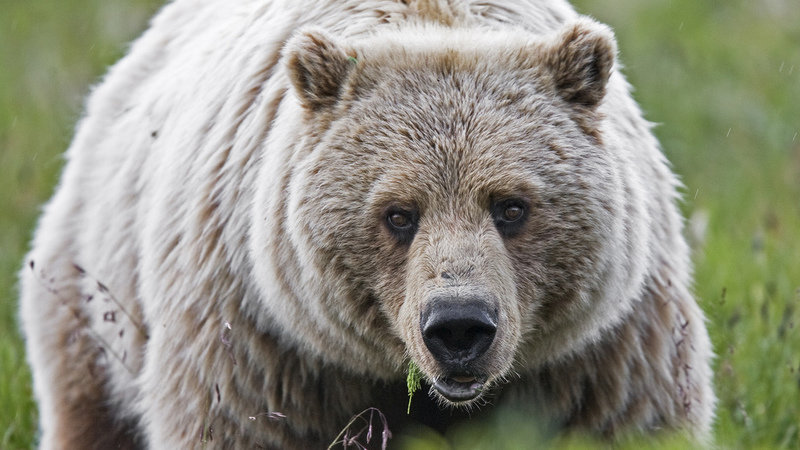
Dramatic pictures of grizzlies fishing for salmon bring tourists from all over the world to “Super, Natural B.C.”

But those tourists rarely see the gut-churning videos of a grizzly being shot, attempting to run for his life and then being shot again — a sequence included in the new film “Trophy” produced by LUSH Fresh Handmade Cosmetics.


Yet, Premier Christy Clark and the BC Liberals show no sign of changing course and, in a parting shot, one of the most energetic supporters of the hunt, retiring Energy and Mines Minister Bill Bennett told Vaughn Palmer on Voice of B.C. that parts of the province have too many grizzly bears and they need to be shot.

It is a view that is increasingly out-of-step with the majority of British Columbians and in direct opposition to the views of Coastal First Nations who have banned trophy hunting in their territory.

Following a trend set by previous polls, an October 2015 Insights West poll found that 91 per cent of British Columbians oppose hunting animals for sport. The margin of error is plus or minus 3.1 per cent.

Look at who we are as a people and a nation and where we are headed,” environmental activist Vicky Husband urged the Grizzly Bear Foundation board of inquiry in Victoria.

We are past the time to stop grizzly hunting. It’s not ethically right,” she told the three-person panel headed by philanthropist Michael Audain.

In addition to holding public hearings, the panel is talking to First Nations, scientists, hunters, guide outfitters and conservation organizations and will use the information it garners to set up conservation, research and education programs.

The group, which is looking at the effects of climate change, urbanization, loss of habitat, accidents and food availability as well as the hunt, is writing a report that will be handed to government in February.

Another report headed government’s way this spring is from Auditor General Carol Bellringer, who is looking at whether the province is “meeting its objective of ensuring healthy grizzly bear populations throughout B.C.”

The government claims its decisions are science-based and points to the new scientific review, but the Audain panel was cautioned to take the report with a grain of salt

This was a government report, commissioned by government, for government. It was not peer-reviewed,” warned professional forester Anthony Britneff.

Government estimates of the number of grizzly bears are based on models, but Melanie Clapham, a post-doctoral fellow at the University of Victoria, who has researched grizzlies for a decade, cautioned that more research is needed.

Models are only as good as the numbers you put in to them,” she said.

A 2012 study by Stanford University in conjunction with the Center for Responsible Travel found that bear viewing groups in the Great Bear Rainforest generated “more than 12 times more in visitor spending than bear hunting.”

But there is increasing concern that the two activities cannot co-exist.

Grizzly bears are a passion for Dean Wyatt, owner of Knight Inlet Lodge, and he takes pride in showing tourists the bears feeding on salmon and berries near his lodge.

But, even though Wyatt wants more British Columbians to understand the vital role grizzlies play in the environment, most of his guests are from overseas because he has found from bitter experience that advertising in B.C. is dangerous for the bears.

I would love to have more British Columbians, but the ones that come first are the hunters, so we don’t market very much in B.C.,” he told the Audain panel.

If we put something in the paper, immediately the hunters show up to see if the bears are there. The hunters are there in their boats 24 hours later. It’s horrible,” Wyatt said.

431125_10150547334526188_1114807436_n

Calgary man banned from hunting, fined for importing Alaskan brown bear carcass

The Canadian Press

A Calgary man has been banned from hunting anywhere in the world for a year and fined thousands of dollars for illegally importing the carcass of an Alaskan brown bear.

READ MORE: Video of hunter killing Alberta bear with spear draws death threats, provincial ban coming

 Environment Canada says Jason John Clemett was found guilty in June and was ordered to pay $13,500 for violating the Wild Animal and Plant Protection and Regulation of International and Interprovincial Trade Act.
Wildlife Photography ©Jim Robertson

Wildlife Photography ©Jim Robertson

Will no politicians stand up for grizzlies?

by Judith Lavoie

  • November 7

While most citizens oppose the bear trophy hunt, BC’s politicians seem reluctant to offend hunters.


IT’S AN INCREASINGLY POPULAR CAUSE that, in BC’s politically sensitive, pre-election months, should have the two major political parties tripping over each other in an effort to adopt it as their own.
Instead, provincial Liberals are literally sticking to their guns in support of the controversial grizzly bear trophy hunt while the NDP has not yet settled on a position.
Polls have consistently shown that British Columbians dislike trophy hunting, a blood sport that sees foreign hunters paying upwards of $16,000 for the chance to shoot a grizzly bear for the sake of a head on the wall or a furry rug on the floor.
An October 2015 Insights West poll found that 91 percent of British Columbians and 84 percent of Albertans oppose hunting animals for sport. The margin of error for BC is plus or minus 3.1 percent.
But, so far, with the exception of the BC Green Party, those numbers are not enough to spark political support. Instead, a proliferation of diverse non-profit groups are taking up the challenge to protect the grizzly, which has been listed as a species of special concern by the federal Committee on the Status of Endangered Wildlife in Canada.
Organizations such as Raincoast Conservation Foundation and Pacific Wild have approached the hunt from a scientific perspective for decades, while the newly-formed Justice for BC Grizzlies is appealing to would-be politicians to look at the ethics of killing for sport. Nine area First Nations, who comprise the Coastal First Nations, want to end the commercial grizzly hunt in their traditional territories and, together with Raincoast, have been buying up hunting tenures in the Great Bear Rainforest to reduce the threat to the bears.
Another unusual approach is being taken by the fledgling Grizzly Bear Foundation, headed by philanthropist Michael Audain. The Foundation has launched a board of inquiry, holding meetings around the province, looking at threats such as habitat loss, food supply and climate change as well as hunting. The panel will submit a report to government by February.
For those who are uncertain how to get involved, the University of Victoria’s Environmental Law Centre, on behalf of the David Suzuki Foundation, has prepared a legal toolkit “Facilitating Public Participation in Grizzly Bear Hunt Management in BC.” The toolkit first addresses the question: Why are grizzly bears important? Grizzly bears, it asserts, “are a vital ecological, cultural and economic resource in BC. They are apex predators that interact with other plant and animal species in their habitats and their population health is therefore a key indicator of the overall ecosystem’s health.”
Lush Fresh Handmade Cosmetics is the latest business organization to become involved and will be launching a campaign this November at its 240 stores around North America. Lush is also producing a 30-minute documentary on the hunt. “I think people will be appalled that, in BC, trophy hunting of grizzly bears is still happening,” said Carleen Pickard, Lush ethical campaigns specialist.
Meanwhile, Auditor General Carol Bellringer is looking at whether the government is “meeting its objective of ensuring healthy grizzly bear populations throughout BC.” Bellringer’s report is due this spring, but it is not known whether it will be released before the May election.
While the Liberal government is showing no sign of changing course, the NDP is having internal discussions.
“A couple of caucus meetings are coming up. Stay tuned…We know this is important and it’s on our radar,” said NDP Environment spokesman George Heyman.


Back in the dying days of the last NDP government, in 2001, a three-year moratorium was imposed on the grizzly bear hunt. Immediately after the election, however, it was almost immediately rescinded by Gordon Campbell’s Liberals when they swept to power.
Martyn Brown, Campbell’s chief of staff in 2001, said he believes the moratorium was probably lifted by ministerial order, rather than after any in-depth discussion or cabinet debate, and was likely the result of pressure from rural MLAs, many of whom were ardent pro-hunters.
“It certainly wasn’t something that was a broad discussion that I can recall,” said Brown, who suspects the issue got lost in the many policy decisions and budget cuts made immediately after the Liberals came to power.
Brown believes the grizzly hunt should no longer be ignored and he wants to see trophy hunting banned throughout the province, for grizzly bears and all other species.
“It’s [because of] uncertainty about the management of the population and principally the ethical concerns,” he said. “Precious animals and wildlife are being taken for nothing but a trophy. They are not being taken for food or ceremonial purposes, they are simply for people’s self-aggrandizement and whatever twisted, distorted satisfaction they get from killing an animal,” he said.
Brown is surprised the NDP are silent as he believes they have little to lose by coming out against the hunt. “If they really thought about it I think they would realize there’s a very small percentage of seats that might be at risk, if any,” he said. “The risks are so minimal and the rewards would be so much greater if they would just stand up and say and do the right thing and say this is a barbaric, out-dated hunt that needs to be stopped,” Brown said.
Premier Christy Clark would also have little to lose by restoring the moratorium, Brown said. “But I don’t think the BC Liberals are even slightly interested in revisiting their position because of the likes of [Energy and Mines Minister] Bill Bennett particularly and others from rural BC who are defenders of the trophy hunt ostensibly for its economic value and its importance to rural lifestyle,” he said.

More: http://www.focusonvictoria.ca/novdec2016/will-no-politicians-stand-up-for-grizzlies-by-judith-lavoie-r12/

David Suzuki: It’s time to end the grizzly bear trophy hunt

null

by David Suzuki on March 10th, 2015

Watching grizzly bears catch and eat salmon as they swim upstream to spawn is an unforgettable experience. Many people love to view the wild drama. Some record it with photos or video. But a few want to kill the iconic animals—not to eat, just to put their heads on a wall or coats on a floor.

The spring grizzly kill starts April 1 and extends for several weeks, followed by a second fall season. By year’s end, several hundred will have died at the hands of humans, close to 90 percent shot by trophy hunters—many of them foreign licence-holders, as the B.C. government plans to enact new regulations to allow hunters from outside B.C. to take 40 percent of grizzlies slated for killing. The government also plans to allow foreign interests and corporations to buy and run guide-outfitting territories previously run only by B.C. residents. Local hunting organizations say the new rules put them at a disadvantage.

According to the Vancouver Observer, hunting guide associations donated $84,800 to B.C. political parties from 2005 to 2013, 84 percent to the B.C. Liberals.

In the controversy over regulatory changes, we’ve lost touch with the fact that the grizzly trophy hunt is horrific, regardless of whether bears are killed by resident hunters or big-game hunters who pay thousands of dollars for the chance to kill a bear here—often because it’s illegal in their home countries.

Grizzlies once roamed much of North America, from Mexico to the Yukon and from the West Coast through the prairies. Habitat loss and overhunting have since shrunk their range by more than half. In Canada, 16 subgroups are on the brink of extinction, including nine in south-central B.C. and Alberta’s entire grizzly population.

Just how many bears reside in B.C. is in dispute. The government claims more than 15,000 grizzlies live here, but Raincoast Conservation Foundation science director Chris Darimont, a University of Victoria conservation biologist, puts the number closer to the government’s earlier estimate of 6,600—before it doubled that in 1990 based on a single study in southeastern B.C.’s Flathead area.

According to a Maclean’s article, in 2000, the government “suppressed the work of one of its own biologists, Dionys de Leeuw, for suggesting the hunt was excessive and could be pushing the bears to extinction. De Leeuw was later suspended without pay for having pursued the line of inquiry.” The government then pursued a five-year legal battle with groups including Raincoast Conservation and Ecojustice to keep its grizzly kill data sealed.

Allan Thornton, president of the British Environmental Investigation Agency, which has studied B.C. grizzly management since the late 1990s, is blunt about the government’s justification. “The British Columbia wildlife department does not use rigorous science,” he told the Vancouver Observer. In 2004, the European Union banned imports of all B.C. grizzly parts into member countries after its analysis found the hunt to be unsustainable.

Even the economic case is shaky. Studies by the Centre for Responsible Travel and Raincoast Conservation conclude revenue from bear-viewing is far higher than revenue from grizzly hunting.

Grizzly population health is an indicator of overall ecosystem health, and bears are important to functioning ecosystems. They help regulate prey such as deer and elk, maintain forest health by dispersing seeds and aerating soil as they dig for food, and fertilize coastal forests by dragging salmon carcasses into the woods. Hunting isn’t the only threat. Habitat loss, decreasing salmon runs, collisions with vehicles and other conflicts with humans also endanger grizzlies. Because they have low reproduction rates, they’re highly susceptible to population decline. Hunting is one threat we can easily control.

According to polls, almost 90 per cent of B.C. residents oppose hunting grizzlies for trophies, including many Frist Nations and food hunters. Scientists say it’s unsustainable. The Coastal First Nations coalition has banned grizzly hunting in its territories, but the government doesn’t recognize the ban. The Raincoast Conservation Foundation has bought hunting licences in an attempt to reduce bear kills on the coast.

Simply put, most British Columbians—and Canadians—are against the grizzly trophy hunt. It’s time for the government to listen to the majority rather than industry donors and ban this barbaric and unsustainable practice.

Written with contributions from David Suzuki Foundation Senior Editor Ian Hanington. Learn more at www.davidsuzuki.org.

Wolf And Coyote Traps Are Killing Grizzly Bears

trrapped-wolf-facebook

Coauthored by: Dwight Rodtka ­ Predator Control Specialist, Alberta Agriculture (retired) and
Sadie Parr ­ Executive Director Wolf Awareness Inc.

In Alberta, the grizzly bear has been listed as a Threatened species under Alberta’s Wildlife Act since 2010, and the provincial government has implementedmanagement measures to increase its numbers.

Hunting of grizzly bears is no longer allowed, and education promoting conflict prevention and coexistence among humans has been put into action.

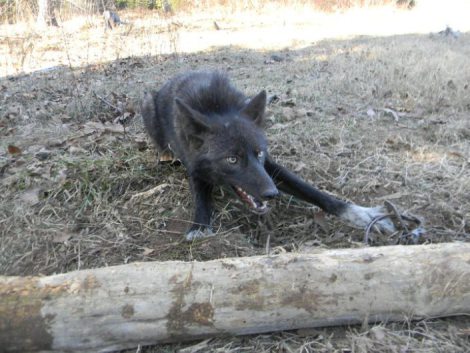
However, there remains one important source of bear mortality which the government recognizes but has done little to eliminate: baited killing snares set for the capture of wolves and coyotes. Grizzlies are extremely susceptible to being caught in wolf or coyote killing snares. Although there are designated areas and seasons to protect grizzlies from falling victim to snares, these are quite ineffective in protecting bears.

As per the current Alberta Guide to Trapping Regulations, trappers are allowed to set out bait piles, usually including hunter kill scraps and road-killed animals. Snares set around bait stations are neither selective nor humane, and they kill or cripple whatever may be attracted to the bait pile. Snares are also commonly set on game trails with disastrous results.

“Non-target” catches are common, and often referred to as “by-catch”. Last winter, inSundre, Alberta, a minimum of fifteen cougars, several deer, a horse, and two eagles were accidentally caught in snares set for wolves and coyotes.

In another incident investigated by Dwight Rodtka, a retired Predator Control Specialist of 38 years for Alberta Agriculture, 12-15 wolf snares set in the Rocky Mountain House area, Alberta, captured and killed, within one week: a wolf pup, a deer, an adult black bear, and an adult grizzly bear.

Current legislation does not even require the reporting of nontarget species. Unfortunately, when bears are seeking the highest amount of calories in fall to ensure survival through the winter, a stage called hyperphagia, finding a bait pile is like hitting the jackpot. When snares are set, however, finding a bait pile also means death.

Snaring wolves is considered a recreational pursuit (i.e., trophy hunting) for trappers today and a source of income. Since 2007, the Alberta Wild Sheep Foundation and other private groups have funded bounties of $300 $350 per dead wolf.

Hundreds upon hundreds of wolves are killed every year for this bounty that also causes the by-catch death of grizzly bears and countless other animals. In this new millennium, Canada has returned to the old adage of “shoot, shovel, and shut up.”

Not only is the province intentionally allowing the squander of wolves and coyotes, both of which have important roles in maintaining balance and diversity in nature, but it is also blatantly allowing harm and death to threatened grizzly bears.

Alberta’s trapping regulations have established “seasonal snaring restrictions” in an effort to “reduce the potential for accidental harvest [KILLING] of grizzly bears”.

Unfortunately for the grizzlies, Alberta’s Trapping Regulations do not seem to take in account nor know about grizzly bear behavior, as snaring is allowed in many Wildlife Management Units when bears are still active.

Many units along the Eastern Slopes, Rocky Mountain Foothills, National Parks, and farmland are open for snaring from October 1 March 31. However, grizzlies commonly den in December and are often out on the landscape again in March. In other words, snaring occurs when bears may be at risk of being captured.

Dwight Rodtka lives in Wildlife Management Unit 324 where grizzlies are common. Each year, Rodtka sees 2-7 different grizzlies on his property, usually from March 19 to December 9. Clearly, grizzlies are exposed to killing snares for no reason other than the government’s desire to kill as many wolves and coyotes as possible.

Snaring wolves and coyotes in these wildlife management units where grizzly bears are active results in the loss of animals and the further endangerment of the species.

Beloved Bipedal Bear Named Pedals Believed Killed By Hunter

http://www.huffingtonpost.com/entry/pedals-the-bear-believed-dead_us_58037fa6e4b0162c043c7b83

A beloved black bear that won hearts after he was spotted walking around New Jersey on two legs, earning him the name Pedals, is believed to have been killed by a bow hunter.

A Facebook page created for the famous bear, which walked on his hind legs because of injuries to his front paws, announced Pedals’ death Friday. It cited witnesses at a designated black bear check station that allegedly saw the bear’s body and also heard the hunter bragging about taking down the popular animal.

“The hunter who has wanted him dead for nearly 3 years had the satisfaction of putting an arrow through him, bragging at the station,” read the Facebook post, which sparked anger and sadness among some of the page’s 22,000 fans.

In a statement, the state’s Division of Fish and Wildlife confirmed that a black bear was brought into the station earlier this week, but said they have been unable to confirm whether it was Pedals since the bear was never tagged.

“There are pictures of a bear with injured limbs that was brought into the station,” Bob Considine, a spokesman for the Division of Fish and Wildlife, described the animal to NorthJersey.com.

YOUTUBENJCOM
Pedals the bear was seen strolling around a New Jersey neighborhood back in June.

Lisa Rose-Rublack, who created the bear’s Facebook page, had raised more than $22,000 to move the bear to a sanctuary in upstate New York. Her fundraiser followed concerns that the disabled bear wouldn’t be able to survive winter.

Incredibly, Pedals was filmed walking around a neighborhood in Oakridge, New Jersey, in June.

Despite the funds raised, the bear’s relocation was never approved by the state’s Department of Wildlife, Rose-Rublack told The New York Daily News.

“We raised all the money, we had a place for him to go,” she said. The money they collected will instead be used to “do some good in his memory.”

A second Facebook post on Saturday went on to say that the writer doesn’t know the name of the hunter and that there is “no credible proof of who did it.”

It asked that the public refrain from accusing specific individuals and making threats.

“As awful as it is that someone killed Pedals as NJDFW has stated he was fair game, no laws were broken. We tried to get him protection to no avail. Please I beg you to stop all of this, you do not have any proof of who killed him,” the post read.

The state’s black bear hunting season ended on Saturday. A total of 549 bears were killed over the six-day period, according to the state’s online records.

The hunt is designed to maintain the bear populations and enhance public safety, according to the state Department of Environmental Protection.

N.J. bear hunt total hits 487 bears killed in first 5 days

By Justin Zaremba  | NJ Advance Media for NJ.com
on October 15, 2016 at 8:01 AM, updated October 15, 2016 at 10:35 AM

NEWTON — In first five days of the extended New Jersey bear hunting season, hunters have killed 487 bears, state officials said.

The season continues through Saturday for hunters using bow and arrows and muzzleloaders and has the potential to surpass the 510 total bears killed during the entire 2015 season before the state’s firearms bear hunt in December.

Hunters were permitted to use only bow and arrows during the first three days of the extended hurt. Hunting with muzzleloaders is also permitted from Thursday to Saturday.

 Pedals the walking bear feared dead as hunt continues

Pedals the walking bear feared dead as hunt continues

Social media accounts saying Pedals was brought by a hunter to a check station on Monday prompted a DEP response

Fifty-five bears were killed on Thursday, according to figures released by the state Department of Environmental Protection Saturday morning.

The county-by-county totals through Friday:

  • Sussex County – 249
  • Warren County – 86
  • Morris County – 85
  • Passaic County – 52
  • Hunterdon County – 13
  • Bergen County – 2

Bow and arrows were allowed in the bear hunt this year for the first time since the late 1960s, DEP officials said.

Five bear hunting zones are open to hunting in Bergen, Hunterdon, Mercer, Morris, Passaic, Somerset, Sussex and Warren counties. Saturday is the last official day of the archery and muzzleloader season.

More information on the bear hunt is available on the DEP’s bear hunting season website.

N.J.’s first extended bear hunt starts Monday

http://www.nj.com/morris/index.ssf/2016/10/extended_bear_hunting_season_starts_on_monday.html

By Justin Zaremba   | NJ Advance Media for NJ.com The Star-Ledger

October 09, 2016

The extended hunting season for the New Jersey bear hunt will start on Monday to coincide with deer season.

Hunters with valid bear hunt permits and hunting licenses will be able to hunt bears using bow and arrows from Oct. 10 to Oct. 12, and using both bow and arrows and muzzleloaders from Oct. 13 to Oct. 15, according to the state Department of Environmental Protection.

Stop the Trophy Hunting of Yellowstone Grizzly Bears!

 from change.org

Since 1975, grizzly bears have been on the federal Endangered Species List, offering them protection against hunters. But now the U.S. Fish and Wildlife Service has proposed removing grizzlies from the list, effectively bringing open season to trophy hunters who want to shoot the bears for ‘sport.’

If the proposal goes through, management of grizzly bears will go to the states in the Greater Yellowstone Region: Idaho, Wyoming, and Montana. All three states have said that they are open to big-game hunting, and that they will only review the bears’ status if hunting leads to a significant and documented decline in the bear’s population. (There were 136 grizzlies in the wild when they were originally put on the Endangered Species List; today, there are 700.)

Allowing the hunt isn’t just bad for the bears who face slaughter —  it could also have a drastic effect on the Greater Yellowstone Region as a whole. Grizzly bears are a crucial part of the local ecosystem, and keep prey populations in check.

Plus, the bears boost the local economy—the tourism industry in the Greater Yellowstone Region is worth $1 billion, with many visitors coming expressly to see large predators like grizzlies.

Please help stop the bloodshed. Tell the U.S. Fish and Wildlife Service that grizzly bears must remain on the Endangered Species list, keeping them safe from sport hunters and poachers. Sign now and let the U.S. Fish and Wildlife Service know that you want grizzly bears to be protected so they can live their lives in peace!

This petition will be delivered to:

Too many grizzly bears seeking berries dying in British Columbia: study

 http://www.chroniclejournal.com/news/national/too-many-grizzly-bears-seeking-berries-dying-in-british-columbia/article_3d4a7f91-3fe0-50cf-8c6d-22116a752d8c.html

Fruit, too many people bad pairing for grizzlies

  •  Wed Sep 28, 2016.

EDMONTON – A study suggests hungry grizzly bears drawn to bountiful berry crops in southeastern British Columbia are dying in disturbing numbers.

The fruit the grizzlies want to eat is in the same Elk Valley area where lots of people live and work, so bears end up being hit by vehicles and trains or being killed by hunters and poachers.

Clayton Lamb, a University of Alberta researcher, said the combination of great habitat and human activity has captured the grizzlies in what amounts to an ecological trap.

“In the last eight years, we’ve lost 40 per cent of our grizzly bears in that area — that’s not normal,” said Lamb, whose findings are being published Tuesday in the Journal of Animal Ecology.

Years of data shows more bears keep moving from the rugged backcountry to the Elk Valley area to find a rich supply of huckleberries and buffalo berries.

A high death rate in turn prompts more migration because the reduced population makes the area more appealing to other bears, since there is less competition for berries and space.

Once tempted to the region, bears tend to stick around. They prey on livestock, eat apples from orchards or nose through garbage.

That in turn can lead to conflicts with people, including bear attacks.

“We have a number of attacks in this region annually,” Lamb said from Fernie, B.C. “We had more than one last year within the span of a couple of weeks.”

He estimates that over an eight-year period the population of grizzlies in the larger South Rockies research region declined to 163 from 271 — a loss of 108 bears.

The survival rate in the “ecological trap” is even lower.

The study notes that about 12,000 people live in the Elk Valley region year-round, but each summer there is a major influx of tourists. Four highways and one major rail line either run through or near the area.

Just over half the grizzly deaths are caused by collisions. About one-third are from hunting, which is legal in B.C., and the remainder are due to poaching and other causes.

Lamb said the provincial government can control how many bears are killed by hunters, but more research is needed on how to reduce collisions with vehicles and trains, and how to decrease conflicts with people.

Research shows the need to provide the grizzlies with a refuge from human development by maintaining critical habitat.