
Yellowstone visitor wants park to train bears to be ‘where guests can see them’
15


The number of grizzly bears has reached the point of recovery and it’s time to delist. So say ranchers and wildlife management officials in the Greater Yellowstone Ecosystem area. This area includes a large section of northwest Wyoming, southeastern Montana and eastern Idaho, as well as Yellow stone National Park.
It should be noted that the Yellowstone Ecosystem extends far beyond the boundaries of the national park and sometimes causes confusion by people who don’t want grizzly bears managed in an area they perceive to be the park.
The grizzly bear is currently listed as “threatened” under the Endangered Species Act (ESA), according to Scott Talbott, Director of the Wyoming Game and Fish Department. This is somewhat different than “endangered,” Talbott said. But the bottom line remains: They are federally protected in the Yellowstone Ecosys tem.
The bear has been under scrutiny for many years. Grizzlies were listed as a threatened species by the U.S. Fish and Wildlife Service (USFWS) under the authority of the ESA in 1975. At that time, 136 grizzlies were thought to live in the Greater Yellowstone Ecosystem. The goal of an ESA listing is to recover a species to a self-sustaining, viable population. In the case of the grizzly the sustainable goal was set at 500.
Recovery levels were attained and the grizzly was delisted in 2007 with a conservation strategy in place. However several parties including environmental protectionist groups sued, arguing not enough evidence existed to show adequate habitat and that one of the bears’ primary food sources— whitebark pine nuts—was in decline. A judge ruled in favor of the environmentalists and the bear was relisted in 2009.
Talbott said a new study was completed and made public in December 2014. Since that time the study group has been working with USFWS and he said they are hopeful a new rule will be released soon, although there is not a clear timetable. “We (representatives from Montana, Idaho and Wyoming) have repeatedly met with the service (USFWS) to initiate that process and move it forward,” Talbott told WLJ.
The study examined populations of bears based on guidelines that determined 500 to be a sustainable number. The agencies and scientists studying the animal reported 757 bears.
Another study reports numbers as high as 1,200 animals, but Talbot noted that difference is due to different study methods.
The Yellowstone Ecosystem subcommittee (YES) study team, which consists of state and federal biologists, uses a process known as Choa2, a statistical estimate for counting grizzly bear concentrations. This study provides the official count of 757, which Talbott calls a very conservative estimate.
The other group conducting bear population studies is the Interagency Grizzly Bear Committee (IGBC), which uses a mark-resight estimate. This method looks at animals that are trapped and tagged due to conflicts. Officials then count how many times they are seen verses unmarked bears in the population. Talbott said this method hasn’t been finalized and provides a much higher number than the Chao2 method.
Dan Thompson, Large Carnivore Section Supervisor with the Wyoming Game and Fish Department, spoke about the different numbers when counting the grizzly population, saying, “I know that people think we are being disingenuous but we’re trying to make sure that we’re not portraying something that’s not defendable by science. I’m very comfortable saying that the 757 number is accurate based on the data analysis technique we’ve used for years, but we know it’s biased low.”
Clearly we have exceeded all of the recovery criteria, Talbott said. “We feel we have a very strong assessment of whitebark pine habitat and have answered all of those questions and we need to move forward with delisting.”
Although the grizzly bear lives throughout the three-state ecosystem, its population is largest in Wyoming, with about 50 percent outside of the national park and only 25 percent within park boundaries. Talbott said the remaining population is pretty evenly split with 12.5 percent in Idaho and 12.5 percent in Montana.
YES and IGBC have both recommended that grizzly bears be removed from threatened status.
From a financial standpoint delisting also makes sense. Talbott said the state of Wyoming currently spends $1.4 million per year on grizzly bear management. A portion of that is spent to compensate landowners and livestock producers for confirmed losses from grizzly bears. The amount of compensation in 2007 was $83,000 and in FY 2015 the state paid $486,842 for livestock loss reimbursement.
Albert Sommers, a cattle rancher and President of the Upper Green River Cattle Association (UGRCA), who also serves in the Wyoming House of Representatives for District 20, talked with WLJ about some of the issues he and his organization have seen with the grizzly.
The UGRCA knows firsthand the impact of bear depredations. That association consists of about nine ranchers who have grazing allotments within the Yellowstone Ecosystem. He said they are permitted 7,000 cattle on the allotment of approximately 130,000 acres, and currently run between 5,900 to 6,000 head (a cow/calf pair counts as one).
Sommers said the first bear kill on their allotment was confirmed in 1993. Cattle losses between 1990-1994 from all sources and prior to the arrival of large carnivores including wolves were about 2 percent annually. As the bear increased its range and population, by 2000 calf losses were closer to 8-10 percent. Sommers said wolves are included in the conversation, but of 75 head of cattle killed last year, a majority were taken by grizzlies. He added that as of Aug. 14 of this year, more than 50 animals had been lost to bears and four to wolves.
Managing the bear means managing cattle, and Sommers said it’s harder to manage grass when the cattle won’t go into timbered pockets to graze because grizzlies are in the area. “We’ve moved from having riders just moving cattle to grass and watching for sick animals to having their primary goal being to look for depredated carcasses. That’s the only way you can get a management action,” he told WLJ. “We’re trying to think outside the box on what we can and can’t do to reduce predation, but there’s no silver bullet.”
Because a large population of bears resides in northwest Wyoming, conflicts with livestock are occurring more often. Talbott said the expansion of grizzly bears extends off of forest land to private property east of Cody, WY.
There have also been documented sightings west of Lander, WY, in the Wind River Mountains and as far south as the Big Piney, WY, area.
Our number one priority is human safety, Thompson said. “But with increased population and increased human activity, there’s more opportunity for conflict.”
Although human engagements with bears are rare, earlier this month Yellowstone National Park officials confirmed a hiker was killed by a grizzly bear attack within the park. Evidence pointed to a female bear as his attacker, they said. The bear was captured and euthanized and her cubs will be relocated to a zoo this fall.
So far there hasn’t been any movement by the USFWS or any other group to delist the bear. When a new rule is published it will go through the federal rule-making process, which includes a public comment period before being enacted.
All of the officials WLJ spoke with pointed out that if the bear is delisted it will still be managed. And while there may be limited hunting, it will not be a significant number. More importantly, delisting will give state wildlife officials more flexibility in dealing with problematic grizzlies. Currently when the decision is made to capture, relocate or put down a bear, the state must work with USFWS. Thompson said state and federal wildlife officials work together, but as long as the bear remains on the threatened list, all final decisions rest with the USFWS.
Sommers said he tells people that maintaining endangered species on the landscape requires working landscapes in the West to continue, and working landscapes are all about ranching. “If we want to keep sage-grouse, grizzly bears, wolves, all of that, we as a nation have to find a way to make it work for ranchers. And work for working landscapes—that is absolutely essential.”
Sommers concluded, “This is really good proof that the Endangered Species Act worked. So this is actually a success story, if the environmentalists will allow it to be a success story.”
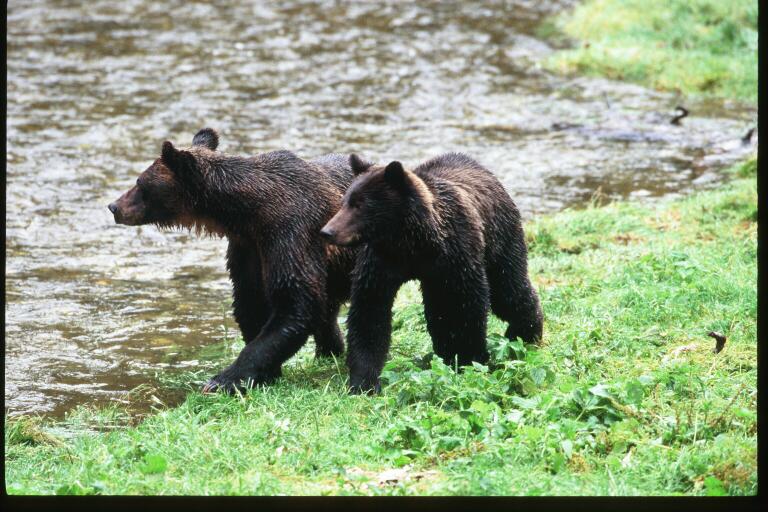
Text and Wildlife Photography©Jim Robertson
Much has been speculated since the Yellowstone employee was recently found partially consumed by a bear and her two cubs. For example, it can’t be known for certain that the popular bear nicknamed “Blaze” was the one who caused his death—teeth and claws do not leave fingerprints. Likewise, the bear’s motive for killing can’t be known for sure either. Sometimes humans just die easily. According to a recent article in the Washington Post, entitled, “Forget bears: Here’s what really kills people at national parks,” folks are far more likely to die of drowning, car accident, a fall, suicide, pre-existing condition, heat or cold exposure than by wildlife (which is last on the list in descending order).
But the motive for killing the bear was pretty clear: an eye for an eye. This was an act of revenge. You don’t kill a human in this park and get away with it—especially if you yourself are not human. What will the paying park patrons think? After all, the park was created “for the people.” Never mind that grizzly bears are threatened with extinction in the lower 48; are losing habitat daily to anthropogenic climate change and those roughly 700 in Yellowstone have nowhere else to go. The parks are their last semi-safe refuges from savage, heavily armed humans who call for their deaths at every turn. Humans throughout the world kill (and sometimes eat) bears by the tens of thousands on a regular basis.
And never mind that humans, at 7.3 billion and counting, have practically no other natural predators. Or that by the end of the century when we reach our projected 11 Billion, the Earth’s few remaining lions, tigers and grizzly bears, etc., will either be things of the past adorning someone’s walls or floors, or be locked up as zoo relics. Their lives in the wild will be so over-managed as to be non-existent.
Justice is swift in Yellowstone, especially against the wildlife, whose destruction is pawned-off as euthanasia; or if they leave the park, “harvest.” Get ready for grizzly bear “harvest” to become commonplace unless we stop the plan to delist them from their Threatened status. After all, they’re just another “big game” animal, and the growing number of people need more and more trophy hunting opportunities for the future.
If Blaze’s killing was anything more than simple revenge, it was another statement to the world that humans are top dogs and the laws of Nature (somehow, by virtue of human arrogance) do not apply to us. Don’t mess with us humans or we’ll have you euthanized, you lowly wild ursine, feline, canine, piscine, etc.
Ever since the fatal attack on the park employee, Yellowstone has posted signs all over warning about dangerous bears, but what they really need are signs warning the bears to behave themselves or we’ll trap and euthanize you and maybe take away your Threatened status protections. Then the end result will be a lot more than an eye for an eye!
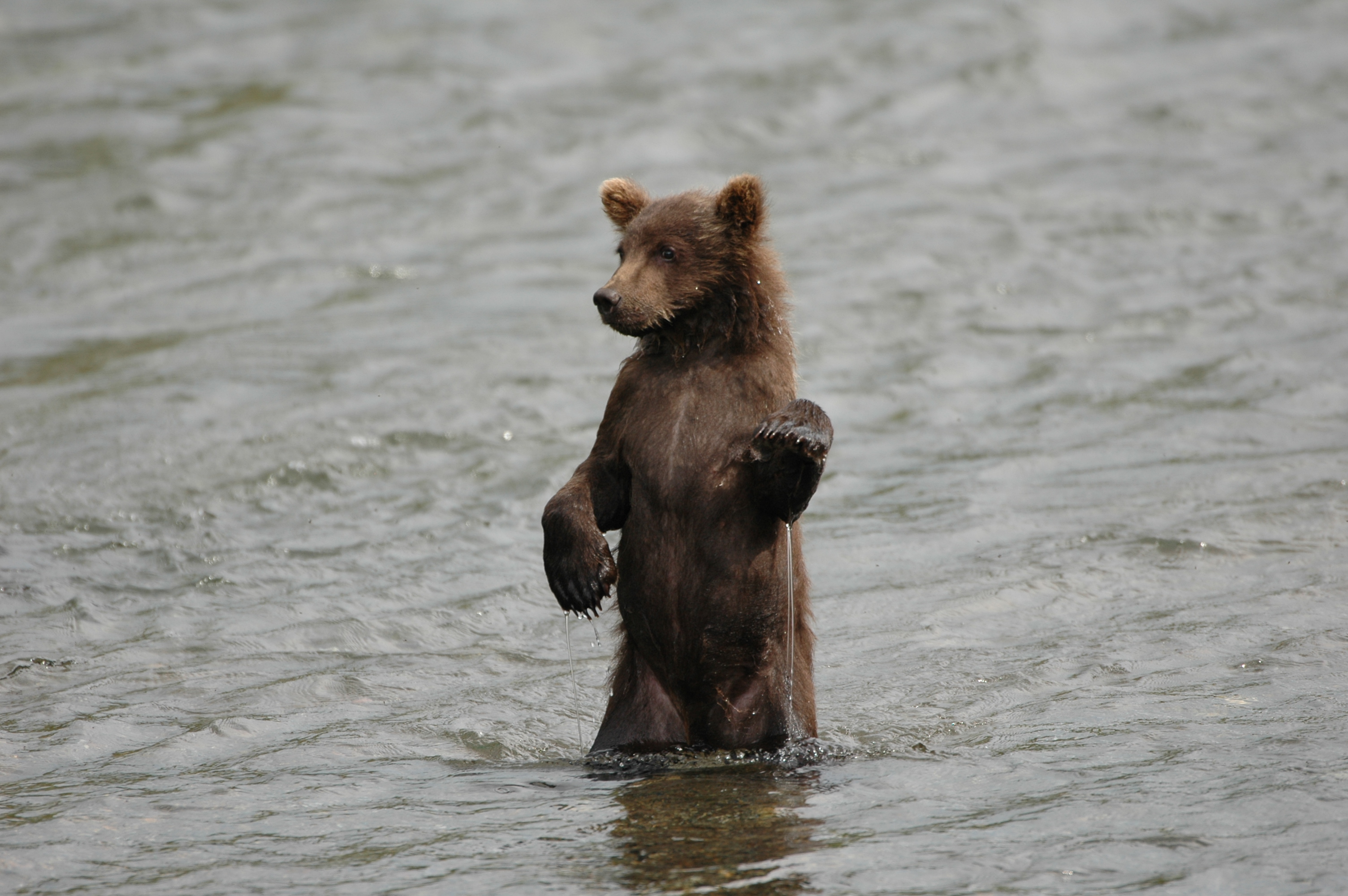
Blaze, a grizzly bear with a clean record, was killed by Yellowstone National Park workers, and her two surviving cubs will be sent to spend the rest of their lives in a zoo (link is external) (for more on this story, please see this essay (link is external)). Coming on the heels of the regrettable slaughter of Cecil the lion (link is external), many people are more sensitized to the ways in which we interact, and often harm and kill, wild or free-roaming animals.
The Yellowstone press release reads, “As managers of Yellowstone National Park, we balance the preservation of park resources with public safety,” said Yellowstone National Park Superintendent Dan Wenk. ‘Our decision takes into account the facts of the case, the goals of the bear management program, and the long term viability of the grizzly bear population as a whole, rather than an individual bear.’” In other words, Blaze wasn’t free to be the grizzly who she was, and individuals don’t really matter to the Yellowstone bear management program. I hope people who work for Yellowstone and other parks and areas where wild animals roam and in which they are being constantly intruded upon by humans will also read more about compassionate conservation, in which the importance of the lives of individual animals is stressed (please see “Compassionate Conservation Meets Cecil the Slain Lion.”)
Blaze was not euthanized
The press release about Blaze’s death also notes, “Based on the totality of the evidence, this adult female grizzly was the bear involved in the fatality and was euthanized today. An important fact in the decision to euthanize the bear was that a significant portion of the body was consumed and cached with the intent to return for further feeding. Normal defensive attacks by female bears defending their young do not involve consumption of the victim’s body.” Of course, the death of the hiker is deeply tragic, but there is no evidence that Blaze, even if she tried to return for “further feeding,” would then be more prone to kill and perhaps feed on other humans.
While it is claimed Blaze was euthanized, once again the word is totally misused — she was killed, or murdered, depending on how one wants to cash this out, but surely not euthanized. As I’ve pointed out in another essay, using the word “euthanized” is an attempt to sanitize what was actually done.
In an essay in the Washington Post we read (link is external), “There are certainly people that have a hard time with the decision to euthanize the bear and that includes some of our biologists and park rangers,” Campbell [Julena Campbell, a Yellowstone spokeswoman] told The Post. ‘We don’t get into the profession for that reason, but we have to make the decision for sound science and putting the safety of humans first. We can’t favor one individual bear over protecting the lives of humans.'”
Appealing to the notion of “sound science” is a decoy that might make some people think that science supports killing the bears, and it would be nice to know how killing these bears will protect humans in the future. Just where are the data that support the idea that killing animal suspects who are responsible, or thought to be responsible, is the remedy for the very rare occurrences of killing humans in Yellowstone? I surely can’t find any support for this claim, and the database hardly seems large enough to draw any meaningful conclusions that are often used as excuses to kill the suspects.
Blaze’s death provides a lot of food for thought for anthrozoologists and numerous others who like to spend time outdoors
It is essential to emphasize that killing Blaze goes far beyond the misuse of the word “euthanasia.” Her unnecessary death raises numerous questions about the complex and challenging nature of human-animal interactions, the topic on which the rapidly growing transdisciplinary field called anthrozoology (link is external) focuses. And, of course, human-animal interactions occur when people visit national parks and other outdoor areas, something which I’m sure many readers of, and writers for, Psychology Today enjoy doing.
An excellent discussion of many of the issues centering on the slaughter of Blaze can be found in an essay by D. Simon Jackson called “Outrage in Yellowstone (link is external),” and I highly recommend that people read it carefully and think about our responsibilities when we knowingly head out into areas where there are dangerous animals, and also think about what parks and other “wild areas” are all about. Are they for the humans or the nonhumans? How do we factor in the interests of all of the animals, human and nonhuman? Mr. Jackson rightfully asks, “If Yellowstone is not a place where the bears come first, where do they get the benefit of the doubt? Are parks not suppose to be tools of conservation first and foremost?”
What about human responsibility for the risks that are taken when outdoors “in nature?”
My heart goes out to the man who was killed and to his family and friends. And, I know others would agree that this is an incredibly sad event but also would argue that Blaze should not have been killed, nor should her cubs go to a zoo.
When one ventures into areas where it is known that wild and dangerous nonhuman animals (animals) live we are trespassing into their homes. Having had three very
“close encounters of the lion kind” with cougars into whose homes I moved (please see “Close Encounters Of A Lion Kind: Meeting Cougars, Foxes, Bears … and Bear Poop“), I can say without hesitation, (i) I would never want to meet cougar so up close and personal again although some people told me they thought it was “cool,” (ii) I knowingly moved into a house that had previously been built where it was known that dangerous animals also lived and it was my responsibility to avoid cougar and the other dangerous animals with whom I shared time and space, including black bears and coyotes, and (iii) I would have been more than happy to sign a waiver when I moved into my mountain home that if any harm came to me I would not want the animal who harmed me to be killed unless he/she was injured or ill. I surely would not want their offspring sent to spend the rest of their lives in zoos. Perhaps people should be asked to sign release forms as they have to do for other activities that are risky and can cause harm or death. I’ve often asked realtors to inform potential homebuyers about the animals with whom they will be sharing time and space.
Let’s also remember Bryce Casavant, a most courageous conservation officer who refused to kill two black bear cubs near Port Hardy on northern Vancouver Island (link is external) and was suspended because he said “no.” More people simply have to say “no” to killing other animals. If some people argue the killing cannot stop, it will not stop. It saddens me to think that we’ve gotten to the point where for some, killing is the only viable option for peaceful coexistence. We need to leave our comfort zones and think and act “outside of the box.”
I hope everyone who ventures out to enjoy other animals and their homes will consider what they’re doing more carefully. Other animals should not have to pay the price for being who they are, and after all, isn’t that why we go out to see them in the first place or move into wild environs? I know the complex and challenging issues of human-animal encounters “out in nature” are not going to go away any time soon, but we must honor who the nonhumans are and accept that it is indeed risky to trespass into their homes.
You can sign a petition to prevent Blaze’s cubs from going to a zoo here (link is external) (please also see (link is external)).
Marc Bekoff’s latest books are Jasper’s story: Saving moon bears (with Jill Robinson), Ignoring nature no more: The case for compassionate conservation, Why dogs hump and bees get depressed, and Rewilding our hearts: Building pathways of compassion and coexistence. The Jane effect: Celebrating Jane Goodall (edited with Dale Peterson) has recently been published
DO NOT LET THE GOVERNMENT KILL THIS BEAR:
We need to honor this hiker and let the mother bear roam wild. The reason: Mother grizzlies never intentionally kill humans; they don’t care about us, only the safety of their cubs. The hiker surprised the sow grizzly. We will never know exactly how but likely she was on a day bed and he got too close. The hiker had wounds on his arms, indicating he probably fought back, an understandable but bad reaction to a mother bear to whom resistance means her cubs are still in danger. We don’t know why she made contact; close proximity possibly made worse by running. Running or trying to climb a tree after a mother grizzly with cubs is the worst choice, followed by fighting back. Apparently, the hiker’s body was cached and fed upon. This most disturbing of consequences needs to seen in context of the natural world of the bear. Anything dead out there is Yellowstone this time of year is seen as a most valuable food source during the lean times of summer. Witness past bison carcasses in Hayden Valley where humans got too close, then in turn were eaten too. Once dead, a human is like any other animal. If several grizzlies are around, the most dominant animal, often a big male, will appropriate the carcass. So if a mother bear killed a human in perceived defense of her cubs, that doesn’t mean she cached or fed on the body. The salient point here: This mother bear is no more likely to repeat this most natural of aggressions–kill, or consume a human–than any other mother grizzly bear in the world. The feds are more nervous about litigation and bad press than public safety. The only way to totally protect the public from wild bears and insure safety for park visitors is to kill off all the grizzlies. the federal agencies don’t want that any more than we do. Help them clarify their thinking. This was a defensive natural act for a wild grizzly. It will probably never happen again to this mother bear, though of course it might–and that is the great value of wilderness and their risky animals. The hiker was experienced, knew the area well and loved to take this hike. His now missing opinion is what would have mattered to me: What would he have wanted for the fate of this bear?
Doug Peacock
Note: Question or comments made here will not reach the author; To contact Doug Peacock, please follow this link to his blog site: http://www.dougpeacock.net/index.php?option=com_easyblog&view=entry&id=30&Itemid=187
The female grizzly bear responsible for mauling a 63-year-old man to death at Yellowstone National Park was euthanized today, in part because the attack was not consistent with a normal defensive attack, officials said.
The victim, Lance Crosby, was found mauled to death Friday.
DNA evidence confirmed that the bear was the one responsible for the attack, the park said.
The park said a part of the decision to euthanize the bear “was that a significant portion of the body was consumed and cached with the intent to return for further feeding,” the park said in a release today.
“Normal defensive attacks by female bears defending their young do not involve consumption of the victim’s body.”
The park also said that they were considering “the long term viability of the grizzly bear population as a whole, rather than an individual bear,” the statement said.
Crosby worked for a company that runs urgent care clinics in the park, Yellowstone said. The park confirmed today his death was a result of traumatic injuries from a bear attack.
Rants from a renegade naturalist
News from Yellowstone: please see Terry Tempest William’s post on my Home page, “Don’t kill this grizzly bear.”
The news is that Yellowstone Park officials will kill this mother bear, as they said they would from the beginning. Despite all your pleas for logic, fairness and humane treatment of this grizzly family, a mother and two cubs of the year, they will be killed.
A friend of mine, along with other insiders who work in Yellowstone park, actively lobbied and talked to Kerry Gunther and other YNP officials. To their credit, these public servants at least listened to alternatives to the destruction of this bear family and, although they were inflexible about euthanizing the mother grizzly, they considered placing the two cubs in a zoo-like setting, In particular the Yellowstone Discovery Center in West Yellowstone. This private educational center did it’s best towards accommodating the entire bear family. This discussion included taking in the two cubs and at least considering raising fund to acquire a larger area to suite the older female grizzly who has lived a wild bear life for 20 years. I think this kind of discussion commendable on all sides. And it wouldn’t have taken place without all your letters, calls and pleas to spare the grizzy family’s lives.
The effort failed for two reasons:
First, Yellowstone National Park decided, privately for unstated and unexplained matters of “public safety,” to kill this, and presumably any bear, who is implicated in a human fatality. This is wrong, based on no science and against the NPS Organic Act mission, which is celebrating it’s 100th anniversary in 2016. This incident was a purely defensive, natural response of a mother bear protecting her cubs. This particular female grizzly had a long and tolerant history towards human visitors, however rude and clumsy. My friend:
“It looks like the bear involved was a very familiar, older bear nicknamed, Blaze who had two COY this year. She has been viewed, photographed and filmed by thousands of people over the years with never a shred of aggression even while people chased her and her cubs to get a better shot. Apparently traps have been set and the decision to kill her has already been made.”
The mauling was a human-induced event. The hiker, however experienced, did everything wrong: he got too close to a sleeping mother grizzly, then he ran and tried to fight back. Doing these three things–stumbling in too close to an unaware mother bear, running and fighting back–are about the only way you can get get killed by a mother grizzly.
The park service of old use to treat these defensive attacks, fatal or not, as the natural responses they indeed are. No more. Since the fatal mauling of a Michigan man in 2010, they have hardened their response and changed their policy–if they have a policy other than what’s seems safest to preclude litigation at the time it’s happening. And they never discussed with or even disclosed to the public–concerned taxpayer how they arrived at this policy. Fear of litigation is what made them condemn the natural, defensive-acting mother bear to death. That cash, the litigation slush funds, doesn’t come out of their pockets; it’s our dough. YNP could at least discuss that issue with us.
The second reason is a single bureaucrat has decided to kill the cubs. This proclamation was made after YNP officials, apparently in all good faith, considered sending them to a zoo-like facility. That decency by YNP was overruled: the cubs must be killed. My friend:
“So we got all the way to the alter on adopting these cubs and Chris Servheen said no. If these cubs are euthanized after we offered to take them and privately raise the money…”
Chris Servheen is known as the “Grizzly Czar” and is the boss of the FWS Interagency Grizzly Bear Committee; his chief and perhaps single agenda is to formally “Delist” the Yellowstone, which means to strip the grizzly of all its protections under the ESA and turn “management” over to the states of WY, MT and ID who have promised to immediately issue “Trophy Grizzly Bear Hunt” permits. This removal of ESA protections, as I have argued in my own “Don’t Delist” articles, will irretrievably push the Yellowstone grizzly down the road to regional extinction within years. The boiled-down logic is when mortality (deaths) greatly exceed grizzly births, extinction is usually unavoidable in a species like the griz with exceedingly low reproductive capacities.
So that, my friends, is pretty much the story: the undeserved killing of the mother grizzly and her blood is on the hands of Yellowstone National Park officials. The slaughter of the innocent cubs lies on those of the Griz Czar Chris Sevheen. These people owe you an open explanation for their decisions. They also need to share the data and forensics they used to make their unethical and illogical calls on our innocent bears. Please demand they do.
For the wild, Doug Peacock

Wildlife Photography ©Jim Robertson, All Rights Reserved
Agonizing, there is no other word to describe the decisions that must be made at the highest level in Yellowstone National Park. Authorities are doing everything they can to be sure they correctly identify the bear that killed a hiker. Superintendent Dan Wenk has already said the female grizzly trapped in the area where Lance Crosby’s body was found will be euthanized if there is irrefutable evidence that she is the culprit. Our hearts go out to the family and friends of Mr. Crosby and also to the dedicated park staff who responded to the scene and must now investigate and make those hard decisions. There are so many layers of consideration-it is never simple. However, there is one question that we would like to be part of the deliberations and that is for the authorities to think very deeply about what they hope to achieve as far as public perception if they decide to kill the bear and her cubs. Will removing the bear actually make people who recreate in Yellowstone National Park safer? There is a frightening possibility that killing this female will simply give visitors a false sense of security that the ‘man-eating’ grizzly is gone. This could lead to complacency where visitors or seasonal employees may not follow the recommendations to carry bear spray, hike in groups and be vigilant for the creatures that live there. Yellowstone National Park-indeed the whole

Wildlife Photography ©Jim Robertson, All Rights Reserved
Yellowstone Ecosystem-is now home to many hundreds of grizzly bears. They are large, powerful and supremely protective animals and any or every one of them has the capacity to make an encounter fatal to a human. Is there a way that Superintendent Wenk and his staff, together with the interagency team that is responsible for grizzly bears, can either spare the bear involved in the death of Mr Crosby, or ensure that the message gets out that Yellowstone is still not a place to take lightly if they do remove this specific animal? Fear can be a great motivator, it can also be numbing and allow people to ignore what is presented to them. Every park trail in Yellowstone and Grand Teton and many area forests has a “Bear Attack” sign warning people of precautions such as bear spray and group hiking before they set off on the trail. Would it make a difference to add that there HAVE been deaths in the ecosystem and the bears involved remain there? This is harsh, but it is reality. We must regard every large carnivore as having the capacity to kill-this is the only attitude that will keep us and them as safe as possible as we share our ever decreasing wild environment. http://www.cnn.com/2015/08/08/us/yellowstone-grizzly-bear-attack-hiker-dead-feat/index.html
http://www.ibtimes.com/yellowstone-grizzly-bear-be-euthanized-mauling-montana-hiker-2047836
A grizzly bear that attacked and killed a hiker Friday in Yellowstone National Park will be euthanized, park officials said Monday. Authorities are also likely to euthanize two cubs in connection with the attack.
An adult female bear and at least one of her cubs were likely involved in the attack on 63-year-old Lance Crosby of Montana, park officials said in a press release. The bear’s paw measurements and a DNA sample are being examined to confirm the identity of the bear that mauled Crosby.
“The decision to euthanize a bear is one that we do not take lightly … Our decision is based on the totality of the circumstances in this unfortunate event,” Dan Wenk, park superintendent, said, in the statement.
The bear and the cub have since been captured while the other cub remains in the wild. The authorities will offer the cubs to a zoo or rehabilitation center and if no permanent home is found they will be euthanized, park spokeswoman Amy Bartlett said, according to the Associated Press.
“Fortunately, these kind of incidents don’t happen that often. We have 3.5 million people coming to Yellowstone each year and risking those lives is not a chance we’re willing to take,” Julena Campbell, another spokeswoman for the park, said, according to the Washington Post.
Crosby’s body, which was partially consumed, was found by a park ranger Friday near the Elephant Back Loop Trail in the park’s Lake Village area, after the man was reported missing by his co-workers Friday morning.
According to the National Park Service (NPS), about 674 to 839 grizzly bears dwell in the Greater Yellowstone region, which is one of the last remaining large ecosystems in the northern temperate zone.
The last death from a bear attack in the park was recorded in 2011, the first in 25 years, according to the NPS. There have been only eight fatalities since the first recorded bear attack in the park, in 1916, Campbell reportedly said.
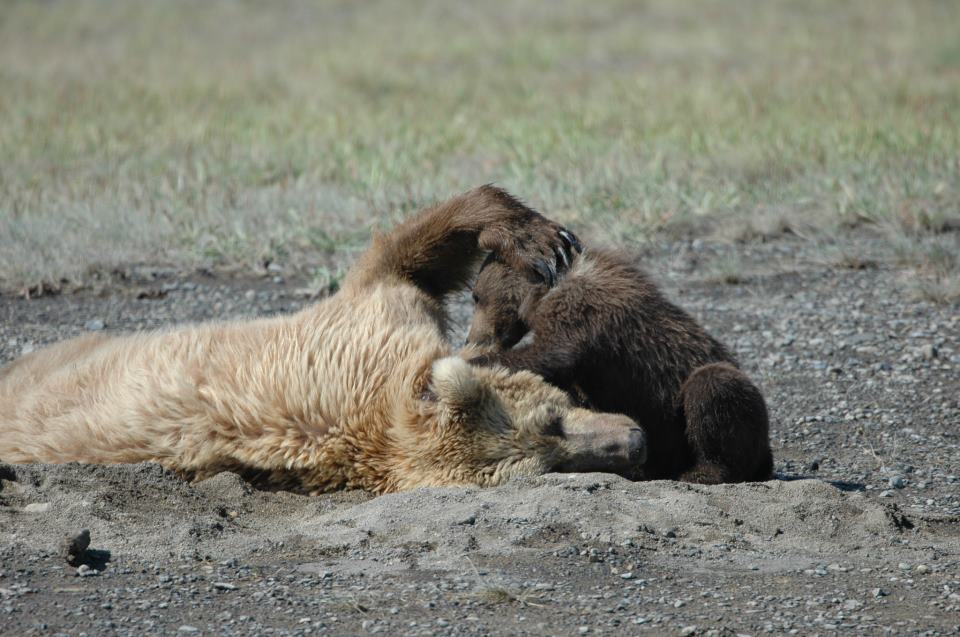
—Wildlife Photography ©Jim Robertson, All Rights Reserved
3.5 million people visit Yellowstone each year. What’s mind boggling to me is how few encounters there actually are. Maybe it’s time to consider how many people can visit Yellowstone. They say the victim was an “veteran hiker” but was alone with no bear spray.
http://www.washingtonpost.com/news/morning-mix/wp/2015/08/09/grizzly-kills-veteran-hiker-in-yellowstone-national-park-authorities-say/
Brooks Fahy
Executive Director
PREDATOR DEFENSE
Helping people & wildlife coexist since 1990
www.predatordefense.org
 Exposing the Big Game