Exposing the Big Game

Forget Hunters' Feeble Rationalizations and Trust Your Gut Feelings: Making Sport of Killing Is Not Healthy Human Behavior

Exposing the Big Game

Vote NO on FL Bear Hunting Poll

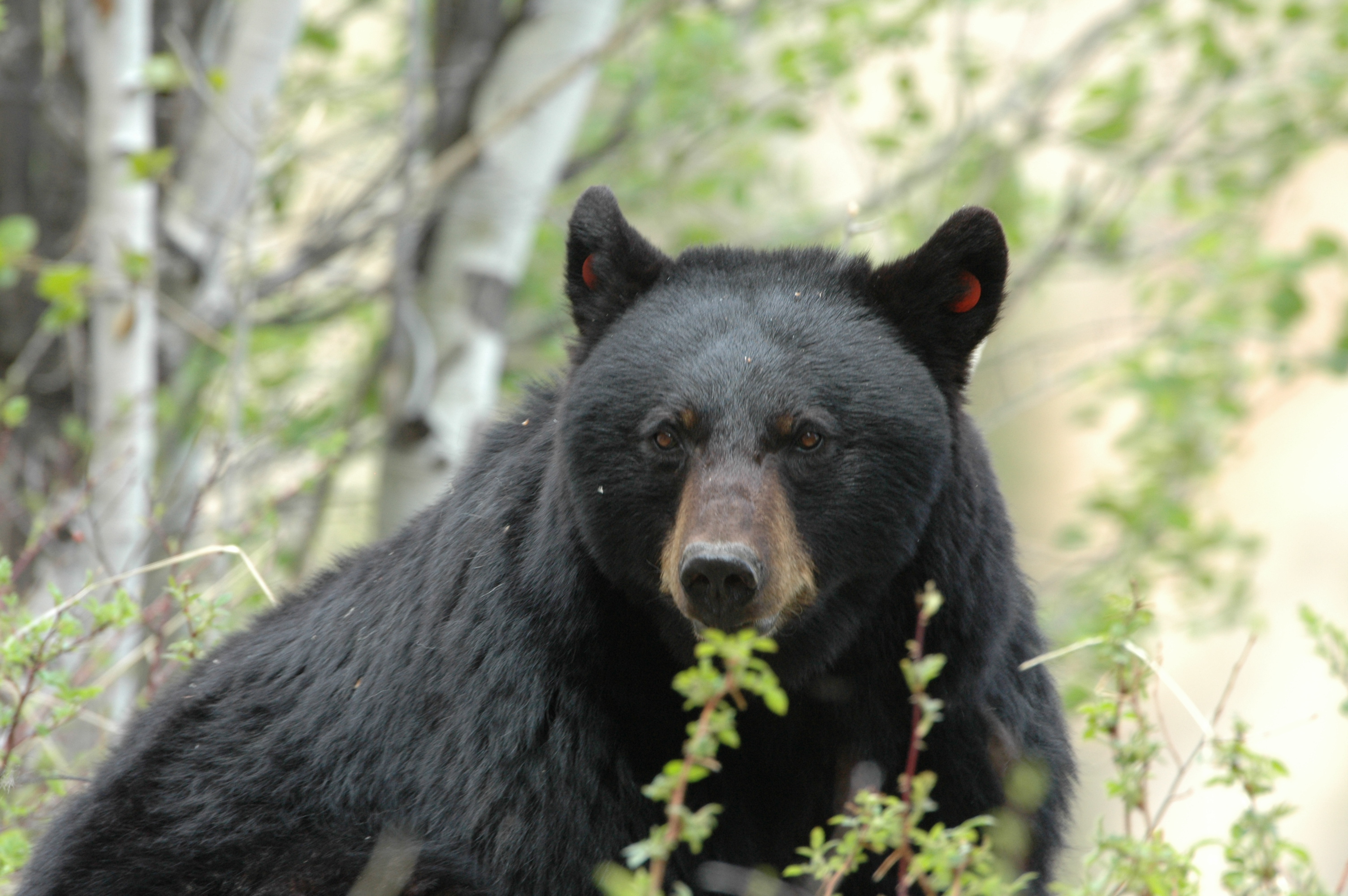
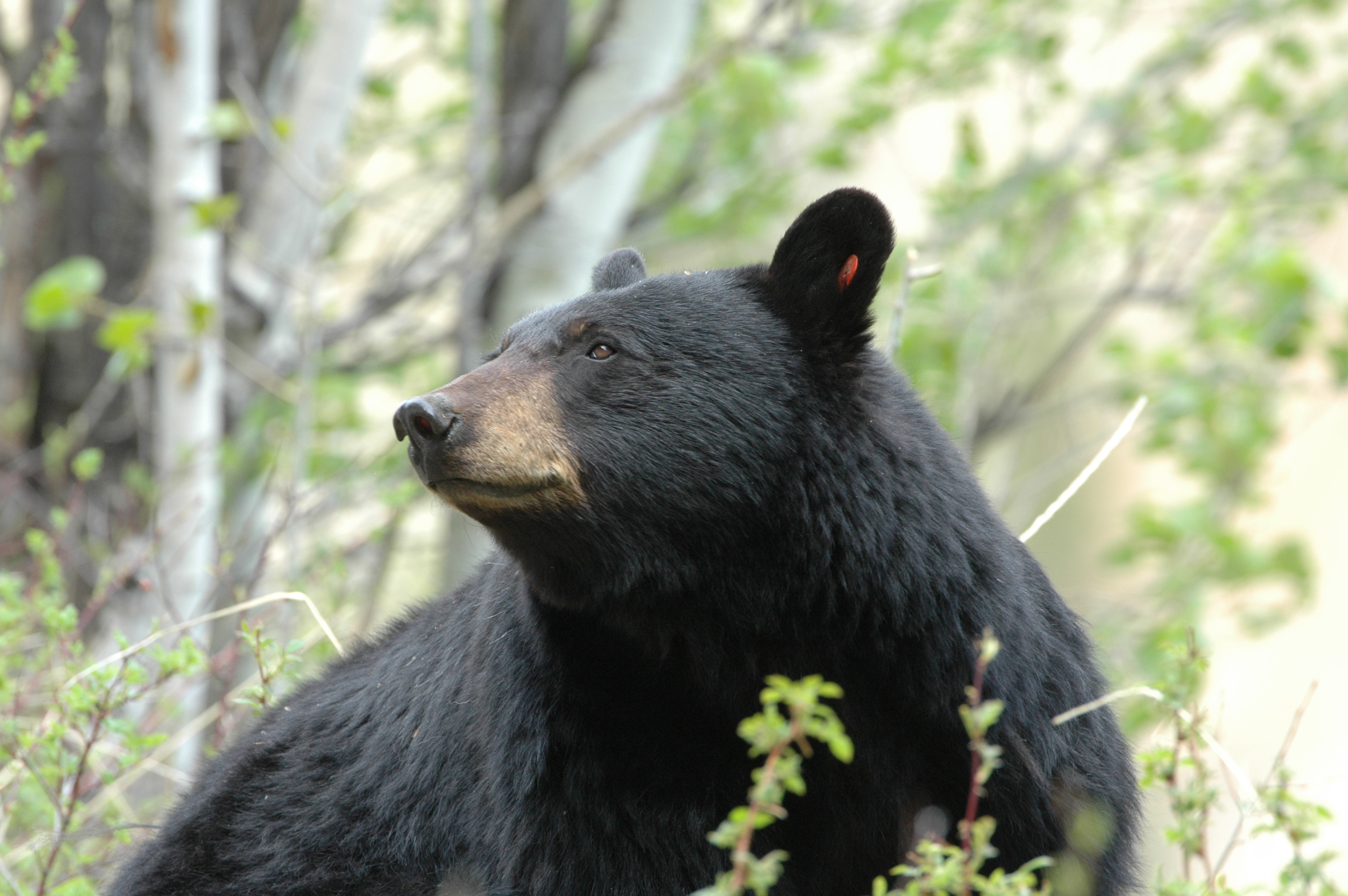
Black Bear photo

Black Bear

Do you think a bear hunting season is warranted?

Yes

No

Apparently the 7 bears they already killed weren’t sacrifice enough. Please go here and vote NO on the poll in the left hand column: http://www.wftv.com/news/news/local/lawmakers-propose-bear-hunting-reduce-population/nfgTD/

SEMINOLE COUNTY, Fla. —

There have been two bear attacks in Seminole County in the past four months and now some state lawmakers want to allow hunters to help reduce the bear population.

Recently Terri Frana spoke with Channel 9 about being mauled by a bear at her home in Lake Mary.

In December, several bears were killed after Susan Chalfant was attacked while walking her dog in Longwood.

New signs in the area warn residents to be “bear aware,” but some lawmakers and homeowners believe it’s not enough.

Wildlife officials said many of the bears in the area are used to humans and used to finding food in the neighborhoods.

State Rep. Jason Broeder from Sanford sent a letter signed by a dozen lawmakers proposing select bear hunts in specific areas to reduce the growing population and to reduce the number of dangerous encounters with neighbors.

Some of those living along Markham Road said that it may be time for a hunt.

“Outside of trying to secure my garbage, I don’t know how else to keep the separation,” said resident Fran Kipp. “I think controlling the population would help too.”

Broeder is also calling on waste management companies to provide bear-proof trash cans and is working to find the funding to teach homeowners how to co-exist with the bears, without making them feel so at home.

Representative Mike Clelland said he doesn’t believe bear hunting season is the best plan.

“I think it’s a little bit of a knee jerk reaction,” Clelland said.

Clelland said the state should make the penalties tougher on people feeding bears and not be quick to pull out guns.

“I can’t imagine us with rifles hunting bears between neighborhoods. It could only add to the public safety issue that I think is an issue now,” Clelland said.

Resident  Debbie Gunther agreed with Clelland.

“Do not kill the bears. Relocate them. Do not kill the bears. Can’t we trap the people who are feeding them? Can we have open season for that?” Gunther said.

An FWC spokeman said there can be a controlled hunt without putting the bears back on the threatened species list.

Ontario spring bear hunt to face court challenge from animal rights groups

http://kitchener.ctvnews.ca/ontario-spring-bear-hunt-to-face-court-challenge-from-animal-rights-groups-1.1780350

A black bear roams the forest A black bear roams the forest near Timmins, Ont., on Sunday, May 27, 2012. (THE CANADIAN PRESS/ Nathan Denette)

Allison Jones, The Canadian Press
Thursday, April 17, 2014

TORONTO — Two animal rights groups are taking the Ontario government to court in an attempt to stop a spring bear hunt pilot program before it begins, alleging it amounts to animal cruelty.

Animal Alliance of Canada and Zoocheck Canada say mother bears will be killed during the hunt, leaving their orphaned cubs to starve or be killed by predators.

“The babies at this time are very small,” said Julie Woodyer of Zoocheck Canada.

“This is the only large game species that are hunted when the young are still dependent on their mothers and it is inevitable that cubs will be orphaned.”

The animal rights groups have filed an application for judicial review and a notice of constitutional question, which are set to be heard in court on April 29, just days before the start of the program. They hope the court will at least delay the start of the hunt until it can rule on their legal actions.

The regulation would be contrary to animal cruelty laws in the Criminal Code, said the groups’ lawyer David Estrin.

“In our view, reinstituting this program would be tantamount to the minister and the Ministry of Natural Resources either wilfully permitting bear cubs to suffer or failing to exercise reasonable care or supervision of the bear cub population,” he said.

“The Criminal Code prohibits causing or allowing animals to suffer. This program of the Ontario Ministry of Natural Resources will cause black bears to suffer.”

The pilot project to reinstate the spring bear hunt will start May 1 and run for six weeks in eight wildlife areas known for having the most public safety incidents involving bears.

“In northern Ontario it is not responsible for a provincial government to ignore the concerns of thousands of residents who are concerned about their public safety,” said Natural Resources Minister David Orazietti.

“We have young children who can’t go out for recess at their schools, teachers wearing bear whistles because their children are threatened.”

Nearly 50 mayors and city councils across northern Ontario have passed resolutions calling for their participation in the program, Orazietti said. Out of 95 wildlife management units in Ontario, the pilot program will be in eight, he said.

“Some people who are completely unaffected by this issue and whose children may be perfectly safe in the schools that they attend have no understanding of the implications and the safety challenges in communities in northern Ontario,” Orazietti said.

The hunt was cancelled in 1999 and then-natural resources minister John Snobelen said it had left thousands of cubs orphaned since hunters too often mistakenly shoot mother bears.

“Really, the only answer we came up with was to end the spring bear hunt,” he said at the time. “It’s the only acceptable way.”

Orazietti said the government has learned over the past 15 years that other strategies to reduce human-bear incidents have met “fairly limited success.”

“This has been a very, very thoughtful and strategic approach,” he said Thursday. “We’re not suggesting a return of the spring bear hunt of yesteryear.”

The animal rights groups say the ministry’s own scientists have found no link between the end of the spring bear hunt and human-bear incidents. Orazietti said “that’s not completely true.”

“Our scientists do recognize that there are other scientists and other groups that have indicated that bear hunts do in fact have an impact on population,” he said.

Terry Quinney, the provincial manager of fish and wildlife services for the Ontario Federation of Anglers and Hunters, said the spring bear hunt was for decades a valuable wildlife population management tool.

“In reducing the density and distribution of bears in the spring, particularly those older male bears, it is absolutely reducing the probability of dangerous encounters with people,” he said.

Hunters target the male bears, Quinney said, and there are ways they can distinguish male and female bears, especially using suspended bait.

“It’s not hard to imagine that if a food source is placed, for example, hanging from a tree, a bear in order to reach that food source is going to stand on its hind legs, making its genitalia very visible to a hunter,” he said.

Quinney also said there would be economic and social benefits to re-establishing the spring bear hunt in northern communities.

“Prior to the cancellation of the spring bear hunt in Ontario there were approximately 600 family-based businesses in northern and central Ontario that were involved in the spring bear hunt, for example providing guiding services for hunters,” he said.

“Revenues to northern and central Ontario on an annual basis were in excess of $40 million a year. All of those economic benefits have disappeared from Ontario.”

Read more: http://kitchener.ctvnews.ca/ontario-spring-bear-hunt-to-face-court-challenge-from-animal-rights-groups-1.1780350#ixzz2zGxETLtP

VERY IMPORTANT! Please vote in the on line poll in the Toronto Sun to say NO to reviving the spring bear hunt in Ontario. The poll is on the bottom right of the home page here: http://www.torontosun.com/

Parks investigates CP railway trash

I’ve seen grizzly bears following the tracks in Jasper NP.

By: Cathy Ellis, ROCKY MOUNTAIN OUTLOOK, Thursday, Apr 17, 2014

Garbage along the CP line.

Reports of toxic trash and garbage along the Canadian Pacific Railway line in Banff National Park have prompted a Parks Canada investigation.

A series of photos provided to the Outlook show items of toxic trash, including discarded bottles of anti-freeze, diesel fuel and motor oil, as well as plastic bottles and food containers, scattered along the tracks near Massive Siding just east of Hillsdale meadows. Several small oil spills were also present as well as the usual sprinkling of grain along the tracks, plus a few larger grain piles. One photo shows a large pile of grain-filled bear scat right by the line.

Grizzly bear 122, the large dominant male in the park, has been seen regularly feeding on grain along the train tracks this spring, primarily in the area near Massive Siding, about 1 6 kilometres west of Banff, and at Eldon Siding near Protection Mountain. Parks Canada officials say wardens went out to the site Monday morning (April 14), then contacted CPR and asked for the site to be cleaned up.

“It’s concerning, for sure. We don’t want to see anything toxic or unnatural food sources in the national park,” said Terry Willis, supervisor of Parks Canada’s law enforcement branch in Banff National Park. “Sometimes you find a juice box or bottle, and that’s nothing different than you would see on the side of highway, unfortunately. But when there’s pails of oil and things like that, we don’t want to see bears or other wildlife getting into that.”

Canadian Pacific Railway has been developing a big extension to its Massive siding, building another 4,600 feet of track to extend it to about 12,000 feet to allow larger trains on the same line to pass. Canadian Pacific Railway officials say the garbage was cleaned up Monday and Tuesday and that the vacuum truck was out on the tracks late last week, even before the railway giant was aware of the situation. Ed Greenberg, a spokesman for the company, said it was the company’s intention to clean up the mess within a few days and the incident has resulted in railway crews being reminded of proper cleanup protocols, particularly in the national park.

“Our railway acknowledges there was disconnect in the cleanup process and this refuse should have been taken away a lot sooner,” said Greenberg. “Since being alerted of this oversight, clean up crews were dispatched to the location on Monday where the refuse has been collected. We realize there were timing issues involved and the situation should have been resolved before this.”

Steve Michel, Banff’s human-wildlife conflict specialist, said Parks Canada continues to work closely with CPR to resolve the issue of spilled grain along the tracks, noting there have been improvements in the big picture, including a Parks Canada-CPR joint action plan and CP’s reinvestment in maintaining its fleet.

However, as a result of significant hauling because of a bumper grain crop, he said there’s currently grain spillage on the tracks that wildlife are actively feeding on, including bear 122.

Michel said bear 122 is frequenting the train tracks almost exclusively, primarily concentrating in areas near CPR siding locations such as Eldon and Massive, and is also travelling a bit further to the west. “It’s mid-April and we’re not seeing a lot of bear activity on the landscape, and bear 122 is the only one we’ve been seeing on a regular basis; in fact, we’re seeing him on a daily basis. He’s essentially just travelling the railway tracks,” he said.

Michel said other than winterkill carcasses, there’s no other major food source for bears at the moment. “Any time a grizzly bear is foraging on the railway tracks, it’s quite concerning for us,” he said. “We hope he avoids being struck by a train, but we recognize his current foraging patterns are putting him into a very risky situation.”

Meanwhile, Willis said it was his impression the garbage had been buried under snow throughout winter, and is now thawing out. He said he was not sure if it was related to regular railway work or the project to extend the siding. He said the next step is trying to find out who put it there. When asked if charges would be considered, Willis said it would likely result in a warning. “If it’s warranted, we certainly look at charges, but until we talk to CP and understand the circumstances of how it got there and who put it there… it’s hard to prove who put it there, right now,” he said.

Parks Canada asks that any suspicious activity be reported to 1-888-WARDENS .

Meanwhile, Parks Canada issued a warning on Tuesday (April 15) for the Great Divide Route (the old 1A Highway) because of a large grizzly bear frequenting the ski trail and adjacent railway.

http://www.rmoutlook.com/article/20140417/RMO0801/304179982/parks-investigates-cp-railway-trash

7th Bear–Including An Adult Female Bear–Killed After Woman Bitten in Florida

Photo Copyright Jim Robertson

Photo Copyright Jim Robertson

[Never mind that the subdivision backs up against a wildlife sanctuary. When a non-human animal dares to threaten a human, it’s not just an eye for an eye, but SEVEN pairs of eyes for an injury.]

http://www.clickorlando.com/news/bears-tested-after-woman-attacked-in-lake-mary-garage/25464444

7th bear killed after woman attacked in Lake Mary garage

Author: Sheli Muniz, Reporter, smuniz@wkmg.com

Apr 14 2014

LAKE MARY, Fla. –

Florida wildlife officials said on Tuesday they killed a seventh bear, an adult female bear, hours after announcing the capturing and euthanization of a 250-pound male bear overnight.

Florida Fish and Wildlife Conservation Commission officials didn’t say that they have identified the bear that attacked Terri Frana Saturday night at her home at 1900 Brackenhurst Place in the Carisbrooke subdivision, which backs up to the Wekiva Wildlife preserve.

She received 30 staples and 10 stitches in her head after a 200-pound bear mauled her.

Authorities on Tuesday also released the 911 calls from the attack on Frana.

“She came in screaming, she said a bear attacked her,” the caller told dispatchers.

FWC said although they are testing the bears for DNA, the tests may come back inconclusive and they may never find the exact bear that attacked Frana.

FWC said that the seven bears appeared dangerous and threatening and didn’t appear to be afraid of humans.

FWC said as with the other bears, the FWC removed the bear from the neighborhood and it showed signs of being highly habituated to people.

“We yelled at him, clapped our hands at them, and yelled bad bear- they kept approaching us,” said Greg Workman of Florida Fish and Wildlife.

Sunday evening, an FWC officer shot a bear after they say it showed dangerous behavior toward officers at the scene.  The FWC says the bear approached biologists at close range and showed no fear even after an officer yelled at it. Because of its behavior, the officer determined that the bear was dangerous.

Wildlife officials say other bears appear to be accustomed to people in the area, including four that were captured and put down. The fifth bear was captured Monday morning.

The FWC says officers spotted two other bears in the area that ran away at the sight of humans. This is typical wild bear behavior and no action was necessary with those bears, officials said.

“The fact that we have come across so many bears with so little fear of humans indicates that these bears are highly habituated and are regularly receiving food from people,” said Dave Telesco, the FWC’s Bear Program coordinator. “Our staff is dedicated to wildlife conservation. Having to put down these bears is a very difficult decision, but it’s the right decision to ensure public safety. Unfortunately, the saying is true: ‘a fed bear is a dead bear.’”

Frana’s husband, Frank Frana, said his wife suffered bite wounds to her head, arms, shoulder and upper thigh and had lacerations all over her body.

“But she’s fine,” Frank Frana said.  “She’s still pretty traumatized from it all, but it’s unbelievable she’s fine.”

Frank Frana said his wife encountered the bears, which had pulled some trash cans out of the family’s garage, while she was checking on her children, who were playing at a neighbor’s home.

He said there were five bears rummaging through the trash when one of them stood up and attacked her.

“(My wife) was able to eventually break away and run into the house.  She collapsed on the floor and my oldest son … called 911,” Frank Frana said.  “It was a close call.”

The FWC on Monday will continue to check traps in the area and warning families nearby.

FWC said if you encounter a bear at close range speak to the bear in a calm, assertive voice while backing up slowly toward a secure area. Be sure you are leaving the bear a clear escape route. Stop and hold your ground if your movement away seems to irritate instead of calm the bear. Do not run or play dead. If a black bear attacks you, fight back aggressively.

The FWC also reminded residents to be aware of their surroundings and always supervise pets and children while outdoors.  Residents should contact the FWC Wildlife Alert Hotline at 888-404-FWCC to report any threatening bear activity.

Help STOP Bear Hunt in NJ For Good!

HELP STOP BEAR HUNT IN NJ FOR GOOD!!!!!!!!!!


Last year hunters in their “Rambo wannabe” get up, face painted psychopath massacred 600 Bears and this year again more bears will be killed. Will there ever be an end to this. According to bear in NJ expert NJ Fish and Games are full of corruption and there is likely never end to it. I remember 4 years ago there was a petition to stop bear hunting and all the petition and writing did not help. Bear like deer has a physiology to feel pain, they fear death and most of the killings are done by bows and arrow. According to a Veterinarian they have quoted that animals such as deer, bear and Elk suffers as we do.

“Consider the physiology of the deer (and bear) who dies by suffocation, choking on its own blood, or the deer who dies after an arrow penetrates the diaphragm. The presence of a highlysophisticated nervous system in deer certainly suggests that their nervous systems perform the same functions as human nervous systems. The presence of the same neurochemicals in deer as in humans similarly shows that they feel pain as we do.

In recent years there has been a major shift in the way the scientific community understands the mental life of animals, particularly mammals. Presently, researchers in a variety of animal-related disciplines generally agree that in addition to being sentient, mammals are consciously aware and have feelings and emotions.

Petition:http://www.thepetitionsite.com/151/762/110/help-stop-bear-hunt-in-nj/

BOYCOTT South Carolina until they Outlaw Bear Baiting

In order for the legislatures to do something regarding this barbaric act. People who want to visit South Carolina or hold a convention should boycott this state until this is outlawed.

To:KsVvuVxqZrOKzuz-556x313-noPad
South Carolina state legislatures
Outlaw Bear Baiting

In order for the legislatures to do something regarding this barbaric act. People who want to visit South Carolina or hold a convention should boycott this state until this is outlawed.

Rescued grizzly bear treated for two broken elbows at Veterinary Teaching Hospital

The horses were moved, the police were alerted, and Colorado State University’s Veterinary Teaching Hospital was abuzz Tuesday as a rescued grizzly bear arrived for surgery to repair both elbows, which apparently were broken when the carnivore was confined in a concrete bunker as a roadside attraction in north Georgia.

“This is the most exciting case I’ve been part of during my two years of clinical rotations in veterinary school,” said vet student Barr Hadar, who would compile case notes on the patient thought to be a mix of grizzly bear and Syrian brown bear. “That’s what interests me in veterinary medicine, especially wildlife medicine. You never know what you’re going to get.”

Unexpected diagnosis

Last month, the Wild Animal Sanctuary in Keenesburg, Colo., rescued “Marley” and 16 fellow inmates from a foreclosed “bear park,” where the animals were kept in cramped concrete pits and fed apples and bread by tourists. The bears were released into 15-acre natural habitats on the plains northeast of Denver, but sanctuary keepers noticed Marley, a 7-year-old female, would not put weight on one of her front legs, said Rebecca Miceli, who accompanied the impressive patient.

The 300-pound grizzly came to the CSU Veterinary Teaching Hospital crated and anesthetized on Tuesday morning. Examining radiographs, veterinarians soon determined Marley had not one, but two forelimb fractures estimated to be more than a month old; one break was badly infected.

“Our main concern is the infected fracture on the left forearm,” said Dr. Terry Campbell, a CSU veterinarian specializing in wildlife and exotic animals. “A draining, open fracture on a bear is anything but ideal, and we will need to surgically treat it immediately.”

Campbell knew the procedure would require the skills of an orthopedic surgeon. But was it a job for a large-animal or small-animal orthopedist? The decision: both.

“We have to determine: Is the bear more like a dog or more like a horse?” Campbell said before surgery, referring to the patient’s bone structure. “The truth is, it’s a bear. It’s not like either. So we, as a team of veterinarians, collaborate to find the best solution.”

Dr. Felix Duerr, small-animal orthopedic surgeon, and Dr. Jeremiah Easley, equine orthopedic surgeon, jointly handled the successful surgery. In the case of the infected forelimb, vets cleaned the infection, looked for necrotic bone, cleared scar tissue and inserted antibiotic beads to promote full healing. Duerr then provided shockwave therapy to accelerate the process.

Also essential to the case were Dr. Pedro Boscan, veterinary anesthesiologist, and Dr. Gregg Griffenhagen, a resident training in the specialty.

Much better quality of life

By Tuesday afternoon, Marley was recovering, and CSU veterinarians expressed hope that their unusual patient would have a greatly improved quality of life. Miceli, director of animal care at the Wild Animal Sanctuary, said she thought Marley could potentially live another 20 years at the home for rescued large carnivores.
For veterinary students involved with the case, the memory of Marley might last just as long. As the grizzly bear arrived, excited murmurs filled the hospital halls, and students swarmed the windows and doors of the large animal wing to catch a glimpse of an ear, nose or paw.

The equine unit had been alerted about the grizzly to prevent spooking among horse patients. A police officer was on standby, a standard precaution when a large carnivore is in the hospital, Dr. Tim Hackett, hospital director, said.

The students lucky enough to be on rotation with the wildlife and exotic animal service were able to observe Marley’s treatment up-close and to weigh in on options.

“Yesterday, we saw a guinea pig, a rat and a of couple ferrets. Today we get to see a grizzly bear,” third-year vet student Katherine Alley said. “This week is definitely turning out to be pretty cool and heightens my interest in pursuing a future working with exotic animals.”

http://www.today.colostate.edu/story.aspx?id=9688

British Columbia’s controversial spring grizzly bear hunt now open

Wildlife Photography ©Jim Robertson

Wildlife Photography ©Jim Robertson

by Dene Moore Apr. 02 2014

British Columbia’s controversial spring grizzly bear hunt opened Tuesday, with one of the highest number of hunting authorizations issued in decades.

Based on government counts that showed stabilization of specific grizzly populations previously closed due to overhunting, the government reopened several areas to hunting this year. An estimated 1,800 authorizations will be issued, up from about 1,700 last year but lower than the 1,980 issued in 2011.

“I think we have the best idea [of the population] of any of the jurisdictions that hunt bears right now,” said Garth Mowat, a provincial government grizzly bear biologist in the Kootenay region.

“We have spent a lot of resources improving our understanding of the number of bears in British Columbia and I’m quite comfortable that it’s good enough to allow us to conservatively manage the hunt.”

The spring grizzly hunt runs from April 1 to the end of May. The fall hunt begins Oct. 1 and continues into mid-November.

Though 1,800 hunting authorizations will be issued, so far this year 1,459 licences have been issued via a lottery system. In 2011, 1,733 licences were issued of the 1,980 authorizations.

On average about 300 grizzlies are killed annually. The most recent year for which information is publicly available is 2009, when between 350 and 400 bears were shot.

Provincial biologists estimate there are approximately 15,000 grizzly bears in the province, which is home to about a quarter of the remaining North American population. Only Alaska has more grizzlies.

Biologist Paul Paquet of the Raincoast Foundation said it’s extremely difficult to get a proper count of grizzly bears and there could be far fewer – too few to risk a trophy hunt.

“The real numbers could be somewhere as low as 6,000 or as high as 18,000. We just don’t know,” Paquet said.

But the bigger question is the moral one, he said.

“Is this ethical, to be hunting bears? That’s really what’s at issue,” Paquet said. “This is a trophy hunt, as opposed to a hunt for food.”

Mowat agrees that the real issue is a question of moral support for the hunt.

“The debate about whether an individual morally supports a bear hunt and the debate about the sustainability of the hunt get woven together,” he said.

He does not believe there are conservation concerns.

In fact, he said, after 30 years of provincial management grizzlies are repopulating areas where they had been wiped out. Sows with cubs have been spotted moving west from the Kootenay mountains, into the Okanagan and Similkameen regions.

Conservation has been a concern.

They are largely extinct south of the Canada-U.S. border. The Alberta government suspended its grizzly hunt in 2006 and declared the bears a threatened species in 2010.

But in Alaska, there are 30,000 brown and grizzly bears, which are classed as the same species. The state fish and game department said about 1,900 were harvested in 2007.

Kyle Artelle, a biologist at Simon Fraser University and Raincoast, said the foundation’s own study found the provincial government quotas are not conservative and overkills are common.

“There’s a huge amount of uncertainty,” Artelle said.

Nine coastal First Nations have declared bans on bear hunting in their traditional territories. The Wuikinuxv, Heiltsuk, Kitasoo/Xai’xais, Nuxalk, Gitga’at, Metlakatla, Old Massett, Skidegate, and the Council of the Haida Nation say hunting is not allowed in the areas that largely cover the Great Bear Rainforest, though the ban is not recognized by the province.

In 2005, Raincoast began buying out commercial bear hunting licences in B.C. The group now owns the guide outfitting rights to more than 28,000 square kilometres of land in the Great Bear Rainforest on the north-central coast.

While the white spirit bears that call the region home cannot be hunted, the black bears that carry the recessive gene that produces them can be, said Chris Genovali, executive director.

The hunt is not necessary to manage the population, he said, and a recent study from Stanford University found that bear viewing contributes 10 times as much revenue and employment as hunting.

“The ethical argument is clear: killing for sport and amusement is unacceptable and, a lot of people would say, just outright immoral,” Genovali said.

Grizzly bear kill quota increases in Canada

http://www.wildlifeextra.com/go/news/Grizzly-kill-014.html#cr

27/03/2014

Photo Copyright Jim Robertson

Photo Copyright Jim Robertson

March 2014: As British Columbia prepares for its annual spring grizzly bear hunting season, researchers are protesting that the hunting quotas put in place by the province are too high.

The British Columbia Government has cited that some sub-populations of bears have recovered, and therefore has opened up areas that have been closed to hunting, increasing the grizzly bear kill quota from 1,700 to 1,800. This is based on estimations by the Government of a population of around 13,000 to 14,000 grizzlies.

However, biologist at the Raincoast Conservation Foundation and the University of Victoria Paul Paquet argues that the data that has informed these estimates is inaccurate, as the methods used to collect it are outdated. Bear numbers are calculated by various techniques such as aerial surveys and traps that snag hairs of passing bears. “In many cases [the population estimate] will be based on assumptions that are maybe 10 years old,” explains Paquet, “None of this is easy, obviously. But we need to take account of the uncertainties.” Due to the way in which the data is collected, Paquet believes that the bear population could be as low as 8,000, or higher than 15,000.

Based on their findings the British Columbia Government has set a ‘maximum allowable mortality rate’ of 6 per cent of the grizzly population per year. However this mortality rate, put forward researchers, doesn’t take into account deaths by unnatural causes, such as road accidents and hunting, meaning that more bears die than the 6 per cent quoted by the Government, leading to ‘overkills’. In order to reduce the risk of overkills to a safe level, the researchers conclude that there needs to be an 81 per cent reduction of the target. “Because these are long-lived, slow-reproducing populations, they don’t necessarily recover from overkill,” Paquet explains.

Paquet along with Kyle Artelle – a conservation ecologist at Simon Fraser University in Burnaby, Canada – co-authored a letter sent to Science last week. A total of four leading scientific researchers, including Artelle and Paquet, have signed a letter questioning the province’s estimates and expanded killing zones. The concerned researchers also spoke to the journal Nature in an attempt to open the quota to debate and raise awareness of the issue.

Although the grizzly bear is listed as ‘threatened’ under the Endangered Species Act in the United States, it is not listed under Canada’s Species at Risk Act, and is not protected by the Canadian Government. British Columbia boasts a quarter of the population of all North American grizzlies, however the bear’s habitat in certain areas may be under threat. The province does have protected areas, including the Khutzeymateen Grizzly Bear Sanctuary, but this area is under pressure from firms exploring the possibility of implementing a pipeline here. In the Purcell Mountains, there are plans to build a giant ski resort near the Jumbo Pass, which would threaten the north-south migration of the grizzlies.

Read our Field guide to grizzlies here, which has details on their habitat, threats, diet, and where to see them in the wild.