NHL Player’s Grizzly Shootout

September 5, 2013 Elana Pisani

(WILDLIFE/ANIMAL CRUELTY) CANADA — Another celebrity joins the likes of GoDaddy CEO Bob Parsons, the Trump sons, and musician Ted Nugent in their lack of civility and sense of entitlement when it comes to wildlife. Hockey player Clayton Stoner is in the news after pictures of him with a grizzly bear corpse he had hunted and killed was posted on social media sites. Stoner held the grizzly bear’s severed head and paws while smiling and posing for the camera. Although Stoner, who plays for the Minnesota Wild, had a legal permit for hunting, his actions and his attitude toward wildlife is appalling to animal rights activists and he makes no apologies. Read the full article for Stoner’s statement and sign the petition to ban grizzly bear hunting in British Columbia. — Global Animal

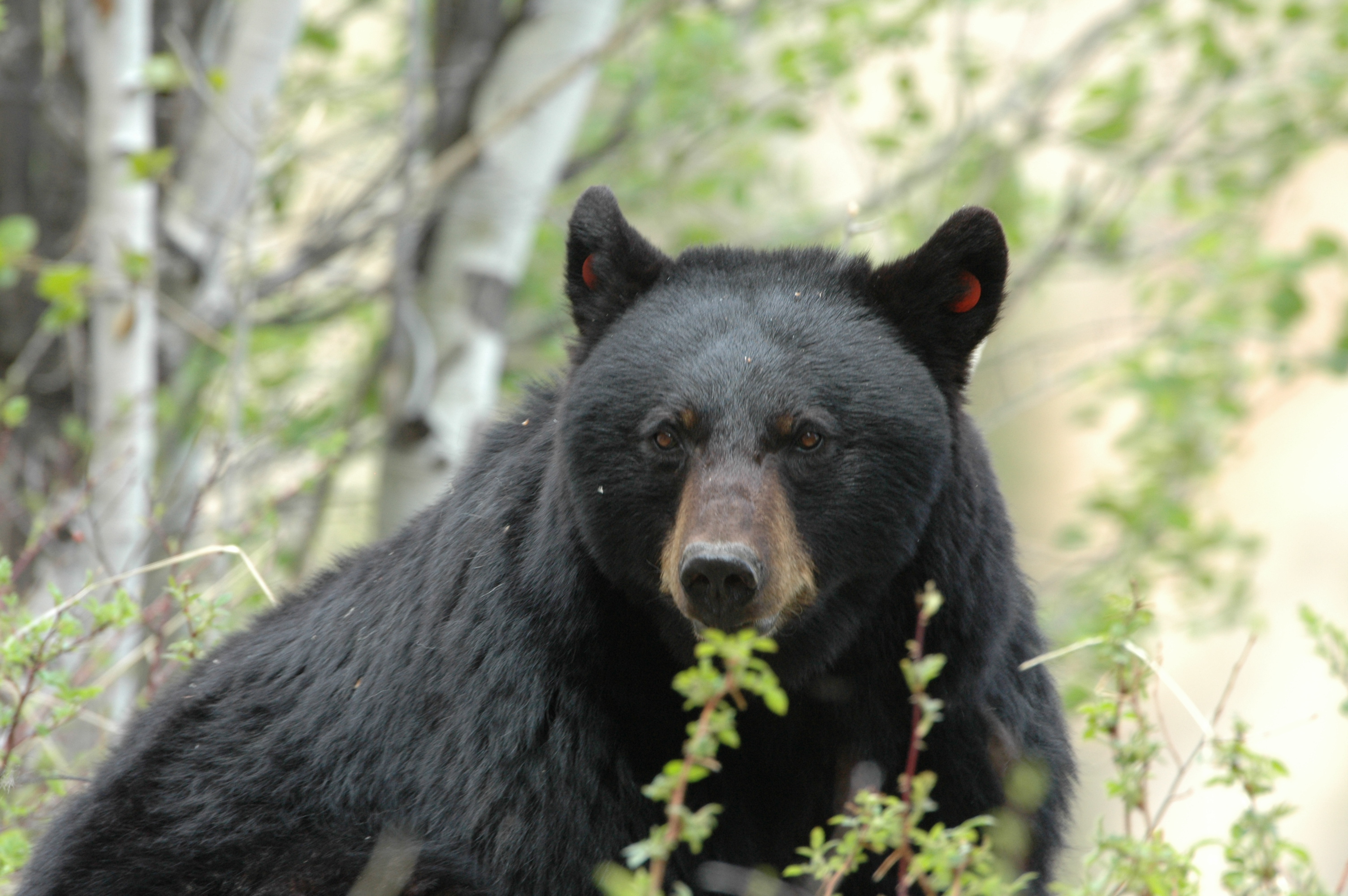
photo copyright Jim Robertson

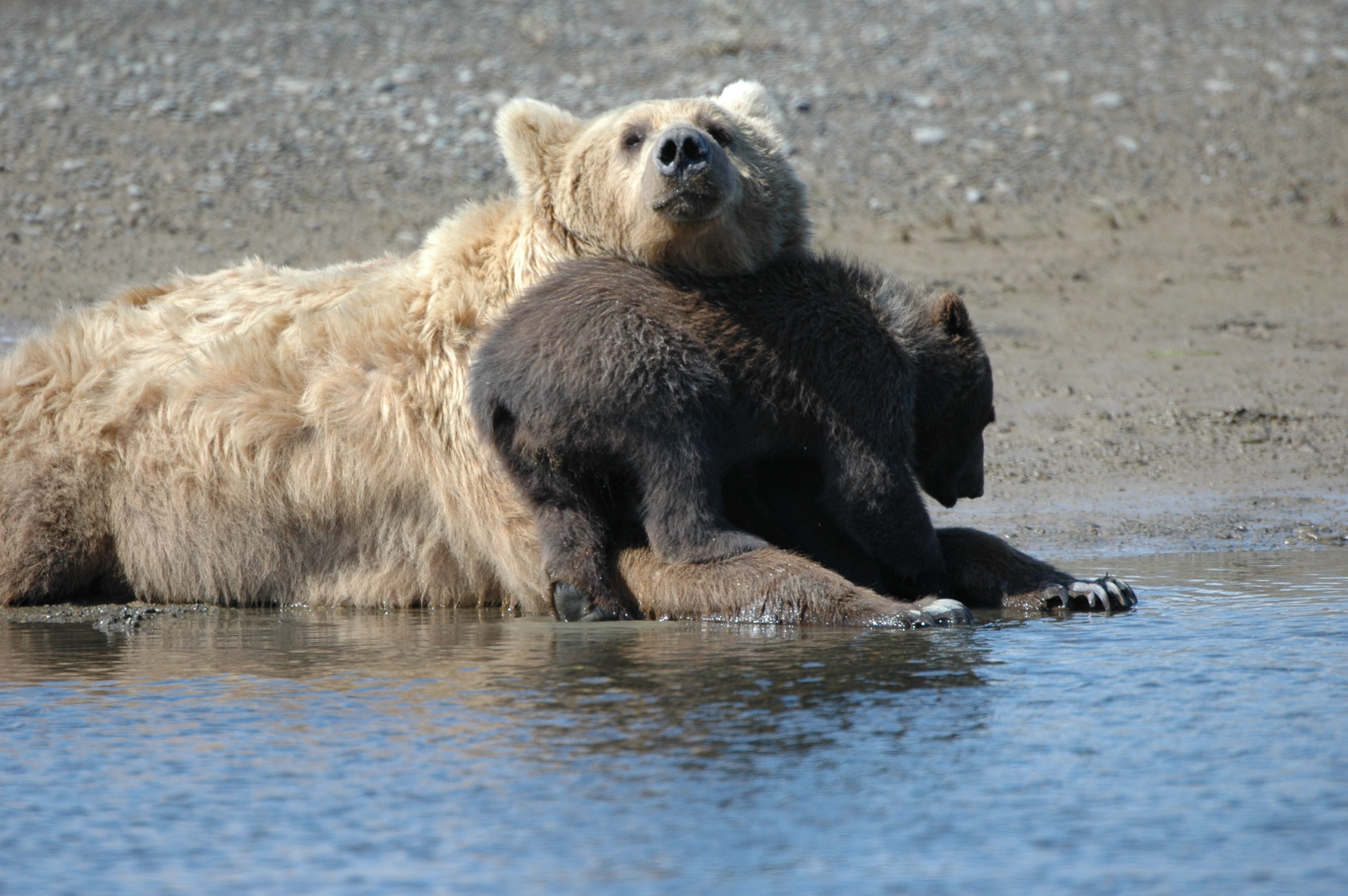
photo copyright Jim Robertson

Man Mauled by Grizzly in Alaska was Hunting Guide

Unfortunately these type of stories always seem to end with one or more animals dead…

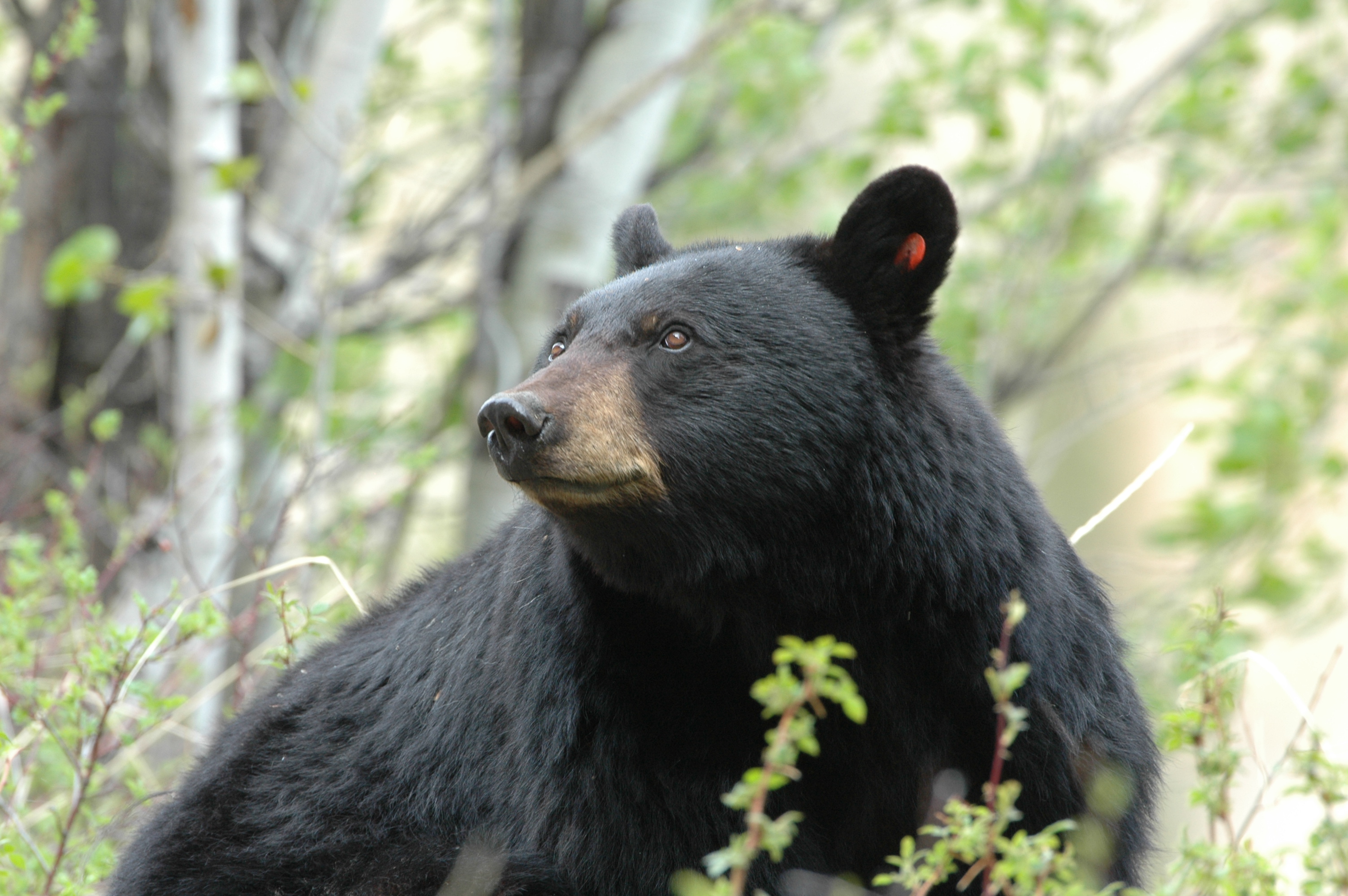
Photo Copyright Jim Robertson

Photo Copyright Jim Robertson

Man mauled by grizzly in Alaska recounts attack

ANCHORAGE, Alaska (AP) — A man who recently was mauled by a grizzly bear near northern Alaska’s remote Brooks Range said he recognized the animal that left him with broken teeth and a deep gash in his arm from his guide trips.

Jim Tuttle said he and the hunters he guided often spotted the bear, nicknamed Buddy. But the animal was never aggressive toward them until two weeks ago, when Tuttle was walking along a creek and saw it charging.

Tuttle said 16 years of guiding in the area had dulled him to the risks of working in bear country. When the incident occurred earlier this month, he was walking to a caribou carcass by himself, armed only with a pair of trekking poles.

“I am partly to blame. I got complacent, and I paid for it,” he told the Anchorage Daily News (http://bit.ly/19VFd8D ). “I guess I should have had a gun in my hand, safety off, ready to shoot.”

He said the attack northwest of Anaktuvuk Pass lasted less than 15 seconds. When it was over, Tuttle was spitting out broken teeth and needed a tourniquet on his left arm. One of his cheekbones was cracked.

Because of dense fog, Tuttle had to wait 36 hours for a National Guard helicopter to reach him. Following surgery and dozens of stitches, he is recovering at his Anchorage home.

Tuttle suffered nerve damage to the face and wounds to his groin and knee have temporarily hobbled him. A cast on his left wrist has fixed his forearm in place so it can grow back muscle.

Tuttle, 52, said he feels lucky to be alive.

He had flown into the hunting camp in early August, where he planned to stay for two weeks. The camp was 15 miles from the base camp run by his outfitter, Arctic North Guides.

Chris Carrigee, who stayed in Tuttle’s camp with his son before the mauling, said grizzlies were commonly in the area and would eat meat scraps that hunters left behind.

Carigee had taken photographs of his son and Tuttle in front of Buddy with their coffee and oatmeal. He said he didn’t feel there was any danger.

On Aug. 14, after Carrigee and his son left, Tuttle was working with new hunters. The group killed a caribou that morning. They carried some of the meat back to camp and ate lunch before Tuttle returned to the carcass.

He heard the bear coming from behind him. He swung his hiking poles in the animal’s face, but the bear knocked him over and bit him on the arm and hand before walking away.

“I thought maybe I’d get lucky, and she’d leave. No, she turned right back around, and then really chewed and got into where she could bite my face,” Tuttle said. “I said to myself, ‘You’re dead.’

After the bear left, Tuttle made a tourniquet from rope in his backpack, and waited 10 minutes to make sure the bear didn’t return, before limping back to camp.

The hunters called to request a rescue, but the camp was fogged in.

The owner of Tuttle’s outfitting company flew in the following morning during a break in weather with a retired paramedic and medical supplies. But they left Tuttle, believing they couldn’t fly him all the way to a hospital.

At 3 a.m. the following morning, the National Guard helicopter came.

The bear was killed by one of the hunters in Tuttle’s group. Harry Reynolds III, a retired biologist who worked for the Alaska Department of Fish and Game for more than 30 years, said it’s hard to say what made the bear attack. “They’re wild animals,” he said.

———

Information from: Anchorage (Alaska) Daily News, http://www.adn.com

Associated Press

Maine’s bear hunting practices back in the crosshairs

Wildlife Photography ©Jim Robertson, 2013. All Rights Reserved

Wildlife Photography ©Jim Robertson, 2013. All Rights Reserved

Almost 10 years after failing to abolish baiting and other methods, animal-welfare activists want to revisit the debate: Are these cruel or are they viable wildlife management tools?

By  Deirdre Fleming dfleming@mainetoday.com Staff Writer

Bear hunters in Maine again find themselves in the sights of animal-welfare advocates who contend that some of their practices are inhumane.

Less than 10 years after Maine residents voted down a divisive referendum effort to abolish the use of bear hunting with bait, dogs and traps, the debate has re-emerged.

As hunters prepare for the first day of bear season Monday, sportsmen, politicians and animal-rights advocates are gearing up for a renewal of the referendum battle that spiked passions on both sides in 2004.

Bear-baiting involves placing food in the same location repeatedly for about a month before the season opens in hopes a bear will get in the habit of visiting the site regularly. Hunters also use dogs wearing radio collars to force a bear up a tree and keep it there until the hunter tracks it down electronically. Traps such as wire foothold snares are also used to hunt bears.

Supporters of banning the practices say they are cruel and give hunters an unfair advantage.

Opponents argue that the practices are vital to keeping the state’s bear population in check. If they are banned, the population will explode, and conflicts between bears and people will become commonplace, even in developed areas, they say.

Maine has one of the largest black bear populations in the lower 48 states, according to the Department of Inland Fisheries and Wildlife, and is the only state to allow all three controversial practices.

A coalition led by the Maine chapter of the Humane Society of the United States, called Mainers For Fair Bear Hunting, is behind the ballot initiative. It aims to collect as many as 80,000 signatures next month to get a referendum question on the 2014 ballot. The Secretary of State’s Office is still drafting language on the referendum question.

In 2004, voters rejected the referendum question seeking a ban on the three hunting practices by a margin of 53 percent to 47 percent. Each side spent more than $1 million on the campaign.

Those backing a ban on the practices said last week they think they’ll win this time.

“This is a last resort (after trying several times without success in the Legislature). But with the additional 10 years of experience, we’re confident we can win on the ballot,” said Katie Hansberry, director of the Maine chapter of the Humane Society.

Maine hunters expected the issue to resurface, and that it would involve another expensive ballot fight.

“I think we knew they’d be back,” said David Trahan, director of the Sportsman’s Alliance of Maine. “(The Humane Society is) a nationwide group. And (it) raises a lot of money.”

MAINE A FOCAL POINT

Proponents say the three controversial bear-hunting methods give hunters an unfair advantage and that trapping or shooting a bear over bait is inherently cruel.

Maine is a focal point in the debate over bear-hunting practices because it is the only state where all three are allowed.

Robert Fisk, director of the Maine Friends of Animals, which led the 2004 effort to ban the hunting practices, said the public is more familiar with the issues today, and that gives ban supporters an advantage.

“I believe we have an excellent chance of winning this time. The opposition’s alarmist strategies and scare tactics that were prevalent in 2004 can be exposed this time around. People are much more aware of animal protection issues than they were 10 years ago,” Fisk said.

Proponents say they have data and experiences from other states where the Humane Society successfully banned the use of these bear hunting methods, and that much of the Maine public was educated on the issue in 2004.

More: http://www.onlinesentinel.com/news/maines-bear-hunting-practices-back-in-the-crosshairs_2013-08-25.html


Animal Advocates Say New Mexico’s Bears are Under Siege

Wildlife Photography ©Jim Robertson, 2013. All Rights Reserved

Wildlife Photography ©Jim Robertson, 2013. All Rights Reserved

Renee Blake, Public News Service – NM
August 6, 2013 ALBUQUERQUE, N.M. –

What is being portrayed by some as an infrequent and humane response to hungry bears entering towns looking for food, is actually quite another matter, according to Jan Hayes founder of Sandia Mountain Bear Watch. Hayes is looking for the state to institute stopgap diversionary feeding to keep the bears alive at this difficult time, and keep them away from people.

She said what is happening to Sandia Mountain bears is an ecological disaster, that the drought and lack of food for the bears, along with the hunter-focused attitudes of New Mexico Game and Fish, add up to a decimated bear population. “They want the animals to be there for hunter opportunity,” she said. “Their only mode of management is to trap or kill. The Sandias is a wildlife preserve. So, it’s not a moneymaker for Game and Fish. Bears are a problem species that they would really prefer not be here.”

Stewart Liley, big-game program coordinator for N.M. Game and Fish, said feeding bears would cause them to become increasingly dependent upon artificial food sources. Hayes however said she believes the temporary measure would serve to get the bears “over the hump” and save their population in the Sandia Mountains. She is requesting a meeting with someone in Governor Martinez’ administration on the matter.

Hayes declared that the current style of bear management in the Sandia Mountains has caused an alarming rate of damage that cannot be overcome. “We’re looking at bears that are completely lost to this population. There’s no way they can keep up with reproduction,” she said. “And we also expect 100 percent attrition of first-year cubs this year. They’re very slow reproducing. Our bears don’t even have their first baby until they’re five or six.”

Mary Katherine Ray, Rio Grande Chapter wildlife chair of the Sierra Club, said New Mexico adheres to the North American Wildlife Conservation Model, which says that wildlife, from roadrunners to butterflies, belongs to everyone in the state. That includes the bears in the Sandia Mountains. “We all have a share in owning that wildlife, and it’s supposed to be democratically adjudicated,” Ray declared. “But when you look at the composition of the Game Commission, every last one of them is a hunter.” She said she believes that mindset is getting in the way of seeing the benefits of diversionary feeding.

Ray said that where it has been tried, bears that have been the beneficiaries of diversionary feeding have not become either dependent or dangerous.

See more at: http://www.publicnewsservice.org/index.php?/content/article/33828-1#sthash.l9IhArpU.dpuf

Update from the Bear-Killing Fields of Washington

While walking my dog this morning on the ordinarily deserted logging roads around here, I came across (in addition to several fresh piles of bear scat) boot tracks in the grass heading into a draw thick with blackberry and salmonberry bushes, where one of our local bears was murdered by a hunter (“harvested”) last August. Now, I’m hearing the report of a rifle and am wondering if the same narcissistic nimrod is out there trying to kill another of our bear friends (like some serial killer who struggled through an enforced nine-month cooling off period and, consequently, is gripped by the uncontrollable urge to satisfy his pent-up his bloodlust).

Although it’s barely berry season for the bears out there trying to stock up for the coming winter, it’s bear hunting season—as of August 1st—for Elmers and Elmerettes in the Evergreen State. Nowadays, every Elmer (or Elmerette) who wants to can kill not one, but TWO, bears apiece through November 15th!

As of last Thursday, any Washington State black bear who values his or her life will have no peace ‘til the snow flies and they’re safely tucked away in their hibernation den. Until then, they must assume there’s a camo-clad coward with a high powered rifle or compound bow aimed at them, perched in every tree they pass under.

Each year 30,000 black bears are killed by hunters in the U.S. alone. And each and every one of them was a more remarkable, more worthy being than the sadists and psychos who kill them for sport.

Text and Wildlife Photography ©Jim Robertson, 2013. All Rights Reserved

Text and Wildlife Photography ©Jim Robertson, 2013. All Rights Reserved

Today is Opening Day of “Bear Season” in Washington!

The first day of August: summer is at its peak, young birds have fledged and the wild berries are just now ripening up…

But on this very same day, demonic dimwits and narcissistic nimrods that enjoy making sport of murdering animals are out trying to end the life of a humble being whose only focus lately is filling up on fresh fruit.

That’s right; believe it or not, August 1st is the beginning of bear season across much of Washington! From today until November 15th, any loathsome scumbag with a bear tag and an unwholesome urge to kill can “bag” himself a bruin—just for the sport of it—in this presumably progressive state.

Sure, one or two people may be killed by bears in a given year, but over that same time period 50 will die from bee stings, 70 will be fatally struck by lightning and 300 will meet their maker due to hunting accidents. A person has about as good a chance of spontaneously combusting as being killed by a bear.

Meanwhile, tens of thousands of bears are killed by people each year, and no one is keeping track of how many are wounded, only to crawl off and die slowly without hospital care to pamper them back to health. 30,000 black bears are slain during legal hunting seasons in the US alone. Possibly another 30,000 fall prey each year to ethically impotent poachers seeking gall bladders to sell on the Chinese black market. Victims lost to that vile trade are eviscerated and left to rot, since bear meat is not considered a desirable taste treat. To make it palatable, backwoods chefs traditionally douse the flesh and offal with salt and grind the whole mess into sausage.

Why then, is it legal to kill bears when we have long since concocted a myriad of ways to turn high protein plant foods (such as soy, seitan or tempeh) into a perfectly scrumptious, spicy sausage, sans intestines? Unquestionably, the hunting of bears is nothing but a warped distraction motivated by a lecherous desire to make trophies of their heads and hides. But, dangerous and terrifying as they must seem to trophy hunters out to prove their manhood from behind the security blanket of a loaded weapon, they aren’t the “most dangerous game,” as the serial killer, Zodiac (an avid hunter who grew bored with “lesser” prey and progressed to hunting humans) divulged.

An irrational fear of bears dates back to the earliest days of American history and is customarily accompanied by obtuse thinking and quirky spelling. The most famous inscription (carved into a tree, naturally) attributable to Daniel Boone (that guy who went around with a dead raccoon on his head) bragged how he “…cilled a bar…in the year 1760.” The bears Boone killed (and there were many) in North Carolina and Tennessee were black bears, a uniquely American species that, like coyotes, evolved on the Western Hemisphere.

Every year a fresh crop of Elmers decides to play Daniel Boone and blast a poor little black bear with a musket ball (which, although extremely painful and traumatic, often isn’t enough to kill them outright). Others prefer the test of archery, savagely impaling innocent bears who are just out trying to find enough berries to get them through the winter.

Rachel Carson, whose 1962 book, Silent Spring, advanced the environmental movement, saw the brutality of hunting as a detriment to civilized society:

“Until we have the courage to recognize cruelty for what it is—whether its victim is human or animal—we cannot expect things to be much better in this world. We cannot have peace among men whose hearts delight in killing any living creature. By every act that glorifies or even tolerates such moronic delight in killing we set back the progress of humanity.”

The question is, how long will society continue to tolerate the moronic act of sport hunting?

————

This post contained excerpts from my book, Exposing the Big Game: Living Targets of a Dying Sport
http://www.earth-books.net/books/exposing-the-big-game

Text and Wildlife Photography ©Jim Robertson, 2013. All Rights Reserved

Text and Wildlife Photography ©Jim Robertson, 2013. All Rights Reserved

Wolf and Grizzly Count Skewed

Photo copyright Jim Robertson

Photo copyright Jim Robertson

Counting Bears

New York Times Editorial                                               http://nytimes.com

By THE EDITORIAL BOARD

Published: July 7, 2013

There is nothing simple about counting grizzly bears. But counting them accurately will help determine whether they remain on the endangered species list or are delisted. The Interior Department’s Fish and Wildlife Service says there are about 700 grizzlies in the greater Yellowstone ecosystem, more than the 500 it deems essential for a healthy population. But a new study in the journal Conservation Letters calls those numbers into question.

A count is a projection, based on assumptions about the reproductive and survival capacity of grizzlies. The agency assumes that the bears live until they are 30 years old and reproduce at constant rates all along. This is a mathematical convenience, not a biological observation. The study argues that the inaccuracy of previous counts means that biologists know less than they think and concludes that grizzly numbers appear to have increased simply because government biologists are working harder to count the bears.

For these reasons, one federal researcher has said that current estimates are “essentially worthless.” Some biologists argue that a total of 500 bears isn’t nearly enough to guarantee a genetically healthy population. Their natural habitat — high-elevation pine forest — has been devastated by the mountain pine beetle. This has resulted in more frequent contact with humans, which nearly always ends in dead bears.

With some species, the Fish and Wildlife Service has done a good job chronicling and aiding their recovery. But those species do not include top predators like the gray wolf and the grizzly bear. Fish and Wildlife needs to pay close attention to the criticisms of its bear count and bear management plan. It is hard to imagine how a species whose habitat has been devastated and whose numbers are uncertain could be removed from federal protection.


NC Groups offering $20,000 in dead bear case

Jun. 21, 2013   |
A black bear snacks on birdseed while visiting the home of Greg Perry in Black Mountain this spring.

A black bear snacks on birdseed while visiting the home of Greg Perry in Black Mountain this spring.  /  Special to the Citizen-Times
Written by
Romando Dixson


Anyone with information about a dead, painted bear dumped on a road in Buncombe County is asked to call the N.C. Wildlife Resources Commission at 800-662-7137. Callers may remain anonymous. It is a 24-hour hotline.

ASHEVILLE — As authorities Friday continued their investigation into who killed a bear, painted its head and claws, and dumped the carcass in Buncombe County, the N.C. Wildlife Federation added $17,000 in potential reward money in hopes anyone with information will speak up.

The conservation group’s addition raises the reward pool to $20,000 for the person or persons who provide information that directly leads to an arrest and criminal conviction, civil penalty assessment or forfeiture of property by the perpetrator. The U.S. Fish and Wildlife Service and U.S. Service Forest offered the initial $3,000 in reward money.

The $17,000 is the largest amount of reward money the state Wildlife Federation has offered in a poaching case, CEO Tim Gestwicki said Friday.

“This kind of ridiculous behavior necessitates a large reward to get folks to provide some tips,” he said.

“WHATS BRUIN” was written in white paint on the bear’s head, along with “w-h-a-t-s” across the claws on the right paw and “b-r-u-i-n” across the claws on the left paw, the N.C. Wildlife Resources Commission said Thursday. The carcass was found this week on a road in northwest Buncombe County.

Authorities believe the paint was referencing Operation Something Bruin, a collaborative undercover investigation focused on the illegal poaching of bears and other wildlife in North Carolina and Georgia.

Ten individuals were convicted this month in U.S. District Court of federal charges stemming from four years of undercover work during Operation Something Bruin [see: NC Bear Poachers Finally Getting Punished.] More cases are pending in Haywood County.

It is unclear how the bear was killed, said Lt. Tim Sisk of the N.C. Wildlife Resources Commission.

“We hope the investigation yields results and that the message is crystal clear: poaching, destroying wildlife in any ways, especially cowardly acts of wanton waste in North Carolina, will not be tolerated,” Gestwicki said. “We condemn in full any illegal wildlife violations and remain resolved to assisting state and federal agencies in upholding the regulations and guiding principles of fish and wildlife management.”

The nonprofit conservation group has a wildlife poaching reward fund. Private donors provide the money, Gestwicki said. In July 2012, the state Wildlife Federation offered $15,000 for information about a case in which three elk were shot and killed in May near Great Smoky Mountains National Park.

The group usually provides rewards between $1,000 and $5,000 in poaching cases. Gestwicki said can’t recall such an act and described it as atrocious and intolerable.

“We feel strongly that this malicious and cowardly act of illegal activity has no place in North Carolina,” Gestwicki said. “We are upping the ante to hopefully entice anyone with information to come forth. We are providing these resources to underscore the seriousness we place on the poaching and outright desecration of this animal.”

NC Bear Poachers Finally Getting Punished

Men get prison for poaching in WNC

Four-year probe uncovers illegal bear, deer hunting in WNC national forests

BRYSON CITY — A judge sentenced seven men to time in prison for poaching bears and deer and other illegal hunting activities on national forests in Western North Carolina after they were charged following a years-long law enforcement probe.

The arrests were the result of a four-year undercover investigation called Operation Something Bruin, in which officers infiltrated poaching circles to document violations, said Anne Tompkins, U.S. Attorney for the Western District of North Carolina.

Ten defendants pleaded guilty and were sentenced this week in U.S. District Court in Bryson City by Magistrate Judge Dennis Howell. Seven of the men received prison terms of up to 30 days.

“We anticipate that the success of Operation Something Bruin will send a strong message to poachers and would-be violators to think twice before they engage in illegal hunting activities,” Tompkins said. “Together with our federal and state law enforcement partners we will combine forces to combat illegal hunting, protect our wildlife and conserve our natural resources.”

Officials announced in February that the undercover operation netted 81 wildlife violators and some 980 violations in WNC and northern Georgia. About 100 wildlife officers began serving warrants at the time.

Posing as hunters and using social media to make contacts, officers with the N.C. Wildlife Resources Commission and the Georgia Department of Natural Resources infiltrated groups suspected of poaching.

Officials said the violations included:

• Bear baiting

• Illegal taking of bears, deer and other wildlife;

• Illegal use of dogs: and

• Operation of illegal bear enclosures and guiding hunts on national forest lands without the required permits.

“The continued success of Operation Something Bruin is a fine example of state and federal agencies coordinating efforts to protect the resources of our national forests,” said Steve Ruppert, special agent in charge with the U.S. Forest Service.

More: http://www.citizen-times.com/article/20130615/NEWS/306150024/Men-get-prison-poaching-WNC?nclick_check=1

Photo Copyright Jim Robertson

Photo Copyright Jim Robertson