Exposing the Big Game

Forget Hunters' Feeble Rationalizations and Trust Your Gut Feelings: Making Sport of Killing Is Not Healthy Human Behavior

Exposing the Big Game

Spread of Avian Flu Raises Concerns About Human Pandemic

http://www.cnbc.com/id/102715155

Avian flu spread raises some concerns about human infection

At least for now, chickens, turkeys and other fowl are the only direct targets of the avian flu outbreak that has spread across the U.S. Yet scientists say there is a subtype of the virus that may have the potential to become a human pandemic.

The outbreak, which the U.S. Department of Agriculture says has affected 20 states, has resulted in the destruction of at least 6 million chickens and turkeys and has put upward pressure on poultry prices. It has also triggered fears that much worse could be in store.

Daniel Janies, professor of bioinformatics and genomics at the University of North Carolina at Charlotte who co-authored a paper this year on the spread of an avian influenza, admits it’s “hard to say” whether the flu could make the jump from contained to catastrophe. Still, according to his research, bird flu has the potential to be “highly pathogenic and periodically infect humans.”

The Centers for Disease Control and Prevention says that human infection, though rare, has been known to happen when people come into contact with an infected bird. Most recently, the H7N9 variant of bird flu infected some people in China, according to the CDC.

“Our work and that of others suggest that H7N9 has pandemic potential,” saids Janies, who is also a research associate in the invertebrate zoology department at the American Museum of Natural History, “but we have not seen human to human transmission yet.”

Read MoreAvian flu in Midwest hits egg prices, may hit harder

Bill Gates gets worried

Flu pandemics, which are based on how a disease spreads rather than its death toll, have only occurred four times since the beginning of the 20th century, kicked off by the Spanish flu of 1918 that killed about 50 million people. The most recent was swine flu, which “quickly spread across the United States and around the world” in the spring of 2009, according to the Department of Health and Human Services.

This new avian flu subtype, first reported in China in the spring of 2013, hits the human body hard. Federal officials say that many patients experience “severe respiratory illness, with about one-third resulting in a death.” The strain still seems to be outside of the United States, but in January it reached Canada from two people who had been in China.

As of March, more than 640 human cases and 224 deaths from H7N9 flu have been reported globally.

Epidemiologists have been worrying about a global pandemic for years. Just this week, philanthropist and billionaire Bill Gates—whose foundation is involved in disease prevention in developing economies—told Vox he was worried about the potential for a global disease outbreak, although he acknowledged that the probability is “very low.”

In a normal season, human influenza can kill at least 10,000 and result in the hospitalization of more than 200,000 others in the U.S. each year, according to the CDC. That translates into an economic cost of $14.9 billion in direct medical costs and lost productivity each year. Some estimate this is just a fraction of the damage a severe flu pandemic could create. One study by the CDC puts the economic impact as high as $166.5 billion.

Read MoreThe cost of halting a pandemic? $344 billion: Study

A recent study in mBio looked at the H5N1 avian flu’s spread in Egypt, and whether it has the potential to become airborne. It found that the virus there “could rapidly adapt to growth in the human airway microenvironment,” but emphasized that such a mutation was not one that “enhanced viral airborne transmission between humans.”

In other words, explained Janies, the H5N1 in Egypt is not adapting to become transmitted between humans. Rather, the bug is doing “a better job of deepening the infection” in humans.

However, the question remains whether scientific inquiry and technology can keep pace with mutating viruses. That area at least offers modest comfort, according to Janies.

“We are much better equipped to see, via genetic sequencers, and communicate, via data sharing over the Internet, on viral spread than in the past,” he said.
 

Bird Flu Disposal Fun

http://www.kcci.com/news/des-moines-pitches-in-with-bird-flu-disposal-efforts/33116758

DES MOINES, Iowa —The city of Des Moines is pitching in to help with the bird flu cleanup.

The Des Moines Public Works has property that can hold a sprawling 10 acres of dumping ground for the city’s unwanted trees.

But instead of the city paying to have the massive pile of mulch hauled off to a landfill, truckers are traveling to Des Moines to pick it up and deliver the wood waste to communities in northwest Iowa fighting the bird flu.

Massive mounds of mulch are stacking up and private contractors are hauling it off.

When one bed is full, the next truck is waiting to move in.

Matt Ohlson covered more than 800 miles alone on Tuesday transporting Des Moines’ dumped wood to Iowa counties hit by the bird flu.

“It’s good for me because I get the steady haul-in. And it’s great for the city because they get an easy way out,” Ohlson said.

Iowa has 60 confirmed cases of the avian flu. The number of chickens dead or dying is about 26 million.

The city of Des Moines is donating 2,000 cubic yards of wood waste used to help poultry farms dispose of birds infected with the disease.

Public Works is saving $50,000 by cutting out its landfill costs.

“We’ve got a great win-win situation [the only losers so far? The birds.]

Featured Image -- 9291

A huge US food distributor says bird flu could hurt egg supply for the next year


by Anjali Athavaley, Reuters

NEW YORK (Reuters) – Food distributor Sysco said on Friday that a record U.S. outbreak of avian flu would limit its supply of eggs and chickens that lay them for nine to 18 months, based on information provided to the company by its suppliers.

Sysco is the biggest U.S. food distributor, whose clients include restaurants, hotels and hospitals.

The company is discussing options with its customers, including creating alternative menu items during the period, a Sysco spokesman said in an email.

Read more: http://www.businessinsider.com/r-exclusive-sysco-sees-us-bird-flu-hurting-egg-supply-up-to-18-months-2015-5#ixzz3aLNgLNBa

Just FYI: Fox calls it ‘The worst bird flu outbreak on record’

poultry_845904f_jp_1463316f

From: http://www.foxnews.com/health/2015/05/15/nebraska-declares-state-emergency-in-bird-flu-outbreak/

Government officials were working closely with the nation’s poultry industry Friday to contain the worst outbreak of bird flu on record, one that already has prompted the governors of four states to declare emergencies and led to the culling of 33 million birds in 16 states.

Nebraska became the latest state to declare an emergency amid the outbreak, which has seen three deadly strains of avian influenza have hit North America since December. That action by Gov. Pete Ricketts followed similar moves in Wisconsin, Minnesota and Iowa. With the spread of infection picking up speed in recent weeks, the battle to stem the crisis has become an all-hands-on-deck situation.

_____________________________________

Also see, from:   http://www.nytimes.com/2015/05/15/business/bird-flu-outbreak-chicken-farmers.html?emc=eta1&_r=1

By  MAY 14, 2015

Deadly avian flu viruses have affected more than 33 million turkeys, chickens and ducks in more than a dozen states since December. The toll at Center Fresh farms alone accounts for nearly 17 percent of the nation’s poultry that has either been killed by bird flu or is being euthanized to prevent its spread.

While farmers in Asia and elsewhere have had to grapple with avian flu epidemics, no farmers in the United States have ever confronted a health crisis among livestock like this one, which seemed to travel along migratory bird pathways from the Pacific Northwest to the Midwestern states. Almost every day brings confirmation by the Agriculture Department that at least another hundred thousand or so birds must be destroyed; some days, the number exceeds several million.

On Thursday, South Dakota reported its first possible infection on a chicken farm with 1.3 million birds in the eastern part of the state.

Mounds and mounds of carcasses have piled up in vast barns here in the northwestern corner of Iowa, where farmers and officials have been appealing for help to deal with disposal of such a vast number of flocks. Workers wearing masks and protective gear have scrambled to clear the barns, but it is a painstaking process. In these close-knit towns that include many descendants of the area’s original Dutch settlers, some farmers have resorted to burying dead birds in hurriedly dug trenches on their own land, while officials weighed using landfills and mobile incinerators.

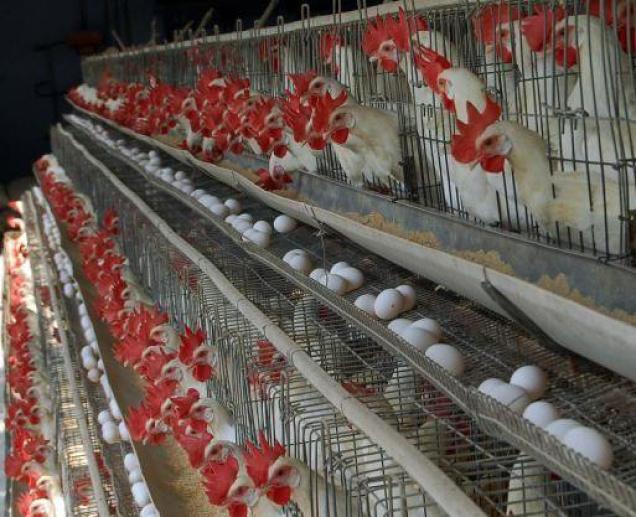
Iowa, where one in every five eggs consumed in the country is laid, has been the hardest hit: More than 40 percent of its egg-laying hens are dead or dying. Many are in this region, where barns house up to half a million birds in cages stacked to the rafters. The high density of these egg farms helps to explain why the flu, which can kill 90 percent or more of a flock within 48 hours, is decimating more birds in Iowa than in other states.

Continue reading the main story

Be Careful What You Pray For…

…it just might happen (if you’re praying for a pandemic, that is).

Anytime now, we’re likely to hear that the current strain of bird flu mutated and crossed the species barrier to infect homo sapiens. But don’t worry, it’ll still be “safe to eat” (though you’d think it would lose it’s appeal).

TIMELINE-Tracing the bird flu outbreak in U.S. poultry flocks

(Reuters) – Two highly pathogenic strains of avian influenza (HPAI) have been found in 14 U.S. states since December, prompting partial to total bans on imports of U.S. poultry and egg products to other countries that were valued at more than $6 billion last year.

The H5N2 strain has been reported in Arkansas, Idaho, Iowa, Kansas, Kentucky, Minnesota, Missouri, Montana, North Dakota, Oregon, South Dakota, Washington and Wisconsin. It has also been identified on farms in Ontario, Canada. The H5N8 strain has been identified in California and also in Idaho, according to the U.S. Department of Agriculture (USDA).

Following is a timeline of the spread of the viruses, according to the USDA’s Animal and Plant Health Inspection Service (APHIS), and responses by the industry and trade partners.302023_10150378903781188_1851399709_n

Dec. 19, 2014 – Highly pathogenic H5N8 avian influenza strain confirmed in a backyard mixed poultry flock of 130 birds in Douglas county, Oregon.

Dec. 20 – South Korea, one of the top importers of U.S. poultry, halts imports of poultry and poultry products from the United States, a market valued at $113 million in 2014, in response to the HPAI finding.

Jan. 3, 2015 – The first case of the highly pathogenic H5N2 avian influenza strain confirmed in a backyard mixed poultry flock of 140 birds in Benton county, Washington. The virus is believed to have been spread by wild birds migrating along the Pacific flyway which runs along the U.S. West Coast.

Jan. 6 – Mexico, the largest market for U.S. poultry valued at $1.2 billion in 2014, bans imports from states with confirmed cases.

Jan. 7 – No. 2 U.S. poultry importer Canada, which bought $589 million in poultry and products last year, bans imports from affected areas. The ban is later widened to include all or parts of 13 states. Ottawa imposed the ban despite several cases of bird flu within its own borders.

Jan. 8 – Imports of U.S. poultry, poultry products and eggs banned by China, a $315 million market in 2014.

Jan. 23 – The first commercial flock hit by H5N8 in Stanislaus county, California. The farm had 134,400 turkeys.

Feb. 12 – Veterinary officials confirm H5N8 in the first commercial chicken flock. The Kings county, California, flock had 112,900 birds.

March 4 – The first instance of HPAI along the Mississippi flyway, which runs from the Gulf of Mexico to the northern Midwest along the Mississippi River valley, is confirmed in a commercial flock of 26,310 turkeys in Pope county in Minnesota, the country’s top turkey producing state.

April 7 – The H5N2 strain strikes a 310,000-bird commercial turkey flock in Meeker county, Minnesota, bringing the total number of birds in infected flocks above 1 million.

April 13 – H5N2 is confirmed in the first commercial chicken operation in a 200,000-bird flock of egg-laying hens in Jefferson county, Wisconsin.

April 20 – The biggest outbreak so far as H5N2 is confirmed in 3.8 million egg-laying hens in Osceola county, Iowa. The finding in the country’s top egg producing state prompts Mexico to expand its import ban to include live birds and eggs from Iowa.

April 20 – Wisconsin declares a state of emergency and authorizes the state’s National Guard to help contain the virus.

April 22 – The USDA reports a year-over-year surge in frozen chicken stocks as the bird flu outbreak slows exports.

April 23 – Minnesota declares a state of emergency. State officials say they are offering prescriptions for the antiviral drug Tamiflu to people who have been in contact with infected flocks.

April 26 – The National Guard is called on to deliver water for use in efforts to contain the virus’ spread in Minnesota.

April 27 – Iowa’s Department of Agriculture and the USDA say initial tests have found probable bird flu outbreaks at five commercial poultry sites in Iowa containing more than 6 million birds. One site was confirmed as positive for HPAI a day later. If the other four are confirmed, the country’s outbreak would reach more than 15.1 million birds, just short of the largest-ever U.S. avian influenza outbreak of 17 million birds in 1983 and 1984.

April 28 – The USDA confirms H5N2 in three more flocks, including a flock of 1.7 million chickens in Sioux county, Iowa, bringing the state’s confirmed tally to more than 5.5 million birds. The three new confirmations lift the nationwide confirmed total to more than 11 million birds. (Reporting by Karl Plume in Chicago; Editing by Bernard Orr)

DSC_0277

Capital Press: Bird flu strikes game bird farm in Washington

http://www.capitalpress.com/Washington/20150129/bird-flu-strikes-game-bird-farm-in-washington

by Don Jenkins

Capital Press

Published:January 29, 2015

<!–

–>

Highly pathogenic bird flu has broke out game bird farm in Okanogan County in north-central Washington.

A 5,000-bird game flock in Okanogan County has been infected with highly pathogenic bird flu, according to the Washington State Department of Agriculture.

It’s the largest avian influenza outbreak to date in Washington, where three non-commercial flocks in other parts of the state had previously been infected, apparently by migrating birds. Wild birds and a captive falcon that died after eating wild duck also tested positive for bird flu.

“There’s no real way to predict where it might crop up,” WSDA spokesman Hector Casto said.

The owner of the flock in Riverside, near Omak, reported this past weekend to the WSDA that about 40 pheasants and 12 turkeys had died.

The Washington State University laboratory in Puyallup confirmed the birds had been sicked by highly pathogenic bird flu, as opposed to a less contagious and less lethal low pathogenic strain.

Samples have been sent to a U.S. Department of Agriculture in Ames, Iowa, to pinpoint the strain. So far, three different highly pathogenic bird flu strains have been found in Washington since mid-December.

Castro said the flock has been quarantined and will be destroyed. WSDA plans to establish a larger quarantine zone around the game farm to restrict the movement of birds and poultry products. The WSDA has not released the name of the flock’s owners.

Castro said the flock tested negative for bird flu in November, but that was before bird flu first appeared in the region. Bird flu was confirmed Dec. 1 in a British Columbia, Canada, poultry farm near the Washington border. Between Dec. 1-19, 11 B.C. commercial poultry operations and an 85-bird backyard flock fell victim to the virus.

Highly pathogenic bird flu was confirmed last week in a 145,000-bird Foster Farms turkey farm in Stanislaus County, Calif., the first U.S. commercial operation to be infected.

Backyard flocks also have been infected in Oregon and Idaho.

The Oregon Department of Agriculture on Wednesday lifted a quarantine in place since mid-December around the premises where a backyard flock in Winston in Douglas County was infected in mid-December.

WSDA last week lifted a quarantine in Benton and Franklin counties around where two backyard flocks were exposed to the virus in early January.

A quarantine remains in place where a non-commercial flock in Clallam County was infected.

WSDA and USDA officials have take samples from birds at 32 places inside the quarantine zone, and all tested negative for bird flu, Castro said.

Avian flu outbreak hits 2 British Columbia farms

http://www.komonews.com/news/national/Avian-flu-outbreak-hits-2-British-Columbia-farms-284622091.html

VANCOUVER, British Columbia (AP) – Two poultry farms where an outbreak of avian influenza was discovered in southwestern British Columbia are under quarantine and thousands of their turkeys and chickens that did not die from the illness will be euthanized, provincial and Canadian officials said Tuesday.

There are no reports of the disease being transmitted to humans.

Tests to determine the precise strain of the virus were conducted Sunday after bird deaths were reported at a turkey farm in Abbotsford and a chicken farm in Chilliwack. The farms are about 5 miles apart in the Fraser Valley east of Vancouver.

The Abbotsford farm housed 11,000 turkeys that were to be slaughtered for Christmas. Half died from the bird flu. The Chilliwack barn housed 7,000 chickens and about 1,000 of those had died.

The remaining birds will be euthanized using carbon dioxide and then composted inside their barns, said Jane Pritchard, British Columbia’s chief veterinary officer. The compost could be safely used on other farms, she said.

Test results will guide the response from the Canadian Food Inspection Agency, said Harpreet Kochhar, Canada’s chief veterinary officer.

The results expected Thursday should show whether the virus is the dangerous H5N1 strain or another variation, said Perry Kendall, British Columbia’s provincial health officer.

More poultry will be tested in surveillance zones 6 miles around the infected farms.

In 2004, health officials ordered 17 million chickens, turkeys and other domestic birds slaughtered to contain an outbreak of avian influenza at 42 poultry farms in the Fraser Valley. It cost the industry hundreds of millions of dollars and led to temporary trade restrictions on British Columbia poultry.

Avian influenza poses little risk to people who are consuming poultry meat if it is handled and cooked properly. In rare cases, the virus can transmit to people who have had close contact with the birds, health officials said.

1011767_10152168496128769_1859093580_n

Hey Guys, We Should Chill Out on Eating Chicken

From a self-serving, hedonistic site called “Munchies”…

http://munchies.vice.com/articles/hey-guys-we-should-chill-out-on-eating-chicken/

Written by

Kirsten Stamn

Assistant Editor

June 8, 2014

The news as of late has been pretty doom-and-gloom—downright apocalyptic, in fact. We’ve got stories flooding our inboxes and feeds filled with gruesome statistics about catastrophically rising sea levels, terrible wildfires, and devastating droughts. It’s been dominating the national conversation, not just because it’s bringing up those recurring childhood nightmares spurred on by The Day After Tomorrow, but also because it’s affecting our food supply. We’re already seeing staples like pork,beef,fish,shrimp—evenbananas andlimes—become decimated by disease or climate change, causing prices to climb. So American consumers have started to lean more heavily on an already reliable food source: chicken. Too bad our beloved poultry is facing its own issues.

Enter our old friend, bird flu (which the poultry industry really wishes we wouldn’t call it). Having previously been the subject of mass hysteria worldwide, it’s recently flown relatively under-the-radar despite being endemic in six countries around the world: Bangladesh, China, Egypt, India, Indonesia, and Vietnam. There have been multiple outbreaks in Asia this year—Japan has culled a ton of chickens thanks to an outbreak,China is sorry it infected Taiwan,South Korea’s got it, evenNorth Korea isn’t able to isolate itself from this disease—and theUS had a small scare in late April when the disease broke out in a Californian quail farm. It’s even somehow infected penguins in Antarctica. This is a disease that mutates rapidly (producingseveral strains that are fatal to humans) and alsospreads like wildfire. In fact, it’s so adaptable that many researchers havepaused in experimenting with the virus in case it triggers a pandemic. (Their worries are valid: The virus is onlyfive strains away from being tailored to preying on humans.) But not everyone has stopped. There are still those whocontinue to adapt the virus in order to study its mutation process, despite the international uproar it’s caused in the science community.

While scientists are busy playing with a ticking time bomb, the chicken industry has been busy creating the perfect conditions (i.e., overcrowded factory farms) for this virus to take off. (Reps from the USDA’s Animal and Plant Health Inspection Service did not return calls.) When an infected migratory bird somehow enters a facility—often through holes in fencing—it can set off a massive chain reaction. And humans who come in contact with infected birds—whether factory farm workers or customers—can get the disease, too: One of the reasons Asia has the most human fatalities thanks to the H5N1 virus isdue to their live poultry markets, where customers get up close and personal with their potentially infected future dinner. Mmm.

Regardless, it doesn’t look like industrialization is going to change its habits anytime soon. Chicken consumption is rising thanks to both a culturally instilled meat-heavy diet and the fact that beef and pork prices are suddenly skyrocketing. And according to David Harvey from the USDA office, it’s going to keep rising: Forecasts for 2015 indicate that Americans will be eating 39.275 billion pounds of chicken, a healthy 847 million pounds more than what we’re going to be eating in 2014. To top it off, the chicken industry is actually raising its prices because (a) demand is high now that the competition is down, and (b) to compensate for those pesky bird flu losses. Overall, the industry’s sales are down slightly, yet its margins are increasing. Let’s take a moment to process that.

I’m very happily a carnivore; I eat chicken at least once or twice a week. But right now, veggies are starting to sound pretty damn good.

264431_455824994498980_1177070538_n


Hunting of migratory birds banned this year

http://www.arabnews.com/news/575456

migratory birds.jpg

Migratory birds are shown at a protected area in the Kingdom in this picture posted on the website of the Saudi Wildlife Authority.

RIYADH: RASHID HASSAN

Friday 23 May 2014

Saudi Arabia recently announced a ban on hunting migratory birds, expressing concern regarding the transmission of bird flu into the country.
The Ministry of Interior, which is the authority responsible for regulating hunting activities, has in cooperation with the Saudi Wildlife Authority (SWA), specified the periods and locations for hunting this year. The year has been divided into eight hunting seasons.
In a statement released Wednesday, the ministry said: “The government of Custodian of the Two Holy Mosques King Abdullah, which is keen on preserving the country’s wildlife, has banned the hunting of all migratory birds in the Empty Quarter. The decision has been made due to fears of transmitting bird flu to human beings.”
The ministry urged residents and citizens to adhere to the ban, stressing the fact that hunting is only permissible for individuals who have obtained a license from regional governorates.
Meanwhile, an official of the SWA asserted Thursday that the Kingdom is free of bird flu virus. However, the government is taking precautionary measures against the spread of the virus during hunting season.
He added that according to health experts there are chances that the birds could carry the virus and spread the disease in the temporary nests they build.
Hunting the infected birds, he noted, would aggravate matters and spread bird flu.
The Kingdom hosts several thousand migratory birds, which begin their return journey in the spring to their summer homes.
The migratory birds, mostly originate from East and North Europe as well as the Levant region. They include houbara bustards, passerines, flamingos, pelicans, cranes and turtledoves.
Migratory birds halt temporarily mainly at Al-Hair in Riyadh, Al-Asfar Lake, Jubail Marine Protected Area, Domat Al-Jandal in Al-Jouf, Farasan Islands and Wadi Aljizan.
In accordance with the Kingdom’s wildlife preservation rules, hunters have been warned not to kill endangered species such as the oryx, gazelle, ibex, the Arabian leopard and the ostrich. Hunters are also forbidden to hunt in 16 protected areas in the Kingdom, which include the Empty Quarter and areas close to urban settlements.

Bat-eating banned to curb Ebola virus

http://www.bbc.com/news/world-africa-26735118

Guinea Ebola outbreak: Bat-eating banned to curb virus

File photo of officials from the World Health Organization in protective clothing preparing to enter Kagadi Hospital in Kibale District, about 200 kilometres from Kampala, where an outbreak of Ebola virus started (28 July 2012) There is no known cure or vaccine for Ebola

Guinea has banned the sale and consumption of bats to prevent the spread of the deadly Ebola virus, its health minister has said.

Bats appeared to be the “main agents” for the Ebola outbreak in the remote south, Rene Lamah said.

Sixty-two people have now been killed by the virus in Guinea, with suspected cases reported in neighbouring Liberia and Sierra Leone.

Ebola is spread by close contact and kills between 25% and 90% of victims.

There is no known cure or vaccine.

Symptoms include internal and external bleeding, diarrhoea and vomiting.

‘Quarantine sites’

It is said to be the first time Ebola has struck Guinea, with recent outbreaks thousands of miles away, in Uganda and the Democratic Republic of Congo.

Mr Lamah announced the ban on the sale and consumption of bats during a tour of Forest Region, the epicentre of the epidemic, reports the BBC’s Alhassan Sillah from the capital, Conakry.

The medical charity Medecins Sans Frontieres said it had set up two quarantine sites in southern Guinea to try to contain the outbreak, the Associated Press news agency reports.

Health officials reported one more death on Tuesday, bringing the number of people killed by Ebola to 62, our correspondent says.

Sierra Leone’s health ministry said it was investigating two suspected cases of Ebola, the AFP news agency reports.

Medical supplies being loaded in Guinea's capital, Conakry (24 March 2014) Aid agencies and the government are taking medical supplies to the affected areas in Guinea

“We still do not have any confirmed cases of Ebola in the country,” its chief medical officer Brima Kargbo is quoted as saying.

“What we do have are suspected cases, which our health teams are investigating and taking blood samples from people who had come in contact with those suspected to have the virus,” he added.

Mr Kargbo said the one suspected case involved a 14-year-old boy who was thought to have died two weeks ago in Guinea and then brought to his village on the Sierra Leonean side of the border in the eastern district of Kono.

map

The other case was in the northern border district Kambia, he added, without giving further details.

“This is the first time such a national health threat has come to our borders. In any case, we are prepared and on the alert in readiness in case the disease is diagnosed in Sierra Leone,” Mr Kargbo was quoted as saying by AFPs.

Five people are reported to have died in Liberia after crossing from southern Guinea for treatment, Liberia’s Health Minister Walter Gwenigale told journalists on Monday.

However, it is not clear whether they had Ebola.

Outbreaks of Ebola occur primarily in remote villages in central and west Africa, near tropical rainforests, the World Health Organization says.