A Trump administration official consulted with advisers to a think tank skeptical of climate change to help challenge widely accepted scientific findings about global warming, according to emails obtained by The Associated Press.
William Happer, a member of the National Security Council, made the request to policy advisers with the Heartland Institute this March.
Happer and Heartland Institute adviser Hal Doiron discussed Happer’s scientific arguments in a paper attempting to knock down climate change as well as ideas to make the work “more useful to a wider readership” in a March 3 email exchange.
Happer also said he had discussed the work with another Heartland Institute adviser, Thomas Wysmuller, according to the emails obtained in a Freedom of Information Act request by the Environmental Defense Fund.
The National Security Council declined to comment on the emails.
Jim Lakely, interim president of Heartland Institute, told The Hill that the government’s stances on climate change are not above question.
“As for Wysmuller and Doiron, they are unpaid policy advisors and friends of The Heartland Institute and have known Dr. Happer for many years,” he said.
“It would be hard to find a group of men with more qualifications or experience to criticize NASA’s alarmist public statements on the climate than Happer, Doiron, and Wysmuller.”
The Trump administration is reportedly considering creating a new panel headed by Happer to the question the broad scientific consensus that climate change is driven by human activity and is potentially dangerous.
Democratic lawmakers have raised concerns over the proposed panel, saying it would fly in the face of scientific evidence.
Happer is a well-known climate change skeptic, having argued that carbon dioxide, the main heat-trapping gas from the burning of coal, oil and gas, is good for humans and that carbon emissions have been demonized like “the poor Jews under Hitler.”
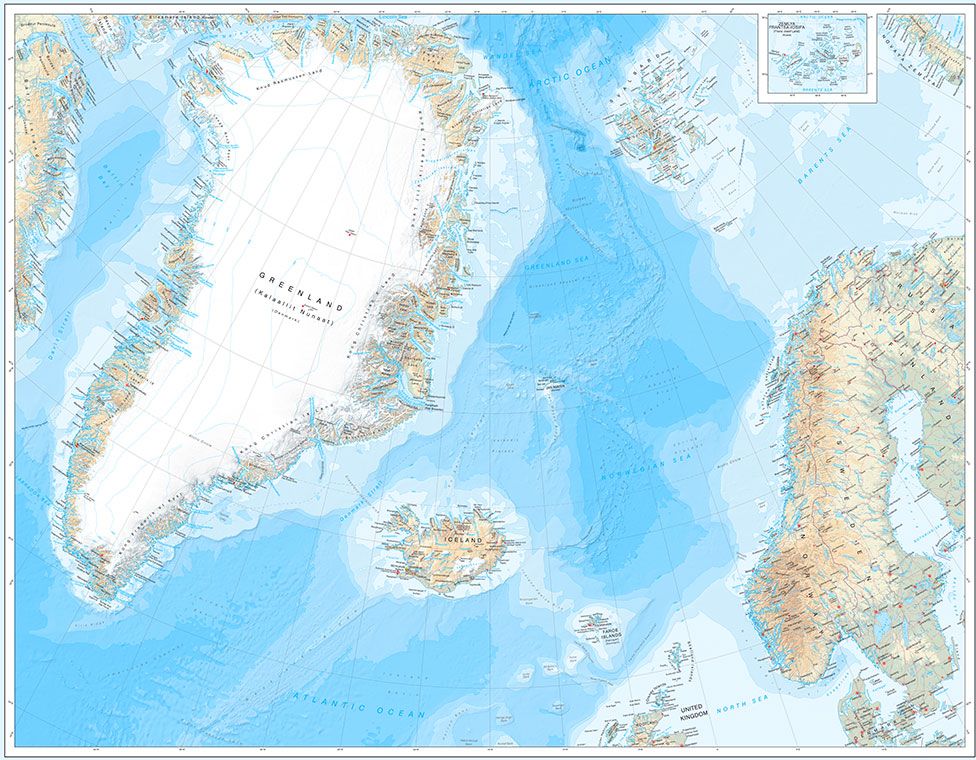
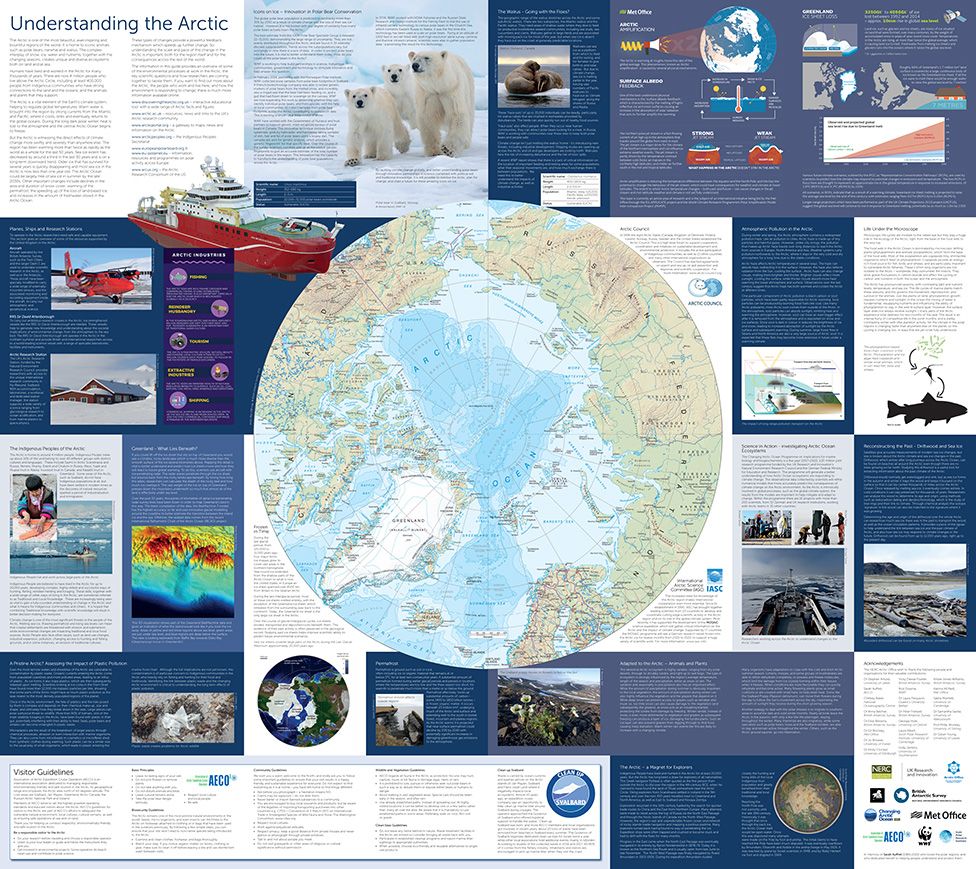
Image copyrightBASImage captionThe printed sheet map is 1:4,000,000 scale (1cm = 40km; 1 inch = 63 miles)
The Arctic is changing rapidly. It’s warming twice as fast as the rest of the planet.
The seasonal sea-ice is in long-term decline and the ice sheet that sits atop Greenland is losing mass at a rate of about 280 billion tonnes a year.
So, if you choose to make a map of the region, you start from the recognition that what you’re producing can only be a snapshot that will need to be updated in the relatively near future.
Laura Gerrish, a geographical information systems and mapping specialist at the British Antarctic Survey (BAS), knows this. Polar science and polar cartography are all about tracing change.
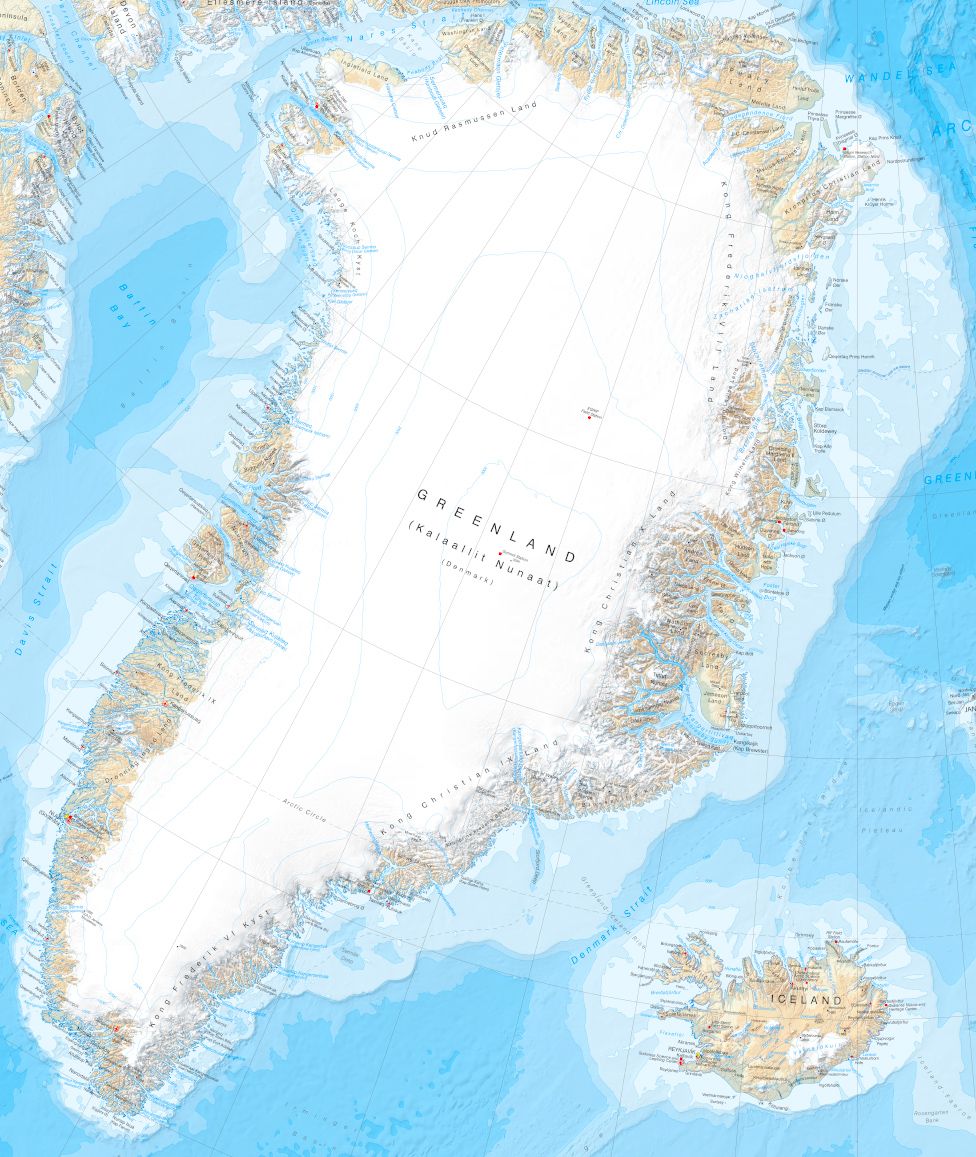
Laura has just finished making a exquisite new printed sheet map (1:4,000,000) of Greenland.
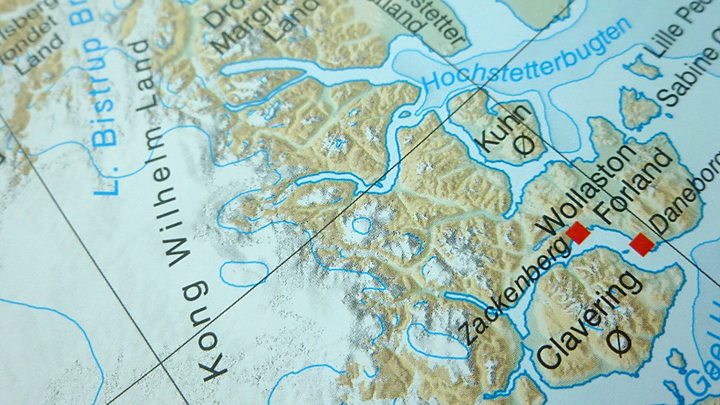
The detail is a delight – from the winding path of all the fjords and inlets, to the precise positioning of current ice margins, and the use of all those tongue-twisting Greenlandic names.
Image copyrightGETTY IMAGESImage captionThe Arctic is one of the fastest warming places on Earth
“The map is a little unusual because the area has not been shown on one sheet like this before,” explains Laura.
ADVERTISEMENT
“We have good maps, obviously, of Europe, of Iceland, of Svalbard – but there is nothing that puts them all together on one sheet and shows their relationship like this.
“The map is aimed at scientists, clearly; BAS is a scientific organisation. But we hope tourists on cruise ships and any visitors to Greenland will find it useful, as well as schools or anyone with an interest in the Arctic.”
Media captionLaura Gerrish and Henry Burgess: “It’s aimed at scientists, tourists, visitors and schools”
Greenland And The European Arctic, to give the map its full title, has taken nearly two years to put together.
Laura has had to call on more than a dozen data-sets to get the shape of Greenland exactly right. These have been checked against the latest satellite imagery to ensure physical features are where they’re supposed to be.
One or two features, such as islands in the Qimusseriarsuaq (Melville Bay) region, are new because they’ve only recently been revealed by contracting ice fronts.
Image copyrightBASImage captionThe map renders Greenland in relation to northern Europe
Care has been taken in particular to plot the present extents of all the glaciers, including the big ice streams that sometimes hit the science headlines, such as Jakobshavn, Petermann, Zachariae Isstrom, and Helheim.
These glaciers have demonstrated some remarkable retreat behaviour. Although just to prove what a thankless task this business can be, they’ve also shown recently that they can slow and lengthen as well (the net area of 47 regularly surveyed glaciers essentially stood still last year).
You might wonder what the British Antarctic Survey is doing making maps of the polar north. Henry Burgess, the head of the NERC Arctic Office which is hosted at the survey’s HQ in Cambridge, has a simple answer.
“BAS is the national capability and logistics provider for the polar regions,” he told me. “It provides the ships and the planes and the expertise, and the BAS mapping department therefore has a responsibility in both the north and the south.”
Henry is especially pleased with the flip side of the sheet map. This has a series of panels that attempt to put the cartography in a wider context.
Different organisations from the UK Met Office to WWF have provided small summaries on various issues that range from the effects that a warming arctic are having on frozen ground and on weather at mid latitudes, to the challenges climate change presents to indigenous peoples and endemic wildlife.
Hopefully, the new fold-out sheet map of Greenland And The European Arctic should be good for at least a few years, but says Henry: “We’re seeing dramatic changes in Svalbard for example where we have our Arctic station; the glaciers are pulling back by 10s of metres per year. So, yes, mapping is a constant process.”
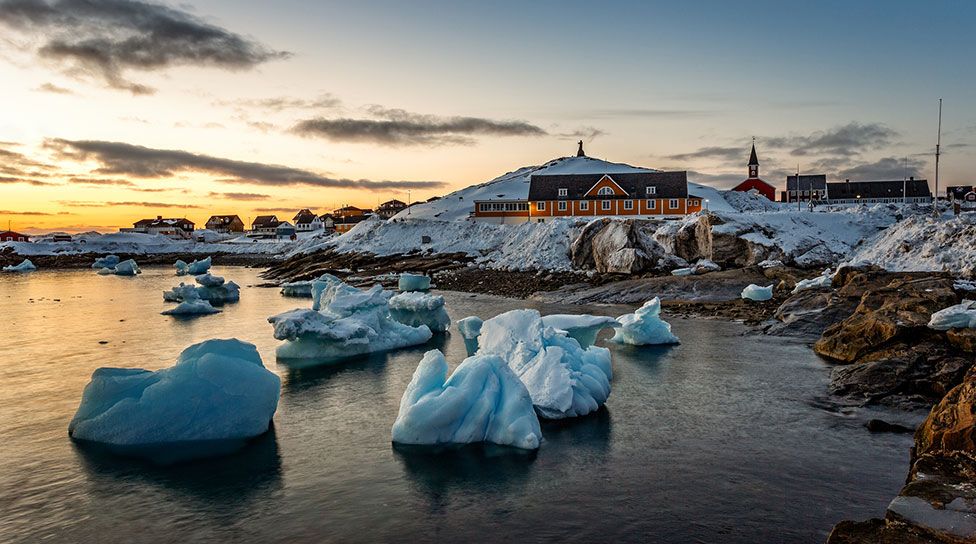
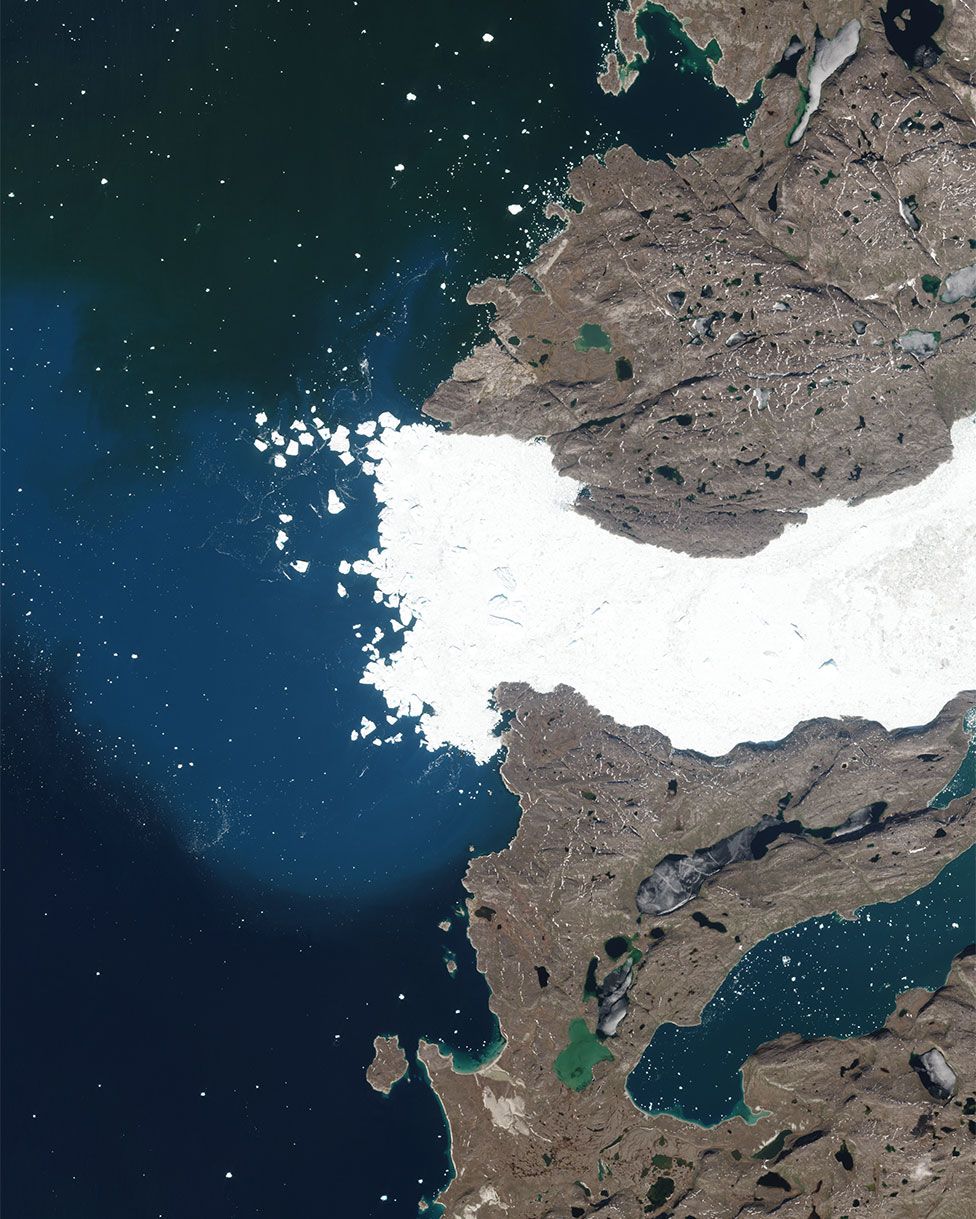
Image copyrightSENTINEL HUBImage captionJakobshavn Glacier spits out icebergs in Disko Bay on the west coastImage copyrightBASImage captionThe reverse of the sheet map puts changes in the Arctic in context
The Greenland and the European Arctic map is available for sale as either a flat wall map or a folded map at several outlets, including the Scott Polar Research Institute and Stanfordsmap store in London.
Extreme weather events don’t just hurt people with blunt force—they also spread disease and other serious health impacts. For already vulnerable populations, the health risks can be deadly.
Extreme heat can cause cardiovascular, cerebrovascular, and respiratory effects, and even death. Urban heat islands amplify impacts on cities, while long hours in the heat put farm workers and other outdoor laborers at severe risk too.
Extreme cold can cause hypothermia, cardiovascular and respiratory illnesses, and (as with heat) death. Prolonged exposure due to homelessness or housing insecurity puts transient populations at extreme risk for cold exposure in particular.
Then there’s hunger, which twice as many people are at risk of suffering by 2050, due to droughts and infectious diseases.
Then there’s hunger, which twice as many people are at risk of suffering by 2050, due to droughts and infectious diseases.
“Climate change is already contributing to the burden of disease and premature mortality,” reports the European Academies Scientific Advisory Council. “Without prompt and effective action, the problems are forecast to worsen considerably.”
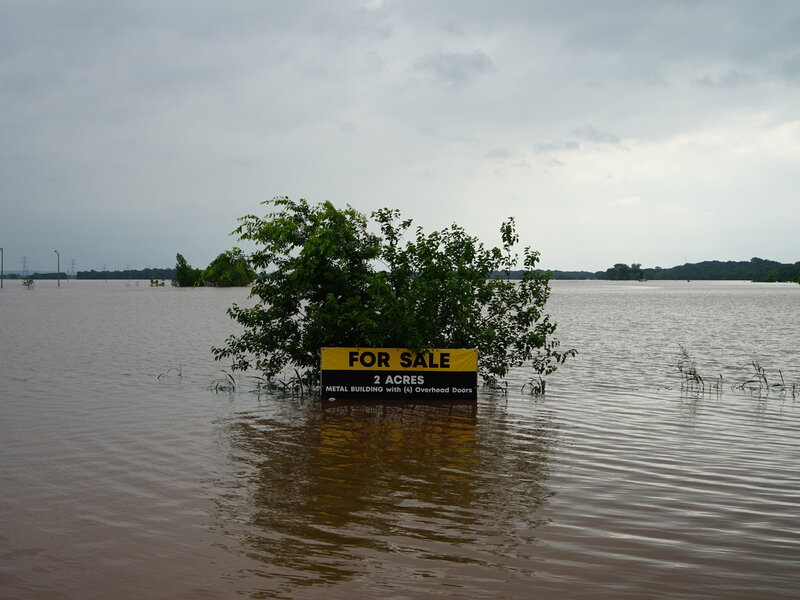
Too many communities are still recovering from extreme weather events, only to get hit again—and again, and again. From flooded farmlands in the Midwest to rising sea levels on the coasts, communities across America face the loss of their livelihoods, homes, and lives, with little time to recover before the next disaster strikes.
The challenges are starker still in places already facing limited access to health and medical resources. A lack of health insurance and local doctors, plus poverty and remote locations, makes access to care particularly difficult for the majority of rural Americans, who may have to travel several hours to the nearest provider.
Many of these areas are highly vulnerable to natural disasters. In California alone, according to McClatchy, more than 2.7 million residents live in “very high fire hazard severity zones,” at risk of devastating wildfires like the Woolsey Fire or Camp Fire.
When weather-related disasters strike, accessing health services—particularly emergency services—can become almost impossible. When roads close due to floods or fires, mild health scares can become life-threatening emergencies.
Indeed, thanks to climate change, natural disasters are claiming even more lives. Who gets hit hardest?
Rural communities. Farmers and farm workers. Island communities. Coastal communities. Towns in low-lying areas in flood country and flat-area towns in tornado country, but also towns that haven’t experienced so-called “100 year storms” until now.
Particularly at risk are low-income communities, who already have limited resources to respond. So are people of color, who disproportionately experience not only the impacts of climate change, but also exposure to pollution, methane emissions, and toxins.
LGBTQ people on the margins of society, particularly LGBTQ youth—who face discrimination and violence at high rates—are more likely to experience homelessness, exposing them disproportionately to extreme heat and cold.
In short, the climate crisis is a health crisis. That’s why organizations like Physicians for Social Responsibility are mobilizing with everything we’ve got to tackle this like any other health emergency.
With a coordinated mass response from everyone from health care providers to policy makers to ordinary citizens, we can save our future. Our communities are already paying the price every second we fail to act swiftly and comprehensively.
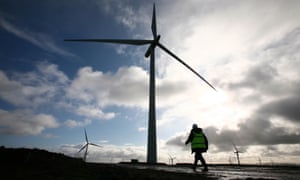
Whitelees windfarm in East Renfrewshire. Onshore wind is now cheap form but there are few new projects.
Photograph: Graham Hamilton/Epicscotland
The net zero carbon target will require sweeping changes to almost every aspect of British life, affecting our homes, food and the way we get around, as well as jobs and businesses across the board. Ministers hope there will be health benefits and improvements to the natural environment along the way, as well as helping to stave off the global climate emergency.
On some of the key areas where rapid change is needed, however, the signals so far have been mixed.
The UK must wean itself off gas. Photograph: Alamy
Phasing out coal use and bringing more renewable energy on stream are the key planks of the government’s strategy. Gas has become an increasingly important source of fuel in the last three decades, particularly for domestic heating, but to reach net zero it will have to be phased out too.
Advertisement
Support for renewable energy has been reduced and in some cases scrapped by the government. Onshore wind is now one of the cheapest forms of energy, but the withdrawal of subsidies and stricter planning rules have resulted in a dearth of new projects, though offshore wind is continuing to make progress.
The number of new solar installations plunged by 94% in April, according to Labour, after the government’s withdrawal of support. Chris Hewett, the chief executive of the Solar Trade Association, says: “Solar and wind are now the lowest cost forms of power generation in the UK, yet there is no route to market and government is continuing to subsidise the fossil fuels it is aiming to phase out.”
The number of jobs in renewable energy in the UK fell by about a third, from 36,000 in 2014 to 25,000 in 2017, according to the union Prospect.
Carbon capture and storage will be needed if we are to continue to use any fossil fuels. A long-running £1bn competition to build the first large-scale demonstration project for the technology was scrapped by George Osborne, but the government says that smaller projects not requiring taxpayer assistance could start to develop.
Controversially for some, the Committee on Climate Change says fracking is compatible with a net-zero target – but only if the gas produced displaces gas which would otherwise have been imported.
The government has slashed support for electric vehicles. Photograph: Scott Barbour/Getty Images
Advertisement
There are only about 210,000 electric vehicles in the UKAbout 1% of households use an all-electric car and about 2% hybrids, so tens of millions of cars will have to be replaced. Public transport, walking, cycling and ways of working that avoid travel will also be part of the solution.
Darren Shirley, the chief executive of the Campaign for Better Transport, says: “In the coming weeks the government should commit to restarting the programme of rail electrification, outlining further incentives to rapidly grow the market in electric vehicles in the UK, and start work on publishing a national strategy for buses with investment to grow the network and green the bus fleet to be published by 2020.”
The government has pledged to phase out diesel and petrol cars by 2040, but that target should be brought forward to 2030, according to the CCC.
The government has slashed support for electric vehicles, resulting in slower take-up. A lack of charging points is also hitting demand. There are about 8,500, but they are not spread evenly across the country, and some towns have few or none.
The CCC notes that the number of flights we take can continue to grow at least in the short term provided emissions come down in other areas, but campaigners say the decision to allow Heathrow’s expansion will blow away any chance of reducing the UK’s overall transport emissions.
Measures to insulate the existing housing stock were scrapped by the government. Photograph: Newscast/UIG via Getty Images
All newly built homes – of which the UK needs a record number to solve the housing crisis – were meant to be zero emissions from 2016 under plans from the Labour government in 2006. Those plans were scrapped in 2015 on cost grounds, and now there are few requirements for new-build houses to incorporate energy-saving features or renewable generation.
Government policy is key to making the built environment, which accounts for roughly 40% of the UK’s carbon footprint, more climate friendly, says Juliet Barfield, an architect at Marks Barfield. “The government must regulate if we want to bring down emissions.”
Repurposing and refurbishing existing buildings is nearly always preferable to demolishing and rebuilding, unless the existing construction is dangerous or of such poor quality it cannot be remedied. Concrete is one of the most commonly used construction materials, but associated emissions are sky-high. If the global concrete industry were a country, it would be the world’s third biggest emitter. Alternative materials from timber to wool are not widely used, and while innovators are working on ways to bring down emissions from concrete – using additives from coffee grounds to beetroot, for instance – it remains a significant source of carbon.
When new buildings are needed, a long-term vision – at least 50 years, for the lifetime of a building – and resisting cost-cutting temptations are also important. Barfield notes that high ceilings make buildings more liveable and easier to adapt in future, as well as having benefits in ventilation and light that help in designing ways to reduce energy use. BMany architects, however, come under pressure to reduce ceiling height to squeeze in more rooms, which limits the building’s future potential.
Less than 1% of Britain’s housing stock each year is newly built, and old homes tend to be leaky, draughty, costly to heat and inefficient. The government scrapped measures, such as the “green deal” policy, to insulate existing housing stock. Cash-strapped local authorities lack the resources to offer the insulation needed, even though it would save residents money and improve their health. The CCC recommends turning down heating to 19C in winter, but that may be of little comfort to people in unsuitable and uninsulated homes.
It is not clear what will replace the emissions trading scheme that covers heavy industry after Brexit. Photograph: Ben Birchall/PA
Advertisement
Heavy industries such as steel and chemicals currently come under the EU’s emissions trading scheme. Companies are awarded a certain number of allowances to emit carbon dioxide, some free and some paid for, and the most efficient can sell any spares to laggards, who are supposed to be spurred by the additional cost to mend their ways. The system has suffered many setbacks in its nearly 15 years of operation, but it is still one of the main ways in which industry is held to account for its contribution to global heating.
It is not yet known what, if anything, will replace emissions trading after Brexit, when manufacturers and other heavy industries are likely to come under increasing economic pressure if trade is disrupted. Manufacturingoutput has already come under pressure from the prospect of a no-deal exit, but losing manufacturing in the UK will not reduce carbon emissions overall, but will increase reliance on imports.
The UK must reduce its meat consumption Photograph: Alamy Stock Photo
More than a tenth of greenhouse gas emissions comes from agriculture and this proportion is rising as other sectors have been able to reduce emissions faster.
Growing more trees is the key plank of the government’s strategy on land use, along with better soil management. Michael Gove, the environment secretary, has set out plans for the UK’s first soil strategy since the “dig for victory” campaigns of the second world war. Soil is one of the world’s biggest carbon sinks, but can also be a major source of carbon depending on the farming techniques used.
Details of the strategy are still to come, and when it comes to tree planting farmers face some uncertainty. There are benefits under the common agricultural policy for planting new and maintaining existing trees, but these can be complex and hard to access. The government has promised £50m for rural tree planting in England to meet its target of 10m new trees across the countryside. The UK is one of the least wooded countries in Europe, with 10% of land forested in England, 15% in Wales, 19% in Scotland and only 8% in Northern Ireland.
Urban trees can also be a vital way of reducing carbon, cleaning air and reducing the impact of climate change by providing shade and health benefits. The government has put up £10m for 130,000 new trees in towns and cities in the next two years. There is no national policy, however, and some local authorities and landowners such as Network Rail have embarked on tree-cutting programmes without clear oversight of the environmental costs and benefits.
Our heavy consumption of meat is taking a toll on our health as well as the planet, and farmers can help reduce emissions from livestock, for instance by improving their diet so they produce less methane. Ultimately, however, meat consumption must be reduced. Moving from a high-meat to a low-meat diet would cut emissions by 35%, the CCC found.
Biodegradable food waste must not be sent to landfill, where it rots to produce methane, after 2025, according to the CCC. Food waste should be avoided as far as possible to bring down agricultural emissions. Unavoidable food waste, treated properly with anaerobic digestion, can be a source of natural gas to be used for heating or electricity generation, displacing fossil fuels.
Tim Benton, the dean of strategic research at the University of Leeds, says food will only increase in importance as a source of greenhouse gases. He says: “When you have reduced everything else – energy, transport, and so on – the thing you’re left with is food.”
A ‘just transition’
When the UK first made its “dash for gas”, it was in the context of closing coal mines and the aftermath of the miners’ strike of the 1980s. Hundreds of thousands of workers in traditional coal-mining areas lost their jobs and the devastation is still keenly felt across swathes of the UK. The recent and enduring memory of that loss and upheaval should act as a warning of how not to engineer a transition to a new form of economy, trade unions believe.
Sue Ferns, Prospect’s senior deputy director general, says: “We need a just transition for all the workers affected and this means we need to work proactively to ensure that the damage inflicted on coal communities in the 1980s is not repeated.”
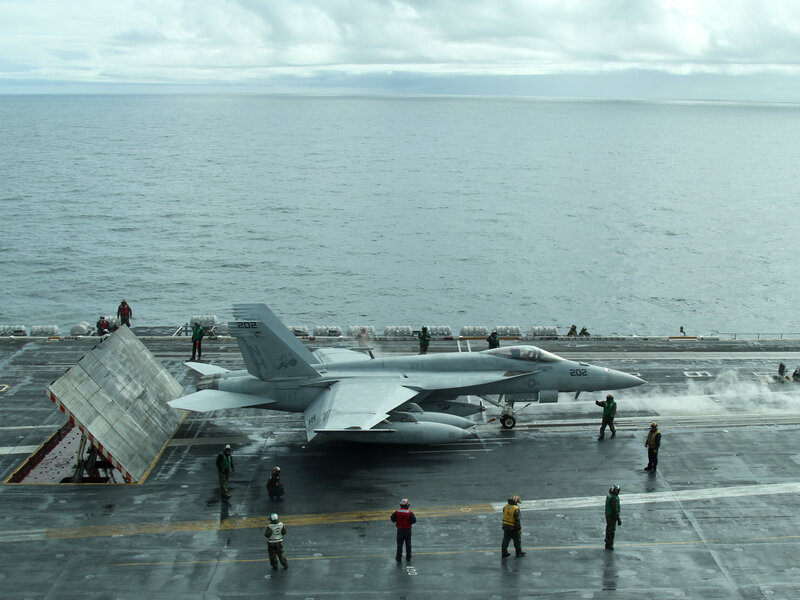
An F/A-18 Super Hornet gets ready to fly off the USS Theodore Roosevelt in the Gulf of Alaska.
Zachariah Hughes/Alaska Public Media
The U.S. Navy is looking north.
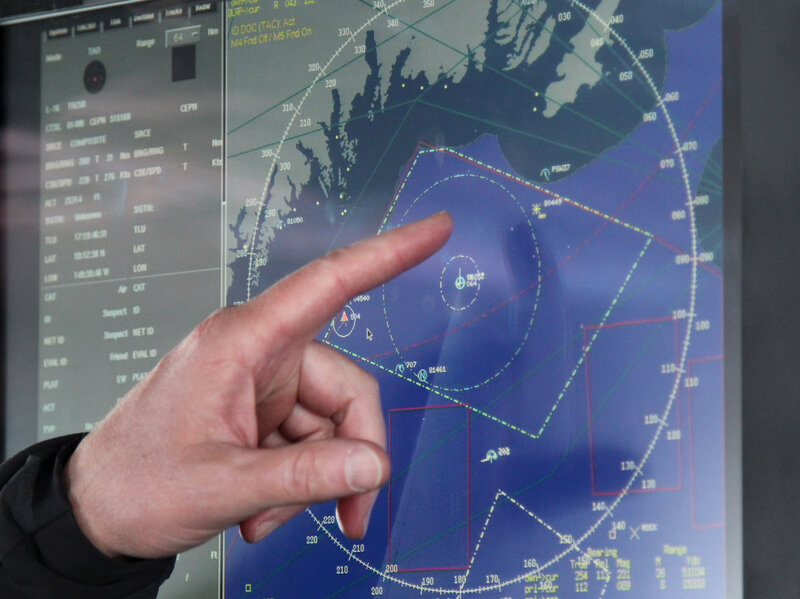
As climate change melts ice that has long blocked the region off from transit and industry, the military is figuring out how to expand its presence in the waters of the high north, primarily off the coast of Alaska.
Driving the push is that much of the commercial activity and development interest in the region is coming from nations that the Pentagon considers rivals, such as Russia and China.
The Navy’s presence in Alaska has waxed and waned over the years. The state has abundant Army and Air Force assets, with the Coast Guard spread throughout. The Navy runs submarine exercises beneath the sea ice off Alaska’s northern coast.
But until last year, no U.S. aircraft carrier had ventured above the Arctic Circle in almost three decades. The USS Harry S. Truman took part in naval exercises in the Norwegian Sea last October, the first such vessel to sail that far north since 1991.
And for the first time in a decade, this May, an aircraft carrier strike group — led by the USS Theodore Roosevelt — sailed to Alaska as part of Northern Edge, a biennial large-scale military exercise that brings together personnel from all the military branches — airmen, Marines, soldiers, seamen and Coast Guardsman. The Navy always participates, but this year, it was out in force.
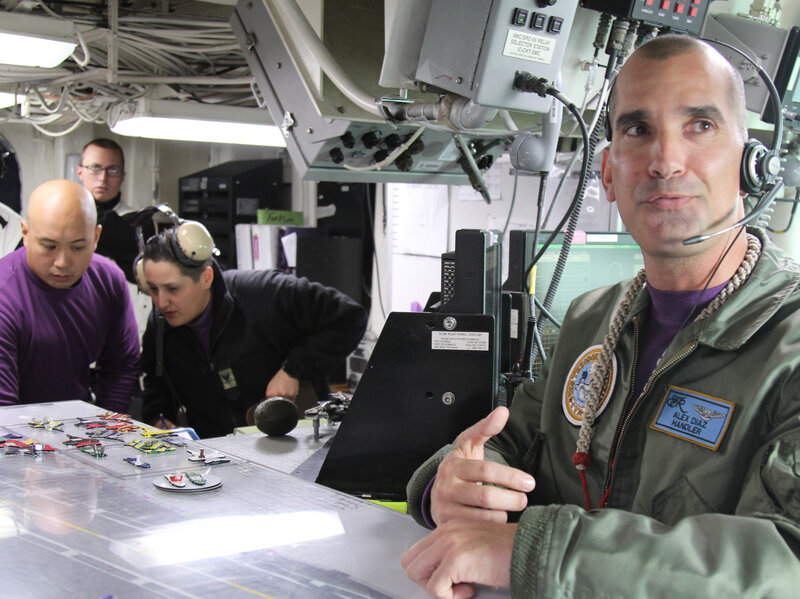
Lt. Cmdr. Alex Diaz oversees traffic on the USS Theodore Roosevelt flight deck.
Zachariah Hughes/Alaska Public Media
Rear Adm. Daniel Dwyer commands the nine ships in the Roosevelt strike group. Speaking on an observation deck several stories above the flight deck, he said climate change is adding a new urgency to training like this one as marine activity increases in Arctic waters.
“You see the shrinking of the polar ice cap, opening of sea lanes, more traffic through those areas,” Dwyer said. “It’s the Navy’s responsibility to protect America through those approaches.”
The Defense Department views the threat of military conflict in the Arctic as low, but it is alarmed by increasing activity in the region from Russia and China. A 2018 reportby the Government Accountability Office on the Navy’s role in the Arctic notes that abundant natural resources like gas, minerals and fish stocks are becoming more accessible as the polar ice cap melts, bringing “competing sovereignty claims.”
Defending U.S. interests in the Arctic
As the Roosevelt cruised through the Gulf of Alaska, F/A-18 Super Hornets took off and landed at a brisk clip. Each takeoff is a full-body experience for those on deck, shaking everything from one’s shoes to teeth. Planes are launched by a steam catapult system powered by the ship’s nuclear reactors.
Some of the jets flew more than 100 miles toward mainland Alaska and continued on past mountain ranges to sync up with Air Force and Marine Corps counterparts operating in the airspace around Eielson Air Force Base near Fairbanks. Then they returned to the Roosevelt. The whole trip lasts about four hours.
For the first time in a decade, an aircraft carrier strike group — led by the USS Theodore Roosevelt — sailed to Alaska as part of Northern Edge, a biennial large-scale military exercise.
Zachariah Hughes/Alaska Public Media
To land, the Super Hornets suddenly dropped out of the sky dangling a hook that snagged at wires bringing them from full speed to full stop in 183 feet. It looked less like a car braking and more like a roller coaster slamming still to give riders one last jolt.
“We are catching anywhere from six to 25 aircraft on this recovery,” crackled a voice over a loudspeaker on the deck. “I’m not sure yet [how many]. If they show up on the ball, we’re gonna catch ’em.”
The deck was coordinated chaos, with crew members and aircraft rotating through intricate maneuvers like a baroque ballet, billows of steam from the launch equipment periodically billowing past.
The deck crews are referred to as “skittles” because they wear uniforms that are color-coordinated to match their jobs. Much like the candy, most of the rainbow is represented. Greens take care of takeoffs and landings. Reds handle ordnance. Purples deal with fuel and are referred to as “grapes.”
The Navy says that given what is expected of it in the region, crews are trained and equipped to carry out their missions as well as any other nation’s navy.
“Regardless of the conditions: day, night, good weather, bad weather, flat seas, heavy seas, it’s the same procedure every time,” Dwyer said of the jets taking off below just as a helicopter set down on the flight deck.
A shifting focus to the “high north”
Speaking at this year’s Coast Guard Academy commencement, national security adviser John Bolton said the military will play a part “reasserting” American influence over the Arctic.
“We want the high north to be a region of low tension, where no country seeks to coerce others through military buildup or economic exploitation,” Bolton told graduates.
The Trump administration is expected to unveil a new Arctic strategy sometime this month.
Forecasters anticipate diminishing ice will reliably open up northern sea lanes, thus cutting down the time and cost moving freight from Asia to Europe but causing a rise in vessel traffic.
The military is candid that the warming climate is opening up transit routes that sea ice has long locked in. Right now, though, the U.S. naval presence is minimal.
F/A-18 Super Hornet is launched by a steam-powered catapult off the USS Theodore Roosevelt during naval exercises in the Gulf of Alaska.
Zachariah Hughes/Alaska Public Media
“If you’re gonna be a neighbor, you have to be in the neighborhood,” said Vice Adm. John Alexander, commander of the Navy’s 3rd Fleet, which is responsible for the Northern Pacific, including the Bering Sea and Alaskan Arctic.
“We’re going to have to ensure that there’s free and open transit of those waters,” Alexander said.
But the Navy faces major impediments to expanding its presence in a maritime environment as harsh as the Arctic. According to the GAO report, most of the Navy’s surface ships aren’t “designed to operate in icy water.”
The authors note that Navy officials have stated that “contractor construction yards currently lack expertise in the design for construction of winterized, ice-capable surface combatant and amphibious warfare ships.”
After years of study, the Defense Department has yet to pick a location and design for a strategic port in the vicinity of the Arctic that can permanently accommodate a strong Navy presence.
And even if the military can operate in the Arctic, it still has to get there. For now, the region’s waters are solidly frozen over for much of the year. According to the Coast Guard, Russia has more than 40 icebreakers, including three new gargantuan nuclear-powered vessels designed to ply sea lanes along the northern sea route. The U.S. military, by contrast, has just two working icebreakers.
This story comes from American Homefront, a military and veterans reporting project from NPR and member stations.
Scientists equipped seals with temporary satellite tags and sent them swimming under the sea ice in Antarctica to collect data on water conditions.
Credit: Dan Costa/University of California, Santa Cruz
Enormous holes in the Antarctic winter ice pack have popped up sporadically since the 1970s, but the reason for their formation has been largely mysterious.
Scientists, with the help of floating robots and tech-equipped seals, may now have the answer: The so-called polynyas (Russian for “open water”) seem to be the result of storms and salt, new research finds.
Polynyas have gotten a lot of attention lately because two very large ones opened in the Weddell Sea in 2016 and 2017; in the latter event, the open waters stretched over 115,097 square miles (298,100 square kilometers), according to an article published in April in the journal Geophysical Research Letters.
Volume 0%
Now, the most comprehensive look ever at the ocean conditions during polynya formation reveals that these stretches of open water grow due to short-timescale climate variations and particularly nasty weather. The polynyas also release a lot of deep-ocean heat into the atmosphere, with consequences that scientists are still working out. [Antarctica: The Ice-Covered Bottom of the World (Photos)]
The hole in the sea ice offshore of the Antarctic coast was spotted by a NASA satellite on Sept. 25, 2017.
Credit: NASA
“It may modify weather patterns around Antarctica,” study leader Ethan Campbell, a doctoral student in oceanography at the University of Washington, told Live Science. “Possibly farther.”
Observing the open ocean
Researchers already suspected that storms had some role in the creation of polynyas in recent years. A paper published in April by atmospheric scientists in the Journal of Geophysical Research: Atmospheres pointed to a particularly violent storm with wind speeds up to 72 miles per hour (117 kilometers per hour) in 2017.
But even though the winter storms of 2016 and 2017 were extreme, stormy seas are the norm in the Antarctic winter, Campbell said.
“If it were only storms, we’d see polynyas all the time, but we don’t,” he said. Instead, large polynyas are relatively rare. There were three huge ones in 1974, 1975 and 1976, but nothing significant again until 2016.
Campbell and his team drew data from two robotic, human-size floats that were deployed in the Weddell Sea by the National Science Foundation-funded Southern Ocean Carbon and Climate Observations and Modeling project (SOCCOM). The floats drift in the currents about a mile below the ocean’s surface, Campbell said, collecting data about water temperature, salinity and carbon content.
For comparison purposes, the researchers also used year-round observations from Antarctic research vessels and even scientific seals — wild pinnipeds fitted with small instruments to collect ocean data as the animals conduct their usual travels.
Stormy seas
Put together, these observations explained the full story of the 2016 and 2017 polynyas. The first ingredient, Campbell said, was part of a climate pattern called the Southern Annular Mode, the polar version of El Niño. Cambell said that a regular climate variation that can carry winds either farther from the Antarctic coast, in which case they become weaker, or nearer to the coast, becoming stronger. When the variability shifts the winds closer and stronger, it creates more upwelling of warm, salty water from deep in the Weddell Sea to the colder, fresher ocean surface. [In Photos: Research Vessel Headed to ‘Hidden’ Antarctic Ecosystem]
This climate pattern and subsequent upwelling made the ocean surface unusually saline in 2016, Campbell said, which, in turn, made it easier for the ocean water to mix vertically. Typically, differences in salinity keep ocean layers separate, just as less-dense oil floats on top of water and refuses to mix. But because the ocean surface was unusually salty, there was less difference between the surface and deeper waters.
“The ocean was unusually salty at the surface, and that made the barrier to mixing a lot weaker,” Campbell said.
Now all the ocean needed was a little stir. And the winters of 2016 and 2017 provided the spoon. Major storms created wind and waves that mixed the water vertically, bringing up warm water from the ocean bottom that melted the sea ice.
The effects of the polynyas that formed are still somewhat mysterious. The researchers found that the interior of the ocean beneath them cooled by 0.36 degrees Fahrenheit (0.2 degrees Celsius). That released heat might change local weather patterns and even shift winds globally, Campbell said.
More concerning, he said, is that the deep ocean water exposed to the atmosphere during a polynya is potentially carbon rich. Deep Antarctic waters are the graveyards for marine life, which release carbon as they decay. If that carbon enters the atmosphere via polynyas, these open-water openings could contribute slightly to climate change, Campbell said.
Whether polynyas do so is still up in the air, Campbell said, but the new study should help scientists pin down more details of Antarctica’s changing climate. Current models of the Antarctic seem to predict more polynyas than actually exist, Campbell said. Now, climate modelers will have more data to improve those predictions, creating a better virtual Antarctica for understanding climate change.
The research appeared June 10 in the journal Nature.
The next president of the United States must be prepared to take bolder, faster climate action than any leader has before. But the media is still ignoring the issue, giving cover to politicians who refuse to take action.
We need to put climate change on the national political stage. One powerful way to do that is through a presidential primary debate dedicated to the issue. Holding a climate-centered debate would highlight the climate crisis at a time when more people than ever are tuned in to national politics – and force candidates to be explicit about their commitments to meet the scale of the crisis.
Voters deserve to know:
Which candidates commit to acting on climate change as a “Day One” priority when in office
Whether presidential candidates support the Green New Deal or can offer their own climate plan that also meets the scale of the crisis
Candidates’ plans for a managed phase-out of fossil fuel production and end to the expansion of fossil fuel extraction
How candidates would protect frontline communities and ensure a transition for workers that leaves no one behind
How candidates would help communities adapt to the climate impacts already happening
Whether candidates believe that fossil fuel companies should pay their fair share of climate costs and how they will make sure it happens
The first two Democratic debates are happening this summer in two cities with deep ties to the crisis. Miami is one of the world’s most vulnerable cities with respect to sea level rise and Detroit, the former center of the global automotive industry, has long struggled with the challenges of deindustraliziation. Either would provide a powerful backdrop for a debate on this complex crisis and its solutions.
In the primary season, unless the DNC prioritizes the issue, we know that news networks and other debate host organizations won’t ask more than one or two token debate questions on climate change. We have to demand that it leads now.
That makes seven in Alaska and at least 75 total, in what the National Oceanic and Atmospheric Administration calls an “unusual mortality event,” the station reports.
One of the two found near Kodiak Island in the Gulf of Alaska showed signs of killer whale “predation,” KTUU reports.
Two more were discovered this week off Washington state.
Last month, ocean scientists said they were worried about the death rate, the highest in almost two decades. Some of the mammals were underweight, which may mean they could not find enough food in the water, a possible result of climate change, NOAA spokesman Michael Milstein said.
In all of last year, 45 gray whales were found onshore, NOAA said.
Gray whales do most of their eating during summers in the Arctic and migrate to spend half the year in Mexico.
They can reach 90,000 pounds. The species was endangered until 1994.
Floodwaters from the Arkansas River line either side of a road in Russellville, Arkansas, engulfing businesses and vehicles.
Nathan Rott/NPR
Angel Portillo doesn’t think about climate change much. It’s not that he doesn’t care. He’s just got other things to worry about. Climate change seems so far away, so big.
Lately though, Portillo says he’s been thinking about it more often.
Standing on the banks of a swollen and surging Arkansas River, just upriver from a cluster of flooded businesses and homes, it’s easy to see why.
“Stuff like this,” he says, nodding at the frothy brown waters, “all of the tornadoes that have been happening – it just doesn’t seem like a coincidence, you know?”
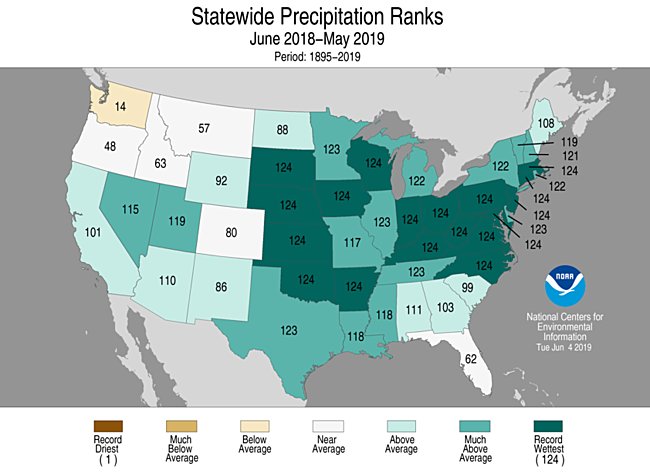
A string of natural disasters has hit the central U.S. in recent weeks. Tornadoes have devastated communities, tearing up trees and homes. Record rainfall has prevented countless farmers in America’s breadbasket from planting crops. Rising rivers continue to flood fields, inundate homes and threaten aging levees from Iowa to Mississippi.
And while none of these events can be directly attributed to climate change, extreme rains are happening more frequently in many parts of the U.S. and that trend is expected to continue as the Earth continues to warm.
For many of the people living in the affected areas, the connection feels clear.
A group of friends look at the record-high Arkansas River in Fort Smith, Arkansas. “It’s part of history now,” says Savanna Bowling. “We had to come see it.”
Nathan Rott/NPR
“I think climate change is affecting the world right now and we should probably start doing something,” says Lucero Silva, watching the cresting river in Russellville, Arkansas.
“Somebody at my office told me, ‘We all owe Al Gore an apology,'” says Breigh Hardman, standing on a bridge over the Arkansas River in nearby Fort Smith. Gore’s 2006 documentary An Inconvenient Truth spurred both activism around global warming and opposition to it.
“It just tells us we got to come to a conclusion — not to get crazy — about global warming,” says Matt Breiner, watching the river further upstream near downtown Tulsa, Oklahoma.
NPR asked nearly two dozen people in Oklahoma and Arkansas who were experiencing the ongoing flooding about their thoughts on climate change. All of them said they believed that the climate was changing, even if they didn’t directly associate the raining and floods with it, or agree on the cause. (Six people said they believed God was driving the change.)
That aligns with recent polling by the Yale Program on Climate Change Communication and George Mason University, which shows that more Americans are becoming concerned about global warming and believe in its existence, while a smaller majority understand that it’s mostly human-caused.
A follow-up report found that “directly experiencing climate change impacts” was the most common reason given by people who said they were becoming more concerned.
“Most studies do suggest that experiencing an extreme event does effect one’s beliefs about climate change,” says Elizabeth Albright, an assistant professor at Duke University’s Nicholas School of the Environment.
Albright was part of a research team that surveyed communities impacted by heavy rains and flooding in Colorado in 2013. They found that people whose wider communities were significantly impacted were more likely to be concerned about climate change and the risk of future floods.
It’s an imperfect science though.
A study by the University of Exeter last year found thatpolitical identity and exposure to partisan news were more likely to influence people’s perceptions of some extreme weather events, as they relate to climate change.
“Efforts to connect extreme events with climate change may do more to rally those with liberal beliefs than convince those with more conservative views that humans are having an impact on the climate,” said the study’s lead author, Dr. Ben Lyons, in a press statement.
Flooding near Muskogee, Oklahoma, inundated businesses and homes. May was the second-wettest month in U.S. history, according to the National Oceanic and Atmospheric Administration.
Nathan Rott/NPR
Climate scientists and communicators in the largely conservative central Plains still see the ongoing flooding as an opportunity, though.
Marty Matlock, the executive director of the University of Arkansas Resiliency Center, works with rural and urban communities throughout the state and with the region’s massive agriculture industry.
“People are not questioning that things are changing,” he says. “The challenge is how do we motivate people, give [them] a sense that there is an actual opportunity for influencing that change in a positive way.”
Matlock believes that for too long climate scientists have been beating people “with the cudgel of information of science.”
“In a democratic society, if people don’t believe what you say, it doesn’t matter how right you are,” he says.
That doesn’t necessarily mean you need to convince people about the causes of climate change, he says. In some cases, it might be just as important to convince people and community leaders that they’ll need to adapt.
Extreme rains and flooding events are expected to be more common and more severe in America’s heartland, according to the most recent National Climate Assessment.
Joe Hurst, the mayor of Van Buren, Arkansas, a town of about 24,000 people on the Arkansas River, says there do seem to be indications that the climate is changing.
“I don’t know what causes it,” he says. “But all I know is that we’re dealing with a historic flood and now, in my mind, I’m going to be prepared for this unprecedented event to happen now more often.”
A pile of free sandbags in downtown Fort Smith, Arkansas. Volunteers filled them for homeowners and businesses trying to avoid the worst of the flooding.
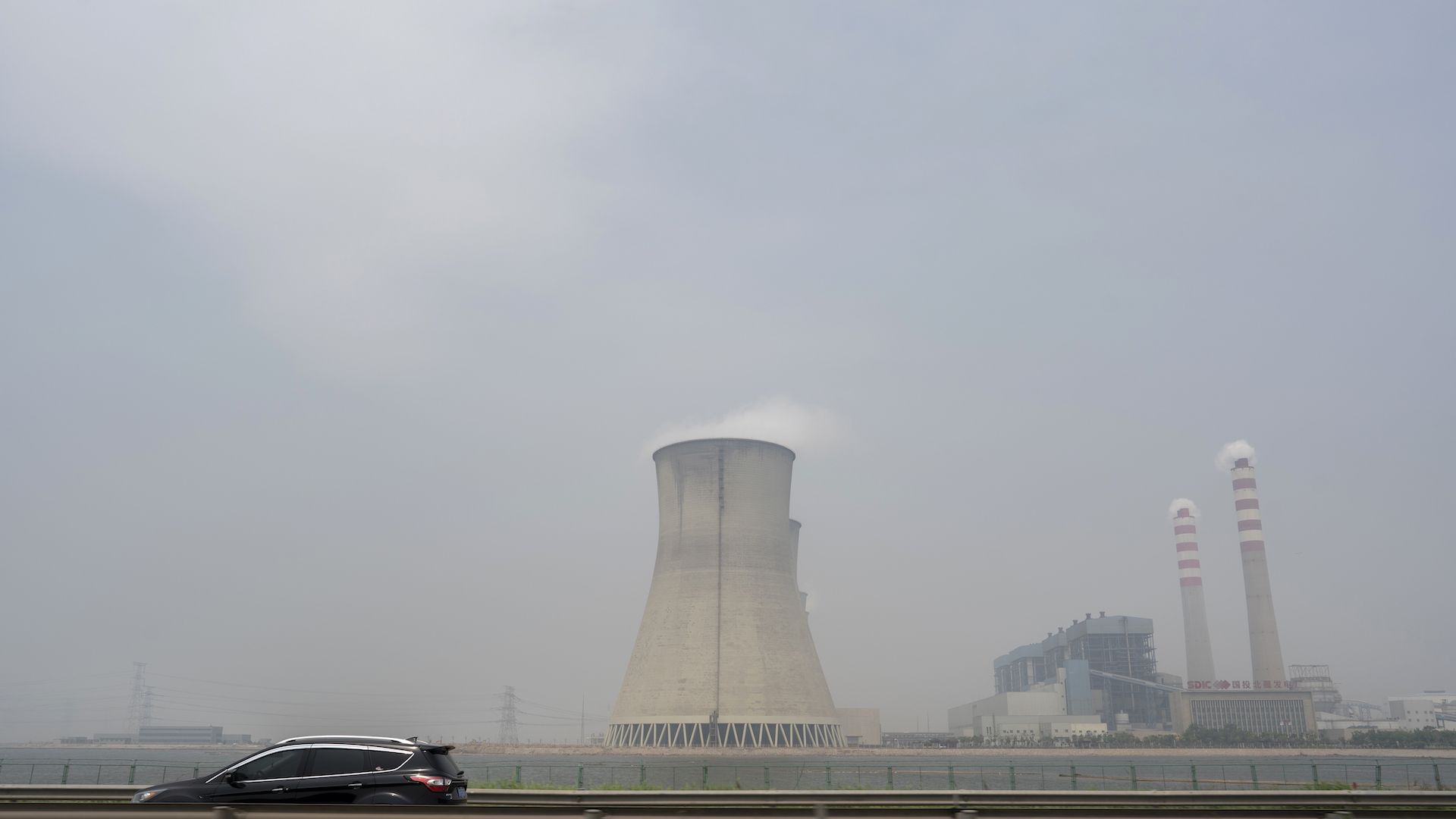
A thermal power plant located between Tianjin and Beijing. Photo: Zhang Peng/LightRocket via Getty Images
The monthly peak amount of carbon dioxide in the Earth’s atmosphere in 2019 jumped by a near-record amount to reach 414.8 parts per million (ppm) in May, which is the highest level in human history and likely the highest level in the past 3 million years.
Why it matters: Carbon dioxide is the most important long-lived greenhouse gas, with a single molecule lasting in the air for hundreds to around 1,000 years. The continued buildup of carbon dioxide due to human activities, such as burning fossil fuels for energy, is driving global temperatures up and instigating harmful impacts worldwide.
The fact that carbon dioxide levels increased by a near-record amount of 3.5 ppm in just one year illustrates that we’re headed in the opposite direction from what climate scientists have shown is needed to avoid the worst consequences of global warming.
Details: According to Scripps Institution of Oceanography, the average carbon dioxide concentration in the atmosphere recorded at the isolated Mauna Loa Observatory in Hawaii averaged 414.8 parts per million during May, which is the highest seasonal peak since such observations began 61 years ago.
The highest monthly mean carbon dioxide value typically occurs in May, before plants take in large amounts of greenhouse gases during the Northern Hemisphere growing season.
Readings from NOAA show a seasonal peak of 414.7 ppm, and the second-fastest rate of increase in any year on record.
Studies using ice cores and other data on historical carbon dioxide levels show this is unprecedented in all of human history, and likely the highest amount of CO2 in the air during the past 3 million years.
The 2019 peak was 3.5 ppm higher than the 2018 monthly peak, which was the second-highest annual jump on record.
This continues a 6-year streak of steep global increases in carbon dioxide concentrations.
The rate of increase has quickened in recent decades, going from about 1.6 ppm per year in the 1980s to 2.2 ppm per year in the past decade, a trend conclusively tied to human activities.
Monthly CO2 values at Mauna Loa first breached the 400 ppm threshold in 2014.
Part of the increase since 2018 is thought to be related to an ongoing El Niño event in the tropical Pacific Ocean.
The big picture: Scientists have warned that if the world is to limit global warming to 1.5°C, or 2.7°F, above pre-industrial levels, then sharp emissions cuts have to begin in the next few years, with the world headed for negative emissions by the end of the century.
Background: In the northern fall, winter and early spring, plants and soils give off CO2, which cause levels to rise through May.
What they’re saying: “These are measurements of the real atmosphere,” says Pieter Tans, senior scientist with NOAA’s Global Monitoring Division, in a press release. “They do not depend on any models, but they help us verify climate model projections, which if anything, have underestimated the rapid pace of climate change being observed.”
What’s next: Scientists will announce a new annual figure for 2019 in early 2020, but the monthly peak is considered to be an important climate indicator.

















 Exposing the Big Game