Eight states along the Mississippi have been hit by the longest stretch of flooding since the Great Flood of 1927. Across the grain belt, farm fields are flooded. This is already having a big impact on grain prices as farmers can’t get into the field to plant, leading to the slowest pace of grain planting in recorded history.
According to the USDA, only 58 percent of the corn crop was planted as of May 26, compared to 90 percent at this time last year. Soybean planting is also well behind, as only 29 percent of the soybean crop was planted, below the average of 66 percent. Now it looks like over 6 million acres will go unplanted.
Because of this slow pace, grain market sentiment has shifted from fears of an oversupply due to the U.S.-China trade war, to now thoughts of shortages in just a few weeks. If the U.S. does not get its crop planted, there is a real risk of a global shortfall of grain.
Feed costs could rise dramatically, and eventually that will mean higher food costs on everything from meats, breads, pastas and poultry. But it is not just food prices that will rise. Floods are already impacting gasoline prices.
Just when you thought it was safe to go back to the gas pump, the floods are pushing gasoline prices higher. As a direct result of the floods, we are seeing prices in ethanol, a major gasoline additive, spike by over 10 percent in just a few weeks.
That has happened not only because the cost of corn is rising, but also because ethanol plants have slowed production and the flooding has shut down multiple pipelines and some ethanol producing plants.
Oil supply to refineries has been constrained as flooding has shut down major pipelines, even impacting the country’s biggest oil storage hub in Cushing, Oklahoma. The Ozark pipeline that is an artery out of Cushing was shut down this week due to the floods. This all translates to higher prices.
Yet, at the same time the floods are having a dampening effect on demand. Diesel demand is a far cry from what it could have been because farmers cannot get into the field to plant. If the rain doesn’t stop soon, those acres may never get planted and that expected bump in diesel demand may be gone forever.
Gasoline demand may fall short of expectations as well. Memorial Day travelers may have stayed home as bad weather and flooding ruined many plans. So, while we are definitely seeing upward price pressures because of the damage to the supply side, the price spike may be delayed because of the hit to the demand side.
Phil Flynn is senior energy analyst at The PRICE Futures Group and a Fox Business Network contributor. He is one of the world’s leading market analysts, providing individual investors, professional traders, and institutions with up-to-the-minute investment and risk management insight into global petroleum, gasoline, and energy markets. His precise and timely forecasts have come to be in great demand by industry and media worldwide and his impressive career goes back almost three decades, gaining attention with his market calls and energetic personality as writer of The Energy Report. You can contact Phil by phone at (888) 264-5665 or by email at pflynn@pricegroup.com.
A picture of a cow used for a research project in 2008 has been circulating on social media with a false claim that “fringe leftist[s] are now advocating for cow fart bags to capture farts as a way to help prevent ‘global warming.’”
Full Story
A cow used in an Argentine research project in 2008 has become the star of a misleading post on social media in 2019.
The cow, which is shown wearing an inflatable pink cylinder on its back, has had its pictureshared more than 35,000 times on Facebook with this text: “I wish this was a joke but fringe leftist [sic] are now advocating for cow fart bags to capture farts as a way to help prevent ‘global warming.’ You can’t make this stuff up folks.”
But that claim is made up.
The backpack was used to collect gas produced during the cow’s digestive process so that scientists could study the effect its diet has on the production of methane and other volatile organic compounds in ruminants that contribute to climate change. The backpack was connected to the cow’s stomach through a hole in its ribs, and was collecting what would have been burps, not “farts,” as the Facebook post claims.
But, most importantly, the backpack was not intended as a device to keep methane out of the atmosphere. Rather, it was used to help scientists study how cow’s digest what they eat.
The same researchers who worked on that project used a similar gas collection system a year earlier to study the methane produced in the digestion of dairy cows. That study, which lasted 28 days and included six cows, found that the addition of tannins (an additive derived from plants) to the cows’ diet led to a 28 percent decrease in methane production.
A later project by the same researchers, done in 2013, used the collection system to transform the methane into biofuel.
According to the Environmental Protection Agency, between 50 percent and 65 percent of methane emissions around the world come from human activity, including the use of livestock, and the impact on the global climate is 25 times greater than the impact of carbon dioxide over 100 years.
The agriculture sector was responsible for about 9 percent of total U.S. greenhouse gas emissions in 2017, according to the EPA.
Editor’s note: FactCheck.org is one of several organizations working with Facebook to debunk misinformation shared on social media. Our previous stories can be found here.
A photo caption claims: “I wish this was a joke but fringe leftist [sic] are now advocating for cow fart bags to capture farts as a way to help prevent ‘global warming.’ You can’t make this stuff up folks.”
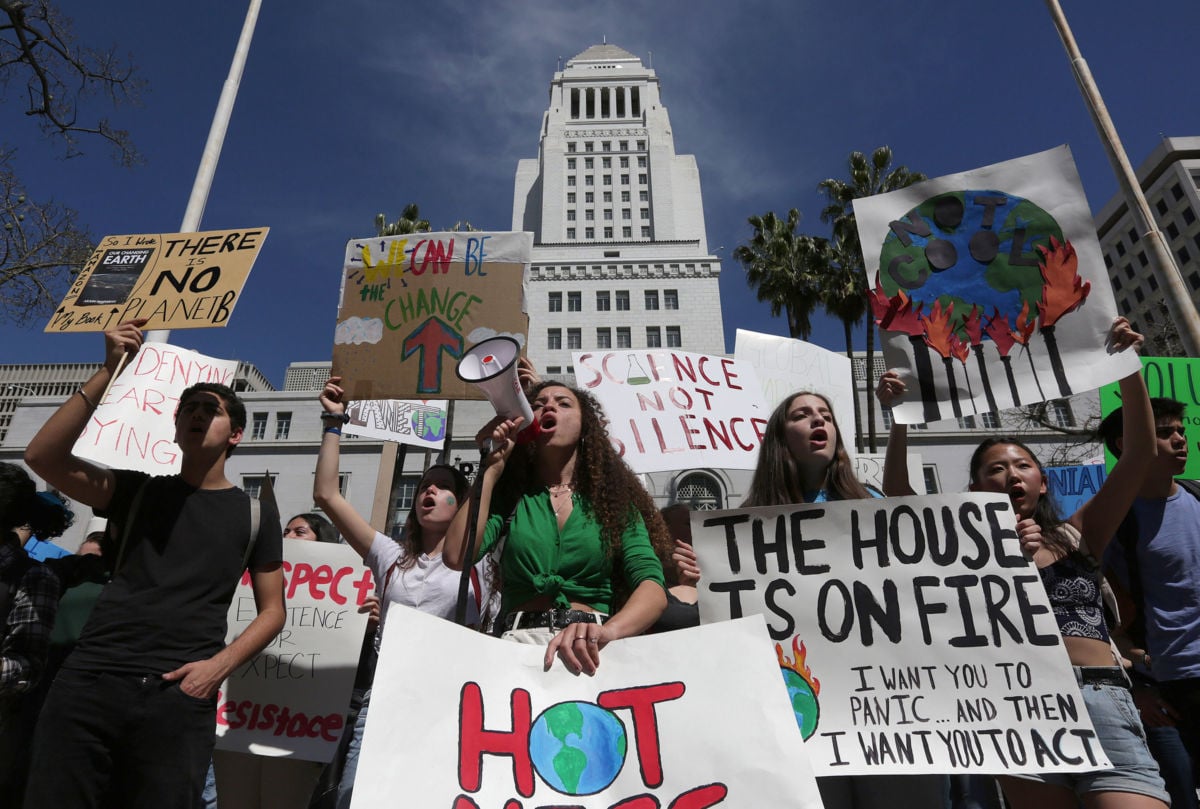
Los Angeles youth join a nationwide strike from school as they protest climate change and strike for the Green New Deal and “other necessary actions to solve the climate crisis,” at City Hall in downtown Los Angeles.KATIE FALKENBERG / LOS ANGELES TIMES VIA GETTY IMAGES
We all owe a huge debt of gratitude to those who have articulated the Green New Deal (GND), especially Rep. Alexandria Ocasio-Cortez and the Sunrise Movement. We needed something that focused attention on how serious climate change has become and the need for government action. The GND has shattered the neoliberal insistence upon incremental, market-oriented climate mitigation.
But, considering the emerging climate science and our diminished carbon budget after at least three decades of denial, and with carbon concentration in the atmosphere higher than it has been in 3 million years, it is too late to speed up the slow transition from fossil fuels to renewables with government facilitated renewable building; too late to build renewables under a Keynesian plan that employs all the workers in transition; too late for a transition that makes money and lets us keep living our present lifestyles.
The GND challenged neoliberalism with a “Big Government Plan” for climate mitigation, but as presently envisioned, these policy actions remain completely within a market transition where renewables will only replace fossil fuels by out-competing coal, oil and natural gas.
The GND could greatly speed up this slow transition, but it’s still a plan to let fossil fuels compete for far too long; it still doesn’t regulate production and distribution; it still envisions supplying 100 percent of today’s energy, plus projected growth. The GND is ultimately predicated upon a growing GDP in a business-as-usual scenario where there is enough created wealth to redistribute to marginalized populations.
If it had been implemented in the ‘90s, this carbon-price aided decarbonization, with renewables out-competing fossil fuels, could have worked and largely solved our problem. But now, there is no time and no carbon budget left for such a slow transition; no time for a tapering period or for a carbon price to work its market magic. As Sunrise Movement founder Varshini Prakash told TheGuardian, “If there was a free market solution to the climate crisis, we would’ve seen it in the last 40 years.”
It is already possible that we are on the wrong side of a threshold to that cascade of tipping points leading to ”Hothouse Earth” and the destruction of all we love and care about, including the extinction of most species. Fossil fuels are now a potentially lethal toxin already at too high a level in the atmosphere. Fossil fuels must now be kept in the ground. Governments must regulate a scheduled, rapid, managed decline of all fossil fuel production based upon the best science and risk-management expertise.
Instead of a climate mitigation plan that is shoehorned into the economic and political status quo, there is no time to taper-in mitigation to protect the economy: emissions must peak immediately, and substantial emission reduction from the present high of more than 37 billion tons annually must happen immediately.
Of course, like rejecting “Big Government” as a mitigation option, a government-regulated, managed decline affecting long-term international investment is anathema to the business elites who control our governments and many other institutions in our society. They will have to accept the duty of government to regulate in this emergency and join with all other stakeholders in the climate mobilization.
Importantly, instead ofa plan offered to consumers to buy their support, climate mitigation should be a responsibility of citizens who recognize their duty to limit damage to future generations. We don’t need urgent action on climate to make life more comfortable and secure for the world’s richest people.
Of course, we will still need mobilization to greatly expand renewable capacity to provide enough energy to keep our society from collapse, and we will need government to stabilize an economy in transition. Still, building renewables at a scale to keep our present economy expanding while reducing emissions is now effectively a pipe dream.
Climate change is a global scale problem requiring more than national solution. What we probably need, along with an improved GND, is a fossil fuel nonproliferation treaty, which could provide broad agreement limiting new fossil fuel infrastructure and finally shifting subsidies from fossil fuels to renewables. Hopefully, such a treaty could be the basis for an international scheduled managed decline, updating the work of energy experts Christophe McGlade and Paul Ekins.
Another idea proposed by climate activists is a new Marshall Plan to coordinate a powering-down transition within trade blocs and to facilitate the transfer of renewable technology to developing countries.
Presently, these proposals are just interesting ideas which have to become reality fast if we are to keep fossil fuels in the ground globally.
Moreover, 100 percent clean energy has problems not always acknowledged. For instance, under an implemented GND, fossil fuel use could increase elsewhere, such as increased extractivism in the Global South for the minerals necessary to build solar and other renewable technologies.
Finally, the GND was crafted as one party’s plan for government action, but it also requires acceptance by several future governments. This relies upon a political swing to dominant Democratic control that is, at best, highly unlikely. There is no time to wait until at least 2020, let alone the more politically likely 2024. Again, mitigation is now a sprint requiring rapid reduction from present peak emission levels that are a huge drain on our shrinking carbon budget.
Effective emission reduction now requires coalition building and/or bipartisan legislation. It requires buy-in from all political parties and the differing demographics constituting our society. Without this unanimity, the systemic changes necessary won’t be possible.
But if we recognize that climate change is an emergency, and stop trying to pretend that we can effectively mitigate slowly, then we can achieve this broad unanimity and move toward real action.
Climate change has been an emergency for at least a decade, as we passed 400 parts per million of carbon in the atmosphere under a governance system that allowed for only minimal emission reduction. The GND initiative has been a big step forward toward needed government action, but because it remains within neoliberal constraints against actually keeping fossil fuels in the ground, it obviously isn’t enough.
In fact, if we don’t progress further and faster, the GND will become part of the predatory delay that will waste our last chance to continue to evolve.
Media captionBelgium students among one million expected in more than 100 countries
School students around the world have gone on strike to demand action on climate change.
Organisers said more than a million people were expected to join the action in at least 110 countries on Friday.
They are calling on politicians and businesses to take urgent action to slow global warming.
The strikes are inspired by student Greta Thunberg, who has become a global figurehead since protesting outside Sweden’s parliament in 2018.
Carrying a “school strike for climate change” sign, the then 15-year-old said she was refusing to attend classes until Swedish politicians took action.
Media captionThe Swedish teen behind the climate strikes
The solo protest led to various movements across Europe, the US and Australia, known as Fridays for Future or School Strike for Climate.
The last co-ordinated international protest took place on 15 March, with an estimated 1.6 million students from 125 countries walking out of school.
The action on Friday began in Australia and New Zealand.
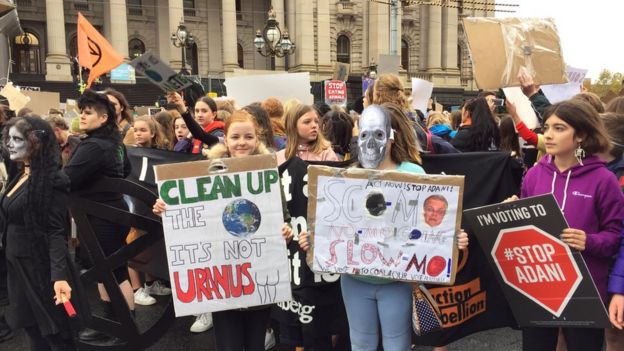
In Melbourne, 13-year-old Nina Pasqualini said she was joining the strike because she was worried about “weather disasters”.
“Every time we have huge a bushfire here another animal might go extinct,” she told Reuters news agency.
Image copyrightREUTERSImage captionOrganisers are expecting more than a million students around the world to walk out
Australia just had its hottest summer on record and climate change is seen as the cause of the increasing frequency and severity of droughts, heat waves, floods and the melting of glaciers around the world.
As countries around the world woke up, the action spread.
Strikes were held in Asian nations including India, Afghanistan Thailand and Japan.
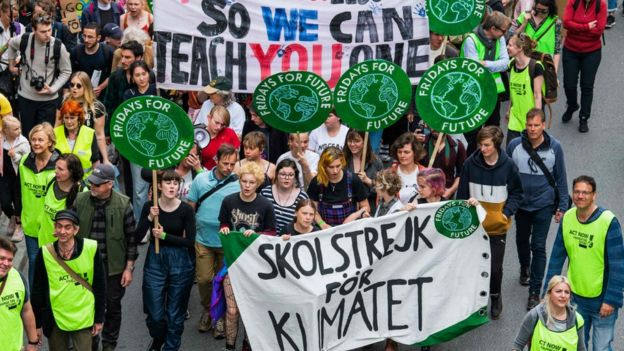
In Europe – where the movement first gained traction – images of mass strikes were shared on social media.
“Inaction equals extinction” and “save the world not your money” read some of the placards on display.
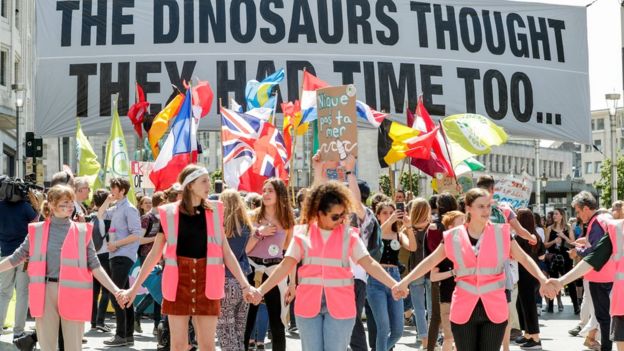
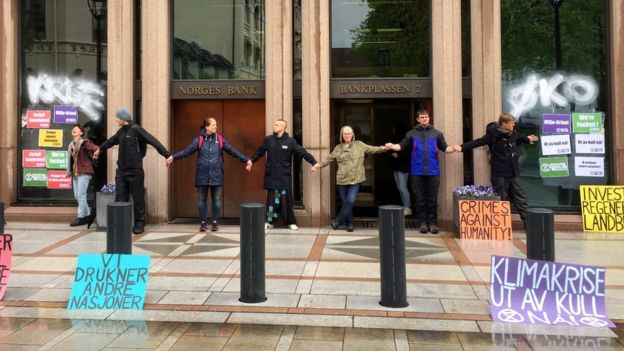
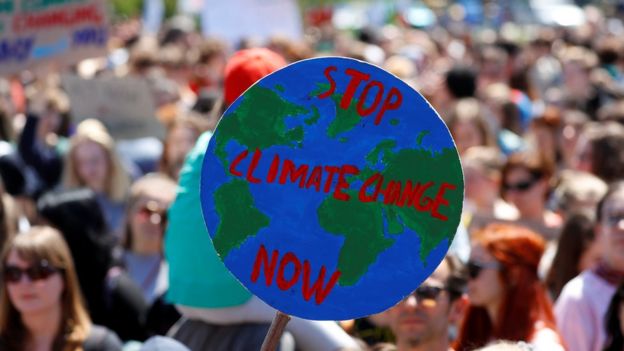
Image copyrightGETTY IMAGESImage captionGreta Thunberg led a march in Stockholm on FridayImage copyrightEPAImage captionProtesters in Brussels warned that time is running out to take actionImage copyrightEPAImage captionStudents in Frankfurt were among those calling for policies to save the planetImage copyrightREUTERSImage captionClimate protesters blocked the entrance to Norway’s central bank, demanding that it stop investing in companies that burn coalImage copyrightREUTERSImage captionDemonstrators in the Austrian capital said governments needed to act to “stop climate change now”
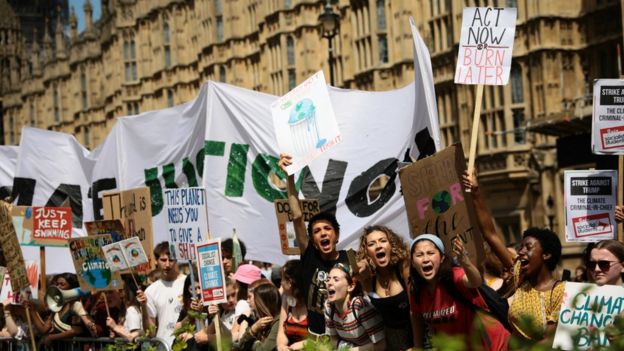
In London, scores of protesters congregated outside parliament, chanting “climate change has got to go”.
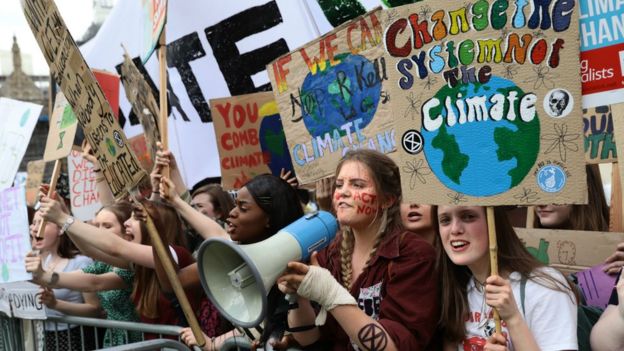
“Act now or burn later” and “change the system not the government” read some of the signs held up by participants, as they called for urgent action.
Student protesters want the government to reform the national curriculum to include more material on climate change.
Organisers said strikes had been organised in about 125 towns and cities across the UK.
Image copyrightGETTY IMAGESImage captionStudent protesters joined the global movement outside parliament in LondonImage copyrightGETTY IMAGESImage captionYoung people are calling on their governments to “act now” on climate change
An invitation to older generations
In an open letter published in Germany’s Süddeutsche Zeitung on the eve of Friday’s strike, Ms Thunberg and prominent German climate activist Luisa Neubauer, 22, called on older generations to join the action in September.
“This is our invitation. On Friday, 20 September, we will start an action week for the climate with a worldwide strike. We ask you to join us… Join in the day with your neighbours, colleagues, friends and families to hear our voices and make this a turning point in history.”
Dairy cows graze in a pasture, producing methane in their guts. A group of scientists suggests that converting methane to carbon dioxide would be a counterintuitive way to fight climate change. (Darryl Dyck / Canadian Press)
Usually, choosing between the lesser of two evils is a dismal decision. But sometimes, it’s an opportunity.
A case in point: Turning methane (a powerful greenhouse gas) into carbon dioxide (also a planet-warming pollutant) could help fight climate change, researchers say.
It’s not that CO2 isn’t a problem — it’s the main problem. But on a molecule-for-molecule basis, methane traps more heat, so converting it into something less potent would reduce its climate impact.
In fact, by restoring the concentration of methane in the atmosphere to preindustrial levels, this counterintuitive strategy could eliminate about a sixth of human-caused warming, according to a paper published Monday in Nature Sustainability. And it would add only a few months’ worth of CO2 emissions to the atmosphere.
“In the grand scheme of carbon dioxide emissions, this would not be a deal-breaker,” said lead author Rob Jackson, an earth scientist at Stanford University.
“Having said that, we’re not getting the job done on reducing emissions, so I think we need to look at some of these other approaches,” said Jackson, who chairs the Global Carbon Project, which tracks greenhouse gases.
Already, it’s clear that people will have to pull huge amounts of carbon dioxide out of the atmosphere to meet the goals of the Paris climate accord, which would limit global warming to less than 2 degrees Celsius above preindustrial levels.
Some scenarios call for removing up to 10 billion metric tons of the gas per year — a quarter of humanity’s annual emissions — by storing it in biomass or soil, or building facilities that directly capture the gas from the air.
“But no one’s talking about this for methane,” Jackson said. “That’s what we want to accomplish with this paper.”
Methane hasn’t caused as much warming as CO2, but humans have had a much bigger impact on the methane cycle, he said.
Over the last 200 years, we have more than doubled its concentration in the atmosphere by extracting fossil fuels, raising livestock, and allowing the gas to escape from landfills and wastewater treatment plants, among other activities. Today, methane levels are 1,860 parts per billion — and rising — compared with 750 ppb before 1800.
Methane also has a more acute warming effect. It traps about 84 times as much heat as CO2 over a 20-year period, and 28 times as much over the course of a century. (Its potency drops because it has a shorter lifetime in the atmosphere.) So turning a molecule of methane into a molecule of CO2 would slash its climate-altering capacity, Jackson and his coauthors say.
And the trade-off would be worth it, they argue. Restoring methane to its preindustrial concentration would involve a one-time conversion of 3.2 billion tons of the gas into CO2. That would increase CO2 levels — which were 280 ppm in preindustrial times and are currently 415 ppm — by less than 1 part per million.
“That’s one of the real selling points in my mind,” Jackson said.
So can it be done?
At this stage, the idea is mostly theoretical, but the authors are cautiously optimistic.
Researchers have started developing ways to oxidize methane into methanol, a valuable compound used for fuel and chemical manufacturing. The same reactions, if allowed to proceed further, could also be used to convert methane into carbon dioxide.
Edward Solomon, a Stanford chemist who worked on the new paper, studies one promising method of processing methane using minerals called zeolites. They catch the gas, and help with oxidation.
Researchers propose removing methane from the atmosphere by pulling air through large fans and using materials like zeolites to catalyze its conversion into carbon dioxide. Thousands of these arrays would be needed to restore preindustrial methane levels. (Stan Coffman)
The researchers envision using these kinds of materials in facilities like those being developed to remove CO2, which use fans to draw air into chambers where the gases are captured through chemical reactions.
The low concentration of methane means you’d have to process a lot of air to reduce atmospheric levels, Jackson said. “It would take many thousands of these arrays to make a dent,” he said, although it would be a much smaller effort than what’s been proposed for dealing with CO2.
And the economics could prove attractive — if countries eventually settle on a price for carbon emissions, either through a tax or a cap-and-trade system like the one in California.
Indeed, removing methane could be many times more lucrative than removing CO2, because the value of keeping a greenhouse gas out of the atmosphere typically depends on its heat-trapping ability.
Imagine a system in which the market will pay $50 for every ton of CO2 emissions that can be avoided. In the 100-year scenario in which methane is considered to be 28 times more powerful, the value of eliminating one ton of it would be $1,400. There’d be a small cost for emitting a little bit of CO2 in the conversion process, but even so, the take home would be about $1,250. (A bipartisan bill introduced in the House this year would impose a fee on carbon starting at $15 per ton of CO2 and increasing to more than $100 by 2030; models predict prices could climb as high as $500 later in the century.)
At the upper end of that range, researchers estimate that a methane removal facility the size of a football field could generate millions of dollars of income.
But that could be dangerous, warned Myles Allen, a climate scientist at Oxford University in the U.K. who was not involved in the paper.
Allen fears that, if there’s money to be made — or saved — removing methane from the atmosphere, some emitters may favor doing that instead dealing with CO2.
“That might make good business sense, but it would be terrible for the climate,” he said.
That’s because methane and carbon dioxide affect the climate in different ways.
Methane only stays in the atmosphere for about a decade, so its climate effects are short-lived. CO2, on the other hand, lingers for centuries. Thus, removing some methane might yield a small benefit right now, but won’t help solve the climate problem in the long run, Allen said.
Yet if carbon pricing schemes treat the gases as if they are interchangeable, then companies could offset their CO2 emissions by reducing methane emissions.
“You can imagine the world’s airlines getting on to this and getting all excited because suddenly it looks like they’ve got a very cheap pass and they can just carry on emitting,” he said. “And of course, they’ll just carry on causing global warming.”
Still, Allen agreed that we have to reduce the concentration of methane in the atmosphere. And he endorses the idea of developing technologies to offset the methane emissions that are difficult to eliminate, as the researchers also suggest in the paper.
Rice grows in a watery field near the city of Williams in the Sacramento Valley. Flooded soils produce methane, and rice cultivation represents about 10% of human-caused emissions. (Brian van der Brug / Los Angeles Times)
Raising cattle, growing rice and other seemingly essential activities produce the gas and they are unlikely to go away. “It’s hard for me to see any time in the near future when methane emissions will be zero,” Jackson said.
He and his colleagues will keep working to make methane conversion technology a reality, and they hope their paper will encourage others to try as well.
Jackson said part of his motivation is symbolic. Resetting methane concentrations to their preindustrial levels offers a way to “repair the atmosphere,” he said. And that might be inspiring.
“The notion of restoring the atmosphere sends a message of hope to people,” he said. “I would love to see something like this happen in my lifetime.”
The first documented extinction of 2019 occurred on New Year’s Day, with the death of a Hawaiian tree snail named George. George, who was about an inch long, had a grayish body, grayish tentacles, and a conical shell striped in beige and brown. He was born in captivity, in Honolulu, and had spent his unassuming life oozing around his terrarium, consuming fungi. Researchers with Hawaii’s forestry department had tried to find a partner for him—George was a hermaphrodite, but he needed a mate in order to reproduce—and when they couldn’t they concluded that he was the last of his kind, Achatinella apexfulva. A few days after he went, presumably gently, into that good night, the department posted a eulogy under the heading “farewell to a beloved snail . . . and a species.” “Unfortunately, he is survived by none,” it observed.
George’s passing prompted a spate of headlines, and then, it seems safe to say, was forgotten. Americans have, by now, grown inured to “last of” stories, which appear with the unsurprising regularity of seasonal dessert recipes. (George the snail was named for Lonesome George, a Pinta Island tortoise from the Galápagos, also the last of his kind, who died in 2012.) In February, the Australian government declared a ratlike creature known as the Bramble Cay melomys to be extinct. The melomys, found on a single low-lying island between Australia and Papua New Guinea, appears to have been done in by climate change, which has shrunk its habitat and brought ever more damaging flooding. Then, in April, Chinese state media reported that the last known female Yangtze giant softshell turtle had died. “Her species might die with her,” the Washington Post noted.
Last week, an international group of scientists issued what the Times called “the most exhaustive look yet at the decline in biodiversity.” The findings were grim. On the order of a million species are now facing extinction, “many within decades.” “What’s at stake here is a liveable world,” Robert Watson, the chairman of the group, Intergovernmental Science-Policy Platform on Biodiversity and Ecosystem Services, told Science.
The U.N.-backed I.P.B.E.S. is to flora and fauna what the Intergovernmental Panel on Climate Change is to the atmosphere. Based in Bonn, it is funded by a hundred and thirty-two member nations, including the United States. More than three hundred experts contributed to its latest assessment, which runs to more than fifteen hundred pages.
The authors trace two diverging trend lines: one upward-sloping, for people, and one sloping downward, for everything else. During the past fifty years, the planet’s human population has doubled. In that same period, the size of the global economy has quadrupled, and global trade has grown tenfold. If hundreds of millions of people around the world are still mired in poverty, there are many more people living in prosperity today than ever before.
To keep nearly eight billion people fed, not to mention housed, clothed, and hooked on YouTube, humans have transformed most of the earth’s surface. Seventy-five per cent of the land is “significantly altered,” the I.P.B.E.S. noted in a summary of its report, which was released last week in Paris. In addition, “66 per cent of the ocean area is experiencing increasing cumulative impacts, and over 85 per cent of wetlands (area) has been lost.” Approximately half the world’s coral cover is gone. In the past ten years alone, at least seventy-five million acres of “primary or recovering forest” have been destroyed.
Habitat destruction and overfishing are, for now, the main causes of biodiversity declines, according to the I.P.B.E.S., but climate change is emerging as a “direct driver” and is “increasingly exacerbating the impact of other drivers.” Its effects, the report notes, “are accelerating.” Watson wrote last week, in the Guardian,that “we cannot solve the threats of human-induced climate change and loss of biodiversity in isolation. We either solve both or we solve neither.”
How long can the two trend lines continue to head in opposite directions? This is the key question raised by the report, and it may turn out to be the key question of the century. Many documented species have already disappeared—to take the example of Hawaiian tree snails, Achatinella apexfulva is just one of hundreds of species that have been lost—and probably even more vanished before they could be identified. Many others, like the Yangtze giant softshell turtle, are functionally extinct.
So far, it could be argued, the casualties haven’t slowed us down. The I.P.B.E.S. report cautions, however, against assuming that this pattern will continue. Nature, it succinctly observes, “is essential for human existence.” The report points to pollinators as one group of organisms that humans can’t readily do without. Ninety per cent of flowering plants and seventy-five per cent of all types of food crops rely on pollination by animals—birds, bats, and (mostly) insects. Cash crops including coffee, cocoa, and almonds are pollinator-dependent. In many regions, important pollinators, like native bees, are in decline. It’s not clear exactly why, but probably one of the major factors is an increasing reliance on synthetic pesticides, which don’t distinguish between insects that are useful and those that are unwanted. These chemicals are supposed to prevent crop failures; the danger is that they may end up causing them.
As much as six hundred billion dollars’ worth of annual agricultural production “is at risk as a result of pollinator loss,” the I.P.B.E.S. warned. In an earlier report, on pollinators and the food supply, the group predicted that “total pollinator loss” would decrease production of the most important dependent crops “by more than 90 per cent.”
We would, it seems, be well advised to shift course, if only for our own, species-centric reasons. And, according to the I.P.B.E.S., there is still time for “transformative changes” in the “production and consumption of energy, food, feed, fibre and water.” Regrettably, though, all signs point to more of the same. In 2018, carbon-dioxide emissions from the energy sector rose to a new high of thirty-six billion tons. Also in 2018, nearly thirty million acres of tropical forest were lost—an area the size of Pennsylvania. As the Web site InsideClimate News noted, this destruction occurred “even as more corporations and countries made commitments to preserve tropical forests.” As long as we continue to tear through the biosphere, expect the losses to continue to mount. ♦
WELLINGTON (Reuters) – New Zealand’s government will introduce legislation to tackle climate change on Wednesday which includes a target for cutting methane emissions from livestock by at least 10 percent by 2030.
FILE PHOTO: A cattle farm is seen in Fernside outside Christchurch, New Zealand March 29, 2019. Picture taken March 29, 2019. REUTERS/Jorge Silva/File Photo
The agriculture sector slammed the bill as a threat to one of the largest contributors to New Zealand’s economy, though environmentalists say it is also a major polluter.
Prime Minister Jacinda Ardern, who has set a goal for the country to be carbon neutral by 2025, said on Wednesday the Climate Change Response (Zero Carbon) Amendment Bill is a “landmark action” on climate change.
The bill treats methane emissions from animals differently than other greenhouse gas emissions, but still targets a 10 percent reduction in biological methane by 2030, and a reduction of up to 47 percent by 2050.
Carbon emissions would be reduced to net zero by 2050, according to the legislation.
ADVERTISEMENT
“We’ve built a practical consensus across government that creates a plan for the next 30 years, which provides the certainty industries need to get in front of this challenge,” Ardern said in a statement.
Climate Change Minister James Shaw said the Zero Carbon Bill would make it a legally binding objective to help keep global warming below the 1.5 degrees Celsius rise forecast by U.N. experts between 2030 and 2052.
“Agriculture is incredibly important to New Zealand, but it also needs to be part of the solution,” Shaw said.
The U.N. says livestock farming alone is responsible for up to 18 percent of the greenhouse gases that contribute to global warming.
New Zealand’s main agriculture lobby group said the methane target would hurt the country and do little to help the climate.
ADVERTISEMENT
“This decision is frustratingly cruel, because there is nothing I can do on my farm today that will give me confidence I can ever achieve these targets,” said Andrew Hoggard, President of the Federated Farmers of New Zealand.
A meat industry group said it was alarmed by the target and warned of the negative impact on rural communities.
“This will impose enormous economic costs on the country and threaten many regional communities who depend on pastoral agriculture,” said Tim Ritchie, chief executive of the Meat Industry Association.
By MAhttps://www.foxnews.com/world/us-warns-china-russia-over-arctic-amid-environmental-shiftsTTHEW LEE | Associated Press
Secretary of State Mike Pompeo and Sen. Lisa Murkowski, R-Alaska, steps off a plane upon arrival in Rovaniemi, Finland, Monday, May 6, 2019. (Mandel Ngan/Pool Photo via AP)
ROVANIEMI, Finland – U.S. Secretary of State Mike Pompeo says the Trump administration is moving to assert America’s presence in the Arctic. He’s warning China and Russia that the U.S. won’t stand for aggressive moves into the region that’s rapidly opening up to development and commerce as temperatures warm and sea ice melts.
Pompeo says in a speech in Finland that the U.S. will compete for influence in the Arctic and counter attempts to make it the strategic preserve of any one or two nations. He says rule of law must prevail for the Arctic to remain peaceful.
The speech comes a day before Pompeo attends a meeting of the Arctic Council at a time of profound shifts in the region’s environment and widespread criticism of the Trump administration’s skepticism of climate change
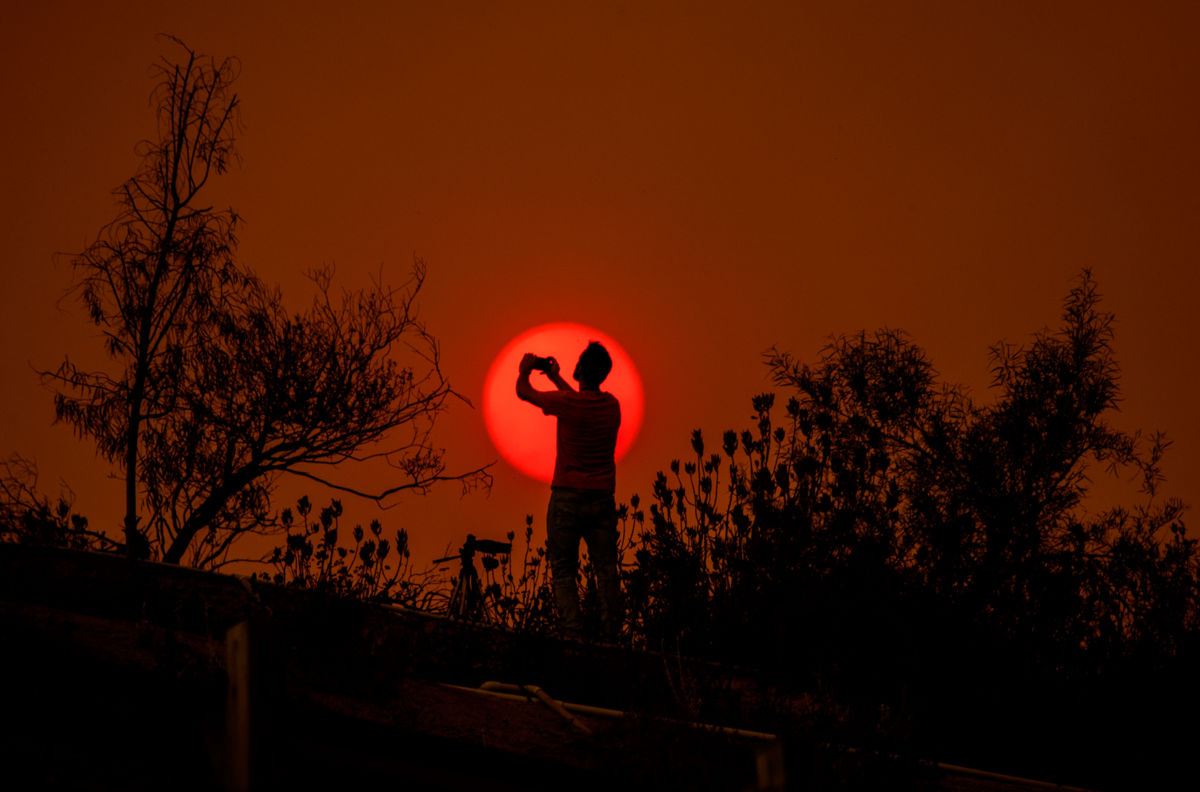
A video journalist is silhouetted by a smoke-obscured sun and sky as the Holy Fire approaches the McVicker Canyon neighborhood, which was under mandatory evacuation in Lake Elsinore, California, on August 8, 2018.ALLEN J. SCHABEN / LOS ANGELES TIMES VIA GETTY IMAGES
During the times when I’m being as emotionally honest with myself as I’m capable — when I truly ponder the idea that this industrialized version of our species may well have already baked enough warming into Earth’s life-supporting biosphere that all of us may very well be on the way out — I feel at a total loss as to what to do.
From that point of numbness, my life force begins to ask, “What next, then?” Cycling through this process for years since I’ve been reporting on the climate crisis, and most intensely during the research and field trips for my book The End of Ice: Bearing Witness and Finding Meaning in the Path of Climate Disruption, circumstances (namely my own grief and despair) have inevitably forced me into contending with my emotions.
I’ve learned, through a lot of pain and struggling, that the only way forward is to allow myself to deeply feel and express the fear, rage, shock, panic, sadness, anxiety and despair. Only then can I move into a place of taking some of the deep breaths which accompany acceptance of the grave situation at hand.
Do you feel the emptiness inside when you become aware of emperor penguin chicks drowning from collapsing ice resulting from planetary warming? Or the fear that comes when we understand our ability to feed ourselves is now very much under threat?
First: Accepting Reality
When you read of how 1.5 acres of rainforest are vanishing every, single, second, does your heart clench in fear? Or when the last of another of the rare frogs existing within said rainforest is lost from this world forever, do you shed the tears that come from a seemingly impotent sadness?
When you come to understand what co-founder of Extinction RebellionRoger Hallam, himself a former organic farmer, has previously told the public, all of these feelings set in even more deeply. In the aforementioned lecture, to paraphrase Hallam, he pointed out how we have already warmed the planet 1.2 degrees Celsius (1.2°C). Based on observational data, we are easily within a decade of losing the summer sea ice in the Arctic. Within another decade, Earth will warm another .5°C due to the melting ice alone. There is already another .5°C warming to come from CO2 that has already been emitted but we’ve yet to experience the warming. The water vapor effect from these events (and other processes already in motion) doubles the impact of warming from other sources, adding another 1°C warming. Hence, at 3°C warming, most of the Amazon rainforest is lost, which in itself adds another 1.5°C of warming. At this point, most likely, Earth is tipped into a hothouse state, possibly into conditions that render it uninhabitable by humans.
Perhaps you might think this sounds too extreme, the stuff of science fiction. If so, consider this: the level of CO2 in the atmosphere today hasn’t been seen in 12 million years, and this level of greenhouse gas is rapidly bringing Earth back into the state it was in during the Eocene Epoch, 33 million years ago, when there was no ice on either of the poles.
At that point, there was very little temperature difference between the poles and the equator, according to Harvard University Professor James Anderson, who is best known for establishing that chlorofluorocarbons were damaging the ozone layer, in an interview with Forbes magazine.
“The ocean was running almost 10ºC warmer all the way to the bottom than it is today,” Anderson said, “and the amount of water vapor in the atmosphere would have meant that storm systems would be violent in the extreme, because water vapor, which is an exponential function of water temperature, is the gasoline that fuels the frequency and intensity of storm systems.”
He warned of the folly of those who believe we can recover from this track we are on simply by reducing CO2 emissions — unless we undertake a deeply radical transformation of industry and the economic system, coupled with halting carbon emissions alongside removing what is already in the atmosphere, all within five years’ time.
“The chance that there will be any permanent ice left in the Arctic after 2022 is essentially zero,” Anderson said, while reminding us that 75 to 80 percent of the permanent ice has already melted in just the last 35 years.
Anderson warned that people have failed to come to grips with this, along with the pending collapse of the Greenland Ice Sheet, which by itself will raise sea levels seven meters.
“When you look at the irreversibility and you study the numbers, this along with the moral issue is what keeps you up at night,” Anderson said.
Second: How Shall We Be?
“My sense is that only seldom is the problem that we “don’t know” — or, at any rate, that we don’t know enough,” Chris Goode, author of The Forest and the Field, has written. “The real problem is that we don’t have a living-space in which to fully know what we know, in which to confront that knowledge and respond to it emotionally without immediately becoming entrenched in a position of fear, denial and hopelessness.”
On Earth Day I was part of a panel at the Brooklyn Historical Society. The panel discussion, titled “Chroniclers of the Climate Apocalypse,” was comprised of climate journalist Oliver Milman, climate and health reporter Sheri Fink, and myself.
During the Q and A session, someone asked me a question along the lines of this: “What do you do, Dahr, or how are you being, with the grieving that comes from how far along we already are?”
I laughed dryly, thought for a brief moment, and then answered honestly: “I don’t know? I get to figure it out all over each day. Each time I give one of my book readings, it is different, because I’m having to evolve every day.”
And that is my truth.
My unsettledness around the question arises for two reasons: One, it always forces me to look into my heart to answer, rather than my head, which means I must experience all of the emotions brought about by the crisis within which we all must live; secondly, when I do this the right way, each moment it shifts and I must live on those emotional front lines, caretaking myself alongside listening, deeply, for what I am called to do next for the planet.
For Roger Hallam, his 20 years of organic farming connected him deeply enough to Earth that when a series of climate-disruption-fueled floods made it impossible for him to continue, he knew what he needed to do: work on his Ph.D. research on the dynamics of political power with particular reference to radical campaign design.
He then co-founded Extinction Rebellion, a group that describes itself as “an international movement that uses non-violent civil disobedience to achieve radical change in order to minimize the risk of human extinction and ecological collapse.”
I asked Hallam why it is imperative for people to rebel.
“Life is short and all we really know is that it pays to live a good life — whatever happens,” he said. “And that means the golden rule — do unto others as you would have them do unto you. This rule is broken in the most grotesque way … particularly by way of what we are doing to our kids.”
To those who feel there is no point in rebelling or taking other actions for the betterment of the planet, who feel that all is lost, Hallam had this to say: “We are in this life to do good, not to bargain with outcomes that are out of our control, anyhow.”
In other words, it is imperative to do what we can to protect the planet, even without a guarantee of success.
Third: To What Are We Devoted?
By way of the corporate capitalist industrial growth culture within which most of us have been raised and immersed, we have become disconnected from the planet we are so deeply part of. This, I believe, is the root cause of the climate crisis we now find ourselves in. Hence, the first step toward answering the question of “how to be” during this time, which must be answered before any of us can decide “what to do,” is to connect ourselves back to the planet. For we cannot begin to walk until our feet are on the ground.
Each day I wake and begin to process the daily news of the climate catastrophe and the global political tilt into overt fascism. The associated trauma, grief, rage and despair that come from all of this draws me back to the work of Stan Rushworth, Cherokee elder, activist and scholar, who has guided much of my own thinking about how to move forward. Rushworth has reminded me that while Western colonialist culture believes in “rights,” many Indigenous cultures teach of “obligations” that we are born into: obligations to those who came before, to those who will come after, and to the Earth itself.
Hence, when the grief and rage threaten to consume me, I now orient myself around the question, “What are my obligations?” In other words, “From this moment on, knowing what is happening to the planet, to what do I devote my life?“
Each of us must ask ourselves this question every day, as we face down catastrophe.
The loss of animals, often due to unregulated or illegal hunting, has consequences for the carbon storage capacity of forests, yet this link is rarely mentioned in high-level climate policy discussions, according to a new study from Lund University in Sweden and the University of Copenhagen in Denmark.
Many wildlife species play a key role in dispersing the seeds of tropical trees, particularly large-seeded tree species, that on average have a slightly higher wood density than small-seeded trees. The loss of wildlife therefore affects the survival of these tree species – in turn potentially affecting the carbon storage capacity of tropical forests.
Forest fauna are also involved in many other ecological processes, including pollination, germination, plant regeneration and growth, and biogeochemical cycles. Empirical studies across the tropics have shown that defaunation (i.e., the human-induced extinction of wildlife) can have cascading effects on forest structure and dynamics.
The sustainability of hunting is questionable in many locations, and particularly larger species are rapidly depleted when hunting supplies urban markets with meat from wild animals.
The study assessed to which extent the link between defaunation and carbon storage capacity was addressed in contemporary forest governance, focusing on a particular mechanism reffered to as Reducing Emissions from Deforestation and forest Degradation (REDD+).
The results show that although higher-level policy documents acknowledge the importance of biodiversity, and sub-national project plans mention fauna and hunting more explicitely, hunting as a driver of forest degradation is only rarely acknowledged. Moreover, the link between fauna and forest ecosystem function were not mentioned in international or national level documents.
Rather than an oversight, this may represent a deliberate political choice to avoid adding further complexity to REDD+ negotiations and implementation. This may be attributed to a desire to avoid the transaction costs of taking on these additional “add-ons” in a negotiation process that has already been complex and lengthy.
“Although biodiversity has moved from a side issue to an inherent feature over the last decade, we show that the ecological functions of biodiversity are still only mentioned superficially,” says Torsten Krause, Associate Senior Lecturer at the Lund University Centre for Sustainability Studies in Sweden.
“At the sub-national level, fauna and hunting were much more likely to be mentioned in project documents, but we still found no explicit mentioning of a link between defaunation and carbon storage capacity”, he adds.
The study demonstrates that defaunation is virtually overlooked in international climate negotiations and forest governance.
“The assumption that forest cover and habitat protection equal effective biodiversity conservation is misleading, and must be challenged,” says Martin Reinhardt Nielsen Associate Professor at the Department of Food and Resource Economics under the University of Copenhagen, Denmark.
“The fact that defaunation and particularly the loss of large seed dispersers through unsustainable hunting have lasting repercussions throughout the forest ecosystem, must be acknowledged and considered in forest governance broadly, or we risk losing the forest for the trees”, he concludes.
###
About the study:
The researchers conducted a desk study searching relevant international decisions on forests by the conferences of the parties to the UNFCCC and recent national REDD+ strategies and program documents. They analysed 49 national REDD+ documents (e.g., national REDD+ strategies, and National Program Documents) in 20 countries, with a focus on Colombia, Ecuador, Nigeria, Tanzania and Indonesia. Finally, the researchers also analysed sub-national REDD+ project documents for verified REDD+ projects in Colombia, Indonesia and Tanzania.







 Exposing the Big Game