Exposing the Big Game

Forget Hunters' Feeble Rationalizations and Trust Your Gut Feelings: Making Sport of Killing Is Not Healthy Human Behavior

Exposing the Big Game

Would You Change Your Eating Habits to Reduce Your Carbon Footprint?

What did you eat for breakfast, lunch and dinner yesterday?

Take this short quiz to find out how much your choices contribute to climate change. Then, tell us: How did you score? How do your eating habits compare with those of other Americans?

In “Your Questions About Food and Climate Change, Answered,” Julia Moskin, Brad Plumer, Rebecca Lieberman and Eden Weingart answer questions about the impact that food shopping, cooking and eating habits have on climate change:

Does what I eat have an effect on climate change?

Yes. The world’s food system is responsible for about one-quarter of the planet-warming greenhouse gases that humans generate each year. That includes raising and harvesting all the plants, animals and animal products we eat — beef, chicken, fish, milk, lentils, kale, corn and more — as well as processing, packaging and shipping food to markets all over the world. If you eat food, you’re part of this system.

How exactly does food contribute to global warming?

Lots of ways. Here are four of the biggest: When forests are cleared to make room for farms and livestock — this happens on a daily basis in some parts of the world — large stores of carbon are released into the atmosphere, which heats up the planet. When cows, sheep and goats digest their food, they burp up methane, another potent greenhouse gas contributing to climate change. Animal manure and rice paddies are also big methane sources. Finally, fossil fuels are used to operate farm machinery, make fertilizer and ship food around the globe, all of which generate emissions.

Which foods have the largest impact?

Meat and dairy, particularly from cows, have an outsize impact, with livestock accounting for around 14.5 percent of the world’s greenhouse gases each year. That’s roughly the same amount as the emissions from all the cars, trucks, airplanes and ships combined in the world today.

In general, beef and lamb have the biggest climate footprint per gram of protein, while plant-based foods tend to have the smallest impact. Pork and chicken are somewhere in the middle.

Is there a simple food choice I can make that would reduce my climate footprint?

Consuming less red meat and dairy will typically have the biggest impact for most people in wealthy countries. That doesn’t necessarily mean going vegan. You might just eat less of the foods with the biggest climate footprints, like beef, lamb and cheese. If you’re looking for substitutes, pork, chicken, eggs and mollusks have a smaller footprint. But plant-based foods like beans, pulses, grains and soy tend to be the most climate-friendly options of all.

How much would changing my diet actually help?

It varies from person to person. But a number of studies have concluded that people who currently eat a meat-heavy diet — including much of the population of the United States and Europe — could shrink their food-related footprint by one-third or more by moving to a vegetarian diet. Giving up dairy would reduce those emissions even further.

If you don’t want to go that far, there are still ways to shrink your individual footprint. Just eating less meat and dairy, and more plants, can reduce emissions. Cutting back on red meat in particular can make a surprisingly large difference: According to a World Resources Institute analysis, if the average American replaced a third of the beef he or she eats with pork, poultry or legumes, his or her food-related emissions would still fall by around 13 percent.

Students, read the rest of the green “Big Picture” section of the article, then tell us:

— What were the most interesting or surprising facts about climate change and food you learned? What questions do you still have?

— How climate-friendly is your diet? Do you tend to eat a lot of meat and dairy? Or do your meals mostly consist of plant-based foods? How do you feel about the impact your eating habits have on the environment?

— Why do you choose to eat the way you do? Do your parents do most of the meal planning, food shopping and cooking? Do you make any personal choices based on moral, religious, environmental or health reasons? Or, do you just simply eat what tastes good?

— After the “Big Picture” introduction, the article goes on to detail five specific areas that contribute to climate change: Meat, Seafood, Dairy, Plants, and Shopping and Food Waste. Choose one and read the related section. What did you learn about this topic? If you were to alter your diet in this area to make it more environmentally-friendly, what changes would you have to make? How difficult would these changes be for you and why?

— Now that you know more about the impact your eating habits have on the environment, would you actually be willing to change any of them to reduce your carbon footprint? If so, what specific changes would you make and why? If not, why not?

Students 13 and older are invited to comment. All comments are moderated by the Learning Network staff, but please keep in mind that once your comment is accepted, it will be made public.

READ 24 COMMENTS

Cows and climate change: A closer look

Also: The skinny on meal kits

(Sködt McNalty/CBC)

726
comments

Hello there! This is our weekly newsletter on all things environmental, where we highlight trends and solutions that are moving us to a more sustainable world. (Sign up here to get it in your inbox every Thursday.)

This week:

  • The sustainability of meat
  • Behold the U.S. Climate Alliance
  • What’s in the box? Gauging the eco-friendliness of meal kits

Cows and climate change: A closer look

(Joe Klamar/Getty Images)

The extent to which meat production contributes to climate change is hotly contested. We highlighted some of the concernsin our last issue, but heard from some readers who felt it didn’t convey the full picture.

Earlier this year, when U.S. congresswoman Alexandria Ocasio-Cortez first started promoting the Green New Deal — the Democratic proposal to mobilize government to address climate change and income inequality — she made comments about the significant impact of “cow farts” on carbon emissions.

That concerned Frank Mitloehner, an esteemed animal science professor at the University of California, Davis, who tweeted at AOC, telling the rookie lawmaker that “meat/milk” was only responsible for four per cent of greenhouse gas emissions in the U.S.

In an interview with CBC, Mitloehner said agriculture is “often depicted in a negative way. And that’s unfortunate, because agriculture should be an important solution to [climate change], and could be. Plus, we all have to eat.”

Ocasio-Cortez’s comment reflected a broader concern about the amount of methane released in beef production. (For the record, bovine burps are the main culprit.) As far as greenhouse gases go, methane is in some ways more concerning than carbon dioxide — a 2014 assessment from the Intergovernmental Panel on Climate Change (IPCC) said methane traps heat 28 times more than CO2.

Mitloehner pointed out, however, that methane only stays in the atmosphere for about a decade. CO2, on the other hand, stays up there for 1,000 years or more. In a hypothetical scenario, Mitloehner said, if you operated a dairy with a steady herd of 1,000 cows over 50 years, after the first decade, “you’re not adding new, additional methane to the atmosphere.”

Researchers have been looking at a number of ways of reducing methane on farms — such as feeding cows seaweed — but Mitloehner said their impacts are still being studied.

While raising cattle provides income to farmers and food for the masses, it also has ecological benefits.

“From a natural resources perspective, Canadian beef producers are stewards to over 44 million acres [16 million hectares] of grasslands, and that plays a critical role in carbon storage,” said Monica Hadarits, executive director for the Canadian Roundtable on Sustainable Beef, a non-profit group that promotes the efforts of the beef industry to meet green goals.

A 2018 study by the Joint Research Centre in Nature Climate Change showed that soil is a highly effective sink for greenhouse gases — and the urine and manure of grazing cows are key to keeping soil healthy. But the study also said that farmers must balance the use of fertilizers in order to minimize the release of nitrous oxide, a greenhouse gas that is nearly 300 times as heat-trapping as CO2.

Mitloehner spends a fair amount of time on social media addressing misconceptions about the climate impacts of agriculture. Earlier this week, he tweeted at the BBC for overstating the environmental virtues of going vegan.

In terms of cutting carbon emissions, he said curbing our reliance on gasoline vehicles and air travel is far more consequential. As Mitloehner wrote in a tweet, fossil fuel-related activities are “the 800lb gorilla.”

— Andre Mayer

Climate change: UK ‘can cut emissions to nearly zero’ by 2050

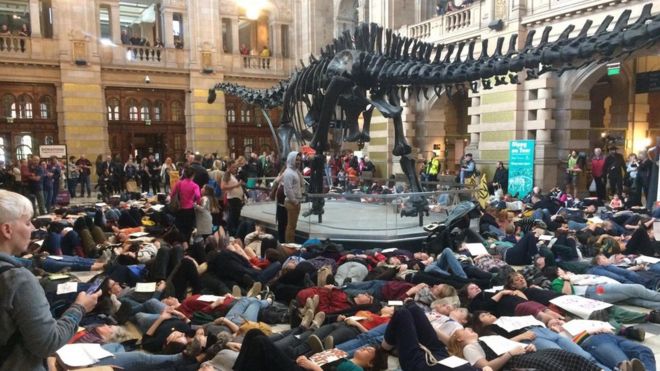
Wee Rebellion protesters stage a "die in" beneath Dippy the Dinosaur at Kelvingrove Art Gallery and Museum in GlasgowImage copyrightPA
Image captionProtesters at a “die in” in Glasgow

The UK should lead the global fight against climate change by cutting greenhouse gases to nearly zero by 2050, a report says.

The Committee on Climate Change (CCC) maintains this can be done at no added cost from previous estimates.

Its report says that if other countries follow the UK, there’s a 50-50 chance of staying below the recommended 1.5C temperature rise by 2100.

A 1.5C rise is considered the threshold for dangerous climate change.

Some say the proposed 2050 target for near-zero emissions is too soft, but others will fear the goal could damage the UK’s economy.

The CCC – the independent adviser to government on climate change – said it would not be able to hit “net zero“ emissions any sooner, but 2050 was still an extremely significant goal.

The main author Chris Stark told me: “This report would have been absolutely inconceivable just a few years ago. People would have laughed us out of court for suggesting that the target could be so high.”

The main change, he said, was the huge drop in the cost of renewable energy prompted by government policies to nurture solar and wind power.

Beto O’Rourke now has the most robust climate proposal of any 2020 presidential candidate

But some activists think the plan doesn’t go far enough.

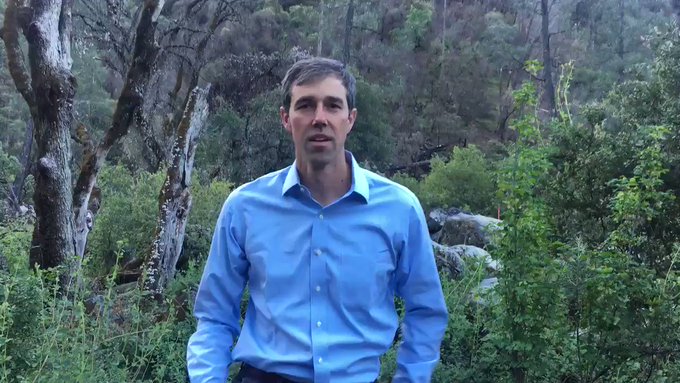
2020 presidential contender Beto O’Rourke toured Yosemite National Park on Monday, where he announced his $5 trillion plan to fight climate change. 
Beto O’Rourke/Twitter

Former Democratic Texas representative, 2020 presidential contender, and table-standerBeto O’Rourke on Monday released a new policy proposal, what he called “the most ambitious climate plan in the history of the United States.” While not entirely aligned with the Green New Deal resolution, the broad framework introduced to Congress in February, it’s the most comprehensive climate policy proposal put out by any 2020 contender to date.

Embedded video

Beto O’Rourke

@BetoORourke

Heading into Yosemite National Park to talk about our historic climate action plan. Follow along throughout the day and read the plan at http://BetoORourke.com/climate-change 

2,069 people are talking about this

O’Rourke is pitching big numbers and ambitious targets: $5 trillion in new investments, halving greenhouse gas emissions by 2030, and net-zero emissions by 2050. It’s his first major policy proposal and it’s a stab at distinguishing himself from the crowded field of 2020 presidential candidates on a major issue for Democratic primary voters. An April Monmouth Universitypoll of Iowa Democratic voters showed that climate change was the second-most important issue to voters after healthcare.

But getting more specific with his policies also opens him up to scrutiny and criticism. The plan has already drawn a scolding from activists who claimed right off the bad O’Rourke should have offered more aggressive goals. And Washington Gov. Jay Inslee, a fellow 2020 presidential contender, responded to the new plan by attacking O’Rourke’s record in Congress. These reactions are revealing a fissure between candidates and environmental activists who keep pushing further, a gap that could haunt both sides come election day.

O’Rourke’s climate plan brings more specifics and a narrower scope

The proposal lays out a four-pronged approach to how an O’Rourke administration will tackle climate change. That includes 1) executive action, 2) mobilizing $5 trillion over 10 years to invest in a clean energy transition, 3) guaranteeing net-zero emissions by 2050, and 4) preparing vulnerable communities for the impacts of climate change.

O’Rourke pulls no punches in laying out the stakes.

“Climate change is the greatest threat we face — one which will test our country, our democracy, and every single one of us,” he writes on his website.

Among its provisions, O’Rourke’s framework attaches dollar amounts to some specific line items, like $250 billion to research and development. It include grants for job training as part of its path to a cleaner economy, but for the most part, it’s narrowly focused on climate and energy — cutting emissions and creating alternatives.

Out of the top-line $5 trillion number, roughly $3.5 trillion in O’Rourke’s climate plan is allocated through tax incentives, loans, and other financing mechanisms for infrastructure, research, resilience, and clean energy deployment. The $1.5 trillion outlay would be funded by “structural changes to the tax code” that end tax breaks to fossil fuel companies and raise rates on corporations and top earners. Of that, $1.2 trillion would to grants for sustainable housing, transportation, public health, farming, and start-ups.

In that sense, O’Rourke’s climate plan actually looks quite a bit like the American Recovery and Reinvestment Act of 2009 in that it leverages a big chunk of public money and tax incentives to finance public infrastructure projects and spur innovation. In O’Rourke’s case, the aim to curb energy consumption and boost cleaner fuels and electricity sources.

However, it takes more than wind turbines and solar panels to fight climate change; you have to cut greenhouse gas emissions from existing fuel sources. And despite the attrition of coal, overall energy use, including fossil fuels, is still rising in the United States.

But rather than a carbon tax or a cap-and-trade system, O’Rourke is anchoring a legally binding net-zero emissions standard by 2050. “This standard will send a clear price signal to the market while putting in place a mechanism that will ensure the environmental integrity of this endeavor — providing us with the confidence that we are moving at least as quickly as we need in order to meet a 2050 deadline,” according to O’Rourke’s proposal. This doesn’t rule out pricing carbon but instead focuses on setting definitive goal posts.

While there is some funding allocated for job training, O’Rourke doesn’t include a federal jobs guarantee, a key element in the Green New Deal. And O’Rourke counts on market forces and incentives to move the needle toward cleaner energy to greater extent than the authors of the Green New Deal.

The backlash to O’Rourke’s proposal, explained

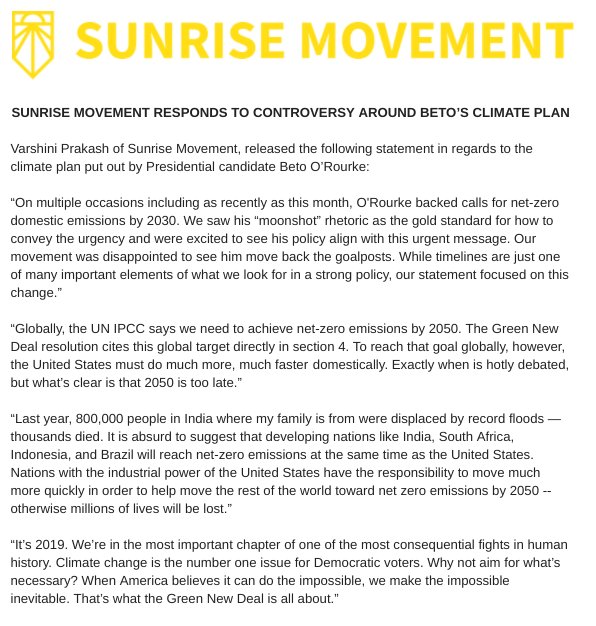
The Sunrise Movement, an activist group promoting the Green New Deal, immediately criticized the new proposal, not for its provisions, but for its timeline.

“Unfortunately, Beto gets the science wrong and walks back his commitments from earlier this month in Iowa to move to net-zero emissions by 2030,” Varshini Prakash, executive director of Sunrise, wrote in a statement Monday. “Beto claims to support the Green New Deal, but his plan is out of line with the timeline it lays out and the scale of action that scientists say is necessary to take here in the United States to give our generation a livable future.”

It’s true that O’Rourke said he wanted net-zero greenhouse gas emissions by 2030 during a campaign stop in early April. But that’s not in line with what scientists say is necessary. The Intergovernmental Panel on Climate Change reported last year that in order to keep global warming limited to 1.5 degrees Celsius this century, the world must halve greenhouse gas emissions by roughly 2030, get to zero net emissions by 2050, and go negative thereafter.

Getting to net-zero emissions by the middle of the century is already an incredibly ambitious target. Getting there in 10 years is damn near impossible.

Eric Holthaus

@EricHolthaus

My main concern with Beto’s plan is that net zero by 2050 is a global goal, not a U.S. goal. The U.S. goal needs to be much much more ambitious than that in order to motivate deeper cuts internationally that are consistent with the 1.5 degree target.https://twitter.com/EricHolthaus/status/1122888302678429703 

JesseJenkins@JesseJenkins

Okay. In my professional opinion, it is not really feasible to imagine a net zero transition by 2030, and the GND Resolution itself does not call for such a timeline. But I can see how you’d reach that conclusion from the IPCC report.

See JesseJenkins’s other Tweets

Back in March, Zeke Hausfather, a climate scientist and analyst with Carbon Brief, ran through, sector by sector, the extraordinary list of things that would need to happen in a 10-year mobilization to net-zero emissions vs. a 30-year mobilization.

Zeke Hausfather@hausfath

The targets set in the proposed Green New Deal are a bit ambiguous. It suggests a 10-year mobilization, but does not necessarily set a goal of net-zero carbon by 2030. Lets explore the impact of the goals on the climate and the challenge of mitigation *epic thread*. 1/27

93 people are talking about this

And even the Green New Deal’s framers aren’t aiming for net-zero emissions by 2030. My colleague David Roberts directly asked Sen. Ed Markey (D-MA), one of authors of the Green New Deal resolution, if this was the target. The senator emphatically said no.

Yet Sunrise at first said that the Green New Deal calls for a 10-year mobilization to meet 100 percent of US power demand with zero-emissions sources.

Update, Wednesday, 2:21 pm: Prakash released another statement acknowledging that the Green New Deal cited the IPCC target of net-zero emission by 2050, but that “2050 is too late.”

Sunrise Movement 🌅

@sunrisemvmt

Our statement on the controversy around @BetoORourke‘s climate plan:

THREAD

29 people are talking about this

Other environmental groups had a more favorable read of O’Rourke’s proposal. “This plan to confront the climate crisis is the kind of leadership we need from our next president,” Tiernan Sittenfeld, senior vice president for government affairs at the League of Conservation Voters, wrote in a statement.

O’Rourke isn’t counting on Congress to drive climate policy

Should O’Rourke take the oath of office in 2021, he says he will reenter the Paris climate agreement, implement rules to cut emissions of super-potent greenhouse gases like methane and hydrofluorocarbons, set tighter clean air rules, ramp up appliance efficiency standards, demand clean energy procurement from federal contractors, and end new fossil fuel leases on public lands.

Some states might sue to block these changes, but they are grounded in existing legal authorities and are likely the most feasible parts of his climate agenda, especially if Congress remains just as gridlocked after the next election.

Still, a comprehensive, enduring climate policy would still have to go through the House and Senate at some point. Lawmakers pushing the Green New Deal show no sign of letting up so far, but with the Senate filibuster in place, most meaningful climate policies have grim prospects barring a massive sweep in the next election. (O’Rourke has broached getting rid of the filibuster.)

O’Rourke deserves credit for going beyond simply giving a thumbs up or thumbs down on the Green New Deal like other presidential contenders. And it’s likely other candidates will soon weigh in with more robust climate proposals of their own. Sen. Elizabeth Warren (D-MA) as already taken a stab at climate policy through her plan for public lands released in April, which also calls for ending new leases for fossil fuel extraction. Her proposal adds a commitment to generate 10 percent of US electricity from renewables on public lands.

If Politicians Can’t Face Climate Change, Extinction Rebellion Will

A new movement is demanding solutions. They may just be in time to save the planet.

By David Graeber

Mr. Graeber is an anthropologist and activist.

 Extinction Rebellion members during climate protests in London last week.CreditFrank Augstein/Associated Press
Image
 Extinction Rebellion members during climate protests in London last week.CreditCreditFrank Augstein/Associated Press

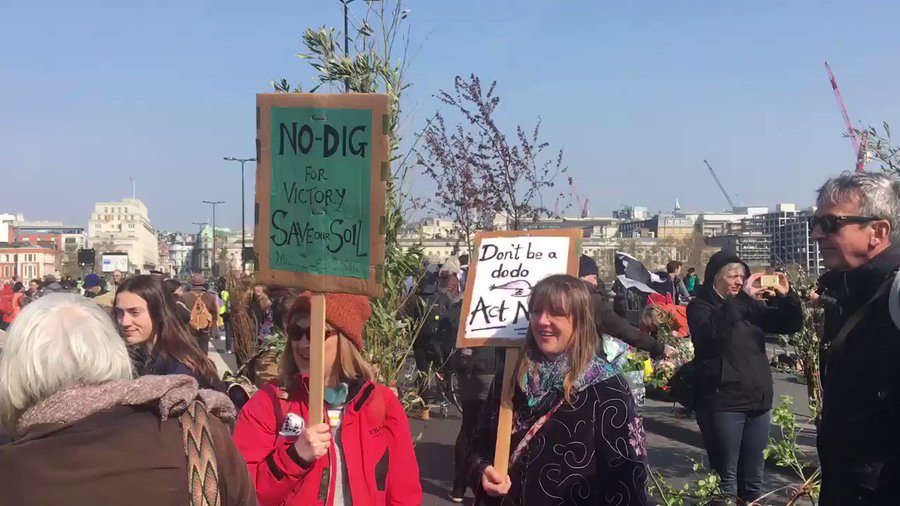
On April 15, thousands of activists from a movement called Extinction Rebellion started occupying several sites in central London, shutting down major roads and demanding the country’s politicians take immediate, drastic action in the face of climate change.

For more than a week, the streets were awash with an infectious sort of hope. Beyond the potent symbol of popular power represented by their presence in the heart of the city, activists and passers-by had the chance to experiment with collective politics. Yes, there were camera-worthy stunts and impossible-to-ignore disruptions of business as usual. But people also assembled, broke into discussion groups and returned with proposals. If the government wasn’t talking about the climate, Extinction Rebellion would lead by example.

The action was the crest of a wave that arguably began with the high school walkouts over the climate that had been sweeping Europe since late last year, and it was remarkable for including thousands of citizens — many from small towns with no experience of radical politics — who were willing, sometimes even eager, to risk arrest.

Their demands were, and are, simple. First, that the government declare a state of emergency and “tell the truth” about the global situation — that thousands of species are in danger of extinction, that there is a very real possibility that human life itself may eventually follow. Second, that Britain set a goal to eliminate all carbon emissions by 2025, and third, that the specifics of this emergency program be worked out not from above, but through the creation of citizens’ assemblies.

Amid simmering public anger over dissatisfaction with government inaction on the climate, the protests changed the public conversation so quickly and so widely that politicians have been forced to take notice and meet with activists they could once have safely ignored.

The apparent paralysis of the forces of order in the face of what looked a lot like a nonviolent uprising merely echoes the paralysis of the government itself. For months now, Parliament has largely abandoned the business of government entirely, unable to resolve the question of how and whether Britain will leave the European Union, yet at the same time seemingly unable to seriously discuss, let alone legislate, anything else. But the squabbling and endless recriminations in Westminster are just a particularly farcical version of a global phenomenon. The world’s political classes are, increasingly, rendering themselves almost completely irrelevant in the eyes of their constituents.

Police officers on April 17 carrying away an Extinction Rebellion protester who was blocking Oxford Circus in central London. CreditNeil Hall/EPA, via Shutterstock
Image
Police officers on April 17 carrying away an Extinction Rebellion protester who was blocking Oxford Circus in central London. CreditNeil Hall/EPA, via Shutterstock

Nowhere is this more obvious than in the case of climate change. Scientists agree that humanity faces an existential threat. The global public overwhelmingly agrees with them. Young people even in rich countries like America and Britain, terrified of what the world will look like when they are in their 50s and the current governing elites are safely dead, are increasingly willing to embrace extraordinary measures. In both countries, more young people are questioning or rejecting capitalism itself.

To many of us, pretty much anything seems better than carrying on as usual, unto disaster. If ever a time called for grand visions, this is it. Yet politicians almost everywhere seem unable to think beyond the next election. The kind of vision in public works and collaboration that no more than a few generations ago created the United Nations, welfare states, space programs and the internet now seems inconceivable to the richest and most powerful governments on earth, even if the very fate of the planet depends on it.

The last 30 years or so have seen a kind of war on the very idea of visionary politics. Where ’60s rebels called for “all power to the imagination,” the consensus of the opinion makers who took over as those social movements sputtered has been precisely the opposite: The very idea of unleashing the human imagination on political life, we are consistently told, can lead only to economic misery, if not the gulag.

And as left and right both look to the past — the one toward midcentury welfare states and the other, darkly, toward xenophobia and nationalism — the collapsing center warns us to fear political passion of any sort. It’s all so much irrational “populism” — a term now used to tar anyone who objects that all key decisions affecting their lives should be made by technocrats trained in neoclassical economic theory. Yet the technocrats have so far proved utterly incapable of addressing the climate crisis.

If real passion and vision are necessary, they will have to come from outside the system. The activists who assembled and debated in London recognized that the goal of zero emissions in six years would require huge social and economic dislocation. But the very daunting nature of the task seemed to call out creative solutions.

These took many forms, from new mass transport systems to four- or even three-day work weeks, green industrial revolutions, spiritual awakenings and the replacement of the discipline of economics and its exhortations toward endless growth with a new science based on principles that rise to the challenges of a changing climate. Many of these ideas might seem ridiculous. Some no doubt are. But with scientists warning us we may have precious little time before rates of planetary warming lead to irreversible consequences, the one thing that seems clear is that refusal to engage in this kind of imaginative exercise is the real danger.

Threatened with irrelevance, some politicians have started to respond. In Britain, the opposition Labour Party under Jeremy Corbyn has now proposed that the first of Extinction Rebellion’s demands, a national state of climate emergency, be put to a vote in Parliament as early as Wednesday. Whether the motion is successful or not, it represents a previously difficult-to-imagine acknowledgment of the crisis.

It’s just barely possible that Britain, the nation that ushered in the Industrial Revolution and its explosive carbon emissions, might also be the first to make a serious effort to undo the damage.

But if the government can’t bring itself to do so, the people will have to. With any luck, they’ll be just in time to save the planet.

DAVID ATTENBOROUGH WARNS CLIMATE CHANGE COULD LEAD TO COLLAPSE OF SOCIETY: ‘WE ARE RUNNING OUT OF TIME’

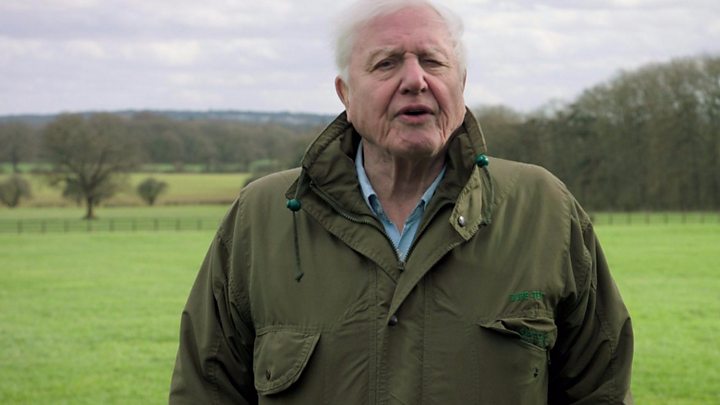
Renowned British naturalist and broadcaster David Attenborough has warned that we are facing “global catastrophe” if we do not act rapidly to deal with climate change.

Attenborough, 92, made the comments in a new one-off program for the BBC titled Climate Change: The Facts, which airs in the U.K tonight.

“In the 20 years since I first started talking about the impact of climate change on our world, conditions have changed far faster than I ever imagined,” Attenborough says in the film, Radio Times reported.

“It may sound frightening, but the scientific evidence is that if we have not taken dramatic action within the next decade we could face irreversible damage to the natural world and the collapse of our societies,” he said. “We’re running out of time but there’s still hope. I believe that if we better understand the threat we face, the more likely it is that we can avoid such a catastrophic future.”

Using interviews with several leading researchers in the field, the program investigates the science of climate change; the impact it could have on humans and the natural world if major reductions in carbon emissions are not made; and potential solutions to this “global threat.”

“One degree Celsius global warming may not sound like much, but it’s having a dramatic effect on our weather,” Peter Stott from the U.K. Met Office says in the film. “We’re seeing extreme heat in southern Africa, Japan, North America, in the U.K. as well. So it doesn’t mean to say that every single weather event is due to climate change. But what [it] does mean, is that with the baseline climate having changed, then the frequency of the extreme temperatures is increasing.”

Richard Black, from the Energy and Climate Change Intelligence Unit, adds: “Often the question is did climate change cause a certain event, and you can never really answer that question. But what scientists do is to look at whether climate change made a certain event more or less likely or more or less intense.”

As well as climate experts, the program also briefly features Swedish teen activist Greta Thunberg, who sparked a global movement last year when she began striking on school days.

Thunberg began her “School Strike for the Climate” by protesting alone—initially—outside the Swedish parliament in Stockholm every Friday. Her activism soon attracted the attention of the media, inspiring similar protests by young people around the world.

“My future and everyone else’s future is at risk and nothing is being done, no one is doing anything, so then I have to do something,” Thunberg says in the film, Radio Times reported. “So I sat myself down on the ground outside the Swedish parliament, and I decided that I wasn’t going to go to school.

“The first day I sat all alone. Then the second day people started joining me. I wouldn’t have imagined in my wildest dreams that this would happen. It happened so fast.”

David AttenboroughDavid Attenborough on stage during UKTV Live 2016 at BFI Southbank on September 6, 2016, in London.DAVE J HOGAN/DAVE J HOGAN/GETTY IMAGES

Climate change: Sir David Attenborough warns of ‘catastrophe’

Media captionViewers can watch Climate Change – The Facts on BBC One, Tonight at 9pm

Sir David Attenborough has issued his strongest statement yet on the threat posed to the world by climate change.

In the BBC programme Climate Change – The Facts, the veteran broadcaster outlines the scale of the crisis facing the planet.

Sir David says we face “irreversible damage to the natural world and the collapse of our societies”.

But there is still hope, he says, if dramatic action to limit the effects is taken over the next decade.

Sir David’s new programme lays out the science behind climate change, the impact it is having right now and the steps that can be taken to fight it.

“In the 20 years since I first started talking about the impact of climate change on our world, conditions have changed far faster than I ever imagined,” Sir David states in the film.

“It may sound frightening, but the scientific evidence is that if we have not taken dramatic action within the next decade, we could face irreversible damage to the natural world and the collapse of our societies.”

Speaking to a range of scientists, the programme highlights that temperatures are rising quickly, with the world now around 1C warmer than before the industrial revolution.

“There are dips and troughs and there are some years that are not as warm as other years,” says Dr Peter Stott from the Met Office.

“But what we have seen is the steady and unremitting temperature trend. Twenty of the warmest years on record have all occurred in the last 22 years.”

The programme shows dramatic scenes of people escaping from wildfires in the US, as a father and son narrowly escape with their lives when they drive into an inferno.

Scientists say that the dry conditions that make wildfires so deadly are increasing as the planet heats up.

GreenlandImage copyrightGETTY IMAGES
Image captionGreenland is losing ice five times as fast as it was 25 years ago

Some of the other impacts highlighted by scientists are irreversible.

“In the last year we’ve had a global assessment of ice losses from Antarctica and Greenland and they tell us that things are worse than we’d expected,” says Prof Andrew Shepherd from the University of Leeds.

“The Greenland ice sheet is melting, it’s lost four trillion tonnes of ice and it’s losing five times as much ice today as it was 25 years ago.”

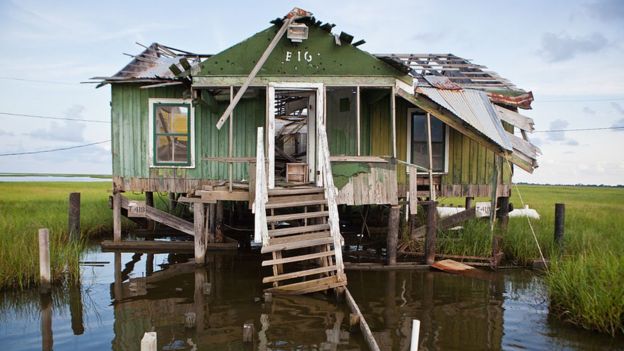
These losses are driving up sea levels around the world. The programme highlights the threat posed by rising waters to people living on the Isle de Jean Charles in Louisiana, forcing them from their homes.

“In the US, Louisiana is on the front line of this climate crisis. It’s losing land at one of the fastest rates on the planet – at the rate of of a football field every 45 minutes,” says Colette Pichon Battle, a director of the Gulf Coast Center for Law & Policy.

LouisianaImage copyrightJULIE DERMANSKY
Image captionPeople are moving from parts of Louisiana in the US as a result of rising waters

“The impact on families is going to be something I don’t think we could ever prepare for.”

Hope rising

Sir David’s concern over the impacts of climate change has become a major focus for the naturalist in recent years.

This has also been a theme of his Our Planet series on Netflix.

His new BBC programme has a strong emphasis on hope.

Sir David argues that if dramatic action is taken over the next decade then the world can keep temperatures from rising more than 1.5C this century. This would limit the scale of the damage.

“We are running out of time, but there is still hope,” says Sir David.

“I believe that if we better understand the threat we face the more likely it is we can avoid such a catastrophic future.”

The programme says that rapid progress is being made in renewable energy, with wind now as cheap as fossil fuels in many cases. It shows how technologies to remove and bury carbon dioxide under the ground are now becoming more viable.

But politicians will need to act decisively and rapidly.

“This is the brave political decision that needs to be taken,” says Chris Stark from the UK’s Committee on Climate Change.

GretaImage copyrightGETTY IMAGES
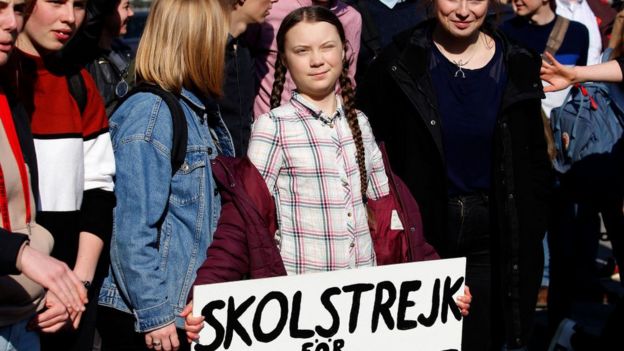
Image captionTeenage campaigner Greta Thunberg has helped spark school strikes all over the world

“Do we incur a small but not insignificant cost now, or do we wait and see the need to adapt. The economics are really clear on this, the costs of action are dwarfed by the costs of inaction.”

The programme also highlights the rising generation of young people who are deeply concerned about what’s happening to the planet.

Swedish teenager Greta Thunberg explains that things can change quickly, despite the scale of the challenge on climate change.

“The first day I sat all alone,” she says, speaking of her decision to go on strike from school and sit outside the Swedish parliament to highlight the climate crisis.

“But on the second day, people started joining me… I wouldn’t have imagined in my wildest dreams that this would have happened so fast.”

“Change is coming whether you like it or not.”

Follow Matt on Twitter@mattmcgrathbbc

Climate Change – The Facts is on BBC One on Thursday 18 April at 9pm

Climate bot

Sign up for a weekly chat about climate change on Facebook Messenger

6 pressing questions about beef and climate change, answered

Cattle feed at a shed belonging to Kim Jin-cheon, 56, a farmer raising about 120 domestic cows, in Gapyeong, about 60 km (37 miles) east of Seoul, April 23, 2008. South Korea's decision to gradually open up to U.S. beef imports are set to hit local farmers hard, with some experts expecting around 14 percent fall this year in prices of home-grown cattle from a year earlier.  REUTERS/Jo Yong-Hak (SOUTH KOREA) - GM1E44N0XWA01

How friendly is your food?
Image: REUTERS/Jo Yong-Hak
This article is published in collaboration withEcoWatch

Beef and climate change are in the news these days, from cows’ alleged high-methane farts (fact check: they’re actually mostly high-methane burps) to comparisons with cars and airplanes (fact check: the world needs to reduce emissions from fossil fuels and agriculture to sufficiently rein in global warming). And as with so many things in the public sphere lately, it’s easy for the conversation to get polarized. Animal-based foods are nutritious and especially important to livelihoods and diets in developing countries, but they are also inefficient resource users. Beef production is becoming more efficient, but forests are still being cut down for new pasture. People say they want to eat more plants, but meat consumption is still rising.

All of the above statements are true even if they seem contradictory. That’s what makes the beef and sustainability discussion so complicated — and so contentious.

Here we look at the latest research (including from our recent World Resources Report) to address six common questions about beef and climate change:

1. How does beef production cause greenhouse gas emissions?

The short answer: Through the agricultural production process and through land-use change.

The longer explanation: Cows and other ruminant animals (like goats and sheep) emit methane, a potent greenhouse gas, as they digest grasses and plants. This process is called “enteric fermentation,” and it’s the origin of cows’ burps. Methane is also emitted from manure, and nitrous oxide, another powerful greenhouse gas, is emitted from ruminant wastes on pastures and chemical fertilizers used on crops produced for cattle feed.

More indirectly but also importantly, rising beef production requires increasing quantities of land. New pastureland is often created by cutting down trees, which releases carbon dioxide stored in forests.

2013 study by the U.N. Food and Agriculture Organization (FAO) estimated that total annual emissions from animal agriculture (production emissions plus land-use change) were about 14.5 percent of all human emissions, of which beef contributed 41 percent. That means emissions from beef production are roughly on par with those of India. Because FAO only modestly accounted for land-use-change emissions, this is a conservative estimate.

Beef-related emissions are also projected to grow. Building from an FAO projection, we estimated that global demand for beef and other ruminant meats could grow by 88 percent between 2010 and 2050, putting enormous pressure on forests, biodiversity and the climate. Even after accounting for continued improvements in beef production efficiency, pastureland could still expand by roughly 400 million hectares, an area of land larger than the size of India, to meet growing demand. The resulting deforestation could increase global emissions enough to put the global goal of limiting temperature rise to 1.5-2 degrees C (2.7-3.6 degrees F) out of reach.

2. Is beef more resource-intensive than other foods?

The short answer: Yes.

The longer explanation: Ruminant animals have lower growth and reproduction rates than pigs and poultry, so they require a higher amount of feed per unit of meat produced. Animal feed requires land to grow, which has a carbon cost associated with it, as we discuss below. All told, beef is more resource-intensive to produce than most other kinds of meat, and animal-based foods overall are more resource-intensive than plant-based foods. Beef requires 20 times more land and emits 20 times more GHG emissions per gram of edible protein than common plant proteins, such as beans. And while the majority of the world’s grasslands cannot grow crops or trees, such “native grasslands” are already heavily used for livestock production, meaning additional beef demand will likely increase pressure on forests.

3. Why are some people saying beef production is only a small contributor to emissions?

The short answer: Such estimates commonly leave out land-use impacts, such as cutting down forests to establish new pastureland.

The longer explanation: There are a lot of statistics out there that account for emissions from beef production but not from associated land-use change. For example, here are three common U.S. estimates we hear:

  • The U.S. Environmental Protection Agencyestimatedtotal U.S. agricultural emissions in 2017 at only 8 percent of total U.S. emissions;
  • 2019 studyin Agricultural Systems estimated emissions from beef production at only 3 percent of total U.S. emissions; and
  • 2017 studypublished in the Proceedings of the National Academy of Sciences estimated that removing all animals from U.S. agriculture would reduce U.S. emissions by only 3 percent.

While all of these estimates account for emissions from U.S. agricultural production, they leave out a crucial element: emissions associated with devoting land to agriculture. An acre of land devoted to food production is often an acre that could store far more carbon if allowed to grow forest or its native vegetation. And when considering the emissions associated with domestic beef production, you can’t just look within national borders, especially since global beef demand is on the rise. Because food is a global commodity, what is consumed in one country can drive land use impacts and emissions in another. An increase in U.S. beef consumption, for example, can result in deforestation to make way for pastureland in Latin America. Conversely, a decrease in U.S. beef consumption can avoid deforestation (and land-use-change emissions) abroad.

When these land-use effects of beef production are accounted for, we found that the GHG impacts associated with the average American-style diet actually come close to per capita U.S. energy-related emissions. A related analysis found that the average European’s diet-related emissions, when accounting for land-use impacts, are similar to the per capita emissions typically assigned to each European’s consumption of all goods and services, including energy.

4. Can beef be produced more sustainably?

The short answer: Yes, although beef will always be resource-intensive to produce.

The longer explanation: The emissions intensity of beef production varies widely across the world, and improvements in the efficiency of livestock production can greatly reduce land use and emissions per pound of meat. Improving feed quality and veterinary care, raising improved animal breeds that convert feed into meat and milk more efficiently, and using improved management practices like rotational grazing can boost productivity and soil health while reducing emissions. Boosting productivity, in turn, can take pressure off tropical forests by reducing the need for more pastureland.

Examples of such improved practices abound. For example, some beef production in Colombiaintegrates trees and grasses onto pasturelands, helping the land produce a higher quantity and quality of feed. This can enable farmers to quadruple the number of cows per acre while greatly reducing methane emissions per pound of meat, as the cows grow more quickly. A study of dairy farms in Kenyafound that supplementing typical cattle diets with high-quality feeds like napier grass and high-protein Calliandra shrubs — which can lead to faster cattle growth and greater milk production — could reduce methane emissions per liter of milk by 8–60 percent.

There are also emerging technologies that can further reduce cows’ burping, such as through feed additives like 3-nitrooxypropan (3-NOP). Improving manure management and using technologies that prevent nitrogen in animal waste from turning into nitrous oxide can also reduce agricultural emissions.

5. Do we all need to stop eating beef in order to curb climate change?

The short answer: No.

The longer explanation: Reining in climate change won’t require everyone to become vegetarian or vegan, or even to stop eating beef. If ruminant meat consumption in high-consuming countries declined to about 50 calories a day or 1.5 burgers per person per week — about half of current U.S. levels and 25 percent below current European levels, but still well above the national average for most countries — it would nearly eliminate the need for additional agricultural expansion (and associated deforestation), even in a world with 10 billion people.

Diets are already shifting away from beef in some places. Per capita beef consumption has already fallen by one-third in the United States since the 1970s. Plant-based burgers and blended meat-plant alternatives are increasingly competing with conventional meat products on important attributes like taste, price and convenience. The market for plant-based alternatives is growing at a high rate, albeit from a low baseline.

There are also other compelling reasons for people to shift toward plant-based foods. Some studieshave shown that red meat consumption is associated with increased risk of heart disease, type 2 diabetes, stroke and colorectal cancer, and that diets higher in healthy plant-based foods (such as whole grains, fruits, vegetables, nuts and legumes) are associated with lower risks. In high-income regions like North America and Europe, people also consume more protein than they need to meet their dietary requirements.

6. Would eating less beef be bad for jobs in the food and agriculture sector?

The short answer: Not necessarily.

The longer explanation: Given projected future growth in meat demand across the developing world, even if people in higher-income countries eat less beef, the global market for beef will likely continue to grow in the coming decades. The scenario in the chart above leads to a 32 percent growth in global ruminant meat consumption between 2010 and 2050, versus 88 percent growth under business-as-usual. In the U.S., despite declining per capita beef consumption, total beef production has held steadysince the 1970s. Burgeoning demand in emerging markets like China will lead to more export opportunities in leading beef-producing countries, although building such markets takes time.

In addition, major meat companies — including Tyson Foods, Cargill, Maple Leaf Foods and Perdue — are starting to invest in the fast-growing alternative protein market. They’re positioning themselves more broadly as “protein companies,” even as they work to reduce emissions from beef production in their supply chains through improved production practices.

Moving Toward a Sustainable Food Future

Beef is more resource-intensive than most other foods and has a substantial impact on the climate. A sustainable food future will require a range of strategies from farm to plate. Food producers and consumers alike have a role to play in reducing beef’s emissions as the global population continues to grow. And as we all work on strategies to curb climate change — whether in the agriculture sector, the energy sector or beyond — it’s important we rely on the best available information to make decisions.

Extinction Rebellion want to get arrested to fight climate change

An Extinction Rebellion protester blocking Blackfriars Bridge, in London, November 2018.

London (CNN)Earlier this month a group of climate change activists stripped down to their underwear in British parliament and glued their hands to the glass of the House of Commons’ public gallery.

Why? To get arrested.
Extinction Rebellion, a grassroots environmental group based in the UK, is responsible for a series of stunts that deliberately break the law to highlight the threat of climate change.
Since launching last year they have caused disruption by holding a “Funeral for our Future” outside Buckingham Palace, which led to 14 arrests, poured200 liters of fake blood outside Downing Street, and brought London to a standstill by shutting down five bridges.
So far Extinction Rebellion has counted 222 arrests — and thousands have declared they are willing to be arrested, or even go to prison, to demand action on climate change.

Method to the madness

Extinction Rebellion claims their actions are based on research into how to use “non-violent civil disobedience to achieve radical change.”
An Extinction Rebellion protester, London, November 2018

They estimate that significant numbers of people will have to get arrested and cause disruption for the government to pay attention to their demands. These include the UK government declaring a climate change emergency, reducing greenhouse gas emissions to net zero by 2025 and starting a citizen’s assembly.
“People making decisions have to pay attention to a mass of people that come out on to the streets to demand action in the face of this crisis we are in,” said Roman Paluch-Machnik, an Extinction Rebellion activist who has been arrested more than once.
“You put the police in a dilemma,” explained Nuala Gathercole Lam, another protester. “If you have got thousands of people refusing to move, they either have to let you do it, which is hugely economically disruptive, or they have to arrest you.”
According to the group, research shows that non-violent uprisings involving 3.5% of the public participating in acts of civil disobedience force a political response because they cannot be ignored.
“Every non-violent uprising since 1900, if it achieves that threshold, succeeds in its aims,” said Paluch-Machnik. “One of our main principles is to get this 3.5% mobilized.”
That would need about 2 million people to get involved in the UK.

Willing to get arrested

Almost 10,000 people worldwide have signed up as “willing to get arrested,” as of April 8, 2019, according to the group. Around 3,000 are based in the UK.
Of those people, over 80% are also “willing to go to prison.” The group holds prison workshopsand training sessions to prepare people for what to do if they end up at a police station.
Pictured, a protest outside Downing Street, March 2019.

“Nothing has been achieved after 30 years of regular environmental campaign,” said Paluch-Machnik. “People are so motivated by what is happening right now because there is not really another option.”
“I’ve always been very worried about continuous news about the government not addressing the situation,” said Alanna Byrne, an activist for Extinction Rebellion. “I felt very isolated in the way that I felt.”
Along with 25 others, Paluch-Machnik, Lam and Byrne have quit their jobs to work for Extinction Rebellion full time.

How far are you willing to go to demand action?

Since the UN Intergovernmental Panel on Climate Change (IPCC) warned last year that the planet only has 11 years before it reaches disastrous levels of global warming, Extinction Rebellion isn’t the only group to launch radical climate activism.
Extinction Rebellion activists threw 200 liters of fake blood outside Downing Street in March 2019.

School students around the world have been skipping school to demand that world leaders take action on climate change.
The movement has spanned more than 100 countries and 1,500 cities, with teenagers missing out on their education to show how worried they are about the threat to their future.
In response to critics, who say Extinction Rebellion is causing unnecessary disruption and wasting police time, the activists say the “climate and ecological emergency” demands their actions.
“I think that any suffering that is caused as a result of a few hours sitting in a traffic jam is incomparable to what is going to happen in a few years” said Paluch-Machnik.
London’s Metropolitan Police Service told CNN that it is aware of a number of Extinction Rebellion demonstrations and protests planned over the coming weeks, and that “Appropriate policing plans are in place.”
It added: “We will always provide a proportionate policing plan to balance the right to a peaceful protest, while ensuring that disruption to communities is kept to a minimum.”
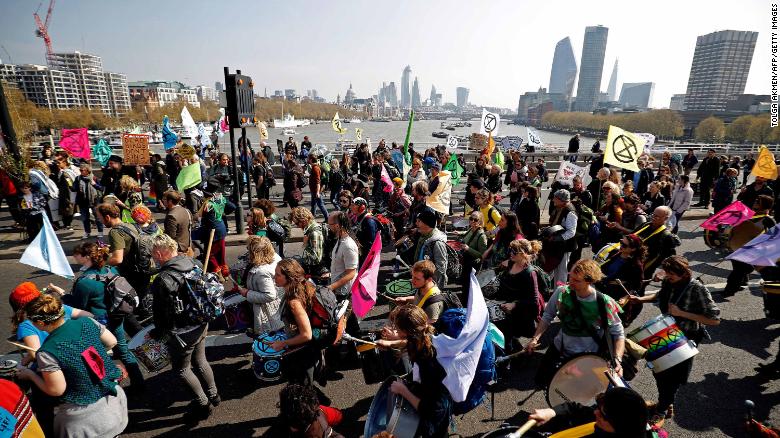
This Monday, the group plans to shut down London in their biggest action yet. They plan to meet at five London locations and block traffic by playing music, hosting discussions and refusing to move from the street.
Demonstrators blocked Waterloo Bridge by bringing trees and solar panels.
Extinction Rebellion  demonstrating on Waterloo Bridge, London, April 15, 2019.

The group says hundreds of people have taken time off work to camp for as long as it takes get their demands heard by the government. Read more coverage of the protest.

Climate change made the Arctic greener. Now parts of it are turning brown.

Warming trends bring more insects, extreme weather and wildfires that wipe out plants

BY
7:00AM, APRIL 11, 2019
Alaska landscape

TUNDRA IN TROUBLE  In southern Alaska in 2012, geometrid moths and other insects heavily defoliated alder bushes and other shrubs (brown patches in this aerial photo).

The Chugach people of southern Alaska’s Kenai Peninsula have picked berries for generations. Tart blueberries and sweet, raspberry-like salmonberries — an Alaska favorite — are baked into pies and boiled into jams. But in the summer of 2009, the bushes stayed brown and the berries never came.

For three more years, harvests failed. “It hit the communities very hard,” says Nathan Lojewski, the forestry manager for Chugachmiut, a nonprofit tribal consortium for seven villages in the Chugach region.

The berry bushes had been ravaged by caterpillars of geometrid moths — the Bruce spanworm (Operophtera bruceata) and the autumnal moth (Epirrita autumnata). The insects had laid their eggs in the fall, and as soon as the leaf buds began growing in the spring, the eggs hatched and the inchworms nibbled the stalks bare.

Chugach elders had no traditional knowledge of an outbreak on this scale in the region, even though the insects were known in Alaska. “These berries were incredibly important. There would have been a story, something in the oral history,” Lojewski says. “As far as the tribe was concerned, this had not happened before.”

At the peak of the multiyear outbreak, the caterpillars climbed from the berry bushes into trees. The pests munched through foliage from Port Graham, at the tip of the Kenai Peninsula, to Wasilla, north of Anchorage, about 300 kilometers away. In summer, thick brown-gray layers of denuded willows, alders and birches lined the mountainsides above stretches of Sitka spruce.

Salmonberries are widely harvested during the summer in southern Alaska’s coastal regions. The shrubs have been hit hard by moth damage in recent years. 

 CINDY HOPKINS/ALAMY STOCK PHOTO

Two summers ago, almost a decade after the first infestation, the moths returned. “We got a few berries, but not as many as we used to,” says Chugach elder Ephim Moonin Sr., whose house in the village of Nanwalek is flanked by tall salmonberry bushes. “Last year, again, there were hardly any berries.”For more than 35 years, satellites circling the Arctic have detected a “greening” trend in Earth’s northernmost landscapes. Scientists have attributed this verdant flush to more vigorous plant growth and a longer growing season, propelled by higher temperatures that come with climate change. But recently, satellites have been picking up a decline in tundra greenness in some parts of the Arctic. Those areas appear to be “browning.”

Like the salmonberry harvesters on the Kenai Peninsula, ecologists working on the ground have witnessed browning up close at field sites across the circumpolar Arctic, from Alaska to Greenland to northern Norway and Sweden. Yet the bushes bereft of berries and the tinder-dry heaths (low-growing shrubland) haven’t always been picked up by the satellites. The low-resolution sensors may have averaged out the mix of dead and living vegetation and failed to detect the browning.

Scientists are left to wonder what is and isn’t being detected, and they’re concerned about the potential impact of not knowing the extent of the browning. If it becomes widespread, Arctic browning could have far-reaching consequences for people and wildlife, affecting habitat and atmospheric carbon uptake and boosting wildfire risk.

Growing greenbelt

The Arctic is warming two to three times as fast as the rest of the planet, with most of the temperature increase occurring in the winter. Alaska, for example, has warmed 2 degrees Celsius since 1949, and winters in some parts of the state, including southcentral Alaska and the Arctic interior, are on average 5 degrees C warmer.

An early effect of the warmer climate was a greener Arctic. More than 20 years ago, researchers used data from the National Oceanic and Atmospheric Administration’s weather satellites to assess a decade of northern plant growth after a century of warming. The team compared different wavelengths of light — red and near-infrared — reflecting off vegetation to calculate the NDVI, the normalized difference vegetation index. Higher NDVI values indicate a greener, more productive landscape. In a single decade — from 1981, when the first satellite was launched, to 1991 — the northern high latitudes had become about 8 percent greener, the researchers reported in 1997 in Nature.

The Arctic ecosystem, once constrained by cool conditions, was stretching beyond its limits. In 1999 and 2000, researchers cataloged the extent and types of vegetation change in parts of northern Alaska using archival photographs taken during oil exploration flyovers between 1948 and 1950. In new images of the same locations, such as the Kugururok River in the Noatak National Preserve, low-lying tundra plants that once grew along the riverside terraces had been replaced by stands of white spruce and green alder shrubs. At some of the study’s 66 locations, shrub-dominated vegetation had doubled its coverage from 10 to 20 percent. Not all areas showed a rise in shrub abundance, but none showed any decrease.

In 2003, Howard Epstein, a terrestrial ecologist at the University of Virginia in Charlottesville, and colleagues looked to the satellite record, which now held another decade of data. Focusing on Alaska’s North Slope, which lies just beyond the crown of the Brooks Range and extends to the Beaufort Sea, the researchers found that the highest NDVI values, or “peak greenness,” during the growing season had increased nearly 17 percent between 1981 and 2001, in line with the warming trend.

Brown among the green

As the Arctic warms up, it’s getting greener, but some pockets have been going brown instead. Satellite imagery and ecologists on the ground have observed browning in the circled areas on this map.

C. CHANG

Earth-observing satellites have been monitoring the Arctic tundra for almost four decades. In that time, the North Slope, the Canadian low Arctic tundra and eastern Siberia have become especially green, with thicker and taller tundra vegetation and shrubs expanding northward. “If you look at the North Slope of Alaska, if you look at the overall trend, it’s greening like nobody’s business,” says Uma Bhatt, an atmospheric scientist at the University of Alaska Fairbanks.

Yet parts of the Arctic, including the Yukon-Kuskokwim Delta of western Alaska, the Canadian Arctic Archipelago (the islands north of the mainland that give Canada its pointed tip) and the northwestern Siberian tundra, show extensive browning over the length of the satellite record, from the early 1980s to 2016. “It could just be a reduction in green vegetation. It doesn’t necessarily mean the widespread death of plants,” Epstein says. Scientists don’t yet know why plant growth there has slowed or reversed — or whether the satellite signal is in some way misleading.

“All the models indicated for a long time that we would expect greening with warmer temperatures and higher productivity in the tundra, so long as it wasn’t limited in some other way, like [by lower] moisture,” says Scott Goetz, an ecologist and remote-sensing specialist at Northern Arizona University in Flagstaff. He is also the science team lead for ABoVE, NASA’s Arctic-Boreal Vulnerability Experiment, which is tracking ecosystem changes in Alaska and western Canada. “Many of us were quite surprised … that the Arctic was suddenly browning. It’s something we need to resolve.”

Freeze-dried tundra

While global warming has propelled widespread trends in tundra greening, extreme winter weather can spur local browning events. In recent years, in some parts of the Arctic, extraordinary warm winter weather, sometimes paired with rainfall, has put tundra vegetation under enormous stress and caused plants to lose freeze resistance, dry up or die — and turn brown.

From 2002 to 2009, two moth species defoliated as much as a third of the mountain birch trees that stretch across northern Norway, Sweden and Finland. By 2014, some trees had recovered (top) while others had not (bottom).

JAKOB IGLHAUT

Gareth Phoenix, a terrestrial ecologist at the University of Sheffield in England, recalls his shock at seeing a series of midwinter timelapse photos taken in 2001 at a research site outside the town of Abisko in northern Sweden. In the space of a couple of days, the temperature shot up from −16° C to 6° C, melting the tundra’s snow cover.“As an ecologist, you’re thinking, ‘Whoa! Those plants would usually be nicely insulated under the snow,’ ” he says. “Suddenly, they’re being exposed because all the snow has melted. What are the consequences of that?”

Arctic plants survive frigid winters thanks to that blanket of snow and physiological changes, known as freeze resistance, that allow plants to freeze without damage. But once the plants awaken in response to physical cues of spring — warmer weather, longer days — and experience bud burst, they lose that ability to withstand frigid conditions.

Top: Healthy crowberry shrubs grow among mountain cranberry in Abisko, Sweden, in September 2005. Bottom: A 2013 midwinter warming event near Tromsø, Norway, melted the snow. By May, these crowberry plants turned reddish brown from severe stress. When this happens, the leaves eventually turn brown, then wilt, turn gray and fall off.

FROM TOP: J. BJERKE; HANS TØMMERVIK

That’s fine if spring has truly arrived. But if it’s just a winter heat wave and the warm air mass moves on, the plants become vulnerable as temperatures return to seasonal norms. When temporary warm air covers thousands of square kilometers at once, plant damage occurs over large areas. “These landscapes can look like someone’s gone through with a flamethrower,” Phoenix says. “It’s quite depressing. You’re there in the middle of summer, and everything’s just brown.”Jarle Bjerke, a vegetation ecologist at the Norwegian Institute for Nature Research in Tromsø, saw browning across northern Norway and Sweden in 2008. The landscape — covered in mats of crowberry, an evergreen shrub with bright green sausagelike needles — was instead shades of brown, red-brown and grayish brown. “We saw it everywhere we went, from the mountaintops to the coastal heaths,” Bjerke says.Bjerke, Phoenix and other researchers continue to find brown vegetation in the wake of winter warming events. Long periods of mild winter weather have rolled over the Svalbard archipelago, the cluster of islands in the Arctic Ocean between Norway and the North Pole, in the last decade. The snow melted or blew away, exposing the ground-hugging plants. Some became encrusted in ice following a once-unheard-of midwinter rainfall. In 2015, the Arctic bell heather, whose small white flowers brighten Arctic ridges and heaths, were brown that summer, gray the next and then the leaves fell off. “It’s not new that plants can die during mild winters,” Bjerke says. “The new thing is that it is now happening several winters in a row.”

Insect invasion

The weather needn’t always be extreme to harm plants in the Arctic. With warmer winters and summers, leaf-eating insects have thrived, defoliating bushes and trees beyond the insects’ usual range. “They’re very visual events,” says Rachael Treharne, an Arctic ecologist who completed her Ph.D. at the University of Sheffield and now works at ClimateCare, a company that helps organizations reduce their climate impact. She remembers being in the middle of an autumnal moth outbreak in northern Sweden one summer. “There were caterpillars crawling all over the plants — and us. We’d wake up with them in our beds.”

In northernmost Norway, Sweden and Finland in the mid-2000s, successive bursts of geometrid moths defoliated 10,000 square kilometers of mountain birch forest — an area roughly the size of Puerto Rico. The outbreak was one of Europe’s most abrupt and large-scale ecosystem disturbances linked to climate change, says Jane Jepsen, an Arctic ecologist at the Norwegian Institute for Nature Research.

Three effects

The Arctic is warming more than twice as fast as the rest of the world. The higher temperatures have led to browning in some areas due to:

Extreme weather
Midwinter warming awakens plants, which then freeze as temperatures dive.
Moth infestations
Insects thrive and move into new areas to eat plants.
Wildfires
Dry plants plus more lightning leads to blackened land.
C. CHANG

“These moth species benefit from a milder winter, spring and summer climate,” Jepsen says. Moth eggs usually die at around −30° C, but warmer winters have allowed more eggs of the native autumnal moth to survive. With warmer springs, the eggs hatch earlier in the year and keep up with the bud burst of the mountain birch trees. Another species — the winter moth (O. brumata), found in southern Norway, Sweden and Finland — expanded northward during the outbreak. The spring and summer warmth favored the larvae, which ate more and grew larger, and the resulting hardier female moths laid more eggs in the fall.

While forests that die off can grow back over several decades, some of these mountain birches may have been hammered too hard, Jepsen says. In some places, the forest has given way to heathland. Ecological transitions like this could be long-lasting or even permanent, she says.

Smoldering lands

Once rare, wildfires may be one of the north’s main causes of browning. As grasses, shrubs and trees across the region dry up, they are being set aflame with increasing frequency, with fires covering larger areas and leaving behind dark scars. For example, in early 2014 in the Norwegian coastal municipality of Flatanger, sparks from a power line ignited the dry tundra heath, destroying more than 100 wooden buildings in several coastal hamlets.

Sparsely populated places, where lightning is the primary cause of wildfires, are also seeing an uptick in wildfires. Scientists say lightning strikes are becoming more frequent as the planet warms. The number of lightning-sparked fires has risen 2 to 5 percent per year in Canada’s Northwest Territories and Alaska over the last four decades, earth system scientist Sander Veraverbeke of Vrije Universiteit Amsterdam and his colleagues reported in 2017 in Nature Climate Change.

In 2014, the Northwest Territories had 385 fires, which burned 34,000 square kilometers. The next year, 766 fires torched 20,600 square kilometers of the Alaskan interior — accounting for about half the total area burned in the entire United States in 2015.

In the last two years, wildfires sent plumes of smoke aloft in western Greenland (SN: 3/17/18, p. 20) and in the northern reaches of Sweden, Norway and Russia, places where wildfires are uncommon. Wildfire activity within a 30-year period could quadruple in Alaska by 2100, says a 2017 report in Ecography. Veraverbeke expects to see “more fires in the Arctic in the future.”

The loss of wide swaths of plants could have wide-ranging local effects. “These plants are the foundation of the terrestrial Arctic food webs,” says Isla Myers-Smith, a global change ecologist at the University of Edinburgh. The shriveled landscapes can leave rock ptarmigan, for example, which rely heavily on plants, without enough food to eat in the spring. The birds’ predators, such as the arctic fox, may feel the loss the following year.

The effects of browning may be felt beyond the Arctic, which holds about half of the planet’s terrestrial carbon. The boost in tundra greening allows the region to store, or “sink,” more carbon during the growing season. But carbon uptake may slow if browning events continue, as expected in some regions.

Treharne, Phoenix and colleagues reported in February in Global Change Biology that on the Lofoten Islands in northern Norway, extreme winter conditions cut in half the heathlands’ ability to trap carbon dioxidefrom the atmosphere during the growing season.

Yet there’s still some uncertainty about how these browned tundra ecosystems might change in the long-term. As the land darkens, the surface absorbs more heat and warms up, threatening to thaw the underlying permafrost and accelerate the release of methane and carbon dioxide. Some areas might switch from being carbon sinks to carbon sources, Phoenix warns.

On the other hand, other plant species — with more or less capacity to take up carbon — could move in. “I’m still of the view that [these areas] will go through these short-term events and continue on their trajectory of greater productivity,” Goetz says.

A better view

The phenomena that cause browning events — extreme winter warming, insect outbreaks, wildfires — are on the rise. But browning events are tough to study, especially in winter, because they’re unpredictable and often occur in hard-to-reach areas.

On Svalbard in the Arctic in 2015, extreme weather killed flowering mountain avens, but purple saxifrage survived.

RACHAEL TREHARNE

Ecologists working on the ground would like the satellite images and the NDVI maps to point to areas with unusual vegetation growth — increasing or decreasing. But many of the browning events witnessed by researchers on the ground have not been picked up by the older, lower-resolution satellite sensors, which scientists still use. Those sensors oversimplify what’s on the ground: One pixel covers an area 8 kilometers by 8 kilometers. “The complexity that’s contained within a pixel size that big is pretty huge,” Myers-Smith says. “You have mountains, or lakes, or different types of tundra vegetation, all within that one pixel.”At a couple of recent workshops on Arctic browning, remote-sensing experts and ecologists tried to tackle the problem. “We’ve been talking about how to bring the two scales together,” Bhatt says. New sensors, more frequent snapshots, better data access and more computing power could help scientists zero in on the extent and severity of browning in the Arctic.

Researchers have begun using Google Earth Engine’s massive collection of satellite data, including Landsat images at a much better resolution of 30 meters by 30 meters per pixel. Improved computational capabilities also enable scientists to explore vegetation change close up. The European Space Agency’s recently launched Sentinel Earth-observing satellites can monitor vegetation growth with a pixel size of 10 meters by 10 meters. Says Myers-Smith: “That’s starting to get to a scale that an ecologist can grapple with.”