Media captionFive things we can do to help prevent global temperatures rising more than 1.5C
Just a week after scientists said huge cuts in carbon emissions were needed to protect the climate, a UK minister has shown just how hard that will be.
Scientists say we ought to eat much less meat because the meat industry causes so many carbon emissions.
But the climate minister Claire Perry has told BBC News it is not the government’s job to advise people on a climate-friendly diet.
She would not even say whether she herself would eat less meat.
Ms Perry has been accused by Friends of the Earth of a dereliction of duty. They say ministers must show leadership on this difficult issue.
But the minister – who is personally convinced about the need to tackle climate change – is anxious to avoid accusations of finger-wagging.
She said: “I like lots of local meat. I don’t think we should be in the business of prescribing to people how they should run their diets.”
When asked whether the Cabinet should set an example by eating less beef (which has most climate impact), she said: “I think you’re describing the worst sort of Nanny State ever.
“Who would I be to sit there advising people in the country coming home after a hard day of work to not have steak and chips?… Please…”
Ms Perry refused even to say whether she agreed with scientists’ conclusions that meat consumption needed to fall.
A dereliction of duty?
Craig Bennett from Friends of the Earth responded: “The evidence is now very clear that eating less meat could be one of the quickest ways to reduce climate pollution.
“Reducing meat consumption will also be good for people’s health and will free up agricultural land to make space for nature.
Image copyrightGETTY IMAGES
“It’s a complete no-brainer, and it’s a dereliction of duty for government to leave the job of persuading people to eat less meat to the green groups.”
He said the government could launch information campaigns, change diets in schools and hospitals, or offer financial incentives.
Ms Perry said: “What I do think we need to do is look at the whole issue of agricultural emissions and do a lot more tree planting.
“But if you and I eat less meat, with all the flatulent sheep in Switzerland and flatulent cows in the Netherlands – that will just be wiped out in a moment. Let’s work on the technology to solve these problems at scale.”
She said instead of cutting down on meat, we could use (hugely expensive) equipment that sucks CO2 out of the atmosphere.
Supper with the Perry family
Ms Perry said later that her own typical family meal is not steak and chips, but a stir-fry, which brings the taste and texture of meat into a dish dominated by vegetables. But she did not want to say this on camera.
She agreed it was appropriate for the government to advise people on healthy diets because the obesity epidemic is costing taxpayers more in health bills, but implied that this principle did not apply when considering the health of the planet.
Her fear of being condemned in the media as a bossy politician highlights the difficulty of the next phase of climate change reductions.
Until now, 75% of CO2 reductions in the UK have come from cleaning up the electricity sector. Many people have barely noticed the change.
Will the climate battle get personal?
Experts generally agree that for healthy lives and a healthy planet, the battle over climate change will have to get personal.
That could mean people driving smaller cars, walking and cycling more, flying less, buying less fast fashion, wearing a sweater in winter… and eating less meat.
People will still live good lives, they say, but they’ll have to make a cultural shift.
If governments do not feel able to back those messages, they say, the near impossible task of holding global temperature rise to 1.5C will become even more difficult.
Ms Perry’s comments came as she launched Green GB week, which aims to show how the UK can increase the economy while also cutting emissions.
She will formally ask advisers how Britain can cut emissions to zero.
(CNN)President Donald Trump, Florida Gov. Rick Scott, Florida Sen. Marco Rubio, and others who oppose action to address human-induced climate change should be held accountable for climate crimes against humanity. They are the authors and agents of systematic policies that deny basic human rights to their own citizens and people around the world, including the rights to life, health, and property. These politicians have blood on their hands, and the death toll continues to rise.
Trump remains in willful denial of the thousands of deaths caused by his government’s inept, under-funded, and under-motivated response to Hurricane Maria in Puerto Rico last year. The image that will remain in history is of the President gleefully throwing paper towels for a photo op as the people of Puerto Rico around him suffered and died of neglect. Last month, Hurricane Florence claimed at least 48 deaths, with more likely to come in its aftermath. This past week Hurricane Michael has claimed at least 32 lives, with more than a thousand people reportedly still missing. The final death toll will likely soar in the months ahead as the residual consequences of the storm become more clear.
As the Earth warms due to the continued burning of coal, oil, and gas, climate-related disasters that include high-intensity hurricanes, floods, droughts, extreme precipitation, forest fires, and heat waves, pose rising dangers to life and property. Hurricanes become more destructive as warmer ocean waters feed more energy to the storms. Warmer air also carries more moisture for devastating rainfalls, while rising sea levels lead to more flooding.
Yet Trump and his minions are the loyal servants of the fossil-fuel industry, which fill Republican partycampaign coffers. Trump has also stalled the fight against climate change by pulling out of the Paris Agreement. The politicians thereby deprive the people of their lives and property out of profound cynicism, greed, and willful scientific ignorance.
The first job of government is to protect the public. Real protection requires climate action on several fronts: educating the public about the growing dire risks of human-induced climate change; enacting legislation and regulations to ensure that families and businesses are kept out of harm’s way, for example by stopping construction in flood plains, and investing in sustainable infrastructure to counteract rising sea levels; anticipating the rising frequency of high-intensity climate-related disasters through science-based preparedness following through on properly scaled disaster-response during and after storm events; and most importantly for the future, spearheading the rapid transition to zero-carbon energy to prevent much greater calamities in the years ahead.
This straightforward to-do list is the opposite of what Trump and his cronies are doing. Trump blithely disregards scientific findings about climate change and thereby exposes the nation to unprecedented risks. The officials he has appointed to the Environmental Protection Agency and other relevant parts of government are industry cronies and lobbyists far more interested in self-enrichment, padding their accounts, and helping their once-and-future employers than in doing their current jobs.
Trump’s mishandling of last year’s Puerto Rico disaster in the wake of Hurricane Maria is grounds itself for impeachment and trial. Thousands of citizens died unnecessarily on Trump’s watch because the administration could not be stirred to proper action before, during, and after the hurricane.
Two independent, detailed epidemiological studies, using different methodologies — one led by researchers at Harvard University and the other by researchers at George Washington University— have estimated that thousands died in the aftermath of Maria.
While dozens died during the storm, thousands more died as a result of the residual effects of the storm. Maria downed electricity and wreaked havoc on the ability of Puerto Ricans to meet their life-sustaining needs by disrupting access to health services, safe water, and transportation. They died, in short, from the storm, and ultimately from inadequate disaster prevention, preparedness and response.
Yet when the George Washington University study was released in September, the President responded by saying, “I think we did a fantastic job” in Puerto Rico. He brazenly denied the death count, without any attempt whatsoever to understand or learn from the findings.
Recent scientific studies underscore the dire emergency ahead. Professor James Hansen, one of the world’s leading climatologists, has demonstrated that the Earth’s climate has moved above the temperature range that supported the entire 10,000 years of civilization. The risks of catastrophic sea level rise are upon us. A group of world-leading ecologists recently highlighted that critical Earth systems could spiral out of control. The Nobel-prize winning Inter-Governmental Panel on Climate Change has also just released a harrowing report showing that the world has just a few years left to move decisively towards renewable energy if it hopes to achieve the globally agreed target to limit warming below 1.5 degrees Celsius above the pre-industrial average temperature of the planet.
The huge bills for Hurricanes Florence and Michael will now start rolling in: funerals, suffering, sorting through debris, and perhaps $30 billion in losses that could have been reduced dramatically through science-based planning and foresight. The American people are paying a heavy cost for the cynicism and cruelty of politicians in the pocket of the fossil-fuel industry. It is time to hold these reckless politicians to account.
By LISA DRAYER IS A NUTRITIONIST, AN AUTHOR AND A CNN HEALTH AND NUTRITION CONTRIBUTOR.
Sean Gallup/Getty ImagesFresh fruits and vegetables lie on display at a Spanish producer’s stand at the Fruit Logistica agricultural trade fair on Feb. 8, 2017, in Berlin, Germany.
(CNN) – You may be aware that a plant-based diet can make you healthier by lowering your risk for obesity, heart disease and Type 2 diabetes. Now, a study suggests there’s another good reason to regularly eat meatless meals. By filling your plate with plant foods instead of animal foods, you can help save the planet.
The study, published last week in the journal Nature, found that as a result of population growth and the continued consumption of Western diets high in red meats and processed foods, the environmental pressures of the food system could increase by up to 90% by 2050, “exceeding key planetary boundaries that define a safe operating space for humanity beyond which Earth’s vital ecosystems could become unstable,” according to study author Marco Springmann of the Oxford Martin Programme on the Future of Food at the University of Oxford.
“It could lead to dangerous levels of climate change with higher occurrences of extreme weather events, affect the regulatory function of forest ecosystems and biodiversity … and pollute water bodies such that it would lead to more oxygen-depleted dead zones in oceans,” Springmann said.
“If the whole world, which continues to grow, eats more like us, the impacts are staggering, and the planet simply can’t withstand it,” said Sharon Palmer, a registered dietitian nutritionist and plant-based food and sustainability expert in Los Angeles who was not involved in the new research.
Sustaining a healthier planet will require halving the amount of food loss and waste, and improving farming practices and technologies. But it will also require a shift toward more plant-based diets, according to Springmann.
As Palmer noted, “research consistently shows that drastically reducing animal food intake and mostly eating plant foods is one of the most powerful things you can do to reduce your impact on the planet over your lifetime, in terms of energy required, land used, greenhouse gas emissions, water used and pollutants produced.”
How a meat-based diet negatively affects the environment
It might come as a surprise, but Springmann’s study found that the production of animal products generates the majority of food-related greenhouse-gas emissions — specifically, up to 78% of total agricultural emissions.
This, he explained, is due to manure-related emissions, to their “low feed-conversion efficiencies” (meaning cows and other animals are not efficient in converting what they eat into body weight) and to enteric fermentation in ruminants, a process that takes place in a cow’s stomach when it digests food that leads to methane emissions.
The feed-related impacts of animal products also contribute to freshwater use and pressures on cropland, as well as nitrogen and phosphorus application, which over time could lead to dead zones in oceans, low-oxygen areas where few organisms can survive, according to Springmann.
For an example of how animal foods compare with plant-based foods in terms of environmental effects, consider that “beef is more than 100 times as emissions-intensive as legumes,” Springmann said. “This is because a cow needs, on average, 10 kilograms of feed, often from grains, to grow 1 kilogram of body weight, and that feed will have required water, land and fertilizer inputs to grow.”
In addition, cows emit the potent greenhouse gas methane during digestion, which makes cows and other ruminants such as sheep especially high-emitting.
Other animal foods have lower impacts because they don’t produce methane in their stomachs and require less feed than cows, Springmann explained. For example, cows emit about 10 times more greenhouse gases per kilogram of meat than pigs and chickens, which themselves emit about 10 times more than legumes.
Like animals, plants also require inputs from the environment in order to grow, but the magnitude is significantly less, Springmann explained.
“In today’s agricultural system, we grow plants to feed animals, which require all of those resources and inputs: land, water, fossil fuels, pesticides, herbicides and fertilizer to grow. And then we feed plants to animals and care for them over their lifetime, while they produce methane and manure,” Palmer said.
Adopting more plant-based diets for ourselves could reduce the greenhouse gas emissions of the food system by more than half, according to the Nature study. A mainly plant-based diet could also reduce other environmental impacts, such as those from fertilizers, and save up to quarter use of both farmland and fresh water, according to Springmann.
Palmer explained that “legumes [or pulses], such as beans, lentils and peas are the most sustainable protein source on the planet. They require very small amounts of water to grow, they can grow in harsh, dry climates, they grow in poor nations, providing food security, and they act like a natural fertilizer, capturing nitrogen from the air and fixing it in the soil. Thus, there is less need for synthetic fertilizers. These are the types of protein sources we need to rely upon more often.”
Flexitarian: The healthy compromise for you and the planet
Experts agree that if you are not ready to give up meat entirely, a flexitarian diet, which is predominantly plant-based, can help. This diet includes plenty of fruits, vegetables and plant-based protein sources including legumes, soybeans and nuts, along with modest amounts of poultry, fish, milk and eggs, and small amounts of red meat.
Vegetarian and vegan diets would result in even lower greenhouse gas emissions, but a flexitarian diet “is the least stringent that is both healthy and would reduce greenhouse gas emissions enough for us to stay within environmental limits,” according to Springmann.
Palmer said that “although vegan diets, followed by vegetarian diets, are linked with the lowest environmental impacts, not everyone is interested in taking on those lifestyles. But everyone can eat more of a flexitarian diet. It doesn’t mean that you have to give up meat completely, but you significantly reduce your intake of it.”
Registered dietitian nutritionist Dawn Jackson Blatner described it this way: “A flexitarian is really someone who wakes up with the intention of being more vegetarian. It’s different from vegetarian in that there is some flexibility.”
Deputies in Bay County, Florida, who are working in Hurricane Michael’s shattering aftermath, have arrested about 10 suspected looters each night since the storm made landfall a week ago, according to authorities.
Bay County Sheriff’s Office Maj. Jimmy Stanford told the News Herald in an article published Tuesday that the looters have targeted businesses and homes. They are almost always armed.
“Most our officers lost their homes, have been working 16- to 18-hour shifts with no sleep, no shower; and now they’re encountering armed individuals,” Stanford told the publication. “It’s a stressful time for everyone in Bay County.”
The county is home to Florida’s Mexico Beach, a small town on the Gulf Coast that was in the bullseye of Hurricane Michael. It is also home to Panama City and Tyndall Air Force Base, which suffered “widespread catastrophic damage” from the storm.
In Callaway, a Panama City suburb, resident Victoria Smith said her purse was snatched out of her hands while she was sleeping. The front door to her home was open to let a breeze come through. With the breeze came burglars.
“I must’ve been so exhausted from everything in the past days I didn’t hear them come in,” she told the News Herald. “They just snatched my purse out of my hands and ran.”
“It was all we had,” she added.
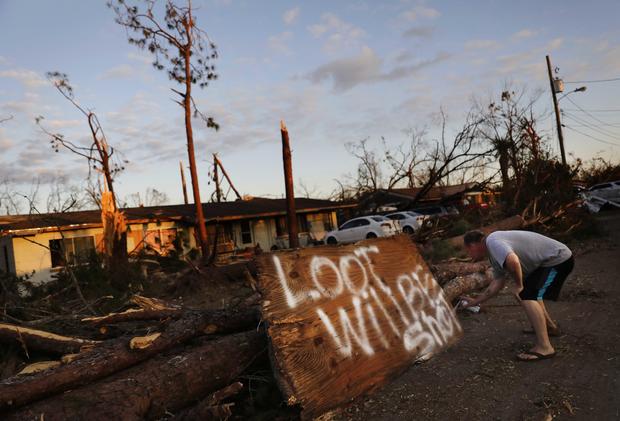
Pictures showed police detaining people on suspicion of looting and a sign warning people.
Police detain some youths on suspicion of looting following Hurricane Michael in Mexico Beach, Florida, U.S., October 13, 2018.
CARLO ALLEGRI/REUTERS
Ron Hyatt spray paints a message to warn off looters outside his damaged home from Hurricane Michael in Callaway, Fla., Sunday, Oct. 14, 2018.
DAVID GOLDMAN/AP
Florida Gov. Rick Scott said this week that he surveyed the hurricane damage in Bay County with FEMA Administrator Brock Long “so he could see firsthand the damage and total loss suffered by our Gulf Coast and Panhandle communities.” Scott said in a news release that “so many families have lost everything.”
FEMA has approved Transitional Sheltering Assistance for county residents, allowing eligible storm survivors to get short-term lodging in motels or hotels with costs covered by FEMA. Those eligible are people who can’t return to their homes for an extended period because of disaster-related damage or an inability to get to their communities, Scott’s office said.
Rick Scott
✔@FLGovScott
Following my request, and approval by @FEMA, families in Bay, Franklin, Gulf, Leon, Taylor, Wakulla, Calhoun, Liberty, Jackson, Gadsden, Holmes & Washington are now eligible for Individual Assistance. Visit http://www.DisasterAssistance.gov
When high-flying global entrepreneur Richard Branson announced in 2014 he was giving up beef for the good of the planet, Australian Farm Institute director Mick Keogh couldn’t resist having a dig at his integrity and mental competence.
“Is Mr Branson a knave or a fool?” asked Keogh, now deputy commissioner of the Australian Competition & Consumer Commission, wondering whether the Virgin Airlines founder was perhaps deliberately deflecting public attention away from his own commercial activities by demonising meat and cattle production.
“If Mr Branson is truly concerned about this issue and not just seeking publicity, he should look at his own business first rather than pointing a finger at beef,” Keogh said.
Branson said he had been forced into vegetarianism by his concern that meat consumption — and so livestock farming — was causing global warming, environmental degradation, Amazonian jungle deforestation and water wastage. He also said keeping cattle in barns and intensive systems such as feedlots where they are fed grain were wasteful and worsening global warming.
Keogh pointed out that greenhouse gas emissions from global livestock production contribute between 5 per cent and 10 per cent of total human-related carbon emissions, which are leading to harmful global warming and climate change.
In contrast, the latest report from the Intergovernmental Panel on Climate Change found the transport sector worldwide — planes, cars and trucks combined — contributes a massive 22 per cent of carbon dioxide emissions (second only to power generation), a figure growing at the rate of 2.5 per cent a year.
Keogh also noted that a one-way flight between London and Sydney added 3500kg of carbon dioxide-equivalent greenhouse gases per person to the atmosphere, while CO2-equivalent emissions associated with producing a 100g beef hamburger were 1kg.
“The IPCC itself has stated that reducing travel distances, moving to energy-efficient vehicles and non-fossil fuels and avoiding unnecessary travel are (among) the most promising mitigation strategies to reduce global greenhouse gas emissions,” said Keogh, querying why Branson’s evangelism for reducing greenhouse gases did not extend this far.
This week, when the latest IPCC report came out on how the world could limit damaging global temperature increases to less than an average 1.5C — a target that needs to be achieved by 2050 if irreparable and lasting climate change is to be prevented — abandoning or limiting meat consumption was again listed as a top-10 mitigation strategy
It is also, worryingly for Australia’s $18.5 billion red meat industry and 82,500 sheep and cattle farmers, becoming a refrain that is accepted without question within the wider community: that eating meat is damaging the environment.
To western Victoria cattle and sheep farmer Mark Wootton, it doesn’t have to be this way.
Together with his partner Eve Kantor, Wootton farms 3500ha of lush green pastures in the western foothills of the Grampians north of Hamilton, where they run more than 25,000 merino sheep for their wool and meat lambs, and 800 cattle.
The couple, together with Kantor’s family, helped found the Climate Institute think tank and policy group — credited with encouraging changed business and community attitudes towards the urgent need to limit greenhouse gas emissions — and they believe climate change remains the biggest threat to their own, and Australia’s, agricultural activities.
“But that doesn’t mean you can’t do something about it,” says Wootton. “For us, that meant testing the theory that Australian farmers can run their properties and businesses in a way that is carbon neutral — or even positive — in terms of greenhouse gas emissions, but that is still about normal farming practices and highly productive.”
Since 2001, Wootton and Kantor have set about boosting the carbon stored on their Jigsaw Farms properties, while also working with Melbourne University professor Richard Eckard to measure — and endeavour to reduce — all the carbon emissions associated with their farming operations to the point where they became a zero carbon business.
For the couple, that meant planting thousands of trees on their farms while also investing in solar power, to offset the carbon emitted as methane by their livestock and their heavy use of pasture fertilisers and fuel.
Against expectations, Wootton says livestock-carrying capacity and returns have actually increased, while more than 37,000 tonnes of carbon was sequestrated in their growing trees in 14 years, putting the business well on the way to becoming carbon-neutral.
Such stories are music to the ears of Richard Norton, chief executive of Meat & Livestock Australia.
Rare among nations, industries or even agricultural producer groups, the MLA ambitiously decided more than a decade ago that it would commit Australia’s red meat industry to being carbon-neutral by 2030: a big ask given the large amounts of methane emitted daily by Australia’s 28 million cattle and 70 million sheep because of their rumen digestive systems.
“No one thought it was feasible but already we have reduced total emissions by the red meat industry by 45 per cent between 2005 and 2015, according to CSIRO, mainly by genetic improvements that mean the animals we farm today grow quicker and are more efficient converters of grass to meat,” Norton says.
There is no dispute in the academic and climate change world that livestock is one of the biggest contributors to carbon gas build-up in the atmosphere and total global greenhouse gas emissions, and therefore a key driver of global warming.
The latest report by the IPCC attributes 14 per cent of all emissions to agriculture. The bulk — contributing 10 per cent of harmful emissions — come from livestock production, mostly dairy and beef cattle belching and farting methane (a harmful greenhouse gas, like carbon dioxide).
While figures vary depending on farming systems and feed, numerous studies have shown beef cattle emit 50-90kg of methane a year, dairy cows 100-150kg a year and sheep about 8kg.
On the positive side, methane is a short-lived pollutant; it lasts in the atmosphere for 12 years after production while a kilogram of CO2 will linger for more than a century. But the harmful effect of 1kg of methane emissions on potential warming is 36 times worse than CO2 over a 100-year period.
Eckard, an animal production professor and director of the Primary Industries Climate Challenges Centre, says the magnified impact of methane on short-term global warming is the reason the IPCC report suggests cutting meat intake would be one of the biggest and best changes individuals and society can make.
“It’s low-hanging fruit — a get-out-of-jail card free, if you like, as far as the IPCC report goes,” he says. “Livestock is the biggest single easiest way to reduce methane emissions; each kilogram of methane produced now has 86 times the impact of a kilogram of carbon dioxide on global warming, so if you immediately start to cut methane emissions from one major source, it’s going to have a quicker impact on the IPCC aim of limiting global temperature increases to below 1.5 degrees by 2050.”
The big impact of animal farming on the warming atmosphere is made worse because, with estimates the world’s population will grow by nearly three billion by 2050, red meat consumption and demand is set to take off. Global meat production is projected to double from 229 million tonnes in 2000 to 465 million tonnes in 2050 to meet the new demand for red meat, while annual milk and dairy output is set to climb from 580 million to 1043 million tonnes.
The number of cattle needed to meet beef and dairy demand is expected to balloon from the present 1.5 billion to three billion, increasing calls for red meat consumption to be slashed to reduce the pace of climate change.
But Eckard argues that animal farming is being unfairly targeted.
“If, as an individual, you want to have an impact on climate change, do it in balance; there is no point in stopping eating red meat if you still drive a gas-guzzling 4WD and don’t have solar panels on your roof, because switching to a hybrid Prius and solar power will have just as big a benefit for the environment and world climate as turning vegetarian.”
Recent studies by Virginia Tech University also question whether plant-based diets equal sustainability and are the only route to reducing agriculture’s heavy global warming footprint.
As researcher Doug Liebe told this week’s BeefEx conference in Brisbane, it is easy for the impact of removing animals from the human food chain to be oversimplified and twisted.
The Virginia Tech studies show that if all animals were taken out of agricultural production — with the grain they had been fed directed to human consumption — the US could produce 23 per cent more human food. But the overall impact on greenhouse gas emissions would be significantly less — cutting US emissions by just 2.6 per cent — because animal-produced fertilisers used in farming would need to be replaced by synthetic ones.
This week, a top scientific body studying climate change released a terrifying report. The world has just a decade to take “unprecedented” action to cut carbon emissions and hold global warming to a moderate — but still dangerous and disruptive — level. That would require a “rapid and far-reaching” transformation of the world’s economy, one of such scale and magnitude that it has no historical equivalent.
The U.N. Intergovernmental Panel on Climate Change warned that nearly every country will need to significantly scale up the commitments made under the 2015 Paris climate accord if humans hope to avoid disaster. Under that agreement, 195 countries pledged to cut their greenhouse-gas emissions to try to keep global warming under two degrees Celsius.
But it’s hard to imagine that will happen, as almost no country is doing a good job meeting the relatively modest goals in place. (The United States was a signatory of the 2015 Paris agreement, but last year President Trump announced that Washington was pulling out of the pact.)
The Climate Action Tracker, a project run by a group of three climate-research organizations, has been monitoring the progress of 32 countries in meeting the Paris accord goals. Taken together, those 32 countries account for 80 percent of the world’s greenhouse gas emissions.
The tracker’s goal is to provide an “up-to-date assessment of countries’ individual reduction targets and with an overview of their combined effects.” It looks at how much greenhouse gas each country emits right now; what it has committed to change on paper; and how well it’s following through on those promises.
As the graphic below shows, the group found that most major polluters are making few, if any, efforts to meet their goals. By Climate Action’s calculations, “critically insufficient countries” failed to even commit to cutting emissions significantly on paper. Only seven countries have made commitments or efforts that would achieve the goal of the Paris accord.
A graphic from the Climate Action Tracker shows the efforts of the world’s larger greenhouse gas producers to reduce those emissions in accord with the Paris climate agreement.
But there are bright spots:
Morocco
The North African nation is one of only two countries with a plan to reduce its greenhouse-gas emissions far enough to keep warming below 1.5 degrees Celsius, an important threshold for staving off some of the worst effects of climate change. Morocco has promised to halt its growth of greenhouse gas emissions by commissioning large-scale renewable energy projects. The country has commissioned the largest concentrated solar power plant in the world, scaled up its natural-gas imports and cut back fossil-fuel subsidies. Morocco is on track to get 42 percent of its energy needs from renewable sources by 2020.
Gambia
The West African nation is the only other country on track to cut its carbon output in line with a 1.5 degree Celsius rise. According to Climate Action Tracker, it’s one of the only developing countries in the world to lay out a plan that would “bend its emissions in a downward trajectory.” A major part of that plan is a massive reforestation project it’s running to stop environmental erosion and degradation by planting trees.
India
One of the world’s biggest economies, with one of the fastest-growing renewable energy programs, India could meet its goal of generating 40 percent of its energy from non-fossil-fuel sources as early as the end of this year. It has done that by declining to open new coal-fired plants and promoting electric vehicles.
Britain
Like most industrialized nations, the United Kingdom is struggling to cut its emissions. But the nation deserves special mention as the only developed economy in the world to create a body to track how well the country is meeting its Paris agreement commitments and how the country could do better. Britain is also working toward an ambitious plan to reduce its emissions to “net zero” by 2050.
Opinion | Climate change is political when you deny it’s happening
Hurricane Florence is one of many signs of climate change, and those who deny it are complicit in the destruction, meteorologist Eric Holthaus says.(Gillian Brockell, Kate Woodsome, Adriana Usero/The Washington Post)
Here is how to interpret the alarming new United Nations-sponsored report on global warming: We are living in a horror movie. The world needs statesmen to lead the way to safety. Instead, we have President Trump, who essentially says, “Hey, let’s all head to the dark, creepy basement where the chain saws and razor-sharp axes are kept. What could go wrong?”
The answer is almost everything, according to the Intergovernmental Panel on Climate Change (IPCC). The impact of human-induced warming is worse than previously feared, the report released Monday says, and only drastic, coordinated action will keep the damage short of catastrophe.
To this point, climate change has been a slow-motion calamity whose impacts, month to month and year to year, have been hard to perceive. Unfortunately, according to the report, that is about to change.
Meanwhile, humankind continues to pump heat-trapping carbon dioxide into the atmosphere at a tragically self-destructive rate. The IPCC calculates that a further temperature rise of 1.5 degrees Celsius — almost inevitable, given our dependence on coal, oil and gas — would be challenging but manageable. An increase of about 2 degrees, however, would be disastrous.
What’s the difference? With a 1.5-degree rise, about 14 percent of the world’s population would be vulnerable to severe and deadly heat waves every five years; with a 2-degree rise, that figure jumps to 37 percent. With a 1.5-degree rise, an additional 350 million city dwellers worldwide will face water shortages; with a 2-degree rise, 411 million people will suffer such drought. With a 1.5-degree rise, coral reefs will experience “very frequent mass mortalities”; with a 2-degree rise, coral reefs will “mostly disappear.”
U.N. scientists warn of limited time to control climate change
The U.N. Intergovernmental Panel on Climate Change said there is no precedent for the sweeping changes required to control the planet’s warming.(Danielle Kunitz, Osman Malik/The Washington Post)
Small differences can have huge impacts. Under the 1.5-degree scenario, up to 69 million people will be newly exposed to flooding. Under the 2-degree scenario — which the report estimates would boost sea-level rise by as much as 36 inches — the number rises to 80 million.
Please don’t dismiss all of this as just another boring compendium of carefully hedged facts and figures. I have followed the IPCC’s research since covering the first Earth Summit in Rio de Janeiro in 1992. The new report strikes a different tone that combines weary fatalism with hair-on-fire alarm. In dry, just-the-facts language, it predicts declining fisheries, failing crops, more widespread risk from tropical diseases such as malaria, economic dislocation in the most-affected countries — and, by logical extension, greater political instability.
All of these impacts are bad with 1.5 more degrees of temperature rise. With 2 degrees they are much, much worse.
The obvious solution is to dramatically reduce carbon emissions. The IPCC says emissions need to decline by at least 40 percent by 2030 and to reach net zero by 2050, if we are to hold warming to 1.5 degrees. Yet last year, according to the International Energy Agency, global emissions hit an all-time high.
Since 2016, representatives of 195 nations — including all the big emitters — signed on to the landmark Paris agreement calling for systematic emissions reductions beginning in 2020. But Trump, who has ignorantly called climate change a “hoax,” decided to withdraw the United States from the pact. Even worse, Trump is aggressively trying to increase reliance on coal, which contributes a disproportionate amount of carbon dioxide emissions compared with other fossil fuels.
U.S. carbon emissions actually fell slightly in 2017, because of the expansion of the renewable energy sector. But Trump administration policies are designed to reverse that trend; and if they fail to do so, it will be because the rest of the world is already moving toward clean energy — a huge economic shift that threatens to leave the United States behind.
When you read the IPCC report, you see that what the world really needs is visionary leadership. As the world’s greatest economic power and its second-largest carbon emitter, the United States is uniquely capable of shepherding a global transition to renewable energy. Instead, the Trump administration rejects the science of climate change and actively favors dirty energy sources over clean ones.
Humanity has no time for such foolishness. “I’m the president of the United States. I’m not the president of the globe,” Trump thundered at a recent rally. On what planet does he think this nation resides?
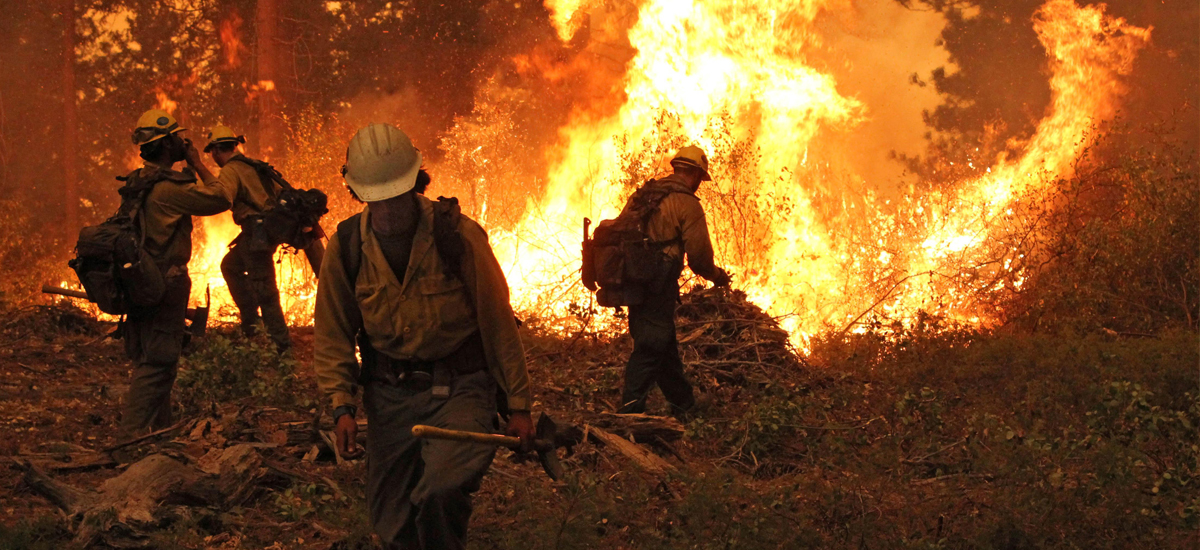
The effects of global warming on temperature, precipitation levels, and soil moisture are turning many of our forests into kindling during wildfire season.
These hot, dry conditions also increase the likelihood that wildfires will be more intense and long-burning once they are started by lightning strikes or human error.
The costs of wildfires, in terms of risks to human life and health, property damage, and state and federal dollars, are devastating, and they are only likely to increase unless we better address the risks of wildfires and reduce our activities that lead to further climate change.
Wildfires are already on the rise
Wildfires in the western United States have been increasing in frequency and duration since the mid-1980s. Between 1986 and 2003, wildfires occurred nearly four times as often, burned more than six times the land area, and lasted almost five times as long when compared to the period between 1970 and 1986.
Natural cycles, human activities like land-use change and fire exclusion, and human-caused climate change can all influence the likelihood of wildfires. Many of the areas that have seen increased wildfire activity, like Yosemite National Park and the Northern Rockies, are protected from or relatively unaffected by human land-use change, suggesting that climate change is a major factor driving the increase in wildfires in these places.
Precipitation patterns, global warming, and wildfires
Though the current trend of increasing severe wildfire frequency in parts of the US is projected to continue as the climate warms, droughts and wildfires are not equally likely to occur every year.
Natural, cyclical weather occurrences such as El Niño events also affect the likelihood of wildfires by affecting levels of precipitation and moisture and lead to year-by-year variability in the potential for drought and wildfires regionally.
Nonetheless, because temperatures and precipitation levels are projected to alter further over the course of the 21st century, the overall potential for wildfires in the western United States is projected to increase.
As the world warms, we can expect more wildfires
US wildfire seasons—especially those in years with higher wildfire potential—are projected to lengthen, with the Southwest’s season of fire potential lengthening from seven months to all year long. Additionally, the likelihood that individual wildfires become severe is expected to increase.
Researchers project that moist, forested areas are the most likely to face greater threats from wildfires as conditions in those areas become drier and hotter.
Surprisingly, some dry grasslands may be less at risk of catching fire because the intense aridity is likely to prevent these grasses from growing at all, leaving these areas so barren that they are likely to lack the fodder for wildfires to start and spread.
A conflagration of costs
The economic costs of wildfires can be crippling. Data on total US property damage from wildfires are hard to come by, but the costs are estimated to be on the level of hundreds of millions of dollars per year.
In addition to property damage, wildfires cost states and the federal government millions in fire-suppression management. The US Forest Service’s yearly fire-suppression costs have exceeded $1 billion for 13 of the 18 years between 2000 and 2017. In 2015, these costs exceeded $2 billion, and in 2017 they totaled almost $3 billion. The risk to property owners is particularly acute in areas at the “wildland-urban interface.” In California alone, this area includes more than 5 million homes in coastal southern California, the Bay Area, and northeast of Sacramento.
The environmental and health costs of wildfires are also considerable. Not only do wildfires threaten lives directly, but they have the potential to increase local air pollution, exacerbating lung diseases and causing breathing difficulties even in healthy individuals.
Greenhouse-gas emissions from human activities are raising global temperatures and changing the climate, leading to a likely rise in wildfire severity and frequency.
But it is not too late to act. What we do now has the power to influence the frequency and severity of these fires and their effects on us.
By engaging in fire safety efforts—creating buffer zones between human habitation and susceptible forests, and meeting home and city fire-safety standards—we can help reduce our current risks, and by taking steps to reduce our impact on the climate, we can help to keep our forests, our homes, and our health safe.
A firefighter battles a fire in California. The world is currently 1C warmer than preindustrial levels. Photograph: Ringo HW Chiu/AP
The world’s leading climate scientists have warned there is only a dozen years for global warming to be kept to a maximum of 1.5C, beyond which even half a degree will significantly worsen the risks of drought, floods, extreme heat and poverty for hundreds of millions of people.
The authors of the landmark report by the UN Intergovernmental Panel on Climate Change (IPCC) released on Monday say urgent and unprecedented changes are needed to reach the target, which they say is affordable and feasible although it lies at the most ambitious end of the Paris agreementpledge to keep temperatures between 1.5C and 2C.
The half-degree difference could also prevent corals from being completely eradicated and ease pressure on the Arctic, according to the 1.5C study, which was launched after approval at a final plenary of all 195 countries in Incheon in South Korea that saw delegates hugging one another, with some in tears.
Quick guide
What difference would restricting warming to 1.5C make?
Hide
A key finding of the new IPCC report is the dramatic difference that restricting warming to 1.5C above pre industrial levels would have on the global environment.
The scientists found:
• By 2100, global sea level rise would be 10cm lower with global warming of 1.5C compared with 2C.
• Extreme heatwaves will be experienced by 14% of the world’s population at least once every five years at 1.5C. But that figure rises to more than a third of the planet if temperatures rise to 2C
• Arctic sea ice would remain during most summers if warming is kept to 1.5C. But at 2C, ice free summers are 10 times more likely, leading to greater habitat losses for polar bears, whales, seals and sea birds.
• If warming is kept to 1.5C, coral reefs will still decline by 70-90% but if temperatures rise to 2C virtually all of the world’s reefs would be lost
“It’s a line in the sand and what it says to our species is that this is the moment and we must act now,” said Debra Roberts, a co-chair of the working group on impacts. “This is the largest clarion bell from the science community and I hope it mobilises people and dents the mood of complacency.”
Policymakers commissioned the report at the Paris climate talks in 2016, but since then the gap between science and politics has widened. Donald Trump has promised to withdraw the US – the world’s biggest source of historical emissions – from the accord. The first round of Brazil’s presidential election on Sunday put Jair Bolsonaro into a strong position to carry out his threat to do the same and also open the Amazon rainforest to agribusiness.
The world is currently 1C warmer than preindustrial levels. Following devastating hurricanes in the US, record droughts in Cape Town and forest fires in the Arctic, the IPCC makes clear that climate change is already happening, upgraded its risk warning from previous reports, and warned that every fraction of additional warming would worsen the impact.
Scientists who reviewed the 6,000 works referenced in the report, said the change caused by just half a degree came as a revelation. “We can see there is a difference and it’s substantial,” Roberts said.
At 1.5C the proportion of the global population exposed to water stress could be 50% lower than at 2C, it notes. Food scarcity would be less of a problem and hundreds of millions fewer people, particularly in poor countries, would be at risk of climate-related poverty.
Attendees take a photo before the opening of the 48th session of the IPCC in Incheon. Photograph: Jung Yeon-Je/AFP/Getty Images
At 2C extremely hot days, such as those experienced in the northern hemisphere this summer, would become more severe and common, increasing heat-related deaths and causing more forest fires.
But the greatest difference would be to nature. Insects, which are vital for pollination of crops, and plants are almost twice as likely to lose half their habitat at 2C compared with 1.5C. Corals would be 99% lost at the higher of the two temperatures, but more than 10% have a chance of surviving if the lower target is reached.
Sea-level rise would affect 10 million more people by 2100 if the half-degree extra warming brought a forecast 10cm additional pressure on coastlines. The number affected would increase substantially in the following centuries due to locked-in ice melt.
Oceans are already suffering from elevated acidity and lower levels of oxygen as a result of climate change. One model shows marine fisheries would lose 3m tonnes at 2C, twice the decline at 1.5C.
Sea ice-free summers in the Arctic, which is warming two to three times fast than the world average, would come once every 100 years at 1.5C, but every 10 years with half a degree more of global warming.
Time and carbon budgets are running out. By mid-century, a shift to the lower goal would require a supercharged roll-back of emissions sources that have built up over the past 250 years.
The IPCC maps out four pathways to achieve 1.5C, with different combinations of land use and technological change. Reforestation is essential to all of them as are shifts to electric transport systems and greater adoption of carbon capture technology.
Carbon pollution would have to be cut by 45% by 2030 – compared with a 20% cut under the 2C pathway – and come down to zero by 2050, compared with 2075 for 2C. This would require carbon prices that are three to four times higher than for a 2C target. But the costs of doing nothing would be far higher.
“We have presented governments with pretty hard choices. We have pointed out the enormous benefits of keeping to 1.5C, and also the unprecedented shift in energy systems and transport that would be needed to achieve that,” said Jim Skea, a co-chair of the working group on mitigation. “We show it can be done within laws of physics and chemistry. Then the final tick box is political will. We cannot answer that. Only our audience can – and that is the governments that receive it.”
He said the main finding of his group was the need for urgency. Although unexpectedly good progress has been made in the adoption of renewable energy, deforestation for agriculture was turning a natural carbon sink into a source of emissions. Carbon capture and storage projects, which are essential for reducing emissions in the concrete and waste disposal industries, have also ground to a halt.
Reversing these trends is essential if the world has any chance of reaching 1.5C without relying on the untried technology of solar radiation modification and other forms of geo-engineering, which could have negative consequences.
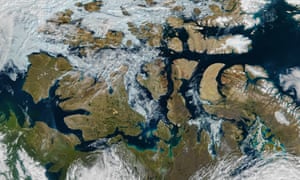
A nearly ice-free Northwest Passage in the Arctic in August 2016. Photograph: VIIRS/Suomi NPP/Nasa
In the run-up to the final week of negotiations, there were fears the text of the report would be watered down by the US, Saudi Arabia and other oil-rich countries that are reluctant to consider more ambitious cuts. The authors said nothing of substance was cut from a text.
Bob Ward, of the Grantham Research Institute on Climate Change, said the final document was “incredibly conservative” because it did not mention the likely rise in climate-driven refugees or the danger of tipping points that could push the world on to an irreversible path of extreme warming.
The report will be presented to governments at the UN climate conference in Poland at the end of this year. But analysts say there is much work to be done, with even pro-Paris deal nations involved in fossil fuel extraction that runs against the spirit of their commitments. Britain is pushing ahead with gas fracking, Norway with oil exploration in the Arctic, and the German government wants to tear down Hambach forest to dig for coal.
At the current level of commitments, the world is on course for a disastrous 3C of warming. The report authors are refuseing to accept defeat, believing the increasingly visible damage caused by climate change will shift opinion their way.
“I hope this can change the world,” said Jiang Kejun of China’s semi-governmental Energy Research Institute, who is one of the authors. “Two years ago, even I didn’t believe 1.5C was possible but when I look at the options I have confidence it can be done. I want to use this report to do something big in China.”
The timing was good, he said, because the Chinese government was drawing up a long-term plan for 2050 and there was more awareness among the population about the problem of rising temperatures. “People in Beijing have never experienced so many hot days as this summer. It’s made them talk more about climate change.”
Regardless of the US and Brazil, he said, China, Europe and major cities could push ahead. “We can set an example and show what can be done. This is more about technology than politics.”
James Hansen, the former Nasa scientist who helped raised the alarm about climate change, said both 1.5C and 2C would take humanity into uncharted and dangerous territory because they were both well above the Holocene-era range in which human civilisation developed. But he said there was a huge difference between the two: “1.5C gives young people and the next generation a fighting chance of getting back to the Holocene or close to it. That is probably necessary if we want to keep shorelines where they are and preserve our coastal cities.”
Johan Rockström, a co-author of the recent Hothouse Earth report, said scientists never previously discussed 1.5C, which was initially seen as a political concession to small island states. But he said opinion had shifted in the past few years along with growing evidence of climate instability and the approach of tipping points that might push the world off a course that could be controlled by emissions reductions.
“Climate change is occurring earlier and more rapidly than expected. Even at the current level of 1C warming, it is painful,” he told the Guardian. “This report is really important. It has a scientific robustness that shows 1.5C is not just a political concession. There is a growing recognition that 2C is dangerous.”
New research finds just one season of drought can reduce the carbon dioxide absorption ability of the world’s biggest rainforest—the Amazon—for years to come.
Because they take vast amounts of carbon dioxide out of the atmosphere, rainforests are an important part of the planet’s carbon cycle and their conservation is playing front and center in major international efforts to combat global warming. But new research finds just one season of drought can reduce the carbon dioxide absorption ability of the world’s biggest rainforest—the Amazon—for years to come.
And as droughts seem to be occurring more frequently in rainforests, scientists worry that these important carbon sinks may instead become carbon sources.
In a study published recently in Nature, scientists at NASA’s Jet Propulsion Laboratory used lidar data captured by satellites to map changes in forest canopy in the Amazon following a particularly severe drought in 2005. Lidar, which stands for “Light Detection and Ranging” uses lasers to measure distances and create three-dimensional representations of surface features like canyons, craters, and, in this case, trees.
By mapping the Amazon’s tree cover using lidar, the NASA researchers were able to find and quantify gaps in tree cover caused by drought-induced leaf loss and tree death. They discovered that, on average, the most affected parts of the rainforest lost around 35 inches in the years following the 2005 drought.
This is because, when a rainforest tree is stressed by drought, one of its first responses is to shed its leaves. If the drought continues too long, the tree will die. Taller trees tend to die first in a drought because, simply put, they need more water and it’s harder to pump that water up, say, 50 feet than it is to get it up five.
When these tall trees die, they bring down the overall height of the forest around them. Big trees also sequester a disproportionate amount of carbon dioxide, so their loss means a forest is not able to store as much carbon as it once did. And as the big trees decompose, their stored carbon is released back into the atmosphere, tilting a forest’s carbon budget from sink toward source.
The researchers found that, added up, drought-caused forest changes in the Amazon between 2005 and 2008 (the last year for which data was available) translate to 270 million metric tons of lost carbon annually.
Rainforests not only react to climate—they also create it. Last year, scientists discovered that much of the rain that falls in a rainforest comes from water vapor that trees release through their leaves. But if a drought makes trees lose their leaves, then this water doesn’t get added back to the atmosphere, making it likelier that another drought will happen.
“The pervasive drought legacies in these ecosystems may have long-term effects on the tropical carbon sink and the overall terrestrial carbon budget, leading to an accelerated positive feedback to regional and global climate,” the researchers write in their study.
The study only looked at the years following the 2005 drought, which was so severe that it would normally be a once-in-a-century event. But with two other similarly severe droughts following closely in 2010 and 2015, this seems to no longer be the case.
The researchers write that if this is indeed the new normal for the Amazon rainforest, then the consequences could be dire both for the Amazon and for a world that depends on it to regulate the global climate: “Our results clearly indicate that the Amazon forests may lose their role as a robust sink of atmospheric carbon in the face of repeated severe droughts.”
This story originally appeared at the website of global conservation news service Mongabay.com. Get updates on their stories delivered to your inbox, or follow @Mongabay on Facebook, Instagram, or Twitter.

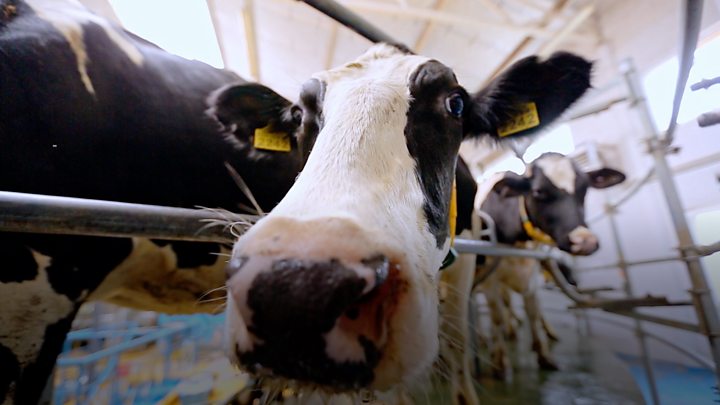
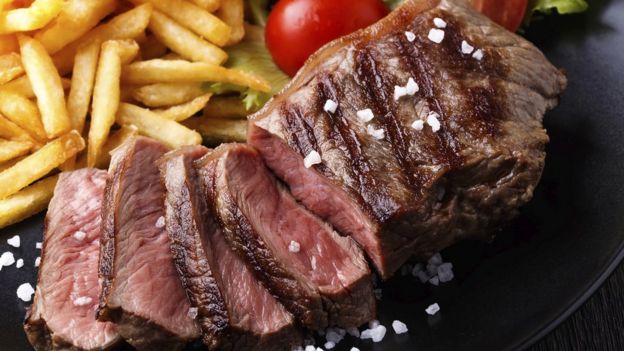 Image copyrightGETTY IMAGES

 Sean Gallup/Getty Images




 Exposing the Big Game