Exposing the Big Game

Forget Hunters' Feeble Rationalizations and Trust Your Gut Feelings: Making Sport of Killing Is Not Healthy Human Behavior

Exposing the Big Game

How Big a Deal Is Trump’s Fuel Economy Rollback? For the Climate, Maybe the Biggest Yet

Image
Trucks headed for delivery in California. Americans have favored larger vehicles for years now.CreditMike Blake/Reuters

WASHINGTON — President Trump’s proposal this week to weaken fuel-efficiency standards for cars and light trucks could be his most consequential climate-policy rollback yet, increasing greenhouse gas emissions in the United States by an amount greater than many midsize countries put out in a year.

Assuming the plan is finalized and survives legal challenges, America’s cars and trucks would emit an extra 321 million to 931 million metric tons of carbon dioxide into the atmosphere between now and 2035 as a result of the weaker rules, according to an analysis by the research firm Rhodium Group. A separate estimate by the think tank Energy Innovation pegged the number even higher, at 1.25 billion metric tons.

To put that in context, the extra pollution in 2035 alone would be more than the current annual emissions from countries like Austria, Bangladesh or Greece, the Rhodium Group analysis found.

How big a deal is that for global warming? The Trump administration claims it is negligible. By 2100, officials argued in their proposal, concentrations of carbon dioxide in the atmosphere would only be 0.65 parts per million higher under the rollback than they would be if the stricter Obama-era rules had stayed in place. (Current levels in the atmosphere are around 410 parts per million.)

But that’s the wrong way to look at it, according to Trevor Houser, lead author of the Rhodium Group report. Any single climate policy from a single country will look relatively modest in isolation. Stopping global warming will require a wide variety of efforts to cut emissions from every sector of nearly every country. “In that context, this single policy really does have a big impact,” he said.

His analysis estimated that the fuel-economy rollback could have a bigger effect on emissions than either Mr. Trump’s attempts to repeal the Clean Power Plan — a federal rule to curb pollution from coal-fired power plants — or his efforts to scale back regulations on oil and gas operations that release methane, a potent greenhouse gas, into the atmosphere.

There’s a simple reason for that. Many states have already been making impressive headway on cleaning up their power plants, thanks to a glut of cheap natural gas (which is pushing coal plants into retirement) and the falling cost of wind and solar power. Carbon dioxide emissions from the United States electricity sector are now on pace to fall below the targets envisioned in the original Clean Power Plan.

But pollution from cars and trucks has proved much trickier for states to take on. Transportation now accounts for one-third of America’s carbon-dioxide emissions, surpassing power plants as the largest source, and vehicle emissions have been steadily rising over the past few years. Federal fuel-economy standards were widely seen as a vital tool for curbing gasoline use.

“We’ve seen nowhere near the same progress in transportation as we’ve seen in electricity,” said Jordan Stutt, a policy analyst at the Acadia Center, a group in New England that is pushing for cleaner energy.

The original Obama-era standards would have required automakers to roughly double the fuel economy of their new cars, pickup trucks and S.U.V.s by 2025, putting out vehicles that would average roughly 36 miles per gallon on the road. The Trump proposal would halt the rise of those standards after 2021, when new cars were expected to average around 30 miles per gallon.

The Obama-era rules also granted California permission to set up a separate, more ambitious program to mandate more zero-emission cars on the road. Nine other states in the Northeast have adopted that program, which would require roughly 8 percent of new vehicles sold in-state to be plug-in hybrid, electric or hydrogen fuel cell models.

The Trump proposal plans to challenge California’s authority to mandate zero-emissions cars and to halt the clean vehicle program, which could dramatically slow the adoption of electric vehicles around the country in the near term.

“The zero-emissions vehicle waiver has been the biggest catalyst to date in bringing electric vehicles to market,” said Don Anair, research and deputy director of the Clean Vehicles Program at the Union of Concerned Scientists.

There are, however, a few important factors that could potentially counteract the climate impact of the Trump administration’s rollback, assuming that it survives any court challenge by California and other states and becomes final.

First, fuel prices will matter enormously. If oil prices increase significantly over the next decade, then many drivers might opt to buy more efficient vehicles regardless of what federal standards require. (The lower emissions numbers in the Rhodium Group analysis are based on a scenario where oil prices are high.)

But if gasoline prices stay at current levels — around $2.80 per gallon — or drop further, then Americans are expected to continue to buy S.U.V.s and other gas guzzlers, as they have been doing in increasing numbers the past few years.

Second, states could try to enact other fresh policies to try to cut emissions from the transportation sector and blunt the impact from Trump’s rollback. California and New York, for instance, have been offering tax breaks for people to buy electric vehicles, and they have been investing hundreds of millions of dollars in new charging infrastructure.

Other Northeastern states have been participating in discussions on how to reduce vehicle emissions, through steps like expanding mass transit, buying electric buses or reconfiguring cities to make them denser and more walkable.

But some of these state policies can be politically difficult and take time to enact. In the absence of stricter federal fuel economy standards, states like Connecticut and Maryland that have set legislative targets for reducing economywide emissions might struggle to meet their goals.

“Transportation is extremely complicated and it really takes all levels of government working together,” said Vicki Arroyo, the executive director of the Georgetown Climate Center, who has been working with states on plans to cut emissions from transportation. If the federal government pulls back, she said, “it’s a tremendous setback.”

The automakers themselves are another wild card. While many manufacturers have been developing new electric car models in response to the ever-rising fuel economy standards, it’s not clear how many would completely pull back if the standards were frozen. China and Europe are continuing to push hard on fuel efficiency and battery-powered vehicles, and automakers have those international markets to consider.

And the biggest wild card of all? What the next president might do. “If a new administration came in, they’d have a blank slate for rethinking the standards entirely, and there are a lot of ideas out there for standards that would be even more effective” than the Obama-era rules, said Mr. Houser.

If a future president ultimately managed to put even stricter vehicle rules in place, he said, “that would certainly reduce the magnitude of the emissions impact that we’re projecting.”

Will China’s Growing Appetite for Meat Undermine Its Efforts to Fight Climate Change?


https://www.smithsonianmag.com/science-nature/will-chinas-growing-appetite-for-meat-undermind-its-efforts-to-fight-climate-change-180969789/
The country consumes 28 percent of the world’s meat—twice as much as the United States. And that figure is only set to increase.
image: https://thumbs-prod.si-cdn.com/8Vb3Sj8yZqg-2UaKPnsSpXneW2c=/800×600/filters:no_upscale()/https://public-media.smithsonianmag.com/filer/21/dd/21dda208-afc3-424e-89f8-dbf066ea1ec4/chinese_butcher.jpg

Chinese_butcher.jpg
A butcher in Meizhou, China (Flickr user Taro Taylor)
By Marcello Rossi, Undark Magazine
SMITHSONIAN.COM
3 HOURS AGO
2000232

This article was originally published on Undark. Read it here.
At the center of the table in a modest, high-rise apartment in the teeming city of Shenzhen, China, a simmering pot of soup stock was surrounded by large platters featuring mushrooms, different kinds of thinly shaved meat, lettuce, potato, cauliflower, eggs, and shrimp. Folding his hands together, Jian Zhang, a onetime rural farmer who now works as an employee for a small consulting firm in the city, asked his fellow diners to give thanks for the meal — the likes of which he could have only dreamed of when growing up in a remote village in the Jiangxi province.

The reason was simple: His family was so poor that they had to make do with barely sufficient food supplies. “I often went hungry when I was a kid,” said Zhang, his voice betraying the painful memories of a hard childhood. Until the late 1980s, when the state-imposed food rationing system was phased out from people’s daily lives, food supplies were in serious shortage across China. Coupons for buying basic foodstuffs like grain, flour, rice, oil, and eggs were issued based on monthly rations.

Meat, recalled Zhang as he dipped a piece of beef into the bubbly broth, was a rare luxury that his family could afford “two or three times a month.”

Things have changed remarkably since then. In the past three decades, breakneck industrial development and economic growth have driven millions of Chinese from rural areas to cities, altering much about the Chinese way of life, especially in terms of their day-to-day eating habits — an evolution perhaps most pointedly crystallized in the average Chinese consumer’s access to meat. Once a rare luxury, it has now become a commonplace. “I still remember when beef was nicknamed the millionaire’s meat,” said Zhang, who reckoned that he spends around 600 yuan, or $88, each week on food, and half of that on meat. “Now I can eat it every day if I want.”

Fueled by rising incomes rather than urbanization, meat consumption in China grew sevenfold over the last three decades and a half. In the early 1980s, when the population was still under one billion, the average Chinese person ate around 30 pounds of meat per year. Today, with an additional 380 million people, it’s nearly 140 pounds. On the whole, the country consumes 28 percent of the world’s meat — twice as much as the United States. And the figure is only set to increase.

But as the Chinese appetite for meat expands, the booming nation is faced with a quandary: How to satisfy the surging demand for meat without undermining the country’s commitment to curbing greenhouse gas emissions and combating global warming — goals that have been expressly incorporated into national economic, social development, and long-term planning under the Xi Jinping administration.

***

Raising animals for human consumption, after all, generates climate-changing emissions at every stage of production. For one thing, it requires vast amounts of land, water, and food to raise livestock. For another, cattle are themselves a source of huge quantities of methane, a greenhouse gas much more potent than carbon dioxide. Finally, cattle-raising is a major contributor to deforestation, another cause of increases in carbon emissions. Overall, emissions from the livestock industry account for 14.5 percent of total carbon emissions, according to the United Nations Food and Agriculture Organization, and these emissions are likely to increase in the near future as the production of meat is predicted to nearly double in the next 30 years.

With the world’s largest population and a rising craving for meat, China will be one of the biggest sources of increased demand. Experts at the advocacy group WildAid say that average annual meat consumption in China is on track to increase by another 60 pounds by 2030.

“One could argue that Chinese just want to enjoy the kind of life Westerners have for years. In the end, per capita meat conumption in China is still half that of the United States,” said Pan Genxing, director of the Institute of Resources, Environment, and Ecosystem of Agriculture at Nanjing Agricultural University. But, he added, “given the sheer population size, even small increases in individual meat intake will lead to outsized climate and environmental consequences worldwide.”

China is already the world’s largest emitter of carbon emissions, accounting for 27 percent of global carbon emissions. Its livestock industry is responsible for producing half the world’s pork, one-fourth of the world’s poultry and 10 percent of the world’s beef. No one knows exactly how much livestock contributes to the country’s mammoth carbon emissions. The last time Beijing produced official figures in 2005, it said that the national livestock sector accounted for more than half of the emissions from its overall agricultural activities. But one thing is for sure: how China will deal with soaring demand for meat is of paramount importance to both the nation and the rest of the world.

A 2014 study published in Nature by researchers at the University of Cambridge and the University of Aberdeen stated that to keep up with the demand for meat, agricultural emissions worldwide will likely need to increase by up to 80 percent by 2050 — a figure that alone could jeopardize the ambitious plan to keep planetary warming below the 2-degrees Celsius benchmark set under the Paris climate accord.

China would contribute significantly to that growth. Marco Springmann, a sustainability researcher at Oxford Martin School at the University of Oxford, said that if meat consumption in the Asian country keeps growing as predicted, the nation would produce “an additional gigaton of carbon dioxide equivalents in greenhouse gas emissions, more than the current emissions of the global aviation industry” alone, and an increase of about one-tenth above China’s current level of emissions. According to a WildAid report, China alone could account for a growth in greenhouse gas emissions from 1.2 gigatons in 2015 to 1.8 gigatons by 2030.

“These calculations do not include land-use change,” Richard Waite, an associate at the World Resources Institute’s Food Program, told me by telephone from Washington, “but since meat production — especially beef production — takes up a significant amount of land, growing demand for meat in China would make for more forests converted to agriculture or pasture and also increase pressure on forests elsewhere.”

More meat on tables means more land given over to growing livestock feed — especially soybean, a crucial ingredient used to fatten up hogs and cattle quickly. Agricultural land, however, is in short supply in China. With around 20 percent of the world’s population, the country has only 7 percent of the world’s arable land, which is barely enough to keep up with the government’s goal of being self-sufficient for strategic commodities such as rice, corn, and wheat — a goal that has been at the heart of the national food security agenda for decades. Moreover, farmland in the country has been shrinking since the 1970s due to urbanization.

The increasing mismatch between available resources and surging demand has pushed China abroad in search of grain to feed livestock. The country now imports more than 100 million tons of soybeans per year, a figure corresponding to more than 60 percent of the global trade. In countries like Brazil, Argentina, and Paraguay, this has led to the clearing away of vast swaths of forests to make way for huge soybean monocultures, further driving up greenhouse gas emissions since forests typically store carbon in living biomasses, soil, dead wood, and litter, while plants sequester vast quantities of carbon dioxide from the atmosphere during photosynthesis.

Importing grains to feed livestock at home isn’t the only strategy China is adopting to bridge the gap. Under the auspices of the government, Chinese companies have been taking over foreign ones like Smithfield Foods, the world’s largest producer of pork. Meanwhile, the Chinese have also been importing meat from Australia, Brazil, Uruguay, Russia, and other countries, making China the world’s single largest market for meat.

“For decades, developed nations have relocated their factories to China, outsourcing their climate pollution and emissions,” said Waite. “Now China seems to have adopted the same paradigm.”

***

Sure enough, mitigating emissions from one the world’s largest, and most fragmented, livestock industries isn’t an easy task. It also doesn’t seem to be a priority for Beijing. “Some measures like subsidizing livestock farmers to turn animal waste – a major source of methane and nitrous oxide, two greenhouse gases much more potent than carbon dioxide – into organic fertilizers, encouraging them to take advantage of international carbon trading, or providing financial aid to install biogas plants to produce clean energy from manure have been implemented,” said Genxing of Nanjing Agricultural University. “But no specific low-carbon animal production policies exist in the country today.”

“For now, all the efforts are directed toward cutting emissions from sectors such as power generation and transportation,” he added, “and in the absence of major change, livestock emissions will continue to increase in China in the future.”

Programs aimed at curbing consumer demand for meat have begun to circulate. Two years ago, the Chinese Nutrition Society issued new dietary guidelines, which recommend cutting meat consumption in half, for example. The government also teamed up with WildAid to run celebrity-driven, high-impact media campaigns to promote the benefits of eating less meat. Should these campaigns prove effective, food-related emissions in China could be reduced by a billion metric tons compared to projected levels in 2050, Springmann suggested.

But accomplishing that is no easy feat. While the growth rate of animal protein consumption in the country has slowed somewhat in the past few years due to a number of factors — including new public health measures, better alternatives, contaminated meat, and a slowing economy — there are substantial cultural challenges that make it difficult to stem the tide. According Steve Blake, WildAid’s acting chief in China, most Chinese consumers fail to appreciate the link between higher meat intake to global warming. “While the issue of climate change is accepted in China much more so than in the U.S., the awareness about the impact of diet on climate change is very low,” he said. For a country where older generations “still vividly remember not even being able to afford meat a few decades ago,” he said, “meals featuring high amounts of meat are seen as a very good thing.”

Mixed messages from the government are also a hindrance.

“As is typical with Chinese governmental policy, the right and left hand are fighting against each other,” said Jeremy Haft, author of “Unmade in China: The Hidden Truth about China’s Economic Miracle,” in an email message. For example, Haft said, as the government encourages people to eat less meat, it is at the same time shifting the adverse environmental effects of cattle-rearing to the United States and other countries, where China continues to invest in agriculture.

But Haft pointed out that China has a rare opportunity to counteract the effects of this surge in meat-eating. “China’s remarkable development is regarded by many developing countries to be a model for lifting their own population out of poverty,” he noted. Given its centralized system, it has already proved it can be nimble in response to environmental risks — as happened with the transition away from fossil fuels toward renewable energy, which has caused national carbon dioxide emissions to decline or stay flat in the last few years, or with its subsidies for electrical vehicles, which has caused sales to skyrocket.

Now, Haft said, China needs to mount a similar effort to reduce meat consumption.

“If the country wants to become the world’s undisputed leading green superpower, it has to pave the way for a sustainable, low-carbon development [path] for low- and middle-income countries, inspiring them to follow suit,” Haft said. “And reducing emissions from the livestock sector should be part of the path.”

Marcello Rossi is a freelance science and environmental journalist based in Milan, Italy. His work has been published by Al Jazeera, Smithsonian, Reuters, Wired and Outside among other outlets.

Read more: https://www.smithsonianmag.com/science-nature/will-chinas-growing-appetite-for-meat-undermind-its-efforts-to-fight-climate-change-180969789/#Ch4mBESM5mWAZfsG.99
Give the gift of Smithsonian magazine for only $12! http://bit.ly/1cGUiGv
Follow us: @SmithsonianMag on Twitter

‘Grandma did everything she could’: Carr Fire claims 3 more victims, spreads in every direction

Deadly California fire continues to blaze

The Carr Fire in Redding, Calif., has killed five people after a malfunctioning vehicle set off flames on July 23.

They found the children’s bodies under a wet blanket. 

For days, family members had combed evacuation shelters, praying for a sign that Melody Bledsoe and her granddaughter’s children had survived the Carr Fire.

Search crews, meanwhile, sifted through the ashes of what used to be the family’s neighborhood in Redding, Calif., looking for something much worse.

On Saturday, authorities called the family into the sheriff’s office with news of the search’s grim conclusion — and details of a matriarch’s final, futile act.

“Grandma did everything she could to save them she was hovered over them both with a wet blanket,” Amanda Woodley wrote on Facebook shortly afterward.

They were the latest victims of California’s Carr Fire, an 89,194-acre blaze that has killed five people and twice doubled in size.

Emily Roberts was 4. Her brother, James Roberts Jr., was 5.  Their great-grandmother, Melody Bledsoe, was 70. Their family hadn’t heard from them since receiving desperate phone calls on Thursday night, saying the flames were getting closer.

“The family that lives in town are all together mourning 3 amazing souls,” Woodley wrote. “My heart is crushed i can’t believe this is real i just keep seeing all of their beautiful faces.”

The Sacramento Bee

@sacbee_news

‘My kids are deceased’ Mother confirms missing children, great-grandmother died in fire https://www.sacbee.com/news/state/california/fires/article215704355.html 

‘My kids are deceased’ Mother confirms missing children, great-grandmother died in fire

Shasta County Sheriff Tom Bosenko says evacuation orders were issued to threatened areas, but relative of a missing trio say the family never got one and remain missing. Check back for updates.

sacbee.com

While some families mourned, others braced themselves for the heartbreak to come.

Michelle Harrington, a teacher from Redding, said officials told her that she would be permitted to access her home — or, rather, what was left of it — on Sunday morning. She won’t be alone.

The Carr Fire has destroyed 500 structures and threatens 5,000 more, according to the California Department of Forestry and Fire Protection.

The latest official update about the blaze includes a sobering admission by fire authorities. Despite the efforts of 3,400 active fire personnel, the blaze is winning.

 0:54
California wildfire forces TV station to evacuate mid-broadcast

Officials said the Carr Fire in Northern California, which started July 23 and has tripled in size, was caused by a mechanical issue involving a vehicle. 

“The winds, high temperatures and dry vegetation still have the potential to fuel fire growth,” Cal Fire said. “Fire Spread has been active in all directions and has made significant runs.”

Two firefighters — Redding Fire Inspector Jeremy Stoke and Don Ray Smith, a privately hired bulldozer operator — were killed trying to contain the blaze, which will probably be larger than the city of Philadelphia before the weekend is up.

As of Sunday morning, the fire was 5 percent contained. Authorities say it was sparked by a malfunctioning vehicle on Monday, July 23.


A destroyed car is seen among the ruins of a burned neighborhood after the Carr Fire passed through the area of Lake Keswick Estates near Redding, Calif., on Saturday. (Josh Edelson/AFB/Getty Images)

Aaron Williams contributed to this report from Redding, Calif.

Further reading:

The grim scope of 2017’s California wildfire season is now clear. The danger’s not over.

A 300-foot high iceberg is approaching Greenland, and this photo is the latest sign that Mother Nature has had it

greenland iceberg
The giant iceberg, seen perched behind an Innaarsuit settlement in Greenland on July 12, 2018.
 Ritzau Scanpix / Karl Petersen / via REUTERS
  • This massive glacier is hovering over the tiny village of Innaarsuit in northwest Greenland.
  • Residents have been evacuated from the danger zone.
  • If it calves, the glacier could prompt a massive tsunami, swamping the town.

They’re used to seeing icebergs floating around in Greenland, but nothing quite this big.

A massive iceberg came just shy of one football field’s distance (100 meters) away from the shore there on Thursday, and some residents had to be evacuated to hillier spots.

Keld Quistgaard from the Danish Meteorological Institute told the Danish Broadcasting Corporation that the ‘berg weighs anywhere between eight and 10 million tons, and rises nearly 300 feet in the air above the water.

“We are used to big icebergs, but we haven’t seen such a big one before,” Susanna Eliassen, a member of the village council in Innaarsuit, told the Greenlandic Broadcasting Corporation (KNR).

Just 169 people live in Innaarsuit, according to The New York Times. At least 33 people have been evacuated so far, KNR reported.

On Saturday, the giant ice flow had moved out from the shore, and was sitting about 0.3 miles (500 meters) away from the village, but KNR was still calling it a “special situation,” and images showed the town is not out of the danger zone yet.

It’s part of a troubling trend in the Arctic, where global warming is happening twice as fast as it is elsewhere on the planet.

“The Arctic shows no sign of returning to the reliably frozen region it was decades ago,”the National Oceanic and Atmospheric Administration said when it released its 2017 Arctic Report Card.

Last year, at least four people were killed in Greenland when a huge wave washed ashore in June. F our houses were also flushed out to sea after a tsunami was prompted by a landslide.

Watch what happens as just a sliver breaks off from the giant iceberg hovering over the town, causing a giant wave to head towards the shore, and gently rocking the entire mass of ice:

Of course, Greenland isn’t the only place feeling the heat recently.

This summer, temperatures have sweltered across the US, with cities suffering through stifling heat waves from New York to LA. The Times reports that our steamy nights are warming nearly twice as fast as days, and it’s becoming a deadly problem across North America.

SEE ALSO: The Arctic is melting — and it shows no sign of returning to being reliably frozen

More: Policy Environment Greenland Iceberg

The First Week of Summer Tells of the Catastrophe Unfolding

by Barry Kent MacKay,
Senior Program Associate

Born Free USA’s Canadian Representative

07/03/18

Ring-billed gull.
By Crisco 1492 [CC BY-SA 4.0], from Wikimedia Commons

Hundreds of baby ring-billed gulls tumbled from rooftops, facing certain death, just as summer arrived. An intense heatwave arrived too, with projections by meteorologists that 2018 would be the hottest year on record. A new study came out reporting that bad news for anther gull species, the Heermann’s gull. Finally, a friend of mine, a bear biologist, had his paper outlining declines in the southernmost population of polar bears published.The same week all of this was happening, I was still hearing how the American president remained in denial about global climate change. We call it that because the deniers can’t get their heads around the idea that global “warming” does not mean that there are no cold days or record-breaking cold spells. I suspect the only polar bear Donald Trump may have seen would be in a zoo or maybe in his son’s trophy room, and yet he says they’ve never been in better shape. Of course, he lies – continually, I know – but why do people believe him?

As reported here on February 15, ring-billed gulls are in decline in Ontario. They often nest on flat rooftops, but don’t jump off! The gulls were from one to four weeks old. Toronto Wildlife Center sent out a distress call for help as they were overwhelmed with baby gulls. The wildlife rehab community responded, but why was it happening in the first place? The roofs were so hot that the birds were being burned alive.

Burning baby gulls are a symptom of a world in trouble.

Heermann’s gulls are beautiful gray gulls with white heads that are found along the California and Mexican coastlines. Researchers analyzed their population growth using models employing “normal” and high oceanic sea surface temperature (SST) conditions. Normally, there was about a 4% population growth rate, but with increasingly warm SST events, the predicted population growth goes down to a negative 15%. The gulls do fine even though there are high SSTs every four or five years – the historic figure – but now that warm SSTs are dramatically increasing, more gulls will die than are hatched, which is a route to endangerment.

That’s a tad esoteric, but then there is that study of the world’s most southerly polar bears, intensely surveyed over many years. It found that the number of bears in James Bay and the southern end of Hudson Bay has declined 17% – from 943 to 780 – in the past five years. That’s a trend, and it supports all of the other news emerging, especially here in Canada, for the simple reason the higher the degree of latitude the more pronounced the effects from climate change.

My point is that this happened only in the first week of summer. How long can the deniers remain in denial? I hope it’s not until their own feet burn and, like those baby gulls, they have nowhere to go, because unlike those gulls, rescue will not happen.

Barents Sea seems to have crossed a climate tipping point

This is probably what a climate tipping point looks like—and we’re past it.

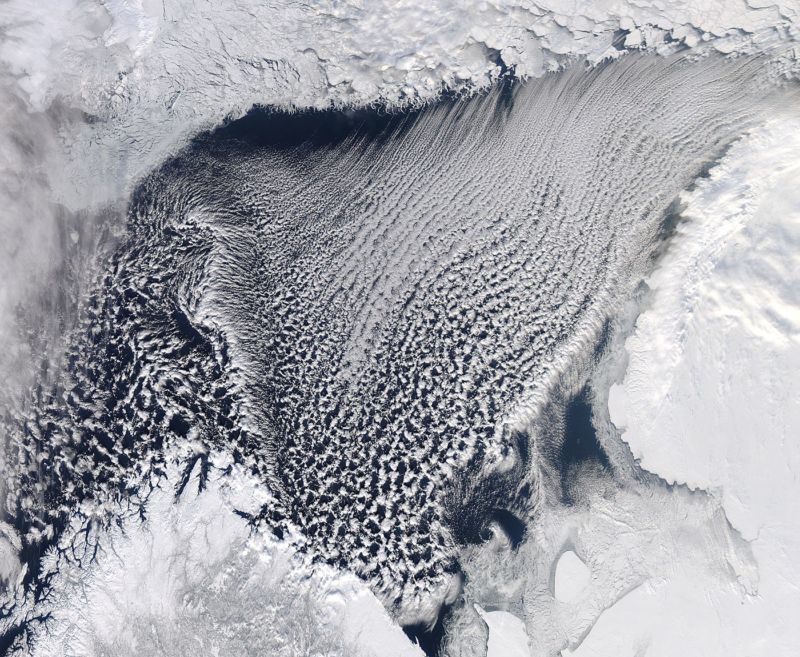
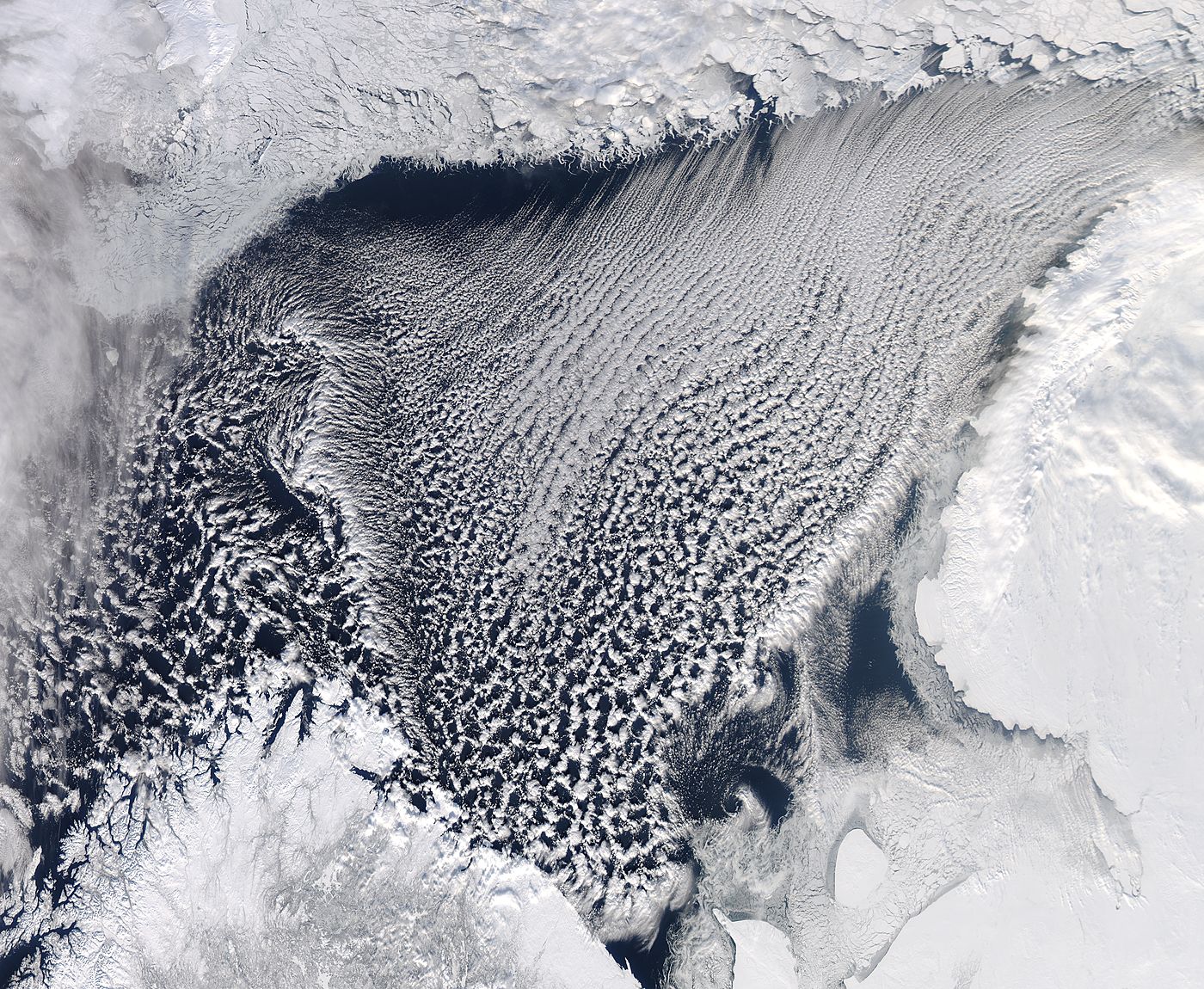
Enlarge / A cloud-covered Barents Sea, showing sea ice encroaching from the Arctic Ocean to the north.

Many of the threats we know are associated with climate change are slow moving. Gradually rising seas, a steady uptick in extreme weather events, and more all mean that change will come gradually to much of the globe. But we also recognize that there can be tipping points, where certain aspects of our climate system shift suddenly to new behaviors.

The challenge with tipping points is that they’re often easiest to identify in retrospect. We have some indications that our climate has experienced them in the past, but reconstructing how quickly a system tipped over or the forces that drove the change can be difficult. Now, a team of Norwegian scientists is suggesting it has watched the climate reach a tipping point: the loss of Arctic sea ice has flipped the Barents Sea from acting as a buffer between the Atlantic and Arctic oceans to something closer to an arm of the Atlantic.

Decades of data

The Norwegian work doesn’t rely on any new breakthrough in technology. Instead, it’s built on the longterm collection of data. The Barents Sea has been monitored for things like temperature, ice cover, and salinity, in some cases extending back over 50 years. This provides a good baseline to pick up longterm changes. And, in the case of the Barents Sea in particular, it’s meant we’ve happened to have been watching as a major change took place.

The Barents Sea lies north of Norway and Russia, bounded by Arctic islands like Svalbard and Franz Josef Land. To its west is the North Atlantic, and the Arctic Ocean is to its north. And data from prior to the year 2000 indicates that the Barents acted as a buffer between the two oceans.

To the north, the Arctic Ocean has been dominated by sea ice, which spreads into the Barents during the winter. The ice acts as a barrier to exchanging heat with the atmosphere and blocks sunlight from reaching the ocean water, helping keep the Arctic colder in the summer. As it melts, the Barents also creates a layer of fresh water that doesn’t mix well with the salt water below it, and it is light enough to remain at the surface. The water of the Atlantic is warmer but saltier and better mixed across its depths.

In between, in the Barents, the two influences create a layer of intermediate water. The Arctic surface water and sea ice helps keep the Barents fresher and cool. And while the Barents is warmed from below by the dense, salty Atlantic water, it’s not enough to allow the two layers to mix thoroughly. This helps keep the Barents Sea’s surface water cold and fresh, encouraging it to freeze over during the winter.

The researchers behind the new work say that this layered structure was “remarkably stable” from 1970 all the way through 2011. But change started coming to the area even as the layers persisted. The atmosphere over the Arctic has warmed faster than any other region on the planet. In part because of that, the amount of ice covering the Arctic Ocean began to decline dramatically. It reached what were then record lows in 2007 and 2008. As a result, the Barents Sea was relatively ice-free in the Arctic summer, decreasing the fresh water present in the surface layer.

Sea-ice drift into the Barents sea dropped enough so that the 2010-2015 average was 40 percent lower than the 1979-2009 mean. The researchers checked precipitation at some islands on the edge of the Barents Sea, and they confirmed that the loss of fresh water at the surface was due to the loss of ice rather than a change in weather patterns.

(For context, the Barents Sea is essentially ice-free at the moment, even though the melt season typically extends through September.)

Triple threat

The loss of ice also means that the surface water in this area is exchanging heat with the atmosphere and absorbing more sunlight during the long Arctic summer days. These two have combined to heat the top 100m of water dramatically. If the mean of its temperature from 1970-1999 is taken as a baseline, the temperatures from 2010-2016 are nearly four standard deviations higher. 2016—the most recent year we have validated data for—was 6.3 standard deviations higher.

This has the effect of heating the intermediate water from above. Meanwhile, the warm Atlantic water will heat it from below. As a result, the cold intermediate water has essentially vanished from the Barents Sea, turning the area into a basin dominated by Atlantic water. The entire water column, from surface to the sea floor, has both warmed and gotten saltier, all starting in the late-2000s.

While dramatic, that in and of itself doesn’t make for a tipping point. But the authors argue that the present conditions make it extremely difficult for the sea ice to re-establish itself during the winter: “Increased Atlantic Water inflow has recently enlarged the area where sea ice cannot form, causing reductions in the sea-ice extent.” The water both starts out warmer and has increased salt content, making freezing more difficult.

In essence, the authors argue that the entire Barents Sea has started to behave as an arm of the Atlantic. Unless some external factor re-establishes the layer of fresh water on the surface, “the entire region could soon have a warm and well-mixed water-column structure and be part of the Atlantic domain.”

Tip of the ice

From a strictly human-centric position, the changes aren’t necessarily a terrible thing. In terms of ecosystems, the authors describe the Barents as “divided into two regions with distinct climate regimes—the north having a cold and harsh Arctic climate and ice-associated ecosystem, while the south has a favorable Atlantic climate with a rich ecosystem and lucrative fisheries.” The expansion of these fisheries, while coming at the cost of the native ecosystem, could prove a boon for the countries bordering the region.

But the general gist of the study is considerably more ominous: not only have we discovered a climate tipping point, but we’ve spotted it after the system has probably already flipped into a new regime. It also provides some sense of what to expect from the future. Rather than seeing the entire planet experience a few dramatic changes, we’re likely to see lots of regional tipping points that have more of a local effect. The future will be the sum of these events and their interactions, making it a bit harder to predict which changes we should be planning for.

Seabirds Washing Up Dead; Scientists Investigating

A dead murre lies on the sand where it washed ashore in Nome in June 2018.

SEABIRDS have once again been found washed up on beaches in Western Alaska.

Beginning in May, birds have been reported dead or behaving strangely in communities throughout the Bering Strait region, from Shishmaref to Unalakleet and on St. Lawrence Island.

Large-scale die-offs of seabirds and other marine animals have been occurring around the state for several years, and the U.S. Fish and Wildlife Service (USFWS) wants to know why. That takes the help of boots-on-the-ground partners across Alaska.

Gay Sheffield is one of those partners. She’s a marine biologist with Alaska Sea Grant in Nome, and she has helped coordinate the collection of dead birds. She says only one bird has been tested so far this year: a murre, collected in Unalakleet in May.

“The murre was tested for harmful algal blooms, tested for avian cholera, was tested for bird flu, and a full necropsy—or a little bird autopsy—was done, and the result was that the bird had starved to death.”

But, she says, knowing that a bird ultimately didn’t get enough food doesn’t answer the larger question of why it died.

Robb Kaler is a wildlife biologist at USFWS’s Migratory Bird Management office in Anchorage. He’s been monitoring the seabird die-offs statewide.

“They’re dying of starvation, but there might be other contributing factors.”

Kaler says factors contributing to bird deaths could include neurotoxin poisoning from algal blooms, increased storminess, or shifts in the type of fish available to birds to eat. And, he says, many of the factors could be connected to warming sea surface temperatures off the coast of Alaska.

Both Sheffield and Kaler underscored the importance of collecting more freshly dead birds. More samples mean more testing — and more information that can be returned to communities where healthy seabirds mean food security.

Kaler says:

“We need to provide them with answers on whether these birds are safe to consume or not, whether their eggs are safe to consume.”

Several birds were recently collected from Shishmaref and Gambell. Test results are forthcoming.

To report a seabird or other marine animal found dead or behaving strangely, contact Gay Sheffield at 434-1149 or Brandon Ahmasuk at Kawerak at 443-4265. You can also call U.S. Fish and Wildlife Service’s Dead Seabird Hotline at (866) 527-3358.

Image at top: A dead murre that washed ashore in Nome in June 2018. Photo: Zoe Grueskin, KNOM.

Trump Skipping G7 Climate Meeting on Climate, Clean Energy, Oceans

Canadian Prime Minister Justin Trudeau with President Trump. Official White House Photo by Shealah Craighead

President Donald Trump headed for the Group of Seven (G7) summit in Canada on Friday but will be leaving before Saturday’s meeting on climate changeclean energy and oceans. The White House said an aide will take Trump’s place, CNN reported.

The announcement of his early departure comes amid a brewing war on tariffs. French President Emmanuel Macron and Canadian Prime Minister Justin Trudeau said at a joint press conference on Thursday they intended to challenge Trump’s tariffs on steel and aluminum imports at the G7 summit, according to the Associated Press.

Trump will depart for Singapore on Saturday for his meeting with North Korean leader Kim Jong Un.

“I am heading for Canada and the G-7 for talks that will mostly center on the long time unfair trade practiced against the United States,” the president tweeted today. “From there I go to Singapore and talks with North Korea on Denuclearization. Won’t be talking about the Russian Witch Hunt Hoax for a while!”

Frankly, it’s not surprising that Trump wants to skip the climate meeting with the leaders of Canada, France, Germany, Italy, Japan and the UK. The president doesn’t believe in climate science, he wants to dramatically expand offshore oil drilling along the nation’s coasts, and his intention to withdraw the U.S. from the Paris agreement has created a significant rift between the U.S. and its G7 allies.

In fact, U.S. Environmental Protection Agency chief Scott Pruitt also ducked out of a G7 meeting of environment ministers in Italy last June.

Just look at how incongruous the aims of the G7 meeting are compared to Trump’s pro-fossil fuel agenda:

  1. How can the G7 accelerate the transition to low carbon, climate resilient economies? What issues, areas, or initiatives should the G7 prioritize?
  2. How can the G7 create a cleaner environment for future generations, while also creating jobs and growth that benefits everyone?
  3. What are the most important issues facing our oceans and coastal communities today? How should the G7 work together to address these issues, including as it relates to expanding conservation, eliminating pollution, and promoting the sustainable use of maritime resources?
  4. How can the G7 advance gender equality and women’s empowerment through its actions related to climate change, oceans and clean growth?

As Earther noted, “One can hope Trump’s absence will reduce distractions.” Perhaps, as the website suggested, the meeting can instead focus on the Trudeau government’s recent $4.5 billion purchase of the controversial Trans Mountain tar sands pipeline.

Better yet, the G7 leaders can talk about a new report from Britain’s Overseas Development Institute. The report revealed that their governments continue to subsidize at least $100 billion a year in subsidies for the production and use of coaloil and gas, despite repeated pledges to phase out fossil fuels by 2025.

Pope warns oil executives: Climate change may ‘destroy civilization’

Pope warns oil executives: Climate change may ‘destroy civilization’
© Getty Images

Pope Francis on Saturday issued a dire warning to top oil executives, saying that climate change could “destroy civilization.”

At a two-day conference at the Vatican, the pope called climate change a challenge of “epochal proportions,” according to Reuters.

He also said that the world must move toward using clean energy and a reduction in the use of fossil fuels.

“Civilization requires energy but energy use must not destroy civilization,” Francis said.

The conference, organized by the University of Notre Dame in the United States, brought together executives from asset manager BlackRock, BP and Norwegian oil and energy company Equinor, among others.

The event was prompted by Francis’s 2015 papal encyclical blaming humans for climate change and criticizing world leaders for not acting swiftly enough to address it.

The conference comes a little less than a year after President Trumppulled the U.S. out of the Paris climate accord. Trump has referred to global warming as a “hoax” and drawn criticism from the scientific community for stacking his administration with officials who deny the human role in climate change. During a meeting with Trump, the pope gave him a copy of the encyclical.

The pope told the group Saturday that global issues like poverty are “interconnected” to concerns about global warming and access to electricity.

“We know that the challenges facing us are interconnected,” he said, according to Reuters. “If we are to eliminate poverty and hunger … the more than one billion people without electricity today need to gain access to it.”

“But that energy should also be clean, by a reduction in the systematic use of fossil fuels,” he added. “Our desire to ensure energy for all must not lead to the undesired effect of a spiral of extreme climate changes due to a catastrophic rise in global temperatures, harsher environments and increased levels of poverty.”

Marine Heat Waves, Changing Ocean Currents and Capitalism’s Threat to Life

It would have been unthinkable not many years ago to imagine the impending death of the Great Barrier Reef. The world’s largest living structure and a world heritage site unsurpassed for its tremendous beauty, the Great Barrier Reef has been one of the planet’s most important ecosystems. Now, after consecutive years of prolonged, extreme marine heat waves in 2016 and 2017, one-half of the reef is dead.

Yet the reef, which has gone through immense challenges over millions of years of changing climates, is not entirely gone yet. Leading coral reef scientist Terry Hughes recently told the Guardian that, “The Great Barrier Reef is certainly threatened by climate change, but it is not doomed if we deal very quickly with greenhouse gas emissions. Our study shows that coral reefs are already shifting radically in response to unprecedented heatwaves.”

Further work from other research teams documented in April that globally, marine heat waves have increased in frequency and are of longer duration. Scientists from the Australian Research Council’s Centre of Excellence for Climate Extremes and the Institute of Marine and Antarctic Studies published a study finding that between 1925 and 2016, marine heat waves occurred 34 percent more often, and lasted 17 percent longer. The result has been a 54 percent increase in the number of marine heat wave days happening each year globally.

The study brought together a range of ocean temperature data over the time period studied. Controlling for climate variability, the authors were able to determine that the increase in marine heat waves was related to an increase in sea surface temperature. “With more than 90 percent of the heat from human-caused global warming going into our oceans, it is likely marine heat waves will continue to increase,” said study co-author Neil Holbrook from the University of Tasmania.

The paper cites the impact of recent marine heat waves in a number of the world’s oceans, concluding that, “These events resulted in substantial ecological and economic impacts, including sustained loss of kelp forests, coral bleaching, reduced surface chlorophyll levels due to increased surface layer stratification, mass mortality of marine invertebrates due to heat stress, rapid long-distance species’ range shifts and associated reshaping of community structure, fishery closures or quota changes, and even intensified economic tensions between nations.”

The news of increasing ocean heat waves and their devastating impact is truly alarming, especially in connection with the many other signs of accelerating climate change and general ecological crisis, including in just the past several months.

Arctic, Antarctic Melt and the Ocean Conveyor Belt

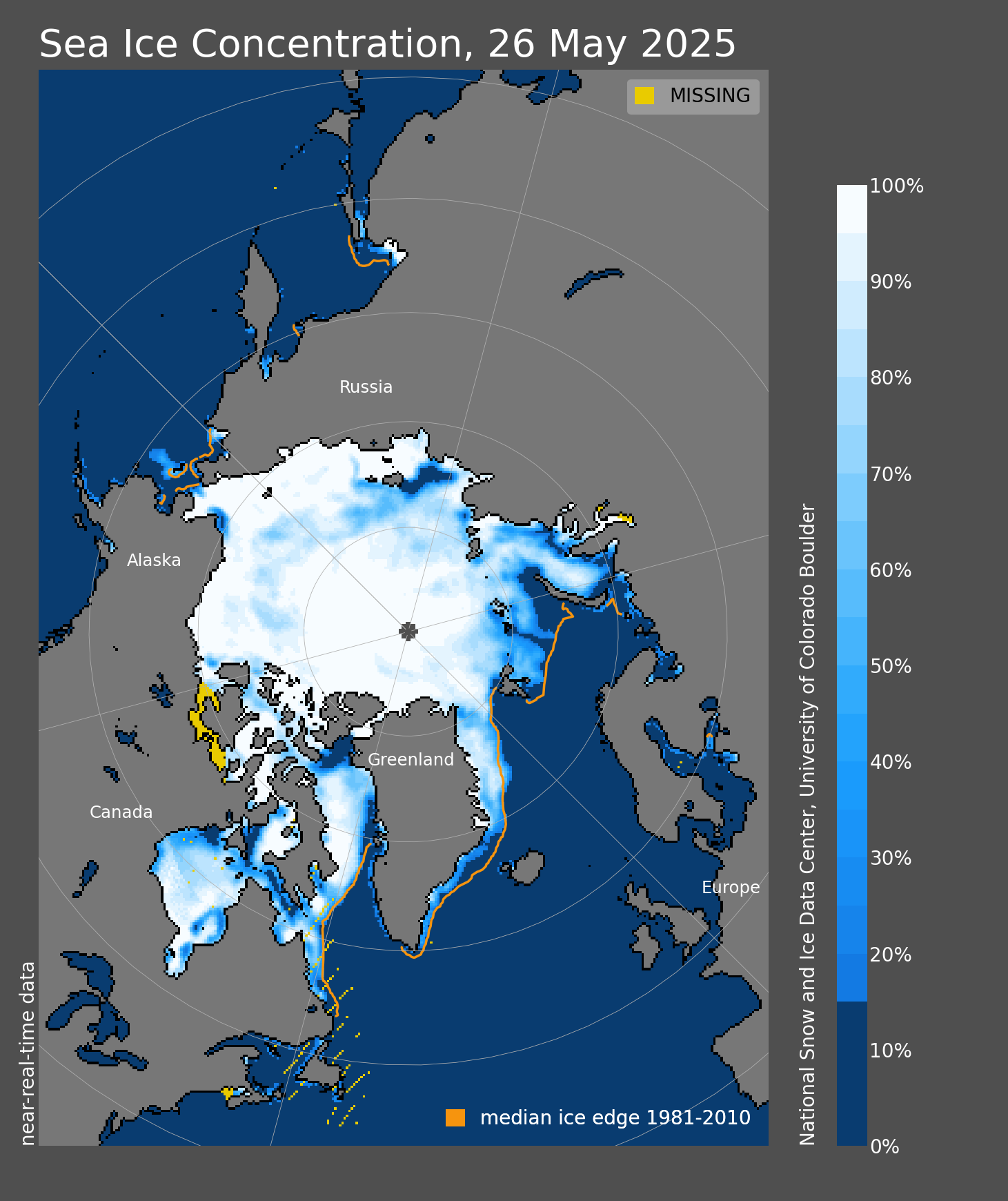
After another abnormally warm year in large parts of the Arctic region, including mid-winter temperatures that went above freezing at the North pole, the National Snow and Ice Data Center reported April 2018 essentially tied for the lowest Arctic sea ice extent on record with April 2016. More worrying, not only was the sea ice coverage at a historic April low, but the amount of thicker, multi-year ice cover “has declined from 61 percent in 1984 to 34 percent in 2018. In addition, only 2 percent of the ice age cover is categorized as five-plus years, the least amount recorded during the winter period,” according to the Center.

With the Arctic warming at twice the global average, less ice is forming and more is melting in summer so less of the ice lasts through the warmer months to become multi-year ice. New ice forms in fall and winter, but this ice is now increasingly new, younger ice, instead of building on the thicker and more stable multi-year ice. As ice melts and ice coverage is increasingly younger, less thick and less stable, sea ice is being lost, and the Arctic Ocean is becoming more open in summer. The increasingly ice-free open ocean absorbs the sun’s energy much more readily than the ice-covered ocean, accelerating warming. This dangerous positive feedback loop underway in the Arctic is already impacting climate worldwide.

For the Arctic itself, the disappearing ice threatens to devastate the species and ecosystems that have evolved in connection with it. The decline of Arctic ice and ecosystems, forced by greenhouse gas emissions from the predominant capitalist economies of the planet, also threatens genocide for the culture and way of life of Indigenous peoples throughout the region who have lived for millennia in an ice-covered world.

Another recently published study has shown that melting glaciers in East and West Antarctica are freshening the surrounding ocean and slowing the formation of ocean “bottom water.” Normally, Antarctic bottom water is formed by the sinking of cold, salty water that results as sea ice forms and pushes out salt into surrounding waters. This cold, dense water sinks, mixes with and cools warmer salty water brought by deep ocean currents to Antarctica. But this process is now slowing because of increased glacial freshwater melt. The warm water is stratified, trapped at the bottom, where it is further speeding the melt of Antarctic glaciers from below in these regions. It’s another feedback loop that will likely accelerate sea level rise.

In the Southern Ocean around Antarctica, as well as in the Arctic regions off Norway and Greenland, the process of very dense, cold, salty water sinking is a major factor in causing overturning circulation in the world’s oceans. This is called thermohaline circulation, the process whereby deep-ocean currents are generated by differences in the water’s density, which is controlled by temperature (thermo) and salinity (haline). This is also known as the “ocean conveyor belt.” Ocean currents are very complex and dynamic processes with many factors involved. Essentially though, the ocean conveyor belt drives deep ocean currents that course powerfully around the globe, overturning and mixing enormous quantities of water. In certain regions, this creates upwelling — bringing nutrient-rich water from the ocean’s bottom back to the surface, fueling life. The conveyor belt currents are also a central factor in distributing heat around the planet and stabilizing the Earth’s climate.

Melting sea ice and glaciers are now pouring more fresh water into the ocean, making the waters where this occurs less salty and dense, so less likely to sink. The effects of freshening waters on thermohaline circulation and ocean currents in the Southern Ocean are not yet known, but studies on the North Atlantic this year found that increasing fresh water melt in the Arctic has caused a slowdown in the Atlantic Meridional Overturning Current (AMOC). One of the studies suggested the slowdown has been around 15 percent since 1950. Climatologist Michael Mann said the AMOC slowdown is “happening about a century ahead of schedule relative to what the models predict” and, “I think we’re close to a tipping point.”

What acceleration of ice melt and changing ocean currents will mean for sea level rise that threatens the world coastlines, islands and huge swaths of humanity; for the impact on world climate; and for ocean life and ecosystems that humans also rely on to eat and breathe, is difficult to exactly predict. Nonetheless, it’s clear the climate crisis is already extreme and accelerating. Much depends on whether human society acts quickly to dramatically cut greenhouse gas emissions currently warming the planet, and takes other urgent steps to prevent ecological disaster.

Instead of being reduced, however, carbon emissions continue to grow, recently measured at 410 parts per million, a level not seen in millions of years. In May, the National Oceanic and Atmospheric Administration reported that April 2018 was the 400th straight month that global temperatures were warmer than average.

The Problems of Trump and Capitalism

Faced with this situation of potential ecological catastrophe, Trump and his allies who wield power in the US, lie that global warming is a fabrication, a hoax, or impossible to confirm. They deny the overwhelming evidence and cover over clearly demonstrated science. But this isn’t just a denial of reality, as bad as that is. This is, as The New York Times journalist Justin Gillis said of Scott Pruitt’s denial of climate change, a “civilization-threatening lie.” This is a conscious act that sows confusion, denies people knowledge and prevents them from being able to respond to the existential danger climate change represents. Trump, the Environmental Protection Agency (EPA), the Interior Department and other agencies are moving as fully and as quickly as they can to overturn or eliminate every rule, regulation and barrier that stands in the way of fossil fuel development and use. Their goal is to protect the “freedom” of giant corporations to plunder the natural world to maximize their profitability, and to enhance US “energy dominance,” no matter the destruction it brings.

At the end of May, the EPA announced its official proposal to rollback Obama-era regulations requiring automakers to make cars with higher fuel efficiency standards. If adopted, the likely result is a large increase of greenhouse emissions by the US, already by far the leading contributor to global warming historically. In January, Interior Department head Ryan Zinke announced plans to open up 90 percent of the country’s offshore coastal regions to oil drilling.

Companies have already applied for permits to begin work to develop new oil and gas projects in the Arctic National Wildlife Refuge (ANWR) in Alaska, the largest and most pristine wildlife refuge in the country. Moreover, according to a piece in the Hill, “drilling into the refuge is just the tip of the iceberg. Trump is aggressively pushing Arctic drilling projects on water and land, selling off vast tracts of public lands and oceans, and rolling back drilling safety regulations meant to prevent catastrophic oil spills.”

In May, the White House canceled the vital NASA Carbon Monitoring System that uses satellite and aircraft instruments to track carbon and methane emissions and monitors country’s commitments to greenhouse gas cuts.

Bigger Than Trump

What the Trump regime is doing environmentally (and otherwise) is a threat to planetary life that must be stopped. This crisis, however, didn’t begin with Trump. The operation of the entire world capitalist system has raised greenhouse gases to the level they are and brought us to this juncture. Trump is just the latest and most destructive manifestation of an omnicidal system. The problem we face is that power rests in the hands of a capitalist class that is incapable of confronting our current ecological unraveling as the emergency it is.

The result is a crisis that is inexorably accelerating, with essentially nothing on the level actually needed being done to stop it. Instead of being able to respond from the need to protect life on Earth and world humanity, the capitalist rulers are constrained by the interests and needs of their system for profitability to contend with and beat out rivals.

Karl Marx said presciently of capitalist economic relations, “Modern bourgeois society with its relations of production, of exchange, and of property, a society that has conjured up such gigantic means of production and of exchange, is like the sorcerer who is no longer able to control the powers of the nether world whom he has called up by his spells.”

The capitalist competitive drive for accumulation is why, despite moves by Obama to limit drilling in some places and make modest cuts to greenhouse emissions, fracking and oil and gas production skyrocketed under his administration. It’s also why Canadian Prime Minister Justin Trudeau, who campaigned as a climate change fighter and protector of First Nations rights, has now promised to sink billions of Canadian government dollars into buying the Trans Mountain pipeline that investors were just about to pull out of. Trudeau said of the huge reserves of tar sands oil, the production of which is poisoning Indigenous people and lands in Alberta and the full burning of which would mean climate catastrophe, “No country would find 173 billion barrels of oil in the ground and leave them there.”

Exactly. No capitalist country would. That’s exactly why capitalism cannot be allowed to continue to rule and destroy our planet. Winning a better world, is up to us. What better day to begin, than World Ocean’s Day.