“I think Arctic drilling is insane”–Al Gore

Al Gore criticizes Obama on climate change and ‘insane’ Arctic drilling

With Shell planning to begin drilling in the Chukchi Sea within days, Gore said that Obama was wrong to ever allow drilling in the Arctic

From: http://www.theguardian.com/us-news/2015/jul/16/al-gore-obama-climate-change-arctic-drilling?CMP=share_btn_fb

The former US vice-president and climate champion Al Gore has made a rare criticism of Barack Obama as Royal Dutch Shell prepares to drill an exploratory well in the Arctic Ocean, denouncing the venture as “insane” and calling for a ban on all oil and gas activity in the polar region.

With Shell planning to begin drilling in the oil-rich Chukchi Sea within days, Gore said in an interview with the Guardian that Obama was wrong to ever allow drilling in the Arctic.

It was the only real point of criticism from Gore of Obama’s efforts to fight climate change, at home and through a global deal to be negotiated in Paris at the end of the year.

“I think Arctic drilling is insane. I think that countries around the world would be very well advised to put restrictions on drilling for oil in the Arctic ocean,” Gore told the Guardian in Toronto, where he was passing on his techniques for talking about the climate crisis to 500 new recruits from his Climate Reality Project.

ExxonMobil and Climate Change

They Knew, They Lied: ExxonMobil and Climate Change Thursday,

16 July 2015    
Written by 
William Rivers Pitt   By William Rivers Pitt, Truthout | Op-Ed

Between 1956 and 1964, Bell Laboratories produced a number of television specials titled “The Bell Laboratories Science Series.” The topics ranged from an examination of the Sun, to human blood, deep space, the mind, the nature of time and life itself. The programs were produced by Frank Capra, whose films include It’s a Wonderful Life and Mr. Smith Goes to Washington, so the production value of the series was notably superior. Even 30 years later, schools all across the US were still showing these Bell Labs films to students.

In 1958, a chapter in this series titled “The Unchained Goddess” was broadcast. The topic was the weather, and it starred Richard Carlson and a USC professor named Dr. Frank C. Baxter. At one point in the program, Carlson asked Dr. Baxter, “What would happen if we could change the course of the Gulf Stream, or the other great ocean currents, or warm up Hudson Bay with atomic furnaces?” The “atomic furnaces” bit is a quaint throwback to the atom-crazy 1950s, but the response given by Dr. Baxter is what makes this particular film notable.

“Extremely dangerous questions,” replied Dr. Baxter, “because with our present knowledge we have no idea what would happen. Even now, Man may be unwittingly changing the world’s climate through the waste products of his civilization. Due to our release, through factories and automobiles every year, of more than 6 billion tons of carbon dioxide – which helps air absorb heat from the Sun – our atmosphere seems to be getting warmer. It’s been calculated that a few degrees rise in the Earth’s temperature would melt the polar ice caps, and if this happens, an inland sea would fill a good portion of the Mississippi Valley. Tourists in glass-bottomed boats would be viewing the drowned towers of Miami through 150 feet of tropical water.”

Again, this was broadcast in 1958. The fact that climate concerns were being voiced almost 60 years ago is likely surprising to many, but the history and beginnings of the environmental movement in the US date even earlier. Ten years before, in 1948, the first piece of federal legislation to regulate water quality – the Federal Water Pollution Control Act – was passed. President Eisenhower spoke to the issue of air pollution, which had killed nearly 300 people in New York City two years earlier, in his 1955 State of the Union Address. That same year, the Air Pollution Control Act was passed.

In 1962, Rachel Carson’s Silent Spring was published, a watershed event many consider to be the official beginning of the environmental movement. In 1963, the Clean Air Act was passed. In 1968, Paul Ehrlich’s The Population Bomb was published, which argued that the world’s pollution problems were due to overpopulation. In 1970, President Nixon established the Environmental Protection Agency, and the first Earth Day protest – an event that included some 20 million people nationwide, then the largest protest in US history – was held.

In 1974, the first detailed scientific research connecting chlorofluorocarbons to the depletion of the ozone layer was released, and was augmented two years later. In 1979, President Carter pledged to embark upon a program to ensure that the US would get 20 percent of its energy from renewable resources by 2000. That same year, he installed solar panels on the White House, which President Reagan removed after he took office. Reagan, in his first year, slashed the EPA’s budget by more than half. In 1988, the Intergovernmental Panel on Climate Change (IPCC) was established.

The struggle to identify, diagnose and deal with climate change has been ongoing for almost seventy years, involving presidents and scientists and millions of ordinary citizens who recognized the dangers inherent in a climate affected by our actions … which is what makes this report so thoroughly maddening.

ExxonMobil, it seems, was fully aware of the existence and dangers of global climate change as early as 1981, a fact revealed by a number of recently-released internal memos. The company was looking to exploit a massive natural gas field in Indonesia, but their pet in-house scientist warned against it, because the field was 70 percent carbon dioxide, and drilling for the gas would release the CO2, which would be dangerous to the environment.

For the next 27 years, despite knowing better, ExxonMobil spent millions of dollars to promote “scientists” and think tanks who worked hammer and tongs to promulgate the idea that climate change was a myth. Climate-deniers like Willie Soon of the Harvard-Smithsonian Center for Astrophysics made mad bank by spraying scientific falsehoods into the polluted wind, thanks to the largesse of a number of energy corporations, including ExxonMobil.

They knew. They lied. They paid others to lie. They deranged the conversation, perverted bedrock science into a muddle of greed-inspired opinion-based nonsense, and maybe, or probably, humanity might have missed its window to fix all this because of the long delay they created in the name of profit.

Vast swaths of the US West, including Alaska most significantly, are on fire. Many parts of the world, including Europe, are boiling in unprecedented heat waves. California is basically out of water, with no relief to come in the foreseeable future. Half of Greenland’s ice sheet is now liquid. Pink salmon, mussels, oysters, clams and scallops are about to disappear from the menu because the oceans are turning to acid. Those oceans are rising 2.5 times faster than originally estimated. Fracking persists, tar sands oil extraction continues to scar the air and the sure-to-leak Keystone XL pipeline marches inexorably toward delivering poison to the world.

People have been working for nearly 70 years to warn us of the dangers inherent in fossil fuels and the unchecked release of CO2. Since 1981 at least, ExxonMobil and other energy interests have known what these dangers represent, but spent money hand over fist to obscure the truth in order to line their pockets.

More: http://www.truth-out.org/opinion/item/31885-they-knew-they-lied-exxonmobil-and-climate-change

Attack of the Ten Ton Babies

According to the timely July 14 article in the Washington Post by Erica Gies, “Having kids is terrible for the environment, so I’m not having any: The population explosion and climate change are linked. I want to do my part,” “An American woman driving a more fuel-efficient car, improving the energy efficiency of her house, recycling, and making similar lifestyle changes would save 486 tons of CO2 emissions during her lifetime, while choosing to have one less child would save 9,441 tons.” [Or 18.8 million lbs., whichever sounds worse.]safe_image

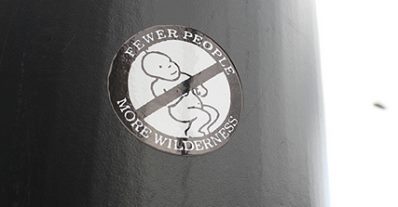
If you’re thinking of adding another baby to this morbidly over-crowded planet, please do the world a favor: don’t. Or at least think first of the other species your little monster love-child would crowd off the Earth.

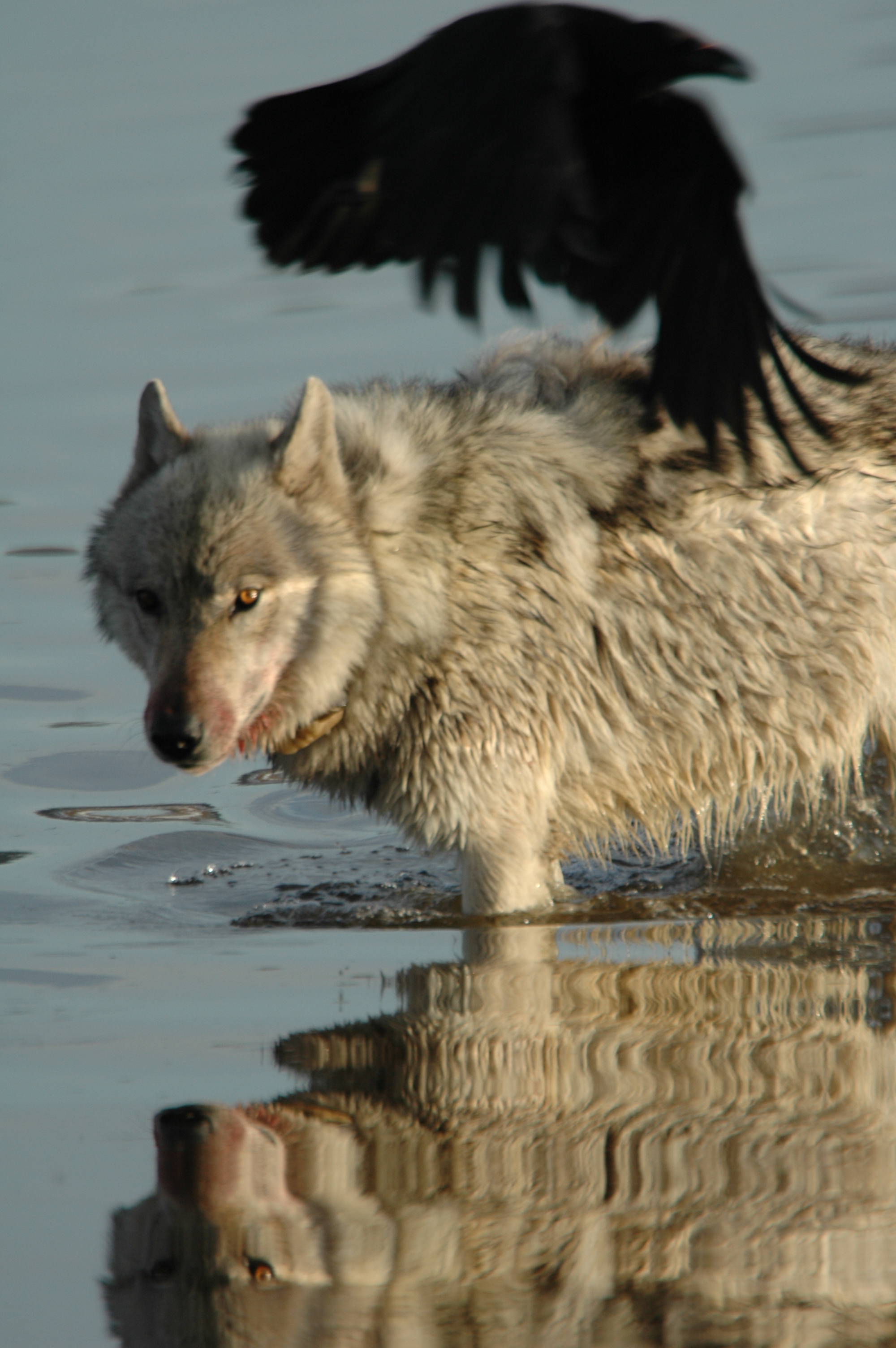
Sure, you plan to raise it right; but there’s still an even chance the little bundle of joy will turn out to be the next Hitler, George W. or Ted Nugent rather than another Jesus, Einstein or Gandhi. The world needs more bison and prairie dogs, more moose, elk and wolves, more salmon, smelt and sea lions, more swans, snow geese and pelicans—more biodiversity—not another climate-warming, Earth-gobbling human baby.

Text and Wildlife Photography ©Jim Robertson, 2015. All Rights Reserved

Text and Wildlife Photography ©Jim Robertson, 2015. All Rights Reserved

Brazil big hydro ravages wildlife – study

http://www.rtcc.org/2015/07/03/brazil-big-hydro-ravages-wildlife-study/

Balbina Dam has hit populations of mammals, large gamebirds and tortoises, researchers say, warning against hydro push

The Balbina lake in Brazil's Amazon which created over 3,500 islands from the forest floor (Credit: Eduardo Venticinque)

By Alex Pashley

Brazil’s thirst for hydropower, which generates over three-quarters of the country’s electricity, has taken a heavy toll on the environment according to new research.

The giant walls of concrete which re-route rivers and flood swathes of land to make renewable energy have stripped forests of wildlife, a study published in Plos One journal said.

Balbina Dam in the central Brazilian Amazon created an artificial archipelago of over 3,500 islands in the 1980s.

Today, just 25 of these harbour more than four-fifths of 35 monitored species, researchers at the University of East Anglia found – an indicator of biodiversity.

Mammals, large gamebirds and tortoises disappeared from the islands, which leave less space to roam than the old unbroken forest. Losses were worst in small islands exposed to wind and wildfires in a 1997-98 drought.

Report: Brazil reveals renewable energy goal on US visit

Lead author Maira Benchimol said hydro has been falsely held as an environmentally friendly source of clean power, with countries building them to meet growing energy demand.

“Previous studies have shown that large dams result in severe losses in fishery revenues, increases in greenhouse gas emissions, and socioeconomic costs to local communities,” she said.

“Our research adds evidence that forest biodiversity also pays a heavy price when large dams are built.”

Developing countries like Brazil, China and Thailand have boosted the large infrastructure projects in recent years.

“Hydropower offers significant potential for carbon emissions reductions,” the UN’s scientific agency, the IPCC has said.

Meanwhile in the US, dozens of aging dams are being blown up as the costs of upkeep outstrip the benefits, restoring rivers for fish and wildlife.

Report: Brazil targets landowners in Amazon reforestation plan

Brazil’s powerful rivers are located a long way from population centres on the south coast. As well as export the power over long distances, the generators attract heavy industry to sit next to the dam.

This has a big impact, study co-author Carlos Peres told RTCC, as workforces flock to regions “which have no inclination to industrial activity”.

And in Balbina’s case, Peres argued the power supply did not justify the environmental impact. Some 3,000 sq km was flooded to supply just 10% of the energy needs of Manaus, a jungle city of about 2 million.

Chronic droughts have affected Brazil’s hydropower generation this year, calling on natural gas to plug the gap, said Philip Fearnside, at the National Institute for Research in the Amazon. As climate impacts ramp up, hydro’s share may now be at 70% and could fall further, he added.

“The non-monetary factors don’t get weighed at all,” Fearnside said from Manaus, adding a handful of senior government figures license the projects, while environmental impact assessments aren’t available in advance. An ongoing corruption scandal has linked politicians and major dam builders, according to Amazon Watch.

Report: Brazil faces water rationing amid worst drought in 84 years

Report: Is climate change driving Brazil’s drought chaos?

The US Energy Information Administration notes Brazil plans to move away from hydropower to minimise the risks of a hotter climate, but is still going ahead with hydro projects.

Brazil’s president Dilma Rousseff announced this week plans to boost non-hydro renewables to 28-33% of its energy by 2030, as well as promising policies to eliminate illegal deforestation. It is in the process of drawing up a national climate plan to help curb global warming.

The 14,000 MW Belo Monte dam along the Xingu River, expected to be completed in 2016, will become the second-largest dam in Brazil — and the third-largest dam in the world — at a forecast cost of US$13 billion.

It has been criticised for forcing indigenous communities from their homes and hurting forest biodiversity.

– See more at: http://www.rtcc.org/2015/07/03/brazil-big-hydro-ravages-wildlife-study/#sthash.QlgWfgGD.dpuf

The Emergence of Human Evil: the Prequel

There’s a scene from the movie, Dominion: Prequel to the Exorcist, wherein the local African cattle kill and eat several wild hyenas. Almost immediately after ingesting the animal flesh the cows begin to stumble and drop dead. As gruesome as the whole scenario was, it seems symbolic of the first day, one million years ago (or so), also in Africa, when pre-human primates came across or killed another animal and decided to eat its dead flesh. As with the scene from the installment of the Exorcist, the event represented an innocent plant-eater’s first brush with evil.

Unfortunately for all other life to follow, humans did not have an immediate sickened reaction and drop dead like the cattle in the film. Nothing stopped the greedy proto-humans from continuing with their aberrational carnivorous crimes against nature. Instead, the killing and consumption of their fellow animals, bolstered by the lust for power and control, became routine, tradition, and finally enshrined. Now, here we are today (both the unthinking omnivore and the ethical vegetarian alike) paying the penance for our ancestors’ acts.

Yes, there was an original sin, but it had nothing to do with eating apples or any other fruit, nor anything that grew on trees or in the ground for that matter. It had to do with trying to mimic natural predators who’ve had millennia over us primates to adapt physically and psychologically into the role of carrion scavenger or killer. Not that nature’s carnivores were ever evil, but why would we want to emulate such undesirable and offensive behavior?

That first bloody bite of carrion, the first mouth-watering morsel of tender flesh was all it took; all she wrote. Fast-forward a million years—game over.

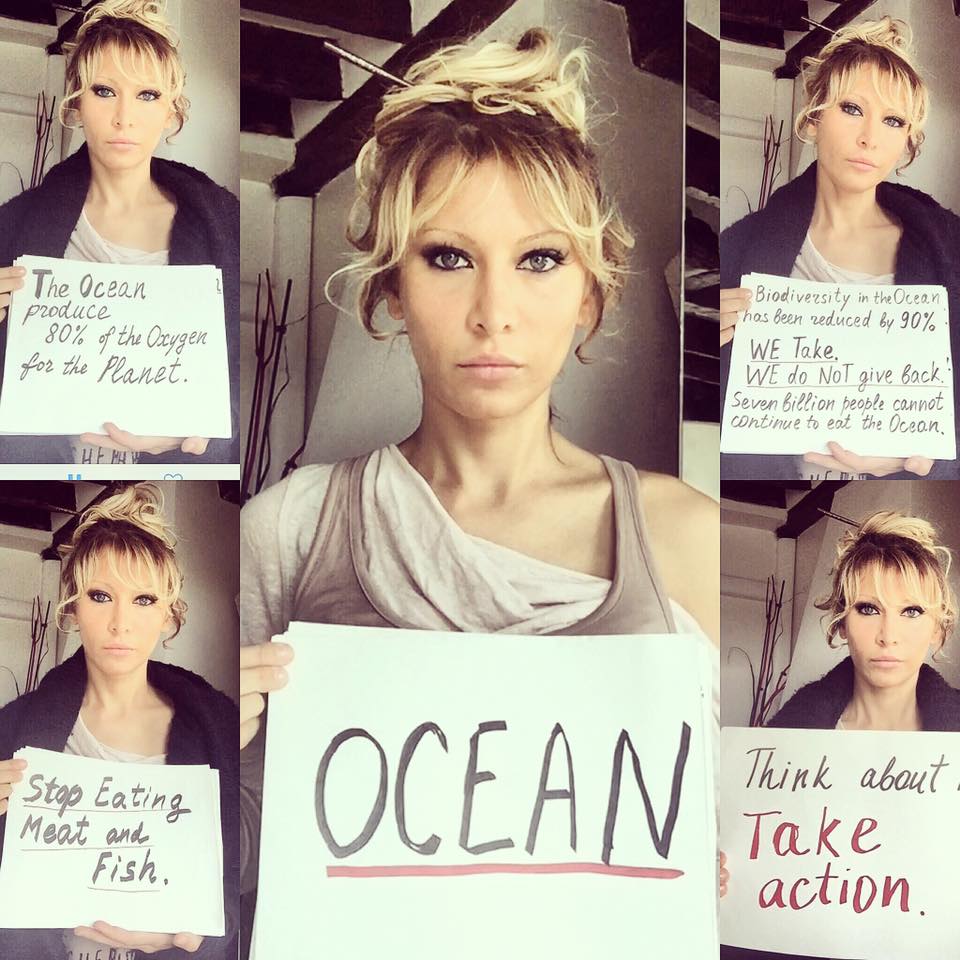
The proud human followed a path from hand-to-mouth, from feed lot to oil field, changing everything from Earth’s biodiversity to its very climate.

A lot has been made about humans being the only species to cause a mass extinction. But when all is said and done, some may say that we’re not the first species to have a role in a mass extinction; that the over-population of methane producing microbes, methanogens, might have factored in to the third mass extinction event, the Permian extinction. Still the fact remains that humans have the dubious distinction of being the one species to knowingly bring en entire era (in our case, the Age of Mammals—the most diverse in Earth’s history) to a close. Despite ample warning and time to modify our behavior, our species seems bent on making the same mistakes right up to the living end. Not only did the freeways and highways not miraculously clear at the first sign that our carbon over-output was changing the planet’s atmosphere, but relatively few people (relative to the over-all burgeoning human population, anyway) are swearing off carrion after learning that meat production is responsible for an even greater carbon (and methane) footprint.

And it all leads back to that first fateful bloody bite. Mother Nature was too nice to us. If she had made that early proto-human urp it all back up again, projectile-vomit at the very thought of it, or experience some repellant natural reaction, we could all have been spared a lot of misery at the hands of Homo Horribilus Rex, the two-legged mutant, meat-eating monster.

264431_455824994498980_1177070538_n

Climate Change Downplayers are Almost as Bad as Outright Deniers

In terms of potential harm to the planet, these so-called “experts” (often with no direct knowledge of how the weather is supposed to behave or how far off kilter things have gotten these days) are sometimes as bad for the planet as outright deniers…

http://www.komonews.com/news/local/Hot-weather-impacting-climbing-on-Mount-Rainier-314329081.html

MOUNT RAINIER NATIONAL PARK, Wash. (AP) – Seattleites without air conditioning aren’t the only ones suffering from record-setting temperatures this summer.

The glacier-covered faces of Mount Rainier are melting faster than usual this year, creating conditions on the mountain more like August or September just a few days into July….

Things have been looking different for the last 40 years, at least, according to a U.S. Geological Survey report that found Mount Rainier glaciers had lost 14 percent of their volume from 1970 to 2008.

But while global warming is fingered for shrinking glaciers, it may not be behind the most recent hot weather, according to University of Washington atmospheric science professor Cliff Mass.

Mass said the warmer weather over roughly the last year – and especially the last few weeks – is so out of the ordinary that it can only be attributed to natural variations in weather.

“If you have a very, very extreme situation, global warming can’t be the cause of most of it,” Mass said. “Global warming isn’t large enough to be the cause of it.”

———————————————————–

Also see:

No, Arctic sea ice is not going to be okay

One of the most obvious effects of global climate change is that it’s causing ice to melt all over the world, especially at the planet’s frozen poles. Ice losses have been observed for years now in glaciers and ice sheets, as well as in Arctic sea ice — the ice that floats on top of the ocean. In a confusing twist, though, new research published Monday is showing that there was a large increase in Arctic sea ice in 2013, rather than a decrease.

It’s just the kind of news often seized upon by climate skeptics as a way to undermine the concept of anthropogenic global warming. However, making sense of these observations requires a deeper understanding of long-term trends in sea ice and the factors that affect it from one year to the next.

Overall, Arctic sea ice has experienced a decreasing trend since the 1970s — however, its extent still fluctuates slightly from one year to the next depending on local climate-related conditions, sometimes increasing a bit from one year to the next, and other times decreasing. Despite these little annual fluctuations, the overall trend observed for decades now still shows that we’re losing ice in the long term.

More: http://www.washingtonpost.com/news/energy-environment/wp/2015/07/20/no-arctic-sea-ice-is-not-going-to-be-okay/

Animals survival stories from the wildfires in northern Saskatchewan

Animals survival stories from the wildfires in northern Saskatchewan

Animals survival stories from the wildfires in northern Saskatchewan

REGINA – Amongst the wildfire destruction in northern Saskatchewan there have been some inspiring survival stories from the animal kingdom.

This week fire crews working near La Ronge spotted a cat stuck at the top of a pole. A SaskPower employee was able to get the cat get back to safety.

“It’s sort of a heartwarming story in the middle of a fairly tough times and stressful times for people and at least there is still some nice moments,” said SaskPower spokesperson Tyler Hopson.

SaskPower brought the cat to the humane society to see if they could reunite it with its owners.

READ MORE: Complete Saskatchewan wildfire coverage

Finding distressed animals is nothing new for those fighting the wildfires. A few weeks ago a group of men near La Loche were able to rescue a fawn who was found near the edge of a helicopter pad.

The baby fawn was brought to the Healing Haven Wildlife Rescue on June 11th where he was treated for burns on his feet and ears.

Mark Dallyn from the Healing Haven Wildlife said that the veterinarian has given him a good diagnosis for a full recovery but he isn’t completely out of the woods yet.

Currently they have the fawn growing up with another fawn so he is ready to be released back into the wild by May of 2016.

David Suzuki: The Realities of a Warming World

http://ecowatch.com/2015/07/10/realities-of-warming-world/

| July 10, 2015
My hometown, Vancouver, is in a rainforest, so we celebrate sunny days. People I talk to are enjoying the recent warm, dry weather, but they invariably add, “This isn’t normal”—especially with all the smoke from nearby forest fires.With no mountain snowpack and almost no spring rain, rivers, creeks and reservoirs are at levels typically not seen until fall. Parks are brown. Blueberries, strawberries and other crops have arrived weeks earlier than usual. Wildfires are burning here and throughout Western Canada. Meanwhile, normally dry Kamloops has had record flooding, as has Toronto. Manitoba has been hit with several tornadoes and golf-ball-sized hail.

Unusual weather is everywhere. California is in its fourth year of severe drought. Temperatures in Spain, Portugal, India and Pakistan have reached record levels, sparking wildfires and causing thousands of deaths and heat-related ailments. Heavy rains, flooding and an unusually high number of tornadoes have caused extensive damage and loss of life in Texas, Oklahoma and Mexico.

The likely causes are complex: a stuck jet stream, the Pacific El Niño, natural variation and climate change. Even though it’s difficult to link all events directly to global warming, climate scientists have warned for years that we can expect these kinds of extremes to continue and worsen as the world warms. Some hypothesize that the strange behaviours of this year’s jet stream and El Niño are related to climate change, with shrinking Arctic sea ice affecting the former.

Several recent studies indicate a clear connection between increasing extreme weather and climate change. One, by climatologists at the National Center for Atmospheric Research in Colorado, looked at rising global atmospheric and sea-surface temperatures, which have increased water vapour in the atmosphere by about five per cent since the 1950s. According to the paper, published in Nature Climate Change, “This has fuelled larger storms, and in the case of hurricanes and typhoons, ones that ride atop oceans that are 19 centimetres higher than they were in the early 1900s. That sea-level rise increases the height of waves and tidal surges as storms make landfall.”

A Stanford University study found, “accumulation of heat in the atmosphere can account for much of the increase in extreme high temperatures, as well as an average decrease in cold extremes, across parts of North America, Europe and Asia,” but also concluded the influence of human activity on atmospheric circulation, another factor in climate change, is not well understood.

Earth is clearly experiencing more frequent extreme weather than in the past, and we can expect it to get worse as we burn more coal, oil and gas and pump more carbon dioxide and other greenhouse gases into the atmosphere. This can have profound and costly impacts on everything from agriculture to infrastructure, not to mention human health and life.

As Pope Francis pointed out, climate change and social justice are intricately connected: “The human environment and the natural environment deteriorate together; we cannot adequately combat environmental degradation unless we attend to causes related to human and social degradation.”

That’s why so many people from Canada and around the world are calling for action as government leaders prepare for December’s UN climate summit in Paris: religious leaders including Pope Francis and the Dalai Lama; global organizations like the World Bank, International Monetary Fund, International Energy Agency and World Health Organization; businesses from Microsoft to Ikea to General Motors; and millions of people like those who marched for “Jobs, Justice and the Climate” in Toronto on July 5. All know the future of humanity depends on rapidly shifting the way we obtain and use energy.

Even though many world leaders recognize the problem, the recent G-7 agreement to decarbonize our energy by the end of the century is a horrifying joke. None of today’s politicians making the commitment will be alive to bear the responsibility for achieving the target, and the time frame doesn’t address the urgent need to begin huge reductions in fossil fuel use immediately.

Governments at the provincial, state and municipal levels have led the way in finding solutions. Now it’s time for national leaders to finally demonstrate real courage and foresight as they gear up for the Paris summit later this year.

Hydropower May Be Huge Source of Methane Emissions

http://www.climatecentral.org/news/hydropower-as-major-methane-emitter-18246

October 29th, 2014

By Bobby Magill

Imagine nearly 6,000 dairy cows doing what cows do, belching and being flatulent for a full year. That’s how much methane was emitted from one Ohio reservoir in 2012.

Reservoirs and hydropower are often thought of as climate friendly because they don’t burn fossil fuels to produce electricity. But what if reservoirs that store water and produce electricity were among some of the world’s largest contributors of greenhouse gas emissions?

Harsha Lake, a large reservoir near Cincinnati, Ohio, emitted as much methane in 2012 as roughly 5,800 dairy cows would have emitted over an entire year. Credit: Firesign/flickr

Scientists are searching for answers to that question, as they study how much methane is emitted into the atmosphere from man-made reservoirs built for hydropower and other purposes. Until recently, it was believed that about 20 percent of all man-made methane emissions come from the surface of reservoirs.

New research suggests that figure may be much higher than 20 percent, but it’s unclear how much higher because too little data is available to estimate. Methane is about 35 times as potent a greenhouse gas as carbon dioxide over the span of a century.

Think about man-made lakes in terms of cows passing gas: Harsha Lake, a large reservoir near Cincinnati, Ohio, emitted as much methane in 2012 as roughly 5,800 dairy cows would have emitted over an entire year, University of Cincinnati biogeochemist Amy Townsend-Small told Climate Central.

Methane emissions from livestock are the second-largest source of methane emissions in the U.S., behind crude oil and natural gas, according to the U.S. Environmental Protection Agency. But the EPA’s greenhouse gas emissions estimates do not yet account for methane emissions coming from man-made reservoirs.

Part of the reason is that, generally, very little is known about reservoirs and their emissions, especially in temperate regions, such as in the U.S., where few studies have been conducted.

RELATED Tropical Dams an Underestimated Methane Source  Basis for EPA Clean   Fracked Oil, Gas Well Defects Leading to Methane Leaks

In 2012 study, researchers in Singapore found that greenhouse gas emissions from hydropower reservoirs globally are likely greater than previously estimated, warning that “rapid hydropower development and increasing carbon emissions from hydroelectric reservoirs to the atmosphere should not be downplayed.”

Those researchers suggest all large reservoirs globally could emit up to 104 teragrams of methane annually. By comparison, NASA estimates that global methane emissions associated with burning fossil fuels totals between 80 and 120 teragrams annually.

But how much reservoirs contribute to global greenhouse gas emissions is “still a big question mark,” because the issue remains relatively unstudied and emission rates are highly uncertain, said John Harrison, an associate professor in the School of the Environment at the Washington State University-Vancouver whose research focuses on how reservoirs can be managed to reduce greenhouse gas emissions.

“So I don’t think we really know what the relative greenhouse gas effect of reservoirs is compared to other sources of energy in the U.S.,” he said.

Research at Harsha Lake may help scientists better understand how reservoirs contribute to climate change.

In a study published in August, Townsend-Small and researchers from the EPA found that Harsha Lake emitted more methane into the atmosphere in 2012 than had ever been recorded at any other reservoir in the U.S.

“When you compare the annual scale of the methane emission rate of this reservoir (Harsha Lake) to other studies, it’s really much higher than people would predict,” EPA research associate and Harsha Lake study lead author Jake Beaulieu told Climate Central.

Scientists have long thought reservoirs in warmer climates in the tropics emitted more methane than reservoirs in cooler climates, but the research at Harsha Lake shows that may not be the case, Townsend-Small said.

“We think this is because our reservoir is located in an agricultural area,” she said.

Methane is generated in reservoirs from bacteria living in oxygen-starved environments.

“These microbes eat organic carbon from plants for energy, just like people and other animals, but instead of breathing out carbon dioxide, they breathe out methane,” Townsend-Small said. “These same types of microbes live in the stomachs of cows and in landfills, which are other sources of methane to the atmosphere.”

Runoff from farmland around Harsha Lake provides more nutrients in the water, allowing algae to grow, just like numerous other reservoirs surrounded by agricultural land across the country.

Lake Travis near Austin, Texas. Credit: Bobby Magill

Methane-generating microbes feed on decaying algae, which means that lakes catching a lot of nutrient-rich agricultural runoff generate a lot of methane.

“There are a very large number of these reservoirs in highly agricultural areas around the U.S.,” Townsend-Small said. “It could be that these agricultural reservoirs are a larger source of atmospheric methane than we had thought in the past.”

Emissions from reservoirs in all climates could be underestimated because of a discovery Beaulieu’s team found at Harsha Lake: The area where a river enters a man-made lake emits more methane than the rest of the lake overall.

Nobody has measured that in an agricultural reservoir before, Beaulieu said.

Most other research studying reservoir methane emissions doesn’t account for how emissions may vary across the surface of a lake, he said.

The EPA is about to begin a more comprehensive study measuring methane emissions from 25 reservoirs in a region stretching from northern Indiana to northern Georgia, with sampling beginning next year, Beaulieu said.

That study will help the EPA eventually include reservoir methane emissions in its total estimates of human-caused methane emissions.

Until that and other studies are complete, scientists can only speculate on the impact hydropower is having on the climate.

“We’re still in the very early days here of understanding how these systems work with respect to greenhouse gas production,” Harrison said.