Are Humans Going Extinct?

Monday, 01 December 2014 09:45
Written by 
Dahr Jamail By Dahr Jamail, Truthout | Interview

Some scientists, Guy McPherson included, fear that climate disruption is so serious, with so many self-reinforcing feedback loops already in play, that humans are in the process of causing our own extinction.

August, September and October were each the hottest months ever recorded, respectively. Including this year, which is on track to become the hottest year ever recorded, 13 of the hottest years on record have all occurred in the last 16 years.

To see more stories like this, visit “Planet or Profit?”

Coal will likely overtake oil as the dominant energy source by 2017, and without a major shift away from coal, average global temperatures could rise by 6 degrees Celsius by 2050, leading to devastating climate change.

“Across two decades and thousands of pages of reports, the world’s most authoritative voice on climate science has consistently understated the rate and intensity of climate change and the danger those impacts represent.”

This is dramatically worse than even the most dire predictions from the Intergovernmental Panel on Climate Change (IPCC), which predicts at least a 5-degree Celsius increase by 2100 as its worst-case scenario, if business continues as usual with no major mitigation efforts.

Yet things continue growing worse faster than even the IPCC can keep up with.

Scientific American has said of the IPCC: “Across two decades and thousands of pages of reports, the world’s most authoritative voice on climate science has consistently understated the rate and intensity of climate change and the danger those impacts represent.”

And there is nothing to indicate, in the political or corporate world, that there will be anything like a major shift in policy aimed at dramatically mitigating runaway anthropogenic climate disruption (ACD).

Guy McPherson is a professor emeritus of natural resources, and ecology and evolutionary biology, with the University of Arizona, who has been studying ACD for nearly 30 years.

Near-term human extinction could eventually result from losing the Arctic sea ice, which is one of the 40 self-reinforcing feedback loops of ACD.

His blog Nature Bats Last has developed a large readership that continues to grow, and for six years McPherson has been traveling around the world giving lectures about a topic that, even for the initiated, is both shocking and controversial: the possibility of near-term human extinction due to runaway ACD.

As McPherson has told Truthout: “We’ve never been here as a species, and the implications are truly dire and profound for our species and the rest of the living planet.” He told Truthout that he believes that near-term human extinction could eventually result from losing the Arctic sea ice, which is one of the 40 self-reinforcing feedback loops of ACD. “A world without Arctic ice will be completely new to humans,” he said.

At the time of our interview less than one year ago, McPherson had identified 24 self-reinforcing positive feedback loops. Today that number has grown to 40.

A self-reinforcing feedback loop can also be thought of as a vicious circle, in that it accelerates the impacts of ACD. An example would be methane releases in the Arctic. Massive amounts of methane are currently locked in the permafrost, which is now melting rapidly. As the permafrost melts, methane, a greenhouse gas 100 times more potent than carbon dioxide on a short timescale, is released into the atmosphere, warming it, which in turn causes more permafrost to melt, and so on.

In the near term, earth’s climate will change 10 times faster than during any other moment in the last 65 million years.

While McPherson’s perspective might sound way-out and like the stuff of science fiction, similar things have happened on this planet in the past. Fifty-five million years ago, a 5-degree Celsius rise in average global temperatures seems to have occurred in just 13 years, according to a study published in the October 2013 issue of the Proceedings of the National Academy of Sciences. A report in the August 2013 issue of Science revealed that in the near term, earth’s climate will change 10 times faster than during any other moment in the last 65 million years.

Prior to that, the Permian mass extinction that occurred 250 million years ago, also known as “The Great Dying,” was triggered by a massive lava flow in an area of Siberia that led to an increase in global temperatures of 6 degrees Celsius. That, in turn, caused the melting of frozen methane deposits under the seas. Released into the atmosphere, those gases caused temperatures to skyrocket further. All of this occurred over a period of approximately 80,000 years. The change in climate is thought to be the key to what caused the extinction of most species on the planet. In that extinction episode, it is estimated that 95 percent of all species were wiped out.

Today’s current scientific and observable evidence strongly suggests we are in the midst of the same process – only this time it is anthropogenic, and happening exponentially faster than the Permian mass extinction did.

We are likely to begin seeing periods of an ice-free Arctic by as soon as this coming summer, or the summer of 2016 at the latest.

Once the summer ice begins melting, methane releases will worsen dramatically.

Our current extinction event is already greatly exceeding the speed, and might eventually even exceed the intensity, of the Permian mass extinction event.

We are currently in the midst of what most scientists consider the sixth mass extinction in planetary history, with between 150 and 200 species going extinct daily – a pace 1,000 times greater than the “natural” or “background” extinction rate. Our current extinction event is already greatly exceeding the speed, and might eventually even exceed the intensity, of the Permian mass extinction event. The difference is that ours is human caused, isn’t going to take 80,000 years, has so far lasted just a few centuries and is now gaining speed in a nonlinear fashion.

Is it possible that, on top of the vast quantities of carbon dioxide from fossil fuels that continue to enter the atmosphere in record amounts yearly, an increased release of methane could signal the beginning of the sort of process that led to the Great Dying? Some scientists, McPherson included, fear that the situation is already so serious and so many self-reinforcing feedback loops are already in play that we are in the process of causing our own extinction. Worse yet, some are convinced that it could happen far more quickly than generally believed possible – even in the course of just the next few decades.

Truthout caught up with McPherson at the Earth at Risk conference in San Francisco recently to ask him about his prediction of human extinction, and what that means for our lives today.

Dahr Jamail: What are some of the current signs and reports you’re seeing that are disconcerting, and really give you pause?

Guy McPherson: I’ve been traveling, so I’m out of date for the last 10 days. But starting with the snowstorm in Buffalo, New York, that was the biggest snowstorm ever recorded in Buffalo, at 6 feet 4 inches in 24 hours. It’s the largest one ever recorded in the United States.

Australia, meanwhile, is on fire. I just came back from New Zealand, and spring had just turned there because it’s the Southern Hemisphere. The whole time I was there people were commenting on how hot it was, and “how far into summer we already are,” and it was early to mid-spring when I was there.

So there’s all kinds of observational evidence.

“It’s hard for me to imagine we make it into the 2030s as a species.”

We triggered another self-reinforcing feedback loop, number 40, just about two weeks ago; then just a week ago there was a [scientific] paper that came out indicating that for every 1-degree temperature rise, there is 7 percent more lightning strikes. So that contributes to a previously existing self-reinforcing feedback loop, that of fires, especially in the Northern Hemisphere, and especially in the boreal forests. So, as it gets warmer and drier, there are more and bigger fires, and that kicks more carbon into the atmosphere, which of course contributes to ongoing, accelerating climate disruption.

So lightning is yet another piece of that. As there is more moisture in the atmosphere and more heat going into the atmosphere and warming the planet, we have more lightning. The whole atmosphere becomes more dynamic. So, those are things that come to mind.

From your analysis, how long do you think humanity has before extinction occurs?

That’s such a hard question, and we are such a clever species. It’s clear that abrupt climate change is underway. Methane has gone exponential in the atmosphere. Paul Beckwith, climate scientist at University of Ottawa, indicates we could experience a 6-degree Celsius temperature rise in the span of a decade. He thinks we’ll survive that. I can’t imagine how that could be. He’s a laser physicist and engineer, so I think he doesn’t understand biology and requisite habitat that we need to survive.

So it’s difficult for me to imagine a scenario where we’ll survive even a 4-degree Celsius [above pre-industrial baseline] temperature rise, and we’ll be there in the very near future, like by 2030, plus or minus. So it’s hard for me to imagine we make it into the 2030s as a species.

But when I deliver public presentations I try not to focus on any particular date; I just try to remind people that they are mortal. That birth is lethal, and that we don’t have long on this planet even if we live to be 100, so we might want to pursue what we love, instead of pursuing the next dollar.

A more micro-look from that question – what do you see happening in the US, if Beckwith and other scientists who are predicting that rapid a rise of temperatures in such a short time frame are correct?

The interior of continents heats at least twice as fast as the global average. So a 6-degree Celsius rise in the global average means at least 12 degrees Celsius in the interior of continents – that means no question there is no habitat for humans in the interior. So you would have to be in a maritime environment.

“It’s difficult for me to imagine a situation in which plants, even land plants survive, because they can’t get up and move.”

I think even before we get to 6 degrees Celsius above baseline, we lose all habitats. We lose all or nearly all the phytoplankton in the oceans, which are in serious decline already as the result of an increasingly acidified ocean environment. It’s difficult for me to imagine a situation in which plants, even land plants survive, because they can’t get up and move. So without plants there is no habitat.

At a 6-degree Celsius temperature rise in the span of decades, there’s no way for evolution by natural selection to keep up with that. Already, climate change – which at this point has been pretty slow and what we would call linear change – already climate change is outpacing evolution by natural selection by at least a factor of 10,000, so I don’t see any way the planet is going to keep up.

More:

http://www.truth-out.org/news/item/27714-are-humans-going-extinct

Also read:  The Methane Monster Roars

http://www.globalresearch.ca/the-methane-monster-roars/5426116

1795497_611414028914288_1804650880_n


Half of the members of the US Senate don’t believe humans cause climate change

1795497_611414028914288_1804650880_n

The votes are in, and … half of the members of the US Senate don’t believe humans cause climate change.

This is a national embarrassment. Differences of opinion are one thing, but it’s far more troubling when half of the members of our most distinguished legislative body simply ignore facts supported by overwhelming scientific consensus.

Let’s take the Senate to school. Sign the climate science petition — when we get 50,000 signatures, Avaaz will run a poll quizzing schoolchildren on climate, then launch ads in the biggest papers showing that the US Senate is failing science class compared to middle schoolers. Sign now:

https://secure.avaaz.org/en/schooling_the_senate_on_climate_science_re/?bVYyJab&v=52978

Things are bad in Washington. The first real legislation the new Senate passed this year? To build the climate-wrecking Keystone XL pipeline. The new chair of the Senate’s environmental committee is James Inhofe, the Senate’s climate denier-in-chief who quotes the Bible to claim humans can’t change the planet. But the climate science report from the National Academies of Science — commissioned by Congress itself — says the exact opposite!

The report’s #1 finding was that “Climate change is occurring, is very likely caused primarily by human activities, and poses significant risks to humans and the environment.” Going against this is like asking mathematicians for a number line, then saying that 1 is smaller than zero.

Deep down, most of the Senators who voted against scientific fact must know they’re full of it. The American people do — a new report just found that a majority want Congress to do more on climate. And our best shot at changing the game is to publicly embarrass them.  Sign on now, and help teach Congress a lesson that even 8th graders know:

https://secure.avaaz.org/en/schooling_the_senate_on_climate_science_re/?bVYyJab&v=52978

Human-caused climate change is no joke. That so many of our supposed leaders are so out of step with basic science, settled years ago, means that the people are going to have to lead on this one. That’s a role the Avaaz community knows how to fill — we did it in New York in September with the People’s Climate March, and we can do it again now.

With hope,

Terra, David, John, Nataliya, Fatima, Ricken, and the Avaaz team

SOURCES
National Academy of Sciences “Climate Choices” Report summary
http://dels.nas.edu/Report/America-Climate-Choices-2011/12781

So Much Senate Climate Change Trolling (Think Progress)
http://thinkprogress.org/climate/2015/01/21/3614028/so-much-senate-climate-change-trolling/

US Senate refuses to accept humanity’s role in global climate change, again (The Guardian)
http://www.theguardian.com/environment/2015/jan/22/us-senate-man-climate-change-global-warming-hoax

Most Americans support government action on climate change (NY Times)
http://www.nytimes.com/2015/01/31/us/politics/most-americans-support-government-action-on-climate-change-poll-finds.html

Abrupt Climate Change, Already?


http://www.ukprogressive.co.uk/abrupt-climate-change-already/article35431.html

by Robert Hunziker

There are some serious scientists who believe it is already here. If their analysis is correct, the world could turn nearly uninhabitable within current lifetimes.

In that regard, the American public is overly, dangerously casual about the prospects/risks of abrupt climate change. This is found in numerous studies and polls, e.g. according to a Pew Research Global Attitudes Project, in an international survey of 39 countries, Americans were among the least concerned about climate change threatening the country. Global warming also ranked near the bottom of Americans’ priorities.

As it goes, the American public may be caught off guard, unprepared, and ill equipped to press its political establishment for appropriate action because abrupt climate change has a history of happening very, very quickly, within decades, not over hundreds of years.

Assuming these scientists are correct, by the time the U.S. Congress gets serious about climate change, they’ll be wearing waders.

As for the risks associated with abrupt climate change, according to Paul Beckwith, Laboratory for Paleoclimatology and Climatology, University of Ottawa, in the past: “The temperature of the planet has increased by 5C or 6C within one decade or two decades… not within a hundred years but within one or two decades… during the ice age period between 70,000 and 40,000 years ago, the temperature rose over Greenland 5-6C in a decade or two… and 55 million years ago… the temperature rose globally by 5C in 13 years, as shown in sediment samples.” (Source: COP20: Global Arctic Methane Emergency https://www.youtube.com/watch?v=QQkNxuQ0DoI

Based upon historic records, once abrupt climate change commences, and when viewed on a geological-time basis, it has the potential to take off like a house on fire. According to Paul Beckwith, unfortunately: “We’re undergoing the early stages of abrupt climate change,” already, right now!  As such, a rapid self-fulfilling temperature rise of 5C or 6C would be devastating for life, as we know it.

This risk of further rapid abrupt climate change, as for example, temperatures zooming Featured Image -- 8189upwards, depends upon the integrity of the ice of the Arctic, among other considerations. As emphasized by Beckwith, when analyzing the climate system, it is important to understand that metrics can be misleading.  For example, the consensus opinion talks about 2C as a cap for rising temperatures; however, in point of fact, “What is important is the temperature distribution on the planet on a latitudinal basis.”

Beckwith: “The Arctic is absorbing a lot more solar energy, and by itself at a much greater rate, than anywhere else on the planet. In fact, on average, in the last number of decades, the Arctic temperature has risen 1.0C per decade whereas the global average temperature rise has been about 0.15C per decade. So that ratio is 6 or 7 times more.”

Therefore, the most immediate risk of further abrupt climate change hinges on how well the Arctic withstands global warming. As the Arctic loses ice mass, it releases more, and more, methane (CH4), which is much more powerful at entrapping heat than is carbon dioxide (CO2), and because massive quantities of CH4 are embedded within the ice, only a small fraction may cause the planet to heat up rapidly, going into deadly overdrive, resulting in numerous outgrowths negatively impacting life. As for example, rapid increase in sea levels, flooding coastal cities, embedded droughts, diminishing agricultural production, severe storm activity, and horrific heat throughout the mid latitudes, resulting in panic, illness, and sudden death. It is likely the world turns chaotic.

Scientists are radically divided on the issue of abrupt climate change and few predict an upsurge any time soon. Nevertheless, it’s the scientists who base their opinion on first hand knowledge, “boots on the ground,” who are screaming the loudest. They do not let the “ computer models” override what they personally experience. In contrast, they see and feel the reality “in the field.”  They are like scientific pioneers in the field, in the marsh, below and above the ice, on expeditions into the wilderness where nobody cares to tread. It’s hard work.

Those scientific pioneers, like John Nissen, Chairman of the Arctic Methane Emergency Group (“AMEG”), are deeply concerned about the rate of melt of the Arctic, and the attendant enormous plumes of methane, already observed in the Arctic seas, especially in the East Siberian Ice Shelf where waters are shallow and easily warmed, threatening to release gigatons of methane.  Expeditions above, below, and on the surface have convinced these scientists that we’ve got a huge problem coming up, maybe soon, maybe too soon.

According to John Nissen: “Sea ice could disappear at the end of summer as soon as next September. At that point, further warming of the Arctic, sea level rise, methane release, in that time bomb, and abrupt climate change, could become unstoppable. The fuse will have been lit and will be going off very quickly. We consider it an absolute scandal that IPCC [Intergovernmental Panel on Climate Change] says nothing about the greatest threat to humanity since civilization began.”

In turn, these pioneering scientists listen to other scientists who also favor “boots on the ground” analysis over scientific modeling, people like Dr. Natalia Shakhova, who leads the Russia-U.S. Methane Study at the International Arctic Research Center, at the University Alaska Fairbanks and the Pacific Oceanological Institute, Far Eastern Branch of Russian Academy of Sciences. Dr. Shakhova’s expeditions to the Arctic convince her that only a tiny percentage of the vast amounts of methane buried in Arctic ice is necessary to double current atmospheric CH4. Worse yet, she suspects an outburst of 50 gigatons could happen at any time. In many respects, this would be a disaster beyond repair.

In an interview, Shakhova says, “We do not like what we see… absolutely do not like it.”

In the end, too much carbon dioxide emitted by burning too much gas, oil & coal, blankets the atmosphere enough to heat up the Arctic far above and way beyond past centuries, causing torrential weather patterns throughout the Northern Hemisphere, and shaking lose too much methane for human comfort.

Could civilization withstand a 50-gigaton release? Professor Wadhams’ response is: “No, I don’t think it can.”

Is there a solution?

Yes, there may be solutions but according to these scientists, a sense of urgency matters more than anything at this late hour.

Paul Beckwith is one of the scientific pioneers, an advocate, a researcher, and member of AMEG, co-founded by Peter Wadhams, professor of Ocean Physics, University of Cambridge.

Beckwith: “We have to slash emissions there’s no question, slash the CO2 emissions and quickly, but that’s not sufficient. We also have to cool the Arctic, and we also have to try to remove CO2 from the atmosphere.”

The technology is there, solar radiation management, reflecting incoming solar, and sea salt spraying, as well as employing concerted efforts to increase vegetation to absorb CO2, and carbon capture, and biochar.

However, there’s risk because nobody has proven these geoengineering techniques effective on a planetary scale. On that basis, they are experimental. There is no consensus in the world community to test geoengineering, which is very provocative subject matter amongst scientists, some favor, some oppose. And, those opposed adamantly oppose because of potential harmful feedback loops. It may be a risky venture.

But, what if these early-warning scientists are wrong? What if they are absolutely correct about the outcome of global warming/climate change but too optimistic about the timing? This, therefore, is all the more reason for governments to initiate conversions now from fossil fuels to renewables, hopefully rescuing future generations from the potential of a global warming nightmare.

If we lose the ice caps, civilization starves and the world’s coastal cities drown. It’s really as simple, and complex, as that. Already, CO2 levels are at an historic high.

Throughout geological history, “Every time we have hit high CO2, we’ve lost the ice caps,” Peter Ward, professor, Dept. of Earth & Space Sciences, University of Washington, Our Future in a World without Ice Caps, 2013 lecture series.

1795497_611414028914288_1804650880_n

No Wolves Killed in Contest Means Too Many Wolves Already Killed

Hunters here need to get a life. For over a week now, I’ve been receiving comments about the wolf/coyote contest hunt addressed in the January 2nd article, “ID Gun Nuts Start New Year With Three-Day Mass Slaughter Of Wolves And Coyotes.”   

I don’t know if it’s the insinuation that they might be “gun nuts” (I would think they’d gladly fess up to that) or what, but long after the derby has played itself out, they’re still trying to get their vitriolic comments approved. So far, over 500 of their 180,000+ viewers have left comments that will never see the light of day (except in the occasional post like this one, meant to expose just how malicious they really are).

And they really do all sound alike—believe me when I say you’d never want to sit through 500 of their repetitive statements, such as the ever-popular catch phrase:

“Smoke a pack a day!”NT wolf bumpr stickr

It wasn’t funny the day the first guy blurted it out and it just gets more tedious—and more carcinogenic—with each repeated use. However, it does point out their universal sentiment about doing away with wolves at every chance they get. With all the anti-wolf mawkishness it’s hard to imagine there are many wolves left in Idaho. Each licensed hunter there can legally kill up to five wolves per season and trap and an additional five individuals, so recovering wolves would conceivably have suffered considerable losses by now.

But these would-be commenters seem keenly concerned about controlling the wolves’ population (as if they need it) while at the same time, indifferent about their own. Here are some of their views on the subject of overpopulation:

“There is nothing wrong with the killing of these animals it’s a all in an order to control population.”

“Their numbers are unsustainable. Wolves will kill for the thrill and not just because they are hungry.”

“haha kill them all! Wolves are one of the biggest problems we have in Idaho, wyoming and Montana!”

“if we don’t thin out these packs it could turn bad for everyone they are already over populated…” 

And yet, according to post-contest articles like, “Wolf Population Unaltered By Controversial Hunt,” “Nobody even saw a track. We had fresh snow, and we were just in shock,” Alder said. “No sightings, no tracks.” He noted that there was an increase in coyote captures this year—30, compared with 21 during last year’s derby.

Not to give them credit for achieving anything whatsoever, but it would seem wolf-killers have been proactive about gettin’‘er done well before the contest’s start date.

The article goes on to say, “One team of hunters killed 12 coyotes over three days and sold their pelts to a fur buyer who attended the event. The team walked away with a $1,000 cash prize for most coyotes killed.

“Thirty coyotes were killed during the three-day hunt, and—for the second consecutive year—zero wolves.”

The derby, organized by executive director of Idaho for Wildlife Steve Alder, was created to help curb predator populations.

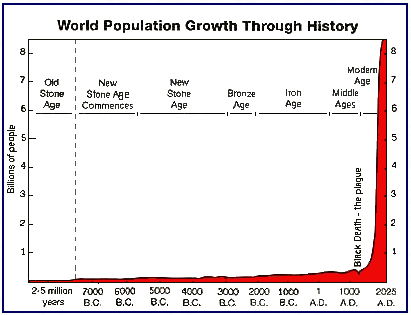
Considering the burgeoning human population, Alder and his ilk would do well to look in the mirror before calling any kettles black. Are they blissfully ignorant of the fact that another human is born every eight seconds in this country alone? Meanwhile, 350,000 humans are born each and every day worldwide.

How many of them will grow up to be predator hunters? Talk about “unsustainable” numbers. This isn’t just about them or their rancher buddies. This is about a world-wide loss of biodiversity—their part in the sixth mass extinction. It’s really not something to be glib over or proud of.

world-population-through-history-to-2025

Great News!! With Lawsuit Pending, Feds Cancel Idaho Predator-killing Derby

copyrighted wolf argument settled

With Lawsuit Pending, BLM Cancels Idaho Predator-killing Derby Permit

By On November 25, 2014 

BOISE, Idaho —In response to a lawsuit from conservation groups, the Bureau of Land Management has decided to cancel a permit allowing an anti-wolf organization to conduct a “predator derby” on more than 3 million acres of public lands near Salmon, Idaho.

As lawyers for the Center for Biological Diversity, Western Watersheds Project, Project Coyote and Defenders of Wildlife were preparing to file a request to stop this year’s derby on BLM lands, the agency decided to withdraw its decision to allow “Idaho for Wildlife” to conduct a contest to kill the most wolves, coyotes, and other species over three days every year for five years, beginning Jan. 2, 2015.

“We’re so glad that the deadly derby has been canceled this year,” said Amy Atwood, senior attorney at the Center for Biological Diversity, who represents the Center, Western Watersheds Project and Project Coyote. “These sort of ruthless kill-fests have no place in this century. We intend to pursue every available remedy to stop these horrible contests.”

News of BLM’s decision came from an attorney with the U.S. Department of Justice, which is representing the BLM in the groups’ litigation, who conveyed the news just as attorneys for the groups were preparing to file a major brief to stop this year’s hunt.

“BLM’s first-ever approval of a wolf hunting derby on public lands undercuts wolf recovery efforts, so it’s good they cancelled this permit,” said Laird Lucas, director of litigation at Advocates for the West, which represents Defenders of Wildlife.

The hunt would have allowed up to 500 participants compete to kill the largest number of wolves, coyotes and other animals for cash and prizes. Contest organizers are hoping to expand their contest statewide.

“It’s hard to imagine a more objectionable event than an award-laden killing festival,” said Travis Bruner, executive director of Western Watersheds Project. “Let’s all hope that this is the beginning of the end of such activities.”

Wolves were removed from the endangered species list in 2011 following many years of recovery efforts in central and eastern Idaho, where public lands are supposed to provide core refugia in the face of aggressive hunting and trapping in Idaho.

“Killing wildlife for fun and prizes on public lands that belong to all Americans is not only reprehensible, it is also a violation of the Public Trust Doctrine and contravenes Idaho Fish and Game’s policy condemning killing contests as unethical and ecologically unsound,” said Camilla Fox, founder and executive director of Project Coyote. “It is high time the BLM acknowledges that wildlife killing contests are not an acceptable ‘use’ of public lands.”

The Center for Biological Diversity is a national, nonprofit conservation organization with more than 800,000 members and online activists dedicated to the protection of endangered species and wild places.

Western Watersheds Project works to protect and restore public lands and wildlife in the West through education, public policy initiatives and legal advocacy.

Project Coyote is a national non-profit organization promoting compassionate conservation and coexistence between people and wildlife through education, science, and advocacy. Join our community on Facebook and Twitter.

There Will Be Blood

If you want to make a conservation biologist squirm, try this question: “How do you think the animal feels?” Scientists usually think in terms of populations and species.”

http://conservationmagazine.org/2014/10/killing-for-conservation/

The pressure to reach for a gun to help save one animal from another is stronger than ever. And it has triggered a conservation problem from hell.

By Warren Cornwall

We usually think conservation means saving animals. But its history is tinged with blood. John Audubon, a patron saint of the American conservation movement, killed hundreds of birds, partly for sport and partly for specimens to pose for his paintings. Aldo Leopold, a father of ecological science, endorsed killing wolves to increase deer populations.

Today, as climate change pushes animals into each other’s overlapping territories and humans drive ever more species to the brink of extinction, the pressure to reach for a gun to help save one animal from another is stronger than ever. In recent years, the federal government has shot Arctic foxes to guard the nests of rare Steller’s eider ducks. In Texas and Oklahoma, hunters blast cowbirds that take over the nests of endangered black-capped vireos. Sea lions have been put to death for the sake of salmon on the Northwest’s Columbia River. The U.S. Army Corps of Engineers plans to kill 16,000 double-crested cormorants in 2015 to help those same salmon. But the most controversial case may prove to be the northern spotted owl.

The spotted owl, an icon of the environmental movement, is a shy bird that favors ancient forests. Its declining numbers led to its listing under the Endangered Species Act, bringing a halt to most old-growth logging in Northwest federal forests in the early 1990s. Today, the migration of the barred owl from its original East Coast home poses a potentially fatal threat. Bigger and more aggressive than its smaller cousin, the barred owl has gradually pushed south in a seemingly inexorable wave since arriving in western Canada in the mid-twentieth century. Wherever it turns up in large numbers, spotted owls start to disappear. Biologists suspect spotted owls abandon their nests when they are driven off by the barred owl. In at least one case, a barred owl appeared to have killed and eaten a spotted owl.

Alarmed by the rapid decline of the remaining spotted owls, desperate biologists, federal bureaucrats, and environmentalists have hit upon a last-ditch, bloody scheme: shoot enough barred owls to create breathing room for spotted owls. Last winter, after years of studying the pros and cons of various approaches, the U.S. Fish and Wildlife Service embarked on a six-year experiment in four small parts of the Northwest (the initial four-year plan stretched to six, due to budget problems). Trained marksmen killed 71 barred owls in the first season, a number that could grow to as many as 3,600 owls over the span of the entire experiment. The tests are designed to show what it would take to really make a difference for the spotted owls. If the experiment is deemed a success, it could pave the way for death warrants for thousands of owls every year for decades, if not forever. It would be the largest known mass killing of raptors.

For bird lovers or for anyone with a soft spot for wild animals, this is a problem from hell. Nobody is happy with the options. Bob Sallinger, conservation director of the Audubon Society of Portland, summed it up neatly: “On the one hand, killing thousands of owls is completely unacceptable. On the other hand, the extinction of the spotted owl is completely unacceptable.”

The shootings have prompted an unusual amount of soul-searching. For the first time ever, the Fish and Wildlife Service—an agency with plenty of blood on its hands—convened people to grapple with the ethics of killing one animal for the sake of another. How should humans get involved in a fight between species? Step into the boots of people on the front lines of the owl wars. Would you open fire?

•• 

Finger on the Trigger

The first time Lowell Diller shot a barred owl, he almost couldn’t pull the trigger. He was standing in a grove of Douglas firs and redwoods outside the tiny northern California mill town of Korbel on a damp February afternoon in 2009.

body count graph sm There Will Be Blood

He had lured the bird with a speaker perched on a stump, programmed to send out the barred owl’s haunting eight-note call: who-who, who-whooo . . . who-who, who-whooo. Now the female was perched just 30 meters away, an easy shot with his 20-gauge shotgun. Even in the fading light, he could see the distinctive white and brown stripes down its breast.

Diller had partly hoped no owl would answer his call. He raised the shotgun to his shoulder and tried to take aim. But he was shaking so badly, he feared he would miss. He lowered the gun, taking deep breaths and whispering to himself to calm down, to relax. He braced himself against a tree to steady the gun, told himself it was for the sake of science, and fired.

“It just fundamentally seemed so wrong to be shooting one of these birds,” said Diller, who recently retired from his job as a wildlife biologist with the Seattle-based Green Diamond Resource company. “You just don’t shoot raptors.”

Diller’s queasiness embodies the profound unease people are feeling in the Northwest. In the end, Diller weighed the options and chose what he felt was the lesser of two evils. Doing nothing, he feared, meant accepting the demise of the spotted owl. And that, for him, meant that the killing experiment was worthwhile. If someone needed to do the dirty work, Diller felt he shouldn’t ask someone else to take that job. Since that first day, he has shot 96 barred owls. It hasn’t gotten much easier.

This past spring, he and a handful of marksmen finished the first season of the experiment. They called it quits around the time eggs hatched, because they didn’t want to orphan chicks. The Fish and Wildlife Service draws the line at leaving young birds to slowly starve. This underscores the odd ways ethics can pop up in wildlife management. The shooters will be back in the fall, trying to kill those same owls.

••

The Fate of a Species Trumps that of the Individual

How many barred owls would you kill to save a spotted owl? One? A hundred? A thousand? The calculus is straightforward for Dave Werntz: as many as it takes. Werntz is the science and conservation director for the environmental group Conservation Northwest, based in Bellingham, Washington. He sees the spotted owl as a rare, native species threatened by a new arrival that will likely survive quite well even if thousands are killed every year. So he supports an even more ambitious killing program than the one that the U.S. Fish and Wildlife Service is considering. He likens owl removal to pulling a weed. “I don’t see the barred owl as much different [from] addressing Himalayan blackberry or other domineering species that are impacting our landscape,” he said.

killing for conservation There Will Be BloodHis life has been intertwined with northern spotted owls for more than a quarter-century. In the late 1980s, he wandered the forests of southwest Washington, hooting like an owl. He was working for the U.S. Forest Service, counting spotted owls and tracking where they nested. It was the peak of the Northwest’s legendary timber wars, a time when protesters chained themselves to logging equipment to save vestiges of old-growth forest, loggers burned spotted owls in effigy, and federal courts took control of much of the region’s public timberlands—in part to protect the owl.

Repelled by clearcuts, and fascinated with the owls and old-growth forests, Werntz went back to school. He studied under University of Washington ecologist Jerry Franklin, a pioneer of a new understanding of the richness of old-growth forests. Werntz has been on the front lines of the fight over the owls ever since. In the 1990s, Werntz worked with environmental groups to push for stronger owl protections. Later he toiled to stop the timber industry from rolling back logging restrictions.

The politically charged history of owls and old growth makes the case of the barred owl even more fraught with controversy. Since humans destroyed spotted owl habitat and brought the species to this dire moment, Werntz believes people have an obligation to save the last remaining ones.

Nevertheless, Werntz frames the killing of barred owls as primarily a scientific matter, not a political or ethical one. This is a view commonly espoused by conservation scientists trained to think in terms of the fate of entire species rather than individual animals. While he doesn’t relish killing barred owls, Werntz sees it as necessary to protect a native species integral to the forests he loves. Biodiversity trumps squeamishness about bloodletting.

•• 

The Individual Matters

If you want to make a conservation biologist squirm, try this question: “How do you think the animal feels?” Scientists usually think in terms of populations and species. Individuals form the raw materials for the grand Darwinian drama of survival and evolution. Feelings are, by and large, beside the point.

But for some, the barred owl is a majestic creature endowed with animal intelligence—not a pest. Fish and Wildlife Service officials learned that at public meetings about the owl removal plan. They came to talk science. Many in the crowd spoke of how they felt about the owls as individuals.

bad year for birds and mammals2 There Will Be Blood

Now a growing number of researchers are trying to bridge those two perspectives. They argue that the conventional approach to conservation risks ignoring the lives and experiences of wildlife—making for poor science and shaky ethics. Their new field, “compassionate conservation,” draws on a body of research documenting the cognitive and emotional lives of animals. Injured chickens self-medicate. Crustaceans learn to avoid pain, and they respond to stress in a way similar to that of vertebrates. And rats and dogs—even bees—are capable of pessimism. The more we learn about how animals think and feel, the more we empathize with them and the less we can ignore the suffering we inflict.

“The guiding principle of compassionate conservation is ‘First, do no harm,’ which means the life of each and every individual animal is valued,” writes Marc Bekoff in his “Animal Emotions” column at Psychology Today. Bekoff, a University of Colorado professor emeritus and animal behavior researcher, is a leading voice in the compassionate conservation field. “Trading off individuals of one species for the good of individuals of another species isn’t acceptable,” he says. That means no killing of barred owls.

Yet for many people, the owl dilemma falls into a gray area in which there is tension between the fate of the individual and the survival of a species.

Bill Lynn started out suspicious of the idea of shooting owls. An ethicist at Loyola Marymount University and Clark University in Massachusetts, he was hired by the Fish and Wildlife Service to run stakeholder meetings about the ethics of the lethal experiment. At first, he suspected the government’s killing program was a knee-jerk response that showed little regard for the animals. But the spotted owl’s dire situation changed his mind. He concluded that the experiments, if done as humanely as possible, would be a “sad good”—something unfortunate yet worth doing to help save a species. But he won’t endorse a region-wide war on barred owls until he sees how high the death toll would be.

•• 

What’s the Exit Strategy?

Even if we manage to negotiate the moral thicket of killing one owl to save another—and emerge at the other end with gun at the ready—we run headlong into a practical question: What’s the exit strategy? Can we kill 10,000 barred owls every year forever?

That’s the figure some experts in the field use when they talk about what it will take to truly help spotted owls recover in the Northwest. On the optimistic side, some (such as Diller and Werntz) believe that as Pacific Northwest forests continue to recover from logging and more owl habitat opens up, the killing could slow down or stop after a few decades. Others worry that new habitat will just fill up with even more barred owls, creating a never-ending killing operation.

“I think in the long run we simply can’t control barred owl populations on a large scale,” said Eric Forsman, a U.S. Forest Service wildlife biologist and pre-eminent spotted owl researcher. “It would be incredibly expensive and essentially you’d have to do it forever.”

To date, studies on the effectiveness of lethal barred owl removal have been limited in scope and scale. In small tests on private forestland in northern California, spotted owls returned to nearly all their former nest sites after people shot barred owls that had taken over, according to Diller, who took part in the experiment. Where barred owls were left alone, he said, spotted owl numbers continued to fall. Those results have yet to be published.

The U.S. Fish and Wildlife Service, for its part, hasn’t offered a long-term plan of attack. They’re awaiting the results of their six-year experiment. That experiment is expected to cost $4 million—more than $1,000 per dead bird. And it will cover only two percent of spotted owl habitat in Washington, Oregon, and northern California. The other 98 percent is the worrisome part.

The logistics alone are daunting. First, there’s the problem of finding enough qualified shooters. It’s tricky to tell the difference between a barred owl and a spotted owl. For the experiment, the government is relying on trained gunmen. But declaring open season on barred owls could be a recipe for unacceptable collateral damage.

Then there’s the politics. Even if it is technically feasible, will the public get behind an open-ended mass owl killing with no clear exit strategy? Kent Livezey, a retired Fish and Wildlife biologist, has his doubts. “Even if you got the public to agree the first year, you just need some photographer to go out with them and show a bunch of dead owls,” he said.

Livezey worked for years to save spotted owls, helping to craft the plan for their recovery. But he’s personally repelled by the shooting plan, and he bowed out of the owl work when it came time to devise the experiment. For him, there were just too many dead raptors, and the plan set a bad precedent for other clashes between wildlife. He would rather see people pick a fight that can be won. He imagines using guns to halt the advance of barred owls south into the territory of the California spotted owl, a species that’s not rare yet. But it also means leaving the northern spotted owl without armed bodyguards. “Personally, I would just let nature run its course,” he said.

——-

Warren Cornwall is an environmental and science journalist living in Bellingham, Washington

A Cure for Climate Change: Muscle Over Motor

067

[Why hasn’t this caught on, in the age of carbon footprint awareness?]

http://www.mrmoneymustache.com/2011/12/05/muscle-over-motor/

It’s definitely late fall here in Colorado, and the trees have dumped most of their leaves onto the ground. In my neighborhood, this invariably triggers a flurry of lawn contractor activity. A pickup truck pulling a long trailer full of equipment pulls up, a fleet of young guys gets out and each picks up a leafblower, then for the next hour they blow leaves and gasoline fumes back and forth at each other while the surrounding square mile of city becomes a toxic and ear-splitting war zone. Eventually they manage to get a portion of the leaves into plastic bags in their trailer and they motor off.
Just a few days ago, there was yet another snowstorm here, dropping four inches of luxurious fluffy powder onto the newly blown lawns. I was enjoying a quick bike riding errand through the stuff when I encountered another one of my fellow Longmontians clearing the light powder from his short sidewalk with a SNOWBLOWER! Like 99% of the snowfalls in this region, this was a quantity of snow that could have been easily swept aside with a shovel, or a broom, or even a tiny little bird feather.. but my man was out there doing his duty with a gas-powered appliance. The stench leaking from the crude 2-stroke engine left a stain in the air that could be smelled from 500 feet away.
Earlier in the week, when the temperature was in the 60s, other neighbors were using gas-powered lawnmowers to slowly mow their lawns while simultaneously sucking up and chopping the autumn leaves into the lawnmower’s bag, which they then threw out with their weekly trash.
All of these events led my brilliant engineer’s brain to come up with a few new Inventions:
Imagine a leafblower so advanced that it harnesses the power of your abdomen and biceps, while sucking away your stored fat reserves. Yet it operates nearly silently and costs under 15 bucks. With just a simple wooden handle and a few ounces of sturdy bent plastic or metal prongs, it could be lightweight and quite wide, and be able to clear thousands of square feet of densely-packed leaves per hour, leaving you feeling refreshed and healthier and more connected with Nature every time you use it.
Imagine a snowblower so supreme that it works a complementary set of muscles to the leafblower above: your shoulders and your lower back, as well as the hamstrings and portions of the gluteus. It also operates with silky silence, and it ALSO gets 100% of its power from the ultimate renewable resource – your beer belly. You would assume this would cost hundreds of thousands of dollars, right? Wrong! This too is under fifteen bucks.
My next invention is an advanced motorcycle that weighs less than thirty pounds and costs less than three hundred dollars. Yet it has a range of over a hundred miles per day, and you never have to find a power outlet to plug it in, because its power source is – you guessed it – the cellulite stored in your ass which gets converted into muscles in your legs and calves as a side effect of the transportation!!
I know I am blowing your mind with these inventions, but I actually have working prototypes right in my garden shed and garage.
I also have a lawnmower with a spinning reel of sharp metal blades that gets its power from me pushing on the handle, and even a boat (which I am demonstrating for you in the picture below), that is 11 feet long, and able to navigate everything from tranquil lakes to roaring ocean surf waves to car-sized river rapids.. but which deflates to fit in a bike trailer, weighs less than 25 pounds, costs less than $100, and is also powered entirely by muscles.
Yee Haw! Motorboats be damned.
I think you might be noticing a pattern here. And the pattern is of course Muscle over Motor. It’s more than just an article. It’s a Founding Principle of Mustachianism, because when you embrace it, it adds great fun to your life even while it simultaneously strips away the fat from your physique and your budget. It’s one of the most powerful little three-word sentences you can embrace.
Because of the power of Muscle over Motor, you should be deeply suspicious of anything with a motor. A motor represents a shortcut to getting something done. That sounds good on the surface, but you must consider what you are shortcutting.
A motorboat will get you across the lake quickly, but wait a minute, you like being on the lake – so why not use your muscles to actually earn your trip across it. It takes longer – that is a good thing. You will enjoy the beers on the deck afterwards much more when you really deserve them.
A Hummer will get you up the logging road and across the rocky meadows. But dude, you’re sitting in a glorified Lazy-Boy recliner and pushing on a pedal. What kind of wussy way of climbing a mountain is that? Leave the motor vehicles where the pavement ends and put on your hiking boots like a Real Man or Woman (or a pair of old flip-flops if you want to be even more badass like a local ultrahiker friend of mine). If you want speed and the ability to cross dozens of miles of terrain per day (as well as catching much more air on the descents), try a mountain bike instead of an SUV.
A Harley with its quiet stock mufflers replaced with illegal straight pipes will get you through some beautiful rocky canyon roads and allow you to ruin the outdoor dining of thousands of people in the hopping downtown Chicago restaurant districts. But a nice lightweight road bike will get you up the same roads and let you hear the birds at the same time, and your resulting muscular physique and healthy glow will get a lot more positive attention in downtown Chicago than the overpriced motorcycle and standard-issue black leather “Independent-minded Renegade Harley® Rider” Halloween costume ever will.
If you need to carry a few bags of cement over to a neighbor’s house, try a wheelbarrow or dolly instead of a pickup truck. If you need to get up to a different level of a building, give me a break, you don’t need an elevator or escalator… find the stairs! You work on the 63rd floor? I envy you!
In the gym, the machines with displays are to be mocked, because there is already a much more effective yet simpler tool that helps you exercise, namely the chunks of metal with handles on them in the free weights section.. or better yet, in your own garage or basement or living room or friend’s house. Even if you’re missing some of your younger physical abilities or you are in a wheelchair, you can still use what you’ve still got to kick as much ass as possible!
The thing about this philosophy is that it keeps you very busy, which means it keeps you out of trouble. If you are following Muscle over Motor, your leisure time is packed with active high-effort outdoor activities which you love. And because of this, you don’t even have time to take up expensive hobbies like waterskiing behind a powerboat, or jacking up your Jeep so it has higher ground clearance so you can drive it around the trails at Moab, or riding ATVs around to shoot at animals. These are surely fun activities as well, but we all have a finite amount of time and money. So which activities do we choose: the expensive ones where you sit on your butt and twist a throttle? Or the low-cost ones that also make us healthy and develop our physical skills?
This isn’t a perfect rule, because there are exceptions. Motors are still useful when we’re trying to get some serious work done. I’m not suggesting that the world’s excavator operators climb down out of their cabins and pick up garden shovels, or that carpenters sell their table saws and start cutting 16-foot trim boards with a handsaw. Taxi drivers may or may not want to switch to rickshaws, and accountants should definitely not give up their computers.
But when applied to most of your life, this whole idea of powering your own damned recreational activities (including lawn care) is a great one. It’s another form of Insourcing, but it applies to everyone, not just homeowners with chores.  If you find yourself tempted to use a motor when a muscle will do just as well, you should imagine me hovering behind you and reminding you of the slogan every time you reach for a gas-powered lifestyle accessory. More: http://www.mrmoneymustache.com/2011/12/05/muscle-over-motor/
[Again, why hasn’t this caught on, in the age of carbon footprint awareness?]

Monkey populations will suffer as climate change alters their food

http://www.smh.com.au/technology/sci-tech/monkey-populations-will-suffer-as-climate-change-alters-their-food-20141002-10mfas.html

October 2, 2014   Science Editor

If you consider the consequences of global warming, it’s always the major effects that receive the most attention – glaciers melting, sea levels rising, more frequent and more intense bushfires, floods and cyclones.

But climate change is affecting plants and animals in ways that are far less spectacular and harder to detect. And yet these subtle changes have the same potential to decimate populations.

This month scientists will publish research that links a decline in the nutritional quality of leaves eaten by colobus monkeys in Uganda to changes in climate over the past 30 years.

Specifically, the team found that in a range of plant species in Kibale National Park the amount of fibre had increased by up to 15 per cent, while the proportion of protein had decreased by about 6 per cent.

David Raubenheimer, a professor of nutritional ecology and co-author of the study, said this shift was significant because many variety of monkey selected their food based on its nutritional quality, in particular the amount of protein to fibre in plant leaves.

“We know if we go out and measure leaves and find patches that have a lot of protein to fibre, that’s good territory for monkeys,” said Professor Raubenheimer, from the Charles Perkins Centre at the University of Sydney.

But over the past three decades the climate in Kibale National Park has become hotter and wetter, which in turn has altered the composition of plant foliage.

The team, led by primatologist Jessica Rothman from the City University of New York, found nine out of 10 species had increased their fibre concentration and reduced in protein. Only one plant showed the opposite trend, where its protein level increased.

“There are a number of experiments on plants showing that an increase in temperature and moisture has an impact on the fibre concentration,” Professor Raubenheimer said.

A rise in carbon dioxide in the atmosphere has also been linked to a drop in the amount of protein in leaves.

While colobus populations remain stable, the study, published in the Ecology journal, propose that this shift in plant nutrients will have a significant effect on future populations.

Professor Raubenheimer said monkeys cannot digest a lot of fibre. So as fibre increases in their diet, he predicts their other nutrients needs, from protein and sugars, will not be met.

Females deprived of a balanced diet are less fertile and give birth to smaller young.

“The population birth rate is slowed, so you get a decline in population,” he said.

Because humans had destroyed so much plant and animal habitat for urbanisation and agriculture, many species were confined to isolated pockets of bushland or nature reserves.

“If climate change is causing these [reserves] to change biologically, then there is nowhere for them to go,” Professor Raubenheimer said.

“They can’t migrate to follow climates that are better suited to them like they could have a few hundred years ago.”