Exposing the Big Game

Forget Hunters' Feeble Rationalizations and Trust Your Gut Feelings: Making Sport of Killing Is Not Healthy Human Behavior

Exposing the Big Game

Canada becomes the first G20 country to ban shark fin trade

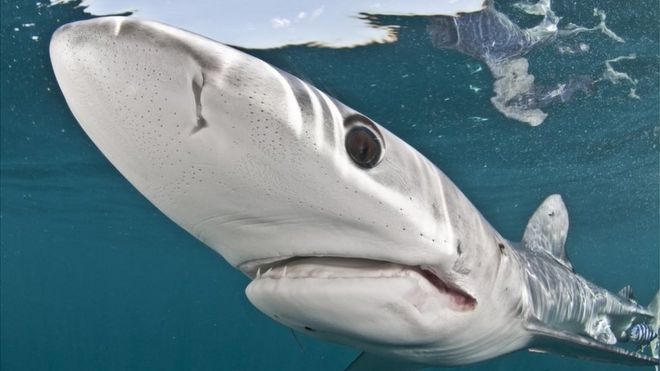
A shark seen in a close up imageImage copyrightOCEANA/TERRY GOSS
Image captionCanada imported some 170,000 kg of shark fins in 2017

Canada has become the first G20 nation to ban the import and export of shark fins, in an effort help preserve a predator under threat.

The country is the largest importer of shark fins outside Asia, though shark finning in the domestic fishery has been illegal since 1994.

The shark fin trade is believed to have contributed to the precarious status of many shark species worldwide.

An estimated one-third of fins sold come from species that are at risk.

Critics say the way many of the fins are collected is inhumane and unsustainable and has had a devastating impact on global shark populations.

Shark finning involves cutting off the valuable fin while the shark is alive, and discarding the rest of the body.

Canada’s bill bans the import and export, to and from Canada, of shark fins that are not attached to the shark.

It was passed by parliament this week after years of effort by legislators and campaigners, and received Royal Assent on Friday.

Fins are some of the most expensive seafood items in the world, as the meat is considered a delicacy.

In 2018, Canada imported over 148,000 kg (326,000 lbs) of shark fins.

“We’re not the biggest player but we’re a player,” executive director Josh Laugren, with Oceana Canada, which lobbied for the legislation, told the BBC.

“[The bill] is both meaningful in its own right in terms of the trade of shark fins but also hopefully leads the way for other countries to follow suit.”

The UN estimates that 73 million sharks are killed for their fins every year.

Like in Canada, conservation concerns have led to a push to limit the trade of shark fins in other countries.

In the US, there are trade bans in place in states like Washington, Oregon, California, and Texas. Congress is also considering legislation on the matter.

There is also evidence that public awareness campaigns can have an impact on shark fin consumption.

In China shark fin soup has been eaten for centuries, but it has lost its popularity in recent years following conservation efforts, including by former NBA star Yao Ming, who worked for years to stem demand in his home country.

As of 2013, no shark fin dishes are served at official Chinese government functions.

Presentational grey line

A political gimmick?

Zhaoyin Feng, US Correspondent, BBC News Chinese

“The shark fin ban is just a gimmick to gain political capital,” says Ben Leung, who is active in the Chinese immigrant community in Canada.

He criticises the ban, arguing it targets Asian culinary culture, while providing little actual help to protecting sharks.

Mr Leung expects the ban’s impact on Asian restaurants in Canada to be “limited”, as it had been long expected.

In some Asian cuisines, shark fin is considered a luxurious ingredient and a status symbol, often served at wedding banquets, but uncommon in daily diet.

It has been gradually disappearing from the modern wedding menu as well. Fewer young Chinese couples now include shark fin soup in their wedding banquets, Mr Leung says.

Presentational grey line

While there are ways to sustainably fish sharks, Mr Laugren compares fin trade bans to efforts to stem the ivory trade.

The international trade in ivory was banned in 1990, with bans in countries like China put in place more recently.

Media captionShark fins are a status symbol in China

“It was so out of control that a ban really was the only effective way to halt the huge decline in ivory-bearing animals,” said Mr Laugren.

Sharks still face other environmental pressures, and he says further steps – like a crackdown on illegal fishing and the management the high shark bycatch, a term for when non-target species are unintentionally caught in fishery – are necessary.

Animal Cruelty Charges Dropped Because Fish Are Not “Animals” Under North Carolina Law

Animals are defined as “property” under U.S. law, which complicates efforts to advocate for them through the legal system. Property classification is not the only aspect of animals’ legal status that presents challenges. Also problematic is when animals are expressly excluded from the definition of “animal” under state cruelty laws, as this case illustrates.

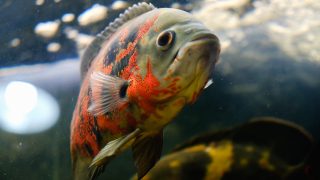
In April 2019, a North Carolina man was arrested and charged with four animal cruelty s — one count of animal abandonment and three counts of cruelty to animals — for failing to provide his oscar fish with food and fresh water and abandoning the animal in his home when he was evicted. The fish was malnourished, swimming in a dirty tank, and suffering from a parasitic disease when discovered by authorities in the abandoned residence.

While animal cruelty prosecutions involving fish are rare, Lt. Jerry Brewer, a spokesman for the New Hanover County Sheriff’s Office, said: “This is a life just like any dog or cat. If you harm or neglect an animal in New Hanover County, we are coming for you.” Authorities believe it was the first time a suspect had been charged in the county with cruelty over a pet fish.

The following week, however, all of the charges were dropped because according to North Carolina’s animal cruelty law fish are not “animals.” The state’s animal cruelty statute defines animals as “every living vertebrate in the classes Amphibia, Reptilia, Aves,[1] and Mammalia except human beings.”[2] Fish are not represented in these categories and are the only vertebrate class not included.

In a statement, New Hanover County District Attorney Ben David said:

We take a very dim view of anyone who would abuse any creature great or small and appreciate [the Animal Services Division’s] enforcement of the laws to protect vulnerable animals. Fish are not included in this statute, however, so my office is ing these charges.

What is an “Animal”?

Despite the fact that they are living beings, animals are defined under U.S. law as property, which has been an obstacle to gaining recognition that they have basic legal rights. Animal cruelty laws are one of the few legal protections animals have that distinguish them from other types of property. However, some animals are not even granted the basic status of “animal” under the law, meaning they are generally excluded from even the elementary protections provided by animal cruelty statutes.

Animal cruelty laws are powerful tools to protect animals. But these protections are watered down in important ways, such as by exempting otherwise lawful practices that harm animals (e.g., farming, research, and hunting and fishing) and excluding entire classes of animals from the legal definition of “animal,” which leaves them with essentially no statutory protection from abuse and neglect.[3]

The statutory definition of “animal” under cruelty laws varies by state, and does not always adhere to commonly accepted biological and cultural understandings of what an animal is. There are a total of ten states that exclude fish from their statutory definitions of animals.[4] In addition to fish and other aquatic animals, farmed animals (or “standard,” “customary,” or “accepted” farming practices),[5] cold-blooded animals,[6] and wild animals[7] are sometimes excluded by definition from state cruelty laws. Other statutes are more vaguely worded and neither specifically exclude nor include fish and other animals;[8] other states provide no definition whatsoever.[9]

While there is no uniform definition of “animal” under state animal cruelty laws, the situation is not much better when it comes to federal animal protection laws (of which there are few). In addition, as with other animals, if fish are defined as animals at all, the cultural category into which they are placed matters: Being classified as a “pet” (versus “food” or “research subject”) will yield different levels of legal protection. As we have written in “Fins or Fur — How the Law Differs:

It is now more or less indisputable that aquatic animals like fish feel pain and suffer as other animals do but have fewer legal protections. The federal  does not protect fish (or birds, farm animals, rats and mice bred for labs, and reptiles, among others). Fish are also not included in the Humane Slaughter Act or federal laws governing the treatment of animals used in research; not only that, but fish are not counted in the United States Department of Agriculture’s yearly report on animal usage in labs despite the fact that they make up an estimated seven percent of animals used in labs.

Fish Are Living, Feeling Beings

The fish rescued in this case was taken by authorities to a retail pet store called the Fish Room, where employees have been nursing him back to health with a proper diet and medication. One of these employees, according to the Washington Post, characterized oscar fish as “very trainable” with “huge personalities.” Oscar fish can live up to 20 years. The recently rescued fish is estimated to be about a year old.

It was a positive step that the sheriff’s office in this case brought cruelty charges involving a fish, but unfortunate that the district attorney’s hands were tied by North Carolina’s statutory definition of animal, which essentially erases fish and sends the message that their suffering isn’t relevant.

Indeed, fish are living, feeling beings — not essentially different from the animals who are protected by cruelty laws. Animal cruelty laws should be extended to apply to fish where they currently do not. There is no longer any doubt that fish are sentient. Substantial empirical research shows that they feel pain.[10]Therefore, at the very minimum fish should be recognized as “animals” under the law.

According to a study published in the journal Animal Cognition, “fish are seldom afforded the same compassion as warm-blooded vertebrates, in part due to the large gap between people’s perception of fish intelligence and the scientific reality.” This matters because public perception guides government policy. In reviewing the scientific literature, the author concluded that:

Fish perception and cognitive abilities often match or exceed other vertebrates. A review of the evidence for pain perception strongly suggests that fish experience pain in a manner similar to the rest of the vertebrates… The extensive evidence of fish behavioural and cognitive sophistication and pain perception suggests that best practice would be to lend fish the same level of protection as any other vertebrate.[11]

Learn More!

To learn more about the emerging field of aquatic animal law, tune into the Animal Legal Defense Fund’s free webinar, “Aquatic Animal Law: Overview, Aquaculture, and Alternatives,” on Friday June 14, 2019, from 12-2pm PT. It’s free to register but space is limited, so reserve your spot today! Lewis & Clark Law School is also offering Aquatic Animal Law as an online summer class for the first time this year. Class begins June 18 and is open to visiting and auditing students.

Further Reading:

Canada must do much better on animal rights

Canada’s so-called Free Willy bill was finally passed by Parliament this past week. And finally is the operative word.

Bill S-203, introduced by now-retired Liberal Sen. Wilfred Moore, took four long years from start to finish to clear Parliament — even though it should not have been the slightest bit controversial.

It will ban the importation of whales and dolphins into Canada, as well as breeding them here for the purpose of putting these creatures on display to do tricks for tourists.

That’s surely something everyone can agree on. Marineland in Niagara Falls is the only facility in the country that still believes it’s OK to keep such intelligent mammals penned up in pools.

If not for some Conservative senators who used every procedural tactic imaginable to stall it in the Upper Chamber for more than three years, the bill would have been quickly passed.

Still, the bigger problem isn’t partisanship. Canada already had a reputation for dragging its feet on animal rights long before Bill S-203 was introduced back in 2015. While the Free Willy bill passed by the skin of its teeth on Monday, too many other attempts to strengthen protections for animals have been left to die on the order paper or are defeated in the House of Commons.

Consider, for example, three other bills aimed at curbing cruelty to animals that have been introduced since the last election. One was defeated and the other two are destined to die when the House rises on June 21.

What’s at play? Partisanship is only part of it. Intense lobbying efforts by powerful foes of any animal rights bills comes into play. And then there’s sheer ignorance on the part of some MPs and senators.

For example, the Senate held up a bill by Conservative Sen. Carolyn Stewart Olsen, known as S-214, aimed at banning cruel and often unnecessary animal tests in the development of cosmetics, for three long years, although it too should not have been controversial.

Indeed, many leading cosmetic brands — such as the Body Shop, which backed the bill — already ban animal testing. Nor is the notion of banning the sale of animal-tested cosmetics new. It’s been in place in the European Union since 2013.

‘It’s pretty hard to accidentally hit 19 geese’: Mundelein police think flock crossing roadway was struck on purpose

Mundelein police are looking for the person who drove into and killed a family of 19 Canada geese as they attempted to cross Midlothian Road late Sunday afternoon.

A post on the police department Facebook page Tuesday afternoon asked the public for tips. The incident occurred at approximated 5:15 p.m. Sunday and involved a vehicle of unknown description traveling southbound near Cambridge Road.

Police Chief Eric Guenther on Wednesday morning said no one has since claimed responsibility and no tips have materialized.

“We used social media for two reasons: in hopes that someone did see something and then to start the conversation that this is a pretty significant crime,” Guenther said. “I want people to know that these animals are protected.”

State and federal law protect the geese, especially during migrating seasons. Guenther said a “hefty, hefty fine” would be issued for each of the dead birds. He said a similar incident in the past involving “only a few” geese resulted in $5,000 in fines.

“The Illinois Department of Natural Resources would consider this hunting out of season, hunting without a permit, and hunting in a non-designated hunting zone,” Guenther said. “Locally, some driving offenses could be applied.”

Police do not believe Sunday’s crash was an accident.

“When you look at the volume, from my perspective, it’s pretty hard to accidentally hit 19 geese,” Guenther said.

No bystanders witnessed the crash, but Guenther said several people who were passing by called 911 shortly thereafter. Although some of those people reported that a few of the geese were still alive, Guenther said none as of Wednesday were in custody receiving treatment.

Guenther speculated the geese had a nest at the Village Green Country Club or near the pond at Asbury Park.

A Lake County Division of Transportation intersection camera is mounted a few blocks away at Midlothian and Winchester roads. Guenther said the camera provides motorists with real time traffic footage to gauge their trips, but footage is not stored for long, if at all.

“Nothing was available to us, but even if it were, the incident occurred where there’s a dip in the road,” Guenther said. “We may not have had anything new if footage from that camera was available, which is partly why we’re asking the public for help.”

Anyone with information on the crash or vehicles in that vicinity on Sunday are asked by Mundelein police to call (847) 968-4600 or email MPD@mundelein.org.

A

Update: 11 Koi Rescued From Abandoned Pond in Cumming!

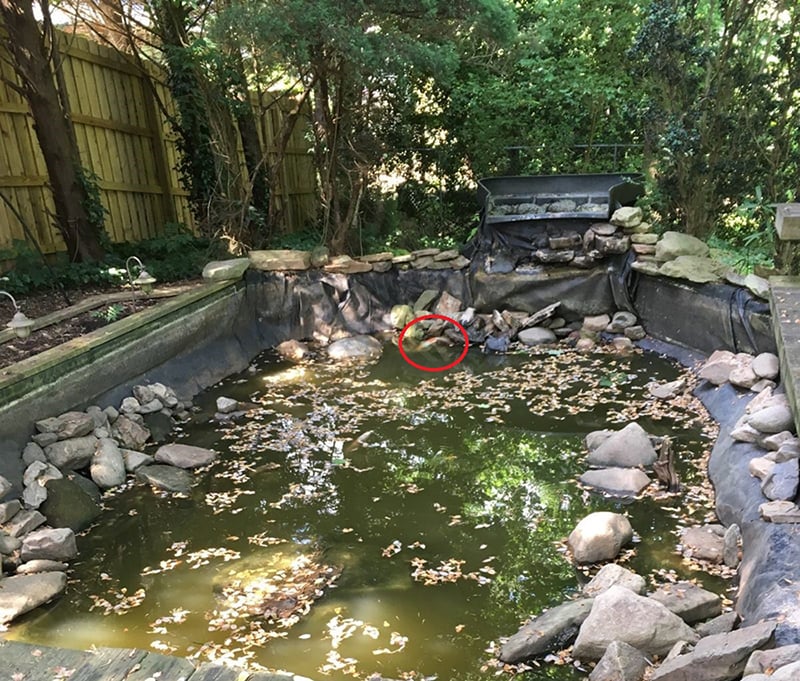
With the help of Home Partners of America, which permitted access to a vacant rental property in Cumming, 11 neglected koi were removed from a dangerous situation. Thank you to everyone who took the time to speak out about this urgent issue and to Atlanta Koi Rescue for coordinating the rescue effort and ensuring a happy ending for these animals.

Please be sure to check out our other urgent alerts and help animals who still need your voice!


PETA has been alerted to an evidently abandoned koi pond reportedly located on a vacant rental property in Cumming, Georgia. We’re told that the pond once contained as many as 30 fish but that up to a month has elapsed without anyone feeding them. Water levels are running perilously low, and a nonworking pump has resulted in inadequate oxygenation. One witness claims that dozens of fish have perished since April and that approximately 10 koi remain in the murky water struggling to survive. Local entities stand ready and willing to rescue these survivors but can’t do so unless the property management company that oversees the location gives them access. Despite numerous calls from PETA and local officials to the company, access has still not been given.

Marineland confirms walrus death, two deer killed in opening day stampede

Marineland has confirmed the death of walrus Apollo and said the 18-year-old animal had a heart attack.

Cillian O’BrienCTVNews.ca writer

@cillian_obrien

Published Wednesday, May 22, 2019 12:33PM EDT 

Controversial Canadian waterpark Marineland has announced the death of one of its walruses, days after “demonstrators” were blamed for causing a stampede that led to the deaths of two deer.

The tourist attraction in Niagara Falls, Ont. announced Apollo’s death on Tuesday, confirming the 18-year-old animal died of a heart attack in late April.

“Even with the immediate intervention of multiple medical marine mammal experts, we are sad to report that Apollo passed away,” a Marineworld release said.

“While the loss of Apollo is truly devastating for all of us who knew him, we are comforted in knowing he passed very quickly and without obvious pain.”

The park is now keeping a close eye on its last remaining walrus, Smooshi, which has been subject to “extensive additional checkups to confirm the status of her health.”

“Our team is providing her with additional enrichment and care while plans for her future at the park are finalized,” the park said.

“Smooshi continues to show her love and adoration for her favourite marine mammal trainers and appeared to be in good spirits when taking to the stage at Marineland’s educational presentation on Saturday’s opening day.”

Apollo is the fourth walrus to die at Marineland in two years.

Zeus died of natural causes on Boxing Day last year. Another walrus, Buttercup, died in the winter of 2017/18.

Female walrus Sonja died suddenly in May 2017 from a rare abdominal aneurysm, the park said.

Two deer killed in stampede

Meanwhile, Marineland said it had its busiest opening day in a decade, despite protests from animal rights groups.

The park claims two men deliberately started a deer stampede Saturday, resulting in the deaths of two of the animals.

“These individuals laughed in the face of staff as they tried to get them to stop,” a Marineland statement said.

“They refused all instruction by staff and resisted efforts to remove them from the Deer Park. We are all upset by this terrible act against innocent animals.

“In order to protect our animals, we are closing the Deer Park to make modifications to prevent this type of incident from ever happening again.”

Ontario SPCA and Humane Society has called for an overhaul to provincial animal welfare legislation, which it says is failing animals kept in captivity for commercial gain.

“The Ontario SPCA and Humane Society has formed a task force dedicated to developing ‎new provincial animal welfare legislation that reflects the need for both greater protection and social justice for animals,” the charity said in a statement.

“The task force is reviewing the need for animals to be recognized under law as sentient beings to acknowledge their ability to feel, to have subjective experiences and to be treated accordingly, rather than as property.”

Zebras, lions, kangaroos among exotic animals seized at Quebec zoo

Owner of St-Édouard Zoo facing charges of neglect and cruelty to animals

Sophie Gaillard, animal advocacy director with the Montreal SPCA, speaks to reporters after the arrest of the owner of the Zoo St-Édouard, in central Quebec, on Tuesday. (Ivanoh Demers/Radio-Canada)
75
comments

A zoo owner in central Quebec is facing criminal charges after roughly 100 animals were seized at a facility in Saint-Édouard-de-Maskinongé.

Normand Trahan was arrested Tuesday morning by SPCA investigators, with the assistance of provincial police, on charges of animal neglect and cruelty.

If found guilty, Trahan could face up to five years in prison and a lifetime ban on owning an animal.

“To our knowledge, this is the first time in Canada that a zoo owner is facing criminal animal cruelty charges,” said Sophie Gaillard, animal advocacy director with the Montreal SPCA.

It is also the first time in Quebec that animal cruelty charges have been laid by way of indictment under the federal Criminal Code, Gaillard said, which opens the door to harsher penalties than under provincial laws.

Several primates are among the animals that will be transferred to animal sanctuaries across North America. (Submitted by Humane Society International/Canada)

“We’re really pleased that this file is being taken seriously by the prosecutors involved,” she said at a news conference at the zoo on Tuesday.

The animals found at the St-Édouard Zoo, about 120 kilometres north of Montreal, include lions, tigers, zebras, camels, kangaroos and bears.

Flags raised in 2018

The SPCA said it started investigating after a visitor called them in 2018.

“We received a complaint from the public and conducted a thorough investigation that led us to discover other pieces of evidence,” said Gaillard.

Two alpacas were seized in October 2018, following an initial inspection the previous August. Four animal carcasses, including those of two tigers, were also found, as well as the bodies of two birds.

Before 2015, the zoo only featured nordic animals like wolves. (Submitted by HSI/Canada)

Humane Society International (HSI), a non-profit organization, is tasked with caring for the remaining animals and finding them new homes.

SPCA and HSI employees have spent the day going around the zoo to take inventory of the living conditions.

“Some animals didn’t have access to water and proper food,” said Ewa Demianowicz, senior campaign manager with HSI/Canada.

“Some animals needed veterinary care, so these are not conditions that we usually see in zoos,” said Demianowicz.

So far, none of the animals were found to be in “imminent danger,” but it will take weeks to transfer them to other sanctuaries in the HSI network, in Canada and in the United States.

Quebec zoo owner Normand Trahan, pictured in 2017, could face up to five years in prison on charges of animal cruelty and neglect. (Josée Ducharme/Radio-Canada)

“This is without a doubt the most complex animal rescue we’ve undertaken in Canada,” said Rebecca Aldworth, executive director of HSI/Canada.

The costs of the operation are partially being covered by the Eric S. Margolis Family Foundation, which supports wildlife advocacy organizations.

Multiple infractions

The St-Édouard Zoo had been fined in the past for breaching Quebec’s wildlife protection laws.

The Ministry of Wildlife, which is responsible for issuing permits to zoos, could not confirm at this time whether Trahan had the proper permits to run an exotic zoo.

Quebec’s business registry lists the zoo as a breeding facility for livestock and poultry.

HSI/Canada said so far, the animals found at the zoo were not in “imminent danger.” (Submitted by HSI/Canada)

According to Radio-Canada, it had been for sale for several years because Trahan wanted to retire.

The 69-year-old appeared at the Trois-Rivières courthouse Tuesday afternoon and was released on a promise to appear June 21.

His lawyer, Michel Lebrun, said Trahan has always collaborated with officials and was planning to open the zoo this week.

“As far as I know, he has had the proper permits with the Ministry of Wildlife and the MAPAQ [Quebec’s food and agriculture inspection agency] for the past 30 years,” said Lebrun.

Trahan took over the property in 1989 when it was known as the Centre d’Observation de la Faune.

According to the zoo’s website, visitors can see up to 100 species of exotic animals, including lions, tigers, baboons and leopards.

Protest Cruel Ostrich Races in Omaha, Nebraska May 26!

Poster of jockeys racing camels and ostrich

Nebraska VOTES Humane will protest the Camel and Ostrich Races at Horsemen’s Park in Omaha on Sunday, May 26 from 1:30-5:30pm. Please join the protest if you can and bring protest signs.

Nebraska VOTES Humane is also urging people to call the Mayor’s hotline to protest these cruel races. According to their Facebook alert, the mayor will refer callers to the Nebraska Humane Society, but when you call the mayor, insist that the mayor’s office record and acknowledge your complaint.

Then please call the Nebraska Humane Society and urge that they monitor the races Sunday May 26 for injured birds and horses. Ostriches are not built to support the weight of a human being, and their long thin legs and large fragile eyes are vulnerable to severe injury.

Please call:

Mayor Jean Stothert’s hotline at 1-402-444-5555

Nebraska Racing Commission at 1-402-471-4155

Nebraska Humane Society at 1-402-444-7800


Facebook post protesting camel and ostrich racing

Please visit Nebraska Votes Humane on Facebook for more information and updates about the races and action against them.


For more information about ostriches and why these races are cruel and demeaning to them, visit Ostriches and read Nowhere to Hide.


Thank You For Taking Action!
– United Poultry Concerns

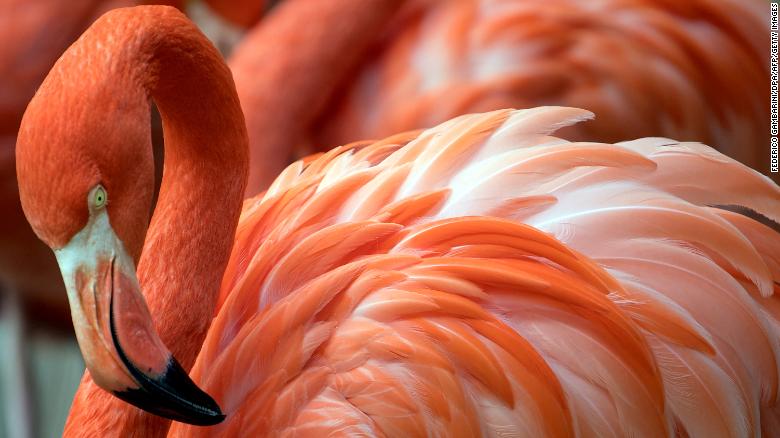
A flamingo in an Illinois zoo had to be put down after a child threw a rock at it

This file photo shows a flamingo at a zoo in Duisburg, western Germany.

(CNN)A Miller Park Zoo flamingo was euthanized Monday after an elementary school student threw a rock inside the animal’s exhibit.

A representative from the Bloomington, Illinois zoo told CNN affiliate WMBD the rock broke the flamingo’s leg and caused injuries that led to it being put down.
The zoo said it’s working with the student’s family to make sure this is a learning experience, WMBD reported.
The greater flamingo exhibit at the zoo opened in June 2016, according to the city of Bloomington.
According to the University of Michigan, greater flamingos are found in the Middle East in countries like Iran, Turkey and Afghanistan, as well as in areas across west Africa, South America and throughout Europe. They’re often hunted across the Middle East and Africa and their eggs are often captured for profit.
They can live up to an average of 30 years, according to the university with those in captivity sometimes reaching 60 years old.
The zoo has both indoor and outdoor exhibits of animals including reindeer, the Sumatran tiger, river otters, red pandas, lemurs, bald eagles, gibbons and red wolves, according to its website.

Breaking news: Washington governor signs historic law to end cage confinement of egg-laying hens

https://blog.humanesociety.org/2019/05/breaking-news-washington-governor-signs-historic-law-to-end-cage-confinement-of-egg-laying-hens.html

May 7, 2019

Washington Gov. Jay Inslee has just signed into law the strongest protections for egg-laying hens ever passed in any state legislature. This historic win will benefit approximately eight million hens each year, freeing them from cage confinement by the end of 2023. The measure builds upon our previous work in states like California and Massachusetts where voters have passed transformational ballot measures against the cage confinement of farm animals in recent years.

Washington’s new law phases out the production and sale of eggs from caged hens, regardless of where the eggs were produced.

In a typical cage facility, each bird has less space than the dimensions of an iPad on which to live her entire life. While cage-free does not equal cruelty-free, this measure will significantly reduce the birds’ suffering. In addition to banning cages and requiring more space per bird, the law also mandates that hens be provided with vital enrichments, including scratch areas, perches, nesting and dust bathing areas.

The HSUS has spearheaded the passage of this law and others in a dozen states — from Florida to Ohio to Arizona — to eliminate extreme confinement. These successes bolster the work we have done with some of the largest food corporations in recent years, both in the United States and globally, to end cruel cage confinement practices by their suppliers. As a result, lawmakers and corporations are increasingly realizing that the future is cage-free.

In Washington, we partnered with Democratic and Republican legislators, key stakeholders in the agricultural sector, and other leading animal protection groups to ensure the bill’s success. It is a remarkable illustration of how good people in all walks of life can come together to create lasting and transformational change for animals. The HSUS will continue to work with lawmakers, non-government organizations, volunteers, donors and other members of the public to continue paving the way toward this more humane reality.

Let’s take a moment to celebrate today’s remarkable win for animals. But let’s also keep in mind that billions of farm animals around the world are still suffering in cruel cages. The laws in Washington, California and Massachusetts set a great precedent for other states and countries to follow, and further support corporate policy commitments reforming how farm animals are raised. Let’s keep the momentum going as we work toward the day when no farm animal is locked in a cage.