Exposing the Big Game

Forget Hunters' Feeble Rationalizations and Trust Your Gut Feelings: Making Sport of Killing Is Not Healthy Human Behavior

Exposing the Big Game

Christmas comes early for Maine deer: hunting season’s over


https://www.seattletimes.com/nation-world/christmas-comes-early-for-maine-deer-hunting-seasons-over/

AUGUSTA, Maine (AP) — The final phase of Maine’s annual deer hunt is coming to an end for 2017.

Saturday is the last day of the year on which it is legal to hunt deer via muzzleloaders or archery. The deer hunting season began three months ago this year.

Hunters are limited in terms of where they can harvest deer. Muzzleloader hunters can only hunt in 14 of the state’s 29 wildlife management districts. Archery is limited to designated areas around a handful of urban locales in the state.

Maine has separate hunting seasons for firearms, archery and muzzleloaders. The state gave out thousands more firearms permits this year because wildlife managers said the deer population could withstand more hunting. Mild winters have led to high levels of deer survival in recent years.

Local animal rights group launches online petition to end lethal deer cull program

https://www.michigandaily.com/section/ann-arbor/anti-deer-cull-group-launches-online-petition
“A local animal rights group launched a change.org petition yesterday
protesting the Ann Arbor City Council’s decision to continue Ann
Arbor’s lethal deer management program. The petition reached 360
supporters as of Sunday evening.
“The petition, which was started by the Friends of Ann Arbor Wildlife
and Nature, argues City Council mismanaged municipal funds to support
a program that, in FAAWN’s perspective, was unnecessarily cruel and
had limited success in controlling Ann Arbor’s deer population.
““Ann Arbor residents want to know that their tax dollars are being
put towards programs that have their best interests at heart,” the
petition reads. “For this reason, we are petitioning the City of Ann
Arbor to stop the killing of 350 deer this Winter and look to
non-lethal options to manage the deer population.””

Deer hunting myths ignore science

http://www.democratandchronicle.com/story/opinion/guest-column/2017/10/25/lyme-disease-not-impacted-hunting-deer/795150001/?fb_action_ids=10203509509214287&fb_action_types=og.comments&fb_source=other_multiline&action_object_map=%5B1490824914334566%5D&action_type_map=%5B%22og.comments%22%5D&action_ref_map=%5B%5D

by Ashley Pankratz, Guest EssayistPublished 10:21 a.m. ET Oct. 25, 2017 | Updated 10:33 a.m. ET Oct. 25, 2017

The recent article, “It’s that Deer Time of Year,” offers tips to help drivers avoid hitting deer, but tells an incomplete story. While mating season initiates deer movement, hunting practices, too, are to blame. The Erie Insurance Group cites a five-fold increase in deer-related accidents on opening day—a statistic that has nothing to do with rut.

Unfortunately, the article also presents a platform for the Quality Deer Management Association, but offers no dissenting perspective. Despite the benign moniker, QDMA is dedicated to producing trophy-quality bucks through selective hunting and habitat manipulation. Like the DEC, QDMA seeks to normalize the recreational killing of wildlife through carefully constructed arguments which, to an undiscerning ear, sound like science.

The DEC’s recent Deer Management Study finds that “hunters prefer to harvest older bucks.” In other words, they pursue the biggest rack, despite the fact that killing bucks does not determine population. Dr. Allen Rutberg, a proponent of the newly EPA-approved deer contraceptive PZP, observes, “The most visible weakness in the assertion that hunting is necessary to control deer populations is that it has largely failed to do so… Just because deer are being killed doesn’t mean that deer populations are being controlled.”

Sadly, the DEC has done nothing to dispel the myth that deer numbers affect the incidence of Lyme disease in humans, while experts, including those from the Harvard School of Public Health, explicitly state otherwise. Deer neither carry nor transmit the disease, and not a single peer-reviewed study correlates deer culling with Lyme disease reduction in humans. There is, however, an abundance of data to suggest that killing deer has no impact on Lyme disease transmission.

What does impact tick population is the fox and lowly opossum. Opossums consume as many as 5,000 ticks per season, and foxes, who consume rodents, are essential to controlling the disease. But from late October until mid-February, New York hunters and trappers are permitted to kill an unlimited number of either species in any manner they see fit, including drowning, suffocating, and shooting. Coyotes, also essential to balanced ecosystems, are blamed by hunters for suppressing deer population, and endure six months of killing. Suggesting that we prevent Lyme disease by killing deer with bows and arrows in suburban backyards, or that we rectify the decline in hunting by encouraging 12-year-olds to shoot animals, is absurd.

Science doesn’t have an agenda, nor is it dependent on the sale of weapons or hunting licenses; but that is how our current system of wildlife management operates. The more we understand interdependency and ecosystem health, and the more diligently we assess the motivations of those who determine wild lives’ fate, the more evident the need for a balanced perspective.

Ashley Pankratz is a wildlife and outdoors enthusiast who lives in Livingston County.

‘Not a perfect law’: But new deer tag program in place

http://thetandd.com/not-a-perfect-law-but-new-deer-tag-program-in/article_fa14bb78-7ecd-11e7-8676-7757413d9ee7.html 

‘Not a perfect law’: But new deer tag program in place and will work

From the Collection: The 2017 Hunting Special Edition series
  • DAN GEDDINGS
Matt Geddings

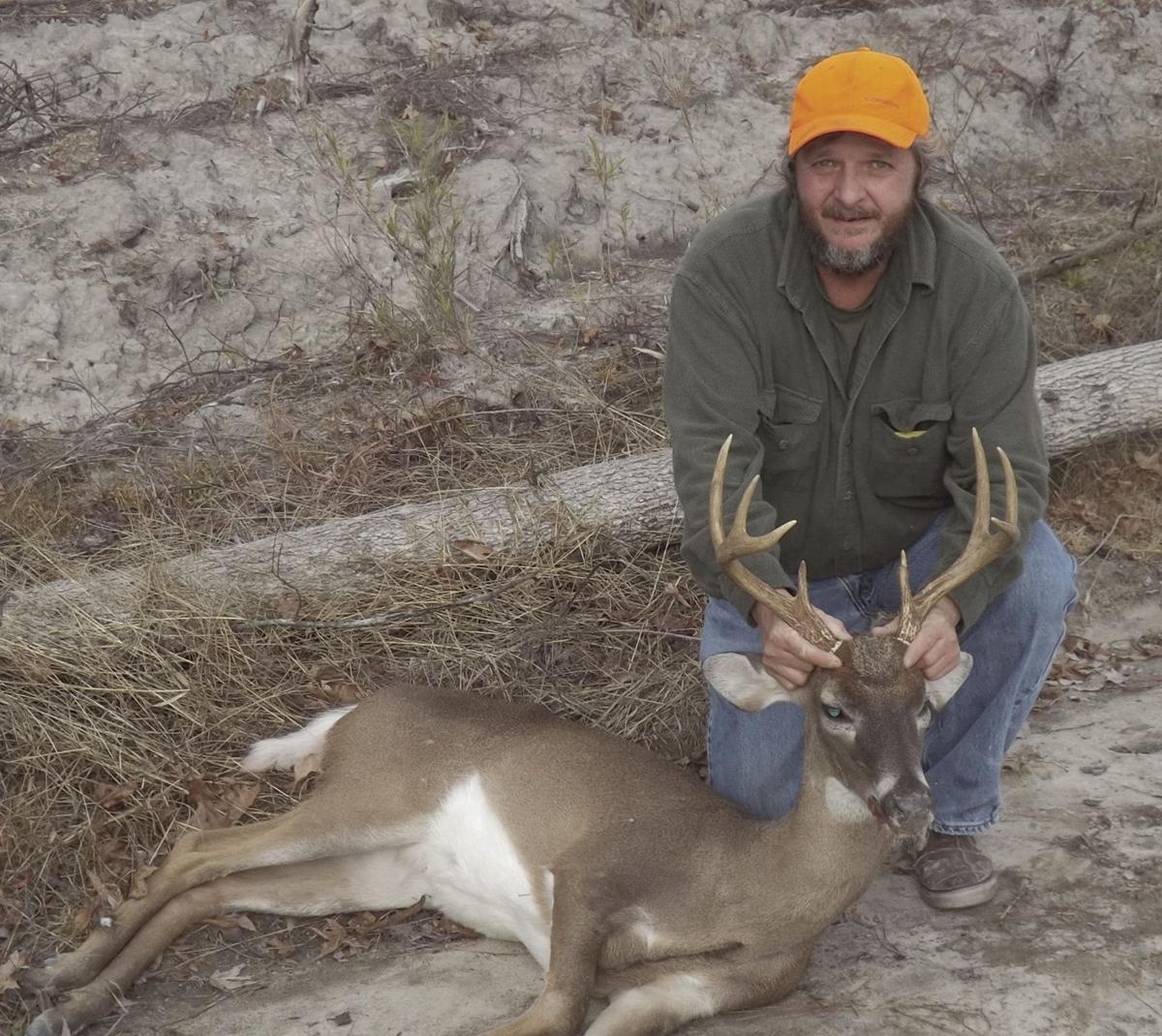
Matt Geddings with a nice buck taken on a Lowcountry deer drive.

The e-mail on July 18 from the South Carolina Department of Natural Resources said that I would be getting my deer tags in the mail soon. I was a little bit surprised, and somewhat confused. Wouldn’t I need to apply for the tags online or pick them up at one of the regional offices? I had not bought my new hunting license yet, but the tags arrived in the mail a few days later.

I had been to the meetings and read all the articles that I saw in magazines and local newspapers. I had talked to people at SCDNR and other hunters. I thought that I understood the new tag program completely, but I was wrong. Apparently the DNR intended all along to mail tags to current license holders and anyone purchasing a new license beginning July 1.

OK, I know that any new program can have some confusion and a few snafus. It’s to be expected, so I’ve gone back to the DNR website and reviewed all the information that I could find. I think I’m up to speed with the info now.

 The Deer Tag Program in South Carolina has been a long time coming. Passage of the “Deer Management Bill” was the culmination of years of effort on the part of the DNR, deer hunters and the Legislature. It’s not a perfect law but probably the best we could get under the circumstances.

The lack of a reasonable limit and enforcement effort on buck deer in the past have been a function of history, tradition and politics — not science.

Under the new law, all deer will be required to be tagged at the point of the kill. The deer only has to be tagged from the point of kill, during transport and until it is processed or cut up. Once the deer is quartered, or boned out, the tagging requirement goes away.

Some hunters have asked how a tagging system can be enforced. If someone chooses to take the risk of not tagging a deer, and he or she is caught, fines can reach more than $1,000. Also, processors will not take untagged deer because taking possession of an illegal deer is a violation. Most hunters are good and honest people. Good people police themselves, and no law can persuade bad people to do the right thing.

Under the new law, South Carolina residents will automatically receive a set of deer tags at no cost when they purchase a hunting license, or if their license will be valid when the hunting season begins. Tags will not be available at over-the-counter vendors, such as sporting goods stores. They became available after Aug. 1 at DNR regional offices. The base set of tags consists of three unrestricted buck tags and eight date-specific antlerless deer tags. Residents can purchase two additional restrictive buck tags for $5 each.

Youth hunters under the license age of 16 must request the free base set of tags annually. Tags will be available over the counter at DNR regional offices in Charleston, Clemson, Columbia, and Florence. Tags can also be ordered by phone at 1-866-714-3611 or via the internet. Contact information will be required to include date of birth and SSN. The youth will be given a customer ID number for future use. The additional tags may also be purchased.

Lifetime/ Senior/ Gratis/ Disability hunters must also request the free base set of tags annually. Not all of these 200,000 license holders are deer hunters and it would wasteful to send tags to all. Additional deer tag purchases are the same as resident and youth hunters.

Many hunt clubs, especially in the Lowcountry, may be enrolled in the Deer Quota Program. The new Deer Quota Program is similar to the old Antlerless Deer Quota Program. The only difference is that all deer must be tagged to include bucks, and the number of deer, to include bucks, that can be harvested will be determined by the DNR.

On dog drives, the person killing a deer must tag it with a personal tag, or if the property is enrolled in the quota program, one of the tags issued to the property should be used to tag the deer.

I haven’t even touched on the nonresident requirements, and some of you may still have questions. If so, you can email the DNR at Deer Tags@dnr.sc.gov or go online to www.dnr.sc.gov. Select “deer” under the hunting tab and click onto the New Deer Tag Information.

Dan Geddings is a native of Clarendon County currently residing in Sumter. He is founder and president of Rut and Strut Hunting Club in Clarendon County and a member of Buckhead Hunting Club in Colleton County.

Baiting Bill Could Bring Deer Hunting to Alabama

https://www.usnews.com/news/best-states/alabama/articles/2017-03-04/baiting-bill-could-bring-deer-hunting-to-alabama?src=usn_fb

There might be a bill that could bring major changes to deer season in Alabama.

March 4, 2017, at 12:28 p.m.

MONTGOMERY, Ala. (AP) — There might be a bill that could bring major changes to deer season in Alabama.

The Montgomery Advertiser reports (http://on.mgmadv.com/2mjKDWj ) that some lobbying for the bill would allow hunters to use bait for deer and feral hogs. The bill passed the House on Tuesday. It heads next to the Senate for consideration.

The Legislature passed a “supplemental feeding” law last year, that went into effect this past hunting season. State Rep. Jack Williams, who sponsored the bait bill, wants to clear up some of the confusion around that law.

“There have been some problems come up about just what out of sight means under the current law,” Williams said. “Is it out of sight when you can’t see it from a stand, but you can see it from the ground? I just think this is a better way to go.”

The Alabama Department of Conservation and Natural Resources say whitetail deer is the most popular game animal in the state. Hunting generates a $1.8 billion yearly economic impact in Alabama, according to the Hunting Heritage Foundation.

After the bait license fee, $14 will be returned to the conservation department with $1 being an administrative fee for issuing the license.

“We calculated that the annual license will raise between $1.2 and $1.5 million for the conservation department,” Williams said. “Like every other state agency, the conservation department needs more money.”

The Wildlife and Freshwater Fisheries Division of the conservation department is funded through the sale of hunting and fishing licenses and permits and matching federal funds from excise taxes paid on firearms, ammunition, archery equipment and fishing tackle.

___

Information from: Montgomery Advertiser, http://www.montgomeryadvertiser.com

Copyright 2017 The Associated Press.

wildlife photography by Jim Robertson

wildlife photography by Jim Robertson

Let’s Do What Doesn’t Work and Kill (Nearly) All the Deer!

http://www.bornfreeusa.org/weblog_canada.php?p=5928&more=1

Canadian Blog

by Barry Kent MacKay,
Senior Program Associate

Born Free USA’s Canadian Representative

Published 01/27/17

Deer© C. Watts

Cranbrook is a town that hosts nearly 20,000 humans in the core municipal area and 116 deer. There used to be somewhat fewer deer, according to the people who go around counting them—but a lot of people living there want fewer deer, and so the councillors spent quite a bit of tax money to do something that produced more.

Does that make sense to you? It seems wonky to me. But, although I love the town (which sits in a wide and scenic mountain valley in southeastern British Columbia), I don’t live there. When I go there, I take great pleasure in both the beautiful scenery and the wildlife, including the mule deer who come and go from the surrounding forests.

Unlike the widely-distributed white-tailed deer, the mule deer—native to our western provinces and states—are not especially nervous. Female deer do not step away from fawns when real or imagined danger threatens, and dogs are sometimes seen as threats to be attacked (and not fled from, as white-tails almost always do). Mule deer eat garden plants and drop euphemistically-named “deer pellets” on lawns and sidewalks, if not excessively: more than some folks can tolerate. And, they get hit by cars (although they also cause cars to slow down and drivers to be cautious, making streets safer for pedestrians, especially children).

And, every so often—very rarely—they will go after a human, especially one with a dog. Only three aggressive deer have been killed by police in Cranbrook in 12 years, according to provincial data.

Therefore, in 2011, Cranbrook trapped and killed 24 deer; 24 in 2013; four in 2015; and 20 in 2016. Numbers of deer have varied, but overall, they have grown from 96 in 2010 to 116 in 2015, according to Cranbrook’s own figures. The method of killing is brutal and random, with about half the number being white-tailed deer and harmless young mule deer.

Meanwhile, people are learning a little better about co-habiting with these wonderful animals. Complaints about deer have gone down to a five-year low of—wait for it—18 complaints.

So, what has the provincial ministry allowed Cranbrook to do? Kill all the deer, or nearly all. Last December 1, the province gave the city permission to kill up to 100 mule (and white-tailed) deer between then and March 15. Of course, people who like the deer (including visitors like me) are not considered, but the British Columbia Deer Protection Society is there to fight back.

Lee Pratt, Cranbrook’s new mayor, can be reached at Lee.Pratt@cranbrook.ca.

Keep wildlife in the wild,
Barry

Brutal Northwest winter has been horrific for wild animals

Antelope injured while falling on ice. Horses stranded in snowy mountains. Cougars descending from their wilderness lairs to forage in a town.

It’s been a beastly winter in the American West, not just for people but for animals too. One storm after another has buried much of the region in snow, and temperatures have often stayed below freezing, endangering a rich diversity of wild animals.

In southern Idaho, about 500 pronghorn antelope tried to cross the frozen Snake River earlier this month at Lake Walcott, but part of the herd spooked and ran onto a slick spot where they slipped and fell. Idaho Fish and Game workers rescued six of the stranded pronghorn, but 10 were killed by coyotes and 20 had to be euthanized because of injuries suffered when they fell down.

Another 50 pronghorn were found dead in the small western Idaho city of Payette after they nibbled on Japanese yew, a landscaping shrub that’s toxic. Tough winter conditions have forced some wildlife to feed on the plant in urban areas.

Heavy snow has forced Idaho’s fish and game department to begin emergency feeding of big game animals in southern Idaho.

In eastern Oregon, state wildlife officials are feeding elk, but the weather makes accessing them difficult. When highways and the Interstate are closed because of the snow, the workers must still get to the rural feeding stations where they feed the elk alfalfa hay.

“When you run feed programs, you can’t take a day off because of bad weather. If you take a day off, the elk wander away,” said Nick Myatt, district manager of La Grande office of the Oregon Department of Fish and Wildlife.

Wandering elk tend to feed on haystacks that ranchers have left for their cattle, and congregate in low-elevation sites along Interstate 84 in northeastern Oregon, where cars have hit them in recent weeks, Myatt said.

In western Wyoming, supplemental feeding of elk wintering on the National Elk Refuge near Jackson started the first week of January, three weeks earlier than usual because heavier than normal snowfall buried the natural forage the thousands of elk graze on at the 24,700-acre refuge.

Mule deer, which are smaller than elk, have not only been prevented by a layer of ice from pawing through powdery snow to reach their natural forage, but that ice also makes them easier prey. The deer break through the ice and stumble while animals like coyotes can stay on top of the surface.

“With conditions that we have, we do anticipate higher mule deer mortality,” Myatt said.

John Stephenson of the U.S. Fish and Wildlife Service said wolves are also more agile in deep snow than deer or elk because their lighter bodies and big feet help them stay on the surface better. Stephenson said he is amazed that a wolf he’s tracking south of Crater Lake, Oregon, traveled roughly 30 miles through 6-foot-deep snow in less than 12 hours recently.

Some animal lovers have been taking matters into their own hands by feeding deer, but experts warn they will likely do more harm than good and could end up killing the animals.

“What they’re feeding the deer is an improper diet,” said Rick Hargrave, a spokesman for the Oregon wildlife department. “They have a complex digestive tract, and they require the right mix of crude protein, fat, carbohydrates, vitamins and minerals.”

The deep snow likely caused a group of normally elusive cougars to come to the woodsy community of La Pine in recent days, where they preyed on pets and chickens, the Oregon wildlife department said. Authorities on Thursday killed a fifth cougar in the central Oregon town. Four others were shot dead on Saturday and Monday, raising an outcry among some conservationists.

Amid the grim news, there were some bright spots.

In central Idaho, volunteers earlier this month rescued a horse stranded on a snowy mountain by tranquilizing it, placing it in a sling and then attaching it on a long line to a helicopter. It was flown, dangling from the belly of the chopper to safety. A second stranded horse was not found and is believed to have died.

The experience was emotional for the rescuers.

“You get your adrenaline going and everyone gets all excited and choked up,” Robert Bruno, president of Idaho Horse Rescue, told KTVB-TV of Boise.

In California, some of the heaviest snow and rain in decades should prove a life-saver for threatened native salmon, whose numbers have dropped during the state’s five-year drought that is now easing.

Flooding this winter has greatly expanded the bug-rich wetlands where young salmon can eat and grow strong on their way to the ocean, said John McManus of the Golden Gate Salmon Association, a fishing-industry group.

“They eat like little pigs, and they love it,” McManus said. “It’s a little smorgasbord for them.”

___

AP journalists Rebecca Boone in Boise, Idaho, Bob Moen in Cheyenne, Wyoming, and Ellen Knickmeyer in San Francisco contributed to this report.

Hunter finds friendly deer wearing orange scarf for hunting

http://www.wilx.com/content/news/Hunter-finds-deer-wearing-404747255.html

On the day after Thanksgiving, Brian Powers grabbed his rifle and headed for some land east of Wausau. If not for his cell phone, Powers doubts anyone would believe what happened next. “All of a sudden here comes a deer and he has an orange scarf on. And he just kept walking and I said ‘oh my, he must be somebody’s pet or being fed by someone or being taken care of by somebody.” The color orange is commonly used to alert hunters not to shoot.

It wouldn’t be long before powers discovered he had a new friend. “Right when he got parallel on the logging road to where I was off the road, he stopped and turned and looked right at me and I said, ‘wow this is unbelievable,’ so then I called him over and he walked right in.”

With one hand filming the unlikely encounter, Powers gave the young buck a head rub. After about 10 minutes, the deer wandered off, but that afternoon as Powers was walking out of the woods, he returned, just in time to receive some friendly advice. “Keep your head low man, make sure people see that orange alright,” Powers said to the deer in his video recording. Since posting his video on Youtube, Powers story has spread all over the country.

Oregon town seeks solutions to droves of fearless deer

http://www.reuters.com/article/2015/09/22/us-usa-oregon-deer-idUSKCN0RM2UO20150922

Tue Sep 22, 2015 7:14pm EDT

PORTLAND, Ore. A town in southern Oregon will hold a public meeting to discuss how to deal with droves of fearless deer that wander the streets, occasionally acting aggressively toward residents, state wildlife officials said on Tuesday.

The “Deer Summit 2015” will be chaired on Wednesday by Ashland Mayor John Stromberg as part of efforts to address deer that have stalked people, pawed at them with their hooves and even stomped on small dogs.

“The deer have no fear of humans,” said Mark Vargas, District Wildlife Biologist for the382304_10150410245381489_1896442457_n Oregon Department of Fish and Wildlife.

The confident deer are a product of a long tradition in the town of 21,000 people of feeding and befriending them, Vargas said.

For the last two or three decades, the black tailed deer have been known to roam into yards and stroll the downtown area of Ashland, which lies in the heavily forested foothills of the Siskiyou and Cascade Mountains.

“Deer just live there,” Vargas said. “They live amongst all the people and when that happens there’s going to be conflict.”

Stromberg said on the city’s website that he wants to hear from community members with ideas about what to do.

The mayor could not be reached for comment on Tuesday, but city officials have urged residents not to feed the deer, and to put up deer fencing or deer resistant plants.

In a statement, the officials said a recent attack on a homeowner by a deer protecting its fawn was a reminder that locals share their community with all manner of wildlife.

“No matter how cute and seemingly domesticated, these are wild creatures.  Their behaviors are unpredictable,” they said on the city’s website.

Vargas said there is no easy solution. Giving the does birth control would be costly and ineffective, he said, and one would have to kill between 40 and 50 deer a year to have an impact that way. Trapping and moving them would just transfer the problem to another community, as the deer have become acclimated to city life, he said.

Vargas encourages people to stop feeding the deer and to yell or make loud noises if they enter their yard.

“In reality we encourage folks, look don’t feed the deer,” he said. “They don’t need food. They don’t need water. If you can, don’t even be friends with them.”