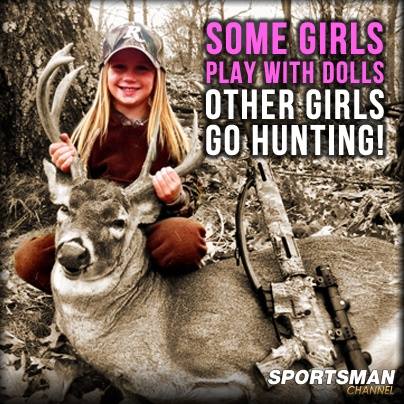
Two Timely Retorts to Hunter Fallacies

Excerpt From: https://exposingthebiggame.wordpress.com/2013/05/02/top-10-retorts-to-hunters-fallacies/

5) If we don’t kill deer they’ll become a traffic hazard.
Two words: Slow the fuck Down. (Sorry, that was four words.)
More animals are hit by cars during hunting season than any other time of year, usually when fleeing from bloodthirsty sportsmen with guns.

4) Hunting teaches respect for wildlife and an appreciation for nature.
Ha! That’s like a serial killer claiming his crimes foster a respect for women. Tracking down and shooting something does not equal respect. Try using a camera or binoculars if you really want to respect them.

6-4Hansens-trophy-goat

Avid bowhunter/serial killer Robert Hansen

Three 4-year-olds and a 99 y.o. woman reported killing deer in 2013

w/poll: At what age do you think kids are old enough to hunt deer and turkeys?

Total Votes: 24

1-4 0 0%
5-7 1 4%
8-12 10 42%
13 and older

http://lancasteronline.com/news/local/hunting-stats-three–year-olds-reported-killing-deer-in/article_14cb8108-a6fa-11e4-895b-b7f384993d31.html

January 28, 2015 9:29 am | Updated: 10:37 am, Wed Jan 28, 2015.

When the Pennsylvania Board of Game Commissioners on Tuesday proposed setting 7 as the minimum age for kids to get tags for hunting deer and turkeys, some people asked the obvious question:

“How many kids that young are actually killing deer and turkeys?”

We wondered the same thing.

The state’s mentored youth hunting program since 2006 has allowed kids of any age under the age of 12 – the minimum age for buying a hunting license – to hunt certain game, while under direct supervision of a licensed adult.

In most cases, we’re talking about parents or grandparents.

The board of Game Commissioners on Tuesday voted to tweak the program so that kids of any age under 12 still can hunt turkey and deer, but the state will only issue tags to kids age 7 and older.

If kids under 7 want to shoot turkeys or deer, their mentors have to transfer their own tags to the kids.

Many hunters and hunting organizations, such as the Pennsylvania Federation of Sportsmen’s Clubs, want the program to remain as is, with no minimum age placed on the program.

They call such limits “barriers” to hunting.

For example, they said, what if a parent has more than one kid under 7 who wants to go buck hunting?

In Pennsylvania, the parent can only have one buck tag, so only one kid would be able to shoot a buck.

While those who oppose any minimum age have been getting all the media attention, the commissioners said they’ve heard from plenty of hunters who agree with their proposal.

They said some even sent them comments stating they believe no kids under 12 should be allowed to hunt deer.

For those of you out there, like us, who have been wondering how many kids under the age of 7 have been out hunting deer and turkeys, here’s a table showing, by age of the hunters, the number of those animals reported to the Game Commission during the 2013-14 hunting season.

The numbers reported here don’t indicate the number of kids – or adults – of a particular age who were out hunting.

The list only shows how many animals were reported as being shot by hunters of a particular age.

Given historical data, more animals likely were shot, because Pennsylvania hunters are notorious for not reporting their kills to the Game Commission.

(By the way, even though we’re focused on kids, it’s interesting to note there was one buck last season reportedly shot by a 99-year-old woman.)

why

Bill would allow hunters to sell meat

W/poll here:

http://www.app.com/story/news/local/new-jersey/2014/11/11/oh-deer-bill-allow-hunters-sell-meat/18887497/

Bob Jordan,  November 12, 2014

There is no shortage of tips for drivers on how to avoid a collision with a deer. Drive slowly. Drive defensively. Make sure your brakes are in good working order.

Here’s a new one: Pay a hunter to put Bambi on the dinner table before it gets hit on the road.

A New Jersey lawmaker wants the state’s ban on commercial deer hunting lifted. Hunters motivated more by profit than by sport would be relied on to reduce deer populations and could sell their keep to butchers, supermarkets and restaurants.

Thank you for voting!
Yes, whatever it takes to control the deer population  39.81%  (82 votes)  


Yes, we already allow the sale of other animals  20.87%  (43 votes)  


No, the ban was put in place for a reason  33.5%  (69 votes)  


No, it is cruel to kill any animal for profit  6%  (12 votes)  


Total Votes: 206

<a href=”http://polldaddy.com/poll/8442848/”>Should hunters be allowed to sell deer meat?</a>

The sale of wild game has been restricted in all 50 states for more than a century, which explains why the venison on the menu at your favorite restaurant is most likely imported from New Zealand (or else the product of a U.S. deer farm).

In New Jersey it is is illegal for hunters to sell deer meat, deer antlers or any part of a deer except deer hides, tails and the lower portion of the legs.

Deer have bounced back after being overhunted early in the state’s history to the point when only a handful of animals were left in New Jersey in the early 1900s, state wildlife officials say. Now with an overabundance, gaming officials have lengthened the hunting season, increased bag limits and provided other incentives for hunters to kill more deer, but there’s still a lot of deer.

Monmouth County Assemblywoman Caroline Casagrande said the time has come to take additional steps to reduce the number of deer because of the health and safety risks from deer-vehicle collisions and Lyme disease.

“I have a personal interest in this. I have a 3-year-old and a 6-year-old and I live in a town, Colts Neck, where deer are prevalent,” Casagrande said.

Municipal officials in Colts Neck recently enacted a controversial ordinance to allow bow hunting within 150 feet of buildings to cull a rising white-tail deer population.

The April death of a Neptune man, whose vehicle struck a deer, a guardrail and then a tree on the center median of the Garden State Parkway at mile post 112.5, is an example of the worst result of deer-human conflicts.

Casagrande says the animals are also inflicting damage on the ecosytem, browsing on shrubs and saplings and diminishing the number of young trees to fill the canopy of forests, a contention shared by environmentalists.

“Anybody who lives in Monmouth County and is driving around is able to see a deer population that has exploded,” Casagrande said. “I’m concerned about the high number of Lyme cases and I’m also very concerned about the car accidents, half of which occur between October and December.”

There are some alarming numbers:

The National Highway Safety Administration (NHSA) says there are 1.5 million deer-related car accidents across the U.S. annually, causing approximately 175-200 human fatalities every year and 10,000 injuries.

[Too many cars, perhaps?]

Stephen Schapiro, a spokesman for the state Department of Transportation, said the department has spent $230,000 per year to remove an average 6,350 deer carcasses from state highways each year over the last three years. In 2013, Monmouth County topped the counties with 853 deer carcasses removed and Ocean County had 215 removals. The data doesn’t include the deer removed by counties and municipalities on roadways under their respective jurisdiction.

Casagrande, a Republican, introduced Assembly bill A3039 in March but it still hasn’t been posted for a hearing in the Agriculture and Natural Resources Committee after eight months.

The committee chairman, Bob Andrzejczak, a Democrat from Cape May County, didn’t return a call to explain what the holdup is, but conservationists say pursuing commercial hunt legislation could become politically explosive, with pressure from animal rights groups as well as sportsmen who don’t want to compete with commercial hunters.

“The problem with deer is it’s a sacred cow. People wouldn’t be upset if we were talking about gray squirrel because they don’t have the same emotional investment as they have with white-tailed deer,” said David Drake, a University of Wisconsin wildlife ecologist.

Drake introduced a panel of scientists at the Wildlife Society’s annual meeting last year that discussed allowing the limited sale of deer meat as a way to reduce deer population and limit damage.

As is the case in New Jersey, no other states have since overhauled laws on commercial deer hunting, but Drake said, “We’re encouraged because we’re gaining traction and more and more people are talking about this.”

Jeff Tittel, state director of the Sierra Club, said policy makers “should be looking more at non-lethal deer population control methods.”

“There needs to be a holistic approach to managing our lands. If you landscape your area with bayberry and other things deer can’t eat, you have a better chance of deer not coming on your property. Controling food sources is the best way to manage population,” he said.

Tittel said the current commercial game hunting laws “are sort of silly in a state that has so many deer. It makes no sense that we have farms that grow the deer when we have parts of the state overpopulated with deer.”

1441225_10151990537383491_1309889797_n


WDFW fence out wildfire displaced wildlife, call for more hunting

Wildlife Photography ©Jim Robertson, 2014.

Wildlife Photography ©Jim Robertson, 2014.

(What the WDFW are essentially saying is, ‘Never mind that the deer just went through hell escaping a terrifying catastrophic wildfire, let’s kill them before winter so no human is inconvenienced.):

WDFW NEWS RELEASE
Washington Department of Fish and Wildlife
600 Capitol Way North, Olympia, WA 98501-1091

http://wdfw.wa.gov/

Aug. 7, 2014

Contact: Jim Brown, (509) 754-4624 ext. 219

WDFW assesses habitat affected by wildfires,
helps landowners fence out displaced wildlife
 

OLYMPIA – State wildlife managers are working with Okanogan landowners to protect their crops from deer displaced by area wildfires and are assessing the fires’ damage to wildlife habitat.

In addition to burning hundreds of homes, the Carlton Complex fire has scorched tens of thousands of acres of habitat used by wildlife, including mule deer, wild turkeys and western gray squirrels. The fire, which is still burning in some areas, has damaged 25,000 acres within five wildlife area units managed by the Washington Department of Fish and Wildlife (WDFW).

“A fire of this magnitude will have both short and long-term effects on wildlife populations and the landscape and that will have implications for hunting and grazing in the area,” said Jim Brown, WDFW regional director. “This is not a problem with easy answers.”

The burned area is home to a local mule deer population, which lives there year-round, and supports thousands of migratory deer during the winter. Some of the areas may still provide winter habitat depending on weather throughout this summer and fall.

Even if conditions are ideal, however, there will be too many deer for the area to support this winter and possibly for several years to come, said Scott Fitkin, WDFW district wildlife biologist in Okanogan County.

“We know we need to take steps to reduce the size of the herd,” Fitkin said. “That effort will focus initially on minimizing conflicts between deer and agricultural landowners.”

WDFW is working with local property owners to stop deer from moving into orchards, hay fields and pastures to seek food and cover. The department is helping landowners replace a limited number of fire-damaged fences and seek state and federal emergency funding.

“We expect more issues to arise as migratory deer return to the area this fall, but we are taking steps now to minimize those problems,” said Ellen Heilhecker, WDFW wildlife conflict specialist in Okanogan County.

WDFW likely will increase the number of antlerless deer permits issued this fall and winter, reaching out first to youth and senior hunters and hunters with disabilities. The department will directly contact hunters who already applied for deer permits in the area, so a new application process is unnecessary, Fitkin said.

The agency plans to draw deer and other wildlife away from agricultural lands with feed this summer and fall. WDFW is considering a feeding program for deer this winter.

“Winter feeding is not a long term solution,” Fitkin said. “At best, it’s a stop-gap measure until the deer population and habitat are back in balance.”

Sustained supplemental feeding is neither efficient nor beneficial to wildlife and often creates problems, he said. Feeding concentrates animals, making them more vulnerable to predators, poaching and disease, such as hair slip, which is already a concern for deer in the region. Having so many animals clustered in one area also causes damage to the land and can hinder restoration efforts.

In the winter, deer prefer to eat shrubs and bitterbrush, which WDFW plans to re-seed on department lands within the burned area. However, it will take many years for shrubs and bitterbrush to re-establish in the damaged area. Likewise, western gray squirrel habitat could take several years to recover. In some areas, ponderosa pine and Douglas fir tree stands sustained significant damage.

WDFW will work with other government agencies on restoration activities such as timber salvage and weed control. The agency also has located alternate wildlife units in Okanogan County with suitable forage for emergency livestock grazing. This grazing will be offered to department permit-holders first, then to others if enough land is available.

Like other public land managers, WDFW likely will close roads in some wildlife units due to hazardous trees, said Dale Swedberg, WDFW’s Okanogan lands operations manager. That could reduce access for hunting in the burned areas this fall.

“We’re developing contingency plans in anticipation of what happens during the remainder of the fire season, fall green-up and winter severity,” Swedberg said.

Hunters and others should check WDFW’s wildfire webpage at wdfw.wa.gov/wildfires for updates on conditions and access on WDFW lands. Information on wildlife and restoration efforts in the affected area also can be found on the webpage.


This message has been sent to the WDFW All Information mailing list.
Visit the WDFW News Release Archive at: 
http://wdfw.wa.gov/news/

Hunting Cheerleader Kendall Jones Poses With Dog, Baby Deer

PHOTO: Kendall Jones poses with a photo of a dear on her ranch.

The Texas cheerleader criticized for posing with endangered species she hunted in Africa on Facebook is now showing her softer side.

Kendall Jones, a cheerleader for Texas Tech, posted photos of herself this week posing with a dog and a baby deer in an effort to show her love for animals.

The college sophomore was the target of widespread criticism and a Facebook petition after she posted photos of herself posing with lions and cheetahs that she had killed while on big game hunting trips in Africa.

Cheerleader Fights Back Against Critics of Her Big Game Hunting

“I hope a lion eats you,” Zane Blackwell wrote on her Facebook wall.

“You are a piece of garbage,” Jackie Yaeger wrote.

Jones defended herself on her Facebook page by saying that she hunted the animals on safaris in Africa that, due to their high cost, actually help fund conservation efforts and protect the animals from poaching.

She declined comment to ABC News.

Today, she posted images of herself with a baby deer and yesterday posted one of herself with her chihuaha, Nemo, which she says is one of 40 dogs she’s rescued.

“Out driving around the ranch today in the Ranger and look who we bumped into! Coyote was within 30 yards but we ran him off. Guess he wanted to celebrate #WhitetailWednesday too!!! #SupportKendall #HuntersCareToo,” she wrote today on a post that included an image of Jones with a baby deer.

Jones says on her page that she has been hunting since she was a child with her father and first hunted in Africa in 2008 at age 13, where she shot a white rhino. She describes shooting an elephant, a buffalo, a lion, a leopard, and a hippo on subsequent African hunts.

Last year’s Oklahoma’s deer hunting season was the worst this century

Wildlife Photography ©Jim Robertson, 2014.

Wildlife Photography ©Jim Robertson, 2014.

The Okla. Dept. of Wildlife Conservation released the deer harvest
numbers
for the 2013-14 hunting season. Fewer deer were killed by hunters in Okla.
last season since the 1990s.
A total of 88,000 deer were killed by Okla. hunters last season. This is
almost 20,000 fewer deer than the previous hunting season and almost
25,000 fewer than two years ago.
In the last 15 years, Okla.’s deer harvest normally has exceeded 100,000
and only failing under that no. a total of five times.
Only one other time in the past 15 years has the total been less than
90,000.
That happened in 2004 when the state’s deer harvest was 89,030.
There are several factors that may have contributed to fewer deer being
killed by hunters last season a/w a spokesman for the Okla. Wildlife Dept.
He notes “We have had a drought for quite some time, which has impacted
reproduction.”
In addition to the drought, the weather during Okla.’s busiest deer
hunting
season (the ten day rifle season) was miserable and likely kept more
hunters
at home.
The opening weekend of the rifle season was bitter cold with ice in parts
of the state and the final weekend of the hunting season was also extremely
cold. In between those weekends it was very foggy.
He added “I think a lot of our hunters, they have had success in seasons
past, they were not wanting to get out and fight the weather.”
The state’s big game biologists were not alarmed by a significant dropoff
in just one year. They try not to look at the highs and lows but the
average.
However, if they continue to see a reduced harvest, they need to figure
out what they need to do to change the trend.
The weather models show that the state may be in for a long dry cycle.
If the drought continues and deer reproduction continues to suffer, then
the Wildlife Dept. will have to re-examine the bag limits and season
lengths
for future deer hunting seasons.

New law allows crossbow hunting, but not on LI

http://www.newsday.com/long-island/suffolk/new-law-allows-crossbow-hunting-but-not-on-li-1.7576666

April 1, 2014 7:32 PM
By DAVID M. SCHWARTZ

John Hargreaves, an archer from Farmingville, practices his

Bow hunters on Long Island will be allowed closer to homes — though not with crossbows — under terms of a new law included in the state budget package.

Bow hunters won’t be able to shoot within 150 feet of buildings, a reduction from the 500 feet that had been on the books, state officials said Tuesday.

The new law gives hunters access to more land, lawmakers and hunters said, and could help to reduce a deer herd that Eastern Long Island residents said has grown too large.


“It opens up a lot of areas to hunting that can’t be hunted now,” said Assemblyman Fred Thiele Jr. (I-Sag Harbor). “That’s what my local governments and people were telling me they wanted.”

Property owners must give hunters permission to be on their land.

Wildlife advocates said the change was bad for both deer and humans. “It’s cruel for the deer and dangerous for humans,” said Bill Crain, president of East Hampton Group for Wildlife. He said bow hunting can lead to slow deaths for deer.

“A hundred and fifty feet — that’s awfully close. You could be in somebody’s yard where children are playing,” Crain said.

Hunters and local officials have advocated for easing hunting restrictions to help deal with the herd of 25,000 to 35,000 deer in Suffolk. The population has grown so large that the Long Island Farm Bureau entered into a controversial agreement with sharpshooters from the U.S. Department of Agriculture to cull deer in late February.

Cuomo’s proposed budget that he originally submitted included easing the distance restrictions, as well as allowing for crossbows to be used in hunts — which elderly and disabled hunters had sought.

The eventual budget bill allows crossbows to be used upstate, but not in Suffolk or Westchester counties. Deer hunting is not allowed in Nassau County. Thiele said the crossbows weren’t a focus of his efforts, and faced some opposition on Long Island.

Some hunters were disappointed that crossbow hunting won’t be allowed on Long Island.

John Blanco, 68, of Manorville, said he has been too weak to pull back a bow since he began fighting cancer in 1997.

“If you let the senior citizens or disabled people get crossbows,” Blanco said, “there’d be no need for the culling they have going on.”

Crossbows can be easier to cock than bows, which can require more upper body strength.

Allowing crossbows and easing the setback restrictions were recommended in the state Department of Environmental Conservation’s Deer Management Plan, released in 2011.

“Archery shots taken at deer are typically discharged either on a horizontal plane or on a downward trajectory,” according to the report.”In these situations, an arrow travels only a short distance before either hitting the target or dropping to the ground.”

In the past 10 years, the report said, “the only reported injuries in New York State related to handling or discharge of bow-hunting equipment were 2 self-inflicted cuts from careless handling of arrows.” The 500 foot restriction on firearm hunting, which is only allowed during limited times in January in Suffolk, are unchanged.

Thiele had introduced a similar bill last year, but the bill did not make it out of the Environmental Conservation Committee, which is chaired by Assemb. Robert Sweeney (D-Lindenhurst).

“I’m comfortable,” Sweeney said Tuesday. “One hundred and fifty feet is more than adequate to keep people safe.”