
|

|
Here’s the best anti-hunting clip from a movie ever. Anyone considering taking up hunting should watch this. Marisa Tomei won an Academy Award for her character in MY Cousin Vinny…
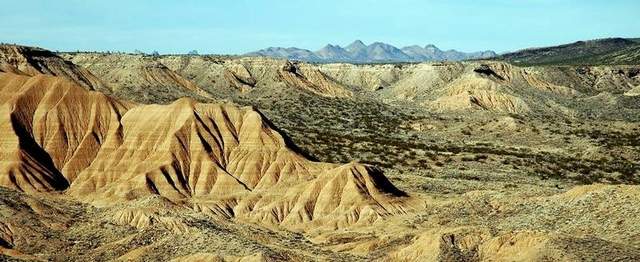
The government shutdown-induced closure of all federal lands — including national parks — is going to put a damper on Saturday’s opening of deer hunting season, when scores of hunters will be turned away at the gates of the Mojave National Preserve.
Compounding the situation is the fact the California Department of Fish and Wildlife, which regulates hunting, fishing and other game-related activities in the state, allows hunting in state wildlife areas, but must enforce the federal government’s closure of national parks and Bureau of Land Management territory — where hunting is normally permitted.
“If people are hunting, they are subject to a citation,” Andrew Hughan, California Department of Fish and Wildlife public information officer said Friday.
But there’s been confusion throughout the week as to what, if any, federal lands would be open to hunters on Saturday
The shutdown has made it difficult for state and federal agencies to communicate, and local officials are trying to clarify conflicting information.
“Mojave National Preserve is closed to all recreational use, including hunting,” said Linda Slater, the preserve’s public information officer. “Our rangers are going to use an educational and informational approach to work with hunters to help them understand the situation.”
The southern boundary of the sprawling, 1.6 million-acre preserve is north of Marine Corps Air Ground Combat Center, Twentynine Palms in San Bernardino County, just north of the I-40 freeway, about an hour-and-a-half drive from Palm Springs. The preserve was established in 1994 with the passage of the California Desert Protection Act by Congress and is part of the national park system.
“Mojave National Preserve is arguably the most popular location for hunters in Southern California,” said David Lamfrom, senior California desert program manager for the National Parks Conservation Association.
But those who purchased hunting licenses and “tags” — required for the taking of certain big game animals, including deer — might not realize they can’t enter the grounds.
The preserve has multiple access points, a situation that creates a “high potential for conflict with law enforcement,” if disgruntled hunters decide to ignore the closure, he said.
“It’s public land,” Lamfrom said. “It’s going to be another example of a portfolio of people not being served. They miss the opportunity to do the things they love to do or want to do.”
“We share everyone’s disappointment that the National Park Service is shutdown,” said Slater, who happens to be on furlough but is handling press inquiries. “We look forward to getting back open as soon as we can.”
The preserve is the third largest park unit in the lower 48 states. Only Death Valley National Park (3.4 million acres) and Yellowstone National Park (2.2 million acres) are larger.
Dennis Schramm, who retired as Mojave National Preserve superintendent in 2010, worked at the preserve during the previous government shutdown for several weeks in 1995 and 1996.
A couple of hundred hunters, many who’ve been coming since the preserve opened, look forward to the first weekend of deer hunting, he said.
“Opening day of rifle season for deer hunting is a big deal,” Schramm said. “They go to the same spots every year. The group campsites get filled up.”
He said the thinly-stretched preserve employees — only essential personnel are still working while most of their colleagues are furloughed — could face some angry hunters who might choose to bypass the barriers.
“It’s a major concern,” Schramm said. “If they don’t resolve this … it’s going to catch people off guard. Hunters are going to show up there and not be very happy. It’s going to be a very difficult impact for park staff.”
“Nothing about this situation is easy,” Schramm said. “It is difficult for the park staff to implement the closures, and equally difficult for the public to understand why they can’t just visit the parks anyway.”
Schramm, who was traveling with family through Durango, Colo. during this interview, had plans to visit some of the state’s national parks during the weeklong trip —including a visit to the Great Sand Dunes National Park & Preserve.
Lamfrom said the fallout is going to be felt by gateway communities that provide goods and services for hunters and campers coming in and out of the preserve.
“The shutdown of the federal government has created countless unexpected and unnecessary impacts to the National Parks in the California desert, and on the communities that rely heavily on them for their economic well-being,” he said.
How long the shutdown lasts is anyone’s guess, he said.
“We’re all in denial,” Lamfrom said. “We thought it would be over the day after the government shut down. There are economic impacts that are radiating. Look how deeply connected all these economic systems are.”
When open for business, the three California desert national parks sites – Joshua Tree National Park, Mojave National Preserve and Death Valley National Park – combined, welcome more than 6,500 visitors a day in October. The three parks collectively infuse more than $230,000 a day into local communities.
The tedious trail of animal activism

Photo Jim Robertson
by Barry Kent MacKay,
Senior Program Associate
Born Free USA’s Canadian Representative
Published 08/16/13
Make no mistake; I have been part of many successful efforts to stop, or prevent, lethal culling of deer and other wildlife species. From time to time, self-styled animal activists ask, “How did you do it?,” with the “you” being plural. It is always a co-operative, multi-faceted process. But I – we – have had our share of failures, and long ago learned that “being right” is, while essential, not enough. The deck is stacked against us because legal culls of native wildlife are government-sanctioned, and the government—federal, provincial, or municipal—has more power and resources than do we. And, if they don’t play fair, we have to try other tactics, such as garnering media and subsequent public support for our positions.
But at the provincial level, there is also the Ombudsman, or Ombudsperson: a politically independent “third party” charged by the legislature to assure “fair, reasonable, appropriate and equitable” administrative practices and services by public agencies.
The issue is the culling of deer in Cranbrook, British Columbia (see: http://www.bornfreeusa.org/weblog_canada.php?p=3449&more=1 and http://www.bornfreeusa.org/weblog_canada.php?p=3487&more=1). We had already lost an appeal to British Columbia’s Ombudsperson, Kim Carter, when we documented our concern that the contract to award the grisly job of live-trapping and then killing deer violated conflict-of-interest guidelines. The contractor sat on the committee that made the decision and bid within a few percentage points of the allocated amount. But it was ruled that the information was, if not exactly widely-known, still in the public domain. We lost.
On July 17, we submitted a second concern to the Ombudsperson. This time, our concern was that the residents of Cranbrook had been denied the ability to democratically participate in decisions that concerned them. Again, the issue was that the contract to catch and kill deer in Cranbrook was all done behind closed doors, which seems to violate the rules of the Community Charter. The Charter does allow for a degree of secrecy, and on January 9, 2013, a city administrator wrote, “…I am concerned for the safety of staff, contractor and public in general with respect to this project. Thus I plan to carry out the selection of the contractor and the cull in a confidential matter. Staff will work with the RCMP. We may be criticized by some for not being open with the cull but I believe we have a reasonable position that public safety is more important.”
But that makes as much sense as holding meetings concerning placement of road signs because some hunters shoot holes in them or teens spray-paint them. In fact, there is no indication of this concern in any of the minutes of meetings preceding the private decision-making meetings. As one councillor put it, “The argument that swayed us to retreat in-camera was because of alleged vandalism and public safety incidents during the Invermere deer cull and the possibility of similar incidents occurring here. There is some merit in this argument, but I have since come to the conclusion that, whether the argument is meritorious or not, vandalism and public safety is an RCMP issue, not a council issue, and it shouldn’t have swayed our judgment in taking the public’s business behind closed doors. Once we retreated into our locked chamber, we lost control of the issue and the rest is history.” Invermere is a separate town where unknown people found and damaged one or more deer traps.
It gets worse. Colleen Bailey, the one citizen on the Urban Deer Management Advisory Committee (UDMAC) opposed to culling in favour of more effective and humane resolution of conflicts with urban deer, was summarily kicked off of the committee: the only member so shabbily treated. Yes, she was a strong advocate for the deer—but she never spoke against culling on behalf of UDMAC. On the other hand, at least one staunch deer cull advocate, Angus Davis—who even placed a trap on his property—remained on the committee, voting in secrecy and getting his way. Apparently, Cranbrook’s idea of “democracy” precludes debate, openness, and dissent. Sad.
So, we were pleased last week that both Bailey’s own submission to the Ombudsperson (concerning her treatment by Council) and our own (concerning the inappropriateness of secrecy in what should be public affairs) will be considered, and it will be determined whether they merit an investigation. It’s not easy. We could lose again. But, we have to try. We have to jump through the hoops. We have to play their game, their way.
Here is the timeline of events:
•In April 2012, Council voted to conduct a cull of up to 50 deer.
•In September 2012, UDMAC members, including Ms. Bailey, were told that Cranbrook would seek the cull permit—but that the 2012 cull was put on hold pending the outcome of a court case in the town of Invermere that challenged the cull in that community (also in south-central British Columbia).
•In October 2012, UDMAC members were reminded to reapply because their membership on the Committee would expire on December 10, 2012.
•On December 6, 2012, the province issued the cull permit.
•At the December 10, 2012 Council meeting, all members who reapplied, with the exception of Ms. Bailey, were reappointed. Bailey was replaced with a non-opponent to the cull.
•On December 12, 2012, the municipal staff notified the “new” UDMAC Committee that Council sought its advice on a “time-sensitive matter.”
•On December 18, 2012, UDMAC recommended that the city implement a cull of up to 30 mule deer.
•On January 7, 2013, Council voted “in camera” to go forward with the cull.
•On January 8, 2013, municipal staff sent out a Quote for Service.
•On January 9, 2013, Councillor Warner expressed a real concern about moving forward with the cull because of the way the decision was reached. He did not oppose culling, per se.
•On February 6, 2013, the contract was signed with CP Trapping.
•On February 14, 2013, the BC Deer Protection Coalition, made up of a fully open and transparent group of provincial citizens working to stop or prevent deer culling in favour of more humane and effective ways to resolve conflicts between deer and people, exposed Cranbrook Council’s decision to move forward with the cull.
•On the same day, that Council finally acknowledged the decision, but only after the Coalition’s ad raised the issue.
•On February 14, 2013, the cull began.
•On February 23, 2013, Councillor Warner published his letter in e-know.
______________
Barry McKay is an artist, both with words and with paint. He has been associated with our organization for nearly three decades and is our go-to guy for any wildlife question. He knows his animals — especially birds — and the issues that affect them. His blogs will give you just the tip of his wildlife-knowledge iceberg, so be sure to stay and delve deeper into his Canadian Project articles. If you like wildlife and reading, Barry’s your man. (And we’re happy to have him as part of our team, too!)
 Exposing the Big Game