


Here’s Mine:


Here’s Mine:

In a welcome animal rights victory, landmark legislation prohibiting the third-party sale of puppies and kittens for profit has become law in England, the UK government announced.
Lucy’s Law — named after a cavalier King Charles spaniel who was born in a Welsh puppy farm in 2008 and callously bred to produce multiple puppy litters — is designed to stop illegal puppy farming and ban third-party dealers, making all dog and cat breeders accountable for the welfare of the animals in their care.
People who want to add a puppy or kitten to their family will now have to acquire one directly from a licensed breeder or adopt from a rescue center. Traders who sell these animals without a licence can face up to six months in prison, or an unlimited fine.
The new legislation came into effect following a long campaign headed by veterinarian and animal welfare advocate Marc Abraham, which was supported by high-profile figures such as Brian May, Ricky Gervais and Peter Egan.
“I’m incredibly proud to have led the 10-year campaign to ban cruel puppy and kitten dealers and to get this essential Lucy’s Law legislation over the line,” said Abraham, who is also the founder of Pup Aid. “I’d like to give a huge thanks to the UK Government for passing this law, as well as every animal-loving parliamentarian, celebrity, welfare organization, and member of the public that supported us.”
“Lucy was an incredibly brave dog,” he continued, “and it’s right that her memory is honoured with such an important piece of legislation to help end puppy farm cruelty; protecting breeding dogs just like her, as well as cats, their young, and also unsuspecting animal-lovers from the dangers of irresponsible breeding and cruel puppy and kitten dealers.”
|
|||||||||
|


The pets looking for homes range in age, from little kittens to a 19-year-old cattle dog mix named Ace. The SPCA will be updating more information on their website about each animal, they’re just waiting for all of them to receive their medical check-ups. For now, you can visit the nonprofit’s adoption page and see what information is there.
Adopting vulnerable pets rescued from natural disasters is always one way of helping a community deal with the aftermath. However, the animals in California aren’t the only ones needing loving forever homes.
Despite being 90 years old and receiving a life-threatening diagnosis, the beautiful Miss Norma was still full of life. Just days after her husband’s passing, she received a hard diagnose, too. However, Norma decided she doesn’t want to see the inside of any more hospitals, but to see the world, instead.
And so she did. The 90-year-old woman decided to hit the road with her son, daughter-in-law, and their Poodle, Ringo, in their RV.” I’m having the time of my life! I’m done with doctors,” she said.

The woman’s positivity; her energetic spirit and enthusiasm have surprised even her doctor. The Facebook page, Driving Miss Norma, recounts a conversation between them:
We explained to the well-meaning doctor and his student that we live in an RV and that we will be taking her wherever she wants to go. He didn’t hesitate to say, “RIGHT ON!” We asked if he thought us irresponsible for this approach. His reply was telling.

“As doctors,” he said, “we see what treatment looks like everyday. ICU, nursing homes, awful side effects and honestly, there is no guarantee she will survive the initial surgery to remove the mass. You are doing exactly what I would want to do in this situation. Have a fantastic trip!”
And now with Ringo as the co-pilot, son Tim and his wife Ramie, Norma is having the time of her life. So far, the adventurous team traveled thousands of miles and they have no intentions of stopping anytime soon.

“We have no idea where or when it will end. We are living in the present moment,” Ramie said. Let the good times rolls, Norma!


A woman in the US has died of a gunshot wound after a police officer fired his gun when he saw a barking dog running towards him.
The unnamed policeman was responding to a call about the woman in Arlington, Texas.
She has been named as 30-year-old Margarita Brooks.
She died of her injury in hospital.
Police have described it as a tragedy, and say an investigation is under way.
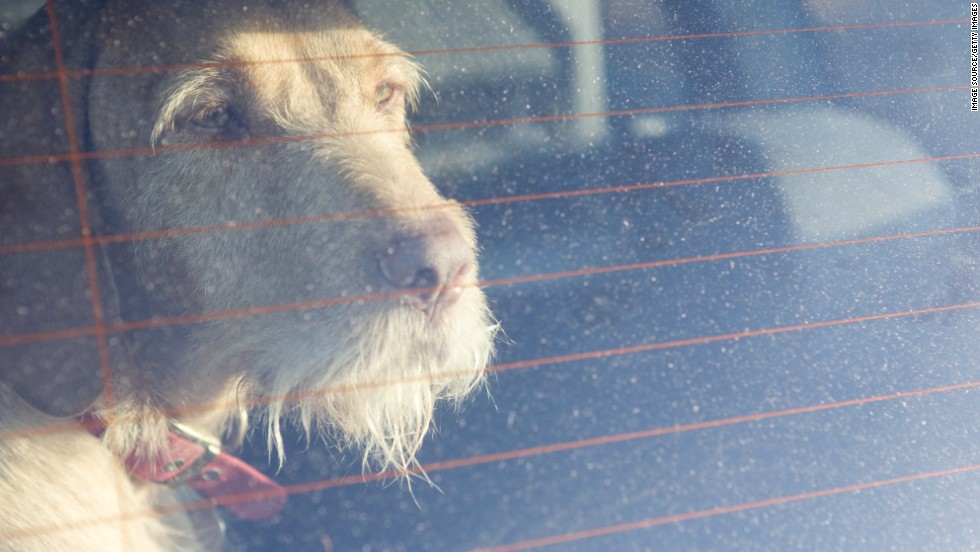
https://www.cnn.com/us/live-news/heat-wave-july-2019/index.html
About 185 million people across the US are under a heat watch, warning or advisory as of Friday morning –– and forecasts say it’s only going to get hotter.
This means it’s important to make sure your furry, four-legged friend doesn’t overheat.
Here are some tips from the ASPCA on how to keep your pets cool:
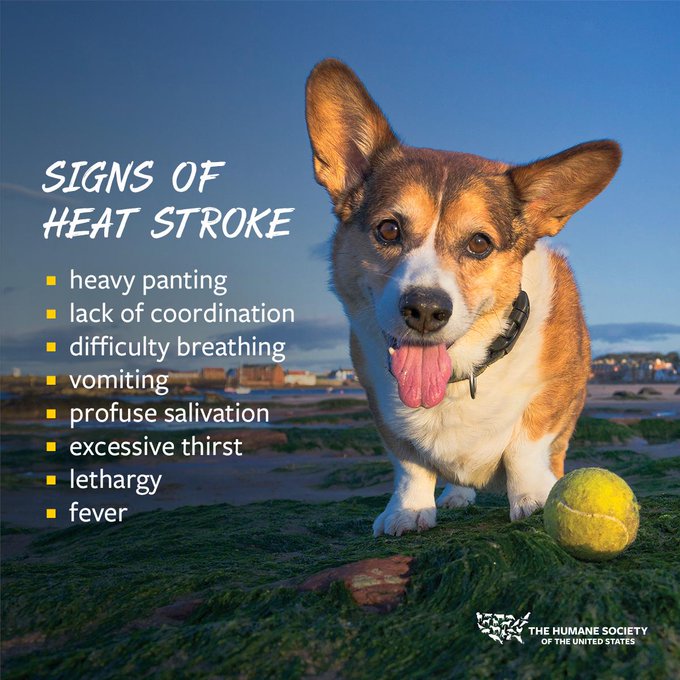
Another important aspect to keeping your pet safe in extreme heat is knowing the signs of heat stroke.
The Humane Society of the United States tweeted some of the signs to watch for:
Read the tweet:
 The Humane Society of the United States
✔@HumaneSociety
Extreme temperatures can cause heatstroke. Pets that are very old, very young, overweight, have short muzzles, or have heart or respiratory disease will have a much harder time breathing in extreme heat. https://hsus.link/yq8zlo
Rocky, a 5-year-old golden retriever, got spooked by fireworks around 8 p.m. Wednesday and ran away from his backyard.
His owner, Paulina Santos, was a nurse that helped at Ground Zero in the aftermath of the terror attacks.
Officials said Rocky returned home around 4 a.m. Friday morning.
He was said to be safe and was not injured while he was missing.

The other day I shared this recent photo of Honey and Caine with my sister and she asked, “What are they hunting?” I thought about answering “They’re just playing” (which is of course what humans do when they “hunt” nowadays). They aren’t doing it to survive. Both human hunters and pets can go back to their cozy homes or shacks and eat their fill, while natural predators have to hunt or starve.
People have corrupted the word “hunt” just like they perverted “stalk.” (Except Euell Gibbons, who used it jokingly in his book title, Stalking the Wild Asparagus. But then he used to think pine trees were edible.)

 How anyone can still subscribe to the agenda-driven assertion that non-human animals don’t experience life every bit as—if not more—richly as our species, is beyond me. All of the other animals we share the world with—dogs, cats, pigs, cows, horses, rabbits, parrots, pigeons, turkeys, turtles, deer, elk, mink, salmon, or moose–have each evolved the wits and sensations needed to survive, or they surely wouldn’t be with us now.
Regardless of what you believe about whether animals should have rights, we humans don’t have the right to make them suffer. Any attentive dog owner knows that their best friend can go through a full spectrum of emotions, from fear and sorrow to love and joy—on any given day.
(And Caine says, “Yeah, and that goes for cats too.”)
 Exposing the Big Game