File photo: In this photo taken on Thursday, Sept. 27, 2012, Tori, a female orangutan carries her baby at Satwa Taru Jurug zoo in Solo, Central Java, Indonesia. (AP Photo) (The Associated Press2012)
Your Cadbury chocolate bars, Oreo cookies and Ritz crackers are leaving orangutans on the “brink of extinction”, campaigners warn.
Greenpeace says orangutans are “literally dying for a biscuit” in a new report that slams snack giant Mondelez over its controversial use of “destructive” palm oil – which is created by destroying rainforest habitats.
Voiced by actress Emma Thompson, the ad tugged at heartstrings by showing the destruction of a young orangutan’s home – but was deemed too political by Britain’s ad watchdog.
Now new mapping by Greenpeace has linked Mondelez – which makes Cadbury, Oreo and Ritz products – to the destruction of a major orangutan habitat in Indonesia.
“It’s outrageous that despite promising to clean up its palm oil almost 10 years ago, Mondelez is still trading with forest destroyers,” said Kiki Taufik, who leads Greenpeace Southeast Asia’s Indonesia forests campaign.
“Palm oil can be made without destroying forests, yet our investigation discovered that Mondelez suppliers are still trashing forests and wrecking orangutan habitat, pushing these beautiful and intelligent creatures to the brink of extinction.
“They’re literally dying for a biscuit,” Kiki added.
Mondelez’ own records show it purchased more than 300,000 tonnes of palm oil and palm oil products in 2017.
And Greenpeace says 95% of this is purchased using the “weakest of the certification models” – a regulatory shortcut, basically.
“This means that the plantations and producer groups from which the overwhelming majority of the palm oil that Mondelez purchases is sourced are not governed by any sustainability initiatives,” the report blasts.
Mondelez is part of several industry groups working towards sustainable palm oil usage.
But Greenpeace warns: “Mondelez continues to source palm oil from rainforest destroyers, despite its stated commitment to responsible sourcing.”
Earlier this year, Greenpeace published a report detailing “recent rainforest destruction” by 25 palm oil producers in Southeast Asia.
According to Greenpeace, Mondelez was sourcing palm oil from 22 of these groups – between them, over 70,000 hectares of rainforest was destroyed between 2015 and 2017.
Of that area, 25,000 hectares were “forested orangutan habitat”.
But Greenpeace warns that the scale of the problem may be even worse: “These are just the cases that Greenpeace was able to identify – Mondelez sources from hundreds of palm oil companies and this destruction is likely just the tip of the iceberg.”
The report claims that Mondelez gets lots of its “dirty palm oil” from Wilmar International, the world’s biggest trader.
Greenpeace says that Wilmar fails to monitor its suppliers, and has “refused to make the radical changes that would end its trade with forest destroyers.”
It’s not just wildlife at risk, either.
It’s claimed that Mondelez palm oil suppliers have been accused of “child labor, exploitation of workers, illegal deforestation, forest fires and land grabbing”.
“Mondelez’s new tagline, revealed in September, is ‘snacking made right’, but there’s nothing right about palm oil produced by killing orangutans and fuelling climate change,” said Richard George, Greenpeace UK Forests Campaigner.
“This must be a wake up call to Mondelez and other household brands to take action, starting with cutting off the dirtiest palm oil trader of all, Wilmar, until it can prove its palm oil is clean.
“Ultimately, if big brands can’t find enough clean palm oil to make their products, they need use to less.”
Oreo, one of the products named in the report, is a hit with vegans due to the fact that it contains zero animal products.
But the use of palm oil that contributes to the destruction of the rainforest will raise concerns about the ethics of Oreo consumption.
We spoke to Elisa Allen, director at animal welfare charity Peta, who said: “PETA supports the move towards sustainable palm oil, which doesn’t involve devastating destruction of orangutans’ homes.
“We encourage consumers to check labels on food and – if they contain palm oil – purchase products that have been certified by the Palm Oil Innovation Group in order to ensure that no new deforestation has occurred to create palm plantations,” Elisa told The Sun.
She went on: “Of course, anyone who’s serious about protecting the environment – and the animals who live in it – knows that the meat industry is responsible for an enormous amount of deforestation (for instance, 70 percent of the Amazon rainforest has been cleared for raising cattle), and we can do our part by eating a wholefoods–based vegan diet.”
Responding to the report, a Mondelez spokesperson told The Sun: “Mondelez International is committed to eradicating deforestation in the palm oil supply and we’re actively working with our suppliers to ensure palm oil is fully traceable.
“We’re calling on our suppliers to further map and monitor the plantations where oil is grown so we can drive further traceability. We’re excluding 12 upstream suppliers from our supply chain who have not met our standards.
“For many years we have been calling for 100% sustainable and 100% traceable palm oil and we’re making good progress on our Palm Oil Action Plan.
“This includes actionable steps to ensure the palm oil we buy is produced on legally held land, does not lead to deforestation or loss of peat land, respects human rights — including land and labour rights – and does not use forced or child labor.
“At the end of 2017, 96% of our palm oil was traceable back to mill and 99% was from suppliers with policies aligned to ours.
“We’re calling on our suppliers to improve practices across their entire operations and to engage their third-party suppliers to ensure their palm oil production is 100% sustainable and traceable.
“We will continue to prioritize suppliers that meet our principles, and exclude those that don’t.”
President Trump salutes his supporters at a political rally at the Charleston Civic Center in Charleston, West Virginia, on August 21, 2018.MANDEL NGAN / AFP / GETTY IMAGES
The Trump administration’s recent announcement of rule changes to the Endangered Species Act (ESA) will blow a hole through protections that have been crucial to preventing extinctions and to helping the recovery of many threatened species. The changes, announced by the Interior Department’s, Fish and Wildlife Service (FWS) and National Marine Fisheries Service, will take effect in September.
About 1,600 plant and animal species in the U.S. are listed under the ESA. It’s been estimated the ESA has prevented 227 species from going extinct. It has a 99 percent success ratio, meaning only 10 species ever listed have gone extinct. According to a recent study, 77 percent of once-endangered marine mammals and sea turtles protected by the ESA are now recovering. Without the ESA, it is very likely many iconic as well as many lesser-known species would have disappeared forever. Among others, the ESA is believed to have saved the bald eagle, the monk seal, the leatherback sea turtle, the grizzly bear, the gray wolf, the California condor, the snowy plover, and humpback and gray whales. It is also protecting plant, insect and other species that are vital parts of natural ecosystems.
These changes to the ESA will damage the act’s ability to protect species in a number of ways.
First, a blanket rule automatically extending endangered species protections to newly designated threatened species has been torpedoed. Only threatened species that have special rules set up for them will now receive the greater protections given to endangered species. States could now open hunting or trapping seasons or allow other means that kill off threatened species. Noah Greenwald, endangered species director of the Center for Biological Diversity (CBD), told Truthout that there is currently a backlog of around 500 species before the FWS under consideration for threatened status. As a result of the changes he said, “Threatened species really won’t have any protections at all” making threatened status an “almost meaningless designation.”
The new rules change the establishment of critical habitat that is crucial for the survival of threatened species.
If a species is impacted by climate change but not primarily by habitat destruction, the new rules won’t designate critical habitat, even though climate change-threatened species need more habitat protection, not less, Greenwald said. “The rules also make it harder to designate unoccupied habitat. So both of these things are very bad for climate change-impacted species because there’s a decent chance they’ll have to move.”
Unoccupied habitat is habitat not yet occupied by the species but that would be beneficial to a species and could help it survive if a species were forced to move, by say, climate change. Scientists have already documented the migration of species northward and to new habitats as a result of climate change, so the need for critical habitat designations isn’t just theoretical.
Greenwald pointed up the example of the wolverine. Only about 300 wolverines are estimated to be left in the wild in the U.S. They are dwindling, particularly as a result of climate disruption lessening mountain snowfall. Wolverines are currently up for a listing decision and are likely to be given threatened status but no designated physical habitat under the new rules. Greenwald says wolverines are affected by winter sports and things like ski resort development because they rely on spring snowfall at high elevations for denning. But since it’s hard to predict exactly how various habitats will be impacted by climate change, the animals are unlikely to be given critical habitat designation now by the FWS rule changes.
Environmental groups are also condemning the ESA changes because they remove language requiring that decisions on protecting species be based solely on science “without reference to possible economic or other impacts of determination.” The new rules allow economic calculations to be made in considering protection of species. This could open the door to weighing those costs against protecting a species. For instance, when deciding whether protecting a certain species threatened by logging of old growth forest is outweighed by the economic benefit of logging. FWS Assistant Director Gary Frazer insisted science would remain the sole basis of determining protections, but the whole attempt to weaken the ESA for many years (mainly by Republicans) has always sought to open the door to overrule protecting species in favor of big capitalist business interests like logging and fossil fuel extraction.
Trump officials are trying to cover over their true intentions by speaking of “updating” or even “improving” the Act. Interior Department head David Bernhardt, a longtime ESA opponent and advocate for coal and oil interests, now claims to just make the ESA more “clear and efficient” to “ensure it remains effective in achieving its ultimate goal — recovery of our rarest species.”
Jacob Malcom of Defenders of Wildlife doesn’t buy it. “They’re going to make these arguments because that’s the only way they’re going to have any traction in trying to defend them, but they’re simply not true,” he told Truthout.
Greenwald concurs. “They say they’re going to rely on the best scientific information in making their decisions but what’s the point of doing the economic analysis?” he told Truthout. Greenwald said these changes will also create pressure by large monied interests to list species as threatened instead of endangered, because they will get less habitat protection. Republicans in Congress like John Barrasso,who have conducted a years-long attempt to undermine and do away with ESA protections, also see these changes as a “good start” and a gateway to even more drastic gutting of the Act, while claiming to “update” and “strengthen” it.
Facing criticism for the rule changes, Trump officials have simply doubled down on their assault on species, denying endangered protections to six more species on August 14.
CBD, Earthjustice and the attorneys general of California and Massachusetts have announced they will go to court to stop the rule changes.
Extinction and the Larger Ecological Crisis
The assault on the ESA happens at a moment of global mass extinction and climate crises. It will further that crisis unless prevented.
“When we’re seeing this kind of crisis … we should be strengthening laws we know are effective at saving species,” Malcom told Truthout. “Instead, the Trump administration is doing the opposite. They are weakening the rules, making it easier for harm to happen to these species and ultimately to drive species closer to extinction.”
In May, the Intergovernmental Science-Policy Platform on Biodiversity and Ecosystem Services (IPBES) reported that up to 1 million species are threatened with extinction. The report said “nature is declining globally at rates unprecedented in human history — and the rate of species extinctions is accelerating, with grave impacts on people around the world now likely.”
According to the report, three-quarters of the land-based environment and about 66 percent of the marine environment have now been significantly altered by human actions, and land-based habitats have fallen by 20 percent. Approximately 40 percent of amphibian species, 33 percent of reef-forming corals and a third of all marine mammals are threatened. Scientists have also been finding evidence of a collapse of insects in certain places, leading to fears of an apocalypse at the base of the food chain.
About one-fourth of the global land area is “traditionally owned, managed, used or occupied by Indigenous Peoples.” And areas with large concentrations of Indigenous Peoples and many of the world’s poorest people are now “projected to experience significant negative effects from global changes in climate, biodiversity, ecosystem functions and nature’s contributions to people.” IPBES Chair Robert Watson said, “We are eroding the very foundations of our economies, livelihoods, food security, health and quality of life worldwide.”
The gutting of the ESA happens against a backdrop of other human-caused catastrophes that has been escalating with shocking rapidity and scope, this summer especially.
This July ranked as the hottest month ever recorded. An intense heat wave scorched the northern hemisphere, causing between 12 and 24 billion tons of Greenland’s ice to melt in a single day. Scientists said the melt was reaching levels climate models hadn’t predicted until 2070. In the Arctic, extremely hot temperatures and resulting drought set off massive wildfires that are visible from space. In vast regions of Siberia, the smoke got so bad that, mixed with dark clouds, it caused the sun to “disappear,” as also happened last summer. Now residents talk about this as the sun “going off.” Waters are so warm in some Alaskan rivers that salmon are literally being killed off.
The increased warming of the Arctic is causing a feedback loop releasing even more greenhouse gases by melting frozen permafrost. “Arctic permafrost isn’t thawing gradually, as scientists once predicted,” reports National Geographic. “Geologically speaking, it’s thawing almost overnight.”
If fossil fuel burning isn’t dramatically altered, in a few decades, emissions of carbon and methane from melting permafrost will contribute as much to greenhouse emissions as that of China, currently the world’s largest emitter. Meanwhile, in the Bering Sea, warming ocean waters are triggering ecological disaster, killing off seabirds, seals, walruses and whales at rates not seen before. Rick Thoman, a scientist with the Alaska Center for Climate Assessment and Policy, said at a public forum in Nome, Alaska, “We’re not approaching the cliff. We’ve fallen off it.”
Trump’s Multileveled and Criminal War on Nature
Given the cataclysm already engulfing the globe, emergency measures are needed to address the crisis.
Nothing like this is occurring, and in the U.S., Trump is instead barreling ahead in ways that will further destroy species and ecosystems to increase profitability for capitalism with what could rightfully be called life-destroying criminality.
A report in Scientific American details how the Trump administration is “torpedoing climate science.” Another report reveals that after meeting with Alaska Gov. Mike Dunleavy, Trump personally intervened with the Environmental Protection Agency (EPA) to force a withdrawal of opposition to the proposed Pebble Gold and Copper Mine that will likely devastate the habitat of the world’s richest and most pristine remaining salmon run, in Bristol Bay, Alaska. Trump’s Interior Department is also being exposed for suppressing science in an environmental assessment of drilling plans in the Arctic National Wildlife Refuge’s coastal plain. Government scientists warning of the likely damage to caribou, polar bears and Native communities are being disregarded.
And on another front, Trump’s EPA has continued to refuse to stop the use of dangerous pesticides that are killing endangered plants and animals, including important pollinators. In the case of the pesticide chlorpyrifos, which has been shown to cause neurological and developmental damage to humans and animals, the EPA reversed a ban on its use even though the agency knew it could jeopardize the existence of almost 1,400 endangered plants and animals.
In July, Trump gave a speech on what he claimed were the great achievements of his government on the environment, including how under him, the U.S. has the world’s cleanest air and water. However, as Brett Hartl, government affairs director of the Center for Biological Diversity told Truthout, “Since he’s been elected, the air has gotten dirtier, the water has gotten dirtier, the amount of enforcement of our environmental laws has dropped off a cliff so polluters are getting away with much more, and they’re cutting the science and the staff to do the basic research to monitor the air and water.”
The CBD has filed 151 lawsuits to date challenging the Trump administration’s moves that would cause damage to the environment, species and people. The scope of the CBD lawsuits is remarkable, and reviewing them is an excellent way to take in the awful reality of what the regime is attempting to do and the legal attempts to stop this. Hartl said that a number of the lawsuits and legal actions filed by CBD and others have met with success; for instance, blocking Trump moves to open up Arctic waters for drilling, stopping the Keystone XL Pipeline for a time, stopping construction of an open-pit copper mine in Arizona, and winning protected status for a number of species.
The Trump regime is not only a threat to endangered species, but to all species — including our own. Preventing mass extinction and addressing the climate crisis is a global imperative, and time is short.
Neanderthals lived in Europe for thousands of centuries, and during that time, they had to watch their step. Mammoths, woolly rhinos, and saber-tooth cats were common in the region, and the caves these human relatives would sometimes enter for shelter were often already occupied by cave bears, the heaviest adults of which may have weighed over 2,000 pounds.
Today, controversy swirls around the question of why all these large animals eventually disappeared. Some scientists think they were victims of the last glacial maximum, which peaked around 26,500 years ago. Other experts have argued that the appearance of a new human species with a knack for hunting, Homo sapiens, could have driven the unfortunate beasts to extinction.
“If not for our arrival in Europe, I don’t see any reason why cave bears should not be around today,” says study coauthor Hervé Bocherens, a paleobiologist at the University of Tübingen in Germany who has studied cave bear remains for 30 years.
Get more of the inspiring photos and stories we’re known for, plus special offers.
By signing up for this email, you are agreeing to receive news, offers, and information from National Geographic Partners, LLC and our partners. Click here to visit our Privacy Policy. Easy unsubscribe links are provided in every email.
Bocherens and a team of researchers led by Verena Schuenemann at the University of Zürich in Switzerland collected the remains of 59 cave bears found across Europe to extract what’s known as mitochondrial DNA, or mtDNA. These small bits of genetic material are only inherited from an animal’s mother and can reveal genetic relationships between animals found at different locations. Crucially, however, mtDNA can also provide clues to past population sizes.
“Models of the genetics of populations tell us that the more diverse the mtDNA found in fossils from the same period, the larger the population must have been, allowing us to estimate the number of bears at any point in time,” Bocherens says.
GENETICS 101What is a genome, and how are traits passed from generation to generation? Learn how pea plants helped launch the study of genetics and how the field of genetics research has evolved over time.
When the scientists ran their analysis, the data suggested that the cave bear decline started some 40,000 years ago—long before the last ice age set in. This also means that cave bears thrived throughout a number of earlier periods when temperatures significantly decreased. Instead, their downward trend starts right about the same time that our species began to spread across Europe.
“There is some evidence suggesting some modern humans may have set foot in Europe even earlier,” Bocherens says. “But as far as we know, they only really populated the continent around the time the cave bears start declining.”
Though Neanderthals were probably killing cave bears as well, modern humans may have used more advanced hunting techniques and were probably more likely to venture into caves, Bocherens argues. Soon, anatomically modern humans became much more numerous than Neanderthals had ever been, sealing the cave bear’s fate.
The work “represents the maximum amount of information we can get from mtDNA data,” says Michael Knapp, a paleobiologist now based at the University of Otago in New Zealand. Knapp was not involved in the present study, but he published an earlier paper based on a more limited dataset that found similar results.
Bear necessities
Humans may have killed cave bears not just for their meat, but also for their fur or even simply because they were perceived as a threat. And as more humans settled in Europe, cave bears may have had a harder time moving into milder climates when it became cold, or finding the abundant plant foods required to sustain their large bodies. Remnant populations survived only in remote corners of Europe, such as the Italian Alps, where the most recent remains appear to be about 24,000 years old.
“Yet as these populations grew more and more isolated, they became genetically impoverished, as it was increasingly difficult for animals to travel between populations to find a mate,” Bocherens says. This may have weakened their offspring and could have made the bears more vulnerable to disease.
Meanwhile, brown bears survived into the modern era, perhaps because they were smaller and had more flexible diets that included meat they probably scavenged from large predators. Still, the decline of the cave bears carries a warning for brown bears, Bocherens says.
“First of all,” he says, “it shows that the most isolated populations are at risk, and that we should do whatever we can to allow some exchange of individuals between them, even if that means moving animals around ourselves.”
Perhaps even more importantly, he adds, the climate is again changing drastically, this time due to the actions of Homo sapiens, and that meansit is not enough to have nature reserves where the animals are left alone. In a world increasingly cluttered with roads, railways, fences, and buildings, we must also preserve the bears’ ability to travel around and keep their populations healthy and diverse.
“Species may survive a changing climate if they can track the changing temperatures,” Bocherens says. “But as the example of the cave bear shows us, climate change can be a very big problem if you cannot move.”
A collection of bird bones sat in lab storage for more than a decade, believed to be the remains of an ancient eagle. Little did scientists know what was hiding in the fossils: “Squawkzilla.”
Heracles inexpectatus was discovered by scientists in New Zealand, according to a study published Wednesday. At about 3 feet (1 meter) tall, the bird would probably have stood nearly as tall as the average American 4-year-old.
Scientists have been finding enormous prehistoric birds for years, but this one still shocked them. It’s the largest parrot ever known to have walked the Earth. It might have even preyed on other birds.
At an estimated 15 pounds (7 kilograms), the now-extinct bird beats out all the other parrot competitors, at nearly double the weight of the endangered kakapo, New Zealand’s reigning giant parrot.
The scientists approximated its size based on two leg bones, called tibiotarsi, under the assumption that they both came from the same bird. The researchers compared the drumstick-like bones to bird skeletons in the South Australian Museum collection and the Smithsonian National Museum of Natural History’s electronic collection.
The fossils were dug up in 2008 in St Bathans, New Zealand, where many thousands of bird bones have been found.
The large bones, believed to be the bones of an ancient eagle, flew under the radar for a decade. It was during a research project in the lab of Flinders University paleontologist Trevor Worthy that graduate student Ellen Mather rediscovered the bones.
After that, a team of researchers began reanalyzing the findings earlier this year, according to the BBC.
“It was completely unexpected and quite novel,” Worthy, the study’s lead author, told National Geographic. “Once I had convinced myself it was a parrot, then I obviously had to convince the world.”
The bird probably lived during the Early Miocene, which spanned from about 23 million to 16 million years ago.
Researchers concluded that the bird probably couldn’t fly and consumed what was along the ground and easy to reach, according to National Geographic. But that might not have been enough to satiate the giant parrot.
It’s possible the bird had more carnivorous ways, like another New Zealand parrot, the kea, which has been known to attack and subsequently munch upon living sheep, the magazine reported.
Michael Archer, a co-author of the research and paleontologist at the University of New South Wales, told National Geographic that Heracles might have even been eating other parrots, giving way to a nickname: “Squawkzilla.”
Archer told Agence France-Presse the bird had “a massive parrot beak that could crack wide open anything it fancied.”
Heracles probably won’t be the final unforeseen fossil from the St Bathans area, Worthy told AFP. The researchers have turned up many surprising birds and animals over the years.
“No doubt there are many more unexpected species yet to be discovered in this most interesting deposit,” Worthy said.
Berlin — Scientists in Europe said Tuesday they’ve successfully transferred a test tube rhino embryo back into a female whose eggs were fertilized in vitro, as part of an effort to save another nearly extinct subspecies of the giant horned mammal. The procedure was performed last month on a southern white rhino at Chorzow zoo in Poland, said Thomas Hildebrandt of the Leibniz Institute for Zoo and Wildlife Research in Berlin.
Hildebrandt is part of BioRescue, an international team of scientists and conservationists trying to use IVF to save the rare northern white rhino.
Only two northern white rhinos — both females — are left. The last male northern white rhino, named Sudan, died in March 2018. Scientists had preserved frozen sperm samples from several males that they now hope to use to revive the species.
Scientists chose to test the IVF transfer on southern white rhinos, a closely related sub-species whose numbers have stabilized in the wild.
“This is the first positive proof that the entire procedure we’ve developed in theory can be successful,” Hildebrandt told reporters in Berlin.
But time is running out.
The BioRescue team is waiting for permission from the Kenyan government to harvest eggs from the last two surviving female northern white rhinos, a mother and daughter called Najin and Fatu.
Najin and Fatu, the only two remaining female northern white rhinos, graze together on March 20, 2018 at the ol-Pejeta conservancy in Nanyuki, Kenya.TONY KARUMBA / AFP/GETTY
They are unable to bear offspring themselves, so once the embryos are fertilized in the lab they would be implanted in a southern white rhino surrogate mother.
Kenya’s ambassador in Germany, Joseph Magutt, said his country supports the effort, but didn’t say how long it would take to clear the paperwork.
Hildebrandt cautioned that while ultrasound tests show the embryo transferred at Chorzow zoo has grown, it’s smaller than expected and it remains to be seen whether it will implant in the mother’s uterine lining and result in a pregnancy.
The German government announced Tuesday that it is supporting the project with $4.6 million in funding.
In the meantime, others in the BioRescue team are working on ways to turn preserved skin cells from deceased rhinos into eggs or sperm, a procedure that’s so far only been performed with mice.
Rhinos have long been under pressure from poachers because of their horns, and several sub-species are at risk of extinction. Conservationists say rhinos are important for the survival of many other species because of the role they play in landscaping their native habitat.
Earlier this week, five eastern black rhinos were transported from European zoos to Rwanda’s Akagera National Park to help increase the genetic diversity of the rhino population there.
More broadly, a recent United Nations report warned that a million species are at risk of extinction in the coming decades, largely because of human activity.
Deforestation in Sumatra, one of the world’s primate hotspots ( W F Laurance )
Industrial agriculture is bringing about the mass extinction of life on Earth, according to a leading academic.
Professor Raj Patel said mass deforestation to clear the ground for single crops like palm oil and soy, the creation of vast dead zones in the sea by fertiliser and other chemicals, and the pillaging of fishing grounds to make feed for livestock show giant corporations can not be trusted to produce food for the world.
The author of bestselling book The Value of Nothing: How to Reshape Market Society and Redefine Democracy will be one of the keynote speakers at the Extinction and Livestock Conference in London in October.
Organised by campaign groups Compassion in World Farming and WWF, it is being held amid rising concern that the rapid rate of species loss could ultimately result in the sixth mass extinction of life. This is just one reason why geologists are considering declaring a new epoch of the Earth, called the Anthropocene, as the fossils of soon-to-be extinct animals will form a line in the rocks of the future.
The last mass extinction, which finished off the dinosaurs and more than three-quarters of all life about 65 million years ago, was caused by an asteroid strike that sent clouds of smoke all around the world, blocking out the sun for about 18 months.
Prof Patel, of the University of Texas at Austin, said: “The footprint of global agriculture is vast. Industrial agriculture is absolutely responsible for driving deforestation, absolutely responsible for pushing industrial monoculture, and that means it is responsible for species loss.
“We’re losing species we have never heard of, those we’ve yet to put a name to and industrial agriculture is very much at the spear-tip of that.”
Speaking to The Independent, he pointed to a “dead zone” – an area of water where there is too little oxygen for most marine life – in the Gulf of Mexico that has grown to the same size as Wales because of vast amounts of fertiliser that has washed from farms in mainland US, into the Mississippi River and then into the ocean.
“That dead zone isn’t an accident. It’s a requirement of industrial agriculture to get rid of the sh*t and the run-off elsewhere because you cannot make industrial agriculture workable unless you kick the costs somewhere else,” he said.
“The story of industrial agriculture is all about externalising costs and exploiting nature.”
The Amazon and surrounding lands in South America are also under increasing pressure from soy plantations.
“Extinction is about the elimination of diversity. What happens in Brazil and other places is you get green deserts — monocultures of soy and nothing else.
“Various kinds of chemistry is deployed to make sure it is only soy that’s grown on these mega-farms.
“That’s what extinction looks like. If you ever go to a soy plantation, animal life is incredibly rare. It’s only soy, there’s nothing there for anything to feed on.”
And that soy is then turned into food for humans, often by “passing it through cattle and chickens”, Prof Patel said.
Some of the world’s most iconic animals, such as elephants, jaguars and penguins, are threatened due to these current farming practices.
In Sumatra, forests that are home to elephants and jaguars are being destroyed to make way for palm plantations, often to make feed for livestock kept in industrial meat factories.
And small fish like anchovies and sardines are being caught on a massive scale to be ground into fishmeal for farmed salmon, pigs and chickens. That means animals like penguins, which normally feed on them, are in trouble.
Animals in decline
Show all 8
The South African penguin population alone has plunged by at least 70 per cent since 2004.
Asked what people could do “as a consumer” to try to avoid contributing to such problems, Prof Patel said people needed to think on a bigger scale.
“‘As a consumer’ you are only allowing yourself a range of action. ‘As a consumer’ you can buy something that’s local and sustainable, that’s labelled as organic or fair trade,” he said.
“But ‘as a consumer’, you don’t get to do a whole lot of good. As a citizen, as a decent person, you can demand more from your government, from one’s employer, from yourself.
“Be more aware of your power as part of a society where we can change things. We have this power to change things in the future. What we have to do is make that change.”
He said some people thought being a vegetarian avoided contributing to the extinction crisis.
“I’m vegetarian but it’s not enough. If you are vegetarian and you walk around with your halo of virtue but you are eating tofu that comes from Brazilian soy, then you’re just as complicit in all of this as if you are eating the beef fed on Brazilian soy,” Prof Patel said.
Vegetarianism did not provide a “pure and simple” route out of the problem.
“Capitalism is involved. The capitalist will take your vegetarianism and make money from it with the same kind of techniques they’ve honed in meat manufacture,” he said.
Instead, Prof Patel argued it was time to switch to a world in which resources were shared and looked after, harking back to the days when people had access to common land.
“The commons is only a tragedy because the commons in England were eliminated. Before they were eliminated there were people who could manage resources and nature in ways that were sustainable,” he said.
“The idea of a commons that is managed collectively and the way in which nature is managed well and sustainably, that’s a memory that needs to be recuperated.”
Admitting that changing society so radically would be a challenge, he argued it was essential as people’s current aspirations were based on “images of consumption that are entirely unsustainable”.
Humans, Prof Patel said, would need to find a way to live with less material wealth.
“Re-imagining a world with less stuff but more joy is probably the way forward,” he said.
“There’s a strong case for saying there’s room for … less individual consumption and loneliness … and more sharing and communality, getting together around the table, rather than sitting alone in front of the TV.”
A new study by BirdLife International revealed that at least eight bird species have disappeared in the last years. Among them also the blue parrot, so well known from the movie ‘Rio.’
Dr. Wildlife @DrWildlife
Pleas from the high-spirited film, Rio, for humans to care about the Spix’s macaw may have come too late. As of a few days ago, the Spix’s macaw has been declared extinct in the wild. Human interference in their native lands proved to be too much for this little blue macaw.
In the successful animation movie the parrots fought for their survival as Blu flies all the way from America to Brazil to find Jewel, the last female of its species. The two fall in love and they have a baby in the happy ending story. Unfortunately in real life Spix’s Macaw parrots did not make it.
While many of bird extinctions occurred on solitary islands, the most recent ones were in South America, the study reveals. That shows the dramatic impact of deforestation in those areas. According to the Red List of Endangered Species, about 187 bird species have disappeared worldwide since 1500. The causes of this rapid decline include the introduction of invasive species, hunting and deforestation, as reported by the organization in Cambridge, UK.
Nowadays, the huge urban areas expansion and global warming put an extremely pressure on wildlife with many animals forced to adapt or to extinct.
As about the blue parrots who have bright blue plumage are officially extinct in the wild. However, some exemplars are living in captivity.
TEHRAN – Foxes, the intelligent hunters who avoid humans, having a limited range in Iran, are endangered due to human encroachment on their habitats and the lack of safety, said Jalil Imani, a biodiversity and ecosystems management expert.
There are more than 20 species of foxes who eat almost anything, including small mammals, birds, reptiles, insects, worms and fruit. The common fox is considered by some as pest species, being an opportunistic hunter of game birds, ground-nesting birds and small mammals, often killing animals’ surplus to its needs.
Foxes in Iran are often seen in farmlands in search of rodents. They are also likely to feed on melons, scavenge in refuse dumps, or track hares and other small mammals, especially when there is snow on the ground. Foxes in Iran are trapped, shot, and hunted almost everywhere they occur, and yet they still manage to thrive.
Foxes feed on small animals like rats, but farmers turning pastures into agricultural land over the past few years are using pesticides to protect their product, which kill foxes’ prey, and in some case the foxes themselves by the poisonous baits.
Four fox species inhabiting in Iran, including Blanford’s, Corsac, Rüppell’s and common foxes, Imani said, lamenting, according to the Red List of the International Union for the Conservation of Nature and Natural Resources (IUCN), all four aforesaid species of foxes in the world are defined as least concern, however in Iran, their condition is different.
“Blanford’s fox is assigned endangered by the Department of Environment, any hunting or trade of which is considered illegal,” he noted, adding, while Corsac fox has been listed as extinct before sighting some in northeastern part of the country, which switched to critically endangered.
Rüppell’s fox is also placed in the IUCN’s least concern category, while being vulnerable in Iran which requires protection, he said.
“Fortunately, common fox is in better condition and is not listed as endangered yet,” he added.
So far, no measures have been taken to estimate fox population in the country, he said, adding, so there are no accurate statistics on the number of foxes in the country.
“The results of genetic tests showed that genetic variation of the foxes is desirable. There are two major genetic groups in the country that are in some ways compatible with the global groups.”
Imani went on to say that the Rüppell’s fox found mainly in Yazd, Kerman, somewhat Sistan-Baluchestan and Isfahan provinces, have proper genetic diversity, so there is still hope for the preservation of the sub species.
Blanford’s and Corsac foxes while offering insufficient information for a proper assessment, can be conserved to some extent, he said, noting, for precise determination scientific analysis and researches must be conducted in this regard.
One of the most important threats to fox species are habitat fragmentation, as well as the use of pesticides eradicating their prey, road construction, rabies and stray dogs, although the conflict with humans is the leading cause for their heading toward extinction.
“Foxes feed on small animals like rats, but farmers turning pastures into agricultural land over the past few years are using pesticides to protect their product, which kill foxes’ prey, and in some case the foxes themselves by the poisonous baits.
“On the other hand, road accidents took lives of many of the smart species, for example, there is a road in northern island of Qeshm, in which one to two foxes are killed per day due to road crashes.
“Unfortunately, another threat posed to the foxes is hunting for the fur trade, or some people keep their pelt for prosperity beliefs and superstitions.
“Foxes are primarily nocturnal hunters who prefer to search for food at a time when there is little chance of being spotted by humans, therefore, they are no threat to humans and there is no need to persecute the precious species,” Imani regretted.
Corsac fox’s habitat no longer safe
An official with the Golestan DOE, Mahmood Shakiba, said in October 2018 that living conditions for rare corsac fox in the country is so improper that spotting a few nests of the species is a pleasure.
In the Iranian calendar year 1395 (March 2016-March 2017), some 14 Corsac nests have been found in Turkmen Sahara in Golestan province, of which only four nests have been active and last year the nests have no longer been active, he added.
All Corsac habitats have been destructed turning into agricultural land, animal husbandry, manufacturing workshops or factories, so that the animal has no place to live, he regretted.
What happens when species go extinct?
As the species is at the top of the food chain, it plays an important role in conservation of the country’s ecosystem as well as protecting other species.
When an ecosystem loses key species such as common fox, it triggers what ecologists call a trophic cascade—a butterfly effect that spirals down the food chain. A well-documented case study for this phenomenon is the gray wolf, once among the world’s most widely distributed mammals. Prior to their extirpation, North American gray wolves were a key predator of deer, elk, moose, bison and caribou, as well as numerous smaller mammals. Following the wolves’ disappearance, the abundance of deer skyrocketed, with some populations climbing to six times their historical size.
Disappearance of foxes also have potential of disrupting the balance. For example, common fox’s function as an apex predator control the abundance of their prey and thus help to maintain a balance of nature.
“The problem with climate change is that it’s a timed test,” the writer Bill McKibben says. “If you don’t solve it fast, then you don’t solve it.”
Photograph by S. E. Arndt / Picture Press / Redux
After years of languishing far down the list of voters’ priorities—for Democrats and even more so for Republicans—the desire for action on climate change has brought this issue to the top of many voters’ concerns, according to a CNN poll. Now Presidential candidates are competing to establish themselves as leaders on the issue, while children are making headlines for striking from school.
Bill McKibben, whose book “The End of Nature” brought the idea of global warming to public consciousness thirty years ago, tells David Remnick that the accumulation of weather catastrophes—droughts, wildfires, floods—may have finally made an impact. McKibben joined Elizabeth Kolbert in a conversation about the U.N.’s new report on species extinction. It finds that a million species could become extinct within a few decades, and that human life itself may be imperilled. While the political tide could be turning, both worry that it is too late.
This conversation has been edited and condensed.
Listen:David Remnick interviews Bill McKibben and Elizabeth Kolbert on The New Yorker Radio Hour.
david remnick:Bill, you wrote “The End of Nature,” which was really the first popular book on climate change, thirty years ago. What are you seeing now in the current moment that’s different from what you’ve seen before? We’ve had so many missed opportunities.
bill mckibben: What’s different about now? Well, one of the things that’s different is it’s much easier to see precisely what’s going on. I mean, thirty years ago we were offering warnings, even ten years ago. It was still a little hard to make out the precise shape of climate change as it started to affect the planet. Now, I mean, you watch as a California city literally called Paradise literally turns into Hell inside half an hour. You know, once people have seen pictures like that, it’s no wonder that we begin to see a real uptick in the response. In the last six months we’ve seen this rise of the demand for a Green New Deal in the Democratic Party. We’ve seen the Extinction Rebellion shut down London, the center of London, for a week, and the Tory-led Parliament and the U.K. declare a climate emergency. And, you know, most poignantly, we’ve watched a few million schoolchildren following the lead of Greta Thunberg, in Sweden, and walking out of classes. It’s not a good sign that we‘re asking twelve-year-olds to solve the problem for us, but it’s good that they’re stepping up.
Do you think that this had to be the case? In other words, that we had to see, say, Guatemala so affected by climate change that thousands of, essentially, climate refugees come to our borders. Or Syria, in many ways, was a product not only of political rebellion but also climate rebellion, in a certain sense. Did this have to be?
mckibben: I don’t think it had to be. I think that we were capable of taking the warnings from science and doing the right thing. I mean, heck, in 1988, Republican President George H. W. Bush announced that he would, quote, “fight the greenhouse effect with the White House effect.” But what happened was a thirty-year, no-holds-barred campaign by the fossil-fuel industry, the richest industry on earth, to confuse and obfuscate and deny and delay, and it‘s been remarkably successful. I mean, thirty years later, the Republican President believes that climate change was a hoax manufactured by the Chinese. So, you know, it’s that thirty years that may turn out to have been the crucial thirty years.
So, just to be clear, you’re blaming the fossil-fuel industry as the singular culprit for these lost thirty years, above all other factors.
VIDEO FROM THE NEW YORKER
Why a Psychiatrist Collected Premonitions
mckibben: Well, you know, it obviously would have been hard to change, because it’s a big problem, but imagine the alternative-history version where—I mean, this is the kind of “Man in the High Castle” approach—where, in 1988, after Jim Hansen testifies before Congress, we now know from great investigative reporting that the big oil companies knew and understood and agreed with that assessment of climate change. If the C.E.O. of Exxon had gone on TV that night and said, “You know what? Our scientists are telling us the same thing.” And that, by the way, is pretty much the least that any moral or ethical system you could come up with would demand, or so it seems to me. If that had happened, no one was going to be running around saying, “Oh, Exxon’s a bunch of climate alarmists, you know, pay them no mind.” We would have gotten to work. And thirty years ago there actually were things that weren’t that hard to do. A modest price on carbon in 1988 or ’89 would have started steering the giant ocean liner that is our economy a few degrees differently, and, thirty years later, we’d be in a different ocean. We didn’t do that. Now all our choices are very tough, and it’s going to require extraordinary political maturity and will to move as quickly as we need to move.
Betsy, I think what Bill is saying is that we’re at a certain kind of tipping point now, a political tipping point, where climate change is concerned, that hadn’t existed before. How do you perceive the politics around climate change at this moment? Because, in many ways, the Trump Administration is proactively making the problem much worse.
elizabeth kolbert: Yes, I think it’s going to be, you know, if we have a history, if we have a future that will look back on this moment, it will be a very interesting moment, because we do have these two extraordinary trends happening simultaneously. As Bill says, there is a lot of energy on the street, and for the first time, you know, you have Democratic candidates competing to be the climate candidate with some very detailed and pretty significant programs to try to wean us off of fossil fuels. At the same time you have just the most remarkably retrograde Administration in Washington, which isn’t just not making progress on these issues but actively rolling back whatever modest progress was made under the Obama Administration. That will take, at a minimum, years to undo that—if we decide to undo it, you know, if you don’t decide to give them another term. And meanwhile, on the ground, just the facts in the air, as it were, are really bad. When Bill wrote “The End of Nature,” I just checked back, and the records, CO2 levels in the atmosphere were approximately three hundred and fifty parts per million. We just hit four hundred and fifteen. So things are going in the wrong direction, and very rapidly.
What does that difference mean, qualitatively, in terms of our lives and the environment?
kolbert: Well, every increment of CO2 that we put up there is a certain amount of warming that you get out at the end of this process, and this sort of general, very, very rough rule of thumb is, if we want to keep average global temperatures from rising more than two degrees Celsius, which has been sort of defined as this threshold that you do not want to cross, this sort of general sense is we really can’t get above four hundred and fifty parts per million. Now we’re really—it’s very, very hard, if you think about how fast we’ve moved from three fifty to four fifteen. Meanwhile, CO2 emissions are increasing every year, they just increased pretty dramatically in 2018, we just got those figures. So it’s pretty hard to come up with a scenario in which we keep things under four hundred and fifty parts per million without, you know, sort of immediately ceasing globally—and this is not just in the U.S., you know—to burn fossil fuels.
Now, why would Donald Trump, who is not an executive in the oil industry, believe something like that global warming is a Chinese hoax? And why, correspondingly, why is a matter of science a matter of partisan politics? You say that the Democratic Party believes X, but a lot of Republicans believe otherwise.
kolbert: Well, this is, as Bill alluded to, this has been kind of a long history of a combination of moneyed interests and political interests colluding, as it were—the word of the hour—to make this issue seem to be one of belief. It has nothing to do with your belief. It has to do with geophysics, and geophysics that have been established for quite some time now. And so how we got into the situation here, the most technologically sophisticated society in history in the world where you still have a lot of people saying—and a lot of people in very high places, like the White House, and also at the head of the E.P.A.—and they’ve put in place, they‘ve taken people out of this, you know, denier complex, and put them into top offices in the federal government. And those guys know exactly what they want to undo, and they are pretty systematically going about doing it. I don’t know—to be honest, with all the noise there is around the Trump Administration, I’m not sure enough attention has been paid to what they’re doing to environmental regulations across the board.
Well, how sincere are they? In other words, those officials, those government officials in the Trump Administration have children and grandchildren, as well. And they have to see what the effects of climate change you’ve seen already—whether it‘s in Central America or Bangladesh, or the air quality in Delhi or Beijing. This is happening already. This is not something that we‘re projecting twenty years, thirty years, fifty years, a hundred years in the future. It is happening now.
kolbert: Well, I would think it would be extremely interesting if you could, in an unguarded moment—I don’t think any of the three of us are getting these guys in an unguarded moment—but to say, you know, how how do you sleep with yourself at night? How do you look at yourself in the mirror? I would love to be able to pose that question now. I think that one of the lessons of the last couple of years, unfortunately, is the capacity for human delusion and self-delusion is limitless. So, you know, it’s possible that you could administer truth serum to these guys and they would still be saying the same thing, because they actually, you know, quote-unquote “believe it.” I honestly don‘t know.
Bill, you made a decision in your life to become not only a writer but an activist. You wrote your book thirty years ago. It had a certain effect. And at a certain point you decided, That’s not enough, that, I have to get out from behind my desk, which is unusual for for most writers who enjoy the kind of solitude of being behind the desk—except when they’re not enjoying it, I guess. What propelled you to do this, and what complications does it cause in your own activity?
mckibben: Well, you know, I miss the solitude of my desk, too. Like most writers, I’m really an introvert. But at a certain point it became clear to me that I had made a mistake, that we were not really engaged in an argument. The argument about climate change was over by the early nineteen-nineties, when scientists had reached a very robust consensus. We’d won the argument. We were just losing the fight, because the fight was not about data and reason and evidence. It was about the thing that fights are always about: money and power. And, I mean, this goes directly to your previous question for Betsy. Look, the richest person in our society is the two Koch brothers taken together, our biggest oil-and-gas barons. They’ve purchased themselves a political party. So we knew we’d never have the money to stand up to that. But sometimes, in human history, organizing, movement-building, is enough to at least start to counterbalance that power. So that’s what we’ve been trying slowly to build over these last decade or so. And now, thank heaven, with those foundations laid, it’s an enormous number of people rushing in to do this work, which might even mean that I can get back to my desk a little more, we’ll see.
Well, what’s so striking about the movement in in large measure is that it’s led very often by kids, by teen-agers. In mid-March, nearly a million and a half kids worldwide went on a climate strike and refused to go to school. You saw this young woman, I think she’s sixteen or so, Greta Thunberg, speak in front of the E.U., in front of other political bodies. The most striking speaker one could ever imagine. Why is this generational shift happening, and what effect is it having?
mckibben: So, young people have been at the forefront of this for quite a while. When we started 350.org, it was myself and seven undergraduates here at Middlebury. And I think the reason that young people are so involved is because, well, because, you know, you and I are going to be dead before climate change hits its absolute worst pitch. But if you’re in high school right now, that absolute worst pitch comes right in the prime of your life. And if we’re not able to take hold of this, then those lives will be completely disrupted, and they’ve figured that out. That said, it’s not O.K. for the rest of us to leave it to fourth graders to solve the problem. There’s going to be—keep your eyes peeled, but I think soon there’ll be calls for adult strikes, as it were, to follow and back up the kids, beginning in the autumn. And that makes real sense. You know, it’s at some level business as usual that’s doing us in. The fact that we get up each day and do more or less the same thing that we did the day before. Even while the worst scenario that we’ve seen in our civilization is unfolding, you get a sense of that. I was just looking at the newspapers today. The U.N. just published a truly remarkable report saying that we’re going to lose a million species on the planet sometime over the next few decades. It completely backs up the work that Betsy did so brilliantly in “The Sixth Extinction.” And yet, you know, it’s in the newspapers, but it’s well below the new royal baby and the trade talks with China, and it’s that business as usual that’s literally doing us in. And we have to figure out how to disrupt it a little bit.
Betsy, I hate to be a competitive journalist, but when I read the report about “The Sixth Extinction” in the U.N. report, I said, The New Yorker had that ten years ago, when you published it, in 2009, the very same thing. What is the difference between 2009 and 2019 in terms of the extinction of hundreds of thousands of species on the planet Earth?
kolbert: Well, I think that it’s one of those cases where, as I’m sure Bill would say, you don’t like to see the news bearing out what you said. But, in this case, you know, the only difference is more documented destruction, really. And a lot more studies piled on the ones that were available to us five, ten years ago. But the general trend lines—an accelerating trend line, I do want to say, of human impacts—but the general trend line of biodiversity loss, which has been recognized for quite some time now, it’s all just playing out according to plan, unfortunately. And what this report does, I think, it’s really trying to, (a), raise the alarm, but, (b), really pointing to, there seems to be this strange disconnect, once again, out there. And it’s true that global G.D.P. is larger than ever. And at the same time species loss and destruction of the natural environment, natural world, other species is also greater than ever. And those two things are very intimately linked, and if you only pay attention to the G.D.P. part, you might say, “Oh, everything’s fine.” But I think what the point that this report is really trying to make is, those lines are going to cross. People are still dependent on the natural world—all the oxygen we breathe, all the food we eat, all the water—you know, these are biological and geochemical systems that we’re still dependent on, for better or worse, and we are mucking with them in the most profound ways. I think that that is the message, the take-home message of that report.
In other words, this so-called soaring economy that we’re enjoying now is the worst kind of illusion.
kolbert: Well, once again, it depends on how you measure it. If you measure it by stuff that we’re producing, I don’t want to say it’s an illusion. But if you look at the other side of that, the cost it’s taken on the natural world, everything from land use gobbling up habitat to plastic pollution in the oceans. The list goes on and on and on. And the question of, can you sustain that over time, we haven’t been at this project very long without really wreaking havoc with the systems that sustain us. I mean, there are two issues here. And I think they have to be separated to a certain extent, intellectually if not biologically. And one is, could humans go on like this for quite a long time, just letting the rest of the world decay around us? Is that O.K.? You know, for us as a species to just do in a million or more other species, just because we are enjoying a better and better standard of living, is that O.K.? That’s one question, and then the other question is, can that happen? You know, just physically, are we capable of sustaining this, with all of these other trends going around, or are we really threatening our own life-support systems? And I think this report is suggesting very significantly that we are threatening our own life-support systems. But I think that the other question of the ethical stance that we take toward this is also extremely important.
And yet, for years and years, if you betrayed the fact that you cared about this, you were described as a tree-hugger and mocked.
kolbert: Well, and that’s still true. I mean, we are arguing in this country right now. Even as I speak, and we speak, this goes back to the Trump Administration, and how they’re systematically trying to unravel a lot of very basic environmental protections in this country. We’re going to argue over the Endangered Species Act, which actually has been quite successful, in its own modest way. If you are a species, you get on the list, you have to have a recovery plan, and those species have tended to survive—not necessarily thrive, but survive. And now we’re going to argue about whether we should even be doing that. So these arguments are never-ending and, you know, pitting human welfare against the welfare of everything else, that doesn’t seem like a winning strategy over the long run.
Bill, I was really interested to read that you think that the great climate-change document of our time is by Pope Francis.
mckibben: Well, I think that the encyclical that he wrote three and a half years ago now, “Laudato Si,” it is amazing. Mostly because, though it takes off from climate change, it’s actually a fairly thorough and remarkable critique of modernity. And it talks really about precisely the things that Betsy has been talking about—understanding this as, yes, a problem of physics and of the need to put up a lot of solar panels and wind turbines, which we now can do because the engineers have made them affordable, but also understanding it as a problem of human beings and their relations with each other. As Francis points out, the last forty years, this period of time when we’ve worshipped markets and assumed they solved all problems has not only spiked the temperature through the roof, it’s spiked inequality through the roof. And the two are not unrelated.
How are they related? What is the essential relationship between the two?
mckibben: One of the things I spent some time doing in this new book is kind of teasing out the history that begins with Ayn Rand and kind of reaches a first zenith in the Reagan Administration, in 1980. The idea now in the air that we breathe, literally, that government is the problem, that if you leave corporations alone they’ll get done what needs doing, this reigning ideology came just at the wrong moment. It came at precisely the moment when we actually needed governments to be doing something very strong to deal with climate change. And that combination of ideology and interest has been enough to suppress our reactions in the crucial thirty years.
But have other governments that are less capitalist-oriented been any more successful in tamping down climate change than the United States?
mckibben: Sure. The first thing to be said is that same period was the period when the U.S. was ascendant over the rest of the world, so it held sway to some degree everywhere. But, go to Germany and look at what they did, beginning about 2000, with this law that made it easy for people to put up renewable energy. There will be days this month when Germany generates way more than half the power it uses from the sun, which is saying something, because no one ever went to Germany on a beach vacation, you know. Look at Northern Europe, at Scandinavia. I mean, they’re doing remarkable things. The engineers gave us an enormous gift. They dropped the price of renewable energy ninety per cent in the last decade. In China and India, thank God, that’s resulting now in very, very rapid expansion of renewable energy.
You wrote a wonderful piece for The New Yorker about solar panels in Africa. And yet you’re very—I think both of you are very wary of an excessive emphasis on technological transformation to solve all problems in climate change. Am I right?
mckibben: Well, technology is going to help enormously. We obviously have to produce a lot of electrons, and now we can, with renewable energy, but we can’t do that job—or the job of energy efficiency, or the job of starting to relocalize economies—we can’t do that without mustering political will. The reason that we build movements is not so much to pass particular pieces of legislation. It’s because one tries to change the Zeitgeist, the sense of what is natural and normal and obvious and coming next. And when you win that battle, then legislation follows. We’re getting closer. The polling last week showed that, for Democratic voters, anyway, climate change is now far and away the most important issue going into these primaries. That’s something that would have been unthinkable even a few years ago. And it’s a sign that all the movement-building, all the science, all the writing, all the engineering are reaching some kind of head, one hopes not too late.
Betsy, is Silicon Valley on the side of the angels here?
kolbert: Well, I think to the question of, is technology going to save us, which is a very big question, perhaps the question right now, I think one of the things that’s important to think about is, there are a lot of steps that we could take that would potentially mitigate or alleviate climate change that would actually be terrible for other species. So, for example, one of the real tragedies of the last couple of decades has been the transformation of Indonesia into a series of palm-oil plantations, which has really just destroyed habitats for a lot of iconic and non-iconic species, like orangutans, for example. Now, one of the—only one of the drivers behind that, but a driver, was the Europeans deciding that biofuels were good for climate change, which, on some level, they are, but if the cost of that is mowing down the world’s remaining rain forests, then the cure can be as bad as the disease. So one of my fears is that we’re moving into a lot of territory where some of the answers to climate change involve land-use change are good on a climate balance sheet, but they’re terrible on a biodiversity balance sheet. And to make all of these things add up is extremely difficult. And that is why we’re in the situation we’re in, and that is why we got that new report.
Betsy, at the forefront of political conversation where this is concerned is the Green New Deal. What do you make of the proposals, and is it sufficiently specific for you?
kolbert: Well, I think there’s a tremendous amount of thought that went into the Green New Deal, and it’s sort of the very big-tent view of who should be interested in climate change. I think it was very smart in a lot of ways, because one of the things that always happens when you try to use, for example, pricing mechanisms to drive us off of fossil fuels and toward renewable energy is you can get this terrible coalition of polluters and poor people, or people who claim to be campaigning on behalf of low-income Americans, because there’s ways, for example, to do a carbon tax that is revenue-neutral and that’s cost-neutral to people. But there are also ways to play it so that it seems like it’s a regressive tax on the poor. So we need a really big tent to get some of these key pieces of legislation passed, and I think that that’s a very smart aspect of the Green New Deal, that it’s really trying to bring as many people together, a coalition of labor interests, of people working on behalf of income equality, all sorts of causes under the same tent. Now, that being said, to get from here to there, to get to the kind of society that is envisioned in the Green New Deal, which the three of us here might very much agree with, that’s not one political battle, that’s a zillion political battles. So that’s the question, you know, is it better to try to take on all these things at one point, or would it be better to have one single piece of legislation. There is no legislation associated with the Green New Deal. It is really just as a series of aspirational goals at this point.
Bill, how do you see the Green New Deal? Do you see it the same way?
mckibben: I think it’s the first time we’ve had legislation that’s on the same scale as the size of the problem. I mean, look. It’s one of these places where I have to be careful not to be a jerk and say, “Oh if only you listened to me when . . .” Because, as I said before, there were things we could have done at a certain point that were relatively small and easy, but those options are no longer available. Like a modest carbon tax, which still makes perfect sense but by itself is nowhere big enough to get the yield, the savings in carbon emissions that we now desperately need, because we’re talking six, seven per cent a year or more now to try and meet anything like these U.N. goals. Those are enormous, on the bleeding edge of technically possible. So I think it’s really important that the Green New Deal is out there, and I think it’s really important, most of all, that we just keep ramping up pressure on this system to produce something large.
Well that’s why the first reaction to the proposal of a Green New Deal from the President of the United States and people at cpac and the rest was, “They’re going to take away your hamburgers, they’re going to ban cows.” You’re dealing with an opposition that’s working not in the spirit of science or good faith.
mckibben: Right. Which is why it’s probably not worth trying to spend a whole lot of time coming up with a solution that the President’s going to love and enjoy. What we have to do is rally the three-quarters of this country that understands we’re facing a really serious problem. I think that this is going to become one of the issues in this Presidential campaign, because I think everyone’s begun to realize how out of touch Trump is with most voters. It’s a good thing, too, because, David, we’re basically out of Presidential cycles in order to deal with this problem.
How do you mean?
mckibben: Well the U.N. Intergovernmental Panel on Climate Change last November issued their most recent report, and it was by far their most pointed to date. It said if really fundamentally transformative work was not well under way by 2030 then we were not going to catch up with the math of climate change. Physics was going to just be too far ahead in this race. And you know enough about political life in this country or any other to know that a decade is a short period of time—if we want to have anything substantial happening in a decade then we have got to be doing it right away.
Now, there’s a recent CNN poll, Betsy, that shows that Democrats care more about climate change than any other issue in the upcoming election. More than health care, more than gun control, more than impeaching or not impeaching President Trump. Did that surprise you? And do you think that will hold up somehow when it comes time for the campaign to intensify in the debates to happen?
kolbert: I will confess that I was very surprised by that. I mean, you’ve always seen climate change rank, you know, nineteenth, or something like that. And so I think that’s an extraordinary development. And you could argue it’s a positive result, and you could argue, oh, my God, that’s the scariest thing I’ve ever heard, because it does suggest that people are really seeing changes in their own lives that they find very frightening. And I think that, to get back to your point of, do the Koch brothers have grandchildren, I mean, people look at their kids. You know, I certainly do, and all the kids who are out on the street and say, “What is the world going to look like?” You know, twenty or thirty years from now, when my kids are my age—it’s scary and it’s depressing and it makes you ashamed. I mean, how could we leave a world like this to our children? I think increasing numbers of people are feeling that.
I guess they don‘t have to look very far. If you were to visit Delhi and try to breathe, if you go to Beijing or Shanghai and try to breathe, or try to be a farmer in Central America, or exist in Bangladesh, it’s not that hard to figure out it’s no longer a speculative matter, is it?
kolbert: No. And I mean, you don’t have to go as far as Bangladesh. You can go to Miami or you can go to New Orleans, you can go to, to be honest, you can go to New York City. All of these major American cities that are going to be dealing and already are dealing with sea-level rise, and a lot of places are dealing with storms that they never saw. We’re seeing tremendous flooding right now in the Mississippi, which probably has a climate fingerprint on it. So almost everywhere you go in this country, farmers are grappling with it in the U.S., you know, what is the weather going to be like. It’s changing the crops you can grow. So all of these things do have a bearing on how people see the world, which, as I say, is fortunate in some ways, but very scary in another.
Bill, in the financial crisis of 2009, as discussed, very often people say, Well, why didn’t anybody go to jail? Why didn’t anybody from various offending institutions, banks, or the like go to jail? I never hear that when it comes to the fossil-fuel industries in the late eighties and nineties.
mckibben: Well, people are really beginning to talk at least about trying to hold those companies financially accountable. As you know, the New York state attorney general is suing Exxon on the grounds that it lied to investors. New York City is suing the oil companies on the grounds that their product produced a knowable and foreseeable harm in terms of the sea-level rise. The city is now spending billions to try and cope with it. This is happening now around the country and around the world. The clearest analogy probably is to the tobacco wars of the previous generation. In fact, the oil industry hired veterans of the tobacco wars and the DDT wars to try and pull the same trick here. And they did it with, sadly, great power. That’s what happens when you have the biggest industry in the world all in behind the most consequential lie in human history.
You know, for nearly twenty years that I’ve been working together with Betsy, the running joke between us is about Betsy’s pessimism, which is well-founded, but we managed to joke about it anyway. And Bill, early on in “Falter,” your new book, you write, “There is one sense in which I am less grim than in my younger days. This book ends with the conviction that resistance to these dangers is at least possible.” And I sense in both of you, each in your own way, and it might be different, but each in your own way, some sense of hope is informing your work now, in 2019, the way it might not have five years ago. Am I right, Betsy?
kolbert: I’ll play my usual role here: Eeyore. I do see glimmers of hope on a political front but it’s sort of like mountains after mountains after mountains. And I think, as they say, the facts on the ground, climate change, the thing that distinguishes it from a lot of other environmental problems is it’s cumulative. It’s not something where you can say, at the moment you don’t like things, let’s undo them and have a chance of undoing them. There’s a lot of time lag in the system, there’s a lot of inertia in the system.
The system, meaning science?
kolbert: No, in the climate system. So we have not yet experienced the full impact of the greenhouse gases we have already put up there. And once we do, you know, in whatever, a decade or so, there’s a sort of a long tail to that, we will have put up that much more. So we’re always chasing this problem, and you can’t decide— once we decide “Oh, we really don’t like this climate,” you don’t get the old climate back for, you know, many, many, many generations. So we are fighting a very very, very uphill battle. And I think the point that Bill has made, and I agree with it, is maybe we can avoid the worst possible future. But I don’t think at this point we can avoid a lot, a lot, a lot of damage.
And we’ve been seeing it already.
kolbert: And we’re seeing it, but it’s just beginning. And it’s not just beginning and then we can turn it around, it’s just beginning and a lot more is built in.
What can be held back, Bill, and what can’t be held back at this point?
mckibben: Well, look, Betsy’s right. The problem with climate change is that it’s a timed test, and if you don’t solve it, it’s really the first timed test like this we’ve ever had. And if you don’t solve it fast then you don’t solve it. No one’s got a plan for refreezing the Arctic once it’s melted, and we‘ve lost now seventy or eighty per cent of the summer sea ice in the Arctic. So that’s a tipping point more or less crossed. The oceans are thirty per cent more acidic than they used to. So we’re not playing for stopping climate change. We’re playing maybe for being able to slow it down to the point where it doesn’t make civilizations impossible. That’s an open question. There are scientists who tell you we’re already past that point. The consensus, at least for the moment, is that we’ve got a narrow and closing window, but that if we move with everything we have, then, perhaps, we’ll be able to squeeze a fair amount of our legacy through it. But Betsy is right, an already very difficult century is going to become a lot harder no matter what we do. It’s at this point trying to keep it from becoming not a difficult and even miserable century but a literally impossible one.
You’ve both expressed your admiration for some of the movements that are generated by younger people. Are there any politicians that are running for President at the moment with whom any hope can reside where this is concerned?
mckibben: Well, from my point of view, we need this time all the at least Democratic candidates to be climate candidates. And there’s some very good people who know a lot about climate running. Jay Inslee, say, and others who are doing a terrific job of talking about it in powerful ways. Elizabeth Warren’s plan on public lands is great. Bernie [Sanders] in many ways got this conversation started on a national level in the last Presidential election. I think it’s probably in the end maybe less important precisely who the President is than what the atmosphere is like, what the Zeitgeist is like. That will push them enormously in the right direction. That’s why people have got to be working on the Presidential campaign, but that can’t be all or even most of what we’re doing, at least for the next six months or so. There’s a lot of other organizing to get done. And you can tell, I mean, here’s the hopeful case, if you want it. Fifty years ago next spring, we had the first Earth Day, in 1970. Twenty million people, one in ten of the then American population, went into the street. Now Earth Day is kind of a nice day in the park, whatever. Then a lot of those people were angry, and that anger transformed the flavor of this issue in America over the next four years. Richard Nixon, who had not an environmental bone in his body, signed every piece of legislation on which we still depend, the Clean Air Act, the Clean Water Act, the Endangered Species Act that Betsy described is now under siege. Those all came because of that outpouring of public energy that shifted the Zeitgeist. We’d better do it again. And in spades.
Now, Betsy, we’ve been talking for a while as if the only political force that’s involved here is the United States. And right-wing populism has swept not only the United States, the executive branch of United States and the Senate, but you see this all over the world. Is right-wing populism in concert with anti-environmentalism globally?
kolbert: Well, they they do tend to go hand in hand. They have tended to go hand in hand, and one of the strains to all of this, and it does get back to some of the points that Bill was making about this peculiar moment that we have lived through and live in, is climate change is a global problem. The atmosphere is the global commons. There’s just no getting around it. The atmosphere doesn’t care where the carbon was emitted, it just cares that it was emitted. And so you do need global coöperation and global action. And at precisely this moment where nothing could be more important we are seeing a resurgent nationalism. Coincidence? You know, possibly, but it is possibly also a lot of anxiety around how are we going to deal with this global problem.
And I don’t see when you look at all of the global politics involved, you know, putting even aside American politics for the moment, which are very hard to see beyond.
But that’s why I say it’s one of these problems where you scale one mountain and then you see, you know, another mountain chain ahead of you, unfortunately.
Elizabeth Kolbert, Bill McKibben—authors of really the essential works on climate change these last thirty years. Thank you so much.
The authors assert that, ‘Retaining the integrity of intact tropical forests will not be possible if global and national environmental strategies do not address ongoing hunting practices.’ Credit: Ruth Archer from Pixabay
Defaunation—the loss of species or decline of animal populations—is reaching even the most remote and pristine tropical forests. Within the tropics, only 20% of the remaining area is considered intact, where no logging or deforestation has been detected by remote sensing. However, a new study publishing May 14 in the open-access journal PLOS Biology, led by Ana Benítez-López from Radboud University, the Netherlands, predicts that even under the seemingly undisturbed canopy, hunting is reducing populations of large mammals by 40% on average, largely due to increased human accessibility to these remote areas.
Overhunting, as opposed to deforestation, is undetectable by remote-sensing techniques, and to date, there were vast understudied areas in the tropics where hunting impacts on mammal communities were unknown. In this study, the authors have projected for the first time the spatial patterns of hunting-induced mammal defaunation in the tropics and have identified areas where hunting impacts on mammal communities are expected to be high.
Predicted hotspots of hunting-induced defaunation are located in West and Central Africa, particularly Cameroon, and in Central America, NW South America and areas in SE Asia (Thailand, Malaysia and SW China). Predictions were based on a newly developed hunting regression model, based upon socio-economic drivers, such as human population density and hunters’ access points, and species traits, such as body size. The model relies on more than 3,200 abundance data estimates from the last 40 years and included more than 160 studies and hundreds of authors studying approximately 300 mammal species across the tropics.
These defaunation maps are expected to become an important input for large-scale biodiversity assessments, which have routinely ignored hunting impacts due to data paucity, and may inform species extinction risk assessments, conservation planning and progress evaluations to achieve global biodiversity targets.

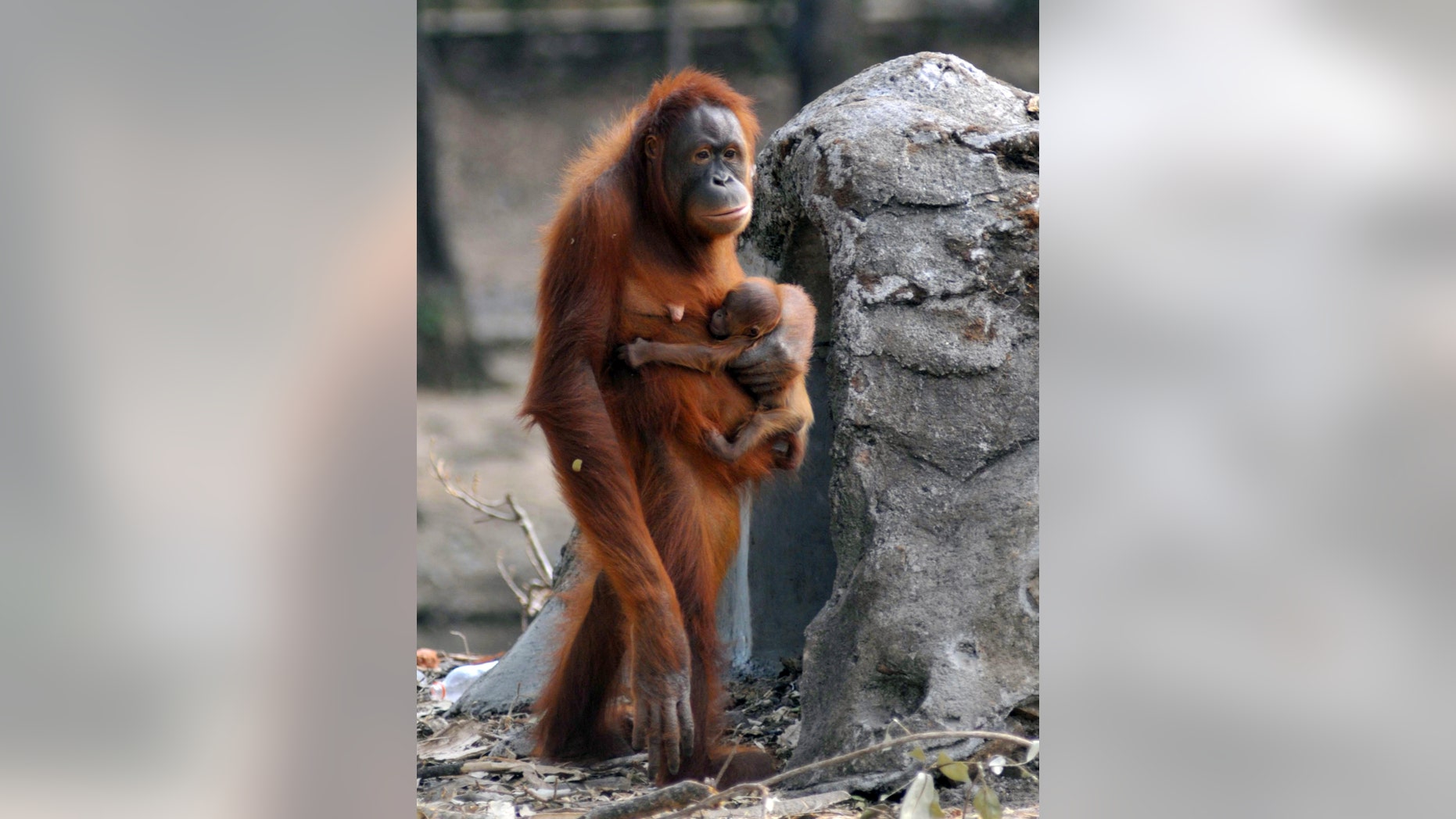


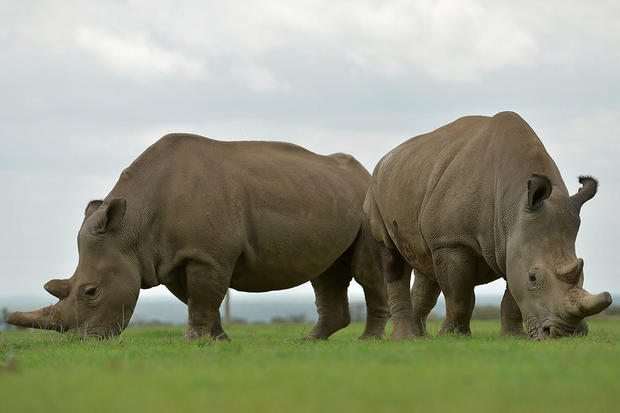
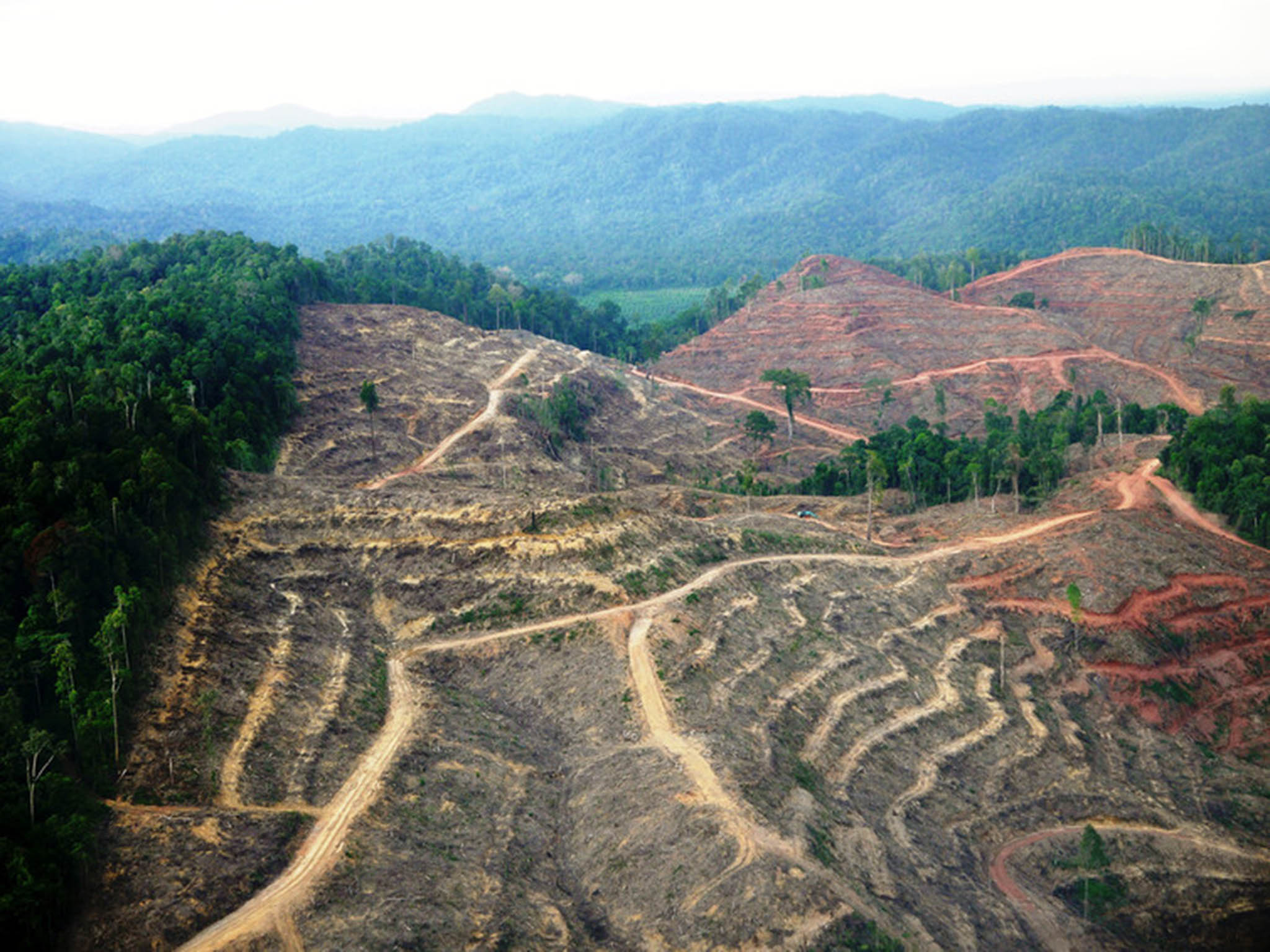


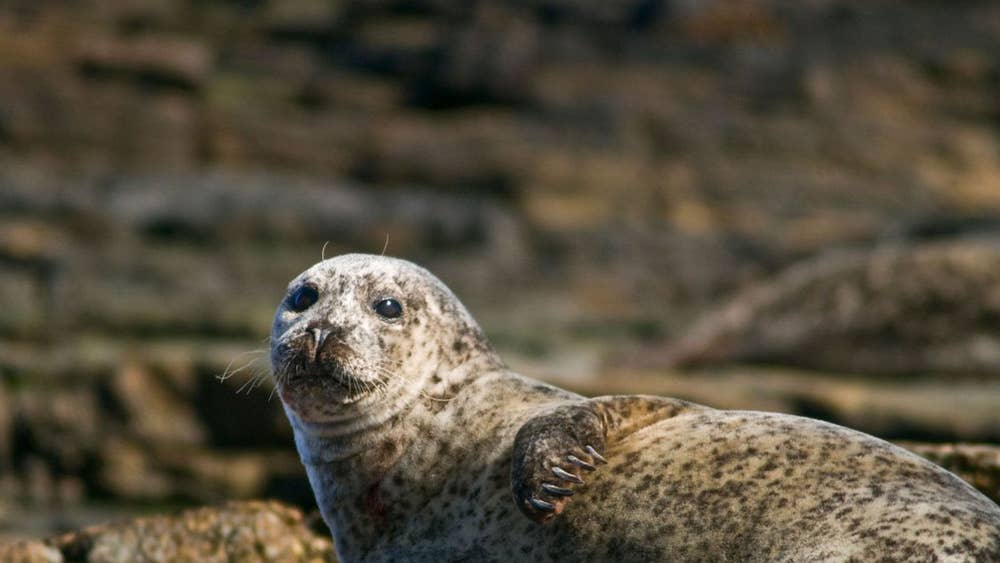
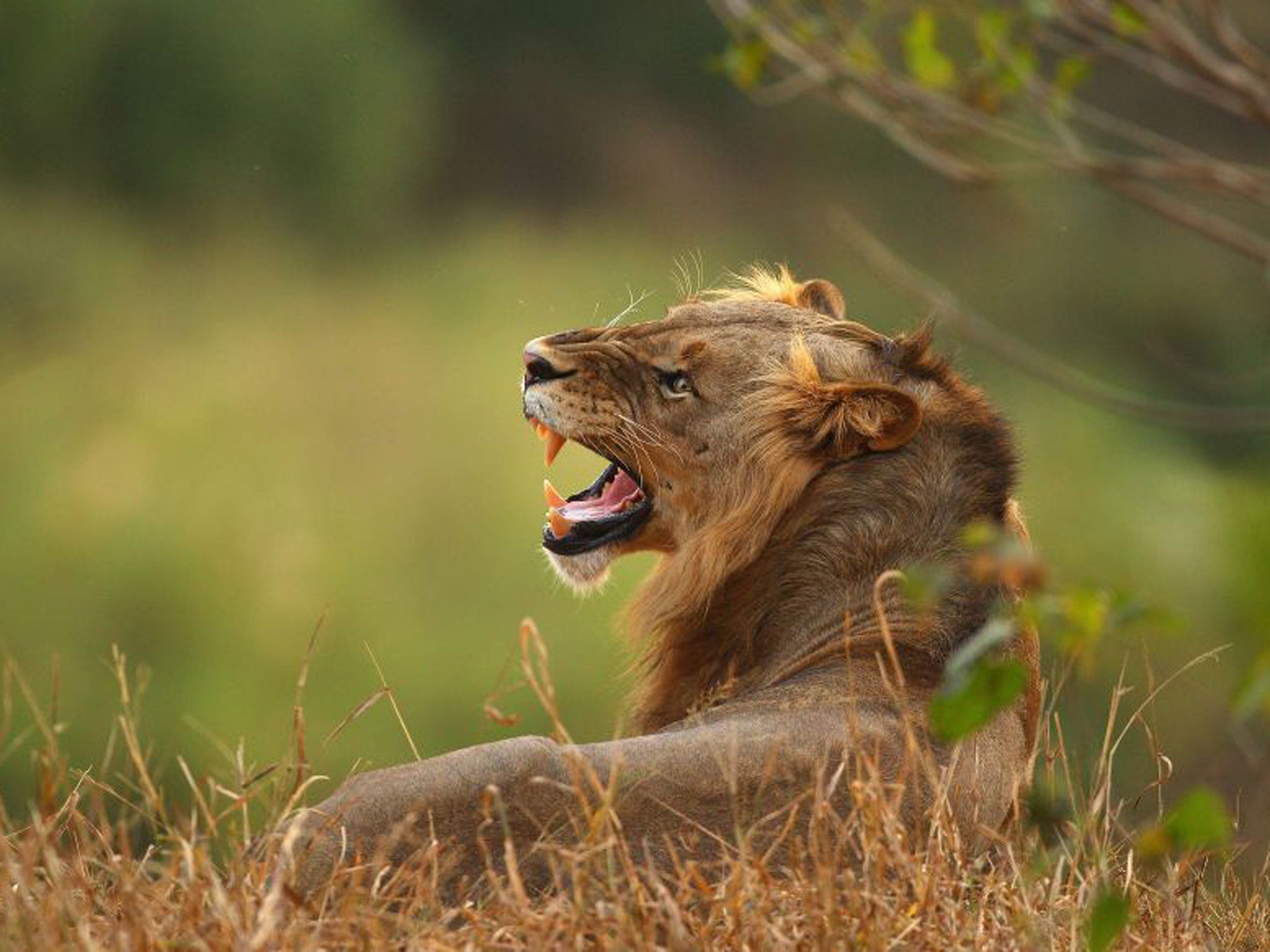
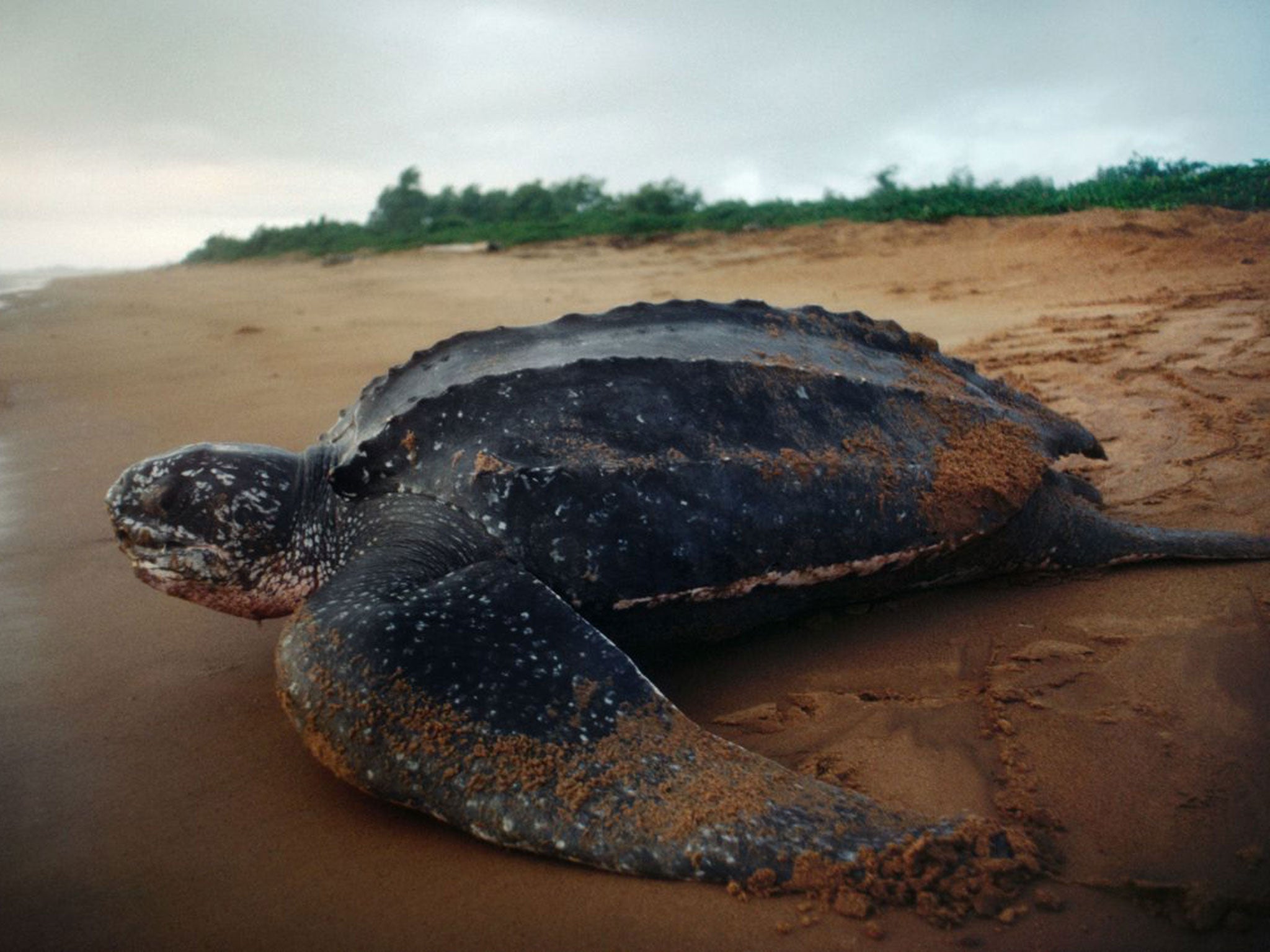
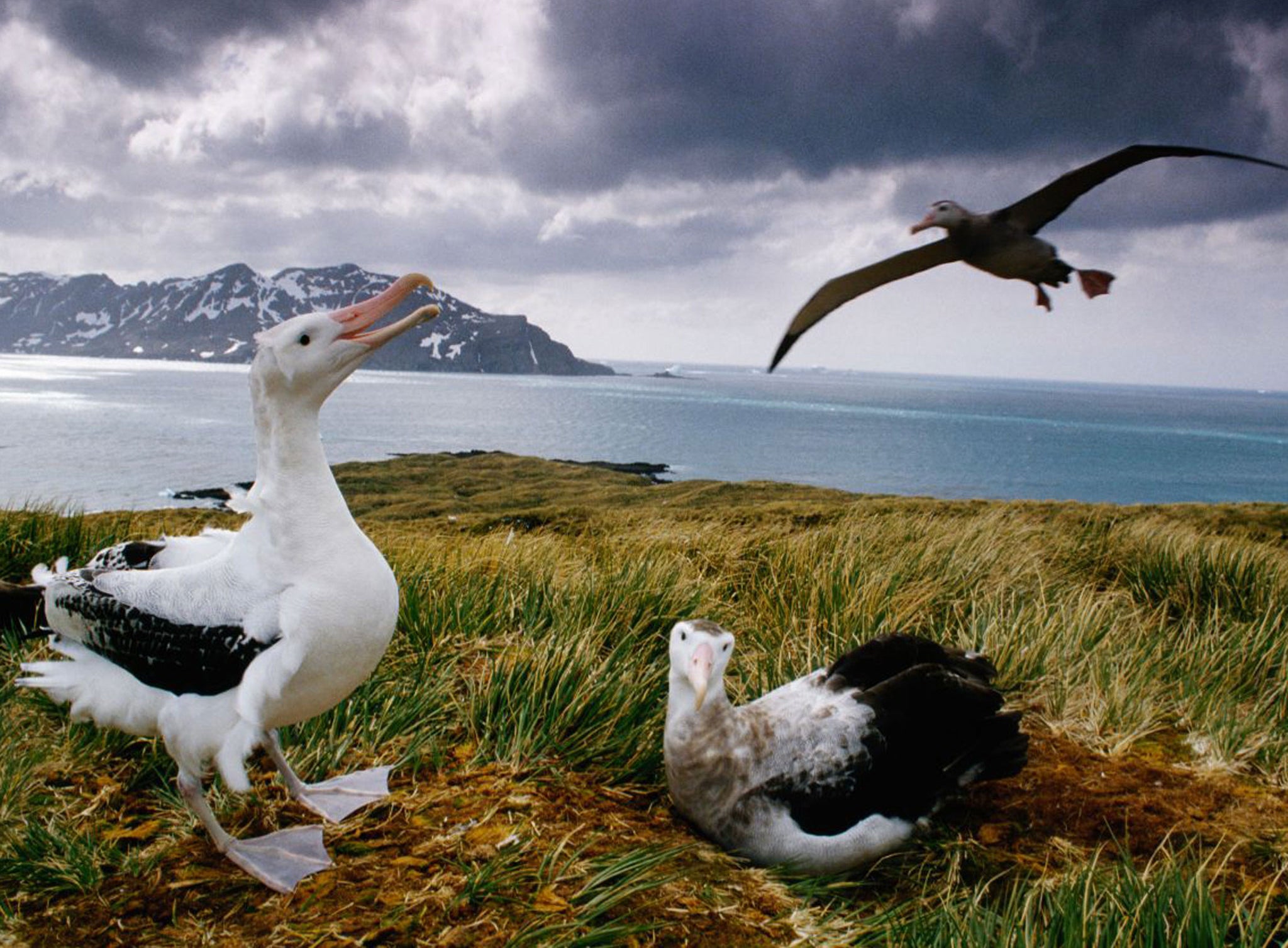


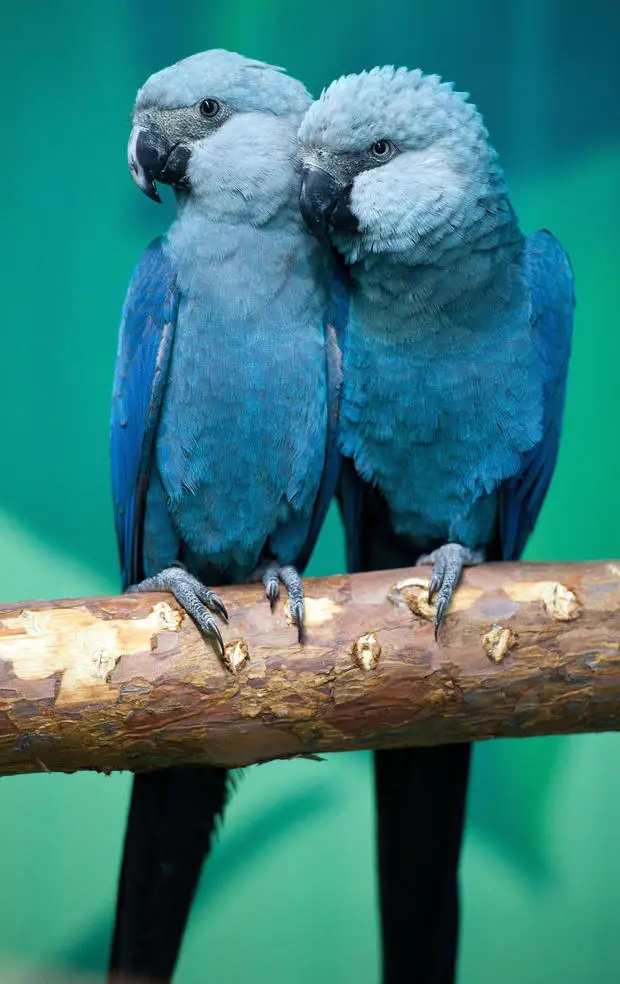







 Exposing the Big Game