Fossilized footprints tell a story of how our ancestors hunted giant sloths

giant sloth hunting

There’s plenty that archaeologists and paleontologists can learn from the bones and other artifacts left behind by ancient creatures and mankind’s own ancestors. Researchers can figure out what they looked like, where they lived, and who ate who, but painting a detailed picture of more advanced behavior is much more challenging. How ancient humans hunted, for example, is a huge topic of interest for many scientists, but evidence to support any theories is pretty rare.

A newly-discovered collection of fossilized footprints is giving researchers a rare glimpse into the past and helping them tell the story of how our ancestors once brought down a now-extinct creature that would have towered over them: the giant sloth.

The footprints, where were discovered at the White Sands National Monument, part of which is a US military testing ground. Today, the dry, barren location is a great place to test missiles without the risk of casualties, but 10,000 years ago it was the site of an epic battle between ancient humans and a massive ground sloth.

Giant sloths went extinct thousands of years ago, but at one time they were the target of human hunters. The reason for the species’ extinction is still debated, but some scientist blame overhunting as the cause. What these new footprints tell us for sure is that our ancestors seemed to have a pretty good idea of how to take them down, with circling footprints of multiple hunters surrounding one such sloth distracting it while others presumably attacked it with spears or other crude weapons.

“Geologically, the sloth and human trackways were made contemporaneously, and the sloth trackways show evidence of evasion and defensive behavior when associated with human tracks,” the researchers write in the study, published in Science Advances. “Behavioral inferences from these trackways indicate prey selection and suggest that humans were harassing, stalking, and/or hunting the now-extinct giant ground sloth in the terminal Pleistocene.”

Whether violent confrontations such as this were ultimately the cause of the giant sloth becoming extinct will likely never be conclusively proven, but the evidence that humans hunted these so-called “megafauna” on a large scale is mounting. Maybe that’s why modern animals are so darn small?

People killed off the biggest mammals, and we’re still doing it

Human hunting and other activity — not climate change — drove the big mammals into extinction, researchers argue in a new study.

by Maggie Fox /  / Updated 

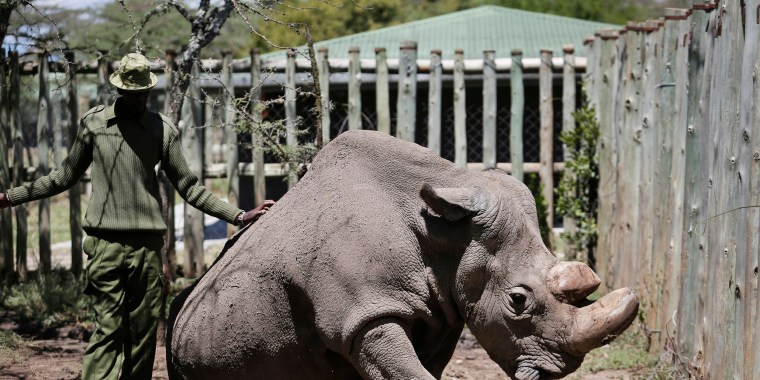
A ranger takes care of Sudan, the world’s last male northern white rhino, at the Ol Pejeta Conservancy in Kenya on May 3, 2017.AP file

Humans have been killing off the biggest game animals for millennia, and we’re still doing it.

A study to be published Friday in the journal Science argues that humans steadily drove into extinction the biggest land creatures, such as mammoths, rhinos and giant bears.

And human trophy hunting is still sending the biggest land mammals into the endangered zone, the researchers say, with little hope left for saving them from extinction.

Their new analysis contradicts arguments that climate change drove the extinctions of many animals, such as North American camels, several species of rhinoceros, the North African elephant and saber-toothed tigers.

If the trend keeps up, the cow, at around 2,000 pounds, may end up being the biggest land mammal, the team of researchers, led by biologist Felisa Smith of the University of New Mexico, argued.

Related

There’s no debate that as humans spread, big mammals declined. But some experts have said that the same climate, weather and geological conditions that killed off the big game allowed humans to thrive and spread.

Smith’s team did a new analysis, looking at the fossil record of large and small mammals and comparing it to what’s known about the spread of humans across the globe.

They found little evidence that climate was to blame for extinctions of big game species.

Large mammals were abundant as people evolved and spread, they noted. “For example, a striking feature of the Pleistocene was the abundance and diversity of extremely large mammals such as the mammoth, giant ground sloth, woolly rhinoceros, and saber tooth tiger on all habitable continents,” they wrote.

And, they also found, large and small mammals were both affected by changes in average temperature.

Related

Yet the big extinction events mostly affected the really big animals.

“If climate were causing this, we would expect to see these extinction events either sometimes (diverging from) human migration across the globe or always lining up with clear climate events in the record,” Kate Lyons of the University of Nebraska, who worked on the study team, said in a statement. “And they don’t do either of those things.”

It’s still going on.

“Wild mammals are in decline globally because of a lethal combination of human-mediated threats, including hunting, introduced predators and habitat modification,” the researchers wrote.

It’s no surprise, said Lyons.

“From a life-history standpoint, it makes some sense. If you kill a rabbit, you’re going to feed your family for a night. If you can kill a large mammal, you’re going to feed your village,” she said.

And people do prefer to kill the biggest animals, whether for food or for glory. “It just seems to be something that we do,” she said.

https://www.nbcnews.com/news/world/people-killed-biggest-game-we-re-still-doing-it-n867621

How would a species’ extinction impact the food web, our ecosystems?

https://www.accuweather.com/en/weather-news/how-would-a-species-extinction-impact-the-food-web-our-ecosystems/70004743

Every living thing plays a role in the food chain and Earth’s ecosystems, and the extinction of certain species, whether predators or prey, can leave behind significant impacts.

“Since the origin of life on Earth, it’s fair to say that more species have gone extinct than are currently alive now,” said Dr. Anthony Giordano, president and chief conservation officer of the Society for the Preservation of Endangered Carnivores and their International Ecological Study (SPECIES). “Extinction itself is part of the normal course of evolution.”

The effect a species would have if it were to fade from existence depends largely on its role in the ecosystem. Predators, for example, are often the first to be threatened by hunting or competition with people and resources, said Clemson University conservation biologist Dr. Robert Baldwin.

Rhinos - Pexels image

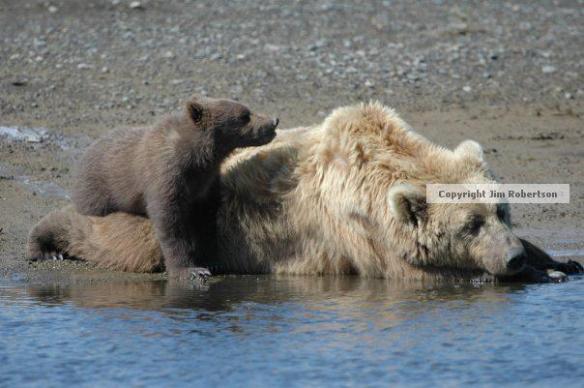
“Think about large animals like the grizzly bear,” Baldwin said. “When a predator goes extinct, all of its prey are released from that predation pressure, and they may have big impacts on ecosystems.”

The loss of a predator can result in what is called a trophic cascade, which is an ecological phenomenon triggered by a predator’s extinction that can also impact populations of prey, which can cause dramatic ecosystem and food web changes.

“If there are too many deer, for example, they can really change the ecosystem because they can destroy forests, and they also carry disease,” Baldwin said.

Scientists have noted the tropic cascade effect in parts of Africa where lion and leopard populations have dwindled, according to Smithsonian Magazine. It caused olive baboons to alter their behavior patterns and increase contact with nearby humans. The increased contact has led to a rise in intestinal parasites in both people and the baboons.

In the case of the northern white rhino, of which only two female rhinos now survive, the last male of the species was held in semi-captivity at the end of its life, and “the damage was already done in the ecosystem by that point,” Baldwin said.

However, in general, the loss of rhinos, which often face threats from humans, from the ecosystem can have wide-ranging effects, according to Baldwin, who noted that the rhino’s eating pattern helps with seed dispersal.

“They eat grasses and vegetation in one place, and they move and defecate in another place,” he said. “That helps those plants to disperse throughout the ecosystem, and it also helps populate the ecosystem with rhino food.”

The loss of abundant organisms that provide food for a wide variety of species would also interrupt the food web, according to Baldwin.

“For instance, if krill in the ocean goes extinct or becomes depressed in numbers, then that’s the bottom-up effect; predators that rely on krill will suffer,” he said.

While not at the top of the food chain, sea otters are keystone predators in the kelp forests in which they reside.

“The presence of sea otters in marine near-shore communities and coastal communities, particularly on the West Coast, have been shown to be essential and critical to healthy kelp forests underwater,” Giordano said.

RELATED: 
North American whales face potential extinction as warming oceans force them into unsafe territory
Unchecked carbon emissions could jeopardize plants, animals in world’s most vital habitats
What animals are close to extinction?

These kelp forests provide habitat for many species. “One of the ways sea otters help to maintain those kelp forests is by preying upon other species that would slowly start to eat or consume the kelp, which, if they were left unchecked, would then rattle the entire kelp bed and turn it into a rocky or barren wasteland,” Giordano said.

Species like parrot fish, which graze on algae, are extremely important to coral reef ecosystems because they prevent algae growth from getting out of control and impacting those coral reefs, according to Giordano.

“As algae expands in those communities, it can lead to the expansion of coral dead zones,” he added.

The loss of certain species can impact the ecosystem in a number of ways, Giordano said, but the issue is that researchers don’t yet know about many of the species out there.

A 2011 study concluded that about 86 percent of the Earth’s species have yet to be discovered, according to National Geographic.

“We know more about some of the larger ones, but for many species, especially the ones that are disappearing, we don’t know the impact of their loss,” he said.

Long-Lasting Civilization May Be a Pipe Dream

Long-Lasting Civilization May Be a Pipe Dream

Humanity’s cherished hope that we are building a long-lived civilisation may be nothing more than a pipe-dream. Human endeavour, two scientists argue, may carry within it the seeds of its own destruction.

The two astrophysicists have turned one of the great questions in science into a way of examining the down-to-earth consequences of global warming, the pollution of the oceans with indestructible polymers, and the wholesale destruction of species in the last 300 years.

They put an innocent question: if there had been an advanced technological and industrial civilisation on Earth several hundred million years ago, how could anyone know? What marks would have been left by a race of intelligent reptiles with motorised transport, housing estates, international trade and an arms race?

In what they call the Silurian hypothesis – a reference not to the geological period long before the first creatures crawled from the sea onto the empty continents, but to a 1970 episode of the British television serial Dr Who – they turn to the only testbed available to contemporary Earthlings: the evidence of the Anthropocene, the geologists’ name for a new era that could be considered to have commenced with the Industrial Revolution.

If some alien or distant-future civilisation set out to study the Earth’s geological record, what signs would humans have left in the strata?

And almost immediately, their study confronts a paradox. “The longer human civilisation lasts, the larger the signal one would expect in the record. However, the longer a civilisation lasts, the more sustainable its practices would need to have become in order to survive,” they write in the International Journal of Astrobiology.

But the more sustainable a society, the smaller the footprint its agriculture, manufacture or energy generation would have made, and the smaller the signal in the geological record.

So the researchers, Adam Frank from the University of Rochester, New York and Gavin Schmidt, director of the Nasa Goddard Institute for Space Studies, set out to calculate the future signature of long-vanished human society.

Signs of change

They conclude that the burning of fossil fuels has already changed the carbon cycle in a way that would be recognisable in records of carbon isotopes. Global warming – a consequence of that fossil fuel combustion – would be detectable in the rocks.

Global agriculture would be signalled by increases of erosion and sedimentation rates over time, and plastic pollutants would be detectable for perhaps billions of years. And all-out thermonuclear war – were it to happen – would leave behind some unusual radioactive isotopes.

“As an industrial civilisation, we’re driving changes in the isotopic abundances because we’re burning carbon,” said Professor Frank. “But burning fossil fuels may actually shut us down as a civilisation. What imprints would this or other kinds of industrial activity from a long-dead civilisation leave over tens of millions of years?”

The latest study is not the only one to contemplate the paradox of a self-destroying civilisation. Last year an Arkansas mathematician considered the silence of the extraterrestrials.

Nothing heard

For 40 years, humans have been listening for the noise of other intelligent civilisations in the galaxy, and have heard nothing. Maybe, he suggested in the same journal, modern humans are typical of technological civilisations, and destroy either their planet, or themselves, almost as soon as they exploit technology.

Perhaps, he suggests, a technological civilisation that lasted for millions of years would not be typical.

The latest study, in essence, pursues the same logic. Human advance for the moment is not sustainable. The people of the Anthropocene have already tipped 12 billion tonnes of indestructible plastics into landfills, and created a technosphere that totals about 30 trillion tonnes. And by 2050, humans will have built another 25 million km of roads.

“You want to have a nice, large-scale civilisation that does wonderful things but that doesn’t push the planet into domains that are dangerous for itself, the civilisation,” said Professor Frank. “We need to figure out a way of producing and using energy that doesn’t put us at risk.”

Burning coal may have caused Earth’s worst mass extinction

https://www.theguardian.com/environment/climate-consensus-97-per-cent/2018/mar/12/burning-coal-may-have-caused-earths-worst-mass-extinction?CMP=share_btn_fb&page=with%3Aimg-2#img-2

New geological research from Utah suggests the end-Permian extinction was mainly caused by burning coal, ignited by magma

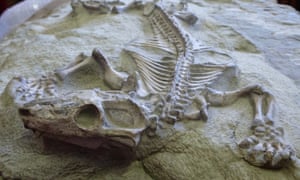
Fossil of a Galesaurus, a cynodont that lived during the Permian period.
 Fossil of a Galesaurus, a cynodont that lived during the Permian period. Photograph: Iziko Museum of Natural History

Earth has so far gone through five mass extinction events – scientists are worried we’re on course to trigger a sixth – and the deadliest one happened 252 million years ago at the end of the Permian geologic period. In this event, coined “the Great Dying,” over 90% of marine species and 70% of terrestrial vertebrate species went extinct. It took about 10 million years for life on Earth to recover from this catastrophic event.

Scientists have proposed a number of possible culprits responsible for this mass extinction, including an asteroid impact, mercury poisoning, a collapse of the ozone layer, and acid rain. Heavy volcanic activity in Siberia was suspected to play a key role in the end-Permian event.

Recently, geologist Dr Benjamin Burger identified a rock layer in Utah that he believed might have formed during the Permian and subsequent Triassic period that could shed light on the cause of the Great Dying.

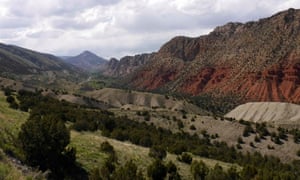
Sheep Creek Valley, Utah
Pinterest
 Sheep Creek Valley, Utah. Photograph: Benjamin Burger

During the Permian, Earth’s continents were still combined as one Pangea, and modern day Utah was on the supercontinent’s west coast. Samples from the end-Permian have been collected from rock layers in Asia, near the volcanic eruptions, but Utah was on the other side of Pangaea. Burger’s samples could thus provide a unique perspective of what was happening on the other side of the world from the eruptions. Burger collected and analyzed samples from the rock layer, and documented the whole process in a fascinating video:

Pinterest
Dr Burger’s ‘Rocks of Utah’ episode documenting his investigation of the Permian-Triassic Boundary geologic samples.

Earth turned into a toxic hellscape

Burger’s samples painted a grim picture of Earth’s environment at the end of the Permian period. A sharp drop in calcium carbonate levels indicated that the oceans had become acidic. A similar decline in organic content matched up with the immense loss of life in the oceans during this period. The presence of pyrite pointed to an anoxic ocean (without oxygen), meaning the oceans were effectively one massive dead zone.

Bacteria ate the oversupply of dead bodies, producing hydrogen sulfide gas, creating a toxic atmosphere. The hydrogen sulfide oxidized in the atmosphere to form sulfur dioxide, creating acid rain, which killed much of the plant life on Earth. Elevated barium levels in the samples had likely been carried up from the ocean depths by a massive release of methane.

The culprit: burning coal

Levels of various metals in the rock samples were critical in identifying the culprit of this mass extinction event. As in end-Permian samples collected from other locations around the world, Burger didn’t find the kinds of rare metals that are associated with asteroid impacts. There simply isn’t evidence that an asteroid struck at the right time to cause the Great Dying.

However, Burger did find high levels of mercury and lead in his samples, coinciding with the end of the Permian period. Mercury has also been identified in end-Permian samples from other sites. Lead and mercury aren’t associated with volcanic ash, but they are a byproduct of burning coal. Burger also identified a shift from heavier carbon-13 to lighter carbon-12; the latter results from burning fossil fuels.

The Permian was the end of the Carboniferous period, which means “coal-bearing.” Many large coal deposits were created in the Carboniferous, including in Asia. Previous research has shown that the Permian mass extinction event didn’t coincide with the start of the Siberian volcanic eruptions and lava flows, but rather 300,000 years later. That’s when the lava began to inject as sheets of magma underground, where Burger’s data suggests it ignited coal deposits.

The coal ignition triggered the series of events that led to Earth’s worst mass extinction. Its sulfur emissions created the acid rain that killed forests. Its carbon emissions acidified the oceans and warmed the planet, killing most marine life. The dead bodies fed bacteria that produced toxic hydrogen sulfide gas, which in turn killed off more species. The warming of the oceans produced a large methane release, which accelerated global warming faster yet. As Burger put it,

Things went from bad to worse, and you can now begin to understand how life nearly died out. Global warming, acid oceans, anoxia, not to mention a toxic atmosphere. We are lucky to be alive at all!

Eerie similarities to today

Scientists are observing many of the same signs of dangerously rapid climate change today. There’s more lighter carbon-12 in the atmosphere because the increase in atmospheric carbon levels is due entirely to humans burning fossil fuels. There are an increasing number of dead zones in the oceans. Burning coal was causing acid rain, although we largely solved that problem through Clean Air Acts, and in the US, a sulfur dioxide cap and trade system implemented by a Republican administration.

We’ve had less success in tackling carbon dioxide pollution, which continues to rise. As a result, the oceans are becoming increasingly acidic, and temperatures increasingly hot. Scientists today also worry about potentially large releases of methane from the ocean floor and Arctic.

These are some of the similarities between the climate change that nearly wiped out life on Earth 252 million years ago and the climate change today. Both appear to have largely been caused by burning coal. A 2011 study found that over the past 500 years, species are now going extinct at least as fast as they did during the five previous mass extinction events.

It’s enough to make you think; maybe coal isn’t so beautiful and clean after all.

Bobcats in Indiana Are in Danger of Being Hunted and Trapped Again

Bobcats were nearly hunted to extinction by the mid 1900s. They were finally listed as endangered species in the state by the 1960s, and hunting them has been banned ever since. That protection has helped them rebound, but what little progress has been made could be seriously jeopardized.

The Indiana Department of Natural Resources (DNR) wants to open a hunting and trapping season. They have proposed a rule that would establish a bag limit per hunter, along with a statewide quota.

Love This? Never Miss Another Story.


According to the DNR, bobcats are being increasingly killed in collisions with vehicles and caught in traps set for other animals, while there is potential for their bodies and pelts to be illegally sold in other states that have a legal hunting and trapping season. The DNR’s solution to trying to stop illegal sales is to just legalize them in the state.

The agency stated in an earlier report, “A regulated season in Indiana will address this problem and increase recreation and economic opportunities for businesses and individuals. A season will provide successful trappers and hunters the opportunity to sell bobcat pelts to licensed furbuyers who can market these furs through international fur auctions or manufacturers.”

Conservationists, however, argue that the plan is nothing more than commercial exploitation. They also worry what effect this will have on bobcat populations.

“To open up a hunting and trapping season on such a vulnerable species without scientific data to back it up is unwise,” Erin Huang, the Indiana State Director of the Humane Society of the United States told the Indy Star. “This is a species that is not causing a problem ― livestock predation is rare and there are no reported attacks on pets, so I just don’t see a reason for it.”

Hunting and trapping shouldn’t be used as a wildlife management tool, and there are other non-lethal methods to deal with any that potentially pose a danger to us.

The DNR has passed its proposal to the Natural Resources Commission, which will be accepting public comments until March 23. If you live in Indiana and can attend, there will also be two public hearings on March 14 in Mitchell and March 22 in Anderson.

Take Action!

Please sign and share the petition urging the Natural Resources Commission not to allow a hunting and trapping season for bobcats in Indiana.

Photo credit: Thinkstock

War isn’t just bad for people — it harms wild animals, too

https://www.washingtonpost.com/news/animalia/wp/2018/01/10/war-isnt-just-bad-for-people-it-harms-wild-animals-too/?utm_term=.9d325d23f49d&wpisrc=nl_rainbow&wpmm=1

 January 10

A baby mountain gorilla in the Sabyinyo Mountains of Rwanda. (Ivan Lieman/AFP/Getty Images)

As if we needed another argument against war, here goes: It’s bad for wild animals.

This is true even with low-level conflict, and it’s especially true if the conflict repeats or drags on, according to a new study published in Nature. In a wide-ranging examination of the net effect of such disruptions on African wildlife populations over more than six decades, researchers found the frequency of war — rather than the intensity — to be a key factor in declines of wildlife.

“It takes a relatively little amount of conflict, and a relatively low frequency of conflict, before the average population is declining,” said lead author Joshua Daskin, a conservation ecologist and postdoctoral fellow at Yale University. “All the socioeconomic things that come along with a war are probably making conservation quite difficult.”

The researchers’ conclusion might sound obvious, but there has been little previous examination of the overall impact of armed conflict on animals. The case-study work to date focused on specific conflicts’ consequences and actually found both positive and negative effects.

Those downsides are numerous. Land mines and bombs can kill fauna as well as human targets. Armies sometimes intentionally destroy critical habitat — by dumping herbicides on forests, for example, as the United States did during the Vietnam War — or finance their fight by selling ivory. Collapsed institutions mean less enforcement of laws protecting animals, and economic fallout can force desperate civilians to hunt wild animals for food.

On the other hand, wars can also cause human displacement, and “anything that causes people to vacate can be a beneficial thing for nonhuman wildlife,” said co-author Robert Pringle, an assistant professor of ecology and evolutionary biology at Princeton University. Poaching and habitat destruction might slow, and mining might stop. This is sometimes called the “refuge effect,” and it can be seen in the demilitarized zone dividing North Korea and South Korea.

Pringle and Daskin, who finished his PhD at Princeton last year, both do research in Mozambique’s Gorongosa National Park, where a 15-year civil war nearly decimated wildlife. They wanted to know more about the big picture — is war generally positive, negative or neutral for wildlife? Among other reasons, they note, the question is important because the vast majority of wars since 1950 have taken place in the world’s most biodiverse regions.

An elephant in Hwange National Park in Zimbabwe. (Martin Bureau/AFP/Getty Images)

The pair decided to focus on protected areas in Africa between 1946 and 2010. They mapped events  there using a standard definition — fights that killed at least one person in a broader battle that caused 25 human deaths in a year — and found conflicts in a depressing 71 percent of the areas during that time period. Then came the hardest part: finding reliable wildlife population data.

Daskin said he used published research as well as “gray literature” such as park management figures, government wildlife agency documents and reports from nongovernmental organizations. He looked only at populations of large herbivores, in part because they “have really outsize roles in maintaining these ecosystems,” but also because they’re counted more easily and therefore more frequently. In the end, Daskin had data for 253 wildlife populations and 36 species, including giraffes, warthogs and wildebeests.

Next, the authors looked at correlations between wildlife populations and variables that can influence them, like drought, human population density and the presence of mining, as well as two factors related to war: conflict frequency and conflict intensity.

When they crunched it all together, the biggest and only statistically significant predictor of wildlife declines was conflict frequency. While wildlife population trajectories stayed stable in peaceful times, they dropped with even a slight increase in conflict and were “almost invariably negative” in high-conflict zones, the authors found.

Pringle said they were somewhat surprised that conflict intensity wasn’t correlated with dips in wild animals. The numbers don’t suggest why, and Pringle said understanding these dynamics will take more research with larger data sets. But he and Daskin have some theories.

“Our interpretation is that conflict destabilizes everything. When people don’t feel secure, institutions start to break down, livelihoods start to be disrupted,” Pringle said. Yet intense conflict may provide a buffer for wildlife because “people evacuate. People don’t hang around and go set snares in the forest.”

Cinereous vultures on a rice paddy in South Korea near the demilitarized zone with North Korea. The area has become a nearly untouched nature refuge. (Jeon Heon-Kyun/European Pressphoto Agency)

The researchers emphasized that their findings were not limited to gloom. The only cases of extinction in the areas they studied took place in the Pian Upe Wildlife Reserve in Uganda, where giraffes and two species of antelope vanished between 1983 and 1995.

“War is awful for people. It’s bad for wildlife. But it’s not so cataclysmically bad that we should be giving up on anything,” Pringle said. “In fact, there are great opportunities for restoration.”

He and Daskin hope their findings can help governments and wildlife organizations better predict and mitigate the influence of conflict on wildlife. Both point to the place where they do work — Gorongosa National Park — as an example. It lost about 90 percent of its wildlife during the war that ended in 1992, but it’s now back to “about 80 percent of the prewar populations,” Daskin said.

“That’s been achieved not just by trucking in large numbers of animals from other protected areas, as has often been highlighted, but by creating the conditions in the local region for conservation to be possible,” Daskin said. “It’s an excellent case study in what can happen after the conflict.”

Read more:

30 years after Chernobyl disaster, camera study captures a wildlife wonderland

These heroic rats detect land mines. Now they might help save an endangered animal.

A rhino at a French zoo was killed for his horn. Could that happen here?

Two lions survived a circus, only to be killed and mutilated in a sanctuary

Elephant poachers are even deadlier than we knew

Trump halts effort to bring back Washington grizzlies

The Trump administration is suspending efforts to bolster the grizzly bear population in Washington’s North Cascades. That would leave this part of the mountain range with fewer than ten of the imperiled bears.

Recovery efforts have been underway for years, with a goal of reintroducing up to 200 grizzly bears. The North Cascades National Park Superintendent told a meeting in Montana last week that the Interior Department is halting the program, according to the Missoulian newspaper.

Conservation Northwest spokesman Chase Gunnell said the order to stop work is disappointing.

“We’re concerned if that is put on indefinite hold because these bears cannot wait indefinitely,” Gunnell said.

The Interior Department’s press office did not return requests for comment about the order to stop work on the plan.

The federal government has been reviewing the nearly 127,000 comments submitted on its proposal to bring back the bears to the region. One option suggested to do nothing — which biologists have said could lead to the bear’s extinction in the North Cascades. Three other options looked at different ways to bring grizzly bears in from British Columbia and Montana. Those options could take up to a century to reach 200 grizzlies in the region.

Conservationists have been pushing to bring the bears back to the rugged terrain. But some people who live on the forest edges adamantly opposed reintroduction efforts, including ranchers who worried about adding another large predator to the landscape.

At one time, grizzly bears roamed throughout the West. Just in Washington’s North Cascades there were thousands of them. But since the 1800s, their population has plummeted, due to excessive hunting and the fragmentation of habitat.

Biologists say the isolated parts of the North Cascades remain great bear habitat.

“These bears have been waiting for more than 20 years, and the population can’t wait that much longer,” Gunnell said.

Dinosaurs might have escaped total extinction had doomsday asteroid struck seconds earlier, later

http://www.torontosun.com/2017/05/15/dinosaurs-might-have-escaped-total-extinction-had-doomsday-asteroid-struck-seconds-earlier-later MONDAY, MAY 15, 2017 12:19 PM EDT | UPDATED: MONDAY, MAY 15, 2017 12:53 PM EDT

sfsafsaf

A new BBC Two documentary suggests dinosaurs might have escaped extinction if a doomsday asteroid had struck 30 seconds earlier or later.

Instead, it’s believed the massive, 15 km-wide rock smashed into shallow water near the Yucatan Peninsula 66 million years ago, ejecting mass amounts of sulfur into Earth’s atmosphere.

“This is where we get to the great irony of the story,” Ben Garrod, who presents The Day The Dinosaurs Died, told the BBC.

“In the end it wasn’t the size of the asteroid, the scale of blast, or even its global reach that made dinosaurs extinct. It was where the impact happened.”

Researchers contend the ensuing blast caused an extended global winter that left dinosaurs with nothing to sustain themselves.


However, had the giant asteroid struck moments earlier or later it might have splashed into deeper waters in the Atlantic or Pacific Oceans.

Such an open water impact could have resulted in less vaporized particles being ejected into the air, thereby allowing more sunlight to reach Earth’s surface.

Scientists believe the impact that formed Mexico’s Chicxulub Crater resulted in an explosion equal to 10 billion Hiroshima A-bombs, according to the report.

The documentary also speculates that the original impact caused immediate death for dinosaurs roaming as far away as New Jersey.