Exposing the Big Game

Forget Hunters' Feeble Rationalizations and Trust Your Gut Feelings: Making Sport of Killing Is Not Healthy Human Behavior

Exposing the Big Game

Last Frog Of His Kind Dies Alone

By Stephen Messenger

https://www.thedodo.com/last-frog-of-his-kind-dies-2023519285.html?utm_source=facebook&utm_medium=social&utm_campaign=share

The world is short one more species this week — and, sadly, others like it may be soon to follow.

WIKIPEDIAOn Wednesday, the Atlanta Zoo announced that a 12-year-old frog named Toughie, the last known Rabbs’ fringe-limbed tree frog left in existence, had been found dead in the enclosure where he lived by himself.

Toughie was one of several frogs airlifted from his home in Central America in 2005, the year his kind was first discovered in the cloud forests of Panama. Biologists had hoped, by breeding them in captivity, to save their species from adeadly fungus-borne disease affecting amphibians after it was detected in the region.

Just two years later, Rabbs’ fringe-limbed tree frogs could no longer be found in the wild.

ATLANTA ZOODespite the best efforts, those breeding programs aimed at preserving frogs proved fruitless. By 2009, the last female Rabbs’ fringe-limbed tree frog died in captivity, followed by another male in 2012. From that point forward, Toughie was all that was left.

Now, he is gone, too.

The loss of Rabbs’ fringe-limbed tree frogs is just the latest in what is considered an ongoing mass extinction of amphibians. In recent decades, more than a hundred amphibian species have been wiped out, with another 6,285 being at risk of extinction.

While the causes of this die-off are not fully understood, researchers believe human activity is in part to blame — through habitat destruction, pollution andenvironmental changes brought on by global warming.

Click here to learn more about issues impacting the world’s amphibians, and to find out how to help.

Excerpts from the books “The Sixth Extinction”(s)

As longtime readers of this blog may remember, I’ve quoted from Richard Leakey and Roger Lewin’s 1996 book, The Sixth Extinction; Patterns of Life and the Future of Mankind. Now there’s another book titled The Sixth Extinction (subtitled An Unnatural Order) by Elizabeth Kolbert (sorry, no relation to Steven Colbert…).

Are humans the reason that this wonderful Earth and her inhabitants are all here? Are Homo sapiens the pinnacle of evolution? That and other questions of our evolution are discussed in the chapter “Human Impacts of the Past” in Leakey’s book. Here is a series of excerpts from that original book:

…“For instance, Alfred Russel Wallace, the co-inventor of the theory of natural selection, believed that evolution had been working ‘for untold millions of years…slowly developing forms of life and beauty to culminate in man.’

“Until about a decade ago, most biologists did not feel uncomfortable with speaking of an increase in complexity as an outcome of evolution and using the term progress interchangeably with complexity. Recently, however, a certain nervousness has crept in, so it is now acceptable to talk about complexity, but not about progress. Progress, is it’s argued, implies some kind of mysterious innate tendency for improvement, and that is considered too mystical. …

“Gould was one of the most outspoken in denying progress, asserting that it is ‘a noxious, culturally imbedded, untestable, nonoperational idea that must be replaced if we wish to understand the patterns of history.’

“The ability of the human species to inflict devastation on the natural world at the level of significant extinctions was for a long time thought to be a relatively recent phenomenon in human history. In Wallace’s time, biologists recognized that the swaths of European colonizations of the globe from the seventeenth century onward had left a trail of havoc in nature’s perceived harmony. Many held earlier colonizers, such as the Polynesians throughout the Pacific, to be blameless in this respect, and to have been part of that harmony. (Western sentiments toward technologically primitive societies had in fact swung dramatically, from their being crude and barbaric beasts to being Rousseauean noble savages.) But as Jared Diamond, a biologist at the University of California at Los Angeles, had pointed out, many pre-European societies felt the same about their own forbearers.

Homo sapiens has become the most dominant species on Earth. Unfortunately, our impact is devastating, and if we continue to destroy the environment as we do today, half the world’s species will become extinct early in the next century.

[Again, this was written at the end of the twentieth century.]

“Even though Homo sapiens is destined for extinction, just like other species in history, we have an ethical imperative to protect nature’s diversity, not destroy it.

“Many people find it impossible to contemplate a time when Home sapiens would no longer exist, so they like to assume that we will break the biological rule and continue forever, or at least until our planet ceases to exist, billions of years from now, when its atmosphere is burned off by an expanding sun.

“The sixth extinction is similar to previous biological catastrophes in many ways. For instance, the most vulnerable species are those whose geographical distribution is limited, those in and near the tropics, and those with large body size. It is unusual in several ways, too, most particularly in that large numbers of plant species are being wiped out, which is unprecedented compared with past crises. But in the end, with passage of five, ten, or twenty million years, despite this and other distortions of the biota that will remain, rebound will occur. ‘On geologic scales, our planet will take care of itself and let time clear the impact of any human malfeasance,’ as Gould has put it. Why, then, if it matters not at all in the long run what we do while we are here, should we concern ourselves with the survival of species that, like us, will eventually be no more?

“We should be concerned because, special though we are in many ways, we are merely an accident of history. We did not arrive on Earth as if from outer space, set down amid a wondrous diversity of life, blessed with a right to do with it what we please. We, like every species with which we share the world, are products of many chance events, leading back to that amazing explosion of life forms half a billion years ago, and beyond that to the origin of life itself. When we understand this intimate connection with the rest of nature in terms of our origins, an ethical imperative follows:  it is our duty to protect, not harm them. It is our duty, not because we are the one sentient creature on Earth, which bestows some kind of benevolent superiority on us, but because in a fundamental sense Homo sapiens is on an equal footing with each and every other species here on Earth. And when we understand the Earth’s biota in holistic terms—that is, operating in an interactive whole that produces a healthy and stable living world—we come to see ourselves as part of that whole, not as a privileged species that can exploit with impunity. The recognition that we are rooted in life itself and its well-being demands that we respect other species, not trample them in a blind pursuit of our own ends. And, by the same ethical principle, the fact that one day Homo sapiens will have disappeared from the face of the Earth does not give us license to do whatever we choose while we are here.”

And in Elizabeth Kolbert’s Sixth Extinction, from the prologue:

[Human expansion] “…continues, in fits and starts, for thousands of years, until the species, no longer new, has spread to practically every corner of the globe. At this point, several things happen more or less at once that allow Homo sapiens, as it has come to call itself, to reproduce at an unprecedented rate. In a single century the population doubles; then it doubles again, and then again. Vast forests are razed. Humans do this deliberately, in order to feed themselves. Less deliberately, they shift organisms from one continent to another, reassembling the biosphere.

“Meanwhile, an even stranger and more radical transformation is underway. Having discovered subterranean reserves of energy, humans begin to change the composition of the atmosphere. This in turn, alters the climate and chemistry of the oceans… Some plants and animals adjust by moving. They climb mountains and migrate toward the poles. But a great many—at first hundreds, then thousands, and finally perhaps millions—find themselves marooned. Extinction rates soar, and the texture of life changes.

“No creature has ever altered the life on the planet in this way before, and yet other, comparable events have occurred. Very, very occasionally in the distant past, the planet has undergone change so wrenching that the diversity of life has plummeted. Five of these ancient events were catastrophic enough that they’re put in their own category: the so-called Big Five. In what seems like a fantastic coincidence, but is probably no coincidence at all, the history of these events is recovered just as people come to realize that they are causing another one…”

And speaking of oceans, an article in today’s Washington Post, “What the ‘sixth extinction’ will look like in the oceans: The largest species die off first,” cites a new study of the current mass extinction event and how it is currently affecting marine life.

Atlantic bluefin tuna are corralled by fishing nets during the opening of the season in 2011 for tuna fishing off the coast of Barbate, Cadiz province, southern Spain. (AP Photo/Emilio Morenatti)

Never Kill an Albatross

by George Monbiot

In just seven years 30% of Africa’s savannah elephants have been wiped out. The other African subspecies, the forest elephant, has crashed by more than 60%since 2002. Perhaps this month’s resolution to ban domestic sales of elephant tusks will make a difference, but governments have done so little to restrain the international trade that illegal ivory and other wildlife parts are still sold on the surface web, rather than the dark web.

Last month the whale shark was classified as endangered. Some are still hunted for their meat and fins, and it seems that the revolting practice of live finning – slicing off the fins, then dumping the shark overboard to die slowly – continues. Most are killed as bycatch, in nets used to catch other species, especially tuna. Some fishing boats use whale sharks as markers (tuna tend to congregate under large objects), and deliberately cast nets around them.

Their decline – whale shark numbers have halved or worse in 75 years – reflects the global loss of ocean life. Since 1996 the fish catch has fallen by a million tonnes a year, as stocks are exhausted. Sieving the seas for what remains, fishing fleets will trigger the collapse of entire ecosystems.

Fishing also accounts for what has happened to the bird with the largest wingspan, the wandering albatross – whose population has fallen by about 30% in 11 years. Again, the tuna fishery is the principal threat, in this case through the use of baited longlines. The albatrosses dive for the bait, get hooked and drown.

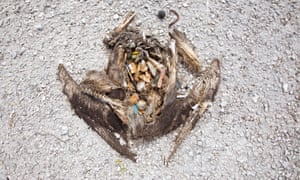
albatross corpse rotting away to reveal the rubbish it’s consumed
Pinterest
An albatross corpse rotting away to reveal the rubbish it’s consumed. Photograph: Alamy

Another cause is their junk food diet: the plastic they eat, then feed to their chicks through regurgitation. The photographs taken by Chris Jordan on Midway atoll of the albatross corpses rotting away to reveal the rubbish they contain are a synopsis of our treatment of the living world. However far we travel, our impacts precede us.

A week ago the status of the eastern gorilla, the world’s largest primate, was changed from endangered to critically endangered: it has declined by 70% in 20 years. Its habitat, in central Africa, has been ripped apart by logging, mining and farming, and the gorillas are hunted for meat. All the great apes are now either endangered or critically endangered, in the case of orangutans largely as a result of palm oil production. What does it say about us that we are prepared to drive our closest relatives towards extinction?

The great acceleration towards a bare, grey world is also reflected in this week’s State of Nature report, which shows that over 10% of the remaining species in the UK are now threatened with extinction.

Last week we learned that one-tenth of the world’s wild places, forest and savannahs, and other lands in which human impacts are not obvious, have been lost – de-wilded – in the past 25 years. The trajectory suggests that there could be almost none left by the end of the century.

These should be among the central issues of our age. Yet we treat these losses as sad but peripheral, though we commission them through the things we buy. Elephants, rhinos, lions, polar bears, the great sharks, turtles, condors, whales, rainforests, wetlands, coral reefs: they are all the bycatch of consumerism. We assert both the right to consume – whatever we want, however we want – and the right to forget the consequences.

Flying to Bratislava or Bermuda for a stag weekend, shopping trips to New York, driving our gas guzzlers 300 metres to school, buying jetskis, leaf blowers and patio heaters, furnishing our homes with rare wood, eating tuna, prawns and salmon without a thought as to how they were produced: these ephemeral satisfactions, to judge by the reactions when you question them, occupy a sacred and inviolable space. The wonders of the living world, by contrast, are dispensable.

People who would never dream of killing an albatross or a whale shark are prepared to let others do so on their behalf, so that they may eat whatever fish they fancy. People who could not bring themselves to gut a chicken are happy to commission the disposal of entire ecosystems.

The act of not seeing is sanctioned and normalised, while attempts to explain the consequences are treated as abnormal and impertinent. On the Guardian’s website you can read about the global collapse of tuna populations – then, in a recipe published the following day, learn how to prepare a tuna salad, without a word about the implications.

Such cultural norms, positioning us as consumers first and moral beings either second or not at all, grant the disposal of the living planet its social licence. They allow us to compartmentalise, to be conscious of the issues when there is little that we can do about them, and to forget them at the moment when we have the capacity to act (or to refrain from acting). This is the safe space we establish for consumerism.

The costs cannot be computed in financial terms. There is no price that can capture the awe aroused by a whale shark, the deep being of an elephant herd, the way in which your heart soars with the albatross as it mounts a column of air, the gorilla’s fathomless gaze. The albatross hangs around our necks with a weight that defies calculation.

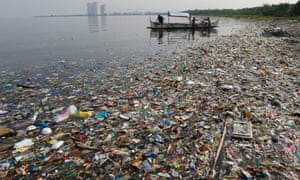
We were here: is this how we choose to be remembered? It is true that we existed: you can see it in the pulse of extinction. Are we to use our gift of life to snuff out other life forms? What will you leave behind, except your contribution to thePacific garbage patch?

fishing boat works amid garbage in Manila Bay, the Phillipines
Pinterest
‘What will you leave behind, except your contribution to the Pacific garbage patch?’ – a fishing boat works amid garbage in Manila Bay, the Phillipines. Photograph: Erik de Castro/Reuters

I believe we can do better, that we can position ourselves as just one participant in a world of wonders, blessed and cursed with higher consciousness, but using that capacity to embed ourselves within its limits.

We cannot wait for governments or schools or the media to deliver a new environmental ethics. Join the groups trying to defend the living planet; learn about the consequences of what you do; demand – from friends, from parents, from yourself – a better way of engaging with the world. By living lightly we enrich our lives.

George Monbiot will answer questions on this issue in a live Guardian Q&A on Friday, from 10-11am, BST. Post questions now (below), or join us on the day. He will answer questions on any aspect of the problem, but is particularly interested in opening a discussion on consumerism and its ethics.

Biodiversity: The ravages of guns, nets and bulldozers

http://www.nature.com/news/biodiversity-the-ravages-of-guns-nets-and-bulldozers-1.20381?WT.mc_id=TWT_NatureNews

August 10  2016

The threats of old are still the dominant drivers of current species loss, indicates an analysis of IUCN Red List data by Sean Maxwell and colleagues.

Here we report an analysis of threat information gathered for more than 8,000 species. These data revealed a contrasting picture. We found that by far the biggest drivers of biodiversity decline are overexploitation (the harvesting of species from the wild at rates that cannot be compensated for by reproduction or regrowth) and agriculture (the production of food, fodder, fibre and fuel crops; livestock farming; aquaculture; and the cultivation of trees).

On the list

Since 2001, the categories and criteria of the IUCN Red List of Threatened Species — a standard for the evaluation of extinction risk — have guided assessments, now for 82,845 species. Assessors assign species to categories, including ‘near-threatened’, ‘vulnerable’, ‘endangered’ or ‘critically endangered’ depending on their population size; past, current and projected population trends; geographic range and other symptoms of extinction risk. Species in the latter three groups are collectively referred to as ‘threatened’.

To assess the relative prevalence of current hazards to biodiversity, we quantified threat information for 8,688 near-threatened or threatened species belonging to species groups in which all known species have been assessed (for complete list of taxa included, see Supplementary Information).

The basic message emerging from these data is that whatever the threat category or species group, overexploitation and agriculture have the greatest current impact on biodiversity (see ‘Big killers’).

Of the species listed as threatened or near-threatened, 72% (6,241) are being overexploited for commerce, recreation or subsistence.

The Sumatran rhinoceros (Dicerorhinus sumatrensis), Western gorilla (Gorilla gorilla) and Chinese pangolin (Manis pentadactyla, a scaly mammal), for instance, are all illegally hunted as a result of high market demand for their body parts and meat. These are just three of the more than 2,700 species affected by hunting or fishing, or by people collecting live specimens for the pet trade. At the same time, unsustainable logging is contributing to the decline of more than 4,000 forest-dependent species, such as the Bornean wren-babbler (Ptilocichla leucogrammica), India’s Nicobar shrew (Crocidura nicobarica), and the Myanmar snub-nosed monkey (Rhinopithecus strykeri).

More: http://www.nature.com/news/biodiversity-the-ravages-of-guns-nets-and-bulldozers-1.20381?WT.mc_id=TWT_NatureNews


Human Population Growth and extinction

http://www.biologicaldiversity.org/programs/population_and_sustainability/extinction/

We’re in the midst of the Earth’s sixth mass extinction crisis. Harvard biologist E. O. Wilson estimates that 30,000 species per year (or three species per hour) are being driven to extinction. Compare this to the natural background rate of one extinction per million species per year, and you can see why scientists refer to it as a crisis unparalleled in human history.

The current mass extinction differs from all others in being driven by a single species rather than a planetary or galactic physical process. When the human race — Homo sapiens sapiens — migrated out of Africa to the Middle East 90,000 years ago, to Europe and Australia 40,000 years ago, to North America 12,500 years ago, and to the Caribbean 8,000 years ago, waves of extinction soon followed. The colonization-followed-by-extinction pattern can be seen as recently as 2,000 years ago, when humans colonized Madagascar and quickly drove elephant birds, hippos, and large lemurs extinct [1].

The first wave of extinctions targeted large vertebrates hunted by hunter-gatherers. The second, larger wave began 10,000 years ago as the discovery of agriculture caused a population boom and a need to plow wildlife habitats, divert streams, and maintain large herds of domestic cattle. The third and largest wave began in 1800 with the harnessing of fossil fuels. With enormous, cheap energy at its disposal, the human population grew rapidly from 1 billion in 1800 to 2 billion in 1930, 4 billion in 1975, and over 7 billion today. If the current course is not altered, we’ll reach 8 billion by 2020 and 9 to 15 billion (likely the former) by 2050.

No population of a large vertebrate animal in the history of the planet has grown that much, that fast, or with such devastating consequences to its fellow earthlings. Humans’ impact has been so profound that scientists have proposed that the Holocene era be declared over and the current epoch (beginning in about 1900) be called the Anthropocene: the age when the “global environmental effects of increased human population and economic development” dominate planetary physical, chemical, and biological conditions [2].

  • Humans annually absorb 42 percent of the Earth’s terrestrial net primary productivity,30 percent of its marine net primary productivity, and 50 percent of its fresh water [3].
  • Forty percent of the planet’s land is devoted to human food production, up from 7 percent in 1700 [3].
  • Fifty percent of the planet’s land mass has been transformed for human use [3].
  • More atmospheric nitrogen is now fixed by humans that all other natural processes combined [3].

The authors of Human Domination of Earth’s Ecosystems, including the current director of the National Oceanic and Atmospheric Administration, concluded:

“[A]ll of these seemingly disparate phenomena trace to a single cause: the growing scale of the human enterprise. The rates, scales, kinds, and combinations of changes occurring now are fundamentally different from those at any other time in history. . . . We live on a human-dominated planet and the momentum of human population growth, together with the imperative for further economic development in most
of the world, ensures that our dominance will increase.”

Predicting local extinction rates is complex due to differences in biological diversity, species distribution, climate, vegetation, habitat threats, invasive species, consumption patterns, and enacted conservation measures. One constant, however, is human population pressure. A study of 114 nations found that human population density predicted with 88-percent accuracy the number of endangered birds and mammals as identified by the International Union for the Conservation of Nature [4]. Current population growth trends indicate that the number of threatened species will increase by 7 percent over the next 20 years and 14 percent by 2050. And that’s without the addition of global warming impacts.

Edward Humes

When the population of a species grows beyond the capacity of its environment to sustain it, it reduces that capacity below the original level, ensuring an eventual population crash.

“The density of people is a key factor in species threats,” said Jeffrey McKee, one of the study’s authors. “If other species follow the same pattern as the mammals and birds… we are facing a serious threat to global biodiversity associated with our growing human population.” [5].

So where does wildlife stand today in relation to 7 billion people? Worldwide, 12 percent of mammals, 12 percent of birds, 31 percent of reptiles, 30 percent of amphibians, and 37 percent of fish are threatened with extinction [6]. Not enough plants and invertebrates have been assessed to determine their global threat level, but it is severe.

Extinction is the most serious, utterly irreversible effect of unsustainable human population. But unfortunately, many analyses of what a sustainable human population level would look like presume that the goal is simply to keep the human race at a level where it has enough food and clean water to survive. Our notion of sustainability and ecological footprint — indeed, our notion of world worth living in — presumes that humans will allow for, and themselves enjoy, enough room and resources for all species to live.


REFERENCES CITED

  1. Eldridge, N. 2005. The Sixth Extinction. ActionBioscience.org.
  2. Crutzen, P. J. and E. F. Stoermer. 2000. The ‘Anthropocene’. Global Change Newsletter 41:17–18, 2000; Zalasiewicz, J. et al. 2008. Are We Now Living in the Anthropocene?. GSA Today (Geological Society of America) 18 (2): 4–8.
  3. Vitousek, P. M., H. A. Mooney, J. Lubchenco, and J. M. Melillo. 1997. Human Domination of Earth’s Ecosystems. Science 277 (5325): 494–499; Pimm, S. L. 2001. The World According to Pimm: a Scientist Audits the Earth. McGraw-Hill, NY; The Guardian. 2005. Earth is All Out of New Farmland. December 7, 2005.
  4. McKee, J. K., P. W. Sciulli, C. D. Fooce, and T. A. Waite. 2004. Forecasting Biodiversity Threats Due to Human Population Growth. Biological Conservation 115(1): 161–164.
  5. Ohio State University. 2003. Anthropologist Predicts Major Threat To Species Within 50 Years. ScienceDaily, June 10, 2003.
  6. International Union for the Conservation of Nature. 2009. Red List.

RACING EXTINCTION

 premieres in more than 220 countries and territories around the world Wednesday, December 2 at 9PM ET/PT on Discovery. https://www.racingextinction.com/ The biggest factor in mass…
00:02:08
Added on 12/01/15
3,337 views
Racing Extinction – documentary and videoFYI

RACING EXTINCTION premieres in more than 220 countries and territories around the world tonight, Wednesday, December 2 at 9PM ET/PT on Discovery – http://racingextinction.com

Watch a short preview of tonight’s show – Livestock Create a Major Methane Problem – https://www.youtube.com/watch?v=hFwx7W-lx5w

Please share links!

This Is What The World Would Be Like If Humans Had Never Existed

http://www.huffingtonpost.com/entry/this-is-what-the-world-would-be-like-if-humans-had-never-existed_55ddde64e4b0a40aa3acf428?utm_hp_ref=green&ir=Green&section=green&kvcommref=mostpopular

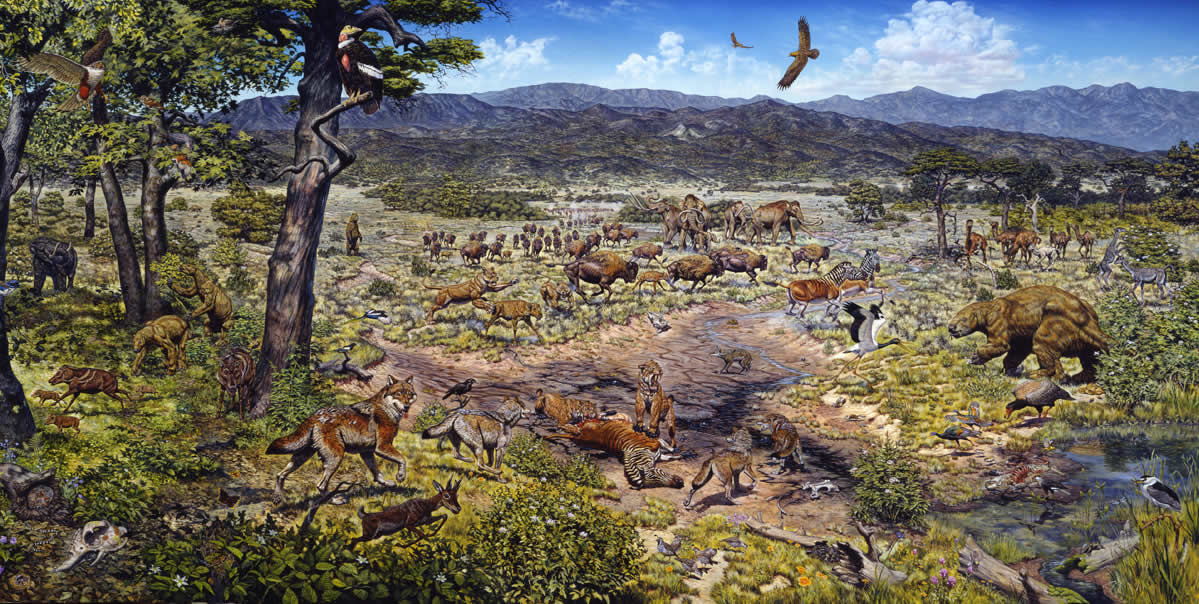
Basically, we’d see large mammals everywhere.


If humans had never existed, the whole world would look strikingly similar to the Serengeti of Africa. There would be lions in America, and elephants and rhinos roaming Europe.

That’s the conclusion of a new study that details how human-driven animal extinctions have influenced the distribution and populations of large mammals around the world.

“The study shows that large parts of the world would harbor rich large mammal faunas, as diverse as seen in protected areas of eastern and southern Africa today, if it was not for historic and prehistoric human-driven range losses and extinctions,” Dr. Jens-Christian Svenning, a biologist at Aarhus University in Denmark and a co-author of the study, told NBC News.

<span class='image-component__caption' itemprop="caption">The natural diversity of large mammals as it would appear without the impact of humans. The figure shows the variation in the number of large mammals (45 kilograms or larger) that would have occurred per 100 x 100 kilometer. The numbers on the scale indicate the number of species. </span> Credit: Søren FaurbyThe natural diversity of large mammals as it would appear without the impact of humans. The figure shows the variation in the number of large mammals (45 kilograms or larger) that would have occurred per 100 x 100 kilometer. The numbers on the scale indicate the number of species. Share on Pinterest
<span class='image-component__caption' itemprop="caption"><span style="color: #818181; font-family: Verdana, Arial, Helvetica, sans-serif; font-size: 10.0799999237061px; line-height: 16.7999992370605px; background-color: #ffffff;">The current diversity of large mammals. It can clearly be seen that large numbers of species virtually only occur in Africa, and that there are generally far fewer species throughout the world than there could have been.</span></span> Credit: Søren FaurbyThe current diversity of large mammals. It can clearly be seen that large numbers of species virtually only occur in Africa, and that there are generally far fewer species throughout the world than there could have been.Share on Pinterest

The study was published last Thursday in the journal Diversity and Distributions. The researchers analyzed what the natural distribution of large mammal species would be if not for the impact of humans.

The study expands on the scientists’ previous research, which showed that the mass extinction of large mammals during the last ice age and in subsequent millennia was largely linked to the spread of modern humans, not to climate change.

Based on their most recent analysis, the researchers concluded that sub-Saharan Africa is virtually the only place on Earth with the naturally high diversity and population of large mammals that would be seen elsewhere if not for humans.

“Most safaris today take place in Africa, but under natural circumstances, as many or even more large animals would no doubt have existed in other places,” Dr. Søren Faurby, a postdoctoral fellow in bioscience at Aarhus and lead author of the study, said in a press release. “The reason that many safaris target Africa is not because the continent is naturally abnormally rich in species of mammals. Instead it reflects that it’s one of the only places where human activities have not yet wiped out most of the large animals.”

Screw the Skeptics—Humans Are to Blame!

First there were the global warming skeptics and anthropogenic climate change deniers; now we are hearing from the downplayers and confuse-the-issuists like those who keep blaming everything on El Nino—a temporary, natural, cyclic phenomenon, not linked with human-caused climate change.

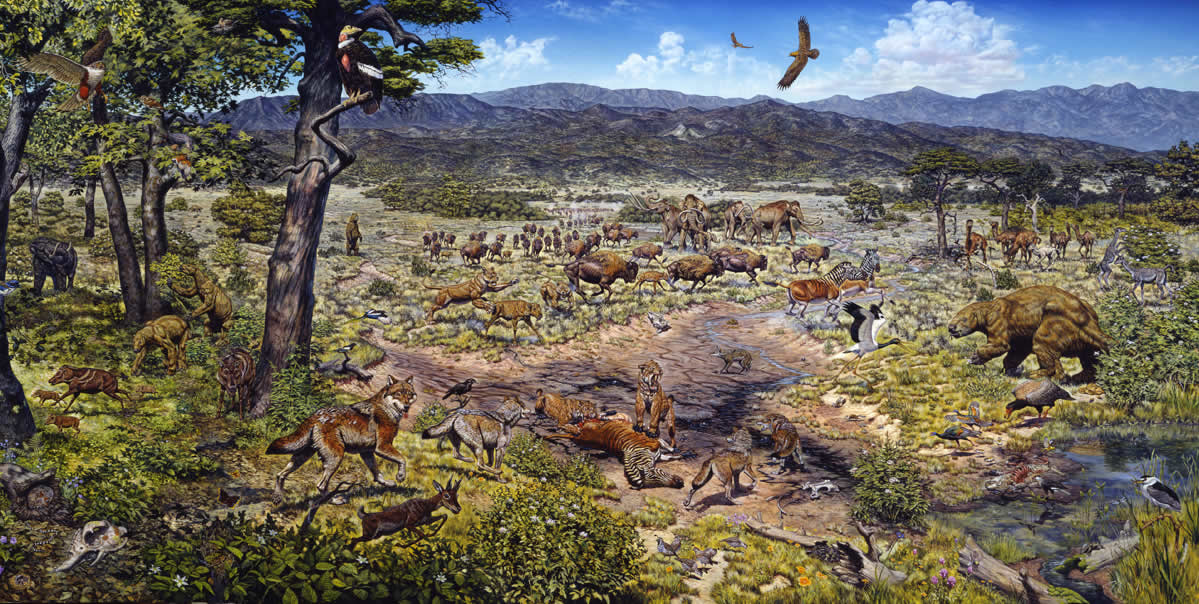
Another example of an effort to hold humans harmless is the debate around what is to blame for the early mass extinction of Pleistocene megafauna: humans or climate change? (unbelievably, still being debated after all these years.) Indeed, Discover.com has recently put out two differing articles with opposite titles, one blaming humans for what is known as the Pleistocene overkill (in an article entitled: “Humans Blamed for Extinction of Mammoths, Mastodons & Giant Sloths“, the other backing the climate change as the agent primarily to blame, (Still, even that new study blames humans for the coup de grace that finished off the species now extinct).

Recently there has been much clamor over the damage done by “invasive species,” yet, those species transported by humans’ ships, etc., cannot be blamed for “invading” the areas that they hadn’t yet populated. In every case, the exotic species were part of humans’ “wrecking crew” as John Livingston referred to them. Livingston went on to say in his 1994 book, Rogue Primate:

“There is no doubt about the identity of the first runaway exotic species, or of the role of that species in the extinction of other species worldwide. As ecologists Paul and Ann Erlich say, ‘It seems highly likely that humanity got an early start at the business of extinction.’ The prehistoric evidence, circumstantial though it may be, is persuasive; in the historic period the evidence is no longer circumstantial…The extinction events of the last 100,000 years or so may well rival the [five] great kill-offs of the distant geologic past…

“Even those who oppose the human-overkill theory cannot deny that the mega fauna extinctions coincided remarkably with the movements of Homo over and between the continents.

“Although the Pleistocene overkill theory is not accepted everywhere in academic circles, it really does not matter whether it is accepted or not. What does matter is the sum of the human accomplishment in historic time. It is estimated that between 1600 and 1900 we eliminated about 75 birds and mammals (there is no count of other taxa), and between 1990 and the present another 75 (again species other than birds and mammals not being monitored). The British ecologist and resource manager Norman Meyers remarked: ‘The rate from the year 1600 to 1900, roughly one species every four years, and the rate during most of the present century, about one species per year, are to be compared with a rate of possibly one per 1,000 years during the great dying of the dinosaurs.’

“Many authorities feel that by the time we entered the decade of the 1980s, we were already disposing of species (of all kinds) at the rate of one per day, and the number for the 1990s could well be one per hour. No longer of course, are we concentrating on ‘megafauna’: we have worked our way well down the scale of size. We have reduced, simplified, homogenized, and pauperized Nature everywhere on the planet to an extent that cannot be biologically recoverable. Extinct species never rides again; new species require untrammeled heterogeneity and purity of habitat. Neither would appear to be in the cards. The human achievement has been breathtaking in its suddenness, total in its scope. This could only be the work of a placeless being—in an ecological sense, one utterly lacking in both intrinsic inhibitions and extrinsic controls…[up until now, with global warming—a fever, if you will ] there was no immune system on Earth to repel the exotic invader. Everywhere, the transplant ‘took’.

“The Pleistocene produced an array of very large animals. Then, all at once, the megafauna was drastically reduced. The great creatures fell like dominos in an extinction spasm the like of which had not occurred, it would seem, since the obliteration of the dinosaurs. What made it dramatically different from other such events that had preceded it was the fact that species vanished without replacement….”

00-intro

Earth has lost half of its wildlife in the past 40 years

http://www.theguardian.com/environment/2014/sep/29/earth-lost-50-wildlife-in-40-years-wwf

See picture gallery of wild animals facing decline

George Monbiot: It’s time to shout stop on this war on the living world

Species across land, rivers and seas decimated as humans kill for food in unsustainable numbers and destroy habitats