Exposing the Big Game

Forget Hunters' Feeble Rationalizations and Trust Your Gut Feelings: Making Sport of Killing Is Not Healthy Human Behavior

Exposing the Big Game

The Human Cost of ‘Culling’ Livestock and ‘Depopulating’ Farms

A Tyson Foods pork processing plant, temporarily closed due to an outbreak of the coronavirus, in Waterloo, Iowa, April 29, 2020. (Brenna Norman/Reuters)

It’s not always clear whether industry representatives regret the waste of life or just a waste of food.NRPLUS MEMBER ARTICLEUnfolding this month, in the background of the pandemic, is a “depopulation” of livestock farms — another surreal new term of the crisis to add to our list. It’s as detached and colorless a word as the industry could find for gassing, suffocating, or otherwise doing in the millions of animals whose appointments at the abattoir have been canceled by coronavirus outbreaks and who therefore, in the refrain of news coverage, have “nowhere to go.”

The system has its own unbending schedules and logic. No sheltering in place for factory-farmed pigs, cows, chickens, and other creatures when yet more troubles appear. When they can’t die on a kill line, because a slaughterhouse has closed, that just means they have to die somewhere else to get out of the way — even if, as in this case, they’re all bound for landfills, blast furnaces, or burial pits.

Culling is a grim necessity, we’re told, and industry representatives have been straining to convey a sense of loss, though it’s not always clear whether they regret the waste of life or just a waste of food. In an emergency conference call on the logistics of the cull, recorded online by pork producers, one speaker captured the feeling: “It’s a topic that makes us all sick to our stomachs.”

Among techniques discussed in that call, and left for farmers to apply according to cost and “depopulation efficiency,” were gunshot and electrocution (“preferred” methods), “manual blunt force trauma” (beating animals to death with blows to the head, also “preferred”), ventilation shutdown and poisoning by carbon monoxide or sodium nitrate (these approaches “permitted in constrained circumstances”). When the pork producers’ lead veterinarian turned to the details of setting up a “gas chamber,” you could understand how disoriented a rational person would feel.

By presidential directive, the meat industry is now to be considered an “essential” enterprise. This intervention will safeguard such assets as our “national pork reserve,” while reopening the slaughter plants and leaving the companies in their accustomed position of taking no responsibility for the consequences. Culling continues anyway, because with the merest pause the meat system convulses with “backlog,” requiring travails for which producers expect our sympathy.

So sorrowful is the task that Iowa’s governor and U.S. senators have requested federal support not only in “depopulation” itself but also in helping to cope with the emotional aftermath: “Providing mental health assistance to farmers, veterinarians and others involved in the difficult decisions and processes around euthanizing and disposing of animals is imperative.” The National Pork Producers Council, in various statements pleading for public understanding along with the federal cash payouts, likewise speaks of “tragic choices,” “gut-wrenching decisions,” and “devastating last resorts” — all pointing to euthanasia as “the most humane option.”

A grievous situation, from any angle. And it would be nice to think that, even in some fleeting moment of revelation, these people who run our factory farms and slaughterhouses had awakened to the reality that living creatures are never just commodities, that they warrant our moral concern, and their suffering, our compassion. More likely, in these expressions of disquiet, we have a massive case of compartmentalizing, in which the mind selectively acknowledges one kind of problem while failing to grasp others of equal moral gravity.

What is so “gut-wrenching” about culling, compared with practices that these same people accept as a matter of course, in unconstrained circumstances and in disregard of every consideration except their own convenience and profit? With the turn of a switch, and in a matter of minutes, half a million chickens may be gassed or suffocated in a single facility, only because industrial agriculture packs these afflicted fowl of the air into vast warehouses, the laying hens crammed into row after row of small and filthy cages. A depressing possibility, given that such miseries are the design of the same farmers doing the culling, is that all they really lament is the loss of time and money. And even that feeling passes quickly, as culling is turned to advantage, with higher prices following the short-term constriction in supply.

If “mass depopulation” makes for a sickening sight, even to factory farmers, then you would think that “mass confinement” of animals would long ago have had a similar effect. Under “intensive confinement,” another term of the trade, these culled animals have known a world of only concrete and metal, with all the privations, mutilations, and other cruelties that are the industry’s first resort, and with even the veterinarians hired only to refine the punishments. Indeed, every modern hog farm is a training ground in culling, as the weak and near-dead are routinely dragged to “cull pens,” while the others are kept alive, amid pathogenic disease and squalor, only by a reckless use of antibiotics. The externalized cost to public health being left, as always with factory farming, for others to deal with.

Such is the culling expertise of America’s pork producers that when China’s current swine-fever contagion began to spread, factory farmers in that country knew who to call. Our industry’s best minds in the field were dispatched to the scene, where even now millions of pigs are being gassed or buried alive.

Where was the industry’s concern for “humane options” when this regulatory change was advocated? Where was that alertness to “tragic choices” when it might have done some good? And does it give anyone a moment’s pause that pigs, slaughtered at a national rate of half a million a day, are highly intelligent and social creatures, at least as smart and sensitive as any dog facing the similar horrors of a Wuhan wet market?

The chairman of Tyson Foods last week, in an unctuous and self-pitying letter typical of the industry’s public pronouncements, expressed confidence that his company’s “core values” would see it through the crisis. Yet for years, that company and others have sought laws to prohibit anyone from taking pictures inside their facilities, lest we learn more about how things work in what industry executives prefer to call “protein production.” What are the core values of people in a massive enterprise that depends so heavily on concealment and euphemism?

How jarring to hear them now supplicating for “mental-health assistance” to soothe their emotional wounds, as if they felt some attachment to animals they have done nothing but abuse, employing methods they are afraid to let us see. And how absurd to find Tyson’s top man solemnly declaring that “the food supply chain is breaking” (meat, he informs us, is “as essential as healthcare”), as though we’re just one or two slaughterhouse shutdowns away from famine. Happily, the crop growers of America — the farmers who truly sustain our country, and who don’t need gas chambers when things go wrong — have got us covered.

Sometimes the failures in a system reveal the essence of the whole. Abnormal circumstances can clarify problems that pass for normal. Doubtless, in their “depopulation” measures, the livestock farmers themselves feel they have “nowhere to go,” forced by their own manias of consolidation and hyper-efficiency to make one harsh choice after another, all the conscientious alternatives long ago ruled out. Yet if somehow it troubles them, in their culling labors, to treat millions of living creatures as nothing — bulldozed away, like so much piled-up trash — then now’s a good moment, for all of us, to notice that the system is just as merciless when it is working to perfection.

Every one of those creatures, like billions of others, was marked for a bitter, frightened, pain-filled life anyway — and to what good end? It is all in service to a business whose ruthlessness to animals, utter indifference to workers, destructiveness to the environment, and manifold harm to human health combine to qualify it as perhaps the least essential industry in America, and among the most amoral.

By all means, give them their mental-health assistance. Add some ethics counseling, too. And just make certain that the treatment includes serious, intensive introspection.

“Hard Decisions: How Consumers View Mass Depopulation,” Progressive Farmer,

 May 4, 2020

“Many opposed to animal agriculture are vigorously attacking the idea of euthanasia of livestock, hoping awareness created now of how production animals are depopulated will move forward their agendas in the years to come. Karen Davis, president of Virginia’s United Poultry Concerns (UPC) told this reporter she is vehemently opposed to even the use of the word ‘euthanasia’ in response to the current situation.”

Read the article here:
How Consumers View Mass Depopulation.

This article reflects aspects of a phone interview with UPC president, Karen Davis, conducted by Progressive Farmer reporter Victoria G. Myers, on April 29, 2020. The interview was prompted by UPC’s News Release:

“Depopulation” of Poultry Does Not Mean “Humanely Killed.”

The article shifts focus to how farmers and ranchers view mass depopulation, and how farmers should manage public perception with stories about their suffering, including sharing that “you are an animal lover.”

Chickens in trash dead and alive.
Unwanted chickens are “euthanized” routinely by the poultry & egg industries.
Photo by Mercy For Animals

Tyson will reopen its biggest pork plant after a Covid-19 outbreak

The next pandemic could come from a US factory farm.

As people point fingers at the dangers of “wet markets,” Americans overlook the heath risks at home.

  • Updated 
  •  0
  •  3 min to read
https://www.wisconsingazette.com/views/the-next-pandemic-could-come-from-a-us-factory-farm/article_412ea086-8c6e-11ea-bdd8-dbadc4afcdaa.html
chicken factory farm

Headlines at the beginning of the COVID-19 pandemic pointed to “wet markets” in China as the source of the outbreak. But while attention turned abroad, an equally sinister disease incubator was here at home: factory farms.

Factory farms create conditions similar to wet markets

The conditions in China’s wholesale wet markets are very similar to those in US factory farms, which, as the name implies, are essentially animal factories. These facilities cram thousands of animals into tightly packed spaces, causing the animals elevated stress, which lowers their immune levels. In the warehouse-like structures animals receive little, if any, of the heathy benefits of sun light and fresh air.

We raise animals for food on a modern day assembly line, in conditions that make them prime targets for the incubation and spread of disease. And when one animal in a factory farm gets sick, the pathogen can rapidly spread — killing hundreds or thousands of animals and potentially jumping to humans. That process is called “zoonotic,” and it’s widely cited as the mechanism behind COVID-19.

Factory farms also have launched viral pandemics

This isn’t a “what if” scenario. It’s happened before — several pandemics have been incubated in factory farms.

In the late 1990s, the H1N1 flu virus originated in factory farms in North Carolina. A mutated form of this North Carolina virus later popped up in a factory farm in Mexico where it spread around the world, leading to the 2009 H1N1 flu pandemic. During its first year of circulation, the 2009 H1N1 flu killed between 151,700 – 575,400 people worldwide.

In 2006, an outbreak of bird flu turned into a full-scale pandemic after originating in factory farms in China. In early April, as the coronavirus was raging, a South Carolina poultry factory farm operation was forced to cull tens of thousands of birds after discovering an outbreak of bird flu. While thankfully contained to themeat packing single farm, this outbreak could have had equally dire consequences.

Those are just two of many examples. The fact that the previous outbreaks did not force us into home isolation was only a stroke of dumb luck.

The factory farm industry is acutely aware that it is playing with fire. Antibiotics, meant for the treatment of bacterial infections, are routinely used on factory farms to prevent the spread of disease. In fact, 70 percent of the total volume of medically important antibiotics in the US are sold for animal agriculture.

The overuse of antibiotics has led to antibiotic resistance. Infections that were once curable develop a resistance to the drugs used to treat them. The rise of drug-resistant superbugs, such as MRSA, puts our collective public health at risk.  Resistant infections could have dire consequences for future pandemics, especially those that have bacterial complications like pneumonia.

Our public health and ability to treat diseases should not be sold for corporate gain.

COVID-19 shows the need for family farms, but factory farms have pushed them out of business

The current coronavirus pandemic is demonstrating how fragile our highly consolidated food system is and how ill-equipped it is to handle emergency situations. Every day more and more meat-packing plants become ground zero for new outbreaks of coronavirus, and thousands of people are putting their lives on the line, literally, to keep these facilities functioning.

Even as long lines are forming at food banks, produce is being plowed under and meat is piling up in cold storage. Corporate agriculture has created this broken system, which constantly puts us at risk of another pandemic. But corporate agriculture has shown that it is wholly unable to meet our needs during a pandemic.

manure pollution stream
—PHOTO: Tim McCabe / USDA Natural Resources Conservation Service.

Runoff from this Maryland livestock yard may enter a nearby stream and degrade nearby water quality.

Where are our public institutions in this time of crisis? Our food system is being held hostage by a few corporations that control everything — from piglets to politicians. With this power, the factory farm industry has mercilessly lobbied against measures that would keep us and our food safe.

Demanding faster line speeds at meatpacking plants and unnecessarily increasing risks for slaughterhouse workers, opposing restrictions on antibiotic use, and even refusing to provide workers with necessary protective equipment — these are just a few examples of how Big Ag puts profits before the lives of consumers.

The Farm System Reform Act would greatly reduce the risk of zoonotic pandemics

This crisis has illustrated just how broken our food system truly is. People are angry that wet markets are already reopening, but we cannot ignore that the way we raise animals in the U.S. places us at risk for future pandemics. As the COVID-19 outbreak forces us to significantly alter our daily lives and to lose our financial security, will we finally muster the political will to overhaul our food system to decrease the likelihood of the next pandemic? Our lives depend on it.

Ask your legislators to support the Farm System Reform Act today.

Healthy pigs being killed as meatpacking backlog hits farms

Updated 

DES MOINES, Iowa (AP) — After spending two decades raising pigs to send to slaughterhouses, Dean Meyer now faces the mentally draining, physically difficult task of killing them even before they leave his northwest Iowa farm.

Meyer said he and other farmers across the Midwest have been devastated by the prospect of euthanizing hundreds of thousands of hogs after the temporary closure of giant pork production plants due to the coronavirus.

The unprecedented dilemma for the U.S. pork industry has forced farmers to figure out how to kill healthy hogs and dispose of carcasses weighing up to 300 pounds (136 kilograms) in landfills, or by composting them on farms for fertilizer.

Meyer, who has already killed baby pigs to reduce his herd size, said it’s awful but necessary.

“Believe me, we’re double-stocking barns. We’re putting pigs in pens that we never had pigs in before just trying to hold them. We’re feeding them diets that have low energy just to try to stall their growth and just to maintain,” said Meyer, who also grows corn and soybeans on his family’s farm near Rock Rapids.

It’s all a result of colliding forces as plants that normally process up to 20,000 hogs a day are closing because of ill workers, leaving few options for farmers raising millions of hogs. Experts describe the pork industry as similar to an escalator that efficiently supplies the nation with food only as long as it never stops.

More than 60,000 farmers normally send about 115 million pigs a year to slaughter in the U.S. A little less than a quarter of those hogs are raised in Iowa, by far the biggest pork-producing state.

Officials estimate that about 700,000 pigs across the nation can’t be processed each week and must be euthanized. Most of the hogs are being killed at farms, but up to 13,000 a day also may be euthanized at the JBS pork plant in Worthington, Minnesota.

U.S. Rep. Collin Peterson, a Minnesota Democrat who chairs the House Agriculture Committee, went to the plant Wednesday, in part to thank JBS officials for agreeing to kill the hogs at his request.

“The only thing they wanted out of me was for me to come down here and say I’m the one who asked for this, not them. … Blame me if you don’t like it,” he said.

It all means that meat can’t be delivered to grocery stores, restaurants that now are beginning to reopen or food banks that are seeing record demand from people suddenly out of work. Some of that demand is being met by high levels of meat in cold storage, but analysts say that supply will quickly dwindle, likely causing people to soon see higher prices and less selection.

To help farmers, the USDA already has set up a center that can supply the tools needed to euthanize hogs. That includes captive bolt guns and cartridges that can be shot into the heads of larger animals as well as chutes, trailers and personal protective equipment.

Iowa officials have asked that federal aid include funding for mental health services available to farmers and the veterinarians who help them.

Meyer said euthanizing healthy animals is a difficult decision for a farmer.

“It is a tough one,” he said. “We got keep our heads up and try to be resourceful and if we can make it through this cloud, I think there will be good opportunities if we’re left standing yet.”

The USDA has a program designed to connect farmers with local meat lockers and small processors that can slaughter some hogs and donate the meat to food banks. However, that effort has been hindered by the fact that small processors already were overwhelmed with customers who have turned away from mass-produced meat and instead bought a hog or cow to be processed locally.

Chuck Ryherd, owner of State Center Locker in State Center, Iowa, said he’s almost completely booked through the end of the year and has been turning away customers.

Chris Young, the executive director for the American Association of Meat Processors, a trade group for about 1,500 smaller meat lockers, said that while some local processors in Indiana, Illinois and Wisconsin have been able to take a few extra hogs, the shortage is being felt nationwide.

“When the pandemic started, all across the country, a lot of these small processing plants with a retail store in the front were just overrun,” he said. “They’re still crazy busy. It hasn’t really backed off.”

On Wednesday, President Donald Trump used the Defense Production Act to order that large meat processors remain open, giving hog farmers hope the situation could improve.

However, Howard Roth, a Wisconsin farmer and president of the National Pork Producers Council, said farmers will need to keep euthanizing pigs as the slaughterhouses struggle to resume their full production. Farmers will definitely need federal help to keep them afloat.

“We are going to need indemnity money for these farmers,” he said. “This situation is unprecedented.”

Peterson also said he’ll seek a change in the law so that the USDA can retroactively compensate farmers for euthanizing healthy animals in such emergencies. He said the USDA told him it doesn’t have the authority at the moment to do that for healthy animals, just diseased animals, as it did during for chickens and turkeys in the bird flu outbreak.

“It’s going to be in there, I’ll guarantee you,” he said.

How our appetite for meat can set us up for pandemics

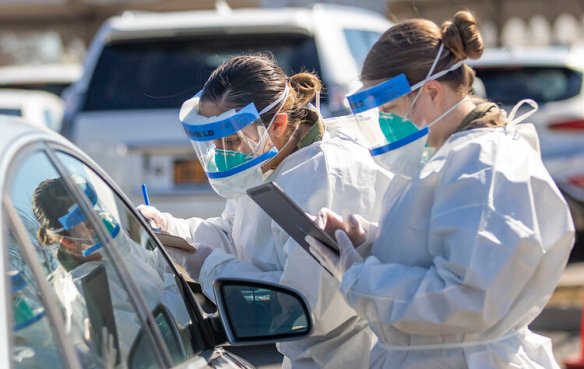
U.S. Army Spc. Reagan Long and Pfc. Naomi Velez register people at a COVID-19 Mobile Testing Center in Glen Island Park, New Rochelle, New York.  Image credit: New York National Guard

U.S. Army Spc. Reagan Long and Pfc. Naomi Velez register people at a COVID-19 Mobile Testing Center in Glen Island Park, New Rochelle, New York. Image credit: New York National Guard

https://stonepierpress.org/goodfoodnews/meatpandemics

Ed Winters, or Earthling Ed, as he’s known on Instagram, recently posted a video that received more than a million views and thousands of comments. The message of the six-minute video can be boiled down to this: “Many of the world’s deadliest outbreaks, including COVID-19, SARS, and bird flu, are directly linked to the exploitation of animals by humans.”

Winters, a British animal rights activist, filmmaker, and lecturer, is not alone in making this claim. The Counter, a food system-focused online publication, recently interviewed experts about the many potential connections between meat production and the pandemic. A March article in The Guardian, investigated the relationship between diseases like COVID-19 and global pig and poultry production. Last week, the European Union’s health chief told Reuters that there is “strong evidence that the way meat is produced, not only in China, contributed to COVID-19.”

The origins of COVID-19 are, at present, still unclear. We know COVID-19 is a zoonotic virus, meaning it can jump from animals to humans, and that it first circulated among bats. While many of the initial reported patients were linked to a seafood and live animal market in China, we don’t yet know how or when exactly the disease made the leap from animals to humans. However, there is a growing consensus that the industrialized way in which we raise the animals we eat is a risk factor for pandemics like COVID-19.

PERFECT BREEDING GROUND FOR DISEASE

Researchers have long worked to understand how animals pass diseases to humans. An estimated three out of four new or emerging infectious diseases originate in animals, and three out of five infectious diseases are spread by animals, according to the Centers for Disease Control and Prevention (CDC). Among the most common ways we catch diseases from animals is through “direct or indirect human exposure to animals, their products (meat, milk, eggs), and/or their environments,” states the World Health Organization (WHO).

“Both farmed and caged wild animals create the perfect breeding ground for zoonotic diseases.”

— LIZ SPECHT, ASSOCIATE DIRECTOR OF SCIENCE & TECHNOLOGY AT THE GOOD FOOD INSITITUTE

The demand for meat and dairy brings humans in more frequent contact with animals in a variety of ways, outlined in a 2004 report from the WHO. Most obvious are practices like live animal markets, wildlife consumption, and factory farming. There’s also evidence that deforestation, driven in large part by the demand for more grazing land, brings humans in more frequent contact with the wild animals who lose their habitats. (A Stanford study published this month in Springer found this to be true in western Uganda.) In addition, the world’s growing appetite for meat has increased global trade of livestock and more exotic wildlife, allowing zoonotic diseases to travel faster and farther.

“Both farmed and caged wild animals create the perfect breeding ground for zoonotic diseases,” says Liz Specht, Associate Director of Science & Technology at The Good Food Institute. “Extraordinarily high population densities, prolonged heightened stress levels, poor sanitation, and unnatural diets create a veritable speed-dating event for viruses to rendezvous with a weakened human host and transcend the species barrier.”

So while the coronavirus’s jump to humans was linked to a seafood and live animal market in Wuhan, China, it could just as easily have originated in Argentina, England, North Carolina, or any other place where employees of factory farms work alongside animals in cramped, stressful, and often unsanitary conditions.

“It’s easy for those of us in the Western world to shake our heads at the live wildlife markets in China,” writes Paul Shapiro, CEO and cofounder of The Better Meat Co. “But what’s more difficult is to be honest with ourselves about what kinds of pandemics we may be brewing through our own risky animal-use practices.”

FACTORY FARMING IS “A PERFECT STORM ENVIRONMENT”

Physician and best-selling author Michael Greger wrote about the threat of factory farming years ago when he published Bird Flu: A Virus of Our Own Hatching in 2006. He calls factory farming “a perfect storm environment” for pandemics. “If you actually want to create global pandemics,” he warns, “then build factory farms.”

History has validated Greger. The 1918 flu, which killed around 50 million people, is thought to have originated on a poultry farm in Kansas. The 1997 H5N1 bird flu likely started on Chinese chicken farms. More recently, a 2015 bird flu outbreak on North American chicken farms killed more than 32 million birds in 16 states, causing egg and poultry prices to skyrocket, though thankfully it never made the leap to humans. Earlier this year, both India and China reported additional bird flu outbreaks on poultry farms that have not yet crossed over to humans.

“If you actually want to create global pandemics, then build factory farms.”

— MICHAEL GREGER, PHYSICIAN AND AUTHOR

“There is clearly a link between the emergence of highly pathogenic avian influenza viruses and intensified poultry production systems,” says Belgian spatial epidemiologist Marius Gilbert. Gilbert’s group published a study in 2018 that looked at so-called conversion events, whereby bird flu strains suddenly became highly pathogenic, as well as “reassortment events,” when at least two different viruses combine by exchanging genetic material. These novel viruses can cause pandemics by appearing suddenly in populations that have no immunity.

Between 1959 and 2018, his group identified 39 conversion events and 127 reassortments. All but two conversion events took place on commercial poultry farms in industrialized economies in the US and Europe. The majority of the 127 reassortments took place in Asian countries where poultry production was transitioning from backyard to factory farms.

The risks are similarly high on high-density pig farms. The 2009 H1N1 swine flu is thought to have originated on North American pig farms before jumping to humans. The current African swine fever (ASF) outbreak has already slashed China’s pig population by a third, killing some 100 million. At present, ASF only occurs in animals, but a mutation in the virus could change this and even increase the severity of the disease.

“Swapping host species often allows pathogens to take a more sinister turn, causing severe illness or death in their new host despite only triggering mild symptoms in their animal reservoir,” says Liz Specht.

THE NEXT PANDEMIC

Before launching his campaign video, Ed Winters posted an oversimplified and since-removed graphic that stated: “COVID-19 was started by eating animals.” This post caught the attention of Matthew Brown, a writer at USA Today, who fact-checked Ed Winters’ post, rating the claim that COVID-19 was “caused by eating animals” as “partly false.”

Eating meat is not technically the problem, Brown argues. Zoonotic diseases are made possible by contact between humans and animals. In other words, the risks inherent in high-density animal production system make Winters’ assertion also partly true.

Meanwhile, Americans’ consumption of meat and poultry hit a record high of 222 pounds per person in 2018, a reminder of how difficult it will be to change our eating habits, even if doing so could help protect us from another pandemic.


Tia Schwab is a former Stone Pier Press News Fellow from Austin, TX.

The meat we eat is a pandemic risk, too

Cattle inside a pen outside of El Centro, California, on February 11, 2015. 
Sandy Huffaker/Corbis via Getty Images

“If you actually want to create global pandemics, then build factory farms.”

Some experts have hypothesized that the novel coronavirus made the jump from animals to humans in China’s wet markets, just like SARS before it. Unsurprisingly, many people are furious that the markets, which were closed in the immediate wake of the outbreak in China, are already reopening. It’s easy to point the finger at these “foreign” places and blame them for generating pandemics. But doing that ignores one crucial fact: The way people eat all around the world — including in the US — is a major risk factor for pandemics, too.

That’s because we eat a ton of meat, and the vast majority of it comes from factory farms. In these huge industrialized facilities that supply more than 90 percent of meat globally — and around 99 percent of America’s meat — animals are tightly packed together and live under harsh and unsanitary conditions.

“When we overcrowd animals by the thousands, in cramped football-field-size sheds, to lie beak to beak or snout to snout, and there’s stress crippling their immune systems, and there’s ammonia from the decomposing waste burning their lungs, and there’s a lack of fresh air and sunlight — put all these factors together and you have a perfect-storm environment for the emergence and spread of disease,“ said Michael Greger, the author of Bird Flu: A Virus of Our Own Hatching.

To make matters worse, selection for specific genes in farmed animals (for desirable traits like large chicken breasts) has made these animals almost genetically identical. That means that a virus can easily spread from animal to animal without encountering any genetic variants that might stop it in its tracks. As it rips through a flock or herd, the virus can grow even more virulent.

Greger puts it bluntly: “If you actually want to create global pandemics, then build factory farms.”

For years, expert bodies like the World Health Organization and the Centers for Disease Control and Prevention have been warning that most emerging infectious diseases come from animals and that our industrialized farming practices are ratcheting up the risk. “Livestock health is the weakest link in our global health chain,” noted the Food and Agriculture Organization of the United Nations in a 2013 report.

We know from past experience that farmed animals can lead to serious zoonotic diseases (those transmitted from animals to humans). Just think back to 2009, when the H1N1 swine flu circulated in pig farms in North America, then jumped to humans. That novel influenza quickly became a global pandemic, killing hundreds of thousands of people.

To be clear, scientists believe the novel coronavirus originated in wild bats, not factory farms. But it has awakened us all to the crushing effect a pandemic can have on our lives. Now that we’ve come face to face with this reality, the question is: Do we have the political and cultural will to do something major — changing the way we eat — to sharply decrease the likelihood of the next pandemic?

What we talk about when we talk about pandemics

When we talk about the risk of pandemics, we’re actually talking about two different types of outbreaks. The first is a viral pandemic; examples include the 1918 influenza pandemic and Covid-19. The second is a bacterial pandemic; the prime example is the bubonic plague, the “Black Death” that wracked Europe in the Middle Ages.

Factory farming presents a risk in both these categories.

Sonia Shah, author of the 2017 book Pandemic, worries about viruses and bacteria alike. “When I was writing my book, I asked my sources what keeps them awake at night. They usually had two answers: virulent avian influenza and highly drug-resistant forms of bacterial pathogens,” she told me. “Both those things are driven by the crowding in factory farms. These are ticking time bombs.”

Let’s focus on avian influenza first. Bird flu is caused by viruses and it’s a massive risk coming out of factory farms (as is swine flu). That’s both because the birds in these farms are squeezed together by the thousands in close proximity and because they’re bred to be almost identical genetically. That’s a recipe for a highly virulent virus to emerge, spread, and kill rapidly.

“Factory farms are the best way to select for the most dangerous pathogens possible,” said Rob Wallace, an evolutionary biologist at the Agroecology and Rural Economics Research Corps in St. Paul, Minnesota. To explain why, he offered a crash course in zoonotic transmission, from the point of view of the pathogen.

“If you’re a pathogen in a host,” Wallace said, “you don’t want to kill your host too fast before you can get into the next host — otherwise you’re cutting off your own line of transmission. So there’s a cap on how much of a badass you can be. The faster you replicate, the more likely you end up killing your host before the next host can come along.”

If you’re deep in the wilderness or on a small farm, you (the pathogen) are not going to regularly come across hosts, so you’ve got to keep your virulence, or harm inflicted on the host, pretty low so that you don’t run out of hosts. “But if you get into a barn with 15,000 turkeys or 250,000 layer chickens, you can just burn right through,” Wallace said. “There’s no cap on your being a badass.”

This is part of why factory farms are a bigger risk for zoonotic outbreaks than the natural world or small farms.

The biologist added that because we’re increasingly trading poultry and livestock across international borders, we’re ramping up the danger even more. Strains that were previously isolated from each other on opposite sides of the world can now recombine.

“Take influenza,” Wallace said. “It has a segmented genome, so it trades its genomic parts like card players on a Saturday night. Usually, most hands are not too terrible, but some hands come out much more dangerous. An increase in the rate of recombination means an explosion in terms of the diversity of pathogens that are evolving.”

The world has already seen a really frightening example of this. Between 1997 and 2006, highly pathogenic strains of H5N1 bird flu were linked to poultry farms in China.

“Our entire understanding of how bad a pandemic could potentially be changed in 1997 with the emergence of the H5N1 avian influenza virus. All of a sudden, there was a flu virus that was killing over half the people it infected,” Greger said.

When people became infected with H5N1, it had a 60 percent mortality rate. For comparison, experts estimate that Covid-19’s mortality rate is probably somewhere in the neighborhood of 1 percent to 3 percent, though these estimates continue to evolve and vary widely by country and by age. (If you’re wondering why H5N1 didn’t become as big a deal as Covid-19, it’s because it mostly infected poultry rather than people; it wasn’t as good at infecting humans as the coronavirus unfortunately is.)

“These new bird flu viruses have been tied to the industrialization — the ‘Tysonization’ — of our poultry production,” Greger said, citing evidence that exporting the factory farming model to Asia led to an unprecedented explosion of viruses infecting birds and people starting in the 1990s.

It’s not only birds we need to worry about. Remember that pigs are also highly effective carriers of viruses. A decade before the swine flu struck in 2009, the Nipah virus emerged in Malaysian pig farms. It caused encephalitis (inflammation of the brain) in hundreds of people, killing about 40 percent of the patients who were hospitalized with serious neurological disease.

Factory farming and the urgent problem of antibiotic resistance

The other pandemic risk associated with factory farms has to do with “highly drug-resistant forms of bacterial pathogens,” as Shah put it — that is, antibiotic resistance.

When a new antibiotic is introduced, it can have great, even life-saving results — for a while. But as we start to use and overuse antibiotics in the treatment of humans, crops, and animals, the bacteria evolve, with those that have a mutation to survive the antibiotic becoming more dominant. Gradually, the antibiotic becomes less effective, and we’re left with a disease that we can no longer treat.

A farmer tends to his hogs in Polo, Illinois, on January 25.
 Brendan Smialowski/AFP via Getty Images

The CDC warned in a major report last year that the post-antibiotic era is already here: We’re living in a time when our antibiotics are becoming useless and drug-resistant bugs, like C. difficile and N. gonorrhoeae, can all too easily decimate our health. Every 15 minutes, one person in the US dies because of an infection that antibiotics can no longer treat effectively.

Yet we continue to dole out too many antibiotics, driving the resistance. Animal farmers use antibiotics copiously on livestock and poultry, sometimes to compensate for poor industrial farming conditions.

“With more spontaneous mutations,” he explained, “the odds increase that one of those mutations will provide resistance to the antibiotic that’s present in the environment.” Those resistant bacteria could become strains that spread all over the world. “That’s the biggest human health risk of factory farms.”

In fact, factory farming presents us with a double bacterial risk. Say a bacterial outbreak emerges among chickens. The poultry can pass that bacteria on to us humans, causing serious infection. We’d normally then want to use antibiotics to treat that infection, but precisely because we’ve already overused antibiotics on our farmed animals, the bacteria may be resistant to the antibiotic. If the infection happens to be one that transmits well between people, we can end up with an untreatable bacterial pandemic.

When asked how he’d compare the pandemic risks posed by factory farms with those posed by China’s wet markets carrying live animals, Lawrence said, “With factory farming, the opportunity to start a viral pandemic may be less, but the opportunity for acquiring an antibiotic-resistant bacterial infection is greater.”

Factory farms also put their workers’ health at risk — including from coronavirus

Another distressing reality of factory farming is the way it tends to treat not only animals but also human workers as widgets in a large machine.

The mistreatment of laborers was a problem long before Covid-19, but the current pandemic has thrown the problem into especially sharp relief. We’re seeing a jump in the number of coronavirus cases among workers at meat plants in the US. Hundreds of people have tested positive at Cargill and Smithfield plants, in states from Pennsylvania to South Dakota. A few have died.

NPR reported that in one case, a city mayor had to actually force Smithfield to close a plant: “The count of positive coronavirus tests among employees at the Sioux Falls plant reached 350. It represented almost 10 percent of all workers at the plant, and 40 percent of all Covid-19 cases in South Dakota.”

The Smithfield pork processing plant in Sioux Falls, South Dakota, accounts for 40 percent of all coronavirus cases in the state.
 Stephen Groves/AP

Laborers in meat plants are typically stationed very close together along processing lines, which makes social distancing all but impossible. Some workers have staged walkouts over the working conditions.

“The companies need them to be present, but Covid-19 is killing them. And it’s obvious why: They have to stand shoulder-to-shoulder with their coworkers while the rest of us are six feet apart,” said Leah Garcés, the president of Mercy for Animals.

Knowing that the country’s meat is being produced on the backs of laborers who are mistreated, we’ve got to ask: Is it really worth it? For Garcés, the answer is clear. “It’s a ridiculous sacrifice to make for a chicken,” she said.

How can we build a better food system post-coronavirus?

In the US, where meat has become entwined with national identity and the average citizen consumes more than 200 pounds of meat a year, most people are probably not going to give up meat entirely. So it’s worth asking: Is there a way to do livestock farming that diminishes the threat of zoonotic disease? And perhaps, in the process, also diminishes other problems with industrialized farming, like the impact on climate change and cruelty to animals?

The answer is yes. We can absolutely have a meat production system that is better for human health, the climate, and animal welfare — if we’re willing to abandon factory farming.

“The de-intensification of the livestock industry would go a long way toward reducing pandemic risk,” Greger said. “I mean decreasing long-distance live animal transport, moving toward a carcass-only trade, and having smaller and less-crowded farms. Basically, the animals could use a little social distancing, too.”

Greger said we should abolish confinement practices like gestation crates, where pigs are kept in spaces so small they can’t even turn around. “Even measures as simple as providing straw beddings for pigs can cut down on swine flu transmission rates,” he noted, “because they don’t have the immunosuppressant stress of living on bare concrete their whole lives.”

We also need to reintroduce more biodiversity into our farms. Raising animals that are slightly different from each other genetically (rather than selecting for specific genes) will build in immunological firebreaks to help prevent the spread of infectious diseases, Wallace said, adding, “On a very practical level, I would farm completely the opposite of how they’re doing it now.”

By “they,” he means factory farms. There are plenty of farmers who already prefer other methods, like regenerative agriculture, but who may lack the support they need to execute them because agribusiness has a lock-hold on many rural communities.

“There’s a lot of farmers who completely understand how the system works and object to it but just can’t get off the treadmill,” Wallace said. He suspects the pandemic is giving the issue new salience.

It may also shift mindsets around existing plans to stop factory farming, like the legislation proposed by Sen. Cory Booker (D-NJ) to impose a moratorium on the US’s biggest factory farms and phase them out altogether by 2040. In March, as the Covid-19 pandemic gained traction, the conservative magazine National Review carried a piece arguing that “if you reflect on this issue with an open mind, you’ll agree that ending factory farms is a good idea — even if Cory Booker thinks that it is.”

Moving away from industrialized farming can reduce the likelihood of a zoonotic outbreak, but to really remove the threat, Greger said we should be accelerating the movement toward plant-based meat, milk, and egg products.

Americans were already getting excited about plant-based products before the coronavirus came along, and there’s reason to think the pandemic will drive even more interest, both because the traditional meat supply chain is now under some strain and because of a growing awareness that factory farming is a pandemic risk.

Impossible Foods announced on April 16 that it’s expanding sales of its meatless burgers to 750 more grocery stores in the US. “We’ve always planned on a dramatic surge in retail for 2020 — but with more and more Americans eating at home, we’ve received requests from retailers and consumers alike,” said the company’s president Dennis Woodside in an emailed statement. “Our existing retail partners have achieved record sales of Impossible Burger in recent weeks.”

From Garcés’s perspective, increased public awareness of the link between factory farms and pandemics is a silver lining to the horrible Covid-19 pandemic. “In my whole career, I’m not sure we’ve had a better chance than this to have the eyes of the nation and the world on the way we’re using animals in our food system and the risk that puts to us as a species,” she said.

“We’ve been ringing the alarm bells for a long time. My deep hope is that now people will make the connection — factory farming is a catastrophic risk to our species — and that this permanently changes our behavior in the long term.”

Tyson’s COVID-19 Closure Prompts PETA Appeal

With Fatal Viruses Linked to Animal Flesh, Tyson Is Urged to Reinvent Itself as a Vegan-Meat Producer

For Immediate Release:
April 13, 2020

Contact:
Brooke Rossi 202-483-7382

Springdale, Ark. – After a Tyson pig slaughterhouse in Iowa was shuttered because dozens of its employees tested positive for COVID-19­­—and because workers at one of its plants in Tennessee may be infected as well—PETA has written to Tyson CEO Noel W. White, calling on him to get ahead of the curve and transition to producing exclusively vegan meat. PETA is offering to help cover the cost of retraining the company’s employees.

“The filthy conditions inside slaughterhouses and meat markets are breeding grounds for swine flu, SARS, avian flu, and other diseases and threaten the health of every human being on the planet,” says PETA President Ingrid Newkirk. “PETA is calling on Tyson to ditch its current business model, recognize the growing interest in plant-based foods as well as the necessity to move away from foods made from animal flesh, and reinvent itself as a producer of healthy and 100% humane vegan meat.”

Swine flu began on a U.S. factory farm, and the novel coronavirus originated in a Chinese “wet market,” where live and dead animals were sold for human consumption. Health authorities confirm that influenza viruses and coronaviruses are zoonotic (transmissible from other animals to humans). Grocery store sales of plant-based foods that directly replace animal “products” have grown 29% in the past two years to $5 billion.

Last week, PETA—whose motto reads, in part, that “animals are not ours to eat” and which opposes speciesism, a human-supremacist worldview—held a demonstration outside the shuttered slaughterhouse. Photos are available here.

For more information, please visit PETA.org.

PETA’s letter to White follows.

April 13, 2020

Noel White, CEO

Tyson Foods

Dear Mr. White,

After learning that Tyson shut down a pig slaughterhouse in Columbus Junction, Iowa, after more than two dozen workers contracted COVID-19, I’m writing with a lifesaving suggestion. Why not modernize and get ahead of the consumer curve by shutting down meat production permanently and making the transition to producing only vegan meat instead? PETA would chip in to defray the cost of retraining employees.

Filthy factory farms threaten everyone’s health—not just that of workers and meat-eaters—by providing a breeding ground for deadly diseases. Swine flu—which came from farmed pigs—has killed hundreds of thousands of people worldwide, and bird flu can spread easily on severely crowded chicken farms. Now, while the world is battling the current pandemic—which originated in a meat market—it’s crucial that all of us, including Tyson, do our part to make positive changes that will help prevent future outbreaks.

Even before the current crisis, working on a kill floor was a dangerous and dirty job. Workers are obligated to keep up with absurdly fast slaughter speeds, in addition to witnessing and participating in revolting practices, such as hanging live chickens upside down by their legs and stunning petrified pigs. Now they also have to worry about becoming infected with COVID-19.

Tyson already produces some vegan meats, so while the writing is on the wall, please switch to producing only vegan meats, which aid human health, the environment, and, of course, animals.

I look forward to hearing from you.

Very truly yours,

Ingrid E. Newkirk

President

COVID-19 is nature’s revenge

I’m in the checkout line at the supermarket. Six feet separates me from the people in front of me unloading their groceries onto the conveyer belt. Behind their N95 facemasks I can see the anxiety in their eyes.

They’re leaning as far away from the cashier as possible to maintain a safe zone around them. It’s hard for me not to notice the items being tallied as the red scanner beeps loudly. Pearl onions, chili powder, People magazine, Wisconsin cheddar cheese, chicken wings, BBQ sauce. Then it occurs to me. We’re doomed. This is it. We are in over our heads, and we’re not going to make it.

This is, by any measure, the largest health emergency of my, over-half-century-lifetime. A viral pandemic sweeps the globe. A sickness unleashed by our human exploitation of animals in an Asian meat market, and our response? Quarantine us at home with dry rubbed chicken wings with BBQ sauce.

I know what you’re thinking. Damn! That sounds delicious! Am I right? OK. Let’s pull the lens back to wide angle for a minute and have a look around.

It’s almost as if nature, and the animals themselves are holding up a protest sign, arms extended overhead, marching down main street, saying ENOUGH IS ENOUGH!

A majority of emerging infectious diseases in humans — including COVID-19, Mad Cow Disease, Bird Flu, MERS, SARS, Ebola, HIV, Swine flu, and cholera all came from animals, and how we treat them.

Bird flu came from chickens. Swine flu came from pigs. Mad Cow Disease came from cows. Ebola came from bats. And now COVID -19 seems to have originated from a nasty meat-market cocktail of slaughtered pigs, dogs, cats, bats, turtles, chickens, and pangolins. Just in case our ethnocentric defenses were raised when considering the food habits of people in a faraway land. Keep in mind, that animals on industrial factory farms in the good-ole U.S. of A. are so highly confined that the only defense against bio-catastrophic viral outbreaks are massive amounts of overused antibiotics. Antibiotics passed on to us through the food system. Antibiotics that will no longer work given that these mutant viral eruptions have clever tendencies to overcome.

It’s almost as if nature, and the animals themselves are holding up a protest sign, arms extended overhead, marching down main street, saying ENOUGH IS ENOUGH! Stop exploiting us! But are we listening? Is this new pandemic enough for us to take a look at how we exploit and consume animals? After all, our own existence is in jeopardy. It’s obvious, what we’re doing to animals is killing us, too.

I’ve had a plant-based diet for over 35 years. I had my own mini-awakening when examining our unhealthy meat-centric food system.

I learned that a vegan diet produces the equivalent of 50% less carbon dioxide, uses 1/11th oil, 1/13th water, and 1/18th land compared to a meat-lover for their food. Each day, a person who eats a vegan diet saves 1,100 gallons of water, 45 pounds of grain, 30 square feet of forested land, 20 pounds CO2 equivalent, and one animal’s life.

As a matter of fact, the World Health Organization recommends a plant-based diet to help prevent obesity, heart disease and type-2 diabetes.

Forgive my hyperbolic meltdown in the supermarket earlier when observing the general public’s food choices. I’m not as hopeless as my melodramatic self claims to be. More and more people are making the connection that eating plants instead of animals is healthier for us, more sustainable for the earth, and obviously a better deal for animals.

I’ll ask the question we’re all thinking. But why are vegans so annoying? I know, I know, we can be.

I don’t have the answers to all of our questions. But there is one thing I do know, our exploitive relationship with animals and nature is the reason why the world is on lockdown, and choosing to eat plants instead of animals is a giant step toward a better future.

John Merryfield lives in Tahoe City.

‘Floating feedlots’: animals spending weeks at sea on ships not fit for purpose

Animal welfare put at risk on old and ‘inferior’ converted car carriers and cargo ships that are not built to transport livestock

Sheep destined for the Middle East loaded in pens onboard the Al Messilah livestock vessel at the Fremantle wharf in February 2019.
 Animals may spend weeks on board vessels en route to another country for slaughter. Photograph: Trevor Collens/AAP

The live export trade carrying millions of sheep and cattle across the seas each year is plagued by “old” and “inferior” ships that are a threat to animal welfare, claims a leading shipping company.

Livestock carriers are a key part of the multibillion dollar live export industry, dominated by Australia, South America and Europe. In 2017, almost 2 billion animals were exported in a trade worth $21bn (£15bn), with a significant proportion travelling by sea.

But most of the ships are old car carriers or other former cargo ships, rather than purpose-built vessels that can meet higher standards of animal welfare, said Wellard, one of the world’s largest livestock exporters, based in Australia.

Q&A

Why are we reporting on live exports?

A spokesperson for the company, which shipped nearly 400,000 cattle in 2019, said: “The old converted vessels bring the standard of the whole industry down. If you’re using a ship that was originally built for another purpose, you’re compromising on your animal services when you convert it to a livestock vessel.

“The biggest threat to the global live export industry is old ships. They have inferior standards and livestock services and they are more prone to accidents and breakdowns. Those ships give a bad name to a legitimate industry.”

More than half of the 129 livestock carriers listed as active with a working automated tracking system on at least one marine website were built before the 1980s. “The livestock carrier fleet is one of the oldest sectors in the globally trading fleet with an average vessel age of 38 years old,” said Adam Kent, managing director of market analysts Maritime Strategies International (MSI). In comparison, the average age of a container ship is 13.

“Only the Laker fleet, trading on the freshwater Great Lakes, has an older average age,” he said.

“Given that around 80% of all livestock carriers are converted vessels, which were originally designed for another cargo, the relative investment in the sector is significantly below other ship types,” he added. Most ships were converted from general cargo or “roll on roll off” (RoRo) vessels, meaning ships that have been designed to carry wheeled cargo.

The Dutch company Vroon, which owns the subsidiary Livestock Express, is known as the “world’s biggest independent seaborne livestock carrier”, with a fleet of 13 purpose-built vessels. Around half its ships have a gross tonnage of 10,241 and can carry more than 4,600 heads of cattle.

Livestock Express managing director Paul Pistorius warned that converting old vessels into livestock carriers means making “compromises”.

“When converting a vessel, you must live with the original hull and machinery and furthermore you always need to make compromises during the conversion phase. History has shown that these compromises may lead to poor animal welfare outcomes.

“There are indeed a lot of old conversions and also recent conversions of old hulls. Unfortunately, many of these vessels don’t always meet the standards to which we believe livestock carriers should adhere,” he said.

Share your experiences

If you or someone you know has expertise in this field, we would like to hear from you. You can get in touch by filling in the form below, anonymously if you wish.  Only the Guardian can see your contributions and one of our journalists may contact you to discuss further.

Animal health and welfare concerns

The practice of transporting thousands of live animals (some ships carry more than 10,000 animals) across the sea for weeks at a time means attention must be paid to the welfare of animals. Older ships were not built for this purpose, which raises concerns.

The most common health risks for animals on ships are fatigue, heat stress, overcrowding and related injuries, and the spread of disease. Lynn Simpson, a former veterinarian on livestock export ships, has been a vocal critic of the long-distance ship trade. She’s witnessed cattle forced to stand on hard floors for weeks on end, sick, injured animals left to die, and sheep literally cooking from the inside with their “fat melted and like a translucent jelly”.

“Some animals are held on decks for as long as 40 days, living on hard decking of concrete and metal. They [the animals] are not built to cope with these environments,” said Simpson. She points out that the long time spent at sea makes it even more critical for ships to be well-adapted for animals to protect their health and welfare. “A truck is transporting from A to B, but a ship is really a floating feedlot. They are at sea for up to six weeks so it’s not just a small period of time. They [the animals] have to eat, sleep, drink and recover.”

“The live animal trade is not one where great fortunes are made. The unsuitability of the ships has created a lot of issues for the welfare of the animals. There has been a lot of concern about converted ships, which have a checkered history of inspection failings,” said Andrew Linington, former editor for the maritime trade union, Nautilus International.

In November the Queen Hind, a 40-year-old vessel owned by Romanian company MGM Marine, was carrying more than 14,000 sheep when it capsized en route from Romania. The 22 crew members were rescued but just 180 sheep survived.

Campaign groups said at the time that a major problem was that often vessels were not built for the journey. “They are old vessels that are converted to transport animals,” Francesca Porta from Eurogroup for Animals in Brussels told the New York Times.

That incident prompted Nautilus International to call for an investigation into converted livestock carriers, saying the industry must “learn safety lessons for keeping seafarers safe and improving animal welfare”.

“There’s a risk that in these long-distance transport there are major problems with animals overheating in highly humid, dirty conditions … where a vessel has been converted it will be less able to control bad conditions,” said a spokesperson from Compassion in World Farming.

Mortality figures in the export of livestock are largely unavailable as the majority of countries, aside from Australia and New Zealand, do not require them to be publicly reported. The International Maritime Organization only requires an investigation of casualties at sea if they led to the death or serious injury of a person, or serious damage to the ship or the marine environment. In Australia the government reports on any shipments where the mortality rate exceeds 1%. In August 2017, around 2,400 sheep died from heat stress on a ship sent from Australia to the Middle East.

For Europe, the only available mortality figures are from media reports on major incidents. In 2015, Jordan rejected a shipment of 13,000 sheep from Romania because 40% of the animals were dead. A veterinary inspection at port found that it was not disease that caused the high mortality rate, but a failure to provide adequate food or water on the eight-day trip.

Simpson said the mortality rates were likely to be higher in other regions not reporting figures. “The ships I was on 10 years ago carried 10,000 cattle for 20-day voyages and if you lost 15 animals I would say that was average. When they were travelling out of South America, the crew told me the same ships would have 14,000 cattle and would lose 300–500 animals in a voyage.

“They don’t care about animal welfare. It is just about numbers, which would be fine if we were talking about cans of soup.”

A large number of livestock-carrying ships are also sailing under flags of convenience with poor reputations for ship safety. Out of the 129 ships listed as active, 52 are flying flags from countries currently blacklisted by the port inspection body the Paris MOU, which conducts more than 17,000 inspections on ships every year in ports around the world.

In addition, 10 of the companies that own or manage converted vessels built before 1975 are listed as “low or very low-performing” by the European Maritime Shipping Agency.