Cowspiracy: The Sustainability Secret

10401438_268406586684204_5581115448172125682_n

Directors: Kip Andersen, Keegan Kuhn
Starring: Michael Pollan, Dr. Richard Oppenlander, Dr. Will Tuttle, Howard Lyman, Will Potter

COWSPIRACY: The Sustainability Secret is a groundbreaking feature-length environmental documentary following an intrepid filmmaker as he uncovers the most destructive industry facing the planet today – and investigates why the world’s leading environmental organizations are too afraid to talk about it. As eye-opening as Blackfish and as inspiring as An Inconvenient Truth, this shocking yet humorous documentary reveals the absolutely devastating environmental impact large-scale factory farming has on our planet.
Hosting a screening or wanting to know more? Access the promoter resources here!

10/8 – Austin, TX – tugg.com/events/11087
10/9 – Murrieta, CA – tugg.com/events/11016
10/9 – Eugene, OR – bit.ly/CowTugg
10/11 – San Francisco – bit.ly/10D0As2
10/12 – San Francisco – bit.ly/10D0As2
10/12 – Johannesburg, South Africa – on.fb.me/XYHMCa
10/13 – London, UK – bit.ly/1qlJ6p1
10/13 – Yonkers, NY – tugg.com/events/11062
10/14 – Berlin, Germany – bit.ly/1tRFVeP
10/14 – Arlington, TX – tugg.com/events/11144
10/14 – Columbia, SC – tugg.com/events/11165
10/15 – Drayton, Queensland, Australia – on.fb.me/1v9PPaf
10/15 – Spokane, WA – tugg.com/events/11080
10/15 – Erie, PA – bit.ly/CowTugg
10/15 – Orange, CA – tugg.com/events/11304
10/16 – Rotterdam, Netherlands – bit.ly/1nWh1up
10/16 – Atlanta, GA – *sold out*
10/16 – Metairie, LA – tugg.com/events/11259
10/16 – Hendersonville, TN – tugg.com/events/11053
10/16 – Minneapolis, MN – *sold out*
10/16 – Westminster, CO – tugg.com/events/11234
10/16 – Sausalito, CA – tugg.com/events/11241
10/16 – Pasadena, CA – tugg.com/events/11325
10/16 – Fargo, ND – tugg.com/events/11180
10/18 – Amsterdam, Netherlands (Haarlem)- bit.ly/1uikhOp
10/20 – Dallas, TX – tugg.com/events/11374
10/20 – North Fort Myers, FL – bit.ly/CowTugg
10/20 – Royal Palm Beach, FL – tugg.com/events/11289
10/21 – Berkeley, CA – tugg.com/events/11309
10/21 – Orange Beach, AL – tugg.com/events/11176
10/22 – Salt Lake City, UT – tugg.com/events/11204
10/22 – Shererville, IN – tugg.com/events/11157
10/22 – Hamilton, NJ – tugg.com/events/11308
10/23 – Greensboro, NC – tugg.com/events/11296
10/23 – Deltona, FL – tugg.com/events/11353
10/23 – Lake Buena Vista, FL – tugg.com/events/11347
10/23 – Rockville Centre, NY – *free* –tugg.com/events/11123
10/23 – Spokane, WA – tugg.com/events/11124
10/23 – Millbury, MA – tugg.com/events/11379
10/23 – Middletown, DE – tugg.com/events/11102
10/23 – Ithaca, NY – tugg.com/events/11373
10/27 – Carlsbad, CA – bit.ly/1txaz9m
10/28 – Santa Ana, CA – tugg.com/events/11356
10/28 – Bethesda, MD – tugg.com/events/11422
10/28 – Royal Oak, MI – tugg.com/events/11163
10/28 – Pensacola, FL – tugg.com/events/11178
10/28 – Ann Arbor, MI – tugg.com/events/11143
10/29 – Medford, OR – tugg.com/events/11378
10/29 – West Covina, CA – tugg.com/events/11251
10/30 – San Antonio, TX – .tugg.com/events/11360
10/30 – Boulder, CO – tugg.com/events/11187
11/1 – Charleston, SC – tugg.com/events/11455
11/5 – Medford, OR – tugg.com/events/11378
11/5 – Seattle, WA – tugg.com/events/11319
11/5 – Tacoma, WA – tugg.com/events/11415
11/6 – San Francisco – cowspiracysf.brownpapertickets.com/
11/6 – Sioux Falls, SD – tugg.com/events/11008
11/6 – Santa Cruz, CA – tugg.com/events/11340
11/6 – Santa Rosa, CA – tugg.com/events/11192
11/6 – West Covina, CA – tugg.com/events/11251
11/6 – Alexandria, VA – tugg.com/events/11363
11/6 – Davie, FL – tugg.com/events/11451
11/8 – Dorset, UK – bit.ly/1srdNR4
11/10 – Irvine, CA – tugg.com/events/11274
11/11 – Lanesboro, MA – tugg.com/events/11376
11/13 – Athens, GA – tugg.com/events/11441
11/13 – Jacksonville, FL – tugg.com/events/11527
11/19 – Des Peres, MO – tugg.com/events/11354
11/19 – Las Vegas – tugg.com/events/11365
11/20 – Kailua Kona, HI – tugg.com/events/11183
12/4 – Bainbridge Island, WA – tugg.com/events/11300

If you organized a screening and it’s not listed here, let us know and we’ll add it to the calendar.

If you’d like to see Cowspiracy in a theater near you, it’s easy (and free) to make it happen: tugg.com/titles/cowspiracy.

To purchase a license to host your own screening (anywhere in the world), visit http://cowspiracy.bigcartel.com/product/community-screening-with-admission.
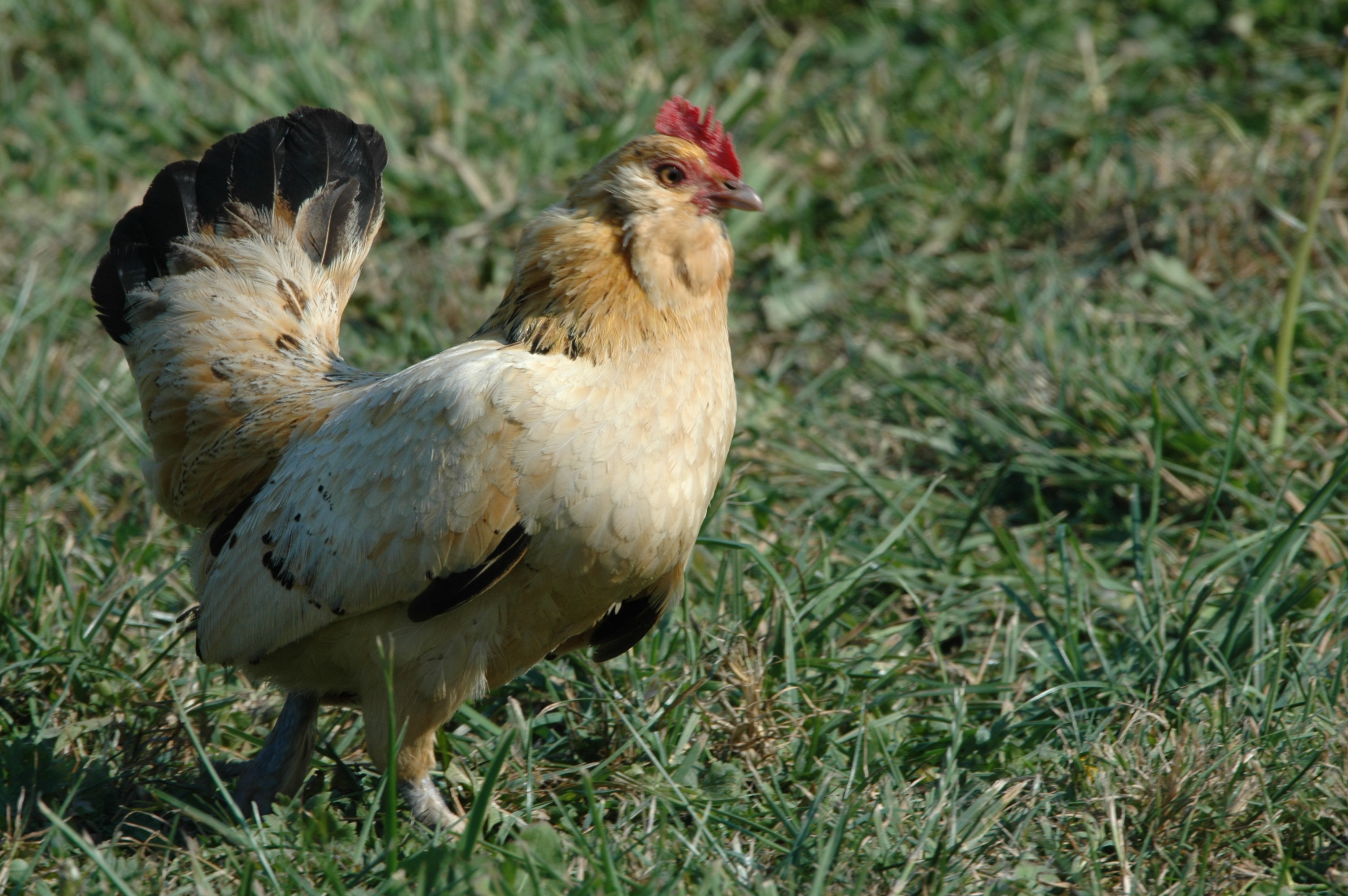
They want to kill 175 per minute

Photo Jim Robertson

Photo Jim Robertson

Faster Lines Mean Further Abuse

The government is considering new rules that would allow the poultry industry to kill even more birds on each slaughter line every minute. When workers slam these birds into shackles, the chickens’ leg bones often shatter. If workers are forced to shackle even more birds per minute, they will handle the animals even more roughly, leading to more animal suffering.

Please call Rep. Jaime Herrera Beutler (202) 225-3536 begin_of_the_skype_highlighting (202) 225-3536 FREE  end_of_the_skype_highlighting right now and politely say “As a constituent, I’m calling to express my concern that the USDA’s proposed poultry slaughter rules would result in higher rates of food contamination, animal suffering and worker injury. Please support Congresswoman DeLauro’s Agriculture Appropriations bill amendment prohibiting the USDA from spending any funds to implement the ‘Modernization of Poultry Slaughter Inspection’ rule.”

After you call, please remember to send a follow-up message.

The Economic Case for Taxing Meat

264431_455824994498980_1177070538_n

http://www.businessweek.com/articles/2014-03-31/the-economic-case-for-taxing-meat

By Charles Kenny March 31, 2014

As tax season ramps up, we’re bound to hear proposals aimed at making the revenue system simpler and more efficient. A perennial is the “sin tax.” Rather than tax earnings—when we really want people to earn money—why not tax things we don’t want people to do? Add duties to cigarettes, alcohol, and carbon dioxide to slow people’s smoking, drinking, and polluting, and you’ll do them and the world a favor while raising revenue for schools, hospitals, and roads. But why stop there? It’s time to add one more sin to the list of habits that should be taxed: excessive meat consumption.

Meat has always been part of the human diet. Few dishes are as wonderful as a bolognese sauce made with a combination of pork, lamb, and beef. But taxing pigs, sheep, and cows is essential to contain the spiraling costs associated with massive meat eating.

When it comes to gorging on meat, Americans remain at the top of the global league tables. U.S. consumption of beef per person has actually declined over the past few decades, from 52 kilograms a year in 1970 to 41 kilograms in 2008. But chicken consumption approximately tripled over that period, to 44 kilograms per person, and overall meat consumption climbed from 105 to 122 kilograms a year—considerably more than the average personal weight (although some of that meat is thrown away or eaten by pets). By comparison, Indians consume less than 5 kilograms of meat per person.

Story: Keeping the Mystery Out of China’s Meat

But as the rest of the world gets richer, it’s closing the gap with the U.S. The Food & Agriculture Organization of the United Nations reports that in 2012, 966 million pigs, 1.5 billion cattle, and 22 billion chickens were roaming (actually, mostly not roaming) the world’s farms. For cattle, that’s five times the number in 1890 and for pigs about a tenfold increase, according to Clive Ponting’s Green History of the World. That’s one factor behind the growing global obesity epidemic: a British study comparing meat eaters and vegetarians found average differences in weight between meat eaters and vegans of 5.9 kilograms in men and 4.7 kilograms in women—and a recent U.S. study also suggested that meat consumption was positively linked to obesity.

At the other end of the consumption scale, all that meat production also makes for more expensive staple foods for the world’s undernourished. About one-third of the world’s cropland is given over to growing feed for animals. Including pastureland, livestock production occupies 30 percent of the land surface of the planet. Some of that land could be used instead to cultivate crops for human consumption. If you are concerned that growing corn for ethanol is raising food prices, you should be even more concerned by the larger impact of factory livestock farming.

Beyond meat’s impact on malnutrition, the livestock industry presents a growing global threat in its relationship with infectious disease. Domesticated animals have been the incubators of many of the world’s greatest killer diseases, from smallpox through measles to tuberculosis. The recent emergence of swine and bird flu suggests an increasing risk of pathogens jumping from the planet’s burgeoning domestic animal population to humans. We’ve added to that risk by regularly feeding factory animals antibiotics. Eighty percent of all antibiotics consumed in the U.S. are used on animals. This widespread use has been linked to the rapid emergence of antibiotic-resistant bacteria, including methicillin-resistant Staphylococcus aureus (MRSA), which kills 18,000 people a year in the U.S.

Story: Farm Bill Stinks for the Meat Industry, and That’s Not Entirely Bad

Greater meat production also has negative environmental effects. Livestock accounts for about 8 percent of global human water use (the proportion is a little higher in the U.S.) Wheat takes about 1,000 to 2,000 cubic meters of water per ton of crop; rice takes approximately double that. Taking into account the water demands of feedstock, cattle take between 13,000 and 20,000 cubic meters per ton of beef (although chicken does considerably better at around 4,000 cubic meters per ton). Land-based meat production is also a big factor behind declining fisheries worldwide. Millions of tons of fish each year are crushed into fish oil and dry feed to be fed to farmed fish as well as to pigs and chickens. And the effluence those animals produce creates “dead zones” in rivers and coastal areas.

Action Alert: Don’t Let Abusers Cover Up Cruelty!

https://secure.humanesociety.org/site/Advocacy?cmd=display&page=UserAction&id=6478

Kentucky: Don’t Let Abusers Cover Up Cruelty!

Just a few weeks ago, The Humane Society of the United States exposed horrific cruelty at a major Kentucky pig factory; including pigs locked into cages so small they couldn’t turn around and mother pigs being fed the remains of their diseased piglets. But instead of cleaning up their act, the state’s big meat producers are now trying to silence whistleblowers. The industry and its backers in the legislature are trying to sneak through an “ag-gag” law aimed at criminalizing anyone who exposes food safety violations or animal abuse on factory farms. Even worse, they have attached this poisonous provision to a formerly pro-animal bill.

TAKE ACTION
Please call your legislators right away and ask them to oppose this undemocratic effort. Look up your legislator’s phone number here. You can simply say: “I am outraged that an ag-gag provision was sneakily attached to HB222. I urge you to stop the ag-gag provision, which would threaten animals and consumer safety.”

After making your phone call (please do not skip that crucial step!), personalize and submit the letter in the form below to automatically send a follow-up message to your legislators and Gov. Steve Beshear.

528340_567504966609338_1448023408_n