Friends of Animals has followed your profoundly sad, but important story about an osprey rescue ending tragically, (Hearst Connecticut Media, Aug. 7, 2018) followed by your excellent “Thumbs down” editorial, plus an article in which the state Department of Energy and Environmental Protection (DEEP) warned that wildlife gets tangled up in the nearly invisible fishing line, “causing serious harm or death.”
Without prompting anglers to dispose of fishing lines, hooks and garbage properly, as your editorial says, there’s a “huge threat to wildlife,” including sea birds, sea mammals, turtles, fish and others. It’s astonishing that the first effort to avert this littering disaster comes from “a proactive student group in Fairfield that is building fishing line bins,” and that two conservation groups will install them at beaches and marinas.
Cheers for that productive action. Others can quit fishing and fish consumption.
There are facts about the tons of plastic floating in our waterways that may be underreported.
First, those piles are mostly made of abandoned fishing equipment, which means many anglers are undisciplined slobs.
Microplastics make up only 8 percent of the total tonnage of garbage in the “Great Pacific Garbage Patch” (between Hawaii and California), while fishing nets account for 46 percent. The rest is other fishing gear, and debris from the tsunami that hit Japan in 2011, according to National Geographic.
Banning things such as single-use plastic bags and straws feels productive, but it’s not the best way to stop plastic pollution of our oceans. We need fishermen to stop treating our oceans like trash cans.
And developing countries must do a better job of putting trash in landfills and converting plastics to energy, according to the Ocean Conservancy.
Priscilla Feral
The writer is president of the Darien-based Friends Friends of Animals.
HARWICH, MA – Another thieving great white shark snatched a fisherman’s catch off the coast of Cape Cod Monday, just as he was about to bring the fish aboard the boat. In a video posted to the Magellan Deep Sea Fishing Charters Facebook page, the shark is seen grabbing the striped bass as others on the boat urge the man to hurry up and reel the fish in.
“We had a visitor on yesterday’s trip,” the company wrote on Facebook. “A 12-foot great white shark grabbed a striper – well, most of it – off the line.”
The theft happened near the Monomoy National Wildlife Refuge in Vineyard Sound. Atlantic White Shark Conservancy President Cynthia Wigren confirmed to the Boston Globe that the shark in the video was a great white.
Watch the video below (warning: contains strong language):
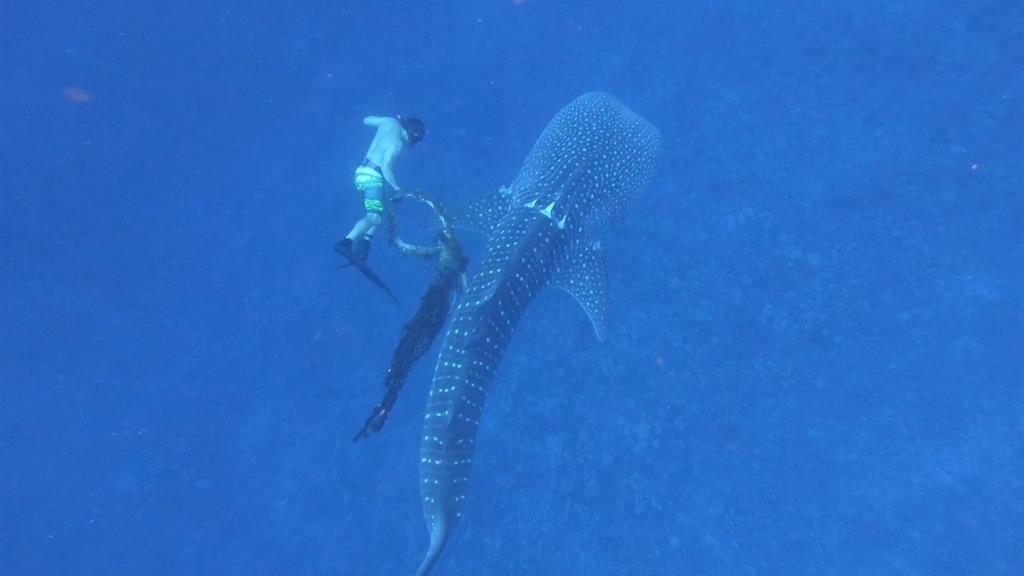
While free-diving off the shore of Kaunolū on Hawaii’s island of Lanai, a Hawaiian family saw something they’d never seen before: A young whale shark.
Even for people who spend a lot of time in Hawaii’s crystalline waters, this endangered animal—the world’s largest fish—is a rare and joyous sight.
But the initial wonder faded as Kapua Kawelo and her husband Joby Rohrer, both of whom work on endangered species for the O‘ahu Army Natural Resources Program, noticed the creature had a thick, heavy rope wrapped around its neck.
“It looked really sore,” says Rohrer. “There were these three scars from where the rope rubbed into the ridges on her back. The rope had cut probably three inches into her pectoral fin.”
After filming the shark for a while, the family decided to try to cut the rope with a dive knife. Using only his experience as a free-diver and a small, serrated dive blade, Rohrer dove down again and again at depths of 50 to 60 feet for spans of up to two minutes at a time.
Finally, after about half an hour of careful work and a little bit of support from the couple’s son Kanehoalani and from Jon Sprague, a wildlife control manager for Pūlama Lānaʻi, the shark was free.
Red Tide Is Devastating Florida’s Sea Life. Are Humans to Blame?
Then the family’s 15-year-old daughter, Ho’ohila, swam the 150-pounds worth of rope to shore.
“It’s a family story,” says Kapua.
Will It Survive?
Clearly, the whale shark is better off now that it’s without “an unbreakable rope lei,” as Kapua puts it. But will the whale shark be able to recover from the ordeal?
According to Brad Norman, a National Geographic Explorer and one of the world’s foremost experts on whale sharks, you can tell the rope had been strangling the animal for at least a few months because of all the barnacles that had colonized it. Hawaii’s Department of Land and Natural Resources had actually been alerted to the shark’s plight in mid-July by SCUBA divers and had since sent out a call for people to report any future sightings.
But Norman says that, all things considered, the shark appeared to be in pretty good condition. He also estimated that the animal was at least 20 years old, giving it excellent odds to survive.
“Although globally, all whale sharks are endangered and threatened with extinction,” says Norman. “If we don’t reverse the declining trend in their numbers, it’s dire for the species as a whole.”
Whale sharks typically swim away when they’re touched, says Norman, so the fact that the shark remained even after Rohrer began to saw at the rope is evidence that it was comfortable with the situation. Norman calls it “amazing to see.”
“The shark appears to allow the diver to assist,” says Norman, “seemingly knowing he’s helping.”
Kapua credits her husband’s zen-like demeanor and heroic free-diving ability for allowing him to be able to free the entangled shark.
“We all wanted to help but none of us could hold our breath that long,” she says.
But there was also something else about the experience, she says. In Hawaiian mythology, ancestors sometimes come back as guardian animals, called ʻaumakua. These guardians are thought to protect families, who also must help protect them.
“And we’ve never seen a whale shark before but, just like native peoples around the world, you feel like you have a special connection to the resources that surround you and your family,” says Kapua.
“I like to think that we were there for a reason and that the least we could do for having that amazing experience, seeing that beautiful creature, was to help it survive.”
Whether or not fish feel pain has been debated for years. But the balance of evidence says yes. Now the question is, what do we do about it? (redbrickstock.com / Alamy)
When Culum Brown was a young boy, he and his grandmother frequented a park near her home in Melbourne, Australia. He was fascinated by the park’s large ornamental pond wriggling with goldfish, mosquitofish, and loaches. Brown would walk the perimeter of the pond, peering into the translucent shallows to gaze at the fish. One day, he and his grandmother arrived at the park and discovered that the pond had been drained—something the parks department apparently did every few years. Heaps of fish flapped upon the exposed bed, suffocating in the sun.
Brown raced from one trash can to another, searching through them and collecting whatever discarded containers he could find—mostly plastic soda bottles. He filled the bottles at drinking fountains and corralled several fish into each one. He pushed other stranded fish toward regions of the pond where some water remained. “I was frantic, running around like a lunatic, trying to save these animals,” recalls Brown, who is now a marine biologist at Macquarie University in Sydney. Ultimately, he managed to rescue hundreds of fish, about 60 of which he adopted. Some of them lived in his home aquariums for more than 10 years.
As a child, I too kept fish. My very first pets were two goldfish, bright as newly minted pennies, in an unornamented glass bowl the size of a cantaloupe. They died within a few weeks. I later upgraded to a 40-liter tank lined with rainbow gravel and a few plastic plants. Inside I kept various small fish: neon tetras with bands of fluorescent blue and red, guppies with bold billowing tails like solar flares, and glass catfish so diaphanous they seemed nothing more than silver-crowned spinal columns darting through the water. Most of these fish lived much longer than the goldfish, but some of them had a habit of leaping in ecstatic arcs straight through the gaps in the tank’s cover and onto the living room floor. My family and I would find them flopping behind the TV, cocooned in dust and lint.
Should we care how fish feel? In his 1789 treatise An Introduction to the Principles of Morals and Legislation, English philosopher Jeremy Bentham—who developed the theory of utilitarianism (essentially, the greatest good for the greatest number of individuals)—articulated an idea that has been central to debates about animal welfare ever since. When considering our ethical obligations to other animals, Bentham wrote, the most important question is not, “Can they reason? nor, Can they talk? but, Can they suffer?” Conventional wisdom has long held that fish cannot—that they do not feel pain. An exchange in a 1977 issue of Field & Stream exemplifies the typical argument. In response to a 13-year-old girl’s letter about whether fish suffer when caught, the writer and fisherman Ed Zern first accuses her of having a parent or teacher write the letter because it is so well composed. He then explains that “fish don’t feel pain the way you do when you skin your knee or stub your toe or have a toothache, because their nervous systems are much simpler. I’m not really sure they feel anypain, as we feel pain, but probably they feel a kind of ‘fish pain.’” Ultimately, whatever primitive suffering they endure is irrelevant, he continues, because it’s all part of the great food chain and, besides, “if something or somebody ever stops us from fishing, we’ll suffer terribly.”
Such logic is still prevalent today. In 2014, BBC Newsnight invited Penn State University biologist Victoria Braithwaite to discuss fish pain and welfare with Bertie Armstrong, head of the Scottish Fishermen’s Federation. Armstrong dismissed the notion that fish deserve welfare laws as “cranky” and insisted that “the balance of scientific evidence is that fish do not feel pain as we do.”
Despite the evidence that fish can suffer, animal welfare legislations and other legal protections often exclude them. (wonderlandstock / Alamy)
That’s not quite true, Braithwaite says. It is impossible to definitively know whether another creature’s subjective experience is like our own. But that is beside the point. We do not know whether cats, dogs, lab animals, chickens, and cattle feel pain the way we do, yet we still afford them increasingly humane treatment and legal protections because they have demonstrated an ability to suffer. In the past 15 years, Braithwaite and other fish biologists around the world have produced substantial evidence that, just like mammals and birds, fish also experience conscious pain. “More and more people are willing to accept the facts,” Braithwaite says. “Fish do feel pain. It’s likely different from what humans feel, but it is still a kind of pain.”
At the anatomical level, fish have neurons known as nociceptors, which detect potential harm, such as high temperatures, intense pressure, and caustic chemicals. Fish produce the same opioids—the body’s innate painkillers—that mammals do. And their brain activity during injury is analogous to that in terrestrial vertebrates: sticking a pin into goldfish or rainbow trout, just behind their gills, stimulates nociceptors and a cascade of electrical activity that surges toward brain regions essential for conscious sensory perceptions (such as the cerebellum, tectum, and telencephalon), not just the hindbrain and brainstem, which are responsible for reflexes and impulses.
Fish also behave in ways that indicate they consciously experience pain. In one study, researchers dropped clusters of brightly colored Lego blocks into tanks containing rainbow trout. Trout typically avoid an unfamiliar object suddenly introduced to their environment in case it’s dangerous. But when scientists gave the rainbow trout a painful injection of acetic acid, they were much less likely to exhibit these defensive behaviors, presumably because they were distracted by their own suffering. In contrast, fish injected with both acid and morphine maintained their usual caution. Like all analgesics, morphine dulls the experience of pain, but does nothing to remove the source of pain itself, suggesting that the fish’s behavior reflected their mental state, not mere physiology. If the fish were reflexively responding to the presence of caustic acid, as opposed to consciously experiencing pain, then the morphine should not have made a difference.
In another study, rainbow trout that received injections of acetic acid in their lips began to breathe more quickly, rocked back and forth on the bottom of the tank, rubbed their lips against the gravel and the side of the tank, and took more than twice as long to resume feeding as fish injected with benign saline. Fish injected with both acid and morphine also showed some of these unusual behaviors, but to a much lesser extent, whereas fish injected with saline never behaved oddly.
Testing for pain in fish is challenging, so researchers often look for unusual behavior and physiological responses. In one study, rainbow trout given injections of acetic acid in their lips responded by rubbing their lips on the sides and bottom of their tank and delaying feeding. (arc F. Henning / Alamy)
Several years ago, Lynne Sneddon, a University of Liverpool biologist and one of the world’s foremost experts on fish pain, began conducting a set of particularly intriguing experiments; so far, only some of the results have been published. In one test, she gave zebrafish the choice between two aquariums: one completely barren, the other containing gravel, a plant, and a view of other fish. They consistently preferred to spend time in the livelier, decorated chamber. When some fish were injected with acid, however, and the bleak aquarium was flooded with pain-numbing lidocaine, they switched their preference, abandoning the enriched tank. Sneddon repeated this study with one change: rather than suffusing the boring aquarium with painkiller, she injected it straight into the fish’s bodies, so they could take it with them wherever they swam. The fish remained among the gravel and greenery.
The collective evidence is now robust enough that biologists and veterinarians increasingly accept fish pain as a reality. “It’s changed so much,” Sneddon says, reflecting on her experiences speaking to both scientists and the general public. “Back in 2003, when I gave talks, I would ask, ‘Who believes fish can feel pain?’ Just one or two hands would go up. Now you ask the room and pretty much everyone puts their hands up.” In 2013, the American Veterinary Medical Association published new guidelines for the euthanasia of animals, which included the following statements: “Suggestions that finfish responses to pain merely represent simple reflexes have been refuted. … the preponderance of accumulated evidence supports the position that finfish should be accorded the same considerations as terrestrial vertebrates in regard to relief from pain.”
Yet this scientific consensus has not permeated public perception. Google “do fish feel pain” and you plunge yourself into a morass of conflicting messages. They don’t, says one headline. They do, says another. Other sources claim there’s a convoluted debate raging between scientists. In truth, that level of ambiguity and disagreement no longer exists in the scientific community. In 2016, University of Queensland professor Brian Key published an article titled “Why fish do not feel pain” in Animal Sentience: An Interdisciplinary Journal on Animal Feeling. So far, Key’s article has provoked more than 40 responses from scientists around the world, almost all of whom reject his conclusions.
Key is one of the most vociferous critics of the idea that fish can consciously suffer; the other is James D. Rose, a professor emeritus of zoology at the University of Wyoming and an avid fisherman who has written for the pro-angling publication Angling Matters. The thrust of their argument is that the studies ostensibly demonstrating pain in fish are poorly designed and, more fundamentally, that fish lack brains complex enough to generate a subjective experience of pain. In particular, they stress that fish do not have the kind of large, dense, undulating cerebral cortices that humans, primates, and certain other mammals possess. The cortex, which envelops the rest of the brain like bark, is thought to be crucial for sensory perceptions and consciousness.
Some of the critiques published by Key and Rose are valid, particularly on the subject of methodological flaws. A few studies in the growing literature on fish pain do not properly distinguish between a reflexive response to injury and a probable experience of pain, and some researchers have overstated the significance of these flawed efforts. At this point, however, such studies are in the minority. Many experiments have confirmed the early work of Braithwaite and Sneddon.
Moreover, the notion that fish do not have the cerebral complexity to feel pain is decidedly antiquated. Scientists agree that most, if not all, vertebrates (as well as some invertebrates) are conscious and that a cerebral cortex as swollen as our own is not a prerequisite for a subjective experience of the world. The planet contains a multitude of brains, dense and spongy, globular and elongated, as small as poppy seeds and as large as watermelons; different animal lineages have independently conjured similar mental abilities from very different neural machines. A mind does not have to be human to suffer.
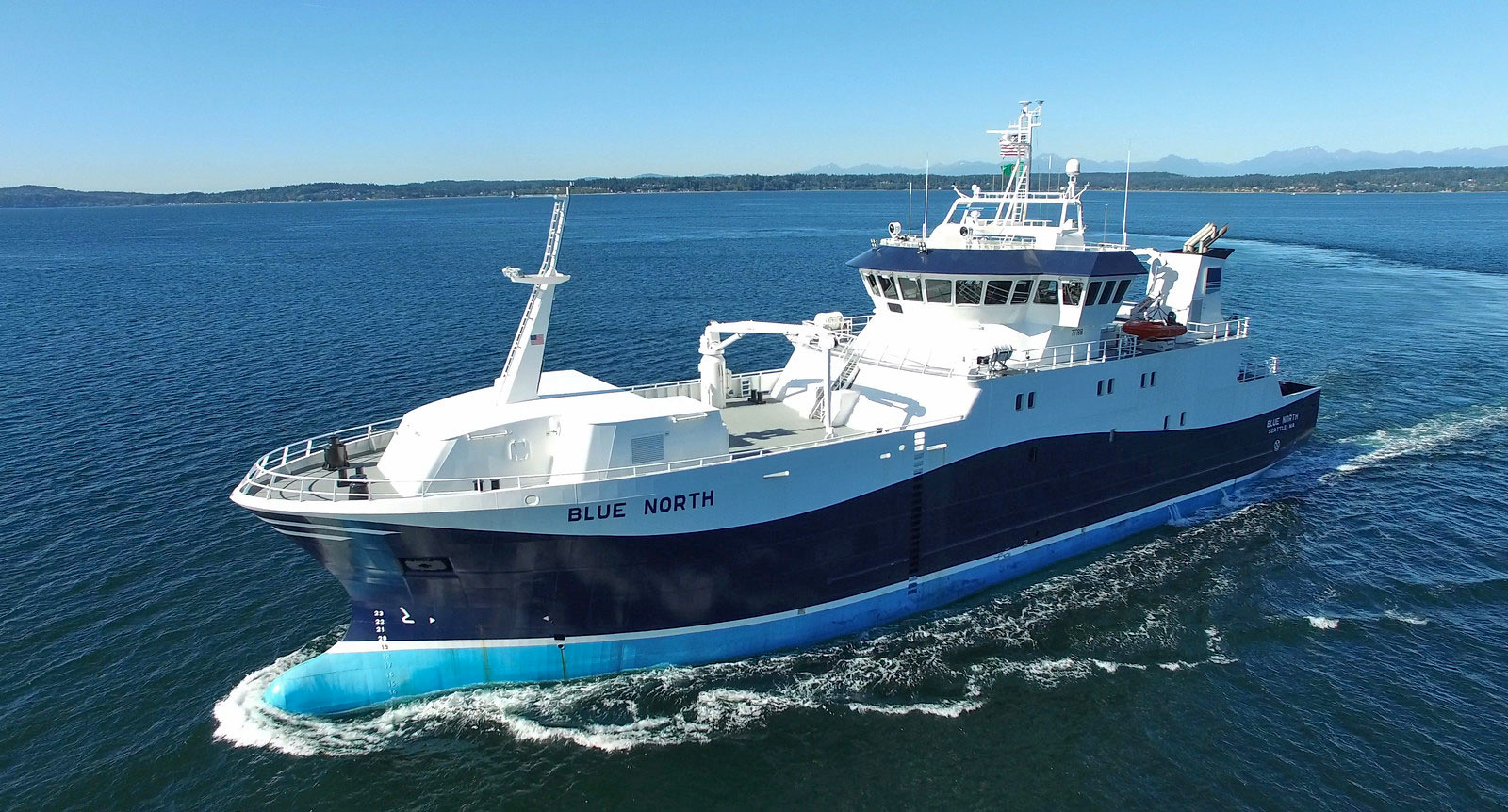
Fishermen Michael and Patrick Burns practice humane fishing techniques on their vessel, Blue North. (Photo by Kevin J. Suver/Blue North)
Despite the evidence of conscious suffering in fish, they are not typically afforded the kind of legal protections given to farm animals, lab animals, and pets in many countries around the world. The United Kingdom has some of the most progressive animal welfare legislation, which typically covers all nonhuman vertebrates. In Canada and Australia, animal welfare laws are more piecemeal, varying from one state or province to another; some protect fish, some don’t. Japan’s relevant legislation largely neglects fish. China has very few substantive animal welfare laws of any kind. And in the United States, the Animal Welfare Act protects most warm-blooded animals used in research and sold as pets, but excludes fish, amphibians, and reptiles. Yet the sheer number of fish killed for food and bred for pet stores dwarfs the corresponding numbers of mammals, birds, and reptiles. Annually, about 70 billion land animals are killed for food around the world. That number includes chickens, other poultry, and all forms of livestock. In contrast, an estimated 10 to 100 billion farmed fish are killed globally every year, and about another one to three trillion fish are caught from the wild. The number of fish killed each year far exceeds the number of people who have ever existed on Earth.
“We have largely thought of fish as very alien and very simple, so we didn’t really care how we killed them,” Braithwaite says. “If we look at trawl netting, that’s a pretty gruesome way for fish to die: the barometric trauma of getting ripped from the ocean into open air, and then slowly suffocating. Can we do that more humanely? Yes. Should we? Probably, yes. We’re mostly not doing it at the moment because it’s more expensive to kill fish humanely, especially in the wild.”
**********
In some countries, such as the United Kingdom and Norway, fish farms have largely adopted humane slaughter methods. Instead of suffocating fish in air—the easiest and historically the most common practice—or freezing them to death in ice water, or poisoning them with carbon dioxide, they render fish unconscious with either a quick blow to the head or strong electrical currents, then pierce their brains or bleed them out. In Norway, Hanne Digre and her colleagues at the research organization SINTEF have brought these techniques onto commercial fishing vessels on a trial basis to investigate whether humane slaughter is feasible out at sea.
In a series of experiments, Digre and her colleagues tested different open-sea slaughter methods on a variety of species. They found that cod and haddock stored in dry bins on ships after harvest remained conscious for at least two hours. An electric shock delivered immediately after bringing fish onto a ship could knock them unconscious, but only if the current was strong enough. If the electric shock was too weak, the fish were merely immobilized. Some species, such as saithe, tended to break their spines and bleed internally when shocked; others, such as cod, struggled much less. Some fish regained consciousness about 10 minutes after being stunned, so the researchers recommend cutting their throats within 30 seconds of an electric shock.
In the United States, two brothers are pioneering a new kind of humane fishing. In fall of 2016, Michael and Patrick Burns, both longtime fishermen and cattle ranchers, launched a unique fishing vessel named Blue North. The 58-meter boat, which can carry about 750 tonnes and a crew of 26, specializes in harvesting Pacific cod from the Bering Sea. The crew works within a temperature-controlled room in the middle of the boat, which houses a moon pool—a hole through which they haul up fish one at a time. This sanctuary protects the crew from the elements and gives them much more control over the act of fishing than they would have on an ordinary vessel. Within seconds of bringing a fish to the surface, the crew moves it to a stun table that renders the animal unconscious with about 10 volts of direct current. The fish are then bled.
The Burns brothers were initially inspired by groundbreaking research on humane slaughter facilities for livestock conducted by Colorado State University animal science professor and internationally renowned autism spokesperson Temple Grandin. By considering the perspectives of the animals themselves, Grandin’s innovative designs greatly reduced stress, panic, and injury in cattle being herded toward an abattoir, while simultaneously making the whole process more efficient for ranchers. “One day it occurred to me, why couldn’t we take some of those principles and apply them to the fishing industry? Michael recalls. Inspired by moon pools on Norwegian fishing vessels, and the use of electrical stunning in various forms of animal husbandry, they designed Blue North. Michael thinks his new ship is one of perhaps two vessels in the world to consistently use electrical stunning on wild-caught fish. “We believe that fish are sentient beings, that they do experience panic and stress,” he says. “We have come up with a method to stop that.”
Right now, the Burns brothers export the cod they catch to Japan, China, France, Spain, Denmark, and Norway. The fact that the fish are humanely harvested has not been a big draw for their main buyers, Michael says, but he expects that will change. He and his team have been speaking with various animal welfare organizations to develop new standards and certifications for humanely caught wild fish. “It will become more common,” Michael says. “A lot of people out there are concerned with where their food comes from and how it’s handled.”
Meanwhile, the vast majority of the trillions of fish slaughtered annually are killed in ways that likely cause them immense pain. The truth is that even the adoption of humane slaughter methods in more progressive countries has not been entirely or even primarily motivated by ethics. Rather, such changes are driven by profit. Studies have shown that reducing stress in farmed and caught fish, killing them swiftly and efficiently with minimal struggle, improves the quality of the meat that eventually makes it to market. The flesh of fish killed humanely is often smoother and less blemished. When we treat fish well, we don’t really do it for their sake; we do it for ours.
**********
“I’ve always had a natural empathy for animals and had no reason to exclude fish,” Brown says. “At that park [in Melbourne], they didn’t have any concern that there were fish in there and they might need some water. There was no attempt to save them or house them whatsoever. I was shocked by that at that age, and I still see that kind of callous disregard for fish in people today in all sorts of contexts. In all the time since we discovered the first evidence for pain in fish, I don’t think public perception has moved an ounce.”
Lately, I’ve been spending a lot of time at my local pet stores, watching the fish. They move restlessly, noiselessly—leglessly pacing from one side of their tanks to another. Some hang in the water, heads tilted up, as though caught on an invisible line. A glint of scales draws my attention; an unexpected swatch of color. I try to look one in the eye—a depthless disc of obsidian. Its mouth moves so mechanically, like a sliding door stuck in a loop. I look at these fish, I enjoy looking at them, I do not wish them any harm; yet I almost never wonder what they are thinking or feeling. Fish are our direct evolutionary ancestors. They are the original vertebrates, the scaly, stubby-limbed pioneers who crawled still wet from the sea and colonized the land. So many gulfs separate us now: geographical, anatomical, psychological. We can understand, rationally, the overwhelming evidence for fish sentience. But the facts are not enough. Genuinely pitying a fish seems to require an Olympian feat of empathy.
Perhaps, though, our typical interactions with fish—the placid pet in a glass puddle, or the garnished filet on a plate—are too circumscribed to reveal a capacity for suffering. I recently learned of a culinary tradition, still practiced today, known as ikizukuri: eating the raw flesh of a living fish. You can find videos online. In one, a chef covers a fish’s face with a cloth and holds it down as he shaves off its scales with something like a crude cheese grater. He begins to slice the fish lengthwise with a large knife, but the creature leaps violently from his grasp and somersaults into a nearby sink. The chef reclaims the fish and continues slicing away both its flanks. Blood as dark as pomegranate juice spills out. He immerses the fish in a bowl of ice water as he prepares the sashimi. The whole fish will be served on a plate with shaved daikon and shiso leaves, rectangular chunks of its flesh piled neatly in its hollowed side, its mouth and gills still flapping, and the occasional shudder rippling across the length of its body.
Eating raw fish can lead to anisakiasis, a disease caused by parasitic worms.
Sushi has a healthy reputation – it can be low fat and high in protein – but a new report serves as a stark reminder that sushi made with raw fish can carry a dangerous parasite. Doctors warn that it’s becoming a greater problem in Western countries as more people eat sushi, and they documented one recent case that serves as a cautionary tale.
The case of a previously healthy 32-year-old man from Lisbon, Portugal, is featured in the medical journal BMJ Case Reports this week. The man was suffering from a bout of stomach pain for more than a week, and experienced vomiting and a fever.
When doctors questioned him about his symptoms and history, he revealed that he had recently eaten sushi.
Doctors performed an endoscopy – a scope test that uses a tiny camera on the end of a long, flexible tube to view the upper digestive system – and discovered he had parasite larvae attached to the lining of his stomach wall.
The culprit: Anisakiasis, a disease caused by parasitic worms.
“It is caused by the consumption of contaminated raw or undercooked fish or seafood,” the authors wrote in their case study.
Photos published with their account of the case show a worm “firmly attached” inside the man’s stomach.
Surgeons used a special device, called a Roth net, to remove the parasite, and the man’s symptoms resolved.
Most cases of the parasite have previously occurred in Japan, but the disease has been increasingly recognized as a problem in the West, the authors wrote.
Patients can have other symptoms too, including nausea, digestive bleeding, bowel obstruction, inflammation of the abdomen and allergic symptoms including itching and anaphalaxis, a severe and life-threatening reaction, according to the U.S. Centers for Disease Control and Prevention.
Dr. Daniel Eiras, assistant professor of infectious diseases at NYU Langone Medical Center, told CBS News that it’s pretty rare to see cases in the U.S. He’s only seen one case about two years ago, in a 45-year-old man.
“He was having reflux and severe abdominal pain. They thought he had a mass in his belly, cancer in his small intestine, so they took out the mass and looked at it under the microscope and it was one of these worms,” said Eiras.
Cases of anisakiasis are probably widely underreported, though, he said, because primary care doctors and pharmacists, the first health care professionals an infected person might consult with, typically aren’t aware of or looking for this type of parasite.
“We don’t do endoscopies on every person with stomach complaints, so we don’t know. Presumably there are many people who get anisakiasis and it gets sloughed out of their digestive system. It doesn’t lay eggs or continuously infect the intestine,” Eiras said.
So, only cases where the parasite actually embeds in the stomach or intestine wall may actually come to light, he explained.
The parasite can crop up in raw or undercooked seafood such as cod, fluke, haddock and monk fish.
Dr. Donald Hensrud, medical director of the Mayo Clinic Healthy Living Program and specialist in nutrition and preventive medicine, told CBS News that pregnant women and people with compromised immune systems, such as HIV patients or individuals taking biologic drugs, should avoid raw or undercooked fish and seafood. They can carry a risk for other illnesses, too.
Don’t eat raw fish at sketchy restaurants, either, Eiras recommended.
“I would not go to a restaurant with a ‘C’ rating in New York largely for this reason. It’s a big red flag when a sushi restaurant can’t maintain an ‘A’ rating, because one of the main things they get rated on is refrigeration. They’re not cooking the fish so that is the only prevention method, keeping it cold,” he said.
The same goes for eating ceviche — a dish made from raw fish and cured in lemon or lime juice — and poke, a Hawaiian raw fish salad that’s increasingly popping up on menus.
When preparing fish at home, cook seafood to an internal temperature of 145 degrees Fahrenheit, the U.S. Food and Drug Administration recommends. The FDA says freezing fish can kill parasites, too.
ANNAPOLIS, Md. – (AP) – A moratorium on fishing for cownose rays has been passed by the Maryland General Assembly.
The legislature voted Wednesday to send the bill to Gov. Larry Hogan.
It creates a moratorium on contests that involve killing the rays until July 1, 2019. It also requires the Department of Natural Resources to prepare a fisheries management plan by Dec. 31, 2018.
The Humane Society of the United States has condemned the contests. The organization is calling the bill a major step in protecting Chesapeake Bay wildlife.
Legislation initially called for a ban. The moratorium was part of a compromise. Opponents of a permanent ban say the rays have been identified as damaging to bay oyster populations, but supporters say science has shown the rays are not responsible for oyster declines.
Nicolas Daniel’s documentary “Fillet-Oh-Fish” takes a critical look at the fish industry, featuring exclusive footage from fish farms and factories across the globe. Many still have a rather romanticized view of fishing, but when it comes to large-scale food production, the picture is actually rather grim.
Today’s fisheries are faced with a range of severe problems, from overfishing to chemical pollution and genetic mutation from toxic exposures. As noted by the producers of the film, “through intensive farming and global pollution, the flesh of the fish we eat has turned into a deadly chemical cocktail.”1
Despite that, the fish business is booming, in part due to efforts to keep the dirty underbelly of modern fisheries from public sight.
Aquaculture promotes itself as a sustainable solution to overfishing. But in reality, fish farms actually cause more problems than they solve. There’s really little difference, in terms of environmental pollution, between land-based feedlots and water-based ones.
Farmed Salmon — One of the Most Toxic Foods in the World?
The film starts off in Norway, looking at the chemicals used in fish farms. Kurt Oddekalv is a respected Norwegian environmental activist, and he believes salmon farming is a disaster both for the environment and for human health.
Below the salmon farms dotted across the Norwegian fjords, there’s a layer of waste some 15 meters high, teeming with bacteria, drugs, and pesticides. In short, the entire sea floor has been destroyed, and since the farms are located in open water, the pollution from these farms is in no way contained.
A salmon farm can hold upwards of 2 million salmon in a relatively small amount of space. These crowded conditions result in disease, which spreads rapidly among the stressed salmon.
According to Oddekalv, sea lice, Pancreas Disease(PD)2 and Infectious Salmon Anemia Virus (ISA) have spread all across Norway, yet consumers are not informed of these fish pandemics, and sale of these diseased fish continue unabated.
A number of dangerous pesticides are used in an effort to stave off disease-causing pests, one of which is known to have neurotoxic effects. Fish has always been considered a health food, but according to Oddekalv, today’s farmed salmon is one of the most toxic foods in the world!
Toxicology researcher Jerome Ruzzin has confirmed Oddekalv’s claims. He’s tested a number of different food groups sold in Norway for toxins, and indeed, farmed salmon contains the greatest amount of toxins of them all, and by an incredibly large margin.
Overall, farmed salmon is five times more toxic than any other food product tested. In animal feeding studies, mice fed farmed salmon grew obese, with thick layers of fat around their internal organs. They also developed diabetes.
Ruzzin notes that a theory gaining traction is that rising rates of obesity is related to the increasing number of toxins and pollutants we’re exposed to through our environment and food. In light of his own studies, Ruzzin has stopped eating farmed salmon.
Genetic Mutations and Other Crazy Facts
Besides keeping pests like sea lice in check, the pesticides used also affect the fish’s DNA, causing genetic mutations. Disturbing examples of deformed cod are shown in the film.
What’s even more disturbing is that, according to Oddekalv, about 50 percent of farmed cod are deformed in this fashion, and female cod that escape from farms are known to mate with wild cod, spreading the genetic mutations and deformities into the wild population.
Farmed salmon suffer less visible but equally disturbing mutations. The flesh of the farmed salmon is “brittle,” and breaks apart when bent — a highly abnormal feature.
The nutritional content is also wildly abnormal. Wild salmon contains about 5 to 7 percent fat, whereas the farmed variety can contain anywhere from 14.5 to 34 percent.
Many toxins accumulate most readily in fat, which means even when raised in similarly contaminated conditions, farmed salmon will contain far more toxins than wild.
Shockingly, research reveals that the most significant source of toxic exposure is not actually the pesticides or the antibiotics, but the dry pellet feed! Pollutants found in the fish feed include dioxins, PCBs, and a number of different drugs and chemicals.
What Makes the Fish Feed so Toxic?
So what’s wrong with the fish feed? Why is it so toxic? In one Norwegian fish pellet plant, the main ingredient turns out to be eel, used for their high protein and fat content, and other fatty fish from the Baltic Sea.
That’s where the problem begins, as the Baltic is highly polluted. Some of the fish used have toxic levels of pollutants, which then simply get incorporated into the feed pellets.
In Sweden, fish mongers are now required to warn patrons about the potential toxicity of Baltic fish. According to government recommendations, you should not eat fatty fish like herring more than once a week, and if you’re pregnant, fish from the Baltic should be avoided altogether.
Swedish Greenpeace activist Jan Isakson reveals some of the sources of all this pollution. Just outside of Stockholm, there’s a massive paper mill on the bank of the Baltic that generates toxic dioxins.
Nine other industrialized countries surrounding the Baltic Sea also dump their toxic waste into this closed body of water. Dioxins bind to fat, which is why herring, eel, and salmon are particularly vulnerable, and end up accumulating higher amounts than other fish.
As a result of being deemed unfit for human consumption, some of these fatty fish are now primarily used as fish food. In this way, toxicity in the farmed salmon is allowed to build up even higher than in the wild.
Scotland’s salmon farming industry is being eaten away by sea lice, the parasite that stalks large concentrations of farmed fish. Latest figures from Marine Harvest, the Norwegian multinational that owns most of the Scottish ‘farms’, show that despite its self-styled reputation as a clean, green country, Scotland has by far the worst sea lice problem of any producer nation. In 2014, 28% of sites were affected; by 2015 that figure had jumped to 49%. Equivalent levels on Norwegian and Irish farms were 5% and 18% respectively.
No technical fix can control Scotland’s now endemic lice, not even dosing every tonne of fish with 42 litres of hydrogen peroxide. The Thermolicer, a machine that immerses fish briefly in warm water, was presented as a solution until last year, when it cooked to death 95,000 fish in one incident. And no wonder lice are having a field day. These caged fish are already weakened by endemic amoebic gill disease, which generous doses of antibiotics barely contain.
Any image of Scottish aquaculture as a job-creating cottage industry has been washed away. Its business story is poor also. Politicians once cited the 6,000 jobs it sustained directly, but the true figure now stands at 2,200. Reduced output, combined with a hefty bill for drugs and chemicals, is making the industry less profitable, yet pushing up prices.
The gloss is off the Scottish salmon brand. Fewer and fewer aspiring restaurants put farmed salmon on their menu. Its image is dull at best, highly contentious at worst, and because it’s so flabby and oily, even the best chefs toil to make something of it.
Yet Fergus Ewing, the Scottish secretary for the rural economy, backs the Norwegian salmon industry’s plan to double its business in Scotland by 2030. And the Scottish Environmental Protection Agency is considering proposals to site the world’s biggest salmon farm in Orkney or Shetland, even though by its own calculation, the faecal waste from the two million-fish mega-farm would be equivalent to the sewage from a city the size of Glasgow.
It’s time for politicians to learn from experience. Scotland is already mired into dirty salmon farming. Don’t make matters worse by going in any deeper.
Joanna Blythman is a journalist and author of Swallow This
Salmon have been swimming in Pacific Northwest waters for at least 7 million years, as indicated by fossils of large saber-tooth salmon found in the area. During that time, they’ve been a key species in intricate, interconnected coastal ecosystems, bringing nitrogen and other nutrients from the ocean and up streams and rivers to spawning grounds, feeding whales, bears and eagles and fertilizing the magnificent coastal rainforests along the way.
Salmon have been swimming in Pacific Northwest waters for at least seven million years.iStockFor as long as people have lived in the area, salmon have been an important food source and have helped shape cultural identities. But something is happening to Pacific coast salmon.
This year, British Columbia’s sockeye salmon run was the lowest in recorded history. Commercial and First Nations fisheries on the world’s biggest sockeye run on British Columbia’s longest river, the Fraser, closed. Fewer than 900,000 sockeye out of a projected 2.2 million returned to the Fraser to spawn. Areas once teeming with salmon are all but empty.
Salmon define West Coast communities, especially Indigenous ones. The West Coast is a Pacific salmon forest. Today, salmon provide food and contribute to sustainable economies built on fishing and ecotourism. West Coast children learn about the salmon life cycle early in their studies.
Salmon migrations, stretching up to 3,000 kilometers, are among the world’s most awe-inspiring. After spending adult lives in the ocean, salmon make the arduous trip up rivers against the current, returning to spawn and die where they hatched. Only one out of every thousand salmon manages to survive and return to its freshwater birthplace.
So what’s going wrong? Climate change is amplifying a long list of stressors salmon already face. Sockeye salmon are sensitive to temperature changes, so higher ocean and river temperatures can have serious impacts. Even small degrees of warming can kill them. Low river flows from unusually small snowpacks linked to climate change make a tough journey even harder.
Oceans absorb the brunt of our climate pollution—more than 90 percent of emissions-trapped heat since the 1970s. Most warming takes place near the surface, where salmon travel, with the upper 75 meters warming 0.11 C per decade between 1971 and 2010. Although ocean temperatures have always fluctuated, climate change is lengthening those fluctuations. A giant mass of warmer-than-average water in the Pacific, known as “the blob,” made ocean conditions even warmer, with El Niño adding to increased temperatures. Salmon have less food and face new predators migrating north to beat the heat.
Beyond creating poor environmental conditions for salmon, climate change increases disease risks. Warm conditions have led to sea lice outbreaks in farmed and wild salmon, and a heart and muscle inflammatory disease has been found in at least one farm. Scientists researching salmon movement through areas with farms are finding wild fish, especially young ones, with elevated parasite levels. Diseases that cause even slight deficiencies in swimming speed or feeding ability could make these marathon swimmers easy prey.
Government creates marine protected areas around four islands in the Pacific and Atlantic, with commercial fishing banned in some areas
One of the world’s biggest marine protected ares will be created around the Pitcairn Islands
Adam Vaughan
Thursday 15 September 2016 06.
In total, the government is creating marine protected areas around four islands in the Pacific and Atlantic, including the designation this week of one of the world’s biggest around the Pitcairn Islands.
A 840,000 sq km (320,000 sq mile) area around Pitcairn, where the mutineers of the Bounty settled, becomes a no-take zone for any fishing from this week. St Helena, around 445,000 sq km of the south Atlantic ocean and home to whale sharks and humpbacks, is now also designated as a protected area.
The foreign office said it would designate two further marine protection zones, one each around two south Altantic islands – Ascension by 2019 and Tristan da Cunha by 2020.
The stories you need to read, in one handy email
Read more
Sir Alan Duncan, minister of state for Europe and the Americas, said: “Protecting 4m sq km of ocean is a fantastic achievement, converting our historic legacy into modern environmental success.”
Commercial fishing will be banned in all of Pitcairn’s zone – excepting ‘sustainable’ local fishing – and half of the 445,390 sq km Ascension protected area. Fishing will be allowed in the other areas, but activities such as oil drilling will be prohibited.
Conservationists welcomed the new protections. “By protecting the vast array of marine life within these rich waters, the United Kingdom has solidified its position as a leader in ocean conservation,” said Joshua S Reichert, of the Pew Charitable Trusts, which is working with the UK on technology to monitor the Pitcairn area.
Jonathan Hall, the RSPB’s head of UK Overseas Territories, said: “This is simply enormous and shows world-leading vision.”
Advertisement
The UK announcement, at the Our Oceans summit in Washington, came as the White House said the US would ban fishing in a 5,000 sq km area in the Altantic, known as the Northeast Canyons and Seamounts marine national monument. That followed Barack Obama’s expansion last month of the Papahānaumokuākea monument off Hawaii.
In his speech at the Washington conference, Duncan quipped: “this was going to have been my big moment, because until last week the Pitcairn MPA would have been the largest in the world. But President Obama sort of rather blew that out of the water by announcing an even bigger MPA in Hawaii – trust the Yanks to indulge in a bit of one-upmanship over us poor Brits.
“But we’re happy as our loss is the world’s gain and we congratulate the United States.”
This week, scientists warned that humanity is driving an unprecedented extinction of the largest marine creatures that could affect ocean ecology for millions of years. Experts said the large range required for such creatures meant large-scale marine protected areas would be a key part of addressing the problem.

![Great White Shark Steals Fisherman's Catch Off Cape Cod [WATCH]](https://cdn20.patchcdn.com/users/22877254/20180724/023418/styles/T800x600/public/processed_images/shutterstock_9750821a_2-1532050811-9083-1532457228-8245.jpg)

/https://public-media.smithsonianmag.com/filer/d6/93/d6939718-4e41-44a8-a8f3-d13648d2bcd0/c3npbx.jpg)



 Exposing the Big Game
/https://public-media.smithsonianmag.com/filer/d6/93/d6939718-4e41-44a8-a8f3-d13648d2bcd0/c3npbx.jpg)