Badger cull called off in Gloucestershire

Pilot cull to end earlier than planned after Natural England revokes license

The Guardian,              Friday 29 November 2013

Badger cull ends

The collapse of the badger culling trial in Gloucestershire represents a humiliation for the government’s policy on reducing bovine TB. Photograph: Ben Birchall/PA

The controversial badger cull in Gloucestershire is being abandoned after  marksmen failed to kill enough animals to meet even drastically reduced targets, the Guardian revealed on Friday.

The collapse of the culling trial represents a humiliation for the government’s policy as it means every target set has now been missed.

Natural England (NE) will revoke the culling licence and the cull will end at noon on Saturday, three weeks earlier than planned. The cull, intended to help curb tuberculosis in cattle, was initially tasked with killing 70% of all badgers in the area in a maximum of six weeks.

More of this Story: http://www.theguardian.com/environment/2013/nov/29/badger-cull-called-off-gloucestershire

Tea Party Bill Would Eviscerate Endangered Species Act

http://www.biologicaldiversity.org/news/press_releases/2013/endangered-species-act-11-22-2013.html

For Immediate Release, November 22, 2013

Contact: Brett  Hartl, (202) 817-8121

Tea Party Bill Would Eviscerate  Endangered Species Act

As America  Celebrates 40th Anniversary of Landmark Law, Right-wing Senators  Seek to Tear It Apart

              WASHINGTON— Tea Party senators introduced a  bill this week that would effectively end the protection of most endangered  species in the United States and gut some of the most important provisions of  the Endangered Species Act. Senate Bill 1731, introduced by Tea Party Sens.  Rand Paul, Mike Lee and Dean Heller, would end protections for most of the  species that are currently protected by the Act and make it virtually  impossible to protect new species under the law. It would also eliminate protection  for habitat that’s critical to the survival of rare and struggling animals and  plants around the country.

“Here we are celebrating the 40th  anniversary of the Endangered Species Act this year, and the Tea Party wants to  tear it limb from limb,” said Brett Hartl, endangered species policy director  at the Center for Biological Diversity. “It’s really a sad testament to how out  of touch the Tea Party has become with the American people, and how beholden  they are to industry special interests that are more interested in profits than  saving wildlife, wild places and a livable future for the next generation.”

In its 40-year history, the Endangered  Species Act has been more than 99 percent successful at preventing extinction  for wildlife under its protection and has put hundreds of plants and animals on  the path to recovery, including bald eagles, grizzly bears, whales and sea  turtles.

Despite this successful track record, the bill’s  most extreme provision would require that every five years all protected species be removed from the list of threatened and  endangered species, eliminating all legal protections. No matter how close to extinction they might be, every  listed species would then have to wait until Congress passed a joint resolution  renewing their protections under the Act for another five years. Five years  later, this process would start over again, eliminating all protections until  Congress passed another joint resolution.

“The strength of the Endangered Species Act  — in fact all of our nation’s environmental laws — comes from the requirement  that science, not politics, guide the protection of our wildlife, air and  water,” said Hartl. “This bill would allow extreme ideologues in Congress to  veto environmental protections for any protected species they wanted, just so  they could appease their special-interest benefactors.”

The bill would eliminate all protections for  the critical habitat of endangered species and allow state governments to  effectively veto any conservation measures designed to protect an imperiled  species within their respective state. Meanwhile federal wildlife agencies  would need to complete onerous accounting reports to estimate the costs of  protecting endangered species rather than completing tangible, on-the-ground  conservation activities to protect species and the places they live.

“This bill would devastate species  protections and open the door to log, mine and pave some of the last places on  Earth where these animals survive,” Hartl said. “It’s a boon for profiteers  like the Koch Brothers but will rob every American who values wildlife and wild  places.”

The Center for Biological Diversity is a  national, nonprofit conservation organization with more than 625,000  members and online activists dedicated to the protection of endangered species  and wild places.

How are Deer Managed by State Wildlife Agencies?

http://animalrights.about.com/od/wildlife/a/DeerManagement.htm

By

Most people think of wildlife management agencies as serving the ecosystem, interfering minimally and mainly to preserve wildlife. These agencies do have programs to protect endangered species and to protect habitat in general. But instead of managing wildlife solely for the optimal health of the ecosystem, state wildlife management agencies also manage wildlife for recreation. The agencies have a financial incentive to do so.

Deer as a Resource

To these agencies, deer are a resource, not sentient beings with their own inherent rights. The resource must be conserved, or used wisely, so that there will be plenty of deer for future generations of hunters. As a result, deer management is usually designed to keep the deer population high. For example, the Arizona Game and Fish Department’s mission is:

To conserve, enhance, and restore Arizona’s diverse wildlife resources and habitats through aggressive protection and management programs, and to provide wildlife resources and safe watercraft and off-highway vehicle recreation for the enjoyment, appreciation, and use by present and future generations.

The desire for a high deer population led Pennsylvania and other states to stock deer in the early 20th century.

The Wisconsin Department of Natural Resources states in their annual report: “We rank first in the country for the highest single year deer harvest on record and are number one for deer harvest over the past decade. All of us work hard to keep it that way.”

The New York Department of Environmental Conservation takes the “needs” of hunters into account when determining their goals for deer management:

The goal is to balance deer with their habitat, human land uses and recreational interests. Ecological concerns and the needs of landowners, hunters, and other interest groups must be considered.

The Pennsylvania Game Commission also considers the desires of hunters in their deer management strategy:

Managing Pennsylvania’s deer herd is an enormous undertaking that frequently includes input from everyone from hunters and naturalists to farmers, foresters and suburbanites. Each has his or her own idea about how many deer we should have. As a general rule, hunters want as many as possible. Still others, particularly people made a living from their land, prefer fewer deer. But history has shown that no one group gets its way entirely.

These are just a few examples of state wildlife management agencies stating that they manage the deer population in a way that increases recreational hunting opportunities for hunters.

Financial Incentives

Most people find it incredible that their state wildlife management agencies are trying to keep deer populations high when so many residents complain that there are too many deer, but the agencies have financial incentives for pleasing hunters. The agencies depend on sales of hunting licenses for their funding, and hunters like a high deer population. The Michigan Department of Natural Resources states on their website:

Michigan hunters have supplied millions of dollars for the development of hunting regulations based on scientific data. They have also provided funds to enforce those rules in the field. Millions of dollars have been contributed for the acquisition of land and for the improvement of deer habitat on those lands. In many cases, legislative action to protect deer, acquire land, and improve deer range has been initiated by hunters themselves. This partnership among the Michigan deer hunter, the Department of Natural Resources, and the Michigan Legislature speaks well of our ability as citizens to work together through state government to manage wildlife.

Also, the federal Pittman-Robertson Act gives money from the excise taxes on sales of guns and ammunition to state wildlife agencies to increase wildlife populations. Pittman Robertson funds can also be used for land acquisition, hunter safety education and for the construction and maintenance of target ranges. To be eligible for Pittman-Robertson funds, a state must not divert money from the sales of hunting & fishing licenses outside of the state’s wildlife management agency.

How Do The Agencies Increase the Deer Popuation?

To increase the deer population, sections of forest in state wildlife management areas are clear-cut, to create the “edge habitat” that is preferred by deer. For example, the Virginia Department of Game and Inland Fisheries recommends for deer management:

Openings in a forested area encourage the production of preferred food plants and may compensate for yearly and seasonal fluctuations in food supplies, like acorns. Natural openings in forests should be maintained. Openings of one to three acres in size should be created, and be strategically located throughout an area to provide diversity and edge.

State wildlife management lands are also sometimes leased to farmers, and the farmers are required to plant deer-preferred crops and leave a certain amount of their crops standing so that the deer will be fed and reproduce more. Sometimes, the state wildlife management agencies will plant “deer mix” themselves, to increase the deer population. For example, the Illinois Department of Natural Resources explains,

Portions of the area are managed under a farm lease program to promote upland wildlife habitat and to demonstrate the potential for producing wildlife on farm lands. Site personnel supplement natural habitats with tree and shrub plantings, native grass seedings, specialty food crop production and succession control.

Of course, animal rights activists oppose hunting and oppose wildlife management that artificially increases the deer population. As long as state wildlife agencies are funded through sales of hunting licenses and Pittman-Robertson funds, they will have an incentive to manage deer as a source of recreation and they will continue to be at odds with animal rights activists.

WA Department of Fish & Wildlife supports wolf delisting

[This isn’t all that surprising considering the attitude of the Washington Department of Wildlife Assistant Director quoted in an earlier post entitled, What Really Motivates a Hunter.]

by GARY CHITTIM / KING 5 Newscopyrighted wolf in river
Posted on October 7, 2013

Four Washington State legislators are crafting a letter questioning the State Department of Fish and Wildlife’s decision to support federal delisting of the gray wolf.

One of the four, Senator Kevin Ranker, said he was shocked a state agency would advocate dropping federal protection of wolves when a recent poll shows the vast majority of Washington State residents support it.

Wolves are currently protected under both the state and federal endangered species acts.

State Fish & Wildlife Director Phil Anderson argued the state protection is more than adequate and the federal listing only gets in the way of Washington State’s approved plan for wolf management. He said he has clearly stated on several occasions that WDFW supports federal delisting but is committed to protecting wolves until they fully recover in the state.

Ranker said he can find no evidence WDFW tried to gather public input before sending a manager to a hearing in Washington D.C. to formally support the delisting.

Anderson said the state has developed a comprehensive protection plan scientifically based on the state’s unique wolf population.

Wis. GOP efforts to expand hunting irk opponents

By TODD RICHMOND, Associated Press

Sunday, September 22, 2013

MADISON, Wis. (AP) — Wisconsin outdoorsmen spent most of the last decade chafing at the state Department of Natural Resources, accusing the agency of ruining hunting with overly strict regulations.

Republican Scott Walker told hunters on the campaign trail things would be different if he was elected governor, and two years later, it is. Walker and his fellow Republicans have reshaped Wisconsin’s outdoors scene with an intense drive to expand hunting.

Some fees have been cut, hunting and trapping in state parks is now OK, wolves are now fair game and it’s no longer necessary to shoot a doe before getting a buck. Supporters say the moves are important to shore up the $1.4 billion hunting industry as interest wanes among a younger generation.

“At the heart of it, legislators are truly trying to promote the hunting heritage, hopefully in perpetuity, so it doesn’t die on the vine,” said Sen. Neal Kedzie, R-Elkhorn, chairman of the Senate’s natural resources committee.

But conservationists and hunting opponents say Republicans and the DNR have tried so hard to please hunters they’ve forgotten non-hunters such as hikers, skiers and birdwatchers.

“I don’t really understand why, instead of promoting all these things, why aren’t they promoting tourism or photography? They’re just not diversifying at all,” said Melissa Smith, organizer of the group Friends of Wisconsin Wolves. “Can’t we encourage people to enjoy the outdoors without killing something?”

Hunting has always been part of the social and economic fabric in Wisconsin. But interest has been waning. According to DNR data, the hunting participation rate for adult males dropped 16 percent between 2000 and 2009. The youth participation rate declined about the same over that span.

DNR hunting officials cite several factors for the dropoff, including aging hunters, a perception that there’s nowhere to hunt and time-consuming video games. Hunter frustration with the DNR was intense over those years, too. They complained about the agency’s earn-a-buck regulations, which required hunters to kill antlerless deer before taking bucks. They also criticized the DNR’s plan to kill as many deer as possible in southwestern Wisconsin to slow the spread of chronic wasting disease.

DNR officials, then under Democratic Gov. Jim Doyle’s administration, said they were following science-based approaches to thin a burgeoning deer herd. But hunters said the tactics were leading to anemic hunts and the agency was ignoring them.

Since Walker and his fellow Republicans took control of state government and the DNR, they’ve eliminated earn-a-buck, created a hunter recruitment council, reduced license fees for first-time hunters and hunters who recruit others to the sport, required online hunter education courses and ended the general prohibition on hunting and trapping in state parks.

They also implemented the state’s first wolf hunt and introduced bills to establish sandhill crane, woodchuck and crossbow deer seasons as well as block local governments from restricting bow and crossbow hunting. The DNR has dusted off plans to import elk in hopes of creating a season on them and is studying how to implement mini deer hunts on private land.

GOP lawmakers and DNR officials say preserving hunting traditions ensures that money exists for conservation — license fees and federal taxes on firearms, ammunition and archery equipment helps fund habitat management — and the balance between species continues.

“When your numbers of new outdoors people … continue to go down, the way to increase those numbers is to make it more accessible,” said Rep. Joel Kleefisch, R-Oconomowoc, an avid hunter who wrote the bills for a sandhill crane season and against local restrictions on bow and crossbow hunting.

The movement has political roots, too. Walker courted hunters on the campaign trail and pro-hunting groups, including the Wisconsin Bear Hunters Association and the Wisconsin Wildlife Federation, have spent tens of thousands of dollars lobbying lawmakers since the GOP took over the Legislature in 2011.

Opposition to the sandhill crane season was so intense Republican leaders never brought the bill up for a floor vote. And hunters’ latitude in state parks won’t be unlimited; the DNR’s board is poised this week to block hunters from firing from and across state park trails and to require trappers to use dog-proof snares in the parks.

But conservationists and animal rights advocates haven’t had much success elsewhere.

A judge this spring let stand the Legislature’s provisions allowing hunters to use dogs to track wolves, a blow to a group of humane societies that argued the practice would lead to bloody wolf-dog fights in the woods. This summer the DNR rejected the Sierra Club’s request to join the committee that crafts wolf hunt policy. DNR Land Division Administrator Kurt Thiede wrote in a letter to the Wisconsin chapter’s executive director, Shahla Werner, that the committee isn’t comprised of groups that oppose wolf management since state law now calls for hunting.

Smith sent a letter to DNR Secretary Cathy Stepp this month complaining non-hunters have nowhere to enjoy nature. She suggested the DNR raise conservation dollars by offering wolf- and bear-watching tours, kayak trips and canoe outings.

“This agency is controlled by a small amount of people with very narrow interests,” she wrote. “That’s why you’re holding onto traditions that are fading away and find yourself in trouble.”

more: http://www.newstimes.com/news/science/article/Wis-GOP-efforts-to-expand-hunting-irk-opponents-4834091.php
Photo Copyright Jim Robertson

Photo Copyright Jim Robertson
Wisconsin #1 for Deer “Harvest”

The Wisconsin Department of Natural Resources boasts: “We rank first in the country for the highest single year deer harvest on record and are number one for deer harvest over the past decade. All of us work hard to keep it that way.”

Yet, according to a new article, Limited deer hunt may happen in three area communities, deer populations are doing too well in some parts of Wisconsin. Ironically, the state DNR is also keen to “control” (read: kill off) their wolf population through hunting and trapping, in part because wolves prey on deer. How contradictory is that?

Ashwaubenon, Allouez and De Pere considering deer population control measures

A limited deer hunt could take place in 2014 in parts of Allouez, Ashwaubenon and De Pere if local officials decide the population is too big for the area.

The municipalities hope to survey the deer population this winter in response to complaints from residents, who said the animals are damaging gardens and creating traffic hazards in certain neighborhoods. But they’re working slowly with this issue, which could prompt worries about safety, objections from animal-rights groups and other potential roadblocks.

Meanwhile, officials in the communities say they’re hearing from growing numbers of residents who don’t like deer grazing in their gardens, or having large animals darting across residential streets.

“We’ve certainly had more sightings of larger groups this year,” said Rex Mehlberg, Ashwaubenon’s director of parks, recreation and forestry. “People are seeing six, eight, 10 of them at a time. One group was 14 or 15.”

Local officials stress that no decisions have been made about whether they would allow a hunt, and that hunting would not take place in parts of town where people would be at risk. First, they would have to decide if they want to do a count of deer by helicopter this winter. The survey cost, estimated at $2,000, would be shared between the communities and likely would be funded in part through a grant.

De Pere officials are scheduled Oct. 1 to discuss funding for the study, said Parks, Recreation and Forestry Director Marty Kosobucki. he said the city also has discussed setting aside some money in its 2014 budget to clover part of the cost of a survey.

In Northeastern Wisconsin and elsewhere, complaints about deer have grown as communities have sprawled into areas that were once rural. Two Rivers was set to vote Monday night on allowing a limited bow hunt this fall.

More: http://www.greenbaypressgazette.com/article/20130916/GPG0101/309160344/Limited-deer-hunt-may-happen-three-area-communities?nclick_check=1

Wildlife Photography ©Jim Robertson, 2013. All Rights Reserved

Wildlife Photography ©Jim Robertson, 2013. All Rights Reserved

Letter: Humans caused geese “problem”

The following is my Letter to the Editor, printed recently in a Seattle area paper…

Dear Editor,

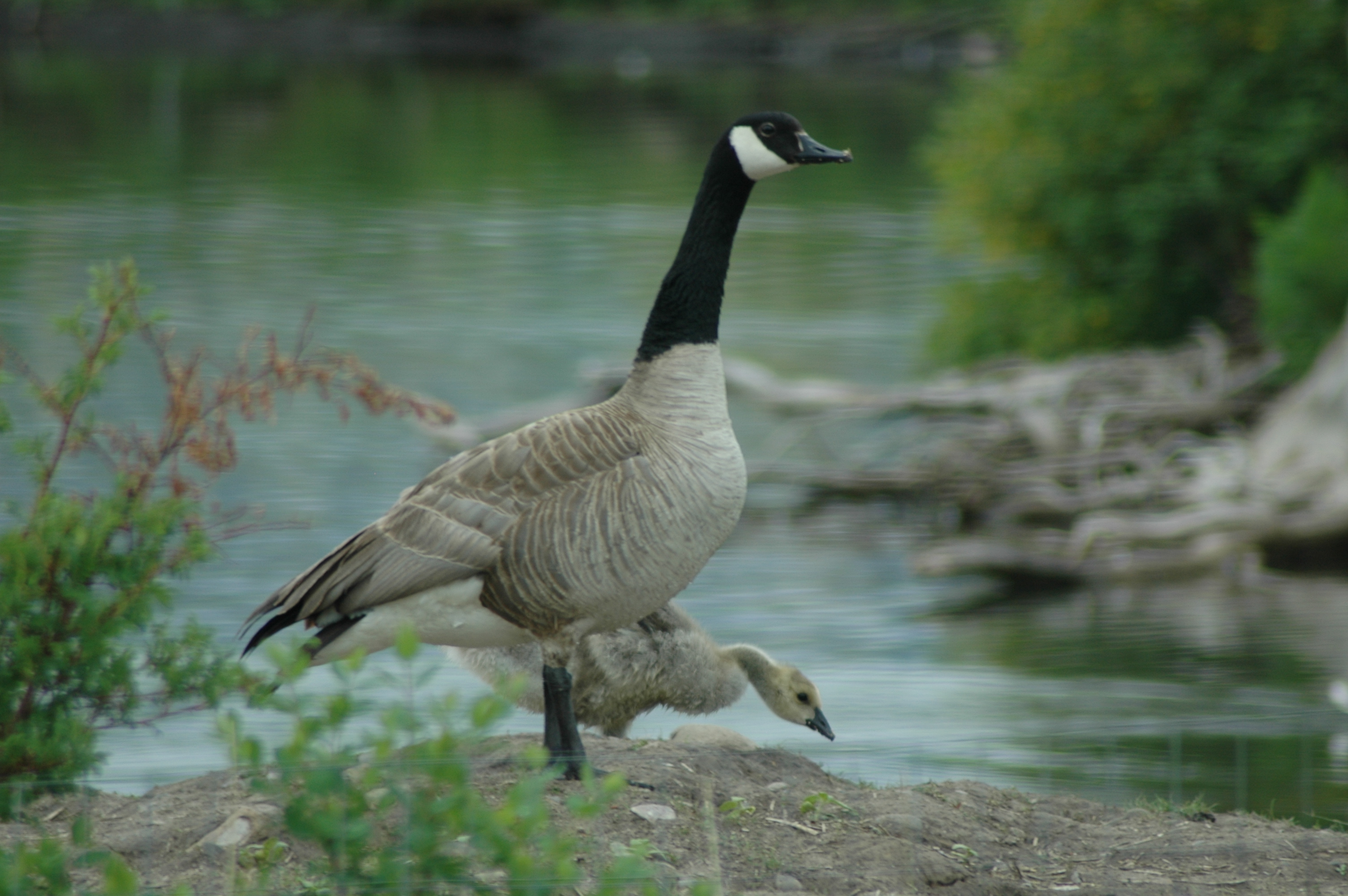
Whenever I read an article like “Canadian geese euthanized at Lake Sammamish State Park” (Aug.7, 2013) I’m appalled by how indifferently someone can report on the extermination of entire families of intelligent, social animals. If people knew geese as personally as I do, they would surely think the species every bit as worthy of respect as our own.

I’ve watched them go through their courtship and nest-building routines, seen a gander loyally guarding his mate while she dutifully incubated her eggs, day and night, throughout windstorms and heavy snowfalls during the fickle Montana spring and witnessed with delight the hatching and rearing of their precious chicks.

The goose situation is all the more maddening since, as with so many other so-called wildlife “problems,” it was brought on by humans themselves. The old growth forests that once grew to the water’s edge were felled years ago; shrubs like salmonberry or huckleberry as well as riparian vegetation that used to house frogs and provided cover for fish have been torn out and replaced with concrete bulkheads, backfill and manicured lawn grass.

The end result of this rampant manipulation is a strange new world, inhospitable for all but the most grass-loving of creatures. And it just so happens that geese, like humans, love mowed lawns. But rather than calling in the death-squad from “Wildlife Services” to fire up their gas chambers, why not try replacing some of the acres of grass with native vegetation? I guarantee the geese will move on to greener pastures.

Jim Robertson

Text and Wildlife Photography ©Jim Robertson, 2013

Text and Wildlife Photography ©Jim Robertson, 2013

Condemning the USDA’s Decision to Slaughter Wild Turkeys

http://freefromharm.org/animal-cruelty-investigation/weighing-in-on-the-usdas-fish-wildlifes-decision-to-slaughter-wild-turkeys/#sthash.fWYeWk8O.dpuf
By Robert Grillo  –  August 15, 2013
Upon discovering a story entitled Feds round up wild turkeys on Staten Island for slaughter, I felt compelled to comment. Please consider leaving a comment as well:

Let’s call this practice what it is: a transparent form of speciesism. In other words, if you’re another species, and you get in our way or become a “nuisance” to us, we’re going to massacre you — not because we have to, but just because we can.

Might makes right. That’s the underlying premise for treating other species like trash, killing them off when they get in our way, destroying their habitat so we can play golf, breeding more so we can use them for target practice, taking away the babies of others so we can view them in captivity for our own amusement, breeding billions of others through artificial insemination so we can destroy their lives in their youth in a slaughterhouse, emptying our oceans of trillions of sentient life forms so we can buy a can of tuna, and then subjecting millions of others to needless pain and suffering in lab experiments intended to find cures for the diseases caused by eating them. We create all of our own conflicts with animals. We create a staged competition with other species to use as a pretext for destroying their lives, “for our own protection,” of course. I rescue and raise chickens and other birds that come from a kill shelter.

The germaphobe chicken keepers in this comment string have got things a little twisted. They blame the victim, not the perpetrator. They blame the birds for defecating. They excuse themselves for a much more egregious offense: buying and using them for their eggs and flesh directly from the hatcheries — the cruelest industries on earth — which creates the problem in the first place. Think for a moment how that victim blaming serves us. Voltaire famously wrote that “If we believe in absurdities, we shall commit atrocities.” What a prophetic statement to describe the utter selfishness and sociopathic age we live in.

turkey-factory-farming

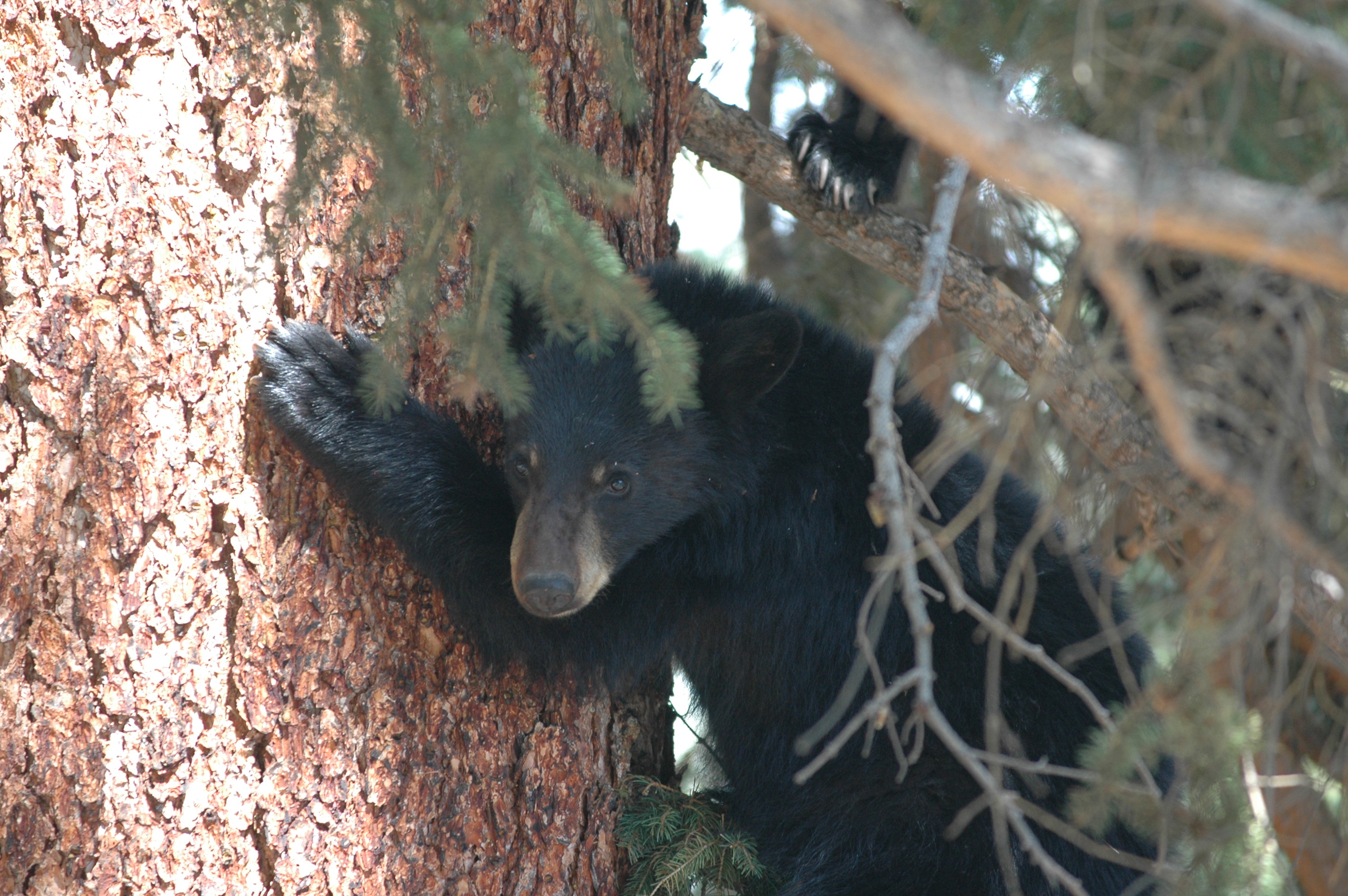
Animal Advocates Say New Mexico’s Bears are Under Siege

Wildlife Photography ©Jim Robertson, 2013. All Rights Reserved

Wildlife Photography ©Jim Robertson, 2013. All Rights Reserved

Renee Blake, Public News Service – NM
August 6, 2013 ALBUQUERQUE, N.M. –

What is being portrayed by some as an infrequent and humane response to hungry bears entering towns looking for food, is actually quite another matter, according to Jan Hayes founder of Sandia Mountain Bear Watch. Hayes is looking for the state to institute stopgap diversionary feeding to keep the bears alive at this difficult time, and keep them away from people.

She said what is happening to Sandia Mountain bears is an ecological disaster, that the drought and lack of food for the bears, along with the hunter-focused attitudes of New Mexico Game and Fish, add up to a decimated bear population. “They want the animals to be there for hunter opportunity,” she said. “Their only mode of management is to trap or kill. The Sandias is a wildlife preserve. So, it’s not a moneymaker for Game and Fish. Bears are a problem species that they would really prefer not be here.”

Stewart Liley, big-game program coordinator for N.M. Game and Fish, said feeding bears would cause them to become increasingly dependent upon artificial food sources. Hayes however said she believes the temporary measure would serve to get the bears “over the hump” and save their population in the Sandia Mountains. She is requesting a meeting with someone in Governor Martinez’ administration on the matter.

Hayes declared that the current style of bear management in the Sandia Mountains has caused an alarming rate of damage that cannot be overcome. “We’re looking at bears that are completely lost to this population. There’s no way they can keep up with reproduction,” she said. “And we also expect 100 percent attrition of first-year cubs this year. They’re very slow reproducing. Our bears don’t even have their first baby until they’re five or six.”

Mary Katherine Ray, Rio Grande Chapter wildlife chair of the Sierra Club, said New Mexico adheres to the North American Wildlife Conservation Model, which says that wildlife, from roadrunners to butterflies, belongs to everyone in the state. That includes the bears in the Sandia Mountains. “We all have a share in owning that wildlife, and it’s supposed to be democratically adjudicated,” Ray declared. “But when you look at the composition of the Game Commission, every last one of them is a hunter.” She said she believes that mindset is getting in the way of seeing the benefits of diversionary feeding.

Ray said that where it has been tried, bears that have been the beneficiaries of diversionary feeding have not become either dependent or dangerous.

See more at: http://www.publicnewsservice.org/index.php?/content/article/33828-1#sthash.l9IhArpU.dpuf