Current legislation that would facilitate the permanent closure of federal grazing allotments

 Wildlife Photography© Jim Robertson

Wildlife Photography© Jim Robertson

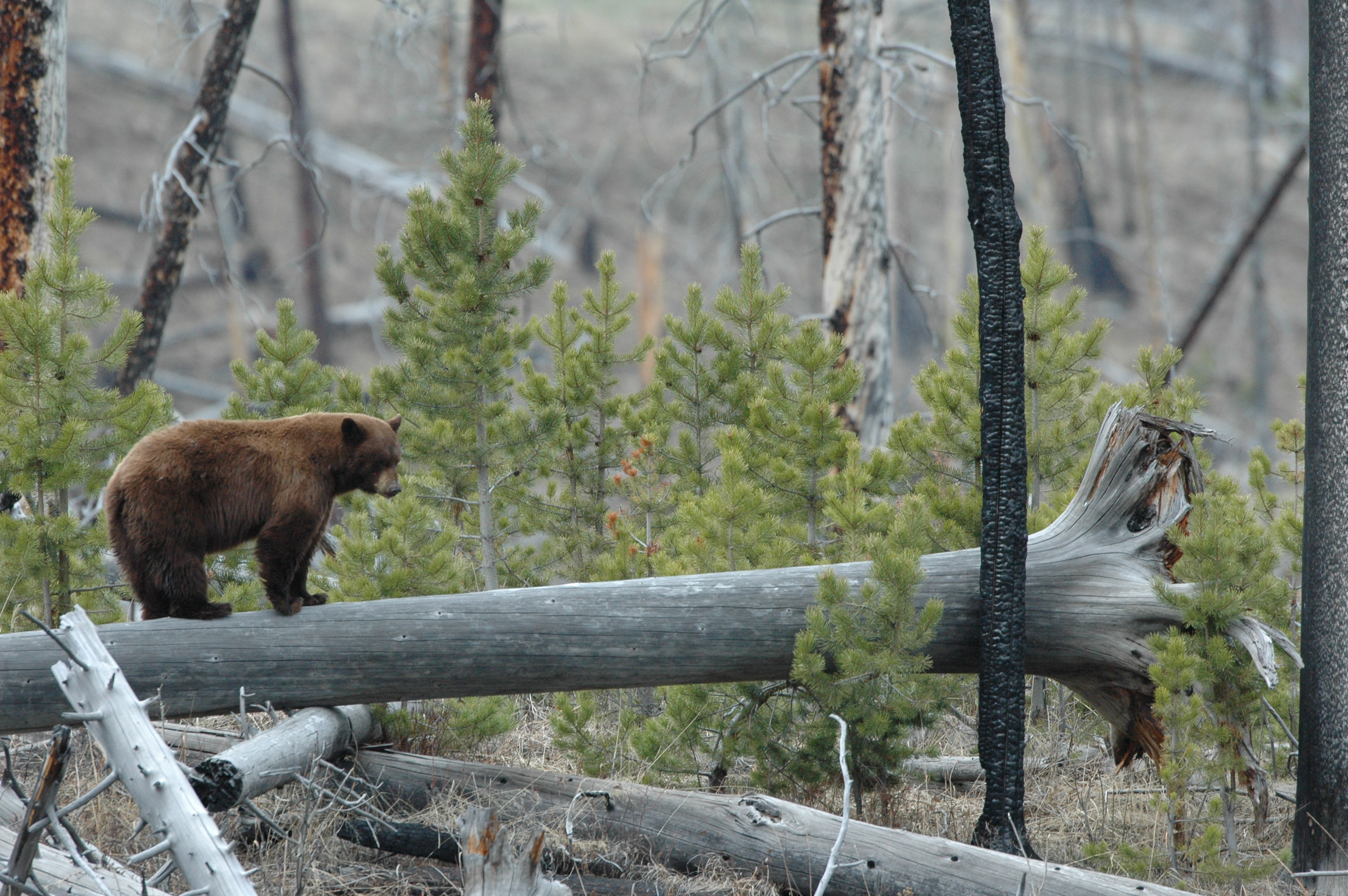
[Livestock grazing allotments are often located on logged or burned-over areas on public land so fragile that it can barely provide for the needs of native wildlife.]

Rural Economic Vitalization Act (REVA)

The Rural Economic Vitalization Act (HR 3410) is the only current legislation of West-wide scope that would facilitate the permanent closure of federal grazing allotments. Upon the bill’s recent introduction, the organization WildEarth Guardians (http://www.wildearthguardians.org/) stated

“Representative Adam Smith is proposing real life, practical solutions to public lands management challenges. This bill offers an equitable, voluntary option for ranchers facing environmental and economic problems on our nation’s public lands and an opportunity for conservationists to restore critical wildlife habitat and water supplies. We support Congressman Smith’s efforts to resolve tough environmental issues in the West.”

If you’ve not yet liked the Facebook page for the legislation, please do so. And please encourage your friends to support it as well.

Other Evils of the Livestock Industry

1011767_10152168496128769_1859093580_n
The following is by Rosemary Lowe:

Thinking Beyond the Animal Factories to Save This Planet

 
 Those out there who are concerned about this planet, the wildlife, the wild places, really need to understand how very destructive the Livestock Industry is, and not just for the factory farming aspects (as horrendous as they are).
Even many Vegans, who rightly abhor  what goes on in animal factories,  ignore, (or are unaware of), the plight of billions of native wild species in the U.S. and around the world. Wild species’ populations are in severe decline , some near extinction, due to livestock grazing on the last open, wild places.
Since the 1880’s the western livestock industry in the U.S., has been responsible for the slaughter of Billions (not millions) of coyotes, bears, wolves, prairie dogs, birds of prey, mountain lions, bobcats, beavers, ferrets, and other wild fauna and flora. This industry is also killing our rivers, streams,  forests, not to mention increasing the volatile gas, methane, that is a by-product of grazing, &  increasing global climate change.
So, while most people are now at least aware of the evil animal factories,  the horror of what goes on “out there” on the range– the vast expanses of our public lands– is hardly mentioned or thought about. It is crucial to also understand that western public lands–wilderness areas, BLM, National Forests, National Grasslands,  National Wildlife Refuges, and state lands–are becoming Domesticated Feed Lots because of the ranching industry. These public lands are the last refuge for wildness, in this Climate Change world!
 No matter how livestock grazing is packaged, it is an industry which is  removing what is wild and replacing it with  Domestication. Every so-called “wildlife problem” west of the Mississippi is really about The Livestock Industry, whether it be actual  grazing, or the raising of crops used for grazing domestic sheep and cattle. The western livestock interests are powerful, vocal, and determined to keep wolves, coyotes, mountain lions, wild horses, & thousands of other species “controlled/managed” with emphasis on aerial shooting, roundups, poisoning, trapping, hunts,  subsidized by taxpayers.
Now, some misguided animal groups, like IDA, and HSUS are falling for the PZP “birth control” method for horses, deer and other wild ungulates–which means more “taming” of the wild west.
What does this trend mean for the future of The Wild, when even so-called “animal people” start Sleeping with The Enemy?
 The great naturalist, professor, author, John A. Livingston, wrote, in Rogue Primate that: “to domesticate…is to amputate its wildness, to tame it; to train or otherwise coerce it into living with, and being of use, to us; to make it a part of our (human) infrastructure.”

We who care, still have a chance to save what is left of wildness, but we don’t have much time. Worse yet, the other living beings–wild non-humans-are fast running out of time.
      __________________________________________________
And John A. Livingston also wrote (and ahimsaforever commented), One of my favorite quotes of Livingston catalogs why he and other people (including me) who care about animals can be misanthropic:

“In the alchemist’s dungeon that is almost any well-appointed shopping center in the “developed” world, you can buy cosmetics, transmission fluid, and pet food made from whales; you can buy the hide of lynx in the form of a hat, or gloves made from the skin of an unborn lamb; you can buy a coat made from seal whelps; you can buy a tropical finch in a metal cage and a Siamese fighting fish in a plastic bag; you can buy firearms and whammo ammunition and multiple hooks with barbs on them; you can buy sharkskin shoes and the unspawned eggs of a sturgeon; you can buy the pulverized enlarged liver of a force-fed goose and the testicles of a bull and the brain of a calf . . . . You can buy the sterile eggs of an untrod chicken and the tongue of a feed-lot steer that spent its last weeks hock-deep in its own manure; you can buy medicines made from the blood and viscera of living laboratory animals . . . . You can also buy the Holy Bible and the Declaration of Human Rights.” The John Livingston Reader (2007), p. 149.

Simple Solution: Boot Livestock

letter from George Wuerthner

The article in the Casper Star-Tribune titled “Wyoming livestock seeking balance in predator management” (Oct. 27) about the Upper Green River Cattlemen’s Association whining about predator losses deserves a response.
The reporter failed to mention that there is a very simple solution to the problem for our predators created by private livestock grazing our public lands. If these welfare ranchers don’t like the presence of predators there, they can take their cows home. They are not doing us any favors by grazing their cows, at subsidized rates while degrading on our property. Their cattle are creating conflicts with our predators and it is the cows, not our wolves, grizzlies and coyotes that should be removed.
The mere presence of their cattle disrupts and displaces native wildlife like elk. Their cattle trample streams degrading fisheries. Their animal hooves compact soils and destroy biocrusts. Their cattle spread weeds.The cow manure pollutes waterways.The grass going into the bellies of their cows is not available for native wildlife like elk, deer, ground squirrels, or grasshoppers. Worse our predators like wolves, coyotes, grizzlies and cougar are killed to benefit the profit margin of a bunch of ungrateful individuals.
These ingrates seem to have the attitude that their cattle have some special rights to a predator-free environment. In reality, the public should expect and get a livestock-free environment or at the least use that does not degrade the public heritage. Killing predators to benefit the profits of private businesses using our public property does degrade the public’s patrimony.
The Upper Green River Cattlemen’s Association are tenants using our property at fire sale rates, and yet they treat our property and our wildlife with disdain. If tenants in my rental properties acted like these ranchers, destroying my houses and trashing my lawn, and then had the gall to demand that they be allowed to kill wildlife in the yard, I’d send them packing so quick their heads would spin. It’s time to kick these ingrates off our public property so our public wildlife can flourish.
GEORGE WUERTHNER, Bend, Oregon

Fire-related cattle deaths could approach 300 head

July 29, 2014

WENATCHEE — Crews Friday began burying many of the approximately 300 head of cattle that died in the Carlton Complex fires.

Local health officials say they need the public’s help to find other cattle carcasses. Ranchers or the public can report carcasses by calling 422-7140.

http://www.wenatcheeworld.com/news/2014/jul/29/fire-related-cattle-deaths-could-approach-300-head/

California Water District Allowing Wildlife to Die

I saw a reservoir at a wildlife area outside Reno, Nevada a few years ago where livestock “growers” had drawn the water down so far that all the fish were left high and dry. The white pelicans were trying to make use of them, but the stranded fish were too big to swallow and the birds were just choking on them…

Action Alert from All-Creatures.org

FROM

People for the Ethical Treatment of Animals (PETA)
June 2014

ACTION

NOTE: California’s diary industry is one of the largest in the nation. Producing one gallon of milk uses 1,000 gallons of water! Priorities?!

SCVWD officials have informed PETA that wildlife are not a priority and that the drought is being used as a pond-cleaning opportunity.

wildlife California drought dairyPlease tell Santa Clara Valley Water District (SCVWD) officials to allocate water to reservoirs, ponds, and creeks for wildlife immediately and/or relocate animals to areas with sufficient levels, if possible.
Beau Goldie
Chief Executive Officer
Santa Clara Valley Water District
5750 Almaden Expressway
San Jose, CA 95118-3686
fax (408) 266-0271
bgoldie@valleywater.org

Santa Clara Valley Water District Board of Directors
5750 Almaden Expressway
San Jose, CA 95118
fax (408) 266-2897
board@valleywater.org

INFORMATION / TALKING POINTS

Because of extreme drought conditions, water levels have dropped significantly in many Central California creeks, reservoirs, and ponds, resulting in turtles, fish, and other aquatic animals slowly suffocating. Yet instead of assisting these animals, the Santa Clara Valley Water District (SCVWD) is reportedly moving water OUT of key reservoirs and allowing numerous percolation ponds to dry up!

SCVWD officials have informed PETA that wildlife are not a priority and that the drought is being used as a pond-cleaning opportunity. Now it’s your turn to weigh in!


Thank you for everything you do for animals!


The meat industry could be driving wildlife extinct

http://www.salon.com/2014/03/21/its_not_just_cows_the_meat_industry_could_be_driving_wildlife_extinct/?source=newsletter
by Lindsay Abrams

Ok, so you don’t feel bad about cows having to die in order for you to enjoy a hamburger. That’s fine — most people feel the same way. But what about the grizzly bears? Or the wolves? Or the 175 other species threatened by extinction? Would you keep eating that burger if you found out it was endangering all of those animals, too?

Well, would you?

A new campaign from the Center for Biological Diversity is presenting a broader perspective on the environmental damage wrought by the livestock industry. NPR has the scoop:

The conservation group says that some populations of grizzly bears and wolves have already been driven extinct by the livestock industry, and an additional 175 threatened or endangered species, like the prairie dog, could be next. Most of this drama is playing out on federal lands, where the needs of wildlife conflict with the needs of grazing cattle, says [population and sustainability director Stephanie Feldstein].

The federal government has for decades promoted and subsidized cattle grazing on 270 million acres of public lands in 11 Western states. According to Feldstein, one of the hot spots of livestock-wildlife conflict is predator species like wolves and bears preying on cattle.

The California grizzly subspecies, for example, was driven extinct in the 1920s by hunters assisting farmers and ranchers, according to historical documents at the University of California, Berkeley.

Ranchers also all but wiped out the Mexican gray wolf, the most endangered wolf species in the world, in the U.S. (A few survived in Mexico and in zoos, and scientists have been trying to bring them back through breeding, the group Defenders of Wildlife says.)

A study published back in January adds large carnivores, like pumas, lions and sea otters, to the list of meat industry casualties. All that, of course, comes along with the major impact our growing demand for meat has on the climate. Taken together, it’s worth considering whether that burger is, in fact, worth it.

Photo Copyright Jim Robertson

Photo Copyright Jim Robertson