Exposing the Big Game

Forget Hunters' Feeble Rationalizations and Trust Your Gut Feelings: Making Sport of Killing Is Not Healthy Human Behavior

Exposing the Big Game

‘Super mom’ spotted on a Minnesota lake — with 56 ducklings in tow

(And that number has since grown to 76!)

CHRISTIAN COTRONEO

July 26, 2018, 4:35 p.m.
Mother duck leading babies on lake

When Cizek first photographed this family, there were around 56 babies. He came back later and counted 76 of them. (Photo: Brent Cizek)

When wildlife photographer Brent Cizek bought a small plastic boat last winter, he was hoping to ply the lakes of northern Minnesota and capture the most intimate scenes of animals in their natural environment.

He had no idea how intimate he would get.

But it wasn’t until June that he truly tested the little boat on one of the state’s bigger bodies of water, Lake Bemidji.

“Well, it wasn’t the greatest idea as it was quite windy that day and the waves were tossing my boat around in any direction that it wanted to,” Cizek tells MNN.

“I decided to carry on, knowing that it wasn’t likely that I would see anything, much less be able to take a photograph with the choppy water.”

He managed to steer his boat along the shoreline. Then he spotted what seemed to be a gathering of birds. As Cizek edged nearer, he could make out a mother duck — a common merganser — and trailing her were ducklings. One… two… three…

“The closer that I got, the more my heart started racing as I had never witnessed something like this before,” Cizek recalls.

The brood had swum under a boat dock. When they emerged, Cizek counted more ducklings.

25… 26…

His boat was still getting tossed around on the choppy waters of Lake Bemidji, and the family kept disappearing under docks.

Cizek eventually decided to bring his boat back to the launch. Maybe he’d see that gathering of mergansers again.

And he did. On the very beach where he was heading.

“As I got closer, the group decided to start swimming back out into the lake, and ‘Mama Merganser’ got out front and all of the chick got in tow.”

33… 34…

“I knew that this was going to be a once-in-a-lifetime photo opportunity, so I immediately tried to fire off as many shots as I could, just hoping that one of the photos would turn out.”

55…

Mama Merganser was being followed by a staggering 56 ducklings. (However, it’s worth noting that this brood is very likely a mixed family, not a single brood. In fact, one Minnesota ornithologist humorously called it a “day-care thing,” with one bird taking the lead for many fledglings, no matter how they all came together.)

Meanwhile, a breathless Cizek finally raced home to see if he had any good pictures.

“I found one image that was in focus and that I just loved,” says. “I knew that it would do good on social media, so I posted the photo right away.”

It didn’t take long for that intimate portrait of Mama Merganser and her extraordinary group to take off from that Minnesota lake and shoot across the world.

Over the last month, Cizek has been getting calls worldwide from newspapers and even Jimmy Fallon. But most importantly for Cizek, the image — and the story behind it — was featured on the National Audubon Society’s website.

Cizek, an ardent wildlife lover, is a strong supporter of the organization’s mission to protect birds and their natural environments.

He’s hoping his “once-in-a-lifetime” image will inspire people to stand up for animals like Mama Merganser and her many ducklings. And make a donation to the Audubon Society.

As for Cizek, not even the rough waters of Lake Bemidji could keep him from going back to check on that feathered family.

On a more recent outing, the line of ducklings seemed even longer.

https://www.mnn.com/earth-matters/animals/stories/supermom-duck-babies-lake-Bemidji-cizek?fbclid=IwAR2Q982wu1bvaoKEfo6P5OA0Ev0exTQbdPPJ5sWNMcpN440xEFO-ixTFHDQ

73… 74.. 75…

“I was able to then count 76 babies with her, so she had picked up more babies along the way,” he says. “It’s been remarkable. It’s going to be a sad day when they continue their migration.”

The Power Of Words: How We Use Language To Justify Our Consumption Of Nature

MOJO COLUMNIST SUSAN MARSH WAXES ON HOW WE ‘HARVEST’ LIVING THINGS TO AVOID ADMITTING WE’RE TAKING THEIR LIVES

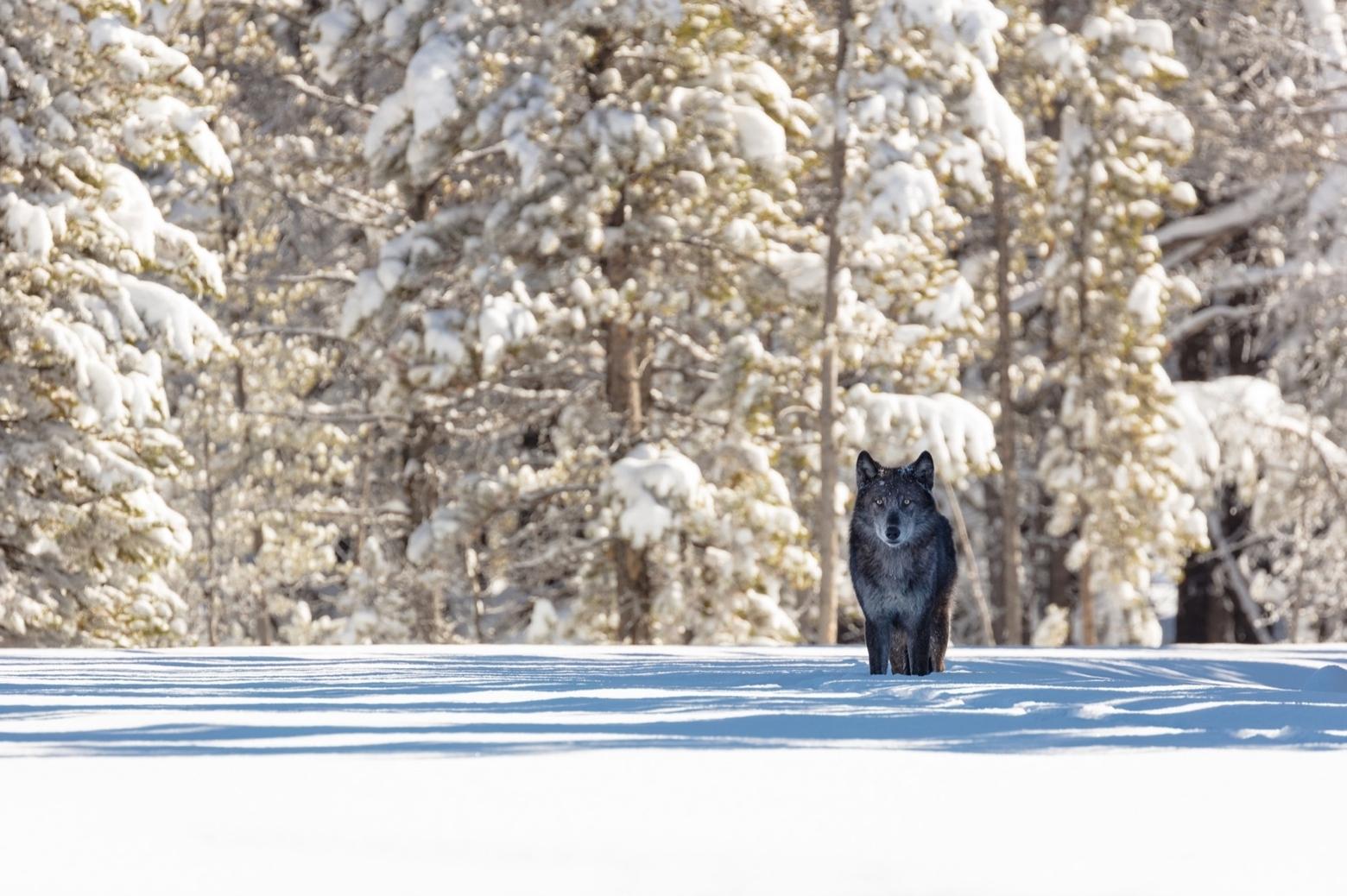
Susan Marsh asks:  why is it that if a wolf preys upon a native wild ungulate, or even a domestic calf or sheep, it is called a cold-blooded killer, yet when a human hunter shoots an elk it is considered a "harvest" or when thousands of beef cows are sent to slaughterhouses little thought is given, in language, to the truth that those animals are involuntarily giving up their lives to feed humans?  Photo of wolf in Yellowstone courtesy Jacob W. Frank/NPS
Susan Marsh asks: why is it that if a wolf preys upon a native wild ungulate, or even a domestic calf or sheep, it is called a cold-blooded killer, yet when a human hunter shoots an elk it is considered a “harvest” or when thousands of beef cows are sent to slaughterhouses little thought is given, in language, to the truth that those animals are involuntarily giving up their lives to feed humans? Photo of wolf in Yellowstone courtesy Jacob W. Frank/NPS
Sometimes all I have
are words and to write them means
they are no longer
prayers but are now animals.
Other people can hunt them.
…A tanka by Victoria Chang (from Narrative, February 2019)
The words we use.
Lately I’ve been wondering about how carefully we choose the words we use and whether we consider the implications and hidden baggage they carry. Subtle nuances we grew up hearing stick with us for life. Sometimes they are not so subtle and stick like pins in a voodoo doll. Sometimes they live through the ages and invade our collective belief system, the way we unconsciously agree that the sky is blue.
Frederich Nietzsche wrote that “A uniformly valid and binding designation is invented for things, and this legislation of language likewise establishes the first laws of truth.” [On Truth and Lie in an Extra-Moral Sense1873]. We can’t speak truth without submitting to authority (the dictionary) by which we agree on the word that signifies our meaning. We say the sky is blue, but the words sky and blue are cultural constructions.

In the sciences, we discover truth—until we find out something new, then we cast that adjusted knowledge into stone until the next drop of understanding leaks in. The way we look at the universe is an example: we’ve gone from believing the earth was at its center—and assassinating anyone who thought otherwise—to understanding that our solar system is on the trailing edge of a small galaxy, one among zillions. We are even able to admit that there’s a lot more going on out there than we can imagine.

Yet the truth eludes us if we’re not careful, in part because of our invented language for things. Nietzsche continues in his essay with what he might call the anti-truth: “The liar is a person,” he writes, “who uses the valid designations—the words—in order to make something which is unreal appear to be real.”
Our culture is shot through with lies we agree to accept as if they were the truth. We call it obfuscation, a way of lying to ourselves and coming to believe what we say. Most of us can sniff out deception in the way government and institutions invent euphemisms to hide rather than reveal what they are really talking about. How often do we unconsciously incorporate these terms?
I consider as an example the way we speak about the natural world. By “we” I mean people of the Western tradition, influenced by the likes of Rene Descartes. He called himself rational but denied an obvious and observable truth, that other species are sentient, intelligent, and in possession of emotions. He argued that animals lacked a soul or mind, and therefore had no emotions and could not feel pain. Unfortunately his views became prominent in Europe and North America, allowing people to treat animals as property, not other beings with whom we share this world.
How convenient. We shop for pork and beef without thinking about the suffering that brought animals to our tables. We let unwanted pets out the door and drive away. We deny any hint of kinship by referring to an animal as “it” instead of he or she.
My computer’s grammar police underlined the word whom at the end of the last paragraph. It wanted me to substitute which.
Let’s hope we’re becoming more enlightened about the status of other species as we learn how intelligent they are, from whales to ravens. On second thought, perhaps not. In Wyoming it’s still a time-honored sport to run down coyotes with snowmobiles.

Let’s hope we’re becoming more enlightened about the status of other species as we learn how intelligent they are, from whales to ravens. On second thought, perhaps not. In Wyoming it’s still a time-honored sport to run down coyotes with snowmobiles.

Genome sequencing has placed us in the midst of the pantheon of earthly life: we share 99 percent of our genes with chimps, 90 percent with mice, and 84 percent with dogs—presumably including coyotes. A billion year old ancestral life form that gave rise to both plants and animals left us each with commonalities in our genomes. At last our rational science is helping us catch up to so-called primitive peoples and centuries-old cultures which hold that we are part of the world and all living things are our kin.
In the Western tradition we still use language to set ourselves apart, to create the illusion of superiority. Nowhere is our Cartesian reluctance to acknowledge the individuality of other life forms more prominent than in the lingo of forestry and wildlife management agencies and the land grant colleges that graduate their employees.
We don’t cut down mature lodgepole pine trees; we harvest timber. Even the tree itself is known by foresters as “standing volume” rather than a component of a complex ecosystem which provides food, shelter and oxygen to myriad species. The term ignores the complexity of the tree, an ecosystem of its own, as well as its interdependence on all that surrounds it. “Volume” refers to nothing more than the board-foot, the number of slices 12 inches square and an inch thick that are estimated in a timber stand.
I don’t argue against using lumber. We live in houses. But we treat forests like we do beef cattle, as a lifeless commodity. Private forest-product companies are at least honest about their purpose: they call their forests tree farms.
Those who create useful and beautiful things from wood, who select and cut a tree from their property or a neighbor’s and use it for an object of quality and endurance show a different attitude. Those who cut their own firewood remember and thank the tree whenever they set a log on the fire.
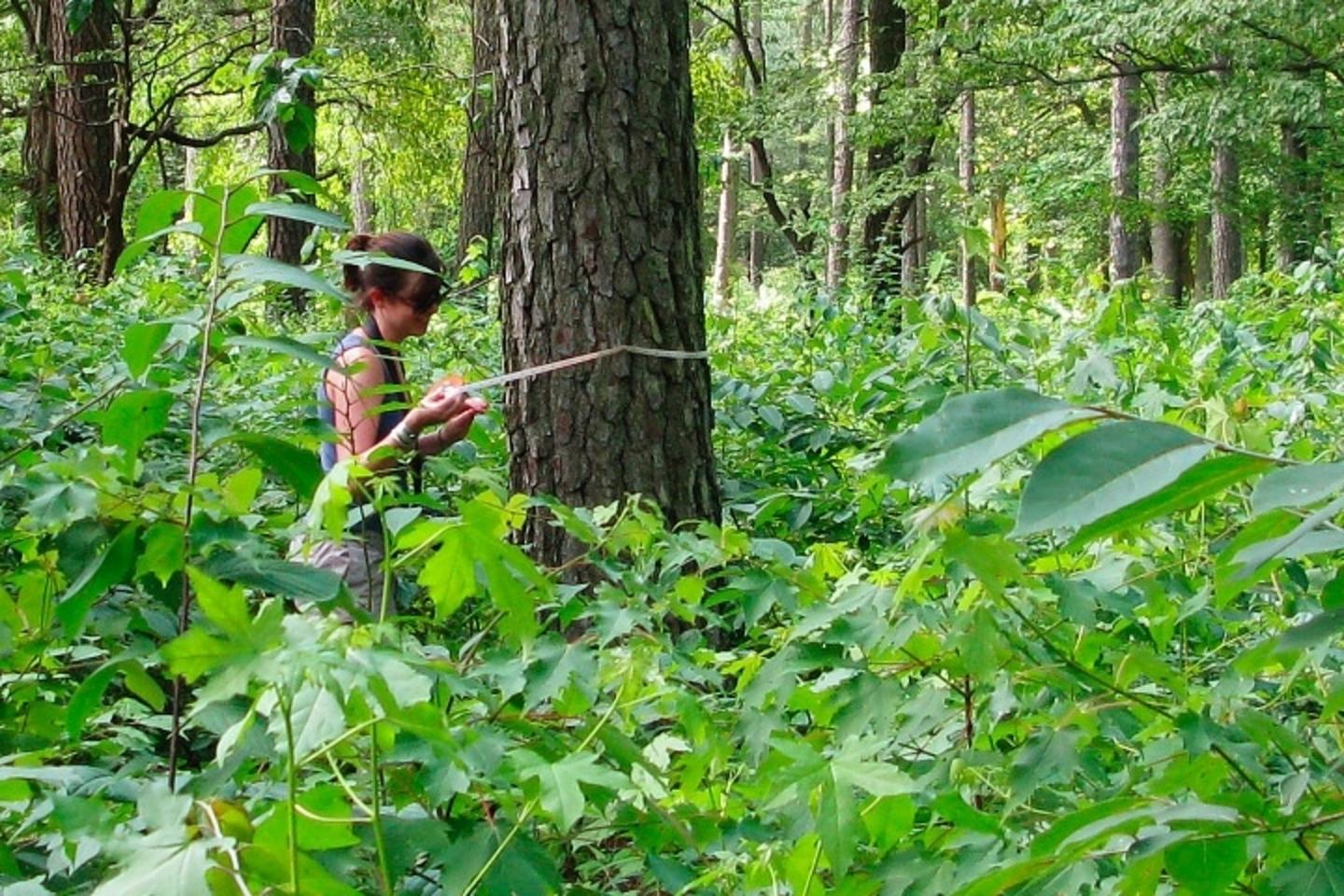
A researcher examines a tree in the middle of a forest to assess how much carbon dioxide it might be sequestering. While touting the vital role trees play in nature is a departure from them being valued only for their stumpage or human uses, it often falls short of recognizing their intrinsic sense of being. Recent studies have shown that trees actually possess their own kind of awareness to things happening the environment around them. It might not be on the level that humans attribute to higher sentience but it is a radical departure from the way trees have been regarded merely as objective commodities that exist to be harvested.  Photo courtesy Lola Fatoyinbo/NASA
A researcher examines a tree in the middle of a forest to assess how much carbon dioxide it might be sequestering. While touting the vital role trees play in nature is a departure from them being valued only for their stumpage or human uses, it often falls short of recognizing their intrinsic sense of being. Recent studies have shown that trees actually possess their own kind of awareness to things happening the environment around them. It might not be on the level that humans attribute to higher sentience but it is a radical departure from the way trees have been regarded merely as objective commodities that exist to be harvested. Photo courtesy Lola Fatoyinbo/NASA
George Nakashima, famed architect, woodworker, and author of The Soul of a Tree has this to say about his work. “It is an art- and soul-satisfying adventure to walk the forests of the world, to commune with trees, to bring this living material to the work bench, ultimately to give it a second life.” This was a man who did not waste wood.
Where language is concerned wildlife fare no better than forests. Hunters don’t shoot deer or elk, they harvest them, as if the creatures of field and forest were planted like corn. Beware when you hear that we must “manage” predators: that means only one thing—kill them.
Some creatures are planted, with the express purpose of harvest. Often these are alien species that wreak havoc with the natives. Fish farms pass diseases to wild salmon and pollute the local waters. Lake trout gobble the fry of native cutthroats, robbing Yellowstone’s grizzly bears of a needed protein source in summer. Rocky Mountain goats, introduced to the Snake River Range in Wyoming for sport hunting, have increased and spread into Grand Teton National Park where native bighorn sheep are struggling to survive.
Wildlife professionals employ terms best suited to the stockyard. Most of us are thrilled to hear the first warbler of spring or the bugle of a bull elk at the end of summer. Biologists refer to these as “territorial behavior.” While accurate enough, notice how much distance between ourselves and our relatives is placed by the use of such bloodless professional diction.
We engage in fine dining while wildlife “feeds.” In my experience, wolfing down a sandwich at work while typing on the computer and answering the phone more closely resembles feeding than dining.
It’s been ten years since a citizen science effort began in our local area (Nature Mapping Jackson Hole). I was part of the group that set protocols for data entry, and I remember a particular conversation about how to describe what the creature observed was doing. We were trying to make our data compatible with that of the Wyoming Game and Fish Department so the entire body of information could be accessed in one place.
We started out with the activity list of Game and Fish, whose focus was somewhat limited. The activity descriptors included walking, standing, running, loafing (resting), and feeding. Breeding and territorial behavior rounded out the list, and if none of these applied we could simply say the creature’s activity was undetermined.
Immediately hands went up in the meeting room. What if it’s a duck? Wouldn’t it be swimming? What if the duck is flying?
The Game and Fish activity list was intended for use in cervids, meaning elk in our corner of the state. Surprisingly, there was a fairly heated argument about whether flying and swimming could be added, since this was an established data base and we were a bunch of upstart volunteers. But we weren’t just counting elk. Our purpose was to gather observations of mammals, birds, reptiles and amphibians. Some of them swam, some of them flew.
Reluctantly, the Game and Fish representatives agreed to consider the additions. If nothing else, we could add them to our data sheets and if they didn’t fit into the statewide one, there was always the category of undetermined. Who cared, I wondered to myself, what the animal was doing anyway? In the space of a minute a magpie could be walking, flying, feeding, and generally raising hell. Which should I choose?
The debate took another turn when someone asked, “What if the animal is playing?”
Silence. The Wyoming Game and Fish Department habitat biologist squinted as if to ask, are you serious?
The stories of encounters with wildlife began to fill the room, presented slowly and shyly at first and then with more insistence: the elk calf seen kicking up his heels and jumping in circles through a muddy slough. The fox kits chasing one another in a meadow. A raven sliding down a frosty metal roof, flying back to the ridge, and doing it again. A wolf lying on his stomach at the top of a snowy slope and with a gentle kick of his hind feet glissading to the bottom. No one mentioned otters since we all knew they did nothing but play.
The group sorted ourselves into camps: pro-play and anti-play. We’ve seen this with our own eyes, some said. How can we not record it? Couldn’t this information be useful to know under what circumstances wild creatures felt at ease enough to play?
This was foreign territory to the wildlife experts and soon the discussion ended with a resounding No. They’d already given enough ground in accepting flying and swimming, and who knew what kind of crazy activity the rest of us would come up with next? Play remained off the list.
It wasn’t a big deal, yet in a deeper sense it is. Why are we so afraid, especially those of us trained in the sciences, to acknowledge parallels between our behavior and that of other animals? In modern times our aversion to anthropomorphism is drummed into us to the point of feeling innate, but humans have always used it as a bridge between ourselves and others. Medieval renderings of the sun and moon give them human faces. Myths give animals godlike powers and human traits. These have helped us make sense of the world, at least until science shoved them all aside.

We’ve created a culture insulated from wild nature, encouraging us to stop caring that we are adrift. We speak of the land, forests, and wildlife not as aspects of home but of natural resources. We give serious consideration to colonizing the moon or even Mars rather than try to clean up the mess we’ve made of our own planet.

A shared behavior isn’t the same thing as a false attribution of human traits to others. I walk, my dog walks. Do we walk the same way? No. We each do what we do in our own way but there are many things we share, in addition to a good number of our genes, which help us relate to pets and wildlife alike. Seeing ourselves in others, whether people or other species, is the basis for empathy.
How do we unravel the words used to describe, name, tell the truth or tell lies? How do we keep a sharp ear for the subtleties of words that don’t quite hit the mark? And most of all, how do we salvage a scrap of humility as a species whose interactions with other forms of life usually place us on top? We place ourselves above other people as well, in cultures old and new. We areThe People, the chosen ones, the ones whose creed is the only true religion.
We’ve created a culture insulated from wild nature, encouraging us to stop caring that we are adrift. We speak of the land, forests, and wildlife not as aspects of home but of natural resources. We give serious consideration to colonizing the moon or even Mars rather than try to clean up the mess we’ve made of our own planet.
These are diversions, as dangerous as the euphemisms used to distance our relationship with animals and trees. Understanding what we really mean to say requires us to slow down, be more deliberate, seek to communicate and connect. To witness what is before our eyes before we open our mouths.
“If an animal does something, we call it instinct; if we do the same thing for the same reason, we call it intelligence.” – Will Cuppy
 
EDITOR’S NOTE:  Mountain Journal congratulates Susan Marsh for being honored with the Raynes Citizen Conservation Award given by the Northern Rockies Conservation Cooperative at its 2019 Wildlife Symposium in Jackson Hole. The award, created in honor of naturalists Bert Raynes and his late wife, Meg, recognizes citizens who have made significant contributions to advancing public understanding and appreciation for the natural world.
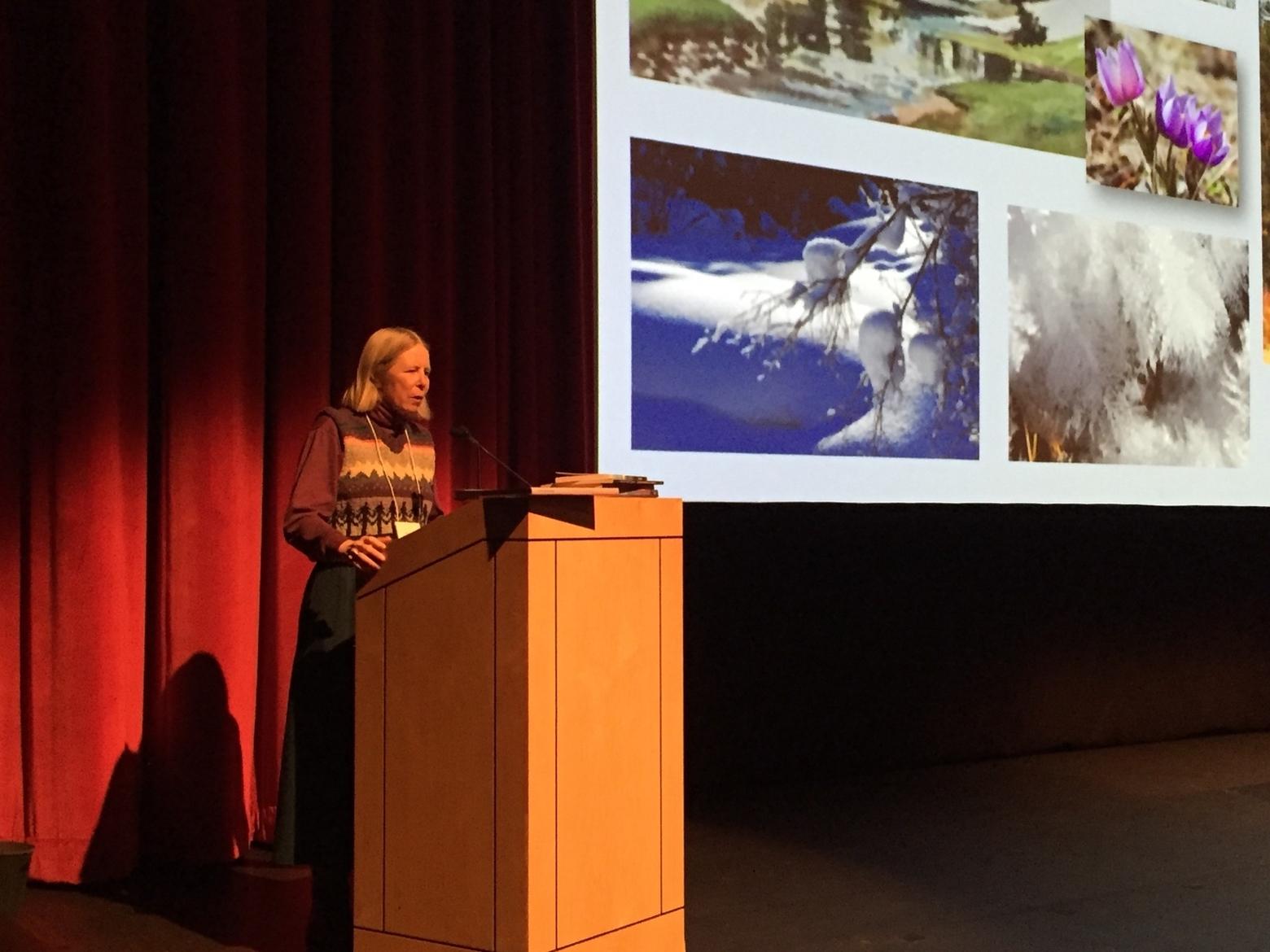
Marsh, whose art is at right, shares some thoughts after receiving the Raynes Citizen Conservation Award at the 2019 Northern Rockies Conservation Cooperative Wildlife Symposium in Jackson Hole.  Photo by Todd Wilkinson
Marsh, whose art is at right, shares some thoughts after receiving the Raynes Citizen Conservation Award at the 2019 Northern Rockies Conservation Cooperative Wildlife Symposium in Jackson Hole. Photo by Todd Wilkinson

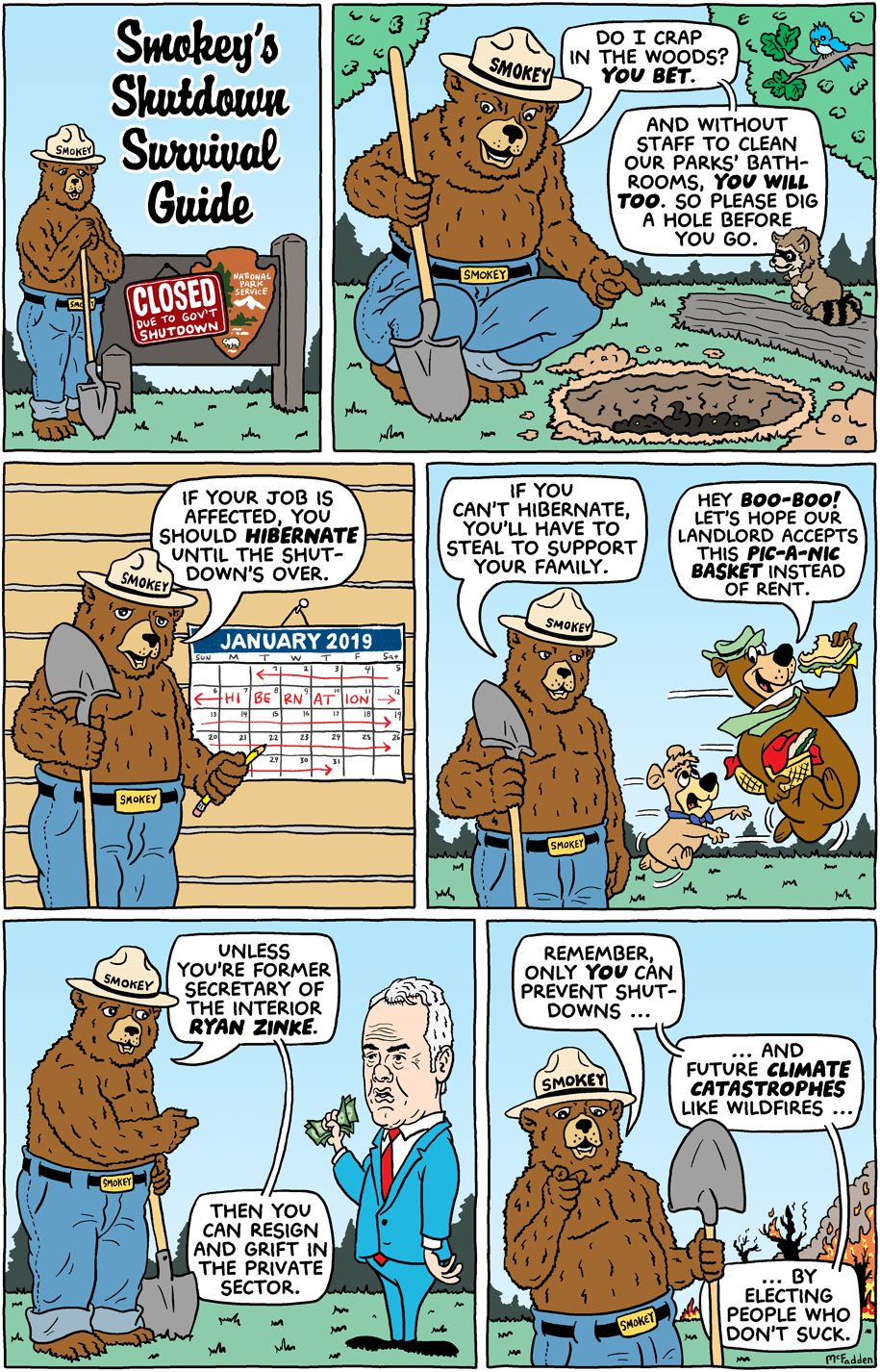
Cartoon: Smokey’s shutdown survival guide

Two weeks into a shutdown, and our national parks are getting the Bundy Family treatment. Dig a proper latrine and make sure it’s deep enough to hold all the stuff coming out of Mitch McConnell and the White House.

Follow me on TwitterFacebook, or Patreon.

Bees May Understand Zero, a Concept That Took Humans Millennia to Grasp

If the finding is true, they’d be the first invertebrates to join an elite club that includes primates, dolphins and parrots

image: https://thumbs-prod.si-cdn.com/4uqFneYzh6k1sdxlpygxthCm6zY=/800×600/filters:no_upscale()/https://public-media.smithsonianmag.com/filer/ba/6b/ba6b1209-f295-414b-a7f7-f8fc81bef30f/ertnwj.jpg

ERTNWJ.jpg

Australian researchers have shown that bees can distinguish nothing from various positive numbers. (Nigel Cattlin / Alamy)
SMITHSONIAN.COM

As a mathematical concept, the idea of zero is relatively new in human society—and indisputably revolutionary. It’s allowed humans to develop algebra, calculus and Cartesian coordinatesquestions about its properties continue to incite mathematical debate today. So it may sound unlikely that bees—complex and community-based insects to be sure, but insects nonetheless—seem to have mastered their own numerical concept of nothingness.

Despite their sesame-seed-sized brains, honey bees have proven themselves the prodigies of the insect world. Researcher has found that they can count up to about four, distinguish abstract patterns, and communicate locations with other bees. Now, Australian scientists have found what may be their most impressive cognitive ability yet: “zero processing,” or the ability to conceptualize nothingness as a numerical value that can be compared with more tangible quantities like one and two.

While seemingly intuitive, the ability to understand zero is actually quite rare across species—and unheard of in invertebrates. In a press release, the authors of a paper published June 8 in the journal Science called species with this ability an “elite club” that consists of species we generally consider quite intelligent, including primates, dolphins and parrots. Even humans haven’t always been in that club: The concept of zero first appeared in India around 458 A.D, and didn’t enter the West until 1200, when Italian mathematician Fibonacci brought it and a host of other Arabic numerals over with him.

But animal cognition researchers at the RMIT University of Melbourne, Monash University in Clayton, Australia and Toulouse University in France had a hunch that honey bees might just be one of the few species able to grasp the concept. Despite the fact that they have fewer than one million neurons in their brain—compared to 86,000 million in a human brain—the team recognized their cognitive potential.

“My lab was starting to accumulate some evidence that bees could do some advanced cognitive tasks, such as tool use, playing ‘soccer’—manipulating a ball to get a reward—and learning to encode information in human faces,” says Adrian Dyer, a postdoctoral student at RMIT University of Melbourne and co-author on the study. “We were aware that this animal model was very capable of learning complex things … it was the right time to formalize an experiment to see if the bee brain could process the concept of zero.”

To test this hypothesis, the team first taught the bees the concepts of “greater than” and “less than,” which previous research suggested the bees would be able to do. The researchers figured that if the bees could successfully show they understood that zero was less than various positive numbers, this would demonstrate the insects’ understanding of zero’s numerical value.

To do this, they first lured two groups of 10 bees each to a wall where two white panels containing different numbers of black shapes were displayed. They decided to teach half the bees “less than” and the other half “greater than,” using food rewards to train the bees to fly toward the panel with fewer or more shapes, respectively. When comparing two white panels with positive numbers of shapes in each, bees quickly learned to fly toward the correct one.

The real challenge, however, came when one of the panels contained no shapes at all. In several trials, the “less than” bees flocked to the empty panel, and the “greater than” bees to the panel with shapes. Despite the study’s small sample size, the researchers believed the bees were exhibiting zero processing capability.

The bees’ success at zero processing was much better when the blank panel was compared with a panel with many shapes—say, four or five—than when it was compared with a panel containing fewer. In other words, the further the comparison number got from zero, the better the bees were at determining which panel had fewer shapes. Interestingly, this is consistent with the results that researchers have found in human children using a similar experimental design, says Dyer. He says that this similarity in bees’ and humans’ development of zero processing capability suggests that bees and humans are likely conceptualizing zero in analogous ways.

Other bee cognition experts, however, doubt that this experiment definitively proves bees get the zero concept. Clint Perry, a research fellow at the Queen Mary University of London who has spent much of his career studying bee cognition, says that there likely could be other explanations for the bees’ behavior that make him “not convinced” that bees truly are understanding the concept of zero.

“The more parsimonious explanation for the results is the bees were using ‘reward history’ to solve the task—that is, how often each type of stimulus was rewarded,” Perry says. It’s possible the “less-than” bees, for example, were truly just learning that the blank panel earned them a reward 100 percent of the time, the one-shape panel 80 percent of the time, and so on. In other words, they were simply playing the best odds they could with the panels they were shown, without necessarily understanding the concept.

“I could see [bees’ zero processing] as a possibility—being able to count and being able to evaluate the value of numbers could give an adaptive advantage for survival,” says Perry. “I don’t see why [bees] couldn’t. But these experiments should be repeated and the interpretation verified to get at that.”

Dyer remains optimistic about the validity of his team’s results. He also says that this research suggests that the ability to conceptualize zero could be more common than we think—ancient humans, he postulates, likely had the potential for zero processing, cognitively speaking.

“We had some human ancient cultures which appear not to ever have used the concept of zero… but as we look across animal species, we see that their brains are capable of processing this information,” says Dyer. “So ancient civilizations had brains that for sure could process zero. It was just something about how their culture was set up; they were not so interested in thinking about number sequences.”

One practical implication for the research lies in the development of artificial intelligence; Dyer thinks reverse-engineering how the brains of animals like bees work could help us improve the abilities of artificial minds. But the first step is investigating the brain processes behind this ability.

“We’re at the dawn of trying to understand the concept of zero and how our brains might encode it,” he says. “This study produced high-quality behavioral data, and from that you can make some inferences. But we don’t know the exact neural networks at play—that is future work we hope to do.”

Read more: https://www.smithsonianmag.com/science-nature/bees-may-understand-zero-concept-took-humans-millennia-grasp-180969282/#UG6ksM62RUMAOtDz.99
Give the gift of Smithsonian magazine for only $12! http://bit.ly/1cGUiGv
Follow us: @SmithsonianMag on Twitter

Humans Are Just 0.01% of Life on Earth, But We Still Annihilated The Rest of It

https://www.sciencealert.com/humans-are-just-0-01-of-life-earth-but-we-annihilated-rest-biomass-animals-mammals-plants

Ruining things since 298,000 BCE.

PETER DOCKRILL
22 MAY 2018

Humankind is pathetically lightweight in comparison to the mass of almost all other living things on Earth, but while our bodies (and thinking) may be tiny, our crushing footprint is not.

The most comprehensive study ever of the weight of all living biomass on the planet has discovered humans account for only about 0.01 percent of life on Earth – but despite our physical insignificance compared to the teeming masses around us, history shows there’s no doubt over whose dominion this is.

“I would hope this gives people a perspective on the very dominant role that humanity now plays on Earth,” biologist Ron Milo from the Weizmann Institute of Science in Israel told The Guardian.

“It is definitely striking, our disproportionate place on Earth.”

Milo and fellow researchers spent three years combing the existing scientific literature on the planet’s biomass to provide the most up-to-date and comprehensive estimate on the mass of all the kingdoms of life.

In terms of carbon content – which means we don’t need to factor in the varying water masses of different kinds of animals, plants, and other life forms – the team’s census suggests the total biomass of the planet amounts to approximately 550 gigatonnes of carbon (Gt C).

Of this, approximately 450 Gt C, or 80 percent of the total biomass, is made up of plants, which far outweighs the mass of anything else living on the planet; bacteria come in second, at about 70 Gt C (15 percent).

Then we hit fungi. At about 12 Gt C, they’re about six times more abundant than all animal life on the planet, which comes after archaea (7 Gt C) and protists (4 Gt C).

In fact, animals only account for a mere 2 Gt C, and humans make up only an incredibly tiny fraction of that. And yet, the overall animal landscape has been irrevocably altered by human design.

While the biomass of humans is only about 0.06 Gt C, we’re almost 10 times more abundant than wild mammals, which represent only 0.007 Gt C.

But there’s a different kind of mammal, which – by uniquely serving human needs – has also come to dominate the rest of the animal kingdom: livestock.

Livestock, mostly cattle and pigs, makes up about 60 percent of all mammals on Earth (at 0.1 Gt C).

When it comes to bird life, the same picture emerges, with the biomass of domesticated poultry being about three times greater than that of wild birds.

“When I do a puzzle with my daughters, there is usually an elephant next to a giraffe next to a rhino,” Milo told The Guardian.

“But if I was trying to give them a more realistic sense of the world, it would be a cow next to a cow next to a cow and then a chicken.”

It didn’t use to be this way, of course.

Prior to the domestication of livestock and the innovation of agriculture – and the Industrial Revolution on their heels – the natural landscape would have looked much different.

The researchers acknowledge it is difficult to accurately estimate the pre-human biomass of animals, but their analysis suggests human civilisation has slashed the total biomass of wild mammals by as much as 85 per cent, and has cut plant biomass in half.

This inadvertent culling has had a massive effect on the overall biosphere, leading to a situation where scientists say we’re now in the midst of a mass extinction event that is almost without precedent.

While entirely regrettable, our actions also constitute a frighteningly outsized effort for a delicate species of bipeds that only makes up a hundredth of a percent of the world’s living things.

“The fact that the biomass of fungi exceeds that of all animals sort of puts us in our place,” evolutionary biologist James Hanken from Harvard University, who wasn’t involved in the study, told AP.

If only that were true.

The findings are reported in Proceedings of the National Academy of Sciences.

Help David Go to Switzerland

 https://www.gofundme.com/helpdavidtoswitzerland
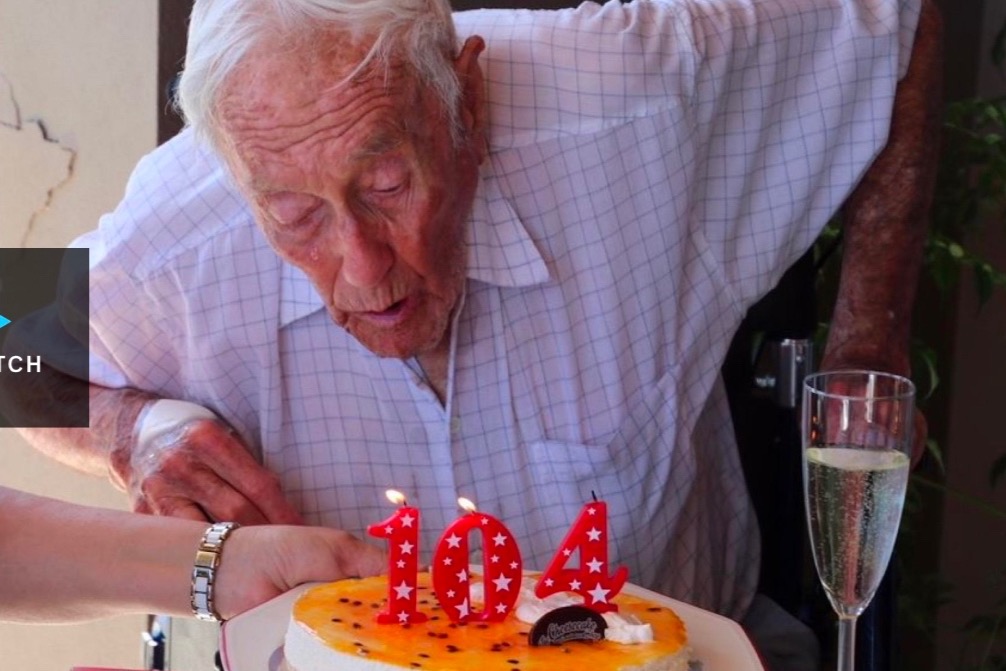
On the eve of his 104th birthday on 4 April, Exit International’s oldest Member, Emeritus Professor David Goodall (Wikipedia), announced his intention to attend the Life Circle service in Basel, Switzerland for an assisted death.

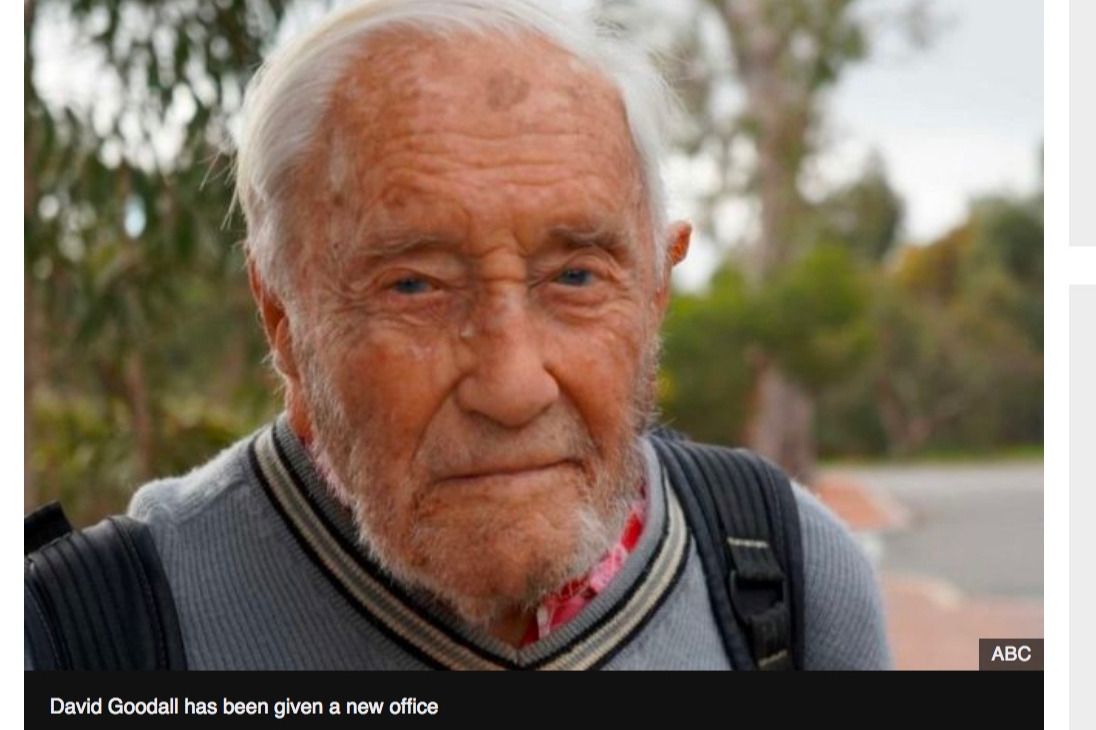
29309230_15243227290_r.jpegProfessor David Goodall, Australia’s Oldest Working Scientist
With an Exit Member number of #1848, David Goodall has been a member of Exit longer than most people.

Well organised to the end, he thought he had his plans in place. However, it seems that David’s advanced age has finally caught up with him.

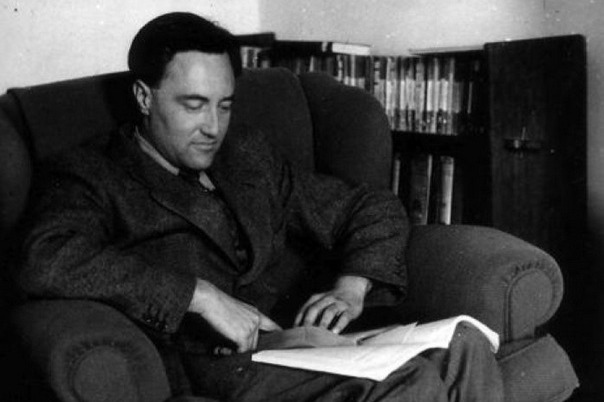
29309230_15243227560_r.jpegAt work in the 1950s.

Very recently he has realised that things were not going to be as easy as he anticipated. He is now left with little alternative other than to travel to Switzerland.

With the cooperation of the good people at Life Circle in Basel, Exit has been able to organise a fast-track for David.

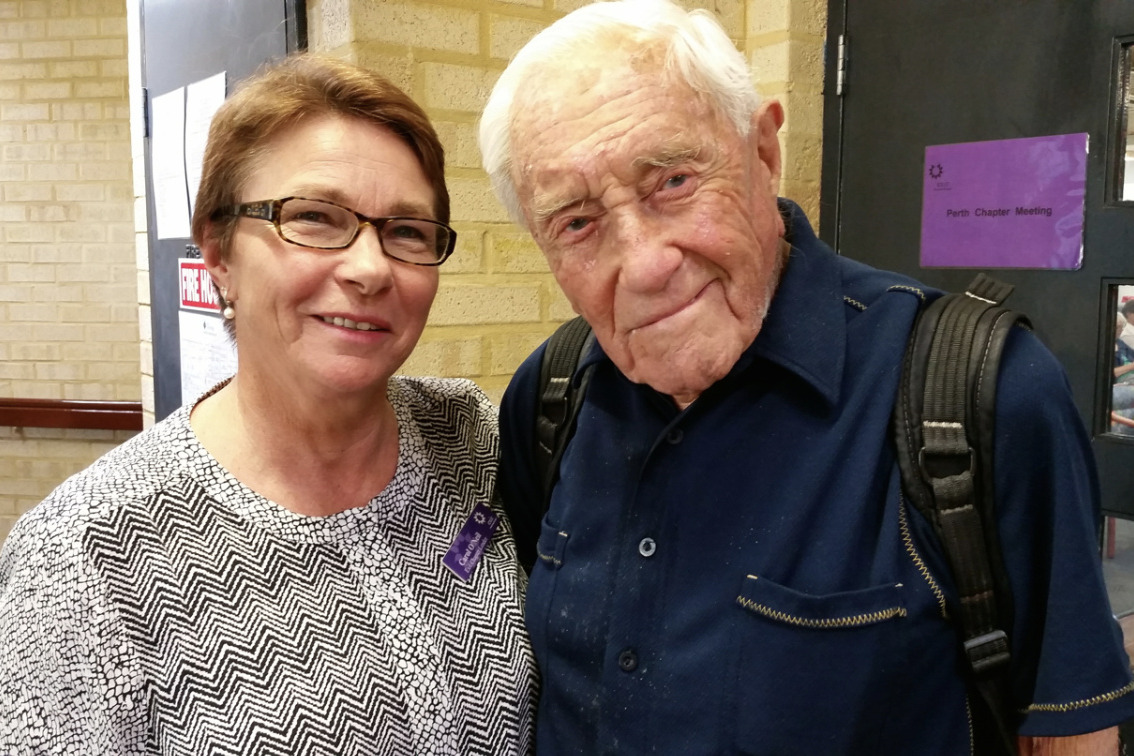
He will be accompanied by his long-time friend and Exit’s West Australian Coordinator, Carol O’Neil.

Carol and David plan to leave Perth for Basel in early May.

29309230_15243227940_r.jpegCarol & David at an Exit workshop in 2016
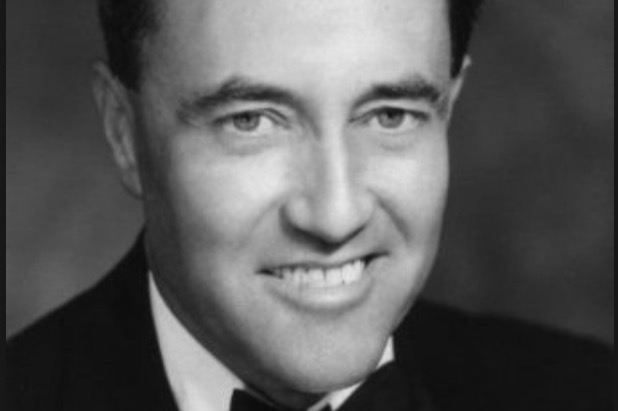
A pathetic state of affairs? You bet!

Especially given West Australia is currently considering the introduction of a voluntary euthanasia law; a law which the West Australian Premier Mark McGowan has said would not help a person like David Goodall who is not sick.

Elder abuse? Quite possibly.

Age discrimination? Absolutely.

Who is David Goodall?

Born in London in 1914, Professor Goodall is an eminent botanist and ecologist. A graduate of Imperial College of Science and Technology  (University of London) where he received his PhD in 1941, David came to Australia in 1948 to take up a lecturing position at the University of Melbourne .

29309230_15243901370_r.jpeg
David was awarded a Doctor of Science from Melbourne University as well as an honorary doctorate from the Università degli Studí di Trieste  in Italy. He held a range of academic positions in the UK, US and Australia (CSIRO ) before retiring in 1979.

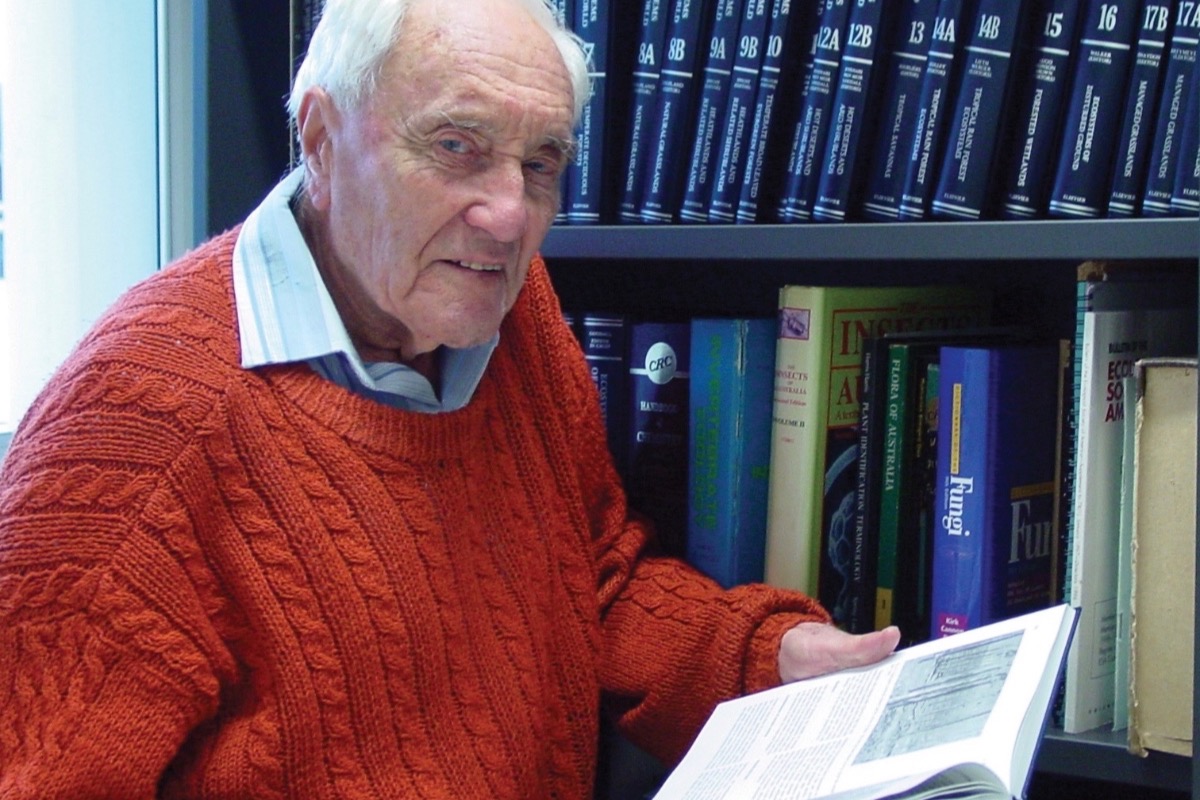
After his retirement, he edited the 30 volume series of Ecosystems of the World with over 500 authors.

29309230_15243895140_r.jpegDavid with his edited series: Ecosystems of the World
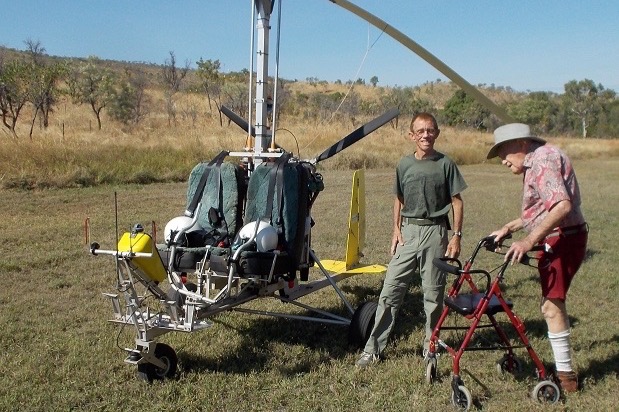
29309230_15243901980_r.jpegAt 103, David travelled by gyrocopter to the remote Kimberley station (Kachana) near to Kununurra to visit the eco sustained cattle station of Chris and Jacqueline Henggeler.
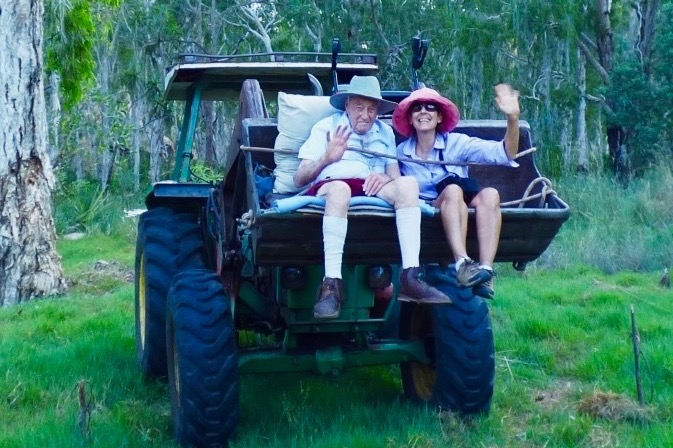
29309230_15243903380_r.jpegAt Kachana, David was back ‘in the field’ courtesy of the station’s tractor service.
David will be remembered for the burst of media in 2016 that followed the decision by Edith Cowan University  to take away his office.

See: ABC News 

The University argued the working scientist was a safety risk to himself and others.

In response to this unwelcome age discrimination, David went public and the University acquiesced, eventually providing him with an alternative, ground floor office closer to home.

See: BBC News  & BBC World Service  (audio)

WHAT NEXT FOR DAVID?

Having celebrated his 104th birthday in early April, David has decided wow is the time to go. Indeed, if his plans had gone accordingly, this birthday would not have happened and he would not be in the dilemma he now finds himself.

29309230_15243898570_r.jpegDavid on his 104th Birthday (4 April 2018, in Perth). His birthday cake was a cheesecake, his favourite.
It is just crazy that at the very time the West Australian Parliament has a committee inquiry to determine if their State should pass a voluntary euthanasia/ assisted suicide law, that one of its oldest and prominent citizens should be forced to travel to the other side of the world to die with dignity.

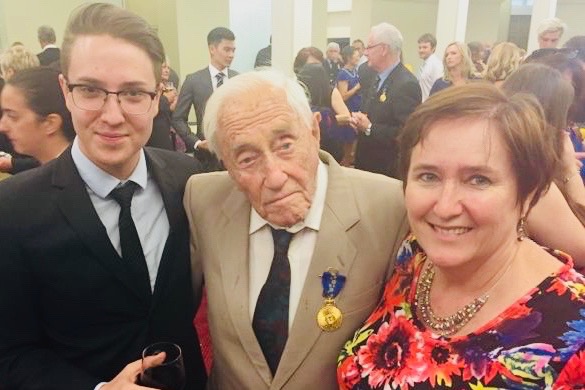
29309230_15243899590_r.jpegDavid receiving his Order of Australia in 2016
As if to add insult to injury, the West Australian Premier Mark McGowan has now pre-empted the Committee’s findings  stating that the WA Parliament will only consider a law for the terminally ill.

Of course the Premier has added that he feels ‘sympathy’ for David’s plight.

The calculated politics of the Mr McGowan’s remarks are breath-taking, although hardly surprising since Mr McGowan’s reported mentor is Kim Beazley.

Kim Beazley is well remembered for banding together with then Prime Minister John Howard, to overturn the Northern Territory’s Rights of the Terminally Ill Act in 1997.

Be that as it may, rarely in living memory can one recall a senior citizen being treated with such disdain and even contempt by a Premier of the day.

The situation of Professor Goodall drives home the absolute limited value of an end of life law that is based solely upon a person’s health status.

As Dr Philip Nitschke argued in his presentation to the WA Parliamentary Committee in April, it is totally unacceptable for a law to discriminate between the sick and everyone else.

All rational adults deserve a peaceful death at a time of their choosing.

Forcing the ‘well’ elderly to travel overseas is exporting a problem, rather than addressing a growing social need. Shame!

David Goodall is a life-long economy class flier.

To do otherwise offends his egalitarian sensibility.

On this occasion, Dr Philip Nitschke has convinced David to upgrade.

It is a very long way from Perth Australia to Basel Switzerland at any age, especially104!

Philip says he doesn’t want the stress of the flight to kill him.

Exit will be reporting on David’s journey to Switzerland in the coming days and weeks.

Thank you in advance for your support.

Backed Into a Corner

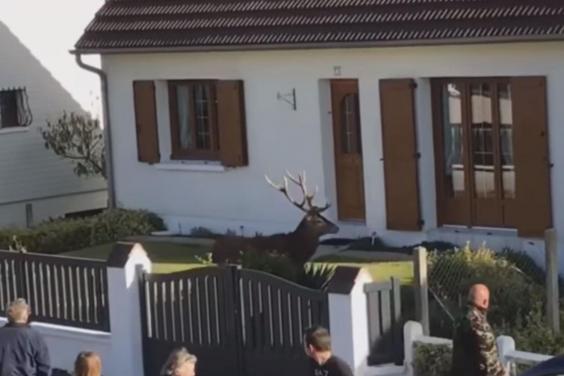
cornered-deer.jpg


Commentary by Jim Robertson


Despite humans’ best efforts to destroy her, it seems Nature is not going down without a fight. And regardless of what humans may believe about themselves and their place at the pinnacle, Nature is ultimately much bigger, heavier and vastly more significant in the so-called ‘scheme of things.’


Harassed by their bird-dog, a sow grizzly bears charges pheasant hunters (who, of course, shoot and kill her–leaving three cubs motherless); a ‘serial-killer’ elephant tramples 15 Indians (out of over a billion); and just yesterday a new article tells us a about a ‘hunter gored to death by a cornered deer.’


Could it all be part of a long-suffering and normally highly (even saintly) tolerant Mother Nature finally fighting back against her one fatal blunder–the fleshy, hairless, upright, arrogant apes armed with their weapons of mass extinction?


Homo sapiens may have won countless battles and the arms race hands-down, but Nature will ultimately win the day and eventually, the war, wiping the slate clean for another burst of evolutionary creativity that won’t include the conceited carnivorous primates or their puffed-up fantasies of self-importance.


Things could really start to get ugly

It came to me while reading the nonfiction book What Evolution Is by the famed evolutionary biologist, Ernst Mahr, that the only way Mother Nature is ever going to get rid of the species plaguing her perfection is with a good old-fashioned mass extinction, because, sadly, humans aren’t going anywhere without taking just about every other species with them.

Humankind have backed Nature into a corner and at this point all she can do is turn and fight, like sow grizzly bear defending her beloved offspring

Humans have gotten away with killing and eating, killing for sport and/or taking trophies of any and all of Natures’ finest treasures for so long now we’re starting to think we’re entitled to simply help ourselves to the spoils of our war on the world.

Well; if humans don’t shape up and show some respect, things could really start get ugly on this planet soon for everyone involved… and that’s not just talking weather-wise.  


Earth Rage

by Stephen Capra 
 
…the faces of the beasts show what truly IS to us -Rainer Marie Rilke

What does it take to awaken a world from the self-inflicted wound of arrogance and greed?

From earthquakes that shake our foundation, to the floods that Noah could only understand. From the new intensity hurricanes that bring ocean to land, land to ocean and displace an ever-growing population. These vicissitudes, are not warnings, they reflect the changes and torment our planet is undergoing presently. Humans, that have been gifted life by this planet, are choosing by their actions, to destroy its very soul, its life force. In so doing, we are damming generations to come with vitriol and without care.

Today, we are witness to a fool’s enterprise of capitalism. Our world today seeks enlightenment through materialism, and thus can never find the joy and understanding that nature reveals. We are mutating into societies that are lead not by leaders, but rather those corrupted by power, and driven by their own material gain. One that reflects an approach of get all you can, rather than one of community.

We live in a world that rewards those who allow oil to remain our energy source, and we fight block by block, to place solar power on equal footing, as the planet cries out in pain. When did we become this arrogant believer in man’s powers or religion to solve all our problems? When did we allow species to perish at the hands of our egocentric view of a world, one which seemingly only reflects only our image, how do we see that to be sustainable?

If we refuse to act, then we will be remembered as collaborators with genocide. When we turn our ears deaf to logic; grant our souls to corporate enterprise, while ignoring the message in our heart, we symbolize the clear disconnect that urban life and the loss of connection to wildness has fostered.

How could that be?

Because we are the children of a great and selfless generation, one that won a great war, and was given dams, clear-cuts, urban sprawl and microwaves, as the reward for saving the world free. Second homes, larger closets, bigger cars, cable TV and endless children, were part of our victory and led to the development of corporations that reached across the globe, to harness resources and find cheap labor, to feed our American dream.

We placed dictators in charge of countries that defied us and we used the atom bomb to keep the world in line. The world watched and took notice; we continued to hear in school and in church about our generosity and caring. We cut more timber to build great cities and we drilled our beautiful West for oil, we drilled our oceans for more and we drilled every part of the globe with less concern for our neighbors and their children, but we continued to believe in our generosity.

We bribed our elected officials at home and abroad, we allowed our rivers to be poisoned, our air fouled. When we began to clean it up, corporations went where that could foul it up, cheaper.

We elected a new generation of Republican leaders that ignored science and reason; they created false prophets that filled our airwaves to make us doubt reality. They supported foods and crops that made us fat and bees endangered. The impact made us less inclined to spend time in nature. The NRA and others helped push for more powerful guns and scopes to kill that which we refuse to see as equal-the bears, wolves and whales that define the sanity and grace in life on this earth.
Now the gospel they preach is to ignore the very signs that beg for our action. That we must acknowledge the reality of climate change and the role that man continues to play in this poisoning of life on earth.

No country has more skin in this than America; no country should act with more resolve than America. We cleared the world of their natural resources, wildlife, air and water to feed our addiction to a better life, to having more and more of everything. We honored and revered wealth, indulgence and glamor. We ignored the cost that such extravagance was having on our planet, and we did so with a blind arrogance.

Today, we have a President that has long ago sold his soul for money. We have an oil industry that fills our minds with commercials about technologies to better our future, while lobbying hard to have access to every acre to drill and frack so they can continue their dead man walking, get rich, approach to life on earth.
Climate change is real; pulling America out of the Paris accord is part of the ablation of our responsibility and reflects a new American ego, one that does not seek to be generous, but rather to take all that remains. Such boorish and misguided behavior will spark the wars of the future and distills the harsh truth about our self-centered view of our world.

The shame should be all consuming, but the void of emotion and brute ego remains palatable.

To restore our leadership in the world does not require investing in our military, it requires investing in clean energy alternatives and sharing any and all technology with the world. Yet, we are conceding such a mantle and the endless job creation that goes with it, to every other nation, rather than admit that climate change is real. So we bury our head in coal and drill our wildest lands, to kill the wildness that remains in our planets heart.

America, much like the issue of Slavery, must come to terms with our polluted past and the role we played across the globe. We must make true reparations to the world for our self-indulgence. We must go far beyond any nation in our efforts to end climate change and we must investment large sums of money and research into this issue-NOW! Our national labs must abandon their nuclear mission and become the backbone of our clean energy revolution. We must give companies ever more incentives and rewards for a clean future.

We must also protect far more lands, wildlife and water, using innovation for energy development, no matter how small the scale. We have no choice but to elect leaders that put the planet first and make decisions based on that principle.
We must return to a fundamental core value, which insured future generations have it better, not worse, than us.

It’s also crucial that we become real partners with wildlife and seeing them as part of our moral responsibility, not as simply expendable game. We must love more than ourselves. That may not solve climate change, but it is part of rediscovering our soul as a people.

Finally, it’s about reconnecting to nature, and pushing aside the lust for consumerism and giving real thought and encouragement to family planning.
All of this requires a maturing of America, as a people, as a society. We have failed the moral test for generations, and yet at times we have surprised and inspired. We do not have time now for failure; we must grow into the responsibility that our actions have warranted. We must fight climate change because it is a true moral and social imperative. The world, you see, is watching.

We must engage the process with humility; with true spirit and enlightenment.
If we do not, the tears of our planet will become the floods that remove man for the sake of a new beginning.

That is the message our planet is showing us. We must begin to listen.

Earth is life. Let’s respect the true life.
Let us fight for the mother, which gives us life.
Mother Earth, you are life.

Copyright © 2017 Bold Visions Conservation, All rights reserved.
Bold Visions Conservation is sending a weekly update on our activities to our kind donors. If you do not want to be included in these mailings, you may opt-out at any time.

Our mailing address is:

Bold Visions Conservation

PO Box 40399

AlbuquerqueNM 87196