Exposing the Big Game

Forget Hunters' Feeble Rationalizations and Trust Your Gut Feelings: Making Sport of Killing Is Not Healthy Human Behavior

Exposing the Big Game

A Seattle high school is taking birth control access to the next level

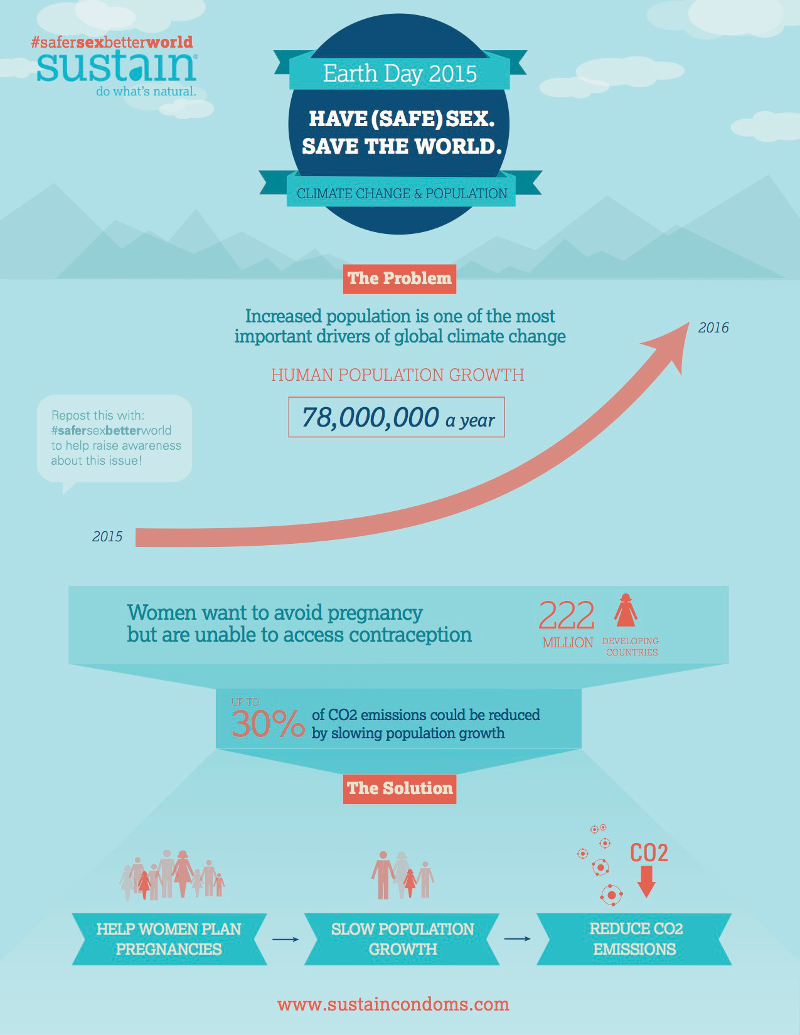
sustainEDinfographic800

This is part 2 of our first-hand look at reproductive health access for teen girls in our home state of Washington. Read our introduction to the series here.

Chief Sealth International is a Seattle public school in the diverse neighborhood of Delridge, on the southwest end of the city. It’s a modern building, airy and light-filled, and the surprisingly buoyant mood set by gleefully yelling teenagers almost makes you forget how awful high school actually is. Unassumingly perched over the atrium is the school-based health center, where the students can get treatment for sore throats (both feigned and not), bandages for sprained ankles, and IUDs.

At the end of 2009, the American College of Obstetricians and Gynecologists formally recommended long-acting reversible contraceptives (LARCs) — IUDs and hormonal implants — as the most effective ways for teen girls to avoid unintended pregnancy, and Seattle’s public health department quickly decided that they should be available in school-based clinics. (These clinics, which have also provided other forms of birth control to students since the mid 1990s, are funded by a city-wide Families and Education Levy, which voters have supported since 1991.)

Neighborcare Health, which runs nonprofit medical and dental clinics in Seattle for low-income and uninsured families and individuals, was the first organization to step up to the plate and provide LARC placement services in certain Seattle public high schools and middle schools, where it sponsors the school-based health centers — and within just a few months of the ACOG recommendation, the first Seattle public school student got a Nexplanon hormonal implant through the program.

LARCs, because they’re meant to last for so long, are the most expensive forms of birth control available. But free, in-school LARC placement is made possible in part by Take Charge, a Washington State Medicaid program that’s specifically targeted toward minors seeking contraceptive services. Because of Take Charge, girls under 19 who don’t want to use their parents’ private insurance to get birth control have a way to get contraception in school at no cost.

Now, it’s as easy for a Chief Sealth student to get an IUD as it is to get a Coke – actually, easier, because pop is banned in Seattle schools.

More: http://grist.org/living/a-seattle-high-school-is-taking-birth-control-access-to-the-next-level/?utm_source=newsletter&utm_medium=email&utm_term=EDIT%20Weekly&utm_campaign=weekly

Paul Ehrlich Was Right After All

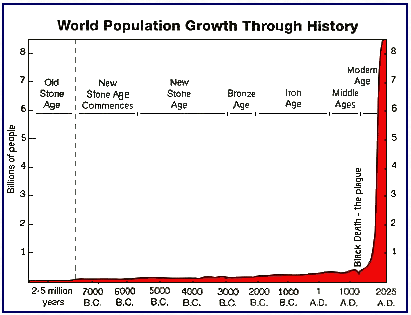
world-population-through-history-to-2025

Looking back through some old copies of the National Wildlife Magazine, I came across an article from April/May, 1990, by John Nielsen entitled, “Whatever Happened to the Population Bomb? Two decades after Paul Ehrlich’s doomsday predictions, the biologist answers his critics with a new book.” The article came out at the time of Ehrlich’s then new book, Population Explosion, 22 years after his best-selling book (more than 20 million copies), Population Bomb. Ehrlich told National Wildlife, “What we were seeing on a global scale, was the rise to total dominance of a single species, man. This phenomenon was absolutely new and it threatened to wreck the planet.”

The article states, What about the population bomb? What happened to the notion that exponential population growth is the cause of almost all environmental woes? If to Ehrlich his 1968 message was clear, to his more extreme critics it has proved inaccurate and wrong-headed.

Like other ‘doomsayers,’ economist Julian Simon says, ‘Ehrlich underestimates the human ability to respond to change.’

But what about the rest of nature’s ability to respond to change wrought by humans?

Other critics point to Ehrlich’s erroneous predictions of traffic riots in Los Angeles, cataclysmic famines and dead oceans…

We may not be hearing a lot about traffic riots in LA—aside from road rage and regular drive-by shootings, but over-exploited fisheries and massive dead zones are cropping up in oceans across the globe.

Meanwhile, Right- to-Life activists attack him for favoring abortion. His notions of coercive population control in countries such as India and China have been called inhuman.

The problem with these charges, he says, is that they miss the point. Ehrlich admits that some of the scenarios that he made did not unfold [yet]. But he maintains, scenarios are not predictions and being out of date is not the same as being wrong.

Though a new environmental awareness is sweeping the United States [again, this was 1990], population control doesn’t seem to be generating as much concern in the press…The very notion, charges Ehrlich, is becoming ‘taboo’. “Politically, the pressure has been on to stay away from this issue,” he says.

“Each hour,” Ehrlich writes, “there are 11,000 more mouths to feed.”

Nowadays that number is roughly 16,000 per hour. (But of course that’s not taking into account people’s ability to respond to change.)

About his then new book, The Population Explosion, Ehrlich concedes that readers might ignore him this time around. They do so, he says, at the peril of their children’s world. Either way, this will be the last written warning.

“About the only thing I can guarantee is that this will be the last book on population by Paul Ehrlich,” he says. “You can only spend so much time alerting people to a problem. After that, they do their own thing.”

When Humans Declared War on Fish

http://www.nytimes.com/2015/05/10/opinion/sunday/when-humans-declared-war-on-fish.html?nl=todaysheadlines&emc=edit_th_20150510
When Humans Declared War on Fish

By PAUL GREENBERG and BORIS WORM

ON Friday we humans observed V-E Day, the end to one part of a global catastrophe that cost the planet at least 60 million lives. But if we were fish, we would have marked the day differently – as the beginning of a campaign of violence against our taxonomic classes, one that has resulted in trillions of casualties.

Oddly, the war itself was a great reprieve for many marine species. Just as Axis and Allied submarines and mines made the transportation of war matériel a highly perilous endeavor, they similarly interfered with fishing. The ability to catch staple seafoods, like cod, declined markedly. Freed from human pursuit, overexploited species multiplied in abundance.

But World War II also brought a leap in human ingenuity, power and technical ability that led to an unprecedented assault on our oceans. Not only did ships themselves become larger, faster and more numerous, but the war-derived technologies they carried exponentially increased their fishing power.

Take sonar. Before the 1930s, electronic echolocation was a barely functioning concept. It allowed operators to trace the vague contours of the seafloor topography and crudely track the pathway of a large moving object. But the war pushed forward dramatic advances in sonar technology; by its end, sophisticated devices, developed for hunting submarines, had grown infinitely more precise, and could now be repurposed to hunt fish.

Schools of fish could soon be pinpointed to within a few yards, and clearly differentiated from the sea’s bottom. Coupled with high-powered diesel engines that had been developed during the global conflict, the modern fishing vessel became a kind of war machine with a completely new arsenal: lightweight polymer-based nets, monofilament long lines that could extend for miles and onboard freezers capable of storing a day’s catch for months at a time.

Even human resources developed during the war were later redirected toward fishing: Japanese fighter pilots adept at spotting subsurface Allied submarines were later retrained to look for whales. Likewise, more than a few former Allied pilots found postwar employment hunting bluefin tuna and Atlantic menhaden.

In some ways, the “war machine” wasn’t a metaphor. Across South Asia, leftover explosives were “recycled” for “bomb fishing,” an obscenely destructive way of killing coastal fish, which turned many coral reefs into rubble fields. And the technological overkill continued into the Cold War era: Satellite imagery and GPS technology originally intended to track the movements of the Soviet nuclear arsenal eventually allowed well-populated fish habitats to be clearly identified from space.

Because the war incentivized the creation of ships with much longer oceangoing ranges, it also meant that fishing was transformed from a local endeavor into a global one. “Industrial fishing,” maybe the first globalized economic enterprise, meant the wholesale, permanent occupation of marine ecosystems, instead of the local raids practiced by previous generations.

In addition, emerging economies of scale meant that it wasn’t just the target fish that suffered. With the invention of postwar super trawlers that scooped up everything in their path, a sort of scorched-earth approach to fishing became commonplace.

Taken collectively, the rise of postwar fishing technology meant that the global reported catch rose from some 15 million metric tons at war’s end to 85 million metric tons today – the equivalent, in weight, of the entire human population at the turn of the 20th century, removed from the sea each and every year.

Only the turn of the third millennium saw a new kind of reprieve, this time not caused by human adversity, but by the insight that we need to make peace with other species as well. Growing signs of exhaustion and failure in global fisheries made humans reconsider the totality of their assault.

Marine protected areas, an environmental version of a demilitarized zone, started to spring up, and now cover some 3.5 percent of the ocean. Countries formerly at war began to work together to hammer out new deals for fish, exemplified by both the recent revision of the Common Fisheries Policy in Europe and new efforts underway at the United Nations to better regulate fishing on the high seas, the 60 percent of the oceans outside national control.

Collateral damage to sharks, turtles, whales and sea birds is increasingly becoming unacceptable. And some of those same technologies once used to kill fish with precision are now being used to save them: War-inspired satellite technology is being deployed to identify and pursue rogue vessels fishing illegally.

But in remembering the end of World War II and the deliberate steps that led to a lasting peace, we might contemplate a broader Marshall Plan, which would further restrain our destructive tendencies and technological powers elsewhere, not just in fishing the oceans, but in mining, drilling and otherwise exploiting them.

To be sure, the postwar assault on fish mostly sprang from an honorable intention to feed a growing human population that boomed in a prosperous postwar world. But as in war, everybody loses when there is nothing left to fight for. Only when we fully embrace that simple fact, and act accordingly, will our celebrations resonate among what the author Henry Beston called those “other nations caught with ourselves in the net of life and time.”

Paul Greenberg<http://paulgreenberg.org/> is the author, most recently, of “American Catch.” Boris Worm<http://wormlab.biology.dal.ca/> is a professor of marine conservation biology at Dalhousie University, Nova Scotia.

A version of this op-ed appears in print on May 10, 2015, on page SR4 of the New York edition with the headline: When Humans Declared War on Fish.

1795497_611414028914288_1804650880_n

The Limits to Human Carrying-Capacity

Harvard archeologist Steven Le Blanc writes in “War or Peace for the Future,” the final chapter of his book, Constant Battles; Why We Fight (pg. 224), “…let’s examine the myths of a peaceful past and of humans living in ecological balance and contrast them with a careful assessment of reality that turns the more traditional view on its head. These myths assume that for long periods of time the earliest humans were simple foragers [hunter-gatherers] who lived in harmony with nature, had few wants, and were able to control their populations. When agriculture was developed, populations grew, but farmers managed to remain inherent environmentalist and continued to avoid the environment. Then finally, but not until the rise of complex societies, we humans lost our ability to live in ecological balance. At that point, the appealing story of millions of years of peaceful coexistence with nature turns ugly, and violent, environmentally threatened societies—in particular Western European society—command a starring role. As Western societies spread or affected much of the planet, the myth continues, warfare and environmental degradation spread like an infectious disease, engulfing most of the world—except where vestigial remains of this peaceful, ecologically balanced existence survived among such groups as the !Kung [bushmen], Australian aborigines, Eskimos, Siriono, and the like. In other words, noble Cro-Magnon humans were replaced by warlike, modern imperialists.

“Reality paints a different picture, one with many opportunities for peace and ecological harmony, but it is a portrait of opportunities lost. Looking back through history, several radical changes in human societies occurred, and each change provided, in theory, an opportunity to improve the population-ecological balance and usher in a new era of peace. Each time one of these dramatic changes took place, peace and ecological balance remained elusive.

“The first of these transformations was becoming human. As proto-humans became fully human beings and gained superior intelligence, language, and cultural norms, these initial human foragers were hardly peaceful. Greater intelligence did not result in greater peacefulness. Although some ecologically benign behaviors did develop, they were never effective enough to regulate population growth and to establish a peaceful, stable system. Except in the harshest environments, forager populations grew, reaching the carrying-capacity limit, and then competed for resources. For more than a million years, humans lived in a precarious balance between population growth and the limitations and variability of the environment. Periodic population increases that could not be sustained by an ever-changing resource base lead to chronic starvation, infanticide, and warfare. These early people modified the environment by such means as fire and were no more ‘environmentalists’ than their short-term goals dictated. Since their numbers, by necessity, low, and their technology limited, the impact of the first foragers was relatively minor.

“Beginning around ten thousand to twelve thousand years ago, people began to farm in the Middle East, China, and later in Africa and Central and South America. This new situation might have resulted in a peaceful world. Farmers were able to get far more food from an acre of land than had ever before been possible, and there was potential for plenty for all—but the balance was not maintained. Farmers could reproduce at rates far beyond those of foragers, and they spread quickly over much of Earth. In spite of its potential, farming itself solved no problems. The benefits of every new plant domesticated, every new animal tamed, and every new technology invented were quickly consumed by the growing number of people such advances could additionally support. Horticulture and domestic animals caused environmental degradation that went way beyond the effects of just the higher population numbers. More people translated into more degradation. In any given region, in spite of efforts to control growth or to develop new foods and technologies, the population soon grew to stress the resources once again. Malnutrition, if not starvation, and even more intense and chronic warfare were common among the early farmers.

“Once again, a major social transformation occurred. Complex societies developed. The leadership in these societies had the mechanisms and potential ability to control population growth and to force people to be more ecologically sensitive. Along with more complex societies came complex technologies. The chiefdoms and early states had developed enough technology to harm the world’s environment at levels and rates not seen before. The result was even more degradation of the environment. Although some efforts were made to control population growth, such mechanisms were always far from fully successful, and resource stress was as common as ever.”      etc…

graph

The Gravest Problem Animals Face: Man’s Self-Appointed Supremacy Over Them

1451324_650954518277931_1616731734_n

“Time is running out” (A final message from John A. Livingston)

The following thoughts appear in the last chapter of the late John A. Livingston’s 1973 book, One Cosmic Instant; Man’s Fleeting Supremacy (a book I can especially relate to in that it dissects and begins to dismantle the entrenched, arrogant attitude that humans are apart from, and even superior to, the rest of life here on Earth). Livingston begins by comparing this complex, arrogant, human attitude to an ecosystem:

“In their natural environment, living beings face an infinity of survival problems—food shortages, predators, diseases, competitors, population stresses, and so on. The gravest problem they now face, however—man’s self-appointed supremacy over them—is strangely like an ecosystem. It has a vast and complicated array of interlocking components…

“As any naturalist knows, the quickest and neatest way to destroy an eco-system is to simplify it, to reduce its complexity and thus short-circuit the equilibrium maintained by the mutual interdependence of its component parts. Perhaps the traditional, cultural, institutional, conceptual eco-construct can be decomplexified by our deliberate manipulation—by the exercise of our conscious choice. Intervention in its workings will require degrees of courage, sacrifice, imagination and generosity which have not frequently been displayed in the course of man’s relationship with his environment. One hesitates to predict whether we will be willing to undertake it. The destruction of the power hierarchy over nature will require a shift in attitudes more profound than we can presently imagine.

“The process of simplification or decomplexification will be drastic. Suppose one were to elect to have an initial go at the “rights of man”—the God-given rights of man the individual and man the species. Suppose it were feasible to actually remove some of those rights, one after the other. The consequences might be astonishing… Environmental forces are already ‘eroding’ traditional rights.

“Then there is the right to have children. Suppose people were no longer permitted to reproduce beyond the replacement level. Replacement level means one adult, one child—zero population growth…The environmentalist must look hard at traditional human freedoms.

“There are other ‘rights’ such as the imagined right of man to kill non-human animals for amusement. Clearly the environment itself will deal with this tradition, simply as the effect of men having joyfully massacred so many ducks, geese, rhinos, elephants and Cape buffaloes that there will not be enough of them to go round. A similar end will come to the fashion industry’s apparent determination to exploit to the bitter end the final stocks of leopard, tiger, jaguar, and the rest.

“What of the more fundamental, unquestioned rights of man the species? The right to populate at will must certainly be removed, either by our own conscious choice or by a natural backlash on the part of the biosphere itself. The right to dominate animals of other species, and to dominate landscapes, will not be subverted as readily. Other beings, as species and as landscapes, do not have the ‘clout’ of the combined forces of the biosphere. But that right, too, will disappear. It will be a sad process, for we will not give up the right to dominate without a struggle—a struggle which will cost both human and non-human nature exorbitantly.

“It will not be in our best interests to allow the environment to dismantle our conceptual power structure for us. In such an eventuality, cosmic forces would make life devastating. We should not expect the environmental counter attack to be nearly so dramatic or spectacular as the ancient vision of the Apocalypse, but it would be equally disastrous. Because it would not be sudden, it would be even more agonizing…

“Time is running out for the dismantling of the institutions which have kept us so grimly locked in step with ‘progress.’ There is even less time for reflection on the merits of the traditional components of our culture which have brought us—and all of nature—to the present point of departure. A point of departure it is, either from the narrow and egocentric culture course we have adopted, or premature departure from the blue planet itself. If we are not capable of identifying the specific threads in the fabric of our beliefs which have sustained the entire tapestry upon which the myth of human dominance is emblazoned, then it may be too late already.

“The hope for survival of non-human nature is dim. There is a familiar scenario. As conditions worsen for human populations—as they will, initially, in underprivileged parts of the world—every ounce and erg of our most refined technological skills and energies will be brought into play to extract from Earth and its non-human inhabitants the basic ingredients for human survival. We will first destroy all of the larger animals, either for meat or because they compete with us for space, together with those which may be intolerant of our activities because of their specific natural specializations. Extinctions of non-human species, without replacement, will continue at an accelerating rate, until the only non-human beings remaining will be those who are willing to share their squalor with us—rats, gutter curs, and parasites and micro-organisms which thrive in time environmental dislocation.

“Our capacity for seeing into the future—and we do not want to know about futures of that kind. We withdraw behind the opaqueness of closed imaginations and familiar fancies. We acknowledge that, yes, the situation is bad, but human ingenuity, creativity, enterprise and good will overcome all difficulties.

“While we should be unravelling the threads of tradition, we are weaving ever more elaborate curtains of rationalization. Every avenue of questioning closed off is another route to intellectual and spiritual freedom barricaded forever.

“There is no engineering answer to a problem created by culture. The worst in humanistic ways of thinking opened and kept open the conceptual man/nature dichotomy, and only mature wisdom and insight that categorize the best in natural philosophic tradition can mend it.”

Breeding Ourselves To Extinction

1451324_650954518277931_1616731734_n

Breeding Ourselves To Extinction

November 19, 2014

Overpopulation Fuels Climate Change

Breeding Ourselves To Extinction

by DADY CHERY & GILBERT MERCIER

The United Nations has held countless major meetings on climate change, at great consumption of fuel, that have amounted to nothing but reports and promises of more talk. After many of these alarming reports, the G20 leaders, in November 2014, decided to throw several billions of dollars at the problem. Despite climate-change denial becoming incorrect, as long as a discussion of overpopulation, in the context of climate-change mitigation, remains a taboo, we may be sure that nothing will be achieved. If we are serious about reducing our carbon footprint, we must rethink the flawed capitalist concept of unending economic growth and consider reducing the number of human feet in the world. Overpopulation must be discussed in the context of climate change. A major impediment to this discussion has been the assumption that Africa and Asia would be the main targets for depopulation, with eugenics intent towards “black and brown babies.” In reality, there are too many human babies of all kinds: especially in industrialized countries with high rates of consumption.

A Time Bomb on a Short Fuse

Earth’s current human population is 7.27 billion and it is increasing at a rate of more than one per second: so fast that this will make you dizzy. By the middle of any given day, for example, there are about 205,000 thousand births, compared to 84,000 thousand deaths. Superficially, Asia and Africa are the most populous continents in the world, with the 10 most populated countries being China, India, the United States, Indonesia, Brazil, Pakistan, Nigeria, Bangladesh, Russia and Japan. On the other hand, if we consider the human impact on greenhouse-gas emissions, the most heavily industrialized countries contribute more per capita to the burden of overpopulation on climate change. Specifically, in 2012, China, the United States, and the European Union alone contributed about 56 percent of the world’s carbon dioxide (CO2) emissions from fuels: 29 percent from China, 16 percent from the US, and 11 percent from the EU. India and Russia were a distant fourth and fifth, at respectively, six and five percent. The rest of the entire world only contributed 33 percent of the total carbon emission! This includes all of Africa, South and Central America, Australia, and all the less industrialized countries of Asia.

According to Paul and Ann Ehrlich, who sounded the alarm about overpopulation several decades ago and have analyzed it for many years, “our species’ negative impact on our own life-support systems can be approximated by the equation: I = P x A x T.” In this equation, I, the impact of a population is equal to its size (P),  multiplied by the per-capita consumption (A), and finally also multiplied by the energy use (T) for the technologies to drive that consumption. By this analysis, the US is by far the most overpopulated country on the planet. The rapid growth in consumption by China and India, and the global aspiration to follow the US’ footsteps are terrifying and should have dire consequences within 25 years.

The Catastrophic Scenario of Eating Oil

The human population should have crashed from famine in the 1970s but was rescued by modern science. In particular, Norman Borlaug’s green revolution allowed our consumption of food to rely more and more on fossil fuels than on solar energy. We have come to depend on industrial fertilizers that require vast amounts of oil for their production, plus a heavily mechanized agricultural industry that also consumes large quantities of hydrocarbons. Indeed, for many years, the patterns of food, fertilizer, and oil prices over time have been superimposable. Today we can say with confidence, for example, that it takes three quarters of a gallon of oil to produce a pound of beef. Consequently, the idea of cheap oil has become regarded as a guarantee of affordable food. There are three problems with this notion: for one, oil is a finite resource; secondly, in a vicious cycle, cheap and abundant oil will, at best, postpone the inevitable human population crash to a much higher population; and finally, all the oil will eventually wind up in the atmosphere as CO2.

According to a November 2014 report from the International Energy Agency (IEA) that projects the state of the planet and its energy resources to 2040, humans will not have to face a shortage of energy. The IEA projects, that by 2040, the world will consume greenhouse-contributing energy like oil, gas and coal, compared with so-called green energy like wind, solar, and nuclear, in a 1:1 ratio. A world-wide expansion of fracking is expected to keep carbon energy cheap and plentiful. This fact plus a projected two-billion-people increase on Earth mean that energy consumption would increase by 37 percent by 2040. This rate of growth and consumption implies a rapid increase of greenhouse-gas emissions, which in turn translates into a 3.6-degree Celsius global warming by the year 2100. This, according to the IEA report, is a “catastrophic scenario.”

Breeding Ourselves to Extinction

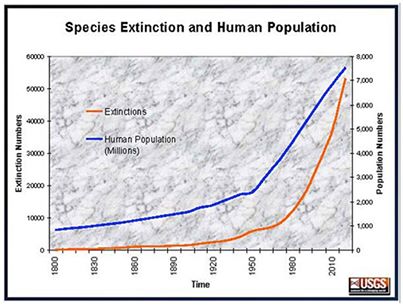
About 20 years ago, when the human population was 5.7 billion, our species was already consuming 40 percent of the Earth’s primary productivity. In other words, 40 percent of the total solar energy converted to organic matter was being consumed by a single species. We are quickly approaching a tipping point in the planet’s sixth mass-extinction event, attributable to human folly. The planet simply cannot accommodate another human doubling. Whether or not there is sufficient hydrocarbon to permit such a doubling, it will be prevented by the ravages of climate-change events, such as floods, hurricanes and droughts due to global warming, by famines due to the disappearance of key members of our ecology like the bats and honeybees, and by infectious diseases, like Ebola, from human infringement on the habitats of other animals. Our runaway overpopulation, overconsumption, and our obsession with economic growth are carving a sure path to collective suicide.

Procreation is still viewed as a being blessing and accomplishment, although this is an obsolete notion from an era when many hands were needed on a farm, and life expectancy was short, especially for women (many of whom died in childbirth) and young children. In an overpopulated world, parenthood is an act of self indulgence: the ultimate act of selfishness against the society at large and even toward the children themselves, who are being delivered to a world in crisis. So far, the only country that has seriously tried to control its population has been China. For the 35 years from 1979 to 2014, China’s unpopular one-child policy helped to avert a population growth of more than 400 million. More recently, China’s capitalist ambitions to grow a domestic market for its goods have led it to relax this policy to allow two children per couple if either parent is an only child.

Population control policy is needed globally and can be achieved without coercion. In most industrialized countries, parenthood currently comes with substantial tax breaks and an assortment of benefits. This must end. Instead, parenthood should be heavily taxed in proportion to the number of children, and adults without children should be those to receive tax breaks. The notion that children are a burden to the community at large — and not a blessing — must become part of the discourse. Ultimately, this should become incorporated in the culture to such a degree that the sight of a mother or father with three or four children will become obscene. To have any future as a species, our population needs to drop, as does our consumption. We must challenge capitalism and adopt a degrowth model. If we are to make any progress on mitigation of climate change, we must urgently address the problem of overpopulation.

…and the Grasshoppers Inherit the Earth

1451324_650954518277931_1616731734_n

Those who are still harboring fantasies about a time of peace and harmony, sustainability, or inherent respect for nature in human kind’s pre-Columbian past should read, Constant Battles, by Steven A. LeBlanc, which explodes the myths about the peaceful, noble savage and the notion of early conservation ethics.

Here’s an excerpt from that book’s chapter, “Enter Conflict:”

“What sets humans apart from almost all other animals is their ability to take resources from other groups, by group action. A large male bear can chase other bears from the best fishing spot along the river, and a male lion can defend its pride’s territory from other lions, but humans developed this process much further. They can cooperatively take over the territory or resources of another group—either by killing them off or driving them from the resources. Such aggression is not without risk, but it is achievable. The ability to engage in social cooperation sets up a dynamic among population growth, carrying capacity, and the potential for conflict.

“Not only are human societies never alone, but regardless of how well they control their own population or act ecologically, they cannot control their neighbors’ behavior. Each society must confront the real possibility that its neighbors will not live in ecological balance but will grow its numbers and attempt to take the resources from nearby groups. Not only have societies always lived in a changing environment, but they always have neighbors. The best way to survive in such a milieu is not to live in ecological balance with slow growth, but to grow rapidly and be able to fend off competitors as well as to take resources from others.

“To see how this most human dynamic works, imagine an extremely simple world with only two societies and no unoccupied land. Under normal conditions, neither group would have much motivation to take resources from the other. People may be somewhat hungry, but not hungry enough to risk getting killed to eat a little better. A few members of either group may die indirectly from food shortages—via disease or infant mortality for example—but from an individual’s perspective, he or she is much more likely to be killed trying to take food from the neighbors than from the usual provisioning shortfalls. Such a constant world would never last for long. Populations would grow and human activity would degrade the land or resources, reducing their abundance. Even if, by sheer luck, all things remained equal, it must be remembered that the climate would never be constant: times of food stress occur because of changes in the weather, especially over the course of several generations. When a very bad year or series of years occurs, the willingness to risk a fight increases because the likelihood of starving goes up.      …

“Now comes the most important part of this overly simplified story: The group with the larger population always has the advantage in any competition over resources, whatever those resources may be. Over the course of human history, one side has rarely had better weapons or tactics for any length of time, and most such warfare between smaller societies is attritional. With equal skills and weapons, each side would be expected to kill an equal number of its opponents. Over time, the larger group will finally overwhelm the smaller one. This advantage of size is well recognized by humans all over the world, and they go to great lengths to keep their numbers comparable to their potential enemies. This is observed anthropologically by the universal desire to have many allies, and the common tactic of smaller groups inviting other societies to join them, even in times of food stress.

“Assume for a moment that by some miracle one of our two groups is full of farsighted, ecological geniuses. They are able to keep their population in check and, moreover, keep it far enough below the carrying capacity that minor changes in the weather, or even longer term changes in the climate, do not resort in food stress. If they need to consume only half of what is available each year, even if there is a terrible year, this group will probably come through the hardship just fine. More important, when a few good years come along, these masterfully ecological people will not grow rapidly, because to do so would mean that they would have trouble when the good times end. Think of them as the ecological equivalent of the industrious ants.

“The second group, on the other hand, is just the opposite—it consists of ecological dimwits. They have no wonderful process available to control their population. They are forever on the edge of carrying capacity, they reproduce with abandon, and they frequently suffer food shortages and the inevitable consequences. Think of this bunch as the ecological equivalent of the care-free grasshoppers. When the good years come, they have more children and grow their population rapidly. Twenty years later, they have doubled their numbers and quickly run out of food at the first minor change in the weather. Of course, had this been a group of “noble savages” who eschewed warfare, they would have starved to death and only a much smaller and more sustainable group survived. This is not a bunch of noble savages; these are ecological dimwits and they attack their good neighbors in order to save their own skins. Since they now outnumber their good neighbors two to one, the dimwits prevail after heavy attrition on both sides. The “good” ants turn out to be dead ants, and the “bad” grasshoppers inherit the earth.

“The moral of this fable is that if any group can get itself into ecological balance and stabilize its population even in the face of environmental change, it will be tremendously disadvantaged against societies that do not behave that way.” The long-term successful society, in a world with many different societies, will be the one that grows when it can and fights when it runs out of resources. It is useless to live an ecologically sustainable existence in the “Garden of Eden” unless the neighbors do so as well.”

Tuesday Is Soylent Green Day Again

Last night I watched the timeless 1973 movie, Soylent Green, again and was again impressed (unfavorably) by how much the futuristic world that it depicted mirrored the world we’re headed for now. The temperature of the overcrowded New York of the future was a constant 90 degrees; the oceans were dying (presumably from overfishing and pollution, they hadn’t heard of acidification at the time); and the world was running out of food..

Spoiler Alert:

Set in 2022, the film opens with a slide show of earlier eras, back when the Earth was covered with forests and open fields, and there were only a few scattered settlements of people who travelled in horse-drawn wagons.

As the images pass quickly by, we see the first automobiles (tail pipes spewing toxic climate-changing carbon gases), followed by a massive blacktop parking lot jam packed with Model Ts. The pictures begin to flash almost more rapidly than we can focus, but we catch glimpses of factories with smokestacks billowing and crowds of people barely able to

move without trampling one another. (Come to think of it, what we are witnessing looks a lot like the inside of an average modern-day poultry barn, where chickens and turkeys are forced to live out their lives in intense confinement.)

The first scene of action takes place in a cramped little New York City apartment, the dwelling of the film’s two main characters, Thorn, a semi-corrupt detective, and his elderly room-mate and research partner, Sol, who is constantly going on about the good old days—a world that Thorn can’t possibly envision or relate to.

They are among the lucky few; most people sleep on the stairways or in the hallways or anywhere they can find shelter from the oppressive heat caused by an out of control greenhouse effect. We overhear a program on their worn out old TV which is an interview with the governor of New York, touting a new food product called “Soylent Green,” ostensibly made from the ocean’s plankton. (Everyone in that day and age knows that the land is used up, but they’re told the oceans can still provide for them).

Food in this depressing, human-ravaged world comes in the form of color-coded wafers, distributed under strict government supervision. Hordes of people stand in line for their ration of Soylent yellow or blue made from soy, or other high protein plants grown behind the fortress-walls of heavily guarded farms.

Signs remind the throng that “Tuesday is Soylent Green day.”

The multitudes are exceptionally unruly on Tuesday. Brimming with anticipation, they can’t wait to obtain a ration of the special new product. When the food distributors run out of soylent green, people start rioting and things get out of hand. “Scoops” (garbage trucks fitted with backhoe-like buckets on the front) are called in to scrape up the angry masses and haul them off…

By the end of the film, Thorn learns that the oceans are dead and the actual ingredients of Soylent Green are something a bit harder to stomach than plankton. In the final scene, a mortally-wounded Thorn is carried away on a stretcher as he desperately tries to tell bewildered onlookers, “Soylent Green is People!” “They’re making our food out of people. Next thing, they’ll be breeding us like cattle for food!”

Could it ever happen? Could the human race ever stoop so low? If the scenario seems too hard to swallow­, consider this: the conditions animals are forced to endure on today’s factory farms would have seemed unimaginable to people living a hundred years ago.

Pope Schitzo on Population Control/Climate Change

Pope on climate change: Man has ‘slapped nature in the face’

Pope Francis said Thursday he is convinced that global warming is “mostly” man-made and that he hopes his upcoming encyclical on the environment will encourage negotiators at a climate change meeting in Paris to make “courageous” decisions to protect God’s creation.

Francis has spoken out frequently about the “culture of waste” that has imperiled the environment and he elaborated en route to the Philippines. While there, Francis will meet with survivors of the 2013 Typhoon Haiyan, which the government has said was an example of the extreme weather conditions that global warming has wrought.

“I don’t know if it (human activity) is the only cause, but mostly, in great part, it is man who has slapped nature in the face,” he said. “We have in a sense taken over nature.”

“I think we have exploited nature too much,” Francis said, citing deforestation and monoculture. “Thanks be to God that today there are voices, so many people who are speaking out about it.”

Francis, who pledged on the day of his installation as pope to make the environment a priority, said he expected his encyclical on ecology to be released by June or July. He said he wanted it out in plenty of time to be read and absorbed before the next round of climate change negotiations opens in Paris in November after the last round in Lima, Peru, failed to reach an agreement.

“The meetings in Peru were nothing much, I was disappointed,” he said. “There was a lack of courage. They stopped at a certain point. We hope that in Paris the representatives will be more courageous going forward.”

The ultimate goal of U.N. climate negotiations is to stabilize greenhouse gases at a level that keeps global warming below 2 degrees C (3.6 F), compared with pre-industrial times. Negotiations culminating in the Nov. 30-Dec. 11 meeting will rise or fall on two key points: How to divide responsibility for global warming and how to pay to fight it. The developed world used fossil fuels to build roads, cities and houses, and emerging economies want to have the same chances to grow as quickly as possible. Island nations and low-lying countries, meanwhile, fear rising sea levels will swamp them and need funds to adjust.

Environmentalists are hopeful that Francis’ encyclical will jump-start the talks, and note that the pope is due to speak at the United Nations in New York in September where he may use the global stage to make some points before negotiations get under way.

“Drawing attention to the impact a changing climate is having on poor communities in the Philippines couldn’t be better timed, given the crucial decisions world leaders must take this year to tackle the issue,” Neil Thorns, director of advocacy at CAFOD, the aid agency of the Catholic Church in England and Wales, said in a statement. “Vulnerable communities like those in the Philippines — and indeed all of us — need political leaders to rise to that challenge and go further than they did in Lima.”

Those who reject scientific findings that climate change is man-made, however, have condemned the pope in harsh terms for taking up the issue at all. Their criticisms are based on previous comments by Francis and recent remarks by some of his top aides that there is clear-cut scientific evidence that climate change is driven by human activity.

Pope strongly defends church teaching against contraception

Associated Press

…He then deviated from his prepared remarks to praise Pope Paul VI for having “courageously” resisted calls for an opening in church teaching on sexuality in the 1960s. Paul penned the 1968 encyclical “Humanae Vitae” which enshrined the church’s opposition to artificial birth control.

Francis noted that Paul was aware that some families would find it difficult to uphold the teaching and “he asked confessors to be particularly compassionate and understandable for particular cases.”

But he nevertheless said Paul was prescient in resisting the trends of the times.

“He looked beyond. He looked to the peoples of the Earth and saw the destruction of the family because of the lack of children,” Francis said. “Paul VI was courageous. He was a good pastor. He warned his sheep about the wolves that were approaching,…”

………………………….

Yet another derogatory statement about wolves? Apparently the Pope didn’t read the May 7, 2007 news release from the U.K.s’ http://www.optimumpopulation.org “Combat Climate Change With Fewer Babies”: The most effective personal climate change strategy is limiting the number of children one has. The most effective national and global climate change strategy is limiting the size of the population.

No Wolves Killed in Contest Means Too Many Wolves Already Killed

Hunters here need to get a life. For over a week now, I’ve been receiving comments about the wolf/coyote contest hunt addressed in the January 2nd article, “ID Gun Nuts Start New Year With Three-Day Mass Slaughter Of Wolves And Coyotes.”   

I don’t know if it’s the insinuation that they might be “gun nuts” (I would think they’d gladly fess up to that) or what, but long after the derby has played itself out, they’re still trying to get their vitriolic comments approved. So far, over 500 of their 180,000+ viewers have left comments that will never see the light of day (except in the occasional post like this one, meant to expose just how malicious they really are).

And they really do all sound alike—believe me when I say you’d never want to sit through 500 of their repetitive statements, such as the ever-popular catch phrase:

“Smoke a pack a day!”NT wolf bumpr stickr

It wasn’t funny the day the first guy blurted it out and it just gets more tedious—and more carcinogenic—with each repeated use. However, it does point out their universal sentiment about doing away with wolves at every chance they get. With all the anti-wolf mawkishness it’s hard to imagine there are many wolves left in Idaho. Each licensed hunter there can legally kill up to five wolves per season and trap and an additional five individuals, so recovering wolves would conceivably have suffered considerable losses by now.

But these would-be commenters seem keenly concerned about controlling the wolves’ population (as if they need it) while at the same time, indifferent about their own. Here are some of their views on the subject of overpopulation:

“There is nothing wrong with the killing of these animals it’s a all in an order to control population.”

“Their numbers are unsustainable. Wolves will kill for the thrill and not just because they are hungry.”

“haha kill them all! Wolves are one of the biggest problems we have in Idaho, wyoming and Montana!”

“if we don’t thin out these packs it could turn bad for everyone they are already over populated…” 

And yet, according to post-contest articles like, “Wolf Population Unaltered By Controversial Hunt,” “Nobody even saw a track. We had fresh snow, and we were just in shock,” Alder said. “No sightings, no tracks.” He noted that there was an increase in coyote captures this year—30, compared with 21 during last year’s derby.

Not to give them credit for achieving anything whatsoever, but it would seem wolf-killers have been proactive about gettin’‘er done well before the contest’s start date.

The article goes on to say, “One team of hunters killed 12 coyotes over three days and sold their pelts to a fur buyer who attended the event. The team walked away with a $1,000 cash prize for most coyotes killed.

“Thirty coyotes were killed during the three-day hunt, and—for the second consecutive year—zero wolves.”

The derby, organized by executive director of Idaho for Wildlife Steve Alder, was created to help curb predator populations.

Considering the burgeoning human population, Alder and his ilk would do well to look in the mirror before calling any kettles black. Are they blissfully ignorant of the fact that another human is born every eight seconds in this country alone? Meanwhile, 350,000 humans are born each and every day worldwide.

How many of them will grow up to be predator hunters? Talk about “unsustainable” numbers. This isn’t just about them or their rancher buddies. This is about a world-wide loss of biodiversity—their part in the sixth mass extinction. It’s really not something to be glib over or proud of.

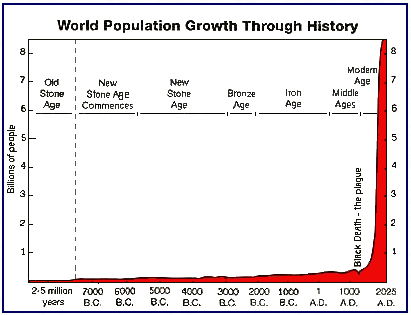
world-population-through-history-to-2025