Brazilian official who posed for photo with Trump tests positive for coronavirus, reports say

KEY POINTS
  • A Brazilian official who met and dined with President Donald Trump at Mar-a-Lago over the weekend has tested positive for coronavirus, according to media reports.
  • The official, Fabio Wajngarten, posted an Instagram image of him posing with Trump and Vice President Mike Pence, who is leading the White House’s coronavirus task force.
  • “Let’s put it this way, I’m not concerned,” Trump said Thursday.
GP: Donald Trump 200310 - 106435282
President Donald Trump makes remarks to the media in the Capitol after attending the Senate Republican Policy luncheon on Tuesday, March 10, 2020.
Tom Williams | CQ-Roll Call | Getty Images

A Brazilian official who met and dined with President Donald Trump at Mar-a-Lago over the weekend has tested positive for coronavirus, according to media reports Thursday — but Trump said he’s “not concerned.”

The official, Fabio Wajngarten, posted an Instagram image of him posing with Trump and Vice President Mike Pence, who is leading the White House’s coronavirus task force.

“I did hear something about that,” Trump told reporters Thursday, when asked about the matter. “We had dinner together in Florida at Mar-a-Lago with the entire delegation. I don’t know, if the press [said he was there, then] he was there.”

Trump appeared to shift his focus to Brazil’s president, Jair Bolsonaro, as he continued his response.

“But we did nothing very unusual. We sat next to each other for a period of time, had a great conversation. He’s doing a terrific job in Brazil, and we’ll find out what happens. I guess they’re being tested right now?” Trump said.

Pressed for comment on the report, Trump added: “Let’s put it this way, I’m not concerned.”

This is breaking news. Please check back for updates.

Coronavirus cases rise in Washington, prompting new rules for nursing homes: “If you do the math, it gets very disturbing”


Washington Governor Jay Inslee is expected to ban gatherings of more than 250 people in most of the Seattle metro area, while the state braces for potentially tens of thousands of more cases of coronavirus. Inslee also outlined new rules for nursing homes, which have been hit hard by the coronavirus.

Public health officials said at least 10 long-term care facilities in the Seattle area have reported cases. Patients have died at three of those facilities. Of the 32 people who’ve died from coronavirus in the U.S., 20 of them are linked to the Life Care Center in Kirkland, Washington.

Bridget Parkhill’s mother recently tested positive for coronavirus at the Life Care Center. She and her sister now visit by standing outside her window.

“It wasn’t a shock that she was positive,” Parkhill told CBS News correspondent Jonathan Vigliotti. “It should have been a priority to get everybody tested so they could get all the negative people out of here before they turned positive.”

But a shortage of tests meant only the critically ill were prioritized.

Another long-term care facility that has reported coronavirus cases, the Josephine Caring Community, is in lockdown, CEO Terry Robertson said.

“No visitors, no consultants and no families. And I can tell you that’s incredibly tough,” he said.

In Northern California, officials confirmed Tuesday that an assisted living resident in their 90s died after getting the virus. And a recent study examining coronavirus cases in China found that in people over 80 years old, the death rate was nearly 15%.

In Seattle’s King County, 74 more cases were announced Tuesday, bringing the statewide total to more than 260.

“If you do the math, it gets very disturbing,” Inslee said.

The new nursing home rules outlined by the governor include limiting patients to one visitor per day and screening employees and volunteers for symptoms at the start of their shift.

“The number of people who are infected in an epidemic like this will double in the state of Washington unless we take some real action here,” he said.

Industry groups have issued recommendations for those whose family members live in nursing homes. They said you should ask your loved one’s facility about its plans for cleaning and staffing, keep in touch remotely for now, and monitor instead of move. Leaving the facility could put the elderly at much higher risk, officials said.

Coronavirus and the karmic interconnectedness of humans, animals

Coronavirus and the karmic interconnectedness of humans, animals
© Getty Images

The COVID-19 coronavirus has killed thousands of people around the world, including 14 in the U.S., and its origin in animals and global spread should remind us how inextricably linked we are with other life on Earth. We share the same planet and breathe the same air, and we also exchange microbes including germs. Now, with our burgeoning human population and global economy, we face new threats from a wider distribution of diseases like this new strain of coronavirus.

For some background, the World Health Organization (WHO) explains: “Coronaviruses (CoV) are a large family of viruses that cause illness ranging from the common cold to more severe diseases such as Middle East Respiratory Syndrome (MERS-CoV) and Severe Acute Respiratory Syndrome (SARS-CoV)… Coronaviruses are zoonotic, meaning they are transmitted between animals and people.” COVID-19 was thought to have come from a live animal market where animals are often sold as food in Wuhan, China in December 2019, and so far it has been confirmed in nearly 80 countries and declared a “public health emergency of international concern” by the World Health Organization.

No one yet knows how many people will be infected or die from COVID-19, but it has characteristics similar to the bird flu, known as the “Spanish Flu,” which killed millions during World War One.

SARS, MERS, and COVID-19 are contagious diseases that jump from animals to humans, and more needs to be done to curtail these, including banning live animal markets. But, other potentially fatal zoonoses also warrant attention.

The Centers for Disease Control and Prevention (CDC) warns: “…3 out of every 4 new or emerging infectious diseases in people come from animals.” These include viruses, bacteria, fungi and parasites, and they infect millions of U.S. citizens every year.

In the U.S., almost ten billion animals are exploited and slaughtered every year. Most live short miserable lives in overcrowded factory farms, which are a breeding ground for disease, including emerging pathogens and virulent strains of antibiotic-resistant bacteria.

In addition to foodborne illness and environmental pollution, animal agriculture can also incite global pandemics like H1N1, which was initially called “swine flu” because it was linked to a similar disease in pigs, but its connection to animal agriculture has since been largely obscured.

The H1N1 pandemic killed hundreds of thousands of people around the globe, including over ten thousand in the U.S., according to CDC: “From April 12, 2009, to April 10, 2010, CDC estimated there were 60.8 million cases (range: 43.3-89.3 million), 274,304 hospitalizations (range: 195,086-402,719), and 12,469 deaths (range: 8868-18,306) in the United States due to the (H1N1)pdm09 virus… Additionally, CDC estimated that 151,700-575,400 people worldwide died from (H1N1)pdm09 virus infection during the first year the virus circulated.”

While animal-borne illnesses continue to threaten human health, agribusiness has a vested interest in preventing consumers from thinking about it — under the oversight of the U.S. Department of Agriculture (USDA). Since the 1980s, Farm Sanctuary has investigated farms, stockyards and slaughterhouses and worked to prevent irresponsible agricultural practices, such as the transport and slaughter of downed animals, animals too sick even to stand. T

he USDA defended the practice for decades, dismissing our concerns about diseased animals entering the food supply. Finally, after confirming mad cow disease in the U.S., the agency agreed that downed cows should not be slaughtered for human consumption. Unfortunately, however, other diseased and debilitated animals are still entering the U.S. food supply, including half a million downed pigs every year.

We continue challenging this inhumane and risky practice, and we are also challenging a new USDA policy to remove limits on slaughterhouse line speeds, and give the industry more authority to police itself. The USDA and other government officials need to protect the public, instead of serving the short-sighted financial interests of agribusiness.

Government programs should encourage diverse organic farms that build soil and create ecological sustainability and resilience, instead of chemically dependent mono-crops and factory farm confinement, which denude and despoil the earth.

We should invest in plant-based agriculture and grow crops to feed people instead of farm animals, which would feed more people with less land and fewer resources, allowing rainforests and other vital ecosystems to be preserved, along with biodiversity and the earth’s natural capacity for regulating greenhouse gasses and other environmental threats. We all benefit when our common home, the earth, is healthier.

Transitioning agriculture and government policies will take time, but each of us can make daily choices to help the planet and ourselves. Eating nutritious, plant-based foods can help fortify our immune systems, thereby enhancing our ability to withstand various threats, including from contagious viruses like COVID-19.

Our disrespectful treatment of other animals and the earth has consequences, and when they are harmed, ultimately, so are we. All life on Earth is connected, and it’s in our interest to act accordingly.

Gene Baur is the president and co-founder of Farm Sanctuary, a national farm animal rescue and advocacy organization.

It’s Not Just Pence. Evangelicals Are Leading US Coronavirus Response.

It’s Not Just Pence. Evangelicals Are Leading US Coronavirus Response.

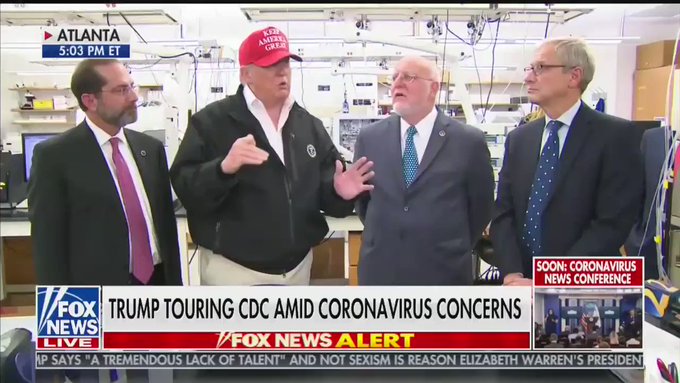
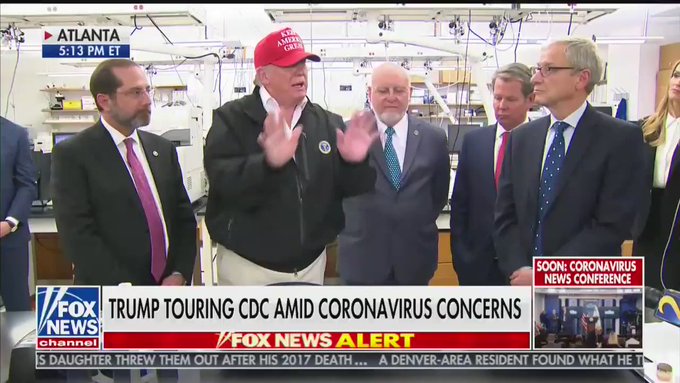
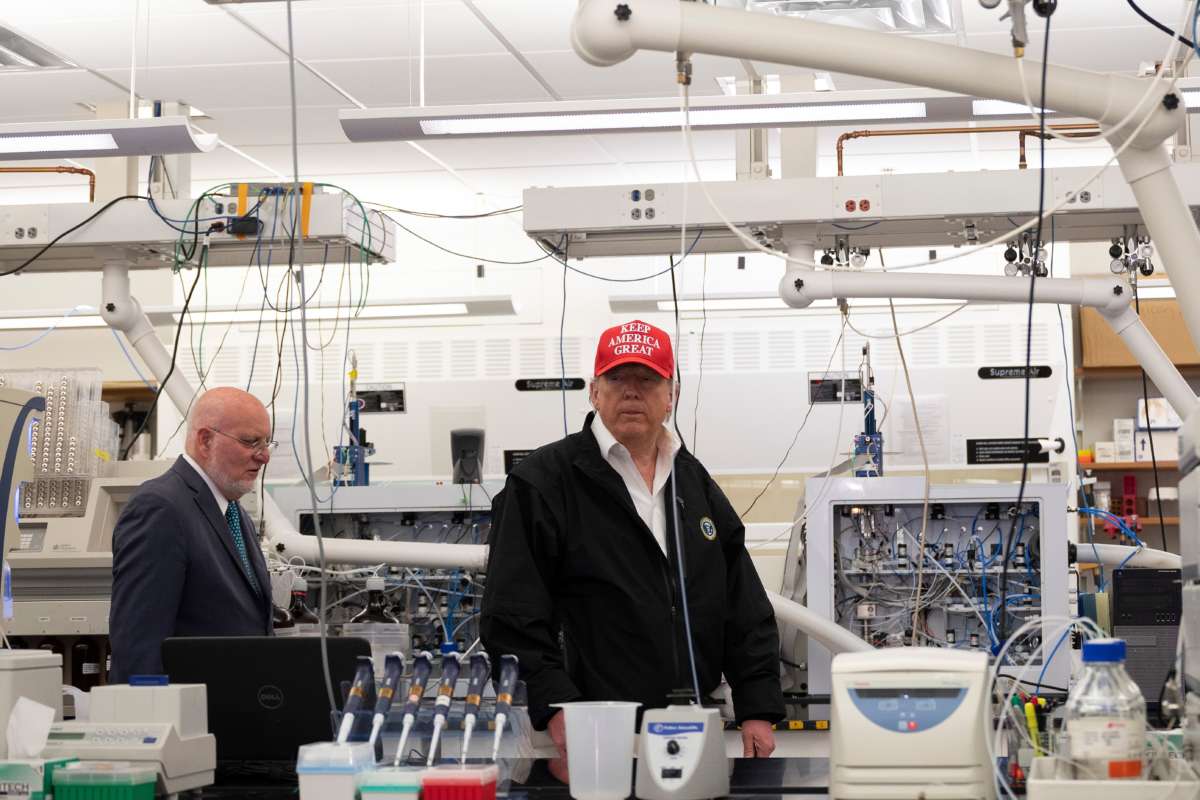
bly saw at least some snippets of President Trump’s visit to the CDC last Friday. It will stand as one of the most astonishing appearances by this or any other president — and that’s saying something. When asked if he regretted firing the entire staff of the Office of Pandemic Preparation, Trump said, “This is something that you can never really think is going to happen.” He said that everyone who wants to be tested for this virus can get tested, which is not even close to true. He called Gov. Jay Inslee of Washington state, who is on the front lines dealing with this epidemic, a “snake.”

He made it clear that he wants to cook the numbers so it doesn’t look as if the nation is in the midst of an epidemic. This has been obvious from the outset, but for the president to come out and say it is something else again:

Aaron Rupar

@atrupar

“Who are you from by the way? I don’t watch CNN. That’s why I don’t recognize you. I don’t watch CNN because CNN is fake news” — Trump insults a CNN reporter

Embedded video

Aaron Rupar

@atrupar

“The [coronavirus] tests are all perfect. Like the letter was perfect. The transcription was perfect. This was not a perfect as that, but pretty good.” — is Trump referring to the transcript of his phone call with the Ukrainian president here?

Embedded video

1,388 people are talking about this

Mostly, however, he patted himself on the back:

You know, my uncle was a great person. He was at MIT. He taught at MIT for, I think, like a record number of years. He was a great super genius. Dr. John Trump. I like this stuff. I really get it. People are surprised that I understand it. Every one of these doctors said, “How do you know so much about this?” Maybe I have a natural ability. Maybe I should have done that instead of running for President.

As Wired science reporter Adam Rogers wrote:

As a reporter, in general I’m not supposed to say something like this, but: The president’s statements to the press were terrifying. That press availability was a repudiation of good science and good crisis management from inside one of the world’s most respected scientific institutions.

Let’s put that another way: The CDC was considered one of the world’s most respected scientific institutions. It has not been covering itself in glory during this crisis.

The most unnerving aspect of the government response so far has not been Trump’s gibberish. He’s in over his head and it shows, as usual. And we know from his response to Hurricane Maria and other natural disasters that his only concern in a crisis is for his own political well-being. But I wouldn’t have expected to hear the director of the CDC, Robert Redfield, laud Trump like a Fox News pundit:

Aaron Rupar

@atrupar

“First I want to thank you, for your decisive leadership … I also want to thank you for coming here today … I think that’s the most important thing I want to say” –CDC Director Redfield slathers Dear Leader-style praise on Trump during his tour of CDC headquarters

Embedded video

6,647 people are talking about this

It’s a full-blown ritual at this point for members of the Trump cabinet and Republicans in Congress to genuflect to the president as if he were a 15th-century pope. And we know that public health experts have had to tread very softly in order not to upset him.

Still, it was surprising to hear such a slavering tribute from a scientist in the midst of a global health crisis. Likewise, it was strange to hear the highly esteemed U.S. global AIDS coordinator, Dr. Deborah Birx, make similar comments when she was introduced as part of the coronavirus task force back on March 2:

It is clear the early work of the president over travel restrictions and the ability quarantine has bought us the time and space to have this task force be very effective. I have never worked with such incredible scientists and thoughtful policy leaders…

It seemed just a bit over the top. But these two weren’t the only ones:

Aaron Rupar

@atrupar

Here’s Surgeon General Jerome Adams telling Jake Tapper that President Trump “sleeps less than I do and he’s healthier than what I am.” 😳

Embedded video

20.4K people are talking about this

There’s something important happening under the surface here. It may not simply be that these health policy professionals are trying to keep the kooky president happy so they can do their work on behalf of the country. They may be Trump true believers.

U.S. Surgeon General Jerome Adams, for instance, is a Mike Pence crony who previously served as the Indiana state health commissioner. He was intimately involved in the horrific HIV outbreak in that state, where Pence refused to authorize a needle exchange program until a number of people had died unnecessarily. Naturally, Trump appointed him surgeon general.

Redfield and Birx are both evangelical Christians who have been associated with HIV research for many years, going back to the 1980s. Birx runs PEPFAR, George W. Bush’s global AIDS initiative, and both she and Redfield have been involved with Children’s AIDS Fund International, which lobbies for abstinence-only sex education around the world.

The Washington Post reported back in 2018 that they belong to a network run by an important power broker in the evangelical world:

Evangelical activist Shepherd Smith has spent more than three decades cultivating relationships with leading AIDS researchers and policymakers to promote abstinence-only sex education and other programs. Those connections now could influence government programs and funding within the Trump administration. Among the most prominent: Robert Redfield, director of the Centers for Disease Control and Prevention…

[His wife] Anita Smith is now a consultant within PEPFAR to Deborah Birx, a physician and ambassador at large who oversees the program’s estimated $5 billion annual budget. Birx is also a former board member of Children’s AIDS Fund International and served until she was hired by the CDC in 2005, a PEPFAR spokesman said.

Anita Smith was hired by Birx to “improve prevention programs aimed at preteen girls.” I’m pretty sure we know what she recommended.

Redfield and Birx both served in the military doing AIDS research in the mid-1980s. Redfield is well-known for recommending measures that were considered extreme even within the Reagan administration, including the forced quarantine of AIDS patients. He later had a financial interest in an HIV vaccine that didn’t work, but which he continued to push. Birx, on the other hand, has maintained a stellar reputation.

To be clear, none of this means that these people aren’t qualified for the jobs they hold. They both have medical degrees and relevant experience. But they seem to be part of a conservative subculture of evangelical Christians who have found a foothold in the Trump administration clustered around Mike Pence’s office. Along millions of other evangelicals, it appears they really believe in Donald Trump.

Setting ideology aside, however, what Trump wants these people to do — cover up his own ignorance and incompetence — is totally at odds with what they must know is best for the health of the American public. Is their worshipful admiration for this man blinding them to the need to communicate honestly with the American people about this crisis? Because that would explain a lot.

Trump Bears Full Responsibility for Botched Response to Coronavirus in US

Presidents always take credit for the positive things that happen on their watch, but Donald Trump has gone to a whole new level. He endlessly touted the “best economy ever,” even though, under his watch, we just saw the continuation of trends from the Barack Obama years.

There was a modest pickup in GDP growth, with the average for the first three years of the Trump administration being 2.5 percent, compared to an average of 2.3 percent in the last three years of the Obama administration. By contrast, the pace of job growth slowed, from 224,000 to 182,000 over the same period.

There was little change in most other macroeconomic variables between the two administrations, as we saw the gradual improvement in the labor market under the Obama years continue into the Trump years. That meant things were getting better on the whole. However, the hundreds of thousands of people who lost health insurance in the Trump years are likely to disagree with his boasts of the best economy ever, as are people facing crushing student loan debt.

But this is all past tense. One problem for those who want to take credit for everything good that happens on their watch is that they also have to take responsibility for the bad things that happen. In that sense, coronavirus completely belongs to Trump, although unlike the path of the economy, he really does bear responsibility.

At the most basic level, the epidemic itself was hardly a surprise. It was first reported in China in December of last year.

A serious president would have been taking the lead in organizing an international response. But Trump was busy doing other things. In addition to his golf games, Trump was holding campaign rallies and fundraisers around the country. When he wasn’t traveling, he was busy on Twitter making boasts about the economy, lying about his poll results and directing schoolyard taunts against his political opponents. With such a busy schedule, how could we expect Trump to have time to worry about a pandemic?

It gets worse. Trump had dismantled the Centers for Disease Control and Prevention’s (CDC) team to deal with pandemics. The CDC was also coping with Trump budget cuts, and is facing another cut of 16 percent slated for next year.

Trump also attacked those who tried to warn of the risks of the virus. He claimed the whole thing was a Democratic hoax, and said that the United States had 15 cases and that the number would fall quickly.

He then went full Trumpian in his management style, pushing aside the public health experts at the CDC, and putting Vice President Mike Pence in charge of protecting the country from the pandemic. Pence’s main credentials for this task are a disbelief in science (he doesn’t believe in evolution or global warming) and a failed effort to stem the spread of AIDS when he was governor of Indiana.

Trump also attempted to clamp down on any accurate, concrete information that would contradict his “no-big-deal” story. He required that Pence clear all statements from the CDC. Using his famed vindictiveness, he also retaliated against a Health and Human Services whistleblower who reported that people exposed to coronavirus on a cruise ship were greeted by health care workers without protective gear or training.

In short, the fact that we are likely facing a serious pandemic, unlike any we have seen in more than a century, is 100 percent Trump’s fault. Because of his vanity and ineptitude, people will die, and many more will get sick. It is very likely that we will face a recession as people cancel travel plans and are reluctant to go out to restaurants, sporting events and other public places.

At this point, we can only speculate how bad things will get. But let us say it loud and clear: “Thank you, President Trump!”

Italy’s massive coronavirus quarantine provokes panic and prison riots; stocks slide

https://www.cnbc.com/2020/03/09/italys-quarantine-provokes-panic-italian-stocks-plunge.html

KEY POINTS
  • Prime Minister Giuseppe Conte signed a decree imposing restrictions to the movement of people in the region of Lombardy and 14 other northern provinces.
  • The measures affect more that 16 million people, banning them from moving in and out of those areas.
  • Rumors that the extended quarantine measures Saturday night were to be implemented prompted scenes of panic among residents trying to get out before the restrictions came into force.
Premium: Passengers get off the train arriving from Milan (Milan), at...
Passengers get off the train arriving from Milan (Milan), at the Garibaldi central station train in Naples, southern Italy. The Italian authorities are taking all necessary measures to close the entire northern Italian region of Lombardy, which is home to around 16 million people, in an attempt to stop the COVID 19 coronavirus.
KONTROLAB

Italy’s extended quarantine restricting the movement of people in its industrial northern heartland have provoked panic among residents and accentuated the country’s north-south divide.

Prime Minister Giuseppe Conte signed a decree on Sunday imposing restrictions to the movement of people in the northern region of Lombardy — the epicenter of the outbreak in Italy — and 14 other provinces across the north, until April 3. The measures (an extension of a preexisting lockdown of 11 towns in Lombardy and Veneto) now affect more than 16 million people, banning them from moving in and out of those areas.

VIDEO01:54
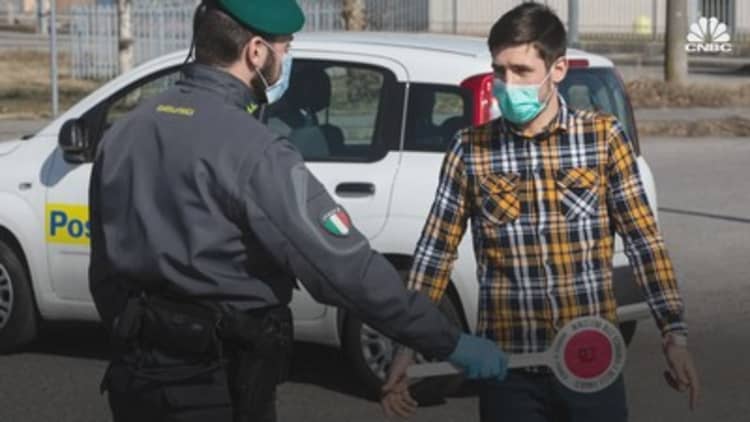
Italy locks down Lombardy region as coronavirus outbreak spreads—Watch scenes from the quarantine

The publication of a draft decree Saturday afternoon by a newspaper revealing the forthcoming, wider quarantine measures prompted panic among residents trying to get out before the restrictions came into force after midnight.

Media reports said bars and restaurants emptied and thousands of people tried to leave the region in cars and trains, where there were reports of shoving and pushing by passengers.

Violent protests have broken out in 27 Italian prisons against coronavirus restrictions with many inmates asking for an amnesty due to the virus emergency, news agency ANSA reported Monday, citing local sources.

Some 20 inmates had managed to break out of Foggia prison in Puglia during a riot Monday morning, ANSA said citing local sources.  Shop keepers in the area were told to close their shops in the vicinity of the prison.

Prison unrest broke out in a prison in Modena Sunday after inmates were informed that visits from relatives had been banned to prevent the spread of infection. In the south, relatives of detainees in a Poggioreale prison in Naples clashed with police against the government ban.

Premium: Relatives of the detainees in Poggioreale prison clash with...
Relatives of the detainees in Poggioreale prison clash with the police to protest the government’s ban on visiting detainees to prevent infection with Coronavirus (COVID-19) in prisons.
KONTROLAB

Italian stocks on the blue-chip FTSE MIB initially failed to open Monday along with other European markets. When the index did open, stocks were trading down around 2,290 points, or around 11% lower, and by late afternoon the index was down around 9.5%.

Italy now has 7,375 confirmed cases of the virus and 366 deaths. The outbreak has been concentrated in Italy’s wealthiest northern regions of Lombardy (where there are 3,372 confirmed cases), Emilia-Romagna (with 1,097 cases) and Veneto and has highlighted Italy’s north-south economic and cultural divide.

‘Don’t come down here’

The presidents of the southern regions of Campania, Puglia and Calabria — which have far few cases of the virus — have pleaded with their own inhabitants studying or working in the north not to bring the virus back down south, telling people “don’t come down here.”

VIDEO02:44
Healthcare system in northern Italy ‘unbelievably stretched,’ professor says

Those regions, as well as Basilicata and Molise, have signed decrees ordering anyone who does arrive from the affected northern regions into a self-imposed quarantine for two weeks. Puglia’s president said those who ignored the order were committing a crime and could be prosecuted.

Premium: Sanitary checks on the buses coming from North Italy
Medical officers check the temperature of a traveler of a bus coming from several Italian cities in Salerno, Italy on March 8, 2020.
Anadolu Agency

La Repubblica newspaper quoted Jole Santelli, the governor of Calabria, as telling people that “returning from the north in an uncontrolled way puts our country in danger. … Don’t do it, stop!”

“The government must block an exodus to Calabria, which risks triggering a disastrous bomb,” said Jole Santelli, the president of Calabria.

Economists predict that Italy’s economy, weak before the outbreak, will go into recession and the government has already announced that it will spend billions of euros to try to mitigate the economic impact of the virus on businesses and to help the north’s beleaguered health-care system.

VIDEO01:41
What the ‘Predictably Irrational’ author says not to do when the stock market tanks

Spock’s Vulcan salute should replace handshakes in coronavirus era

Commentary: Live long and prosper, and stay healthy.

LISTEN

– 01:41

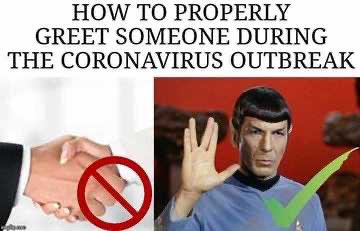
In this era fraught with coronavirus worries and new advice coming seemingly every day, I’d like to propose a new replacement for the germ-filled handshake. Let’s revive Mr. Spock’s Vulcan salute from Star Trek, a simple and sanitary gesture that’s just as useful as a handshake greeting, and 10 times more charming.

Even if you’re not a huge Star Trek fan, you likely know the gesture. Actor Leonard Nimoy, who died in 2015, invented it himself. The actor would raise his hand with the palm facing forward, thumb extended, and his middle and ring finger parted.  It’s often accompanied with the spoken words “live long and prosper,” sometimes paired with the words, “peace and long life.”

Nimoy told the L.A. Times that he based it on the Jewish Priestly Blessing that impressed him as a child. It became so well-known that President Barack Obama and 1960s icon Timothy Leary, among others, greeted Nimoy with the famous gesture, he said.

Now, with churches advising congregants not to shake hands for the sign of peace, the Queen of England wearing gloves for an investiture ceremony, and Washington governor Jay Inslee announcing he’s not shaking any more hands, it’s time for the Vulcan salute to become our new greeting.

Even Star Trek’s own Mr. Sulu, actor George Takei, is promoting the salute.

George Takei

@GeorgeTakei

Live longer and prosper.

View image on Twitter
6,425 people are talking about this

There may be one issue: It’s not easy for everyone to spread their fingers out accordingly. But if you need a little practice, know you’re in good company.

In a classic Star Trek moment from the original series, Dr. McCoy asks Mr. Spock to show him how to do the salute, and has to forcibly mash his fingers into position, snarking, “That hurts worse than the (fancy dress) uniform.”

And in a touching two-part episode of Star Trek: The Next Generation, Captain Picard helps a near-death Sarek, Spock’s father, make the gesture.

Live long and prosper, everyone. Handshakes were outdated and dorky, anyway.

Now playing: Coronavirus and COVID-19: Everything you need to know

Trump downplays oil plunge, coronavirus as markets tank: ‘Life & the economy go on’

KEY POINTS
  • President Trump sought to play down the plunging price of oil and the global spread of the new coronavirus as markets tanked Monday.
  • He said falling gas prices were good for consumers and likened the coronavirus to the common flu.
  • “Good for the consumer, gasoline prices coming down!” Trump wrote in one of a series of posts on Twitter.
  • Oil prices were down more than 20% after Saudi Arabia announced major price cuts and production increases.
GP: President Trump Attends Briefing At The National Institutes Of Health - 106432382
U.S. President Donald Trump speaks during a briefing at the National Institutes of Health Vaccine Research Center in Bethesda, Maryland, U.S., on Tuesday, March 3, 2020.
Yuri Gripas | Bloomberg | Getty Images

President Donald Trump sought to play down the plunging price of oil and the global spread of the new coronavirus as markets tanked Monday, saying that lower gas prices were good for consumers and comparing COVID-19 to the common flu.

“Good for the consumer, gasoline prices coming down!” Trump wrote in one of a series of posts on Twitter. In another, he wrote that the flu killed 37,000 Americans last year, compared with 22 known deaths from COVID-19, the disease caused by the coronavirus.

The market slid Monday amid an all-out oil price war and fears over the economic pain to come from the coronavirus. The sell-off triggered market “circuit breakers” shortly after trading opened, after the major indexes fell by 7% in less than 15 minutes.

Oil prices were down more than 20% after Saudi Arabia announced major price cuts and production increases. The Saudi move came after Russia rejected a proposal by OPEC to cut 1.5 million barrels of production per day.

Trump said the collapse was caused by Saudi Arabia and Russia “arguing over the price and flow of oil.”

“That, and the Fake News, is the reason for the market drop!” Trump tweeted. “Nothing is shut down, life & the economy go on,” he said.

The president’s downplaying of the coronavirus comes even as other parts of his administration signaled that containing the disease was his top priority.

“The American people should know President Trump is leading a whole of government approach,” Health and Human Services Secretary Alex Azar told Fox Business on Monday. “It is the number one priority of this administration.”

VIDEO01:39
Trump aides drafting economic measures amid coronavirus fallout

Monday’s market turmoil contributed to several weeks of chaotic financial declines spurred by concerns that efforts to contain the flu-like respiratory infection, which emerged late last year in China, will hamper global growth. The president is expected to meet with his economic team later Monday to review options to stem the impact of the disease on the economy.

Some economists have speculated that declines in the price of oil and historically low rates, including for the popular 30-year fixed mortgage, could boost consumer sentiment in the short term. But those factors could be overwhelmed by negativity around the spread of the coronavirus, they cautioned.

“The question is whether the fear factor attributable to the virus will overwhelm any positive impact from lower gasoline prices and lower mortgage rates,” Edward Yardeni, president of Yardeni Research, told CNBC over the weekend.

Earlier Monday, Trump tweeted that  Vice President Mike Pence, who is leading the government’s coronavirus task force, was doing a great job. Trump also boasted that his administration’s travel restrictions on China, which were announced in January, saved lives.

“The BEST decision made was the toughest of them all – which saved many lives,” Trump tweeted. “Our VERY early decision to stop travel to and from certain parts of the world!”

Some of the president’s posts on Monday were more in line with his ordinary preoccupations.

Despite the precipitous market drop, Trump spent some of his morning directing fury at the news media — “So much FAKE NEWS!” — former Vice President Joe Biden, the front-runner for the Democratic nomination, and the Democratic Party, which he accused of attempting to “smear” Biden’s rival Sen. Bernie Sanders.

— CNBC’s Eamon Javers and Kevin Breuninger contributed to this report. 

How the rapidly-spreading coronavirus evolved in the US

(CNN)Just a week ago on February 29, there was one confirmed death from coronavirus in the United States. Now the rapidly-spreading virus has killed 19 people and affected more than 30 states and the District of Columbia, turning into a health crisis.

Here’s how the disease quickly evolved in the US:

First case of the virus in the US

Federal health officials announced the first case of coronavirus in the US on January 20. The patient was in Washington state, and had just returned five days prior from Wuhan, China, where the outbreak started.

Biggest major outbreak outside China

The largest coronavirus outbreak outside of mainland China at the time was a cruise ship floating in Japanese waters. The Diamond Princess cruise ship announced a total of more than 700 passengers had coronavirus. Over 3,600 people, including 428 Americans, were stuck on the cruise ship that had been docked in Yokohama since February 4.

First major warning on likely spread

A top federal health official warned Americans on February 25 that coronavirus would spread in the United States. “It’s not so much a question of if this will happen anymore, but rather more a question of exactly when this will happen and how many people in this country will have severe illness,” said Dr. Nancy Messonnier, director of the CDC’s National Center for Immunization and Respiratory Diseases.

First coronavirus death in the US

A patient infected with coronavirus in Washington state died on February 29, marking the first fatality due to the virus in the United States. The man in his 50s had underlying health conditions, and there was no evidence he had close contact with an infected person or a relevant travel history that would have exposed him to the virus.
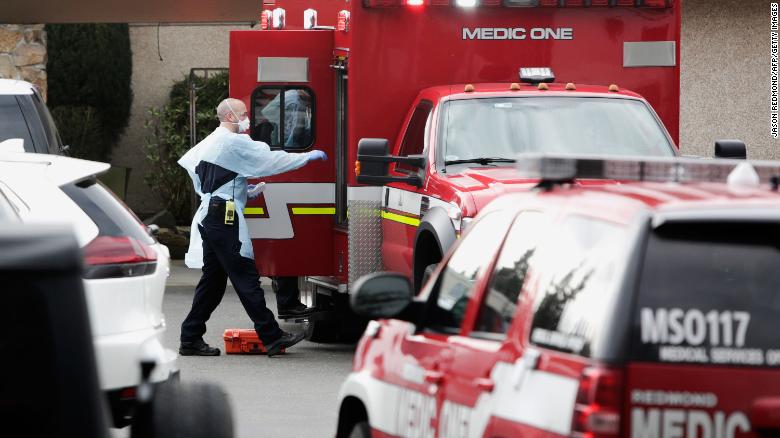
Ambulance staff prepare to transport a patient from the Life Care Center nursing home where some patients have died from coronavirus in Kirkland, Washington.

First coronavirus confirmation in New York City

New York confirmed its first case of coronavirus on March 1. The patient contracted the virus while in Iran, officials said. “There is no reason for undue anxiety — the general risk remains low in New York. We are diligently managing this situation,” Gov. Andrew Cuomo said.

First death outside Washington state

A death reported in Northern California on March 4 became the first fatality outside Washington state.
The victim was an elderly man with underlying health conditions, who was probably exposed to the virus on a trip aboard a Princess Cruises ship that traveled from San Francisco to Mexico in February.

Ship is held at sea in the US due to coronavirus

A ship carrying more than 3,500 people was held at sea off the coast of California as it traveled from Hawaii on March 4. The Grand Princess previously carried a passenger who became the first person to die from coronavirus in California, and was ordered to stay at sea for days as it awaited test results. Officials later confirmed 21 positive cases of coronavirus.
A deserted lounge area on the Grand Princess cruise ship Friday.

First deaths outside the West Coast

Florida authorities announced March 6 that two coronavirus patients in the state died. It was the first deaths believed to be linked to the virus on the East Coast. The state also confirmed more than a dozen cases, considered the second largest cluster on the East Coast after New York.

First infection in the nation’s capital

The first case of coronavirus infection in the District of Columbia was reported on March 7.
The patient was a resident in his 50s who appeared to have no history of international travel and no close contacts with a confirmed case, Mayor Muriel Bowser announced.

Infections hit more than 400

Now the US cases are at more than 400 and include 70 people repatriated to the US. Of those, 21 people are aboard the Grand Princess cruise ship. The ship was held off the coast of San Francisco and has been in limbo since March 4, when officials learned the first California fatality had traveled to Mexico on the ship last month. It’s expected to head to Oakland, California, this week.
Charlie Campbell  takes his mom Dorothy Campbell, 88, to see her husband Gene Campbell, 89, through his room window at the Life Care Center nursing home in Kirkland, Washington.

A nursing home is at the center of the outbreak

The hard-hit Washington state is grappling with an outbreak at Life Care Center nursing home in suburban Seattle, where at least 14 people have died, the King County Health Department said.
All 63 residents remaining at the facility are confined to their rooms and dozens more have been transferred to various hospitals, said spokesman Tim Killian of the Kirkland facility.

Doctor who treated first US coronavirus patient says COVID-19 has been ‘circulating unchecked’ for weeks

KEY POINTS
  • Since the first U.S. COVID-19 patient landed at Seattle-Tacoma International Airport on Jan. 15, the virus has spread to at least 75 people in Washington state.
  • The number of confirmed cases in the U.S. has risen to 233 across at least 17 states as of Friday morning.
  • Worldwide, more than 100,600 infections have been confirmed, according to Johns Hopkins University.

Dr. Amy Compton-Phillips recalled the day the first U.S. patient infected with COVID-19, a 35-year-old man from Snohomish County in Washington state, had taken a “turn for the worse.”

“He was day nine in his course and he actually started going downhill, started getting worse,” said Compton-Phillips, chief clinical officer of Providence St. Joseph Health, where the patient was treated.

At first, the patient only had common cold-like symptoms, Compton-Phillips said. But very quickly he began to have shortness of breath and a cough, she said. His X-ray also showed viral pneumonia. He needed supplemental oxygen and had to be put on an experimental antiviral treatment.

The patient has recovered and has been released from the hospital.

Since the patient landed at Seattle-Tacoma International Airport on Jan. 15 from the outbreak’s epicenter in Wuhan, China, the virus has spread to at least 75 other people in Washington state, killing 14 in the U.S. so far — 13 in Washington and one in California, according to Johns Hopkins University.

GP: Washington State Resident Confirmed As First US Case Of Wuhan Coronavirus 200121
Dr. Satish Pillai, deputy director for the Division of Preparedness and Emerging Infections at the US Centers for Disease Control and Prevention, speaks during a press conference about the first confirmed U.S. case of a virus known as the 2019 novel coronavirus at the state Public Health Laboratories on January 21, 2020 in Shoreline, Washington. The patient diagnosed with the virus, also known as the Wuhan coronavirus, is recovering in isolation at Providence Regional Medical Center Everett in Everett, Washington.
David Ryder | Getty Images

Life Care Center

At least five of those deaths have been traced to a skilled nursing facility, Life Care Center, in Kirkland, according to Washington state and local health officials. On Saturday, county health officials said about 50 residents and employees of the nursing care facility in the Seattle suburb were ill with “respiratory symptoms or hospitalized with pneumonia or other respiratory conditions of unknown cause” and were being tested for COVID-19.

Public health officials have identified at least 233 cases in the U.S. so, a fraction of the more than 100,600 infections across the world. But epidemiologists and state officials say the actual number of COVID-19 patients in the U.S. is likely in the thousands, maybe even tens of thousands, since testing here has been limited by a lack of kits and stringent criteria set by the Centers for Disease Control and Prevention.

Compton-Phillips said the doctors, nurses and other front-line workers watching the outbreak in real time are all saying “this is coming.”

“It’s not if, it’s when. And we better get ready now,” she said.

VIDEO03:57
Definitely making progress on testing capacity, but we have a lot more to screen

Global spread

World health officials are turning their attention abroad and away from China, where businesses have started reopening operations and the growth in COVID-19 cases have slowed over the last two weeks. Last week, WHO increased its risk assessment of the coronavirus to “very high” at a global level — its highest warning.

Outside China, 14,768 cases across at least 74 countries had been confirmed as of Thursday morning — up from four cases in three countries on Jan. 21, according to the World Health Organization.

“We are on the highest level of alert or highest level of risk assessment in terms of spread and in terms of impact,”  Dr. Mike Ryan, executive director of WHO’s health emergencies program, said during a press briefing on Feb. 28. “This is a reality check for every government on the planet: Wake up. Get ready. This virus may be on its way and you need to be ready. You have a duty to your citizens, you have a duty to the world to be ready.”

Compton-Phillips said some front-line workers had been saying “if” when talking about the virus becoming widespread in the U.S. — until two weeks ago, when cases suddenly cropped up in Iran and Italy with no known connection to China.

Then, “we started saying, ‘when,’” she said.

The health system will need to think where it can source essential products such as gowns, masks and gloves, Compton-Phillips said. She said they’ve started putting masks for patients “behind the counter,” to help conserve them.

“The boxes of masks were walking away,” she said.

WHO officials said panic buying and hoarding medical supplies is putting lives at risk and causing a “severe and mounting disruption” to the world’s stockpile of protective gear. “Shortages are leaving doctors, nurses and other front-line workers dangerously ill-equipped to care for COVID-19 patients, due to limited access to supplies such as gloves, medical masks, respirators, goggles, face shields, gowns, and aprons,” WHO said in a statement Tuesday.

‘Toehold’ in the US

When that first patient in Washington state presented himself for testing, Compton-Phillips said the hospital took an “overkill” approach.

“We will presume it’s COVID-19 until proven otherwise, so we’ll put a mask on them and put them in an isolation room,” she said. She added that when transporting that first patient to an appropriate isolation room, “we had him in this special gurney with plastic around it, so he wouldn’t contaminate anything.”

But that was over a month ago. Since then, the number of confirmed cases in the U.S. has risen to 233 across at least 17 states as of Friday morning, according to Johns Hopkins’ data. For weeks, most of the U.S. cases could be traced to travel in Wuhan, the Diamond Princess cruise ship, which was quarantined off the coast of Japan, or close contact with those people.

That’s all changed since last weekend. There are now well over two dozen cases in the U.S. of person-to-spread, many of which are proving to have been transmitted openly in the community, and it appears to be getting worse, according to state health officials.

State and local health have confirmed community transmission cases in California, Washington state, New York and North Carolina — where a woman contracted the virus on a trip to Washington state in what appears to be the nation’s first domestic travel-related infection.

Circulating unchecked

Part of the problem, Compton-Phillips said, was the CDC’s delay in getting testing kits to local health agencies and its reluctance to test patients who hadn’t traveled to Wuhan, China.

“We had real challenges initially. … I think it’s one of the reasons we’re seeing these hot spots pop up around the country is because we simply didn’t know this had already hit our shores,” she told CNBC, adding that cases will rise as testing is expanded and labs discover new cases that were previously hidden. “I do think that this virus has been circulating now for several weeks in the U.S. … Until now, it’s been circulating unchecked.”

Some hospitals still haven’t instituted strict isolation protocols for everyone being tested, and some state officials are even starting to relax hospital quarantine rules for patients who test positive. One woman in New York is under self-quarantine at her home in Manhattan. State health officials said a California patient was not under quarantine as doctors appealed to the CDC to test her. Since she hadn’t been to Wuhan, or been in contact with anyone who was, she was out and about in her community.

One patient in New Hampshire under self-quarantine broke protocol by attending a private event Friday night, state officials said Tuesday. In Texas, the CDC mistakenly released a Prince Cruise passenger who was under mandatory quarantine who later tested positive for the virus.

Testing delays

Last week, California Gov. Gavin Newsom said the state was monitoring more than 8,400 people for the coronavirus. As the magnitude of the emerging virus grew in the U.S., federal officials have loosened guidelines that restricted local clinicians from testing patients and led to delays.

The CDC sent test kits earlier in the outbreak to public health labs around the country, but those kits were problematic, CDC officials have since said, and potentially inaccurate. Because local clinicians can’t depend on the test kits, some have had to ship samples to a laboratory with the ability to run the tests, like the CDC laboratory in Atlanta.

“Some of our tests are getting sent to CDC in Atlanta, and it’s taking a while to get them back,” Compton-Phillips said. “The first couple [of] patients it was only taking a day or two. And now it seems to be taking about a week to get the test results back.”

Those delays, Compton-Phillips said, means doctors and nurses need to treat patients as if they have the virus until the results come back, which can be taxing for patients and health-care providers alike.

On Feb. 28, however, Dr. Nancy Messonnier, director of the CDC’s National Center for Immunization and Respiratory Diseases, announced that the agency is rolling out new tests. She said the move will improve the country’s ability to quickly identify and treat COVID-19 patients. Private labs Quest Diagnostics and Lab Corp. will be able to test specimens next week.

“Our goal is to have every state and local health department online, doing their own testing,” she said.