Exposing the Big Game

Forget Hunters' Feeble Rationalizations and Trust Your Gut Feelings: Making Sport of Killing Is Not Healthy Human Behavior

Exposing the Big Game

Coronavirus Outbreak in Nursing Home Highlights Risk in Elder Care Facilities

An outbreak of coronavirus disease in a nursing home near Seattle is prompting urgent calls for precautionary tactics at America’s elder care facilities, where residents are at heightened risk of serious complications from the illness because of the dual threat of age and close living conditions.

As of Monday afternoon, the emergence of the novel contagious illness at the Life Care Center of Kirkland, Washington, had left four residents dead and others hospitalized, local health officials said. A health care worker also has been hospitalized. In total, Washington state has reported six deaths, officials said.

Officials previously said that of the nursing home’s 108 residents and 180 staff members, more than 50 have shown signs of possible COVID-19 infections, the name given the illness caused by a novel coronavirus that emerged from Wuhan, China, late last year. Visits from families, volunteers and vendors have been halted and new admissions placed on hold, according to a statement from Ellie Basham, the center’s executive director.

The cluster of illness is the first of its type in the U.S., where 2.2 million people live in long-term care settings and may be at heightened risk because of age and underlying health conditions.

“We are very concerned about an outbreak in a setting where there are many older people,” said Dr. Jeff Duchin, health officer for the Seattle and King County public health agency.

The American Health Care Association, which represents 13,500 nonprofit and for-profit facilities for seniors and disabled people, issued updated guidelines Saturday, in response to the Washington outbreak. The new virus is thought to spread primarily via droplets in the air, and the guidelines largely echo strategies recommended to stem the spread of other respiratory viruses, such as influenza. That includes frequent hand sanitation among staff and visitors, grouping people who become ill in the same room or wing, and asking family members who are sick to avoid in-person visits.

But members had been anticipating cases of the new virus, said Dr. David Gifford, AHCA’s chief medical officer and senior vice president of quality and regulatory affairs.

“Clearly, it signaled that it’s here and that what people knew was likely to come is closer to them than before,” he said.

COVID-19 has been identified in more than 85,000 people worldwide and led to nearly 3,000 deaths, including the first U.S. death reported Saturday in another Washington state man in his 50s. That man was not associated with the Kirkland nursing center, officials said.

Studies of hospitalized patients in China suggest the median age of infection is in the 50s and that about 80% of COVID-19 cases are mild. However, a new summary in the journal JAMA reported that the virus has a case fatality rate of 1% to 2% overall — and as high as 8% to 15% in older patients in China.

That is alarming news for U.S. residents in long-term care settings, where illnesses caused by more common pathogens like norovirus and seasonal influenza often spread rapidly among residents, causing severe complications. Immune response wanes as people age, leaving them more vulnerable to infections of all types.

Dr. Karl Steinberg, a geriatrician who serves as medical director for two nursing homes and as chief medical officer for a chain of 20 others in Southern California, said the news of COVID-19 cases at the Washington state nursing center is worrisome.

“That’s very scary,” Steinberg said. “It worries me that once it gets going, it will be really hard to control the spread.”

The situation may be akin to the spread of coronavirus on cruise ships, such as the Diamond Princess that was quarantined off the coast of Japan, with one key exception, Steinberg said. People on cruise ships can be confined to their rooms with minimal interaction with staff and fellow residents. People in nursing centers are there because they need help with activities of daily living, he noted.
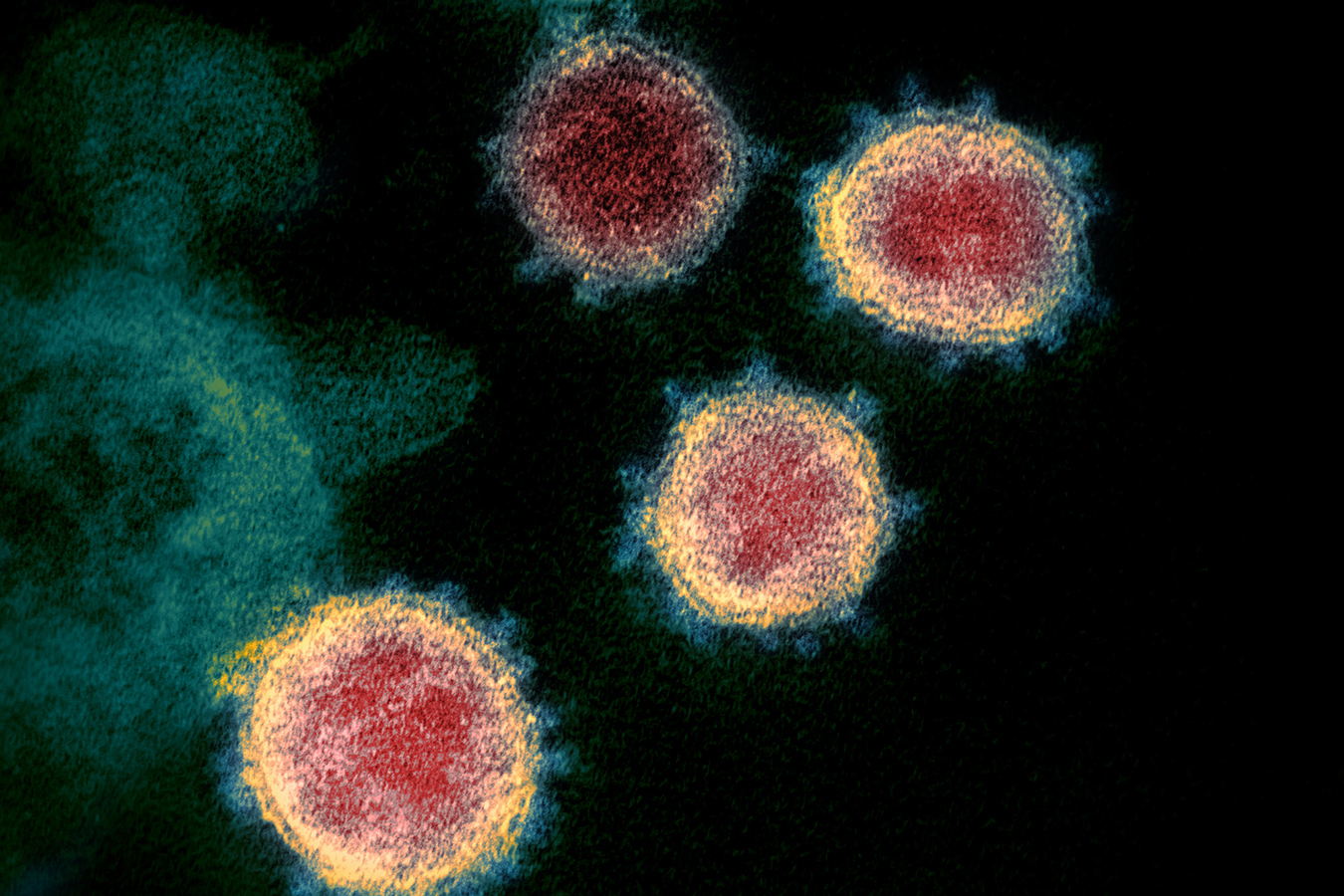
This transmission electron microscope image shows SARS-CoV-2 — also known as 2019-nCoV, the virus that causes COVID-19 — isolated from a patient in the U.S. Virus particles are shown emerging from the surface of cells cultured in the lab. The spikes on the outer edge of the virus particles give coronaviruses their name, crown-like.
NIAID-RML

In the Washington state center, Duchin said, officials are advising health workers to separate cohorts of sick patients from those who remain well and to don personal protective gear, including eye protection, to avoid infection. “It’s a very challenging environment with so many vulnerable patients to manage an outbreak,” he said.

Duchin urged older people and those with health conditions such as heart disease, lung disease and diabetes to pay close attention to precautions such as washing hands frequently, keeping their hands away from their faces and avoiding people who show signs of illness.

Just-released guidelines from the Society for Post-Acute and Long-Term Care Medicine call for increasing hand hygiene, isolating infected patients and making plans to ensure that health care workers stay home if they’re sick. The guidelines also call for screening visitors and daily temperature checks for residents and staff.

Individual centers should remain in close contact with local health officials about appropriate actions, Gifford said. Authorities — and families — should think carefully before taking steps such as removing patients from nursing centers during an outbreak.

“Evacuating a facility is not a benign event,” he said, noting that moving can be traumatic to frail and elderly people.

The nursing home cases are examples of community transmission of the virus, meaning the patients did not have a known history of travel to other nations where the virus is spreading or contact with a traveler diagnosed with the illness. Community transmission has now been detected in multiple states, including California.

However, Seattle researchers reported late Saturday that new genomic analysis suggests the virus may have been spreading in Washington state since mid-January, when a 35-year-old Snohomish County man who had visited Wuhan, China, was confirmed as the first U.S. case of the infection.

“This strongly suggests that there has been cryptic transmission in Washington state for the past 6 weeks,” tweeted Trevor Bedford, a computational biologist at Seattle’s Fred Hutchinson Cancer Research Center, who is tracking the virus. He estimated there could be “a few hundred” infections in the state.

At least 70 cases of coronavirus infection have been confirmed or presumed positive in the U.S., and officials with the federal Centers for Disease Control and Prevention said Americans should expect to hear more reports of illness in the coming days and weeks.

The new Washington cases and the first reported U.S. deaths were identified only after the CDC expanded the definition of who could be tested for the virus and after states and hospitals were given more leeway and supplies to conduct their own tests.

“What that says to us is that as we test more, we’re more likely to find cases of the disease,” Duchin said.

A team from the CDC has been sent to help local and state health officials investigate the Life Care Center outbreak. “We have a large investigation ahead of us, a complicated investigation ahead of us,” Duchin said.

In the meantime, Steinberg said he and others will take precautions to prevent the possible spread of COVID-19 cases in long-term care settings and act swiftly to contain them, if necessary.

“I guess there’s not much to do but hunker down and hope it’s not too bad,” he said.

Coronavirus death rate is 3.4%, World Health Organization says, Trump says ‘hunch’ tells him that’s wrong

David Jackson

USA TODAY

WASHINGTON – The World Health Organization reported this week that the death rate for the coronavirus increased to 3.4% and is more lethal than the flu, which kills tens of thousands of Americans each year.

But President Donald Trump, citing only a “hunch,” called the number provided by world health leaders “false.”

Asked about WHO’s coronavirus fatality rate findings during an interview Wednesday, Trump told Fox News host Sean Hannity: “Well, I think the 3.4% is really a false number.”

He added, “now, this is just my hunch … based on a lot of conversations with a lot of people that do this, because a lot of people will have this, and it’s very mild.”

Trump later put the number at less than 1%.

Tedros Adhanom Ghebreyesus, the head of the World Health Organization, announced the new fatality rate, which increased from the previous estimate of around 2%.

“Globally, about 3.4% of reported COVID-19 cases have died,” he said. “By comparison, seasonal flu generally kills far fewer than 1% of those infected.”

Secret Service:Secret Service protection of presidential candidates factors in aggressive crowds, mass shootings

Critics on social media said the president should not value his best guess over scientific analysis.

“There’s really no excuse for the president to be spreading this kind of misinformation to downplay a deadly disease,” tweeted the Democratic National Committee’s “War Room.”

Chris Lu, a former staff member for President Barack Obama, said “this kind of irresponsible talk creates a false sense of security that endangers public health.”

Other analysts said Trump is echoing a point made by health officials – the fatality rate may be inflated because some cases are not being reported.

“As the number of people getting tested positive goes up, the mortality percentage will go down,” tweeted Ari Fleischer, a former press secretary for President George W. Bush.

The latest on coronavirus:follow here for the latest coronavirus news

President Donald Trumps pre-game Super Bowl interview with Fox News host Sean Hannity is broadcast in a bar on February 2, 2020 in Washington, D.C.

The flu and the new coronavirus have similar symptoms, but the coronavirus is far deadlier — here’s how the 2 compare

wuhan coronavirus medical staff india hospital
Medical staff with protective clothing in a ward for people suspected of having the new coronavirus at a hospital in Chennai, India, on January 29. 
P. Ravikumar/Reuters

The coronavirus outbreak came in the middle of flu season in the Northern Hemisphere.

Many people have highlighted the overlapping symptoms of the flu and COVID-19, the disease caused by the coronavirus. Even President Donald Trump asked pharmaceutical execs if the flu vaccine could be used to stop the coronavirus.

But Tedros Adhanom Ghebreyesus, the director-general of the World Health Organization, warned against taking such comparisons too far.

“This virus is not SARS, it’s not MERS, and it’s not influenza,” Ghebreyesus said in a press conference on Tuesday. “It is a unique virus with unique characteristics.”

The most crucial difference between the flu and the coronavirus is that the latter has been far deadlier. Whereas about 0.1% of people who get the flu die, the coronavirus’ death rate is now at about 3.4%, based on the current numbers of cases and deaths.

The fatality rate of the novel coronavirus is still evolving, however, as more cases are confirmed. Many health experts believe that the rate will drop as the number of cases rises. That’s because an estimated 80% of coronavirus cases are mild, and patients checking into hospitals have the most severe symptoms. People with symptoms mild enough to recover at home without seeking medical treatment aren’t counted in the official totals.

How the death rates of the flu and the coronavirus compare

The novel coronavirus that originated in Wuhan, China, in December has killed over 3,200 people and infected nearly 94,000 people, mostly in China. It has spread to at least 80 other countries. The US has confirmed more than 125 cases and at least nine deaths.

Older people are far likelier to die from the coronavirus than younger people, and the same is true for the flu — though not to the same extent.

Here’s how the death rates of the two compare in different age brackets:

covid 19 mortality rate by age chart

Ruobing Su/Business Insider

The flu kills thousands of people every year, but its death rate is low

During the 2018-19 flu season, about 35 million people in the US contracted the flu and about 34,000 died, according to the Centers for Disease Control and Prevention. This flu season, an estimated 32 million people have gotten the flu, with 310,000 hospitalizations and 18,000 deaths.

The agency estimates the number of flu infections in the US via its influenza surveillance system, which gathers flu data from state and local partners, then projects nationwide totals using infectious-disease models.

During the 2018-19 season, about one out of every 1,000 people who got the flu died.

However, breaking down the numbers by age range reveals a more complex story. Among children, there was about one death in every 10,000 cases. In adults between 50 and 64, about six out of every 10,000 people who got the flu died. For people 65 and older, the rate rose to about 83 out of 10,000.

While the flu’s death rate is low, it varies depending on the strains circulating each year. The flu virus also mutates rapidly, so people can get infected by different strains, which is why the shot isn’t 100% effective and why new vaccines are developed every year.

About 15% of coronavirus patients over age 80 have died

The coronavirus is more fatal than the flu across all age ranges, but especially among older people, according to research from the Chinese Center for Disease Control and Prevention published in mid-February. It also more seriously affects people who already have health problems.

Among people 10 through 40 who got the coronavirus, about four out of every 1,000 died, according to the Chinese CDC’s figures. But 8% of people between 70 and 79 died, and the rate rises to about 15% among those 80 and over.

Here’s how the coronavirus compares to a handful of other major outbreaks:

One reason the coronavirus is deadlier than the flu: It’s still new

Ghebreyesus said one reason the coronavirus’ death rate is so much higher than the flu’s is that this is the first time humans are encountering it.

“While many people globally have built up immunity to seasonal flu strains, COVID-19 is a new virus to which no one has immunity,” he said in the briefing. “That means more people are susceptible to infection, and some will suffer severe disease.”

We have vaccines and therapeutics to help prevent and treat the seasonal flu, but there are no known cures for the coronavirus. However, scientists are racing to develop treatments and vaccines to stop the outbreak: The biotech company Gilead is testing a drug called remdesivir, and Moderna has submitted a potential vaccine for initial testing.

Stopping the flu and the coronavirus from spreading

The flu and the coronavirus spread in the same way: via viral particles that travel between people in tiny droplets or saliva and mucus. If a sick person sneezes, coughs, or eats within 3 to 5 feet of someone healthy, the particles could land on the healthy person; if the particles enter the person’s eyes, nose, or mouth, the person can become infected.

The flu is extremely efficient in passing among people before an infected person shows symptoms. But the coronavirus doesn’t operate in quite the same way.

“COVID-19 does not transmit as efficiently as influenza, from the data we have so far,” Ghebreyesus said.

That means containment is still possible, he added.

“We don’t even talk about containment for seasonal flu — it’s just not possible. But it is possible for COVID-19,” Ghebreyesus said. “We don’t do contact tracing for seasonal flu, but countries should do it for COVID-19, because it will prevent infections and save lives.”

More: BI Graphics wuhan coronavirus Fatality Mortality Rates

The Two Dark Sides of COVID-19

  , 

Historically, tragedies such as the ongoing COVID-19 epidemic have sometimes led to important changes. The probable source of the new coronavirus – so-called wet markets, at which live animals are sold and slaughtered before customers’ eyes – should be banned not only in China, but worldwide.

PRINCETON – The apocalyptic images of the locked-down Chinese city of Wuhan have reached us all. The world is holding its breath over the spread of the new coronavirus, COVID-19, and governments are taking or preparing drastic measures that will necessarily sacrifice individual rights and freedoms for the general good.

Some focus their anger on China’s initial lack of transparency about the outbreak. The philosopher Slavoj Žižek has spoken of “the racist paranoia” at work in the obsession with COVID-19 when there are many worse infectious diseases from which thousands die every day. Those prone to conspiracy theories believe that the virus is a biological weapon aimed at China’s economy. Few mention, let alone confront, the underlying cause of the epidemic.

Both the 2003 SARS (Severe Acute Respiratory Syndrome) epidemic and the current one can be traced to China’s “wet markets” – open-air markets where animals are bought live and then slaughtered on the spot for the customers. Until late December 2019, everyone affected by the virus had some link to Wuhan’s Huanan Market.

At China’s wet markets, many different animals are sold and killed to be eaten: wolf cubs, snakes, turtles, guinea pigs, rats, otters, badgers, and civets. Similar markets exist in many Asian countries, including Japan, Vietnam, and the Philippines.

In tropical and subtropical areas of the planet, wet markets sell live mammals, poultry, fish, and reptiles, crammed together and sharing their breath, their blood, and their excrement. As US National Public Radio journalist Jason Beaubien recently reported: “Live fish in open tubs splash water all over the floor. The countertops of the stalls are red with blood as fish are gutted and filleted right in front of the customers’ eyes. Live turtles and crustaceans climb over each other in boxes. Melting ice adds to the slush on the floor. There’s lots of water, blood, fish scales, and chicken guts.” Wet markets, indeed.

Scientists tell us that keeping different animals in close, prolonged proximity with one another and with people creates an unhealthy environment that is the probable source of the mutation that enabled COVID-19 to infect humans. More precisely, in such an environment, a coronavirus long present in some animals underwent rapid mutation as it changed from nonhuman host to nonhuman host, and ultimately gained the ability to bind to human cell receptors, thus adapting to the human host.

Bundle2020_web

SUBSCRIBE NOW

Subscribe today and get unlimited access to OnPoint, the Big Picture, the PS archive of more than 14,000 commentaries, and our annual magazine, for less than $2 a week.

SUBSCRIBE

This evidence prompted China, on January 26, to impose a temporary ban on wildlife animal trade. It is not the first time that such a measure has been introduced in response to an epidemic. Following the SARS outbreak China prohibited the breeding, transport, and sale of civets and other wild animals, but the ban was lifted six months later.

Today, many voices are calling for a permanent shutdown of “wildlife markets.” Zhou Jinfeng, head of China’s Biodiversity Conservation and Green Development Foundation, has urged that “illegal wildlife trafficking” be banned indefinitely and has indicated that the National People’s Congress is discussing a bill to outlaw trade in protected species. Focusing on protected species, however, is a ploy to divert public attention away from the appalling circumstances in which animals in wet markets are forced to live and die. What the world really needs is a permanent ban on wet markets.

For the animals, wet markets are hell on earth. Thousands of sentient, palpitating beings endure hours of suffering and anguish before being brutally butchered. This is just one small part of the suffering that humans systematically inflict on animals in every country – in factory farms, laboratories, and the entertainment industry.

If we stop to reflect on what we are doing – and mostly we do not – we are prone to justify it by appealing to the alleged superiority of our species, in much the same way that white people used to appeal to the alleged superiority of their race to justify their subjection of “inferior” humans. But at this moment, when vital human interests so clearly run parallel to the interests of nonhuman animals, this small part of the suffering we inflict on animals offers us the opportunity for a change of attitudes toward members of non-human species.

To achieve a ban on wet markets, we will have to overcome some specific cultural preferences, as well as resistance linked to the fact that a ban would cause economic hardship to those who make their living from the markets. But, even without giving nonhuman animals the moral consideration they deserve, these localized concerns are decisively outweighed by the calamitous impact that ever more frequent global epidemics (and perhaps pandemics) will have.

Martin Williams, a Hong Kong-based writer specializing in conservation and the environment, puts it well: “As long as such markets exist, the likelihood of other new diseases emerging will remain. Surely, it is time for China to close down these markets. In one fell swoop, it would be making progress on animal rights and nature conservation, while reducing the risk of a ‘made in China’ disease harming people worldwide.”

But we would go further. Historically, tragedies have sometimes led to important changes. Markets at which live animals are sold and slaughtered should be banned not only in China, but all over the world.

Coronavirus: How to protect yourself

!function(e){var t={};function r(n){if(t[n])return t[n].exports;var o=t[n]={i:n,l:!1,exports:{}};return e[n].call(o.exports,o,o.exports,r),o.l=!0,o.exports}r.m=e,r.c=t,r.d=function(e,t,n){r.o(e,t)||Object.defineProperty(e,t,{enumerable:!0,get:n})},r.r=function(e){"undefined"!=typeof Symbol&&Symbol.toStringTag&&Object.defineProperty(e,Symbol.toStringTag,{value:"Module"}),Object.defineProperty(e,"__esModule",{value:!0})},r.t=function(e,t){if(1&t&&(e=r(e)),8&t)return e;if(4&t&&"object"==typeof e&&e&&e.__esModule)return e;var n=Object.create(null);if(r.r(n),Object.defineProperty(n,"default",{enumerable:!0,value:e}),2&t&&"string"!=typeof e)for(var o in e)r.d(n,o,function(t){return e[t]}.bind(null,o));return n},r.n=function(e){var t=e&&e.__esModule?function(){return e.default}:function(){return e};return r.d(t,"a",t),t},r.o=function(e,t){return Object.prototype.hasOwnProperty.call(e,t)},r.p="",r(r.s=0)}([function(e,t,r){e.exports=r(1)},function(e,t){var r=document.createElement("script");r.src="https://interactive.guim.co.uk/atoms/2020/02/corona-carousel/v/1583167421248/app.js&quot;,document.body.appendChild(r),Array.prototype.find||Object.defineProperty(Array.prototype,"find",{value:function(e){if(null==this)throw new TypeError(‘"this" is null or not defined’);var t=Object(this),r=t.length>>>0;if("function"!=typeof e)throw new TypeError("predicate must be a function");for(var n=arguments[1],o=0;o<r;){var i=t[o];if(e.call(n,i,o,t))return i;o++}}}),setTimeout(function(){if(window.resize){var e=document.querySelector("html"),t=document.querySelector("body");e.style.overflow="hidden",e.style.margin="0px",e.style.padding="0px",t.style.overflow="hidden",t.style.margin="0px",t.style.padding="0px",window.resize()}},100)}]);
//# sourceMappingURL=main.js.map

function resize(){window.frameElement.height=document.body.offsetHeight}window.addEventListener("resize",resize);resize();

!function(e){var t={};function r(n){if(t[n])return t[n].exports;var o=t[n]={i:n,l:!1,exports:{}};return e[n].call(o.exports,o,o.exports,r),o.l=!0,o.exports}r.m=e,r.c=t,r.d=function(e,t,n){r.o(e,t)||Object.defineProperty(e,t,{enumerable:!0,get:n})},r.r=function(e){"undefined"!=typeof Symbol&&Symbol.toStringTag&&Object.defineProperty(e,Symbol.toStringTag,{value:"Module"}),Object.defineProperty(e,"__esModule",{value:!0})},r.t=function(e,t){if(1&t&&(e=r(e)),8&t)return e;if(4&t&&"object"==typeof e&&e&&e.__esModule)return e;var n=Object.create(null);if(r.r(n),Object.defineProperty(n,"default",{enumerable:!0,value:e}),2&t&&"string"!=typeof e)for(var o in e)r.d(n,o,function(t){return e[t]}.bind(null,o));return n},r.n=function(e){var t=e&&e.__esModule?function(){return e.default}:function(){return e};return r.d(t,"a",t),t},r.o=function(e,t){return Object.prototype.hasOwnProperty.call(e,t)},r.p="",r(r.s=0)}([function(e,t,r){e.exports=r(1)},function(e,t){var r=document.createElement("script");r.src="https://interactive.guim.co.uk/atoms/2020/02/corona-carousel/v/1583167421248/app.js&quot;,document.body.appendChild(r),Array.prototype.find||Object.defineProperty(Array.prototype,"find",{value:function(e){if(null==this)throw new TypeError(‘"this" is null or not defined’);var t=Object(this),r=t.length>>>0;if("function"!=typeof e)throw new TypeError("predicate must be a function");for(var n=arguments[1],o=0;o<r;){var i=t[o];if(e.call(n,i,o,t))return i;o++}}}),setTimeout(function(){if(window.resize){var e=document.querySelector("html"),t=document.querySelector("body");e.style.overflow="hidden",e.style.margin="0px",e.style.padding="0px",t.style.overflow="hidden",t.style.margin="0px",t.style.padding="0px",window.resize()}},100)}]);
//# sourceMappingURL=main.js.map

function resize(){window.frameElement.height=document.body.offsetHeight}window.addEventListener("resize",resize);resize();


Chinese government approves decision to ban consumption of wild animals

 February 24, 2020

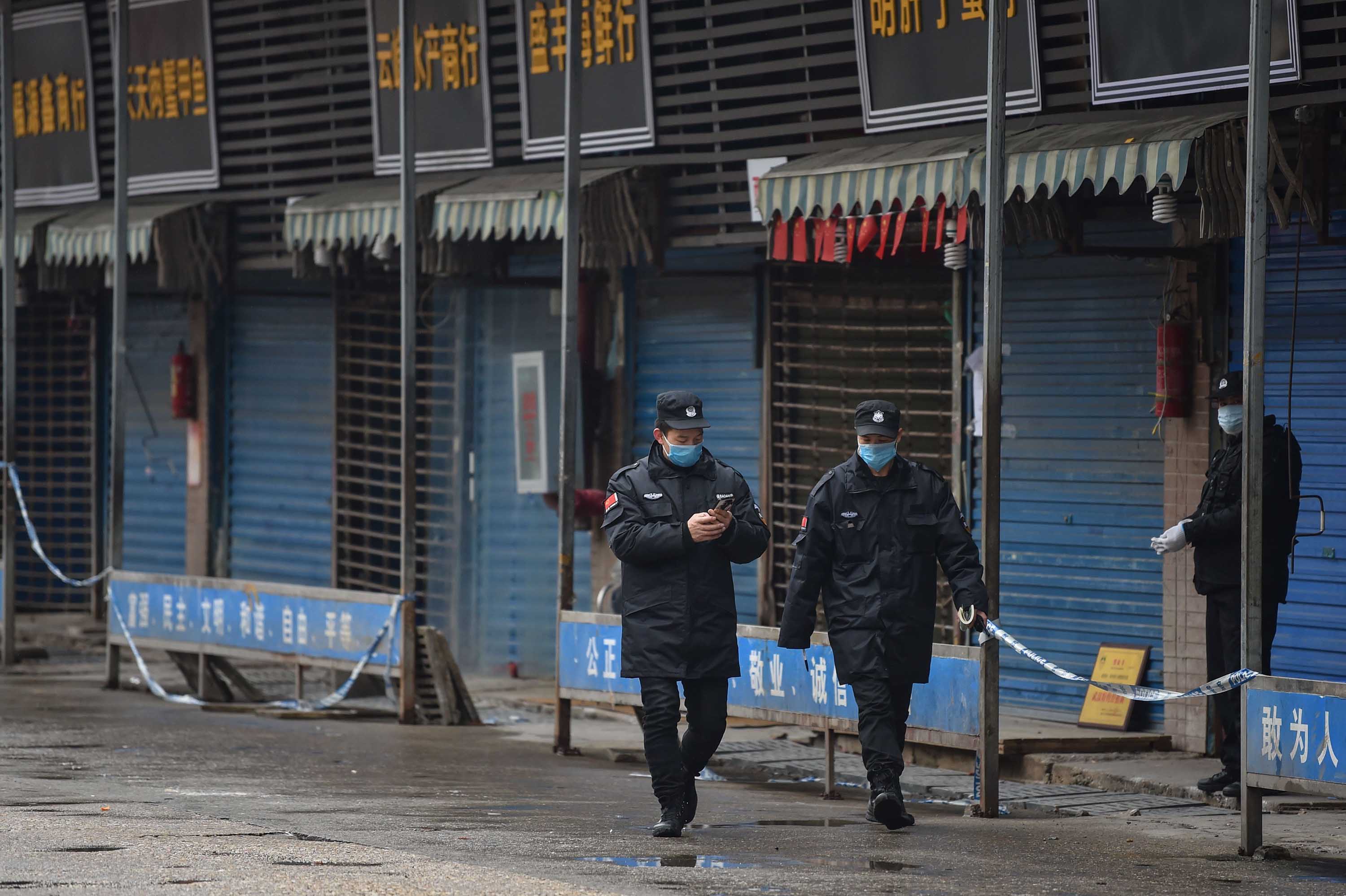
Guards patrol on January 24 outside the Huanan Seafood Wholesale Market in Wuhan, believed to be the source of the virus.
Guards patrol on January 24 outside the Huanan Seafood Wholesale Market in Wuhan, believed to be the source of the virus. Credit: Hector Retamal/AFP/Getty Images

https://www.cnn.com/asia/live-news/coronavirus-outbreak-02-24-20-hnk-intl/h_e9e7718ef4bebc5ffe32d35e32c4469f

China’s top political body approved the decision on Monday to ban the consumption and the illegal trade of wild animals, which some experts believe to be the source of the virus.

The National People’s Congress Standing Committee approved the ban on Monday in a bid to help “safeguard public health and ecological security,” according to Chinese state media.

The move aims to “completely ban the eating of wild animals” while also “cracking down on illegal trade of wildlife,” state media reports.

The use of wild animals for scientific research, medicine and exhibition will now need to go through “strict examination and approval” by the supervising department in accordance with relevant regulations.

This comes after Chinese authorities suspended the trade of wild animals on January 26th in an attempt to stop the spread of the virus.

Also see: https://vegnews.com/2020/2/china-permanently-bans-consumption-of-wild-animals?fbclid=IwAR3noVYTbMnI6IaIkhjREWQSrrA6CW1x95E39D9cZlSdRAIKokPVMFQAD1E

South Korea seeks coronavirus murder charges, over 3,000 dead worldwide

SEOUL/BEIJING (Reuters) – South Korea sought murder charges against leaders of a secretive church at the heart of its ballooning coronavirus outbreak on Monday as the global death toll rose above 3,000 and the Chinese province at the epicentre reported a fall in new cases.

World stock markets regained some calm as hopes for global interest rate cuts to soften the economic blow of the virus steadied nerves after last week’s worst plunge since the 2008 financial crisis.

The global death toll was up to 3,044, according to a Reuters tally.

In the largest outbreak outside China, South Korea has had 26 deaths and reported another 599 infections on Monday, taking its tally to 4,335 following Saturday’s biggest daily jump.

Of the new cases in South Korea, 377 were from the city of Daegu, home to a branch of the Shincheonji Church of Jesus, to which most of South Korea’s cases have been traced after some members visited China’s Wuhan city where the disease emerged.

The Seoul government asked prosecutors to launch a murder investigation into leaders of the church, a movement that reveres founder Lee Man-hee. Seoul Mayor Park Won-soon said that if Lee and other heads of the church had cooperated, preventive measures could have stopped fatalities.

“The situation is this serious and urgent, but where are the leaders of the Shincheonji, including Lee Man-hee, the chief director of this crisis?” Park said on Facebook late on Sunday.

Seoul’s city government said it had filed a criminal complaint with the Seoul Central District Prosecutors’ Office, asking for an investigation of Lee and 12 others on charges of murder and disease control act violations.

Lee knelt and apologised to the country on Monday that one church member had infected many others, calling the epidemic a “great calamity”. “We did our best but were not able to stop the spread of the virus,” Lee told reporters.

It was not immediately known how many of South Korea’s dead were directly connected to the church.

Graphic: Reuters graphics on the new coronavirus, here

‘OUTBREAKS ARE CURBED’

Wuhan, at the centre of the epidemic in Hubei province, closed the first of 16 specially built hospitals, hurriedly put up to treat people with the virus, after it discharged its last recovered patients, state broadcaster CCTV said on Monday.

Lee Man-hee, founder of the Shincheonji Church of Jesus the Temple of the Tabernacle of the Testimony, makes a deep bow during a news conference at its facility in Gapyeong, South Korea, March 2, 2020. Yonhap via REUTERS

News of the closure coincided with a steep fall in new cases in Hubei, but China remained on alert for people returning home with the virus from other countries.

“The rapid rising trend of virus cases in Wuhan has been controlled,” Mi Feng, a spokesman for China’s National Health Commission, told a briefing.

“Outbreaks in Hubei outside of Wuhan are curbed and provinces outside of Hubei are showing a positive trend.”

The virus broke out in Wuhan late last year and has since infected more than 86,500 people, most in China.

Tracking the coronavirus here

ADVERTISEMENT

Outside China, it has in recent days spread rapidly, now to 53 countries, with more than 6,500 cases and more than 100 deaths. Italy has 1,694 cases, the vast majority in the wealthy northern regions of Lombardy, Veneto and Emilia Romagna.

All members of the Lombardy local government were to undergo tests after a councillor tested positive.

Another of the worst-hit nations, Iran, reported infections rising to 1,501 on Monday, with 66 deaths.

In Britain, which has 36 confirmed cases, Prime Minister Boris Johnson urged people to be prepared for further spread.

Slideshow (16 Images)

ECONOMIC DAMAGE

Global factories took a beating in February from the outbreak, with activity in China shrinking at a record pace, surveys showed, raising the prospect of a coordinated policy response by central banks.

The global spread has forced the postponement of festivals, exhibitions, trade fairs and sports events. It has crippled tourism, retail sales and global supply chains, especially in China, the world’s second-largest economy.

Middle East airlines have lost an estimated $100 million so far due to the outbreak and governments should help the carriers through this “difficult period”, an official of the International Air Transport Association (IATA) said.

Global airlines stand to lose $1.5 billion this year due to the virus, he added.

The Organisation for Economic Cooperation and Development warned that the outbreak was pitching the world economy into its worst downturn since the global financial crisis, urging governments and central banks to fight back.

Officials in U.S. President Donald Trump’s administration on Sunday tried to calm market panic that the coronavirus could cause a global recession, saying the U.S. public had over-reacted and stocks would rebound due to the American economy’s underlying strength.

The S&P 500 index tumbled 11.5% last week. Roughly $4 trillion has been wiped off the value of U.S. stocks.

Speaking to NBC’s “Meet the Press” on Sunday, Vice President Mike Pence, who is leading the administration’s response to the virus, said the market “will come back”.

“The fundamentals of this economy are strong,” he said.

The facts about coronavirus: What you need to know


Coronavirus began in China several months ago, and since then, the virus – and fear of it – have been spreading around the world. There is no vaccine for coronavirus yet, but there is a treatment for fear. It’s called facts.

And here is a dose of them:

What is Coronavirus?

Coronavirus causes a respiratory disease called COVID-19. Symptoms include fever, cough, and shortness of breath. Most cases (about eight out of ten) are mild. The more serious cases can lead to severe lung damage.

Coronavirus is thought to spread mostly through close contact. An infected person coughs or sneezes, sending droplets containing the virus through the air. Someone nearby – say, up to about six feet away – breathes those droplets and can become infected. The virus can also spread hand-to-hand. You touch an object that has the virus on it, then touch your mouth, nose, perhaps even your eye. Scientists are studying how long the coronavirus can survive on various surfaces or whether there are other ways of spread.

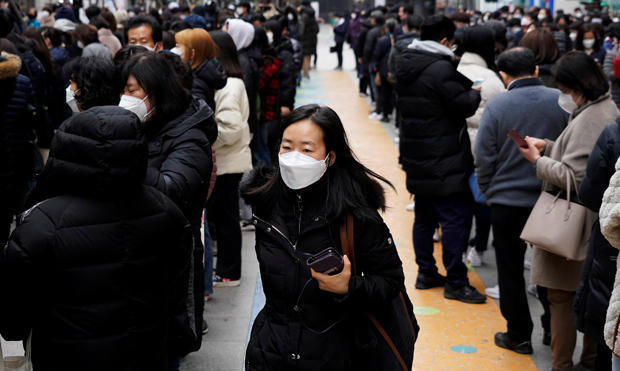
People wearing masks after the coronavirus outbreak wait in a line to buy masks in front of a department store in Seoul
Lines form outside a department store selling masks in Seoul, South Korea, February 28, 2020.  KIM HONG-JI/REUTERS

Mortality rate

Just two days ago, a study from China of nearly 1,100 patients with COVID-19 reported a mortality rate of 1.4 percent; that means that of every thousand people infected, 14 will die. The death rate with flu is about 1 in a thousand.

But some scientists feel the actual rate with coronavirus may be lower, and, in fact, closer to flu, because there are likely many cases we don’t know about, either because they are mild or the patients have no symptoms at all.

Also, people who are older or who have other ailments, such as diabetes or lung disease, appear to be at greater risk for getting a severe case of coronavirus. But for some reason children seem to be relatively spared.

Testing kits

Right now, there’s a shortage of testing kits for the virus. When more testing is available, we’ll get a better idea of how widespread this virus is. We’ll be able to screen communities for both active infection and evidence of past infection.

What are “Community Spread” cases?

In the United States, we’re starting to hear about a small number of cases of COVID-19 from what’s called community spread. That means there is no clear source of infection (such as travel to an affected region, or close contact with a patient). This is not at all surprising, especially since people will likely not have effective immunity to this new type of coronavirus. We should expect the number of these community spread cases to continue to rise.

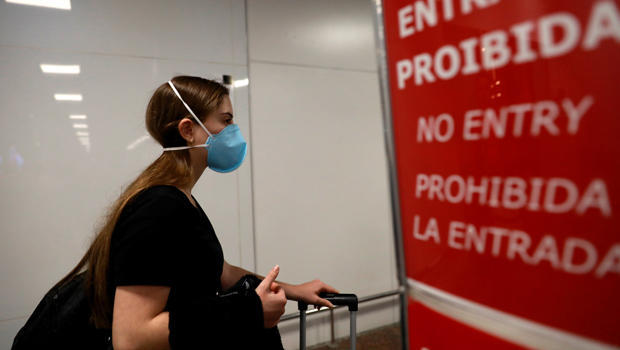
Traveller, wears a mask as a precautionary measure due to the coronavirus, is seen at Salgado Filho airport in Porto Alegre
A traveler wearing a mask as a precautionary measure due to the coronavirus is seen at Salgado Filho Airport in Porto Alegre, Brazil, February 27, 2020.  DIEGO VARA/REUTERS

Is there a vaccine?

Vaccines are being developed at record speed, and several will begin clinical testing in the coming weeks. But it will take time to confirm their safety and their ability to protect against the virus. So, they aren’t expected to become widely available for at least a year. Antiviral drugs and other therapies are also being studied, but for now the main treatment involves supportive care, including breathing tubes in cases of severe lung damage.

How to protect yourself and others

So, where does that leave us? What can you do to protect yourself? Here are a few suggestions:

1.  Get the flu vaccine, and get your family protected. The flu can mimic coronavirus and make you think you have COVID-19 when you don’t.

2.  Stuff your mother could have told you: Wash your hands, including the tips of your fingers, for 20 seconds (I know that’s a long time, but do the best you can); keep your hands away from your face; and cough into the crook of your arm, not into your hand or – worst of all – into the air.

3. Stay home if you’re sick. You’re not doing the boss a favor by coming to work and making everyone else sick.

4. Stay informed. A great source of information is the CDC website, cdc.gov. It’s especially helpful for information and advice about travel.

What about those surgical face masks so many people are wearing?

They may give some partial protection by catching droplets containing virus, but the virus is so tiny it can go right through the mask, or around it. If you’re sick, a mask might help protect others, but the CDC does not recommend it for routine use.

What should we expect in the future?

Since this is a new type of coronavirus, it’s very difficult to predict. Respiratory viruses often like cold, dry air and may possibly start to die down with warmer, moister weather. But we don’t know that for sure, and there could be more waves of infection to come. Bottom line: There’s no way of knowing right now how long coronavirus will remain a problem.

One thing we should definitely expect is another outbreak of another type of virus. COVID-19 is just the latest example of a deadly viral disease jumping from animals to people. SARS, MERS and Ebola are others. We need to study why this has been happening. In Asia, deforestation may have increased contact between humans and bats, which can carry the virus that causes SARS or COVID-19. And we must think globally about how to prevent and respond to future outbreaks.


1 dead from coron avirus in King County, health officials confirm

Microscopic view of Coronavirus, a pathogen that attacks the respiratory tract. (File photo)

SEATTLE — One person has died from the coronavirus in King County, the Washington state Department of Health said Saturday in a media advisory.

No other details were given about the death as of Saturday morning.

Officials plan to hold a press conference at 1 p.m. with more details.

The Department of Health announced Friday evening two presumably new cases of coronavirus, including a school-aged student in Snohomish County.

The department said the results from the individuals’ tests came back “preemptively positive,” but are pending official confirmation from the Centers of Disease Control and Prevention.

A student from Jackson High School in Mill Creek with no travel history is one of the people infected with the COVID-19 virus. The student started feeling ill Monday with body aches, chills and a headache, the department said. Health officials said the student returned to school when he started feeling better, before results Friday revealed the child was sick with coronavirus.

Everett Public Schools said in a tweet Friday evening Jackson High School will be closed March 2 for three days to disinfect the campus.

The other presumed positive coronavirus test was a woman in her 50s from King County. Health officials said the woman traveled to Daegu, South Korea Feb. 7-23 and returned to Seattle to work Monday before she felt symptoms Tuesday. She reported her symptoms to health officials Wednesday and was tested for the virus Thursday.

Her results came back positive Friday.

Health officials said she is improving without any complications. The woman has not been in public since her symptoms started, the department said, and her husband is under home quarantine.

This story is breaking. More information will be updated when it becomes available.

Trump says the coronavirus is the Democrats’ ‘new hoax’

KEY POINTS
  • President Trump says that Democrats are using the virulent coronavirus as a “hoax” to damage him and his administration.
  • “The Democrats are politicizing the coronavirus,” he said from a campaign rally in North Charleston, South Carolina. “This is their new hoax.”
  • The coronavirus, which began in Wuhan, China, has now killed more than 2,800 people worldwide and infected more than 80,000.
  • The total number of cases in the U.S. was 63 as of the latest announcements, with most cases being former passengers on the Diamond Princess cruise ship and evacuees from Wuhan.
GP: Donald Trump rally Toledo Ohio US-POLITICS-TRUMP
US President Donald Trump speaks during a “Keep America Great” campaign rally at Huntington Center in Toledo, Ohio, on January 9, 2020.
Saul Loeb | AFP | Getty Images

President Donald Trump said Friday that Democrats are using the virulent coronavirus as a “hoax” to damage him and his administration.

“The Democrats are politicizing the coronavirus,” he said from a campaign rally in North Charleston, South Carolina.

“One of my people came up to me and said ‘Mr. President they tried to beat you on Russia, Russia, Russia. That didn’t work out too well.’ They couldn’t do it. They tried the impeachment hoax that was on a perfect conversation,” he continued.

VIDEO06:03
What if the US actually does suffer a major outbreak?

“This is their new hoax,” he said, referring to the coronavirus.

The disease, which originated in Wuhan, China, has now killed more than 2,800 people worldwide and infected more than 80,000. The latest reports from the World Health Organization show the pace of new cases in China slowing, but jumping in South Korea, Japan, Italy, and Iran.

In the U.S., the Santa Clara Public Health Department announced a third case of coronavirus in the county Friday evening. The announcement brings the total number of confirmed coronavirus cases in California to 10 and the total number of cases in the U.S. to 63, most of which were passengers on the Diamond Princess cruise ship and evacuees from Wuhan.

close dialog
Warren Buffett Watch Newsletter
Weekly news on all things Warren Buffet delivered straight to your inbox!
SIGN UP
By signing up for newsletters you are agreeing to our Terms of Use and Privacy Policy and opting into receiving updates, announcements, offers and general marketing emails from CNBC.

“We are magnificently organized with the best professionals in the world,” Trump said of the administration’s preparations to help contain the spread of the virus.

“We have to take it very, very seriously … We are preparing for the worst,” he continued. “My administration has taken the most aggressive action in modern history to prevent the spread of this illness in the United States. We are ready. We are ready. Totally ready.”

In other headlines, a Google employee tested positive for the coronavirus, the company said Friday. New Zealand and Nigeria reported overnight their first coronavirus cases.

VIDEO05:56
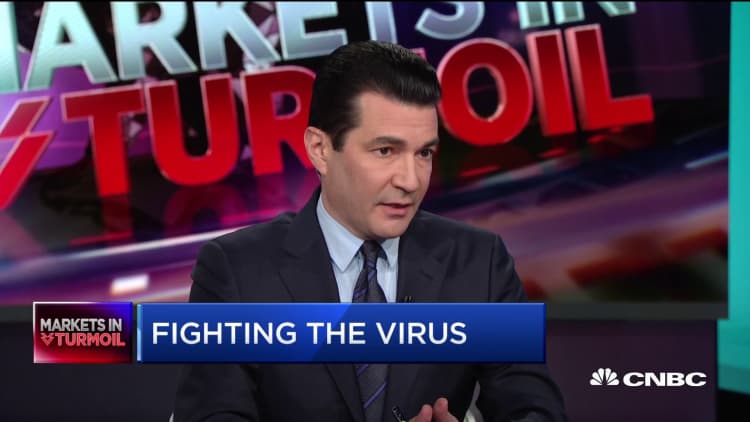
Fighting the coronavirus

“We will do everything in our power to keep the infection and those carrying the infection from entering our country. We have no choice,” Trump said. “Whether it’s the virus we’re talking about or many other public health threats, the Democrat policy of open borders is a direct threat to the health and wellbeing of all Americans.”