The coronavirus has killed over 365,000 people worldwide in just five months — but that’s nothing compared to what could be coming if humans don’t clean up their act when it comes to chickens.
In his new book, “How to Survive a Pandemic,” Dr. Michael Gregor, a scientist and physician who once testified for Oprah Winfrey in her “meat defamation” trial, warns that an apocalyptic virus emanating from overcrowded and unsanitary chicken farms has the potential to wipe out half of humanity.
Greger, a vegan, writes that “In the ‘hurricane scale’ of epidemics, COVID-19, with a death rate of around half of one percent, rates a measly Category Two, possibly a Three. … The Big One, the typhoon to end all typhoons, will be 100 times worse when it comes, a Category Five producing a fatality rate of one in two. … Civilization as we know it would cease.”
While environmentalists warned earlier this month that the world would face another stronger epidemic if we continue to have contact with wildlife, Gregor places the blame squarely on chickens.
“With pandemics explosively spreading a virus from human to human, it’s never a matter of if, but when,” Greger writes.
Citing the bird-based Spanish Flu outbreak of 1920, and the H5N1 outbreak in Hong Kong in 1997, Gregor writes, “the worry is that the virus never stands still but is always mutating. … This is the monster lurking in the undergrowth, the one that makes epidemiologists shudder.”
SEE ALSO
Scientists warn of deadlier future pandemics if we don’t stop this now
The Hong Kong outbreak, which originated in a bird market, “started with a three-year-old boy in Hong Kong, whose sore throat and tummy ache turned into a disease that curdled his blood and killed him within a week from acute respiratory and organ failure.” While only 18 people contracted that flu – a third of them died.
During that pandemic, the government killed 1.3 million chickens in an attempt to eliminate the virus – but there have since been two more outbreaks between 2003 and 2009 outside of China.
But with over 24 billion chickens on earth feeding the world, what can be done?
Gregor writes we have to change the entire system – away from large scale farms where chickens are fed antibiotics and are crammed together and pass diseases from one to another easily to smaller, free-range farms … and eventually not eating chickens or ducks at all.
“The pandemic cycle could theoretically be broken for good,” he writes. “Bird flu could be grounded.”
But until then, he warns, “as long as there is poultry, there will be pandemics. In the end, it may be us or them.”
Scientists claim to have found more clues about how the new coronavirus could have spread from bats through pangolins and into humans, as India reported its worst single-day rise in new cases, and the number of Covid-19 infections worldwide neared 6 million.
Writing in the journal Covid-19 Science Advances, researchers said an examination of the closest relative of the virus found that it was circulating in bats but lacked the protein needed to bind to human cells. They said this ability could have been acquired from a virus found in pangolins – a scaly mammal that is one of the most illegally trafficked animals in the world.
‘I’m stuck in limbo’: will the Covid generation of young people face long-term fallout?
Read more
Dr Elena Giorgi, of Los Alamos national laboratory, one of the study’s lead authors, said people had already looked at the pangolin link but scientists were still divided about their role in the evolution of Sars-Cov-2, the virus that causes Covid-19.
“In our study, we demonstrated that indeed Sars-Cov-2 has a rich evolutionary history that included a reshuffling of genetic material between bat and pangolin coronavirus before it acquired its ability to jump to humans,” she said, adding that “close proximity of animals of different species in a wet market setting may increase the potential for cross-species spillover infections”.
The study still doesn’t confirm the pangolin as the animal that passed the virus to humans, but it adds weight to previous studies that have suggested it may have been involved.
However, Prof Edward Holmes, an evolutionary biologist at the University of Sydney, in Australia, said more work on the subject was needed. “There is a clear evolutionary gap between Sars-Cov-2 and its closest relatives found to date in bats and pangolins,” he said. “The only way this gap will be filled is through more wildlife sampling.”
The findings came as Donald Trump announced that the United States was severing its ties with the World Health Organization because it had “failed to reform”.
In a speech at the White House devoted mainly to attacking China for its alleged shortcomings in tackling the initial outbreak of coronavirus, Trump said: “We will be today terminating our relationship with the World Health Organization and redirecting those funds to other worldwide and deserving urgent global public health needs.”
The US is the biggest funder of the WHO, paying about $450m (£365m) in membership dues and voluntary contributions for specific programmes.
Trump’s declaration was condemned in the US and around the world, with Australian experts joining counterparts in the UK and elsewhere in voicing their support for the WHO. Prof Peter Doherty, a Nobel laureate and patron of the Doherty Institute, which is part of global efforts to find a Covid-19 vaccine, said the WHO had the “full support of the scientific community”.
Deaths in the US have climbed to more than 102,000, with 1,747,000 infections. It is by far the biggest total in the world. On Friday it emerged that one person who attended the controversial pool parties in the Ozarks last weekend had tested positive for the virus.
In Brazil, there was another large rise in deaths. More than 27,000 people have died from the disease and the country has the world’s second highest number of cases, at 465,000.
Iran also recorded its biggest daily increase in deaths –232 in 24 hours – bringing the total to 4,374. President Hassan Rouhani nevertheless said mosques were to resume daily prayers throughout the country, despite some areas reporting continuing high levels of infections. He added that physical distancing and other health protocols would be observed in mosques. He did not say when they were due to reopen.
India, meanwhile, reported a record daily jump of 7,964 new infections. With the latest tally, India has now reported 173,763 coronavirus cases and 4,971 deaths, making it the ninth most-affected country, according to Reuters. While the fatality rates in India have been lower than in worse-hit countries, experts fear the peak has not been reached. The latest numbers would appear to confirm that prediction.
Egypt registered 1,289 new cases and 34 deaths, the health ministry said, marking another record of daily increases on both counts despite stricter curfew rules.
Other developments across the world include:
A leading UK government adviser has warned that it is too early to lift lockdown restrictions as planned next month because the number of new infections is still too high. John Edmunds, a professor of infectious disease modelling at the London School of Hygiene and Tropical Medicine, said he wanted the level of new cases to be “driven down further” before larger gatherings are allowed as the government has said it wants to do. Tory MPs are still being bombarded by constituents with calls for Boris Johnson’s top adviser to quit after he appeared to breach lockdown rules.
In Australia, where states are expected to move to relax the rules to allow gatherings of more people from Monday, anti-vaccine protesters gathered in several cities to claim that they believed Covid-19 was a “scam”.
Also in Australia, scientists are examining the sewage waste in a town in Queensland where a 30-year-old man died this week from the virus. Nathan Turner is the youngest victim in the country so far and the case has baffled experts because he had not left the remote town of Blackwater.
The global death toll passed 365,000, according to data compiled by Johns Hopkins University, with the number of cases just short of 6 million. The true number of infections is likely to be much higher, however, given the vast number of unrecorded and asymptomatic cases.
(CNN)A deep dive into the genetics of the novel coronavirus shows it seems to have spent some time infecting both bats and pangolins before it jumped into humans, researchers said Friday.
But they said it’s too soon to blame [“blame”?? Not their fault humans captured and dragged them to wet markets] pangolins for the pandemic and say a third species of animal may have played host to the virus before it spilled [?] over to people.
What is clear is that the coronavirus has swapped genes repeatedly with similar strains infecting bats, pangolins and a possible third species, a team of researchers from Duke University, Los Alamos National Laboratory and elsewhere reported in the journal Science Advances.
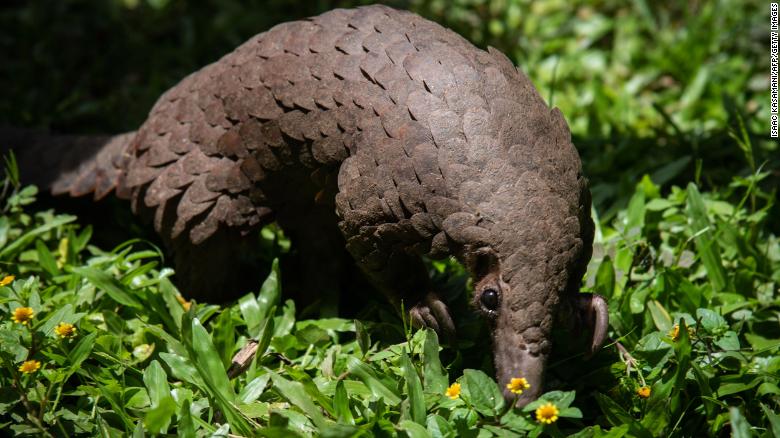
A white-bellied pangolin rescued from local animal traffickers at the Uganda Wildlife Authority office in Kampala, Uganda, on April 9, 2020.
What’s also clear is that people need to reduce contact with wild animals that can transmit new infections, the researchers concluded.
Content by CNN Underscored
The comfiest pants for lounging around the house
With the anxiety and distress you may be feeling, wearing clothes that are in any way uncomfortable is simply not an option.
The team analyzed 43 complete genomes from three strains of coronaviruses that infect bats and pangolins and that resemble the new Covid-19 virus.
close dialog
“In our study, we demonstrated that indeed SARS-CoV-2 has a rich evolutionary history that included a reshuffling of genetic material between bat and pangolin coronavirus before it acquired its ability to jump to humans,” said Elena Giorgi, a staff scientist at Los Alamos National Laboratory who worked on the study.
But their findings may let pangolins off the hook. The animals, also known as scaly anteaters, are sold as food in many countries, including China, and have been a prime suspect as a possible source of the pandemic.
“The currently sampled pangolin coronaviruses are too divergent from SARS-CoV-2 to be its recent progenitors,” the researchers wrote.
Whether the mixing and matching between bat viruses and pangolin viruses was enough to change the virus into a form that now easily infects humans remains unclear, the researchers said.
“It is also possible that other not yet identified hosts (can be) infected with coronaviruses that can jump to human populations through cross-species transmission,” the researchers wrote. “If the new SARS-CoV-2 strain did not cause widespread infections in its natural or intermediate hosts, such a strain may never be identified.”
But people are setting themselves up to be infected with new viruses via “wet markets” where many different species of live animals are caged and sold, and by moving deeper into forests where animals live, the researchers said.
“While the direct reservoir of SARS-CoV-2 is still being sought, one thing is clear: reducing or eliminating direct human contact with wild animals is critical to preventing new coronavirus zoonosis in the future,” they concluded.
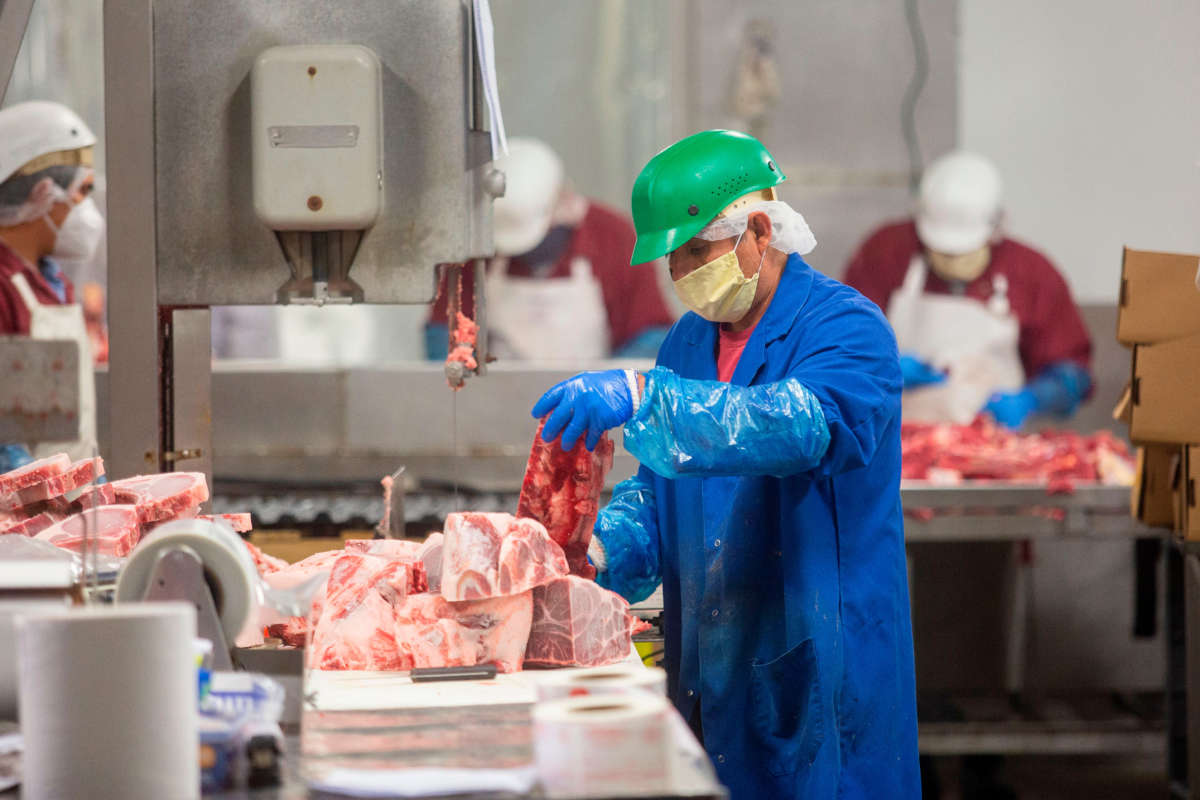
President Donald Trump issued an executive order in late April requiring all meat processing plants in the U.S. to remain open, despite reports of coronavirus infections and related deaths being prevalent at a number of the plants.
Since that order was issued, the number of COVID-19 cases that have been identified at meat plants across the country has likely tripled, according to estimates from a nonprofit watchdog group.
At the time of Trump’s executive order, the Centers for Disease Control and Prevention (CDC) had identified around 5,000 employees across 20 meat processing plants who had contracted COVID-19, and 17 workers at those plants who had died from the disease. In spite of concerns about the disease spreading at these and other locations, the president issued his order, utilizing the Defense Production Act to classify processing plants as essential infrastructure.
The executive order prevented local governments and health officials from enforcing plant closures in the event of an outbreak and it’s now apparent that the disease has indeed spread at these meatpacking locations since the order.
More than 100 plants across the country have seen a high number of cases of COVID-19. The Food & Environment Reporting Network (FERN), a nonprofit journalism watchdog group dedicated to food and agricultural issues, estimated in a report published last week that 17,000 workers may have now contracted the disease, with at least 66 COVID-related deaths recorded among employees at meat processing plants.
In light of this, other organizations are demanding the federal government take a more proactive approach toward limiting the spread of COVID-19. Citing the large numbers of workers at meat processing plants contracting coronavirus, the Center for Food Safety produced a petition in which it demanded the U.S. Department of Labor’s Occupational Safety and Health Administration (OSHA) issue new emergency standards to protect employees’ health.
“Protecting workers in meatpacking plants is important not just for the workers, but also for our food safety,” the organization wrote in its letter. “Unprotected and sick workers are more likely to make mistakes, making it more likely that tainted meat gets onto store shelves. The last thing we need during this pandemic is a major foodborne illness outbreak.”
Colder temperatures in the plants may also be helping the virus linger longer on surfaces or in air particles, and ventilation systems may be spreading coronavirus throughout the buildings.
Among the U.S. population in general, it’s feared that coronavirus will likely continue to spread even more than it already has, as several states begin transitioning away from stay-at-home orders that were previously issued.
For many, these unexpected positives have brought a new understanding about the relationship between the environment and our health.
So could human health and planetary health be more closely linked than we think? We’ve seen how problems like deforestation and rising temperatures have increased the risk of extinction for all kinds of species. But, as part of the global ecosystem, humans aren’t immune from the effects of climate change either.
Extreme climates pose a threat to us by affecting things like water supplies, air quality and food production. In 2018 the World Health Organisation estimated that global warming would cause an additional 250,000 deaths between 2030 and 2050.
Our health and the health of the environment are linked.GETTY via Canva
BUT JUST HOW IS THE DESTRUCTION OF THE ENVIRONMENT MAKING US SICK?
Unclean air
Nine out of ten people in the world breathe polluted air with an estimated 7 million dying every year from conditions associated with exposure to microscopic particulates. As a result of burning unclean fuels like coal, diesel, kerosene, and even biofuel and trash, these very small pollutants find their way into our lungs. Alongside methane emissions from industrial agriculture and oil and gas production, human actions are making the air we breathe unclean. Air pollution can lead to a variety of health problems like lung cancer, strokes and heart disease.
Air pollution can lead to a variety of health problems like lung cancer, strokes and heart disease.
More than 90 per cent of deaths related to air pollution occur in low and middle income countries – but high income countries are not immune. A study in 2019 found that air pollution causes an extra 800,000 deaths a year in Europe. “To put this into perspective, this means that air pollution causes more extra deaths a year than tobacco smoking, which the World Health Organization estimates was responsible for an extra 7.2 million deaths in 2015,” co-author of the study, Professor Thomas Münzel told EurekAlert!.
Diseases passed between animals and humans
More than 70 per cent of emerging diseases affecting people originated in wildlife and domestic animals. The UN Environment Programme lists an increased amount of close contact between animals and humans as the most significant risk for zoonotic diseases.
By changing the nature of vital habitats through human actions like agriculture and industry, the ‘buffer zones’ which separate us from wildlife have been seriously reduced. A statement by experts from the Intergovernmental Science-Policy Platform on Biodiversity and Ecosystem Services (IPBES) explains that a system which prizes economic growth over the protection of natural resources has created a “perfect storm” for diseases to spread from wildlife to humans.
That means taking care of the environment through stronger and more stringently enforced regulations will be essential post-pandemic, say the experts.
A wider variety of species helps soil to remain productive for longer and provides a resource for discovering new plants, livestock and marine species that can be harvested for food.
But food security isn’t just about not having enough. Where 800 million people are facing the risk of food shortages, 2.1 billion are obese or overweight. Most of our energy needs are being met by just three crops; rice, wheat and maize. Much of this ends up as highly processed items like bread or is turned into ingredients including sweeteners in confectionery. Unfortunately, our highly industrialised, intensive food production system makes nutritionally poor food cheap and easily available.
Destroying natural sources of medicine
Changes in habitat due to agriculture, climate change and overharvesting are eating away at environments rich in biodiversity. This is a problem because these areas are often where the next big medical breakthroughs are found, deriving from natural sources. In the US nearly 80 per cent of leading prescription drugs are based on natural sources and many of these are particularly important in the treatment of cancer.
With natural resources in rapid decline, we could be losing important medicinal species before we even discover them.
Millions of people worldwide also rely on traditional and non-formal sources of medicine collected from the natural environment for their healthcare. In some countries, these medicinal plants are an essential part of healthcare systems. Loss of species vital for these traditional remedies would reduce the treatment options available to billions.
“Currently there are 844 million people – one in nine of the world’s population – who do not have clean water close to home,” says Jonathan Farr, Water Aid’s Senior Policy Analyst, in response to the release of the United Nations World Water Development report. “Others face an unreliable supply of water because agriculture, industry or wealthier sections of society are able to take more than their fair share of water.”
The World Health Organisation has encouraged regular hand washing throughout the pandemic as a way of controlling the spread of the virus but, without access to basic handwashing facilities, millions of people are unable to follow this advice. In a survey of 42 countries, less than half the population had access to basic soap and water in their homes.
The covid-19 crisis has brought the global water crisis to the fore, highlighting the urgency of making sure that everyone has access to clean supply.
Hand washing has proved a vital part of preventing the spread of coronavirus.Unsplash
You can find some more of the ways environmentally damaging behaviour is putting global health at risk on the UNEP website.
BUT IT’S NOT ALL BAD NEWS, EXPERTS PREDICT A GREEN RECOVERY
Although irresponsible behaviour may be increasing our chances of getting sick, our recovery on the other side of the pandemic could provide an opportunity for systemic change.
Only by restoring a healthy balance between people and nature can we prevent future outbreaks and their impact on society
Patrick ten Brink
EU policy director for the European Environmental Bureau
The idea of a ‘green recovery’’ already has the support of a significant number of Europeans. 1.2 million people have joined an appeal for the EU to launch “the biggest green investment plan the world has ever seen”. The Green10 coalition, made up of the ten largest environmental organisations in Europe, has called for billions in investment for solutions like widespread use of renewable energy, restoration of natural habitats and the greening of agricultural practices. All of which will help to tackle the effects of climate change impacting global health.
“The new budget must reflect the need to save resources, cut pollution and fight climate breakdown,” says Patrick ten Brink, EU policy director for the European Environmental Bureau. “Only by restoring a healthy balance between people and nature can we prevent future outbreaks and their impact on society.”
Coronaviruses are transmitted between animals and humans. Many are relatively harmless – causing no more than a common cold. Others result in diseases that are new and unfamiliar, like the COVID-19 pandemic, and before that, outbreaks of diseases like Severe Acute Respiratory Syndrome or SARS (2002); Avian Influenza or bird flu (2004); H1N1 or Swine Flu (2009); Middle East Respiratory Syndrome or MERS (2012); Ebola (2014– 2015); Zika virus (2015–2016); and West Nile virus (2019).
Almost a century’s worth of global trends confirm that coronaviruses are occurring more frequently. A 2016 UN Environment Programme (UNEP) report flagged coronaviruses–or “zoonoses”–as an issue of global concern. On average, three new infectious diseases emerge in humans every year; and about three quarters of these are zoonotic.
What is causing the spike in these diseases? Here’s what decades of scientific research has to say:
Coronaviruses are leaping to humans more frequently because we are providing them with more opportunities to do so. In the last 50 years alone, the human population has doubled and the global economy has almost quadrupled. Rapid migration from rural to urban areas and creation of new urban centres has affected demographics, lifestyles and consumer behaviour.
Environmental changes
Our evolving lifestyles have dramatically altered the land around us. We have cleared forests and other natural areas to create spaces for urban areas and settlements, agriculture and industries. In doing so, we have reduced overall space for wildlife and degraded natural buffers between humans and animals.
Climate change is also a driver of zoonoses. Greenhouse gas emissions–primarily the result of burning fossil fuels–cause changes in temperature and humidity, which directly affects the survival of microbes. Scheduled for release next month, a new rapid assessment by UNEP and ILRI on zoonotics suggests that epidemics will become more frequent as the climate continues to change.
Photo by Unsplash/ Ales Krivec
Behavioural changes
Demand for dairy and meat products has led to the expansion of uniform cropland and intense livestock farming in rural areas and near cities. Livestock often serve as a bridge between wildlife and human infections, meaning pathogens may be passed from wild animals to livestock to humans.
Of particular concern are informal markets, where live, wild animals are kept and sold, often in unsanitary and unhygienic conditions. Viruses and other pathogens may be easily spread among animals that are kept close together; or to the humans who handle, transport, sell, purchase or consume them, when sanitary and protective practices are not followed.
Pathogen changes
Pathogens are always changing to survive in different animals, humans and environments. With the increase of intensive farming and overuse of antimicrobial drugs in both animals and people, pathogens are becoming more resistant to the very medications that might have been effective in treating zoonotic disease.
What COVID-19 is teaching us
COVID-19 is a reminder that human health and the planet’s health are closely linked. There are about 8 million species of life on the Earth, of which humans are just one. These include an estimated 1.7 million unidentified viruses, recognized as the type that may infect people, existing in mammals and water birds. Any one of these could be transferred to humans, if we don’t take preventative measures now.
The most fundamental way to protect ourselves from coronaviruses is to prevent destruction of nature, which drives the spread of diseases
Where ecosystems are healthy and biodiverse, they are resilient, adaptable and help to regulate diseases. Pathogens that are passed around among reservoirs in animals are more likely to reach dead–and effectively die off–where there is greater diversity.
Genetic diversity builds disease resistance among animal populations and decreases the chances of outbreaks of high-impact animal diseases, according to a 2017 IPBES report. Conversely, intensive livestock farming can produce genetic similarities within herds and flocks, reducing resilience and making them more susceptible to pathogens. This, by extension, exposes humans to a higher risk.
What UNEP is doing
As the world deals with the ongoing COVID-19 emergency and starts to recover from the impact of this global pandemic, UNEP is helping nations to build back better and increase resilience to future crises. UNEP supports countries in delivering stronger science-based policies that back a healthier planet and guide greener investments.
I am a writer, journalist, professor, systems modeler, computational and digital health expert, avocado-eater, and entrepreneur, not always in that order.
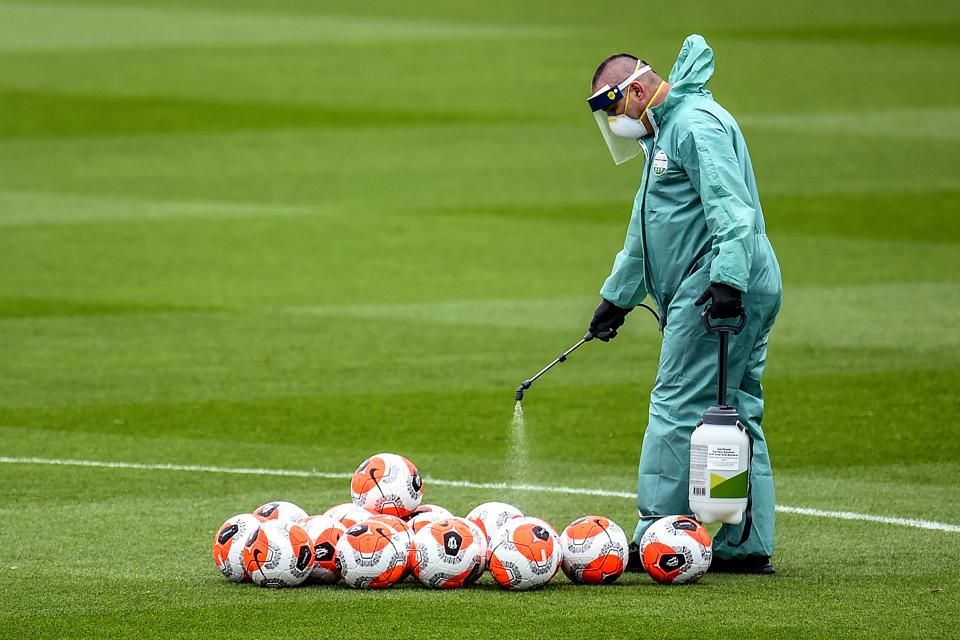
Studies have shown that the Covid-19 coronavirus can stay on various surfaces for a while. Here a … [+]
LIVERPOOL FC VIA GETTY IMAGES
Did the Centers for Disease Control and Prevention (CDC) actually “change their minds” this week about the potential risk of Covid-19 coronavirus being spread by contaminated surfaces? Not really. Not even on the surface.
Umm, completely de-fund the CDC? Isn’t that like saying “let’s get rid of this water supply thing” when there is not enough water in the middle of a fire?
12 Unsettling Lessons Learned Trying To Make Healthcare Better
Collision Of Crises: How Covid-19 Will Propel Drug Overdose From Bad To Worse
Take a closer look at what the CDC has been saying specifically. Compare a previous version of a CDC web page (cited by the Fox News article accompanying the tweet above) with the current version. The exact wording may have evolved a bit. Nonetheless, in both versions, the CDC stated, “It may be possible that a person can get COVID-19 by touching a surface or object that has the virus on it and then touching their own mouth, nose, or possibly their eyes.”
Yes, both versions did include the following: “this is not thought to be the main way the virus spreads.” However, this statement does not say that contaminated surfaces cannot spread the virus. This statement does not imply that you should not worry about contaminated surfaces. In fact, the latest version added the following kicker, “but we are still learning more ab
Just because something is not the “main way” doesn’t mean that it doesn’t happen or that you shouldn’t be concerned about it. It’s just an issue of what may be more frequent. For example, using a toilet in a stall may not be the “main way” that you take dumps, unless, of course, you have built such a stall in your house or apartment for some reason. However, this does not mean that you shouldn’t be prepared to use a toilet in a stall. Not knowing what to do in a stall could lead to a messy situation.
Similarly, the CDC statements can simply mean that a majority of the Covid-19 coronavirus transmissions that have occurred so far have likely been via direct person-to-person contact. In most cases, direct person-to-person contact means that an infectious person coughs, sneezes, pants, sings, chants, curses, or otherwise breathes out virus-laden respiratory droplets, which then are inhaled by someone else. It is more a reflection of how contagious an infected person may be when you get too close to him or her. As I have written previously for Forbes, simply talking could expel fluid droplets that could hang in the air for over eight minutes. You may expel even more droplets whenever you use the “th” sound like when you say “shake that thang.” Imagine what could happen if these fluid droplets were carrying the severe acute respiratory syndrome coronavirus 2 (SARS-CoV-2) .
Again, all of this does not mean that transmission cannot occur via contaminated surfaces. In fact, two scientific studies have shown that the virus can stay on surfaces for quite a while. In both studies, researchers applied the virus to various surfaces and then measured how the virus may degrade over time and how long the virus remained detectable. In the first study published in a research letter published in the New England Journal of Medicine, a team from the National Institute of Allergy and Infectious Diseases (NIAID), the CDC, Princeton University, and the University of California, Los Angeles conducted the study. Vincent J. Munster, Ph.D. from NIAID was the corresponding author for the publication so in theory you could call this the Munster study. In the experiments, the measured half-life of the SARS-CoV-2 was approximately 1.1 to 1.2 hours on copper, 5.6 hours on stainless steel, and 6.8 hours on plastic. The half-life is the time that it takes for half of initial amount of virus to no longer be detectable.
According to a study, the Covid-19 coronavirus may remain detectable on stainless steel for up to 4 … [+]
GETTY
Then there was the study published as a research letter in The Lancet Microbe and conducted by a team from the School of Public Health at The University of Hong Kong (Alex W.H. Chin, Julie T.S. Chu, Mahen R.A. Perera, Kenrie P.Y. Hui, Hui-Ling Yen, Michael C.W. Chan, Malik Peiris, and Leo L.M. Poon). Their experiments found the virus to be detectable on:
Paper for up to 30 minutes.
Tissue paper for up to 30 minutes.
Wood for up to a day.
Cloth for up to a day.
Glass for up to two days.
Bank notes for up to two days
Stainless steel for up to four days
Plastic for up to four days
The inner layer of a mask for up to four days
The outer layer of a mask for up to seven days
This would be good news if your living quarters and all of your possessions happen to be made out of tissue paper. It could be bad news if you wear stainless steel underwear. In general, viruses tend to survive longer on surfaces that are hard and impermeable than those with lots of pores.
Note how long the virus may remain on and inside a face mask. This is why you should treat a face mask like a reversed pair of underwear. Be very careful when handling it. Avoid touching your face with the outside of the mask.
Certainly, these studies have their limitations. Just because a virus is detectable does not necessarily mean that there’s enough virus around to cause an infection. Viruses can be like holes in your underwear: a few may be OK, but once you get past a certain level, it becomes a problem.
Also these studies showed what happened under specific sets of laboratory conditions. As they say in commercials for hair dyes, your actual results may vary. Plus, different environmental conditions such as the surrounding temperature, air motion, and sunlight exposure could affect the survival of the virus. Thus, the numbers provided are only approximations and not exact time limits. In other words, don’t set a timer to determine when exactly you can start smearing money on your face and making moaning sounds. (By the way, smearing money on your face is rarely a good idea.)
Nevertheless, the results from these experiments do show that the virus can remain on surfaces for not an insignificant amount of time, which is a roundabout way of saying that the virus can stay on surfaces long enough to be a source of transmission. In fact, these experiments suggested that the SARS-CoV2 can remain on surfaces significantly longer than can other respiratory viruses like the influenza virus.
It is a well-established fact that various respiratory viruses can be transmitted via contact with surfaces. If you somehow don’t trust the CDC, just look at websites from other countries like the Canadian government. The Canadian Center for Occupational Health and Safety website states that “influenza viruses can also be transmitted by indirect contact by touching a contaminated object or surface and then touching your own mouth, eyes or nose before washing your hands.” It also indicates that flu viruses on such surfaces can remain “infective for two hours and maybe up to eight hours.”
Transmission via surfaces is known as fomite transmission. The “fo” part of this word is pronounced “fo” as in “fo’ sure” or “fi fi fo fum.” The “mite” sounds like “might” as in “you might not want to wear a cape in public.” A fomite is any surface or inanimate object that can passively carry an infectious microbe such as door knobs, remote controls, towels, dishes, or your significant other while you end up having to wash the dishes.
So, scientific guidance about surfaces has not really changed. You should still be concerned about surfaces that may be contaminated with the virus. You should still try to disinfect potential fomites. Nothing in the CDC statements about surfaces suggests that businesses were closed for “no reason whatsoever.” When a business is fully open, it can be challenging not only to keep surfaces virus-free but also limit direct person-to-person contact. After all, just look at how “well” people are social distancing with the recent re-opening of locations:
Dr. Fauci’s only recent appearance was a video conversation with actress Julia Roberts.
You may have noticed, of late, a distinct change in the Trump White House pandemic strategy. Out are the pandemic briefings because somebody finally convinced Trump they were making him look bad; in are Trump economic advisers making implausible claims on the Sunday shows. Out are the government medical experts, the ones who kept making news by not entirely agreeing with Trump’s every bizarre new medical invention. (Take malaria medication! Drink bleach!) In is the newest White House press secretary putting on surly Fox & Friends-styled briefings declaring President Awesomedude to have done 12 brilliant things while nobody was looking, all wedged invisibly between the day’s angry tweets.
This leads to the inevitable question: Are the government’s pandemic experts even doing anything at this point, or has Trump’s government simply bailed outright on the premise that they will be doing even a single damn thing to get the pandemic under control?
That doesn’t mean Fauci hasn’t been at the White House or appeared as prop behind Trump. But when it comes to public briefings on the most urgent news of the day, such as the government’s recent promising vaccine results or the overall direction of the pandemic as states “reopen”—perhaps, say, weighing in on Alabama now beginning to see the same hospital room scarcity that quickly escalated to crisis levels in New York City, early in the pandemic—neither Fauci or any other government medical experts have been made available to weigh in.
There are at least two factors at work here. By far the lesser one, because everything is insane now, is that the entire White House task force is either self-isolating or should be after Vice President Mike Pence’s aide, Katie Miller, who frequented the media gatherings, tested positive for the virus and set off a minor White House tizzy.
Why is this probably the lesser reason? Well, look at them. Pence has been traveling the country, licking walls or whatever it is Trump’s vice president has officially been tasked with doing these days; you’re not seeing the team’s various economic-minded hangers-on making themselves scarce during this same period, nor do any of them need to given now-ample resources for conducting remote interviews and testimony.
Which brings us to the other factor: Trump doesn’t want to hear from the medical team, and so none of the rest of us are going to hear from them either if he and towel boy Pence have any say in it. One of the core reasons for Pence’s elevation to top pandemic manager was to curb public appearances by the medical experts to begin with. Pence already threatened to retaliate against a news network by ending all Fauci interviews once; preventing government officials from publicly speaking about things that upset Trump has become one of the White House’s most all-consuming tasks.
The extent to which government medical experts have fallen out of favor with Trump and Trump’s team of, well, idiots, has been obvious since the beginning of the month, and is in line with Trump’s apparent mental inability to process any information he did not himself invent. Trump and his team had even suggested that the medical-expert-including pandemic task force would be ceasing operations completely in favor of a new task force stuffed to the brim with only economic-minded “reopening”-pushers. Trump relented, apparently, upon learning that the original task force was still popular—but you probably couldn’t tell that from the team’s sudden bout of invisibility.
The main problem, of course, is that Donald Trump has decided that he wants the pandemic to be over for electoral reasons, and so the White House is now single-minded in their pursuit of that fiction regardless of each day’s new death tallies. Those in government who know better will be hidden as best the White House is able, so that the White House can better claim nobody knew this was coming as deaths mount despite entire buildings full of people warning that it was.
Azar and others who have proven themselves more astute at dodging follow-up questions on whether or not Americans should drink bleach or indulge in whatever other fantasy President Biff Ideasguy pipes up with in an effort to fill camera time are still being let out of their cages from time to time. But it appears the White House tolerance for actual pandemic expertise has now been exhausted.
Trump is bored now. He wants to reopen, he doesn’t particularly care what the consequences are—as with his constant pushing of malaria medication, his “ideas” consist primarily of all-or-nothing Hail Mary shots to end the crisis by magic, in the hopes that just one of them will stick—and he does not need America hearing from anyone who might confuse the public as to whether or not that’s a good idea.
The meat industry prefers to work behind the closed doors of factory farms and slaughterhouses, but the pandemic is giving Canadians a rare glimpse into the dirty business of animal slaughter, and the unique and intense forms of suffering the industry unleashes on animals, workers, and sometimes even farmers.
By now it’s old news that Canada’s largest COVID-19 outbreaks have all been at slaughterhouses (the industry prefers the term “processing plants”). In Alberta, over three times as many slaughter workers have fallen ill than have health-care workers. Nationwide, these killing factories are closing or running at reduced capacity, throwing a wrench in the meat supply chain.
The meat industry raises animals on a strict, just-in-time basis, and slaughter disruptions are most keenly felt in the pig and chicken meat industries because those animals have shorter lifespans and higher turnover. Slaughter-ready animals are immediately trucked to the abattoir to maximize farmer profits, and clear space for new, younger animals. Genetically manipulated to grow grotesquely fast, chickens reach slaughter size in only six to eight weeks. Pigs reach market weight of about 270 pounds in a mere six months.
Many farmers are now making a business decision to “depopulate”— a euphemistic term for killing off slaughter-ready animals whom they can’t slaughter for profit. At least 200,000 chickens have been killed on farms in Quebec, and reports suggest up to 90,000 pigs have met the same fate. There is no publicly available data, so actual numbers could be significantly higher.
In Minnesota, farmers are killing 3,000 pigs a day and running their bodies through a woodchipper. No public inspectors oversee on-farm killings, and industry-accepted methods include braining piglets by bashing in their heads in, shooting pigs, and gassing entire barns of chickens.
Some may wring their hands about food waste, but more importantly, these animals are individuals. As MP Nathaniel Erskine-Smith pointed out at a recent Industry Committee meeting, “this is what happens when we treat sentient animals as commodities.”
Farmers are now claiming that shooting pigs and gassing chickens is affecting their mental health. Apparently even farmers — involved in the daily confinement and exploitation of animals, often in appalling conditions — don’t like to contemplate the fate that awaits animals once trucked away.
But what of the mental well-being of workers in slaughterhouses to whom we normally outsource the business of killing? What is it like to kill, disassemble bodies, and constantly try to disassociate from the horror of it?
This U of T scientist says he’s invented a ‘cure’ for COVID-19. Will patients ever see it?
Slaughterhouse workers are disproportionately marginalized people from immigrant communities, temporary foreign workers, and other folks with few options. We shunt this dangerous, damaging work onto the vulnerable, and the mental toll it takes is evident in the higher rates of violence in slaughterhouse communities. Now, these workers are also dealing with the added risk of COVID-19 infection.
The secretive brutality of the meat industry is on display for all to see, and it’s more apparent than ever before that a post-pandemic food system must include a shift toward growing plants, and a move away from the slaughter-based food system that hurts animals, workers, and our food supply.
“When will we say ‘enough is enough’ and decide that eating animals is just not worth it?”
Alicia Silverstone quote:
“Killing animals is unethical and obsolete, and it’s killing us too. We need to take pandemics off the menu.”
An international campaign group best known for challenging the Pope and the President of the United States to go vegan for a month in return for $1 million to charity is donating $100,000 in vegan food and supplies across the nine countries where it operates, plus Ethiopia.
Million Dollar Vegan was established to raise awareness of how the rearing and consumption of animals affects the environment, both farmed and wild animals, and human health – including the global risks of zoonotic diseases and antibiotic resistance. It is backed by many leading doctors and scientists.
Launched in the first week of May, and rolling out across ten countries throughout May and beyond, Million Dollar Vegan is working with Ammucare.org and Getmoksha.com in India to provide vegan ration for a month to 200 slum-dwelling families and street children in Krishna Nagar, Mohammadwadi in Pune. This will be an ongoing program for the month of May. They will also be partnering with other local organizations and restaurants to deliver food to those in need across Mexico, Brazil, Argentine, Ethiopia, the US, UK, Italy, France and Spain.
picture credit: Ammucare.org
Through its relief efforts, Million Dollar Vegan aims to actively support and care for those most in need during the COVID-19 pandemic, whilst at the same time raising awareness of how pandemics emerge and spread in order to try and prevent another, perhaps more devastating, outbreak in the future. In this, they are backed and guided by experts including Dr. Michael Greger (public health expert and author of Bird Flu: A Virus of Our Own Hatching), Dr. Neal Barnard (President of the Physicians Committee for Responsible Medicine), Dr. Peter Li (Associate Professor of East Asian Politics), Dr. Aysha Akhtar (neurologist and author of Animals and Public Health), Dr. T Colin Campbell (Professor Emeritus of Nutritional Biochemistry, Cornell University), Dr. Ariel Kraselnik (cardiologist), and Professor Aaron Gross (University of San Diego, co-author of Eating Animals).
The campaign is also backed by many well-known names including Hollywood actress and activist Alicia Silverstone, American singer-songwriter Mýa, Brazilian TV-star Luisa Mell, Argentinian rapper Cacha, and Indian popstar Anushka Manchanda — as well as renowned public health experts, educators and scientists.
According to the Center for Disease Control and Prevention, three-quarters of emerging infectious diseases come from animals. [1]
Says Dr. Kraselnik: “Flu pandemics will continue, if we insist on stacking animals up for our consumption.”
Says Dr Neal Barnard: “Getting animals off our collective plate would go a long way toward preventing future pandemics, and would improve our health and our environment at the same time.”
While scientists make the connection between pandemics and our treatment of animals, nutritionists and doctors are also sharing research that indicates eating plant-based foods may help strengthen and support our immune systems. One study found that within two weeks of a fruit- and veggie-deficient diet, immune function plummeted. [2]
Says Dr. Campbell, of the Centre for Nutritional Studies: “A Whole-Food Plant-Based (WFPB) diet can prevent, perhaps even reverse, the chronic degenerative diseases which make older individuals more susceptible to COVID-19 while simultaneously increasing immunity by inactivating the COVID-19 itself.”
Million Dollar Vegan says there has never been a more important time for people to re-evaluate their relationship with animals, to make the switch to a plant-based diet, and to join their global campaign to #TakePandemicsOffTheMenu.
Says Naomi Hallum, Director of Million Dollar Vegan: “The coronavirus pandemic – like many others before it – is creating tragedies for families all over the world. None of us want this to happen ever again but to prevent future outbreaks, there are some difficult lessons we must learn. If we continue to stress wild animals by decimating their habitats and capture and cage them in markets – and if we continue to mass produce domesticated animals inside squalid factory farms and transport them long distances – there will be no avoiding a future pandemic.
picture credit: TravelandLeisure.com
“COVID-19 is a stark reminder that all life on Earth is connected and that if we wish to preserve our own lives, we must also strive to preserve the lives of others.”
Additional information on historic zoonoses
Our long history of exploiting animals for their meat, milk, eggs and skins means there is also a long history of serious illness and widespread deaths in people: Tuberculosis is thought to have been acquired from the domestication of goats; whooping cough from domesticated pigs; typhoid from domesticating chickens; leprosy from water buffalo; and the cold virus from cows or horses. [3]
The 1918 flu pandemic killed 50-100 million people and originated in birds. [4] More recently, the SARS virus – thought to have originated from another live animal market [5] – spread to over 8,000 people worldwide and cost the global economy an estimated $40 billion. [6] Then came H1N1 “swine flu” – believed to have originated in pigs – which infected around 60.8 million people. [7] This was followed by MERS, another deadly coronavirus, which emerged straight out of an industrializing camel sector in the Middle East. [8] And then in 2013, the H7N9 “bird flu” emerged from poultry, sickening more than 1,500 people and killing roughly 40 percent of them. [9]
Scientists agree that about 75 percent of emerging infectious diseases are of animal origin. [10]








 Exposing the Big Game