After almost 100 people connected to a West Melbourne abattoir operated by Cedar Meats tested positive for COVID-19, PETA has written to the company and suggested that it choose a new direction: stop killing animals and switch to producing vegan meats instead.
COVID-19 is a zoonotic disease caused by a virus that originated in a meat market. But long before this novel coronavirus emerged, potentially lethal viruses were already crossing the species barrier to humans from other animals.H1N1 (swine flu), which originated in pigs and killed as many as 575,400 people in the year after it began spreading in humans, was traced back to a US factory farm. H5N1 (bird flu), which can be contracted by humans who come into close contact with infected live or dead birds, has a mortality rate of up to 60% and is considered a concern by the World Health Organization because of its potential to mutate and become highly infectious via human-to-human contact.
Of course, the Cedar Meats COVID-19 cluster has not been caused by the slaughtering of infected animals. Nonetheless, abattoir workers are proving to be particularly vulnerable during the pandemic. More than 4,900 workers at meat-processing plants in the US have also contracted the virus, nearly 4% of the industry’s workforce.
Then of course, there’s the fact that breeding, confining, and slaughtering animals heightens the risk of the emergence of deadly pathogens – no matter the country. In a paper published in 2018, Belgian spatial epidemiologist Marius Gilbert found that more “conversion events” for bird flu – in which a not-very-pathogenic strain of the virus becomes more dangerous – had occurred in Australia than in China.
As the global death toll from the coronavirus pandemic climbs to over 300,000, we’re being given a stark warning: we can no longer breed and slaughter sentient beings – who suffer immensely – for foods we don’t need without grave consequences for human health.
Brands such as v2food, Tofurky, Beyond Meat, and The Meatless Farm Company are growing as more and more people choose to eat vegan. Even meat producers such as Tyson, Smithfield, Perdue, and Hormel have invested in the global vegan food market, which is projected to be worth around AU$49 billion by 2020. In Australia, the demand for plant-based meat products is forecast to generate 6,000 full-time jobs and add nearly AU$3 billion to the economy in the next 10 years.
There has never been a better time for businesses like Cedar Meats to make the vegan switch, and we’ll be on hand to help them if they decide to.
We can help you go vegan too! Click the button below for a free vegan starter kit.
More than 36 million Americans have filed for unemployment benefits since coronavirus lockdown began; insight from Labor Secretary Eugene Scalia.
The coronavirus pandemic has dealt a new blow to the American meat industry, as farmers will have to euthanize as many as 10 million pigs by the middle of September to avoid overcrowding in their facilities, the National Pork Producers Council (NPPC) has warned.
Though President Trump invoked the Defense Production Act in late April to keep meat processing plants open through the COVID-19 crisis, outbreaks of the viral disease have shuttered some plants and slowed operations at others. Consequently, pork farmers have not been able to send or sell tremendous numbers of market-ready hogs in recent weeks, creating a bottleneck in the supply chain.
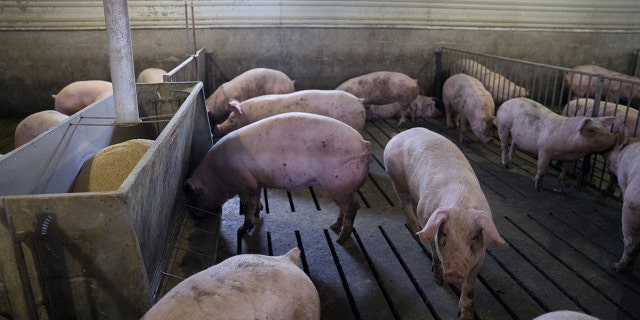
Young female pigs stand in pen at a hog farm in Smithville, Ohio, in this April photo. (Dane Rhys/Bloomberg via Getty Images)
Now, there are few viable accommodations for an estimated 170,000 pigs to be sent to the operative plants each day for processing into the food supply, the NPPC says. According to the council, these hogs will eventually grow “too large” for admission to harvest facilities, creating a “tragic reality” for farmers in the U.S., who have raised “10 million hogs with nowhere to go.”
Producers cannot continue to house the market-ready hogs, the council said, as they need make room for younger hogs entering the supply chain. Farmers plan about 10 months in advance for how many hogs to prepare for market through the spring and summer, with the pandemic greatly upending their 2020 projections.
“Producers face a wrenching and tragic choice; watch their mature animals suffer because they can’t care for them or euthanize them. The only humane option is to euthanize them, a tragedy for farmers who work to produce food for people,” the NPCC said in a statement last week. “Destroying these animals and the food they represent goes against every farmer instinct.”
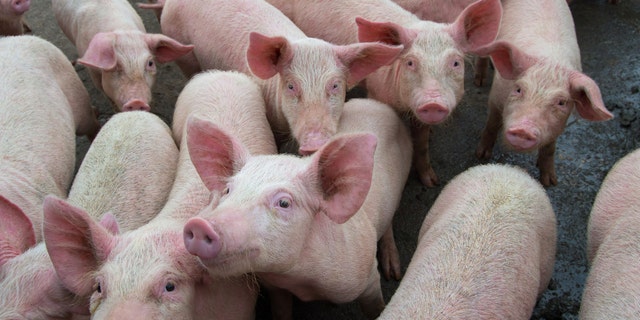
There are few viable accommodations for an estimated 170,000 pigs to be sent to the operative plants each day for processing into the food supply, the NPPC said. (iStock)
Overcrowding on hog farms can result in aggression and injuries, impacting the pigs’ ability to eat, drink and rest. It is also a challenge to maintain a comfortable air quality and environment for the animals.
As of May 6, pork harvest capacity is down almost 40 percent due to coronavirus-related slowdowns and shutdowns, the NPPC said.
Now, the pork council is asking for federal assistance to address the unprecedented crisis. The NPPC seeks congressional authorization to fund $1.173 billion for the USDA Farm Service Agency Emergency Assistance for Livestock, Honeybees and Farm-Raised Fish (ELAP) for pork producers who cannot market their pigs due to coronavirus-related plant shutdowns and slowdowns.
The group also hopes to receive an additional $505 million for euthanasia and depopulation expenses as well as the facilitation of environmentally responsible disposal, in partnership with the USDA Animal and Plant Health Inspection Service, National Resource Conservation Service and FEMA.
Without this assistance, the NPPC argues, thousands of farmers will have to liquidate their assets, ultimately driving up pork prices for the American people.
In response, the USDA established a National Incident Coordination Center last month to help farmers euthanize and dispose of these animals because of the processing plant closures, National Hog Farmer reports.
“None of us want to euthanize hogs, but our producers are facing a terrible, unprecedented situation,” said Bob Krebs, president of meatpacking company JBS USA Pork.
Last month, JBS announced that it would be reopening a temporarily closed pork production plant in Minnesota as a humane euthanasia facility, which capacity to euthanize about 13,000 hogs per day.
The novel coronavirus was first discovered in China, but it rapidly spread around the globe. But where did it come from?
SAN FRANCISCO — The novel coronavirus was first discovered in China, and it rapidly spread around the globe. But where did it come from?
“Based on everything that scientists have looked at of the genetic material, of this coronavirus, the similarity is closest to a virus in a bat,” said ABC7 News Special Correspondent Dr. Alok Patel, a member of our team of coronavirus experts.
Scientists believe a bat likely infected another animal before it infected humans. The intermediary animal is still a mystery but some scientists suspect it’s likely a scaly mammal called a pangolin.
“Then the virus evolved. It changed form, and it became ready to infect humans at a large scale,” said Dr. Patel.
How it got to humans is still unknown.
“Scientists are still trying to figure it out right now, as well as trying to figure out where exactly that animal origin is because understanding this could help us understand the next pandemic,” said Dr. Patel.
The novel coronavirus is a zoonotic disease, meaning an infection that can jump between different species.
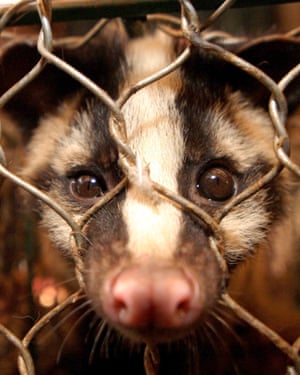
“Both SARS and MERS are examples of viruses that came from mother nature,” said Dr. Patel. “In the case of SARS, scientists believe the virus came from a bat then went to a civet cat, and then infected humans. In the case of MERS, they believe the intermediary animal was a camel.”
Humans have been fighting off zoonotic diseases forever.
“Now the World Health Organization estimates that 60% of all human pathogens have a zoonotic origin,” said Dr. Patel. “You might be saying I’ve never heard of a zoonotic disease, yes you have. Because of rabies, salmonella, West Nile Virus, Ebola, and coronavirus, this one, are all examples of zoonotic diseases.”
Some zoonotic diseases cause a mild illness while others can spread quickly, infecting, and potentially causing a lot of death. Sometimes a disease shows up and our immune systems have never seen it before, making it difficult for our bodies to fight it off.
There are many ways for zoonotic diseases to be passed around. Animal to person, person to person, in food, even in water. Even the flu is a zoonotic virus.
“We suspect the 1918 flu was an avian flu,” said Dr. Patel.
The 1918 flu pandemic is believed to have killed 50 million people and infected a third of the global population at the time. Though it was called the Spanish Flu, researchers now believe it started in the U.S., on a pig farm in Kansas.
Here’s what some experts believe happened: a bird with the flu and human with a common seasonal flu infected a pig. The two flus mutated in a pig and created a new virus.
“Now the reason the 1918 flu was so deadly, similar to this coronavirus, is because humans had no immunity against it,” said Dr. Patel.
That’s why understanding where the novel coronavirus came from is key to understanding how we got it. One clue might be in those spiky proteins that allow the virus to infect you. And these specific proteins work dangerously well and have never been seen before.
“This is important, this is why every single major scientific journal and authority believe that the virus came from nature, and not a lab,” said Dr. Patel.
(CNN) — What does a porqupette in Florida, a baby sea turtle in the Maldives and a bald eaglet from Catalina Island have in common?
These animals were all born during a pandemic.
Many zoos and animal parks around the world may be closed to visitors, but that hasn’t stopped the circle of life from taking place within them.
Amid the closures, caretakers — zoo staff and veterinarians — are showing up for the animals and sharing their stories online.
San Diego Zoo Global launched the #WereHereTogether campaign, which virtually connects visitors to their favorite animals. Disney’s been sharing updates of creatures at the Animal Kingdom through #DisneyMagicMoments. And explore.org, a multi-media organization, live streams animals from all over the world, from a kitten rescue sanctuary to elephants in the African bush.
New additions to Disney’s Animal Kingdom
Credit: The Walt Disney Company
Disney’s Animal Kingdom Theme Park located in Orlando, Florida, recently welcomed two new additions to the family.
On an early Saturday morning, in late March, six days after Walt Disney World Resort closed, Asha, a Hartmann Mountain Zebra Foal came into the world.
Walt Disney cast members chose the zebra’s name; Asha means “hope” in Sanskrit and “life” in Swahili.
She is the third zebra born at Walt Disney World this year.
Credit: The Walt Disney Company
Born on February 25, Shelly, a prehensile-tailed porcupine, now weighs two pounds. Prehensile-tailed porcupines are born with their quills underneath their fine red fur. A few hours after birth, their quills harden and they begin to resemble porcupines as we know them.
You can keep up with Shelly and Asha’s stories through the Disney Parks Blog. Guests can also ask questions, such as, “What conservation programs happen at Disney World? ” on Dr. Mark Penning’s Instagram @DrMarkAtDisney. The Vice President of Animals, Science and Environment at Disney’s Animal Kingdom, Penning posts pictures of the animals regularly and welcomes comments and queries.
Germany’s first set of twin giant panda cubs take their first steps outside and make their public debut in Zoo Berlin.
Turtles and chicks
A baby sea turtle hatched at Emerald Madives Resort and Spa on February 26.
Emerald Maldives Resort & Spa
On February 26, a staff member at Emerald Maldives Resort and Spa found eggs under a tree next to one of the beach villas. Once the eggs hatched, the resident marine biologist helped guide the sea turtles to the ocean with a flashlight.
In New York City, over at the Bronx Zoo, two blue penguin chicks hatched on February 20. They are part of a blue penguin colony, which now consists of 16 birds.
A blue penguin chick hatched on February 20 at the Bronx Zoo.
Zoo keepers are waiting for the chicks’ feathers to come in fully, at which time they’ll submit a feather sample, which will determine their genders. They’ll name the little chicks once they have this information.
Guests can keep up with the development of the blue penguin chicks through Bronx Zoo’s social media channels.
An open park
Credit: Custer State Park
According to Mark Hendrix, Custer State Park’s Resource Program Manager, Custer State Park in South Dakota is expecting to 475 bison calves this year. The park, which is 71,000 acres, is open to guests who want to get outdoors and see the baby calves.
Hendrix advises guests to keep at least 100 yards between themselves and the protective moms.
“We’ve always been really telling people to stay back,” Hendrix said. “And obviously with social distancing, groups of people need to stay away from each other. Limit your interactions with other guests that are trying to view the bison.”
Workers leave the Tyson Foods pork-processing plant in Logansport, Indiana, on May 7. Michael Conroy/AP Photo
At least 4,585 Tyson workers in 15 states have been diagnosed with COVID-19, and 18 have died.
Tyson has announced improved safety measures and relaxed attendance policies, but it still does not offer full paid sick leave for workers, instead offering short-term disability that is 90% of workers’ pay.
Some politicians and meat-industry insiders have blamed the actions and “living circumstances” of employees — many of whom are immigrants — for plants becoming coronavirus hot spots.
Some meat-industry insiders and politicians are blaming employees for meat-processing plants becoming coronavirus hot spots.
Meanwhile, workers say their employers failed to keep them safe. And despite new safety policies, meat-industry giants including Tyson still do not provide full paid sick leave.
Tyson has highlighted the new steps it’s taking to protect workers, including taking temperatures, requiring face masks, instituting additional daily deep cleanings, and installing workstation dividers. The company says it has relaxed its attendance policy and waived the waiting period to qualify for short-term disability, as well as the copay, coinsurance, and deductible costs for COVID-19 testing.
However, Tyson still does not offer full paid sick leave; instead, it offers short-term disability. Until the end of April, Tyson’s short-term disability covered only 60% of pay. On April 29, the company said it raised short-term disability coverage to 90% of normal pay until the end of June.
A Tyson representative told Business Insider that the company increased its short-term disability pay as “another way of encouraging team members to stay home when they are sick.”
The Centers for Disease Control and Prevention has encouraged meat-processing plants to make it easier for workers to take paid sick leave to prevent the spread of the coronavirus. Progressive organizers have argued that the lack of paid sick leave makes certain groups even more vulnerable, especially during the coronavirus pandemic.
“We see expanding access to paid sick leave, and family and medical leave, as an economic-justice issue,” said Nicole Regalado, the deputy director of the American Civil Liberties Union’s liberty division. “It’s also a women’s rights issue and a racial-justice issue.”
Some people are blaming meat-processing workers for their own illnesses
A worker at a Tyson Foods plant in Rogers, Arkansas, on April 24. Tyson Foods
According to the Midwest Center for Investigative Reporting, there were at least 12,500 COVID-19 cases and 51 deaths in the meatpacking industry across the US as of Sunday.
South Dakota Gov. Kristi Noem said in an interview with Fox News in April that Smithfield employees at a Sioux Falls meat-processing plant were not getting sick at work but at home, “because a lot of these folks who work at this plant live in the same community, the same buildings, sometimes in the same apartments.”
At least 783 workers from the Smithfield plant have been diagnosed with COVID-19, and two have died.
In late April, a Smithfield representative echoed Noem’s comments, telling BuzzFeed News that the plant’s “large immigrant population” in which “living circumstances in certain cultures are different than they are with your traditional American family” contributed to the hundreds of COVID-19 cases.
A Smithfield representative told Business Insider that the BuzzFeed News article “is in no way, shape or form representative of our position on this topic.”
“They come from all over the world and speak dozens of languages and dialects. Our position is this: We cannot fight this virus by finger-pointing,” the representative said. “We all have a responsibility to slow the spread. At Smithfield, we are a family and we will navigate these truly challenging and unprecedented times together.”
Politico reported last week that Alex Azar, the health and human services secretary, said on a call in late April that clusters of COVID-19 cases in the meat-processing industry were more heavily linked to “home and social” aspects of employees’ lives, not the conditions in plants.
Last week, while discussing the legality of Wisconsin’s stay-at-home order, Wisconsin Supreme Court Chief Justice Patience Roggensack sparked backlash after saying a cluster of COVID-19 cases was tied to a JBS meat-processing plant and its workers, not “regular folks.”
Workers and unions representing employees of meat-processing plants have pushed back, saying employers failed to take the necessary precautions to keep employees safe. Bill Marler, an attorney, recently told Business Insider that America’s response to clusters in meat-processing plants had been influenced by who has become ill.
“If that was a grade school full of white kids, we’d all be freaking out,” Marler said of the Smithfield plant in Sioux Falls.
President Donald Trump signed an executive order in April demanding that meat-processing plants stay open to prevent meat shortages. Experts have said that with pork and beef production plunging by 35% because of plant closures, shortages and price inflation are nearly guaranteed in the coming months.
Legendary illusionist Roy Uwe Ludwig Horn died in Las Vegas on Friday from complications related to COVID-19, CBS News confirmed in a statement from his press team. Horn, who was 75, was best known for his part in the magic duo Siegfried and Roy, which became known around the world for incorporating endangered animals into their on-stage illusions.
Horn had tested positive for coronavirus in April, according to CBS affiliate WIAT. He was hospitalized at Mountain View Hospital prior to his death.
“The world has lost one of the greats of magic, but I have lost my best friend,” Horn’s partner in magic, Siegfried Fischbacher, said in a statement.
“From the moment we met, I knew Roy and I, together, would change the world. There could be no Siegfried without Roy, and no Roy without Siegfried,” he said. “Roy was a fighter his whole life including during these final days.”
Horn was born in Germany in 1944. While working on a cruise ship, he met Siegfried, and after a conversation started from the question, “can you make a question disappear,” their 50-year career as a magic duo began, according to the statement from his press team.
During their 14-year stint at The Mirage in Las Vegas, the magicians quickly became known for their incorporation of large and beautiful wildlife in their performances, the statement added. People ventured to Las Vegas to watch their $30 million production, which involved making tigers, white lions, leopards, jaguars, and even an elephant, disappear.
Horn’s last — and most notable — performance was October 3, 2003, when he had a stroke and one of the their white tigers dragged him off stage. From that day forward, Horn referred to his tiger, named Mantecore, as his “lifesaver,” and five years after the incident, Siegfried and Roy opened a wildlife sanctuary in Las Vegas called the Secret Garden and Dolphin Habitat. The sanctuary provided a home for the the team’s white tigers and other exotic animals, such as a Komodo dragon.
“Roy’s whole life was about defying the odds,” Siegfried said. “He grew up with very little and became famous throughout the world for his showmanship, flair and his life-long commitment to animal conservation. He had a strength and will unlike anyone I have ever known.”
Fellow magician and illusionist Criss Angel tweeted his respects, writing, “Thank you for your kindness, inspiration and friendship. You paved the road and will forever be missed.”
Criss Angel
✔@CrissAngel
Mr. Roy Horn, Thank You for your kindness, inspiration and friendship. You paved the road and will forever be missed. May we meet again one day… Love, Criss
MGM Resorts, which owns The Mirage, tweeted, “The world lost a legendary figure with the passing of Roy Horn. His story, and the story of Siegfried & Roy, are larger than life.”
MGM Resorts
✔@MGMResortsIntl
The world lost a legendary figure with the passing of Roy Horn. His story, and the story of Siegfried & Roy, are larger than life. Our hearts go out to Roy’s family and friends, and most notably to Siegfried who shared a lifetime of magic and friendship with this special man.
According to the press statement, a public memorial will be planned for Horn. Siegfried has also asked that donations in Horn’s name be made to the Cleveland Clinic Lou Ruvo Center for Brain Health or the Nevada COVID-19 Response, Relief and Recovery Task Force.
The Trump administration is trying to whip the country into an anti-Chinese frenzy because the novel coronavirus might have been accidentally transmitted from a laboratory rather than a wet market. But surely the larger question we should be asking is why we have been seeing viruses jump from animals to humans with such frequency in recent years. SARS, MERS, Ebola, bird flu and swine flu all started as viruses in animals and then jumped to humans, unleashing deadly outbreaks. Why?
Peter Daszak is a disease ecologist and renowned “virus hunter.” He ventures into bat caves in full protective gear to get the animals’ saliva or blood to determine the origins of a virus. During a conversation with me, he was clear: “We are doing things every day that make pandemics more likely. We need to understand, this is not just nature. It is what we are doing to nature.”
Remember, most viruses come from animals. The Centers for Disease Control and Prevention estimates that three-quarters of new human diseases originate in animals.
This coronavirus might simply have come from one of the wildlife markets in Wuhan, China, where live animals are slaughtered and sold, a practice that should be banned around the world. But as human civilization expands — building roads, clearing farmland, constructing factories, excavating mines — we are also destroying the natural habitat of wild animals, bringing them closer and closer to us. Some scientists believe this is making the transmission of diseases from animals to humans far more likely.
The virus that causes covid-19 appears to have originated in bats, which are particularly good incubators for viruses. Scientists are still studying what happened, but in other cases, we have seen how human encroachment can lead bats to look for food around farmland, where they infect livestock — and through them, humans.
There are other paths for pathogens. The most likely one comes directly from our insatiable appetite for meat. As people around the world get richer, they tend to eat more meat. Some 80 billion land animals are slaughtered for meat each year around the world. Most livestock is factory-farmed — an estimated 99 percent in the United States, and 74 percent around the world, according to one animal rights group. That entails crowding thousands of animals inches from each other in gruesome conditions that are almost designed to incubate viruses and encourage them to spread, getting more virulent with each hop. Vox’s Sigal Samuel quotes the biologist Rob Wallace: “Factory farms are the best way to select for the most dangerous pathogens possible.”
Factory farms are also ground zero for new, antibiotic-resistant bacteria, which is another path toward widespread human infections. Factory-farmed animals are bombarded with antibiotics, which means the bacteria that survive and flourish are highly potent. Some 2.8 million Americans are sickened by antibiotic-resistant bacteria annually — of whom 35,000 die, according to the CDC.
And then there is climate change, which intensifies everything — transforming ecosystems, forcing more animals out of their habitats and bringing tropical conditions to places that were previously temperate. Scientific American reports, “The warmer, wetter and more variable conditions brought by climate change are . . . making it easier to transmit diseases such as malaria, dengue fever, chikungunya, yellow fever, Zika virus, West Nile virus and Lyme disease in many parts of the world.” As we change ecosystems and natural habitats, long-dormant diseases can emerge to which we have no immunity.
In May 2015, two-thirds of the world’s population of saigas, a small antelope, died suddenly within a few weeks. A bacterium called Pasteurella multocida, which had long lived in the animal without doing harm, suddenly turned virulent. Why? The Atlantic’s Ed Yong explains that the Central Asian region in which the saiga lives was becoming more tropical, and 2015 was a particularly warm, humid year. “When the temperature gets really hot, and the air gets really wet, saiga die. Climate is the trigger, Pasteurella is the bullet.”
The real scandal is not what China did to us, but what we together are doing to the planet — and what only we together can stop.
South America is a key area of concern due to the rapid clearance of the Amazon. Photograph: Léo Corrêa/AP
Humanity’s “promiscuous treatment of nature” needs to change or there will be more deadly pandemics such as Covid-19, warn scientists who have analysed the link between viruses, wildlife and habitat destruction.
Deforestation and other forms of land conversion are driving exotic species out of their evolutionary niches and into manmade environments, where they interact and breed new strains of disease, the experts say.
Three-quarters of new or emerging diseases that infect humans originate in animals, according to the US Centers for Disease Control and Prevention, but it is human activity that multiplies the risks of contagion.
A growing body of research confirms that bats – the origin of Covid 19 – naturally host many viruses which they are more likely transfer to humans or animals if they live in or near human-disturbed ecosystems, such as recently cleared forests or swamps drained for farmland, mining projects or residential projects.
In the wild, bats are less likely to transfer the viruses they host to other animals or come into contact with new pathogens because species tend to specialise within distinct and well-established habitats. But once land is converted to human use, the probability increases of contact and viruses jumping zoonotically from one species to another.
As natural habitats shrink, wild animals concentrate in ever smaller territories or migrate to anthropogenic areas, such as homes, sheds and barns. This is particularly true of bats, which feed on the large number of insects drawn to lamplight or fruit in orchards.
Play Video
8:07
How coronavirus changed the world in three months – video
Two years ago, scientists predicted a new coronavirus would emerge from bats in Asia, partly because this was the area most affected by deforestation and other environmental pressures.
One of the authors, Roger Frutos, a specialist in infectious diseases at the University of Montpellier, said multiple studies have confirmed the density and variety of bat-borne viruses is higher near human habitation.
“Humans destroy the bats’ natural environment and then we offer them alternatives. Some adapt to an anthropomorphised environment, in which different species cross that would not cross in the wild,” he said.
Habitat destruction is an essential condition for the proliferation of a new virus, he added, but it is only one of several factors. Bats also need to pass the disease on to humans. There is no evidence of this being done directly for coronaviruses. Until now there has been an intermediary – either a domesticated animal or a wild animal which humans came into contact with for food, trade, pets or medicine. In the 2003 Sars outbreak in China, it was a civet cat. In the Mers outbreak in the Middle East in 2012, it was a camel. Scientists are not yet certain of the animal for Covid-19, though Frutos said initial theories that a pangolin was the intermediary now seem less likely.
In a soon-to-be-published paper in Frontiers in Medicine, Frutos and his co-authors argue the key to containing future epidemics is not to fear the wild, but to recognise that human activities are responsible for the emergence and propagation of the zoonosis. “The focus must be on these human activities because they can be properly organised,” notes the paper titled, the Conjunction of Events Leading to the Pandemic and Lessons to Learn for Future Threats.
Scientists have detected about 3,200 different strains of coronavirus in bats. Most are harmless to humans, but two very closely related sarbecoviruses found in east Asia were responsible for Sars and Covid-19. The paper says future sarbecovirus emergence will certainly take place in east Asia, but epidemics of other new diseases could be triggered elsewhere.
South America is a key area of concern due to the rapid clearance of the Amazon and other forests. Scientists in Brazil have found viral prevalence was 9.3% among bats near deforested sites, compared to 3.7% in pristine woodland. “With deforestation and land-use change, you open a door,” said Alessandra Nava, of the Manaus-based Biobank research centre.
The virus that caused the 2003 Sars outbreak in China came from bats via a civet cat. Photograph: Paul Hilton/EPA
She said diseases were naturally diluted in the wild, but this broke down when humans rapidly disrupted the ecological balance. As a local example, she pointed to Lyme disease, which has spread to humans through capybaras. Some municipalities are culling the giant rodents to prevent contagion, but Nava said this was not necessary in pristine forests that still had jaguars. “You don’t find Lyme disease in areas with jaguars because they keep the capybara numbers in check,” she said.
“The problem is when you put different species that aren’t naturally close to one another in the same environment. That allows virus mutations to jump to other species,” she said. “We have to think about how we treat wild animals and nature. Right now we deal with them far too promiscuously.”
Her conclusions were echoed by Tierra Smiley Evans, an epidemiologist at the University of California who studies virus distributions in the rapidly degrading forests of Myanmar. She has found that endangered or threatened species are more likely to have viruses than animals at lower risk of habitat loss and hunting. She said the connection between environmental stress and human health had been made more apparent by Covid-19 pandemic.
“I’m hopeful that one of the most positive things to come out of horrible tragedy will be the realisation that there is a link between how we treat the forest and our wellbeing,” she said. “It really impacts our health. It is not just a wildlife issue or an environmental issue.”
To prevent future pandemics, the academics said international cooperation was needed to encourage monitoring and education at a local level so that virus outbreaks could be detected and contained at an early stage. Although this would be expensive, they said it would more economically efficient than waiting for an outbreak to become a pandemic, which forces the world into lockdown.
They also emphasised that bat culls and bans on wet markets were likely to be ineffective and could prove counterproductive because bats play an important role in insect control and plant pollination. “Living safely with bats is what we should be focusing on, not eliminating them,” Evans said.
Conservation groups have also urged greater protection of existing habitats. A recent Greenpeace report warned the Amazon could see the next spillover of zoonotic viruses because the Brazilian president, Jair Bolsonaro, is putting a higher priority on opening up the forest than protecting people’s health.
“It’s unforgivable. His appetite for destruction is fuelling the current health crisis and will make future crises we face even worse,” Daniela Montalto, Greenpeace forests campaigner, said. “He must be stopped and forest protection prioritised. Without it, we will all pay the price.”
NEW YORK—In an effort to control the spread of infectious diseases, live animal markets might soon be banned in New York. A new bill, introduced by Assembly Member Linda B. Rosenthal (D-Manhattan), would immediately prohibit the operation of live animal markets in New York, effectively suspending current live markets’ operations and preventing further licenses for such markets from being issued.
“In a matter of weeks, COVID-19 has ravaged New York and changed life for millions of New Yorkers,” says Assembly Member Rosenthal. “As policymakers, we have a responsibility to respond to this crisis by doing everything in our power to prevent the next pandemic. Closing New York’s live animal markets, which operate in residential neighborhoods and do not adhere to even the most basic sanitary standards, until we determine whether they can be made safe, is a vital first step.”
Doctors with the Physicians Committee for Responsible Medicine—a nonprofit of more than 12,000 doctors—applaud the legislation for promoting public health and aiming to prevent the spread of future viruses.
COVID-19 appears to have originated in bats and passed to humans via live animal markets. Previously, other coronavirus outbreaks have also spread through animals sold in live markets. The severe acute respiratory syndrome (SARS) epidemic of 2002–2003 originated in horseshoe bats, passing through civets sold for meat to humans.
The legislation could also help stop the spread of new strains of influenza A, an avian virus. Beginning with the 1918 H1N1 flu pandemic (if not before), all influenza A outbreaks have come originally from bird viruses that have found their way into domesticated animal populations and, from there, into farmworkers, their contacts, and the broader community. The H1N1 virus killed millions of people.
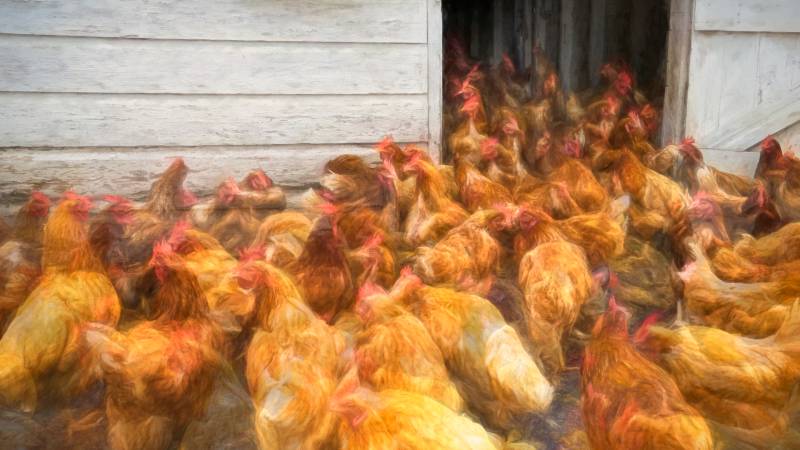
“Avoiding future pandemics like the COVID-19 global crisis requires a total ban on live markets, including the 80 in New York City alone,” says Neal Barnard, MD, FACC, president of the Physicians Committee. “Poultry flocks are breeding grounds for influenza A viruses, and live animal markets are the source of coronavirus.”
New York City has the greatest number of live bird markets, compared with other U.S. cities, according to the New York State Consumer Protection Board. Inspection reports from the New York State Department of Agriculture and Markets show ongoing health, safety, and welfare problems in New York’s live animal markets.
The bill would also create a seven-person task force who would conduct examinations of the shutdown markets for potential public health risks. The members would have expertise in infectious diseases, with a focus on the potential spread of disease between animals and humans. They would report their findings within a year of its first meeting and include a recommendation for further action.
Founded in 1985, the Physicians Committee for Responsible Medicine is a nonprofit organization that promotes preventive medicine, conducts clinical research, and encourages higher standards for ethics and effectiveness in education and research.
Government document projects 2,500 deaths per day by June 1
Document includes “preliminary analyses” by Johns Hopkins
Pause
Unmute
Current Time 0:10
/
Duration 1:01
Loaded: 0%
Progress: 0%
ShareFullscreen
Covid-19 Vaccine Hunt Heats Up
Unmute
Trump Sees 100,000 U.S. Deaths; Europe Fatalities Slow
An internal U.S. government projection shows the nation’s coronavirus outbreak vastly accelerating by June to more than 200,000 new cases and 2,500 deaths per day — far more than the country is currently experiencing.
The White House disclaimed the projection, calling it an “internal CDC document” but saying it had not been presented to President Donald Trump’s coronavirus task force and didn’t comport with the task force’s own analysis and projections.
It isn’t clear who produced the document, obtained and published earlier by the New York Times, or what assumptions underlie the forecasts. The projections, on two slides of a 19-slide deck, are dated May 1 and attributed to a “data and analytics task force.” The document carries the seal of both the Health and Human Services Department and the Homeland Security Department.
The projection contains a range of estimates. The forecast of 200,000 new cases and 2,500 deaths per day are around the middle of the range. The documents are labeled “for official use only.”
The slide deck is labeled a “Centers for Disease Control and Prevention Situation Update” but a CDC spokeswoman, Ana Toro, said the projections were “incorrectly attributed” to the agency. She didn’t say where it came from, referring further questions to a spokeswoman at the Federal Emergency Management Agency who didn’t respond to an email.
“This is not a White House document nor has it been presented to the Coronavirus Task Force or gone through interagency vetting,” Judd Deere, a White House spokesman, said in a statement. “This data is not reflective of any of the modeling done by the task force or data that the task force has analyzed.”
After the Washington Post reported that the projections were the work of a researcher at Johns Hopkins University’s Bloomberg School of Public Health, the university confirmed in a statement that the document “included preliminary analyses” developed at the school.
“These preliminary analyses were provided to FEMA to aid in scenario planning — not to be used as forecasts — and the version published is not a final version,” Joshua Sharfstein, the school’s vice dean of public health practice said in a statement. “These preliminary results are not forecasts, and it is not accurate to present them as forecasts.”
The U.S. reported about 25,000 new cases of Covid-19, the disease caused by the coronavirus, on Sunday and more than 1,200 deaths. But with a swath of states across the South and Midwest beginning to relax economy-crushing social distancing measures, with Trump’s encouragement, some public health experts have warned there’s a risk the outbreak will flare up.
“The president’s phased guidelines to open up America again are a scientific driven approach that the top health and infectious disease experts in the federal government agreed with,” Deere said.
There is a history of the CDC overestimating disease outbreaks. In 2014, the agency said that in a worst case, there might be more than half a million cases of ebola from an outbreak that began in West Africa. The actual number of total cases in the outbreak ended up being about 28,600, according to the CDC.
— With assistance by Jordan Fabian, Drew Armstrong, Michelle Fay Cortez, and Emma Court
(Updates with CDC and Johns Hopkins University statements beginning in fifth paragraph)

 GO VEGAN NOW!




 Exposing the Big Game