The U.S. passed 50,000 coronavirus deaths on Friday and is closing in on nearly 1 million infections as several states around the nation begin implementing plans for reopening businesses and easing social distancing.
On Friday the Johns Hopkins coronavirus database listed 51,017 U.S. deaths and more than 890,000 infections. Due to a lack of testing, the actual number of infections is likely to be much higher.
Despite warnings from national health leaders that the country could face a second wave of the virus in late 2020, states and cities are drafting or implementing plans to get people out of their homes and back into mainstream life.
“We will have coronavirus in the fall,” said Dr. Anthony Fauci, head of the White House’s Coronavirus Task force. “I am convinced of that because of the degree of transmissibility that it has, the global nature. What happens with that will depend on how we’re able to contain it when it occurs.”
Meanwhile the death toll continues to rise and drop at sporadic rates. On Thursday, for instance, the U.S. followed up four days of decreased death totals with one of its deadliest days yet, with over 3,000 deaths.
The latest milestone comes at an incongruous time when many states, under intense pressure from not only the White House but also their own citizens, announce plans to allow people back to work.
Governors of more than a dozen states in the past 10 days — including California, Florida, Alaska, Tennessee, Colorado and Georgia — have detailed their hope to slowly phase out lockdowns and restrictions on businesses.
Meanwhile the death toll continues to rise and drop at sporadic rates. On Thursday, for instance, the U.S. followed up four days of decreased death totals with one of its deadliest days yet, with over 3,000 deaths.
The latest milestone comes at an incongruous time when many states, under intense pressure from not only the White House but also their own citizens, announce plans to allow people back to work.
Governors of more than a dozen states in the past 10 days — including California, Florida, Alaska, Tennessee, Colorado and Georgia — have detailed their hope to slowly phase out lockdowns and restrictions on businesses.
Some are only allowing minor reopenings. Gov. Gavin Newsom said that California was not prepared “to open up large sectors of our society” but made the first modification to the state’s stay-at-home order with the resumption of “essential” surgeries.
“Tumors, heart valves, the need for people to get the kind of care they deserve,” Newsom said. “If it’s delayed, it becomes acute. This fundamentally is a health issue.”
Others are more aggressive. Georgia Gov. Brian Kemp said he was allowing certain businesses to reopen on April 24, including gyms, fitness centers, bowling alleys, barbers, cosmetologists and massage therapists. Georgia’s timetable is one of the most aggressive in the nation.
“Each of these entities will subject to specific restrictions, including adherence to the basic minimum operations, social distancing and regular sanitation,” Kemp said.
Unemployment in the U.S. is swelling to levels last seen during the Great Depression of the 1930s, with 1 in 6 American workers thrown out of a job by the coronavirus, according to new data released Thursday. In response to the deepening economic crisis, the House passed a nearly $500 billion spending package to help buckled businesses and hospitals.
More than 4.4 million laid-off Americans applied for unemployment benefits last week, the government reported. In all, roughly 26 million people — the population of the 10 biggest U.S. cities combined — have filed for jobless aid in five weeks, an epic collapse that has raised the stakes in the debate over how and when to ease the shutdowns of factories and other businesses.
Janet Simon, laid off as a waitress at a Miami IHOP restaurant, said she has just $200 and is getting panic attacks because of uncertainty over how she will care for her three children. Simon, 33, filed for unemployment a month ago, and her application is still listed as “pending.”
“I’m doing everything to keep my family safe, my children safe, but everything else around me is falling apart,” Simon said. “But they see it, no matter how much I try to hide my despair.”
In northern Colorado, a major meatpacking plant that closed because of an outbreak that claimed the lives of four workers was set to reopen Friday after a two-week disinfection, even as some questioned how employees can maintain social distancing inside the facility.
In the hardest-hit corner of the U.S., evidence emerged that perhaps 2.7 million New York state residents have been infected by the virus – 10 times the number confirmed by lab tests.
Abroad, there was mixed news about the epidemic. Some countries, including Greece, Bangladesh and Malaysia, announced extensions of their lockdowns. Vietnam, New Zealand and Croatia were among those moving to end or ease such measures.
In Africa, COVID-19 cases surged 43% in the past week to 26,000, according to John Nkengasong, director of the Africa Centers for Disease Control and Prevention. The figures underscored a recent warning from the World Health Organization that the virus could kill more than 300,000 people in Africa and push 30 million into desperate poverty.
Brazil’s health ministry confirmed 407 deaths due to the outbreak in the last 24 hours, a daily high for the country.
While the health crisis has eased in places like Italy, Spain and France, experts say it is far from over, and the threat of new outbreaks looms large.
“The question is not whether there will be a second wave,” said Dr. Hans Kluge, the head of the WHO’s Europe office. “The question is whether we will take into account the biggest lessons so far.”
Since the coronavirus pandemic went full swing in March, shoppers in the United States have seen empty grocery shelves and have read about farmers dumping their milk and destroying produce because of a dearth of buyers.
More than a week ago, Smithfield Foods, one of the largest pork processors in the U.S., shut down its Sioux Falls, South Dakota, plant after more than 230 employees tested positive for COVID-19 and two people died. (Smithfield’s plants in North Carolina, Wisconsin and Missouri also reported that employees had tested positive and have shut down.)
Many other meat processing plants — including Tyson, JBS and Cargill — have also temporarily shut down in cities across the U.S. and in Canada (some of Tyson’s plants have opted not to shut down despite having sick employees) and several more deaths have occurred. Reports surfaced that the shutdown, coupled with panic buying, will result in meat shortages.
So, will it actually be difficult for consumers to buy meat soon? Experts advise there’s no need to panic. Let’s take a look at how grocery store shelves may look in the near future.
Even if your grocery store is low on meat, there’s likely a surplus of meat at farms.
The real problem right now is that the U.S. has too much meat but nowhere to send it.
“I don’t see any shortage in meat,” Mike Phillips, co-owner and salumiere of Minneapolis’ Red Table Meat Co., told HuffPost. “In fact, it’s the other way around, especially for the farmers I work with. They can’t get rid of enough. They’re worried they’re going to go bankrupt. They have a lot of money [invested] in feeding animals and nowhere for them to go.”
With distribution channels including restaurants and schools severed, a surplus of animals remain on farms. “The model only works when the pigs are ready,” Phillips said. “When the animals are ready, they’re ready. It’s going to cost a lot more to keep feeding them. Is there a place where it can be processed? Are those people still working if you process it? Who buys it? If nobody is going to buy it, where is it stored? Who pays the processing fees while no one is buying any of it?”
Not only is there nowhere for the meat to go, but in many cases there’s also no mode of transportation to get it there.
Ron Joyce is president and CEO of the North Carolina-based family-owned Joyce Farms. He said the media has fueled a panic-buying mentality and that, in his experience, the real problem of grocery store shortages has to do with transportation issues.
ASSOCIATED PRESS
The Smithfield pork processing plant in Sioux Falls, South Dakota, was shut down when more than 230 employees tested positive for COVID-19.
“If a store normally receives a truckload of products per day and, through panic buying, consumers are buying four or five times their normal quantities, it is not possible to immediately get four to five trucks per day,” he said. (According to Joyce Farms’ chief ranching officer, Allen Williams, “Food has to travel more than 1,500 miles in the U.S. to get to its final destination of a grocery store or restaurant.)
“I think America has the ability to produce the meat we need overall, but there could be short-term and/or regional shortages due to logistics and plants being closed,” Joyce said.
How grocery stores are affected.
On the grocery side, many stores have been able to keep up with meat demand, for the most part. One such chain is Whole Foods.
“Since we work with a variety of local and regional suppliers all over the country, it allows us to be more flexible with supply source and safely move inventory as needed to combat possible shortages,” Theo Weening, Whole Foods’ vice president of meat and poultry, told HuffPost.
“Specific product availability and replenishment in-store varies across the country based on a number of factors, such as shopper habits and supplier outages,” Weening said. “However, both our local and regional supplier partnerships, which meet our rigorous quality standards, have provided us with opportunities to be flexible and bypass interruptions to supply chains where possible, getting product to stores as quickly as we can.”
Another fear is that meat prices will increase at grocery stores because of supply and demand. But there’s not too much cause for concern, according to the experts.
Currently, the price of retail beef has indeed increased, even though the price of cattle is down, due in part to the meat supply pivoting from restaurants to retail (restaurants aren’t ordering as many filet mignons, but consumers are buying ground beef to make burgers at home).
But Phillips says he and farmers like him pay a “fixed” price for their livestock and that the price is “steady.”
“The farmer knows what the pig costs to grow and process,” he said. “I don’t see much change in those prices even in a 10-year period.”
“The production of meat and poultry in America is very efficient and is sensitive to demand,” Joyce said. “If demand increases, pricing normally increases short term and the supply increases, bringing pricing back down. If demand decreases, the opposite happens. Competition normally keeps pricing in balance in the long term. However, different animals have different grow-out times, so production adjustments can vary. Chickens are the quickest and easiest to adjust to demand because of their short growth period. Pork takes a little longer and beef takes the longest.”
But ultimately prices are influenced by consumers.
“When the consumer votes with their dollars to demand cheap meat, then you’re going to get places like Smithfield that will rise to the demand and give it to people,” Phillips said. “But if people vote with their dollars differently, then for sure you could sure see the farmers who are struggling right now, they have plenty of pork to sell.”
Why a meat shortage at grocery stores is unlikely.
Despite what appears to be a temporary shortage in supply chains, consumer relief is on the way. “Producers and retailers typically plan for steady demand increases and were not prepared to deal with the rapid surge we saw with the onset of the crisis,” the U.S. Department of Agriculture wrote on its blog. “But over the next few weeks, as retailers restock their shelves and demand from overstocked consumers declines, we will see fewer empty shelves and prices should stabilize or even decline.”
Additionally, the USDA announced that “in both commercial and public storage, the U.S. has stockpiled 925 million pounds of frozen chicken, 491 million pounds of frozen beef and nearly 662 million pounds of frozen pork,” and the federal government announced that it plans to purchase some of the farmers’ surplus meat and give $16 billion in direct payment to farmers. So it seems like a shortage might be overblown.
How do we prevent a meat shortage in the future?
Once the pandemic tapers off, what will the future of agriculture look like, or what should it look like?
“I think there will be more emphasis on local or regional production of food,” Joyce said. “I would like to see more people engaged in how and where food is produced. Most are not aware that a lot of it travels across the country or even from other countries to get to them.”
Phillips offered a similar sentiment. “I’m hopeful that people are going to be interested in quality and local things and creating more food themselves and understanding the real costs and price of foods …. This isn’t the first virus that’s going to come down the pipeline. Things are probably going to have to change a bunch, I would imagine. I feel like it is a chance for people to reconnect with the wheres and whys and hows of their food, and examine the system and decide what’s actually healthy for us and what’s not.”
A HuffPost Guide To Coronavirus
Stay up to date with our live blog as we cover the COVID-19 pandemic
Everyone deserves accurate information about COVID-19. Support journalism without a paywall — and keep it free for everyone — by becoming a HuffPost member today.
Experts are still learning about the novel coronavirus. The information in this story is what was known or available as of press time, but it’s possible guidance around COVID-19 could change as scientists discover more about the virus. Please check the Centers for Disease Control and Prevention for the most updated recommendations.
A FOOD market at the centre of the deadly coronavirus outbreak has claimed they sold live koalas, snakes, rats and wolf pup to locals to eat.
The Huanan Seafood market in Wuhan, China is under investigation after officials believe the coronavirus originated from a wild animal that was sold at the venue.
5
Officials believe the coronavirus originated from a wild animal that was sold at the food marketCredit: Muyi Xiao/Reuters
5
Their advertising board showed their wide-ranging menu of live animals on offerCredit: Muyi Xiao/Reuters
In a desperate attempt to contain the killer virus, the market — labelled “ground zero” by local authorities — has since been shut down.
So far, the highly-contagious virus has killed 26 people and infected hundreds around Asia.
A translation of the markets’ advertising board revealed how they sold live foxes, crocodiles, wolf puppies, salamanders, snakes, rats, peacocks, porcupines and even koalas.
Amidst the global health threat, stunned locals took to Chinese social media site Weibo to show their surprise.
One user, clearly shocked at the sale of live animals, wrote: “Just take a closer look at the viral wild animal menu — they even eat koalas.
“There’s nothing Chinese people won’t eat.”
Just take a closer look at the viral wild animal menu — they even eat koalas
Weibo User
According to the list, there were 112 live animals and animal products readily available to purchase.
Coronavirus represents a wide variety of viruses present in animals that can, in certain circumstances, jump to humans.
Amid fears it could become a global pandemic, the Chinese government has put the city into lockdown and plans to shut down the airport and public transport.
More than 500 people have been infected, but there are fears that figure could now be as high as 10,000.
Experts now fear that the new strain is “as deadly as Spanish flu”, which killed 50 million people in 1918.
Professor Neil Ferguson, an expert in mathematical biology at Imperial College London, said the death rate was “roughly the same as for the Spanish flu epidemic, at around one in 50”.
Several countries increased border health checks to guard against the disease’s spread, including Australia, the US, the UK and Russia.
Even live koalas, a local delicacy, were up for grabs at the ‘ground zero’ marketCredit: Miami Zoo via Ron Magill
5
Countries have increased border health checks to guard against the disease’s spread, including Australia, the US, the UK and RussiaCredit: SWNS:South West News Service
5
But people are being treated for suspected coronavirus in Britain after flying in from China todayCredit: SWNS:South West News Service
A parade float encourages residents to stay strong in High River, Alta., March 27, 2020, amid the worldwide COVID-19 pandemic. Health officials said that as of Friday, 358 cases in High River and elsewhere in the region were linked to the nearby Cargill facility.
JEFF MCINTOSH/THE CANADIAN PRESS
High River has become a hot spot for COVID-19 in Alberta, with hundreds of infections, including staff at a long-term care home, tied to one of Canada’s largest slaughterhouses.
Health officials said that as of Friday, 358 cases in High River and elsewhere in the region were linked to the Cargill facility. Many of the workers at the Cargill Ltd. plant are new immigrants or temporary foreign workers, whose jobs and shared living spaces make them especially vulnerable to infection. At least one worker is on a ventilator, the union for the plant says, and others are struggling with serious illnesses.
Cargill is a major employer in High River, a bedroom community of roughly 13,000 people located a half-hour drive south of the Calgary city limits. About 2,000 people work there and the facility supplies about 40 per cent of the beef processed in Western Canada.
Foothills County now has more cases than Edmonton, a city with more than 10 times the population. The province’s Chief Medical Officer of Health has said that infections quickly spread among large households, and a local settlement agency said that temporary foreign workers often live together in large groups.
The Seasons High River retirement home, which includes nursing care, said five staff members tested positive but no residents have been infected. Four of the infected staff live with Cargill workers.
Thomas Hesse, president of United Food and Commercial Workers Local 401, said many of the plant’s employees are either temporary foreign workers or new Canadians, for whom English is a second language, though he didn’t know how many would fit into those categories. He said some workers who have contracted COVID-19 are in serious condition, including one who is in an induced coma and on a ventilator in a Calgary hospital.
Mr. Hesse said North American meat-packing facilities “are designed around efficiency and social proximity, not social distancing.”
“The lines are arranged in highly efficient ways and workers stand shoulder to shoulder, wielding knives. It’s loud, it’s slippery, it’s wet and there’s blood everywhere, especially on the slaughter side [of the operation],” he said, adding, “The plant hallways and lunch rooms and bathrooms are a certain size and they’re not rebuilding the plants to confront COVID.”
The union and Alberta’s Opposition New Democrats have called for the plant to be temporarily shut down to get a handle on the outbreak, but so far that hasn’t happened.
A Cargill worker, who has been recovering at home since he and his spouse became sick and tested positive for COVID-19, said he is afraid to return without assurances from the company that the plant is safe. The Globe and Mail agreed not to identify the worker, who is worried that speaking publicly would jeopardize his job.
Employees at the plant work in close quarters as they slaughter 4,500 head of cattle a day.
“How can they change the process? For us, we are doing sometimes 330 [heads of cattle] an hour – you can imagine that,” he said.
“There are some work stations that [are] too close.”
Jon Nash, president of Cargill Protein, a division of Cargill Inc., said in a statement that the company has scaled back operations and put in several measures to curb the outbreak, including staggering shifts, increasing distance between workers, checking employees’ temperature, providing face masks, prohibiting visitors and increasing cleaning. The company said some workers have taken unpaid leave.
Minneapolis-based Cargill Inc. – which also makes and trades grain, processes other types of meat and operates other agriculture-related businesses – is one of the largest privately held companies in the world and employs 160,000 people in 70 countries, according to its website. It has 8,000 workers in Canada, where it has operations in six provinces.
The High River facility is one of several suppliers of ground beef for McDonald’s Canada.
“At this time, Cargill has assured us that they are confident in the resilience of their supply chain and will continue to meet our current demand for beef,” McDonald’s Canada said in an e-mailed statement Sunday.
Fariborz Birjandian, chief executive officer of the Calgary Catholic Immigration Society, which operates Foothills Immigrant Community Services in High River, said his agency is working with Cargill staff who have become infected or are required to self-isolate. He said it’s common for temporary foreign workers to live with half a dozen or more people in a single unit.
“Temporary foreign workers come here to make money and send it back home, so they are trying to minimize their costs by sharing rooms,” he said.
“That makes them very vulnerable. … If one of them is infected, then the rest will be infected.”
Mr. Birjandian said he hopes the Cargill outbreak serves as a wake-up call to other such facilities in an industry that relies heavily on temporary foreign workers or new immigrants, including resettled refugees.
Ontario-based Seasons Retirement Communities, which operates long-term care homes across the country, including in High River, said of the five staff members who have tested positive for COVID-19, four live with someone who works at the plant. CEO Mike Lavallée said in a statement that no residents have tested positive.
Mr. Lavallée’s statement said the High River facility has implemented a series of measures including daily health screenings for all residents, staff and visitors.
Alberta recorded 2,803 cases of COVID-19 as of Sunday and 55 deaths. One of those deaths was in High River: a man in his 70s at a long-term care home attached to the local hospital.
A man waves an American flag during a rally against California’s stay at home orders in San Diego on April 18, 2020.Ariana Drehsler / AFP – Getty Images
Governors across the country on Sunday criticized President Donald Trump’s expression of solidarity with those protesting various state-issued stay-at-home orders, saying his comments are “dangerous” and “don’t make any sense.”
“I don’t know any other way to characterize it, when we have an order from governors, both Republicans and Democrats, that basically are designed to protect people’s health, literally their lives, to have a president of the United States basically encourage insubordination, to encourage illegal activity,” Washington Gov. Jay Inslee, a Democrat, told ABC’s “This Week,” adding, “To have an American president to encourage people to violate the law, I can’t remember any time during my time in America where we have seen such a thing.”
Inslee said Trump’s comments were “dangerous” because they “can inspire people to ignore things that actually can save their lives.” Trump’s promotion of the protesters was “hobbling our national efforts to protect people from this terrible virus.”
“And it is doubly frustrating to us governor because this is such a schizophrenia, because the president basically is asking people: Please ignore Dr. Fauci and Dr. Birx. Please ignore my own guidelines that I set forth, because those guidelines made very clear, if you read them — and I don’t know if the president did or not — but, if you read them, it made very clear that you cannot open up Michigan today or Virginia,” Inslee said. “Under those guidelines, you need to see a decline in the infections and fatalities. And that simply has not happened yet.”
The past week saw an increasing number of protests across the country where demonstrators railed against the coronavirus restrictions that health experts say are necessary to curtail the spread of the virus.
The protesters have said they believe the shutdowns, which have harmed business and stunted leisure activity, have gone too far, especially in areas that haven’t seen major outbreaks like those in New York City and Detroit. But health experts have warned it won’t take much for a relatively unaffected place to become a hot spot, as just one infected person is able to spread the virus to several others.
The demonstrations have been small for the most part. A Gallup poll conducted earlier this month found that just 20 percent of Americans would like to see an immediate return to normal, while 71 percent prefer to wait and see how the outbreak develops. That includes just 31 percent of Republicans who want to see an immediate return as well as 23 percent of small town and rural-dwelling respondents.
The protests, which have been promoted in large Facebook groups with names such as “Michiganders Against Excessive Quarantine” and “ReOpen NC,” have seen a large pro-Trump contingency, with demonstrators wearing and waving Make America Great Again gear, as well as “Don’t Tread on Me” flags. Protests, like “Operation Gridlock” in Michigan, the largest of the demonstrations so far, have been organized and promoted by leading conservatives. Some have even been seen waving Confederate flags at the rallies.
The rallies have led to crowds gathering in close proximity, with many participants forgoing masks and violating social distancing guidelines that have been put in place.
Late last week, Trump cheered the effort to “LIBERATE” Michigan, Minnesota and Virginia, three states with Democratic governors. He defended those tweets Friday, saying that he thinks some states stay-at-home orders “are too tough,” adding he feels “very comfortable” with his tweets.
“These are people expressing their views,” he said. “I see where they are and I see the way they’re working. They seem to be very responsible people to me, but it’s — you know, they’ve been treated a little bit rough.”
The administration last week released guidelines for how states can begin easing restrictions, recommending a multi-stage process that includes robust testing. Governors on Sunday said Trump’s encouragement of the protesters was confusing considering the new guidelines.
Maryland Gov. Larry Hogan, a Republican, told CNN’s “State of the Union” his state is “doing everything we possibly can to reopen in a safe manner,” but “I don’t think it’s helpful to encourage demonstrations and encourage people to go against the president’s own policy.”
“The president’s policy says you can’t start to reopen under his plan until you have declining numbers for 14 days, which those states and my state do not have,” he said. “So then to go encourage people to go protest the plan you just made recommendations on Thursday — it just doesn’t make any sense. We’re sending completely conflicting messages out to the governors and to the people as if we should ignore federal policy and federal recommendations.”
Speaking with NBC’s “Meet the Press,” Ohio Gov. Mike DeWine, a Republican, said he’s asked protesters to “observe social distancing” and “we’re all big believers in the First Amendment.”
“They were protesting against me yesterday and that’s just fine,” he said. “They have every right to do that. We’re going to do what we think is right, what I think is right, which is try to open this economy but do it very, very carefully so we don’t get a lot of people killed. But we have to come back and we’re aiming to do that May 1. It’s very consistent … with the very thoughtful plan the president laid out.”
Virginia Gov. Ralph Northam, a Democrat, told CNN that Trump was focusing on protests after being “unable to deliver on tests.”
“And this is not the time for protest,” Northam said after Trump encouraged gun rights activists in his state. “This is not the time for divisiveness. This is time for leadership that will stand up and provide empathy, that will understand what’s going on in this country of ours with this pandemic. It’s the time for truth. And it’s the time to bring people together.”
A new NBC News / Wall Street Journal poll conducted just before the announcement of the administration’s new reopening guidelines showed that 58 percent of registered voters are more concerned that America will “move too quickly in loosening restrictions” and cost more lives than they are about the country taking too long to loosen the orders. Meanwhile, earlier last week, Trump said he was “not going to put pressure on any governor to open.”
Speaking with “Fox News Sunday,” Vice President Mike Pence addressed Trump’s encouragement of the protests, saying “no one in America wants to reopen this country more than” Trump, and that “when the president speaks about re-opening America it’s all about encouraging governors, as soon as they determine as most proper and most appropriate to be able to do that and do that quickly.”
Pence told “Meet the Press” that the U.S. has “to make sure the cure isn’t worse than the disease,” and that there are “real costs” to staying shut down, pointing to business closures and health risks tied to isolation.
Michigan Gov. Gretchen Whitmer, who has instituted one of the most restrictive stay-at-home orders as her state deals with one of the worst outbreaks in the U.S., told “Meet the Press” on Sunday she stood by the measure.
“Michigan right now has the third-highest number of death from COVID-19, and yet we’re the 10th largest state,” she said. “We have a disproportionate problem in the state of Michigan. And so we could take the same action that other states have, but it doesn’t rise to the challenge we’re confronting. And that’s precisely why we have to take a more aggressive stand.”
“Who among us wouldn’t rather forgo jet skiing or boating right now it’s going to save your grandparent or your neighbor’s life,” she later told CNN. “And that’s precisely what the trade-off is in this moment.”
The rural area around Sun Valley, Idaho, became one of the earliest hot spots of COVID-19 cases in the US. Now, its residents can teach us something about what’s next.
The journalists at BuzzFeed News are proud to bring you trustworthy and relevant reporting about the coronavirus. To help keep this news free,become a memberand sign up for our newsletter,Outbreak Today.
Jennifer Liebrum told me toer any time: “I’ve got nothing else to do,” she said, “but lay in this room.” She’d been in that room, fully isolated from the rest of her family, for nearly three weeks — ever since she started feeling sick, assumed it was the coronavirus, and knew if she didn’t immediately quarantine herself, she’d risk infecting her 16-year-old daughter, who’d only recently entered remission after two years of treatment for leukemia.
Like a lot of people in Blaine County — made up of 2,661 square miles of mountains and wilderness, smack in the center of the bottom half of Idaho — Liebrum wears, as she puts it, “a lot of hats.” Since moving to the Wood River Valley in 2001, she’s worked as an equine therapist, a ranch manager, and a waiter. Now she’s a writer, works at the middle school, and takes on the odd gig to supplement her family’s income. That’s what she did on March 7, when she did “advance work” for a wedding at River Run Lodge at Sun Valley, the ski resort that serves as an economic center of gravity for the area.
A significant number of people in the wedding party were from Seattle, including two health care workers. At that point, people were still thinking of COVID-19 as something mostly isolated to a nursing home in Kirkland, Washington, and a handful of other cases (Washington Gov. Jay Inslee had yet to even ban meetings of 250 or more). So when the first official positive test results for COVID-19 came back in Blaine County, on March 14, there was an immediate impulse to try to figure out where it came from: Was it the Seattle wedding? The rollicking closing party for the National Brotherhood of Skiers, held the night before with music from DJ Jazzy Jeff?
Debbie Bacca had attended the party and worked at the wedding. She started feeling sick a few days later and made an appointment at the local hospital, where coronavirus testing kits had just become available. Her results came back on Saturday, a week after the wedding: She was one of the first two official cases in Blaine County. But as was the case in Seattle and many other places around the US, chances are high that the virus had already been in the area for some time. The closing party and the wedding just served as vectors for its spread. As Bacca put it, “That lodge was a petri dish.”
By March 19, five days later, the number of confirmed cases had risen to 16, and shortly after, the county issued a stay-at-home order. The hospital, which has just two ICU beds and one ventilator, was forced to temporarily close, as four of the seven emergency room doctors were quarantined after being exposed to the virus. Two of them tested positive. Tourists almost certainly brought the virus to the county, where more than 40% of houses are short-term rentals and second homes. But it’s full-time residents who are figuring out how to deal with the aftermath.
Nick Price for BuzzFeed News
A warning to backcountry users on Highway 75, north of Ketchum, Idaho.
By April 11, there were 452 confirmed cases in Blaine County, and five people had died. The area has one of the highest per capita infection rates in the US — higher, even, than New York City’s — and the fifth-highest deaths per capita. But nearly a month since the stay-at-home order was issued, the number of new cases has actually begun to decline. And the high number of cases relative to the county’s population (23,000) is largely indicative of widespread testing that hasn’t been feasible for many cities.
For weeks in Idaho, like so many other places, you couldn’t get a test, regardless of your symptoms, unless you knew you’d been in direct contact with someone who had COVID-19. But in a small community like Blaine County, when just a handful of people tested positive, dozens more who were exhibiting symptoms were able to get tested as well. And the widespread (official) infection rate has a silver lining: Earlier this week, the city of Ketchum and the county announced an official collaboration with the Albany College of Pharmacy and Health Sciences and Seattle’s Fred Hutchinson Cancer Research Center to launch an antibody testing program.
In truth, Blaine County isn’t that different from any other community with an outbreak of COVID-19. The virus just hit it earlier than most, and with less warning. And as has been the case in every other place, systemic issues, from the lack of affordable housing to the digital divide, have emerged in even starker relief than before.
The stereotype of Sun Valley, in and outside of Idaho, is a town dominated by a bunch of rich, white, out-of-state skiers with second homes. But Blaine County is far more than Sun Valley (one of four “major” small towns in the area), and the lived reality of its full-time residents tells a story that will sound familiar to people living in far more dense urban areas. Idaho, as a whole, is 93% white. Yet 48% of school-age children in the Blaine County school district, according to the school board chair, are Latino. Almost half of students in the district qualify for free or reduced-price lunch. The county seat of Hailey, population 8,282, ranked ninth in the nation for most severe income inequality in a 2018 study from the Economic Policy Institute.
In 2017, only 57.5% of housing units across the county were occupied by full-time residents; the median monthly rent for a two-bedroom apartment in Hailey was $1,200 a month. Meanwhile, wages — when adjusted for inflation — have fallen about 15% over the last decade. Food costs across the area are the eighth-highest in the nation. Before the pandemic, the local food bank, the Hunger Coalition, reported serving nearly 4,000 people a year in the community — about a fifth of the county’s population.
All of the problems facing Blaine County before COVID-19 are still there, but are now exacerbated by the crisis. The Hunger Coalition is now serving nearly triple their normal weekly numbers, with more people in need every week. Thousands of people whose livelihoods depend on the tourist economy, which has ground to a halt, are struggling to make ends meet. The school district is scrambling to figure out how to continue educating in a way that’s fair and equitable when at least a quarter of their students don’t have high-speed internet at home, either because of cost or remote location.
Nick Price for BuzzFeed News
Molly Page (left) works at the kitchen table while her daughter Lilia (center) sews face masks.
Even with all of those problems, Blaine County is still a tight-knit community. In the beginning of the coronavirus crisis, that meant a fair amount of gossip about where the virus had come from, and who was spreading it. When Bacca first started telling people about her diagnosis, she told me, “The news spread like wildfire. I felt like Hester Prynne from The Scarlet Letter.” Molly Page, who runs the local Facebook page for COVID-19 support, told me people across the state are “furious with 5Bers” (the license plate abbreviation for Blaine County). “There’s this anger about us being here, just generally,” she said. “But we locked down the county. We didn’t start the pandemic. We were just the first in Idaho to really get it all over.”
The county is still under a mandatory stay-at-home order, as is the state, and plans to remain so for the foreseeable future. But this past Sunday, Liebrum was finally able to come out from her room and rejoin her family. Others are slowly starting to do the same. Blaine County is sending us a letter from our near future about what the asteroid impact of the coronavirus is like when it hits a small community, and what life might look like in its wake. Here are the stories of 14 people who live there — stories that, soon enough, might sound a lot like yours.
Interviews have been condensed and lightly edited for clarity.
ADVERTISEMENT
Cathy Swink, 48, Pharmacist at Valley Apothecary in Ketchum, Idaho
Every year, people get what’s called the “Ketchum Kroup.” Kroup with a K. It’s just the name people use to describe getting sick when the tourists start coming around Christmas. This year, I don’t feel like it was any more than any other year. The actual influenza didn’t hit that hard — so from our standpoint, in the pharmacy, it felt milder. There was never a moment where it was like, oh my god, something’s here.
This past week, my phone has been blowing up. Everyone I know who got tested weeks ago is coming back positive. There are definitely some false negatives too, people with the same exact symptoms as people who tested positive. We’re already peaking. But my advice to everyone else in small towns is that you can’t wait until it gets there. At that point, it’s out of control, and you’re behind the eight ball. You have to have an action plan right now.
“You can’t wait until it gets there. At that point, it’s out of control, and you’re behind the eight ball. You have to have an action plan right now.”
I had been closely following what was happening in China. I’ve been a pharmacist for 20 years, and I’d never seen anything like this. I knew it was going to come here and that it was going to be bad. Starting in January, we overstocked on everything, from thermometers and gloves to hand sanitizer. And when we saw that hand sanitizer was going to run out, we ordered the stuff to make it ourselves.
We had a meeting the week before the first positives came back. We came up with our game plan — and the Saturday when the first case came back, we closed our doors and went curbside-only. Emailed our mayor and within a day they had six “temporary parking only” signs out front of our business for people coming to pick up. On Tuesday, we hired a bartender from the local bar and started free delivery all over the valley. Our patients are in sync with it, and it’s working very smoothly.
People from the outside are still coming in. They’re out there, sledding, not self-quarantining. This is usually when we get our town back — when the tourists leave. But I had a friend going into the local grocery store, and she said, ‘Look around — do you recognize anyone here?’ Not a soul. The amount of prescriptions we’re getting from out of state, it’s ridiculous — New York, California, Washington, New York, California, Washington. That’s really going to be our problem if we don’t get an antibody test — people are just going to keep coming in and reinfecting.
ADVERTISEMENT
Nick Price
Kelsie Choma
Kelsie Choma, 29, Police Dispatcher in Hailey, Idaho
My husband and I met when he was a state trooper, and I moved from Boise to be with him here. I have two stepkids and a baby. Back in January, February, everyone seemed kind of oblivious. I mean, we’re in the middle of nowhere, Idaho — why would this disease come there? I wasn’t thinking about the tourist aspect; those people normally just keep to themselves.
We’re still working. I’m essential. My husband is essential. It’s a blessing and a curse. I used to have normal hours from Monday to Friday, 9–5, and would cover overtime. But now we’re working 12-hour shifts. We’re attached to the sheriff’s office, but we can’t leave our little space. There’s no one else allowed in. No one’s gotten sick. That’s a big miracle.
We have two busy seasons in town: summer and winter. The mountain was supposed to still be open at this point. But I’m not even worried about the tourists coming back. I’m worried about the locals who can’t keep up. We have a small-town feel here, you know, because we are a small town. And I know the restaurant owners. I know they’re having to shut their doors. How could they have protected themselves or prepared for something like this?
The stimulus check from the government — I mean, realistically, up here, that’s not even going to cover our mortgage, which is $1,300-something a month. We can make that work because there’s two of us still working, but other people we know are paying $1,700 or more. There are those people with second houses up here, but my husband and I can’t afford to go skiing on the mountain.
ADVERTISEMENT
People love to come to our county, and now they’re terrified too. But our community, in times like this, we all come together and try to make things work. We all live in this wonderful place where we all get to go hiking and some of us can go skiing. We just want the best for each other.
R. Keith Roark, 71, Chair of the Blaine County School Board
I tell people I’m from Hailey, Idaho. I don’t use the word “Sun Valley.” I was elected chair of the school board this past year, and I’m also a lawyer, and was previously the mayor of Hailey. When the first round of COVID-19 cases came out, there was a connection to the school district, and we closed the schools as soon as we could.
Right now, we’re still trying to plan and implement the so-called distance learning plan. The difficulty is that 25% of our students do not have access to high-speed internet. And to be pursuant with state and federal law, we have to provide a quality, equal education for all our students, so we cannot ignore those who don’t have access. We’re trying to increase high-speed internet accessibility, but we’re fighting a losing battle. We were trying to help some families add internet to their cable bill, but a lot of people are already cutting expenses — including their cable access.
It’s like trying to bail out a lifeboat that has a hole in the bottom. But this is a school district that has prided itself on quality education. We have a dedicated and well-educated teaching staff. And some of them — not a huge number, but some — don’t have access to high-speed internet either. They live in areas that have satellite, and that just doesn’t work with the sort of teleconferencing that we’re using.
ADVERTISEMENT
“It’s like trying to bail out a lifeboat that has a hole in the bottom.”
Our district is 48% Hispanic. Many live in households where their parents might not speak English at all. We have a full-time interpreter, and all communications that go out from the district are translated into Spanish. But the easiest way to handle communication is through email — and again, we’re in a situation where 25% of homes do not have access to the internet. So we’re doing a lot of texting. Before the pandemic, almost half of our students were on free or reduced-price lunch. Since we closed down the schools, we are providing lunches to all students, whether they were in those programs or not.
Right now, all our issues as a district have been put on the back burner. Depending on how badly the resulting recession hits this area, people are probably not going to be able to pay their property taxes, and that means we’re not going to be able to think about pay increases for our employees. We’ll also be absorbing what looks to be a significant increase in insurance premiums.
I’m not circulating around the community. I’m handling things from home. And I’ve been thinking about a whole lot more than I want to talk about right now.
ADVERTISEMENT
Nick Price for BuzzFeed News
Jamie’s parents Nancy (left) and Jim Rivetts (right), who both have COVID-19.
Jaime Rivetts, 42, Social Learning Specialist in Bellevue, Idaho
My parents are in their seventies, and last year they went on a big trip for their 50th wedding anniversary. My dad got pneumonia when he got back and had to be intubated and life-flighted out of the area. He’s a super-active guy, but he’s been on oxygen ever since. My mom has type 2 diabetes. So when the virus started coming around, I was paying attention — ever since Christmas, especially since my dad has a bit of the cowboy attitude and kept skiing and doing everything all through January.
On March 17, they got it — probably while grocery shopping in those few days before. My dad had a progressively harder time breathing, and he kept upping his oxygen, and then he just realized he couldn’t manage it. On March 20, he drove himself to the ER. They were shutting down the hospital there, so they took him in an ambulance down to Twin. [Editor’s note: Twin Falls, the nearest metropolitan area, is about a 90-minute drive from Blaine County.]
They tested him and got rushed results. The infectious disease doc came in and said, “You have COVID, and I don’t think you’re going to survive, because you only have 61% of your lung capacity.” They asked him, “Do you still want to have this DNR [do-not-resuscitate order]?” He said yes. “Do you want to be put on a ventilator if needed?” He said yes.
ADVERTISEMENT
I talked to him on the phone on Friday and Saturday, and I thought those conversations might be the last ones I’d ever have with him. We took my mom to the ER on Saturday, and they tested her, did a chest X-ray and sent her home with antibiotics. But she was home all by herself while my dad was in the ICU. I made food and put it on the doorstep. I made sure she answered texts and phone calls every few hours. But she got worse, and that Wednesday, my brother and sister-in-law — who live next door to her — took her to get IV fluids. Now my brother and sister-in-law have it.
Meanwhile, my dad was gradually improving. He said it was so hard to be alone, with the only people he came into contact with wearing full protective gear. He said it felt like they were scared of him. But he’s a tough cookie. He couldn’t get out of bed or go to the bathroom for nine days, but when they let him out, he took a shower, and came home — that was March 29 — and surprised everyone on the family Zoom call. It was my parents’ 51st anniversary. My mom was just totally taken aback and so happy.
That was one of the hardest weeks of my life. My worst nightmare when I started thinking about this virus, back in January, came true. One of my kids turns 4 on April 24. We’re just hopeful we can all be together.
ADVERTISEMENT
Nick Price for BuzzFeed News
Herbert Romero
Herbert Romero, 46, Community Organizer in Hailey, Idaho
In 2016, I moved to this beautiful paradise. It’s quiet here, and tranquil. But it’s diverse too — even within the Hispanic community. Americanized, people from Mexico, from Central America, from South America. There’s a lot of opportunity here. But there’s challenges too. Like in every community, there are people who are disenfranchised, who are disengaged and disconnected. There are so many resources here, but there has been a gap between those providing and those in need.
The reality here is that skiing, hiking, river rafting, all that incredible stuff — there’s a big percentage of people for whom that’s not reachable. Of course you can go to the mountains any time of day, but people don’t understand that. They think if they go to the hiking trails, maybe they’ll get policed. It was like this in California, where I’m from, too: People see the mountains; they know they’re right there, and they don’t go.
With COVID-19, the big problem in my community is that dealing with the system is a challenge. Monolingual people in my community don’t understand English. There’s a disconnect, and information just has not reached them. I helped with an article in our local newspaper, and the headline was straight to the point: “Hispanic community in ‘crisis’ over COVID-19.” And that’s the truth. There are mixed messages out there — from the national media, the local media, and then you have the rumor aspect of it.
ADVERTISEMENT
But there’s also people out there working to counteract those rumors. The city and county are being really proactive in getting out information in Spanish. And they’re reaching out to us, asking, “What do we need to do?” We’ve been doing interviews on the Spanish-language radio station. And that’s been helpful in pushing against the fear and the rumors.
“People are going to get to the reality: I still cannot go back to work. But we’re organizing and mobilizing.”
But, you know, not everyone has the luxury to quarantine in a separate room. That’s a real concern for the Hispanic community here. And it’s hard to capture what it means for us, to quarantine your mom, your grandma, your dad, in that way. When trouble like this happens in our community, you come together, you unify your family — but you’re telling the family to separate. Go in that room. And that’s really hard. And what about the other family members? They can’t just leave. They’re scared of this unknown. I have some families who believe that if they come out the door, the virus is there in the air. The public health officials and the CDC need to educate more, get out more information.
In March, people maybe had some savings to cover their rent. People got paid. But this month, April? It’s going to be intense. It’s going to shake us. The need is going to be triple. People are going to get to the reality: I still cannot go back to work. But we’re organizing and mobilizing. We’re starting a leadership task force in our community and having our first meeting this week.
And that’s the thing I want people to know. We are out there, boots on the ground. We’re passing out care packages to families. We’re working to support the school district. We’re taking the initiative to support the Hispanic community and the community at large. Right now, Hispanics are not just receiving or needing resources. We are a resource.
Brent Russell, 50, Emergency Room Physician at St. Luke’s Wood River Medical Center
You think that skiing is low-risk for the virus because you’re outdoors. But you spend three-fourths of your time on a chairlift, turning to talk to the person next to you, or in a closed gondola. The only thing worse than skiing is, like, being on a subway — or a big ol’ Mardi Gras party. And we had that, too, with the Brotherhood — they throw these incredible events that everyone wants to go to, and they’re nice enough to open them to the general public. All these things, like weddings, that were beautiful things for people to attend — now we have to think of them in this different way.
Then it all just exploded that next week. That’s when I started getting symptoms. I was the sickest I’ve ever been. I’m writing an article right now for the local newspaper that talks about mental health and how everyone’s scared and wants to blame other people. How we don’t become our best selves when we’re scared.
But we were so lucky. We don’t have a robust intensive care unit — so from the start, we were keeping the patients who didn’t need intensive care but sending everyone else to Boise or Twin. If it was cloudy, like it is a lot this time of year, we wouldn’t have been able to fly them — which would’ve meant three hours on snowy roads if they were headed for Boise after Twin filled up. What’s saved us here, too, is that we’re 20,000 people in a state of 2 million, and because the state hadn’t been hit as hard, we had the resources of the entire state at our disposal. Doctors coming in, patients going out. Where I’m from, in the South, all the communities are packed together. Each one spills into the next. If it hits a small town there, it’ll hit the entire state. But here, we’re so isolated — it probably came here by plane, and it has largely stayed here.
The number of new cases is going down right now. But the rate of hospitalized people will go up as people who tested positive get sicker. I’m hopeful about the antibody testing — there’s the one that’s been announced and another project that hasn’t been officially announced yet. The ideal thing would be to test our entire county — because until we know what our rate of infection is and can find those asymptomatic people shedding the disease early in the infection, we’re operating in the dark. If you were going to pick a small town to study, this would be the best one. I feel like we’re in a movie — that’s what I’ve told everyone. It’s so weird to be at the epicenter of all of this.
Jennifer Liebrum looks through the front door of her house in Bellevue, Idaho.
Jennifer Liebrum, 54, Special Education Teacher and Freelance Writer in Bellevue, Idaho
I knew our valley was in Chicken Little mode. Because my daughter’s immunocompromised after all the chemo, we’ve been out banging the drum about vaccines. Our valley can be a self-centered place. You can make a friend if you’re out and doing sports, but they don’t know you; they just know that you like to do this activity. You only find out years later that they’re either super loaded, and that’s why they’re always available, or they’re socially weird and couldn’t make friends elsewhere. But of course that doesn’t mean that there aren’t wonderful people here, too.
Isolation isn’t new to me or my family, because we’ve been trying to protect my daughter while she was going through chemo. She got a bone marrow transplant from my husband, and now she has an immune system like a brand-new baby. So when I started getting sick, I went straight to our bedroom, and I’ve been here for 20 days. I know my girls are scared on the other side of the door. It’s worse because right when this started, their beloved horse, who’s almost 30 years old, had to be put down. I felt like my arms were cut off, because they were just standing there bawling and I couldn’t do a damn thing.
“I had what I would consider a mild case, but I really expected that by the end I was going to spew something out of my body with a head.”
My husband was still working, because he’s a farrier, but he also works as a firefighter at the airport — they always have to have someone there, just because. When I went and got the test and tested positive, I was like, you’re grounded, dude. Welcome to my world. I keep thinking back to when I got that test result back. I document everything. I take pictures of dog farts. But I could not bring myself to take a picture at that moment. I was just too sad. Too incredibly sad.
Luckily, I could retrace my steps pretty easily. Because of my daughter, we just don’t really run amok. I had what I would consider a mild case, but I really expected that by the end I was going to spew something out of my body with a head. It just knocks every organ in your body. I feel like it goes around wondering what it can mess with now.
We assume everyone’s reading the internet and knows what’s going on, but they’re not. My family’s out in Eureka Springs, Arkansas. My family only really gets it now because I’m sick. That’s how it’s going to spread — the awareness and the disease — is when someone you know gets sick. And then it’s gonna snap their heads up. And they’re going to be beyond terrified because they’re not prepared. Rural people think they’re okay with isolating, that they can handle it. That’s true. But what they can’t handle is what’s going to happen when they’re shipped to these overwhelmed urban hospitals.
Nick Price for BuzzFeed News
Santos Serva, owner of Hailey Coffee in Hailey, Idaho, is doing to-go orders.
I love this place so much. It’s filled with kind people. I worked for the coffee shop for several years, and I’ve owned it for four. We’ve got the roaster running; we are selling wholesale and still offering curbside coffee and some breakfast items — but mostly people are coming through for their lattes. We had to close down our store in Ketchum, though, and we only have two people working.
My staff — I want to help them. I worry about them. I’m always calling them and texting them and seeing how they’re doing. Seeing if I can help if I can with what I can. You know, everything’s changed. Everything I planned, it’s changed. But the thing we have to keep is hope, and thinking day to day. These past few days it’s felt better. And the sun, it’s really, really helped.
Caleb Morgan, 20, College Student
I was born and raised in Hailey, but I’ve been at Montana State University in the documentary film program. I’m just finishing up my junior year. I had plans to go to New York for spring break before all this went down. But then they announced we’d be going to all online classes, and I thought, Well, I better get home.
All my friends are back home too, so it’s like being back in high school — only we’re not allowed to see anyone. The other day, I was sitting in my room, just quarantining, and I heard this blood-piercing scream. There was this lady, just howling. Then I realized everyone else was doing it, too. They’re doing it every night at 8 p.m. for all the essential workers.
Now I’m filming the howl every night. When I first heard it, I thought it was funny. But now it’s different: I’m out in the back of my truck, and it feels like I’m really witnessing it. It brings people together, even though they physically can’t be. It’s just a presence, you know, like, everyone out there hoping the best for everyone else.
Maritt Wolfrom, 47, Social Studies Teacher at Wood River High School
The week before our schools shut down, there was a lot of anxiety. A bunch of my colleagues had been sick, but that was before anyone thought it could be here. When we had parent–teacher conferences, we were social-distancing with other teachers in the hallway. A teacher down the hall got really sick, and I was in contact with him. I was laid out for more than a week, couldn’t get out of bed, walking 10 feet across the room and wheezing and coughing, with severe tightness in my chest. I’m asthmatic, and I’ve never felt anything like it. I got my test back yesterday, and it was negative, but literally the second line of the email about the test results is that the test is not perfect.
“I’m worried about teacher burnout. None of us were trained for this.”
For school, we all have one class of kids, an advisory, who are ours for four years. We’re all making personal contact with those kids through Google phone calls. I’ve been working with teachers and students on how to get it set up, but if they don’t have access at home, I can’t do anything. This is really an equity issue.
I’m worried about my second-language learners. If these kids are highly proficient in reading, then they’ll be okay. But kids can be really proficient in speaking or listening and not in reading — and they’re going to struggle without face-to-face classes. I’m worried about my kids on 504 medical action plans, and on IEPs (individualized education programs). By federal law, we still need to accommodate all these students. But this is just unprecedented. It’s flying-the-airplane-while-we-build-it kind of stuff.
And I’m worried about teacher burnout. None of us were trained for this. Some teachers are so great in the classroom, face to face, but they don’t have the tech savviness. I hope they can be patient with themselves. A friend of mine on social media was like, “I can’t believe the district hasn’t planned for this. But how could we have planned for this?”
Brooke Irby and her 1-year-old daughter, Maisie. Brooke works for the Hotel Ketchum, which closed due to COVID-19.
Brooke Irby, 26, Hotel Concierge in Ketchum, Idaho
I didn’t even get to help close up the hotel where I work — because my daughter, who’s a year old, had a cough, and I realized my mom’s friend had been over the night before, and she’d been at the wedding and tested positive. She’d hugged my sister, my mom, my daughter, my nephew. The next day, I had a 103-degree fever. I couldn’t breathe at night; I’d just have to sit up.
Applying for unemployment has been really, really hard. There’s all this red tape. They say someone will call you, and no one calls you. One of my friends showed me she had called 300 times before she got an answer. I’m still going to school online, but my financial aid doesn’t cover my housing. I have a special training in postpartum depression, and I’ve been talking with clients online — it’s so hard right now. You can’t have family members over, and a lot of new moms have no one to support them.
Those of us who work in the hospitality industry, we’re pretty sure we’ve all had it. But there’s no way to know. The testing is still backed up. Most of us don’t have a way to make it for three months without working. I’m a single mom. I make $13.25 and I have two children. I moved back in with my mom. Right now I’ve probably gone negative in my bank account.
Debbie Bacca and her dog take a walk on Dollar Mountain in Sun Valley, Idaho. Debbie was Blaine County’s first official case of COVID-19.
Debbie Bacca, 53, Construction Project Manager in Ketchum, Idaho
Every Friday, I have an afternoon ski session with a good friend. On March 6, we went to the Brotherhood Party. It was just a blast. They always have the best parties, and everyone in town looks forward to it. But at that point, that lodge was a petri dish. I think we gave it to a bunch of them. The next day, I worked the wedding of the people from Seattle.
When I got my positive test back, I told a few of my friends, and we alerted the people who’d been at the wedding. I kept getting text messages from people, people who weren’t in my social or, let’s say, economic group. I was like, leave me alone, because you wouldn’t even say hi to me if you saw me walking down the street.
They had the state press conference, and they aired it on Facebook. People were commenting on the side, and someone was saying, “We need to know if this woman in Blaine County has been around old people.” And another person asked where I lived, and someone else answered with the name of my neighborhood. And I thought, Wait a minute. That’s not fair. It’s not as if I was walking up and down the aisle rubbing the produce.
People wanted to know how someone like me, with relatively mild symptoms, got a test. Well, I was the 5:15 appointment, and they had just gotten the tests in — so, lucky me. I tell people: My cough was scary, and you’ve got to rest. I’m four weeks from my first symptoms, and I had a funky day yesterday. And, again, I had a mild case.
One thing I’m learning through all of this and being home for four weeks is that I’m going to come out of this stronger and with a lot of clarity. I have an amazing peer group, and people came and fed us for two weeks. The owner of the local grocery store did my shopping and dropped it off at my house. I got out, and people have been kind. They’re like, “Hey, you’re the first case, you’re famous!” But that’s not really a title I want to be given.
Mayor Neil Bradshaw crosses the street in Ketchum, Idaho.
Neil Bradshaw, 53, Mayor of Ketchum
There’s no use in finger-pointing about where this came from. We’ve just got to get on with it and manage it the best we can. I’m trying to push kindness over anything else. Tolerance, empathy, patience — that reduces panic and produces a level of calm that’s more important than anything else right now. Some of the decisions we make will be wrong, and some will be right. But every decision will be well intentioned.
What I’m trying to do with the next few months is turn this notoriety into something positive. We’re officially working with two groups on an antibody study. We’re so bad that we’re perfect for it — the perfect sample size for the rest of the country. That’s felt good, because it’s something that we can do. We can try to lead the charge for our county, for our state, and for the nation in finding a solution.
The more we can test ourselves, the more information we can generate, the better decisions we can make about when to open. We’re all always looking for a sense of purpose. And our sense of purpose, as a community, has landed on our lap. The only shame will be if we don’t see what’s on our lap and react to it.
I love my customers. I was telling a customer the other day, “I miss the hugs; I miss the kids.” I know all the kids by name. I’m Hispanic and Catholic, and hugs mean so much to me. But you know what? This is a wake-up from nature. This is nature saying, “Take good care of me, and if not, I’ll destroy you.” I see the fear in people’s eyes. I see it in the way they’re still hoarding. I want to say, “You can’t eat toilet paper.”
“I see the fear in people’s eyes. I see it in the way they’re still hoarding. I want to say, ‘You can’t eat toilet paper.’”
I was sitting here two weeks ago on my day off, just listening to the radio. I know the DJ, and he was talking about how he was out of toilet paper, wondering, do they have to go out of state to get it? So I went over there and dropped off some toilet paper. I said, “We’re a community, and we have to take care of each other.”
I’m the frontliner. I’m more exposed than anyone, maybe even more than doctors and nurses. My daughter said, “Dad, you’re 64 years old. You’re at risk.” But I’m not scared to go to work. I put this in God’s hands. And you know what? I’m here to serve. I told her, “They need me. And I need them.” ●
Anne Helen Petersen is a senior culture writer for BuzzFeed News and is based in Missoula, Montana.
Dr Jane Goodall talks to Gemma Dunn ahead of her latest National Geographic documentary, Jane Goodall: The Hope.
One of the most important figures in wildlife conservation, Dr Jane Goodall remains relentless in her pursuit of a better understanding of the natural world. And she’s hopeful for lasting change, she tells Gemma Dunn.
When Dr Jane Goodall arrived on the shores of Tanzania in 1960, she hadn’t envisaged where it may lead.
Aged just 26, the keen ethologist had set her sights on Gombe Stream National Park and it was there, with her mother in tow, that she began her field research on the little-known world of wild chimpanzees.
Equipped with little more than a notebook and binoculars, Dr Goodall – who immersed herself in their natural habitat – would observe the primates, coming to understand them not only as a species, but also as individuals with emotions and long-term bonds.
Among her findings was the discovery that chimpanzees make and use tools – a breakthrough that remains one of the greatest achievements of 20th-century scholarship.
Understandably, Dr Goodall, now 86, describes those days as ‘the best time of her life’.
“I knew those chimps; they were like part of my family,” she reasons. “I was joyful with them when they had a baby and I was grieving when one of them got sick or died. Being out in the forest, it was an amazing time.
“Then in 1986, realising that the chimps across Africa and the forest were in trouble, in captivity, I knew that my time had come to pay back.”
Her decision to embark on this journey was to be the marker of her groundbreaking legacy; a plea that’s seen her go on to transform environmentalism, non-human animal welfare and conservation; and redefine the relationship between humans and animals in ways that emanate around the world.
Yet today, Dr Goodall DBE, much like the majority of us, is at home.
It’s a forced break from her usual 300-plus days spent abroad each calendar year.
“I’m actually busier; it’s more exhausting than being on the road to be honest!” she whispers down the phone, having retreated back to her family home in Bournemouth during the Covid-19 pandemic.
“I hate the airports, the aeroplanes, but now I’m busy all day trying to get out on social media [Dr Goodall boasts in excess of 3.5 million followers across the board], trying to make up for not being able to travel!
“We’ve had pandemics before, but we’ve never reacted quite like this,” Dr Goodall follows.
“But having lived through the Second World War, through other pandemics and through nasty situations in Africa, I know that we will get through this.
“I guess I’ve learned from being battered,” she muses. “There’s a poem [Invictus, by William Ernest Henley] that says, ‘My head is bloody, but unbowed’. I like that.”
As for what we can learn from this crisis, “It’s our messing with nature, cutting down forests, hunting animals, eating them and selling them, that’s led to these viruses spreading from animals to people,” warns the primatologist-cum-anthropologist.
“I’m hoping what will emerge from this is a better understanding of our relationship with the natural world.”
One offering likely to inspire such thinking – and our reason for chatting today – is her latest National Geographic venture, Jane Goodall: The Hope.
“Well, isn’t it amazing that a film called The Hope should come out right now, when we desperately need hope!” she says with a chuckle.
“If we don’t have hope, we all give in, right? There’s no point in planning anything for the future, if you don’t have hope.”
The two-hour documentary special – released in conjunction with the 50th anniversary of Earth Day – charts Dr Goodall’s rise to worldwide icon, from her days in Gombe and the 1977 formation of the Jane Goodall Institute (JGI) to her Roots & Shoots youth empowerment programme, founded in 1991, and beyond.
“It’s in 24 countries – nearly 25,” she announces of JGI, which has a strong base in the UK, and was set up to inspire hope through action across the globe.
“And Roots & Shoots is in 65 countries and growing. It’s all over the world – kindergarten, university, rich children, poor children and children in different environments. It can grow on any soil, in any place, in any culture.
“What I’ve learned of young people,” she continues, “is once you give them the tools to understand the problems, you empower them to take action to solve them. Listen to their voices, don’t dictate to them. They’re so dedicated, determined and passionate and hopeful.
“We are going to change the world; we will slow down climate change.”
Achieving lasting change is in the approach, Dr Goodall – a mother and grandmother herself – has learned.
“You know, when I first began talking to the scientists in the medical research labs – these awful 5ft by 5ft cages – there were animal rights people who refused to speak to me,” she recalls.
“They said, ‘How can you sit down with those evil people? How can you talk with them?’ And I said, ‘But if you don’t talk, how on earth do you think you’re going to change them?’
“I think sometimes at the beginning of a movement, this kind of aggressive approach may be necessary to wake people up, but I couldn’t do that,” says Dr Goodall. “My way has always been to go and talk to the people quietly.
“The way I have of dealing with people, that’s why Roots & Shoots is all over China,” she adds. “We have one of the very few registered foreign NGOs, the Jane Goodall Institute China, endorsed by the government.
“Certain cultures, you must not make people lose face,” she counsels. “You want to change their heart.”
Through her travels, Dr Goodall has certainly done just that, unwavering still in her relentless commitment and determination to spread a message of hope.
It’s brought her a plethora of fans from every corner of the globe, she admits.
“I have to say, my email is overwhelmed with everybody wanting me to stay alive, [asking] ‘Am I taking care?'” she shares. “It’s heartwarming, because they all promise – grown-ups and children – that they’re going to do their bit.
“Those who’ve lost hope say, ‘You’ve given me hope, I promise I’ll do my bit’.”
It’s what keeps her on the road.
“I can’t slow down, can I? Obviously I’ll never get done all that needs to be done. But I’ll just go on, struggling till the end,” she realises.
“I want to grow Roots & Shoots in every country; I was going to go to India. I hope I still can, but who knows? There are a lot of places I want to try and make a difference in – that’s what I want to do now.
“I hope this film inspires people,” she finishes. “I hope it gives them hope – it’s title should, if nothing else!”
Jane Goodall: The Hope, National Geographic and National Geographic WILD on Wednesday, 6pm.
Shops across Scotland are closing. Newspaper sales are falling. But we’ve chosen to keep our coverage of the coronavirus crisis free because it’s so important for the people of Scotland to stay informed during this difficult time.
However, producing The Herald’s unrivalled analysis, insight and opinion on a daily basis still costs money, and we need your support to sustain our trusted, quality journalism.
To help us get through this, we’re asking readers to take a digital subscription to The Herald. You can sign up now for just £2 for two months.
If you choose to sign up, we’ll offer a faster loading, advert-light experience – and deliver a digital version of the print product to your device every day.
Naveen Dhaliwal reports on a dog in New Jersey is in need of a new family after losing two of her owners to COVID-19.
EATONTOWN, N.J. — A dog in New Jersey is in need of a new family after both of her owners died from COVID-19 complications.
Che-Che was scared and shaking when she was brought to the Monmouth County SPCA over the weekend. The staff wore full PPE and kept her the 9-pound dog in isolation before giving her a bath with hot soap and water.
The rescue group said it wants to honor her family and those lost by finding Che-Che the perfect home, and calls are already pouring in.
The group said it already has a long list of people who are interested in her, and it will find a home where she will live out the rest of her life in peace.
Protocols have changed during the pandemic for the staff, but their work to care for Che-Che and all the other animals who are waiting for their forever home doesn’t stop — even with fewer donations coming in.
But as more people stay home, officials say the good news people are fostering and adopting as they look for companionship during these uncertain times.
For those who are financially strapped, just know that help is available for your pets. The SPCA also has a pet food pantry so people can pick up their food along with food for their pets.
In Georgia, three employees at a Tyson Foods plant have died from coronavirus, and several others are sick or in quarantine, according to the Retail, Warehouse and Department Store Union.
“Workers debone chickens elbow to elbow with no access to masks. They work at speeds of upwards of 80 chickens per minute,” the Union said.
It accused Tyson of delaying distribution of personal protective equipment to workers, and implementation of measures such as social distancing protocols, protective barriers and staggered start times and breaks. CNN has reached out to Tyson Foods for comment.
And in South Dakota, more than half of the 143 new cases of coronavirus in the state are linked to the Smithfield Foods plant, one of the nation’s largest pork processing facilities, the state’s health department said.
CNN’s Wes Bruer, Nicole Chavez, Jay Croft, Dakin Andone, Jason Hanna, Jamiel Lynch, Joe Sutton and Andy Rose contributed to this report.
Medical personnel move a deceased patient to a refrigerated truck serving as a makeshift morgue at Brooklyn Hospital Center on April 9, 2020, in New York City.ANGELA WEISS / AFP VIA GETTY IMAGES
Two epidemiologists, writing an op-ed together in The New York Times on Wednesday, are suggesting that earlier efforts to mitigate the spread of the novel coronavirus — even implementing social distancing measures by just a week or two — could have saved tens of thousands of American lives.
Britta Jewell, a research fellow in the department of infectious disease epidemiology at Imperial College, London, and Nicholas Jewell, chair of biostatistics and epidemiology at London School of Hygiene and Tropical Medicine (and also a professor at the University of California, Berkeley), wrote in their opinion piece that earlier action could have been beneficial.
Tactics for dealing with COVID-19 and other diseases where there isn’t an effective treatment, much less a vaccine to prevent their spread, require intervention methods that “go back to the basics,” the researchers wrote, noting that social distancing measures (like limiting large gathering sizes or closing schools) must be implemented in those cases.
Even with the advisory in place, the White House did not order any state or municipality to quarantine or make a blanket stay-in-place proclamation for the nation at large. A few days later, California became the first state to issue such an order, followed by 14 other states over the next five days.
Both authors stated that their research models suggest, had the Trump administration acted earlier in deeming social distancing measures necessary to prevent the spread of COVID-19, thousands of lives could have been saved.
Current models forecast over 60,000 Americans may die from COVID-19 by August. Had social distancing measures been pushed by Trump a week prior, however, the researchers concluded that the number could have been just 23,000 — nearly a 60 percent drop in current death estimates. A decision to implement those measures two weeks earlier than when the president’s recommendations were made would have dropped estimates down by 90 percent.
Noting that modeling estimates aren’t always a “crystal ball,” and that their numbers could be off, the researchers maintain that “What matters more is the relative effect of moving earlier rather than later in trying to contain the spread.”
In other words, had the Trump administration taken things more seriously, the number of Americans who are likely to die from the disease could be starkly smaller.
“Whatever the final death toll is in the United States, the cost of waiting will be enormous, a tragic consequence of the exponential spread of the virus early in the epidemic,” they added in their op-ed piece.
Indeed, the week or so prior to Trump issuing his social distancing recommendations, the president was making a number of statements suggesting he didn’t see the crisis as being all that important or that such actions were warranted. On March 9, for example, Trump sent out a tweet in which he expressed a desire to resist calls for distancing measures, comparing such actions as being out of line for what we do during flu season each year, and thus unnecessary for COVID-19.
“Nothing is shut down, life & the economy go on” when flu season occurs, Trump pointed out.
Also on March 9, Trump sent out a separate tweet to his followers insinuating that fears about coronavirus were nothing more than mere partisan statements against him.
“The Fake News Media and their partner, the Democrat Party, is doing everything within its semi-considerable power (it used to be greater!) to inflame the CoronaVirus situation, far beyond what the facts would warrant,” Trump said, citing the words of Surgeon General Jerome Adams that week, who said, “The risk is low to the average American.”





/arc-anglerfish-tgam-prod-tgam.s3.amazonaws.com/public/TWBAB553KJMSPKOF2HTQZ3V77Q.jpg)


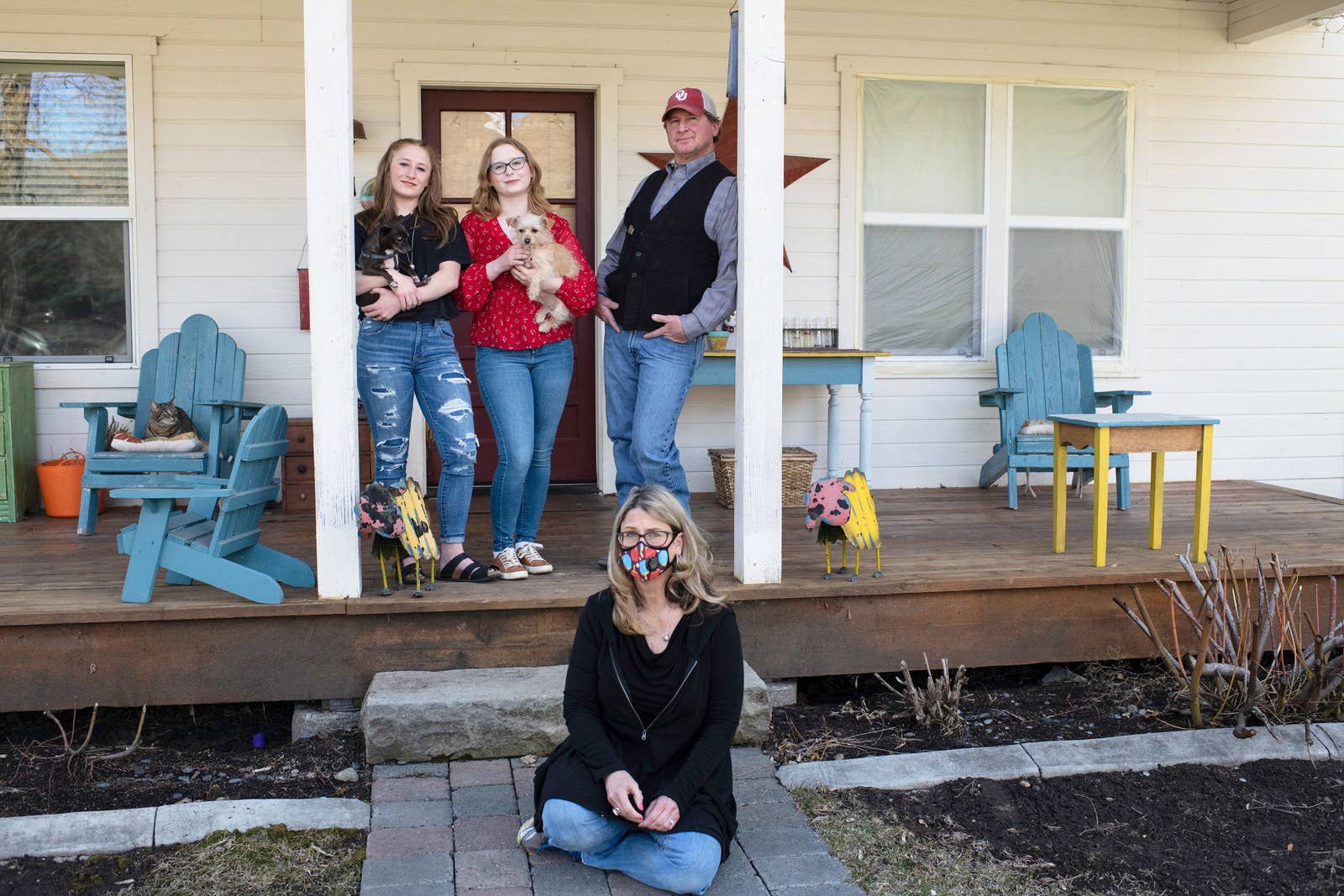
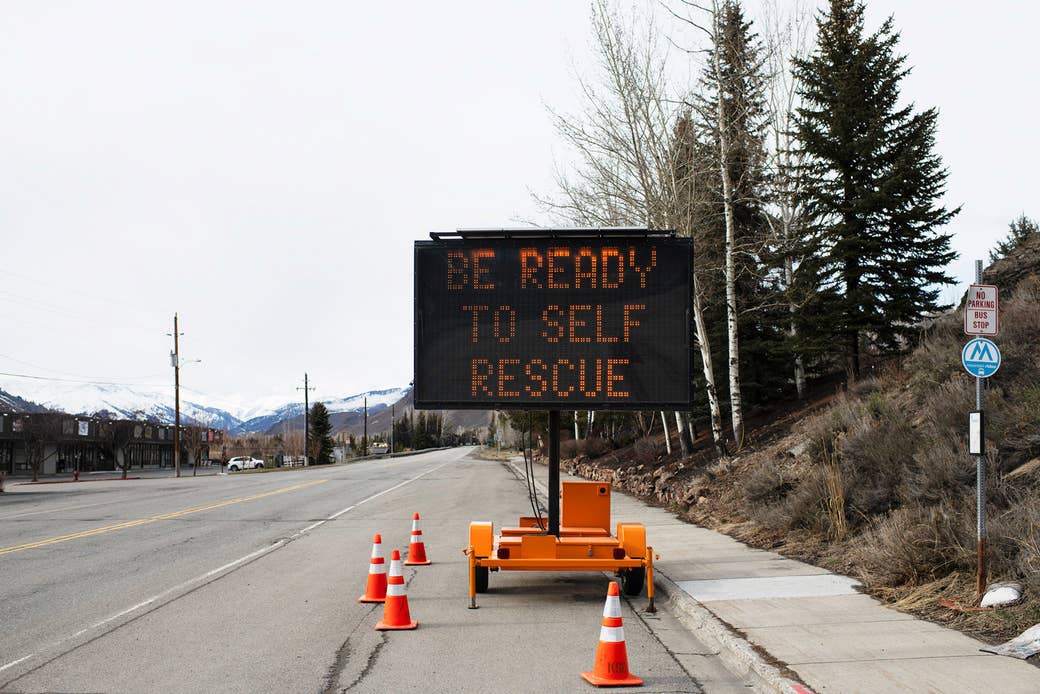
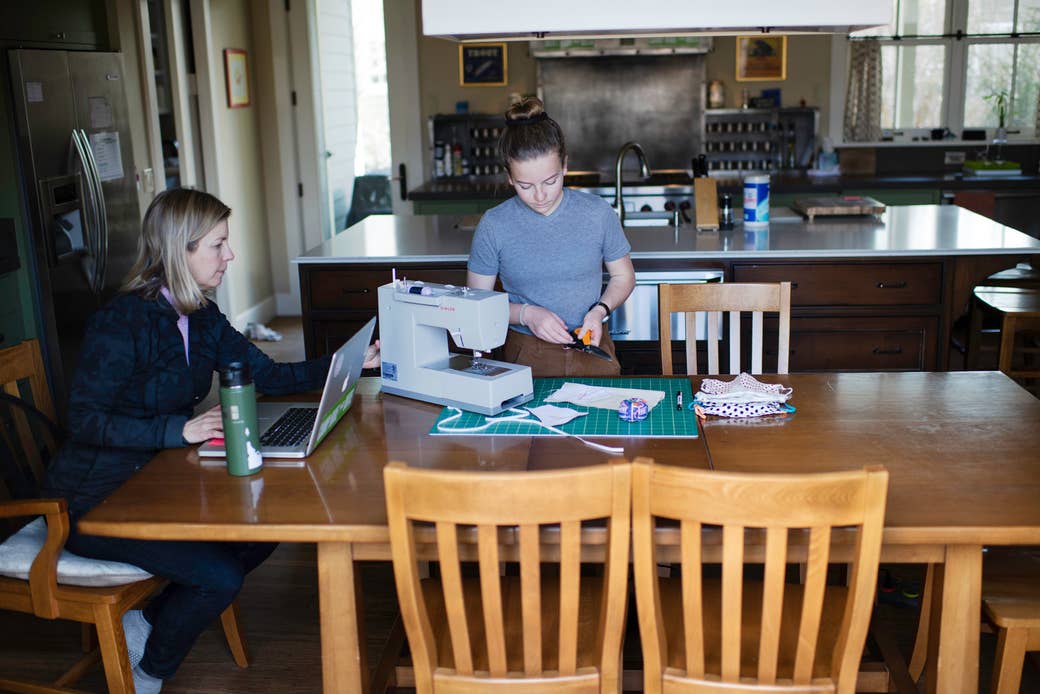
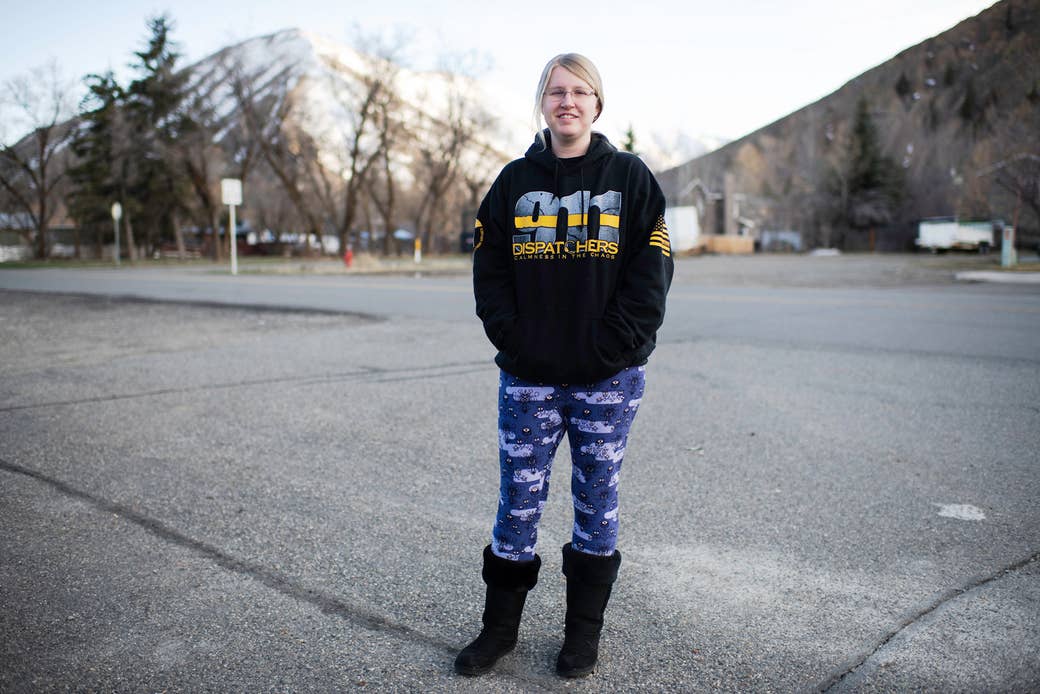
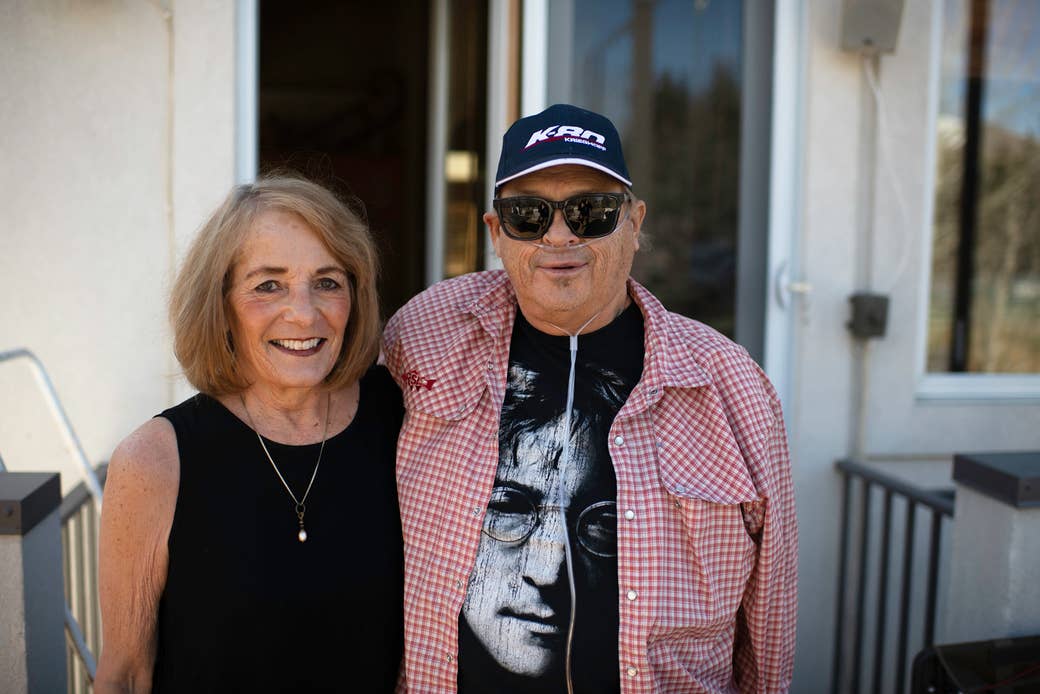
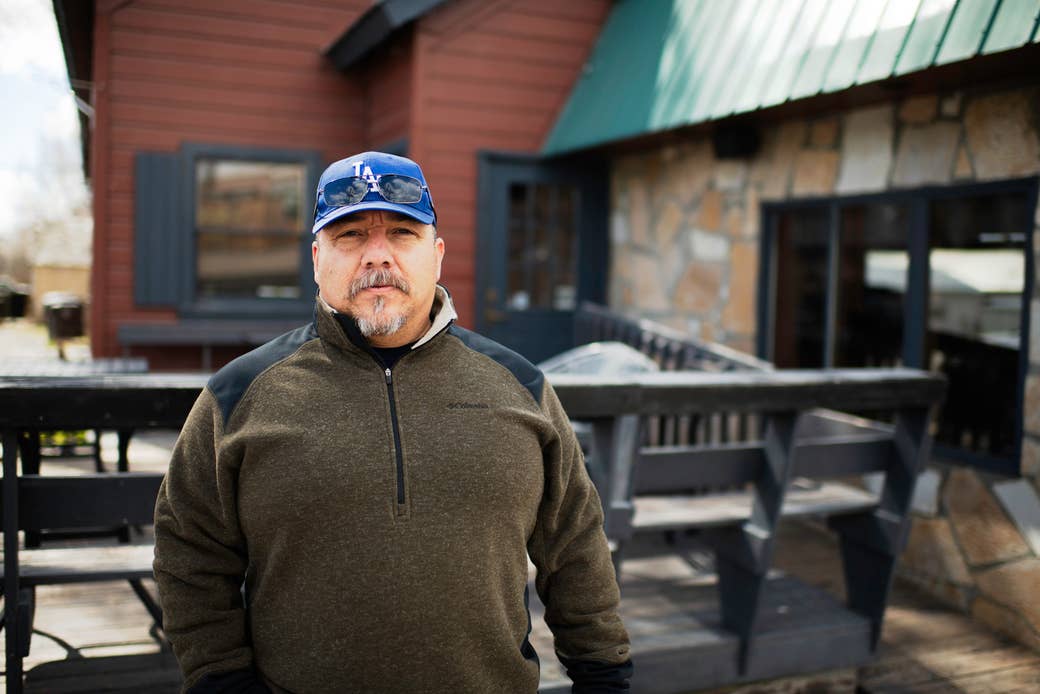
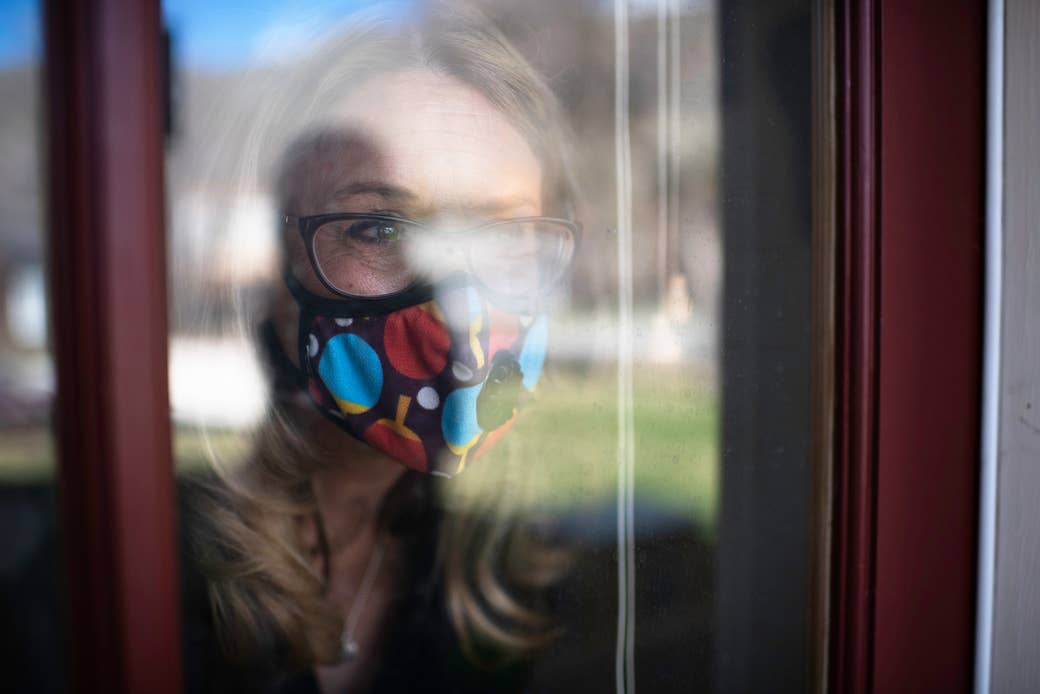
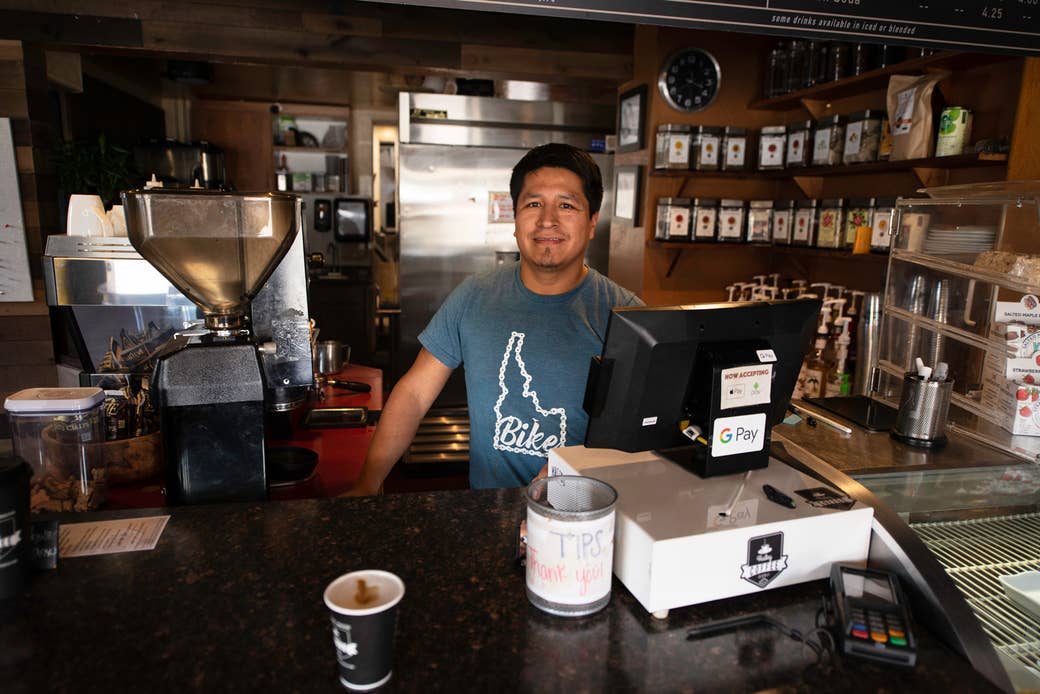
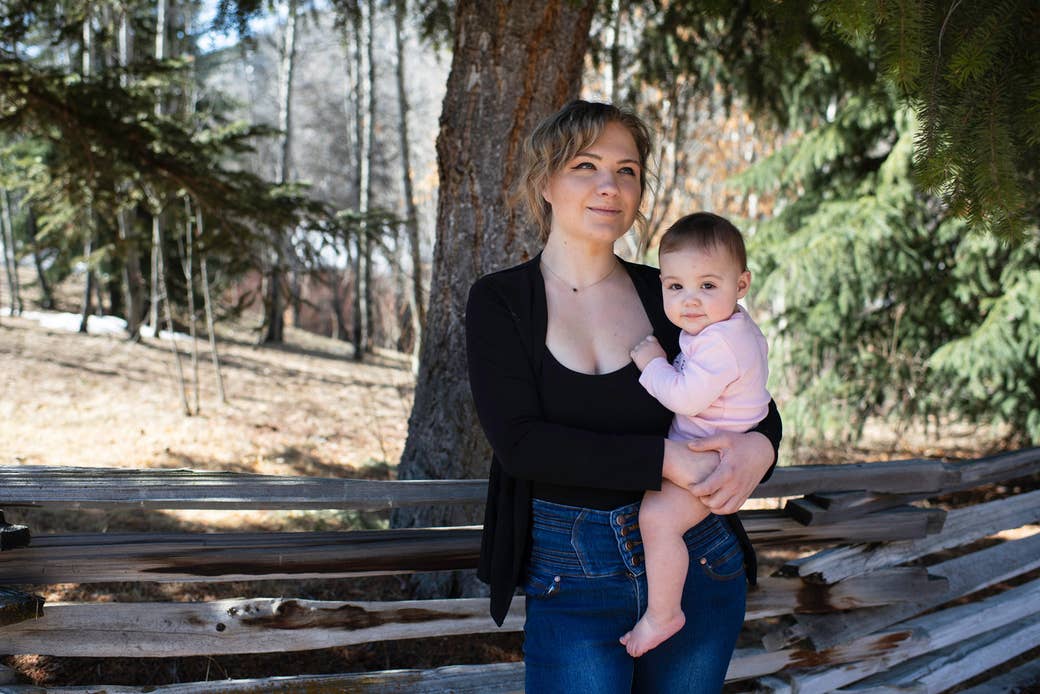
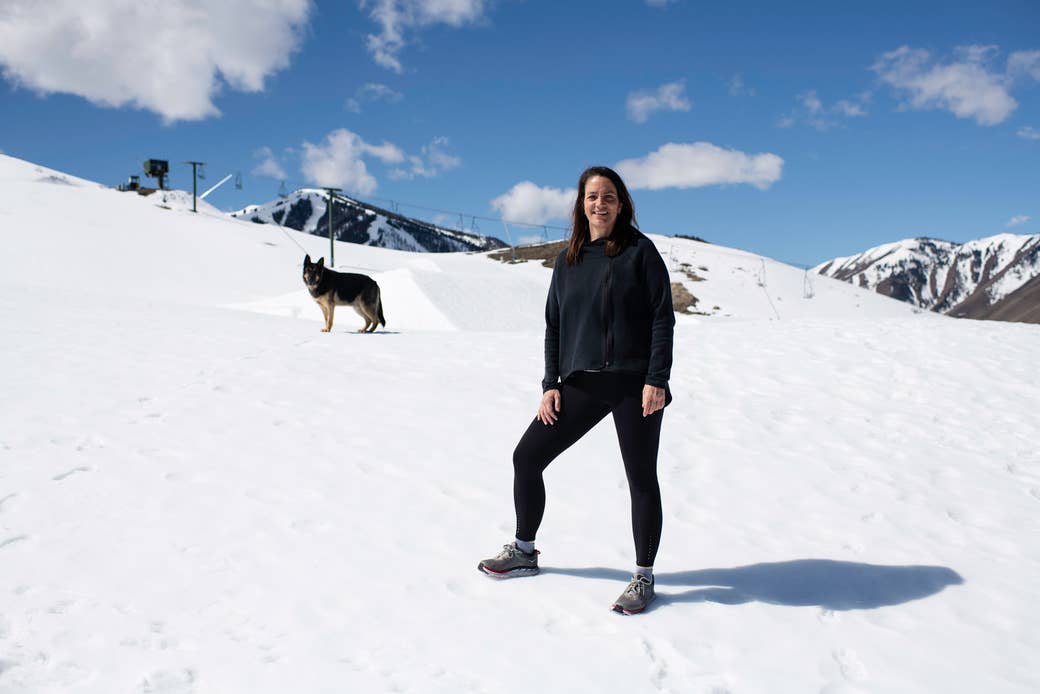
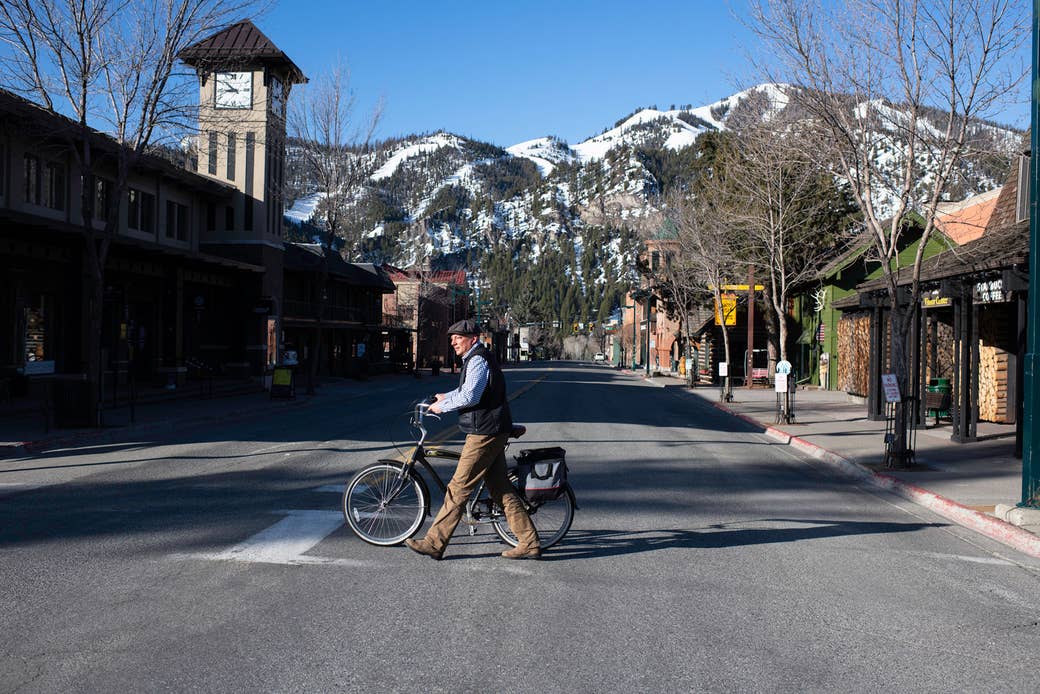



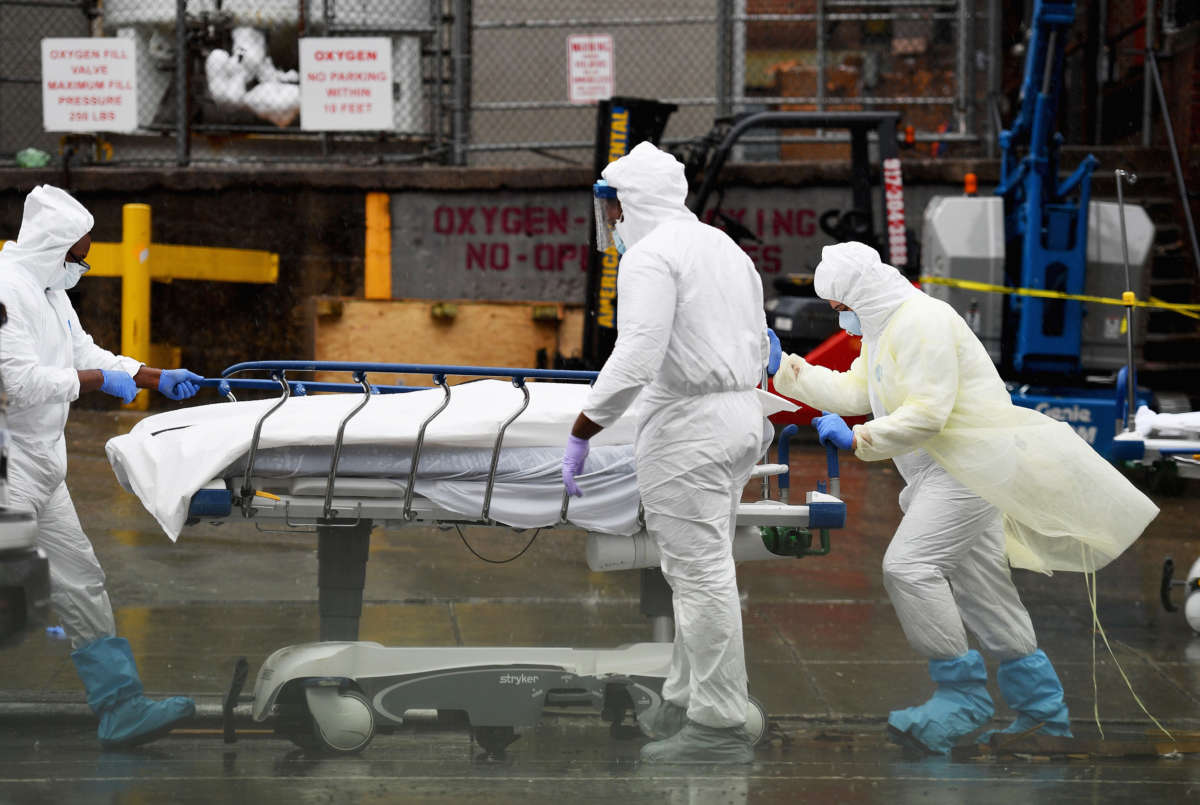
 Exposing the Big Game