More Poachers Shot Dead

Yet another Rhino bludgeoned for fake medicine.
One of two poachers shot dead. 

Poachers are asked to refrain breaching the parks borders and cease poaching now. International Animal Rescue Foundation India and Africa are actively supporting forest guards in the region. This support is not for public disclosure for security reasons. Why risk you're life for an animal part that doesn't hold any medicinal properties at all?

More poachers shot dead;

Two poachers were killed in an encounter with forest guards in the Bagori Range area of Assam’s Kaziranga National Park on Thursday.

According to officials, five to six poachers had entered the park in order to carry out rhino poaching. Except the two who were killed, all others escaped during the encounter. On Wednesday, a female Rhino was killed by poachers at the park located in Assam’s Sonitpur district. An Assam Home Guard, part of the force that guards rhinos at National Parks, was also killed by the poachers.

Poachers have killed and de-horned nearly 200 rhinos in Assam over the past 13 years; in 2014, 20 rhinos were killed. A few years ago, the Assam government set up a special task force to guard rhinos. Last year, there was a proposal to use drones for surveillance at the Kaziranga National Park, but nothing has been done yet in this regard.

In 2014 , the Assam forest department killed 22 poachers in the state. Assam is home to the world’s largest population of one-horned rhinos, an endangered species.

Picture – One of two Rhino poachers this year captured by forest guards.

Field reports: Asotin County men charged in elk case

http://www.spokesman.com/outdoors/stories/2015/jan/11/field-reports-field-reports-asotin-county-men/

Evidence in a Blue Mountains trophy elk poaching case is confiscated by Washington Department of Fish and Wildlife police officers Sabo and King.  (Washington Department of Fish and Wildlife)
Evidence in a Blue Mountains trophy elk poaching case is confiscated by Washington Department of Fish and Wildlife police officers Sabo and King. (Washington Department of Fish and Wildlife)

POACHING – Two Anatone, Washington, men have been charged in the November illegal killing of two trophy-class bull elk in Asotin County.

Richard Kramer, 39, and his son, Jonathan Kramer, 22, face multiple charges in the cases, which were made with the help of tips from the public, according to Washington Department of Fish and Wildlife police.

The unlawful hunting charges involve spotlighting, trespassing, and wasting game.

Officer Matt Sabo had reported that the two bulls were killed within about 100 yards of each other near the intersection of Weissenfels Ridge Road and Kiesecker Road, and both had their heads removed and backstrap meat taken. One of the elk’s hindquarters were also taken with the rest of the meat left to waste.

They are set to appear in Asotin County District Court on Wednesday.

Washington offers only a few hunting tags for coveted branch-antlered bull elk in that area through a lottery drawing each year.

More: http://www.spokesman.com/outdoors/stories/2015/jan/11/field-reports-field-reports-asotin-county-men/

Indonesian Navy Blows Up Illegal Fishing Ships

Monday, 22 December 2014

Pic:EPAPic:EPATWO foreign fishing boats suspected of conducting illegal fishing activities are blown up by the Indonesian navy in Ambon bay, Indonesia, 21 December 2014.

The destruction of the Papua New Guinea-flagged vessels follows a government ruling to sink almost all foreign ships which carry out illegal fishing activities in the waters of Indonesia.

‘The ships have gone through legal procedures at the court in Ambon and their owners were found guilty of stealing fish from Indonesian waters. We must sink these ships so that other foreign ships will think twice before fishing illegally in our territory,’ said navy spokesman Commodore Manahan Simorangkir.

‘The ships were flying the Papua New Guinean flag but the crew were all Thai,’ Navy Maj. Eko Budimansyah, spokesman for Lantamal IX Naval Base in Ambon, said.

The two vessels carried 63 tonnes of fish and shrimp. 62 crewmen were arrested and several were turned over to immigration. The ships were emptied of fuel before being destroyed to prevent pollution.

The vessels will be the fourth and fifth ships sunk by Indonesia in the three months since President Joko ‘Jokowi’ Widodo took office.

Six more foreign ships are currently facing destruction, pending legal proceedings.

The number of cases of illegal fishing has declined since the hardline stance was taken. Some opponents say the destruction of the boats could cause diplomatic tension with other nations.

Officials with Taiwan’s Fisheries Agency asked that Jakarta observe international protocol that allows its authorities to seize poaching vessels and arrest their crews, but forbids them from opening fire.

Indonesia loses about £15.3bn annually from illegal fishing and there are currently an estimated 5,400 illegal ships operating in the nation’s waters.

– Daily Mail Online http://www.malaysiandigest.com/world/533885-indonesian-navy-blows-up-illegal-fishing-ships.html

Lies and the Lying Hunters Who Tell Them

The Many Myths From Hunters

by Barbara J. Bonsignore

Once again, it is hunting season, time for the myths that abound regarding this blood sport.

Hunters claim that they kill the weak and starving animals, thus helping the population. In actuality, hunters want the biggest and the best, those with a huge rack for the mantle trophy. Diseased animals don’t provide much optimal meat and, of course, isn’t that what hunting is all about? Nature’s own system of balance allows the debilitated, old animals to die out in favor of “survival of the fittest.” But when hunters are killing the dominant, healthy animals, the best genes are removed from the herd’s gene pool – as are the most experienced individuals – which leaves the population weak.Here are four more hunting myths:

∎ Hunting prevents the overpopulation of animals.

Actually, hunting creates an overabundance of animals of a certain species. Nature abhors a vacuum. For example, when a given amount of deer are removed from the herd by hunting, females will have more and bigger litters to fill up the gap.

∎ Hunted animals don’t suffer.

Wild animals are terrorized by the chase and agonized by the kill. Their families, herds and flocks are disrupted. It is estimated that for every animal a hunter kills and claims, at least two wounded but unrecovered animals die slowly and painfully from blood loss, infection or starvation. Those who don’t die can suffer permanent injury. During hunting season, wild animals are more likely to get hit by a vehicle as they flee into the road when hunters walk through their territory.

∎ Hunters pay the majority of the tab for conservation.

In reality, wildlife management and conservation programs receive up to 90 percent of their funds from general tax reserves, more than 90 percent of which are paid by non-hunters. Since less than 5 percent of the U.S. population hunts, this contribution is negligible. Every year, thousands of public acres are bulldozed, burned, replanted and otherwise manipulated to kill off non-target species (including natural predators) and attract game species. Animals are also bred or captured to stock hunting and fishing areas.

∎ Hunters help feed the homeless by donating meat from their kills.

A recent interesting study by Michael Gregor at Nutritionfacts.org showed that in game meat tested, 80 percent had lead bullet fragments in the samples. Nobody, including the homeless, needs more fat and cholesterol, found in meat, in their diet. More fruits, vegetables and protein from plant sources should be consumed daily.

What can you do to stop hunting? Oppose any legislation, national or local, that establishes higher quotas of animals to be hunted, lengthens hunting seasons, allows new species to be hunted. Speak out against any bills that open more wildlife refuges to hunting. Refuges should protect, not allow animals to be killed. If you own a substantial parcel of land, post it against hunting and trapping.

It is encouraging that every year fewer people hunt in the United States. The state Fish and Game Department’s income has decreased considerably, which is why the agency is constantly reaching out to get women, youth and the handicapped to purchase hunting licenses.

Hunting today is unnecessary and is more detrimental to animals and the environment than beneficial. Enjoy wildlife by “hunting” with a camera.

Who better to introduce The Many Myths From Hunters: http://www.concordmonitor.com/home/3186598-95/hunting-hunters-species-hunted   than two of the most infamous and dubious hunting proponents: Ted Nugent and Sarah Palin (pictured here smirking in a joint holiday greeting card). 10606222_10152562961222297_7413450529070189592_n

Jon Stewart Gets Serious About Elephants: Boycott Ivory

1794802_600379583390084_2056398278_n

As the ivory poaching crisis heightens and the number of elephants in the wild declines, the problem is in need of serious attention. As a result, elephants are the subject of an Oscar-winning director’s new short film — and of “The Daily Show” with Jon Stewart. Kathryn Bigelow, director of “The Hurt Locker” and “Zero Dark Thirty,” sat down with Stewart and former national security advisor Juan Zarate, to discuss her new short film on elephant poaching, “Last Days.”

The film comes at a time when elephant poaching is escalating at extreme rates. Over the course of just two years, 100,000 elephants were killed for their tusks — that’s one individual every 15 minutes. And much of the profits from these sales, as Bigelow notes, go directly to terrorist groups.

“There is the sort of terrorism you can do something about, by not buying these little trinkets, by not supporting this trade,” Bigelow told Stewart. “You can actually stop their revenue source.”

See the entire trailer for “Last Days” here

WA farmer could face charges for killing wolf

http://www.krem.com/story/news/local/whitman-county/2014/11/28/whitman-co-farmer-facing-charges-for-killing-gray-wolf/19641521/

Whitman Co. farmer could face charges for killing wolf

Washington fish and wildlife officials are recommending a Whitman County farmer face misdemeanor charges for shooting a gray wolf last month.

The charge could result in a year in jail and a two-year suspension of hunting, fishing and trapping licenses.

Steve Crown, chief of enforcement for Washington Department of Fish and Wildlife, said the shooter was a farmer who also notified authorities. Crown said it is unclear why the farmer shot the wolf, as it did not appear to pose an imminent danger to pets, livestock or the farmer.

Crown said this is the third wolf shooting this year in Washington.

“If it’s just in the area, it’s not open season for wolves,” Crown said.

Tissue samples were sent to a laboratory at UCLA where DNA testing confirmed the animal was a gray wolf.

Whitman County Prosecutor Denis Tracy will review the case to determine if charges will be filed. In his 12 years as a county prosecutor, Tracy said he has never had a wolf shooting case.

Crown said it is believed the wolf migrated from an Idaho wolf pack. Washington has 13 documented wolf packs. Idaho has more than 100, according to officials in both states.

The Murrow News Service provides local, regional and statewide stories reported and written by journalism students at The Edward R. Murrow College of Communication at Washington State University.

528624c939a88_preview-620

2014 Has Already Set A Record For Rhino Poaching

https://www.thedodo.com/rhino-poaching-south-africa-831606895.html

By Melissa Cronin

HSUS among groups offering reward in wolf shooting

http://www.capitalpress.com/Washington/20141118/conservation-groups-offer-reward-in-wolf-shooting

Conservation groups offer reward in wolf shooting

Don Jenkins

Capital Press

Published:November 18, 2014 10:13AM

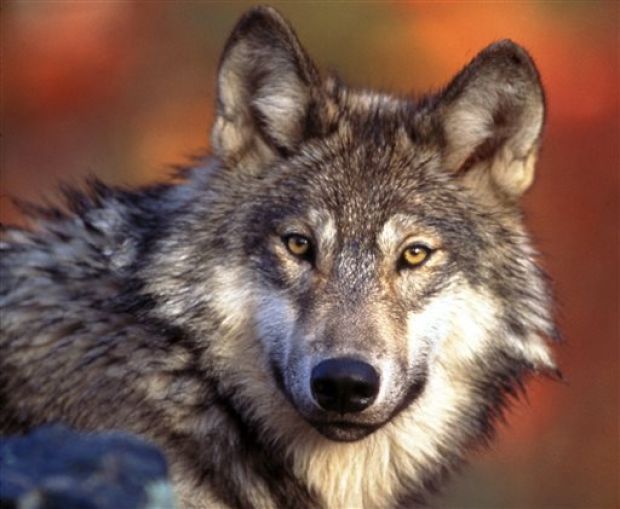
Photo courtesy of Washington Department of Fish and Wildlife In this 2011 file photo taken by the Washington Department of Fish and Wildlife, a Teanaway pack wolf recovers after being tranquilized and collared. Conservation groups are offering a reward for tips leading to the conviction of the person who shot and killed a pack member last month in Kittitas County.

<!–

–>

Conservation groups are offering a $15,000 reward for information leading to a conviction in the killing last month of a gray wolf in Kittitas County.

The adult female was shot in the hindquarters and her carcass was found Oct. 28 on the north side of the Paris Creek drainage in the Okanogan-Wenatchee National Forest, according to U.S. Fish and Wildlife Service spokesman Brent Lawrence.

The wolf, a member of the Teanaway pack, was wearing a telemetry collar. When the signal stopped moving, federal and state wildlife officials searched for the wolf, Lawrence said.

Officials are focusing on the Oct. 17-28 time period in their investigation. Anyone with information can call USFWS at 425-883-8122.

First documented in 2011, Teanaway is the pack farthest west in Washington. Before the shooting, the pack had six members, according to the state Department of Fish and Wildlife.

The department did not link the pack to any livestock predations this year. In 2011, the pack injured a herd dog, according to WDFW. The department paid the veterinarian’s bill.

“This wolf pack has essentially had no problems,” said Shawn Cantrell, director of Defenders of Wildlife, one of the groups offering the reward.

“It doesn’t make a lot of sense that somebody thought they needed to shoot this wolf.”

USFWS is leading the investigation because the killing occurred in the western two-thirds of Washington, where wolves are federally protected.

Lawrence said the person who killed the wolf could be charged with taking an endangered species. The maximum penalty is a $100,000 fine and up to one year in jail. The crime is not a felony.

The animal is protected under the state endangered species list in all of Washington. The maximum state penalty for taking an endangered species is a $5,000 fine and up to one year in jail.

The conservation groups say they are concerned that wolf killings, particularly of breeding females, will threaten the species’ recovery.

WFDW in August authorized shooting up to four wolves to stop the Huckleberry pack in Stevens County from preying on sheep. Only one wolf was killed, but conservation groups were angered that it was a breeding female.

The WDFW absolved of any wrongdoing a Stevens County hunter who reported shooting at a wolf Oct. 30.

The hunter said he had fired a warning shot to scare away one wolf, but another one appeared 15 to 20 yards away and approached him, according to a WDFW description of the incident.

The hunter said he believed he hit the wolf, which ran away.

The WDFW is still awaiting DNA results to determine whether an animal shot last month by a farmer in Whitman County was a wolf or a hybrid, the department’s game program manager, Dave Ware, said today.

If the animal was a hybrid, WDFW will not file charges, he said. If it was a wolf, the department will pursue an investigation, he said.

Ware said the department doesn’t know how the wolf killings will affect recovery. The department will count wolves in December and January and hopes to have an updated census by February, he said.

The last count showed there were 52 wolves in Washington, all east of the Cascades.

The other conservation groups offering the reward are the Center for Biological Diversity, Conservation Northwest, Woodland Park Zoo, The Humane Society of the United States and The Humane Society Wildlife Land Trust.

Interpol launches most-wanted list of environmental fugitives

http://www.theguardian.com/environment/2014/nov/17/interpol-launches-first-appeal-for-environmental-fugitives?CMP=share_btn_fb

International policing agency’s public appeal targets nine dangerous fugitives suspected of crimes involving poaching and illegal logging

Interpol wanted Operation Infra-Terra (top row from left to right): Adriano Giacobone, Sudiman Sunoto, Bhekumusa Mawillis Shiba and Ben Simasiku; (bottom raw from left to right): Nicolaas Antonius Cornelis Maria Duindam, Ariel Bustamante Sanchez, Sergey Darminov and Feisal Mohamed Ali
Interpol wanted Operation Infra-Terra (top row from left to right): Adriano Giacobone, Sudiman Sunoto, Bhekumusa Mawillis Shiba and Ben Simasiku; (bottom raw from left to right): Nicolaas Antonius Cornelis Maria Duindam, Ariel Bustamante Sanchez, Sergey Darminov and Feisal Mohamed Ali Photograph: Photograph: Interpol

Interpol’s public appeal hopes to catch nine fugitives suspected of environmental crimes costing hundreds of millions of dollars, in a move to catapult the issue to the forefront of international law enforcement.

Stefano Carvelli, the head of Interpol’s fugitive investigative support unit, said that the offences were only the tip of the iceberg of an environmental crime wave, which agency reports have estimated to be worth $70bn-$213bn annually.

“If we talk about illegal logging, we have many pending cases,” he said. “We also have many serious biodiversity cases. The problem is very big, I can feel it. These are crimes with many, many different parameters.”

One fugitive, Ahmed Kamran, 29, is charged with smuggling over 100 live animals – including giraffes and impalas – from Tanzania’s Kilimanjaro airport to Qatar on a military airplane.

Sergey Darminov, 50, is thought to have led an illegal crab-fishing operation in Russia that netted $450m. Another, Adriano Giacobone, 57, is wanted on charges that include illegal transport and discharge of toxic waste, poisoning water beds, kidnapping, illegal detention, carrying of firearms, aggravated theft and violence against a police officer.

A joint Interpol-UNEP report earlier this year linked the revenues from environmental crime to extremist militias such as the Lords Resistance Army in Uganda, the Janjaweed in Sudan and al-Shabaab in Somalia.

While sources say there are indications connecting some of the fugitives under investigation to terrorist groups, Interpol will officially neither confirm nor deny them.

The law enforcement agency stresses that members of the public should report any sightings of the fugitives to Interpol or their national police force, and not approach them directly.

“We consider all of these people to be dangerous, especially because the nature of these crimes required the involvement of organised criminal networks,” Carvelli said.

The public appeal follows an inquiry by 23 officers into the whereabouts of 139 suspects wanted by 36 countries. The investigation has been code-named Operation Infra-Terra.

Since its launch last month, Operation Infra-Terra has raised the profile of Interpol’s environmental crimes unit, which focuses on illegal exploitation of the world’s flora and fauna, and hazardous waste dumping.

Past Interpol public appeals have focused on themes like fugitives in the Americas, and led to over 600 arrests. Officers working on Operation Infra-Terra now hope for similar results.

“Until recently, environmental offences were not even considered a crime by many countries but as the years have passed, they have realised that environmental crime is a serious internal threat to our societies,” said Andreas Andreou, a criminal intelligence officer with Interpol’s environmental security unit. “It involves organised criminal networks which smuggle drugs, weapons and people. If a poacher need guns, for instance, here we have a crossover with arms trafficking.’

Routes for trafficking ivory may also be used for trafficking weapons and the more profitable line may then be used to finance other ventures, Interpol say.

In the future, the agency intends to focus its activities geographically, with illegal logging and timber trade inquiries centred on the Americas, efforts to protect wildlife species – particularly tigers – undertaken in Asia, pollution investigations that pinpoint Europe, and a crackdown on the poaching of elephants and rhinos in Africa.

Rhinos have already disappeared from several Asian and African countries and 94% of rhino poaching takes place in just two countries – Zimbabwe and South Africa – where it has increased from an estimated 50 animals in 2007, to over 1,000 in 2013, due to the involvement of crime syndicates.

Between 20,000-25,000 elephants are killed every year in Africa, and forest elephant populations are thought to have declined by 62% between 2002-2011.

A letter co-signed by 81 MEPs was sent to the European commission last week calling for urgent action to address the problem.

“The unprecedented scale of illegal poaching is fuelling instability and driving many species to the brink of extinction,” the Liberal MEP Catherine Bearder said. “Unless we take action now, our grandchildren will only be able to see wild animals such as elephants, lions and rhinos in their history books.”

Persuading officials in some countries to address the problem remains an uphill battle, and stricter law enforcement efforts and penalties may be needed internationally, Interpol sources say.

The man accused of re-enacting Noah’s Ark in reverse

Ahmed Kamran is wanted for an environmental crime that resembles a macabre inversion of Noah’s Ark, re-enacted at Tanzania’s Kilimanjaro airport. Shortly before he jumped bail, witnesses told a Tanzanian court how Kamran, 29, paid for and oversaw the loading of more than 100 live animals and birds – including giraffes, impalas and wildebeest – onto a military plane bound for Qatar.

The animal cargo, worth $113,715, reportedly included: two lappet-faced vultures, two serval cats, two impalas, two black verreaux’s eagles, three elands, four giraffes, four ground hornbill, five spring hares, six oryx, seven kori bustard, 10 dik-dik, 20 Grant’s gazelle, 68 Thomson’s gazelle, and a secretary bird.

The smuggling operation in November 2010 was fraught and dramatic. Three giraffes died in a cage before being taken to the airport, according to one self-declared member of Kamran’s gang. “We went back to the game park and captured three giraffes and other animals and transported them into the cage of animals to compensate for the dead ones,” Maulid Hamis reportedly testified.

At the airport, Kamran and the plane’s pilot allegedly directed proceedings, which began when four men decamped from a minivan on the runway to unload the animal cargo. One witness said that he was threatened with the loss of his job when he asked why no national security agents were present at the airport that night. Although the passengers of the Qatar defence force airplane carrying the animals had no diplomatic passports, they were given clearance for take-off.

Three Tanzanian nationals and Kamran were charged over the incident, but Kamran skipped bail, and may now be in Kenya, Pakistan or Qatar. Interpol officers hope that a blotchy and pixelated photo of him may help to trigger a memory somewhere.

“Even the smallest detail, which you might think is insignificant, has the potential to break a case wide open when combined with other evidence the police already have,” said Ioannis Kokkinis, criminal intelligence officer with Interpol’s fugitive investigative support unit. “Sometimes all it takes is a fresh pair of eyes to bring new momentum to an investigation and provide the missing clue.”