NRA Campaigns Against The Plan To Save The World’s Elephants

ele-with-tusks-feature
An Animal Rights Article from All-Creatures.org

FROM

By Hayes Brown, ThinkProgress.org
March 2014

“Any firearm, firearm accessory, or knife that contains ivory, no matter how big or small, would not be able to be sold in the United States, unless it is more than 100 years old. This means if your shotgun has an ivory bead or inlay, your revolver or pistol has ivory grips, your knife has an ivory handle, or if your firearm accessories, such as cleaning tools that contain any ivory, the item would be illegal to sell.”

For that reason, the NRA implores its members to flood the White House and Congress with phone calls and emails to “let them know you oppose the ban on commercial sale and trade of legally owned firearms with ivory components.” That desire to resell old — but not antique — weaponry clearly is more important to the NRA than preventing the looming extinction of the species — which is linked closely to the skyrocketing demand for ivory.

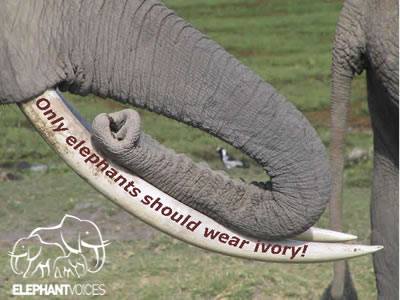
The National Rifle Association (NRA) on Friday (February 28) asked its 3.1 million members to call their representative in Congress and urge them to block a rule designed to protect the world’s elephants from being poached into extinction.

Last month, the White House announced a ban on the commercial trade of elephant ivory, placing a total embargo on the new import of items containing elephant ivory, prohibiting its export except in the case of bona fide antiques, and clarified that “antiques” only refers to items more than 100 years old when it comes to ivory. “This ban is the best way to help ensure that U.S. markets do not contribute to the further decline of African elephants in the wild,” a White House fact sheet on the announcement declared.

The NRA is disturbed about provisions of the ban related to domestic resale of items including ivory. “We will finalize a proposed rule that will reaffirm and clarify that sales across state lines are prohibited, except for bona fide antiques, and will prohibit sales within a state unless the seller can demonstrate an item was lawfully imported prior to 1990 for African elephants and 1975 for Asian elephants, or under an exemption document,” the White House said in February.

While many people would make the mistake of assuming that this was about helping save endangered elephants, the NRA understands what the real motivation is. “This is another attempt by this anti-gun Administration to ban firearms based on cosmetics and would render many collections/firearms valueless,” the NRA said in its call to arms.

“Any firearm, firearm accessory, or knife that contains ivory, no matter how big or small, would not be able to be sold in the United States, unless it is more than 100 years old. This means if your shotgun has an ivory bead or inlay, your revolver or pistol has ivory grips, your knife has an ivory handle, or if your firearm accessories, such as cleaning tools that contain any ivory, the item would be illegal to sell.”

For that reason, the NRA implores its members to flood the White House and Congress with phone calls and emails to “let them know you oppose the ban on commercial sale and trade of legally owned firearms with ivory components.” That desire to resell old — but not antique — weaponry clearly is more important to the NRA than preventing the looming extinction of the species — which is linked closely to the skyrocketing demand for ivory. “In 2013 alone an estimated 30,000 African elephants were killed for their ivory, more than 80 animals per day,” Dr. Kerri-Ann Jones, Assistant Secretary of State for Oceans and International Environmental and Scientific Affairs, told the House Foreign Affairs Committee last week.

The commercial ivory ban is only part of a new National Strategy for Combating Wildlife Trafficking announced at the same time as the embargo, which prioritizes “strengthening domestic and global enforcement; reducing demand for illegally traded wildlife at home and abroad; and strengthening partnerships with international partners, local communities, NGOs, private industry, and others to combat illegal wildlife poaching and trade.” In that vein, the United States has been leading the charge in persuading countries around the world to destroy their stockpiles of intercepted ivory, annihilating six tons of it last November. Since then, Togo, China, and France have also followed suit and destroyed seized contraband of their own.

Aside from the conservation concerns, which the NRA doesn’t seem moved by, poaching is increasingly being viewed as a national security issue for the United States. In an interview last year, Robert Hormats, Under Secretary of State for Economic Growth, Energy, and the Environment, said ivory had become a “conflict resource.” An Enough Project report from last year also found that Joseph Kony’s Lord’s Resistance Army has begun poaching ivory from elephant tusks to fund the group’s activities, which include abducting children and forcing them into sex slavery.

“Kill ‘Em All Boyz” Are “Ethical Hunters” Once Again

Ever since a friend sent me an article from back in 2006 about the poaching ring4cbfbced5cc75_image who gave themselves the narcissistic name the “Kill ‘Em All Boyz,” I’ve been wondering when they would be back in the Washington state “game” department’s good graces and be allowed to hunt again.

I found the answer in an October 20, 2008 article by the Daily Astorian entitled “Tip alerted WDFW officials to poaching gang” which reported that Micky Ray Gordon, ringleader of the “Kill ‘Em All Boyz” (who pleaded guilty to pleaded guilty to charges of first-degree animal cruelty, illegal hunting with hounds, second-degree criminal trespass and third-degree malicious mischief and was sentenced in ‘08 to 13 months in prison, following a seven-month undercover investigation by the Washington Department of Fish and Wildlife) would be eligible to purchase a hunting license again after only five years of suspension.

The other poachers were given even more lenient sentences, with even shorter
suspensions before they could hunt again. According to the article, “Brian Hall, 20, pleaded guilty to second-degree criminal trespass, third-degree malicious mischief and second-degree hunting with dogs. He was sentenced to 30 days in jail and $1,500 in fines, and will not be eligible to purchase a hunting license for two years. Adam Lee, 21, pleaded guilty to hunting with a suspended license and was sentenced to 30 days in jail and $1,850 in fines. And Joseph Dills, 23, pleaded guilty to a variety of charges, ranging from second-degree big-game hunting to using bait to hunt for bear. His total penalties amounted to 65 days in jail and $2,050 in fines.” At their press time, “Dills [was] pending trial in Lewis County on charges of committing other hunting violations.”

The article also states that this “case has provoked outrage among the hunting community in Southwest Washington and Northwest Oregon, in part because of the nature of the crimes but also because Gordon and his gang were initially referred to as “hunters” and not “poachers.” That sentiment was echoed by a comment I received earlier today from a hunter who piously stated, “Please remember. These are poachers, not to be confused with legal, ethical, ‘pay for conservation’ hunters.”

Well, they can go out and buy a hunting license now, just as legally as anyone. Does that make them different people? Are they “ethical” hunters again now that they’re
1800308_664612120267816_1839536551_nallowed to re-up their annual hunting licenses and bear, elk, deer, cougar,
bobcat, etc., etc. tags? How do these former poachers’ mindsets differ from the
average hunters? Is it just a matter of how many they killed at one time; or
the fact that they were not playing fair by the law-abiding hunters?

Poachers or not, it’s all ends the same for the animals they killed.

________________________
Anyone who witnesses a wildlife violation call WDFW’s toll-free Poaching Hotline at (877) 933-9847

More on the Kill ‘Em All Boys

Agent Goes Undercover to Nab a Gang of Poachers

March 2, 2009 12:00 am

By Warren Cornwall The Seattle Times SEATTLE — The body count began the moment Tom Sharpe met Mick Gordon. When Sharpe stepped from his pickup, he found four men and a boy in the garage of Gordon’s Longview duplex stripping the skin from a big bull elk. Gordon retrieved a hunting dog Sharpe was thinking about buying, and they drove toward the woods to test the dog. Along the way, Gordon bragged that he killed lots of bears, cougars and bobcats. He shot four or five bull elk a year. A few months earlier he’d poached a big cougar. He and a buddy tossed dynamite into a creek to kill fish. Gordon declared that “he had poached everything there was to poach.” Shortly after midnight, they turned back, having killed nothing that day. But Gordon invited Sharpe to come hunting again. Gordon wouldn’t have been so welcoming if he’d known who Sharpe really was: an undercover wildlife cop. The investigation that started in 2006 finally ended in November, when the last of four defendants — including Gordon — pleaded guilty to poaching-related charges in Lewis County. Gordon, a one-time hospital nurse at Providence Centralia Hospital who is now serving 13 months in prison, declined to comment. Nothing, it seemed, was too big or too small for the hunters, who took wildlife both legally and illegally. Their claimed victims included house cats, bobcats, mountain lions, elk, deer, bears, a turkey vulture, fish and one of their own hunting dogs. They even had a name for their group: They called themselves the “Kill ‘Em All Boyz.” Going Undercover Rumors of a poaching ring had been circulating in Southwest Washington when Fish and Wildlife got a phone call with a tip in late 2006. Mick Gordon was trying to sell a hunting dog, and he was boasting about his poaching prowess. The tipster offered a tantalizing possibility. Could a wildlife cop posing as someone interested in buying the dog get inside this group of hunters? Poaching is hard to prove. The crimes happen far from witnesses. Evidence is easily destroyed. This case was a rare opening into the tight-knit world of hound hunters, people who use dogs to track game. Gordon “has an extremely ‘high on me’ type of personality that is easily manipulated with some compliments,” one wildlife cop wrote in the investigation files. So it was decided. The state’s main undercover wildlife officer would try to infiltrate the group. To charm his way in, Tom Sharpe — a fake name used by the agent — told Gordon he was a ship captain who periodically sailed rich people’s yachts from port to port and had spare time to hunt. The Times is not using the agent’s real name at the request of Fish and Wildlife Department officials, out of concern it could compromise current investigations. To pump up his poaching credentials, Sharpe told Gordon he was going hunting in Alaska. Then later, he called Gordon and told him he had poached a grizzly bear there, and showed photos of himself with a dead grizzly — one that had been killed by someone else in Alaska. The hook was set. Gordon marveled to one person about what a crazy, hard-core hunter Tom was, according to investigative records. Leader of the ‘Boyz’ Investigators zeroed in on Gordon as the leader of the loosely organized group. A stocky 36-year-old who grew up in northern Idaho, he was portrayed as vulgar and boastful in detailed notes from the undercover agent. He regaled Sharpe with stories of his sexual exploits and his poaching. He declared his hatred of police, vowing at one point that he wanted to “shoot every cop that he sees in the face,” according to the agent’s notes. Gordon was an avid hunter, rounding up friends to join him and driving dirt roads late into the night. He bragged of tricking an old lady into giving him three house cats, then killing them while training his dogs. He was also studying to be a nurse, became licensed during the poaching investigation and got a job at Providence Centralia Hospital. On Jan. 20, 2007, Sharpe went out with several of the Kill ‘Em All Boyz. According to his notes, they tried to live up to their name. Gordon was joined by local acquaintances Brian Hall, the 38-year-old manager of his family’s Longview temp agency; Joe Dills, a 20-year-old logger; and a mentally disabled man named Dan. Piled into two trucks, they headed to some woods close to the Oregon border. They broke through gates on private timberland roads, using keys they’d acquired and a homemade metal pry bar nicknamed the “permission slip.” With the hounds riding in back, they cruised down dirt roads, waiting for the dogs to catch the scent of an animal. But they found little. Finally, one of Gordon’s dogs, Copper, bolted from the truck. The men let the other dogs loose before they realized Copper had found a porcupine The hunters started delivering jolts of electricity to the dogs through remote-controlled collars used to scare the animals away from something. But at the end of a long, fruitless day of hunting, the dogs full of porcupine quills, Gordon lost his temper, according to the undercover agent. Instead of a few quick jolts, Gordon kept his finger down on the shock button. Then he got a second shock collar and strapped it around the dog’s torso, near its groin. For roughly three minutes, Gordon shocked and kicked the dog so ferociously the agent feared it would die, according to the records. Two of Gordon’s friends at the scene dispute that account. Gordon wrote a confession saying he strapped the second collar around the dog and kicked it. However, Hall said it was a stray kick, not a severe beating. “No way I would let someone stomp and kick on a dog when I was standing there,” Hall said in an interview. But Sharpe, also in an interview, recalled that he desperately wanted to stop the beating. He decided that with a group of armed men thinking he was a hardened poacher, he’d be putting his life in jeopardy to intervene. Eventually Gordon stopped beating Copper, according to the agent. But the hunting was over for the night. The dog died within two weeks. Gordon’s friends say they think porcupine quills caused the fatal injury. They say Gordon took the dog to a doctor but couldn’t afford to pay for the treatment. Gordon told Sharpe the dog died from “internal injuries,” according to the agent’s notes. Despite the Kill ‘Em All Boyz name, the group killed very little in front of Sharpe. One day in the Mount St. Helens foothills, the dogs treed a bobcat, which two of the hunters shot. Dills fired a shotgun at a turkey vulture sitting in a tree, according to investigative records. Sharpe shot a bobcat when Gordon insisted he pull the trigger. Gordon and Dills said they shot a black bear when Sharpe wasn’t with them. A wildlife officer later found the decomposing carcass. But the agent heard plenty of stories during his nine hunting trips. All told, the Kill ‘Em All Boyz claimed to have killed dozens of animals, many illegally, in a years-long spree extending to Oregon, Idaho and much of Southwest Washington, according to the agent’s notes. The claimed death toll included 100 elk, at least a dozen bears and more than 50 cougars and bobcats. Ending the Charade Once, after breaking through a timber-company gate to hunt, Sharpe mentioned that they didn’t have to worry about game wardens because he’d heard they were all investigating people using traps to catch moles. “What the (expletive) is wrong with those idiots?” Gordon replied, according to the agent’s notes. “This is the (expletive) they should be working — guys like us.” In June 2007, after eight months undercover, the wildlife police decided it wassnrsslion time to end the charade. Within minutes of his arrest, Gordon was offering to talk, according to Lt. Ed Volz, the officer who ran the sting. Gordon quickly wrote a confession in which he admitted to poaching deer, a bear and a cougar, and breaking locks to road gates. He implicated Dills and another friend, Adam Lee, in a variety of crimes. Four men eventually pleaded guilty to a variety of hunting and trespassing charges, many of them misdemeanors. Hall got 60 days in jail. Dills got 90 days. Lee got a month in jail. Gordon received the stiffest sentence — 13 months in state prison. Lee and Gordon lost their hunting privileges for life. Gordon’s nursing license also was suspended Dills and Hall, the two defendants who agreed to interviews, said despite the guilty pleas, the most gruesome details were exaggerations by the undercover agent. They said Gordon’s claims of widespread poaching were just bragging. “I’m not saying that we didn’t commit the crimes. But it was made to look like we were really, really bad people, and we’re not that way,” Dills said. Gordon, who entered prison in November, could be released as soon as May if he’s deemed a well-behaved inmate.

“Kill ‘Em All Boys” Ringleader Gets 13 Months in Prison for Poaching and Animal Cruelty

Prosecutors obviously saw the potential for this hunter/poacher’s behavior to lead to cruelty against humans–Washington state officials also suspended his nursing license.

http://www.komonews.com/outdoors/news/30924359.html

Poaching group leader gets 13 months in prison

Mick Gordon poses with slain cougar

By Dan Tilkin and KATU Web Staff

Oct 13, 2008   Story Updated: Oct 30, 2013

CATHLAMET, Wash. – The man considered the ringleader of a group of poachers who called themselves the “Kill ‘Em All Boys” was sentenced to a year and a month in prison Monday for illegally killing wildlife.

Mick Gordon, pictured below, pleaded guilty to charges of first-degree animal cruelty, hunting black bear, cougar, bobcat and lynx with dogs, second-degree criminal trespass and third-degree malicious mischief.

Washington Fish and Wildlife officers said the group used a device they called “the permission slip,” which is a metal bar used to break locks blocking access to prime poaching territory on timber company lands. They even had a videotape made of the bar in use because they wanted to sell the contraption on eBay.

Undercover officers infiltrated the group as part of the investigation. Later wildlife officers seized trophy heads and guns from Gordon’s garage.

Gordon, a registered nurse, was also accused of torturing one of his hunting dogs with a shock collar as well as not giving it care for porcupine wounds; the dog eventually died.

Prosecutors on Monday asked for an exceptionally long sentence, saying Gordon had “run amok.”

“I’m deeply sorry for what I’ve done,” Gordon told the judge. “It’ll never happen again”

Judge Michael J. Sullivan called Gordon an aberration.

“When I look at you and what you’ve done here, which seems to be a highly organized crime spree, I just don’t know how to put those two together,” the judge said.

The sentence was much stiffer than normal. In other recent animal cruelty cases, defendants received sentences of about 3.2 months on average.

Washington state officials have also suspended Gordon’s nursing license.

According to state health department documents, Gordon told an undercover officer he put a shock collar on a child’s neck, turned it to its highest setting and shocked the child. He also told the officer he despised his bed-ridden, elderly patients.

NM Game Commission chairman resigns after illegal cougar killing

http://www.abqjournal.com/354451/news/breaking-nm-game-commission-chairman-resigns-after-hunting-incident.html

by John Robertson / Journal Staff Writer

Scott Bidegain, chairman of the New Mexico Game Commission, has resigned from from the commission, says a newssnrsslion release from the Department of Game and Fish.

Bidegain’s resignation letter over the weekend said: “I am honored to have served on the commission and as its chair. Unfortunately, I was present during a hunting incident earlier this month that will result in charges being filed shortly. I believe that it is in the best interest of the Commission and the Department that I step down at this time. I think you should be proud to know that throughout this incident, the officers at the Department acted honorably and professionally.”

The Game and Fish news release said department officers filed a misdemeanor charge against Bidegain in Quay County Magistrate Court on Monday, alleging he was was an accessory to the unlawful killing of a cougar.

Couple involved in hunting reality show convicted of poaching in Nebraska

http://www.omaha.com/article/20140211/NEWS/140219782/1707

By Andrew Bottrell / World-Herald News Service

A North Carolina couple who outfitted hunting trips in central Nebraska has been convicted of poaching.

Jason and Britney Edney, of Hendersonville, N.C., will both serve federal probation and pay fines for the offenses after reaching plea deals.

According to a press release from the Nebraska Game and Parks Commission Monday, with the help of the U.S. Fish and Wildlife Service, investigators uncovered more than 25 instances of overbagging or hunting turkeys without permits, 29 illegally taken deer, 17 instances of failing to check deer and five small games violations.

The incidents occurred in Frontier, Dawson, Keya Paha and Lincoln Counties.

Jason Edney will be on five years of federal probation, which includes a ban on hunting, fishing and trapping. He will also pay $35,000 in restitution. Britney Edney will serve three years of probation, which includes a ban on hunting, fishing and trapping, with $10,000 in restitution.

Poaching is a violation of the federal Lacey Act, which bans the trade of fish, wildlife and plants that are illegally taken, transported or sold.

Three other people involved – Jay Myers of Alabama, Matt Woods of Alabama, and Greg Voliva of North Carolina – were convicted of misdemeanor violations of the Lacey Act and ordered to pay fines and restitution.

The Edneys had been part of a reality TV series that had teams compete through hunting. Several of the illegal hunts were videotaped for the series, and footage was posted online to promote their outfitting business.

 Wildlife Photography ©Jim Robertson, All Rights Reserved

Wildlife Photography ©Jim Robertson, All Rights Reserved

8 charged in connection with illegal hunting activity

http://www.wcsh6.com/news/article/269817/2/8-charged-in-connection-with-illegal-hunting-activity

Feb 6, 2014
Kerry Leary

ALLAGASH, Maine (NEWS CENTER) – The Maine Warden Service has charged eight people with various hunting violations after executing search warrants.

As a result of an ongoing investigation into illegal hunting activity, six search warrants were executed. Five in the town of Allagash, Maine and one in Palermo, Maine.

Eight people were charged, two of whom were taken to the Aroostook County Jail. Maine Game Warden Lt. Dan Scott said the suspects are “intentional wildlife violators who display a complete disregard for fish and game laws.”

He also said the current and past poaching practices of those charged “have undoubtedly had an impact on local wildlife resources.”

The charges range from illegal possession of moose and deer to hunting with a suspended license. The following list details the charges filed:

1. Carter McBreairty of Allagash, charged with “hunting deer after having killed one.”
2. Kim Hafford of Allagash, charged with “false registration of a deer.”
3. Jess McBreairty of Allagash, charged with “hunting with a suspended license,” and arrested for a violation of bail.
4. Reid Caron of Allagash, arrested on a warrant for night hunting moose.
5. Hope Kelly of Allagash, charged with “possession of moose killed at night,” and “possession of an unregistered moose.”
6. Gregory Hughes of Allagash, charged with “possession of a firearm by a felon.”
7. Arlo Caron of Allagash, charged with “unlawful possession of gift deer.”
8. Gerald Pollard of Palermo, charged with “illegal possession of moose.”

The Warden Service is working with the Aroostook County District Attorney’s Office on the investigation. More charges are likely to be filed.

Photo Copyright Jim Robertson

Photo Copyright Jim Robertson

Hunting guide permanently banned in plea deal

[The lesson here is, you can hunt and kill all you want, but you’d better not “waste” anything.]

ANCHORAGE, Alaska — The license of an Alaska hunting guide has been permanently revoked as part of a plea agreement.

Alaska State Troopers say 45-year-old Michael Vanning of Verdale, Wash., pleaded guilty last week to guide offenses near Fort Yukon and Kotzebue.

The offenses include wanton waste, failure to salvage game and failure to supervise clients and assistant guides.

Vanning was fined $90,000, with $80,000 suspended, and banned from hunting for 12 years.

Vanning owned Gateway Guiding Inc. and operated sheep, grizzly bear and moose hunts.

The state dismissed other cases from Sand Point and Fairbanks. He had faced charges of guiding on private land, failing to report a violation and possessing or transporting illegally taken game.

The sentence is Vanning’s third since 1998. He forfeited an airplane in a previous case.

Read more here: http://www.adn.com/2014/01/30/3298549/hunting-guide-permanently-banned.html#storylink=cpy

Photo Copyright Jim Robertson

Photo Copyright Jim Robertson

Why are poaching, bush meat trading and elephant killing still happening?

ele-with-tusks-feature

http://www.themalaysianinsider.com/sideviews/article/why-are-poaching-bush-meat-trade-and-elephant-killing-still-happening-james

The year 2013 will go down in history as an annus horribilis. The gruesome death of 14 Borneo pygmy elephants (near Gunung Lara Forest Reserves) will not be easily forgotten nor can the killers be forgiven.

It was a horrible year; bush meat was sold in broad daylight while poachers were flouting the laws.

Bush meat markets

During an operation on December 11, Sabah Wildlife Department (SWD), arrested three sellers and confiscated 145kg of sambar deer meat and 15kg of barking deer meat which were being sold at a “tamu” without valid permits.

Trade of wildlife meat occurred in Nabawan as well as in Keningau where the SWD office is located and it has been going on for quite sometime.

The credit for the tip-off should go to the bloggers (http://tengoktvonline.blogspot.com/2013/12/keunikan-pasar-tamu-di-sabah.html) who uploaded the pictures.

Wildlife meat trading in Nabawan is just the tip of the iceberg. What were SWD enforcement officers doing all this while?

Why was the arrest of small-time offenders given so much media publicity?

It appears that our politicians, bureaucrats and Danum Girang Field Centre were competing for public attention.

Sabah’s Tourism, Culture and Environment Minister Masidi Manjun was talking tough when he warned: “The war on illegal wildlife trade and poaching has just begun, so hunters and poachers in Sabah be warned that there will be no compromise as we will be prosecuting and we will charge them to the highest extent of the law. Be ready to go to jail”.

The bureaucrats were talking big too. SWD director Laurentius Ambu said: “SWD will be increasing regular surveillance on all districts in Sabah for illegal poaching and trading by beefing up its wildlife enforcement capabilities and efficiency by setting up a separate unit.”

On December 20, nine days after the Nabawan raid, yet another case of poaching was exposed.

Senior Programme Manager for WWF and three SWD honorary wardens were patrolling near Benta Wawasan Tawau (palm oil plantation wholly owned by Innoprise Corporation, Yayasan Sabah) when they stopped a four-wheel-drive vehicle with a cooler box containing two Palanok (greater mouse deer) carcasses and one Lutung merah (maroon or red leaf monkey/langur) carcass and six Bekakuk (homemade guns).

The patrol team was told by two men wearing military fatigues that they went hunting to get some meat (pusas) for Christmas and that they were waiting for three other people who were still in the jungle.

The hunters spoke Murut among themselves; they bragged to the patrol team that they went hunting with “permission” from a high-ranking law enforcer in Sandakan.

Even after being threatened, the WWF senior manager and wardens insisted that the carcasses should be surrendered to SWD in Tawau.

The patrol team lodged a police report but no action was taken against the armed hunters.

Poaching is rampant

Poaching is still rampant, right under the SWD’s nose. Illegal bush meat trading is the unintended consequences of government intervention in a market with shrinking supply but expanding demand.

The Wildlife Enactment 1998 is a primary example where the coercive power of the law has reduced the supply for bush meat.

It works both ways, the permissions for sporting, commercial and animal kampung licences are granted with temporal and spatial limitations. Another is the trading licence for selling bush meat.

Not sure if SWD is aware of the fact that licensing is more efficient if it is used for monitoring hunting activities rather than to generate revenue.

This is because what licensing actually does is, it rations wildlife or bush meat, it is a means to an end, one of the ways used by the authorities to allocate limited resources.

In this case, licensing on hunting and trading of wild animal meat is like throwing sand in the wheels. The end market result of substantial reduction in supply is the vicious cycle of ever increasing price of exotic meat that encourages more hunting.

Licensing will never generate substantial revenue, mainly because hunters can and will evade it. Furthermore, the fees have always been less than the real value of the wildlife.

What then is a real price and value of wildlife died – or alive, endangered or otherwise?

The licensing fee for sport hunting a sambar deer is RM100 per head (RM150 for commercial); common barking deer is RM50 (RM75 for commercial); greater mouse deer is RM20 per head (RM35 for commercial) and bearded wild boar RM5 (RM50 for commercial).

The market price for these four species is the price per kg a consumer is willing to pay at the illegal market place.

The fees, however, must be paid before going on a hunt, if the chance of catching an animal is less than 50-50, then it is only rational for hunters to evade getting a licence and having to pay the fees.

Again, if the fee for licences is not the real value of wildlife, why is SWD still charging more for a commercial hunting licence but less for sport and animal kampung?

The real value of these species is determined by the remaining wild population. Bearded pigs are red listed as vulnerable by the International Union for Conservation of Nature (IUCN) due to the rapid loss of its forest habitat and high hunting pressure.

Studies by Bennett L.Elizabeth et al (2000) and A.A.Tuen et al (2002) in the Crocker Range Park and Sunda Bearded Pig Specialist Group shows that wild boars are still in abundance, especially in oil palm plantations and areas with Muslim population.

The market prices of wild boars are not that high as compared with its close substitutes – the feral and domesticated pigs.

The higher price during festive seasons is due to the restriction on pork importation rather than dwindling population.

Most oil palm plantation owners, whether big or small, do not value the wild boar; when there is a population explosion, wild boars become a pest.

Sambar deer is also red listed as vulnerable to extinction by IUCN, studies shows some population survived in Danum Valley (Heydon, 1994), in Tabin Wildlife Reserve (Matsubayashi and Sukor, 2005) and in Deramakot Forest Reserves (Matsubayashi et al, 2007).

The market price of sambar deer will continue to increase faster than the price of meat from domesticated deer as more hunters enter poaching hotspots.

The barking deer and both the greater and lesser mousedeer are listed by IUCN as least concern; they are still in superabundance in Danum Valley, Ulu Segama, Malua Biobank, Lower Kinabatangan Wildlife Sanctuary, Luasong and Karamuok.

That is why the barking deer and mousedeer are the cheapest exotic food in town.

Who are the poachers?

The records on arrest show that the majority of poachers are local people from the lower income group. Almost all are married men who lives in urban areas but maintain close family connection with their villagers (place of origin).

Three sellers arrested at Nabawan “tamu” are “orang kampung”. Arresting them for not having licences to sell bush meat will have no deterrent effects.

Firstly, due process at the district level takes forever. The district SWD officer said there were 10 similar cases pending prosecution.

Justice delayed is not justice denied, you said? Wrong! Sellers at the “tamu” are poor people.

Income from selling high-priced bush meat means a lot to them. I am surprised how very obedient they were; only one of them resisted the arrest by SWD.

What with the three sellers who managed to run away? They were either related to the poachers or are the poachers themselves.

Secondly, arrest and fines will make poor sellers even worse off. It seems to me that sellers at the Nabawan “tamu” is just like the Bakas Sinalau hawkers (sellers of roasted wild pigs located along Kimanis-Keningau-Tambunan roads), they rather pay fines than get a licence.

The reason is simple: they are not qualified to apply for a licence as they don’t have a licensed gun. To transfer an ownership of a licensed gun is a very lengthy and daunting process, getting a new one is almost impossible.

So, they buy illegal bekakuk, again taking a high risk of getting caught (14 years jail under section 4 of the Firearms Act 1971).

The cartridges can be bought from licensed gun owners. Don’t you think it is kind of sad that poor people are taking so many risks?

The poor, relative to the rich, have more to gain and less to lose by taking risks that are likely to result in small increases in income, as long as the increased probability of total loss remains relatively small.

Prosecuting poor people may be counterproductive

So, what will happen to the offenders? If and when they are prosecuted, can they not plea bargain? Can the accused agree to plead guilty in exchange for some reduction in sentence sought by the prosecution?

Ignorance of law is no defence. However, prosecuting poor people may be counterproductive when it creates fear rather respect or trust towards the SWD.

Fines are a punishment best imposed against the wealthy; they are in a position to afford it although it also encourages them to commit more offences.

Rich offenders usually can get away with impunity by using their political connections or bribery or simple misuse of their positions.

In addition, convicting rich criminals is costly as they have better lawyers.

Thirdly, the fines are a punishment for not having a licence. It said nothing about how wrong it is to hunt species listed in appendix II CITES (the Convention on International Trade in Endangered Species of Wild Fauna and Flora) such as the lutung merah. If the poachers in Tawau were prosecuted, found guilty and went to jail, will they be feeling guilty or remorseful?

Grand finale – dead elephants

The grand finale of this article is the story told by the “orang kampung” during my family’s New Year celebration.

My cousins seated at one of the tables were talking about the 14 elephants which died last January.
I overheard my cousin who lives in Tabin saying loudly that four dead elephants were believed to have been poisoned.

Another very competitive but already inebriated cousin (he lives in Kinabatangan) interjected, saying: “Try Kinabatangan, we saw another eight dead elephants also poisoned. You can smell the pesticide from the carcass.”

So, I went to join their table. Stop spreading rumours, I said. Being a researcher, I asked those at the table what kind of people would be so sadistic as to let the elephants die a slow death?

My cousins answered with clear and penetrating insights. They are not heartless but angry, frustrated and hopeless not with Nenek (elephants) but with the oil palm big players for greedily taking and fencing off all the space, including the elephants’ forage routes and their natural habitats.

Forget the SWD, if they were doing their job, the elephants would not have ended up destroying farms and palm oil and forest plantations.

Who is going to compensate the owners for that? It all makes sense, what my cousins were talking is the distribution of costs and benefits of conserving the elephants.

The benefits of having more elephants alive appeal mostly to the general public, NGOs, State (SWD) and tourism players in Kinabatangan. But none of them actually have to pay the private costs in term of damaged crops.

It is not that these people don’t love animals. Elephants cannot be conserved successfully unless gainers are willing to compensate the losers. – January 1, 2014.

Note: This article is dedicated to those risking their lives and working beyond the call of duty to protect endangered wildlife.

* James Alin is with the School of Business and Economics, Universiti Malaysia Sabah.

* This is the personal opinion of the writer or publication and does not necessarily represent the views of The Malaysian Insider.