Exposing the Big Game

Forget Hunters' Feeble Rationalizations and Trust Your Gut Feelings: Making Sport of Killing Is Not Healthy Human Behavior

Exposing the Big Game

Punishment for illegal catching rare animals to be toughened in Russia

14:06 24/09/2019

MOSCOW, September 24 (RAPSI) – A bill to toughen punishment for illegal capture and sale of especially valuable wild animals and marine biological resources belonging to species listed in the Red Book has passed its third and final reading in the State Duma.

Amendments, according to a statement of the lower house of parliament, would be introduced into the Criminal Code of the Russian Federation.
Under them, such crimes against rare animals would be recognized as medium and grave.

Thus, illegal catching, keeping, purchase, transportation or sale of red-listed animals and marine biological resources would be punishable by community service or imprisonment for up 4 years instead of current 3 years. If the crime is committed with the use of job position or is publicly demonstrated on the Internet or in media, it would be punished with prison terms of up to 6 years instead of current 5 years.

The bill also toughens punishment for illegal buying rare animals online. Currently, it is punished with community service or imprisonment for up to 4 years. Under the draft law, such actions would result in jail terms of up to 5 years. Those purchasing rare species through the Internet with the use of official position would face up to 7 years behind bars instead of currently stipulated 6 years.

Punishment for crimes of this type committed by a group of people in conspiracy and with the use of job position would be also tightened by 1 year, from current maximum 7 to 8 years in custody.

According to the State Duma Chairman Vyacheslav Volodin, both poachers and their assistants would not have a chance to avoid sanctions as the bill introduces a separate provision on penalties for non-officials using job position to commit the crime, namely employees of national parks and special nature reserves. Previously, responsibility was not set for them.
http://rapsinews.com/news/20190924/304121302.html

countering wildlife trafficking through Tanzania’s sea ports

Published 19th September 2019

Countering wildlife trafficking through Tanzania’s ports

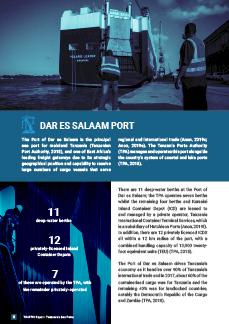
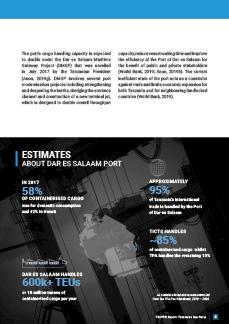
Wildlife trafficking is the illegal cross-border trade in live wildlife, wildlife products or their derivatives, both of fauna and flora. It is one of the most lucrative types of transnational crime along with the illegal trade in drugs, counterfeit goods and human trafficking. This report was prepared in advance of a three-day workshop organised in Dar Es Salaam, Tanzania by TRAFFIC, UNDP and UNODC, which brought together key port stakeholder groups to discuss ways to counter wildlife trafficking through Tanzania’s sea ports.

Countering wildlife trafficking through Tanzania’s ports

Report author(s):
Leanne Little

Publication date:
September 2019

About Wildlife TRAPS

The USAID-funded Wildlife Trafficking, Response, Assessment and Priority Setting (Wildlife TRAPS) Project is an initiative that is designed to secure a transformation in the level of co-operation between an international community of stakeholders who are impacted by illegal wildlife trade between Africa and Asia. The project is designed to increase understanding of the true character and scale of the response required, to set priorities, identify intervention points, and test non-traditional approaches with project partners.

UNDP-GEF Reducing Maritime Trafficking of Wildlife between Africa and Asia project

Implemented by UNDP between 2018 and 2021, this project under the GEF-financed, World Bank led Global Wildlife Program aims to curb maritime wildlife trafficking, targeting key routes and transit points between Africa and Asia. The GEF launched the 7-year Global Wildlife Program (GWP) in June 2015, bringing together funding from the GEF and a wide range of partners, including the Governments of participating countries, GEF Agencies, bilateral and multilateral donors, foundations, the private sector and civil society. Twenty GWP national projects are currently under implementation in 19 partner countries across Africa and Asia, including Tanzania.

Hunting guide who used electronic bird caller pleads guilty

SPRINGFIELD, Ill. (AP) — A central Illinois owner of an outfitter service has pleaded guilty to federal charges that included deploying an electronic bird caller to lure geese into shooting range.

A statement from the U.S. attorney’s office in Springfield says 58-year-old Rick A. Hamm, of Chillicothe, pleaded guilty Thursday to illegal sale of wildlife.

Hamm and several assistant guides were charged after taking undercover agents posing as hunters on a 2015 hunt in Fulton County.

Prosecutors say Hamm knew electronic callers violated conservation laws. They incorporate recordings of waterfowl to signal contentment at feeding grounds and can lead to excessive kills because they are so effective.

Hamm’s sentencing is Jan. 9. An agreement calls for two years’ probation, a $50,000 fine and $2,500 in restitution. On probation, Hamm will be barred from hunting.

Whipping proposal for wildlife smugglers gets thumbs up

This April 7, shows an Orang Utan baby found in a basket, by Marine police in Muar during an inspection.- NSTP/Adi Safri© Provided by Media Prima This April 7, shows an Orang Utan baby found in a basket, by Marine police in Muar during an inspection.- NSTP/Adi SafriKUALA LUMPUR: Stiffer penalties are needed to deter the smuggling of wildlife in the country.Malaysian Nature Society president Prof Dr Ahmad Ismail welcomed the recommendation for whipping wildlife crimes, adding that the move was “timely”.

“It is time that the government implemented severe punishment on wildlife poachers and smugglers, as well as on authorities who abuse their power.

“The current fine and imprisonment are too low to curb illegal wildlife activities, and the recommendation for whipping can help as a deterrent,” he told the New Straits Times.

Currently, the Wildlife Conservation Act 2010 under Section 38(2), carries a maximum fine of RM500,000 and imprisonment of not more than five years for those found guilty of hunting totally protected wildlife without a special permit.

Ahmad also praised the police for mobilising their battalions in the jungles to assist the Wildlife and National Parks Department (Perhilitan).

He however said more needed to be done to raise public awareness and the importance of conserving our wildlife.

“The society still lacks knowledge about the importance of saving tigers, for example,” he said.

On Tuesday, Inspector-General of Police Datuk Seri Abdul Hamid Bador said the police would be recommending mandatory whipping for criminals involved in the smuggling of wildlife.

He said the recommendation would be sent to the Legal Affairs Division for tougher penalties in efforts to combat poaching and wildlife trafficking.

The police’s Internal Security and Public Order Department, the air branch and marine police, together with Perhilitan carry out joint patrols in the jungles, by air and sea, under Op Bersepadu Khazanah.

The operations were also boosted by the expertise of the Elite Senoi Praaq Team and the General Operations Force.

© New Straits Times Press (M) Bhd

Driver caught smuggling birds into Singapore

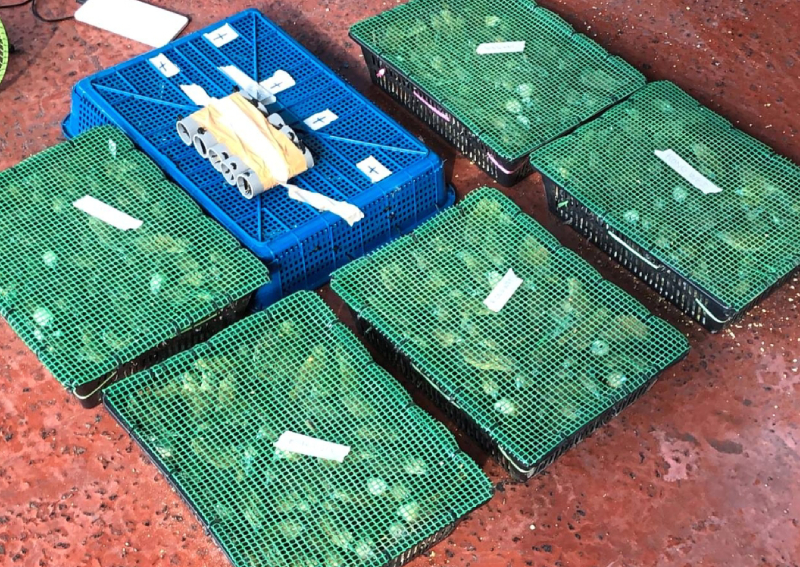
Illegal cargo: After checking the bus, Singapore officials found over 800 birds crammed into 15 crates.
PHOTO: The Star/Asia News Network

More than 200 birds died following a botched attempt by a Malaysian bus driver to smuggle them into Singapore.

A Malaysia-registered bus driven by the 35-year-old male suspect was stopped for security checks at Singapore’s Woodlands Checkpoint from Johor Baru at about 7am on Saturday.

During checks, officers from the Immigration & Checkpoints Authority (ICA) detected signs of modification around the rear tyres of the bus, said ICA in a joint statement with the National Parks Board (NParks).

“Their suspicions were further aroused when they heard chirping coming from within the bus.

“Upon scrutiny, the officers uncovered 15 containers of 815 birds inside modified compartments above the rear tyres of the bus, ” it said, adding it was the largest seizure of ornamental birds in Singapore in recent years.

Only around 600 of the birds survived. They are currently being cared for under quarantine at NParks’ facility.

The driver, who did not have valid health certificates and import permits, was referred to NParks for investigation.

The haul consisted of 38 white-rumped shamas (murai batu), 10 oriental magpie-robins, 141 oriental white-eyes and 626 munias (scaly-breasted munia and white-headed munia).

The white-rumped shama is a protected species in Malaysia under the Wildlife Conservation Act, while its conservation status in Singapore is classified as rare.

“The health status of animals smuggled into Singapore are unknown and may introduce exotic diseases, such as bird flu, into the country.

“The well-being of the animals will also be affected by poor conditions during the transportation process, ” said the statement.

“The illegal wildlife trade impacts the biodiversity and ecosystems of both source countries and the countries where the wildlife end up in.

“For example, the white-rumped shama, a popular songbird in South-East Asia, is becoming increasingly rare throughout the region because of its popularity in the pet trade.

“As such, NParks strictly regulates the import of animals to prevent the introduction of exotic diseases into Singapore, to safeguard the health and welfare of animals, and to tackle the illegal wildlife trade.”

Florida man found with live alligator during traffic stop, deputies say

https://www.abc15.com/news/national/florida-man-found-with-live-alligator-during-traffic-stop-deputies-say

Posted: 2:11 PM, Jul 05, 2019
Updated: 2:17 PM, Jul 05, 2019

HARDEE COUNTY, Fla. — Deputies arrested a man Thursday after he was pulled over with drugs and a live alligator in his car during a traffic stop.

According to the Hardee County Sheriff’s Office, deputies searched Anthony Richardson’s car after they pulled over Thursday and found a live alligator in a bag in the front seat.

Richardson told deputies he had the gator in his front seat before they searched the vehicle.

Richardson told deputies he didn’t have an alligator trapping/hunting license but said he came into possession of the gator through a friend. According to deputies, he said he planned to release it into a river.

Deputies called the Florida Fish and Wildlife Conservation Commission and released the gator into the Peace River after speaking with a wildlife officer.

Richardson was booked into the Hardee County Jail for multiple drug charges and illegally possessing or capturing an alligator.

This story was originally published by WFTS in Tampa, Florida.

Illegal Bird Smuggling Is Fueled by Finch-Singing Contests in New York

The songbirds, often smuggled from Guyana, can fetch between $3,000 and $5,000 each, federal authorities said.

All 34 of the finches discovered last week in hair rollers inside luggage at Kennedy Airport survived the trip from Guyana, officials said.CreditU.S. Attorney’s Office for the Eastern District of New York
ImageAll 34 of the finches discovered last week in hair rollers inside luggage at Kennedy Airport survived the trip from Guyana, officials said.
CreditCreditU.S. Attorney’s Office for the Eastern District of New York

[What you need to know to start the day: Get New York Today in your inbox.]

Some bet as much as $200. Others wager as little as breakfast or a beer. The real prize — bragging rights and status — goes to the owner of the bird that sings the most vigorously during the competitions that kick off at dawn on Sundays in parks in Brooklyn and Queens.

The male chestnut-bellied seed finches are judged on how fast, and how long, they sing when held beside each other in cages, stimulating their instinct to establish dominance.

But this avian twist on “America’s Got Talent” has also fueled an illegal cottage industry: the smuggling of finches into the United States from South America.

Last week, a 39-year-old Connecticut man was charged in federal court in Brooklyn with smuggling nearly three dozen finches from Guyana into the country through Kennedy Airport. The 34 birds were nestled into plastic hair curlers and placed in carry-on luggage, which was selected for a spot inspection, according to court records.

Mr. Gurahoo was freed on a $25,000 bond, posted by his uncle, who lives in Queens and told the judge he is originally from Guyana. Mr. Gurahoo’s lawyer, Eric Pack, had no comment.

Many of the birds are captured in the wild in Guyana, experts said, lured into traps with birdsong and seeds. So far this year, agents have discovered 326 songbirds being smuggled through 16 major airports across the nation, according to the United States Customs and Border Protection. Last year, agents confiscated 2,117, records show.

The contests, known colloquially as “bird races,” are especially common in Phil “Scooter” Rizzuto Park in Brooklyn.

“This is like a sport from back home,” said Ray Harinarain, a bird importer who lives in the Cypress Hills neighborhood of Brooklyn. “People from Guyana move here and bring their traditions.”

Champion birds bestow status on their owners and can increase the value of the finch — “like a racehorse,” Mr. Harinarain said.

Tiny Birds, Big Drama: Inside the World of the Birdmen of Queens
Hobbyists who stage speed-singing contests in city parks fear that federal agents lurk, eager to shut them down.

Under federal law, transported birds must be quarantined for 30 days to ensure they do not carry avian flu or Newcastle disease, which can infect humans and domestic poultry, said Paul Calle, the chief veterinarian and vice president of health programs at the Wildlife Conservation Society. That inconvenience, coupled with a superstition that birds from the wild are more virile and better singers than birds bred in captivity, feeds the market for smuggled birds.

“Some people just prefer to smuggle,” Mr. Harinarain said.

“It’s an underground thing,” he added. “People don’t want to talk about it.”

All 34 birds discovered last week were alive, and placed in the custody of the United States Fish and Wildlife Service, which has regulations that allow for their return, if feasible, to Guyana.

The finches were found in plastic hair rollers at Kennedy Airport, inside the carry-on luggage of a man returning from Guyana, federal prosecutors said. CreditU.S. Attorney’s Office for the Eastern District of New York
ImageThe finches were found in plastic hair rollers at Kennedy Airport, inside the carry-on luggage of a man returning from Guyana, federal prosecutors said. 
CreditU.S. Attorney’s Office for the Eastern District of New York

The manner in which the finches are often smuggled — with no protection from high or low temperatures, no food or water and limited ability to move — creates stress, making the animals more susceptible to shedding any virus or parasite they might be carrying.


“With a multibillion dollar U.S. poultry industry, there’s a lot at stake and a lot at risk if they’re moving animals like this,” Mr. Calle said. “It’s a terrible thing.”

Though chestnut-bellied seed finches, with obsidian-colored wings and rusty breasts like robins, are not a threatened species, their illegal importation also poses ecological risks.

The finches’ robust numbers in their native region could decline to the point of collapse, as happened around the turn of the 20th century in North America with the once-ubiquitous, now-extinct passenger pigeon, said Susan Elbin, director of conservation and science at New York City Audubon.

Or, just as European starlings were introduced with good intentions into Central Park in the 1890s, only to quickly spread across the continent, displacing multitudes of native birds, exotic animals run the risk of establishing themselves and becoming a harmful invasive species.

“The problem is: They could die out, or they could do well,” Ms. Elbin said.

Donald Bruning, an ornithologist who worked at the Bronx Zoo for decades, said smuggling undermines the businesses of legitimate breeders. And the mortality rate for animals brought into the country illegally is abnormally high, he said.

He also noted that the practice may be completely unnecessary: There are far better ways, he said, to groom a champion finch than by plundering wild populations.

Baby finches, he said, learn to sing by imitation. Mr. Bruning, who was instrumental in the passage of the Wild Bird Conservation Act of 1992 that safeguards exotic bird species from being harmed by international trade, suggested competitors record the songs of champion birds and play them for chicks raised legally in captivity.

“That would solve the whole problem,” Mr. Bruning said.

Correction: 

An earlier version of this article misspelled the surname of a bird importer. He is Ray Harinarain, not Harinarian.

Hair curlers hid 34 singing finches in a flier’s carry-on, NY prosecutors say

Play Video

Duration 1:12
5 tips for smooth summer travel

Take these five steps for a smooth airport experience, from TSA. 

The hair curlers in a flier’s carry-on luggage were worth about $100,000 — thanks to the 34 prized finches that were stuffed inside them, federal prosecutors in Brooklyn said.

Francis Gurahoo, a 39-year-old Connecticut man, was arrested at John F. Kennedy International Airport in New York City on Sunday when he was caught trying to smuggle the live birds from Guyana into the United States, according to the U.S. Attorney’s Office for the Eastern District of New York.

The birds compete in singing contests in Queens and Brooklyn, and Gurahoo confessed that he was planning to sell each one at $3,000 a bird, according to prosecutors. He’s set to appear in federal court on Monday afternoon.

In the last few years, JFK customs agents have stopped a number of travelers trying to sneak the seed-eating birds into the U.S. “in various manners without declaring the birds on the required importation forms,” a U.S. Fish and Wildlife Services special agent said in a criminal complaint, which the U.S. Attorney’s Office shared with McClatchy.

About a year ago, two other men were accused of similarly smuggling birds at JFK, in that instance using socks as well as hair curlers, McClatchy reported in April 2018.

rollers.jpg
The man said he planned to sell each bird for around $3,000, according to federal prosecutors.UNITED STATES FISH AND WILDLIFE SERVICE

The special agent said in the complaint against Gurahoo birds can sell for $5,000 or more, and that “an individual willing to smuggle finches into the United States from Guyana can earn a large profit by selling these birds in the New York area.”

During the singing contests, which are often held in public parks, two birds sing against each other after spectators place bets, and then a judge declares a winner, the special agent said.

“Although certain species of finch are available in the United States, species from Guyana are believed to sing better and are therefore more highly sought after,” the agent wrote.

The agent said that searches of Fish and Wildlife Service databases showed Gurahoo hadn’t applied for or been given a permit to import the birds. He’s accused of violating federal rules that require animal importers to declare wildlife and get permits, as well as federal rules requiring imported commercial birds to be quarantined for a month.

“This requirement exists to prevent the spread of diseases carried by foreign birds, including Newcastle disease — a contagious avian virus than can infect humans and domestic poultry — and bird flu,” the special agent wrote.

Vietnam Seizes 7.5 Tons of Elephant Ivory, Pangolin Scales

Police have seized 7.5 tons of elephant ivory and pangolin scales in one of Vietnam’s biggest wild animal trafficking cases.

By Associated Press, Wire Service ContentJune 14, 2019, at 3:31 a.m.

HANOI, VIETNAM (AP) — Authorities have seized 7.5 tons of elephant ivory and pangolin scales in one of Vietnam’s biggest wildlife trafficking cases.

The 3.5 tons of ivory and 4 tons of pangolin scales were found Wednesday in barrels when customs officers checked a shipping container arriving at northern Hai Phong port, the Vietnam News Agency reported.

The steel barrels containing the ivory and scales were mixed with ones containing tar to conceal the trafficked animal parts from customs authorities.

The freight was addressed to a logistic company in Hai Phong city, but the news website said no one had claimed ownership of the shipment. No details were available on its origin.

Police began a criminal investigation on Friday.

Poaching and trading of ivory tusks and pangolins carry penalties of up to 5 years in jail in Vietnam. However, the Southeast Asian country is also a common destination for trafficked wildlife parts and a transit point for ivory and other trafficked materials to China.

The pangolin is said to be the most widely trafficked mammal in the world. Its scales are made of keratin and are ground up to use in traditional medicines.

Copyright 2019 The Associated Press. All rights reserved. This material may not be published, broa

African elephant poaching has declined, but study warns they are still vulnerable

A Kenya Wildlife Services ranger stands guard by a stack of elephant tusks piled up onto pyres in preparation for a historic destruction of illegal ivory and rhino-horn confiscated mostly from poachers in Nairobi's national park. A study released last month found that the mortality rate for African elephants has declined to 4% in 2017, down from 10% in 2011.

(CNN)Fifteen years ago, half a million African elephants roamed the continent.

The animals were moved off endangered lists, and the population even seemed to be going up in some areas.
Then, because of poaching, those numbers dropped. Drastically.
Africa lost more than 100,000 elephants between 2006 and 2015, the worst poaching surge since the 1980s, according to the International Union for Conservation of Nature.
Now there’s a bit of good news.
new study finds that the number of elephants dying from poaching is declining, with a mortality rate of 10% in 2011 falling to 4% in 2017.
The cause? Reduced ivory demand, specifically from Chinese markets — the biggest driver behind poaching in Africa, according to the study, which appeared last month in the journal Nature Communications.

When the value of ivory goes up, so does poaching

It’s basic supply and demand, according to the study.
The supply for ivory, which poachers get from the elephants’ tusks, is always low, but when demand is high, more people try to meet that demand. China banned all trade in ivory in 2017, which may have helped blunt demand, the study says.
But trade and poaching bans in China and in Africa have also had the negative effect of driving the value of ivory up.
Researchers also said that law enforcement in the areas can be inadequate in the face of thriving illegal markets. And police corruption compounds the problem, the study said.

Poverty is one of the biggest motivators for poaching

Poverty plays the biggest role in perpetuating the illegal trade, the researchers said. There tended to be more poaching in areas with higher poverty density, leading researchers to suggest that the decline in poaching will not be sustainable without a decline in poverty.
Investing in law enforcement isn’t enough, the study says.
“The effect of alleviating poverty and reducing corruption at the site-level might be other (potentially more effective) approaches, that should be promoted more,” Severin Hauenstein, one of the researchers involved in the study, told CNN.
The relationship between elephants and financial strain isn’t seen only in poaching. Last month, Botswana removed its elephant hunting ban, partly in an effort to monetize conservation efforts. Zimbabwe made $2.7 million after selling more than 90 elephants to China and Dubai.
To put it simply, until the people are living in better conditions, elephants will continue to be targeted.