
One year after wolf attack, dog fends off cougar at Carlton home
One year after wolf attack, dog fends off cougar at Carlton home
[Automatic response? track down and kill the predators.]
by admin on Mar 6, 2014
By Ann McCreary
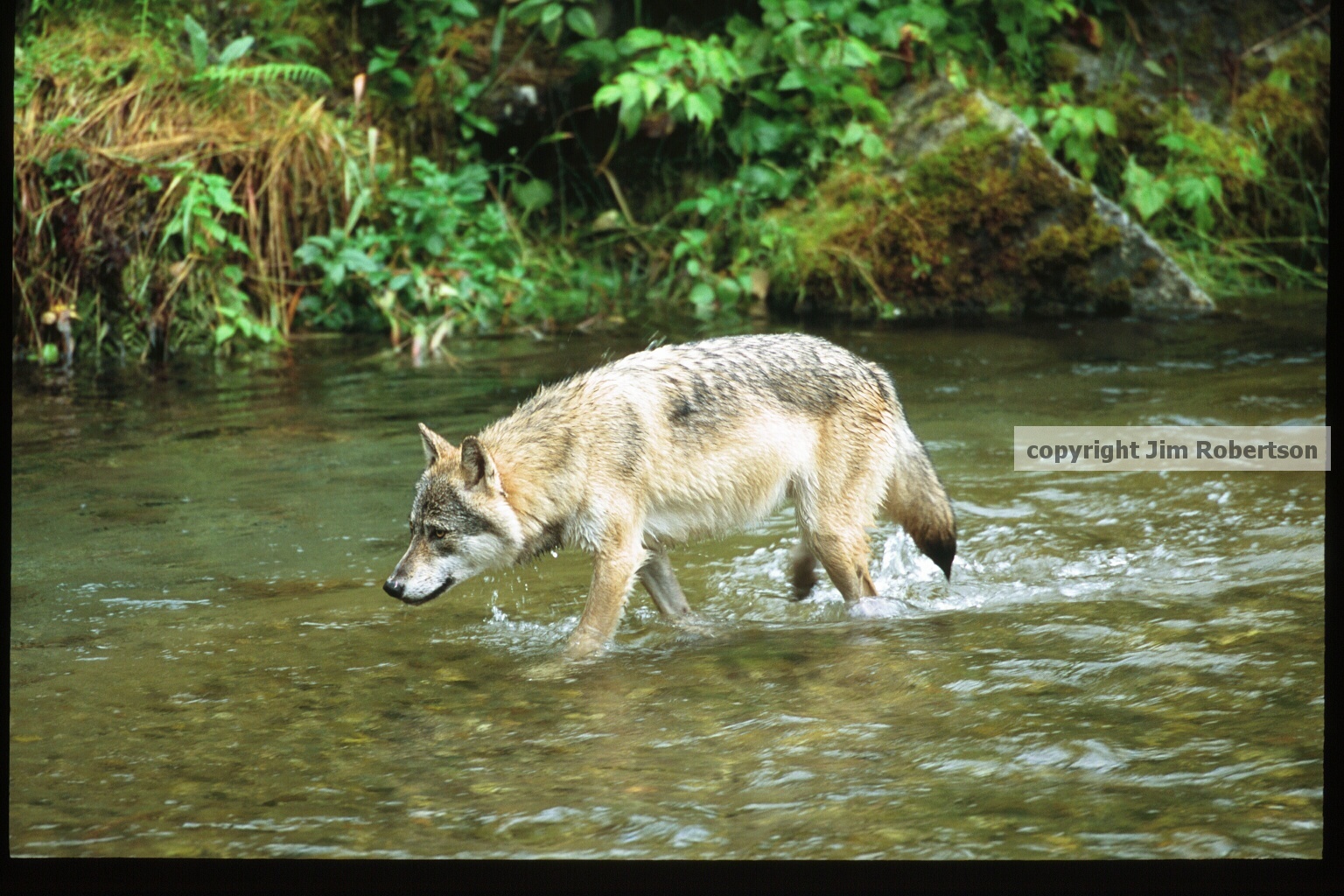
It’s been a tough year for Shelby, a wolf-husky hybrid dog owned by John Stevie of Carlton. In March 2013 the dog was attacked by a gray wolf just outside her home, and early Monday morning (March 3) she was attacked again — this time by a cougar.
The unlucky dog has been lucky enough to survive both attacks.
Stevie had let Shelby out at about 4 a.m. Monday and soon heard the dog crying, said Sharon Willoya, Stevie’s girlfriend.
“We both raced to the door and she came running in. She wouldn’t let us touch her at first because she was frightened. We finally got her calm and noticed she was bleeding,” Willoya said Tuesday (March 4).
The 68-pound dog had cuts on her shoulder and chest, and required more than a dozen stitches, Willoya said.
Stevie reported the attack, and Washington Department of Fish and Wildlife (WDFW) enforcement officers arrived with hounds a few hours after the attack. They tracked the cougar into a boulder field, but because it was a dangerous situation for the dogs, they left, said Capt. Chris Anderson, WDFW regional enforcement supervisor.
Wildlife officials returned Tuesday morning, found new tracks near Stevie’s home, tracked the cougar and treed it. The cougar, a healthy female, was shot and killed.
Willoya said wildlife officials found evidence that the cougar had “bedded down” not far from the house. “They think when Shelby came around the house, the cougar was there,” she said.
Stevie’s dog made news last year when she was attacked by a wolf on the deck of Stevie’s home at the foot of McClure Mountain. The dog received puncture wounds and lacerations to its head and neck in the attack.
Stevie subsequently took Shelby with him to Olympia, where Stevie testified before the Legislature in favor of a bill allowing citizens to shoot wolves that are attacking pets or livestock. Gray wolves are currently protected as an endangered species under federal and state law.
The cougar killed on Tuesday is the sixth cat shot by wildlife enforcement officers in the Methow Valley since December following attacks on domestic animals. At least four other dogs have been attacked, including a dog killed on Christmas day.
Cougars have also attacked cats, goats, sheep, chickens and calves.
Anderson said a hunter killed a cougar last week in the Pearrygin game management unit north of Winthrop. That brings the total number of cougars killed by hunters in the Methow Valley this winter to six.
Because of the high number of cougar incidents this winter, WDFW has issued special permits allowing hunters to use hounds to hunt cougars in the Methow Valley. Three permits have been issued for the Gardner game management unit, and two have been issued for the Pearrygin unit. Each permit allows one cougar to be killed.
So far, none of the special permit holders has taken a cougar, Anderson said.
“There are different theories bouncing around” about why the valley has seen so many cougar incidents, Anderson said.
“The general feeling is it’s probably because of the weird winter we’ve had,” Anderson said. “Normally we have cats that are visible because they follow the deer herds. Without snow the deer were really spread out and so the cats were spread out more, and that’s why people were seeing them in all parts of the valley.”
a
See more posts related to Cougars in the Methow Valley.


 Exposing the Big Game