South Dakota Officials: More Pronghorns Mean More Hunting

https://www.usnews.com/news/best-states/south-dakota/articles/2017-07-14/south-dakota-officials-more-pronghorns-mean-more-hunting

PIERRE, S.D. (AP) — Wildlife officials in South Dakota have decided that a slowly growing pronghorn population justifies a slight increase in the number of hunting licenses available for the next two years.

The state’s Game, Fish and Parks Commission decided Thursday that it will issue resident hunters over 900 more buck-antelope hunting licenses and 1,400 more doe-antelope licenses in 2017 and 2018 than it did last year, when hunter success reached 70 percent. The hunting unit in Stanley County will allocate 40 licenses and the unit in Hughes County will have 50 licenses for each of the next two years.

The pronghorn is a land mammal known for its speed. They’re unique to North America but are commonly called antelope because of their resemblance to the African animal, the Pierre Capital Journal (http://bit.ly/2taKWqT ) reported.

Population surveys by the commission said there will be about 48,000 pronghorns in the state, still about 10,000 short of the statewide-population objective called for in the department’s antelope-management plan.

In the last five years, the state’s pronghorn-antelope herd has been recovering from a decline. Harvest and hunter success has steadily increased since bottoming out in 2013.

___

Information from: Pierre Capital Journal, http://www.capjournal.com

Copyright 2017 The Associated Press

Animal cruelty has given me a change of heart on dog sporting competitions

https://www.washingtonpost.com/sports/animal-cruelty-has-given-me-a-change-of-heart-on-dog-sporting-competitions/2017/06/25/68f5ceec-585e-11e7-a204-ad706461fa4f_story.html?utm_term=.a0f78bbbebd0#comments

 Columnist June 25
I love dogs — Toni will tell you I don’t need a wife by my side, I just need a Weimaraner — and every year, my favorite column to write is a canine diary from the Iditarod Trail Sled Dog Race or the Westminster Kennel Club Dog Show.

However, I will never pen either of those columns again and apologize to readers — particularly Iditarod-wise — for my poor judgment.

The thing is, I get along with dogs better than with people; they are more dependable and less deceitful. And in writing a weekly humor column — well, in theory it’s a humor column — I always have relished the annual opportunity to look for laughs from a dog’s perspective.

But in searching for the funny, I lost sight of the facts:

Sled dog racing is cruel, unusual and unacceptable punishment for the animals.

The Iditarod is a rugged 1,000-mile trek over nine days. Only about 50 percent of the dogs reach the finish line, and since its inception in 1973, at least 150 dogs have died in the race.

Short of perishing, Iditarod dogs suffer horrifically along the trail — diarrhea, bleeding ulcers, lung damage, pneumonia, ruptured discs, viral diseases, broken bones, torn muscles and frostbite.

For a better sense of all these horrors, I would suggest a viewing of the new documentary “Sled Dogs” from Toronto filmmaker Fern Levitt or going to the Sled Dog Action Coalition’s website at helpsleddogs.org.

Beyond the brutal training and care of sled dogs, we also treat so many other creatures in unspeakable fashion.

When I was a kid, I delighted in watching bullfighting on TV on Sunday mornings — yes, Sunday mornings; apparently, it is our day of rest and their day of reckoning. Then I went to my first bullfight in Spain as a college student and, well, aside from the fact that it really didn’t seem like a fair fight, I was struck by the savage, barbaric nature of the exercise.

Yet so many civilizations worldwide, near and far, engage in stuff like this.

Bullfighting. Dogfighting. Cockfighting.

Frankly, any animal activity that involves the suffix “fighting” is unquestionably inhumane. At least when humans partake in fighting — boxing or MMA — the participants choose to do so. On the other hand, I don’t think a rooster wakes up at the crack of dawn thinking, “I’d love to bloody another rooster to death after dinner.”

But this is where our culture rests:

Sticking a moose head over the fireplace mantle.

Standing on a boat showing off a 125-pound tuna.

My goodness, rodeo — rodeo! — is the official state sport of South Dakota, Texas and Wyoming, though I’m not quite sure the horses and other livestock consider it a sport.

Then there are professional bass fishing competitions.

The Bassmaster Classic — to determine the world champion of bass fishing — is a three-day spectacle on ESPN2.

(At least in poker, we never kill the fish; we just take their money.)

Anyway, I used to fish myself and used to bet on horses; can’t do either anymore.

What they do to horses in horse racing and greyhounds in greyhound racing so that we can place wagers on them is unfathomable and unbearable. Google “greyhound dog abuse” and you will get as many results as “Kim Kardashian shopping.”

Even the circus is abusive to animals, unless you believe the Ringling Brothers polled local elephants to see whether they enjoy balancing on a stool while a woman dances on the back of their head.

(I guess we have evolved a bit — at least there is no longer pigeon shooting at the Olympics. Yes, at the 1900 Summer Games in Paris, there was pigeon shooting. Live birds were held and released as “athletes” took aim. The object: Shoot as many pigeons as possible. Nearly 400 birds were killed.)

It’s really pretty simple:

Animals should not be subjected to our whims, in any way, shape or form, for the sake of our sporting-and-entertainment needs.

We probably should stop eating them, too.

THE EMBLEM; A POEM TO END HUNTING

 http://thevegantruth.blogspot.com/2016/07/the-emblem-poem-to-end-hunting.html?spref=fb
The Emblem
I’m not blind to the world animals live in.
Their reality is intertwined with my own.
Therefore I would not know where to begin
to describe the cruelty animals are shown.
Humans have become deaf to creatures cries,
We’ve become numb to the feeling of love.
One sight entirely exemplifies
the lack of empathy that I speak of.
Tied to a truck for obvious display,
was a beautiful buck; lifeless and cold.
His disfigured head quickly turned my eyes away
I’m left with an indelible image to hold.
The buck will serve as an emblem for all time.
I must have witnessed this sight for a reason.
The emblem will forever tell of the crime
that permeates the air in hunting season.
The gentle are persecuted by killers
and live a life that is never free of fear.
Respect and Justice are our soul’s pillars.
Let’s rise up and put an end to the hunting of deer.

by Butterflies; long term vegan ~ animal rights advocate

Gators beware, SC hunters are coming for you this fall

Gators beware, SC hunters are coming for you this fall. Here’s how you can hunt.

Ted Nugent Murdered Or Killed In A Montana Hunting Accident…

… Is A Celebrity Death Hoax
Read more at http://www.business2community.com/entertainment/ted-nugent-murdered-killed-montana-hunting-accident-celebrity-death-hoax-01833295#CLffGmQbC1S84Eji.99

Shawn Rice — April 28, 2017

Ted Nugent killed or murdered in a Montana hunting accident is just another celebrity death hoax. Despite rumors that the rocker was killed in a hunting accident in Montana, he remains alive and well. Nugent is an American musician and political activist. Nugent initially gained fame as the lead guitarist of the Amboy Dukes, a band formed in 1963 that played psychedelic rock and hard rock. Where did this false rumor originate?

On April 28, 2017, a number of unreliable web sites began publishing stories reporting that the rock musician and conservative icon had been killed in a hunting accident in Montana. You can read text from that fake story below.

“Ted Nugent, 70’s rocker turned hunting guide and conservative icon, was shot and killed early this morning in a tragic hunting accident. While setting up his tree stand just outside a wildlife reserve in Montana, Nugent was fired on and hit in the chest by a hunter with a scope nearly a quarter of a mile away who believed he was a brown bear.”

However, there are no legitimate news reports of Nugent’s death. Just recently, Nugent made a Facebook Live video with his wife Shermane on the same afternoon the death hoax starting circulating social media. They confirmed he is indeed alive and well. You can see that video below.

If that were not enough, Shermane posted another live video a few minutes later in which her husband’s voice could be heard while she played with the couple’s dogs. You can check out that video below as well.

Nugent’s spokeswoman Linda Peterson confirmed to Snopes that reports of Nugent’s untimely death were nothing more than “fake news.” Here are some examples of people discussing Nugent’s alleged death on social media.

Nugent is famous for his rock career, but has also become an outspoken supporter of conservative political figures, such as former Alaska Governor Sarah Palin and President Donald Trump. Nugent recently made news when he was pictured alongside Palin and fellow rock singer Kid Rock at the White House, where they all dined with Trump. The trio also were pictured in front of a painting of former Secretary of State Hillary Clinton mocking her.

Nugent is also a divisive figure due to comments he has made about former President Barack Obama and Clinton that have been characterized as racist, sexist and potentially inciting violence. Nugent hunts and is an ardent Second Amendment advocate who sits on the board of the National Rifle Association..

What did you think of the fake news about Nugent’s alleged death? Did you see people sharing it falsely on social media? Have you seen any other celebrity hoaxes recently? Let us know in the comments section.
Read more at http://www.business2community.com/entertainment/ted-nugent-murdered-killed-montana-hunting-accident-celebrity-death-hoax-01833295#CLffGmQbC1S84Eji.99

Donald Trump is first president to address the NRA in 34 years

http://abcnews.go.com/Politics/donald-trump-president-address-nra-34-years/story?id=47080710

  • By MEGHAN KENEALLY

Apr 28, 2017

President Donald Trump is following in the footsteps of former President Ronald Reagan by speaking at a National Rifle Association event.

Today’s speech, at the NRA’s Leadership Forum in Atlanta, won’t be Trump’s first talk to the gun rights group. He was endorsed by the NRA in May and spoke at their convention at the time.

But his appearance later today marks the first time that a sitting president has addressed the group since Reagan did so in 1983.

The NRA is known for their sizable lobbying operation and by raising money for — and against — candidates. The group made over $52 million in donations to candidates during the 2016 election, according to the Center for Responsive Politics. They spent $30.3 million in support of Trump, the CRP reported.

Trump campaigned on the pledge to support and protect the Second Amendment, which he said during his May NRA appearance, was “under a threat like never before.” He pointed to his then-rival Hillary Clinton as the basis for that threat.

“Hillary Clinton wants to abolish the Second Amendment, not change it; she wants to abolish it,” Trump said at the time, although Clinton had never made such claims.

“The Second Amendment is on the ballot in November. The only way to save our Second Amendment is to vote for a person you know: Donald Trump,” he said.

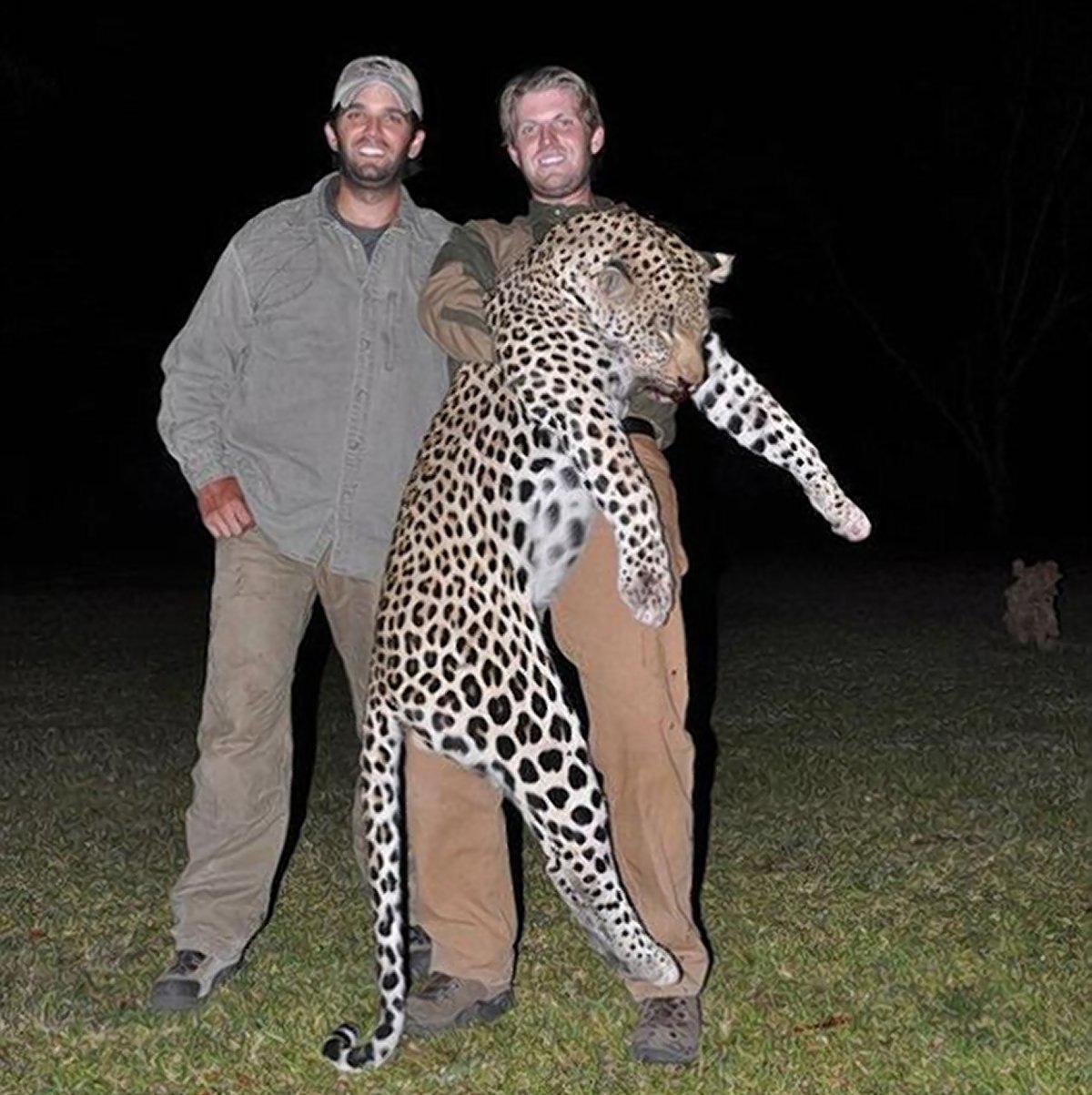
Trump has noted that his two eldest sons, Donald Jr. and Eric, have been longtime members of the NRA, and during the May speech, he said that “they have so many rifles and so many guns, even I get concerned.” 

During the second presidential debate, Trump promised to appoint Supreme Court justices that will “respect the Second Amendment and what it stands for and what it represents,” and said that the list of 20 judges that he released as possible picks all fit that bill. Judge Neil Gorsuch, who he later nominated and has since been appointed to the Supreme Court, was on that list.

The Atlanta Journal-Constitution reports that hundreds of protesters and gun control advocates are reportedly gathering near the convention site this morning. Part of the protest will feature a “die-in,” where 93 people will lie down in a local park to represent the number of people who die from gun violence every day, the paper reports.

There will be another protest on Saturday, and Rep. John Lewis of Georgia is scheduled to attend. Lewis and Trump have a turbulent history. Lewis did not attend the inauguration and said he did not see Trump as a “legitimate president.” Trump returned the favor by criticizing the civil rights leader, saying that he was “all talk, talk, talk — no action or results.”

Emperor Goose Hunting Open for First Time in 30 Years

https://www.usnews.com/news/best-states/alaska/articles/2017-04-19/emperor-goose-hunting-open-for-first-time-in-30-years?src=usn_fb

Shooting emperor geese in Alaska is legal for the first time in 30 years, but officials are hoping hunters take it easy.

| April 19, 2017, at 12:53 p.m.

BETHEL, Alaska (AP) — Shooting emperor geese in Alaska is legal for the first time in 30 years, but officials are hoping hunters take it easy.

Federal managers have opened a subsistence hunt for the birds and are visiting coastal villages to lay down ground rules before the geese migrate, KYUK-AM reported (http://bit.ly/2pg3aVE ).

The rules call for targeting one bird at a time instead of spraying the flock, only taking juvenile birds that are not yet breeding, limiting the number of birds taken and only taking one or two eggs from a nest.

About 80 percent of the world’s emperor goose population breeds along the west coast of Yukon Delta in southern Alaska. The migration is expected to begin in mid to late May.

Officials hope the large number of geese doesn’t get to hunters’ heads, though.

“With the season opening for emperor geese for the first time in 30 years, there is a concern of overharvest of emperor geese, because they’re ignorant to a lot of hunting activities, because they haven’t been harvested, so they haven’t learned how to avoid hunters,” said Bryan Daniels, a waterfowl biologist with the U.S. Fish and Wildlife Service.

The six-week hunt is now open and runs until the beginning of June.

The 1980s was the last time hunters could go out for emperor geese, which was before the bird’s population dropped dangerously low.

Now, the population is just above the threshold to sustain a hunt.

___

Information from: KYUK-AM, http://www.kyuk.org

Despite Trump overturning refuge hunting rules, conflict remains

http://www.alaskajournal.com/2017-04-10/despite-trump-overturning-refuge-hunting-rules-conflict-remains#.WOvPEIjyvIU

Although Congress put an end to a set of federal restrictions on wildlife management on national wildlife refuges in Alaska, the underlying conflict is far from over.

President Donald Trump signed a House Joint Resolution on Tuesday overturning a set of U.S. Fish and Wildlife Service regulations enacted in 2016. The rule restricted certain hunting methods on national wildlife refuges in Alaska, with additional specific rules for the Kenai National Wildlife Refuge. Under the rule, predator control activities were banned unless based on sound science and in response to a conservation concern or met refuge need. On the Kenai, additional public use restrictions went into place, including some plane and motorboat access, camping restrictions and requiring a permit for baiting black bears and prohibiting using a dog to hunt big game except black bears, among other rules.

The state filed a lawsuit in January against the Department of the Interior over the Fish and Wildlife rules and another set of hunting restrictions set by the National Park Service in Alaska’s national preserves. The Safari Club International, a hunting organization, filed a similar lawsuit of its own about a week later. A few days after that, the Alaska Professional Hunting Association filed its own lawsuit over the same regulations.

“Passage of this resolution reaffirms our state sovereignty, and the state’s authority to manage fish and wildlife statewide, including on federal public lands,” said Alaska Attorney General Jahna Lindemuth in a news release issued Tuesday. “Alaskans depend on wildlife for food. Reversal of these regulations will allow residents to continue their hunting and gathering traditions.”

Despite the overturn, there’s still a sharp philosophical management disagreement between federal wildlife managers and state wildlife managers, and unless one side’s mandate changes, the disagreement will remain. Fish and Wildlife manages the national wildlife refuges for natural biological diversity, without promoting prey species over predators. Fish and Game, on the other hand, is mandated to manage for maximum sustained yield, which would provide enough harvestable animals to provide for hunters. The National Park Service protects the lands it manages and all the wildlife on them, prohibiting hunting entirely on national preserves.

Stacey said the group contests that by bypassing the state’s game management authority, the refuge and national park rules effectively amend the state’s constitution.

“(The state constitution) is where you get the maximum sustained yield management rules,” he said. “Within (Alaska National Interest Lands Conservation Act), it says nothing is supposed to modify or amend the state’s constitution. We argue that whrere the federal government steps in and imposes a foreign management philosophy, that actually effectively amends the state’s constitution.”

The three agencies cooperate on management issues, but there have been times over the years when the Board of Game or Fish and Game crossed a line and trigged a reaction from the feds. A recent example was when the Board of Game authorized the taking of brown bears over bait on the Kenai National Wildlife Refuge, said Board of Game chairman Ted Spraker.

“We allowed the taking of brown bears over bait in 2013, and the refuge immediately said, ‘Not on the refuge,’” he said. “That hasn’t changed.”

There are management tools built in, such as an overall quota for brown bears taken in the area before the season closes, he said. The refuge allows baiting for black bears in an area of Game Management Unit 15A but put brown bears off limits, which seemed inconsistent, he said.

The National Park Service regulations are still in place, so the lawsuits will go on with those challenges, and the regulations on the Kenai National Wildlife Refuge are still in place, so the Safari Club’s lawsuit will still challenge those.

“It has more to do with not ceding authority to the federal systems compared to whether the department and the Board of Game will change things that we’re currently doing,” Spraker said. “I don’t see any major changes coming because of this, I think there will be a little more cooperation on some of the issues, but I don’t see the refuges embracing any sort of predator management because of this.”

The overturning of the rule must be frustrating for the agency, though, said Michelle Sinnott, an attorney with environmental law firm Trustees for Alaska, which represents a group of conservation organizations that petitioned to intervene in the three lawsuits and have been granted intervener status in the Safari Club and Alaska Professional Hunters Association lawsuits.

“It’s maddening to a sense and I’m sure it’s very frustrating for federal agencies, because the Congressional Review Act takes a sledgehammer to agencies’ years of work and communications with the public and public noticing comment and meetings with people in the region,” she said.

ANILCA has a role to play too. The act, passed in 1980, affected about 157 million acres of federal land in Alaska and changed management for others, including converting the Kenai National Moose Range into the current Kenai National Wildlife Refuge. Its baseline principles include the provision of managing for natural diversity, and so even with the 2016 rules changed, with ANILCA still in place, the conflict still stands between federal management of wildlife on federal land and state sovereignty.

“That question is still alive and well and we’ll be part of it now,” Sinnott said. “It’s great that our intervention was granted, because now there’s a whole host of Alaskan voices that will be heard in these cases.”

Once the debate moved to the national level, the groups supporting Fish and Wildlife’s rule received support from members of Congress who saw problems with the rules themselves and with the state asserting its right to manage wildlife on federal lands, said Pat Lavin with the Alaska office of conservation group Defenders of Wildlife.

“To have any state kind of challenge that and claim that the state has the right to do whatever it wants … I think plenty of members of Congress saw that right away and that was all the noise,” he said. “Unfortunately, we lost the vote anyway. There’s plenty of folks in Congress who understand that and aren’t crazy about it but were willing to undo this regulation.”

Lavin agreed that ANILCA would help reinforce current management practices. Refuges around the country don’t always follow the strict state regulations, he said.

“It is true, and not only in Alaska but around the whole country, that as a general proposition in managing refuge lands, the Fish and Wildlife Service defer at least initially to the place they’re in, in a given refuge,” he said. “That’s kind of the default position, but on top of that, the refuge does things all the time that are specific to the refuge and may or may not be consistent with state regulations.”

Spraker said he was optimistic that with the new federal administration, a new Department of the Interior director and a new Alaska regional supervisor of the Fish and Wildlife Service, state and federal managers could collaborate on management more.

“I don’t think this is going to make a major change in how we do business, but I do think it’s going to increase the level of collaboration between the state and federal agencies,” he said. “And with new leadership, I think that will lend itself toward cooperation with the state.”

Alaska’s national refuges are not private game reserves

The Times Editorial Board

March 18, 2017 5 am

The 16 national wildlife refuges in Alaska span the state from the remote Arctic on the northern edge to the volcanic Aleutian islands southwest of Anchorage. Across the refuges’ nearly 77 million acres, animal diversity abounds — ice worms and seabirds, black bears and grizzly bears, wolves, moose, caribou, predators and prey. There is one guiding principle behind the U.S. Fish and Wildlife Service’s management of all the species on these refuges: Conserve the natural diversity of wildlife as it is. In essence, let them be, and let humans enjoy the spectacle of nature on these refuges.

But at these particular enclaves, that also means letting humans hunt — within limits. It’s difficult to believe that any wildlife refuge isn’t truly a refuge from hunters. That’s the way the national system of refuges started, but over the last quarter century, many have been opened up to regulated hunting.

 And herein lies the problem. The state of Alaska shares the responsibility for managing the refuges’ wildlife, and it has its own goal: Making sure there are plenty of animals to hunt. In an effort to maximize the number of moose, caribou and deer, the state authorized in some areas more efficient but brutal methods to kill the wolves and bears that prey upon those popular hunting targets.

Concerned that the state’s predator control campaign could become widespread enough to disrupt the refuges’ ecosystems, the U.S. Fish and Wildlife Service issued a rule that bars hunters and trappers in the refuges from killing wolves and their pups in their dens, killing bear cubs or sows with cubs, baiting brown bears, shooting bears from aircraft, or capturing bears with traps and snares. The rule took effect in September.

Alarmingly, Alaska’s congressional delegation is pushing hard to get rid of these ecologically sound and humane restrictions, and Republican lawmakers are responding. A joint resolution revoking the rule has passed the House and is expected to come up for a vote in the Senate the week of March 20. It is misguided and should be hunted down and killed.

Let’s be clear on a few things. The federal rule prohibits only these gruesome methods of hunting on national wildlife refuges. It does not apply to hunting in state-owned wilderness or to rural Alaskan residents who hunt for subsistence. And it’s doubtful that killing huge numbers of wolves and bears would automatically drive up the number of moose and caribou. “The best available science indicates that widespread elimination of bears, coyotes and wolves will quite unlikely make ungulate herds magically reappear,” wrote 31 biologists and other scientists to then-Secretary of the Interior Sally Jewell last year when the rule was still being studied.

In other words, the Alaskan government sought to allow types of hunting that probably would not accomplish what it wants to accomplish, but would end up killing brown bears who’d been lured with bait, slaughtering helpless cubs and wolf pups, and allowing bears to languish in excruciating pain for unknown hours in steel-jawed traps. This is unconscionable.

And this is not a case of states’ rights being usurped by the federal government. If anything, the congressional measures would subvert the federal government’s decades-long statutory authority over federal lands in Alaska. The national refuges are not Alaska’s private game reserve. That wilderness belongs to all of us. The Senate should stop this bill from going any further.