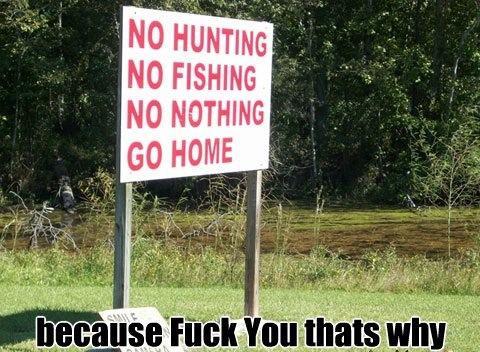
What Really Motivates a Hunter?

Whenever an anti asks a hunter why they like to kill animals the answer (unless the hunter is exceptionally evil or unrepentant) is some variation of, “I don’t actually enjoy killing, I do it for the meat”…or, “to control their population”… or some other variation of those validations they think will sound plausible or palatable.

But the truth is not nearly so toothsome—they do it because they get off on taking and possessing another’s life.

You don’t have to lurk in those dark, seedy hunter chat rooms, Facebook pages or message boards to learn how hunters really think or how they view the animals they lust after. One need only pick up a Washington State Department of Fish and Wildlife game regulations handout, available at any sporting goods store or rural mini market, and read the following featured article by a WDFW Wildlife Program Assistant Director:

Sportsmanship Evolves through Five Stages of Hunting

by Nate Pamplin

In hunter education, we talk about the five phases that hunters commonly pass through and how our definition of success in the field evolves over time. I think that discussion is valuable, because it provides an important perspective on our approach to the sport.

In the first stage of the five-step progression, most new hunters are primarily focused on bagging their first game animal. My first big game animal was a small ‘forked-horn’ sitka black-tailed buck on Kodiak Island, Alaska–and I couldn’t have been more proud.  

In phase two, the goal shifts to filling bag limits. The definition of a good day for a hunter in this phase would be taking all four forest grouse allowed, not just two.

The third stage is what is called the “trophy phase,” where success is derived by harvesting an animal with a large rack or trophy score. A hunter in this phase may pass immature animals waiting for the opportunity to harvest a trophy for the wall.

A fourth phase is limited-weapon phase, when hunters who have had success with modern firearms put down their rifle to pursue game through traditional implements that present more of a challenge.

Finally, we arrive at the fifth stage–the sportsman phase. Here, hunters find satisfaction in all aspects of hunting, whether sighting-in their rifle with their friends, waiting on a stand for a buck to pass by, or recounting hunting stories with family and friends over a bowl of venison stew.

An important aspect of the sportsman phase—and I’d advocate for every phase—Is sharing the rich tradition of hunting with others.

I ask you to consider your role in promoting the hunting heritage in Washington. Have you introduced hunting to a colleague from work who may have never been hunting before? Have you invited your niece to the shooting range? Do you have time to volunteer with a local hunter-education team? Did you mail a thank-you note to the landowner who afforded you access to their

Text and Wildlife Photography ©Jim Robertson

Text and Wildlife Photography ©Jim Robertson

ranch last fall?

Hunters don’t have to move through every stage of the sport before entering the sportsman phase. All of us share a passion for Washington’s hunting heritage, and it’s important we all do our part to keep this tradition alive during the coming season.

….

It’s uncanny how much the statement above mirrors this quote by another trophy taking expert on the subject—the prolific serial killer, Ted Bundy, who told the authors of The Only Living Witness, from his cell on death row:

“At each stage of the process the individual’s feelings would be different. And when he’s 15 it’d be a much more mystical, exciting, experience…than when he’s 50. And when—even within that given hunting expedition—the feeling of sighting the animal would be different than shooting it or showing it to your buddy. Or putting it in the trunk and taking it home and butchering it and having it for dinner…And that’s the way some guys may approach killing their fellow human beings.”
Ontario Adopts a Great American Tradition: Dove Killing

Ontario Opens Season on Mourning Doves, Quietly… Very, Very Quietly

Canadian Blog

by Barry Kent MacKay, Senior Program Associate

Born Free USA’s Canadian Representative

10/01/13

Rachel Carson, inspirational writer, biologist, and ecologist, said, “We cannot have peace among men whose hearts delight in killing any living creature. By every act that glorifies or even tolerates such moronic delight in killing, we set back the progress of humanity.” Agreed—but, such men tend to be disproportionately in charge of deciding such things, and therein lies a very big problem for wildlife.

Here in Ontario, there was an open hunting season for mourning doves in 1955. People were absolutely outraged, so it was closed, never to be considered again—until, quietly, with a minimum of public awareness, this year, the government of Prime Minister Stephen Harper opened a hunting season in southwestern Ontario. It is the 99th anniversary since the only other native species of dove, the passenger pigeon, went extinct (notwithstanding it had been far more abundant than mourning doves).

Back in 1955, most mourning doves migrated out of Ontario each fall, where they were then shot, by the millions, in various U.S. states. Since there was “selection” against migrating birds, the few that wintered in Ontario may have had, on average, better survival potential. (Although, in those days, such birds often had toes frozen off.) Decade by decade, several factors undoubtedly contributed to changes in migratory behavior: non-migrant survival, warming winter temperatures, increased dependence on mechanical harvesting that left plenty of waste grain for the birds to eat, the shift to absentee farming for tax purposes while speculators waited for land values to ripen, plus the popularity of doves with people who increasingly put out winter bird feeders in their gardens. Now, the mourning dove is a common winter bird here in southern Ontario. Ontario’s hunters can’t stand that… Why should Americans (and a few hunters in British Columbia, the only other Canadian province where mourning doves are hunted) have all the fun of killing these small, gentle birds?

Why can’t Ontarians kill doves, too? Because most Ontarians would be appalled at the thought. No matter. As one proponent of the hunt put it, “Because we have so many [doves], it’s a good opportunity for [young hunters] to get out and shoot and practice their skills.” Right… We need more people shooting guns… This, in the same week as the mass shooting at the Navy Yard in Washington, D.C., followed by the 3-year-old and a dozen others shot in Chicago (not counting twice as many shot the same weekend in separate “incidents”)… All as we move toward the first anniversary of the shooting at Sandy Hook. As I write, people are being shot in a Nairobi, Kenya shopping mall for what, I can only assume, the shooters believe are good reasons. Society very rightly condemns such totally senseless acts of terror, or horror—and nothing, no cause, justifies any of it in any way. And, what of killing a dove? Is it really only justified because their fast flying makes them “sporting,” while they are tame and common enough to easily find?

Fellow bird artist and colleague, Julie Zickefoose, who lives in neighboring Ohio, wrote an excellent blog (http://www.juliezickefoose.com/writing/dove.php) in which she made the point, “Since the dove’s drumstick is less than an inch long, the breast meat is all that’s used. Each breast fillet is about as long as my thumb, and weighs one ounce or less before cooking.” She compared it to half of a hot-dog wiener.

We Ontarians must use steel, not lead, bullets, which could enhance wounding, but reduce toxicity. Or, even better; not shooting at all would eliminate both concerns.

Hunters are in decline, and that means the funding for “wildlife managers” is imperiled—and, as I said, they are disproportionately found in government wildlife agencies. And so, the push is on to recruit more people to part company with the majority of us who enjoy shooting nothing more lethal than a camera. There has been a weak attempt to try a favored tactic of demonizing their victims: too many doves can result in disease, they say (though there is no proof that they do, of course, or that it justifies killing healthy animals, be they doves, robins, or cardinals) and they claim that doves may spread weed seeds around (as do sparrows and larks, buntings and bobolinks… Who is next?)—but , again, with no proof or even likelihood that this is really an issue. It’s all quite silly, but cruelly lethal to a species that the vast majority of us simply enjoy.

We Ontarians—now that we know—will fight back, but we can use the help of our American neighbors. A brief note to the Prime Minister of Canada couldn’t hurt, and might help: The Honorable Stephen Harper, Office of the Prime Minister, 80 Wellington Street, Ottawa, ON K1A 0A2, Phone: 1-800-622- 6232 , TTY: 1-800-465-7735, Fax: 613-941-6900, E-Mail: pm@pm.gc.ca. Tell him, politely and in your own words, not to kill the mourning doves. Let them continue to have Ontario as a place of refuge. Ontario has room for them and we want to welcome them with bird seed, not bird shot.

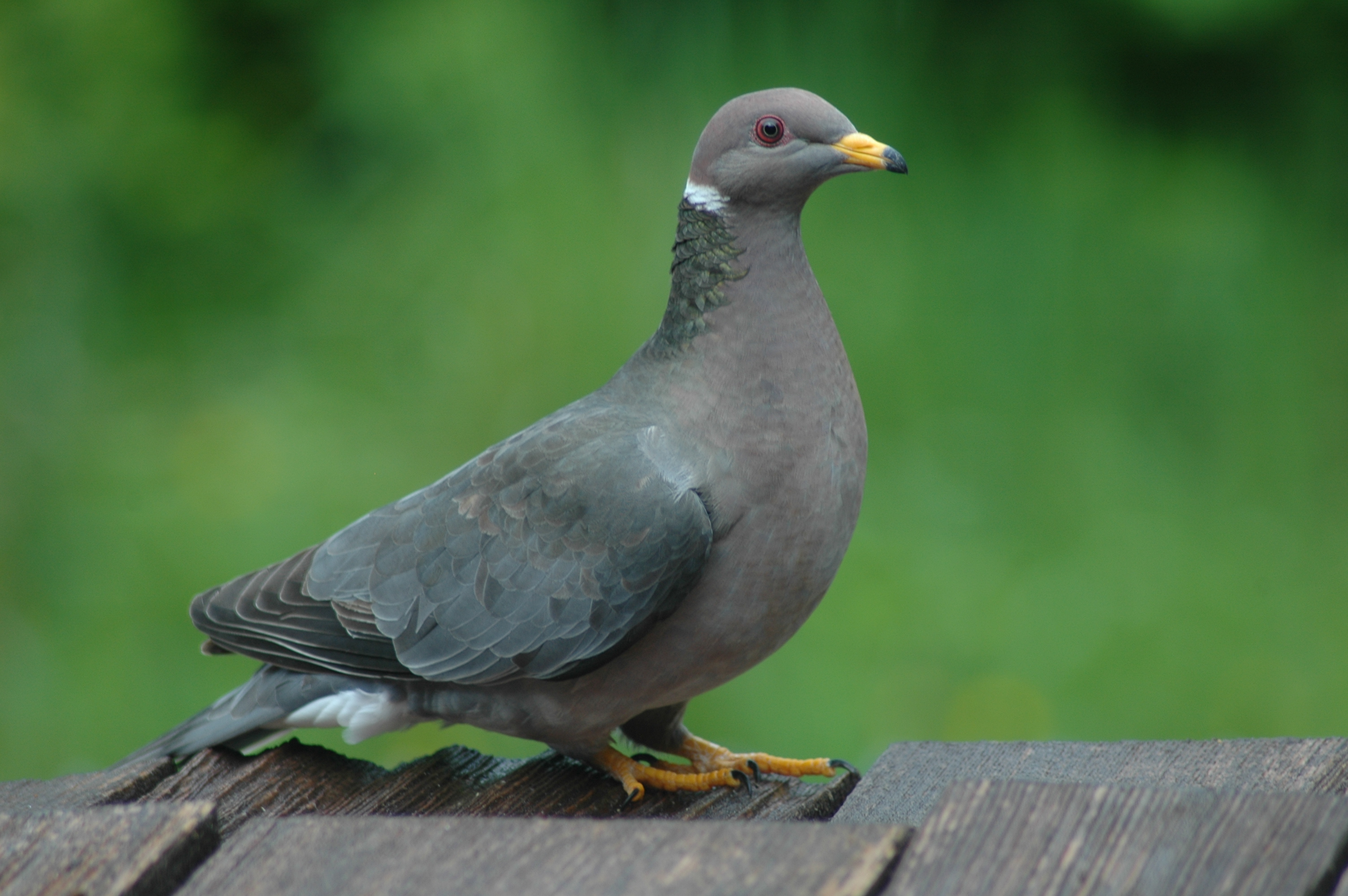
Band-tailed pigeon photo©Jim Robertson

Band-tailed pigeon photo©Jim Robertson

NBC Sports Network Cancels NRA-Sponsored Elephant Hunting Show After Host Compares Critics To Hitler

[Interesting that the network cancelled the show because the host dared to mention Hitler, not because he shot an elephant twice in the face and then celebrated its death over champagne… Why he thinks we only care about elephants and not the hunting of ducks, deer, rabbits, etc. is beyond me. Not all anti-hunters are “animal racists,” as he put it, or species favoritists, as I call it. Many of us don’t want to see the hunting of any non-human animals.]

 September 29, 2013  1:41 PM EDT ››› SOPHIA TESFAYE

Photo by Lord Mountbatten

NBC Sports Network has announced that it has canceled the hunting show Under Wild Skies after host Tony Makris compared critics to Hitler.

Controversy began after the show aired an episode in which an elephant was shot in the face twice by host Makris. Makris, who has longstanding ties to the NRA, celebrated the killing of the elephant with a bottle of champagne.

Following days of outrage and a petition calling for NBC to cancel the show, Makris took to NRA News on September 26 to respond to critics by claiming they advocated for a form of “animal racism.” Makris said the following about critics who argued that elephants not be targeted:

MAKRIS: The nice ones will come up and go, you shoot elephant? Why? And I said well, the short answer is because hungry people eat them and because I’m a hunter. You know, I’m not an elephant hunter. I’m a hunter. I hunt all things. And they go, well nobody should shoot an elephant. I said, why? And they go they’re so big and kind and gentle and smart and I said, okay, let me ask you a question. Should I be able to shoot birds? Well, I guess that’s okay. Ducks? Yeah. Pigeons? Oh, they’re flying rats, okay. Rabbits? Well rabbits are cute. But yea. Squirrels? That’s nothing but a rat with a tail — with a fuzzy tail. And I said, well deer eat all my mother’s roses in Long Island and I go– so I can shoot all of those, but not an elephant? No. Do you realize that if you subscribe to that philosophy you are committing a very unique form of animal racism?

CAM EDWARDS, HOST: [laughter]

MAKRIS: And now they’re shocked. And they said but they’re so big and special and they’re smarter. And I went, you know, Hitler would have said the same thing.

On September 28, NBC Sports Network announced in a statement to Deadspin that Under Wild Skies has been canceled due to Makris’ comments:

Under Wild Skies will no longer air on NBC Sports Sports Network due to the program’s close association with its host, whose recent comments comparing his critics to Hitler are outrageous and unacceptable. NBCSN will continue to air all of our other quality outdoor programming.

Beware the The Hunt Unrestricted on National Treasures Act, or “HUNT Act”

HUNT Act for Hunters. Legislation introduced Thursday in the U.S. Senate would increase hunting and angling access on public lands and bolster the nation’s outdoor recreation economy. The Hunt Unrestricted on National Treasures Act, or “HUNT Act,” introduced this afternoon by Sen. Martin Heinrich of New Mexico, directs federal agencies to inventory all public lands greater than 640 acres where hunting and fishing are legal but inaccessible with the goal of expanding access for members of the public. The legislation finances land acquisitions from willing sellers through a small percentage of Land and Water Conservation Fund monies. Heinrich introduced similar legislation in 2012, when he was a member of the House of Representatives. Some sportsmen’s organizations hailed the measure as a way of maintaining and expanding sportsmen’s access to public lands that provide important fish and wildlife habitat and offer valuable opportunities for hunting and fishing.

Read more about the HUNT Act: http://marcusschneck.com/2013/09/26/hunt-act-would-seek-hunter-access-to-landlocked-public-lands/

nohuntsign

2 humans gored at Spain bull spearing fiesta

The Associated Press

Sunday, Sept. 22, 2013 | 12:23 a.m.

Spaniards on horseback have chased a hulking bull and speared him to death at an annual fiesta held in a small central town. But the 580-kilogram (1,279-pound) bull named Vulcano first managed to gore a news agency photographer and another person.

The centuries old tradition in Tordesillas is called savage by animal rights activists, and Spain’s Pacma group against animal mistreatment gave a petition to Parliament with 85,000 signatures demanding it be banned.

The bull gored Agence France Presse freelance photographer Pedro Armestre in the right thigh Tuesday after it was set loose amid thousands of people and the spear-bearing horse riders. AFP says in a statement that Armestre was conscious and taken to a hospital for surgery.

Another unidentified person also suffered a non-life threatening goring.

http://www.lasvegassun.com/news/2013/sep/22/eu-spain-bull-spearing/bull

HELP CHALLENGE THE UNCONSTITUTIONAL HUNTER HARASSMENT LAW IN PENNSYLVANIA‏

From the Committee to Abolish Sport Hunting/WILDWATCH.ORG

Jan Haagensen’s case challenging the hunter harassment statute in Pennsylvania will be either taken up by the Supreme Court of the US (SCOTUS) or not at the end of September. If SCOTUS takes up the case and rules in Jan’s favor, hunter harassment laws can be successfully challenged in every state.

To increase Jan’s chances of being heard, please go to this website: http://www.thepetitionsite.com/318/132/729/challenge-the-hunter-harassment-law-in-pennsylvania/ and take the action indicated by copying and pasting the text into the supreme court email form provided within the petition. Also, please sign the petition and pass along to others. On behalf of the hunted, we thank you!!!!

CHALLENGE THE HUNTER HARASSMENT LAW IN PENNSYLVANIA

Bowshot deer

IF YOU ASK THE HUNTER NOT TO SHOOT HER,

YOU WILL BE ARRESTED!

Read, spread the word, and TAKE ACTION!

Thanks to you, C.A.S.H. is able to publish information needed by activists and media. Thanks to you, C.A.S.H.org
is able to educate the public about the pro-hunter bias in our government. Our fervent wish is for the government to protect wild animals as individuals rather than exploit them as “natural resources.”

Hunter Started 237,000 Acre Yosemite Fire

Firefighters Gain Ground on Rim Fire as Cause is Discovered

By Jillian MacMath, AccuWeather.com Staff Writer
September 06, 2013; 9:42 AM

Thick smoke from the Rim Fire blaze has begun drifting into the Yosemite Valley, a popular scenic destination for visitors to the Yosemite National Park.

Nearly 4,000 firefighters continue to battle the massive blaze that has consumed more than 237,000 acres since its start on Aug. 17.

On Thursday, the Incident Information System confirmed in a news release that the fire began on Aug. 17 after a hunter allowed an illegal fire to escape.

[Hunters are responsible for dozens of forest fires each year, contrary to the claim that they’re the “best environmentalists.”]

Investigators from the U.S. Forest Service Law Enforcement and the Tuolumne County District Attorney’s Office are withholding the hunter’s name pending further investigation.

No arrests have been made at this time. Additionally, there have been no indications that the hunter was involved with any illegal marijuana cultivation.

The fire, now 80 percent contained, has resulted in poor air quality for many surrounding areas.

“Visitors to Yosemite should expect periods of smoky conditions, depending on winds and fire behavior,” the National Park’s Air Quality and Smoke Monitoring page read on Wednesday.

A webcam in Yosemite National Park captures a shot of smoke from the Rim Fire in the distance on Aug. 29.

On Tuesday, the fire grew a total of 1,700 acres as southwest transport winds pushed smoke into communities northeast of the fire, including Pinecrest, Bear Valley, Markleeville, Minden, Carson City and the Lake Tahoe Basin.

Time to Say, “Enough!”

…it took two hours after hooking the alligator using a crossbow before they could shoot it with a shotgun. It took four hours more to get it into the boat, but Brockman said it was too heavy to do with just the three of them, so they just waited in the middle of the river for the sun to rise. “We killed the alligator at 4 a.m.,” he said.
How is this shit even legal? Don’t non-humans have any rights at all? It’s time to reign in hunter behavior and say, “Enough!”
And why is NBC “News” glorifying it?…
Mississippi hunters catch record-breaking ‘gators
By Simon Moya-Smith, Staff Writer, NBC News

It’s only been three days since the start of Mississippi’s alligator hunting season, yet a pair of parties have already submitted two record-breaking ‘gators, state wildlife officials announced Monday.

Dustin Brockman of Vicksburg, Miss., ventured with his brother and friend into the Mississippi River by motorboat early Saturday night and emerged with a 727-pound record breaker that was 13 feet, 4.5 inches long.

The previous weight record was 697.5 pounds, according to Ricky Flynt, program coordinator with the Mississippi Department of Wildlife, Fisheries, and Parks.

“We chased him for about two hours,” Brockman said. “Then we got a shot on him.”

Brockman said that it took two hours after hooking the alligator using a crossbow before they could shoot it with a shotgun. It took four hours more to get it into the boat, but Brockman said it was too heavy to do with just the three of them, so they just waited in the middle of the river for the sun to rise.

“We killed the alligator at 4 a.m.,” he said. “We waited until 6:30 (a.m.) before I called three or four more guys to help us load it into the boat.”

And just one hour prior to Brockman’s epic catch, a hunting party led by Beth Trammell of Madison, Miss., hooked a 13-foot, 5.5-inch alligator near Redwood.

The Trammell party, which included six people, broke the previous weight record with their 723.5-pound catch and held the markbefore Brockman broke it 60 minutes later.

“It took about four hours to get it in the boat,” said Trammell. “We had to flag another boat down to help us out it was so big.”

Trammell said that when they had the hefty alligator hooked, their poles were bent like “candy canes.”

Mississippi Department of Wildlife, Fisheries, and Parks

Dustin Bockman of Vicksburg, Miss., and his team pose with the alligator they caught near the Big Black River in Claiborne County. The alligator is 13-feet and 4.5 inches in length and weighs 727 pounds.

The current length record, which has yet to be broken, is 13 feet, 6.5 inches. That alligator was captured on the Pascagoula River in 2008, according to the Mississippi Wildlife, Fisheries and Parks department.

Brockman, who had never hunted alligator before this weekend, said the majority of the hunting occurs at night when it’s easier to spot the reptiles’ eyes with a flashlight.

“It’s a lot easier to find them because their eyes reflect,” he said. “In the daytime, if they’re lying on a bank underneath the tree, you ain’t going to see them.”

Brockman said he plans to use the gator’s skin for a gun strap and a picture frame and will eat the meat after providing some to his friends.

Mississippi Department of Wildlife, Fisheries, and Parks

Beth Trammell of Madison, Miss., and her team pose with their catch Sept 1. The alligator is 13-feet and 5.5 inches and weighs 723.5 pounds. It broke the previous record of 697.5 pounds.

“We’re going to cook it for sure,” he said. “I got a bunch of people who want some, and there’s plenty for me and everybody else.”

Trammell said she plans to get the meat back from the processor as early as Friday.

“We’ll eat the meat,” she added. “I think my brother in law is going to get the head mounted.”

And the Trammell party will be back out on the water this weekend, hoping to catch another record breaker…

United “Sportsmen” of Wisconsin Awarded $500,000 Grant to Promote Hunting

DNR awards $500,000 grant despite thorny questions

Group is lone bidder for award to promote hunting, fishing

Madison — A controversial $500,000 grant for promoting hunting and fishing was awarded Thursday by Natural Resources Secretary Cathy Stepp despite tough questions from the public and a committee meeting earlier in the day.

The United Sportsmen of Wisconsin Foundation, a group with close ties to GOP politicians and other conservative organizations but a scant track record, was the only applicant for the award.

Stepp awarded it to United Sportsmen late Thursday afternoon after the Sporting Heritage Committee that morning voted 4-1 in favor of the grant. The vote came after the group took public testimony that was entirely opposed to it.

In announcing her decision, Stepp released a finding by her legal counsel that United Sportsmen of Wisconsin met the criteria in state law for the grant and said in a statement that she had to award the money to United Sportsmen under a budget provision written by Republican lawmakers.

“I will be inserting clear and specific language within the grant contract to ensure that desired outcomes are met in an efficient and transparent manner with ample opportunity for public scrutiny. We will work to incorporate many of the concerns and ideas we heard during today’s hearing into the grant contract,” Stepp said.

United Sportsmen has been active in elections and lobbying over the past two years on behalf of conservative causes. But it has no history of doing the kind of training called for in the grant, though its board members have done so as part of other groups.

The grant was quickly approved in May in a session of the Joint Finance Committee on a motion written by Assembly Majority Leader Scott Suder (R-Abbotsford) and Rep. Dan LeMahieu (R-Cascade). The DNR posted the grant on an agency web page but did not put out a news release on it.

Its language prevented most established conservation groups, including the Wisconsin Wildlife Federation and state chapters of Pheasants Forever, National Wild Turkey Federation and Rocky Mountain Elk Foundation, from applying for the grant.

Lone no vote

Mark LaBarbera of Hazel Green, the sole member of the committee to vote against United Sportsmen, asked the group’s president questions about its finances, structure and qualifications, stressing that “people around here think this just doesn’t smell right.” Afterward, he said he wasn’t satisfied with the answers as given.

“I didn’t think we had a clear enough answer that I could vote yes so I had to vote no,” LaBarbera said.

LaBarbera asked United Sportsmen president Andy Pantzlaff if he could provide a copy of United Sportsmen’s letter from the federal Internal Revenue Service showing it had received tax-exempt 501(c)(3) status.Pantzlaff, who called into the meeting, said he could provide that with enough time.

As of Thursday, there was no entry on the popular website, GuideStar, that United Sportsmen had filed the annual reports that federally recognized tax-exempt groups are supposed to file with the IRS, though sometimes those reports can lag in being filed or posted to GuideStar. Pantzlaff didn’t respond to a reporter’s phone messages and email request for this information.

The drafting file for the budget bill shows that a lawmaker asked for a specific change to the grant motion so the group receiving the grant would not have to be recognized as a 501(c)(3) nonprofit.

In the legal memo released by Stepp, her chief legal counsel Tim Andryk noted that, “(United Sportsmen is) not required by the statute to be tax exempt or be a sec. 501(c)(3) organization as inquired about at today’s hearing, and thus a letter from IRS is not needed.”

In his statements to the committee by phone, Pantzlaff said his group would try to triple the grant amount by seeking private matching funds; not paying its board members; doing a national search for a full-time executive director; and hiring a full-time director of operations and part-time staffer to work on public policy.

The group would seek to train people who could serve as long-term mentors for people wanting to learn to hunt and fish, he said. The group also would bring programs such as the National Rifle Association’s Eddie Eagle gun safety program into schools to get youths interested in shooting sports.

“Failure is not an option,” Pantzlaff said. “We have to try something new and innovative.”

The grant will provide $200,000 this year and $300,000 in 2014. Thereafter, it will provide $450,000 in each two-year budget. The grantee will have to provide $150,000 of its own funds in matching dollars in each future two-year budget.

The state budget includes no requirement that the grant be put out to competitive bid in the future, but Scott Gunderson, the committee chairman and the No. 3 official at the DNR, said the DNR could do that and likely would.

Gunderson said conservation groups such as the Gathering Waters and River Alliance of Wisconsin also received grants from the DNR for specialized purposes with little or no competition.

Most of those testifying praised the purpose of the grant but questioned why more of the state’s many hunting and fishing groups weren’t able to apply. Ray Anderson, a retired DNR grants employee who now teaches hunter safety, said he was concerned by the process of the grant and the fact it excluded the National Wild Turkey Federation, a group that he belongs to.

“It would be prudent for the Legislature and the DNR to hit pause on this,” Anderson said.

The five-member Sporting Heritage Committee is composed of Gunderson; Rep. Al Ott (R-Forest Junction); LaBarbera; Sen. Neal Kedzie (R-Elkhorn) and Bill Torhorst of Oregon. Ott, the first committee member called upon to vote, initially passed, voting yes after all the other committee members had voted and he was called on a second time.

Though its foundation was legally established in January, United Sportsmen of Wisconsin was formed about two years ago and has been lobbying lawmakers in favor of sporting legislation such as the creation of a wolf hunt as well as bills to ease the way for a controversial open-pit iron mine in northern Wisconsin and to better enable development in wetlands.

The group also sponsored the Sportsmen Freedom Fest and Concert in Lake Delton with Americans for Prosperity and the NRA in October 2012, just ahead of the presidential election. In 2011, the group Citizens for a Stronger America reported in its tax filing giving $235,000 to United Sportsmen along with large donations to two social conservative groups: Wisconsin Right to Life and Wisconsin Family Action.

ryanwax