A convergence of bucks – Milwaukee basketball and hunting

[Well now, isn’t that special.]

By Paul A. Smith of the Journal Sentinel

Oct. 23, 2013 
Licensed hunters and anglers can receive discounts on Milwaukee Bucks tickets  as part of a program offered by the NBA franchise and the Department of Natural Resources.

People who buy tickets under the “DNR Nights” program will receive a free blaze orange winter  hat featuring the Milwaukee Bucks emblem.

The discount is available to holders of Wisconsin hunting and fishing  licenses. The offer is good for tickets to the following games at BMO  Harris Bradley Center:

Saturday, Nov. 2, 7:30 p.m. vs. Toronto (opening night)

Wednesday, Nov. 6, 7 p.m., vs. Cleveland

Saturday, Nov. 9, 7:30 p.m., vs. Dallas

Saturday, Nov. 16, 7:30 p.m., vs. Oklahoma City

Wednesday, Nov. 20, 7 p.m., vs. Portland

Saturday, Nov. 23, 7:30 p.m., vs. Charlotte

The promotion offers a ticket and blaze orange Bucks hat for $18 in the upper  bowl and $35 in the lower bowl. The prices represent a discount of up to 40%,  according to the agency.

Read more from Journal Sentinel: http://www.jsonline.com/blogs/sports/228967181.html#ixzz2j1gnV1bF Follow us: @NewsHub on Twitter

Hunters “Become the Hunted,” Squeal

Wis. Hunters Apparently Shot at by ‘Animal Lover’

Updated at: 10/23/2013  By: Beth McDonough, KSTP

Hunters looking for ducks, find trouble. The harrowing hunting story happened in Barron County in Western Wisconsin.

Two men were shot at, numerous times, while hunting legally in Cameron. The man who opened fire, is only facing minor charges.

Both sides are telling their stories to Eyewitness News.

It’s the heart of duck hunting season. On Sunday, a marsh looked like it does, perfect, for outdoorsman, “we knew it was going to be a great day, it started out good.”

Yet within minutes of shooting two mallards, the hunters became the hunted.

A stranger lurking in the nearby woods, got mouthy, “he went off on a rant about how we shouldn’t be here, we should be in Afghanistan if we were gonna shooting something,” says Levi Johnston.

Then, that stranger, Van Hawkinson, got a gun, “for a moment there, I got angry and was hurt, I jumped in the vehicle took a .410 with me, what’s that gonna do? I shot out at the corn field up in the air, I had my weapon like so.”

We asked duck hunter David Reichenberger if he felt targeted, “oh absolutely, if he had a .22 or any other lethal weapon he could’ve killed us.”

Reichenberger and Johnston were in a canoe. No way to escape. The shots were close enough to scare them. And that’s the point, “I’m an animal lover and bird lover. I don’t like to see things die, especially for the sport of killing,” says Hawkinson.

Although the hunters were on private land, they had permission from the owner to be there. Authorities arrested and charged the 64-year-old with dangerous use of a weapon and disorderly conduct, which are misdemeanors and considered minor crimes by the law.

We asked Hawkinson if he was sorry, “yes, why? Because I went to jail for it.” He was there for one night, then he was free on $1,000 bond.

“That’s it?” That’s what David Reichenberger and Levi Johnston want to know, “he got nothing for basically trying to kill us, how is it you can shoot somebody and the next day get out of jail?”

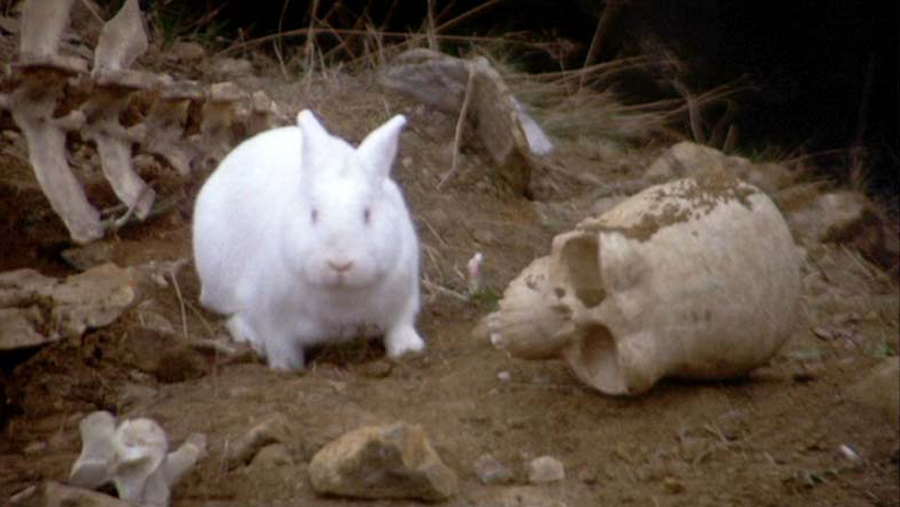
monty-python-image-3

POLL: Should the Slaughter of Grouse be allowed to continue?

Please vote (No) here and circulate widely:

http://focusingonwildlife.com/news/poll-should-the-slaughter-of-grouse-be-allowed-to-continue/

Aug12, 2013

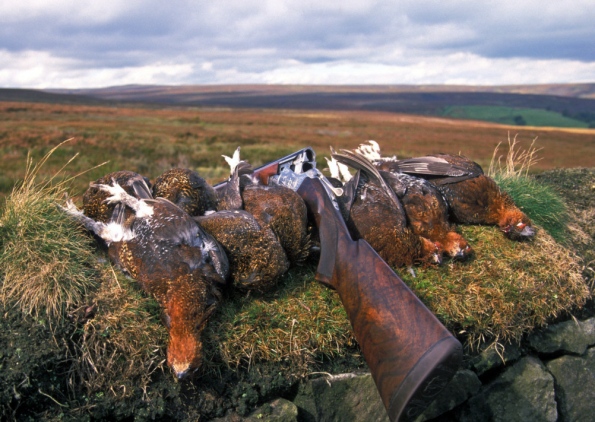
Today is the “Glorious Twelth”, a day when according to tradition hunting enthusiasts gather on moors in Scotland and the north of England to shoot Grouse. Proponents will tell you that that this is an important British tradition. They will also argue that it is good for Britain’s economy by attracting tourists, providing jobs for thousands of people and generating several £100 millions annually .

Eight Reasons to Oppose Grouse Shooting:
1.Killing birds for sport is cruel and uncivilised. [Say no more!]
2.A large number of native birds and mammals who interfere with grouse shooting are trapped, poisoned or snared. Victims include stoats, weasels, and even iconic raptors such as hen harriers, red kites and golden eagles.
3.An unnatural, heather-rich environment is created because the grouse thrive on young heather shoots. To create fresh young shoots, the heather is burned, which can harm wildlife and damage the environment.
4.The burning of heather, reports an expert, ‘threatens to release millions of tonnes of carbon locked into the peat bogs underpinning the moors. Where burning occurs, the hydrology changes and the peat is open to decomposition and erosion. This strips the moor of carbon as surely as setting fire to the Amazon Forest.’ (Adrian Yallop,New Scientist magazine, 12 August 2006)
5.The harsh ‘management’ of moorlands causes grouse numbers to boom. But as they overburden the landscape, they become weakened and fall prey to a lethal parasite – Strongylosis. This attacks the gut and leads to a collapse in the population.
6.A cycle of population boom and bust is the norm on Britain’s grouse moors.
7.Large quantities of lead shot are discharged, which is toxic to wildlife.
8.Grouse shooting estates use the Countryside and Rights of Way Act to restrict public access to mountain and moorland.

3745058911


Safari Club A-Holes Auction Permit to Kill a Rhino

[And finally, this article, the last of today’s series on anti-animal A-holes (brought to you by good folks at “Ammoland”), needs no introduction…]

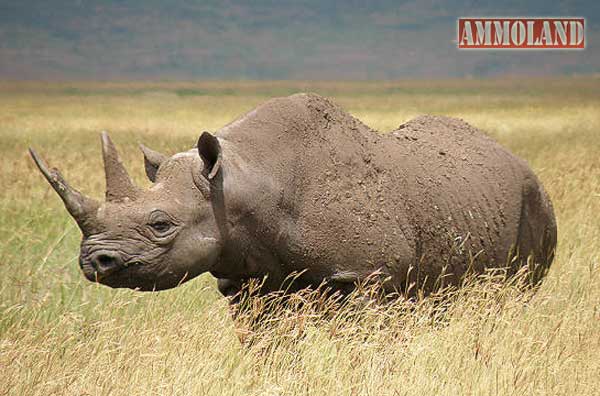
black-rhino

Rhino Permit to be Auctioned at Dallas Safari Club Convention
Published on Friday, October 11, 2013

DALLAS, TX – -(Ammoland.com)- —Through an historic collaboration between  governments, one hunter will have a chance to hunt a black rhino, help manage  and conserve the species, and import a rare trophy to the US in 2014.

The Dallas Safari Club (DSC) has been selected by the Government of the  Republic of Namibia to auction a special hunting permit with all proceeds  earmarked for rhino conservation in that country.

The US Fish and Wildlife Service has promised full cooperation with a  qualified buyer.

DSC will sell the permit during its annual convention and expo Jan. 9-12 in  Dallas.

An unprecedented sale price is expected.

“This fundraiser is the first of its kind for an endangered species,” said  DSC Executive Director Ben Carter, “and it’s going to generate a sum of money  large enough to be enormously meaningful in Namibia’s fight to ensure the future  of its black rhino populations.”

The Government of the Republic of Namibia approved the permit in accordance  with CITES provisions to generate crucial funding for rhino conservation  initiatives including anti-poaching efforts—while at the same time managing the  black rhino population within Mangetti National Park, where the hunt will take  place.

Science has shown that removing certain individual animals can help rhino  populations grow.

Black rhinos commonly fight to the death. In fact, the species has the  highest combat mortality rates of any mammal. Approximately 50 percent of males  and 30 percent of females die from combat-related injuries. Extremely aggressive  bulls are known to be population-limiting factors in some areas. Selectively  harvesting these animals can lead to population increases and greater  survival. [This is total b.s., by the way. Don’t these people have any faith in nature whatsoever?]

Rampant and indiscriminate poaching is threatening rhino populations across  Africa. Rhino horn has high black-market value, especially in Southeast Asia,  for ornamental uses and folk remedies, although medical research has disproved  actual benefits.

The Conservation Trust Fund for Namibia’s Black Rhino will receive 100  percent of the hunting permit sale price. Both DSC and contracted auctioneer Ed  Phillips of Houston offered to forego their customary sales commissions to  support the special cause.

Louisiana conservation attorney John J. Jackson, III, helped facilitate the  auction item and proceeds will be channeled through his Conservation Force, a  501(c)(3) nonprofit public charity, for income tax deduction purposes.

The winning bidder may hire his or her qualified outfitter or guide to lead  the hunt, which will be accompanied by Namibian wildlife officials.

About Dallas Safari Club (DSC) Desert bighorns on an  unbroken landscape, stalking Cape buffalo in heavy brush, students discovering  conservation. DSC works to guarantee a future for all these and much more. An  independent organization since 1982, DSC has become an international leader in  conserving wildlife and wilderness lands, educating youth and the general  public, and promoting and protecting the rights and interests of hunters  worldwide. Get involved at www.biggame.org.

Read more: http://www.ammoland.com/2013/10/rhino-permit-to-be-auctioned-at-dallas-safari-club-convention/#ixzz2iO32pdcv

Sign-on Letter – To Kill A Mourning Dove

From Barry Kent MacKay,  Born Free USA’s Canadian Representative  http://www.bornfreeusa.org/

Please circulate widely

Below is a sign-on letter to encourage individuals to send comments opposing the recreational hunting of Mourning Dives and Barrow’s Golden-eye – listed ‘at risk’.

Even if you are skeptical as to whether the letter will make any difference in reversing a ‘political’ decision, please sign-on. If enough of us send the letter, it will likely guarantee that these sorts of political decisions regarding wildlife will not be made easily in the future.

Please free feel to change the letter as necessary.

Detailed background information is below.

To: Stephen Harper; Prime Minister

<mailto:pm@pm.gc.ca> pm@pm.gc.ca

CC. Jack Hughes, Canadian Wildlife Service : <mailto:jack.hughes@ec.gc.ca> jack.hughes@ec.gc.ca

Environment critics: Megan Leslie (NDP) megan.leslie@parl.gc.ca and Micheal Harris (PC) michael.harris@pc.ola.org

Kathleen Wynne Ontario Premier premier@ontario.ca

Dear Prime Minister,

I wish to express my strong opposition to the decision by the Conservative government to allow Mourning Doves and Barrow’s Goldeneye – a species at risk – to be hunted in Ontario. It has been reported that this decision was made very quietly, so as to restrict public input.

Hunters form a very small minority of Canadians, yet the wildlife they are permitted to kill are part of our shared natural heritage. Therefore it is shameful to deny the majority of us

a chance to respond before the final decision was made. We are the people who enjoy the environment in a peaceful and non-destructive way, and wish to continue doing so.

Mourning doves are part of our everyday environment and a symbol of peace, and do not appear to be a migratory species in southern Ontario. Are other small, sociable birds
to be the next target?

This appears to be a purely political decision aimed at throwing a “bone” to the sport hunting lobby as you shop for voters.

Most Canadians are not hunters and do not want to see sport hunting promoted to our youth.

The recreational killing of wildlife in no way reflects my/our history, traditions or future.
This is not subsistence hunting, which I can respect, or an economic driver and never was.

In any case, these small birds provide at best a minor source of food delicacies, but are primarily useful for target shooting – a total waste of life.

I am asking that you act quickly to prohibit entirely the killing of Barrow’s Goldeneye in all jurisdictions, and also cancel the Mourning Dove hunt in Ontario. I shall also request that the provincial government take appropriate action to bring this to a speedy end.

I look forward to your reply.

Name

Address

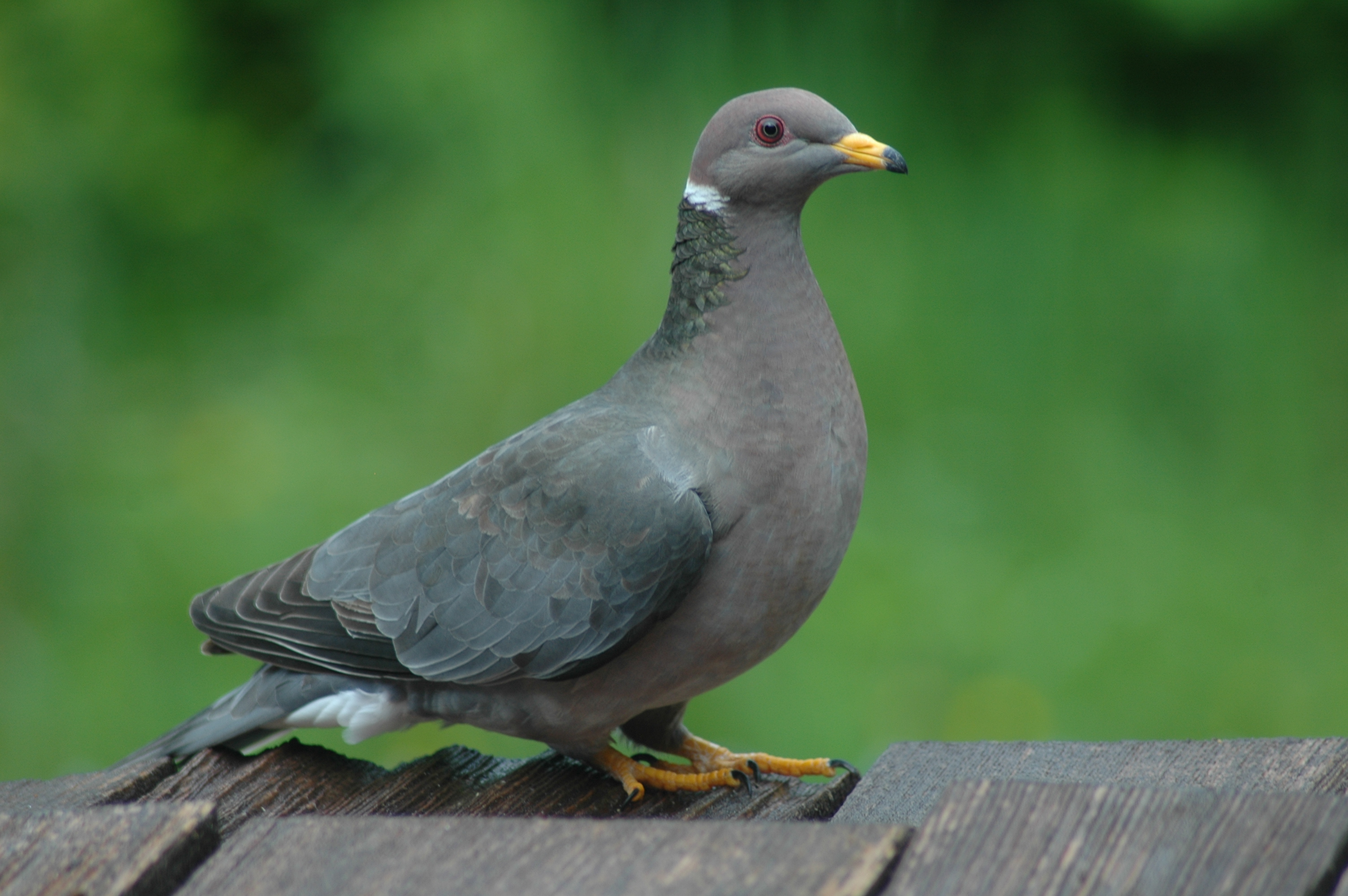
Band-tailed pigeon photo©Jim Robertson

Band-tailed pigeon photo©Jim Robertson

Hot Dogs Are Gross and Baseball is a Waste of Time

For the past few posts it seems I’ve set out to slay the sacred cows (so to speak) of American culture (and/or counter-culture). First I challenged the cow-haters—those radical anarchists who seek to extract revenge for environmental abuses by attacking the most nonthreatening (and least intentionally culpable) of all the culprits—the cows themselves. Next, I set out to re-revise revisionist history by reminding readers that all people are relative newcomers to this hemisphere and, by their very membership in the human race, destructive by nature.

Now, just to show I’m not in this for any kind of popularity or personal gain, I’m going to end this trilogy by going after two established pillars of standard American society: hot dogs and professional sports. When I say “hot dogs,” I mean the “all-meat” kind, as opposed to the “fake” ones made out of soy or seitan or some other benign, cruelty-free, plant source. “Real” hot dogs were actually an ingenious Yankee invention in response to the question, “What should we do with all the disgusting guts, eyeballs and offal on the slaughterhouse floor” (the proverbial “beaks and peckers,” according to the kid on Billy Bob Thornton’s Sling Blade)? “I know—let’s package it, give it a fun name and market it as food!”

And finally, we come to the most consecrated of American cows: professional spectator sports. Now, I’m all for people getting out and challenging themselves by hiking, skiing, weight training or the like, but sitting around jeering, cussing or cheering at a bunch of overpaid athletes while choking down hot dogs (“real” ones, not those candy-ass, heart-healthy soy dogs) always seemed like a waste of time to me. My question is, why do we need an entire section of every newspaper or ten minutes of the nightly newscast devoted to how the “local” teams did on their rigged little games? I mean really, how are the Seattle Seahawks considered local to fans in, say, Whitefish, Montana, Pocatello, Idaho or Dillingham, Alaska?

If it’s all just for a friendly wager, that’s fine. But otherwise, I just don’t get it.

slingblade

Bipartisan Congressional Sportsmen’s Caucus Leadership Introduces 2013 Sportsmen’s Package

Bad news, from: “Hunting LifeBowshot deer

by: Kevin Paulson date: September 26, 2013

Bipartisan Congressional Sportsmens Caucus Leadership Introduces 2013 Sportsmens PackageSeptember 26, 2013

(Washington, DC) – In a significant advancement for sportsmen and women across the country, the bipartisan House leadership of the Congressional Sportsmen’s Caucus (CSC) introduced the Sportsmen’s Heritage and Recreational Enhancement (SHARE) Act of 2013. This legislative package includes various pro-sportsmen’s bills that will help ensure our outdoor traditions are protected and advanced, and addresses some of the most current concerns of American hunters and recreational anglers and shooters. Considered to be one of the most important pieces of pro-sportsmen’s legislation in a decade, the passage of the SHARE Act would be a legislative milestone for the sportsmen’s community.
CSC Co-Chairs, Representatives Bob Latta and Bennie Thompson and Vice-Chairs, Representatives Rob Wittman and Tim Walz, introduced the SHARE Act as a bipartisan package of pro-sportsmen’s legislation in an effort to continue to safeguard and promote America’s hunting and fishing traditions.

“This bipartisan legislative package is an important advancement for the outdoor sporting community, and I look forward to working with my colleagues to move this legislation forward and to promote the values and traditions that sportsmen and sportswomen enjoy in the United States,” stated Co-Chair, Rep. Bob Latta.

Co-Chair, Rep. Bennie Thompson, praised the CSC leadership for their efforts in getting this legislation to the House floor. “Today, the Co-Chairs of the Congressional Sportsmen’s Caucus introduced meaningful legislation that promotes the interest of hunters and anglers. I look forward to working with my colleagues in a bipartisan fashion to advance this legislation.”

Jeff Crane, President of the Congressional Sportsmen’s Foundation (CSF), emphasized bipartisan cooperation in advancing the SHARE Act in the 113th Congress. “I thank the bipartisan leadership of the CSC for their efforts in introducing this vital legislation. In July, a sportsmen’s package was the topic of CSF’s breakfast briefing on Capitol Hill, where many sportsmen-legislators voiced their support.”

Some of these priorities that this legislation addresses includes: protecting the traditional use of lead ammunition and fishing tackle by American hunters and anglers, the potential increase of more Pittman-Robertson funds for shooting ranges, the permanent authorization of the electronic duck stamp, the importation of polar bear carcasses legally harvested in Canada before 2008, authorizing the Gulf States Marine Fisheries Commission to develop and implement a new fishery management plan that will ensure the long-term conservation of Gulf of Mexico red snapper, and helps facilitate the use of and access to Bureau of Land Management and U.S. Forest Service lands and waters for hunting, recreational fishing and shooting. It also prohibits the enforcement of individual firearm regulations at water resources development projects administered by the Corps of Engineers, and prohibits additional fees for commercial filming on federal lands and waterways.

This legislation will also permanently establish the Wildlife and Hunting Heritage Conservation Council Advisory Committee to advise the Secretaries of the Interior and Agriculture on wildlife and habitat conservation, hunting and recreational shooting.

Vice-Chair, Rep. Tim Walz, stated, “I’m proud to join my colleagues in introducing this bipartisan, historic legislation that will protect and advance our American outdoor heritage for generations to come.”

Vice-Chair, Rep. Rob Wittman also voiced his support for the SHARE Act. “As a sportsman, I am humbled to advocate for this community and help introduce this legislation to advance priorities of American anglers, hunters and conservationists. This common sense package will expand opportunities for recreation, support fair treatment and modernize programs for sportsmen, and includes a proposal I authored to allow migratory waterfowl hunters to purchase their annual Federal duck stamp online,” Rep. Wittman stated.

CSF will continue to keep you apprised as this legislation continues to move through Congress. For more information on CSF, click here.

Since 1989 the Congressional Sportsmen’s Foundation (CSF) has maintained a singleness of purpose that has guided the organization to become the most respected and trusted sportsmen’s organization in the political arena. CSF’s mission is to work with Congress, governors, and state legislatures to protect and advance hunting, recreational fishing and shooting and trapping. The unique and collective force of the CSC, the Governors Sportsmen’s Caucus (GSC) and the National Assembly of Sportsmen’s Caucuses (NASC), working closely with CSF, and with the support of major hunting, recreational fishing and shooting, and trapping organizations, serves as an unprecedented network of pro-sportsmen elected officials that advance the agenda of America’s hunters and anglers.

Feds Reopen Waterfowl Hunting Areas in MT

“They’re willing to accommodate hunters thanks to intense pressure from hunting groups and the NRA…WTF!!!” ~ JB

http://missoulian.com/news/local/feds-reopen-waterfowl-areas-including-ninepipe/article_f9fef894-32b7-11e3-a27c-001a4bcf887a.html

By Vince Devlin

RONAN – Cancel that.

The U.S. Fish and Wildlife Service on Friday afternoon reopened waterfowl production areas to the public, 11 days after they – and other public lands, ranging from national parks to national wildlife refuges – were closed because of the federal budget impasse.

National wildlife refuges administered by FWS, such as the Bison Range and the Lee Metcalf National Wildlife Refuge, remain closed.

The decision came on the eve of opening day of pheasant season in several states, including Montana – and after earlier warnings to hunters that the areas were closed to all public access because of the partial government shutdown.

Federal wildlife officer Mike Koole, who had posted “closed” signs at entrances to the nine separate WPAs in the Ninepipe area to help hunters know where they weren’t supposed to be, was assisting at the Lee Metcalf Metcalf Refuge in the Bitterroot Valley on Friday afternoon when the decision was made in Washington.

Koole, who is furloughed from his job and working without pay, said it was his intention to return to the Flathead Indian Reservation, where he works out of the National Bison Range, and have all the “closed” signs down in the Ninepipe area before pheasant season starts Saturday.

“If I have to stay until midnight, I’ll make every effort to take them down,” he said. “Depending on how dark it gets, I might miss one or two.”

Koole said he would also try to post some copies of the news release announcing the decision to reopen the public lands. The Ninepipe area, a patchwork of federal, state, tribal and private lands, includes 3,268 acres designated as FWS waterfowl production areas.

***

In Friday’s news release, FWS spokesman Bruce Decker said that “despite limited staffing, the Service has undertaken an assessment to determine what, if any, potential exists to open lands to public use with our obligations under the government-wide shutdown. It has been determined that allowing public access to Waterfowl Production Areas will not incur further government expenditure or obligation, and is allowable under a government shutdown.”

Koole received the advisory at 2:22 p.m. Friday, saying that “effective immediately, all WPAs will reopen to public use.”

Decker acknowledged that the closures had come “at an extremely difficult time with hunting seasons just underway, fall migratory bird migrations at their peak, and hundreds of communities forced to cancel events as part of National Wildlife Refuge Week.”

Initially, he went on, “with the approximately 78 percent of its employees furloughed, we determined it would be difficult for the remaining, non-furloughed workforce to ensure the safety of facilities, lands and resources, in a manner that incurs no further financial obligation to the U.S. government.”

Decker said the closures could be reinstated if the stalemate in Washington continues, and the service determines that keeping the waterfowl production areas open is costing money that Congress has not authorized it to spend.

Doing so would violate the Anti-Deficiency Act, Decker said.

The decision to reopen waterfowl production areas was likely to please Pheasants Forever and Quail Forever, national organizations that early in the week “demanded” Congress and the service reopen WPAs, wildlife refuges “and other publicly purchased lands for recreational use by hunters and the general public.”

“Waterfowl production areas are the most used publicly owned resources by waterfowl and upland hunters,” Dave Nomsen, Pheasants Forever vice president of governmental affairs, had said Monday. “Now, after years of supporting these lands through their purchase of federal duck stamps, hunters are locked out during the brief season they are allowed to pursue their hunting passion.”

Photo copyright Jim Robertson

Photo copyright Jim Robertson

US government shutdown runs afoul of hunters

Two deer graze in a Yosemite Valley field on August 28, 2013 in Yosemite National Park, California
October 7, 2013 6:01 PM                        
Chicago (AFP) – Hunters hoping to bag their limit on federal land joined a chorus of frustrated citizens urging a halt to the US government shutdown Monday.”People are traveling hundreds of miles this time of year and getting to their favorite hunting or fishing holes and finding they’ve closed,” said Miles Moretti, president of the Utah-based Mule Deer Foundation.

October marks the beginning of what is usually a brief hunting season for waterfowl and larger game like deer and elk.

But with Congress unable to reach a deal on the federal budget and only essential government work permitted, some 329 federal wildlife refuges have been closed to hunting.

That will increase pressure on already crowded state-run public hunting grounds, and could have a serious economic impact, sportsmen’s groups warned.

It could also dash the dreams of hunters who’ve finally snagged a rare permit.

“In Colorado, hunters who’ve waited 12 years to hunt elk are being forced to turn in their tags,” said Gaspar Perricone, co-director of the Bull Moose Sportsmen’s Alliance.

Normally packed with tourists, the stairs leading from the Capitol Visitors Center up to the Capitol …

“The hardship isn’t only being felt by the hunters and anglers, but also by the locals and rural economies that depend on them,” he said in a conference call.

Hunting and fishing is an $86 billion industry while other forms of wildlife recreation, like birdwatching, bring the annual total up to $144 billion.

“It’s a big business,” said Desiree Sorenson-Groves of the National Wildlife Refuge Association.

“For commercial guides, this is Macy’s at Christmas.”

The shutdown also has halted critical habitat conservation efforts which need to be conducted in the fall ahead of the spring breeding season, she said.

Adding insult to injury, people can’t even call their congressmen to complain because the shutdown also affects constituent services.

“Our community is getting pretty frustrated,” said Whit Fosburgh, president of the Theodore Roosevelt Conservation Partnership.

“We want the damn thing to be fixed and want the federal government open.”

Secretary Jewell Should Look Up the Word “Refuge”

On September 26th 2013, just in time for “National Hunting and Fishing Day,” Sally Jewell, our new (and allegedly improved) Secretary of the Interior announced a U.S. Fish and Wildlife Service proposal to expand hunting opportunities throughout the National Wildlife Refuge System. The plan would open up hunting on six refuges currently free from armed ambush and expand existing hunting and fishing on another 20 “refuges.” The new rule would also modify existing regulations for over 75 additional refuges and wetland “management” districts.

The proposal is yet another nod to the “hunter’s rights” movement that has been sweeping the nation.

But what about the wildlife’s right to a true refuge, free from human hunting? Oh that’s right, animals don’t have rights, only humans—even including hunters—do. It is such an arrogant and absurd notion that sport hunters—arguably the lowest creatures to ever crawl out of the primordial ooze—have rights, while all other species of life do not, that I sometimes forget it’s the currently accepted law of the land.

In 1997, the U.S. Sportsmen’s Alliance (USSA) pushed for changes in wildlife laws to ensure that hunting and fishing were priority public uses on “refuge” lands. Thanks in part to USSA’s self-serving effort, the National Wildlife Refuge System Improvement Act was signed into law. As they openly boast, “The language of the Refuge Improvement Act has been essential in opening new Refuge lands to sportsmen.”

Meanwhile, Interior Secretary Jewell recently stated, “Sportsmen and women were a major driving force behind the creation and expansion of the National Wildlife Refuge System more than a century ago…” Of course they were, Sally, they were the ones who nearly hunted most of America’s wild species—including bison, elk, pronghorn, bighorn sheep, swans, sandhill cranes and too many others to mention here—to extinction. Jewell also suggested that, “Keeping our hunting and angling heritage strong” would “help raise up a new generation of conservationists.” Well, that depends on your definition of “conservation.”

There is so little land left in today’s world where wildlife can breathe easy, free from the constant fear that every human they see might be intent upon shooting them or taking the lives of their herd, pack or flock-mates. Studies have shown that animals suffer from the stress of hunting season in the same way that people during wartime suffer from Post-traumatic Stress Disorder. Yet, hunting is permitted on over 330 wildlife “refuges.”

According to the National Survey of Fishing, Hunting and Wildlife-Associated Recreation, published every five years by the USFWS, more than 90 million Americans, or 41 percent of the United States’ population age 16 and older, pursued wildlife-related recreation in 2011. Nearly 72 million people observed wildlife, 33 million fished, while 13 million hunted. In other words, while 80% of the total number of Americans who pursue “wildlife-related recreation” do so in a peaceful, non-consumptive, appreciative and respectful manner, only 14% hunt. And yet the rules are made—and everyone else is effected—by those who feel compelled to hunt down and kill our wildlife.

Hunting is not compatible with the quiet enjoyment of our nation wildlife refuges. It’s hard to watch birds while someone’s busily blasting at them. As a wildlife photographer, I can always tell by an animal’s nervous and elusive behavior that they are living in an area open to hunting. This was made abundantly clear on a photo tour of Alaska. In Denali National Park, which is closed to hunting, people are regularly rewarded with quality, up-close wildlife viewing. Conversely, wildlife sightings of any kind are extremely rare in national parks such as Wrangle-Saint Elias, where hunting is permitted.

Encarta defines the word “refuge” as “a sheltered or protected place, safe from something threatening, harmful, or unpleasant.” Given that hunting is indeed threatening, harmful and unpleasant, how can the blood sport be considered compatible with our national wildlife refuges?

______________

Your written comments about the 2013-2014 proposed Refuge-Specific Hunting and Sport Fishing Regulations can be submitted by one of the following methods:

Federal eRulemaking Portal Follow the instructions for submitting comments to Docket No. [FWS-HQ-NWRS-2013-0074]; or

U.S. mail or hand-delivery: Public Comments Processing, Attn: [FWS-HQ-NWRS-2013-0074]; Division of Policy and Directives Management; U.S. Fish and Wildlife Service; 4401 N. Fairfax Drive, MS 2042–PDM; Arlington, VA 22203.

Comments must be received within 30 days, on or before October 24, 2013. The Service will post all comments on regulations.gov. The Service is not able to accept email or faxes.

Comments and materials, as well as supporting documentation, will also be available for public inspection at regulations.gov  under the above docket number. In addition, more details on the kinds of information the Service is seeking is available in the notice.

Here are some of the refuges which the U.S. Fish and Wildlife Service proposes opening to hunting for the first time ever:

New York:

Shawangunk Grasslands National Wildlife Refuge: Open to big game hunting.

Oregon:

Baskett Slough National Wildlife Refuge: Open to migratory bird hunting.

Nestucca Bay National Wildlife Refuge: Open to migratory bird hunting.

Siletz Bay National Wildlife Refuge: Open to migratory bird hunting.

Pennsylvania:

Cherry Valley National Wildlife Refuge: Open to migratory bird, upland game and big game hunting.

Wyoming:

Cokeville Meadows National Wildlife Refuge: Open to migratory bird, upland game and big game hunting.

Meanwhile, under the proposal, the Service would expand hunting and sport fishing on the following refuges:

California:

Colusa National Wildlife Refuge:  Expand migratory bird and upland game hunting.

Florida:

Arthur R. Marshall Loxahatchee National Wildlife Refuge: Add big game hunting. The refuge is already open to migratory bird hunting.

St. Marks National Wildlife Refuge: Expand migratory bird hunting, upland game hunting and big game hunting.

Idaho:

Kootenai National Wildlife Refuge: Expand upland game hunting. The refuge is already open to migratory bird hunting and big game hunting.

Illinois:

Cypress Creek National Wildlife Refuge: Expand migratory bird hunting, upland game hunting and big game hunting.

Middle Mississippi River National Wildlife Refuge: Expand migratory bird hunting, upland game hunting and big game hunting.

Indiana:

Patoka River National Wildlife Refuge and Management Area: Expand migratory bird hunting, upland game hunting and big game hunting.

Iowa:

Neal Smith National Wildlife Refuge: Expand migratory bird hunting, upland game hunting and big game hunting.

Northern Tallgrass Prairie National Wildlife Refuge: Expand migratory bird hunting, upland game hunting and big game hunting.

Port Louisa National Wildlife Refuge: Expand migratory bird hunting, upland game hunting, big game hunting and sport fishing.

Maine:

Rachel Carson National Wildlife Refuge: Expand migratory bird hunting, upland game hunting and big game hunting.

Missouri:

Mingo National Wildlife Refuge: Expand migratory bird hunting, upland game hunting and big game hunting.

New Mexico:

San Andres National Wildlife Refuge: Expand big game hunting.

Oregon:

Bandon Marsh National Wildlife Refuge, OR and WA: Expand migratory bird hunting. The refuge is also already open to sport fishing.

Julia Butler Hanson Refuge for the Columbian White-Tailed Deer, OR and WA: Expand migratory bird hunting. The refuge is already open to big game hunting.

Malheur National Wildlife Refuge: Expand migratory bird hunting and sport fishing. The refuge is already open to upland game hunting and big game hunting.

Texas:

Aransas National Wildlife Refuge: Add migratory bird hunting. The refuge is already open to big game hunting.

Balcones Canyonlands National Wildlife Refuge: Expand hunting for migratory birds, upland game and big game.

Vermont:

Silvio O. Conte National Fish and Wildlife Refuge: Expand migratory bird hunting, upland game hunting and big game hunting.

Washington:

Willapa National Wildlife Refuge: Expand migratory bird hunting and big game hunting. The refuge is already open to upland game hunting.

More info:  http://www.doi.gov/news/pressreleases/interior-department-proposes-expansion-of-hunting-fishing-opportunities-in-national-wildlife-refuge-system.cfm
Text and Wildlife Photography ©Jim Robertson, 2013. All Rights Reserved

Text and Wildlife Photography ©Jim Robertson, 2013. All Rights Reserved