Do you support I-169, which is the initiative that would ban trapping on public lands?
please go here and vote Yes: http://helenair.com/news/opinion/do-you-support-i–which-is-the-initiative-that/poll_acefc7c4-b5f5-11e3-adc6-001a4bcf887a.html
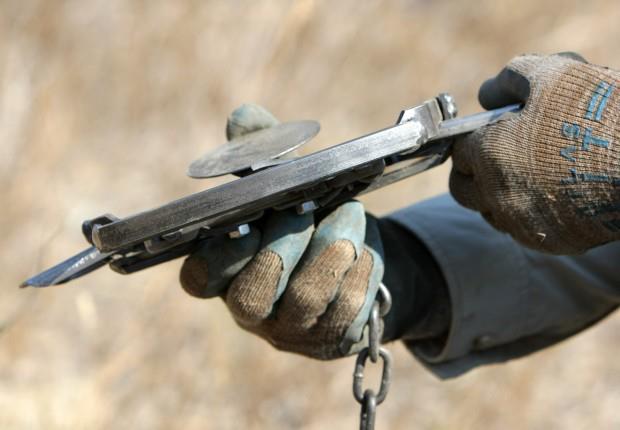

Do you support I-169, which is the initiative that would ban trapping on public lands?
please go here and vote Yes: http://helenair.com/news/opinion/do-you-support-i–which-is-the-initiative-that/poll_acefc7c4-b5f5-11e3-adc6-001a4bcf887a.html
http://m.cdapress.com/news/outdoors/article_59dcd3c3-b13b-52dd-8ca8-cabf53002b54.html?mode=jqm
F4WM seeks new members
COEUR d’ALENE – A group of North Idaho elk hunters formed a foundation in 2011 that is designed to incentivize more winter trapping of gray wolves in the Idaho panhandle – and now they want to take it statewide
The Foundation for Wildlife Management, or F4WM, has created a website and Facebook page to generate interest in starting new chapters and recruiting new members.
“We are in a hardball fight for our hunting heritage in Idaho,” said former Idaho Department of Fish and Game Commissioner Anthony McDermott, who now sits on the board of the foundation.
According to McDermott, the mission of the foundation is to encourage the trapping of gray wolves in areas where the wolf predation is excessive.
“The foundation is totally focused on restoring the elk in our backcountry areas,” he said.
The board of the foundation has found that trapping the wolves is the best way to manage the predator. McDermott said wolves are smart animals that learn very quickly how to evade traditional hunters.
“This organization has figured out that trapping is the answer,” he said. “But trapping is also very expensive.”
So, the foundation offers up to a $500 reimbursement to a successful gray wolf trapper who can provide receipts for their expenses.
F4WM has 278 members in the Idaho panhandle area, and they just started another chapter in Lewiston last week. The organization has also attracted interest from people in Salmon, Challis, Riggins and the Bitterroot Valley.
Cost of membership is $35 annually and most of that money is used to reimburse wolf trappers.
In 2011 and 2012, the F4WM was able to reimburse 22 trappers, and paid 14 trappers so far this season.
For more information on how to join the organization go online to http://www.foundationforwildlifemanagement.org
‘Chilling cruelty, unspeakable suffering and corporate denial’: the TRUE cost of the season’s must have fur-trimmed Canada Goose coat
By Laura Collins 23 January 2014
They have made America their new frontier, forging into the US clothing market to become one of the season’s most recognisable brands with sales of Canada Goose outerwear expected to top $30million this year alone.
In a high profile year in the States, Kate Upton has appeared on the front of Sports Illustrated in one of their fur trimmed, down jackets and nothing much else.
It isn’t the only firm to market such coats, yet Canada Goose has rapidly established itself as the label of choice for the well-known and the well-heeled braving the frigid weather blown in on the polar vortex.
But today MailOnline can reveal that allegations of chilling cruelty and unspeakable animal suffering have been repeatedly levelled at this family business turned multimillion dollar concern.
Scroll down for video

 +11
+11The real cost of a $600 coat: Campaigners claim the coyotes that are trapped and skinned for their fur to trim the hoods of Canada Goose coats can be in pain for days. It is unclear whether these images are from Canada Goose trappers but the firm does use the same leg holds
 +11
+11Exhausted, alone and all out of fight, this Coyote awaits its inevitable fate having been caught in a trap by its right hind leg
According to animal rights activists, behind every fur trimmed hood and down stuffed coat is a brutal reality of Coyotes trapped and left to suffer in the wilderness.
Many of today’s ethically aware consumers would never dream of buying a full length fur. But in an odd quirk of the current trend for this style of garment those same shoppers pull on a coyote trimmed coat without a moment’s concern for the origins of that little flurry of fur.
Lindsay Rajt, Director of Campaigns for People for the Ethical Treatment of Animals (PETA) said: ‘Canada Goose uses exclusively Coyote fur on the trim of their coats and those animals are trapped in a way that is just inherently cruel.’
According to a spokesperson for the firm: ‘The trapping of fur-bearing animals is strictly regulated by the provincial and territorial wildlife departments in Canada.
‘We purchase coyote furs from certified Canadian trappers, never from fur farms or endangered animals.
 +11
+11Kate Upton going ‘Polar Bare’ on the cover of Sports Illustrated’s 2013 Swimsuit edition, wearing a smile, a white Canada Goose parka and not much else
But PETA has dismissed the standards as ‘window dressing.’
Mr Rajt said: ‘The company’s reference to AIHTS standards is meaningless and a way of placating and silencing people with valid concerns.
‘Leg hold traps are still legal in Canada. Mother animals will chew off their limbs in order to get back to their young. The trapped animal might be there for days before the trapper comes and finds them, they are frightened and starving and in pain during that time. And then they’re bludgeoned or strangled to death or shot.’
 +11
+11A trapped Coyote howls in pain, its right forepaw held tight in the jaws of a leg hold trap – legal under the AIHTS but cruel according to PETA
 +11
+11Trapped Coyotes can struggle to get free for days until the hunter returns to check his traps. Mother animals separated from their young attempt to chew off their own limbs in a bid for freedom
Ms Rajt revealed that PETA is this week appealing to Canada Goose to abandon their use of fur in favour of synthetic alternatives and to dump their use of real down stuffing.
She said: ‘PETA is reaching out to Canada Goose to urge the company to switch to innovative, synthetic fur like their top competitor Helly Hansen, which has been fur-free for many years.
‘Additionally, we are asking that Canada Goose dump down and opt for revolutionary synthetic technology like the one recently developed by The North Face – Thermoball, which mimics down but offers superior versality.’
Ms Rajt claimed: ‘We have been trying to meet with this company, we’ve been trying to engage with them since 2006.
‘The CEO originally agreed to meet with us in 2008 to discuss trapping policies and methods but just never confirmed that meeting and then failed to make himself available to any of our follow ups.
‘It is a challenging company for us to work with.’
 +11
+11Meg Ryan pictured last month in New York’s West Village. Canada Goose’s concerted effort to win the US market has seen it become a celebrity brand of choice
 +11
+11Andrew Garfield and girlfriend Emma Stone in their Canada Goose parkas on a shopping trip in New York
 +11
+11Actress Clare Danes wearing her Canada Goose parka with its distinctive Coyote trim while braving the New York chill
But according to a spokesperson for the company: ‘We’ve corresponded with PETA on numerous occasions and it quickly became evident that they were not interested in a constructive conversation.’
Canada Goose was founded in 1957 and has enjoyed remarkable success and rapid growth across the past decade when it started marketing it’s ‘truly Canadian’ ethos to Europe.
Today the company employs more than 1000 people and sells its products in more than 50 countries across the world.
It continues to manufacture its coats in Toronto and Winnipeg but recently opened its first US Headquarters in Denver, Colorado. Last year it became the official sponsor of the Sundance Film Festival and US Equity firm, Bain, recently bought a majority stake in the hitherto entirely Canadian enterprise.
 +11
+11Real fur real suffering: Canada Goose President Dani Reese flanked by his company’s distinctive outerwear. He says the company uses Coyote fur ‘because it works’
 +11
+11The extreme weather outerwear is manufactured in Toronto and Winnipeg though US Equity firm, Bain, now owns a majority stakehold
 +11
+11Founded in 1957 the family company Canada Goose now employs more than 1000 people and sells its garments in more than 50 countries
Canada Goose President Danni Reiss is very clear in his assessment of the importance of the US market to his brand. He said, ‘The States is a market with one of the greatest potentials in the world. The US is growing faster than the overall company.’
Speaking in a corporate video Mr Reiss explained: ‘We use Coyote fur for a number of reasons. Number one, Coyote fur works – it’s functional, it provides warmth around the face in a way no synthetic fabric can. It does that in the coldest places on earth and it is important to realise that sometimes urban centres and cities can feel like the coldest places on earth.’
Coyote fur doesn’t freeze, doesn’t hold moisture, retains heat and is biodegradable.
Ms Rajt dismissed the necessity of real fur saying: ‘They actually do have some faux fur trim products and there’s a market for that. There’s no reason why they couldn’t switch completely.’
A spokesperson for Canada Goose said: ‘We understand PETA’s concerns and we respect the right of people to choose not to wear fur, however, we know PETA does not respect our ethical, responsible use of fur so further conversation won’t be productive.’
But Ms Rajt insisted: ‘I just don’t believe that half the people wearing these coats understand what’s really involved in the making of them. And I just don’t believe that they would make that same choice if it was an informed one.
Read more: http://www.dailymail.co.uk/news/article-2544075/Revealed-Chilling-cruelty-unspeakable-suffering-corporate-denial-Is-TRUE-cost-seasons-Canada-Goose-coat.html#ixzz2rYL8KOiR Follow us: @MailOnline on Twitter | DailyMail on Facebook
We ask that you and other Game & Fish Directors across America put a stop to the cruel, inhumane practice of animal trapping. We’re asking you to take a leadership role in this and let your fellow wildlife managers be aware:
1. Stop your own trapping Mr. Lane, you’re practicing animal cruelty. Your personal cessation of this activity will set an example for others to follow. You are unfit to manage wildlife so long as you torture animals.
2. We ask that you stop supporting the practice of trapping in the State Legislature of New Mexico when called to testify, and that your peers cease similar activity in their states.
3. Begin to phase out new trapping licenses. This practice will end.
4. Eliminate issuance of trapping licenses completely by 2015 in New Mexico. Ask your peers to follow your lead.
Signed,
Bold Visions Conservation
As you read this, hundreds of animals have their foot, shattered and mangled in a foothold trap, or are slowly choking to death in conibear traps.
Thousands of animals are suffering unthinkable pain and anguish, EVERY DAY. They’re frightened beyond hope, and in horrible pain. Their savior will show up in a day or two or three, to murder them, and finally end their anguish.The people whose job it is to manage wildlife for ALL PEOPLE use their position purely to help that very small population of trappers: it’s time they heard from the rest of us!
Please Sign the petition and visit the Bold Visions Conservation website:http://boldvisions.businesscatalyst.com/bold-visions-conservation—trapping.html
We need YOU and 250,000 other concerned people across the planet to take on this issue with us: wild creatures belong to the earth, not to the few deranged individuals that think animals are for killing, and for killing alone.
IT’S TIME TO QUIT LETTING THE BARBARIANS BE IN CHARGE!
Bold Visions Conservation is YOUR representative. We will fight these departments on your behalf, and we’ll fight with every resource available. We will start with the New Mexico Game and Fish Department, and use what we learn to work with groups across America to stop barbaric trapping, once and for all!
http://boldvisions.businesscatalyst.com/bold-visions-conservation—trapping.html
Demand for fur has market at 30-year high, Montana trappers say
by Martin Kidston
The demand for fur is on the rise and prices are booming, providing a windfall to Montana trappers who say their industry has hit a 30-year high.
And market indicators suggest the demand – and the prices that follow – will continue to increase as buyers in China, Russia and Korea watch their incomes grow.
“Trappers are seeing an increase in their paychecks in the state of Montana,” said Toby Walrath, president of the Montana Trappers Association. “The market is strong and improving. It’s a good time to be a trapper right now.”
Montana trappers received $2.7 million in income in 2012 from the sale of raw fur, according to the Montana Trappers Association. This year’s state auction also paid out $230,000 for the pelts of prized species, including those monitored by state game officials.
Walrath, who heads the state organization from his Corvallis home, said the money brought in by trappers circulates beyond the trapping community. It extends to taxidermists, in-state furriers, hotels and sporting good stores, such as Wholesale Sports in Missoula, which now sells trapping supplies.
“The economic impact is pretty significant,” Walrath said. “I think it’s far more significant than people realize. There’s money to be made by lots of people.”
Walrath’s confidence in the industry has been backed by national reports. A recent story by National Public Radio said the retail fur industry held an estimated worth of $15.5 billion last year – an increase of 45 percent from 10 years ago.
The jump in prices is driven largely by overseas demand, where residents in China, Russia and Korea are seeing their incomes grow. Residents in wealthier countries like Canada, Sweden and Switzerland also remain buyers.
Fashion designers are driving the trade’s resurgence by incorporating more fur into their clothing lines. One British magazine reported that nearly 70 percent of fall collections included some form of fur.
Walrath’s own pelts have been fashioned into mittens and hats.
“In China, fur is a fashion statement, and they’re looking at the longer coats,” Walrath said. “In Russia, it’s more of a practical use than a fashion statement. In the U.S., fur is being used for trim around hoods on coats, cuffs on sleeves, and collars, things like that.”
***
Current estimates suggest Montana is home to 6,000 active trappers and houndsmen. Rising pelt prices provide most trappers with a supplementary income. For a few, Walrath said, fur sales may represent their primary income.
Trappers have several options when selling their furs. They may work directly with a furrier, or trust their pelts to a country buyer, who works on behalf of a national furrier looking for pelts of certain species, color and quality.
National and international auction houses also buy directly from trappers. Walrath said auction house representatives collect furs periodically from certain drop-off points across the state.
“The fur is shipped to that auction house, the buyers come, they bid and pay the money, and the house cuts the trappers a check,” Walrath said. “If you bring it to a state-sanctioned auction or an international auction, you’ll receive more money than if you go to a country buyer.”
In many cases, the furs harvested from Montana might be sold alongside pelts taken from mink ranches and fox farms. Whatever the offering, Walrath said, the buyers compete for the furs, driving up prices as they bid.
The larger auctions include those held by the North American Fur Auction, headquartered in Toronto, and Fur Harvester Auction Inc., based in North Bay, Ontario.
“You don’t really know what prices you’ll receive beforehand,” Walrath said. “Asking what a fur is worth is like asking what your house is worth, or what your car is worth. It depends on the quality, the season, how it was handled, and what’s in demand at that time.”
All states but one also claim an active trappers association, which hold annual fur sales. The sale hosted by the Montana Trappers Association attracts five to 10 national buyers each year.
***
Jim Buell, who lives in Gildford and serves as director of the National Trappers Association, said Montana trappers display their pelts at the state auction, and buyers name their price through a silent bid.
“The Montana Trappers Association holds a fur sale each spring, around the third week in March, and there are several fur buyers who attend that sale,” said Buell. “By that time, there’s usually a sale in Toronto, so local buyers can set their prices off the international market.”
Prices are increasing for bobcat pelts, as well as marten, Walrath said. Other articles, including mink and beaver, are flat. Beaver pelts are difficult to prepare, cutting into the price margin and driving up costs.
Walrath said the price of a pelt may also be set by where the animal was harvested. A raccoon fur from Montana, he said for example, will typically fetch a higher price than the same pelt taken from South Carolina.
“There’s a very high demand for furs, particularly muskrat, in China,” said Walrath. “They’re buying a lot of fur and they’re paying really good prices for it. There’s a big population of people there, and they have money to spend on that stuff.”
4
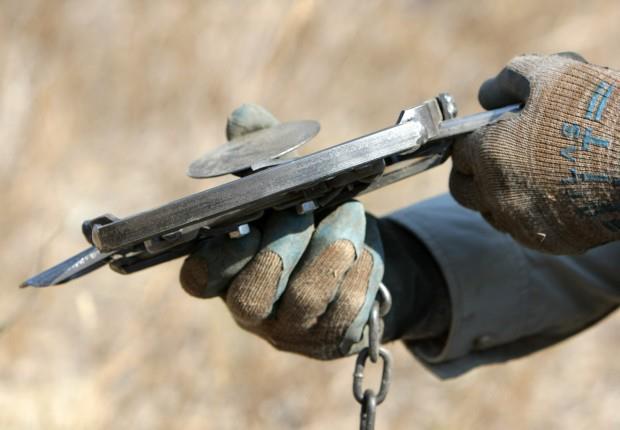
[Interesting that the article is supposed to be about a man who suffered a broken leg in a trap, looking for a dog who might have been trapped, and all the Oregon ODFW has to say is that “it is illegal to disturb or remove the traps or snares of another person.” Fuck that!]
WATCH WHERE YOU STEP
Man suffers broken leg after stepping in a beaver trap
December 19, 2013 10:08 am • By Tim Novotny, The World
COQUILLE — One young man recently learned the hard way that wandering off the beaten path can be dangerous.
Coquille Police say the man, whose identity they have not released, suffered a broken leg after accidentally stepping into a beaver trap. The trap was located in some marshy land near Sturdivant Park, along state highway 42.
Police Chief Janice Blue said the man’s dog had gotten loose and he was trying to retrieve it when the accident happened on Sunday afternoon.
Two vehicles with good Samaritans stopped after they spotted a shirtless young man hanging over the highway’s retaining wall. One of the drivers, who wishes to remain anonymous, said the man was screaming “Help me! Help me!”
They called 911 and tried to free the man, but were unable to get the trap loose. It took a firefighter with bolt-cutters to get the job done.
Chief Blue says the trap was one of the ones that were put there, by permission, by a trapper trying to solve a nuisance problem. Beaver dams have been causing flooding in that area, she said.
“The traps are in places where people would not normally be walking,” Blue said. “People should be aware, when entering marshy areas, that there could be traps.”
The incident coincided with the release of a warning from the Oregon Department of Fish and Wildlife.
They say trapping seasons are underway throughout the state and people need to be cautious when hiking. Pets can also become unwitting victims of these traps.
Traps set for coyotes, bobcats and raccoons are the types of sets most likely to inadvertently capture a dog. The organization UtahPAWS has tips on how to release pets from traps on their website: utahpaws.org/pet_safety.
The ODFW also cautions people that it is illegal to disturb or remove the traps or snares of another person.
If you see traps that you believe are illegally set, do not disturb the trap, but contact Oregon State Police. They can identify the owner of a legally set trap through a unique branding number required on each trap.
Most trapping seasons opened Nov. 15 or Dec. 1 and end Feb. 28 or March 31. A few seasons are open the entire year, but winter is the most popular time to trap.
Action Alert from All-Creatures.org
Born Free USA December 2013
Tell your Congressional Representative to SUPPORT H.R. 3513 that would ban all body-gripping traps — such as snare, Conibear, and steel-jaw leghold — from being used or possessed on national wildlife refuges (NWRs). The brutality of these traps is shocking; they can crush limbs and organs, and animals often remain trapped for days, in massive pain, before dying.
Find and contact your U.S. Representative http://www.house.gov/

Purpose: This bill would amend the National Wildlife Refuge System Administration Act of 1966 to prohibit the use or possession of body-gripping traps in the National Wildlife Refuge System.
Status: Referred to the House Committee on Natural Resources on 11/15/13.
Action: Please contact your U.S. Representative and urge him/her to support H.R. 3513. Tell your Representative that wild animals should not be exploited on the only lands in the United States set aside specifically for their protection. When the majority of the public visits refuges, they expect to be safe and to have the opportunity to view animals in abundance, without the fear of stepping into a body-gripping trap, or having to witness the pain and suffering of a trapped animal.
Talking Points for your letter:
Read the full text here.
Thank you for everything you do for animals!
Return to Action Alerts
Find area codes Find zip codes
The purpose of making trap locations available on this website is to warn people who may be recreating on public lands with companion dogs about the dangers of traps on public lands. Tampering with traps is illegal in the State of Montana…
[But setting out the equivalent of indiscriminant land mines to clamp onto the foot or leg of anyone who happens along is perfectly legal. Also legal, according to Montana Trapping Regulations]: There is no trap check requirement in Montana.
Trappers may not check their traps for days at a time. Read the stories of animals we know suffered alone in traps for several days. How many other animals suffer consecutive cold nights struggling against steel jaws? You will not find out from trappers, who have no incentive to report inhumane abuses. Can you imagine your family dog or cat, scared and vulnerable, with its leg caught in a trap for four or five days—and bitter cold nights—at a time? [It happens far too often; I’ve seen it happen twice to two different dogs in different locations].
Unlike hunting, with specified bag limits and seasons, trappers may trap all year long and kill as much wildlife as they wish. Only five furbearer species—bobcat, fisher, river otter, swift fox and wolverine—are subject to quotas. Every other animal in Montana—even endangered species—may be killed 365 days a year as incidental catch.
Trap locations noted on this map have been reported to Footloose Montana by people recreating on public lands. If you encounter traps on public lands, please call us at (406) 274-7878
Here’s the map: http://www.footloosemontana.org/trapping-season-2011-12/map/
Also see: https://exposingthebiggame.wordpress.com/2013/02/22/time-to-end-a-twisted-tradition/
Where I live we don’t get television reception, so my viewing time is spent the old fashioned way: watching DVDs from Netflix. On those occasions when I find myself flipping channels somewhere that has cable, the rapidly-spreading spate of “reality” wildlife  snuff shows gets me so worked-up I feel like pulling a John Denver and blowing up the TV. But that would do little to slow the scourge of brainless, conscienceless drivel plaguing our society like a pandemic super-bug.
Clearly, cooler heads than mine are needed to combat this ever-growing menace. Therefore I hereby relinquish the pulpit (temporarily) and turn it over to Justin Forte, who, ever since nimrod networks started cropping up across the cable TV wasteland, has been asking the question…
Why Are T.V. Networks Airing Reality Shows That Glorify Stupidity And Cruelty To Animals?
Guest Rant by Justin Forte
What is it with television networks showing these stupid reality shows about bumpkins and glorifying killing and exploiting wild animals lately? It is beyond disgusting! All you see any more on most networks is one brain-dead reality show after another! Networks like Discovery, Animal Planet, TLC, and The History Channel are supposed to show programs that raise IQ levels not lower them! All you see on these networks and several other TV networks anymore are garbage shows that glorify trapping, torturing, and killing wildlife for profit and entertainment!
If it isn’t that, the networks show other reality shows of people acting like brain-dead yuppie idiots or people craving attention for doing ordinary stuff that other people do all the time that they think they should be on TV and get a medal for doing! WTF?
It is really sad, disgusting, and disturbing that the media has gone so low and is force feeding this garbage to the masses, and our society is suffering for it! Personally, I would love to see a social study experiment conducted to show the negative effects these reality shows are having on our society. I think these brain-dead reality shows glorifying animal killing and stupidity is dumbing down the masses and I think it is high time we stand up to the networks airing this garbage before they turn us all into brain-dead idiots and zombies from all this lousy programming they keep airing!
One of the best things we can do to put an end to these lousy reality shows that glorify animal killing and stupidity is to start complaining to these networks by calling, emailing, and sending letters of outrage over their programming. Another is to boycott the networks that show them. Cut the networks off from their ratings and they will begin to lose money, then we will be able to force them to bring back intelligent programming and entertainment like they used to show before they started showing the garbage they are showing now.

Although the kind of sick fucks who get a kick out of killing wolves in Montana would pay ten times that amount, their “game” departments are handing out wolf tags like candy—so much for the notion that hunting licenses raise a lot of money for wildlife.
But, as evidenced by the article below, the mainstream media would not judge or condemn anyone who gets a thrill from killing non-human animals. Instead, their informative yet dispassionate reporting legitimizes the ongoing atrocity of wolf hunting…
MT: Changes in store for Montana’s 2013-14 wolf hunt
Posted on July 26, 2013 by TWIN Observer
Written by Tribune Staff
Montana’s Fish & Wildlife Commission recently approved regulations for the upcoming wolf season.
For the 2013-14 seasons, hunters will have the opportunity to pursue wolves throughout Montana beginning Sept. 7 for archery hunting, Sept. 15 for the general rifle season and Dec. 15 for trapping. The archery only season will close Sept. 14, and the general season will end March 15. Wolf trapping season ends Feb. 28
Wolf hunting licenses cost $19 for residents and $50 for nonresidents. License sales should begin by Aug. 5. Montana trapping licenses are currently on sale for $20 for residents and $250 for nonresidents.
New prospective wolf trappers must attend a mandatory wolf-trapping certification class to use a Montana trapping license to trap wolves and can sign up at fwp.mt.gov. Trappers who successfully completed a wolf trapping certification class in Montana or Idaho in the past do not need to retake one this year.
There is no statewide hunting harvest or trapping quota, but each wolf harvest must be reported. There is, however, a quota of two wolves in Wolf Management Unit 110 near Glacier National Park; four wolves in WMU 313 and three wolves in WMU 316, which borders Yellowstone National Park. Additionally, hunters and trappers are limited to taking only one wolf per person in WMUs 110, 313 and 316.
FWP urges hunters to avoid harvesting wolves with radio collars that provide researchers and managers with important scientific information.
The combined maximum hunting and trapping bag limit is five wolves per person. A hunter can purchase up to five wolf hunting licenses but can harvest only one wolf with each license. The use of electronic calls by wolf hunters is allowed.
Trappers must check their traps every 48 hours and immediately report any unintended animal caught in a trap, including domestic animals. Wolf traps must be set back 1,000 feet from trailheads and 150 feet from roads, the commission will consider in August a new measure that requires additional setbacks along more than 20 specific roads and trails popular among hikers and other recreationists in western Montana. If approved, the locations will be posted on FWP’s website.
Montana wolf specialists counted 625 wolves, in 147 verified packs, and 37 breeding pairs in the state at the end of 2012. The count dropped about 4 percent from the previous year and marked the first time since 2004 that the minimum count declined.
Last season the total hunting and trapping harvest was of 225 wolves. Hunters took 128 wolves and trappers 97.
Delisting allows Montana to manage wolves in a manner similar to how bears, mountain lions and other wildlife species are managed, guided completely by state management plans and laws.
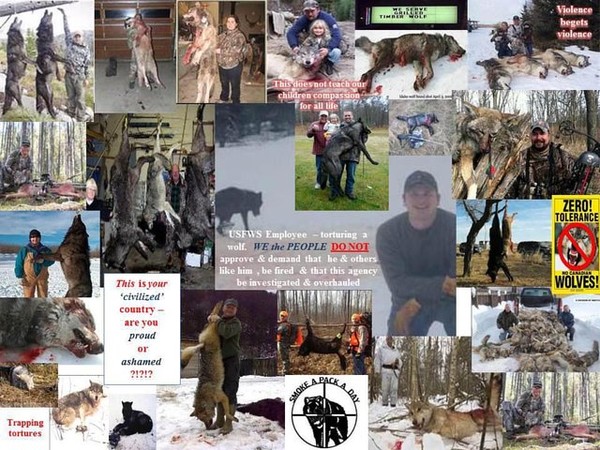


 Exposing the Big Game