Exposing the Big Game

Forget Hunters' Feeble Rationalizations and Trust Your Gut Feelings: Making Sport of Killing Is Not Healthy Human Behavior

Exposing the Big Game

Born Free USA Applauds Reintroduction of Bill Banning Dangerous Traps on National Wildlife Refuges

Refuge from Cruel Trapping Act reappears in U.S. House of Representatives, is backed by leading animal protection organization

https://finance.yahoo.com/news/born-free-usa-applauds-reintroduction-201300055.html

WASHINGTONNov. 18, 2019 /PRNewswire/ — Born Free USA, an internationally recognized leader in animal protection and wildlife conservation, announced today its strong support of the recent reintroduction of the Refuge from Cruel Trapping Act in the U.S. House of Representatives.

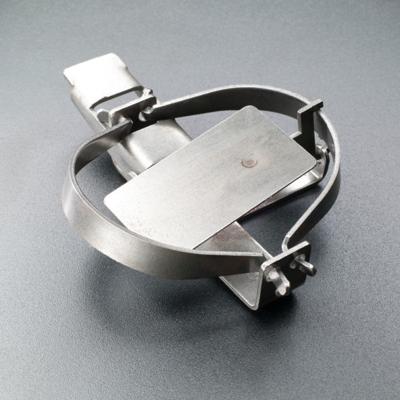
The bill, championed by Congresswoman Nita Lowey (D-NY), chairwoman of the House Appropriations Committee, would prohibit the use or possession of all body-gripping traps within the 150 million-acre National Wildlife Refuge System. These traps include steel-jaw leghold traps, Conibear traps, and strangulation neck snares.

“By their very design, body-gripping traps are cruel, dangerous and indiscriminate,” said Angela Grimes, CEO of Born Free USA. “Their brutality cannot be overstated. As our two undercover investigations have shown, traps inflict severe stress, pain and suffering for any animal who steps into them—including endangered species and beloved pets. Born Free USA applauds Chairwoman Lowey for her strong leadership to end this cruelty throughout the National Wildlife Refuge System.”

The mission of the National Wildlife Refuge System is to be an inviolate sanctuary for our native wildlife, yet thousands of animals are trapped in these cruel devises on our refuges every year. Children and family pets are also put at risk every time they visit one of the 177 refuges that currently allows trapping.

“Body-gripping traps should have no place in our National Wildlife Refuges,” Lowey said. “The Refuge from Cruel Trapping Act would ban from public land these violent traps, which endanger wild animals as well as the millions of visitors who enjoy our nation’s 566 refuges each year. It is past time we ensure the entire National Wildlife Refuge System is safe for animals and families alike. We must restore the true meaning of ‘refuge’ to the National Wildlife Refuge System.”

Once in a trap, animals suffer in agony for hours or even days. In addition to the excruciating pain inflicted by the trap, trapped animals are also exposed to extreme stress, environmental elements, dehydration, starvation, and predation, with no chance of relief or escape.

Born Free USA urges other members of Congress to join with Congresswoman Lowey to support this important legislation.

For more information about Born Free USA, visit https://www.bornfreeusa.org.

About Born Free USA
Born Free USA works tirelessly to ensure that all wild animals, whether living in captivity or in the wild, are treated with compassion and respect and are able to live their lives according to their needs. As a leading wildlife charity, Born Free USA opposes the exploitation of wild animals in captivity and campaign to keep them where they belong – in the wild. The organization promotes Compassionate Conservation to enhance the survival of threatened species in the wild and protect natural habitats while respecting the needs and safeguarding the welfare of individual animals.

Rep. Lowey Reintroduces Bill To Ban Traps In Refuges

  NOV 17, 2019

New York Congresswoman Nita Lowey has reintroduced a bill that would prohibit body-gripping traps in the National Wildlife Refuge system.

Lowey, Democratic chairwoman of the House Appropriations Committee, reintroduced the Refuge From Cruel Trapping Act Friday, that would ban from public land traps where animal endure hours or even days of pain. Lowey says that, each year, thousands of bobcats, otters, foxes, beavers and other wild animals are trapped in this manner across the nation’s refuges. She says more than 50 percent of the 566 refuges allow trapping. Steel-jaw leghold traps; conibear traps: and neck snares would be banned if the measure is enacted. Lowey says it’s time to restore the true meaning of “refuge” to the National Wildlife Refuge system

https://www.wamc.org/post/rep-lowey-reintroduces-bill-ban-traps-refuges

Footloose Montana hosts trap-release workshop

SALE! SIGN UP AND GET 90% OFF
trap stockimage

A trap-release workshop will be presented from 7 to 9 p.m. Wednesday, Oct. 30, at St. Anthony Parish Center, 217 Tremont St.

Learn what to do if your pet steps in a trap, learn first aid, hands-on trap release practice, trapping regulations and what to carry with you to rescue your pet.

Sponsored by Footloose Montana, a nonprofit group educating concerned citizens about traps on public lands. Call 406-282-1482 or visit footloosemontana.org.

‘Sickening’: Golden eagle spotted near royal family’s Balmoral estate with illegal trap attached to legs

‘Absolutely clear this incident is a result of criminality’, says RSPB, as focus on raptor persecution increases at start of grouse shooting season

The golden eagle was seen flying over the village of Crathie, which borders the edge of the Balmoral estate in Aberdeenshire

The golden eagle was seen flying over the village of Crathie, which borders the edge of the Balmoral estate in Aberdeenshire ( Police Scotland )

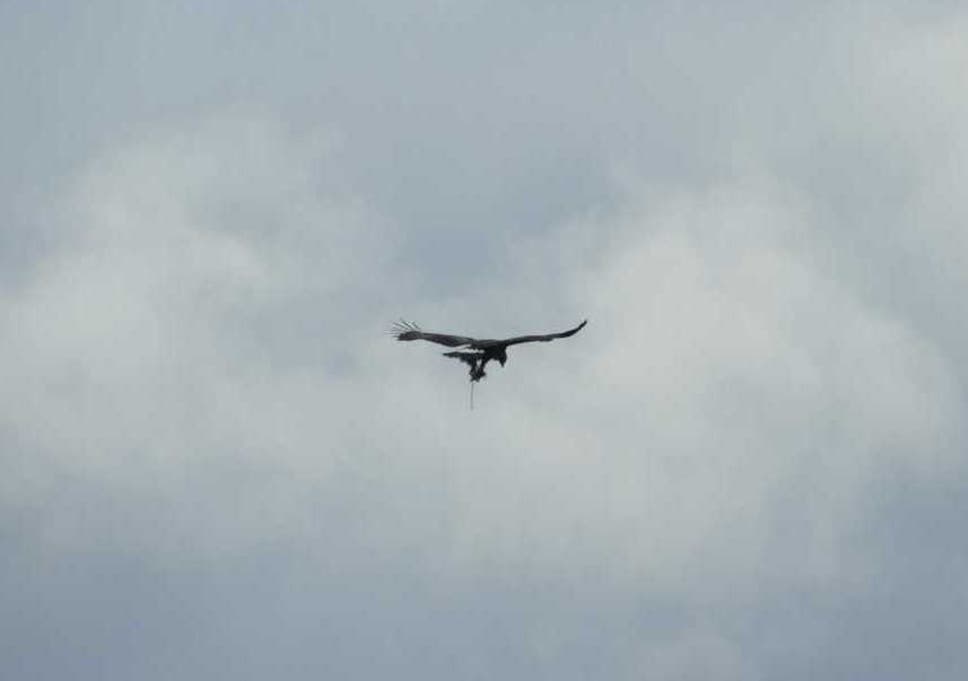
golden eagle has been photographed in Scotland flying with a trap dangling from its legs.

The bird was spotted over the Aberdeenshire village of Craithe, close to the royal family’s Balmoral estate in the Cairngorms National Park.

Police have launched an investigation alongside the Royal Society for the Protection of Birds (RSPB) after the tourist who took the picture reported it.

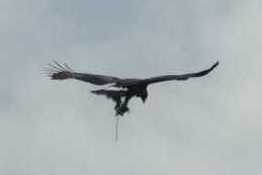
The photograph shows the bird hovering with the trap clamped around its talons and a chain hanging from it.

The type of traps are regularly seen in the illegal trapping of birds of prey on grouse moors, which cover around 20 per cent of all land in Scotland.

RSPB Scotland’s Head of Investigations Ian Thomson told The Independent: “This picture of a golden eagle with a trap on its leg is sickening.

“There is no way a bird of prey could become caught in a legally set trap and as such it is absolutely clear this incident is a result of criminality.

“There have been a number of incidences where birds of prey have been caught in similar traps resulting in fatalities and we are concerned for the fate of this bird if it is not caught soon so it can receive veterinary treatment. We urge the public to report any sightings to the police.”

Close-up showing the trap dangling from the bird’s talons (Police Scotland)

He added: “This kind of trap is used widely on grouse moors. Just a few years ago there was a case in the same area as this golden eagle has been spotted where a number were deployed illegally to target birds of prey.”

Police Scotland’s Sergeant Kim Wood said: “We would encourage anyone who has information which could help to locate this eagle to contact the police on 101.”

Grouse shooting is under increased focus as the season opened on 12 August and numerous naturalists and conservationists have called for an independent review into the impact of the practice.

A petition to ban driven grouse shooting – in which 500,000 grouse are shot dead a year – has reached 25,000 signatures.

The petition was created by BBC presenter and naturalist Chris Packham who told The Independent last month that in addition to illegal targeting protected species including birds of prey, gamekeepers on grouse estates legally target and kill “hundreds of thousands” of animals a year, including stoats, weasels, foxes and mountain hares in an effort to protect the grouse, which are then shot.

According to The Telegraph, the royal family’s annual summer grouse shoot was cancelled at Balmoral this year due to a shortage of birds, it said was due to “extreme weather and an outbreak of heather beetle,” which it said had impacted amounts of heather available for the grouse to consume.

Woman accused of using live trap to capture cat: police

20160816 Barrie Police Station Sign KA 01

File photo. Kenneth Armstrong/BarrieToday

NEWS RELEASE
BARRIE POLICE SERVICE
*************************
Earlier this week, the Barrie Police Service was contacted regarding a cat that was reported stolen.

Officers attended on July 25, and after considering all avenues of investigation, it was determined that the most appropriate path to take was to lay charges under the City of Barrie’s Animal Control By-law. (By-law 2010-035)

As a result, a 54-year-old Barrie woman has been issued notices of:

  • Use live trap to capture cat (Contrary to S. 15.5.0.0.0 of By-Law 2010-035)
  • Fail to ensure cat is provided with food/water/shelter while captured (Contrary to S. 15.6.0.0.0 of By-Law 2010-035)

While the Barrie Police Service understands the concern of the public when investigations involving animals are involved, the public is reminded that making threats and harassing others is unacceptable and could be considered a criminal act.

Save our whales: Stop octopus trap fishing in False Bay, Cape Town

396
Whales Source: Google Images

We request an immediate moratorium on all octopus trapping in the False Bay area until such time as stakeholders and concerned citizens are consulted and can agree on a safe operating standard/procedure for the use of traps used in the octopus trapping fishing industry and that the Department uses this period of Moratorium to gather much needed information on stock levels and the impact of octopus trap fishing on the environment.

For many years now permits for trapping of octopus in the False Bay area have been issued to a local fishing company and during this period there have been numerous entanglements and deaths and it is now time to put an end to the suffering and deaths.

The Department of Agriculture, Fisheries & Forestry (which has recently been incorporated into Environmental Affairs) were negligent in issuing a permit to the permit holder, relying solely upon data submitted by the permit holder to determine whether the stock was a viable source to fish. As per their 2016 Status report they listed the stock status as “unknown” – nearly 20 years since the start of octopus trapping – after such a long period surely they should know what the stock levels are and what impact this fishing is having on the stock and what effect it is having on other species such as otters and sharks who also feed on octopus.

These traps, with long ropes tied to buoys that float on the surface, are a danger not only to whales and dolphins but they also pose a huge risk to boats and ships.  False Bay is the home to the South African Navy and in the past they traps allegedly had sonar reflectors and lights on them – this is no longer the case.  There is no visible warning on any of the traps in the bay and poses a big risk to the military and recreational boat user.

The traps in the Simon’s Bay area are in areas used by the Naval ships and submarines.  Should a submarine catch one of these ropes in its propellers it could mean catastrophic loss of life of those on board.  Small boats and yachts are often out in rough weather or at night and they pose a serious threat to these vessels as well.

The two most recent whale entanglements on the 8th and the 10th of June 2019 caused the unnecessary and avoidable death of a Bryde’s Whale.

The whale is from the ‘inshore’ stock of Bryde’s whales. This is a small resident population that does not migrate. We do not have a good estimate of the whole population nor a thorough understanding of population structure (but there is some). Available information suggests the population is very small. A survey in 1983 estimated 583 +- 184 in the population (Best et al. 1984). More recent work based on photos of individuals suggests this is about right (not published yet – G Penry data). Using the best available knowledge at the time – the 2016 South Africa Red List assessment confirms there are almost certainly fewer than 1000 and ‘up-listed’ the population to VULNERABLE. Recent genetic work by Gwen Penry at NMU strongly suggests that this is potentially a subspecies in its own right (Penry et al. 2018).
Information to hand is that 12 of these animals have been caught (of which 8 died) in trap fisheries along the SA coast over the years, although it is not clear if they were all octopus or if some were crayfish traps.
The Bryde’s whale population is small, localised, officially vulnerable and clearly prone to being caught in trap fisheries. We strongly encourage further research into the topic of impacts on the population and a clearer definition of the status of the fishery.

We implore the Honourable Minister to place an immediate moratorium on all trapping in the False Bay area until such time as stakeholders and concerned citizens are consulted in order to come up safe operating procedures that will include compulsory 24 hour monitoring at sea of these traps as well as sufficient visible signalling on the bouys to avoid any further endangerment of both marine and human life.  This Moratorium will also allow the Department time in which it can assess the current stock levels and update much needed information that they need in order to be able to apply their minds when considering the issuing of permits.

Act now and save our seas.

Sign petition: https://www.change.org/p/the-minister-of-environmental-affairs-fisheries-and-forestry-the-honourable-barbara-creecy-save-our-whales-stop-octopus-trap-fishing-in-false-bay-cape-town

This cat was caught in a “body-gripping” trap for 2 days in Metro Vancouver

https://www.vancouverisawesome.com/2019/06/25/cat-injured-trap-metro-vancouver/

Delta Optimist

Share on Facebook
Tweet on Twitter


cat injured trap
The Fur-Bearers has renewed its calls for the City of Delta to take action after a family cat by the name of Blu was grievously injured in a foot-hold trap in Ladner. Photograph: Josie Moubert 

A local non-profit animal protection group has renewed its calls for the City of Delta to take action after a family cat was grievously injured in a foot-hold trap in Ladner.

The Fur-Bearers learned that Blu, a three-year-old cat, found its way home with severe damage to a hind leg with dead and dying flesh (necrosis). The veterinarian who is treating Blu noted the injury was the result of a foot-hold or body-gripping trap.

“I’ve had pets my whole life and never experienced anything like this,” said owner Josie Moubert. “Whomever caught Blu released him from the trap, but didn’t call the number on his collar. Our veterinarian suspects that due to the level of rotten flesh, Blu was in the trap for at least two days. Everyone I’ve spoken to about what happened to Blu is disgusted by it. Our family still doesn’t know if he’ll make it.”

cat injured trap
Blu, a three-year-old family pet from Ladner was was grievously injured in a foot-hold trap. – Photograph: Josie Moubert 

Blu’s harrowing experience follows a recent memo from Delta bylaw staff recommending the city not enact a bylaw regarding traps following an incident last month where a raccoon was also caught by a foot-hold trap in the same neighbourhood.

According to The Fur-Bearers, the raccoon was found in the area of 46A Ave., dragging a foot-hold trap for days. The raccoon was emaciated, dehydrated, and had a visibly broken leg. The animal was humanely euthanized by Critter Care Wildlife Society.

“Municipalities in British Columbia cannot rely on the province to appropriately manage all wildlife-related issues, as can be evidenced by several enacting or asking to enact similar trap bans,” said Michael Howie, a spokesperson for The Fur-Bearers. “This trap was likely set within an urban environment, and possibly within sight of a large elementary school. The City of Delta has both the duty to protect their residents from such dangerous behaviour and the authority to enact bylaws related to such under the Community Charter.”

The lengthy response memo from Delta bylaw staff notes trapping in B.C. is regulated by the province under the Wildlife Act and that a variety of trapping methods are allowed, including the use of leg-hold traps. However, there are restrictions, including prohibiting the use of a leg-hold trap within 200 metres of a dwelling. Farmers wanting to stop nuisance wildlife have the same restriction, require written permission of a property owner and traps must be checked every 24 hours.

Farmers typically hire professional trappers if and when required and there are three licensed professional trappers in the city that are utilized by Delta farmers, the memo explains. The memo also states a prohibition on leg-hold traps would be a significant hardship to farmers.

Howie said his group disagrees with bylaws and have sent another letter to Delta urging them to reconsider and review its policies again.

“A bylaw would also create education for local residents who may be trying to catch and/or kill animals on their property,” added Howie. “It’s time to acknowledge that provincial laws have not done the job of protecting people and pets from traps, and that communities are speaking out against their use.”

The Fur-Bearers is offering a $1,000 reward for information leading to the identification and conviction of the person(s) responsible for setting this trap, should it be proven to be illegal. They are also calling on local landowners who are using legal traps to publicly acknowledge this with signage and communication to nearby residents so that educated decisions can be made.

Killed by conibear traps: Province urged to require warning signs be posted to prevent further deaths

Citizen whose dog was killed in Port Elgin comes forward following Dundalk dog’s death

NEWS Jan 07, 2019 by Chris Halliday  Orangeville Banner
https://www.orangeville.com/news-story/9113631-killed-by-conibear-traps-province-urged-to-require-warning-signs-be-posted-to-prevent-further-deaths/
ConibearTrap

Within the last two years, both Winston (top left) and Bella (bottom) have been killed after getting caught in conibear traps. Bella’s owner, Paul Wildeboer, wants the province to require trappers post mandatory signage near where they have placed or set these traps. – Photos by Paul Wildeboar and Jackson Sister’s Photography

The Ministry of Natural Resources and Forestry is investigating after Dundalk resident Cheryl Ireland’s dog Winston was killed by a trap located in a field near Mill Street and Braemore Street. This photo of Ireland with her dog before the birth of her newborn, was taken in the field where the dog died on Thursday (Nov. 15). – Jackson Sister’s Photography

Conibear

Here is a picture of the conibear trap that killed Paul Wildeboer’s dog on a golf course in Port Elgin in November of 2017.

Conibear1

Here is an example of how conibear traps can be placed or set on the ground using a marshmallow as bait. – Courtesy of Paul Wildeboer

ConibearBella

Paul Wildeboer and his wife, Judy, are seen with their shepherd cross Bella, who was killed by a conibear trap set on a golf course in Port Elgin in November of 2017. – Courtesy of Paul Wildeboer

1 / 5

As a ministry investigation into the death of a Dundalk dog killed by a conibear trap continues, a man whose dog suffered a similar fate wants the province to better safeguard people and their pets from these “body-gripping” traps.

“It should be mandatory (for trappers) to post warning signs. For example, ‘Danger, do not enter. Animal control in progress,’” said Paul Wildeboer, whose 70-pound shepherd cross was killed by a conibear trap on a golf course in Port Elgin back in November 2017.

“They not only pose a danger to animals but people and rescuers as well,” he added. “For convenient placement and pick up these traps are generally set near walking trails, snowmobile trails and paths where families, children and hikers are known to walk.”

In the early afternoon of Nov. 15, Dundalk resident Cheryl Ireland’s mother, Elaine, and her friend were walking her dog, Winston, in a large field behind their home near Mill and Braemore streets.

RELATED CONTENT

  • ‘Nothing will bring him back’: Ministry investigating after conibear trap kills dog in Dundalk

Suddenly, they heard a loud yelp and discovered Winston had been caught in a conibear trap. The dog, a Great Dane, bullmastiff and husky mix, died shortly afterwards.

“They did everything they could to try and keep him alive. (My mom) got some neighbours to try and help, but by the time they went out there, it was too late. He was gone,” Ireland said following the incident, noting a smaller trap was also discovered nearby.

Ministry of Natural Resources and Forestry (MNRF) spokesperson Jolanta Kowalski reports the investigation into Winston’s death is ongoing. She said the MNRF recently reached out to the public for any information that could help the case.

“The MNRF has been here twice since (Nov. 16) but still haven’t really got anywhere. We do know who it is and (the investigator) has been to his house,” Ireland told The Banner.

“Nothing has come from it that I know of,” she explained. “(The investigator) will be going to pay him another visit soon as far as I know.”

Nest Predator Bounty Program offers trapping incentives

This spring and summer, South Dakota Game, Fish and Parks will be trying to get more people into the sport of trapping, and there will be financial incentive to do so.

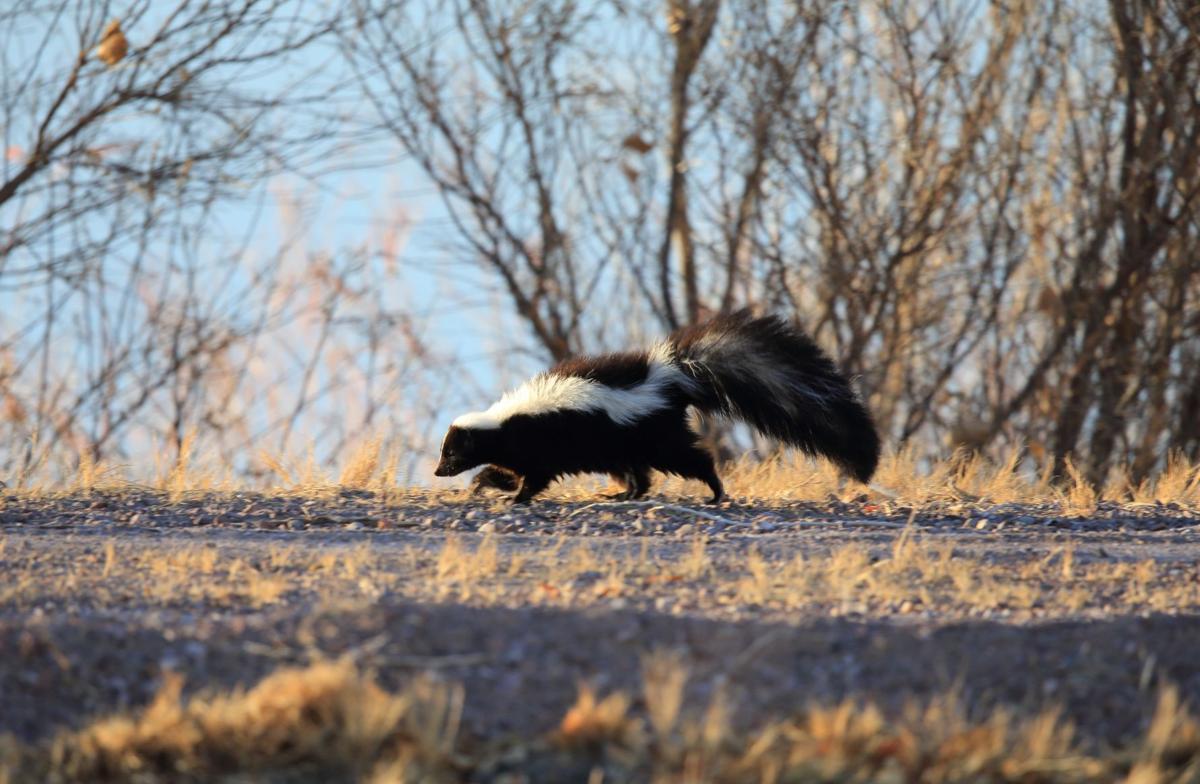
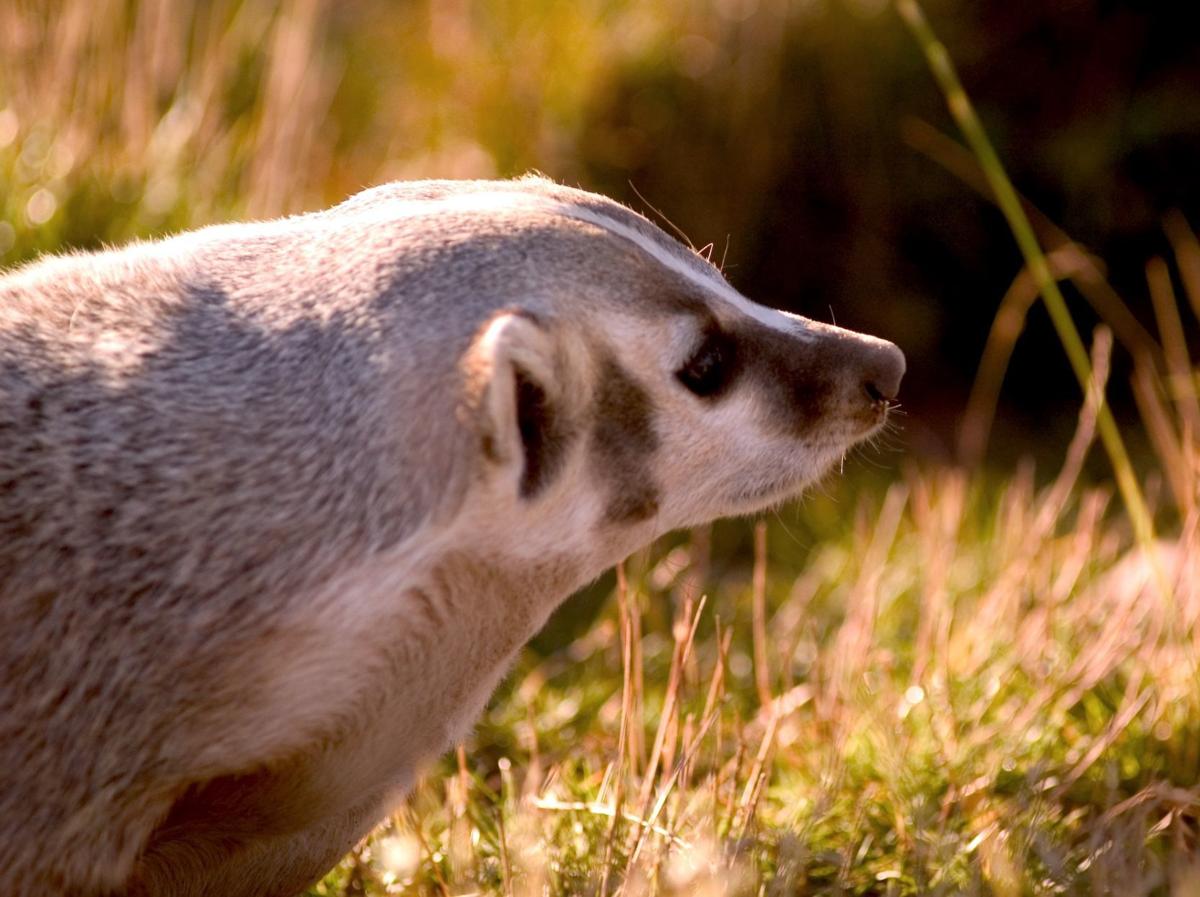
Monday GF&P started the Nest Predator Bounty Program, a program that runs through Aug. 31 and will pay $10 per tail for those bringing in raccoons, striped skunks, badgers, opossums and red foxes that have been trapped.

The program will end early if the amount awarded hits $500,000. There is also a $590 cap per individual household.

GF&P regional terrestrial resources supervisor Trenton Haffley said there are a few goals of the program, one of those is to help revitalize a outdoors activity that used to be very prominent in South Dakota, the sport of trapping.

“As part of the department’s strategic plan,we identified trapping as activity we could reinvigorate or get new participants,” he said. “It encourages people to get out and trap during a time where there are animals available and there is no fur incentive.”

Haffley said while there won’t be many opossums in the western side of the state, the other four population groups are healthy enough that the program could be a success.

Originally it was only supposed to be a program rolled out to the eastern side of the state, but eventually GF&P decided it would be worth it to make the program available state-wide.

It started specifically as plan to held protect the nesting habitats of grassland nesting birds and waterfowl. In order to get more people interested in trapping state-wide, the program was opened up.

Haffley said there isn’t research as to why the trapping tradition in South Dakota has fallen off, but mentioned that the sport requires a set of particular skills that aren’t easy to learn.

Still, he said if the program can get the next generation out outdoors enthusiasts interested in trapping, it can help ensure that the tradition survives and starts to thrive in South Dakota.

“It’s a pretty specialized skill set, it’s a long learning curve,” he said. “It takes going out with someone with a lot of experience or dedication to go out and try it every single day. There’s a lot of error and time between success.”

Haffley said in the development plan that was established in 2016, trapping was a key component.

With the plan set to expire in 2020, he said GF&P decided to take action on building on the trapping history in South Dakota.

“We want to recruit, retain and reinvigorate,” he said. “That was one thing we identified in 2016, now here we are in 2019, and we thought we let that fall by the wayside.”

GF&P will evaluate how successful the program is at the end by using hard numbers and a qualitative survey about the experience participants had with the program. Haffley also said it will look at not only the number of participants, but how widely spread they are across the state.

Tails can be taken to the Outdoor Campus West in Rapid City, located at 4130 Adventure Trail.

Subscribe to Breaking News

Petition: Freeing a Bear Cub From a Trap Shouldn’t Land This Woman in Jail

127,573 SUPPORTERS
130,000 GOAL

Acts of compassion shouldn’t land you in jail, yet Catherine McCartney has beensentenced to 15 days in jail after letting a trapped bear cub loose.

New Jersey state officials set a trap in a condo complex after an adult bear frightened some residents, but it was a cub who got caught in the trap. Hearing the cub’s cries, McCartney opened the trap to reunite the child with its mom, technically violating some laws for tampering with government property.

By the state’s own admission, had a government official gotten to the trap first, they probably would have also let the cub free since he was not the intended target. It appears that the judge chose to extend a harsh sentence anyway since McCartney has been arrested in the past for protesting bear hunters.

Acts of civil disobedience aimed at protecting vulnerable bears should not put her behind bars, though. Save the jail time for the people who are cruel to animals instead!

Join former U.S. Senator Robert Torricelli in calling on NJ Governor Phil Murphy to pardon McCartney from serving jail time, as the punishment most definitely does not fit the “crime”/act of kindness.