MAR 27, 2017 — Watch as we set off a large bear trap and show just how barbaric these devices truly are .
Please keep sharing our petition and make your voice heard.

MAR 27, 2017 — Watch as we set off a large bear trap and show just how barbaric these devices truly are .
Please keep sharing our petition and make your voice heard.
Brooks Fahy has been working for decades to save wild animals from painful traps — and while he has seen hundreds of sad cases, there’s one coyote he’ll never forget.
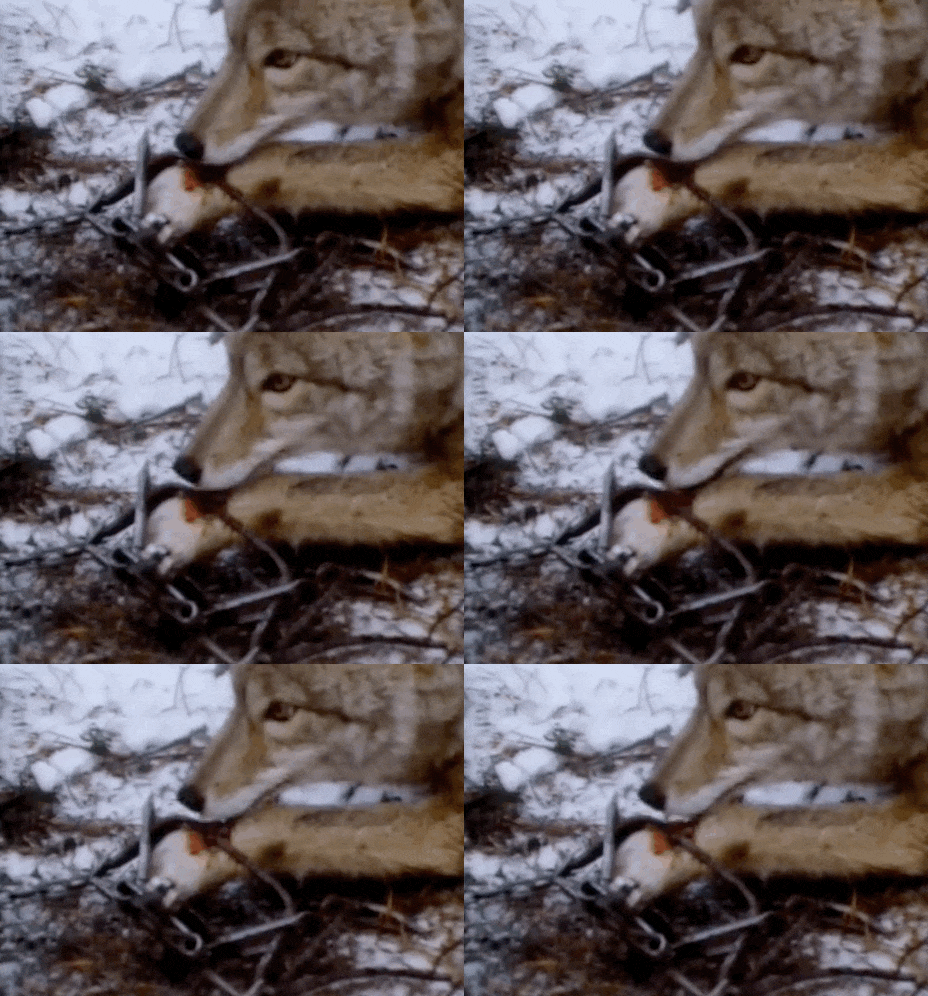
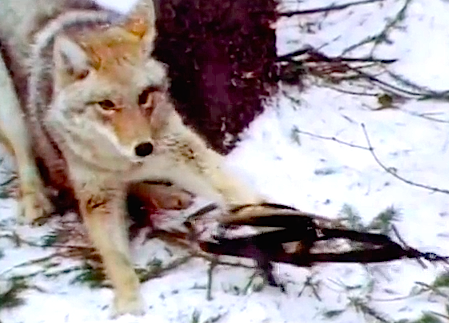
Fahy, who is the executive director of the nonprofit Predator Defense, received a call from a concerned citizen about an animal caught in a trap. After scouring the Oregon woods, he found the young coyote — his leg was badly pinched in a leghold trap.
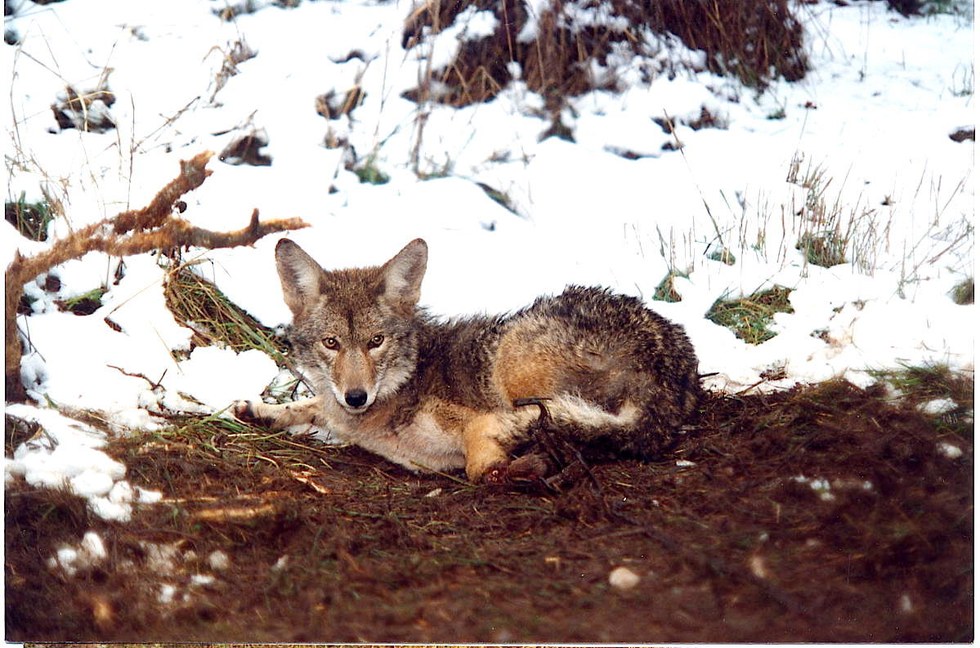
“When I walked up on that coyote, he looked at me and then he looked down, like he was ready to accept his fate,” Fahy told The Dodo.
Animals caught in traps can wait days before they’re found and killed — sometimes for their meat or fur, other times just for recreation. Some animals caught in traps try to gnaw off their own limbs out of desperation. “Traps are notoriously nonselective, whether it’s an M44, a neck snare, a leghold trap, any animal that comes along could get caught,” Fahy said. Endangered species and even people’s beloved dogs can be injured or even killed because of indiscriminate traps.
The trap was set out by Wildlife Services, a branch of the USDA that kills tens of thousands of coyotes each year by trapping, shooting, snaring and poisoning them.
Warning: Graphic image below
The coyote Fahy found seemed to be determined to stay alive. There were some puddles of melted snow near him, which he appeared to have been drinking from, Fahy said: “He had been in the trap a long time, a week minimum.”
Fahy also noticed a branch sticking up out of the ground beside him that was all chewed up.
“He’d been gnawing on it to relieve the pain,” Fahy said.
As Fahy got closer, he noticed paw prints in the ground and the vestiges of smaller animals. “There were these small bones around him — we realized that a mate was bringing him food,” Fahy remembers. “It’s gut-wrenching. It haunts me to this day.”
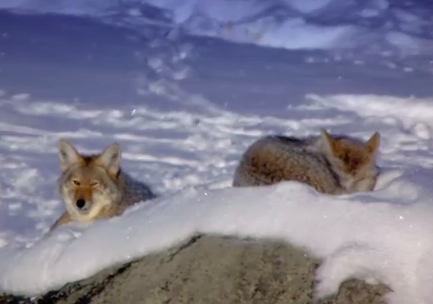
Fahy did everything he could to save the 2-year-old coyote’s life. Except for his terrible injury, he appeared healthy. “He was in his prime,” Fahy said.
But the coyote’s foot was completely ruined — the bones were jutting out through his skin. And the animal appeared to be exhausted from trying to survive. “When I picked him up and wrapped him in a blanket, I felt him completely relax in my arms,” Fahy said. “He had nothing left.”
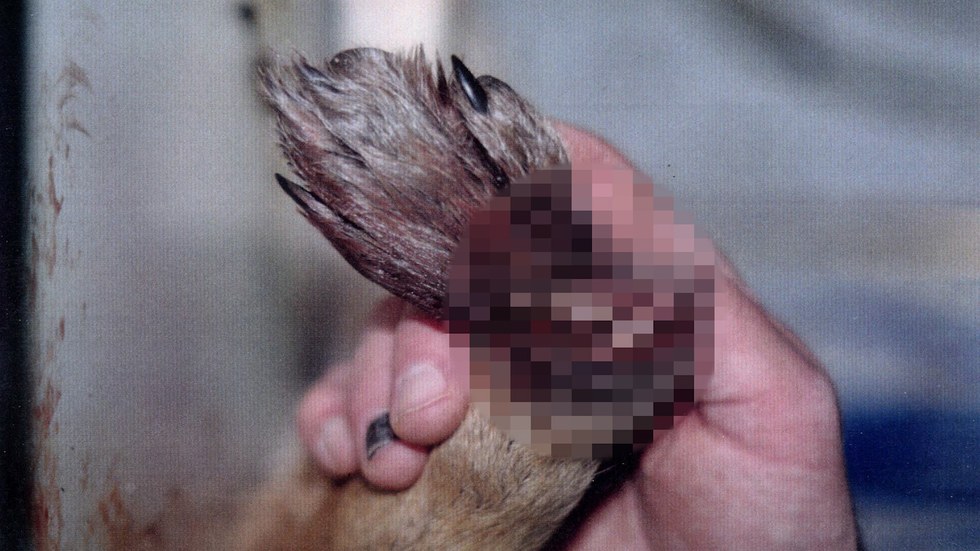
Fahy carried the young coyote a mile to his truck and then drove him to see a veterinarian. Sadly, the coyote was just in too much pain, so Brooks held him while the veterinarian euthanized him with an injection.
“I’ve dealt with hundreds of trapping cases. I’ve seen animals who have lost their teeth because they’re gnawing so hard on the trap, I’ve seen it all,” Brooks said. “But I think of this coyote every day.”
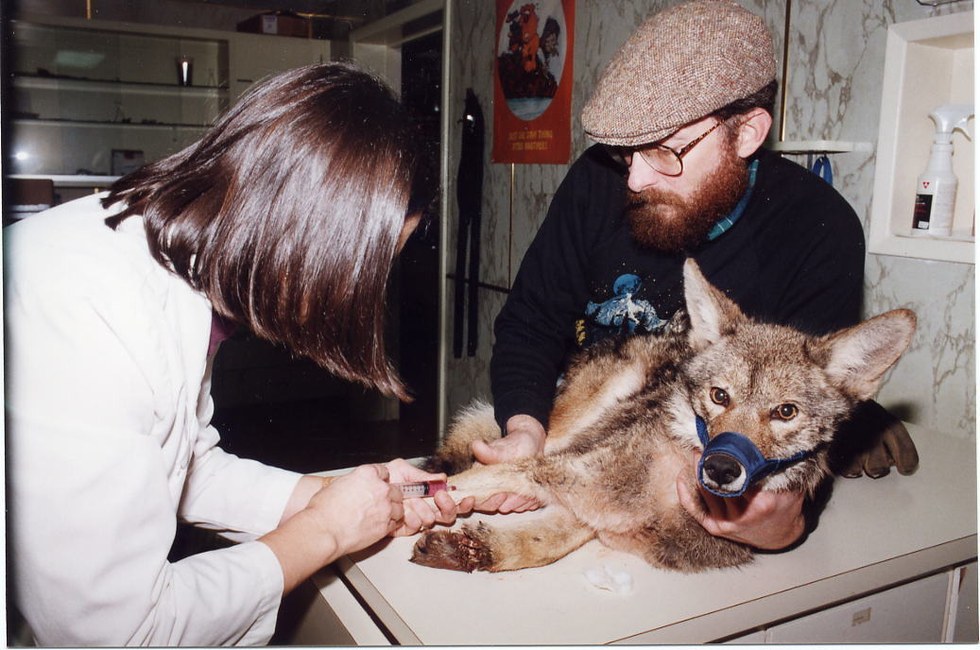
This coyote died in 1992. “Virtually nothing has changed,” Fahy said. “If anything, it’s gotten worse.”
Hundreds of thousands of coyotes like him have been killed since then, many of them by these painful traps. In 2016 alone, Wildlife Services killed 76,963 adult coyotes; over 19,000 of them were killed by leghold traps, foothold traps, leg snares and neck snares. And that doesn’t even count how many coyotes and other animals were killed through trapping by private citizens.
“The brutality of these traps cannot be overstated,” Adam M. Roberts, CEO of Born Free USA, said in a statement. “Steel-jaw leghold traps and Conibear traps slam shut with bone-crushing force, causing massive injury and trauma. Animals trapped in strangulation neck snares — designed to tighten around an animal’s neck as he or she struggles — also suffer in extreme agony for an unconscionable amount of time.”
“Steel-jaw leghold traps, snares, and Conibear traps can cause massive pain, injury and even death to anyone who crosses its path,” Jennifer Place, a program associate at Born Free USA who specializes in trapping issues, told The Dodo. “We have seen it happen too many times: a mountain lion cub caught in a leghold trap; a dog who breaks her teeth to the gum line in her panic to free herself from a trap; a boy rushed to the ER with a Conibear trap on his arm; a young man getting ensnared in a Conibear trap set near a park playground. These traps are cruel, archaic and terrifyingly indiscriminate, and they can be found anywhere.”
There are bills in the U.S. House of Representatives that could finally put some limits on trapping, Place added, like the Refuge from Cruel Trapping Act (H.R. 1438), which seeks to ban leghold traps and body traps in national wildlife refuges. “It is time to stop the further spread and use of these brutal devices,” she said.
Another bill introduced to the House this month is the Public Safety and Wildlife Protection Act (H.R. 1629), which aims to ban the import, export and interstate commerce of steel-jaw leghold traps and Conibear traps, the two most widely used traps in the U.S. And it’s expected that the Limiting Inhumane Federal Trapping (LIFT) for Public Safety Act, which seeks to ban traps on federal lands managed by the Department of the Interior and Wildlife Services, will be reintroduced.
People who have been fighting trapping for years are hopeful that some of the suffering could soon come to an end — but the public needs to know about what’s going on and to speak up for these animals.
“I’ve been doing this work for 40 years and I never cease to be amazed that this is still going on,” Fahy said. “We know through science that these species are self-regulating. It’s time we evolve as a society and stop thinking of animals as natural resources. It’s important for us to empathize with these animals, to feel the loneliness of an animal caught in a trap. They feel pain. They suffer. They want to live.”
To help save animals from suffering in traps, you can call your representatives and urge them to support these bills, or you can write to them about H.R. 1629 and H.R. 1438. You can also donate to Predator Defense.
|
|
|

http://www.nelsonstar.com/news/399064261.html
. by Tom Fletcher – BC Local News
. Cranbrook Invermere Smithers posted Oct 28, 2016 at 11:00 AM
Bear-related incidents recorded in the past month by the B.C. Conservation
Officer Service:
. A grizzly bear caught in a wolf trap near the Palliser River west of
Invermere was freed by conservation officers, after the trapper reported the
situation.
“The adult female grizzly was successfully immobilized and the trap was
removed from her paw without any incident,” Deputy Chief Chris Doyle said.
. Conservation officers captured and relocated a female grizzly bear and its
two cubs at Cherryville in the South Okanagan after they were attracted into
someone’s yard by fruit left from trees. The bears were sedated and
relocated within their home range.
. Skeena district conservation officers are investigating after a mother
black bear and two cubs were shot and dumped near Granisle. Another
investigation involves the shooting of five black bears in separate
locations along a road near Fort Nelson.
. Bear conflicts have declined as winter has approached in B.C., but there
are still hotspots, including Kamloops where bear incident reports are the
highest in a decade.
Bears continue to be attracted mainly by exposed garbage, fruit and other
attractants. Province-wide, there were more than 3,000 calls to the COS
about bears in October, and 20,000 since April 1.
Pumpkins are another attractant, and Doyle reminded people who set out
Halloween pumpkins to remove them as soon as the festivities are over.
http://www.nelsonstar.com/news/399064261.html
<http://www.nelsonstar.com/news/399064261.html>
Conservation officers get thousands of bear conflict calls, investigate
mother bear and cubs shot and dumped
|
|
|
|

Ballot Initiative I-177 is a sensible measure to protect people, pets and wildlife from trapping on Montana’s wild public lands. Please vote yes on Nov. 8.
While trapping will still be allowed on private lands throughout the state, I-177 would ensure that Montana’s national forests, state parks and other public lands are kept free of cruel, archaic traps that injure and kill many animals by accident every year.
This measure would not limit hunting on public lands, contrary to the claims of its detractors.
Your yes vote will help save thousands of animals annually from these brutal traps. Let the world know that Montana cares about its wildlife by voting yes on I-177. Visit www.yeson177.org for more information.
http://mtpr.org/post/trapping-ban-will-appear-november-ballot-montana#stream/0
By EDWARD O’BRIEN • JUL 1, 2016
Voters this November will decide the future of traps and snares on Montana’s public lands. A proposal to end commercial and recreational trapping on Montana’s public lands will appear on November’s ballot.
Voters this November will decide the future of traps and snares on Montana’s public lands. A proposal to end commercial and recreational trapping on Montana’s public lands will appear on November’s ballot.
Listen Listening…1:09 Trapping Ban Will Appear On November Ballot In Montana
Voters this November will decide the future of traps and snares on Montana’s public lands. A proposal to end commercial and recreational trapping on Montana’s public lands will appear on November’s ballot.
Supporters of I-177 say they were notified Thursday that they had collected more than enough valid signatures.
A similar measure failed to qualify in 2010.
Connie Poten of Montana Trap-Free Public Lands says a lot has changed since then.
“Most people then didn’t even know trapping existed. There was a lot of education we had to do and we’ve been doing it over the past six years, so many more people are aware of trapping and how unnecessary it is and how cruel it is.”
Representatives of the Montana Trappers Association could not be immediately reached for comment today.
I-177 supporters say trapping would be allowed to protect livestock, property, health and safety when non-lethal methods have failed.
http://mtpr.org/post/trapping-ban-will-appear-november-ballot-montana#stream/0
Tags: cat, hunting, Jessamine county animal care and control, Trap, Williamsburg Drive
NICHOLASVILLE, Ky. (WTVQ) – Jessamine County Animal Care and Control say a cat has been released from a hunting trap after the animal was found on Williamsburg Drive dragging the trap behind it.
Officers were able to catch the cat and bring it to a local veterinarian who removed the trap. The cat then underwent surgery, losing two toes because of the damage the trap had caused.
The veterinarian says the trap was probably on the cat for somewhere between 24 and 48 hours.
The Kentucky Department of Fish and Wildlife is stressing that using a trap life the one that the cat was caught in is not a legal method to capture free roaming or feral cats.
U.S. press release:
Washington, DC – Today, U.S. Representative Earl Blumenauer (OR-03) introduced the Limiting Inhumane Federal Trapping (LIFT) for Public Safety Act, legislation to reign in unsafe and inhumane trapping on public lands and by public officials.
Countless pets and wild animals are injured and killed each year in body-gripping traps such as leg and foothold, Conibear, and snare traps. Despite the existence of viable non-lethal alternatives, body-gripping traps are used by federal agencies, state and local governments, private entities, and individual trappers to catch creatures for their fur, keep animals away from livestock and crops, and even for recreational purposes. Unfortunately, these traps often subject captured animals to excruciating pain for hours or even days, before they eventually die from dehydration, injuries, or predation, or when the trapper eventually finds them. Additionally, these traps are indiscriminate in their victims, and while intended for certain species or “problem animals,” they may capture – and even kill – companion animals if hidden along popular trails or waterways. Humans also risk being inadvertently caught in poorly placed traps, or attack from distressed captured animals they try to free.
“We’ve seen too many concerning examples of wild animals suffering and pets falling victim to body-gripping traps. It’s disgusting such inhumane traps are so widely used,” said Representative Blumenauer. “With many effective non-lethal methods that can be used in place of these cruel traps, the federal government should not and cannot continue to endorse their use.”
Wildlife Services, a federal agency notorious for its secrecy and use of inhumane animal management techniques, is responsible for the death or capture of thousands of animals per year in cruel body-gripping traps, often used as a first resort. Wildlife Services also advises and enters into contracts and cooperative agreements with state and local governments, as well as with private entities, to kill animals using these traps. Other federal agencies, too, allow or use body-gripping traps to control animal species – too often without attempting or requiring more humane and non-lethal control options first.
The LIFT for Public Safety Act acknowledges the inhumane nature of body-gripping traps and takes a two-pronged approach to severely restricting use of these traps to protect public safety and reduce animal suffering:
The legislation contains limited exceptions for certain lands, the protection of endangered species, and the control of invasive species, while promoting transparency and requiring use and documentation of non-lethal methods first.
No matter where you live, America’s lion needs your voice.

 Exposing the Big Game
