Animal rights activists upset over trophy hunting show planned in Toronto

N.C. poultry worker arrested after video shows him stomping, throwing chickens
http://www.usatoday.com/story/news/2015/12/09/mercy-for-animals-north-carolina-chicken-processing-abuse/77049796/
“A graphic undercover video depicting a poultry worker stomping
chickens, breaking their necks and throwing them against a wall has
prompted authorities in North Carolina to file criminal charges
against the worker, the latest in an ongoing battle over animal rights
playing out in U.S. factory farms and slaughterhouses.
“The video was uploaded to YouTube on Wednesday by the animal rights
group Mercy For Animals, which said the worker was arrested on animal
abuse charges on Tuesday.”

Tiger Trainer Defends Animal Shows at Santa’s Enchanted Forest
http://www.miaminewtimes.com/news/tiger-trainer-defends-animal-shows-at-santas-enchanted-forest-8092029
“Last month, sign-waving demonstrators massed in front of Tropical
Park to try to dissuade customers from buying tickets to Christmas
mainstay Santa’s Enchanted Forest. Their complaint: The live tigers
and other animals used in shows at the theme park are mistreated.”

Animal rights activists upset over trophy hunting show planned in Toronto
http://toronto.ctvnews.ca/animal-rights-activists-upset-over-trophy-hunting-show-planned-in-toronto-1.2693611
“TORONTO — Tensions between animal rights activists and big-game
hunters are set to boil over thanks to a trophy hunting conference
scheduled for Toronto next month.
“Several animal rights groups are planning to protest the African
Hunting Events show at a suburban Holiday Inn in mid-January.
“Camille Labchuk, a lawyer with Animal Justice, has started an online
petition demanding the hotel cancel the event, saying it is cruel to
hunt lions and elephants.”

Donald Trump defending sons’ sport killing of exotic African animals may finally doom billionaire blowhard’s campaign

Brothers Donald Trump, Jr. (l.) and Eric Trump (r.) are pictured with a leopard that they killed on their trip to Zimbabwe. And now their father is defending them, which may doom his presidential campaign.HuntingLegends.com/Hunting Legends

Brothers Donald Trump, Jr. (l.) and Eric Trump (r.) are pictured with a leopard that they killed on their trip to Zimbabwe. And now their father is defending them, which may doom his presidential campaign.

Bad press has so far been like fertilizer to Donald Trump’s popularity. But his defense of his sons’ sport of slaughtering exotic African animals could be the kill shot to his presidential aspirations now that possibly both Cecil the lion and his brother Jericho have been slaughtered.G

GIRAFFE HUNTER SAYS SHE’S ‘MOST HATED WOMAN IN THE WORLD’

In case you don’t know, the Trump boys went on a kill safari in 2012, and proudly posed with the African leopard and water buffalo they had slaughtered. Another photo shows them laughing beside a noose from which hangs an alligator. Does it get worse than two great white hunters and an animal noose in Africa?

GUIDE IN CECIL THE LION SLAY BREAKS DOWN

There’s even the horrific photo of Donald Jr. smiling while holding the bloody, severed tail of, yes, the elephant he shot.

This elephant slaughter “sport” they love, is, surprisingly even more prolific than the barbarism of lion killing.

HUNTER KILLS LARGEST AFRICAN ELEPHANT AND POSONS DOZENS MORE

Take a wild guess at the number of elephants killed by terrorists (yes, terrorists) — hunters and poachers in Africa every day.

The shocking truth is that 96 African elephants are killed each day by not just poachers, but by scum terrorists like Joseph Kony and his “Lord’s Resistance Army.”

Donald Trump, Jr. is pictured holding the tail of an elephant he shot. HuntingLegends.com/Hunting Legends

Donald Trump, Jr. is pictured holding the tail of an elephant he shot.

These vicious beasts trade the ivory from the gentle beasts in exchange for “bush currency” to buy guns and weapons. Terror supporting terror. According to John Calvelli, executive vice president of the Wildlife Conservation Society, which runs the NYC zoos and aquariums as well as those in 60 other countries, “Thirty-five thousand forest elephants a year — one every 15 minutes — are killed in Africa, which means they will become extinct in our lifetimes. The numbers have gone from 1.2 million elephants in Africa in 1980 to fewer than 400,000 now.”

MALAWI TO BURN $7.5M WORTH OF IVORY TO STOP POACHERS

And life is as dangerous for the park rangers assigned to protect the beasts of the bush. One ranger is killed every three days.

Calvelli helped found “96 Elephants,” an organization whose function is to stop the killing, trafficking and demand for ivory. Last August, Gov. Cuomo made the sale of ivory illegal in New York State and a similar ban is now in effect in New Jersey.

So who are zookeepers to talk about animal rights?

France bans imports of lion hunt trophies

2D739AC500000578-3274724-image-a-2_1444938349661
“We trust that France’s decision will create a domino effect within the EU
and that we will soon hear about other member states joining together to
say no [to trophies].”

Catherine Bearder, a Liberal Democrat MEP who led calls for a ban in the
summer, said was “delighted” by France’s decision and the UK should follow
its lead.

The EU’s scientific review group, which decides whether or not to blacklist
trophy imports based on the sustainability of species, met in September and
approved the continued import of lion trophies from Tanzania, Zambia and
Mozambique.

France has banned the import of lion heads, paws and skins as hunters’
trophies, nearly four months after the killing of Zimbabwe’s most famous
lion by an American trophy hunter sparked international outrage.

In a letter to the actor and animals rights activist Brigitte Bardot,
France’s environment minister, Ségolène Royal, said that she had instructed
officials to stop issuing permits for lion trophies and was considering
stricter controls on trophies from other species.

“Following your letter and recent visits in Africa in preparation of the
climate summit in Paris, I want to let you know I have given orders to my
services to stop delivering certificates for importing lion trophies,”
Royal wrote in the letter dated 12 November.

Last month, scientists warned that lion numbers in central and western
Africa are likely to halve in the next two decades due to loss of habitat
and prey.“

Concerning other species trophies, I am in favour of a much stronger
control for hunting trophies and this issue will be discussed with all the
countries concerned and with the EU.”

In July, conservationists and MEPs called for an EU-wide ban on the import
of lion trophies following the death of Cecil the lion at the hands of a
Minnesotan dentist near one of Zimbabwe’s national parks. France is the
first EU state to implement such a ban. In March, Australia also banned
their import.

Between 2010 and the 2013, the last year for which data is available, more
than 100 such lion trophies were imported to France.

Lionaid, a UK-based charity that is calling for the UK to follow suit with
a ban on lion trophy imports, said it was “overjoyed” by the move.

A spokeswoman said: “Within the EU, France was a major importer of such
trophies and we expect that wild lions will now find themselves safer
without the presence of French trophy hunters.

http://www.theguardian.com/environment/2015/nov/19/france-bans-imports-of-lion-hunt-trophies

The Psychology and Thrill of Trophy Hunting: Is it Criminal?

https://www.psychologytoday.com/blog/animal-emotions/201510/the-psychology-and-thrill-trophy-hunting-is-it-criminal

“Still, the need to hurt animals that some children feel doesn’t explain why some adults hunt and kill large, and often dangerous (link is external), animals that they have no intention of eating. I have searched the psychology literature and, while there’s a lot of conjecture about what it means, the fact that very little research exists to support any assumptions makes reaching an understanding of this behaviour very difficult.”  (Xanthe Mallett (link is external), 2015)

Kids ask the darndest questions

A few years ago a youngster told me a story about a murder in his neighborhood in Boulder, Colorado, my hometown. I hadn’t heard about it so I asked him for more information and he told me about a cougar who had been murdered because this magnificent cat was living down the block from him. I instantly said something like, “Animals can’t be murdered,” and he looked at me – stared me straight in the eyes – and innocently but forcefully asked, “Why not?” I realized that I wasn’t going to “win” this discussion nor get out of it easily or cleanly, and his mother was calling him home, so I said that’s the way it is for now in the legal system, and, not unexpectedly, he once again asked, “Why?”

I was at a loss to say more given the time constraints and given the fact that I really wanted to let him know that I thought animals could indeed be murdered.” But, that would have made his mother angry and we both would have missed dinner. So, I told him that he really had made an impression on me, I thanked him for asking “Why, why, why,” and that I’d continue to think about this, for I do believe that killing an animal is murder (please also see (link is external)) when an animal is killed in the same manner for which it is declared that a human has been murdered. And, sanitizing the killing by calling it culling, dispatching, or euthanizing doesn’t really do the job.

I haven’t thought much about this conversation, although I have pondered many times why the word “murder” is reserved for human animals and categorically excludes nonhuman animals (animals). And, some recent events have led me to write this brief essay about why the use of the word “murder” should be broadened to include other animals and why, for example, “trophy hunting” is really “trophy murder.”

I’m sure many people will likely weigh in on this topic and many already have (link is external). There also are some interesting exchanges at debate.org where the question, “Is killing an animal murder? (link is external)” was raised. As of today, 58% of the respondents voted “yes” and 42% voted “no.” In addition, “Americans are turning thumbs down on trophy hunting by a two-to-one margin (link is external). Sixty-four percent of U.S. voters polled told the Humane Society of the United States that they also oppose trophy hunting in the United States.”

Definitions of murder invariably exclude nonhumans (link is external).  However, I can’t see any good reason other than “that’s the way it is.” Reasons given include misleading claims that animals don’t feel pain, they aren’t smart, or they don’t display what philosophers call agency (link is external), loosely put as the ability to make free choices and to act independently and to adapt in different environments. Furthermore, “All jurisdictions require that the victim be a natural person (link is external); that is, a human being who was still alive before being murdered. In other words, under the law one cannot murder a corpse, a corporation, a non-human animal, or any other non-human organism such as a plant or bacterium.”

The comments for the above debate make for interesting reading. One noted, “I love animals and have several pets but no killing animals for food is not murder. Killing animals for food is not murder because they do not have the ability to speak or have complex thoughts. For example, lets say there is a tiger hat is hungry and one of you who think its murder to kill an animal in a cage. That tiger would not hesitate to eat you so I say why can’t we do the same.” Another reader wrote, “Cruelty to animals is wrong, but it is not murder. People kill animals for a wide variety of reasons. Some of these reasons may be seen as cruel by different people: for example, some feel that killing animals for food is cruel, while others see it as a necessary evil, and some (like those who enjoy hunting) even take pleasure in it. However, even cruelty to animals does not rise to the level of “murder” as such.”

And, we also read, “(Non human) Animals are also sentient, conscious beings who feel pain and emotion If killing animals isn’t murder (because they are not people, or intelligent, or capable to express their fear, etc…) we should apply the same logic to humans who are handicapped or mentally retarded. No human ceases to be an animal simply because they are intelligent, we are merely perpetuating a sort of speciesism if we exclude unintelligent or unresponsive humans.”

These and other comments raise many of the issues that are central to arguing for using the word “murder” when an animal is involved in situations when it used for humans, and that laws need to be changed to reflect this.

A few recent events have made many others and me revisit the selective and speciesist use of the word “murder.” A few weeks ago a dog was killed and skinned in my hometown and once again, someone asked me if this could be classified as murder. Animals in zoos also are killed rather often (link is external) even if they are healthy and could live longer lives. Marius, an otherwise healthy young giraffe, was killed in the Copenhagen zoo in February 2014 (link is external)because he didn’t fit into their breeding program. Zoo administrators said he was euthanized, but of course this wasn’t a mercy killing but what I call “zoothanasia.” And, I also noted it could well be called murder.

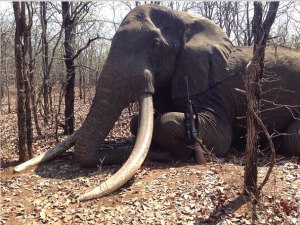
Is trophy hunting really trophy murder? Cecil the lion and the recent killing of the largest African elephant in almost thirty years

“As for trophy hunting, I think it is probably the kind of animal killing that most resembles murder – murder in the first degree. It is done with planning (premeditation) and without provocation or biological justification. The animals are entirely innocent creatures killed only for ego-gratification and fun. It’s time we began to see this practice as akin to murder.” Kirk Robinson (executive director of the Western Wildlife Conservancy (link is external), comment on this essay)

Trophy hunting in the wild and in places where animals are bred and held captive for the purpose of being killed (canned hunting), also makes the news especially when a charismatic animal is slaughtered. Basically, trophy hunting is a gratuitously violent act that often results in dismemberment and taking the head as a “trophy.

This past summer the world learned about, and millions were outraged by, the killing of Cecil (link is external), a magnificent lion, by a Minnesota dentist under the guise that it served some conservation purpose. Cecil’s undoing was premeditated, he hadn’t done anything to deserve being killed, and the dentist paid a royal sum to be allowed to kill him. And, this week, we’ve learned that a magnificent elephant killed in Zimbabwe for fun was the biggest killed in Africa for almost 30 years (link is external) (please also see (link is external)).

There are many, far too many, examples of trophy hunting accompanied by pictures of happy hunters (link is external). Indeed, recreational sport hunting that doesn’t involve long-distance travel or huge sums of money can also be called murder. And, sport hunting is often glorified. Colorado has “hug a hunter” and “hug an angler” campaigns because Colorado Parks and Wildlife claim that hunting is a conservation tool (but please see (link is external)). We read, “Coloradans are proud of the wildlife (link is external)and natural beauty in Colorado. And we have hunters and anglers to thank for helping to support it. So if you love protecting Colorado and its natural beauty, go ahead and hug a hunter.” Of course, not all wildlife is valued.

Let’s get the discussion going and let’s begin by making it simple

The time has come to open the discussion about the limited use of the word “murder.” Detailed scientific research has more than amply shown that reasons for excluding animals that include their supposed lack of emotions, that they are not really sentient, and that they really don’t care what happens to them, for example, clearly don’t hold.

I’m sure there are people who are passionate on both sides of the ledger and we need to hear all voices. Attorney Steven Wise and his team (link is external), who have worked tirelessly for granting animals rights, have been focusing their attention on chimpanzees, so to begin, let’s just consider mammals. And, perhaps to get the discussion going, let’s only consider animals who are killed for trophy hunting, for sport and for fun, and exclude, for the moment, animals who are killed for our entertainment (dog- or cock-fighting), animals who are killed because they harmed, or supposedly harmed, a human(s), animals who wind up living in urban or suburban areas “dangerously” close to humans because we forced them out of their preferred and natural homes because of relentless development, animals who are killed for food or research, animals who are considered to be “pests,” animals who are “collected (link is external)” “in the name of science.” We can also limit our early discussions to animals who clearly are sentient, which includes the vast majority of animals who are killed when there is no other reason to do it other than for fun.

I’m sure readers will have a category of animals they’d like to add to the list of candidates, and this is all part of the ongoing discussion. It’s difficult, for example, to exclude companion animals who are brutalized for no reason at all, so perhaps in early discussions we can also consider them as animals for whom the word “murder” applies.

Let me strongly emphasize that this early focus is not to say that other animals shouldn’t be granted legal rights nor that they can’t be murdered. However, we’ve got to begin somewhere, so let’s begin with the clearest cases in which an animal is killed for no other reason than someone thought it would be okay to kill them, perhaps for sport, perhaps for fun, perhaps because they like the high of the thrill, or perhaps because they enjoy killing the animals by “playing predator,” but surely not in any way that could be considered playing fair.

One of my friends suggested to me that perhaps the world isn’t ready for such a discussion, but surely there are crimes against animals that fall smack into the arena of crimes that are considered to be murder when there is a human victim(s). Trophy hunting is one clear case; it is voluntary and intentional and there is no reason to engage in it other than the hunter finds it to be a form of recreation or fun. It’s often not that challenging, and surely one doesn’t have to do it.

The psychology of trophy hunting: What drives people to thrill kill?

Hunting for ‘sport’ is basically another way to describe the thrill of killing.” Graham Collier, Psychology Today

The phrase “trophy hunting” – a form of thrill killing (for example, please see (link is external)) is all about nonhumans, but gratuitous violence in the form of thrill killing also occurs in humans. When there are human victims it’s clearly considered to be aberrant and criminal behavior that rightfully is called murder. The bottom line is that anyone who thrill kills should be punished regardless of whom the victim is. And we also should keep in mind what psychologists call “the Link (link is external),” the close relationship between human-animal violence and human-human violence.

While I cannot find any formal studies of what drives trophy hunting specifically, many people have weighed in on questions of this sort (link is external). One essay called “Why we may never understand the reasons people hunt animals as ‘trophies (link is external)‘” by criminologist Dr. Xanthe Mallett (link is external) reports “Research shows increased levels of hostility (link is external) and a need for power and control are associated with poor attitudes towards animals, among men in particular.”

Dr. Mallett also writes, “Another paper (link is external)has linked personality traits of some people who hunt for sport to a different ‘triad’ of behaviours, known ominously as the ‘dark triad’. This includes narcissism (egotistical admiration of one’s own attributes, and a lack of compassion), Machiavellianism (being deceitful, cunning and manipulative) and psychopathy (lack of remorse or empathy, and prone to impulsive behaviour).”

Dr. Mallett ends her essay as follows: “And that [the lack of hard data] means we may never know why hunters are compelled to seek animal trophies for their walls. Indeed, we might be condemned just to watch and wonder about their motive and emotional capacity.” Surely, if people just want to “get out into nature” and rewild (link is external) themselves, there are better and much less harmful ways to do it. Trophy hunting also violates the tenets of compassionate conservation, namely, first do no harm and all individuals matter (please see and links therein).

What drives trophy hunting is a field rich in questions and ideas that should be of interest to many readers of Psychology Today and also practitioners.

Words count

The wide-ranging concern and condemnation of trophy hunting is not merely an animal rights or vegan perspective, but rather one grounded in concerns about respect and decency. Many people who eat and wear animals are outraged by Cecil’s demise and by the latest elephant to be killed for fun. Many of my friends say something like, “It just isn’t right,” and all the academic arguments in the world aren’t going to convince them that trophy hunting can be justified. And, hunters with whom I’ve spoken are appalled by canned and wild trophy hunting. There’s a lot going on here about which I hope to write later on.

Words count. The failure to use the word “murder” for nonhumans is due to a misleading extension of the “them” versus “us” way of thinking, one that is, or should be, long gone, and a view that ignores who other animals truly are – their cognitive and emotional lives and capacities — based on large amounts of detailed empirical research. While we surely are different from other animals, we also share many traits that make us all very similar to the magnificent animals who are routinely hunted as trophies. These shared traits are those that are used erroneously by some to separate “them” from us as if the differences are black and white, rather than shades of gray.

So, if legal systems change and recognize the fact that animals can be murdered, we can expect that crimes that count as murder will be punished accordingly, other than by shame. And, perhaps, someday I’ll be able to tell some inquisitive “annoying” kid that animals can indeed be murdered. And, I’ll also let him or her know that when people say they love animals and harm them, I always say I’m glad they don’t love me.

Note: For more on ways to stop the killing, please see Hope Ferdowsian’s “5 Ways to Stop the Killing (link is external).” The man who killed the elephant has now been identified (link is external).

Marc Bekoff’s latest books are Jasper’s Story: Saving Moon Bears (with Jill Robinson), Ignoring Nature No More: The Case for Compassionate Conservation

Daughter of Lion Killer Walter Palmer May Have “Daddy Issues”

http://www.wildlifeplanet.net/daughter-of-lion-killer-walter-palmer-may-have-daddy-issues.html

Picture

By Dominick Mezzapesa

Tonette Palmer, has joined her beloved Walter in hiding even since he was revealed to have slaughtered the prized and beloved Lion, Cecil.

The mother-of-two seemingly shares her husband’s blood-lust for killing wildlife, with public records revealing that she has held as many as seven sport licenses entitling her to fish in Florida and hunt in Alaska – See more at: http://www.wildlifeplanet.net/wife-of-despised-lion-killer-walter-palmer-is-also-a-butcher-of-defenses-animals.html#sthash.dnHOXWqy.dpuf

Related Story: Wife of despised Lion Killer Walter Palmer is also a butcher of defenses animals.

Leaving behind their two children, 23-year-old Walter James Jr and 27-year-old Natalie to fend for themselves.

When looking over the life of the murdering moron, we discovered something very strange and to me quite disturbing.

27-year-old Natalie Palmer-Botes, a champion ballroom dancer married her 57-year-old business partner, Paul Botes, in December 2012.

Now a woman marrying someone twice her age is unsettling, but we found it kind of weird and might I say disturbing is that Natalie’s husband looks eerily similar to her daddy, Walter.

Of course, what is absolutely Disturbing is on their website acballroom.com in the about us section is states “Paul was a professional ballroom dancer since 1988,” Natalie in 1988 was “3” and still sucking her bottle and pooping in her diapers… The good news is The Circle of Life will once again rear it’s ugly head because soon (If he hasn’t started already) Paul will be pooping in his diapers

Wonder what they talk about?
Paul: “Man, I remember 1988 The Damn Mets lost to the LA Dodgers and stinkin Orel Hershiser”
Natalie: “I burped up peas all over my moms new dress”

Don’t think it’s too much of a stretch to say, dear, sweet, Natalie may have some unresolved Daddy Issues that she needs to deal with.


– See more at: http://www.wildlifeplanet.net/daughter-of-lion-killer-walter-palmer-may-have-daddy-issues.html#sthash.lDJFDvcM.dpuf

KILLER OF WORLD’S BIGGEST ELEPHANT IDENTIFIED

Be the change you want to see in the world's photo.

Rainer Schorr, a real estate CEO, was named by three separate sources as the hunter who sparked global anger after killing what is thought to be the biggest elephant killed in Africa for almost 30 years.

PETA has named the man believed to be the German hunter who paid nearly £40,000 to shoot one of the largest elephants ever seen in ‪#‎Zimbabwe‬ as a property mogul in Berlin.

‪#‎PETA‬ in Germany offered a €1,000 (£730) reward to anyone who could identify the German ‪#‎hunter‬ photographed posing with the body of the huge elephant that was circulated widely online after the Telegraph revealed the animal had been killed as a ‪#‎trophy‬ on a private shoot.

In a case that echoes the furore that erupted after ‪#‎Cecil‬ the lion was shot by an American dentist, 55-year-old ‪#‎Schorr‬ paid $60,000 (£39,000) for a permit to ‪#‎hunt‬ a large bull ‪#‎elephant‬.

Animal rights activists put a bounty on the head of a man who shot a bull elephant.

Trophy hunter

http://www.express.co.uk/news/world/612822/elephant-hunter-kill-animal-rights-bounty

By Jaymi McCann

The hunter and a guide with the lifeless body of the huge bull elephant he paid £39,000 to kill

The man, said to be a German who paid £39,000 to go on the hunt in a national park in Zimbabwe, was pictured with the corpse of the elephant, thought to be the largest killed in 30 years with 120lb tusks.

Animal rights group Peta Germany has offered a 1,000 euro (£735) reward for the man’s identity.

Palmer FACEBOOK•AP

Walter Palmer caused outrage when he took a picture with the lifeless body of Cecil the lion

ime’s about up for trophy hunters and the world wants to know exactly who this cowardly man is who’s in hiding after gunning down a magnificent elephant, who, like Cecil the lion, wanted only to be left in peace

Ingrid Newkirk, Peta president

Peta president Ingrid Newkirk said: “Time’s about up for trophy hunters and the world wants to know exactly who this cowardly man is who’s in hiding after gunning down a magnificent elephant, who, like Cecil the lion, wanted only to be left in peace.”

Peta wants the man to face the consequences of “killing and hacking apart an animal to feed his psychotic need to take a life”.

HunterGETTY

Poacher being apprehended in Kruger National Park

The elephant may have been Nkombo, a massive bull from the Kruger National Park in South Africa, just over the border. The row follows global outrage sparked by US dentist Walter Palmer, who shot Cecil with a high-powered crossbow.

Zimbabwe conservationist Johnny Rodrigues said: “We need international laws and the UN to make the killing and import of these animals illegal.”

 Dominic Dyre, of the Born Free Foundation, said: “Elephants are being lost at a massive rate. Allowing trophy hunting gives the green light to poaching.

“The money goes back to President Robert Mugabe’s corrupt regime.”

Hunting clubs, rhino hunter sue Delta over trophy ban

Hunting clubs and a man who paid $350,000 for a license to hunt a black rhino in Namibia have sued Delta Airlines, saying its ban on transporting some big game hunting trophies hurts conservation efforts and violates its global obligations.

In a lawsuit filed in federal court in Texas on Thursday, the hunter of the endangered black rhino, Corey Knowlton, along with the Dallas Safari Club, the Houston Safari Clubs and others said that the transport of the trophies is allowed under a strict systems of global permits and Delta must abide by its obligations.

“Tourist hunting revenue is the backbone of anti-poaching in Africa. If there are fewer users, as Delta’s embargo envisions, there are fewer boots on the ground and reduced security for elephant, rhino and other at-risk wildlife,” the lawsuit said.

Delta officials were not immediately available for comment.

Delta was one of three U.S. airlines in August that banned the transport of lion, leopard, elephant, rhino or buffalo killed by trophy hunters, in the fallout from the killing of Zimbabwe’s Cecil the Lion about a month earlier.

Delta is the only of the carriers with direct service between Johannesburg and the United States and its decision was seen as carrying the most weight.

There has been an international outcry against trophy hunting among animal lovers since it emerged that American dentist Walter Palmer killed Cecil, a rare black-maned lion that was a familiar sight at Zimbabwe’s Hwange National Park.

Eleven African countries issue lion hunting permits. Of them South Africa’s hunting industry is the biggest, worth $675 million a year, according to the Professional Hunters Association.

Hunting groups argue the money generated from the legally sanctioned hunts bolster the coffers for conservation in emerging African countries that want to use their limited finances for social programs.

In the middle of this year, the cargo division of South Africa’s national carrier, SAA, lifted an embargo that had been in place since April on the transport of legally acquired hunting trophies of African lion and elephant, rhinoceros and tiger.

“It should be remembered that hundreds of legally acquired wildlife specimens, such as hunting trophies, pass through our main ports of entry and exit monthly without incident. Penalizing an entire industry for the illegal actions of the few is not in the country’s best interests,” South Africa’s Environment Minister Edna Molewa said at the time.

(Reporting by Jon Herskovitz; Editing by Sandra Maler)

Zimbabwe will not charge U.S. dentist for killing Cecil the lion

http://www.msn.com/en-us/news/world/zimbabwe-will-not-charge-us-dentist-for-killing-cecil-the-lion/ar-AAfmVFd?ocid=ansmsnnews11

“We approached the police and then the prosecutor general, and it turned out that Palmer came to Zimbabwe because all the papers were in order,” Muchinguri-Kashiri told reporters.

Muchinguri-Kashiri said Palmer would be free to visit Zimbabwe as a tourist in the future but not as a hunter. The implication was that Palmer would not be issued the permits a hunter needs.

The environment minister’s comments immediately drew the ire of the animal conservation group Zimbabwe Conservation Task Force, which maintained that Palmer had committed a crime and said it planned to pursue legal action against him in the United States.

Palmer could not be reached for comment on the environment minister’s statement to reporters.

The 55-year-old dentist had closed his practice in late July after he was publicly identified as the hunter who killed Cecil, drawing widespread criticism on social media and a large demonstration by animal rights advocates at his office in Bloomington, Minnesota, a Minneapolis suburb.

The practice reopened in mid-August without him. Palmer returned to work in early September to a handful of protesters and some public support from patients.

“The fact is the law was broken,” said Johnny Rodrigues, the head of the Zimbabwe task force, which first reported news of Cecil’s killing. “We are going to get our advocates in America to actually see what they can do to bring justice to him.”

The U.S. Fish and Wildlife Service has said it was investigating the killing of the lion.

Two more people still face charges related to Cecil’s killing. Both allegedly were involved in using bait to lure the lion out of his habitat in Hwange National Park so he could be killed.

Theo Bronkhorst, a professional hunter in Zimbabwe, is charged with breaching hunting rules in connection with the hunt in which Cecil was killed. A game park owner is also charged with allowing an illegal hunt. Both have denied the charges.

Bronkhorst is expected to appear on Thursday in a Hwange court where a magistrate will rule on a request by his lawyers that his indictment be quashed.

Parks officials said prosecutors would bring Cecil’s head, which the hunters took as a trophy, to court as an exhibit if the trial goes ahead.

Palmer has previously said that the hunt was legal and no one in the hunting party realized the targeted lion was Cecil, a well-known tourist attraction in the park.

Wildlife hunting, which earned $45 million last year, is an important source of money for Zimbabwe, which is still recovering from a catastrophic recession between 1999-2008.

Zimbabwe will not charge American dentist Walter Palmer for killing its most prized lion in July because he had obtained legal authority to conduct the hunt, a cabinet minister said on Monday.

Palmer, a lifelong big-game hunter from Minnesota, stoked a global controversy when he killed Cecil, a rare black-maned lion, with a bow and arrow outside Hwange National Park in Western Zimbabwe.

But Palmer’s hunting papers were in order, Environment Minister Oppah Muchinguri-Kashiri said on Monday. Consequently, he could not be charged.

“We approached the police and then the Prosecutor General, and it turned out that Palmer came to Zimbabwe because all the papers were in order,” Muchinguri-Kashiri told reporters.

Dentist Walter Palmer, who returned to his practice, Tuesday, Sept. 8, 2015, in Bloomington, Minn., arrives back to his office following a lunch break.© AP Photo/Jim Mone Dentist Walter Palmer, who returned to his practice, Tuesday, Sept. 8, 2015, in Bloomington, Minn., arrives back to his office following a lunch break. Muchinguri Kashiri said Palmer was free to visit Zimbabwe as a tourist but not as a hunter. The implication was he would not be issued the permits a hunter needs.

Two more people still face charges related to Cecil’s killing. Both allegedly were involved in using bait to lure Cecil out of his habitat in Hwange National Park so he could be killed.

Theo Bronkhorst, a professional hunter in Zimbabwe, is charged with breaching hunting rules in connection with the hunt in which Cecil was killed. A game park owner is also charged with allowing an illegal hunt. Both have denied the charges.

Bronkhorst is expected to appear in a Hwange court on Thursday where a magistrate will rule on a request by his lawyers that his indictment be quashed.

Palmer, 55, has previously said that the hunt was legal and no one in the hunting party realized the targeted lion was Cecil, a well-known tourist attraction in the park.

Palmer could not be reached immediately for comment on the environment minister’s statement to reporters. (Reporting by MacDonald Dzirutwe, additional reporting by David Bailey in Minneapolis; Editing by James Macharia)